The twentieth century nearly killed the craft twice: wartime distortion, then the occupation ban. The NBTHK’s founding in 1948 and licensed forging from 1953 rebuilt the sword as an art, crowned by Living National Treasures and the mukansa rank.
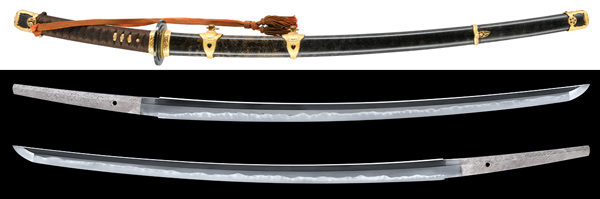
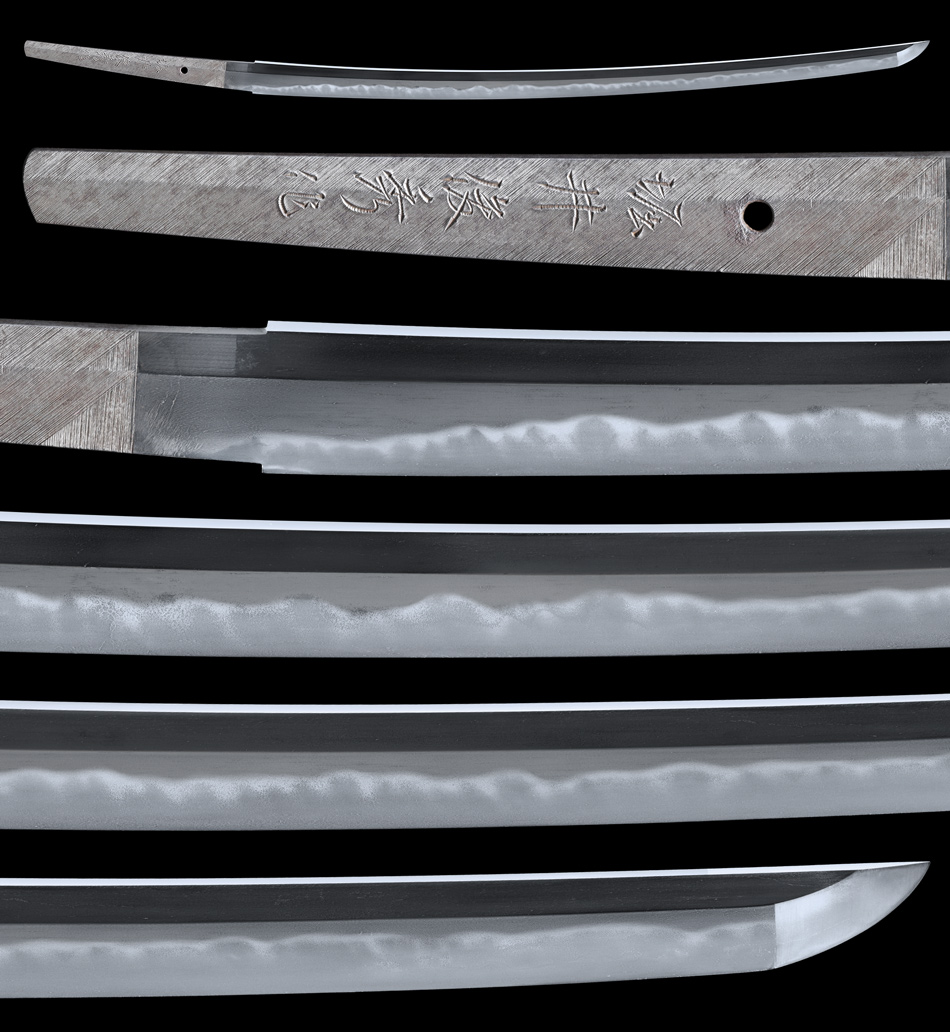
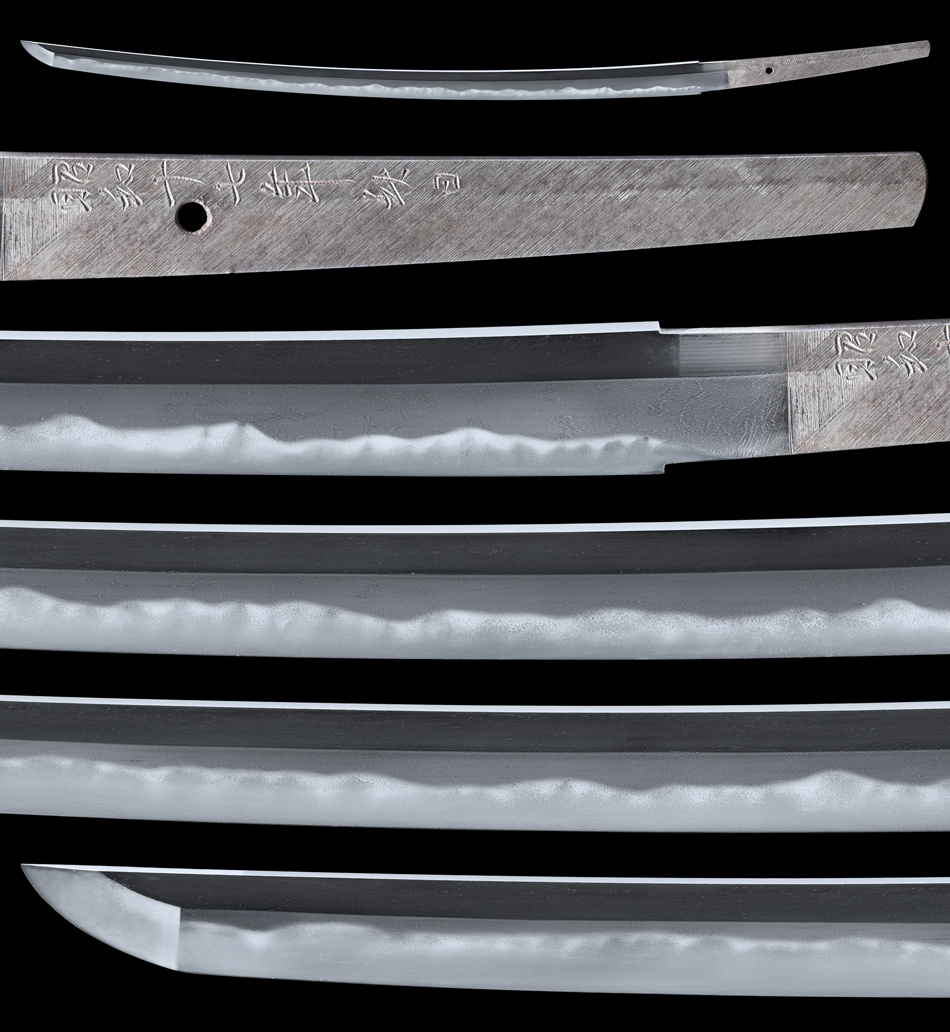
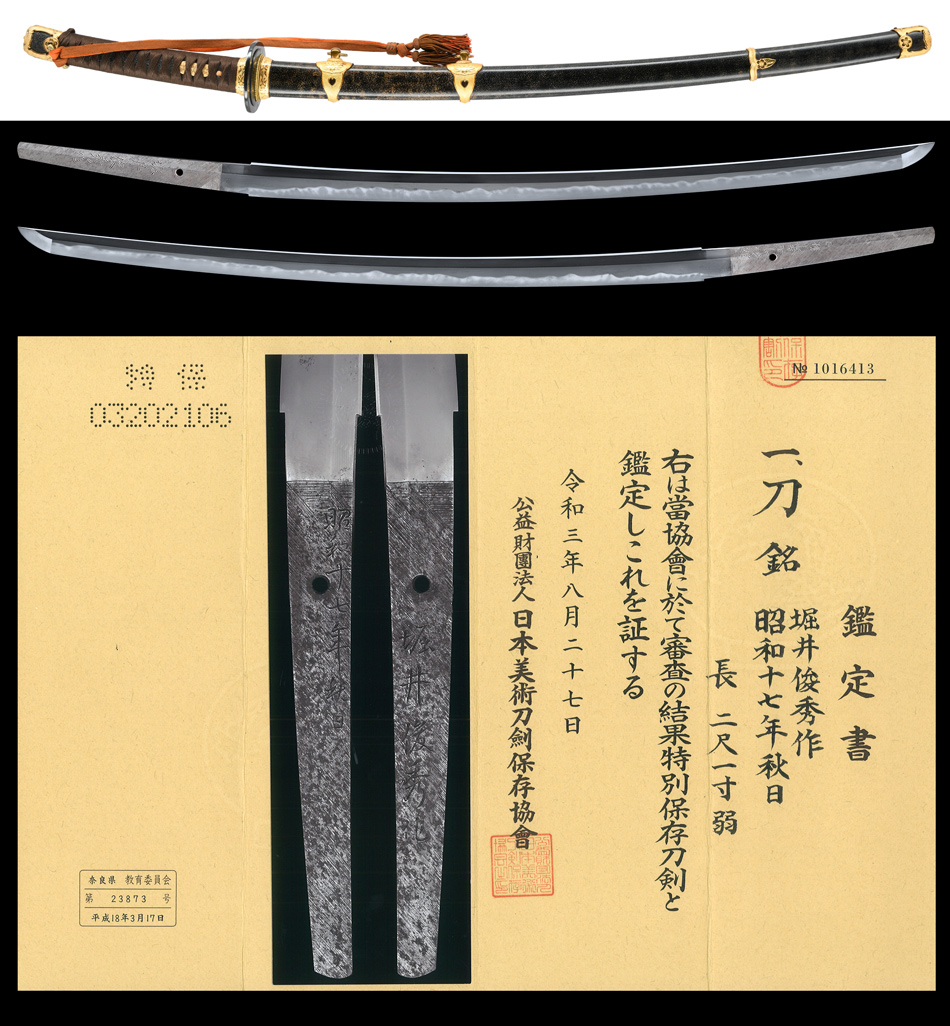
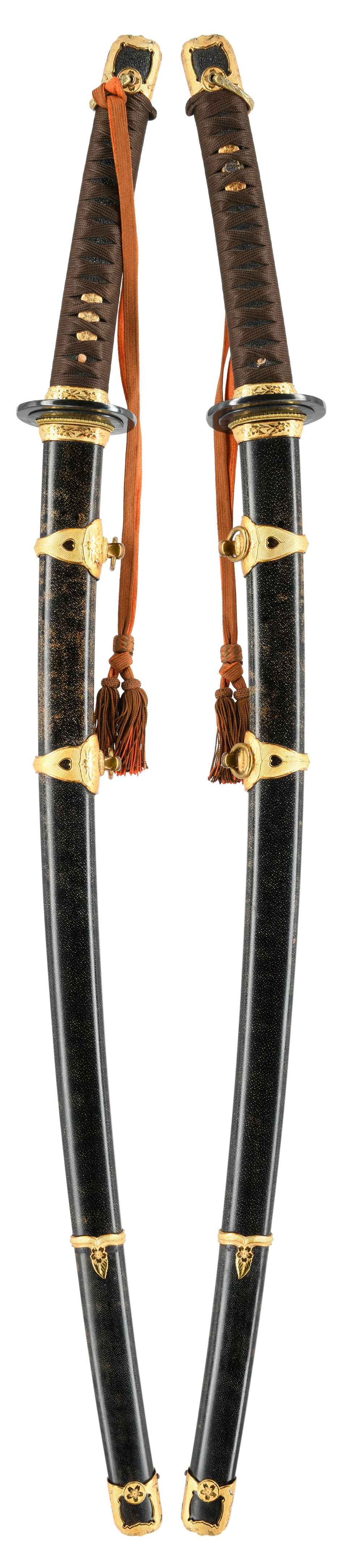
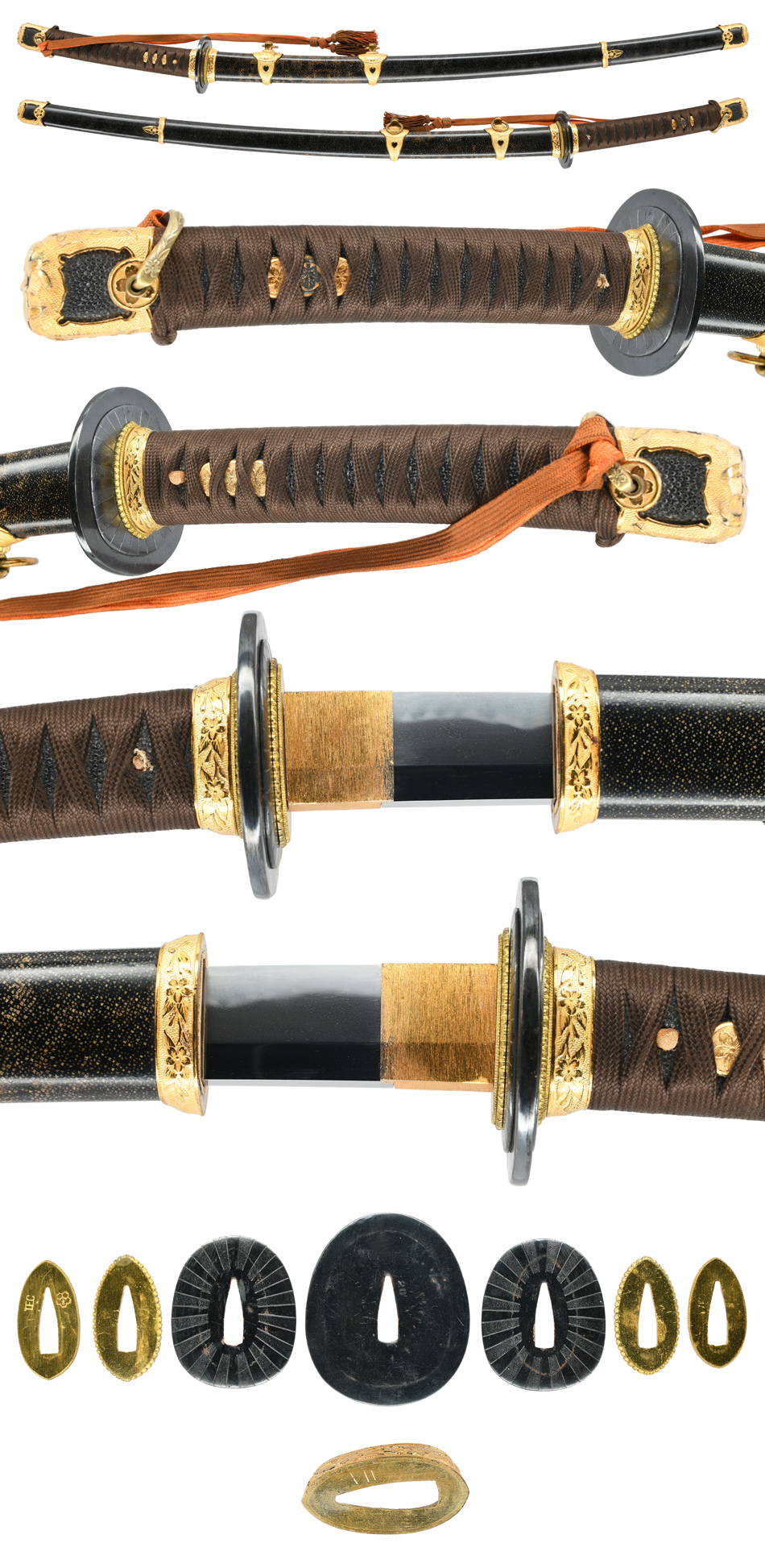
堀井俊秀は、本名を堀井兼吉といい。明治十九年(1886)滋賀県下坂元で徳田広吉の三男として生まれました。明治三十四年(1901)松田胤勝に農鍛冶を教わり、明治三十七年(1904)に堀井胤明の門人となりました。明治三十九年(1906)に師と共に桜井正次の鎌倉瑞泉寺鍛刀所で作刀し。後、堀井一門の三代目となりました。大正年二年(1913)に水心子正秀の秀の字をもらって銘を「秀明」「源秀明」「近江国志賀太郎源秀明」と切り、明治三十八年(1905)に兼明、大正二年(1913)に秀明、昭和八年(1933)には皇太子御誕生に際し「明仁」と命名されたことから、俊秀と改名しています。大正七年(1918)に日本製鋼(現 株式会社日本製鋼所)室蘭工業所の招聘により入社し北海道に移ります。日露戦争で帝國連合艦隊の旗艦であった戦艦「三笠」の砲身の残り鉄を用い、秩父宮、高松宮、東久邇宮の軍刀をはじめ、宮内省より下賜する短刀を鍛えました。昭和十七年(1942)一月には満州国建国十周年の謝恩刀を製作し、昭和十八年(1943)に没しました。作風は水心子流の備前伝の丁字乱や互の目乱が多く。日本刀の伝統の復興に貢献した事で知られる栗原彦三郎による聖代刀匠位列表では、堀井俊秀は「神品の列最上大業物 取締役格」十二名の筆頭に挙げられている昭和初期の代表工で元帥刀作刀を下命された4名の刀匠の一人です。本刀は、刃長が二尺九分八厘。身幅、元先たっぷりで重ねも確りとした健全な御刀です。地鉄は、板目肌よく詰んだ潤いのある肌です。刃文は、丁子乱れを主として互の目、尖り刃、逆がかる刃を焼き小沸よく付き、処々荒沸が刃縁よりこぼれ輝き、覇気があります。刃中には足長く頻りに入り盛んに働きます。帽子は、やや湾れて大丸に返ります。茎は化粧筋違鑢目に仕立て堂々とした鏨使いで銘と年紀を切り、誠に上手です。本作は海軍の需要に応えて鍛えられた刀です。外装の保存状態も大変よろしいのでマニアの方には特にお薦めしたい逸品です。ご存じのように陸軍刀と違い海軍刀は現存品が少なく綺麗に残るものは非常に貴重です。お探しのお客様はお見逃しなくお願いします。金着せ一重はばき、旧日本海軍太刀型軍刀拵、特別保存刀剣鑑定書。
Offered by World Seiyudo
This piece has sold
Get an email when a new Toshihide piece hits the market.


Hokkaido · around 1926-1989
5 pieces on the market now
Where Toshihide stands among comparable artisans: across all of nihontō, and within tradition, era, and period. The tiers (Foremost · Leading · Major · Notable) weigh official designations from the NBTHK and Japan's Agency for Cultural Affairs, together with historical honors of lasting repute such as the Sansaku and Meibutsu-chō.
Select a lens to see how it's measured.
Shōwa to the present: destruction and revival
The twentieth century nearly killed the craft twice: wartime distortion, then the occupation ban. The NBTHK’s founding in 1948 and licensed forging from 1953 rebuilt the sword as an art, crowned by Living National Treasures and the mukansa rank.
A Hozon-certified blade judged to show notably superior workmanship and a better state of preservation. The bar is higher: re-tempered blades and most unsigned Muromachi/Edo works are excluded.
The NBTHK (Nihon Bijutsu Tōken Hozon Kyōkai, the Society for the Preservation of Japanese Art Swords) is a public-interest incorporated foundation founded in 1948 and supervised by Japan’s Agency for Cultural Affairs (Bunkachō); it is based at the Japanese Sword Museum in Tokyo. Its expert panels physically examine each submitted work (shinsa) and issue a certificate (kanteishō) ranking it by artistic and historical merit. NBTHK papers are the most widely recognized standard of authentication for Japanese swords and fittings.
NBTHK official siteNo cooling-off period or returns; refund only if the purchased sword is proven fake, capped at purchase price (excludes commission sales, accessories, auction items).