 NihontoWatchNihontoWatch
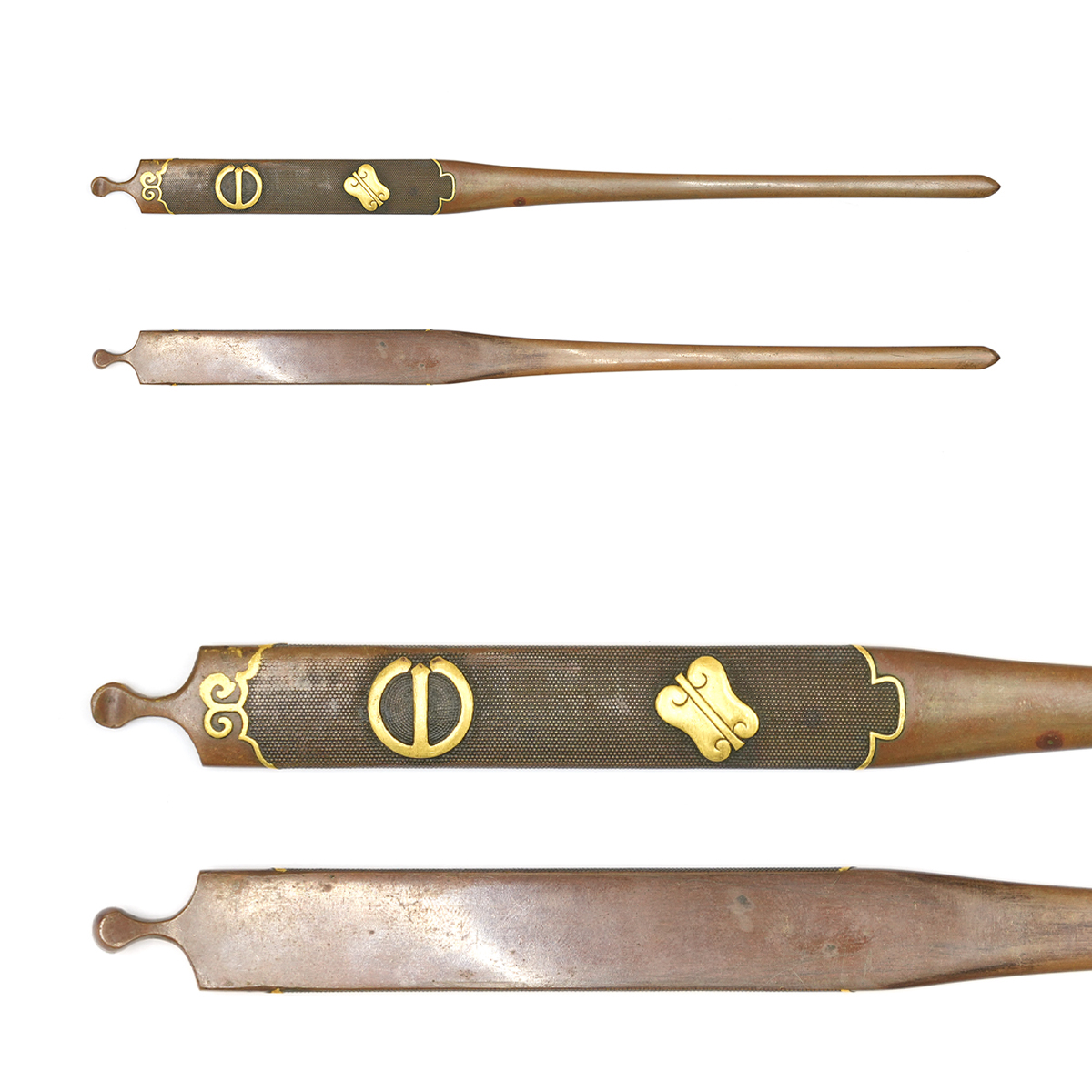
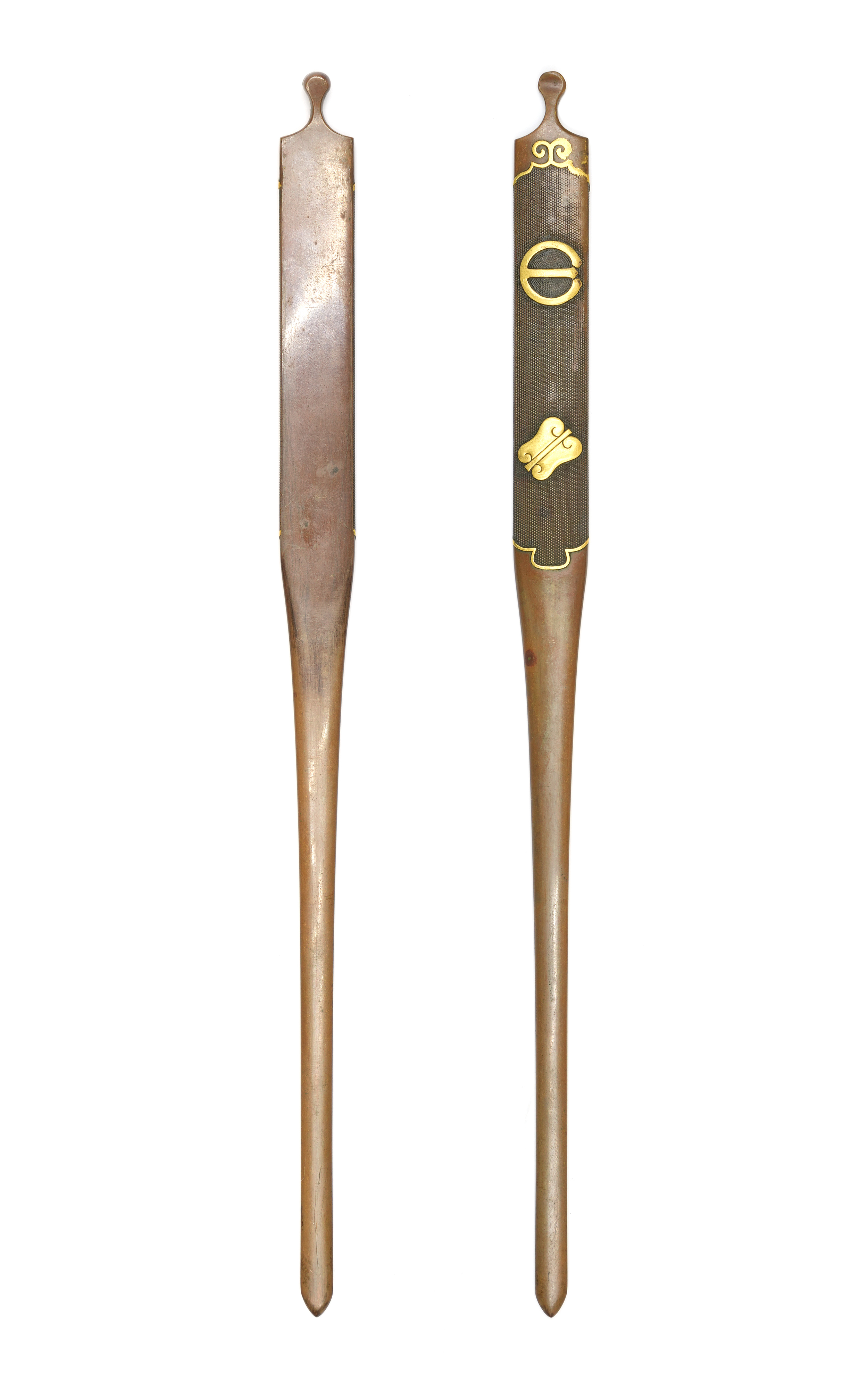
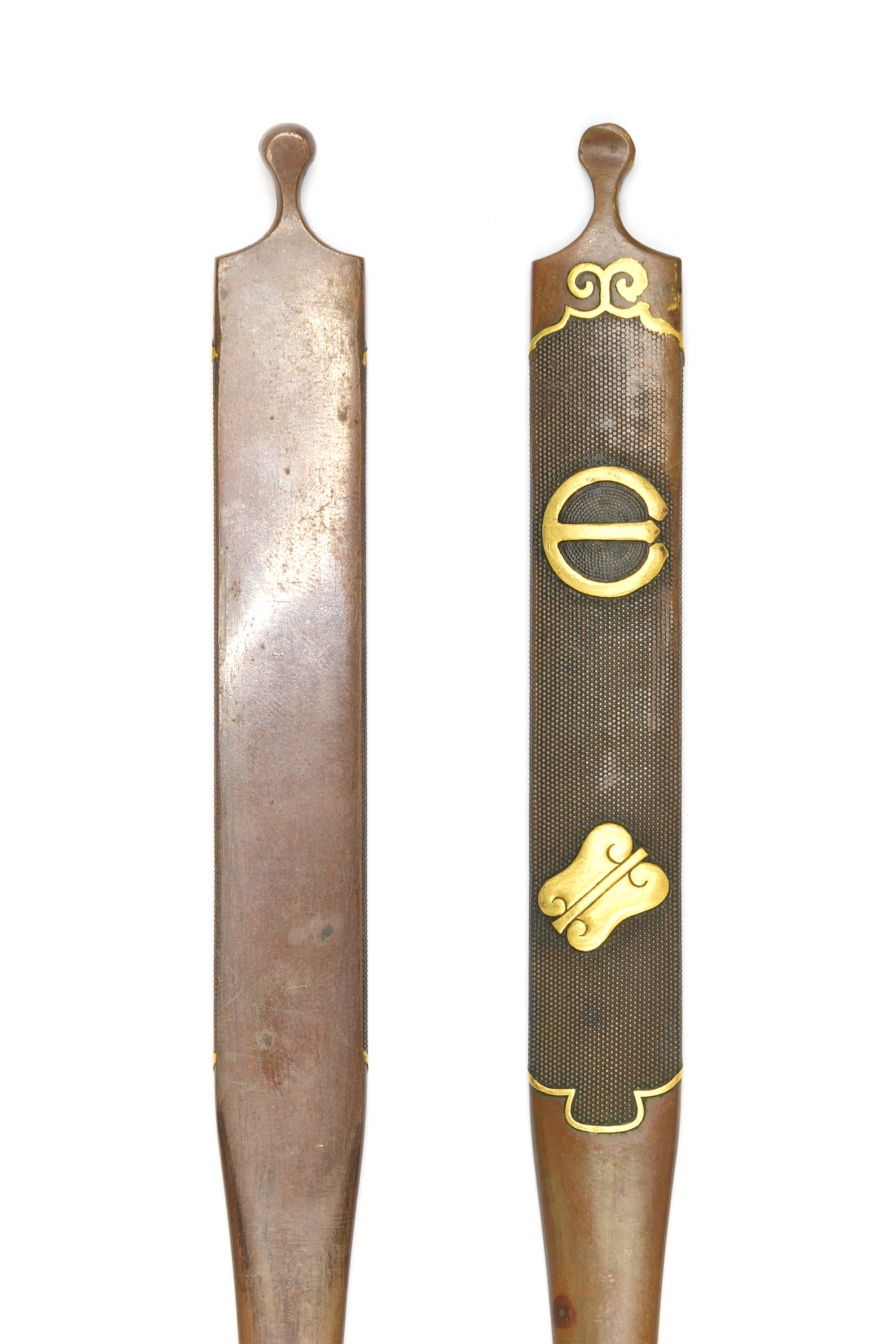
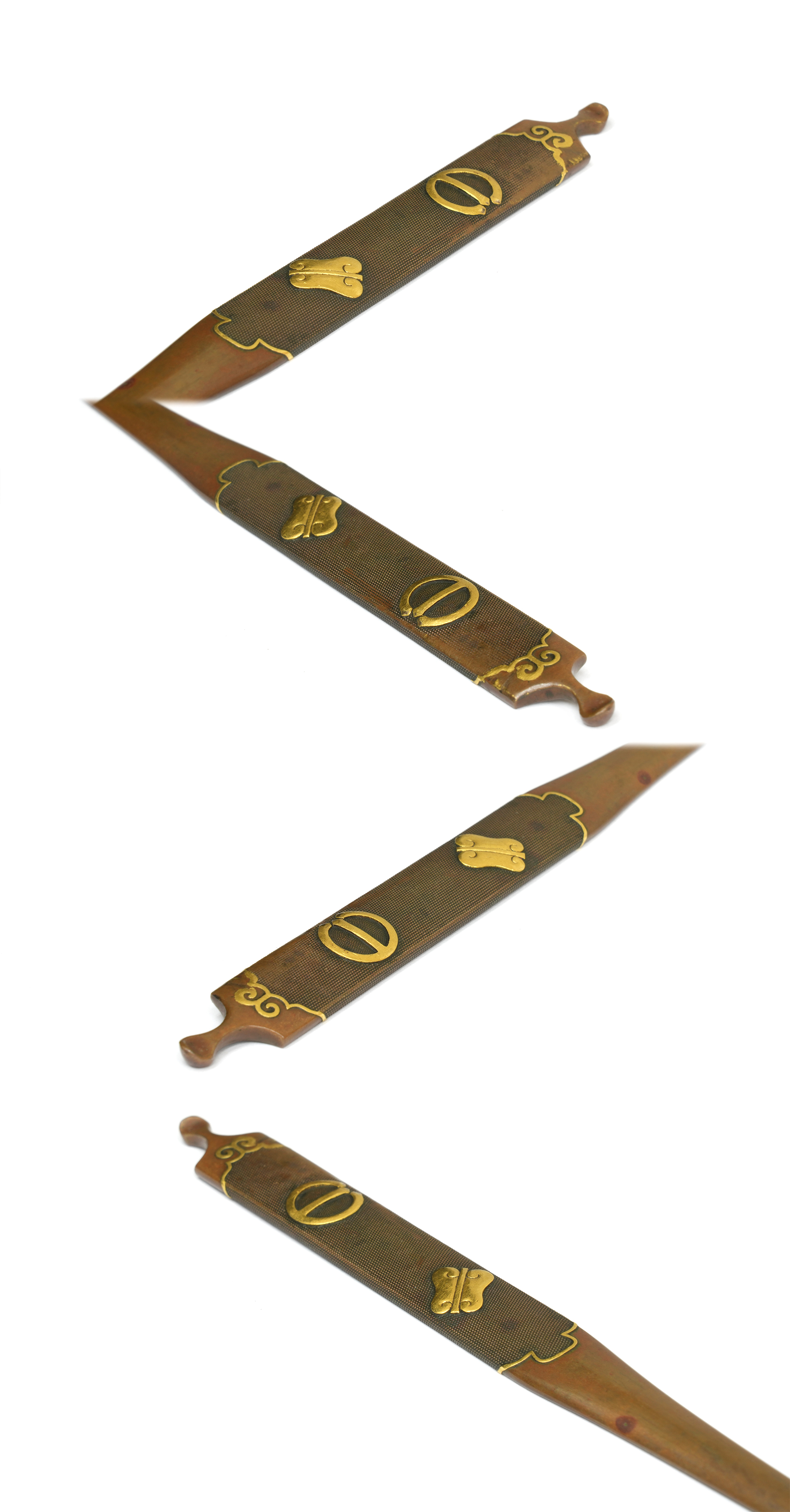
This item is mumei, yet it is a kogai with a beautiful contrast between the jinigane and the color tones, featuring fine nanako struck directly onto the suaka-ji do, with a yamamonji-mon and a gunbai-mon expressed highly in gold color upon that blackish surface. Maintaining a relaxed sugata close to the standard size of approximately 21 centimeters, the composition—which harmonizes the warm reddish suaka, the black nanako-ji, and the golden mon—well balances the prestige of a buke with the splendor of soken kanagu. The yamamonji-mon is a stable design that stylizes the character for "yama" (mountain) within a circle; it is the same mon as the yamamonji-mon carved on the suaka kogai in item 250, clearly indicating the connection between these two items handed down from the same family. Because the gunbai-mon depicts the gunbai-uchiwa used by military commanders for command and arbitration, it evokes leadership, decision-making, and luck in victory; by arranging the upward-extending yamamonji-mon and the diagonally positioned gunbai-mon across a wide yohaku, the symbol of the house and the spirit of the warrior are layered onto a single surface. In buke and noble families, there are examples of using omote-mon as well as ura-mon or kae-mon depending on the occasion or purpose, and while it cannot be specified which mon corresponds to which, the fact that both items share the yamamonji-mon while separately combining it with the maru-ni-juji-mon and the gunbai-mon is an interesting point when considering the relationship between multiple mon passed down in one family. On the do, fine nanako is struck, the golden mon are expressed clearly with a plump volume, warabite kin-zogan is placed on the mimi side, and the mayugata and mokko-bu are accented with borders of kin-zogan, tightening the decorative surface as a single pictorial composition. Although some crushing can be seen in parts of the nanako and the warabite kin-zogan, telling of its wear over many years, the circular yamamonji-mon and the diagonally placed gunbai-mon remain distinct, allowing one to fully appreciate the original intent of using three different textures: nanako-ji, kin-iroe, and suaka-ji. Simple kamon require a different kind of precision than complex jinbutsu-bori because slight distortions in the outline or deviations from the center are conspicuous, but the composition, which fits the two mon into the limited width without excess or deficiency, shows the certain design sense of the kinko who responded to the buke's order. The ura-men has no pattern and is finished simply so that one can appreciate the calm color and luster of the suaka-ji and the original relaxed sugata of the kogai, highlighting the contrast with the splendid mon-decorated surface on the omote. On the front, the gold color scheme stands out even from a distance, and at hand, the focus shifts to the remaining grain of the nanako, the volume of the mon, and the thin golden lines tracing the boundaries; one can enjoy both the texture unique to jidai-kanagu that was used practically for a long time and its value as a reference material for a kamon-kogai. This item is a piece handed down together from the same family as the "Maru-ni-juji and Yamamonji-mon Kogai" listed separately, and while the two differ in decorative techniques and finish, both express the yamamonji-mon on suaka-ji. I do not conclude that they are a matching set by the same maker, but as kamon-kogai passed down in one family, it invites imagination regarding the background of their use; it is a piece that combines a story of provenance with appreciation, where alone one can enjoy the dignity of the nanako-ji and kin-iroe, and by lining up the two pieces, one can even compare the difference between the simple work centered on tagane-sen and the decorative work using nanako and kin-iroe.
Offered by Toushin

We couldn’t find current papers for this piece. Ask the dealer whether it has been, or can be, submitted to shinsa. — Hoshi

Edo
Unsigned
As written by the shop
Machine translation from the shop's Japanese · may contain errors ·
We could not find an authenticity certificate on the seller’s listing. Japanese swords and fittings are normally papered by the NBTHK (or the NTHK). Without one, the attribution is the seller’s own assessment and has not been independently verified — treat it with caution and ask the dealer about certification before buying.
As a rule we do not accept returns, except when we have sent a different item from the one ordered or when there is a significant discrepancy between the description and the item. If you wish to return an item, please contact us within 3 days of its arrival and then send it back.
¥154,000