 NihontoWatchNihontoWatch
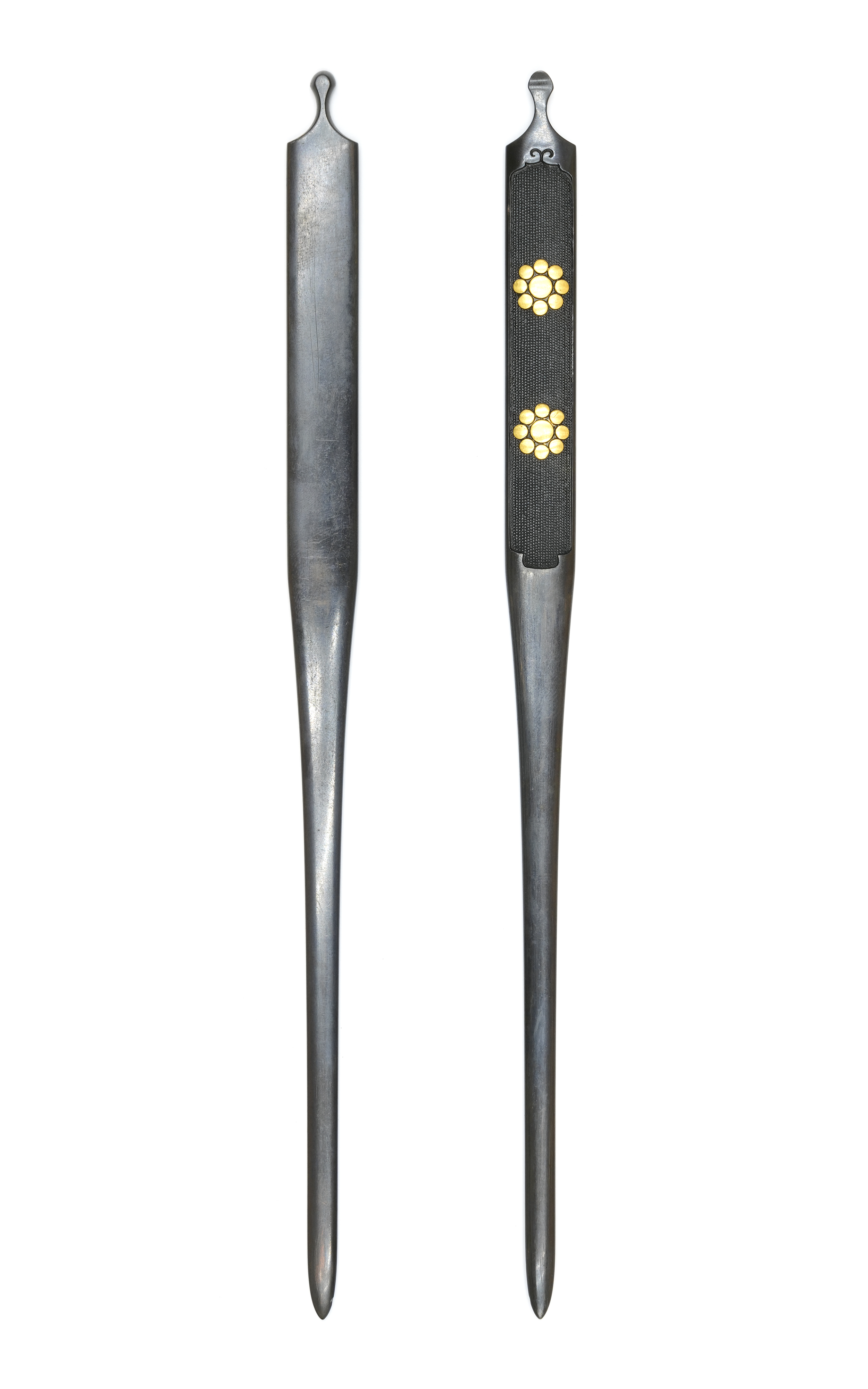
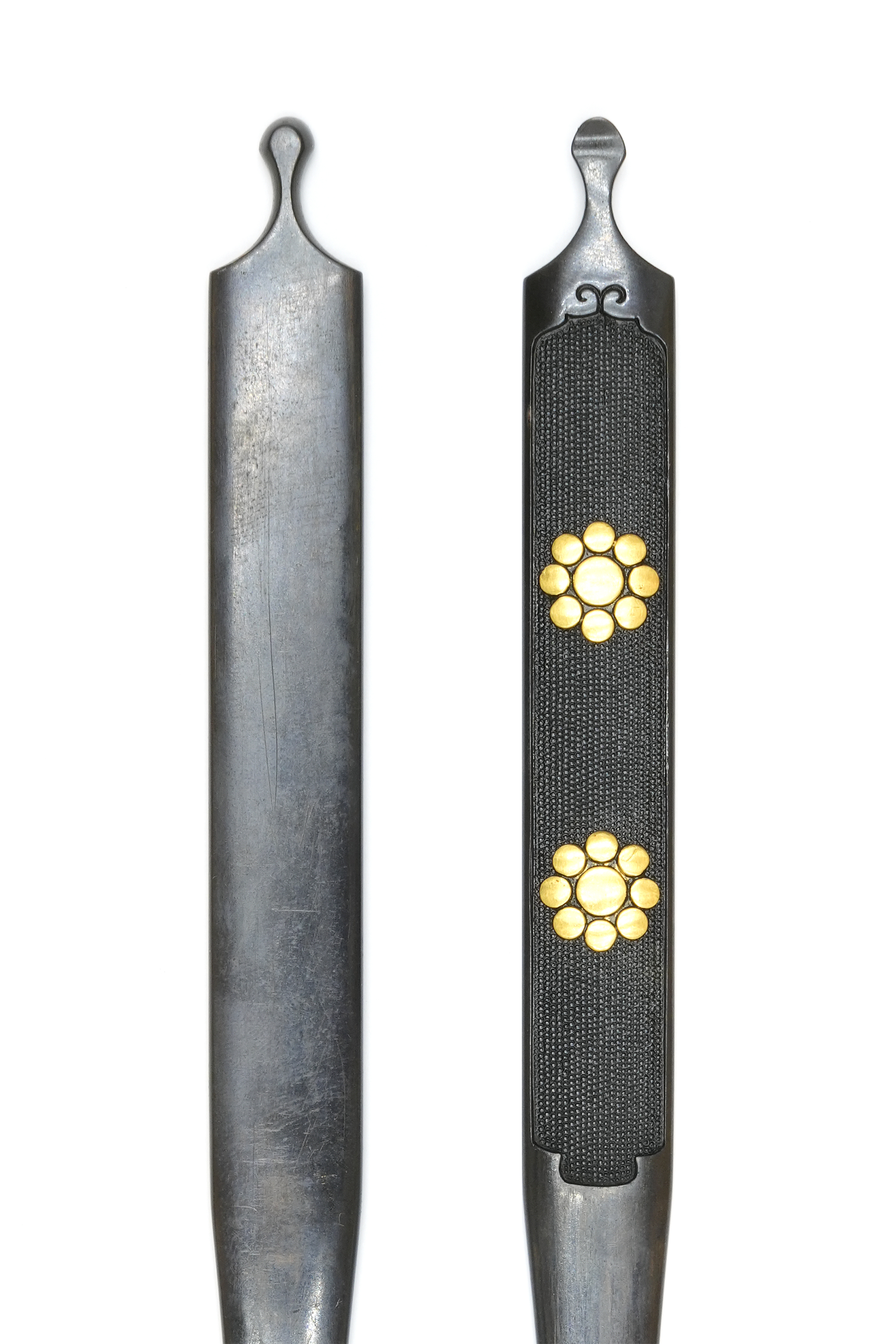
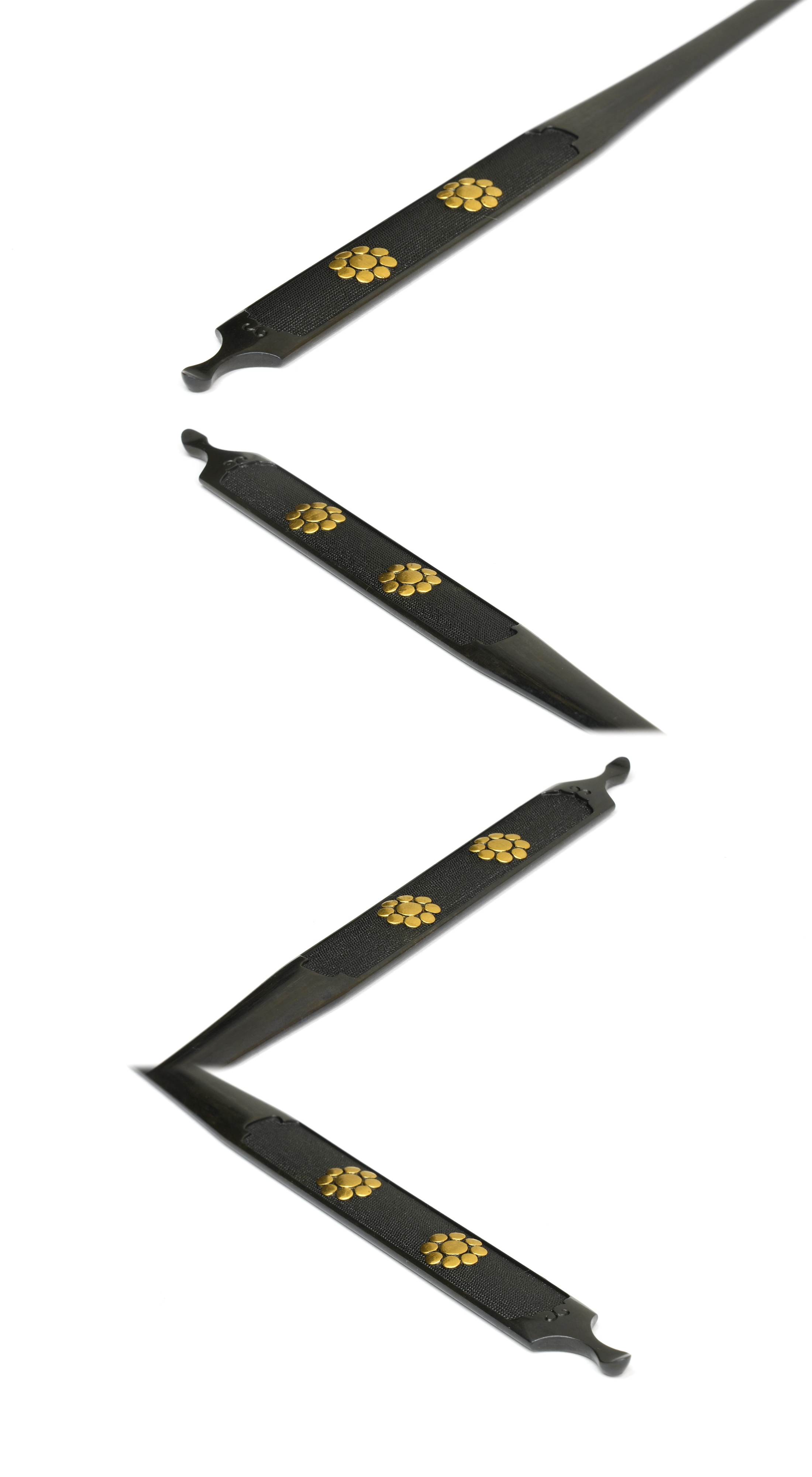
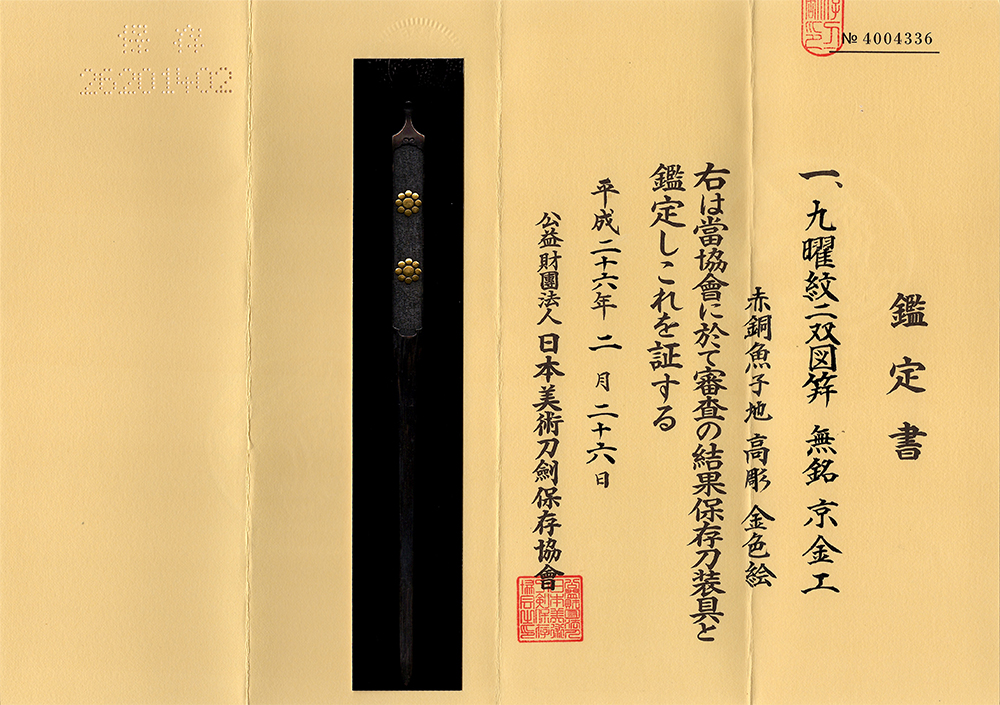
Kyo Kinko is an appraisal designation used for mumei tosogu produced in Kyoto for which it is difficult to identify a specific artist or school. In Kyoto, where court culture and warrior culture intersected, diverse metalsmiths were active and produced refined kodogu using shakudo, nanako, kin-iroe, and other materials; however, the kiwame of "Kyo Kinko" itself does not indicate membership in a specific lineage or a direct teacher-student relationship with the Goto family. The neat form and restrained coloring of this piece well express the sophisticated aesthetic sense nurtured in Kyoto. The Kuyo-mon is a pattern derived from astral worship in which eight stars surround a single central star, symbolizing the movement of celestial bodies and directions, and was widely used as a warrior family crest as a design to ward off misfortune and protect family fortunes. In this piece, two Kuyo-mon of the same size are placed at regular intervals on the body of the slender kogai, achieving both the order of repeating circles and a rich margin, creating a composition that feels calm and prestigious despite the use of flamboyant gold color. The entire kogai is made of shakudo with a blackish tint, the surface of the body is densely covered with minute nanako, and two Kuyo-mon are plumply expressed in takabori kin-iroe on that quiet ground. The composition, with the central star slightly larger and eight stars arranged symmetrically around it, catches soft light by giving a slight thickness to each circular shape; the shape of the family crest stands out clearly from the front, and different shadows appear on each star when the angle is changed. The two mon are aligned with the same size and orientation, and by showing them as equals without making one primary and the other subordinate, an orderly rhythm is given to the design called "Niso-zu." The fine grains of the nanako and the circular gold mon complement each other, and the wide margins make the contours of each mon appear even sharper, providing a solid presence without being overcrowded with decoration; one can appreciate the metalsmith's precise compositional ability and soft nikudori within the concise expression of the family crest. The form, made consistently of shakudo from the mimikaki to the sao and the tip, is slender and gracefully proportioned, and the back surface is a shakudo migaki-ji without decoration, making a clear contrast with the dense nanako and kin-iroe on the front. The calm luster of the metal over many years adds a charm not found in uniform newness, and each time it is turned over in the hand, one can sequentially appreciate the deep black of the shakudo, the soft brilliance of the kin-iroe, and the original neat form of the kogai. Appraised as "Kyo Kinko" by the Nihon Bijutsu Token Hozon Kyokai, in addition to the exquisite nanako, the well-proportioned Kuyo-mon, and the refined color scheme utilizing black and gold, its position for appreciation is clearly defined by the Hozon Tosogu Kanteisho; it is a piece that combines tranquility and splendor, recommended not only for those who like family crest designs and astral patterns but also for those seeking a high-quality kogai with a reliable kiwame.
Offered by Toushin

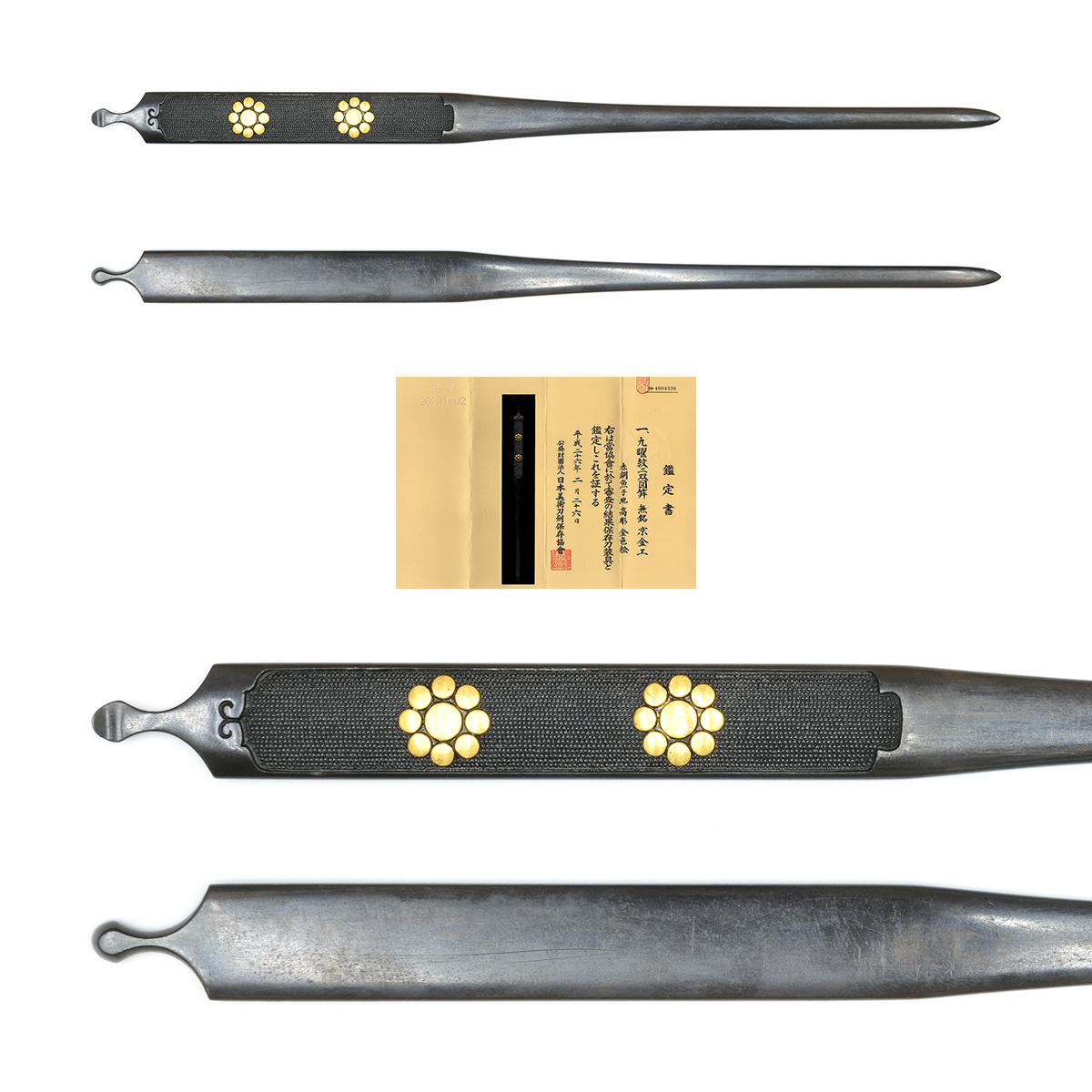
Edo
Yamashiro
Unsigned
Hozon (NBTHK)
As written by the shop
Machine translation from the shop's Japanese · may contain errors ·
Certifies a genuine fitting worth preserving: a correct signature, or, if unsigned, an identifiable era and school, with recognized artistic and craft value.
The NBTHK (Nihon Bijutsu Tōken Hozon Kyōkai, the Society for the Preservation of Japanese Art Swords) is a public-interest incorporated foundation founded in 1948 and supervised by Japan’s Agency for Cultural Affairs (Bunkachō); it is based at the Japanese Sword Museum in Tokyo. Its expert panels physically examine each submitted work (shinsa) and issue a certificate (kanteishō) ranking it by artistic and historical merit. NBTHK papers are the most widely recognized standard of authentication for Japanese swords and fittings.
NBTHK official siteAs a rule we do not accept returns, except when we have sent a different item from the one ordered or when there is a significant discrepancy between the description and the item. If you wish to return an item, please contact us within 3 days of its arrival and then send it back.
¥275,000