 NihontoWatchNihontoWatch
Ko-kinko is a general term for mumei iroe metal fittings produced before the Muromachi period that cannot be attributed to a specific school such as the Goto family. This work possesses a length and width that greatly exceed standard dimensions, rich niku-oki, gently rising mimi, and a long, extending neck; the construction, featuring a body carved down one level with old-style takabori, clearly expresses a style consistent with Ko-kinko kogai from the late Muromachi period. Daikokuten is one of the Seven Lucky Gods, regarded as a deity who brings good fortune, a bountiful harvest of the five grains, and financial luck. His familiar appearance, accompanied by a uchide no kozuchi and a large bag, was widely worshipped by everyone from merchant houses to samurai families. By combining treasures such as rice bales and hoju placed on takatsuki, along with the mouse said to be the messenger of Daikokuten and the daikon symbolizing harvest and fertility, the auspicious nature is further enhanced, condensing wishes for inviting luck, accumulating wealth, and protecting one's livelihood into the long, narrow composition. This work features a body of yamagane-ji tinged with a brown koshoku, carved down one level to create a deep blackish tone; in the center, Daikokuten is depicted with a smile in takabori, while to the left and right, hoju on takatsuki, rice bales, and bags are arranged closely together, with a daikon and mouse placed near the mokko-gata. Along with the construction where the scene is created from the body itself without inserting a separate jinita, the simple and powerful expression—carving out the round face of Daikokuten, his full cheeks, and the overlapping layers of his robes with a plump volume—creates a familiarity befitting a lucky god and a grand presence. While the calm color of the metal remains the primary focus for each figure, kin-iroe is scattered on the rim of the hat, the hoju, the ropes of the rice bales, and key points of Daikokuten's robes and bag, skillfully tightening the outlines so the forms do not get lost against the black background. Because the gold color does not cover the entire surface but is used selectively to guide the viewer's eye, splendor and an elegant antique texture coexist; as one follows the treasures in order from the mimikaki side to the sao side, the richness of the celebratory intent contained within the composition can be truly felt. The ura-men has no pattern, showing a wide expanse of the brown jihada and a gentle expression acquired over many years, creating a vivid contrast with the densely packed auspicious design on the omote. On the kijimomo part, traces of yasuri applied from both the omote and ura to adjust the thickness for fitting into a koshirae during its transmission can be observed, conveying the history unique to period fittings that have been handed down while actually being mounted. The grand, large-scale form and certain sense of volume also speak to the substance of the body that supports the takabori. This piece, which allows one to simultaneously enjoy a popular motif symbolizing fortune, a heavy color scheme of black ground and kin-iroe, and the simple, powerful modeling unique to Ko-kinko, is a work of great joy to cherish, recommended not only for those who collect Daikoku designs but also for those who value the style and auspiciousness of Muromachi metalwork.
Offered by Toushin
We couldn’t find current papers for this piece. Ask the dealer whether it has been, or can be, submitted to shinsa. — Hoshi

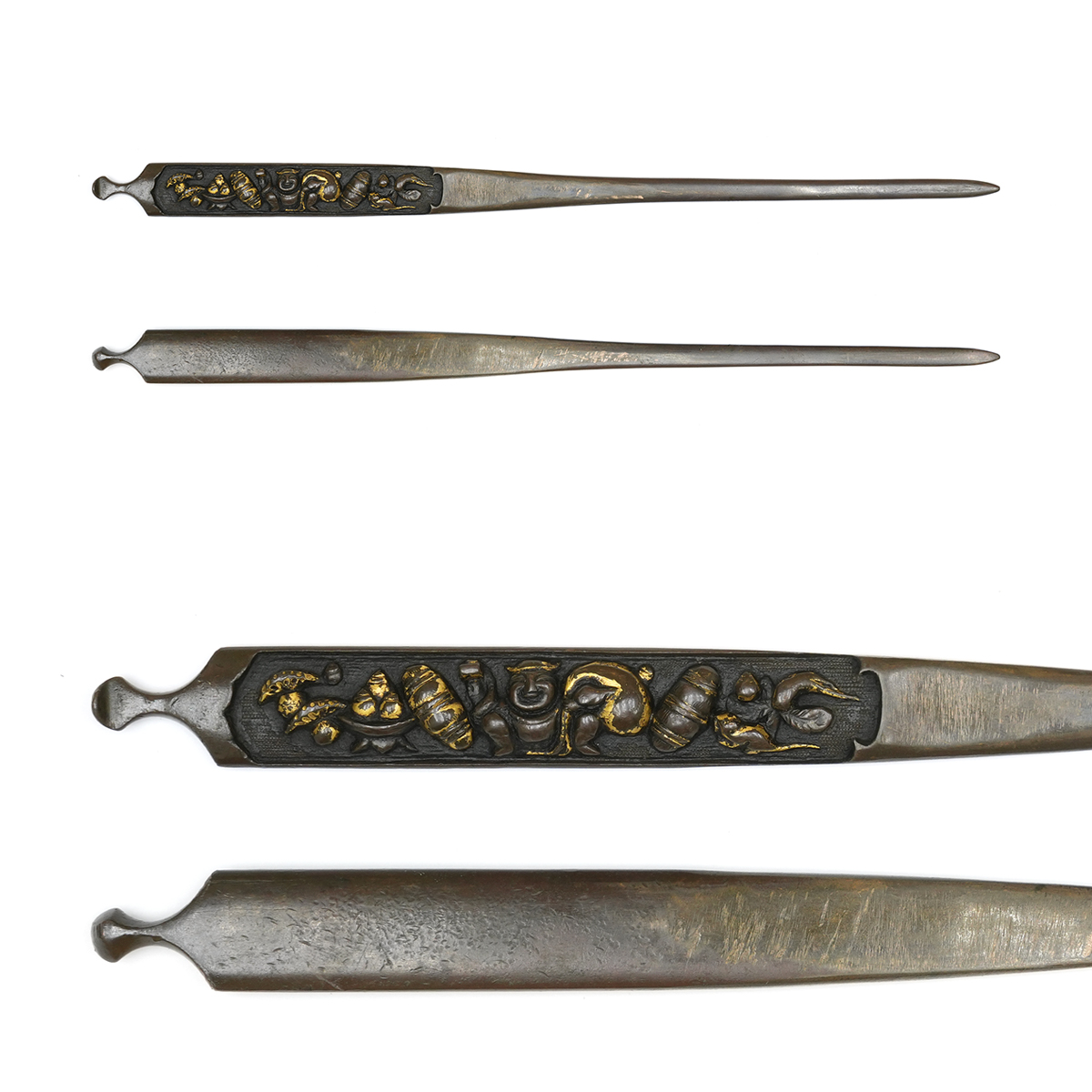
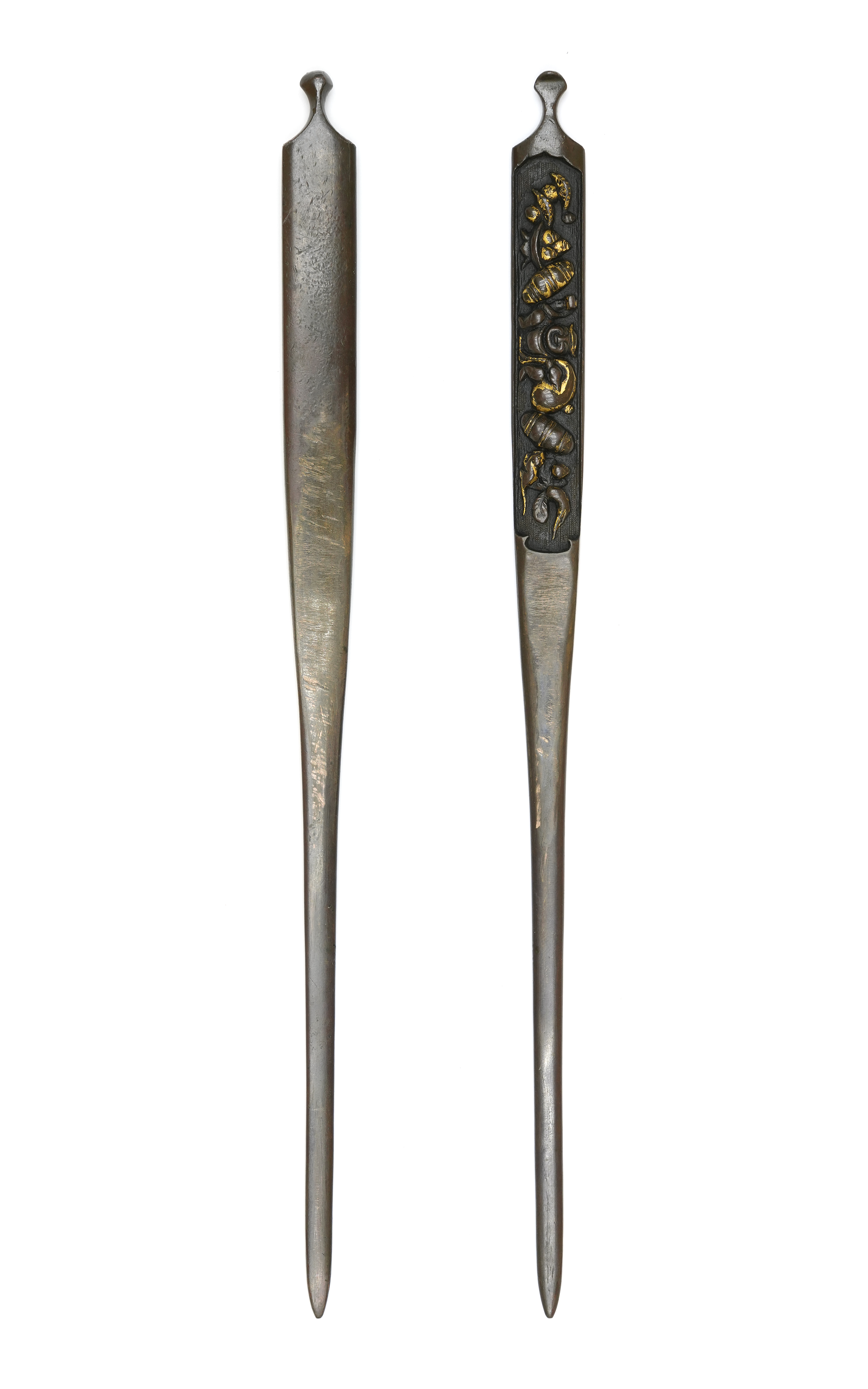
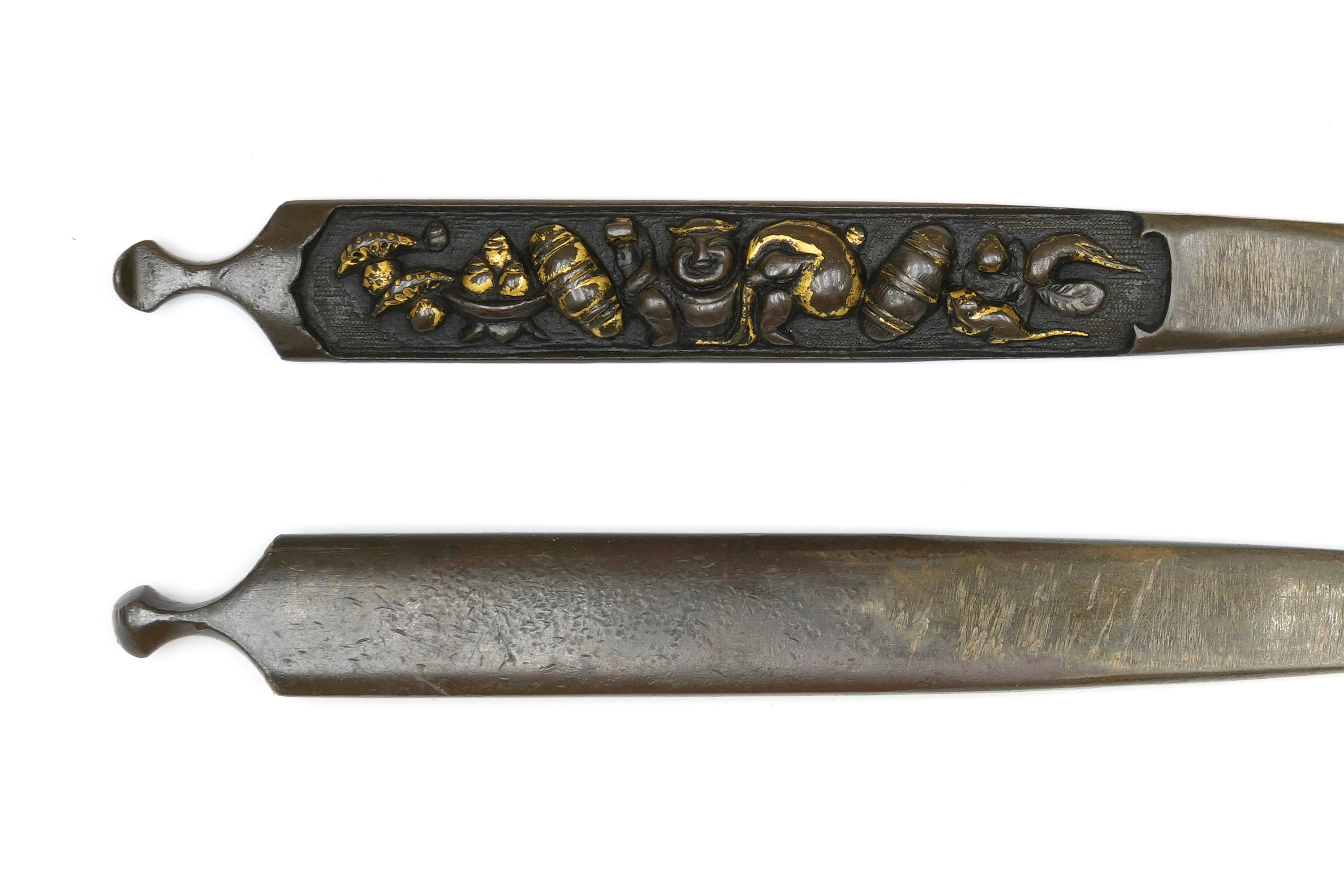
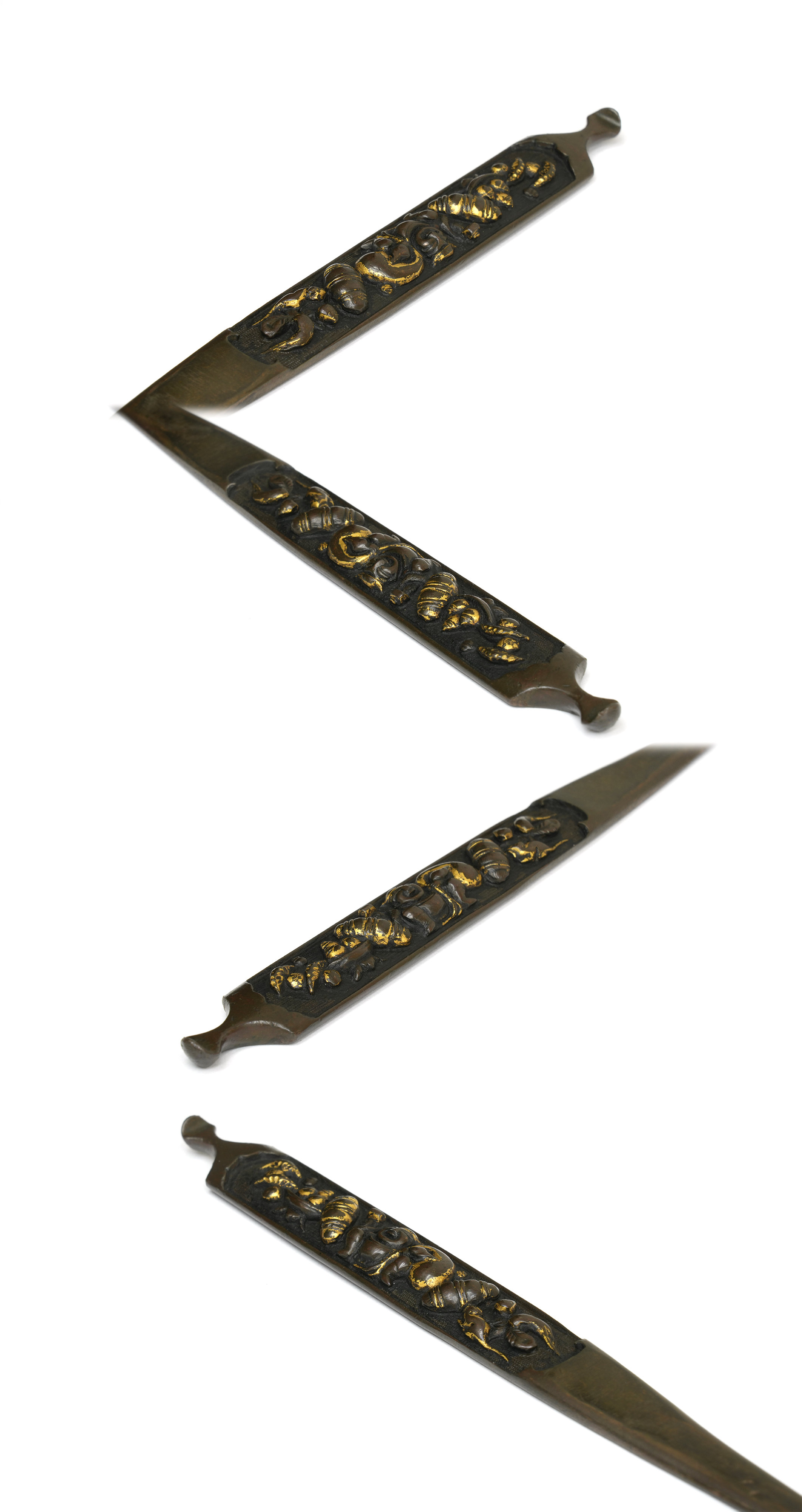
Muromachi
Unsigned
As written by the shop
Machine translation from the shop's Japanese · may contain errors ·
We could not find an authenticity certificate on the seller’s listing. Japanese swords and fittings are normally papered by the NBTHK (or the NTHK). Without one, the attribution is the seller’s own assessment and has not been independently verified — treat it with caution and ask the dealer about certification before buying.
As a rule we do not accept returns, except when we have sent a different item from the one ordered or when there is a significant discrepancy between the description and the item. If you wish to return an item, please contact us within 3 days of its arrival and then send it back.
¥242,000