Around 1800 Suishinshi Masahide argued in his writings that the craft must return to the old masters’ methods: the fukkotō revival. His greatest successor Naotane worked convincingly in Bizen and Sōshū manners that had been dead for centuries.
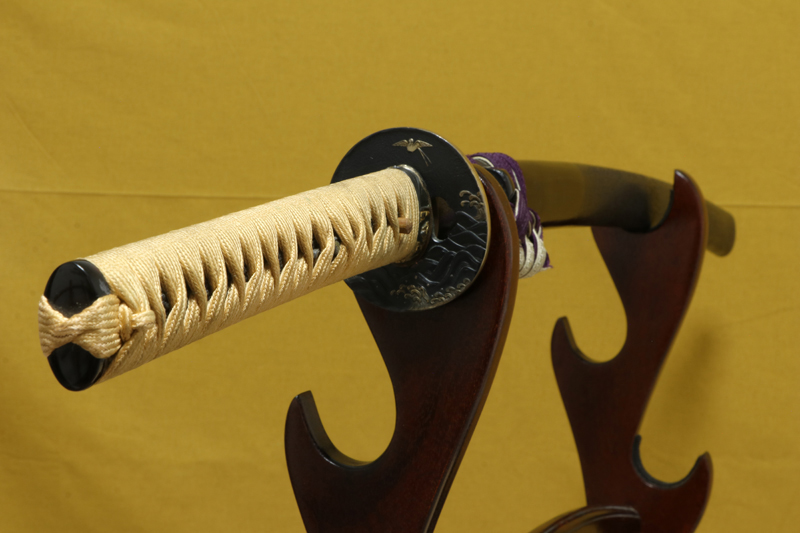
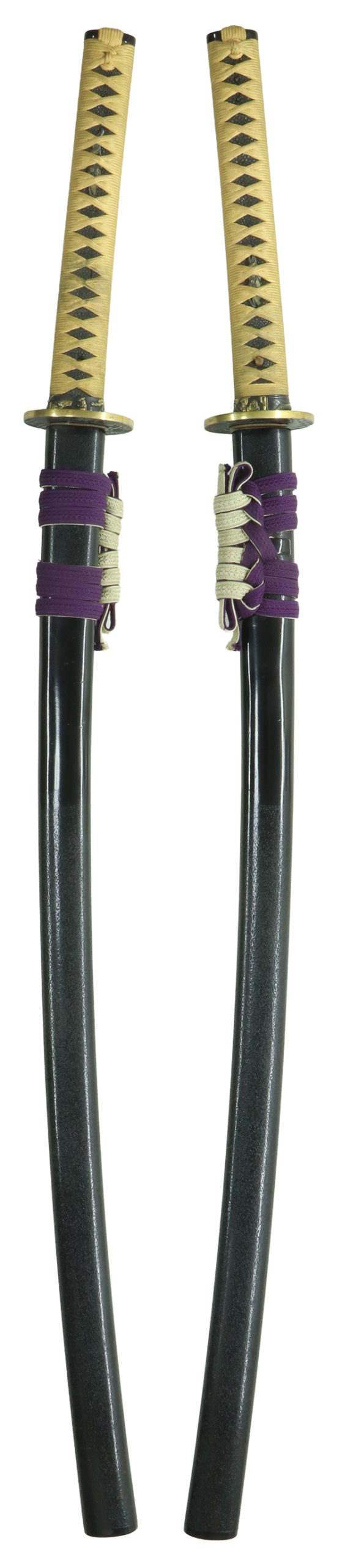
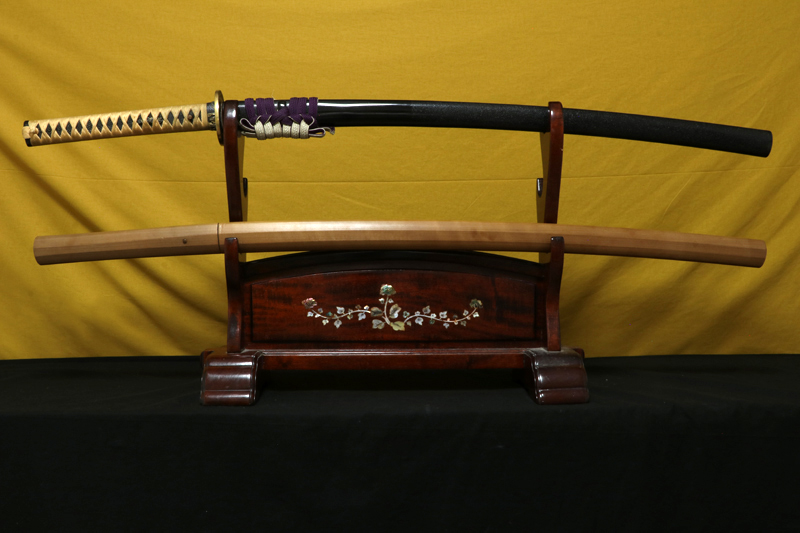
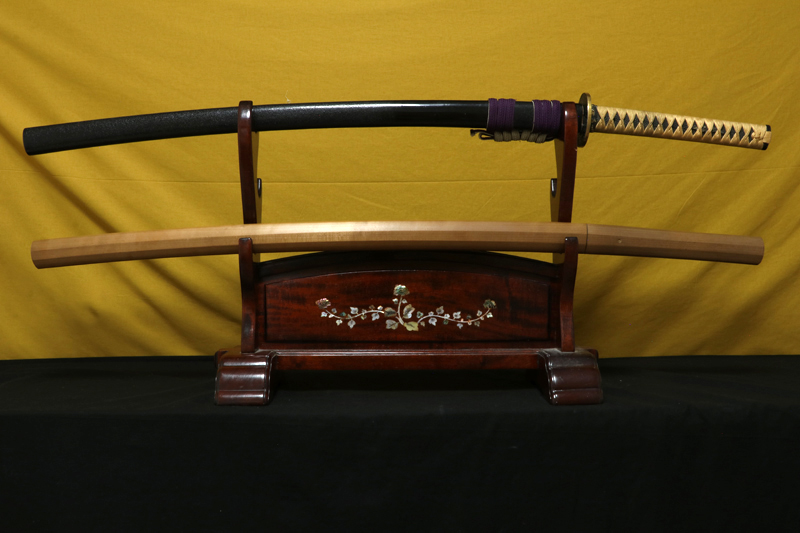
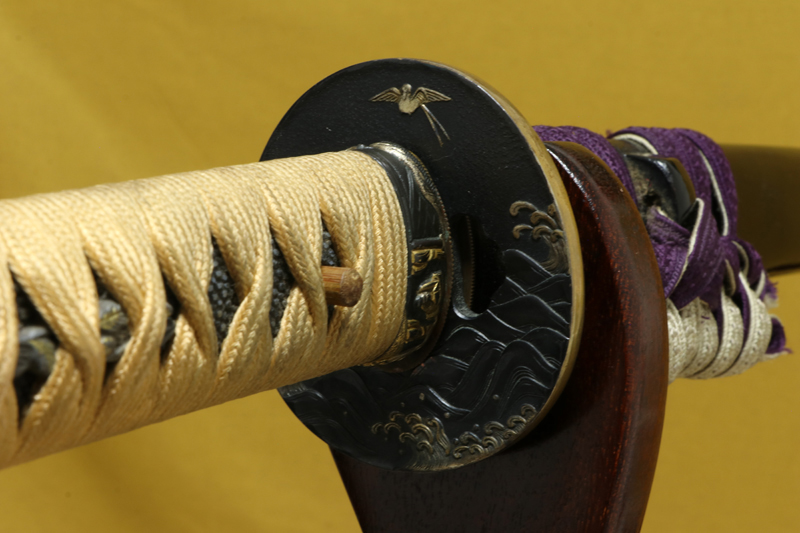
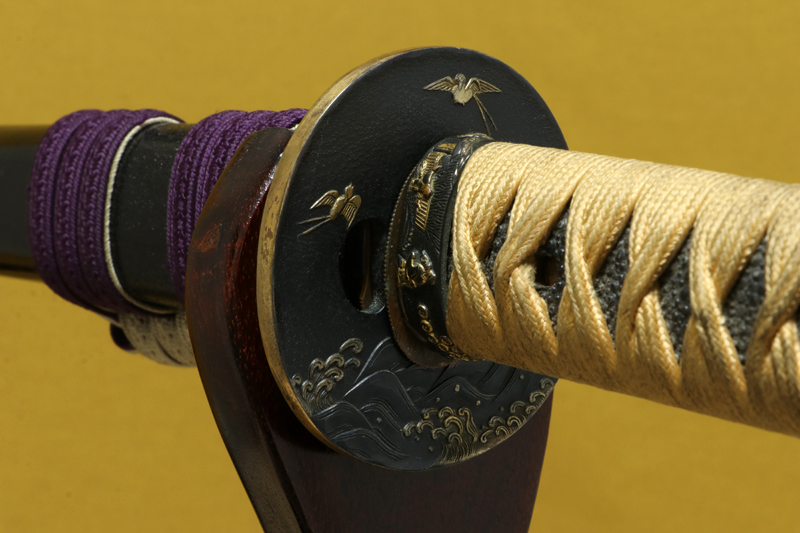
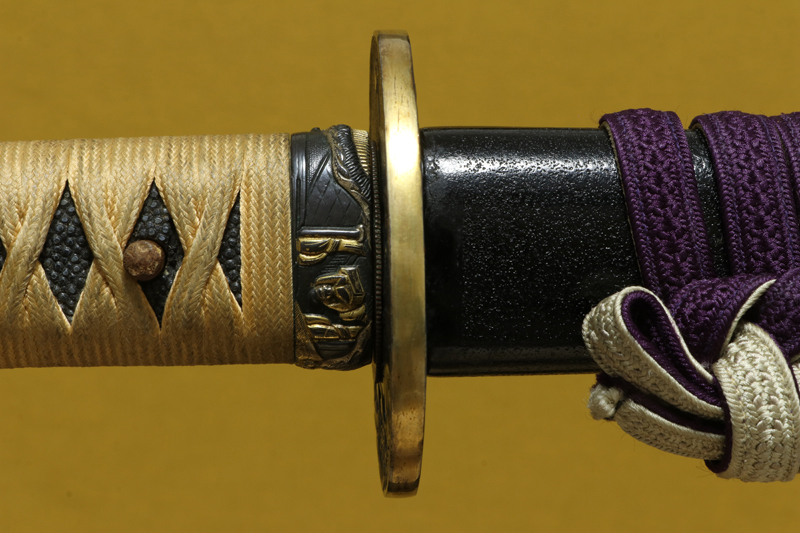
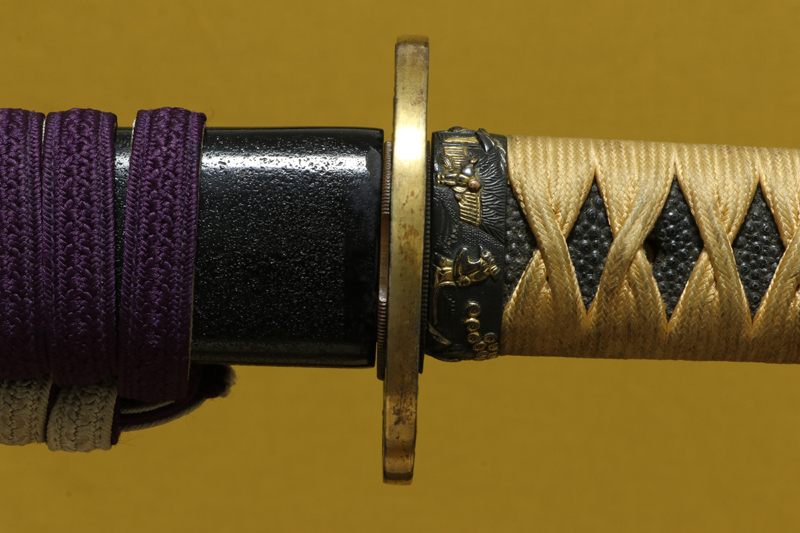
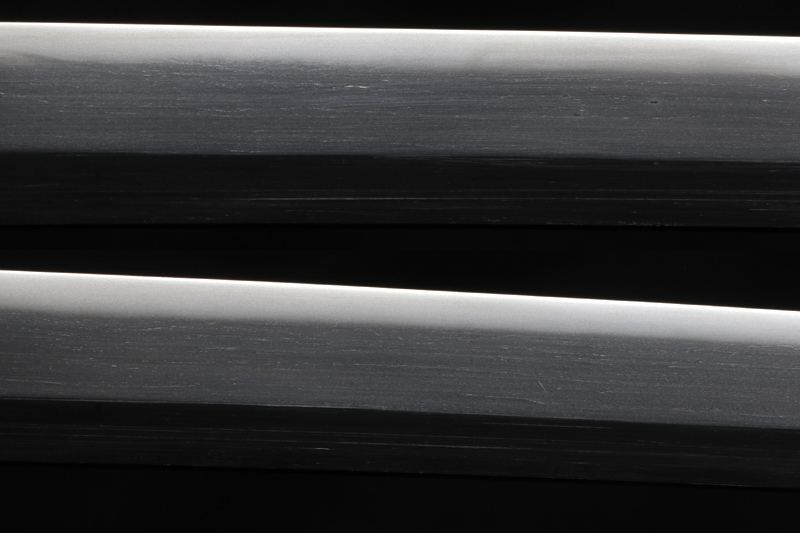
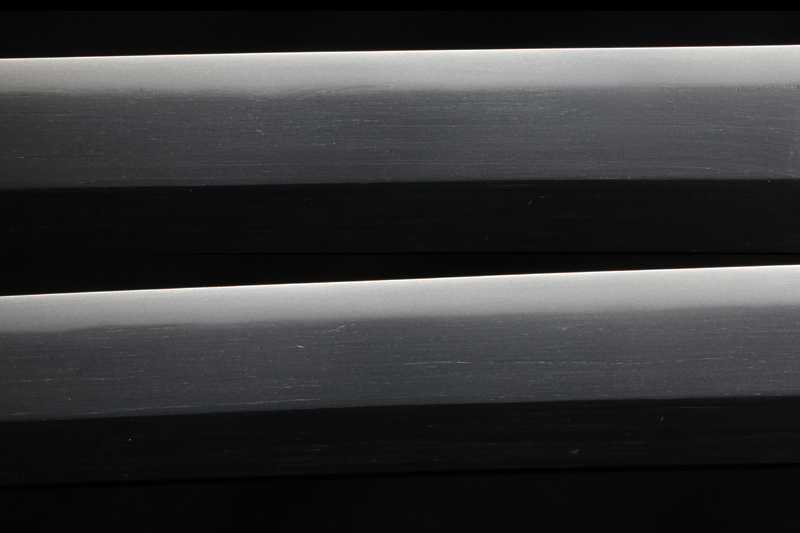
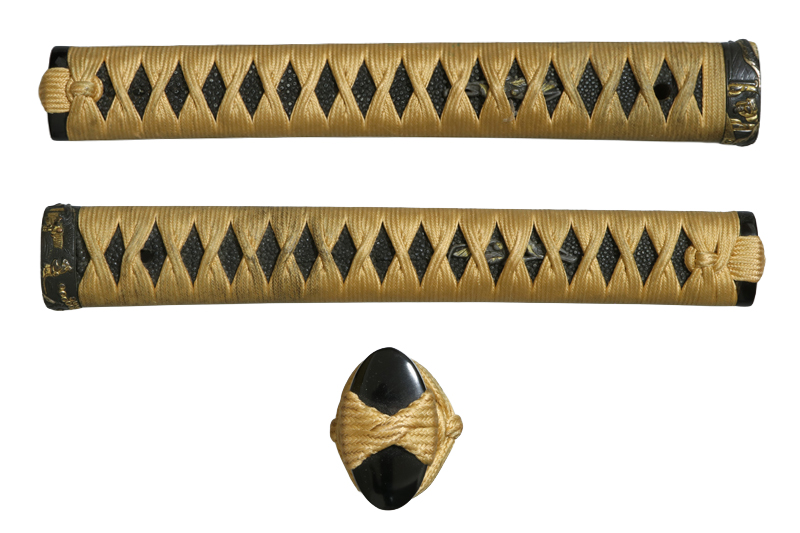
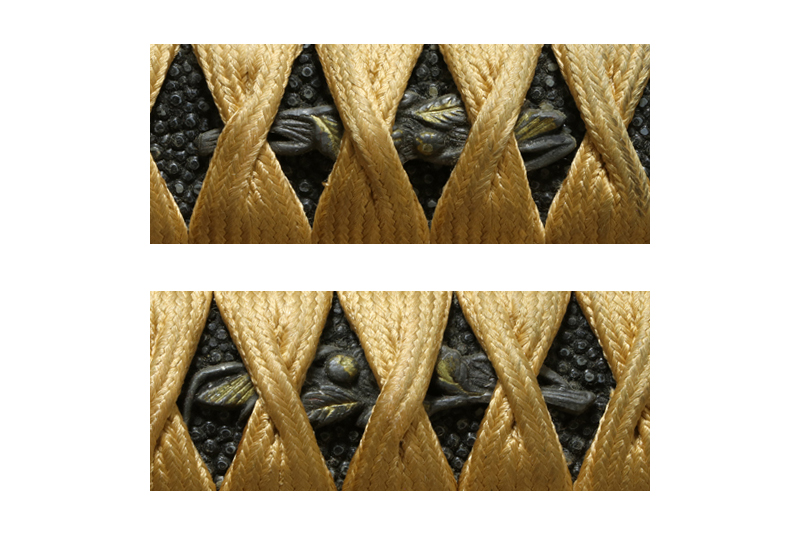
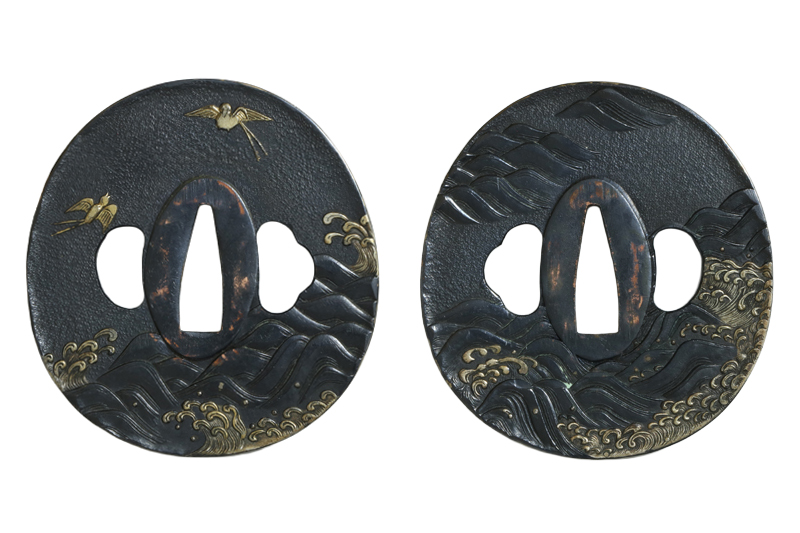
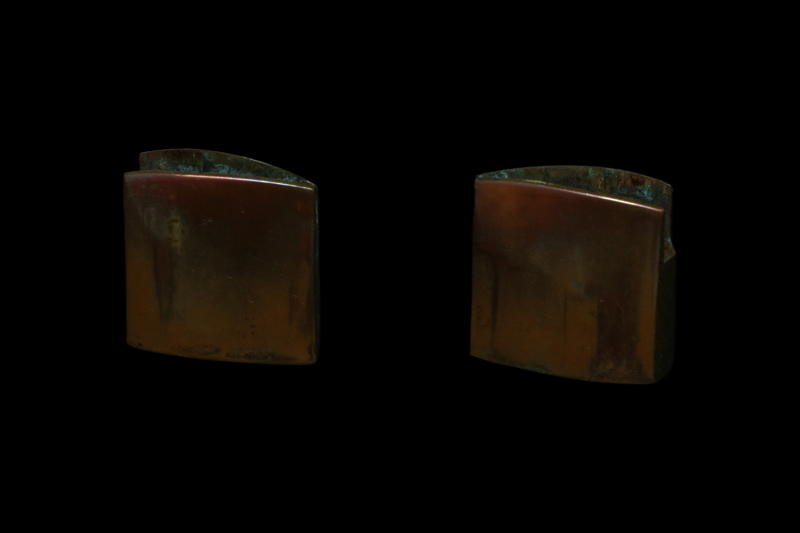
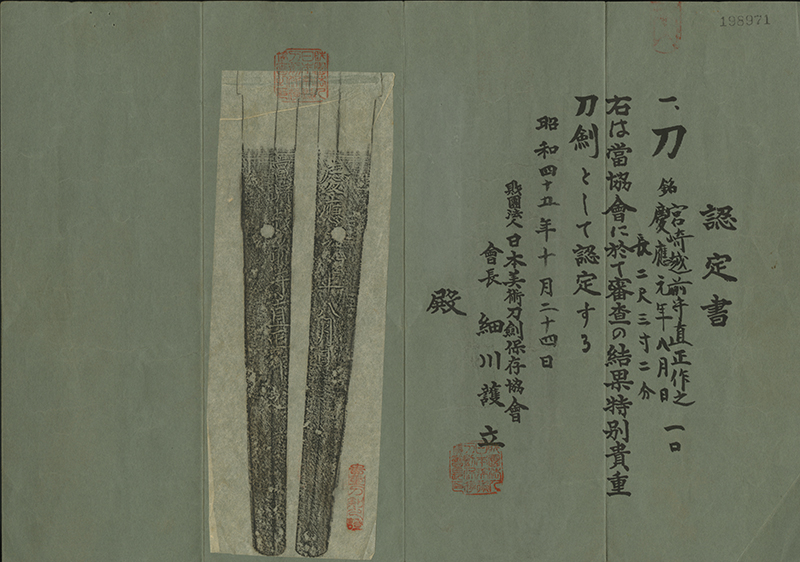
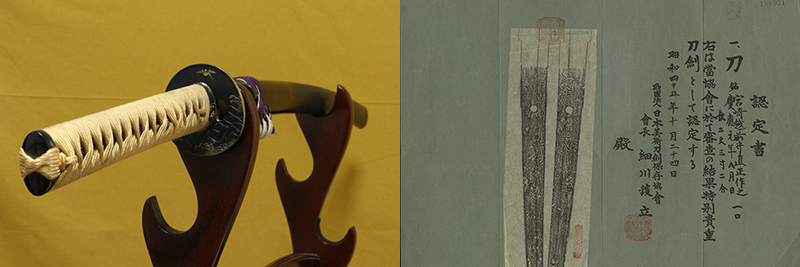
Tokubetsu Kityo Token Miyazaki Echizen no kami naomasa kore tsukuru with Koshirae and Shirosaya. Miyazaki Echizen no Kami Naomasa was a master swordsmith who studied under Taikei Naotane and served as the official swordsmith of the Soma Nakamura Domain in Oshu Province. This fine sword is believed to be modeled after a Kamakura-period Yamato-den tachi, featuring itame hada flowing into masame and an active chu-suguha hamon. Despite three areas of sumi-gomori, both the blade and antique koshirae are in good condition. Ideal for appreciation and collection, it can also be used for Iaido by replacing the heavy tsuba with a lighter one. Miyazaki Echizen no Kami Naomasa was a master swordsmith who studied under Taikei Naotane and served as the official swordsmith of the Soma Nakamura Domain in Oshu Province. This fine sword is believed to be modeled after a Kamakura-period Yamato-den tachi, featuring itame hada flowing into masame and an active chu-suguha hamon. Despite three areas of sumi-gomori, both the blade and antique koshirae are in good condition. Ideal for appreciation and collection, it can also be used for Iaido by replacing the heavy tsuba with a lighter one. 「刀姿 sword figure」 Shinogi-zukuri, iori-mune, standard mihaba and kasane, torii-zori, and chu-kissaki. The nakago is ubu and kijimomo-gata, with kesho-yasuri and the nakago-jiri is kurijiri. Shinogi-zukuri, iori-mune, standard mihaba and kasane, torii-zori, and chu-kissaki. The nakago is ubu and kijimomo-gata, with kesho-yasuri file marks and a kurijiri tip. 「地鉄 jigane」 The jigane is itame flowing into masame with ji-nie. The jigane is itame hada flowing into masame, with ji-nie. 「刃紋 hamon」 The hamon is a chu-suguha in ko-nie deki with slight notare, the habuchi has ko-nie and sunagashi, and kinsuji works within the ha. The boshi enters sugu and returns in ko-maru. The hamon is a chu-suguha with slight notare, formed in ko-nie. Fine ko-nie and sunagashi appear along the habuchi, with kinsuji activity within the ha. The boshi is sugu with a ko-maru kaeri. 「特徴 detailed」 Miyazaki Echizen no Kami Naomasa was a swordsmith who was active in the late Edo period as the official smith for the 60,000 koku Nakamura Domain of the Soma family in Oshu, and was a pupil of Taikei Naotane. Other mei are cut as "Keishinsai Naomasa kore wo tsukuru", "Nakamura-shin Keishinsai Naomasa kore wo tsukuru", "Nihon Go-kaji Echizen no Kami Naomasa", and so on. The Soma family is a prestigious buke family said to have been granted Namekata-gun in Mutsu no Kuni (present day Soma region of Fukushima Prefecture) by Minamoto no Yoritomo for their distinguished service in the Oshu Battle of Bunji 5 (1189). Since then, they ruled this land until the end of the Bakufu, and are still widely known today for the traditional event "Soma Nomaoi". Based on the kijimomo-nakago shape, this work is thought to be a copy of an Efu no Tachi from the Kamakura period. It is an excellent work with an active chu-suguha tempered into jigane where the itame hada flows into masame. It is probably a copy of a Kamakura period Yamato-den tachi. Also, while the condition of the blade is good, as a regrettable point, sumi-gomori can be seen in 3 places. The koshirae is from an old period, and the tsuka-maki has been re-wrapped. The saya is kanshitsu kuro-ishime-nuri, and the part that is tucked into the obi has been polished by many years of use, showing a luster like kuro-ro-nuri. The state of preservation is generally good. This work is a recommended sword for appreciation and collection, but if the currently equipped 160g tsuba is exchanged for a lightweight one, it is also suitable for use in Iaido. Miyazaki Echizen no Kami Naomasa was a swordsmith of the late Edo period who served as the official swordsmith of the 60,000-koku Nakamura Domain of the Soma clan in Oshu Province. He studied under the renowned swordsmith Taikei Naotane. His other signatures include “Keishinsai Naomasa Kore wo Tsukuru,” “Nakamura-shin Keishinsai Naomasa Kore wo Tsukuru,” and “Nihon Go-kaji Echizen no Kami Naomasa.” The Soma clan was a distinguished samurai family said to have been granted Namekata District in Mutsu Province (present-day Soma region, Fukushima Prefecture) by Minamoto no Yoritomo in recognition of their achievements in the Oshu Campaign of 1189. The clan ruled the region until the end of the Edo period and remains famous today for the traditional Soma Nomaoi festival. Judging from its distinctive kijimomo-nakago, this sword is believed to be modeled after a Kamakura-period Efu no Tachi. It features itame hada flowing into masame, with an active chu-suguha hamon. This excellent sword was most likely inspired by a Kamakura-period tachi of the Yamato tradition. The blade is in good condition, although there are three areas of sumi-gomori. The koshirae is antique, although the tsuka has been rewrapped. The saya features a black dry-lacquer ishime finish. The section that rests against the obi has been polished smooth through years of use, developing a glossy appearance resembling black roiro lacquer. The koshirae remains in generally good condition. This sword is highly recommended for appreciation and collection. By replacing the currently fitted heavy tsuba (160g) with a lighter one, it would also be suitable for Iaido practice. 「拵 Koshirae」 Habaki: Su-akagane migaki-ji ichijo. Tsuba: Su-akagane-ji kuro-zome nami chidori no zu. Fuchikashira: Shakudo nanako-ji tojin no zu, kashira is buffalo horn. Menuki: Sansho no zu. Tsuka: Same has oya-tsubu and is kuro-zome. Tsuka-maki is silk kin-cha color moro-tsumami-maki. Saya: Kanshitsu kuro-ishime, the part entering the obi is polished and has become like kuro-ro. 「刀剣の状態 condition of blade」 Togi: Generally good. Kizu: There are no kizu that would be considered defects such as kitae-ware.
Offered by Giheiya
This piece has sold
Get an email when a new Suishinshi Masahide Naomasa piece hits the market.


As written by the shop
Machine translation from the shop's Japanese · may contain errors ·
Shinshinto · Mutsu · around 1864-1865
Tōken Taikan top 95%
3 pieces on the market now
Shinshinto · Musashi
69 pieces on the market now
At Hamachō in Edo, in the closing decades of the eighteenth century and the opening ones of the nineteenth, Suishinshi Masahide[[c:1]] gathered the school that would turn Japanese swordmaking back toward its medieval models. Born Kawabe Gihachirō at Akayu in Dewa in 1750, signing first as Suzuki Takahide and then Eikoku, he studied under the Shitahara smith Yoshihide of Musashi, took the name Masahide in An'ei 3, and served the Akimoto house of Yamagata before settling in Edo, where he worked for nearly fifty years. He is the founding figure of the shinshintō and the theorist of the fukko-tō (revival-sword) doctrine, the argument that the sword ought to return to its Kamakura forms. Around that teaching he drew a large body of pupils, among them Taikei Naotane, who would give the revival its fullest practical form, the future second Masayoshi (Hosokawa Morihide), and a wider Edo and provincial following that carried the program into the Mito, Yonezawa, Tsuyama, and Tatebayashi domains. The shared vocabulary of the school is the deliberate reach back into the koto traditions, worked over a tightly forged, often muji-toned ko-itame with thick ji-nie. Masahide's own prime hand was the Ōsaka-utsushi, the surging tōran-midare of Tsuda Sukehiro opening from a long yakidashi and the broad suguha after Inoue Shinkai, betrayed on even his closest copies by a blackish, coarse nie that spills from the ha into the ji. Naotane gave the revival its Bizen and Sōshū faces: a reverse-leaning chōji-midare with angular kaku-gunome and saka-ashi, modeled on the late-Kamakura Osafune masters Kagemitsu and Kanemitsu and anchored by a consciously revived midare-utsuri that no ordinary shinshintō steel carries, set beside a Sōshū notare with its whorled uzumaki-hada and coarse, striped nie. The pupils divided this inheritance along their own lines. Jirōtarō Naokatsu, Naotane's adopted son, took a Bizen-den led by a kataochi-gunome from Kanemitsu with a pervasive saka-gakari slant and chōji- or midare-utsuri in the ji.
Suishinshi Masatsugu reproduced Naotane's two traditions, Sōshū and Bizen, down to the cut of his signature. Through Masayoshi the Bizen current passed to his heir Hosokawa Masamori of Tsuyama, whose chōji clusters mixed with gunome-chōji and togariba. The Osaka wave traveled separately into Mito through Naoe Sukemasa, who set a Shinkai-styled suguha and a Sukehiro tōran over a clear ko-itame, while Chōunsai Tsunatoshi of the Uesugi service carried a nioi-deki chōji mixed with gunome, suguha, and tōran-midare, often with carving by his own hand. To kantei the school is to weigh a tradition consciously copied against the period marks the copy cannot shed: the constant of the line is that the hamon is never the pure nioi-deki of old Bizen but carries nie throughout, a difference the NBTHK names outright as the divide between koto and shinshintō. The revived utsuri in Naotane and Naokatsu, the spilling nie in Masahide, the whorled uzumaki-hada shared across the line, and the broad, thick-kasane late-Edo sugata are the surest tells, narrowed further by the school's habit of full, dated signatures that make these smiths among the most exactly knowable of their age. Masahide stands at the head as the teacher and theorist, his finest work in his Ōsaka copies rather than the doctrine he proclaimed; Naotane stands ahead of him in execution, his Bizen-den held the finest among the shinshintō. Their pupils define the late-Edo Osafune and Sōshū revivals as practiced through Edo and the domains, with Naokatsu and Masatsugu read as the next hands after Naotane and Masayoshi. The provenance of the school runs through domain commission and bestowal (Mito blades forged at the Kōrakuen by lordly order, Tsuyama and Yonezawa fief work, Naotane's Sanada daishō and a tachi recorded in Honma's inventory of the Imperial collection) rather than ancient daimyō transmission, fitting for a movement that, within a single generation at Edo, redrew the direction of nineteenth-century swordmaking by turning it back toward the old models. Learn more →
| Smith | Era | Designated |
|---|---|---|
| Naotane直胤 | 1801-1837 | 40 |
| Masahide正秀 | 1777-1817 | 28 |
| Sukemasa助政 | 1804-1825 | 8 |
| Jirotaro Naokatsu直勝 | 1805-1858 | 7 |
| Masayoshi正義 | 1791-1860 | 5 |
The Shinshintō revival
Around 1800 Suishinshi Masahide argued in his writings that the craft must return to the old masters’ methods: the fukkotō revival. His greatest successor Naotane worked convincingly in Bizen and Sōshū manners that had been dead for centuries.
This work carries older NBTHK “Kichō”-era papers, which the NBTHK no longer issues and largely disavows today. To confirm the attribution, submission to an official Japanese examination body (such as the NBTHK or NTHK) for modern certification could be considered.
Within 3 days of the item's arrival, we offer a refund or an exchange. Return shipping and the bank transfer fee for the refund are at the customer's expense.