Around 1800 Suishinshi Masahide argued in his writings that the craft must return to the old masters’ methods: the fukkotō revival. His greatest successor Naotane worked convincingly in Bizen and Sōshū manners that had been dead for centuries.
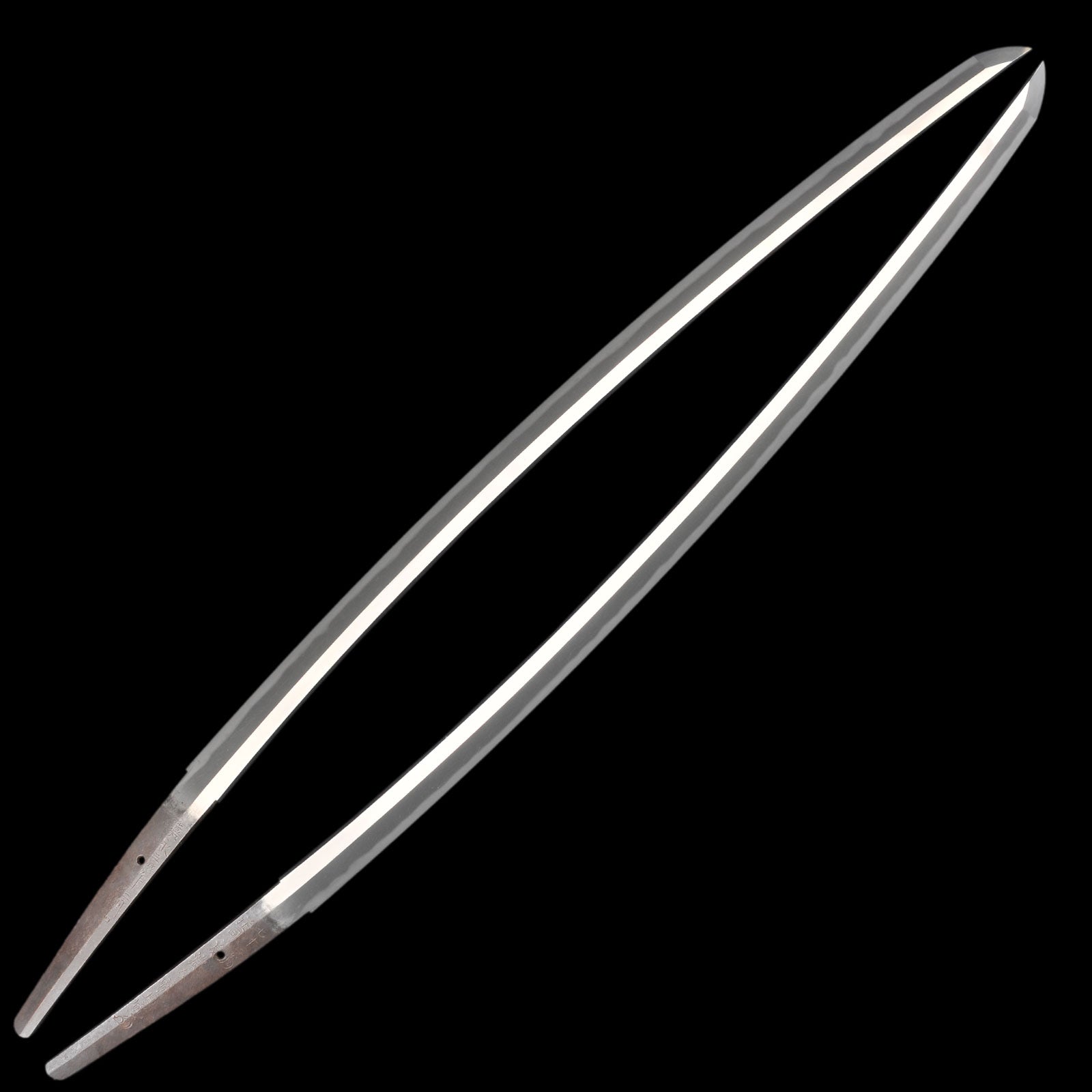
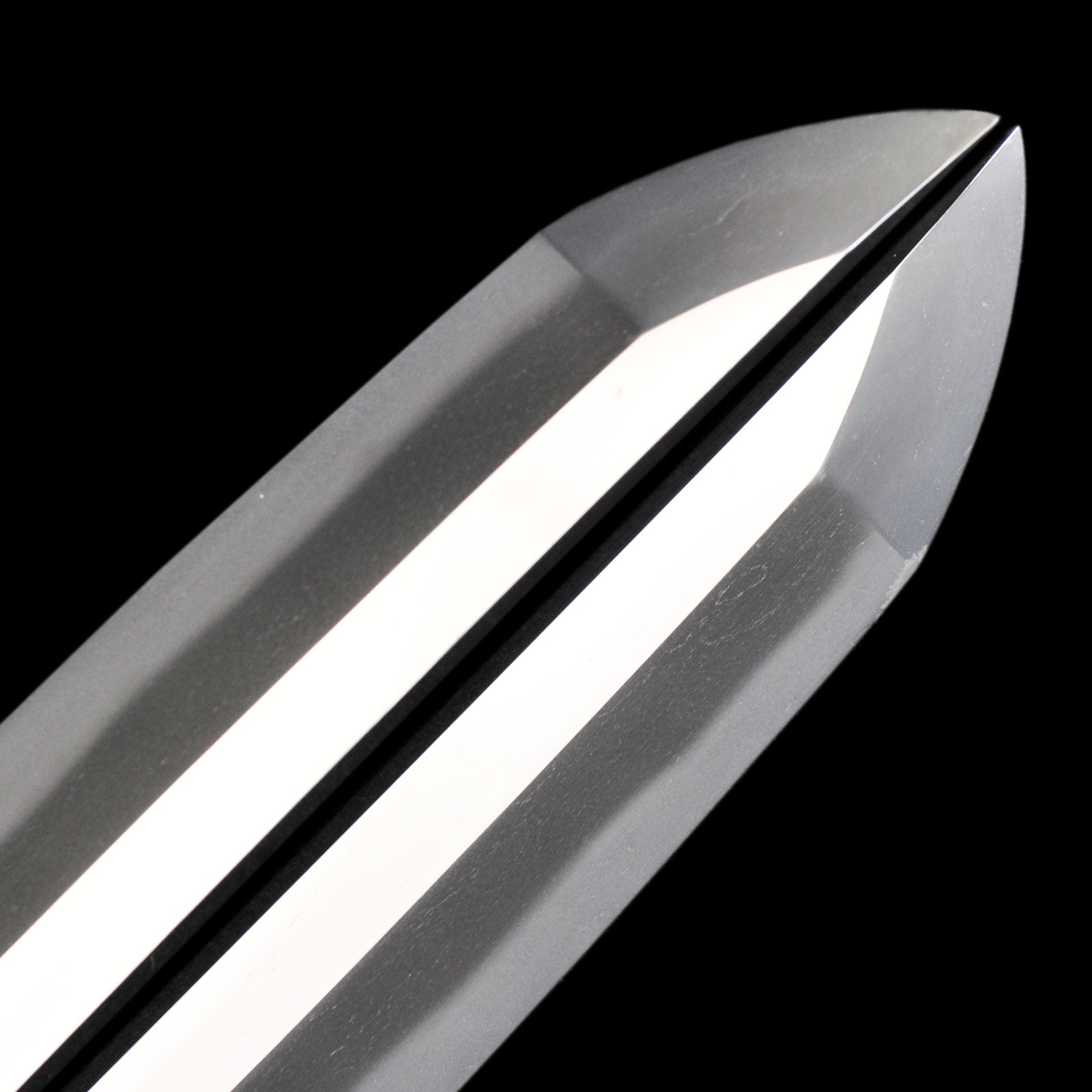
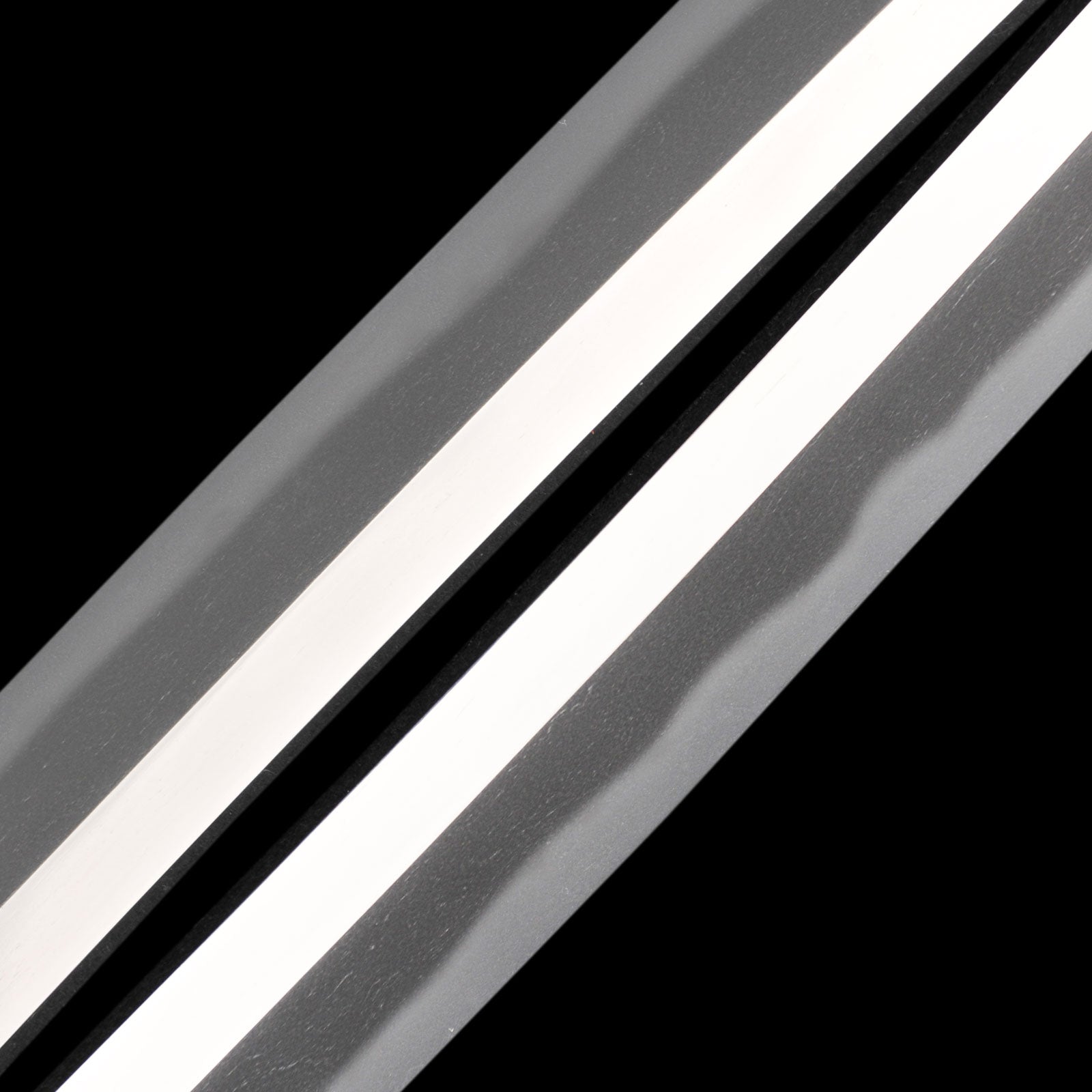
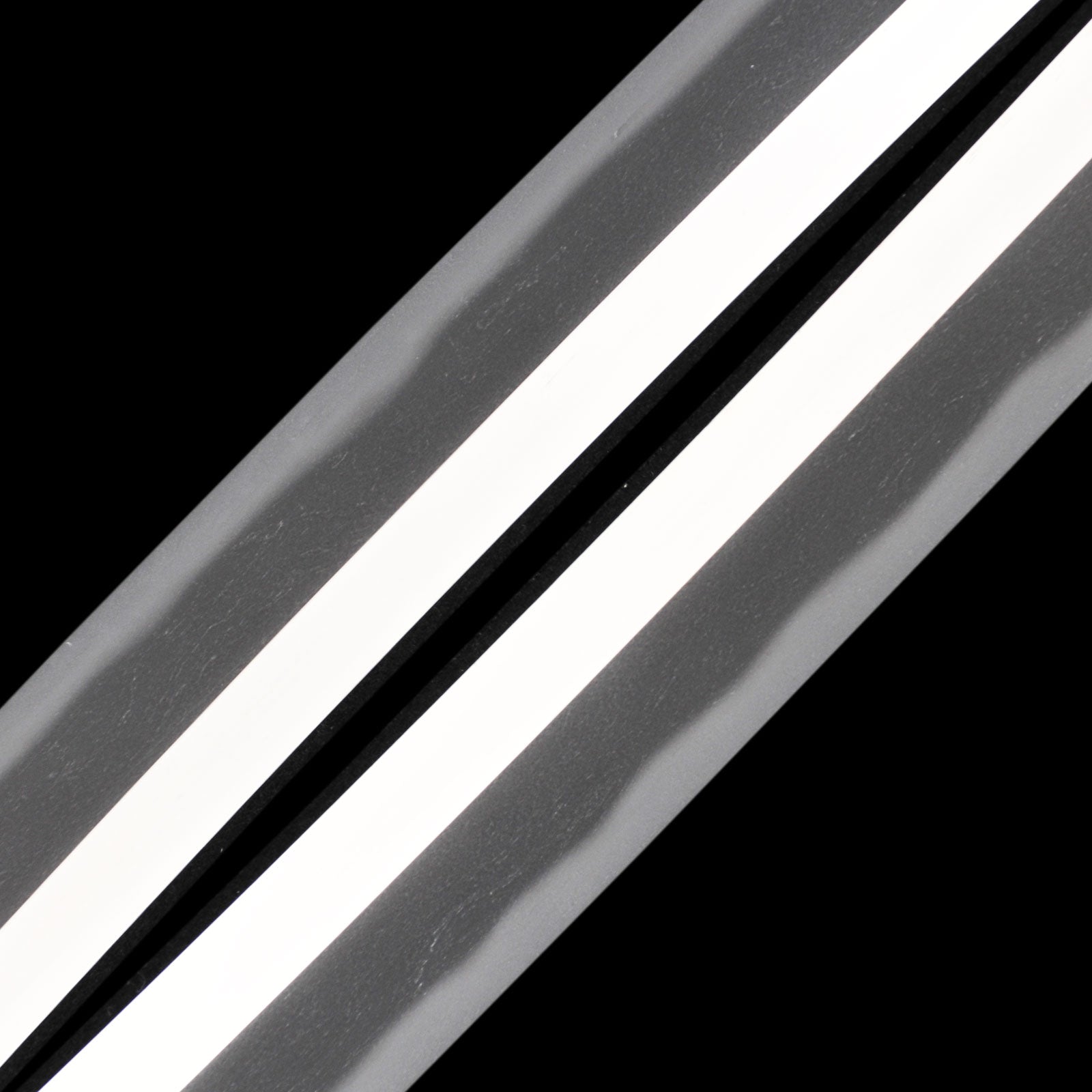
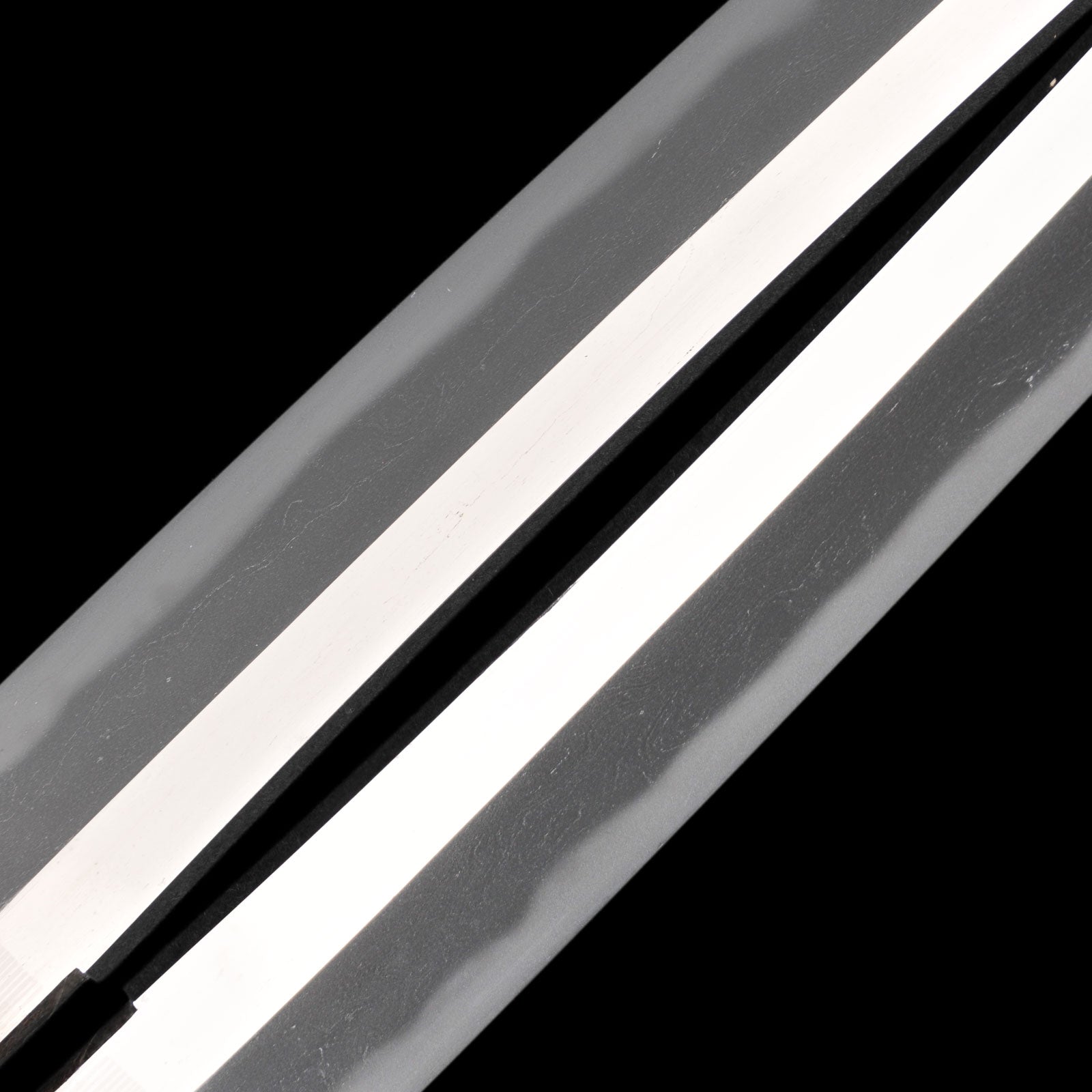
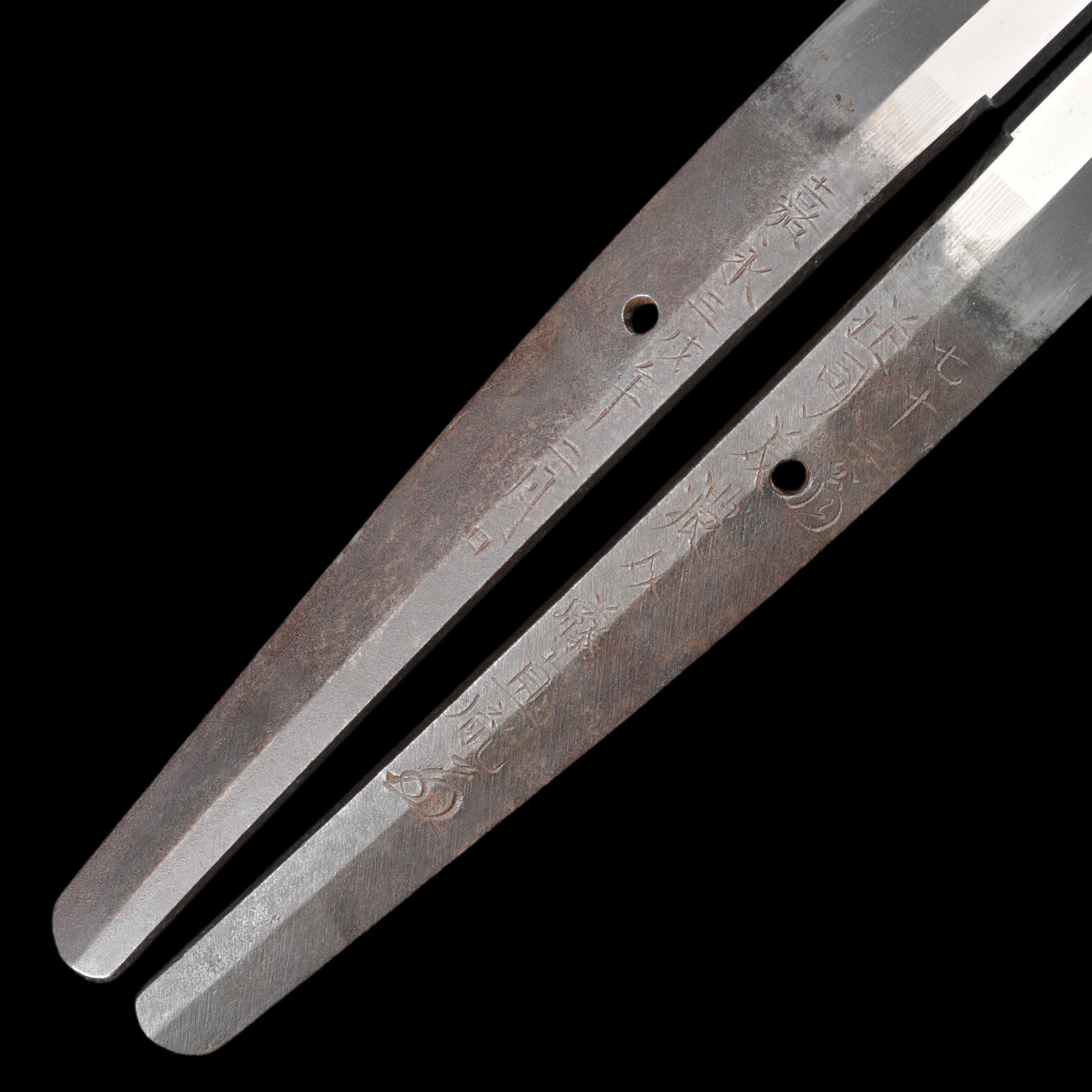
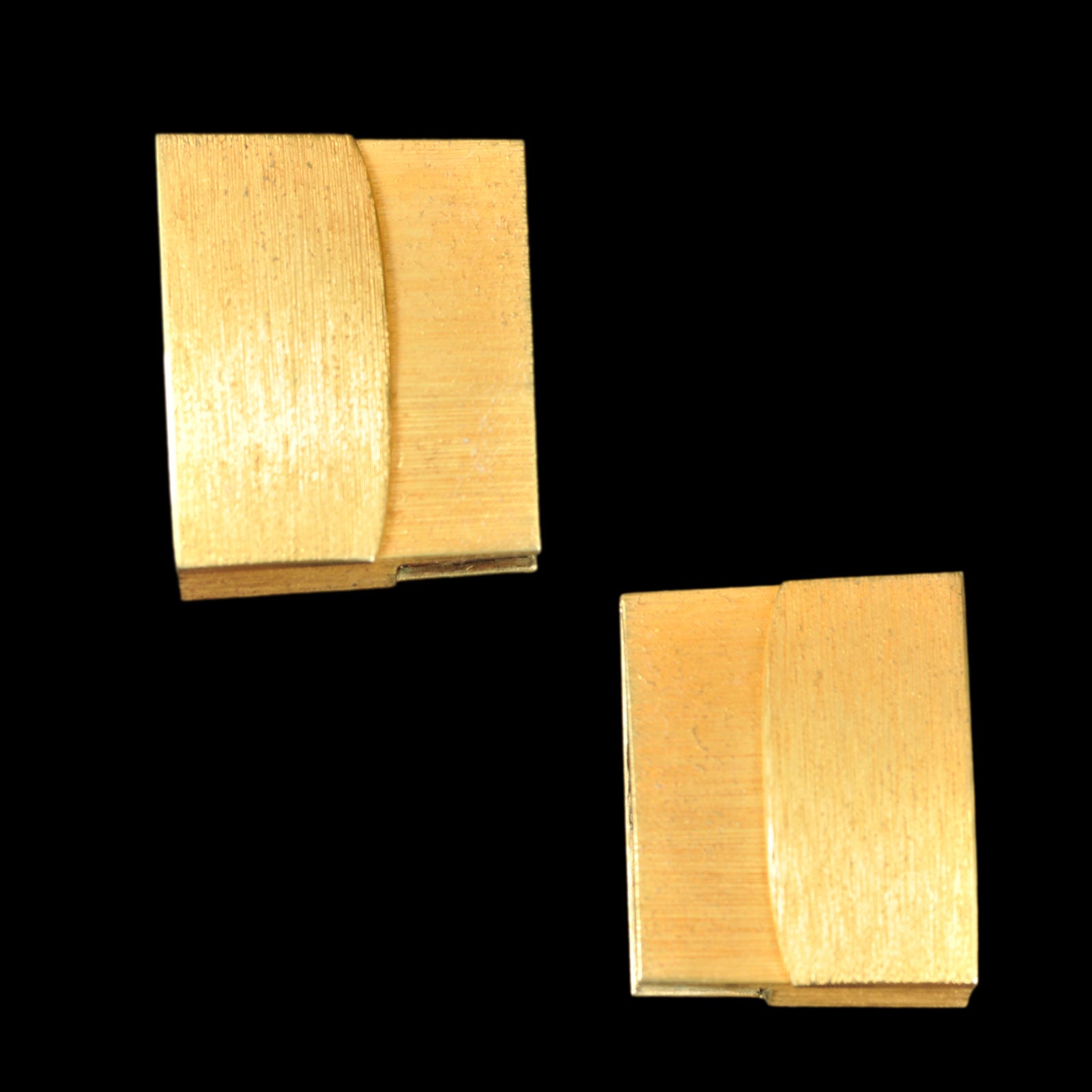
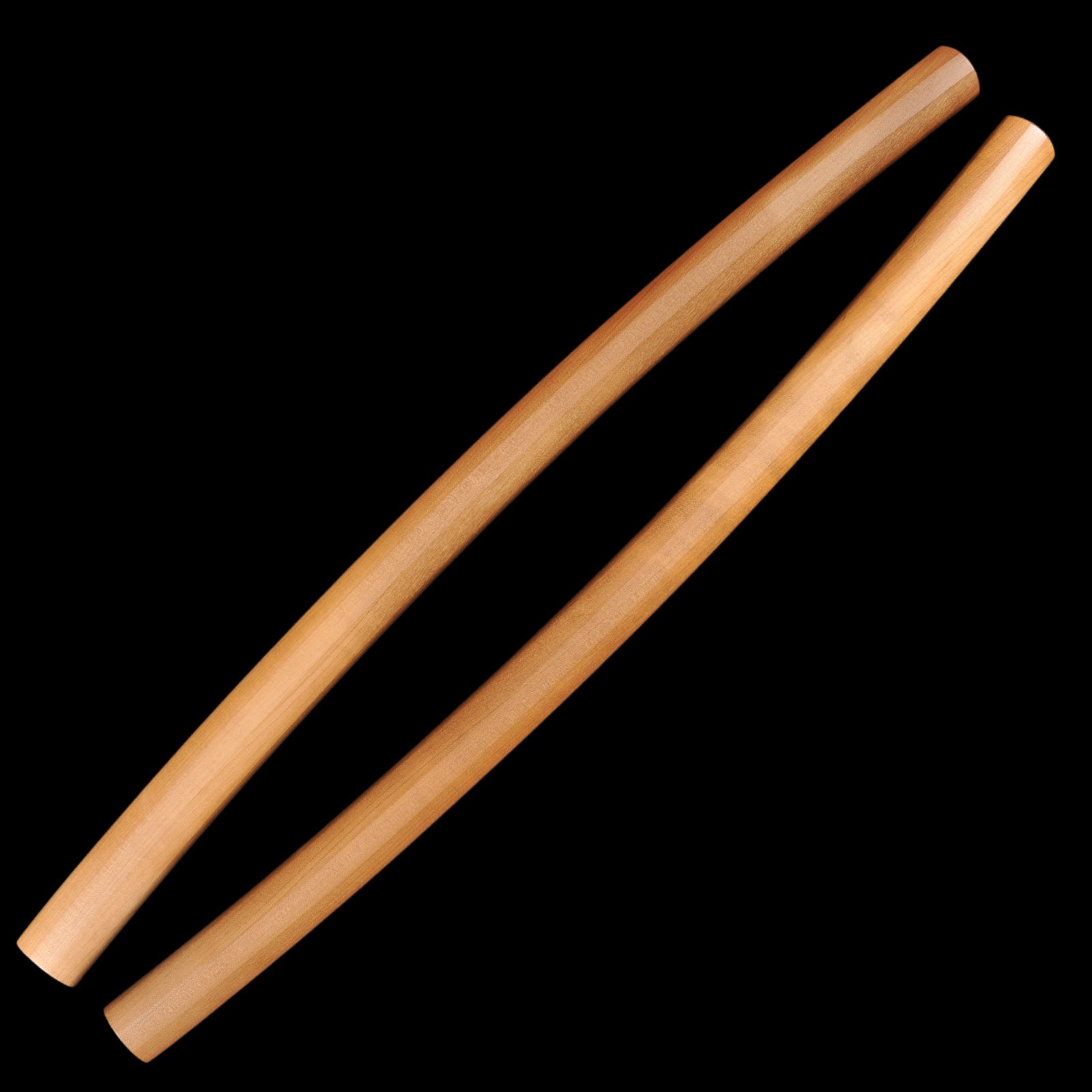
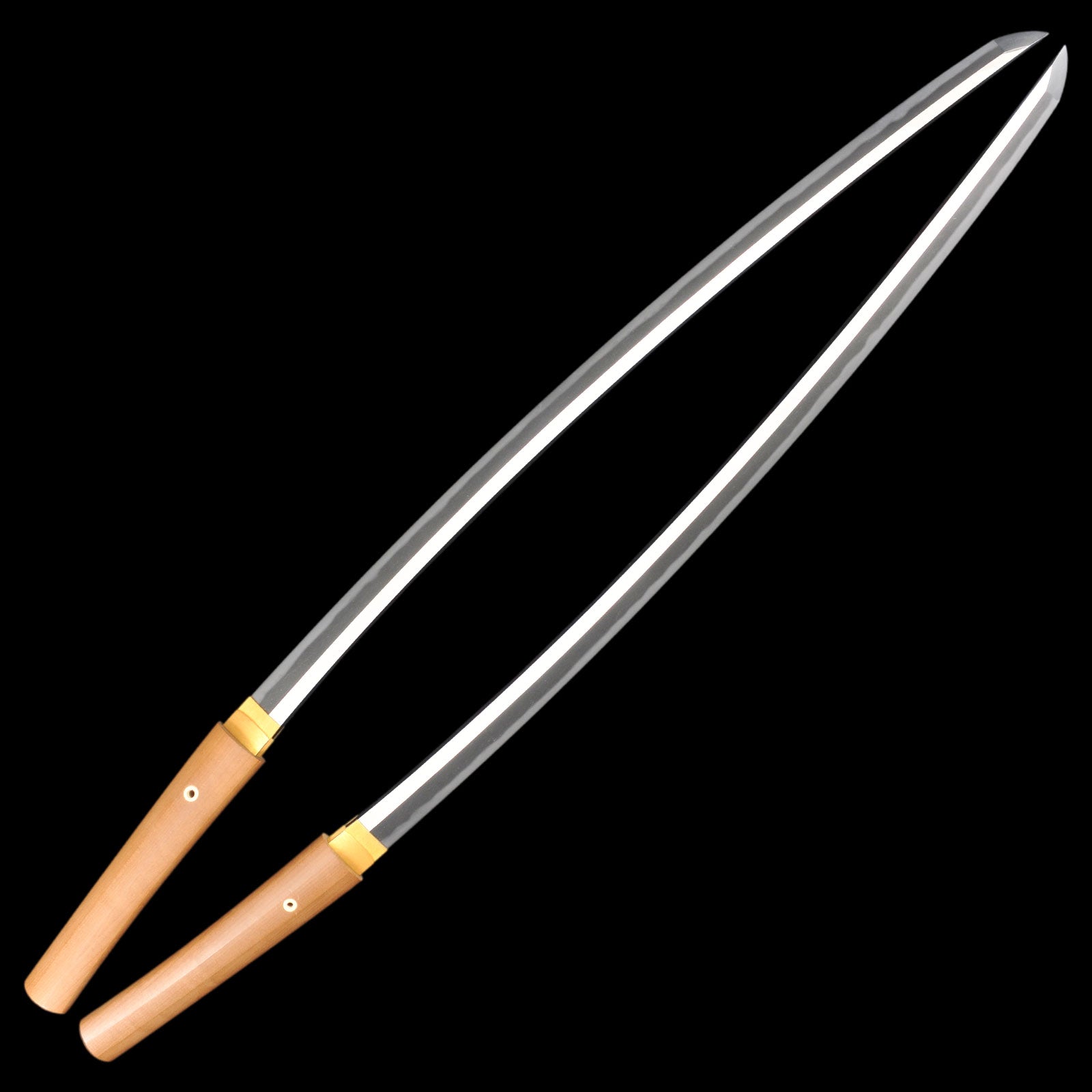
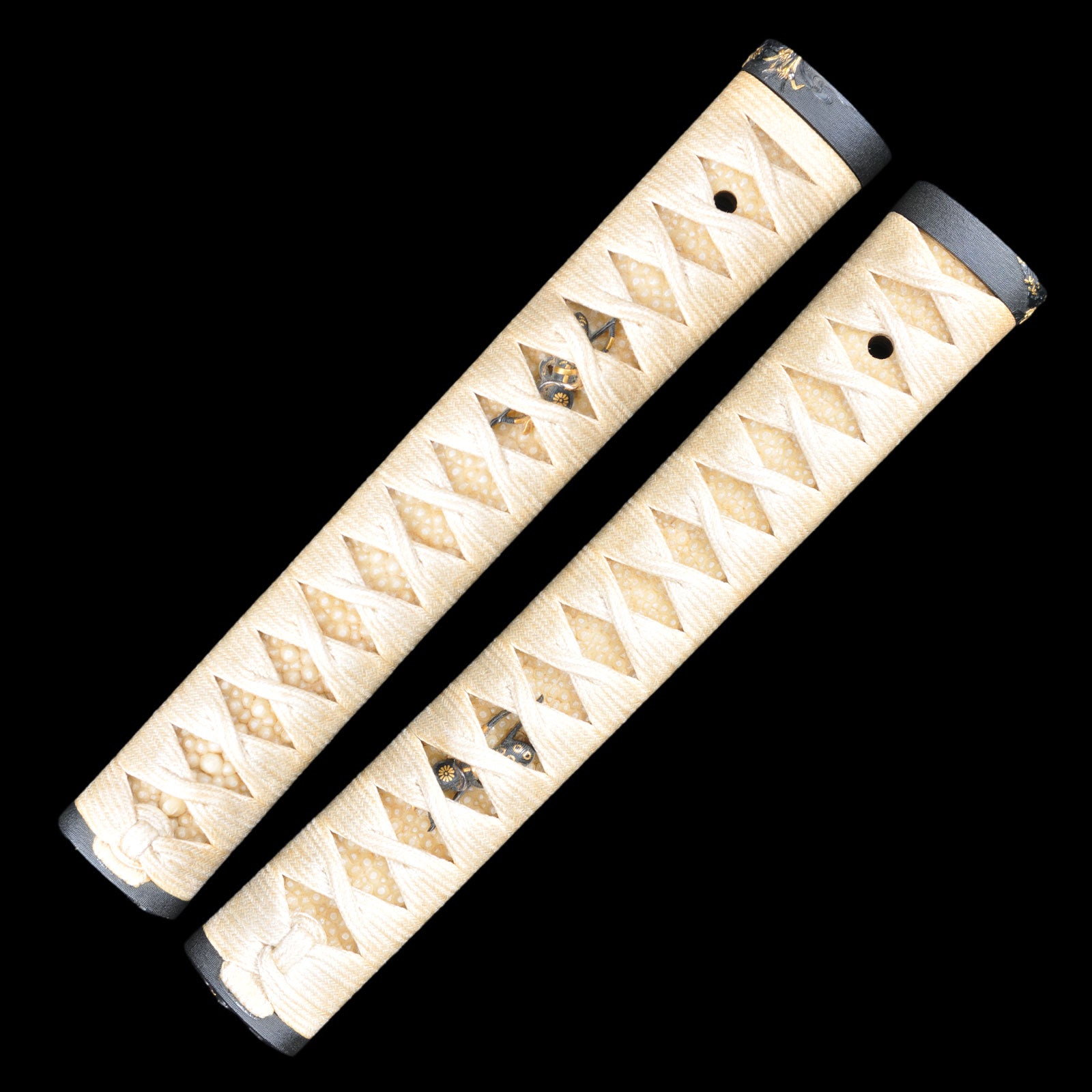
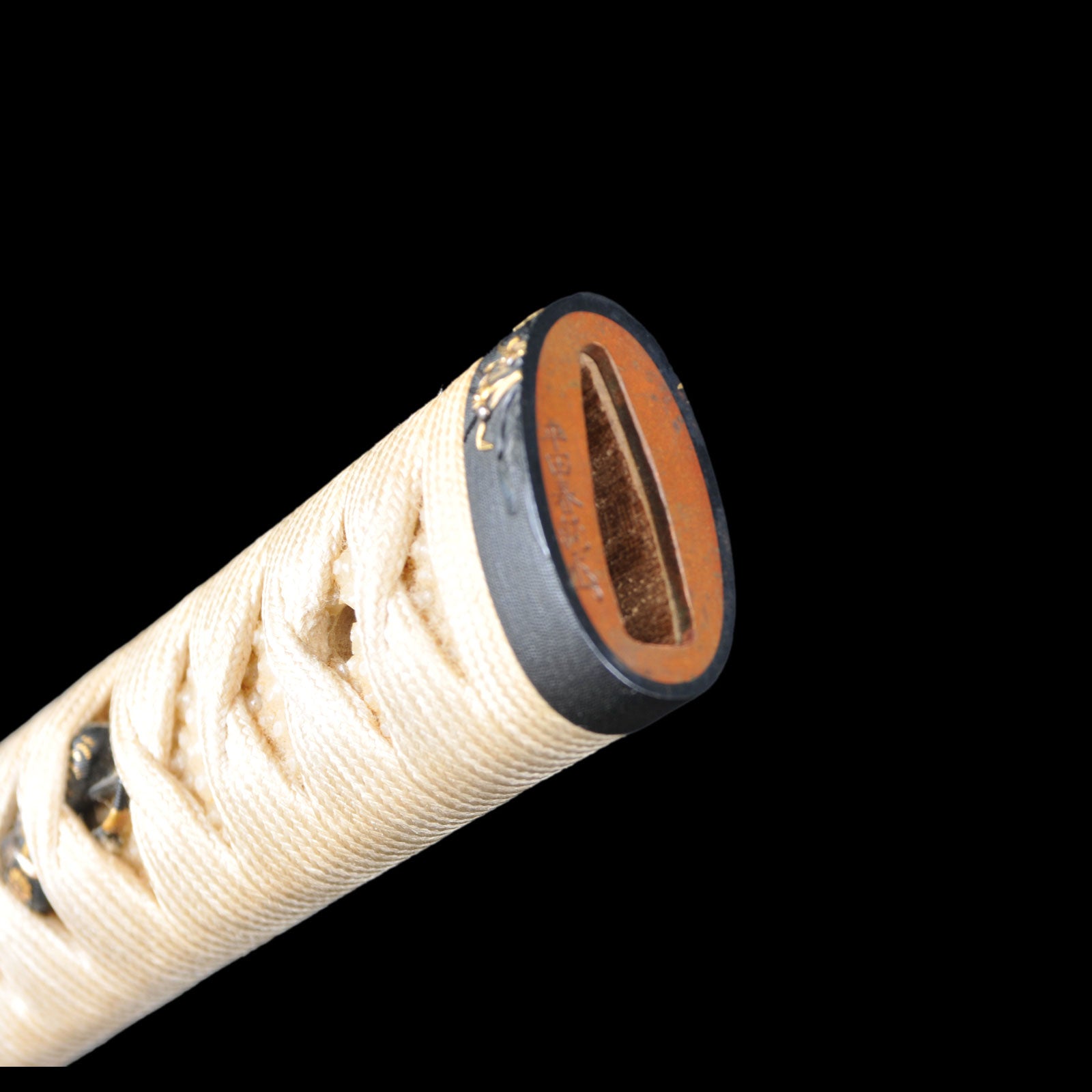
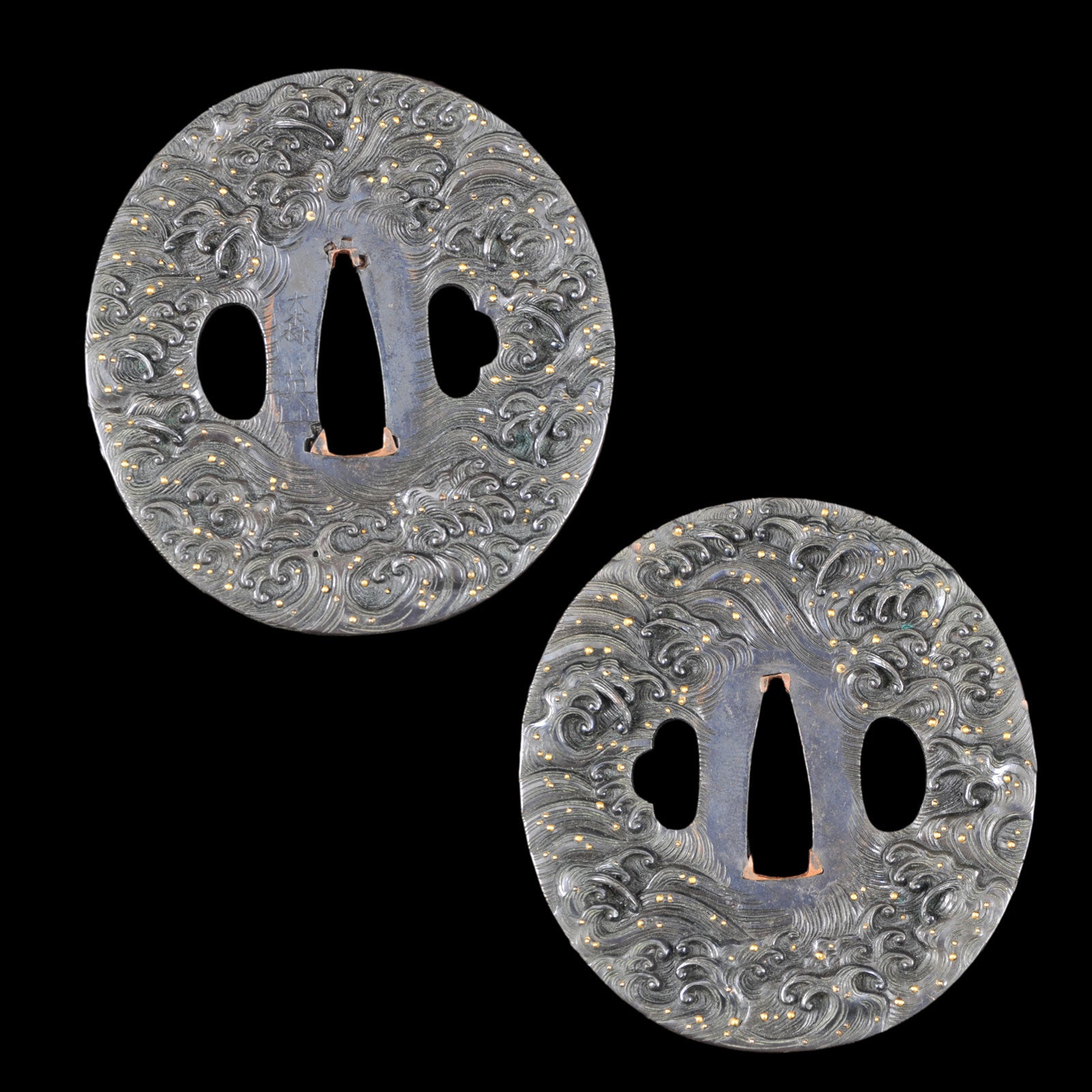
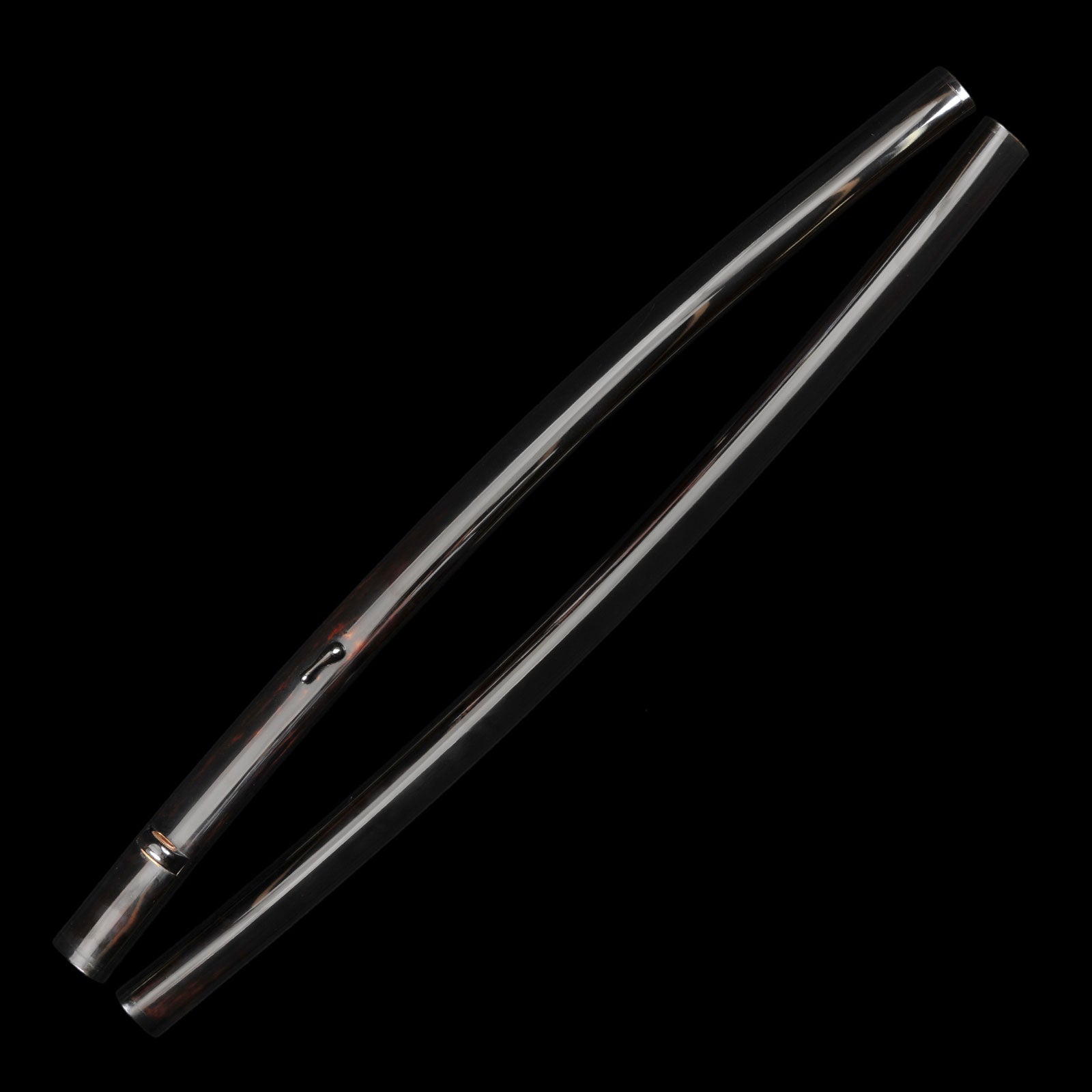
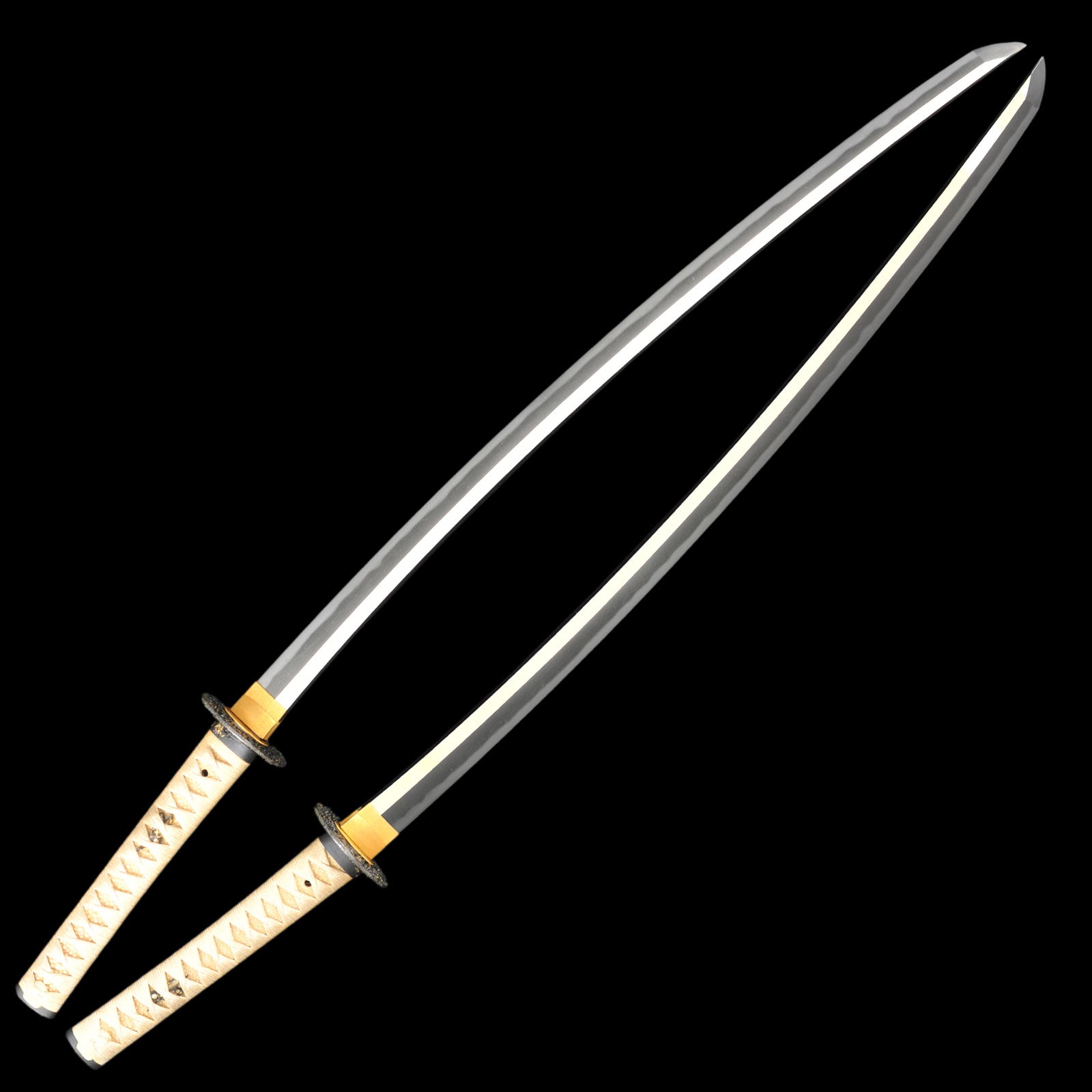
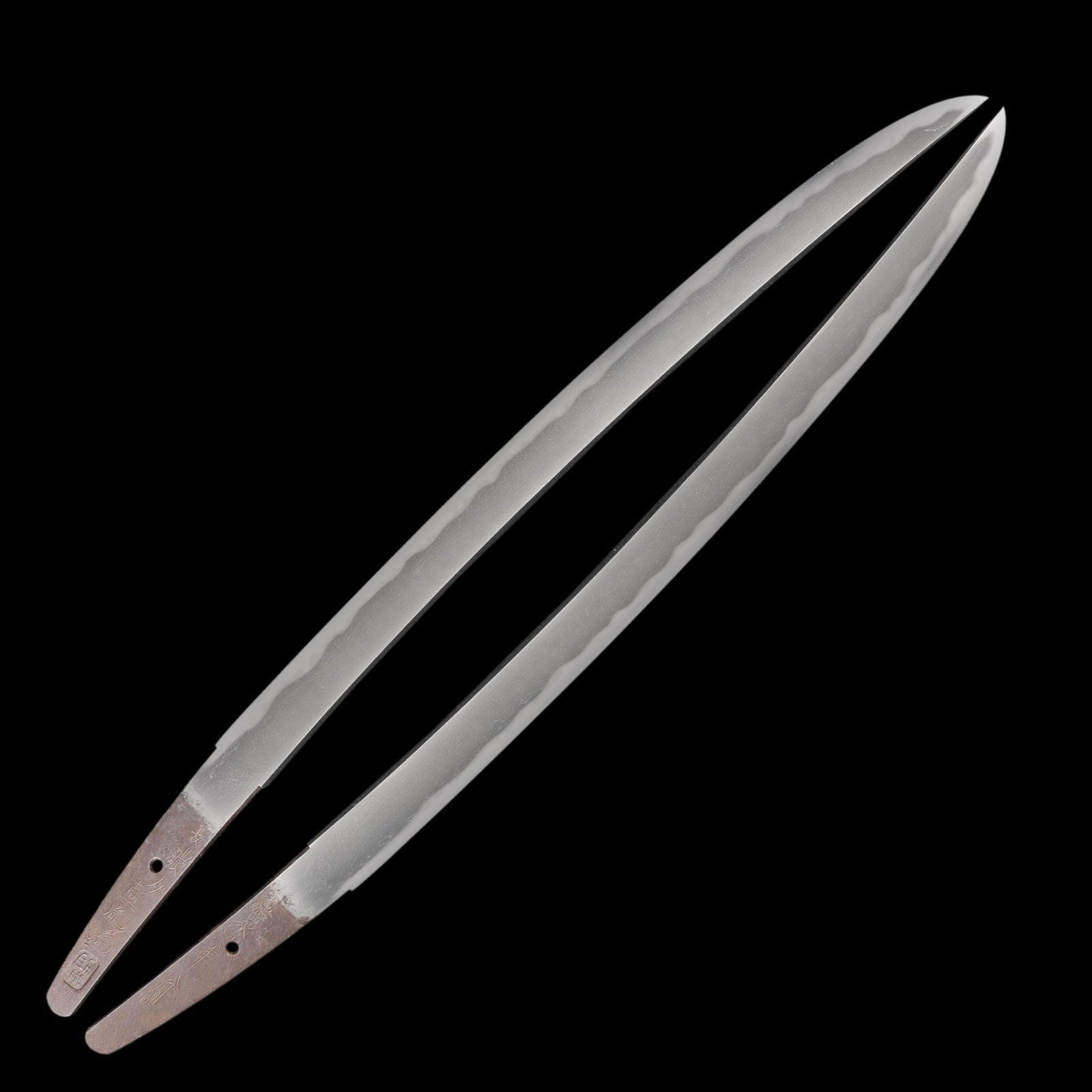
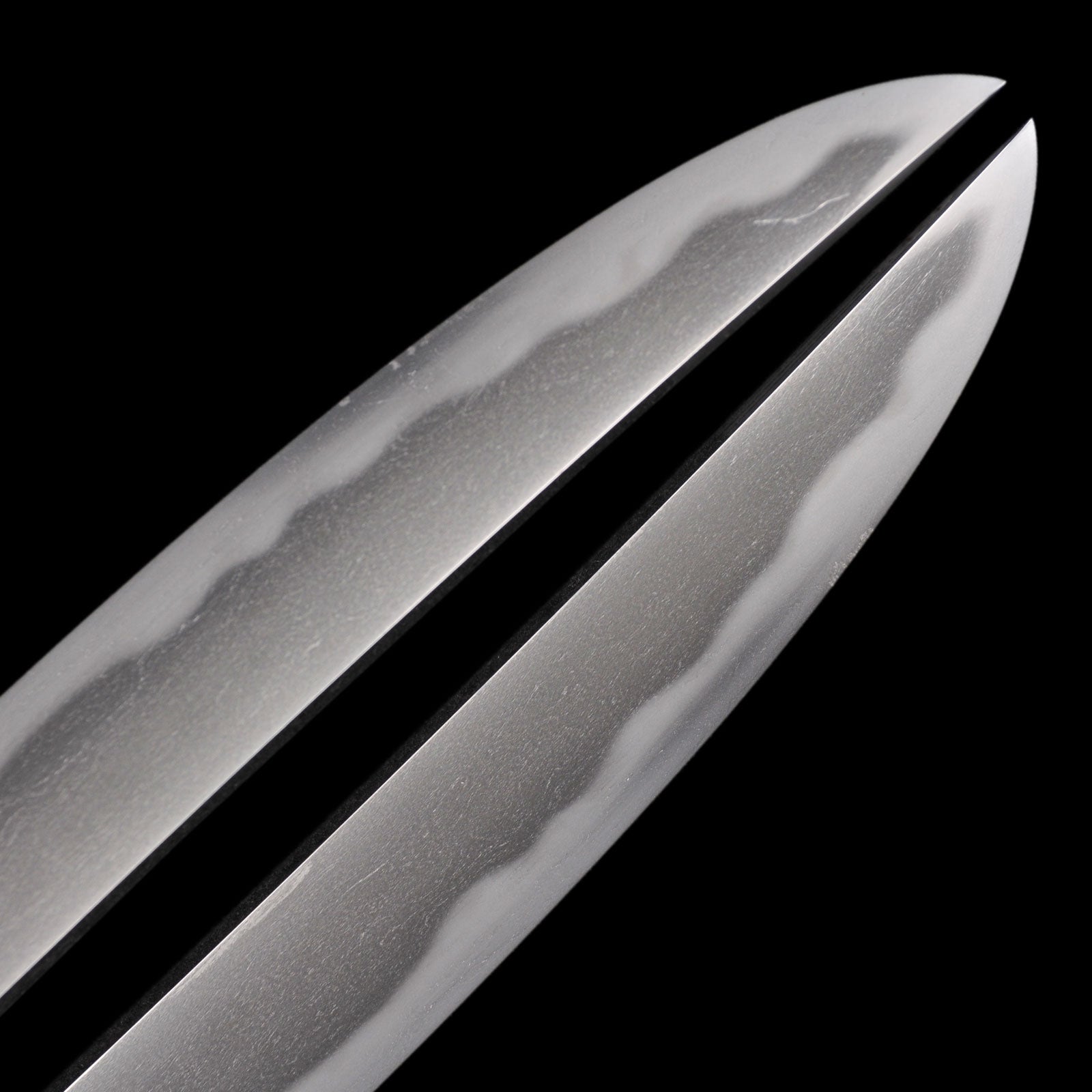
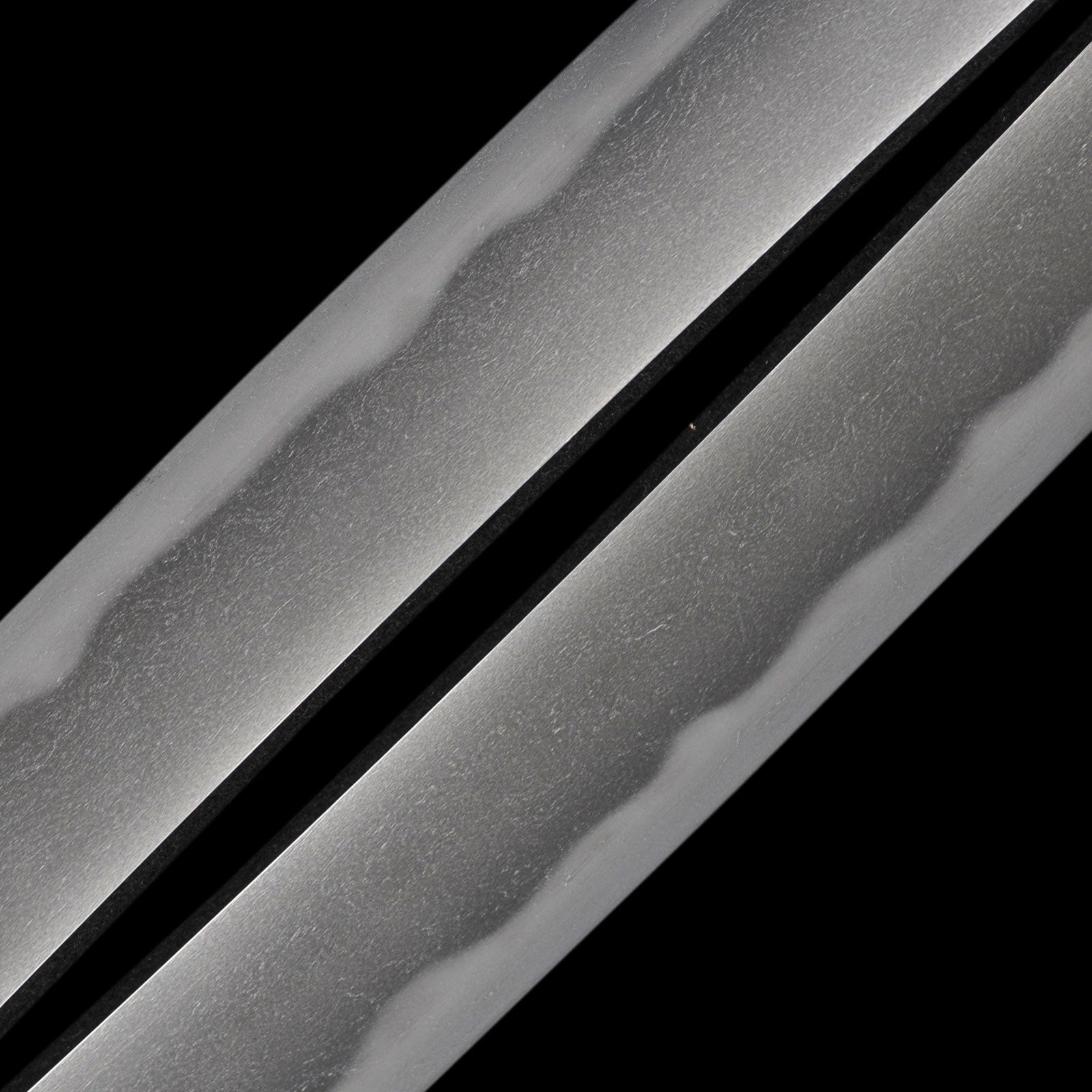
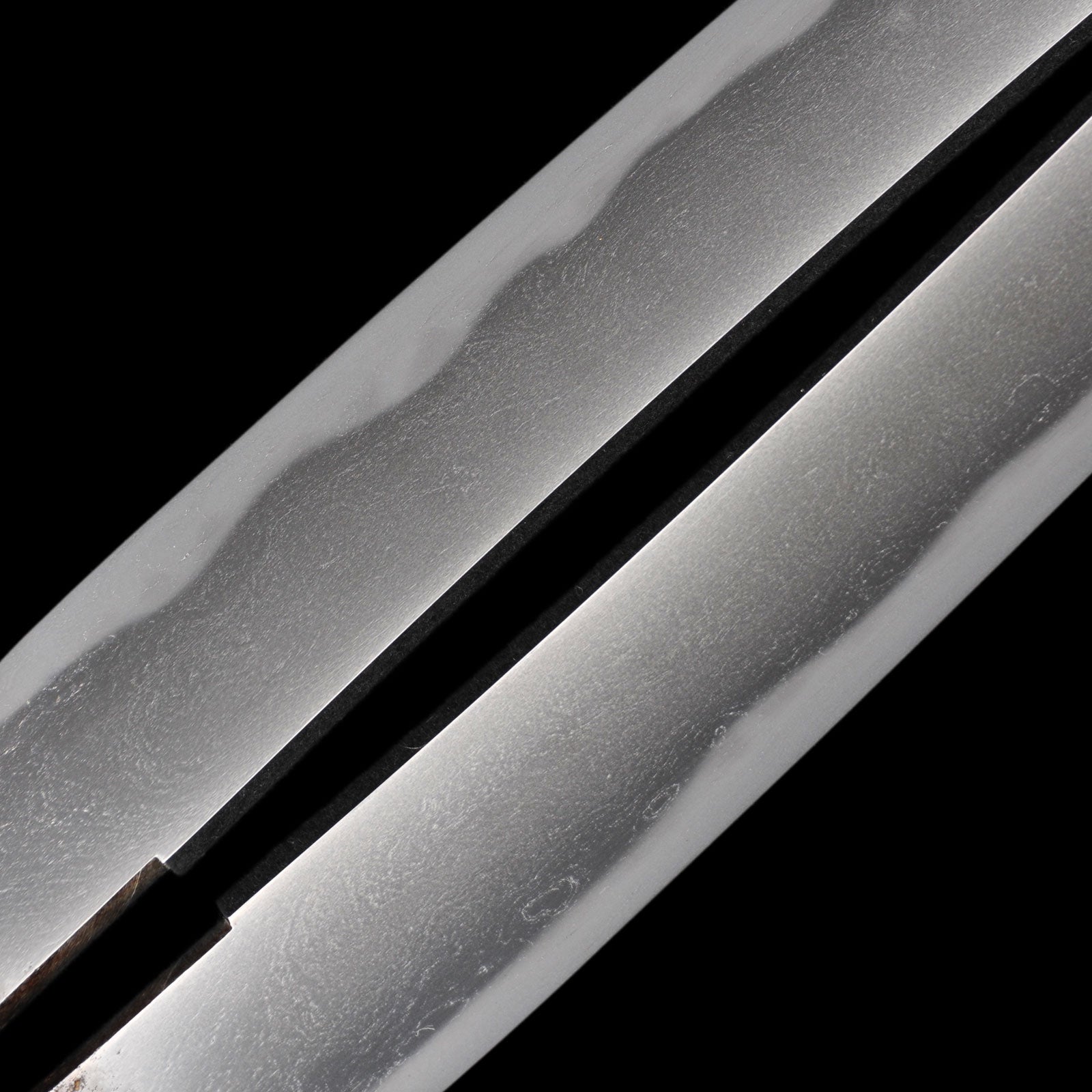
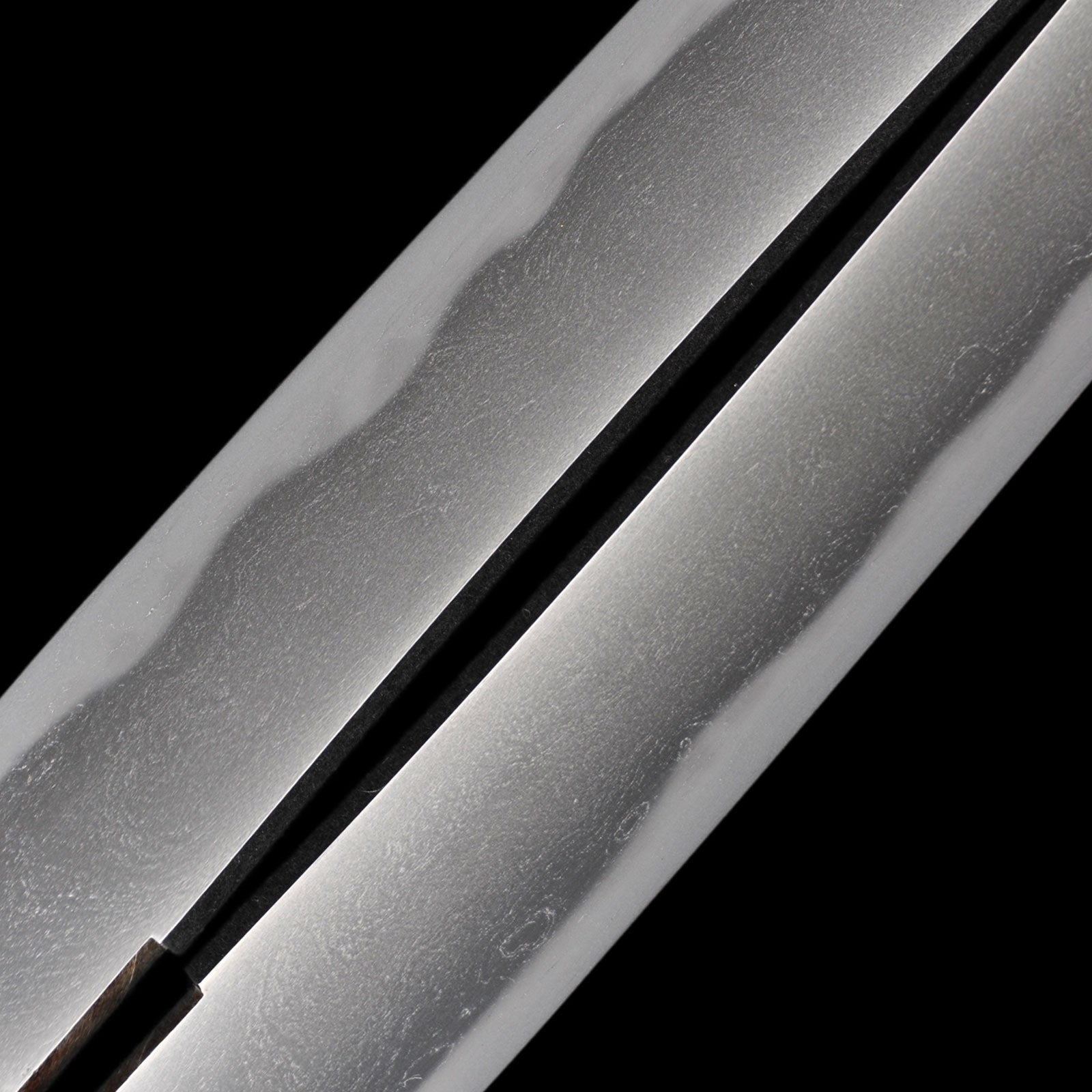
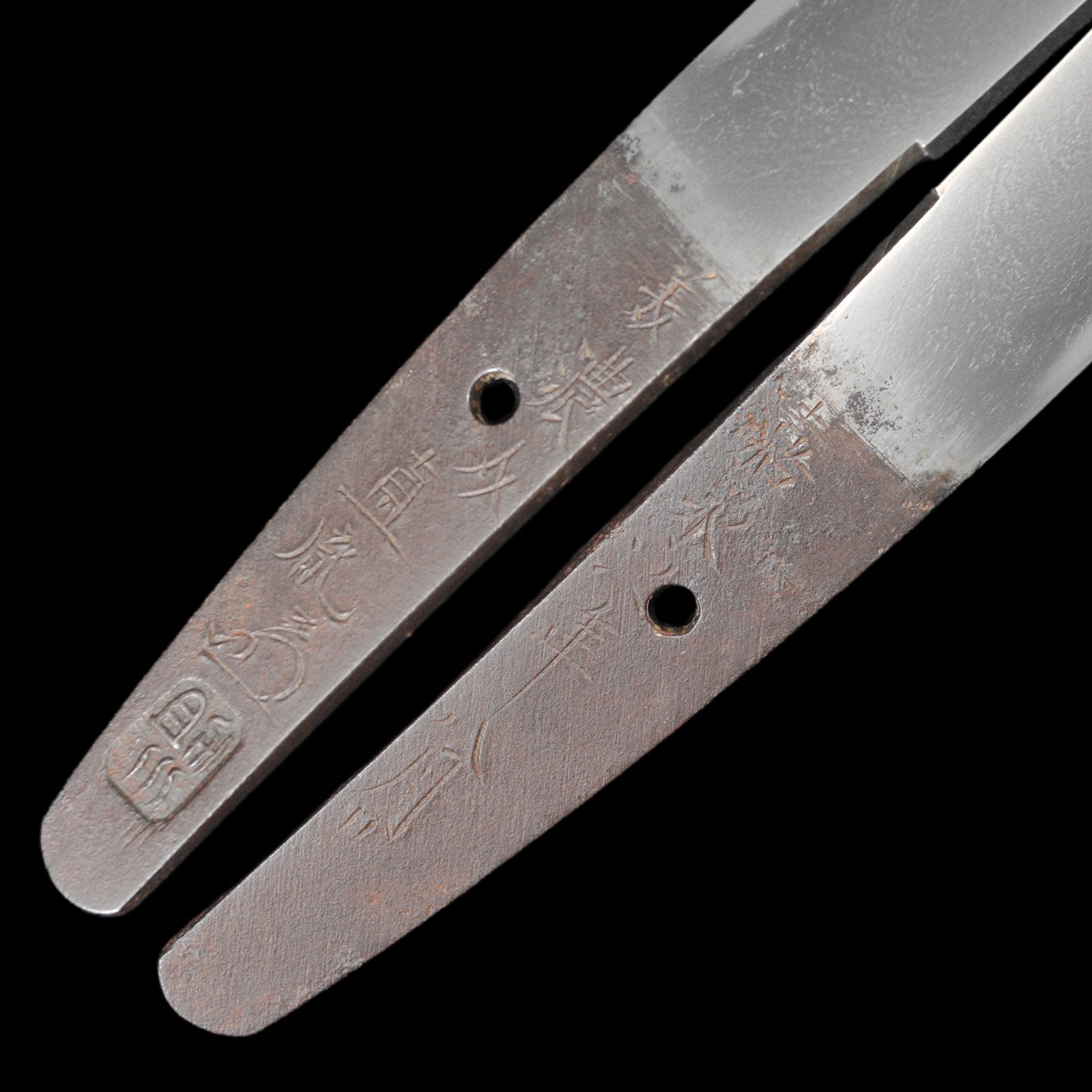
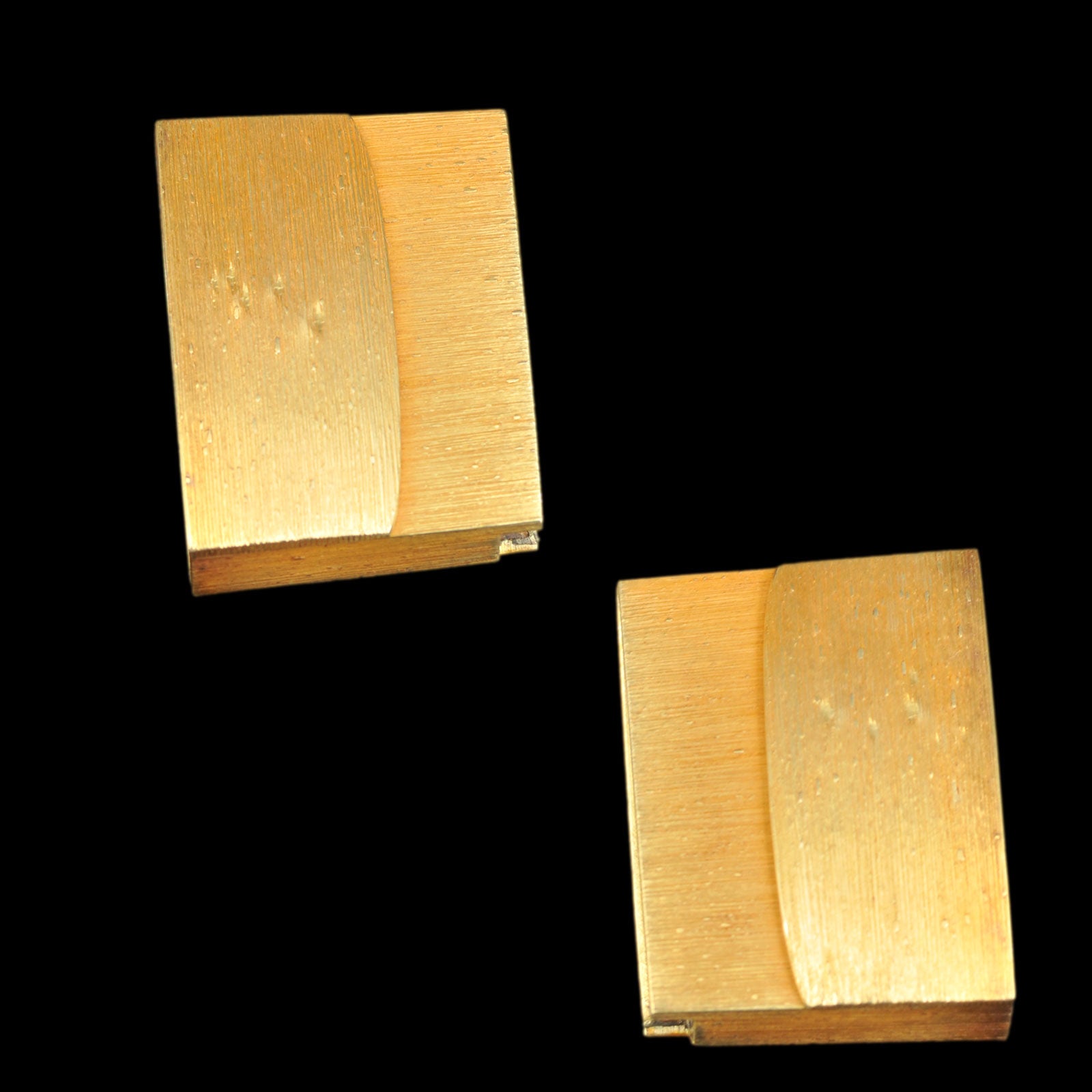
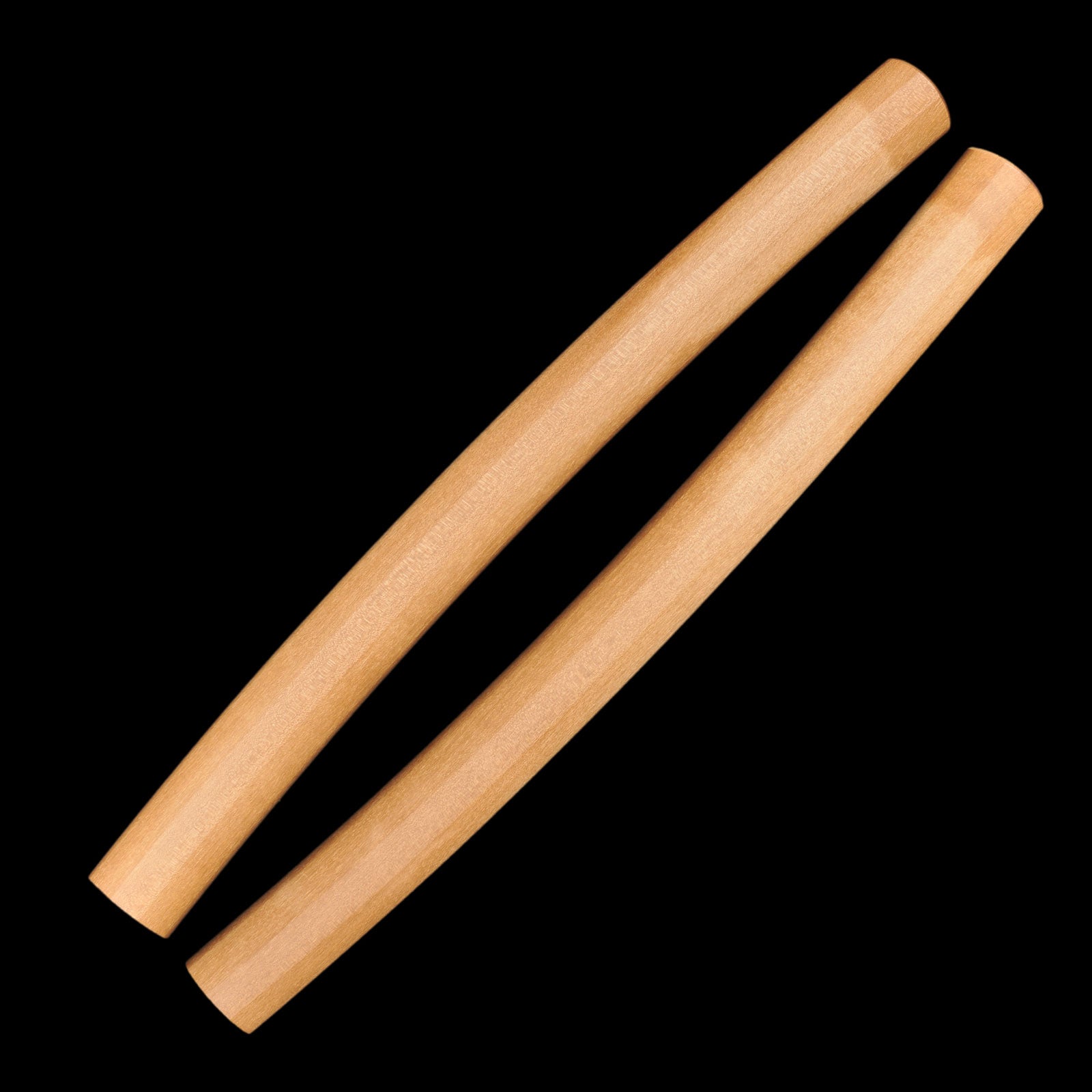
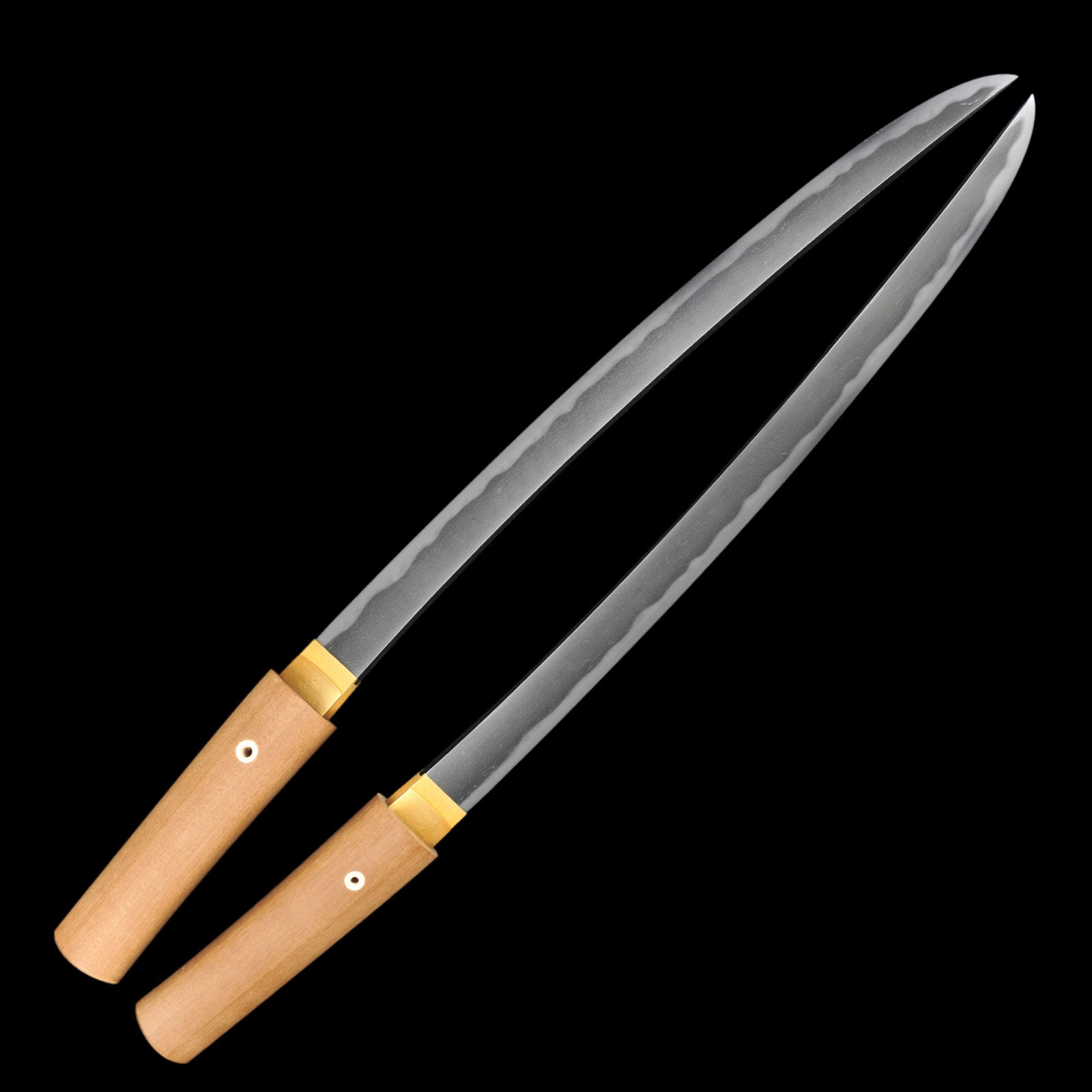
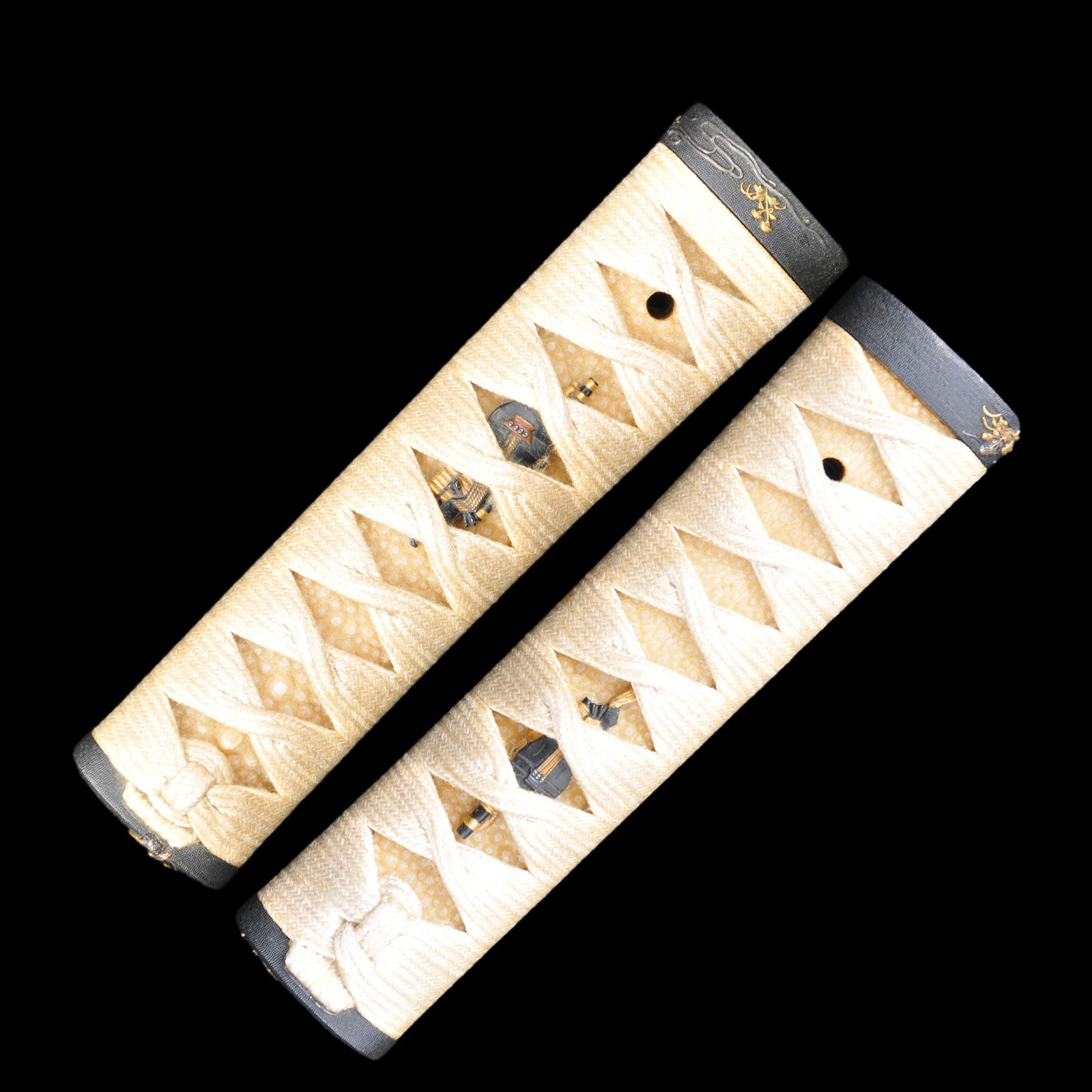
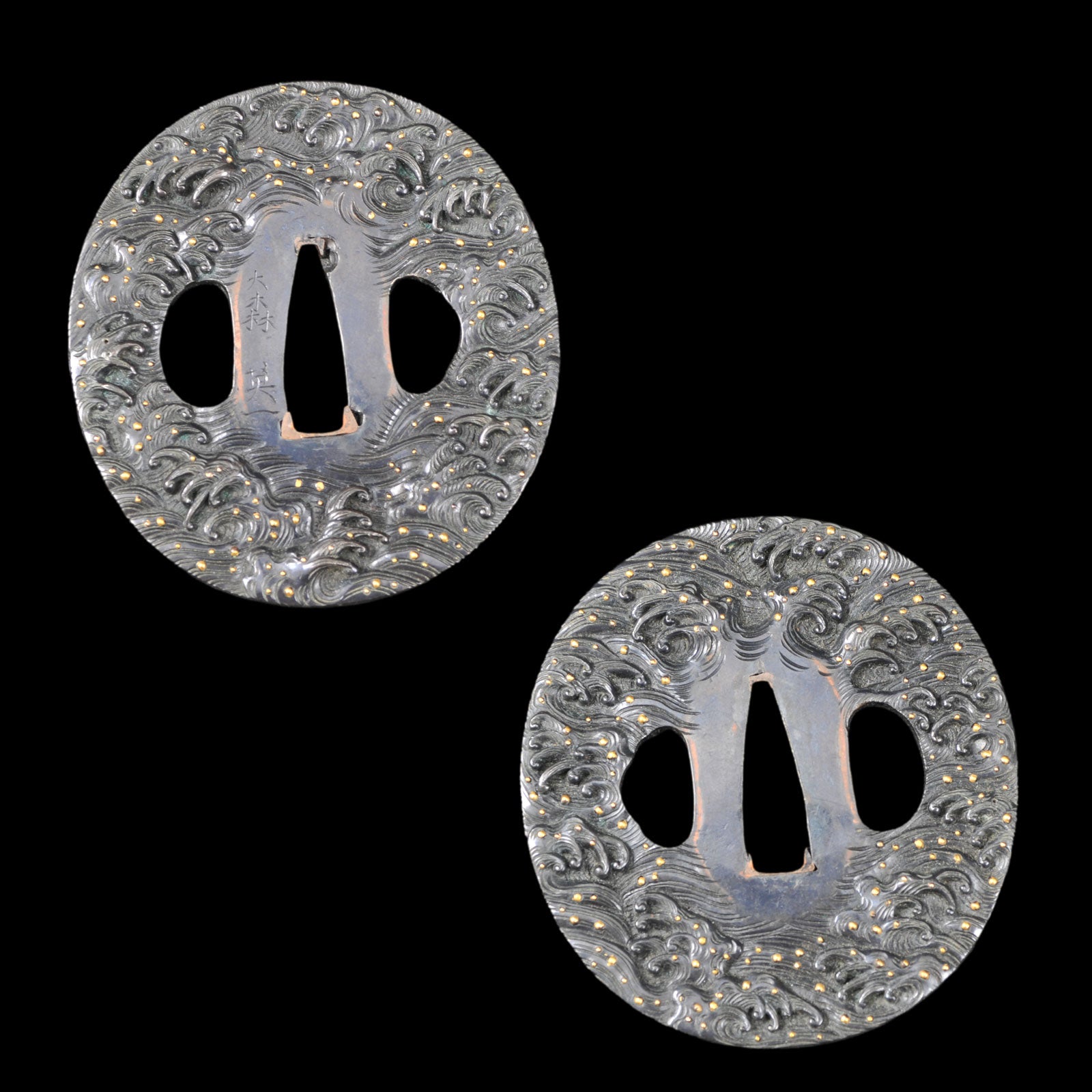
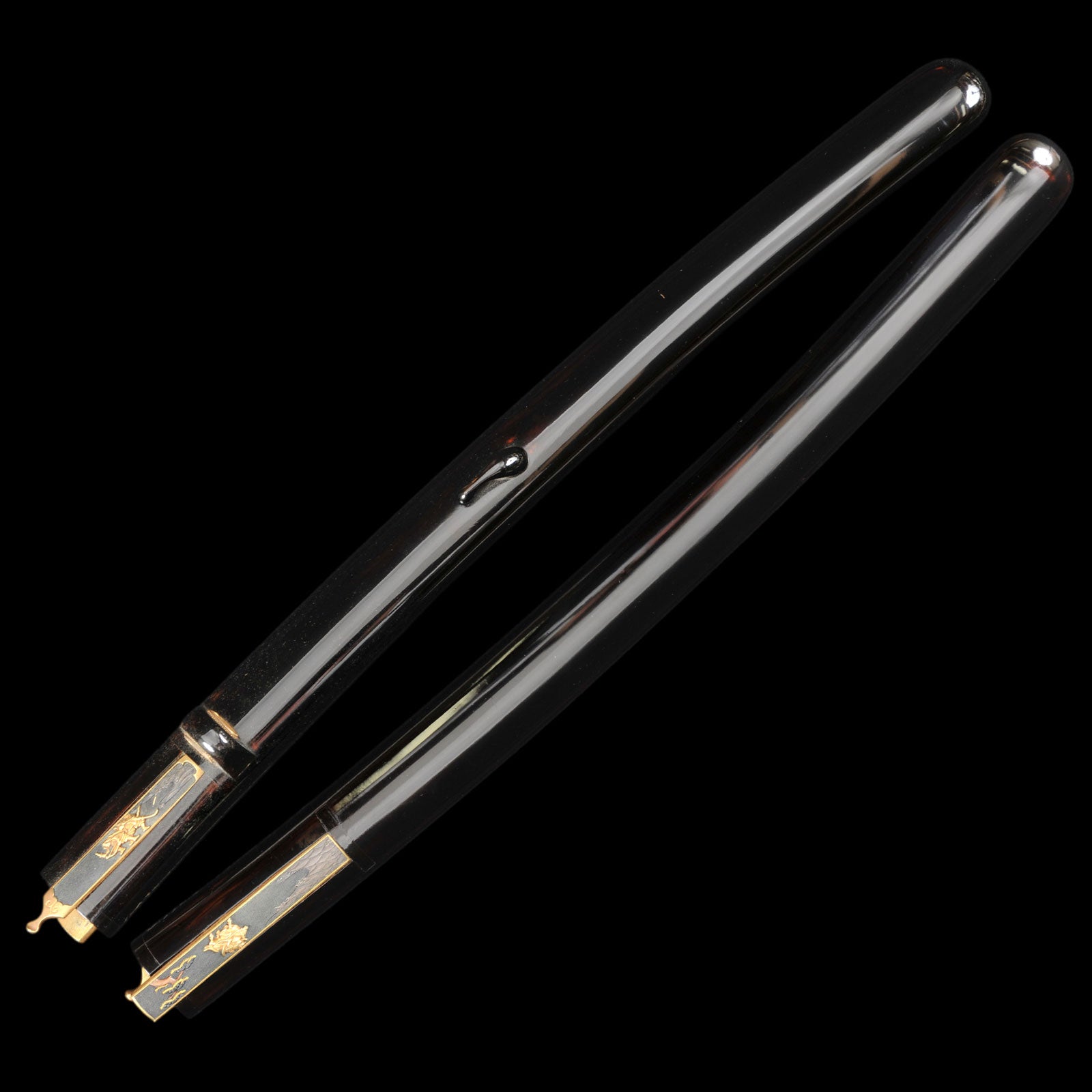
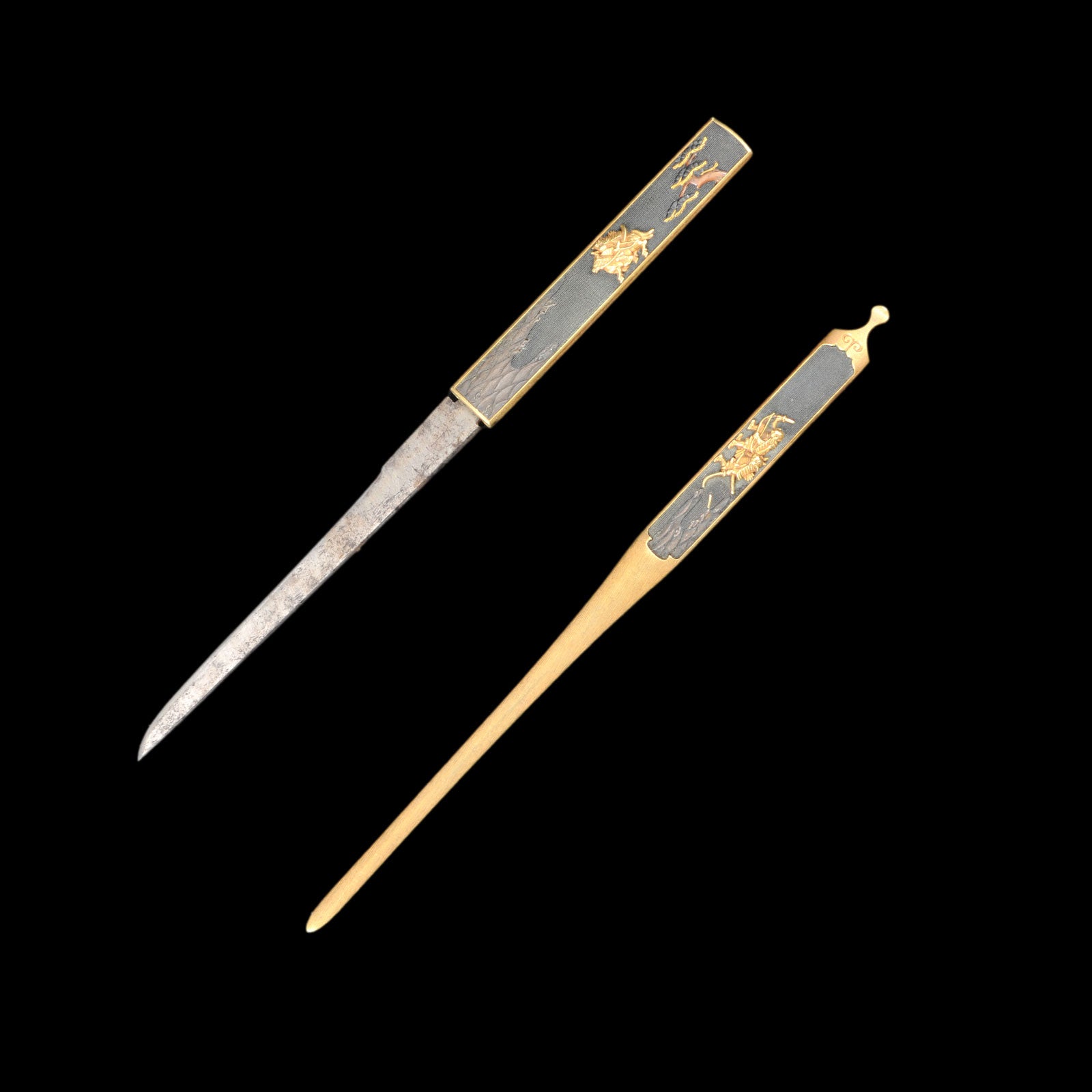
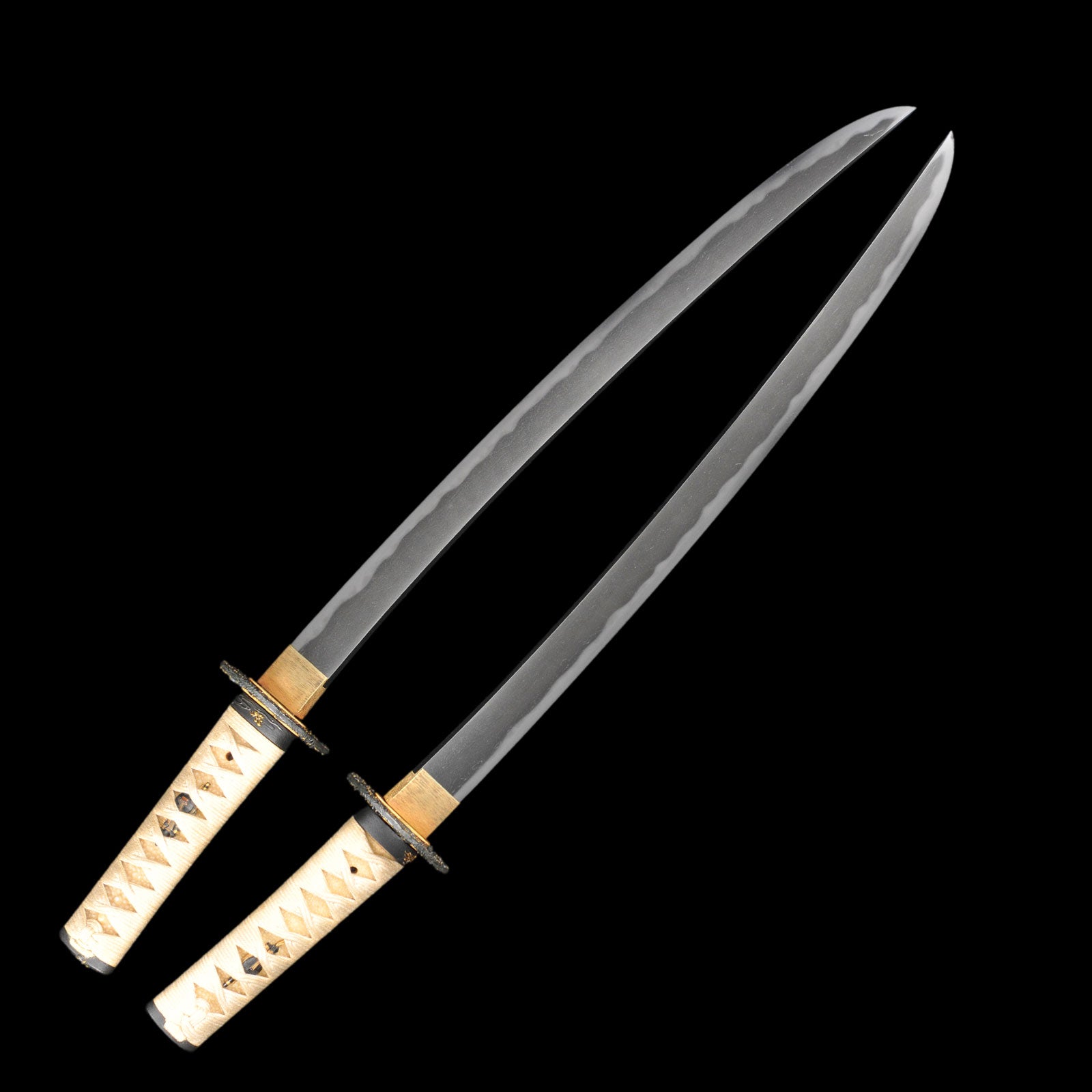
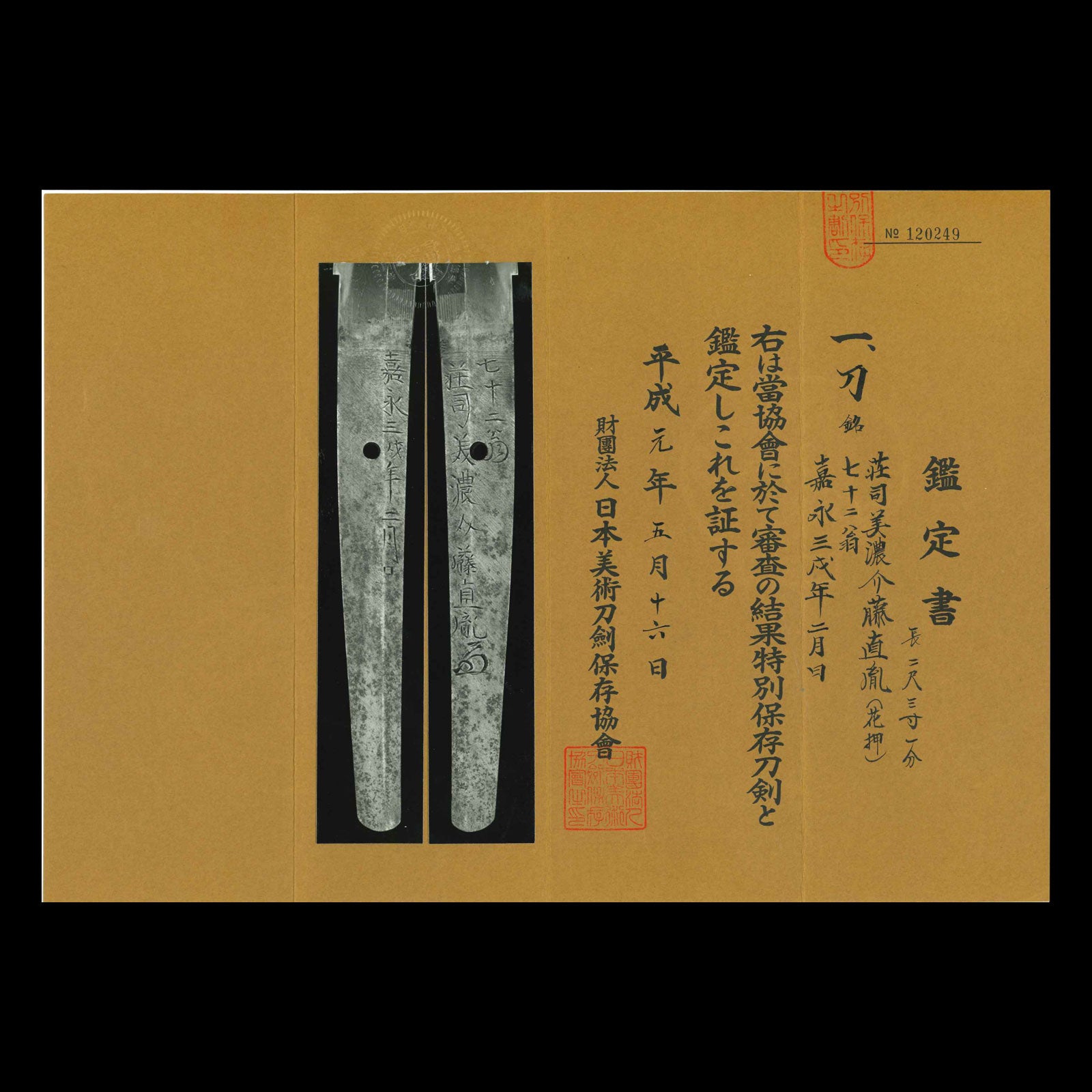
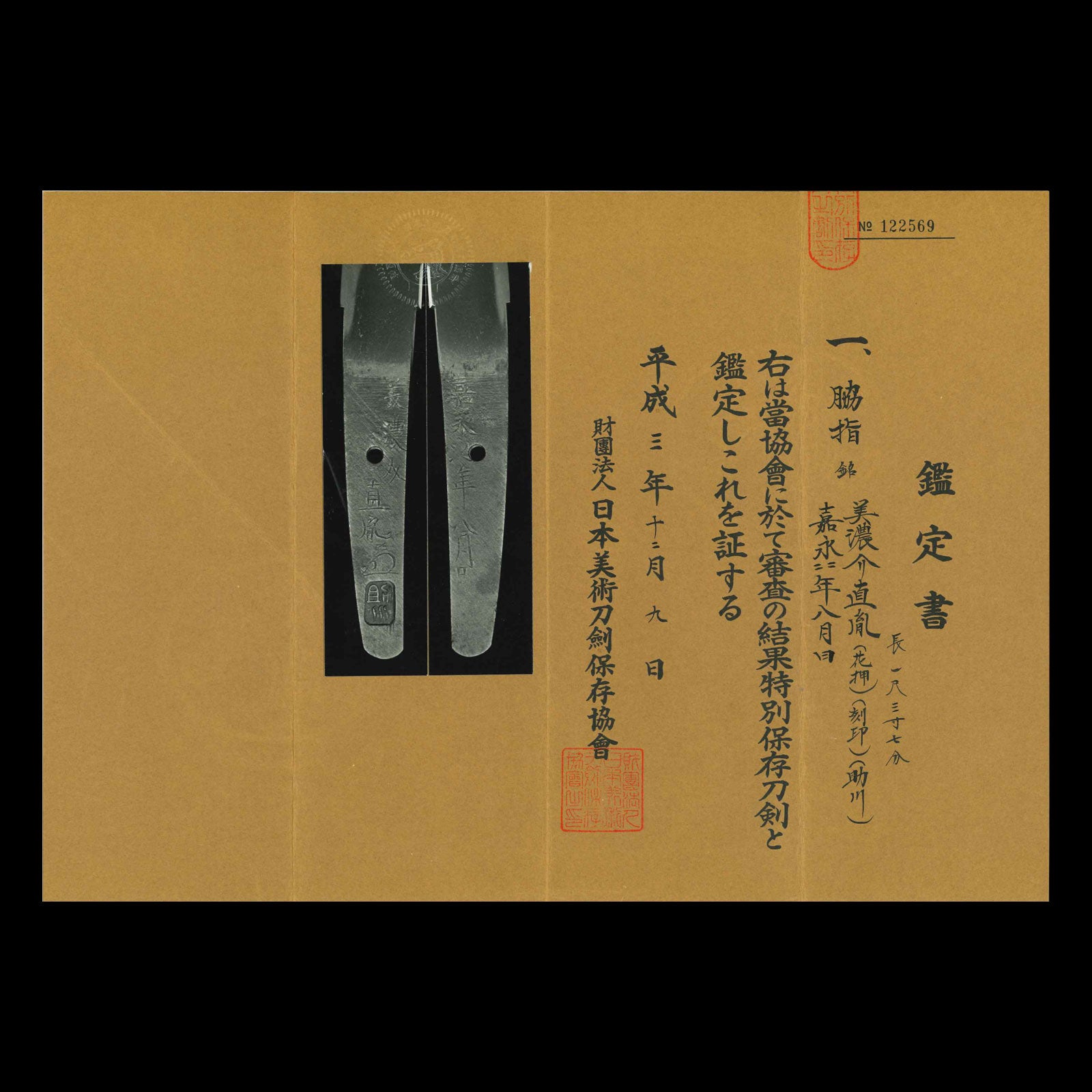
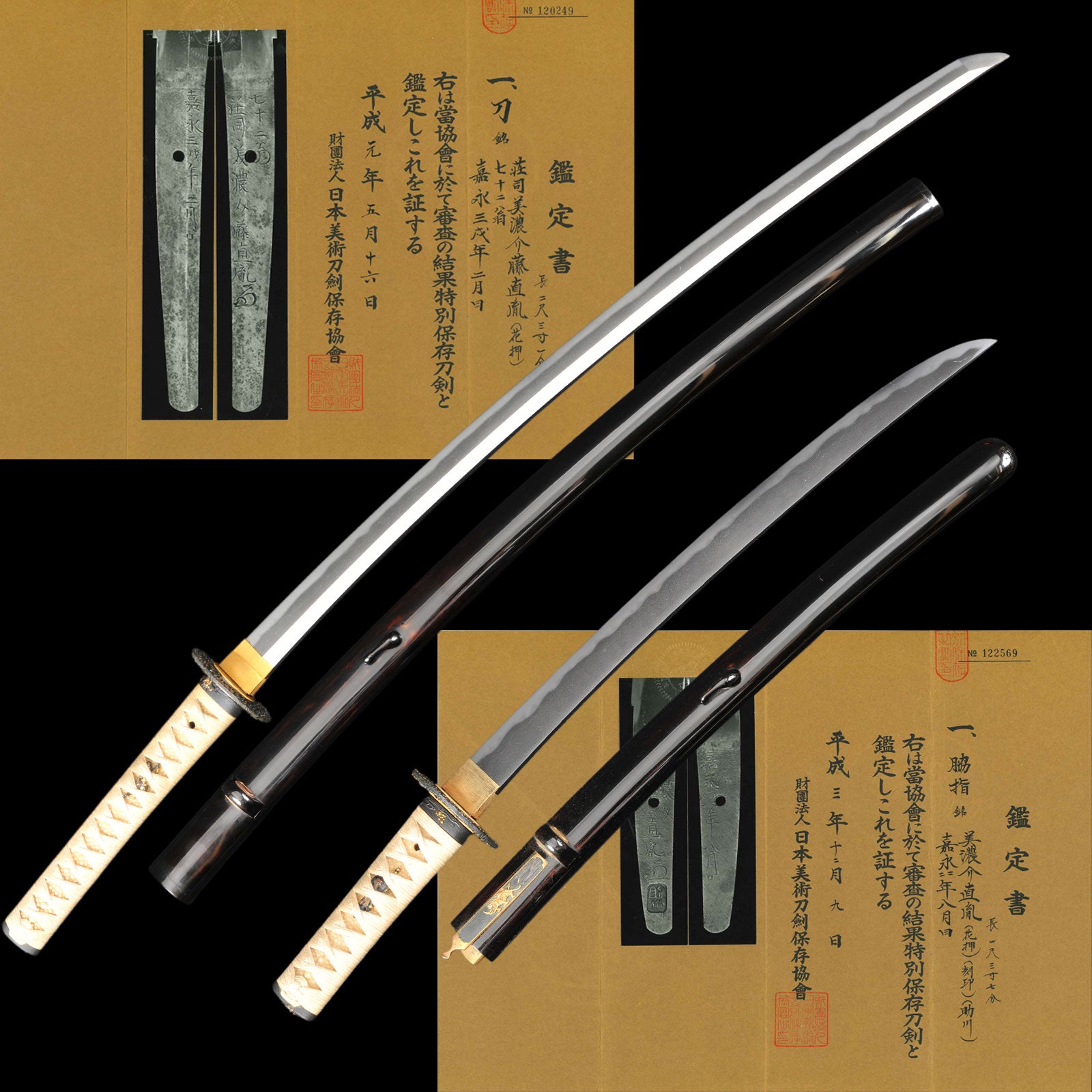
The mature summit of one of the "Three Great Masters of Edo": a consecutively dated, same-smith daishō — a Bizen-tradition katana paired with a Sōshū-tradition wakizashi in rare matsukawa-hada — not an assembled set, but a pair that was always meant to be. We are honored to present an exceptional matched set (daishō) of katana and wakizashi by Shōji Chikuzen-daisuke Fujiwara Naotane (庄司筑前大介藤原直胤) — the great master better known as Taikei Naotane, counted among the "Edo San-saku," the three finest swordsmiths of the shinshintō era. The katana is dated Kaei 3 (1850), when the smith inscribed himself "an old man of seventy-five," and the wakizashi follows the very next year, Kaei 4 (1851). Both blades have been certified by the NBTHK as Tokubetsu Hozon Tōken (Especially Worthy of Preservation), and the pair is complete with a matched period daishō koshirae whose fittings unite the work of two celebrated Edo metalworkers. In historical importance, artistic quality, and state of preservation alike, this is a museum-class treasure. Not an assembled set — a daishō that was always meant to be What truly defines this set is the dating: the katana of Kaei 3 (1850) and the wakizashi of Kaei 4 (1851), just one year apart. This is decisive evidence that the pair is not a later marriage of two unrelated blades, but a set forged in close succession by one and the same master. More remarkable still, Naotane poured two different classical traditions into the one pairing — the Bizen tradition in the katana and the Sōshū tradition (with a rare matsukawa-hada) in the wakizashi — while keeping a consistent dignity of form and a shared clarity of ji and ha across both. The fittings, too, are of a single, coordinated design — the tsuba by Ōmori Eiichi, the fuchigashira by Hirata Harunari, and lavish full-same hilts set with great center-nodules — so that from blade to mounting the set is seamless. A daishō in which blade and koshirae are matched in rank and taste with no compromise is extraordinarily hard to find; a pair of this clear and unbroken pedigree stands as a true summit of collecting. On the smith — Shōji Naotane (Taikei Naotane / 庄司筑前大介藤原直胤) Shōji Naotane (1778–1857) is one of the supreme masters of the shinshintō period, counted alongside his teacher Suishinshi Masahide and Minamoto Kiyomaro among the "Edo San-saku." Born in Yamagata in Dewa Province, he came up to Edo in his youth and entered the school of Masahide, the great advocate of the sword-revival movement. He rose quickly, was taken into the service of the Akimoto daimyō family of Yamagata, and in Bunsei 4 (1821) received the honorary title "Chikuzen-daisuke," reaching the very pinnacle of the sword world of his day. Naotane's crowning achievement was his gift for completely mastering and freely working all five of the great classical traditions (Gokaden) — Sōshū, Bizen, Yamashiro, Yamato, and Mino — reviving in particular the flamboyance of Bizen and the power of Sōshū. His passion never dimmed with age: past seventy he continued to produce honed masterpieces, and the "seventy-five-year-old" inscription on the katana of this set is the very proof of a master who, in the turbulent closing years of the Edo period, reached the summit of his art — long and especially revered among connoisseurs and discerning collectors. Workmanship and condition As their Tokubetsu Hozon certifications attest, both blades are thoroughly healthy and in good polish, allowing their ji and ha to be enjoyed to the full. The great pleasure of this set is that, though both are from Naotane's hand, the katana and the wakizashi let one savor two different traditions side by side. Katana (Osaka 8649) — Bizen tradition: The jigane is an itame delicately mixed with mokume, with fine ji-nie, forming the rich, powerful surface in which Naotane excelled. The hamon is a gentle ko-notare harmonized with gunome and ko-midare, giving full voice to the essence and refinement of the Bizen tradition from a smith who had mastered all five. Bright, clear ko-nie line the habuchi, and soft ashi and yō work within the temper — the serene maturity of his very last years expressed in both ji and ha. Wakizashi (Tokyo 12720) — Sōshū tradition, matsukawa-hada: The wakizashi speaks eloquently of Naotane's command of the Sōshū tradition as well. Its jigane is a large itame (ō-itame) mixed with mokume that swells in bold undulations, with chikei threading through it like a net, vividly producing a dimensional, deep matsukawa-hada ("pine-bark grain"). Matsukawa-hada is the signature steel of Norishige of Etchū, one of the fathers of the Sōshū tradition — a sophisticated forging in which the surface heaves like the bark of a pine — and the ability to reproduce it at will is itself proof of Naotane's exceptional mastery of the Gokaden. Thick ji-nie, abundant chikei and kinsuji enliven a bright, clear ji and ha, full of the power and the nie-rich beauty of the Sōshū tradition. The Bizen katana and the Sōshū wakizashi form a complementary pair — a rare chance to enjoy the full breadth of Naotane's art in a single set. Form Katana: A dignified shinogi-zukuri of moderate curvature and finely balanced motohaba and sakihaba, with a crisply gathered chū-kissaki — an upright presence that fuses practical beauty with artistry in the late-Edo shinshintō manner. The nakago is ubu (as originally made), boldly and clearly signed "Seventy-five-year-old man, Shōji Chikuzen-daisuke Fujiwara Naotane" with his distinctive kaō, and dated "Kaei 3" on the reverse — a blade of the highest documentary value. Wakizashi: A well-proportioned hira-zukuri of firm width and thickness and a beautiful curve, drawing a flawless, flowing outline all the way to the point. The nakago is ubu with a ha-agari kurijiri and intact yasurime; it is signed "Mino Naotane" with kaō and a stamp (kokuin) on the front, and dated "a day in the 8th month of Kaei 4" on the reverse. The mounting (matched daishō koshirae) The set comes in a period daishō koshirae whose fittings are unified by the hands of two masters — the tsuba by the fine Edo metalworker Ōmori Eiichi and the fuchigashira by Hirata Harunari of the Hirata school. On both the long and short sword, the tsuba bears the Ōmori school's signature "Ōmori waves" — three-dimensional wave crests with flecks of gold scattering off the spray — while the fuchigashira show Harunari's sure technique and signature, at once serene and brilliant. The hilts are lavishly appointed: both are finished in the finest full-same wrap (sō-same) set with a large "oyatsubu" center-nodule — the single great grain that can be taken only sparingly from one ray-skin — whose orderly white pearling and splendid nodule lend a stately presence and great strength. The menuki are "bow, arrows, and arms with flowers" on the katana (emblems of martial fortune and refinement) and a "biwa (gagaku lute)" on the wakizashi (the samurai's command of both arts and letters); the wakizashi's kozuka and kōgai further carry a spirited "Genpei battle" scene in high relief with gold and silver inlay. Together with a deep, quietly lustrous black-lacquer saya, this is a daishō mounting of cultural-property, museum-class quality — a match for the dignity of the blades themselves. Forged by the supreme shinshintō master Shōji Naotane in the golden last years when his skill and spirit had reached their height, this is a miraculous same-smith daishō. As the consecutive dates of Kaei 3 and 4 make plain, it is no later assemblage but a true pair forged in close succession by one hand. Both blades are certified NBTHK Tokubetsu Hozon Tōken, flawless and healthy, offering the Bizen tradition in the katana and the Sōshū tradition (matsukawa-hada) in the wakizashi within a single set. With the "seventy-five-year-old" inscription and the master's own kaō, the matched fittings of Ōmori Eiichi (tsuba) and Hirata Harunari (fuchigashira), and a complete daishō koshirae mounted in the most lavish full-same wrap, it is flawless on every count — blade ranking, context of manufacture, artistry of the mounting, and condition. A piece to be handed down with absolute confidence as a proud family heirloom and a sound asset — we invite you to experience the mature beauty left by this master of the late Edo age.
Offered by Tozando
11 on the market


As written by the shop
Taikei Naotane (shinshinto, Suishinshi Masahide line, Yamagata / Edo) · Musashi · around 1801-1837
Fujishiro Sai-jo saku · Tōken Taikan top 10%
11 pieces on the market now
Taikei Naotane was born in An'ei 8 (1779) at Yamagata in Dewa, with the common name Shōji Minobei and the art name Taikei. As a young man he went to Edo and entered the school of Suishinshi Masahide, his senior from the same province and the leading advocate of the revival-sword movement, and like his teacher he later served Lord Akimoto. The published sources count him with Hosokawa Masayoshi as one of the two outstanding talents among Masahide's pupils. A blade made at twenty-three is signed Shōji Naotane and dated Kansei 13 (1801), so they place his entry to the school two or three years earlier and his independence near the start of the Bunka era. He signed Chikuzen Daijō from Bunsei 4 (1821), changed the title to Mino no Suke on going up to Kyoto in Kaei 1 (1848), and died in Ansei 4 (1857) at seventy-nine. Where Masahide is regarded as the theorist of the movement, Naotane is called its practitioner, and the published sources say repeatedly that he matured until his technique was judged to surpass his teacher's[[c:1]].
He took up the several kotō traditions in turn, and the published sources name the Bizen and Sōshū manners as his strengths, with much in the Bizen work that deserves attention. They state that the finesse of his chōji-midare carries the established reputation of being the first among shinshintō[[c:2]]. In the record itself the chōji is less constant than that reputation suggests. Of forty published descriptions, seven name a chōji-midare outright, and chōji of some kind enters the temper on fourteen. More often his Bizen work is a gunome-based midare with angular kaku-gunome, kataochi-gunome, togariba and chōji mixed in. Long ashi enter and in places pass through to the edge, and the temper leans in reverse, a saka-gakari the published sources read as aimed at the late-Kamakura Osafune masters Kagemitsu and Kanemitsu. The nioiguchi is bright and clear, nioi-dominant with ko-nie, and the shape recalls a Kamakura tachi, with sori at the koshi-moto and a chū-kissaki.
The jigane of this Bizen work is a tight ko-itame with fine ji-nie and chikei. On the finest pieces a midare-utsuri rises distinctly, and on one katana of Bunka 12 it connects in places into the yakigashira of the temper. The published sources take that revived utsuri as evidence of his Osafune model. They are equally clear about what marks it as new work. Of a Bunka 13 katana with a splendid reverse chōji and a distinct midare-utsuri, they write that it is unfortunately not a pure nioi-deki, and that the nie appearing throughout is precisely the difference between the old works and shinshintō[[c:3]]. The bōshi enters in midare, turns pointed and sweeps back with hakikake, or runs straight to a ko-maru.
His Sōshū-den is the second face of his record, and the published sources call it rarer than the Bizen, aimed at Masamune, Sadamune and Shizu. The jigane becomes a large, standing itame mixed with ō-mokume, and on the strongest pieces a whorled uzumaki-hada that they name a principal point of interest in his Sōden work. Over it lies a notare mixed with gunome and large gunome, the nioi deep and the nie thick, gathering coarse and uneven, with sunagashi and nie-suji in stripes and long kinsuji. Of one wakizashi of Bunsei 13 the commentary finds the uneven nie and frequent hakikake bold and faintly rustic[[c:4]]. A smaller, third register survives in the Yamato manner and in suguha. A katana of Tenpō 5 tempers a suguha-chō with ko-gunome, which the published sources call relatively uncommon for him, and the long sword of a Tenpō 7 daishō crosses an all-masame Yamato forging with a Sōshū notare and gunome.
He worked in Edo and also travelled. Stamps on the tang record work at Ise, in Shinano, at Hisai, at Naniwa and in Bitchū, and in explaining a Bitchū katana of Tenpō 8 the published sources cite another blade of that year naming his pupils Shigetsugu, Shigeyuki and Katsunaga, so that he travelled with his disciples. Much of his carving is by Honjō Yoshitane of the Suishinshi circle, whose added signature on one Bunka wakizashi the published sources call of documentary value. His Kyoto work of Kōka 5 bears the stamp 都 and is recorded as a companion piece to a tachi made for the Chancellor of the Realm.
Fujishiro ranks him Sai-jo saku. He has no National Treasures and no Important Cultural Properties. Forty works are on the official record, one Tokubetsu Juyo, thirty-five Juyo, three prewar Juyo Bijutsuhin and a wakizashi stamped Naniwa and dated Tenpō 8 that is recorded in Honma's inventory of the Imperial collection, all of them signed and most of them dated, from Bunka 2 (1805) to Ansei 4. The prewar Bizen-den katana made for Sugihara is judged, in Honma's words, the one to be placed first among his Bizen-den works[[c:5]], and a Tenpō 5 Sōshū katana of the same series is called the right wing of his work. A Bizen-den katana forged at Hisai in Tenpō 3 is named a blade of his full satisfaction[[c:6]], and the Bitchū katana of Tenpō 8, made for Ōta Masayasu, a figure in iron production, is judged finer than his general output, perhaps for its carefully chosen iron. Others were made for Watanabe Shū of the Tsu domain, and the Tenpō 7 daishō was transmitted in the Sanada family. Because his output was large, forgeries are common, as the published sources warn, and a signed Naotane is far easier to find than a great kotō name. His Tokubetsu Juyo and Juyo blades are still held far more often than traded, and one comes to a private collector only from time to time.
Where Naotane stands among comparable artisans: across all of nihontō, and within tradition, era, and period. The tiers (Foremost · Leading · Major · Notable) weigh official designations from the NBTHK and Japan's Agency for Cultural Affairs, together with historical honors of lasting repute such as the Sansaku and Meibutsu-chō.
Select a lens to see how it's measured.
Years he was demonstrably active, proven by signed-and-dated blades
Shinshinto · Musashi
69 pieces on the market now
At Hamachō in Edo, in the closing decades of the eighteenth century and the opening ones of the nineteenth, Suishinshi Masahide[[c:1]] gathered the school that would turn Japanese swordmaking back toward its medieval models. Born Kawabe Gihachirō at Akayu in Dewa in 1750, signing first as Suzuki Takahide and then Eikoku, he studied under the Shitahara smith Yoshihide of Musashi, took the name Masahide in An'ei 3, and served the Akimoto house of Yamagata before settling in Edo, where he worked for nearly fifty years. He is the founding figure of the shinshintō and the theorist of the fukko-tō (revival-sword) doctrine, the argument that the sword ought to return to its Kamakura forms. Around that teaching he drew a large body of pupils, among them Taikei Naotane, who would give the revival its fullest practical form, the future second Masayoshi (Hosokawa Morihide), and a wider Edo and provincial following that carried the program into the Mito, Yonezawa, Tsuyama, and Tatebayashi domains. The shared vocabulary of the school is the deliberate reach back into the koto traditions, worked over a tightly forged, often muji-toned ko-itame with thick ji-nie. Masahide's own prime hand was the Ōsaka-utsushi, the surging tōran-midare of Tsuda Sukehiro opening from a long yakidashi and the broad suguha after Inoue Shinkai, betrayed on even his closest copies by a blackish, coarse nie that spills from the ha into the ji. Naotane gave the revival its Bizen and Sōshū faces: a reverse-leaning chōji-midare with angular kaku-gunome and saka-ashi, modeled on the late-Kamakura Osafune masters Kagemitsu and Kanemitsu and anchored by a consciously revived midare-utsuri that no ordinary shinshintō steel carries, set beside a Sōshū notare with its whorled uzumaki-hada and coarse, striped nie. The pupils divided this inheritance along their own lines. Jirōtarō Naokatsu, Naotane's adopted son, took a Bizen-den led by a kataochi-gunome from Kanemitsu with a pervasive saka-gakari slant and chōji- or midare-utsuri in the ji.
Suishinshi Masatsugu reproduced Naotane's two traditions, Sōshū and Bizen, down to the cut of his signature. Through Masayoshi the Bizen current passed to his heir Hosokawa Masamori of Tsuyama, whose chōji clusters mixed with gunome-chōji and togariba. The Osaka wave traveled separately into Mito through Naoe Sukemasa, who set a Shinkai-styled suguha and a Sukehiro tōran over a clear ko-itame, while Chōunsai Tsunatoshi of the Uesugi service carried a nioi-deki chōji mixed with gunome, suguha, and tōran-midare, often with carving by his own hand. To kantei the school is to weigh a tradition consciously copied against the period marks the copy cannot shed: the constant of the line is that the hamon is never the pure nioi-deki of old Bizen but carries nie throughout, a difference the NBTHK names outright as the divide between koto and shinshintō. The revived utsuri in Naotane and Naokatsu, the spilling nie in Masahide, the whorled uzumaki-hada shared across the line, and the broad, thick-kasane late-Edo sugata are the surest tells, narrowed further by the school's habit of full, dated signatures that make these smiths among the most exactly knowable of their age. Masahide stands at the head as the teacher and theorist, his finest work in his Ōsaka copies rather than the doctrine he proclaimed; Naotane stands ahead of him in execution, his Bizen-den held the finest among the shinshintō. Their pupils define the late-Edo Osafune and Sōshū revivals as practiced through Edo and the domains, with Naokatsu and Masatsugu read as the next hands after Naotane and Masayoshi. The provenance of the school runs through domain commission and bestowal (Mito blades forged at the Kōrakuen by lordly order, Tsuyama and Yonezawa fief work, Naotane's Sanada daishō and a tachi recorded in Honma's inventory of the Imperial collection) rather than ancient daimyō transmission, fitting for a movement that, within a single generation at Edo, redrew the direction of nineteenth-century swordmaking by turning it back toward the old models. Learn more →
| Smith | Era | Designated |
|---|---|---|
| Naotane直胤 | 1801-1837 | 40 |
| Masahide正秀 | 1777-1817 | 28 |
| Sukemasa助政 | 1804-1825 | 8 |
| Jirotaro Naokatsu直勝 | 1805-1858 | 7 |
| Masayoshi正義 | 1791-1860 | 5 |
The Shinshintō revival
Around 1800 Suishinshi Masahide argued in his writings that the craft must return to the old masters’ methods: the fukkotō revival. His greatest successor Naotane worked convincingly in Bizen and Sōshū manners that had been dead for centuries.
A Hozon-certified blade judged to show notably superior workmanship and a better state of preservation. The bar is higher: re-tempered blades and most unsigned Muromachi/Edo works are excluded.
The NBTHK (Nihon Bijutsu Tōken Hozon Kyōkai, the Society for the Preservation of Japanese Art Swords) is a public-interest incorporated foundation founded in 1948 and supervised by Japan’s Agency for Cultural Affairs (Bunkachō); it is based at the Japanese Sword Museum in Tokyo. Its expert panels physically examine each submitted work (shinsa) and issue a certificate (kanteishō) ranking it by artistic and historical merit. NBTHK papers are the most widely recognized standard of authentication for Japanese swords and fittings.
NBTHK official siteAs a general rule, returns/exchanges are not accepted on Japanese sword orders unless damaged upon delivery. Other items: returns/exchanges accepted within 7 days of delivery. Cancellation for personal reasons incurs a 30% restocking fee (70% refunded). Return shipping must be prepaid and insured by the buyer; shipping/handling fees are non-refundable. Contact katana@tozando.co.jp to initiate a return.
¥9,000,000