After the Ōnin War broke the Ashikaga order, a century of Sengoku warfare armed nearly every province in Japan. The era rewards a discriminating eye: routine work exists in quantity, and beside it stand custom blades of the first rank.
 NihontoWatchNihontoWatch
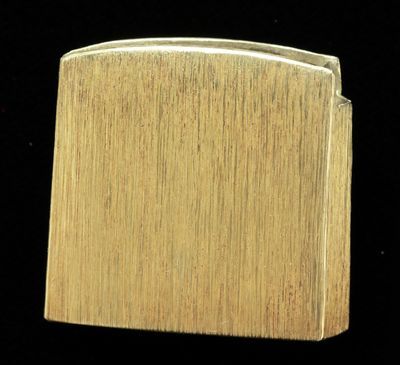
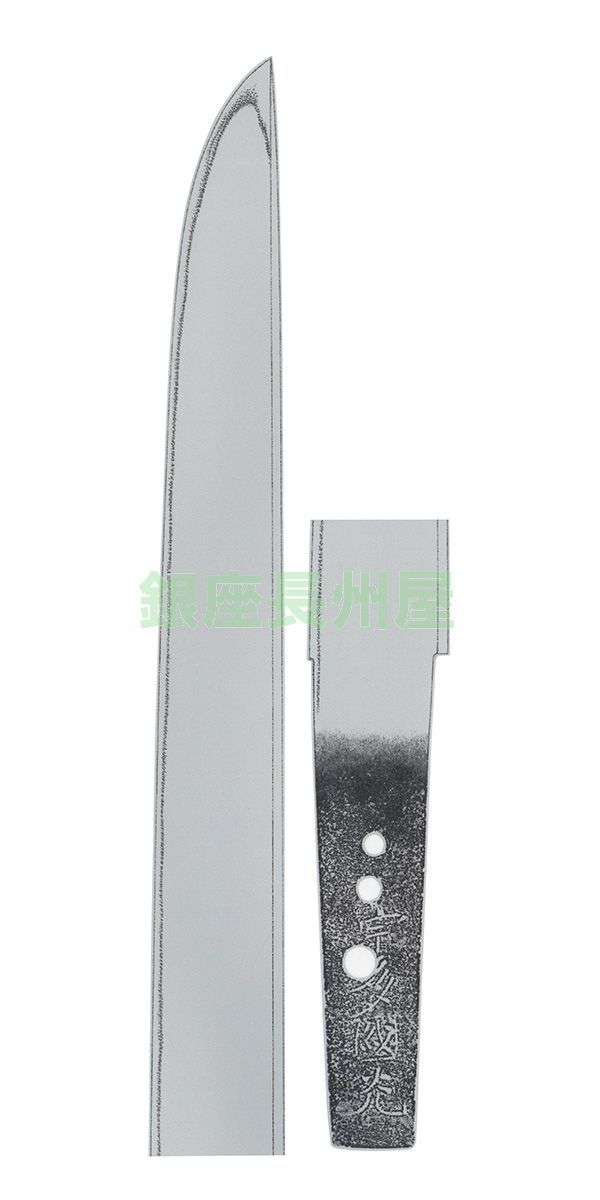
The Uda smiths of Etchu Province are said to have begun with Ko-Nyudo Kunimitsu, who moved there from Uda in Yamato Province at the end of the Kamakura period. The Kunimitsu lineage was subsequently inherited until around the Meio era in the middle of the Muromachi period, but examples dating back to the early Muromachi period are extremely rare. This tanto is a remarkably well-made work (Note 1) by Uda Kunimitsu from around the Oei era of the early Muromachi period. The shape is powerful yet beautiful, with a length that is long relative to the mihaba, a thin kasane, and a shallow uchizori. The jigane, featuring itame mixed with moku and masame toward the ha, has a strongly standing grain, with densely packed forge-welded surfaces and thick chikei; it is thickly covered in granular jinie characteristic of the Uda school, which strongly reflects light and produces nie-utsuri. The hamon, based on a narrow suguha, undulates shallowly and is covered in snow-white konie, with a sharply defined habuchi, faint yubashiri, and small kinsen running through it, while the interior of the blade is filled with pure nioi and is refreshingly clear. The boshi returns shallowly in omaru. What draws attention is that the character for "Mitsu" in the mei is carved as "灮". This typeface is a character form used in the "Gokei Monji" (established in the late 8th century) by the Tang Dynasty Confucian scholar Zhang Can. Why did Kunimitsu use the character "灮"? Was he originally possessed of high knowledge, or did he carve the mei following the calligraphy of a highly educated monk or bushi (Note 2)? It serves as an interesting example that makes one reconsider an aspect of the culture and education of the Muromachi people. Note 1... A Tokubetsu Kicho Token certificate in the name of Mr. Yagi Masaichi, the Himeji Branch Manager of the Token Hozon Kyokai, is included, showing that it was a blade he took great pride in. Note 2... It is said that Hizen no Kuni Tadayoshi also carved his mei in the earliest period following the calligraphy of the monk Shugan (Shugan-mei).
NihontoWatchOffered by Choshuya
This piece has sold
9 on the market
Get an email when a new Ko-Uda Kunimitsu piece hits the market.






Machine translation from the shop's Japanese · may contain errors ·
Wakimono · Etchu · around 1317-1319
Tōken Taikan top 21%
Uda Kunimitsu (宇多国光), known as Ko-nyudo Kunimitsu (古入道国光), is traditionally regarded as the founder of the Uda school. According to accepted tradition, around the Bunpo era (1317–1319) he relocated from Uda District in Yamato Province to Utsu in Etchu Province, establishing a lineage that would flourish through subsequent generations. He is said to have had sons named Kunifusa and Kunimune, and subsequent smiths bearing the name Kunimitsu appear to span several generations from the late Kamakura into the Nanbokucho period. No definitively signed works by Ko-nyudo Kunimitsu himself are confirmed; however, extant tachi bearing the signature "Uda Kunimitsu" and datable to the late Kamakura period are reasonably attributed to his hand.
Blades attributed to Ko-nyudo Kunimitsu strongly display a Yamato-like character in both jihada and hamon[[c:1]]. The forging typically shows tightly worked ko-itame-hada, at times with masame-hada mixed in toward the edge, well covered with ji-nie and intermingled with chikei. A whitish utsuri reminiscent of shirake may stand out in the ji. The hamon is characteristically suguha-based, occasionally exhibiting shallow notare with a slight admixture of small gunome; ko-nie adheres well, and sunagashi and kinsuji appear along the temper line. The boshi returns in ko-maru with hakikake at the tip. Bo-hi carved on both sides with maru-dome is a recurring feature.
Ko-nyudo Kunimitsu occupies a position of considerable importance as the progenitor of the Uda school, one of the principal forging traditions of Etchu Province. His work demonstrates the direct transmission of Yamato-den characteristics into a provincial setting during the late Kamakura period. Blades attributed to his hand that survive in kenzen condition constitute valuable reference material for understanding the formative period of the Uda tradition and the broader dissemination of Yamato forging methods into the northern provinces.
Where Kunimitsu stands among comparable artisans: across all of nihontō, and within tradition, era, and period. The tiers (Foremost · Leading · Major · Notable) weigh official designations from the NBTHK and Japan's Agency for Cultural Affairs, together with historical honors of lasting repute such as the Sansaku and Meibutsu-chō.
Select a lens to see how it's measured.
Wakimono · Etchu
Phase: Ko-Uda古宇多· 1310–1394
9 pieces on the market now
Ko-Uda (古宇多) names the founding stratum of the Uda school, the work that does not descend later than the Nanbokucho period and so stands before the long Muromachi continuation that the same studio names would carry. The setsumei place the origin in Yamato: around the Bunpo era at the close of Kamakura, the monk-smith Ko-nyudo Kunimitsu left Uda District in Yamato and settled at Utsu in Etchu, and from him the lineage took root. His sons Kunifusa and Kunimune are recorded, and across the Juyo and Jubi explanations the active founding hands are listed together as Kunifusa, Kunimune, and Kunitsugu, the generations that worked through the Nanbokucho period before the name-bearing successions ran down into late Muromachi. A signed Ko-nyudo Kunimitsu is hard to fix among several smiths who used the name; the Tokuju tachi is read as the founder precisely because it shows the most archaic character of the surviving examples, earlier even than the Kunifusa pieces taken for Nanbokucho. The early steel is the school read at its source. The forging is itame mixed with mokume and running nagare-hada that tends to stand (hada-dachi), ji-nie adhering with chikei, and over it a whitish shirake-utsuri or, on the founder's own work, a nie-utsuri; the jigane carries a blackish, golden-toned cast that the explanations call a northern-province feeling. The temper sits in narrow to chu-suguha, opening into ko-notare, ko-gunome, ko-midare, and togariba, with ko-ashi and yo and ko-nie well set; along the habuchi the Yamato signature of hotsure and kuichigai-ba appears, while kinsuji and sunagashi run through.
Against the later Uda generations, the Ko-Uda face is the purer one. The Tokuju founder is appraised as workmanship entirely like Yamato; the Hie Shrine and Kurokawa tachi by the shodai Kunifusa hold a tight, clear nioiguchi and a bright forging, and the nie in the best stands strong and rounded where the later hands run coarser and more provincial. A Soshu lean exists, traced to the study of Norishige and Go, yet in this phase the steel and nioiguchi keep returning the blade to Yamato roots rather than dissolving into them. To kantei a Ko-Uda blade is to catch the standing, whitish jigane with its masame tendency and utsuri beneath a suguha that might otherwise recall Yamashiro, and to bring a nie-rich, chikei-laden example home from Soshu by the dark steel and the subdued (shizumi) nioiguchi. The named early hands recur across the corpus: the shodai Kunifusa, fixed against dated pieces no earlier than Koo 1 (1389) and the calligraphy of the lattice-broken 国; the signed Ko-Uda Kunimitsu and Ko-Uda Tomonori of around Meitoku; and the rare Tomoshige and Tomonori, smiths of few survivals through whom the phase's reach is gauged. Because signed early work is uncommon, the phase leans on mumei attributions read off forging and temper, several entered as den Ko-nyudo Kunimitsu. Provenance settles into shrine and institutional holding, the Hie Shrine and Kurokawa Institute tachi serving as the calibrating standards against which other early Kunifusa are judged, and the dated examples valued as documentary footing for the study of how Yamato workmanship took its northern form. Learn more →
| Smith | Era | Designated |
|---|---|---|
| Kunifusa國房 | 1368-1405 | 17 |
| Kunimitsu國光 | 1362-1368 | 9 |
| Tomonori友則 | 1390-1394 | 4 |
| Kunitsugu國次 | 1356-1361 | 1 |
| Kunimitsu國光 | 1317-1319 | 2 |
The Muromachi period (1392 to 1573)
After the Ōnin War broke the Ashikaga order, a century of Sengoku warfare armed nearly every province in Japan. The era rewards a discriminating eye: routine work exists in quantity, and beside it stand custom blades of the first rank.
A Hozon-certified blade judged to show notably superior workmanship and a better state of preservation. The bar is higher: re-tempered blades and most unsigned Muromachi/Edo works are excluded.
The NBTHK (Nihon Bijutsu Tōken Hozon Kyōkai, the Society for the Preservation of Japanese Art Swords) is a public-interest incorporated foundation founded in 1948 and supervised by Japan’s Agency for Cultural Affairs (Bunkachō); it is based at the Japanese Sword Museum in Tokyo. Its expert panels physically examine each submitted work (shinsa) and issue a certificate (kanteishō) ranking it by artistic and historical merit. NBTHK papers are the most widely recognized standard of authentication for Japanese swords and fittings.
NBTHK official siteIf, due to our fault, the item differs significantly from its proper condition, the item may be returned. Cooling-off is within one week of the item's arrival.