 NihontoWatchNihontoWatch
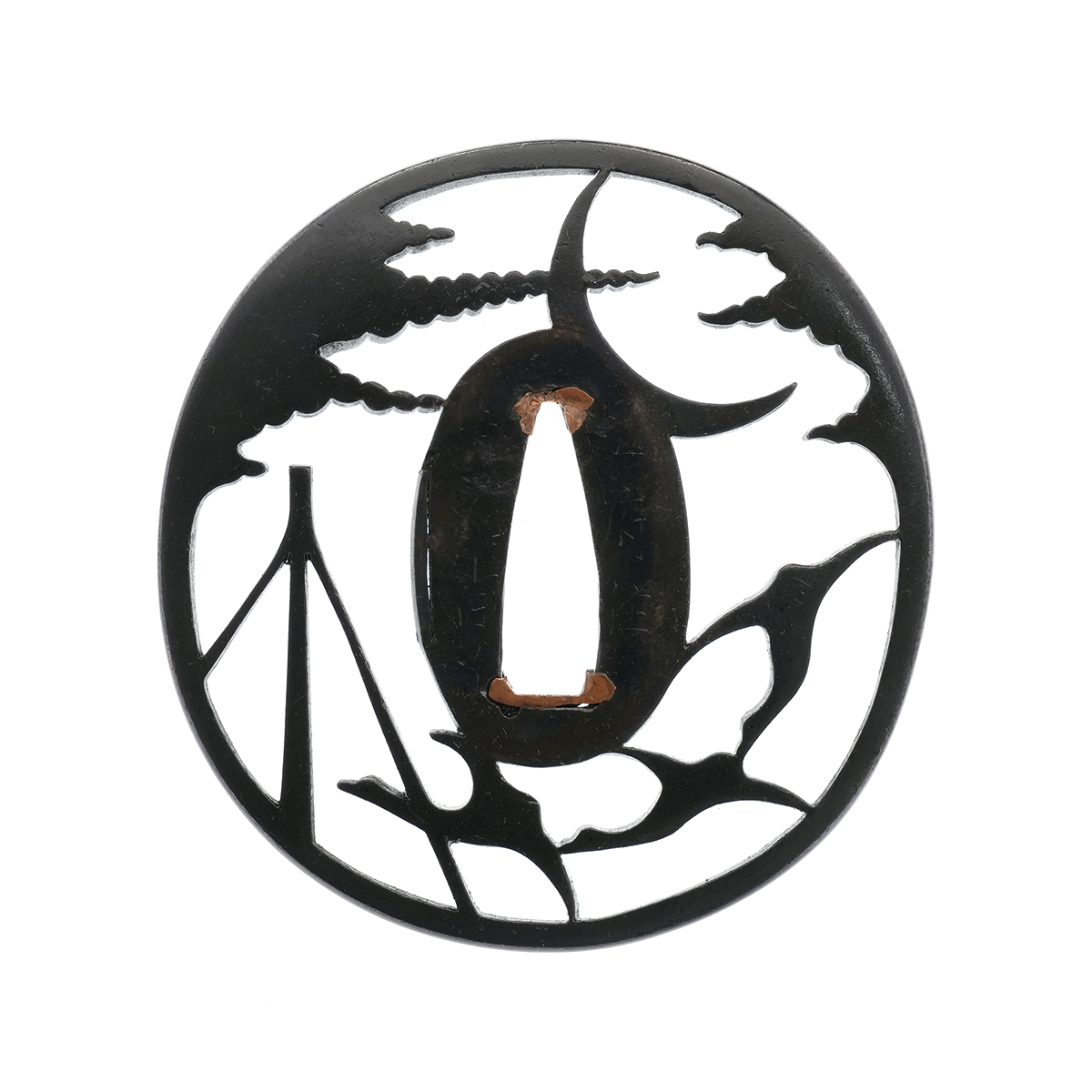
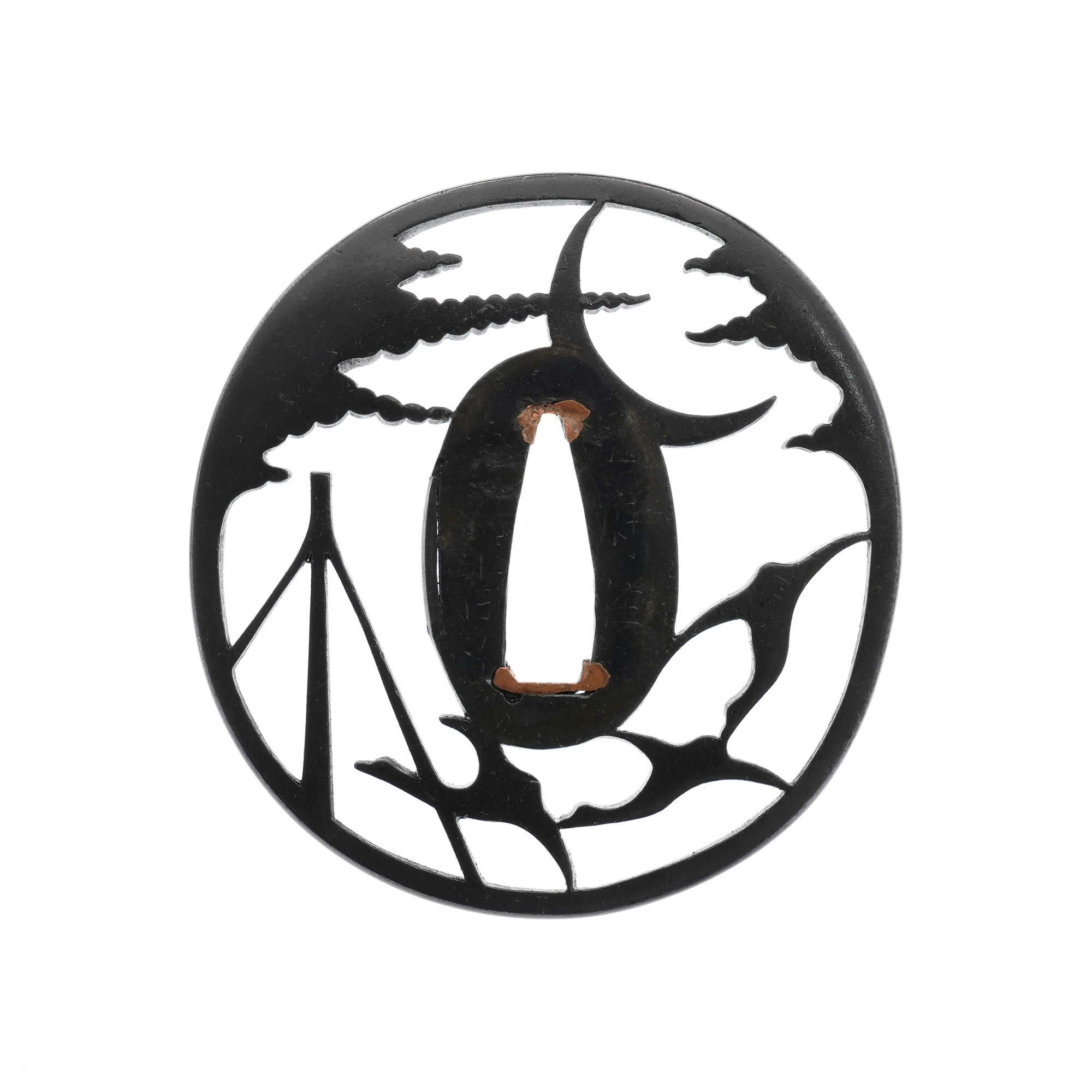
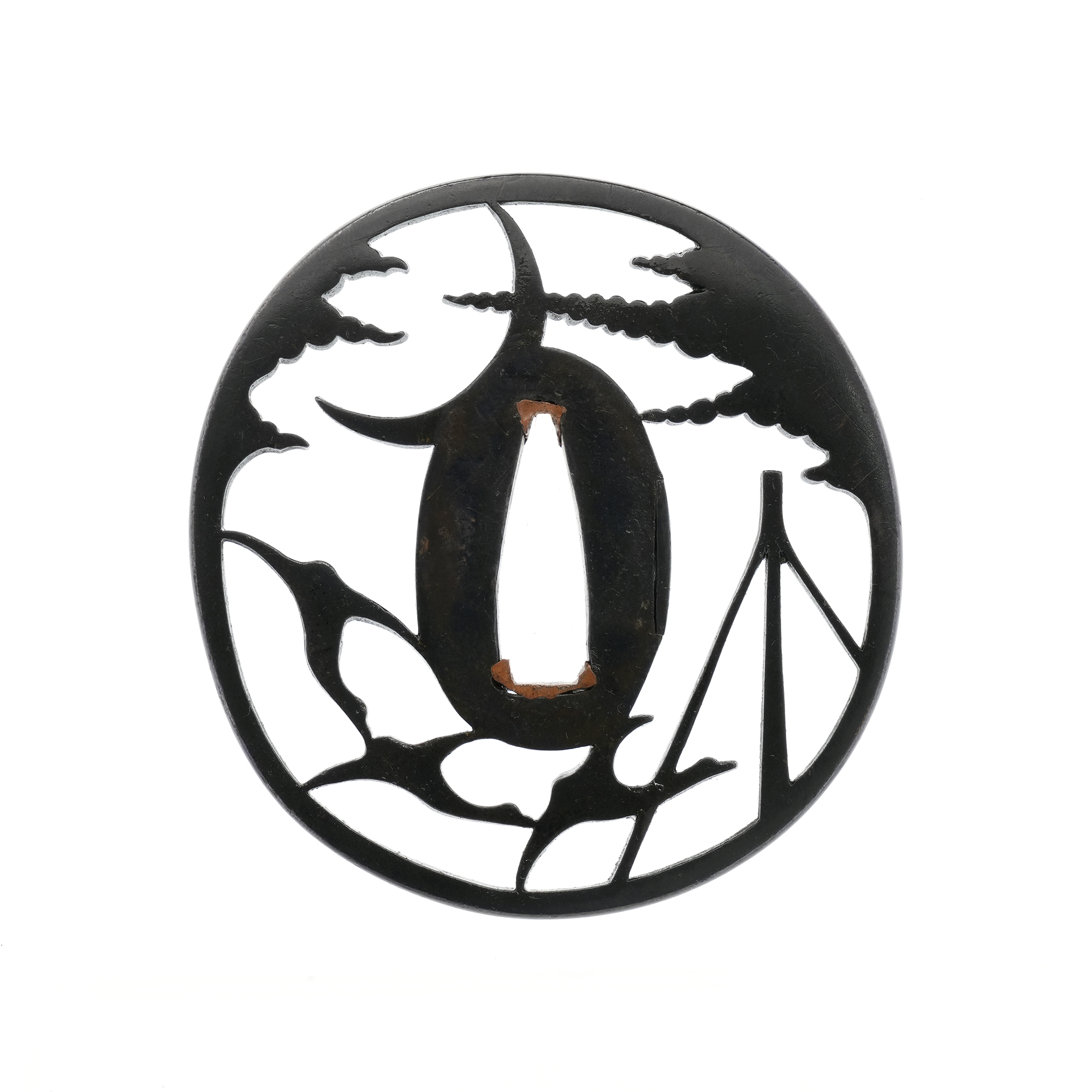
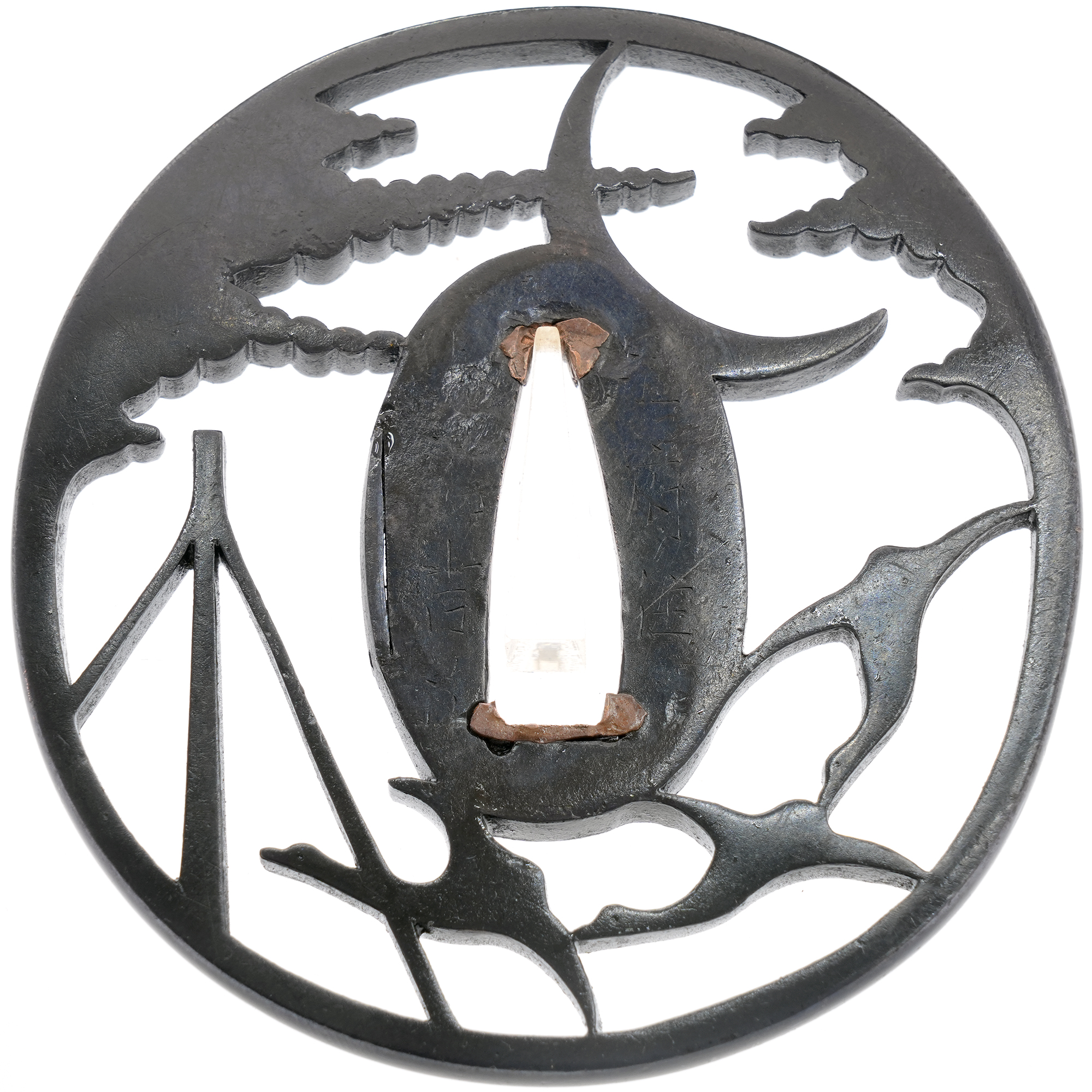
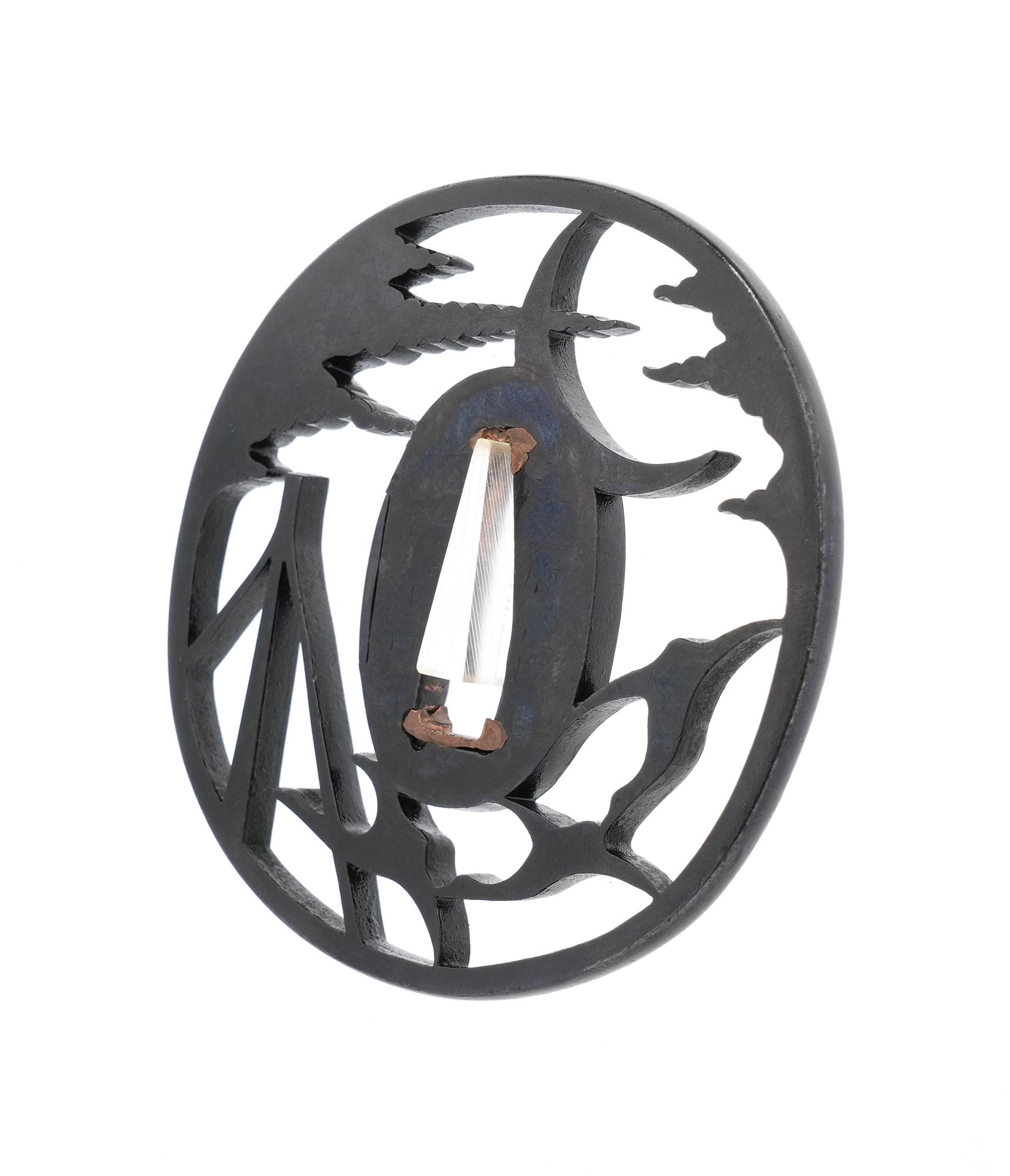
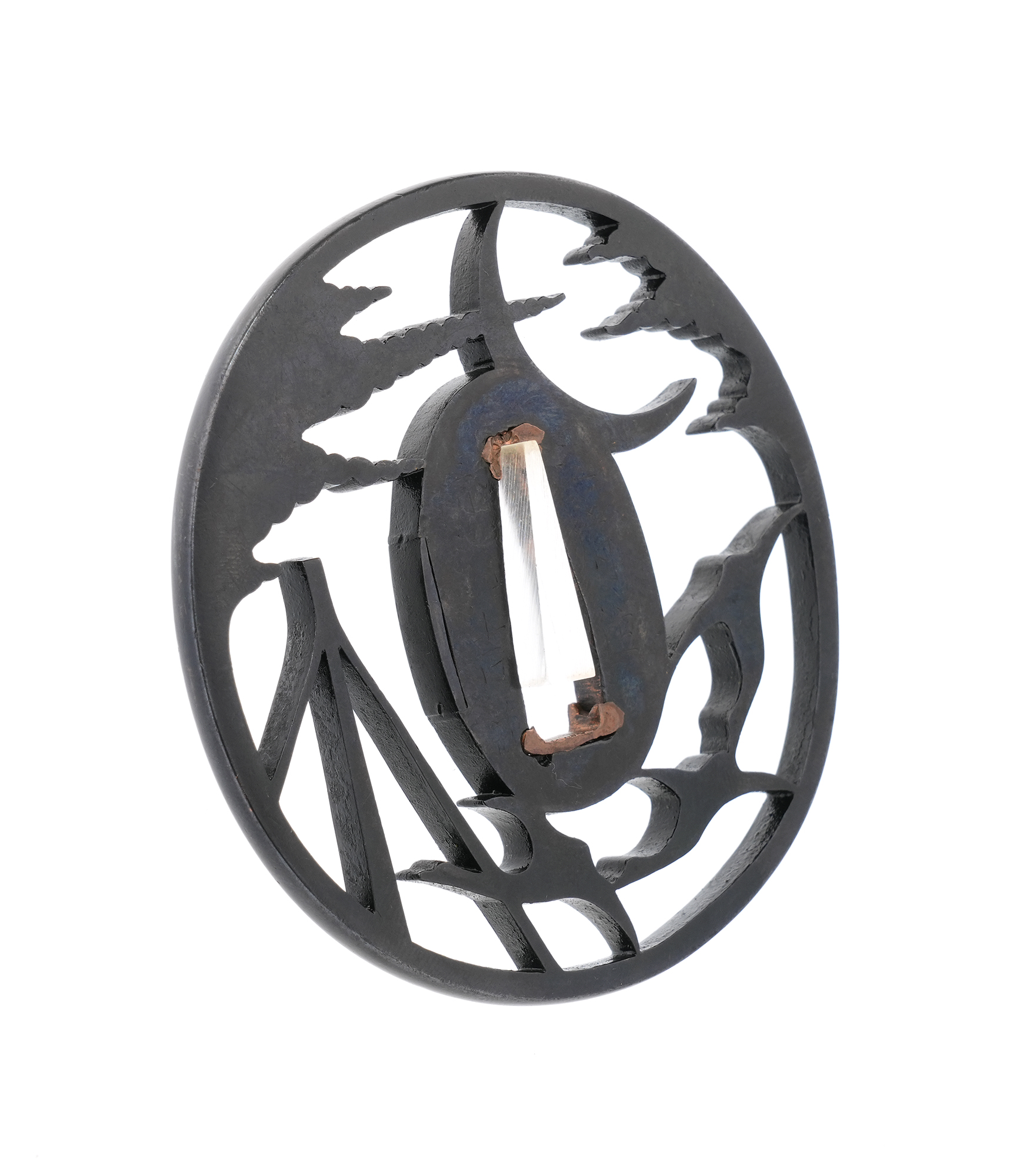
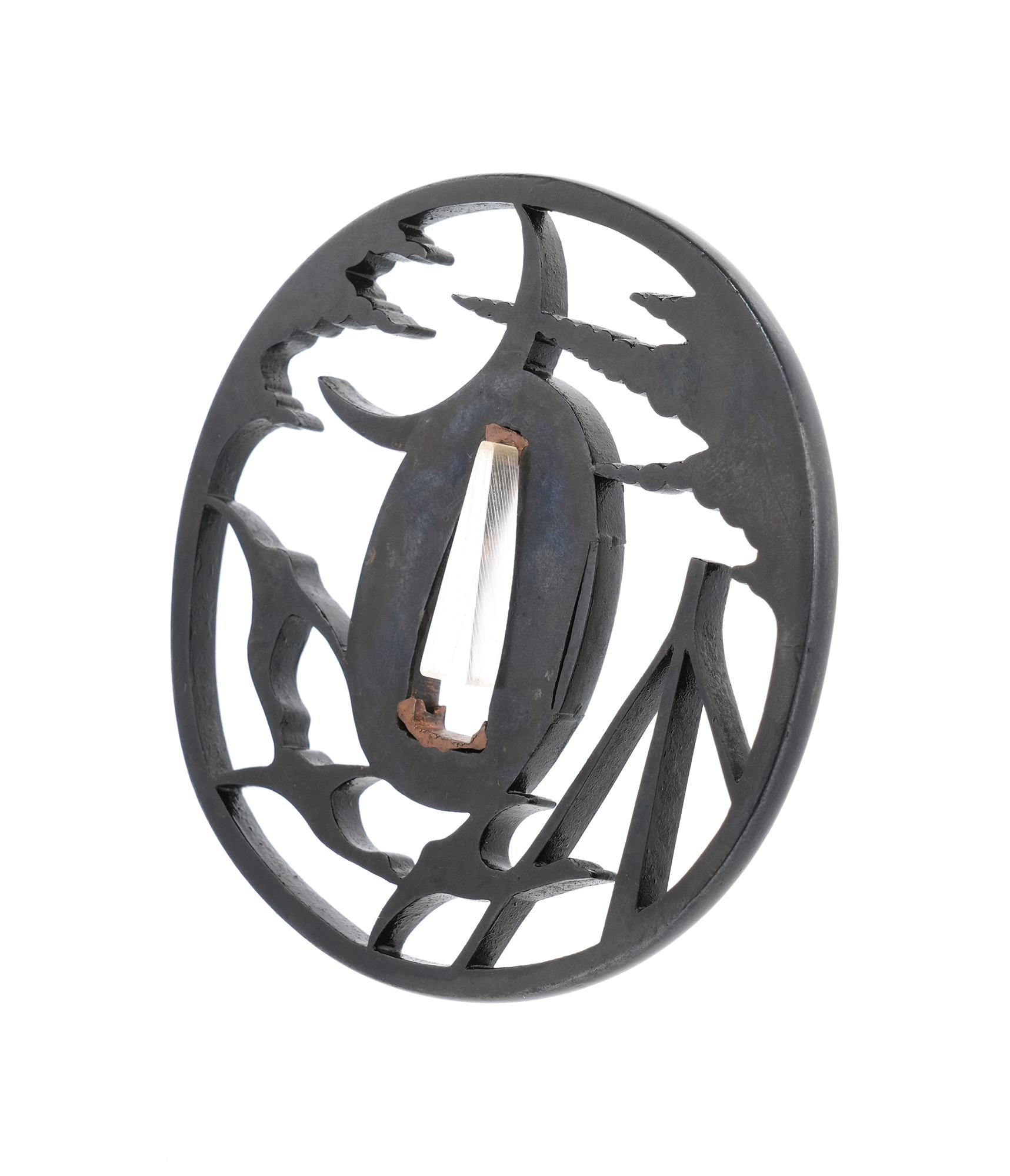
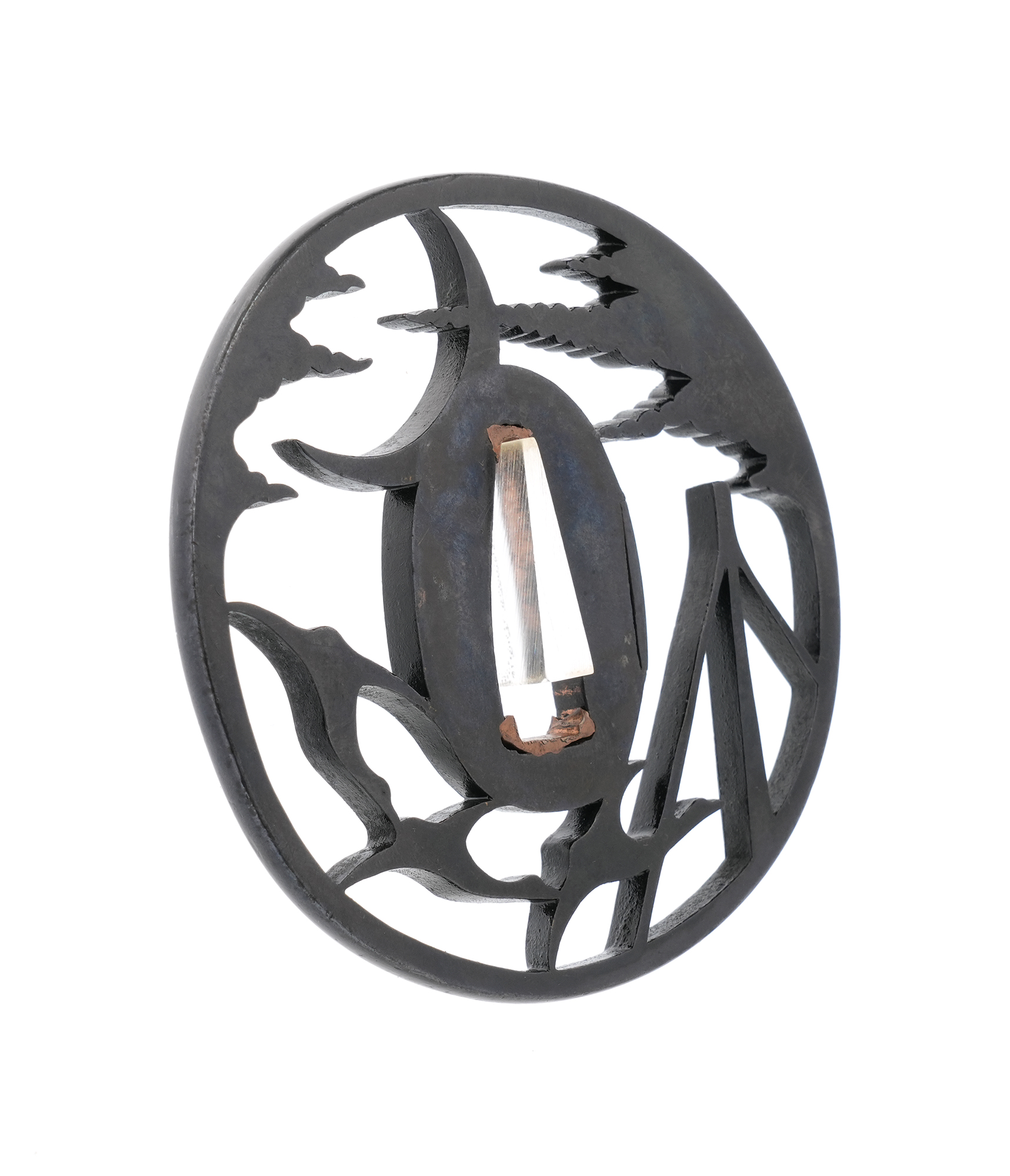
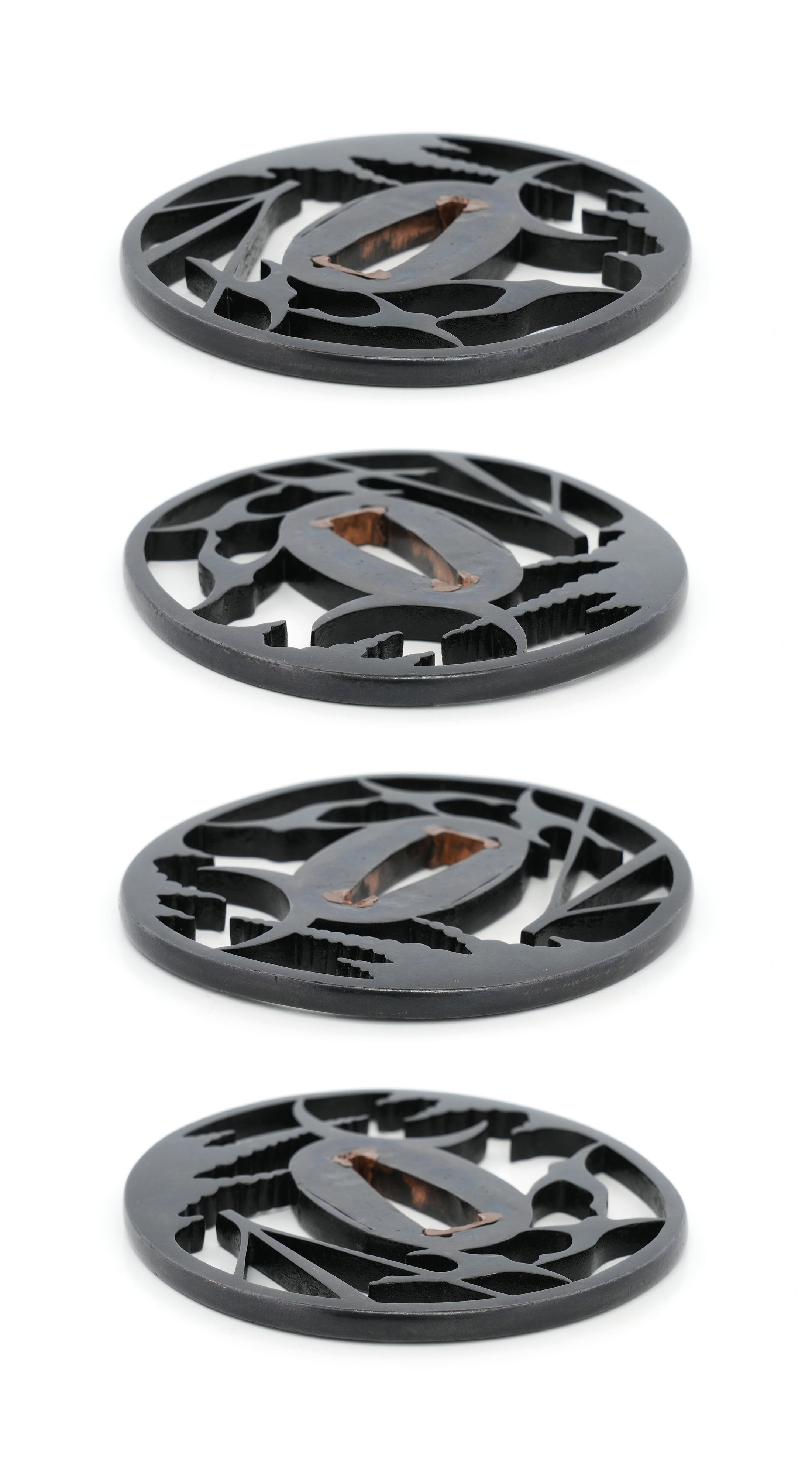
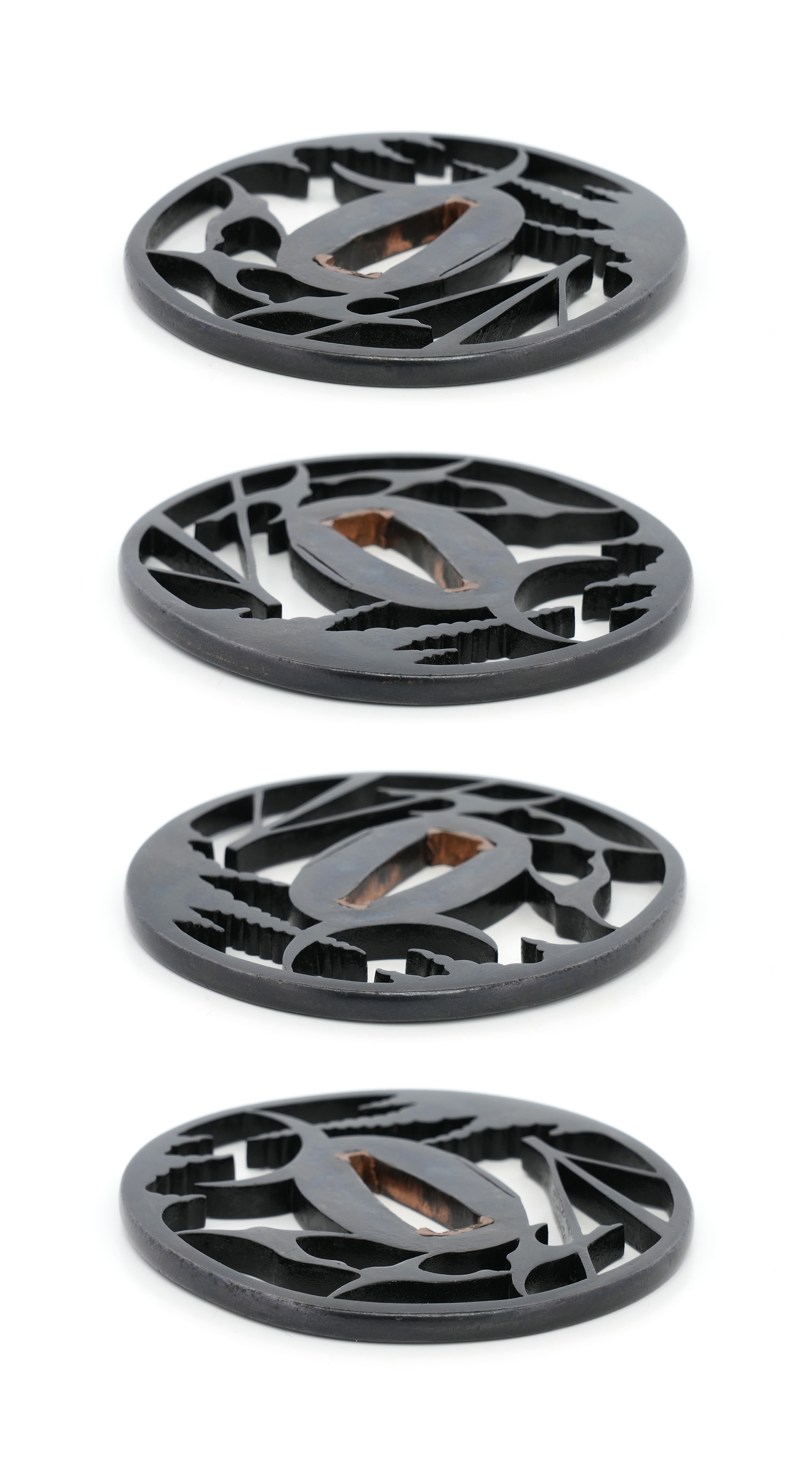
Although the mei is partially obscured at the bottom, it can be read as "Kofu ju [] yoshi []". This is a single piece where a solid shakudo jigane with a clear, black luster has been shaped into a marugata form, and a landscape stretching from the sky to the waterside is constructed solely through sukashi; the composition, featuring trailing clouds and a crescent moon above with three wild geese and aboshi (drying nets) below, condenses the atmosphere of a quiet waterside under moonlight within a neat outline. On the upper left and right, clouds flow long and horizontally, and from between them, a slender crescent moon rises sharply, making the form of the moon floating in the night sky stand out through the contrast between the black shakudo and the open sukashi spaces. Fine undulations are added to the edges of the clouds, preventing them from ending as flat shadows and creating a depth that enhances the brightness of the moon; when the tsuba is held up to the light, the crescent moon emerges vividly between the clouds trailing to the left and right. Below, three wild geese are depicted in sukashi as they fly with wings spread, and in the lower left, the scene of nets being dried on upright poles is shown with a linear construction, adding the presence of human activity by the water to the soft curves of the clouds and moon. All three birds head toward the left, forming a flock with a sense of movement toward the bottom of the frame while varying the opening of their wings as they cross under the moon, creating a contrast with the quiet night sky spreading above, while the diagonal lines of the aboshi tighten the entire composition neatly. In the indentation of the kozuka hitsu-ana, a hitsume of the same shakudo as the jigane has been fitted and carefully plugged. Confirming this detailed work, blended into the black base color, conveys that this tsuba was prepared with awareness not only of the design but also of the finishing at hand. On the seppa-dai, along with the mei, suaka sekigane can be seen at the top and bottom of the nakago-ana, and the construction, which firmly connects each part—the clouds, moon, geese, and aboshi—to the mimi despite the large sukashi carved out of the thick, solid shakudo base, possesses the strength required for a kanagu used on a worn sword. The moon and wild geese evoke the deepening of the season, and this piece, with the addition of aboshi, possesses a poetic sentiment that captures the night sky and the riverside in a single frame; the outlines of the sukashi pass through cleanly whether viewed from the omote or the ura, and the luster of the shakudo and the brightness of the negative space change expression each time it is tilted. The more one follows the slender arc of the crescent moon, the forms of the three wild geese, and the straight lines of the poles drying the nets, the more one sees the ingenuity of the metalworker who tells of a rich landscape with simple lines; it is a piece with charm both for a koshirae and for appreciation in the hand.
Offered by Toushin
We couldn’t find current papers for this piece. Ask the dealer whether it has been, or can be, submitted to shinsa. — Hoshi

As written by the shop
Machine translation from the shop's Japanese · may contain errors ·
We could not find an authenticity certificate on the seller’s listing. Japanese swords and fittings are normally papered by the NBTHK (or the NTHK). Without one, the attribution is the seller’s own assessment and has not been independently verified — treat it with caution and ask the dealer about certification before buying.
As a rule we do not accept returns, except when we have sent a different item from the one ordered or when there is a significant discrepancy between the description and the item. If you wish to return an item, please contact us within 3 days of its arrival and then send it back.
¥242,000