 NihontoWatchNihontoWatch
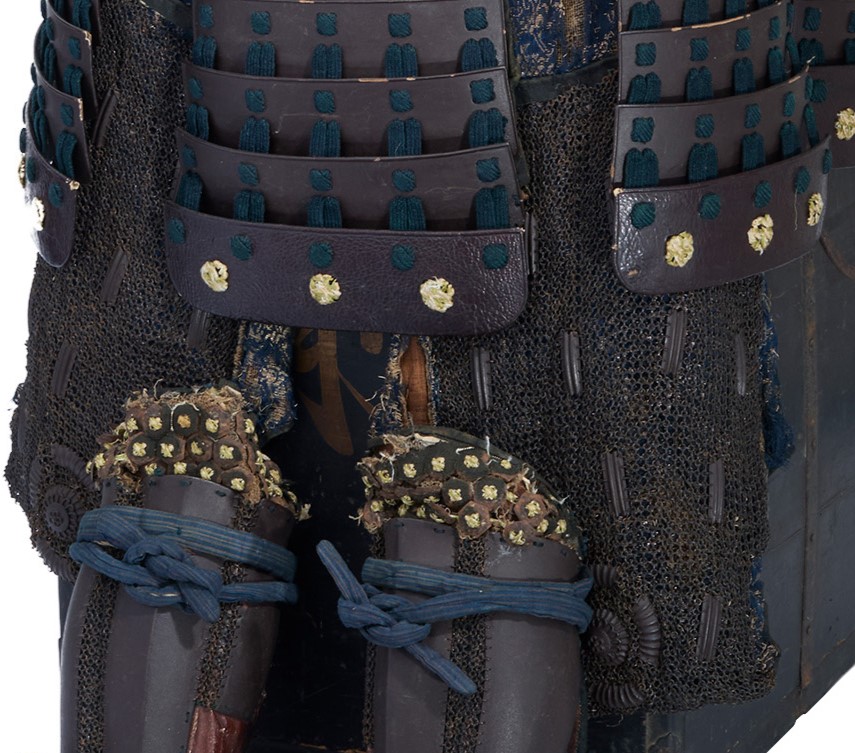
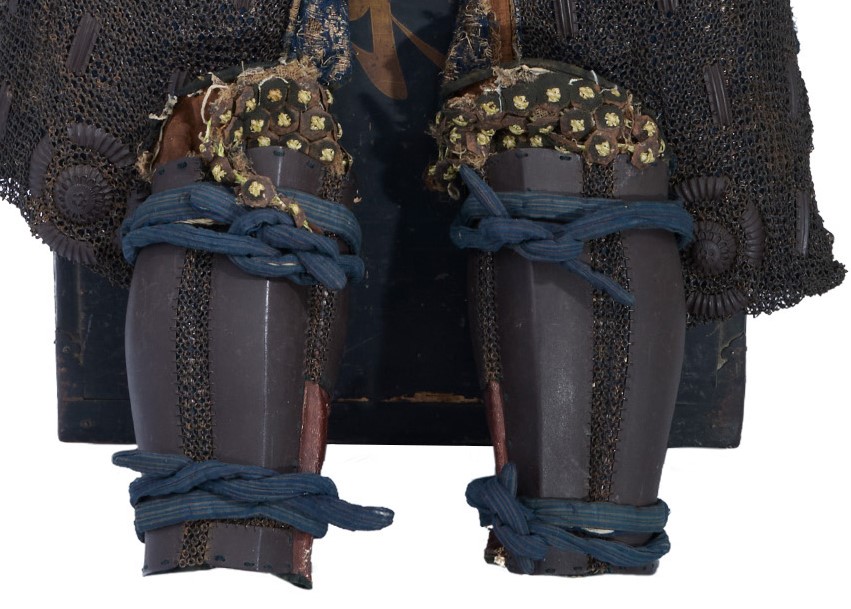
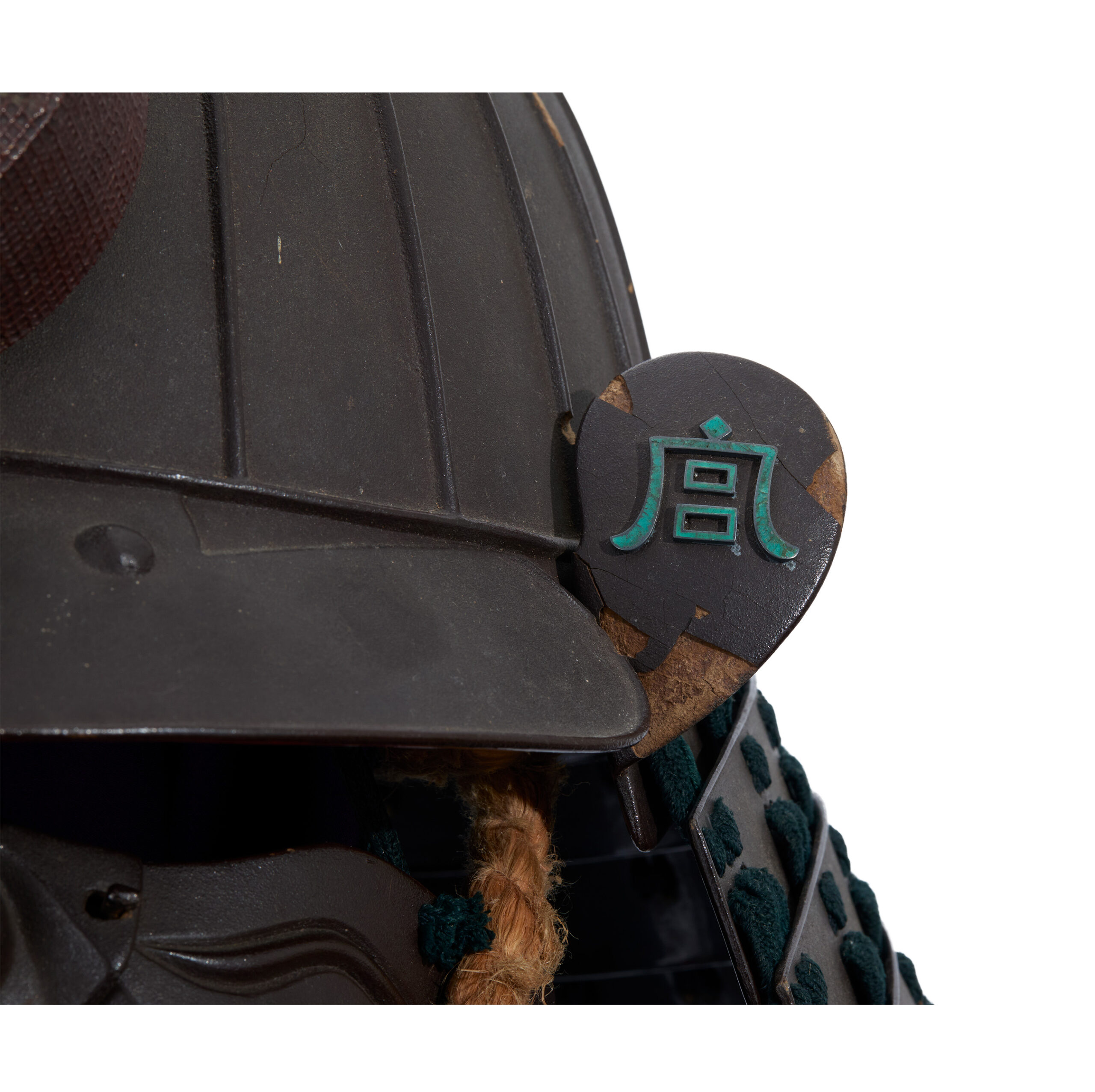
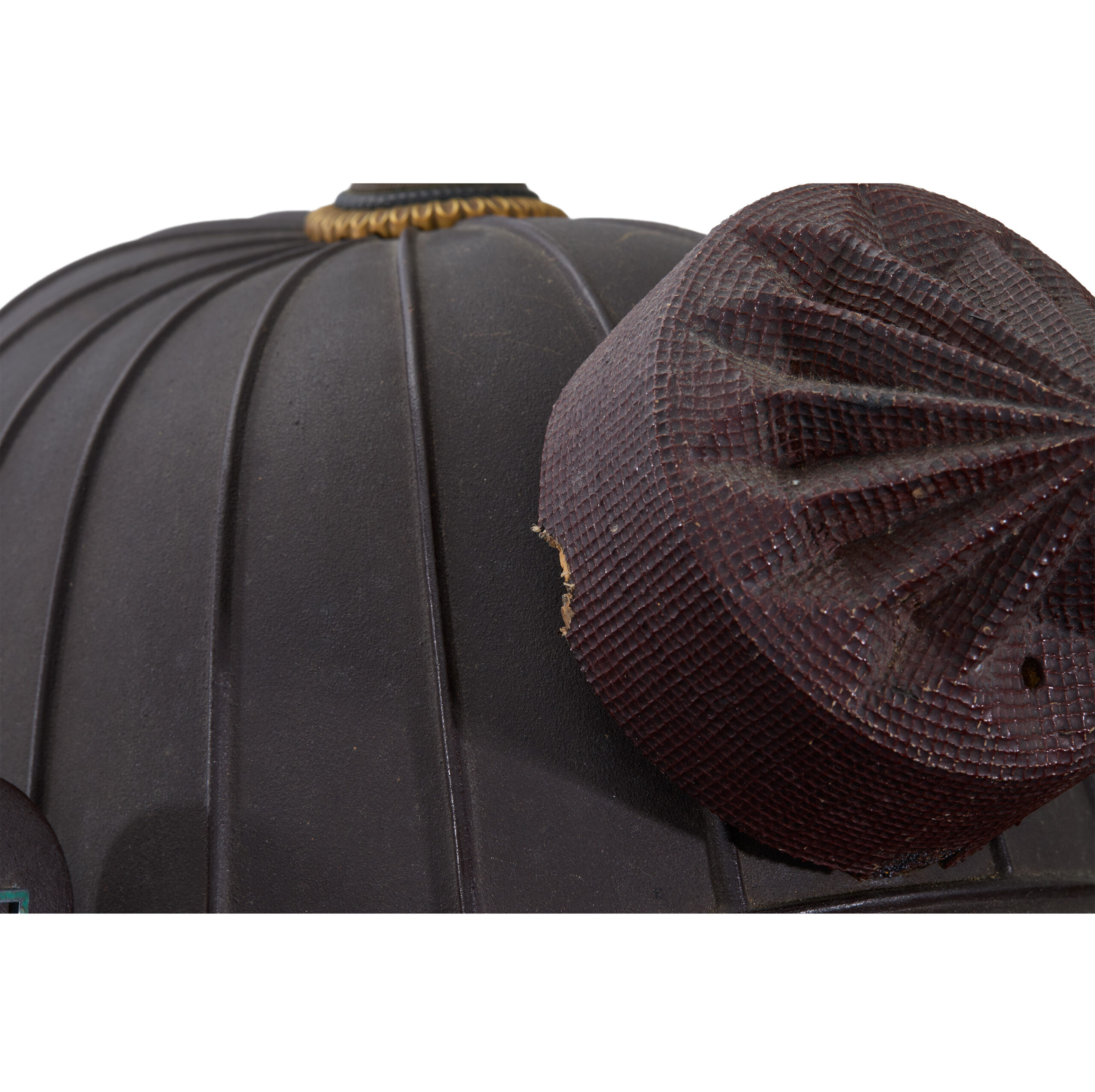
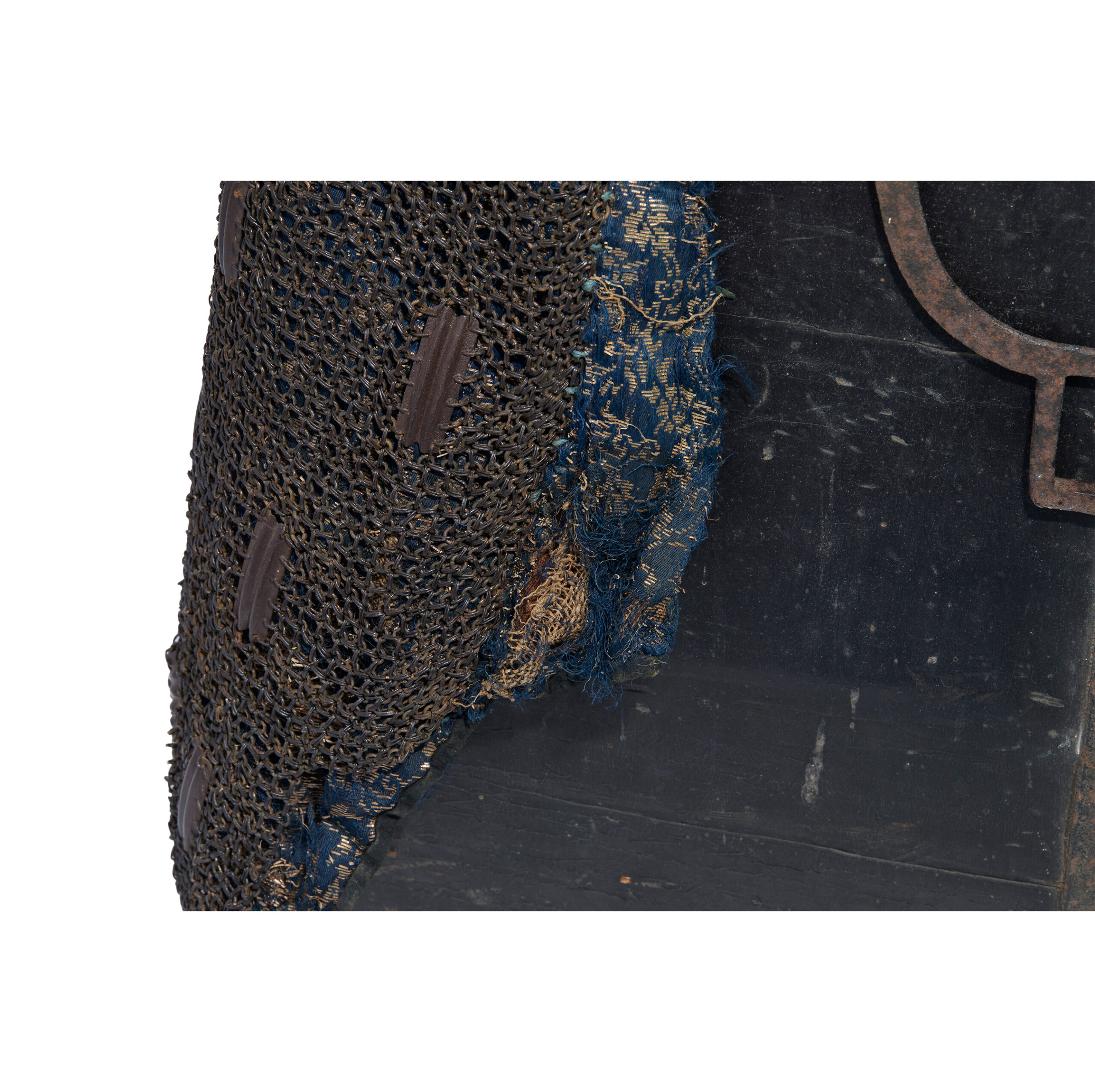
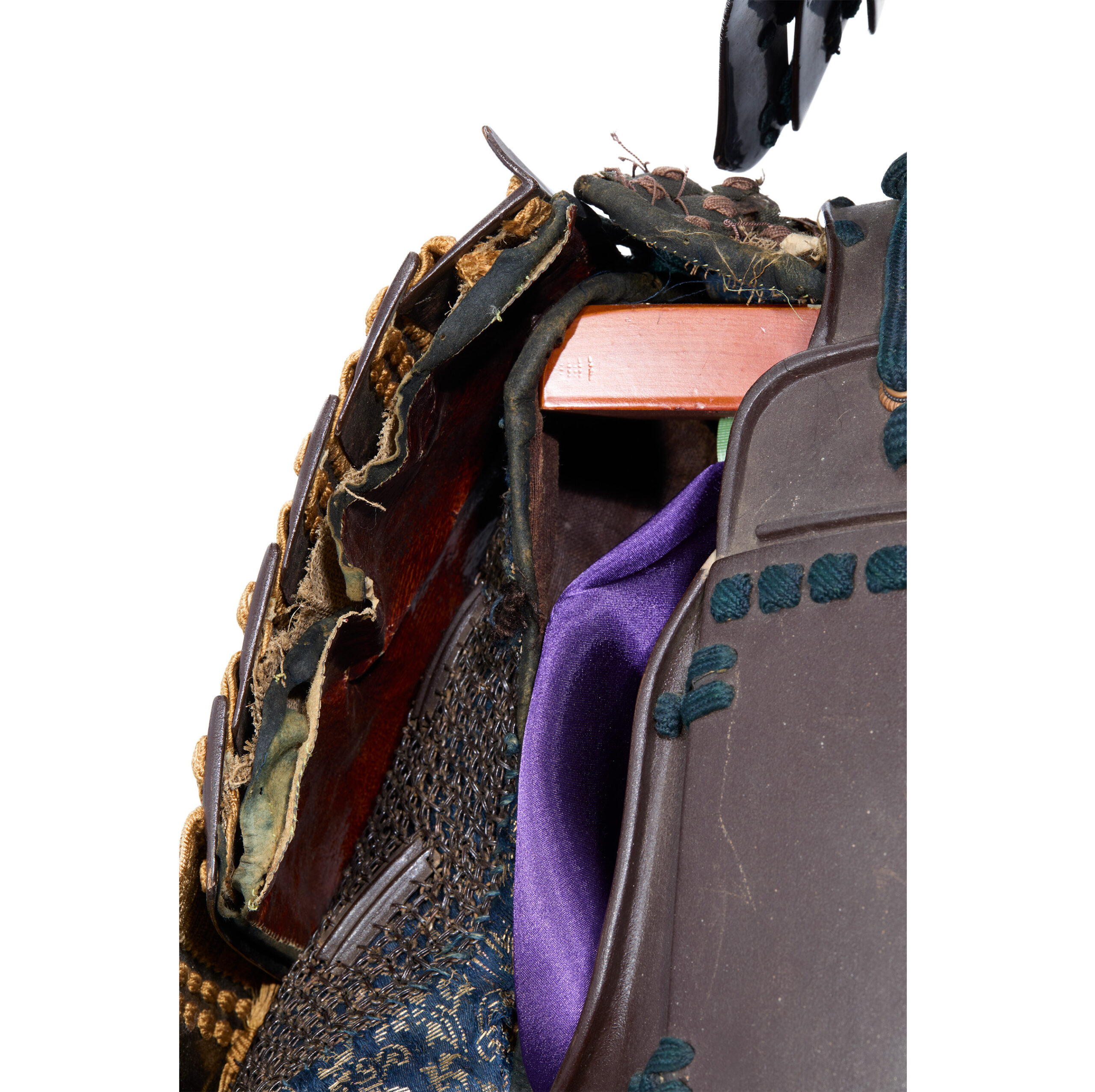
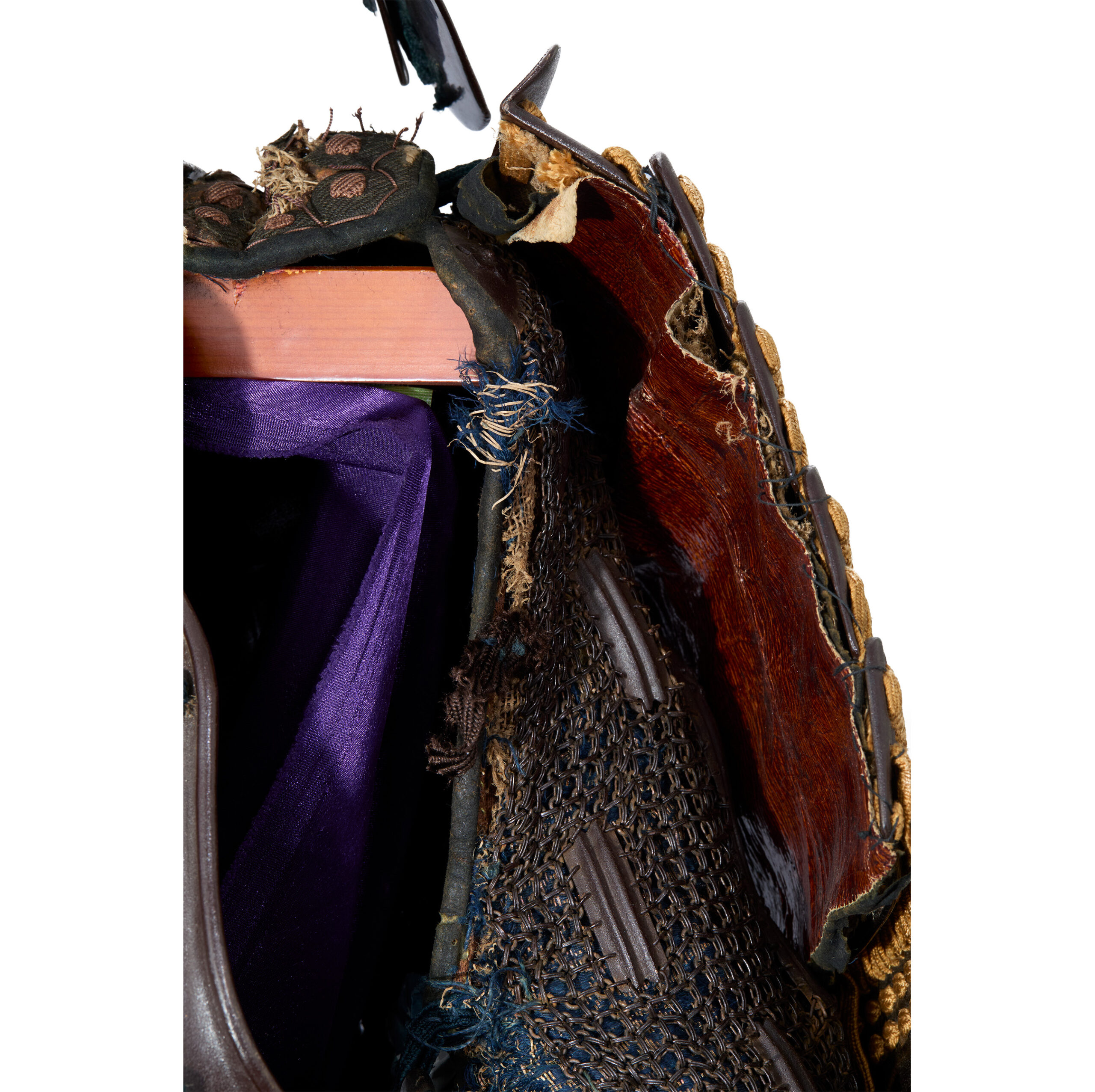
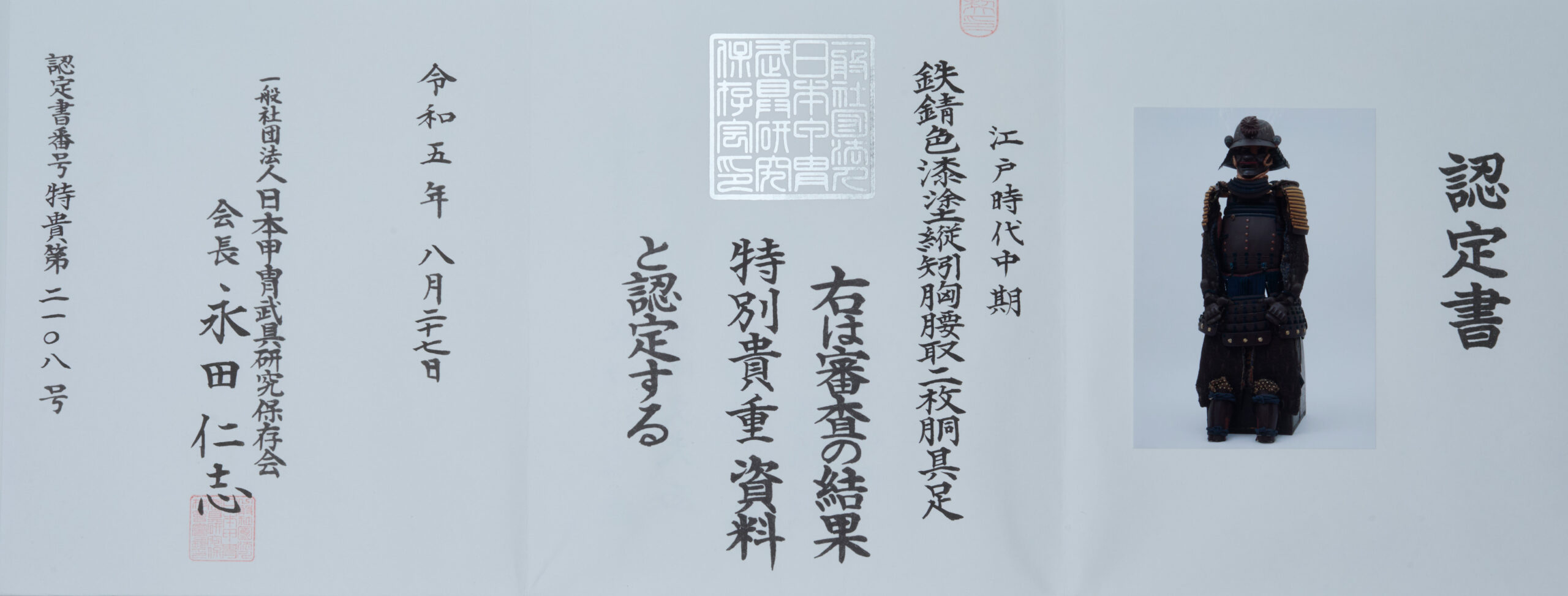
appraised by The Association for the Research and Preservation of Japanese Helmets and Armor Kabuto (helmet) ■Helmet bowl: Suji Kabuto The Kabuto (兜, helmet) is a protector for the head. When people started using the Kabuto, it was initially designed for practical use. However, the principal purpose of its design has changed with time; Samurai warriors tried to express their dignity, personality, or religion by wearing the characteristic designed Kabutos. According to a theory, these uniquely designed Kabutos were made from the late Muromachi (室町後期, 1467-1573) to the Edo period (江戸, 1603-1868). This type of Kabuto is categorized as the Kawari Kabuto (変わり兜), and a variety of materials were used to create them. For example, animal fur, seashells, plants, and paper were used as materials for decoration. Here we would like to introduce to you a little bit more about the history of Kabutos. Before the Kawari Kabuto’s production, the Suji Kabuto (筋兜) appeared during the Nanbokuchou (南北朝, 1337-1392) period. At that time, the tactic was gradually changed from the horseback fight style with the Tachi (太刀) sword and the Naginata (薙刀, Japanese halberd) to battle on the ground with a Katana. Therefore, there was a rise in demand for the weight-saving of the Kabuto. Also, in order to turn the attack by swords, a new type of structure was invented: the Suji Kabuto (筋兜). Its form slides swords’ attacks when weapons hit the Kabuto. It is said that the production of the Suji Kabuto prospered in the Muromachi (室町, 1336-1573) period. We estimate this Kabuto is one of these Suji Kabutos made in that tendency in the Edo period. It has 25 stripes in this Kabuto, meaning 25 small iron plates are connected. It is called Jyu Hakken Suji Kabuto (十八間筋兜). Jyu Hachi means 18 in Japanese. The surface of this helmet is coated with iron rust-colored lacquer (鉄錆色漆塗), giving it a imposing and splendor design. ■Shikoro (side neck guard): Iron plates laced with navy blue threads. ■Fukikaeshi (side neck guard) The Fukikaeshi (吹き返し) is both ends of a Kabuto. It protects the face from swords. On both sides of the Fukikaeshi of this Kabuto, you may notice what appear to be characters resembling Chinese kanji. We believe these are talismans (護符, gofu). A talismans is an object believed to have special powers to protect or bring good fortune. In Japan and many other cultures, they are used to ward off bad luck, or to pray for health, success, or protection. Talismans often feature symbols or writing that are thought to carry spiritual or magical energy. For example, in Japan, people often buy them as charms at shrines or temples, carrying them for mental support or protection in their daily lives. ■Menpo (face guard): Ressei Menpo This type of Menpo is called the Ressei Menpo (烈勢面頬). It represents the angry face to intimidate enemies. There are many types of Menpo, depending on their shape or appearance. The purpose of Menpo was not only to protect Samurai’s face. But also to hide their true faces so that their psychological states were unaffected. Long beards are attached to this Menpo. Thanks to this effect, even a young soldier would have been able to produce the majestic appearance of a middle-aged Samurai. ■ Maedate (front decoration): Toukin The Maedatemono (前立物, front decoration) is attached to this Kabuto. The motif of the Maedate of this helmet is based on the Toukin (頭襟), a small black hat worn by Buddhist monks who trained in the mountains from the Sengoku period to the Edo period. This hat was made by stiffening cloth with black lacquer, and its design features twelve pleats radiating from a central protrusion. It is believed that this design symbolizes the Buddhist concept of the “Twelve Links of Dependent Origination” (十二因縁), which outlines twelve stages of causality to eliminate confusion and suffering. Armor ■Do (cuirass): Nimai Do Nimai Do is a kind of cuirass for Tousei Gusoku (当世具足, developed armor style). Nimai Do (二枚胴) was named after the fact that Nimai (二枚) means two plates, and Do (胴) means torso in Japanese. Instead of using a large number of small lamellar plates called Kozane (小札), this cuirass used large iron plates riveted. Also, the cuirass has iron plate joints, which is called Tate-hagi (縦矧, vertical fletching). ■Kusazuri (skirt of plates attached to the cuirass): Lacquered iron Kusazuri laced with navy, vermillion, and white threads. The cords for the Odoshi (縅, a technique for armor tying boards together with cords such as leather or thread) are relatively in good condition, so each plate is tied without coming off. Small parts ■Kote (armored sleeves): Intricate iron chain mail with silk. ■Haidate (thigh protection): The Haidate (佩楯) is a thigh guard. Chain mail and iron plates are attached to its cloth. ■Suneate (shin guard): The Kikkou (亀甲, turtle’s shell) pattern is used for the cloth of the Suneate (脛当). It is a continuous geometric pattern connecting regular hexagons up and down. A theory says that this design was brought from China and the Korean Peninsula during the Asuka (飛鳥, 592-710) and Nara (奈良, 710-794) periods. A proverb says turtles live long lives; therefore, turtle and turtle shell patterns represent longevity. In addition, as this continuous hexagonal pattern does not get out of its shape, it is said people wished for eternal prosperity by using this design. Certification On August 27th 2023, this armor was appraised as a Tokubetsu Kicho Shiryo by The Association for the Research and Preservation of Japanese Helmets and Armor, which is the most trusted Japanese armor appraiser in Japan. This association is also known as Nihon Katchu Bugu Kenkyu Hozonkai (日本甲冑武具研究保存会). Tokubestu Kicho Shiryo (特別貴重資料) means special rare article. It is ranked as the third highest of five rankings. The paper mentions the armor was made in the mid Edo period. You can receive this original authentication paper.
Offered by Samurai Museum


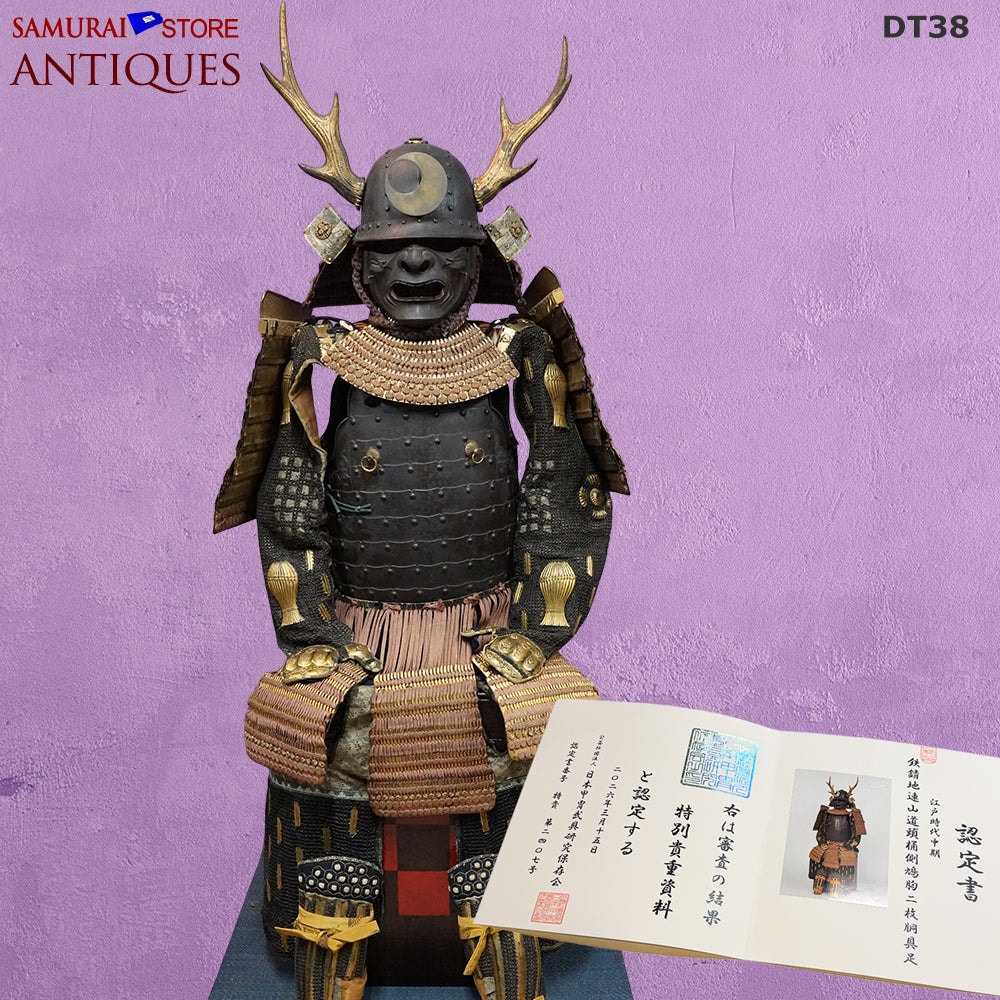
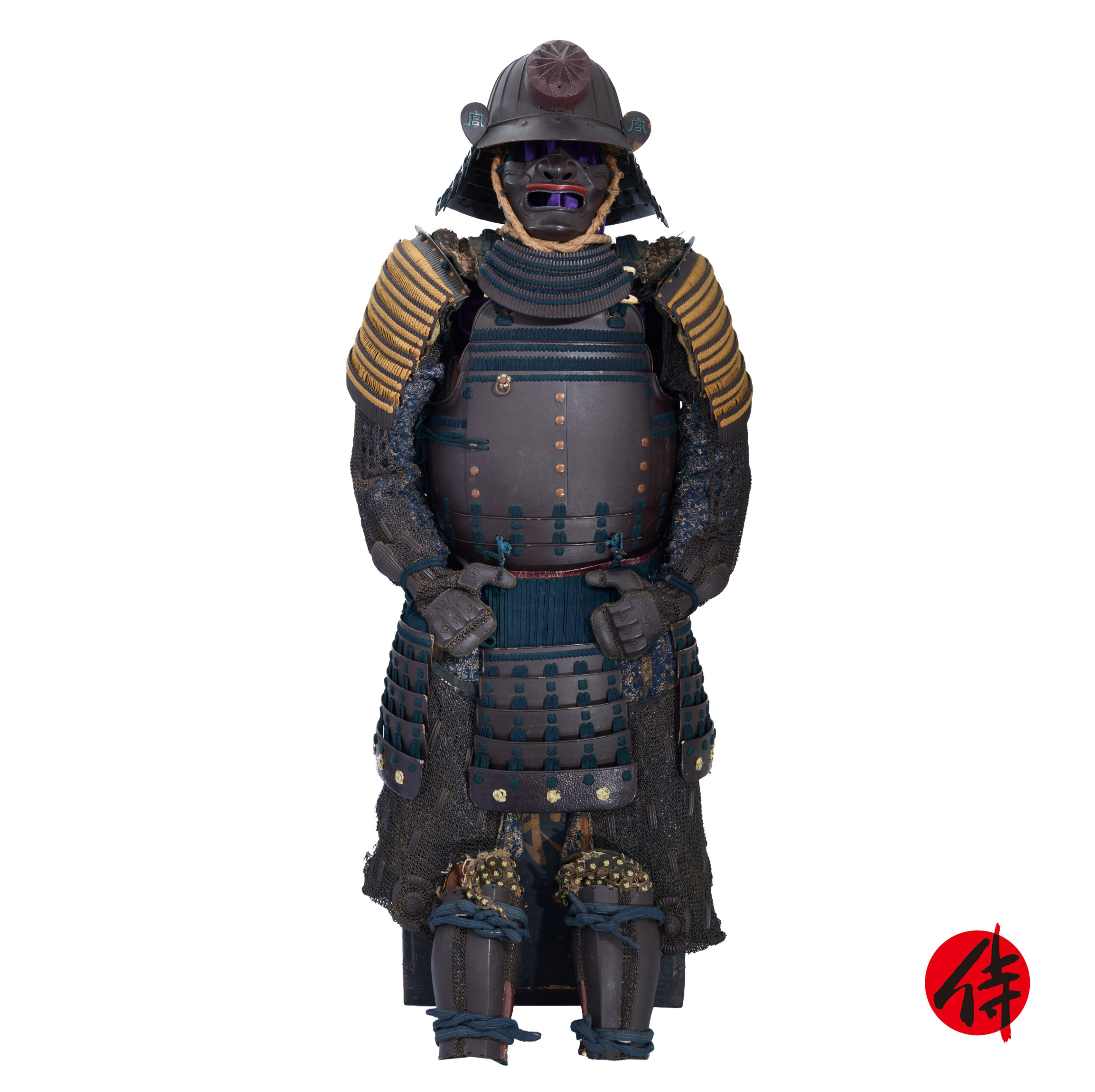
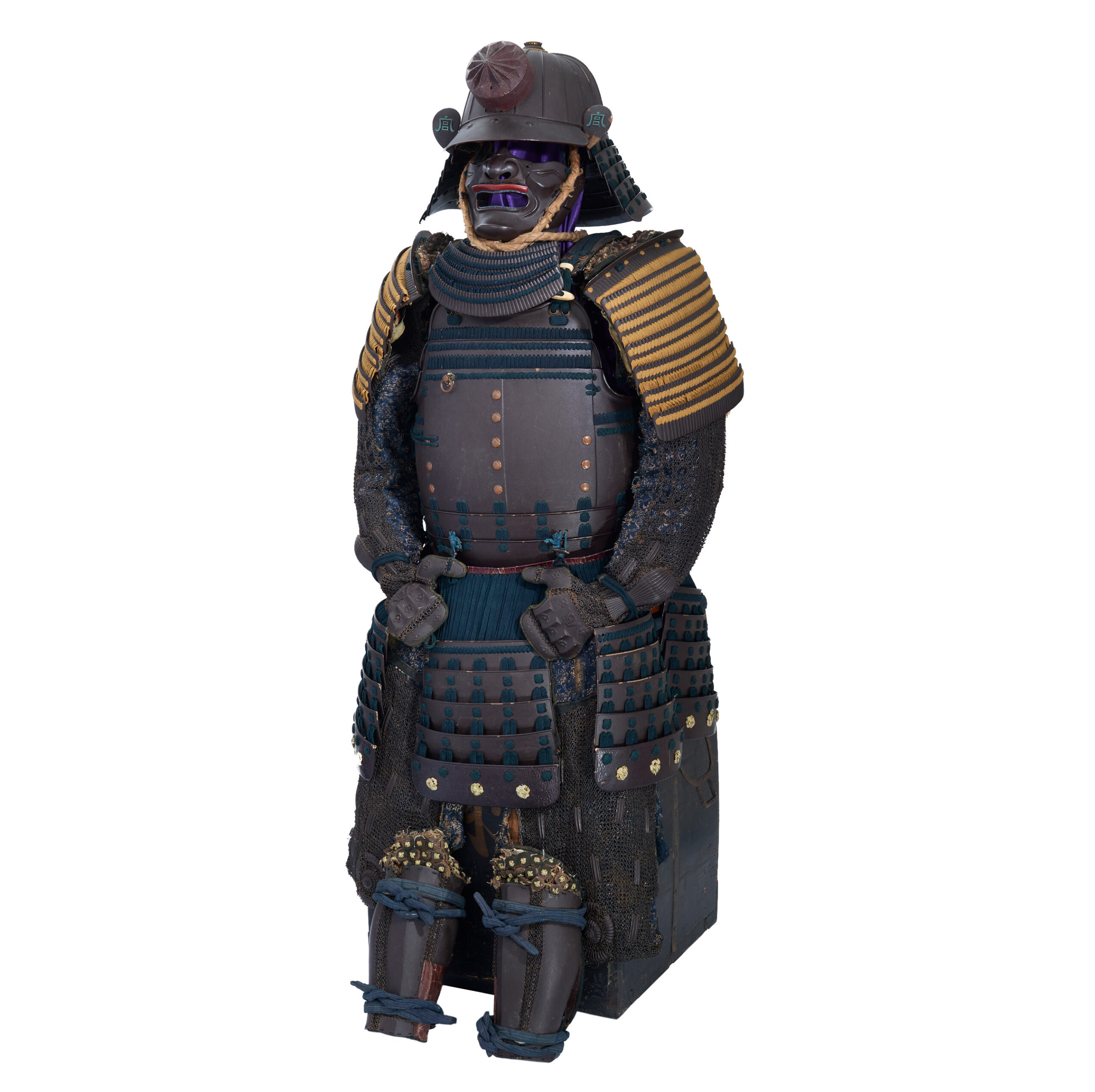
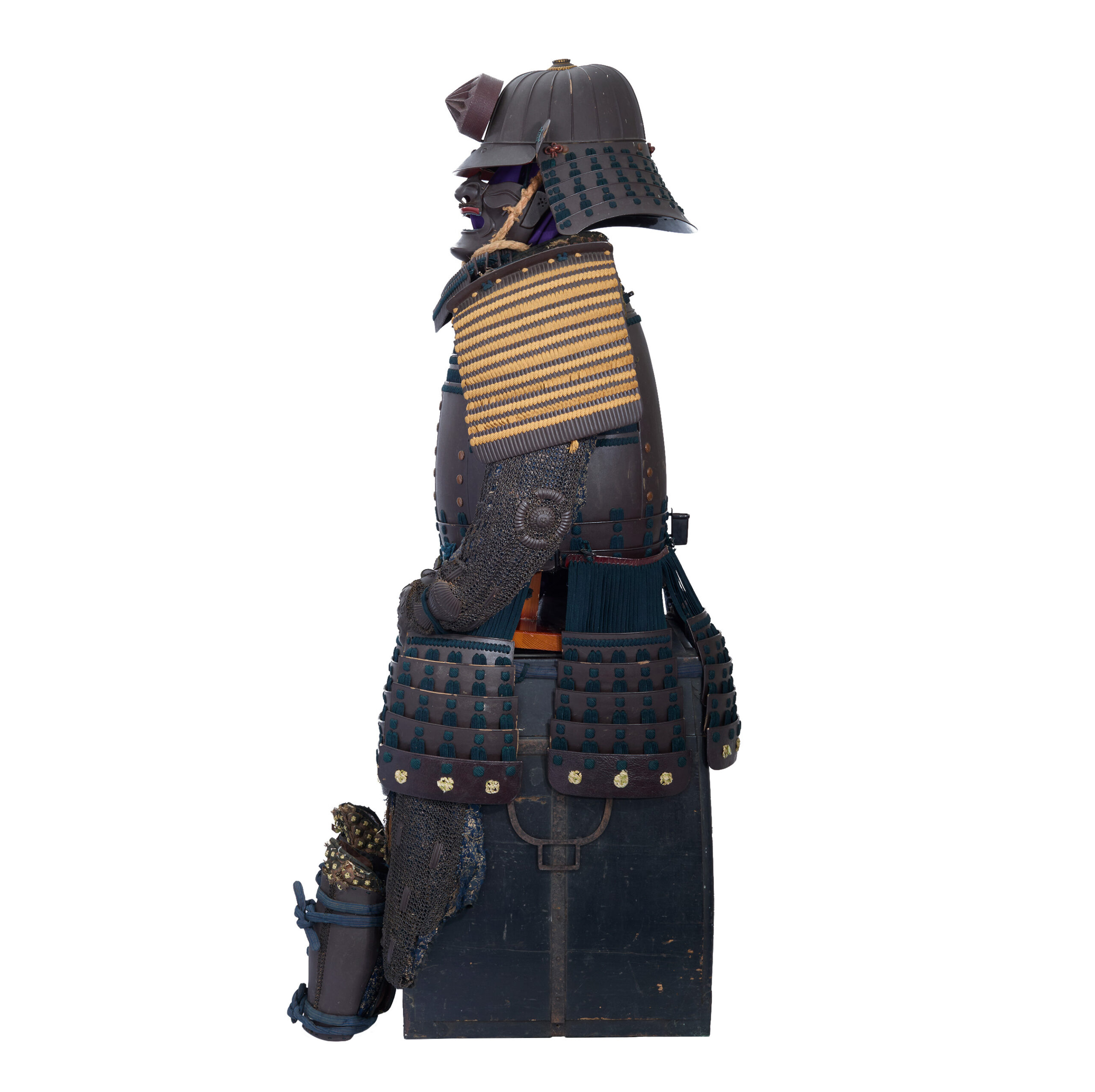
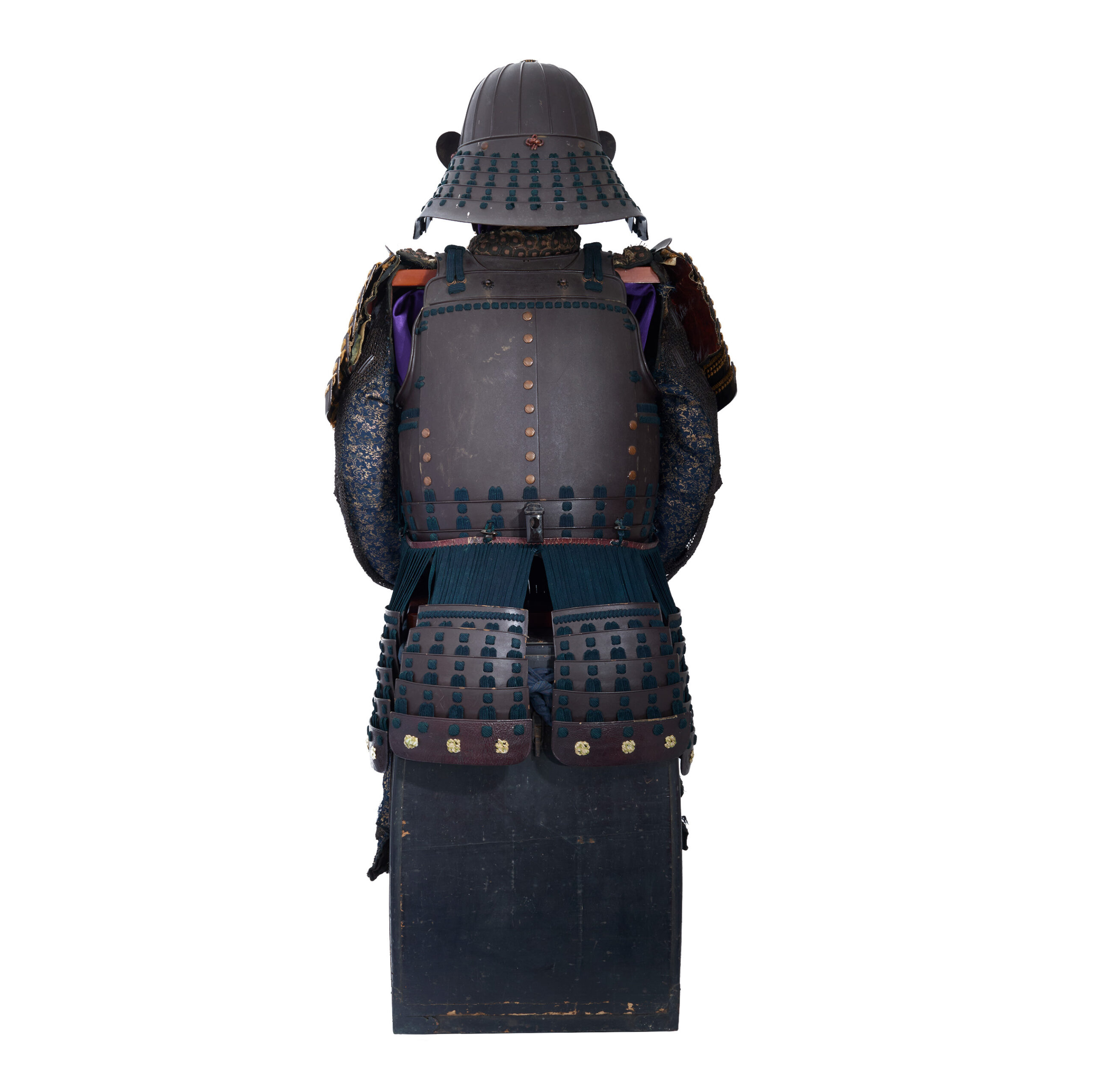
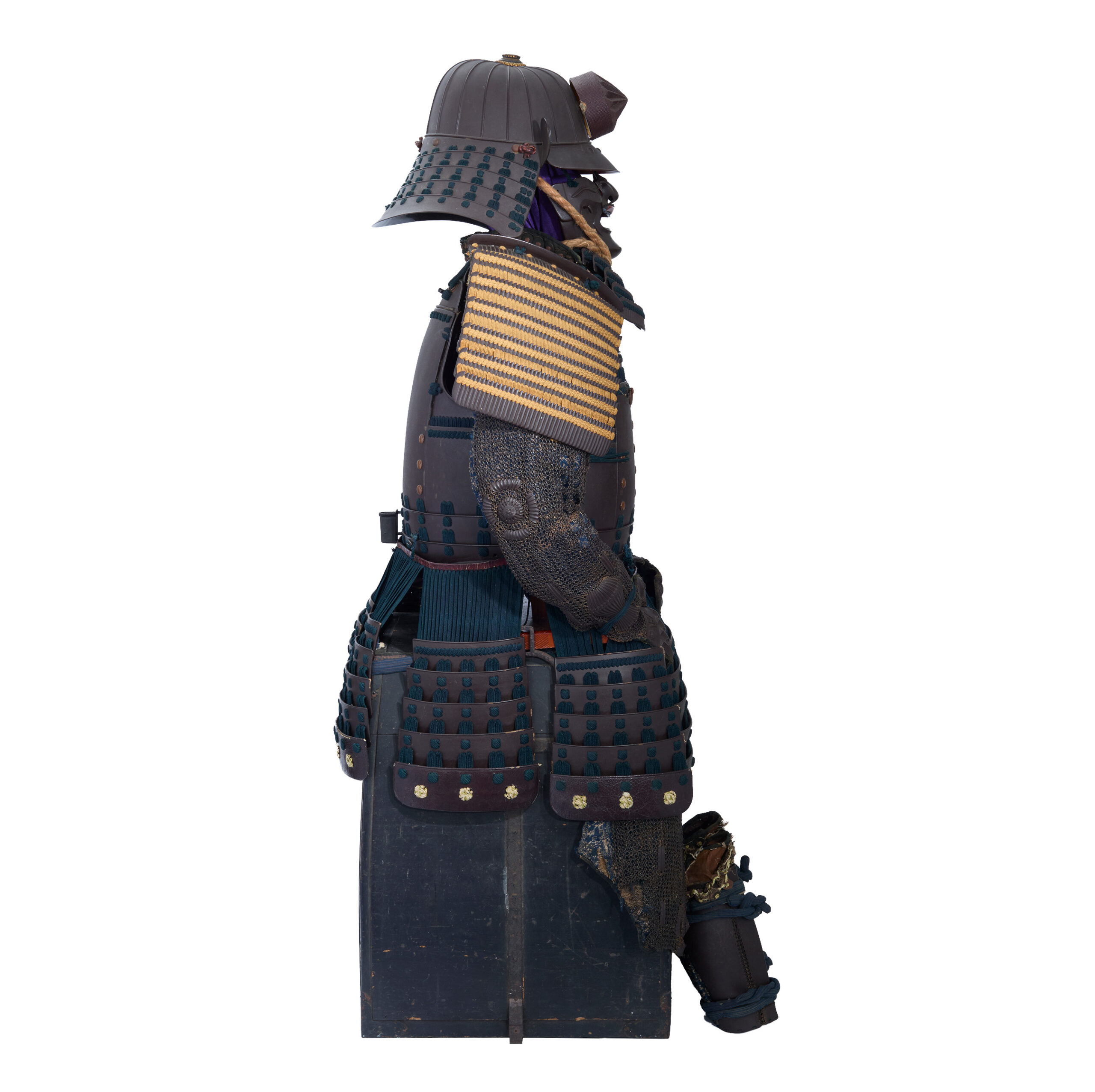
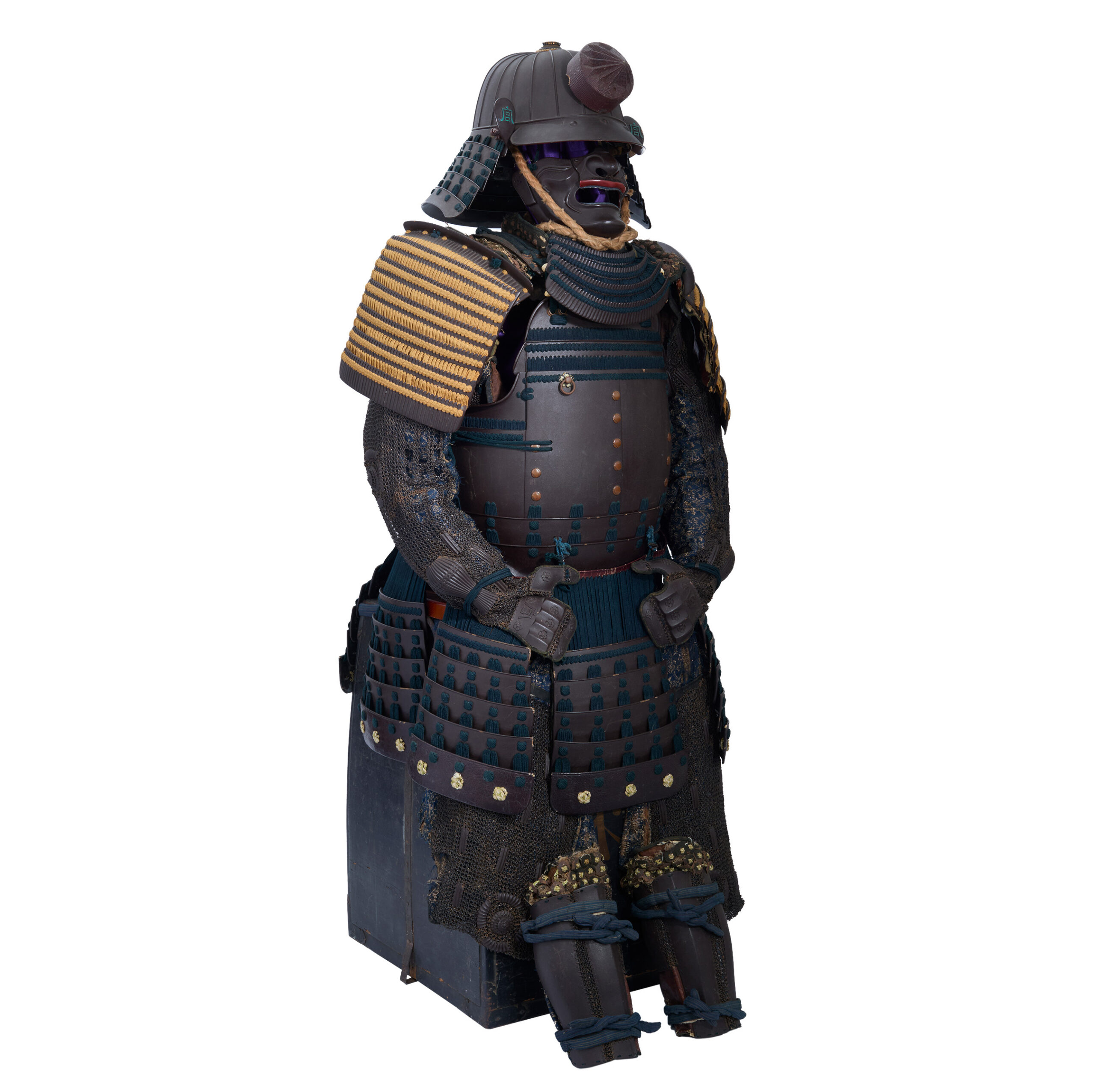
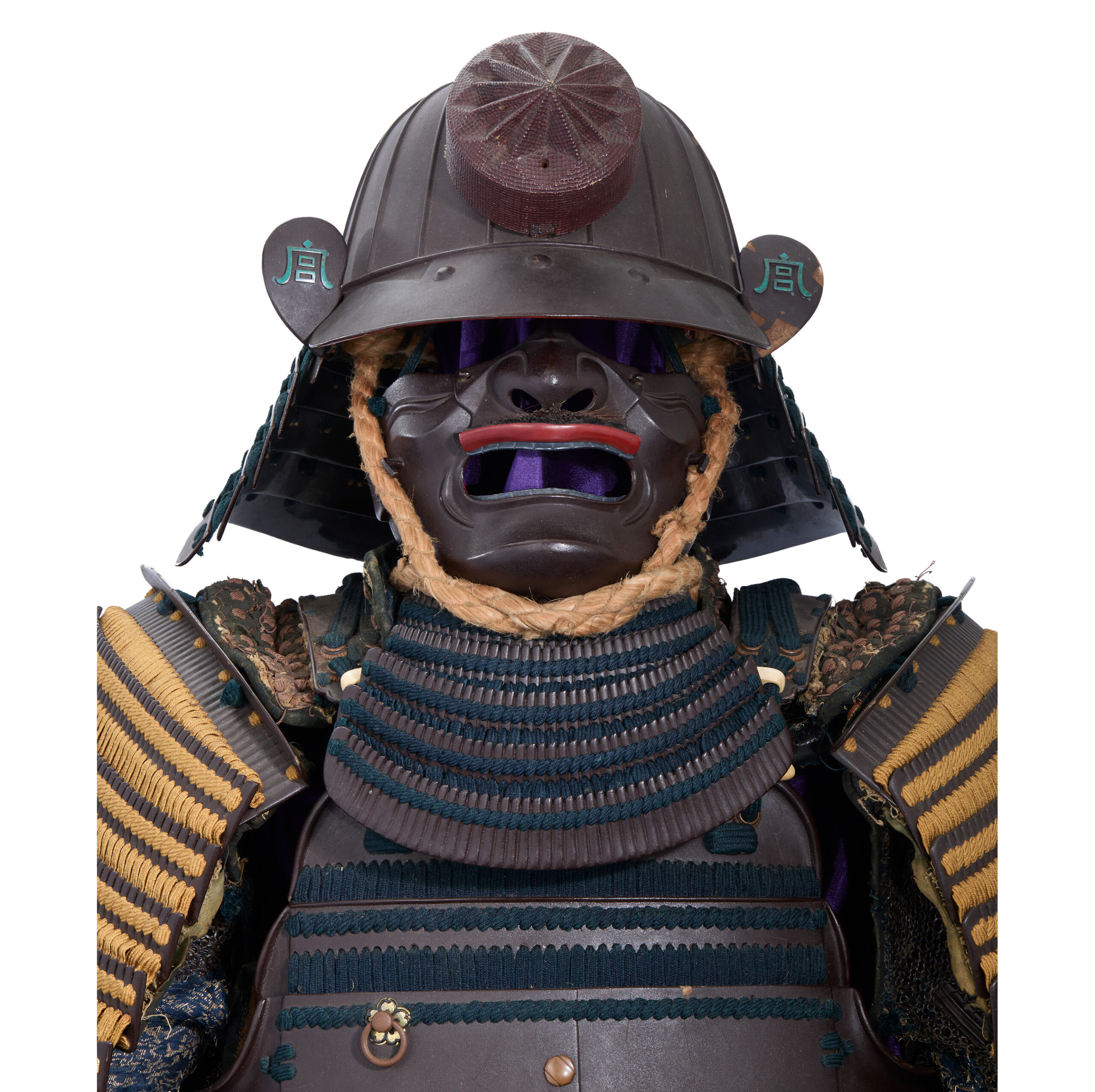
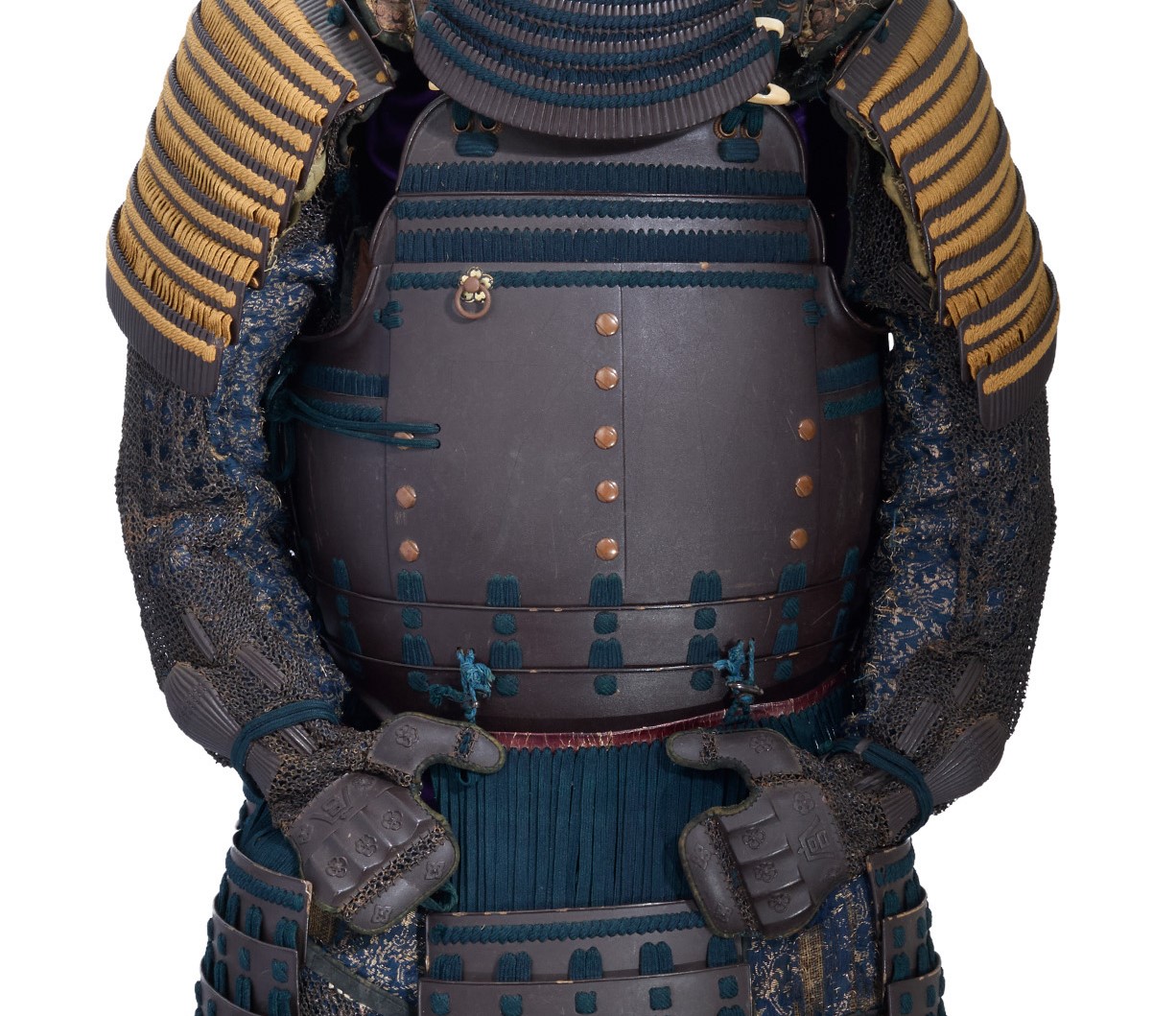
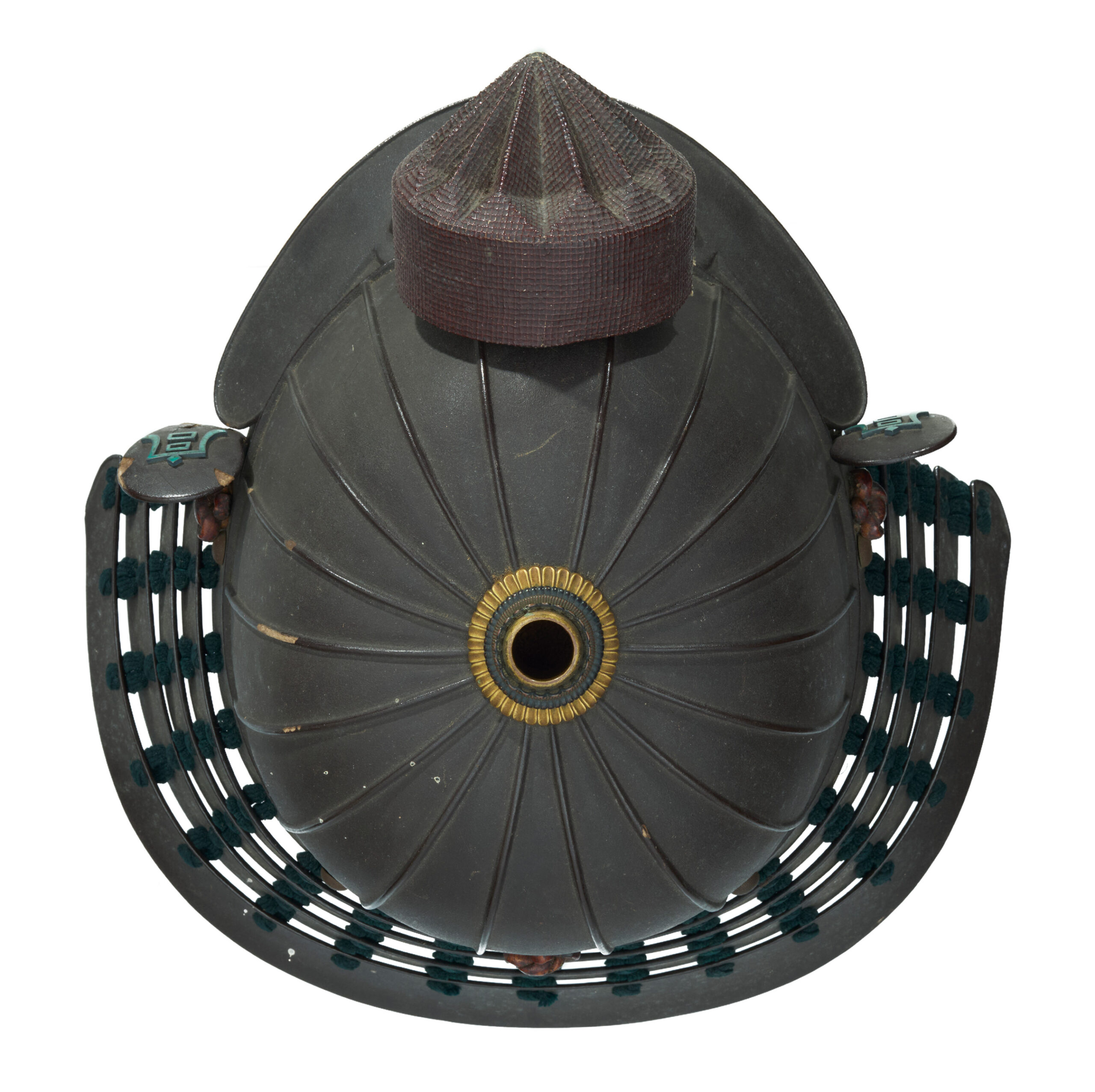
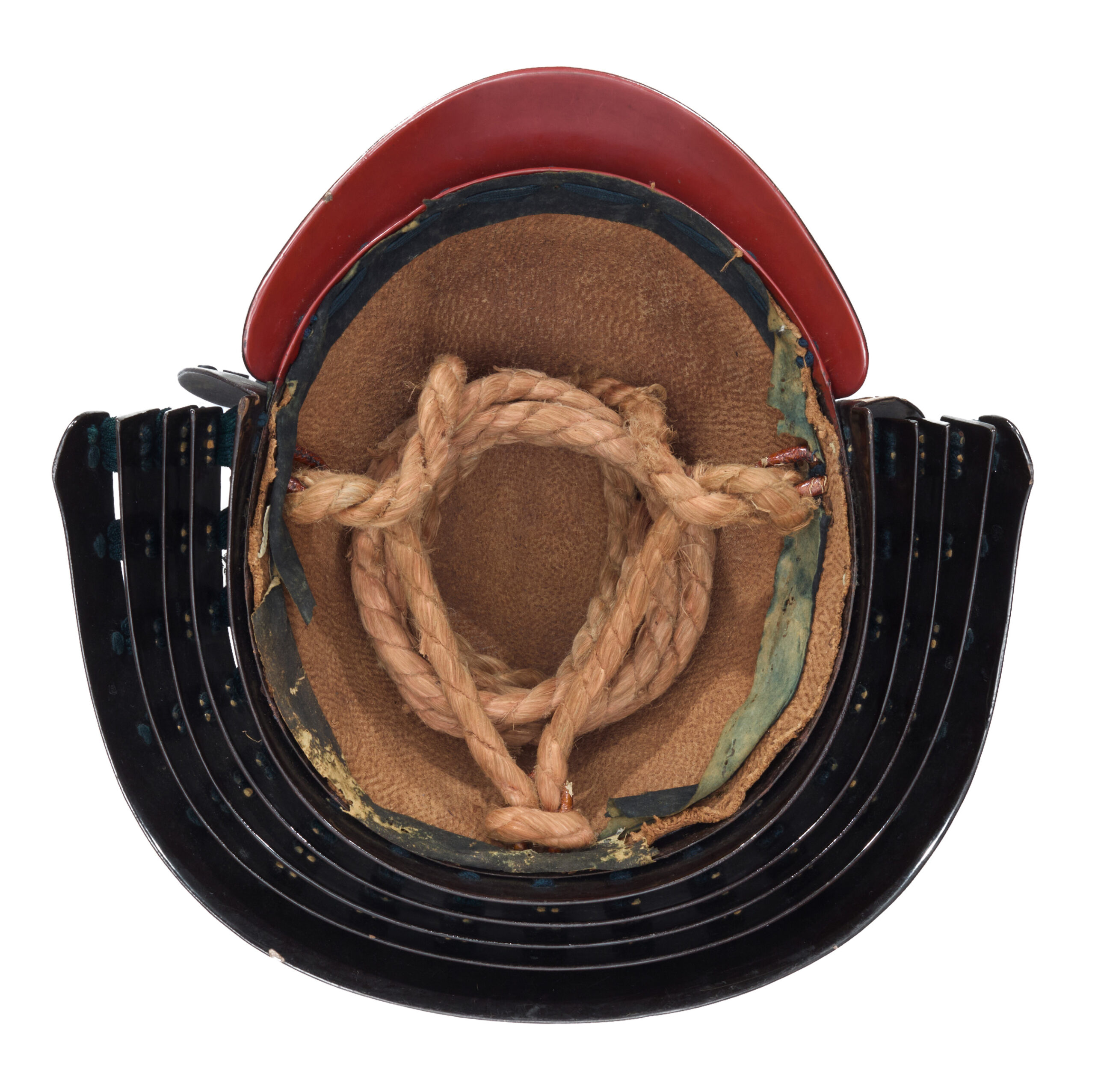
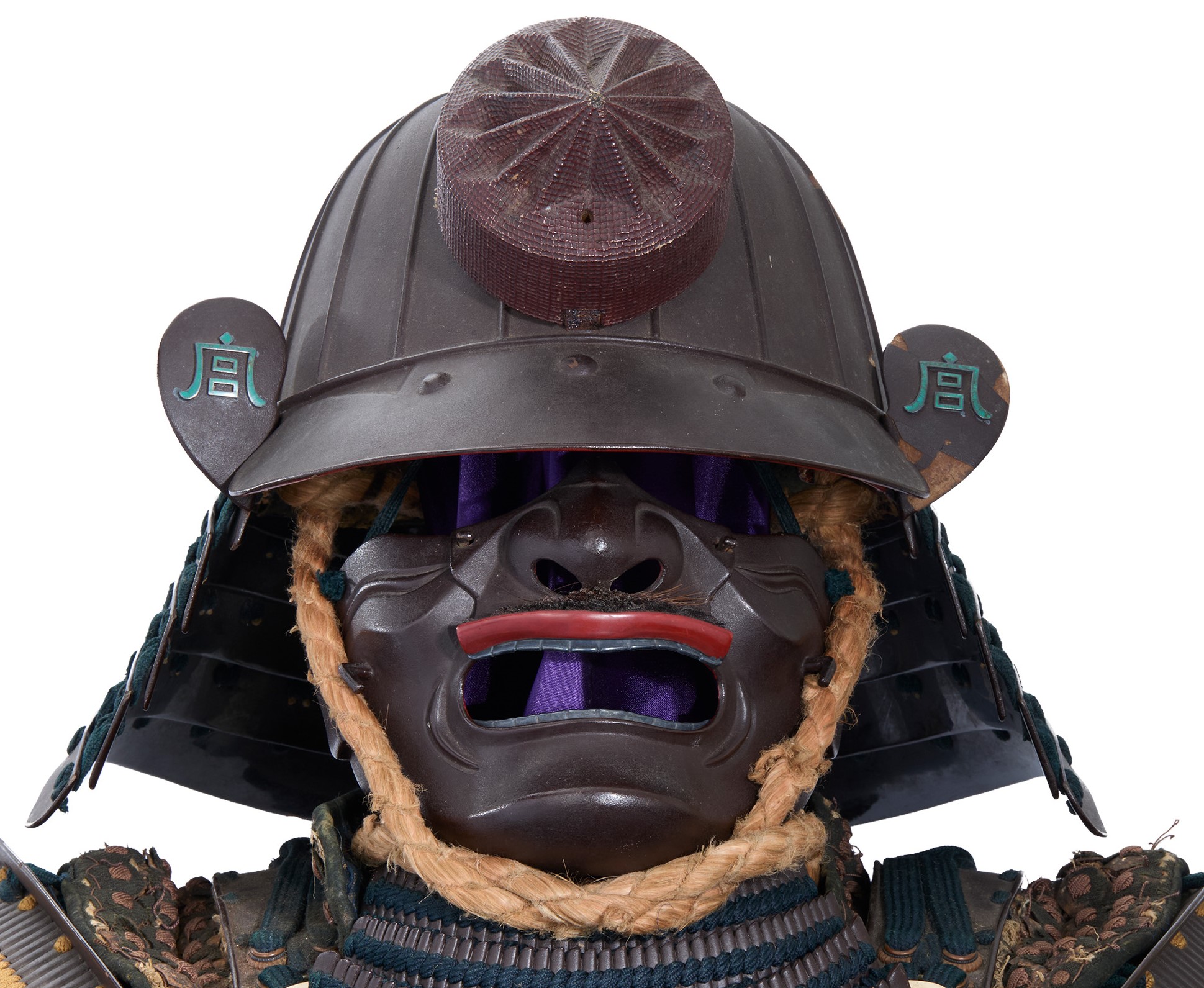
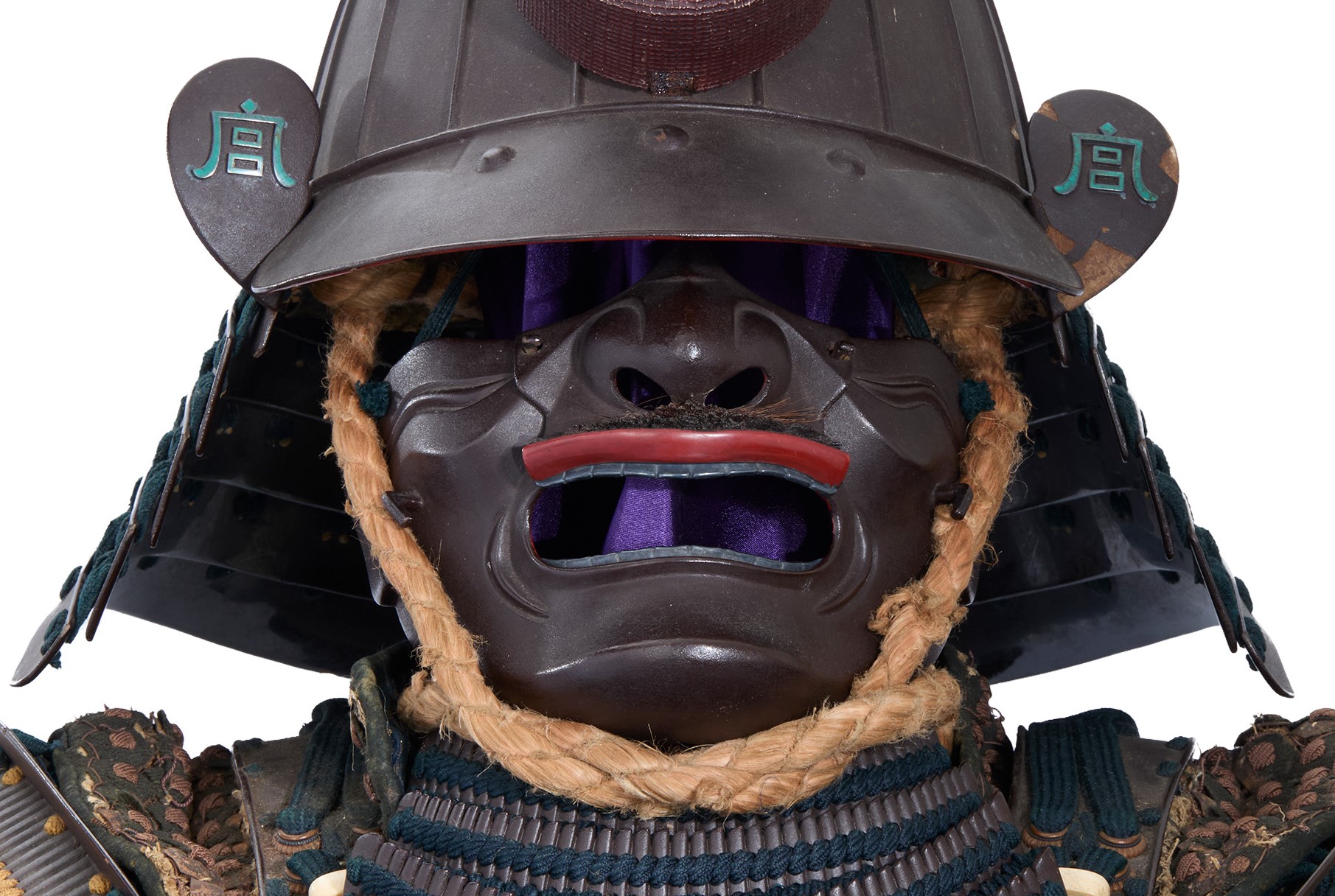
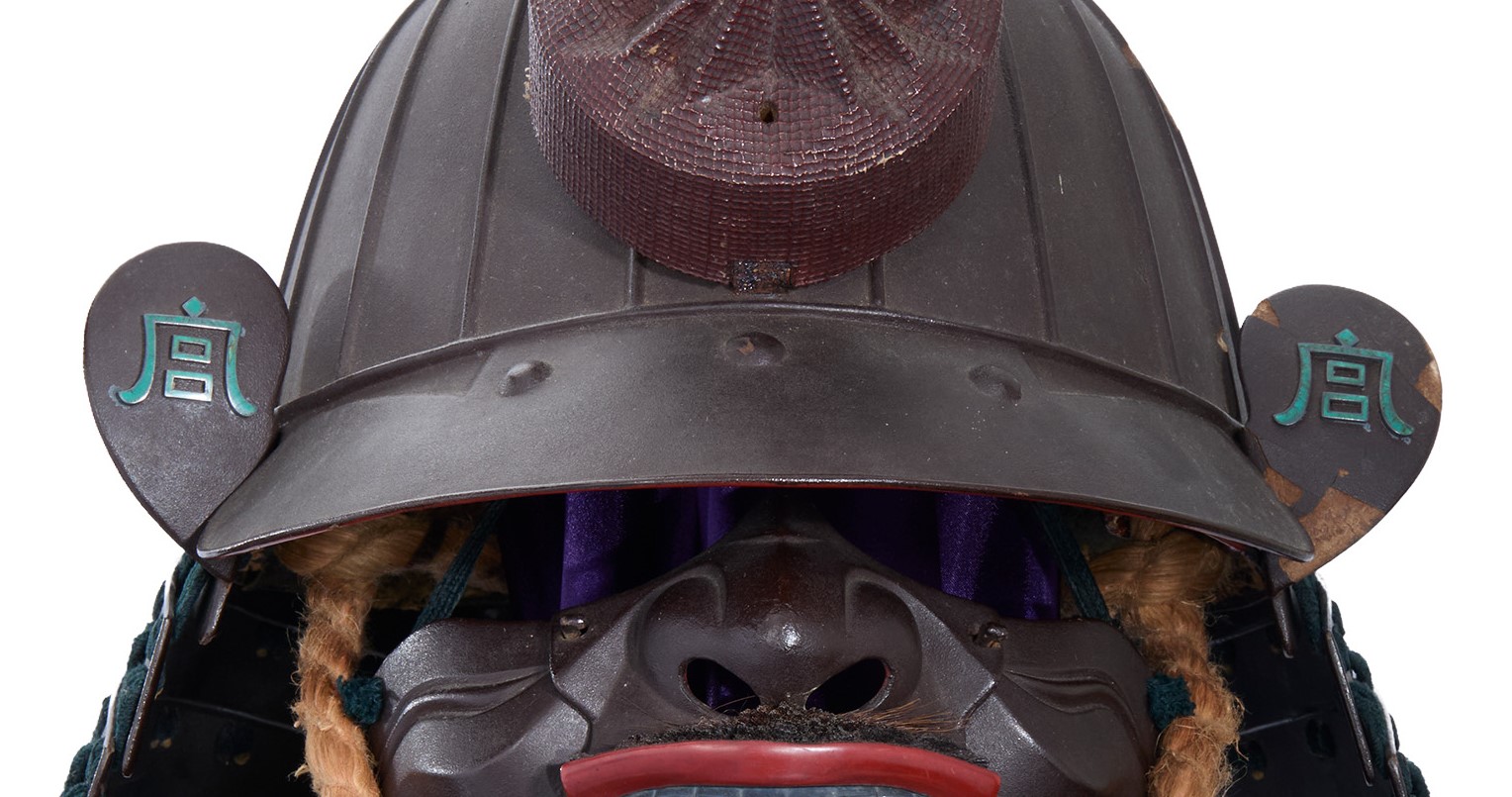
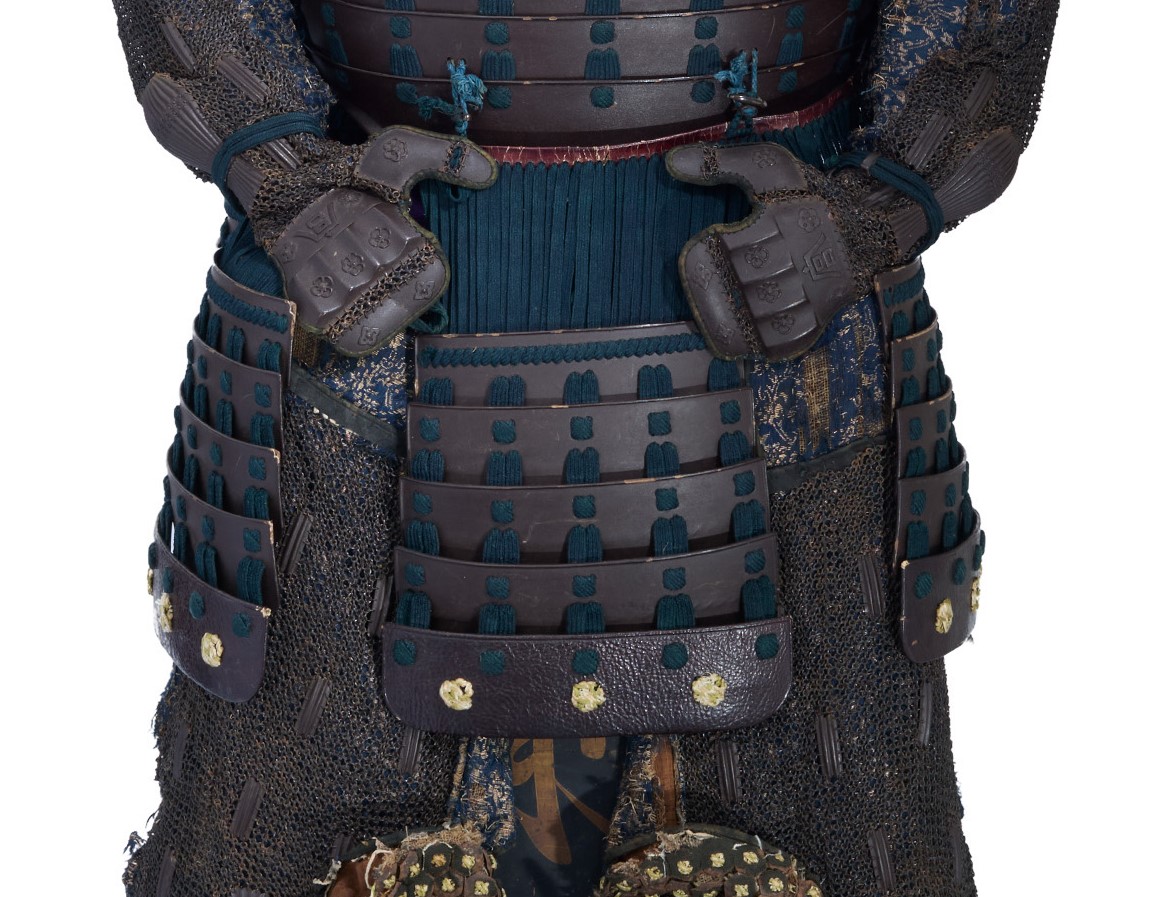
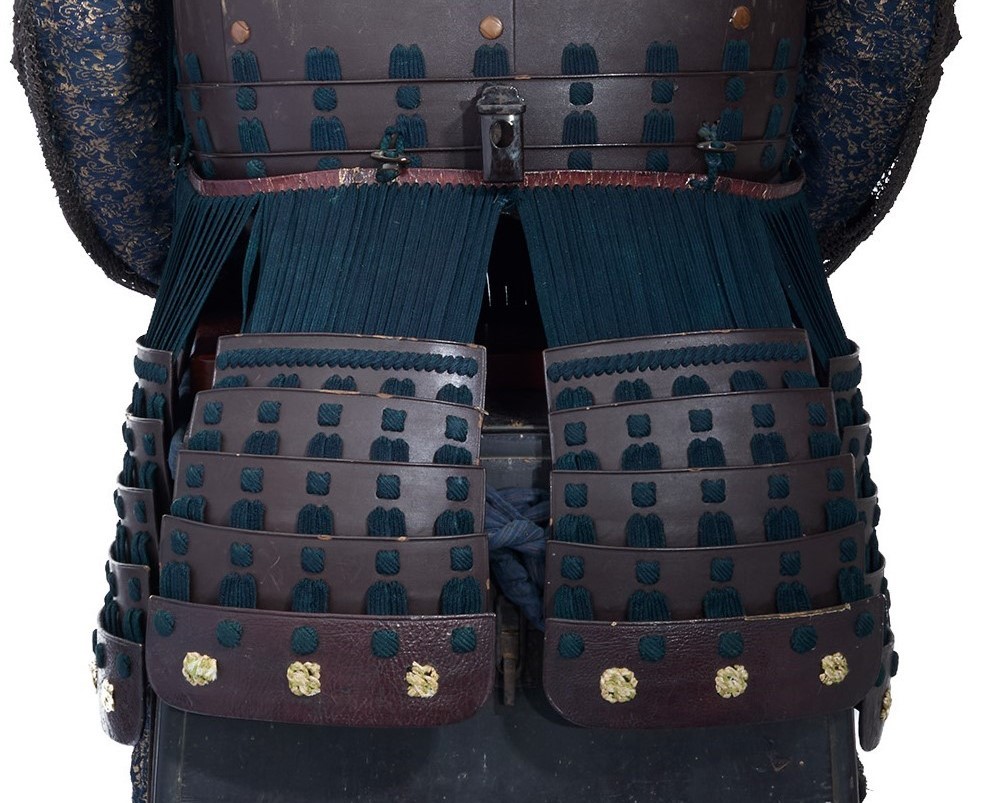
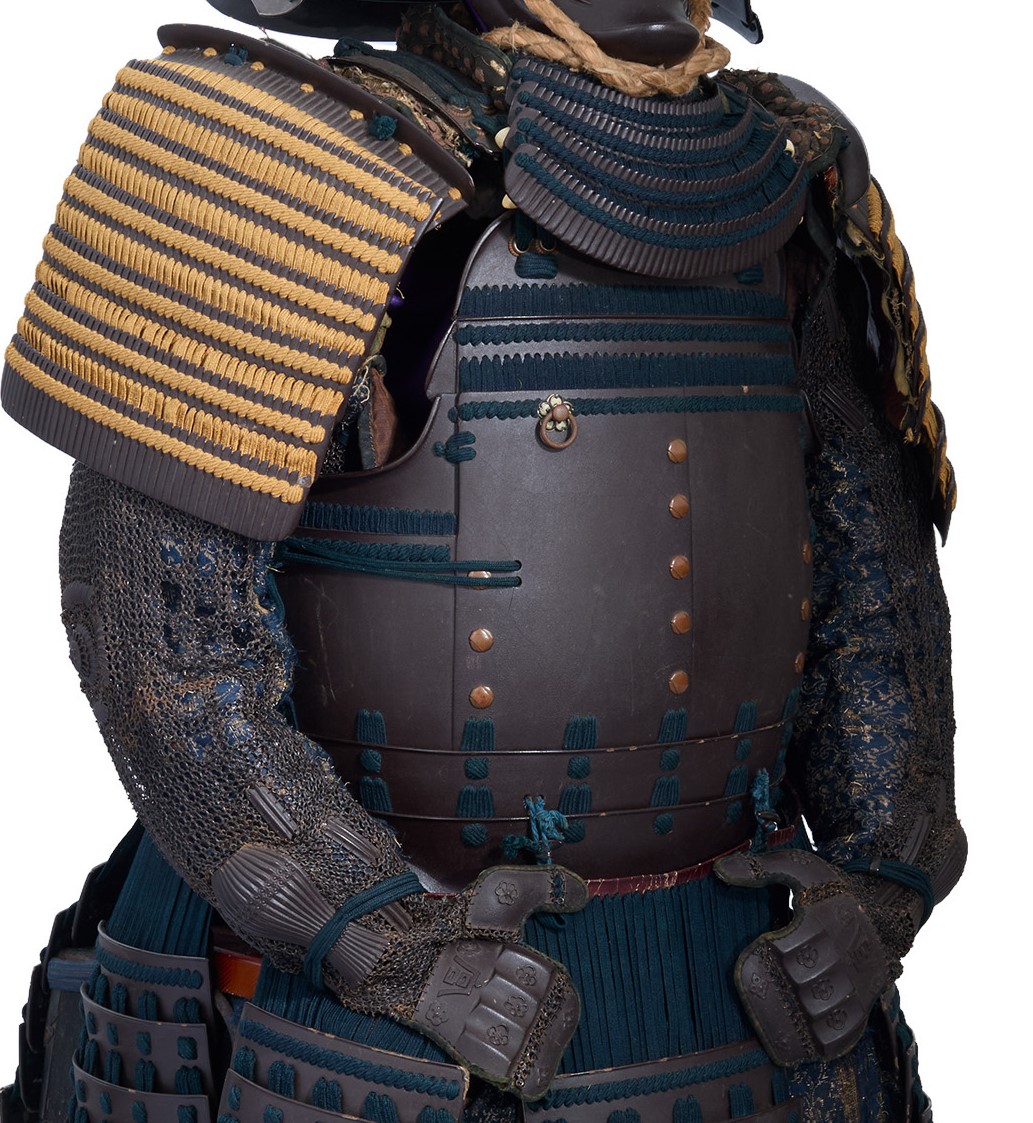
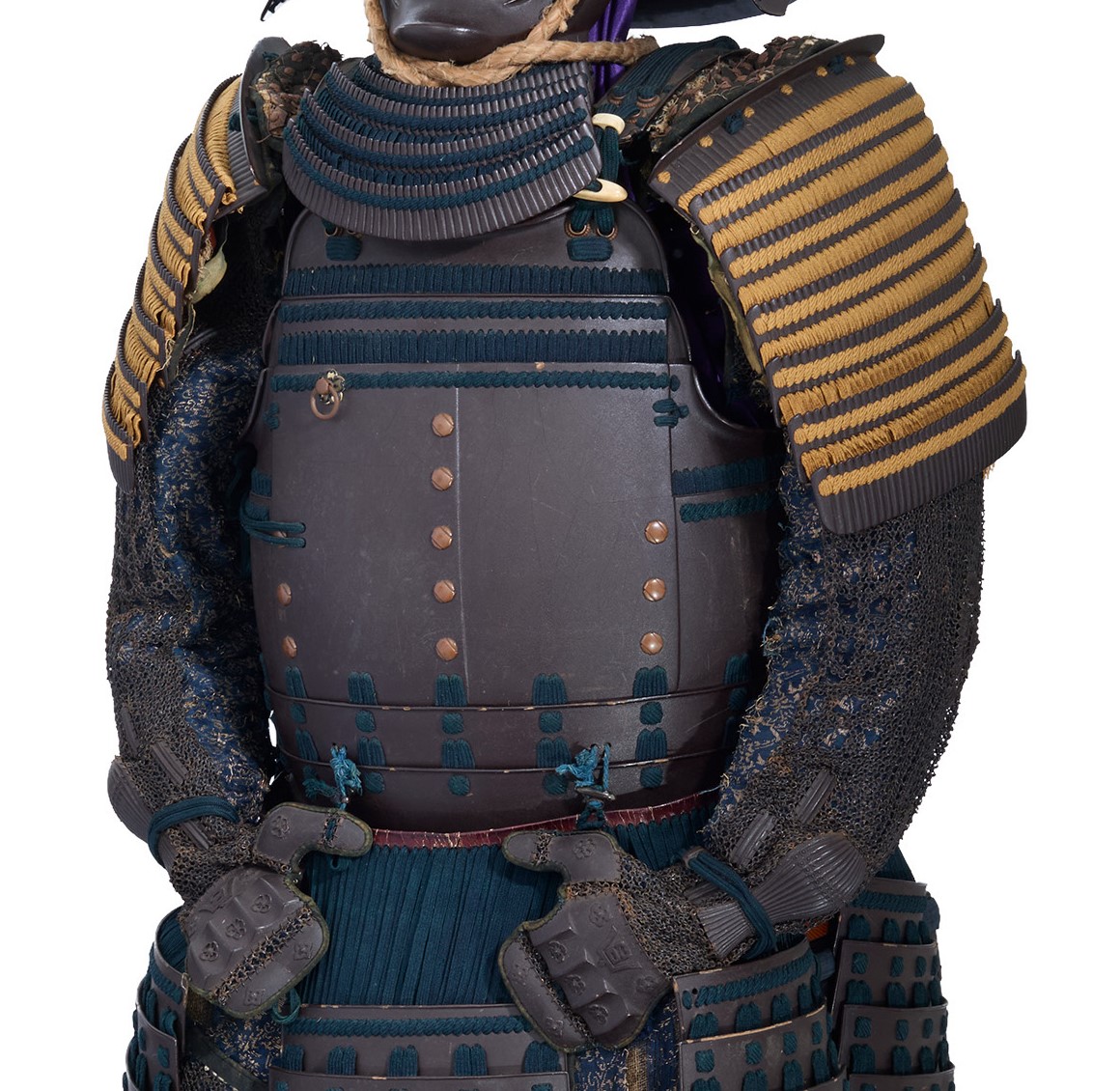
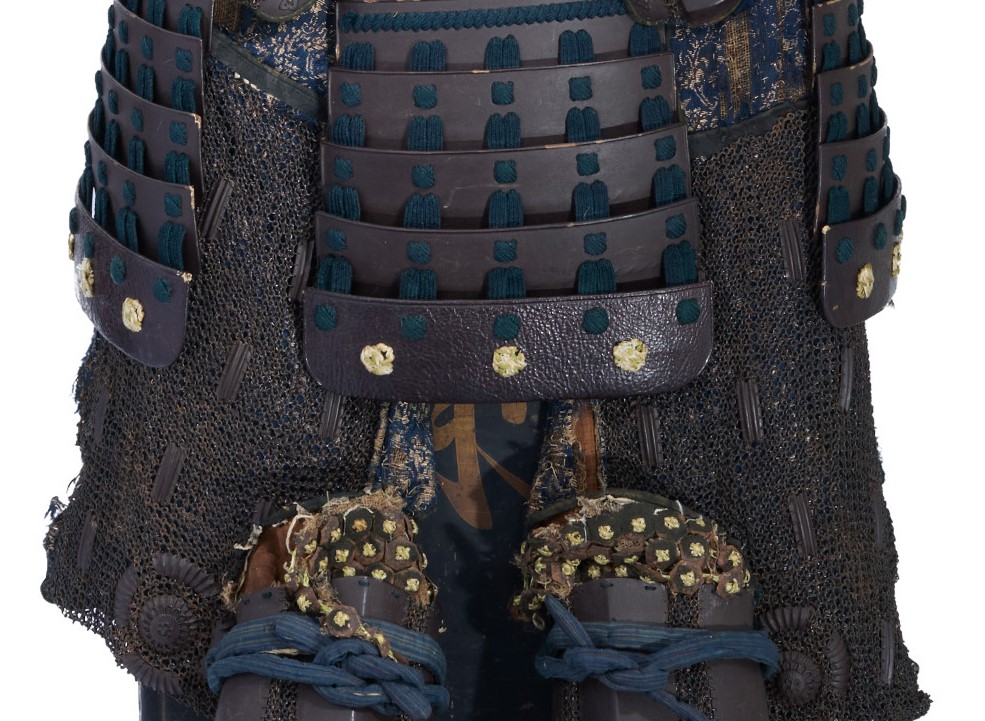
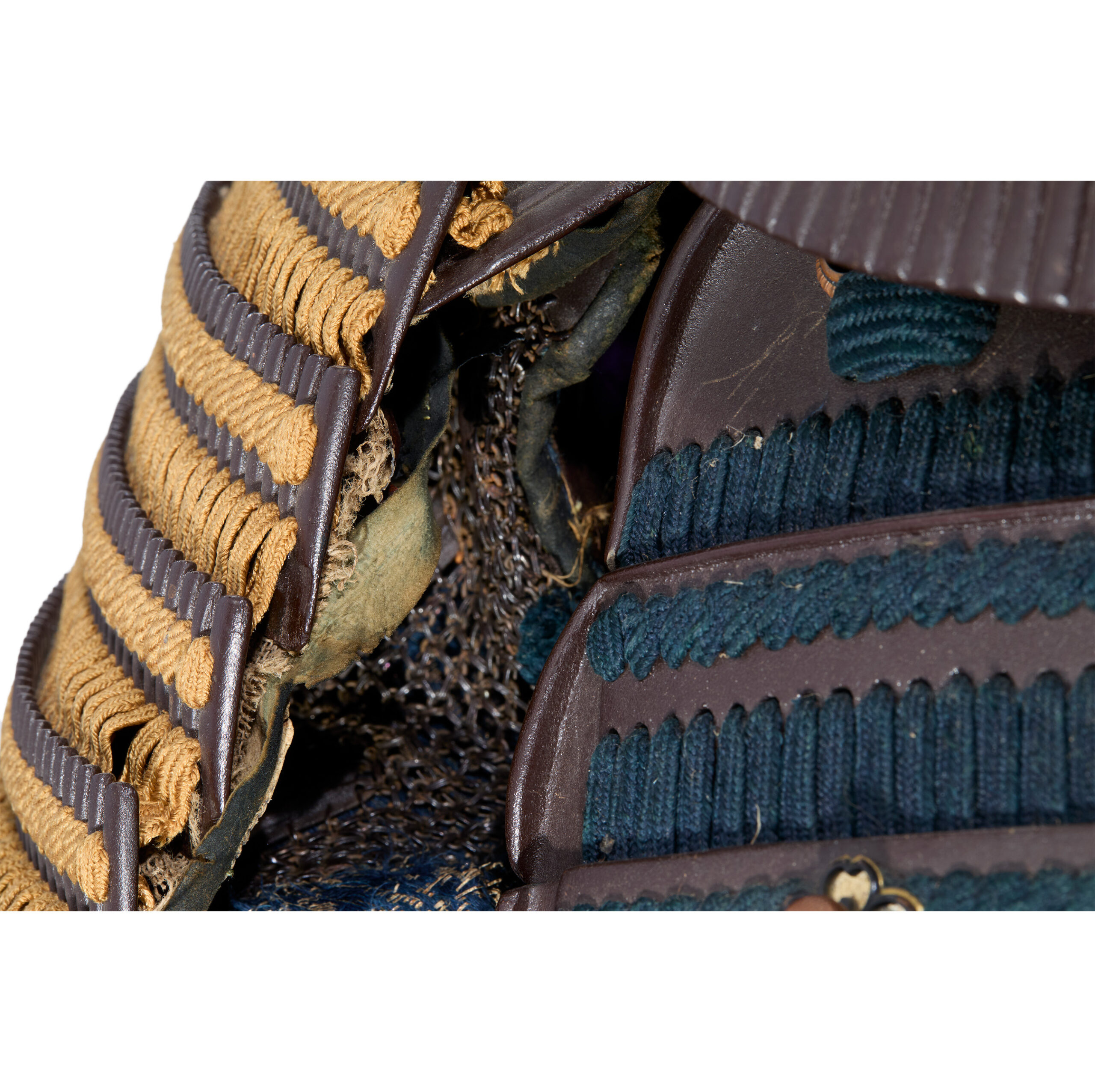
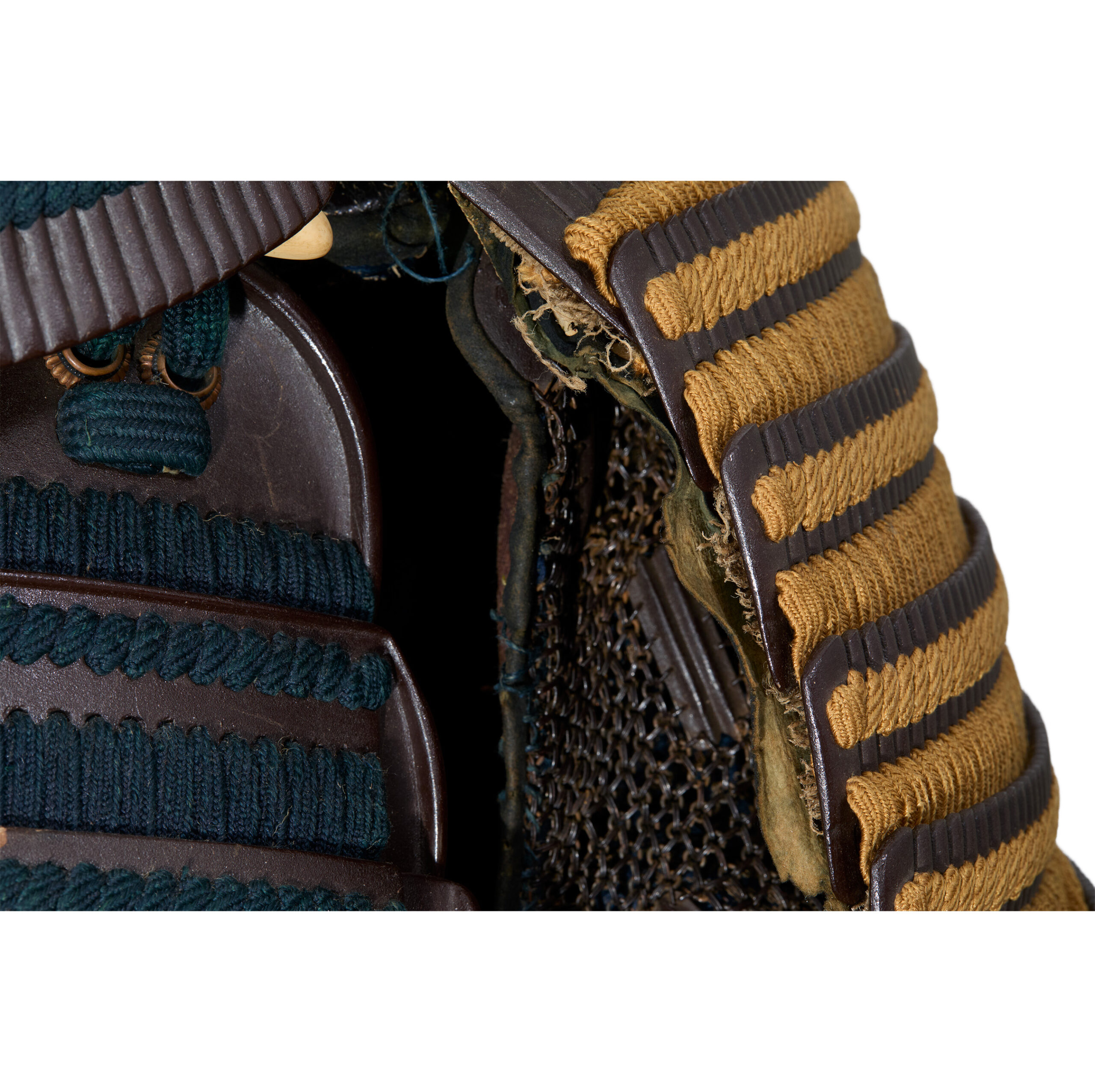
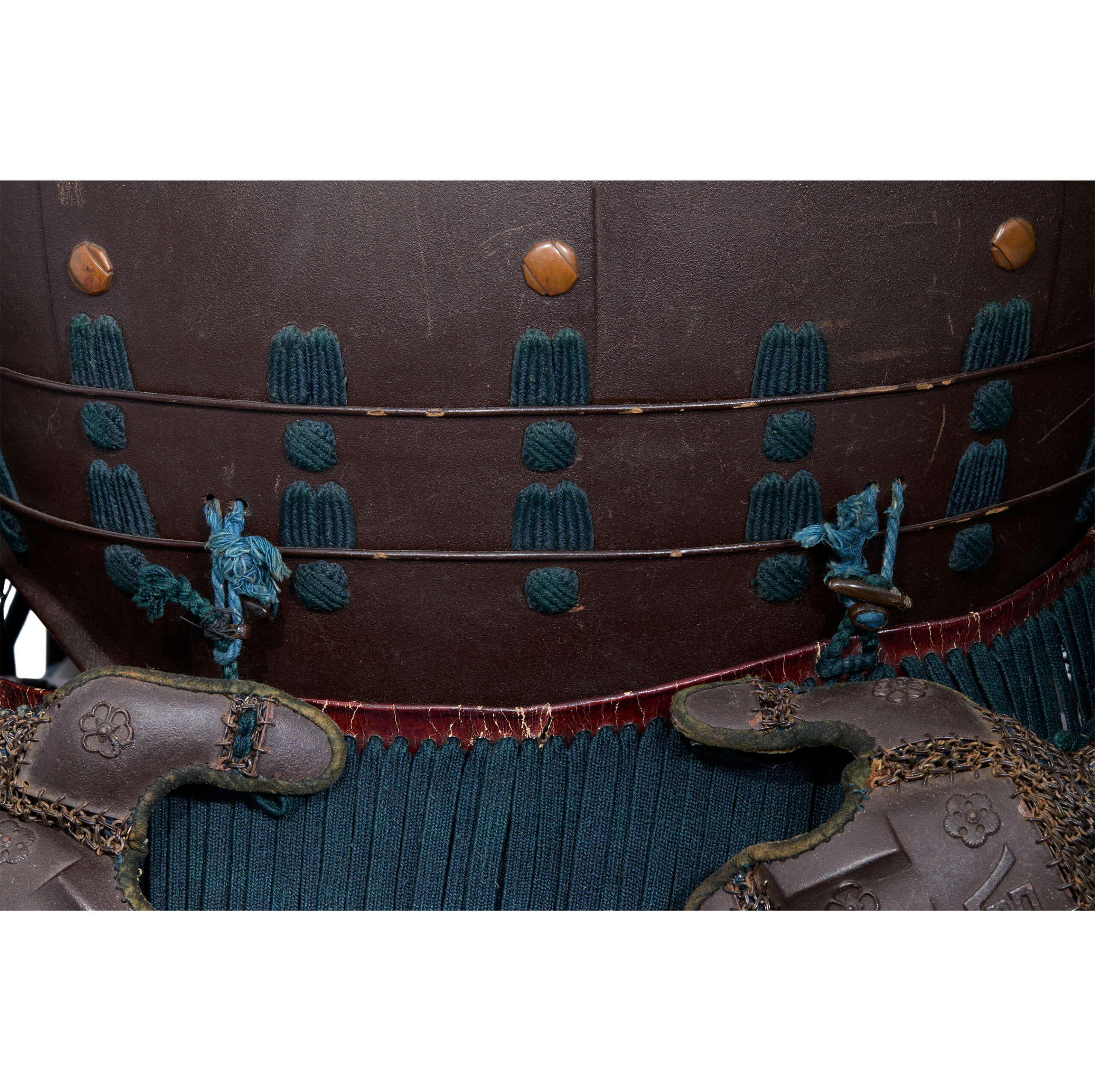
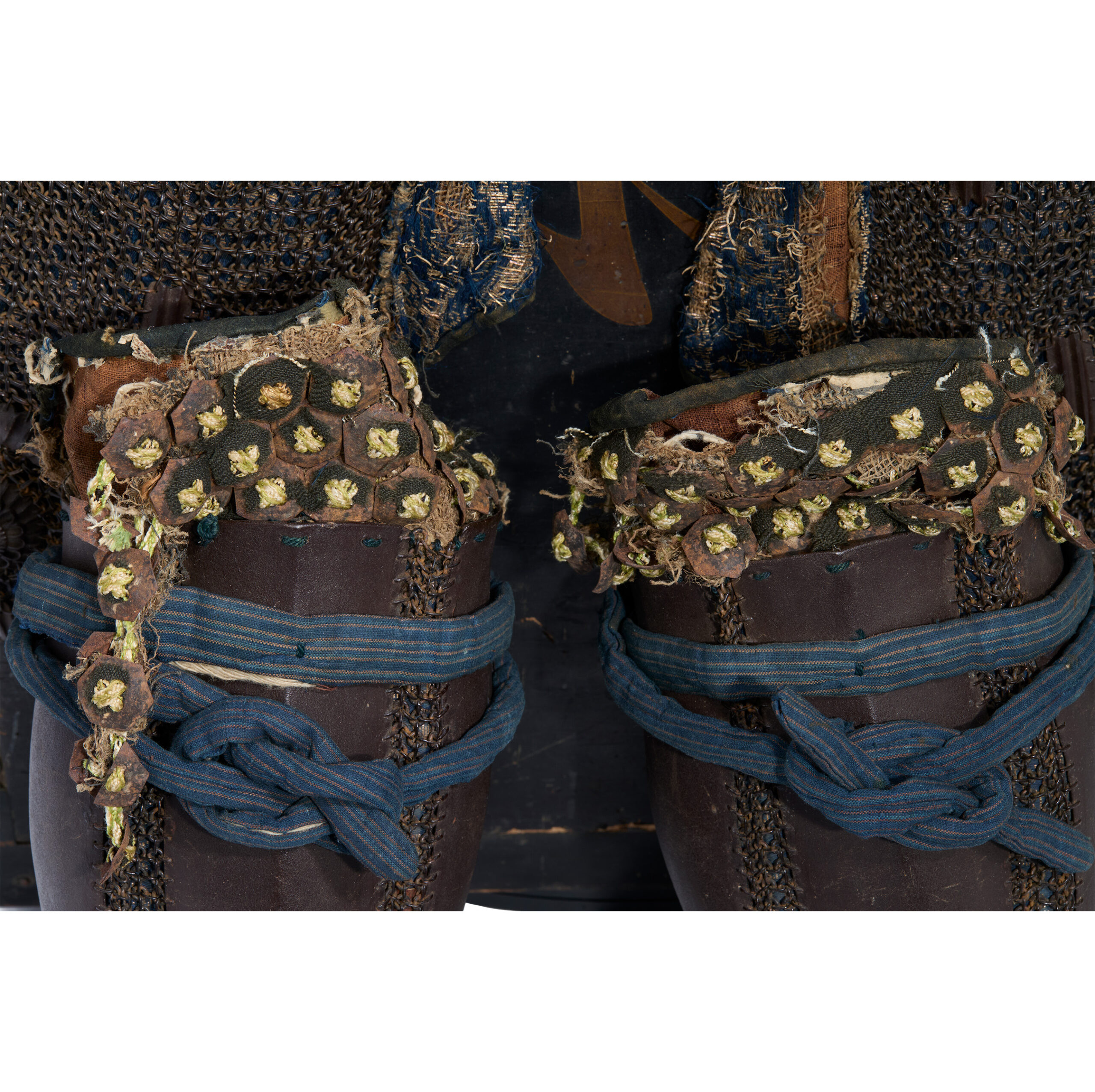
Tosei-gusoku · Nimai-dō
Full gusoku (complete suit)
25-plate · Suji-bachi · Kawari-kabuto
Unsigned
Kebiki-odoshi · Kon (dark blue)
Edo
Especially valuable armour of notably superior workmanship and condition, the third of the five ranks.
Japanese armour is not certified by the NBTHK. The Nihon Katchū Bugu Kenkyū Hozon Kai (the Association for the Research and Preservation of Japanese Helmets and Armour), founded in 1961, is the principal body for armour. Its shinsa grades a piece as 資料 (shiryō, "reference material") across five ascending ranks: Hozon, Kichō, Tokubetsu Kichō, Kōshū Tokubetsu Kichō, and the highest, Jūyō Bunka Shiryō. The 資料 framing reflects the society’s purpose of preserving armour as cultural and historical reference, distinct from the NBTHK’s sword paper tiers.
Returns/exchanges limited to defects caused by shipping (except willful misconduct or gross negligence by the company); customers must contact within 72 hours of receiving the product.
¥2,350,000