 NihontoWatchNihontoWatch
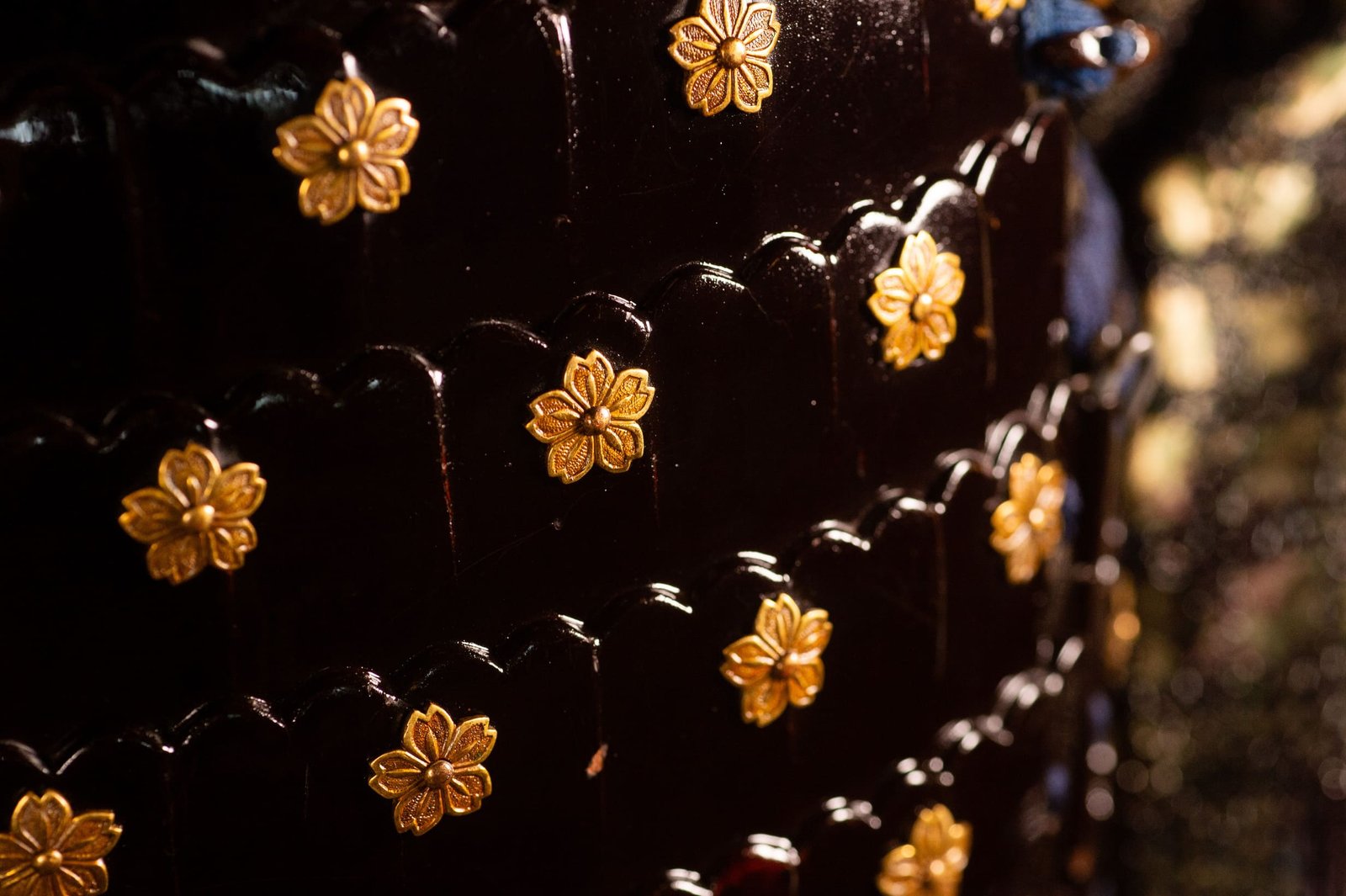
An Exceptional Example of Edo-Period Samurai Artistry This magnificent antique samurai armor dates to the late Edo period, when Japan had enjoyed more than two centuries of relative peace under the Tokugawa shogunate. Unlike the practical battlefield armor of the Sengoku period, this elaborate suit was created primarily for ceremonial display and the representation of samurai status rather than actual combat. Its sophisticated craftsmanship, vibrant red silk lacing, elaborate decorative elements, and symbolic family crests reflect the artistic refinement of Japan's hereditary warrior class. The armor represents a remarkable fusion of traditional military design, aristocratic aesthetics, and spiritual symbolism. The Kabuto – A Striking Dragon Crest and Protective Talisman One of the most impressive features of this armor is its magnificent kabuto (helmet), crowned with an elaborate wooden dragon-head maedate (front crest). The dragon, a powerful symbol in Japanese culture, has long been associated with strength, authority, and supernatural protection. The dramatic silhouette of the crest gives the helmet a commanding appearance, making it an especially striking centerpiece for display. Another fascinating feature is the presence of a traditional Japanese protective talisman (ofuda) attached to the helmet. Such talismans were intended to ward off evil influences, misfortune, and spiritual harm while invoking divine protection for the wearer. This remarkable surviving detail illustrates the close relationship between samurai martial traditions and religious beliefs. Together, the dragon crest and protective talisman express the spiritual and symbolic dimensions of samurai armor beyond its original military function. The Nimai-do – Refined Construction and Brilliant Red Lacing The armor features a traditional nimai-do (two-piece cuirass), constructed with kiritsuke kozane, a technique in which larger plates are shaped and finished to imitate the appearance of individual small armor scales. The plates are closely laced in the kebiki odoshi style, creating a dense and richly textured surface. The brilliant crimson-red silk lacing contrasts beautifully with the dark iron components and aged metallic surfaces, producing a visually impressive composition. This elaborate construction demonstrates the emphasis placed on aesthetic presentation during the peaceful Edo period, when finely crafted armor served as an important expression of a samurai family's prestige and cultural identity. Two Distinctive Samurai Family Crests – Ageha Butterfly and Dakizuno A particularly fascinating feature of this armor is the presence of two distinctive Japanese family crests (kamon). The Ageha-chō mon (揚羽蝶紋), depicting a swallowtail butterfly, appears on several components of the armor. Historically associated with the powerful Taira (Heike) clan, this elegant heraldic design was also adopted by prominent samurai families, including the Oda and Ikeda clans. The armored sleeves (kote) feature another remarkable crest, the Dakizuno-mon (抱き角紋), depicting a symmetrical pair of inward-facing horns. Its bold and distinctive design evokes strength and martial authority, complementing the armor's commanding appearance. The presence of these two different family crests adds considerable historical and artistic interest to the armor, reflecting the rich heraldic traditions of Japan's warrior class. Although the original owning family has not been conclusively identified, these carefully incorporated heraldic elements make this suit particularly intriguing to collectors of authentic samurai armor. Authenticated by the Japanese Armor and Arms Preservation Society This armor is accompanied by an official Tokubetsu Kicho Shiryo (Specially Precious Material) certificate issued by the Japanese Armor and Arms Preservation Society (Nihon Katchu Bugu Kenkyu Hozonkai) on July 26, 2016. The certificate identifies the armor as an authentic example from the late Edo period and recognizes its historical and cultural significance. The combination of its elaborate dragon-head crest, surviving protective talisman, finely constructed two-piece cuirass, vivid red lacing, and distinguished heraldic decoration makes this an especially appealing example of Edo-period ceremonial armor. A Distinguished Addition to a Samurai Art Collection More than a historical suit of armor, this gusoku represents the transformation of samurai equipment into a highly sophisticated form of decorative art. Its impressive appearance, intricate craftsmanship, spiritual symbolism, and authenticated historical character make it an outstanding display piece for collectors of Japanese arms and armor. This armor comes with a 3rd highest Certificate of The Association for the Research and Preservation of Japanese Helmets and Armor - Tokubetsu Kichō Shiryō
Offered by Samurai Store


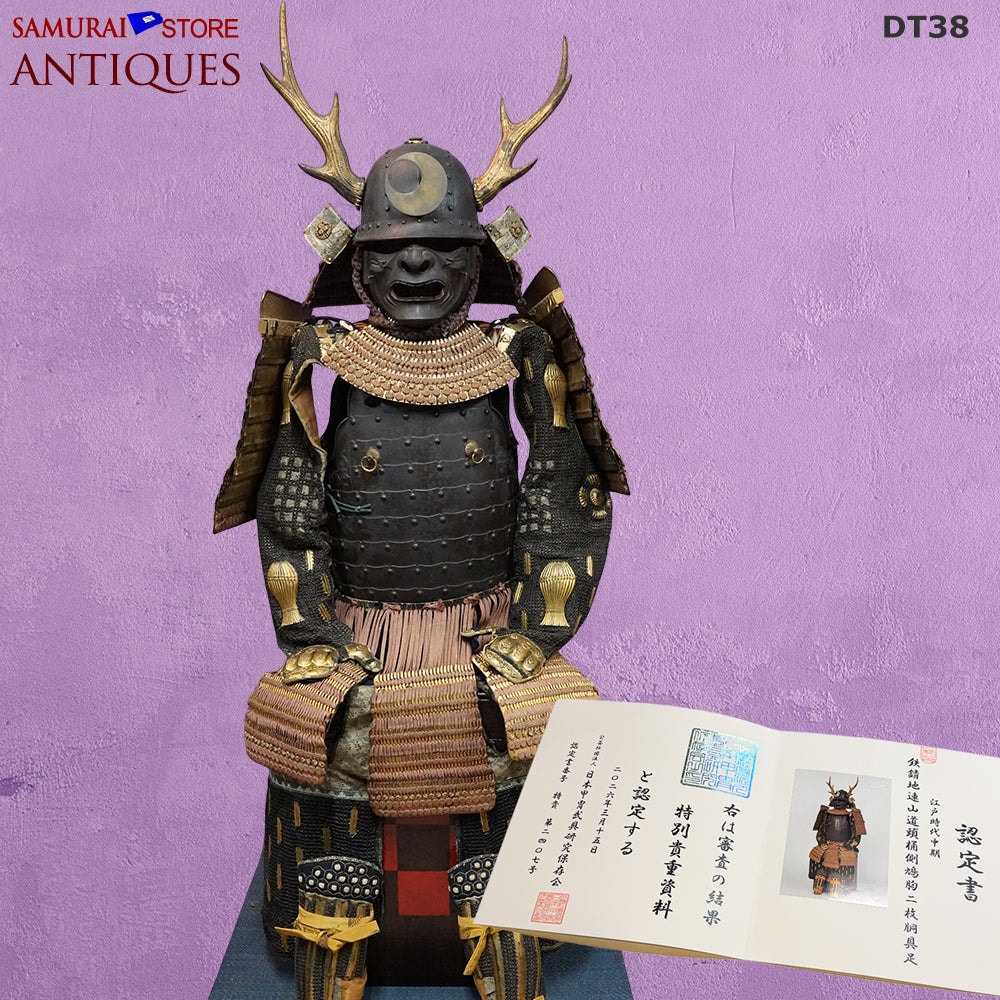
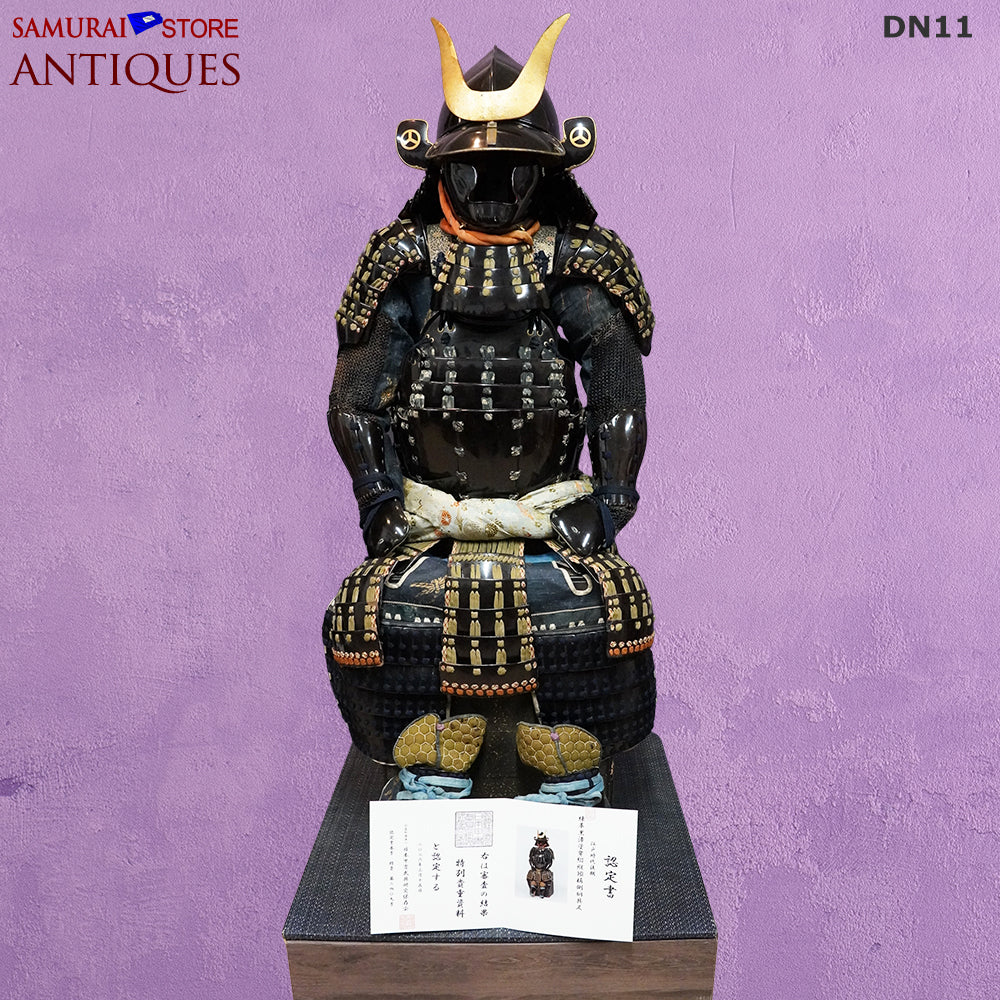
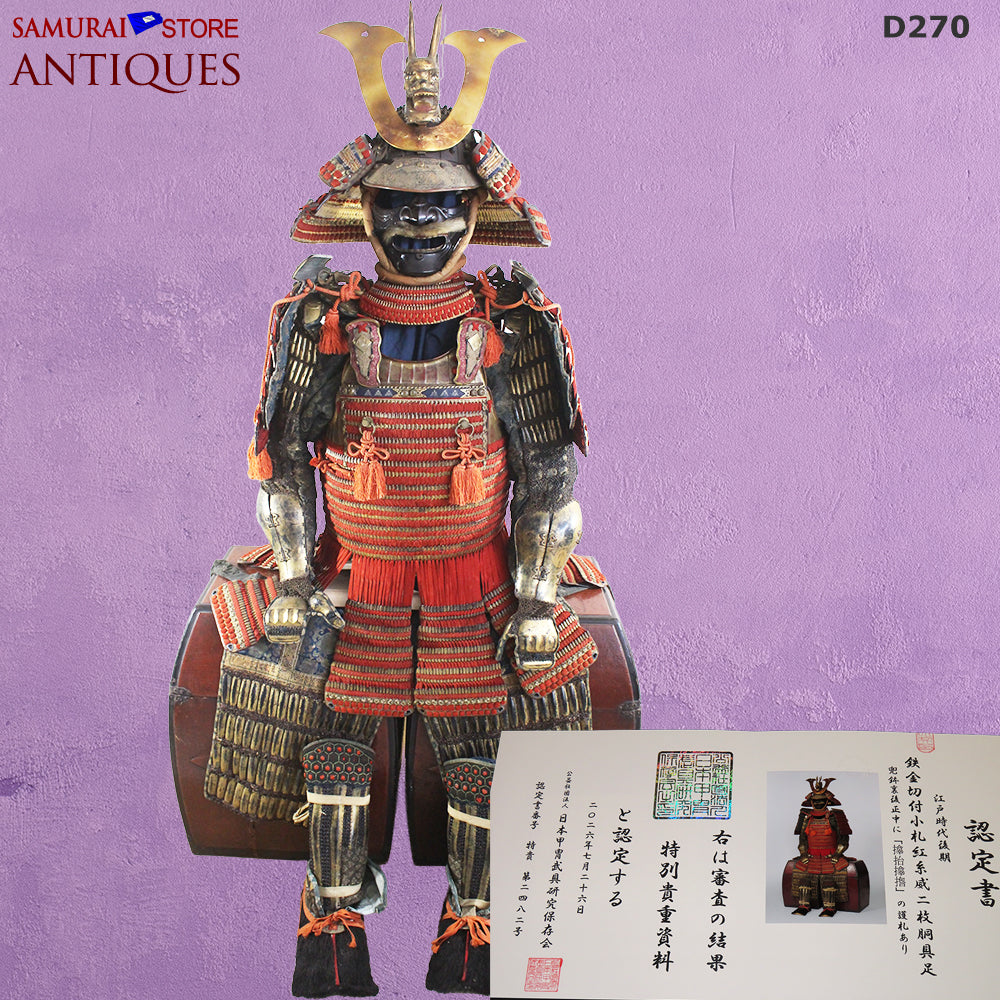
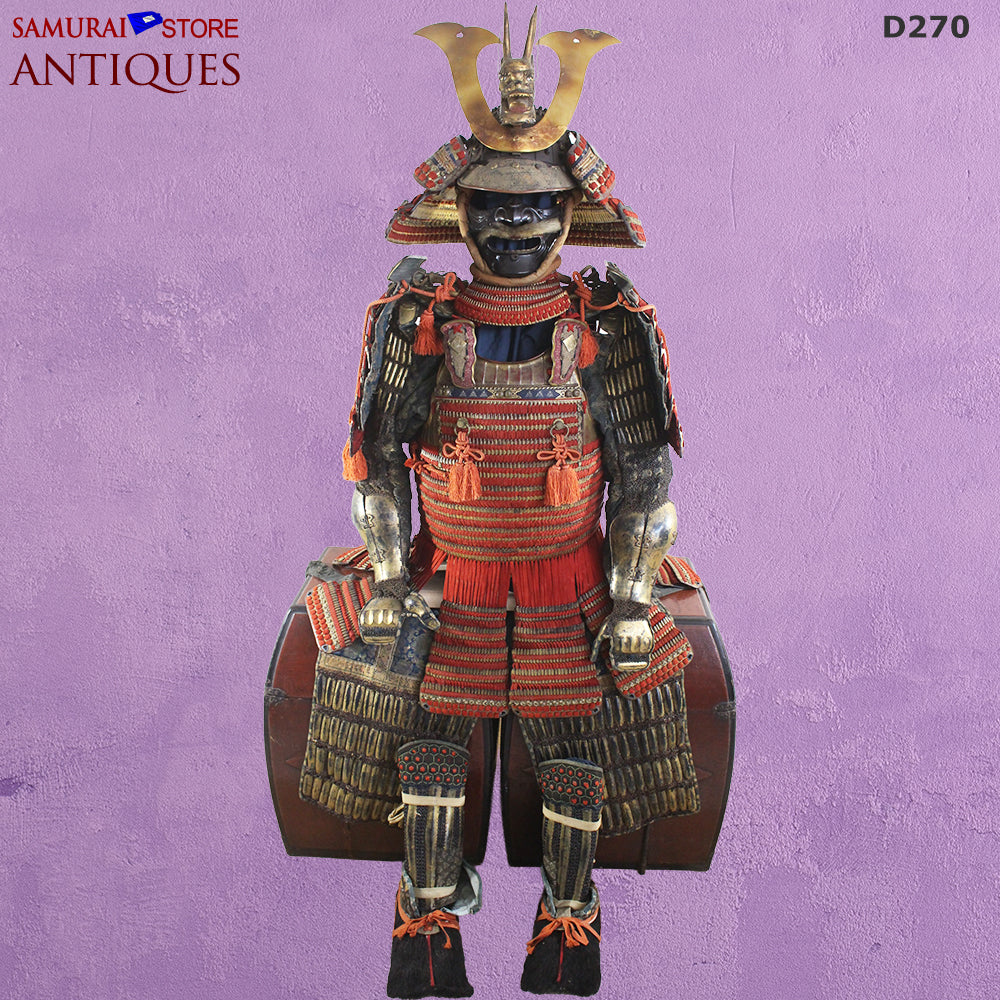
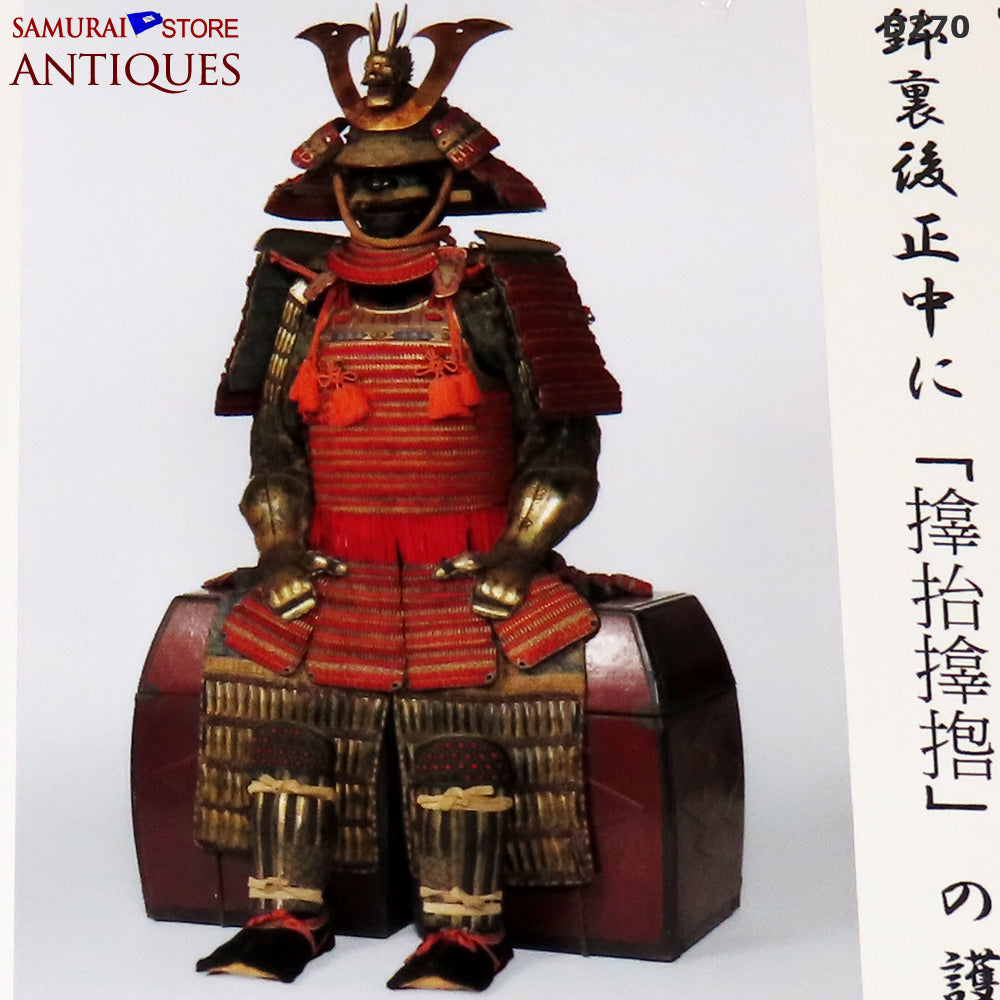
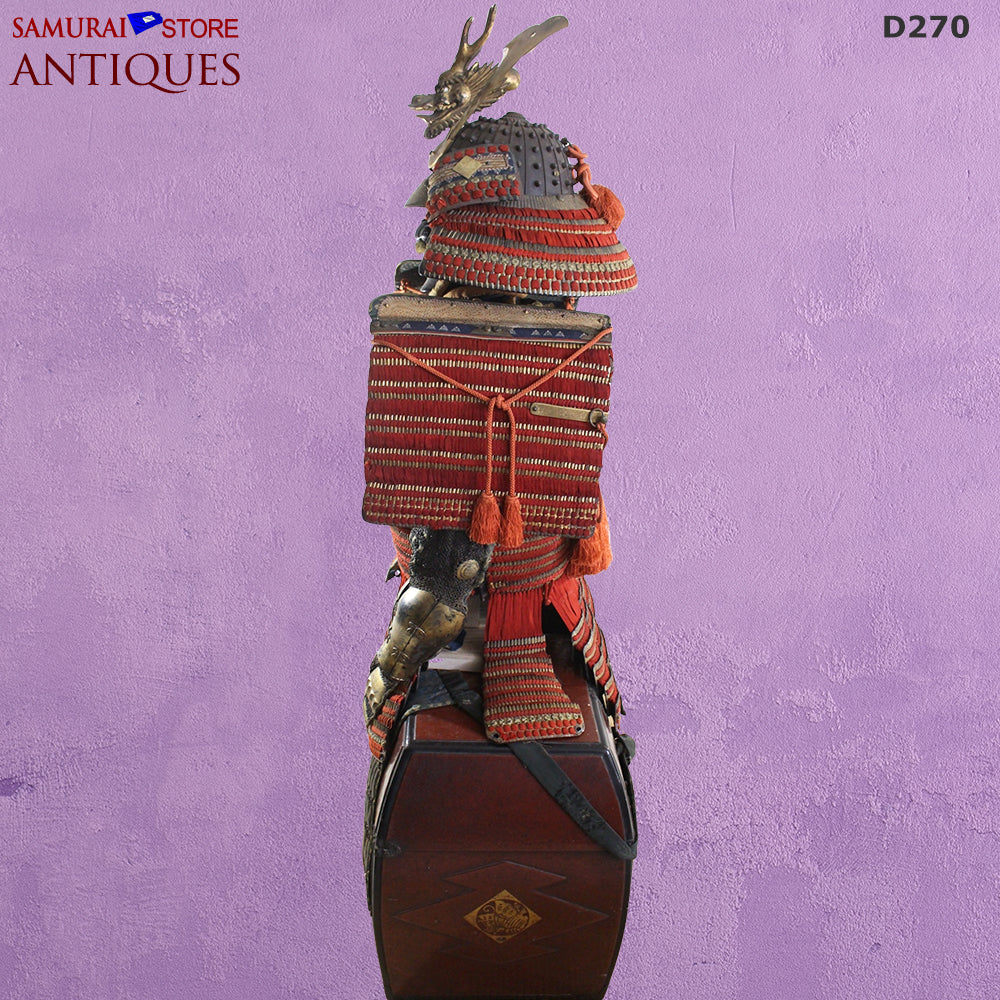
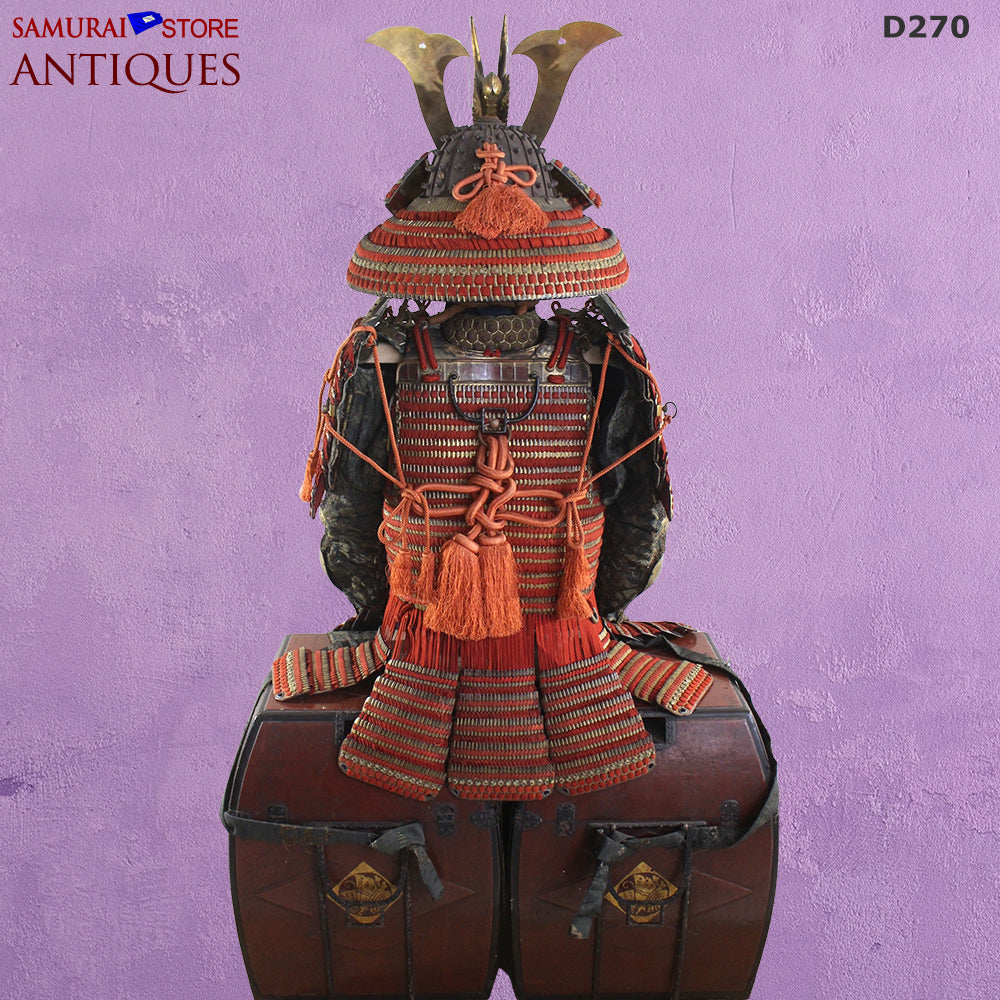
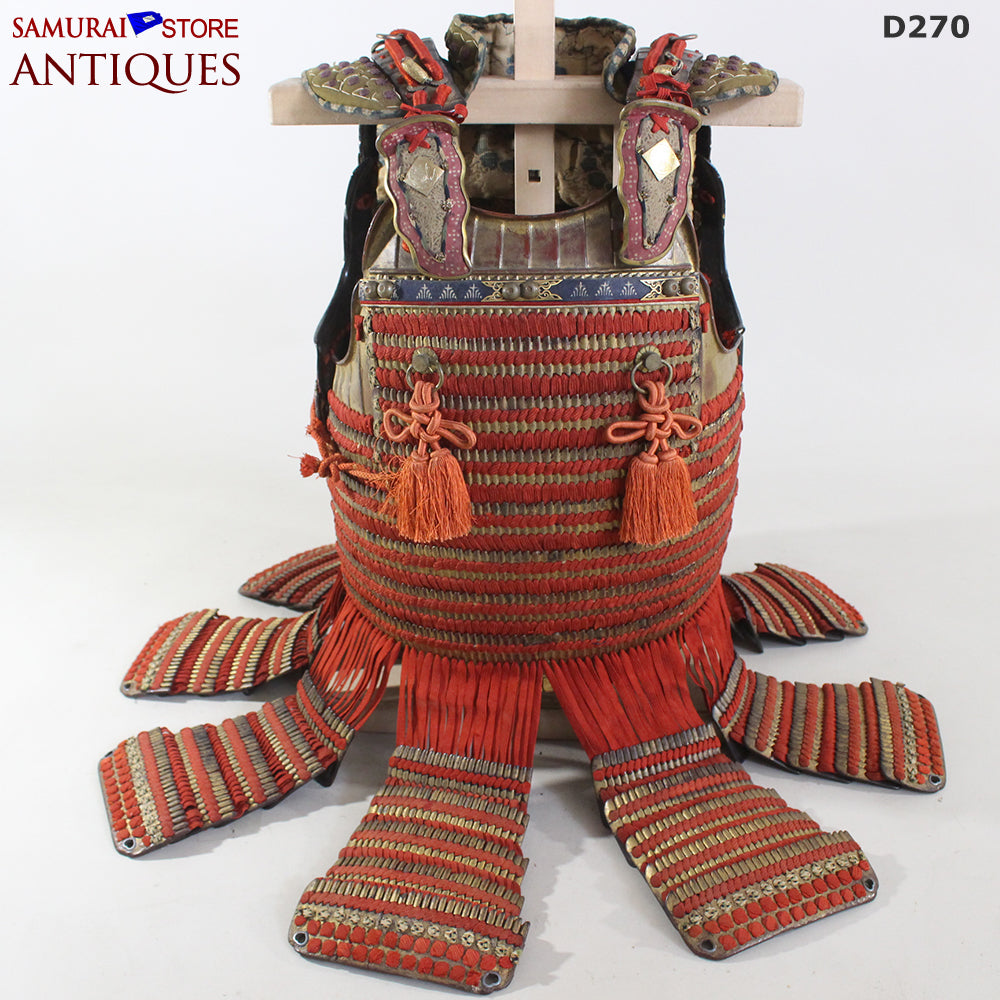
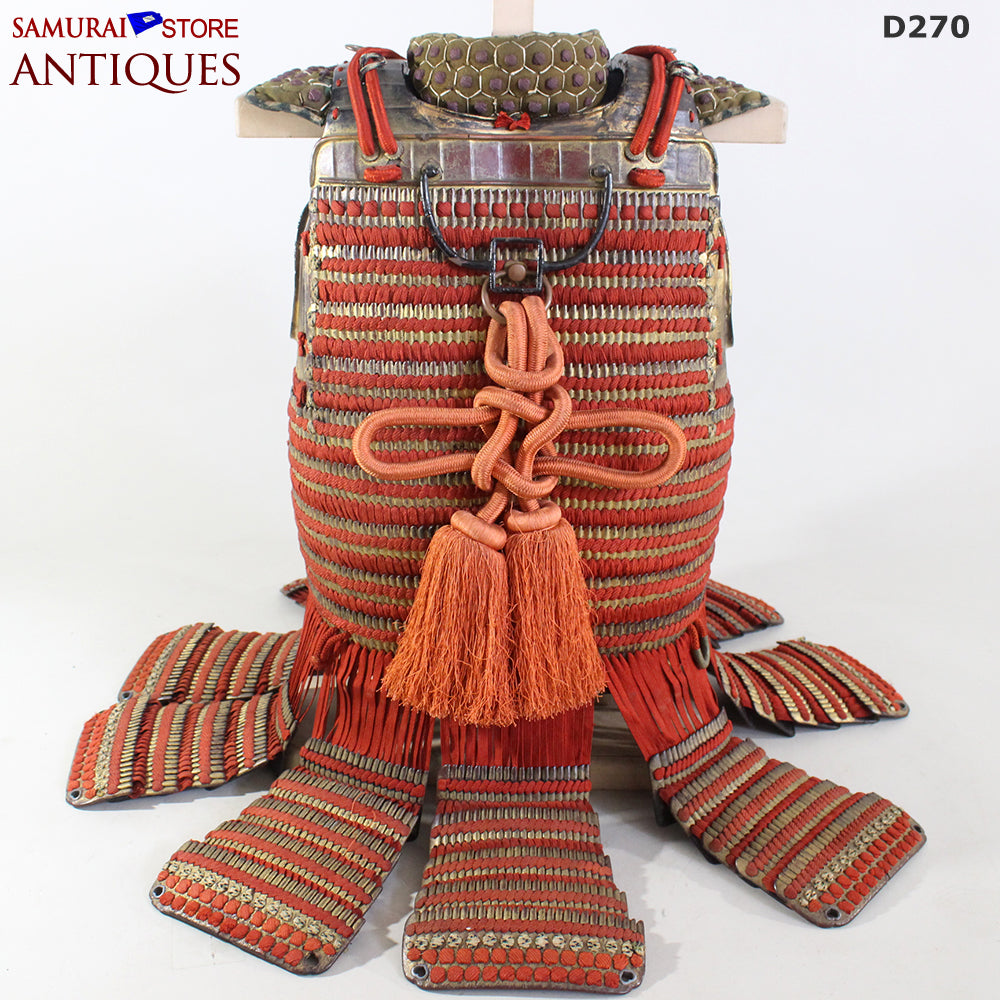
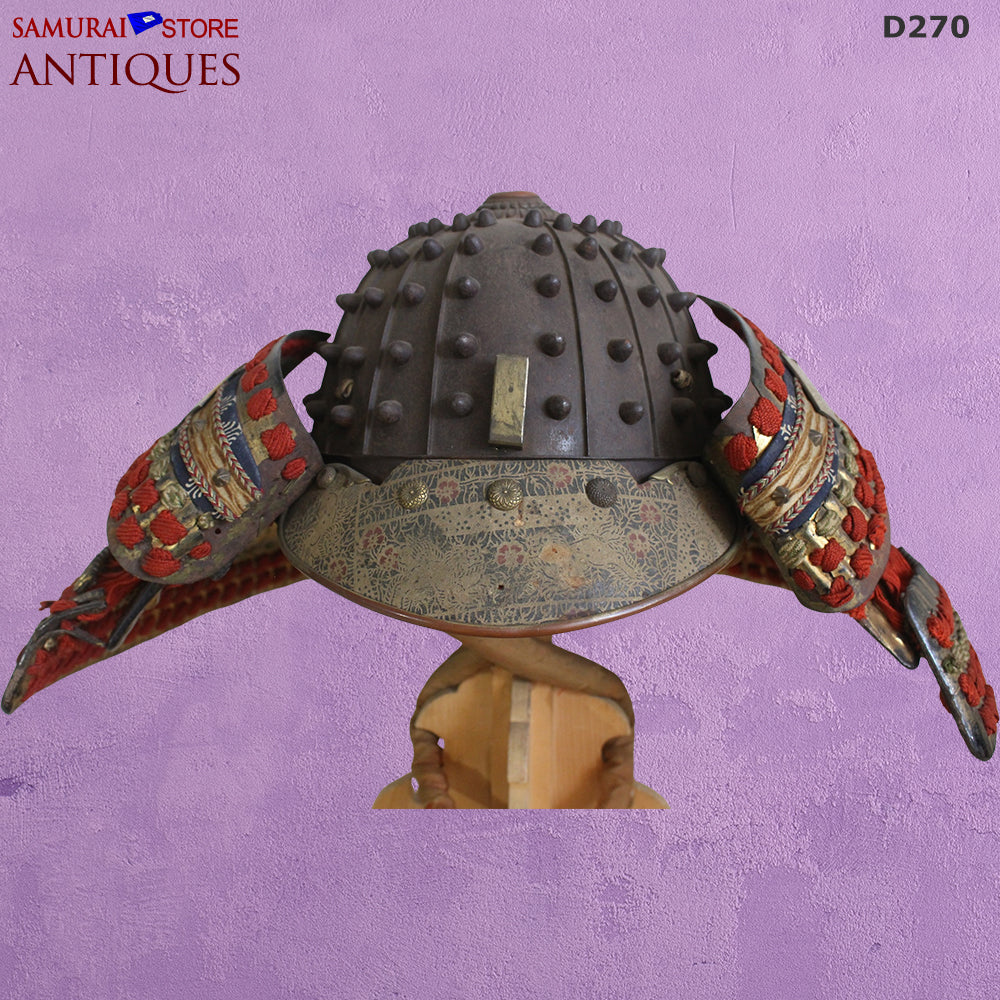
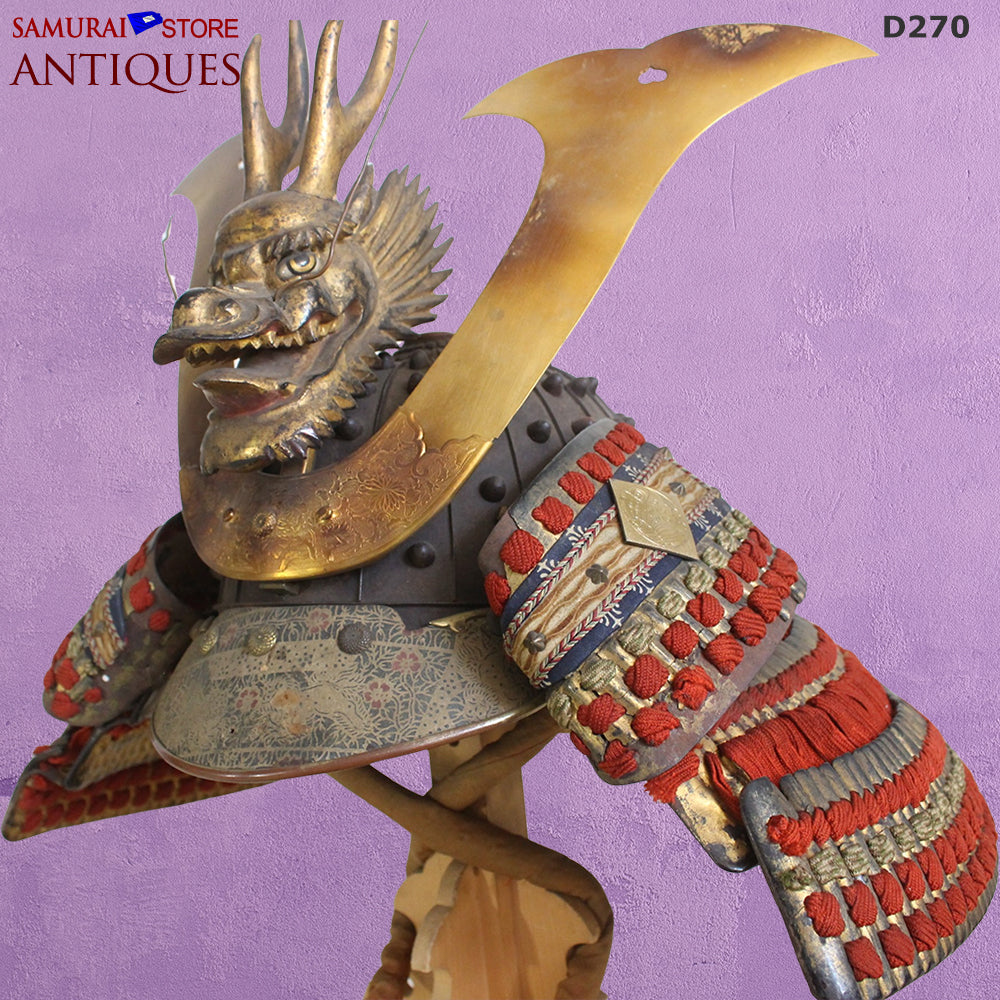
Tosei-gusoku · Nimai-dō
Full gusoku (complete suit)
Unsigned
Kebiki-odoshi · Aka (red)
Ageha Butterfly (揚羽蝶紋), Dakizuno (抱き角紋)
Edo
Taira (Heike), Oda, Ikeda (associated with Ageha-chō mon)
Tokubetsu Kichō Shiryō · Nihon Katchū Bugu Kenkyū Hozon Kai
As written by the shop
Especially valuable armour of notably superior workmanship and condition, the third of the five ranks.
Japanese armour is not certified by the NBTHK. The Nihon Katchū Bugu Kenkyū Hozon Kai (the Association for the Research and Preservation of Japanese Helmets and Armour), founded in 1961, is the principal body for armour. Its shinsa grades a piece as 資料 (shiryō, "reference material") across five ascending ranks: Hozon, Kichō, Tokubetsu Kichō, Kōshū Tokubetsu Kichō, and the highest, Jūyō Bunka Shiryō. The 資料 framing reflects the society’s purpose of preserving armour as cultural and historical reference, distinct from the NBTHK’s sword paper tiers.
Returns accepted only for errors/damage: damaged or incorrect items reported by email within 10 calendar days; defective goods within 30 calendar days.
¥2,900,000