Gassan Sadatoshi
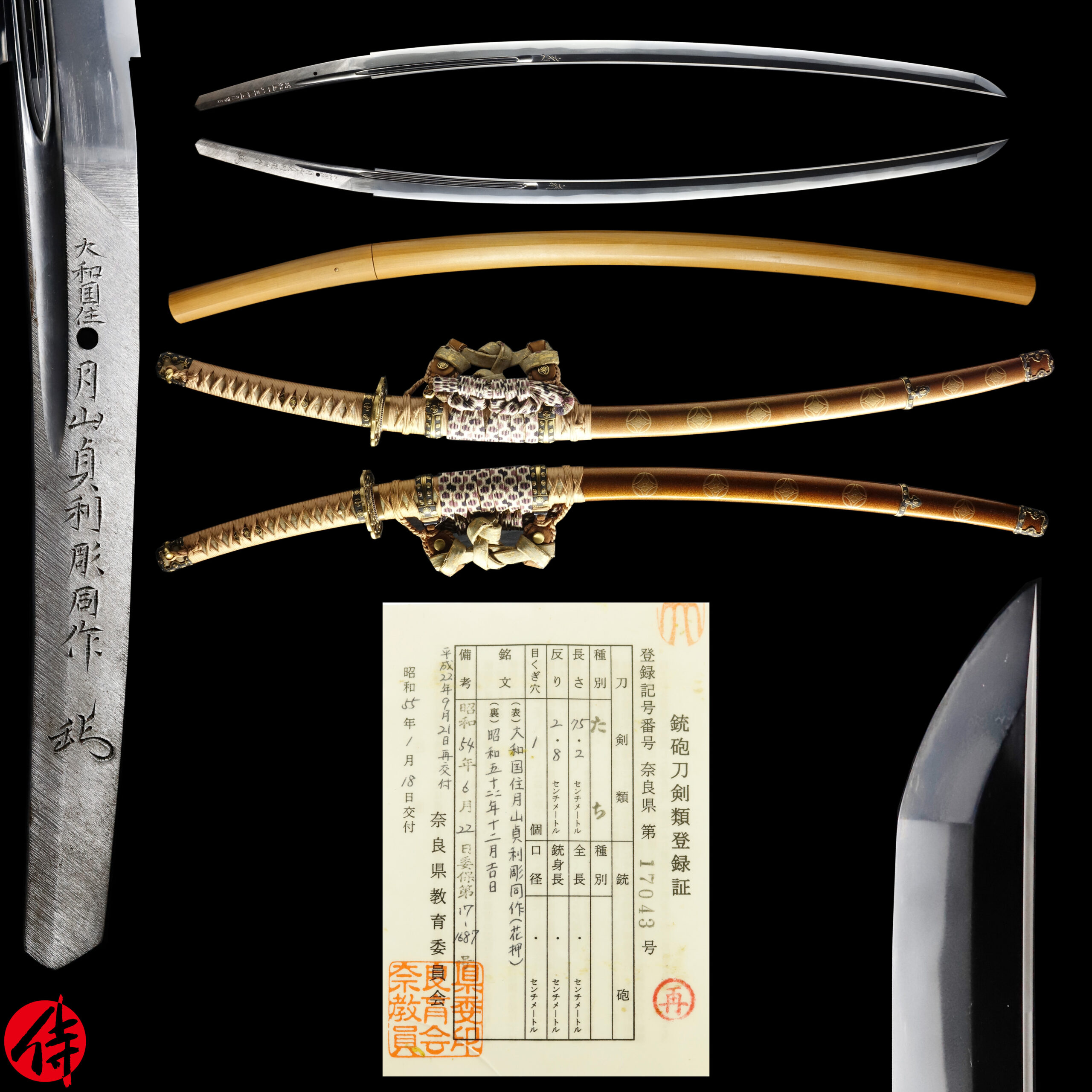
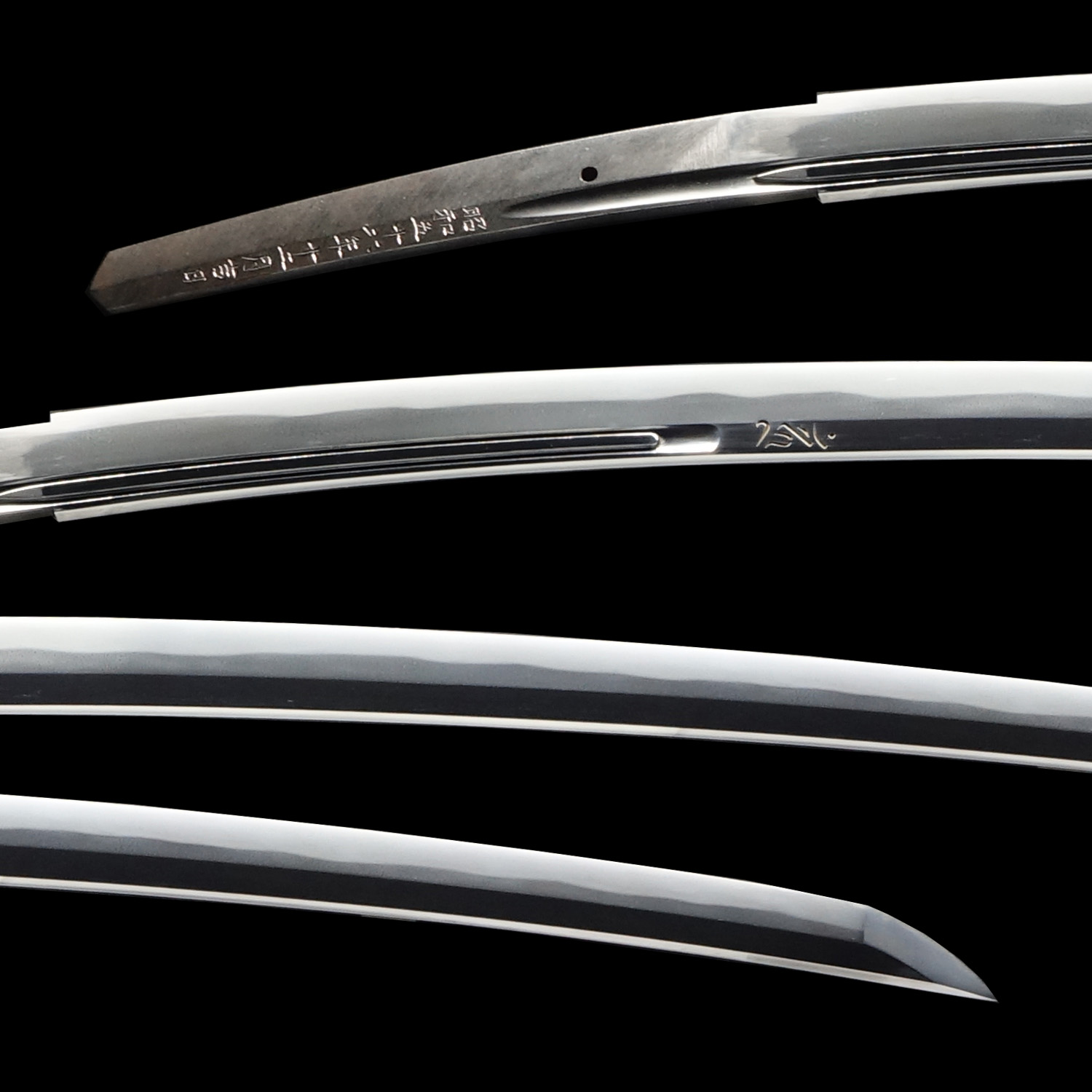
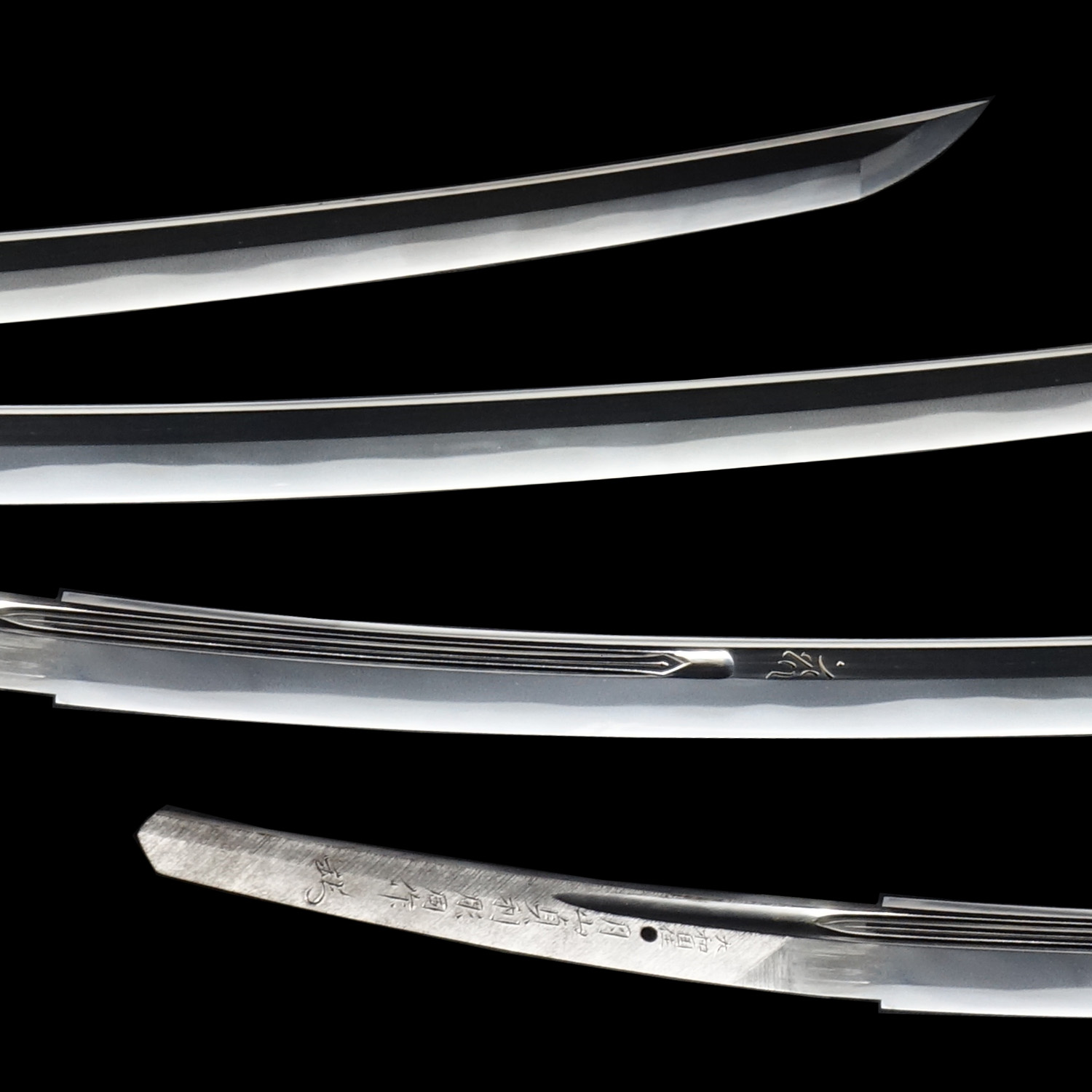
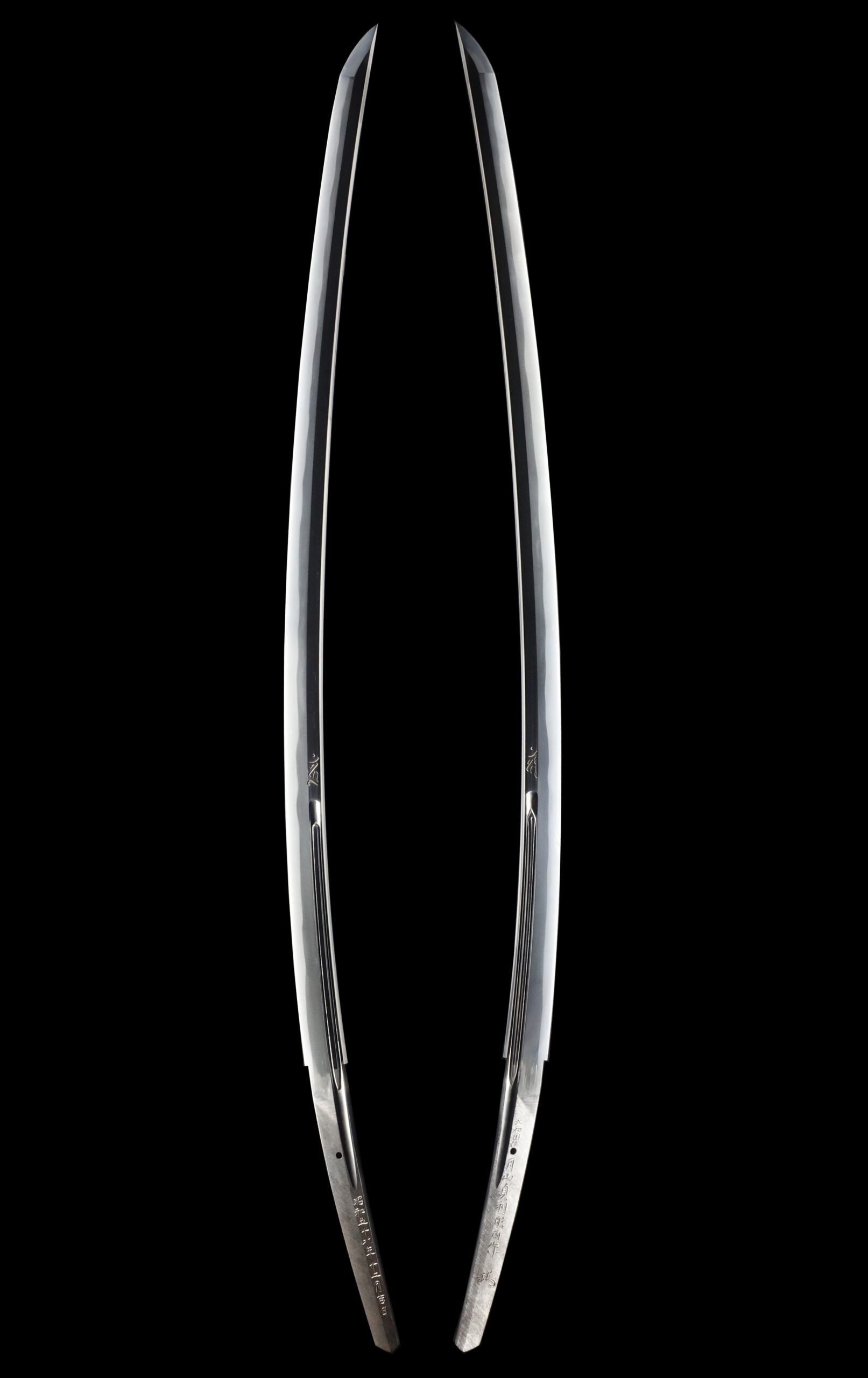
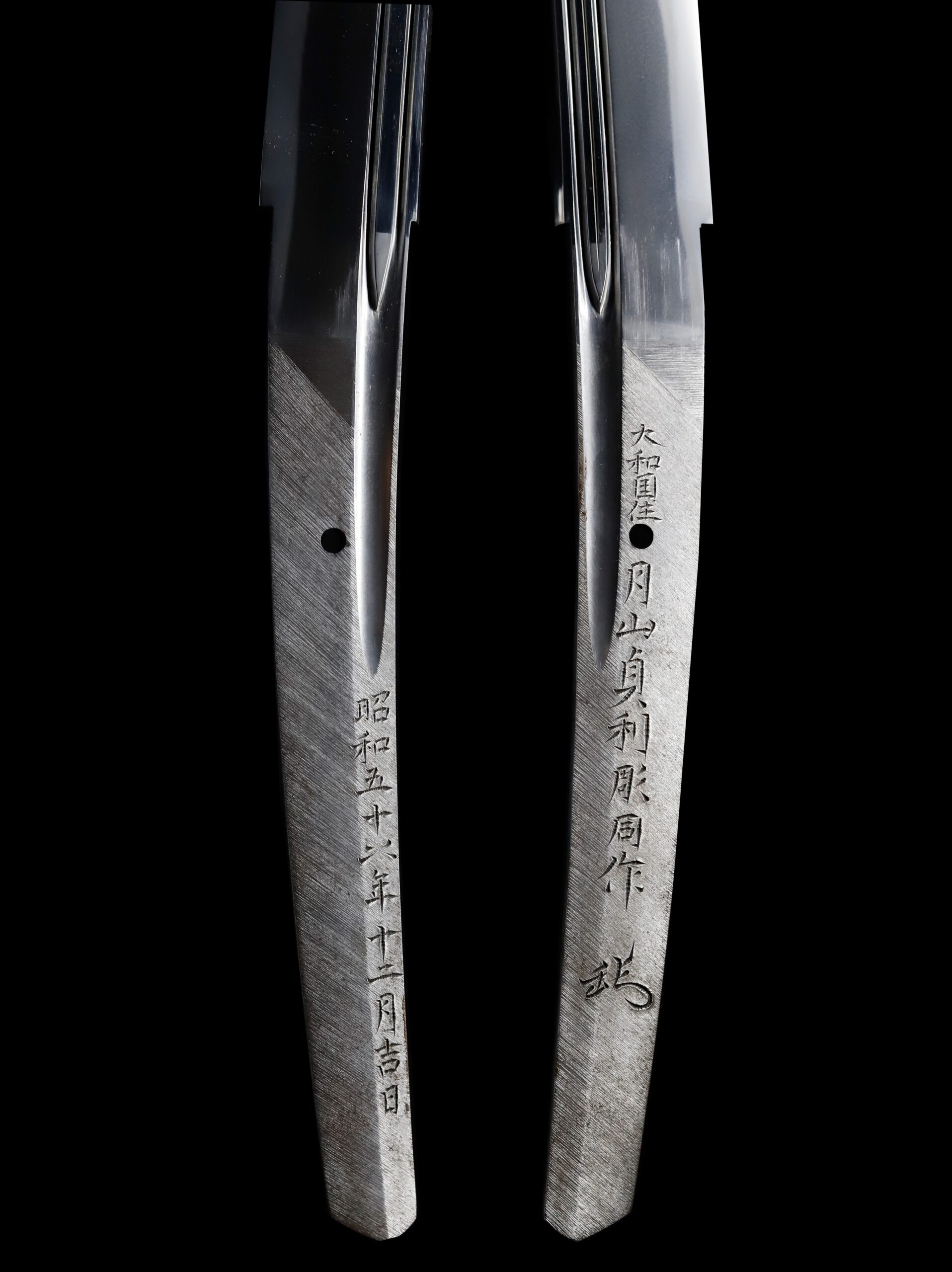
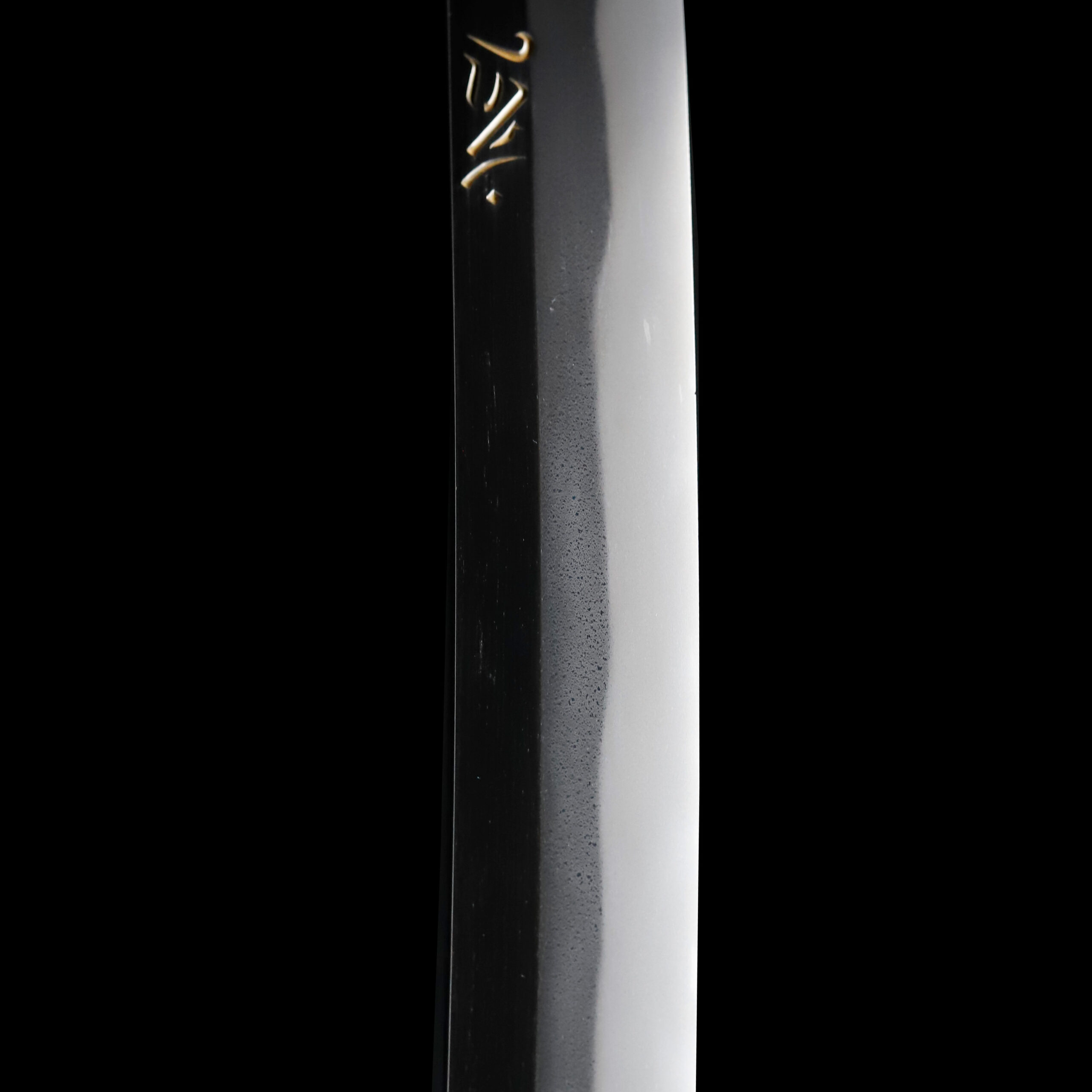
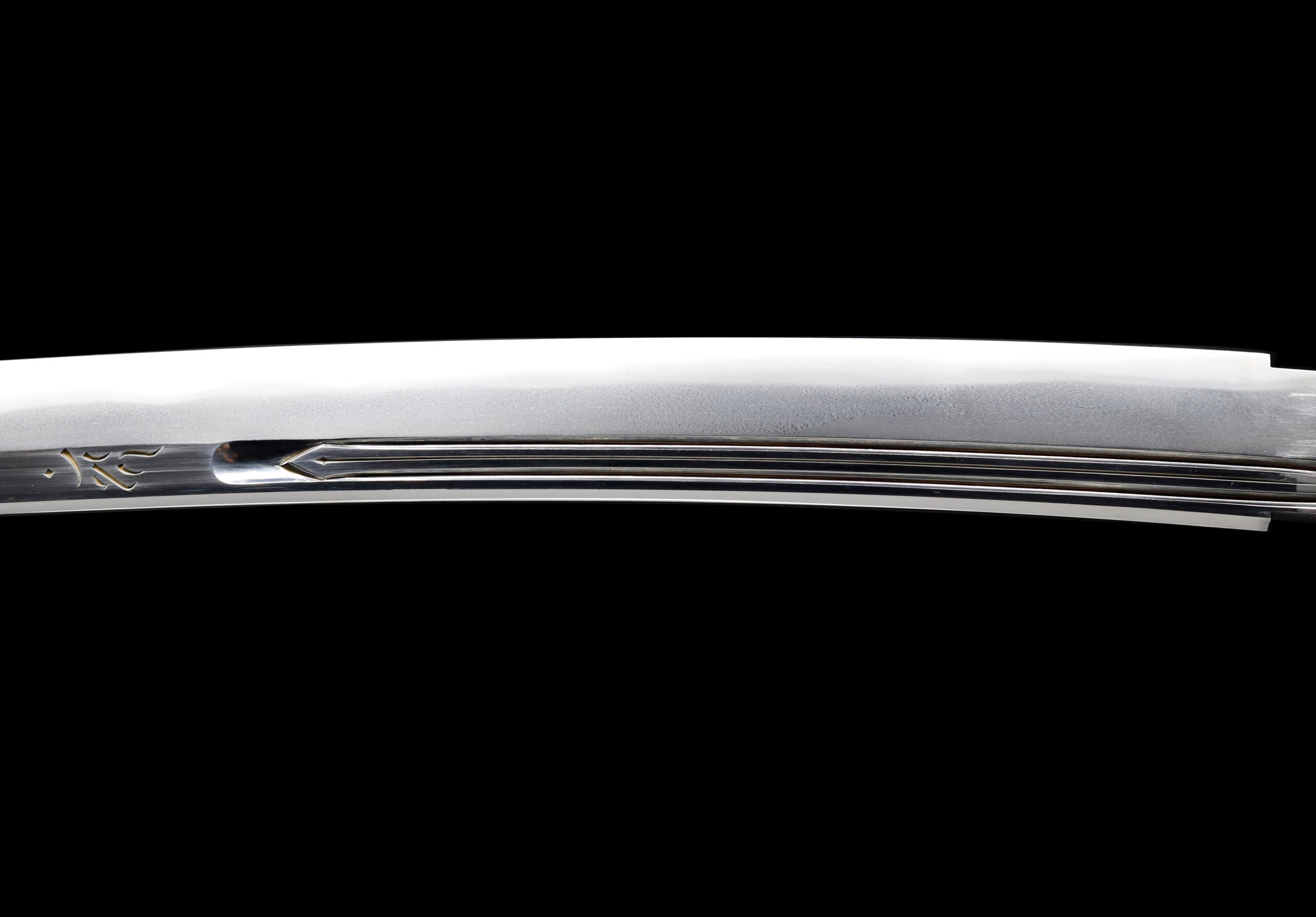
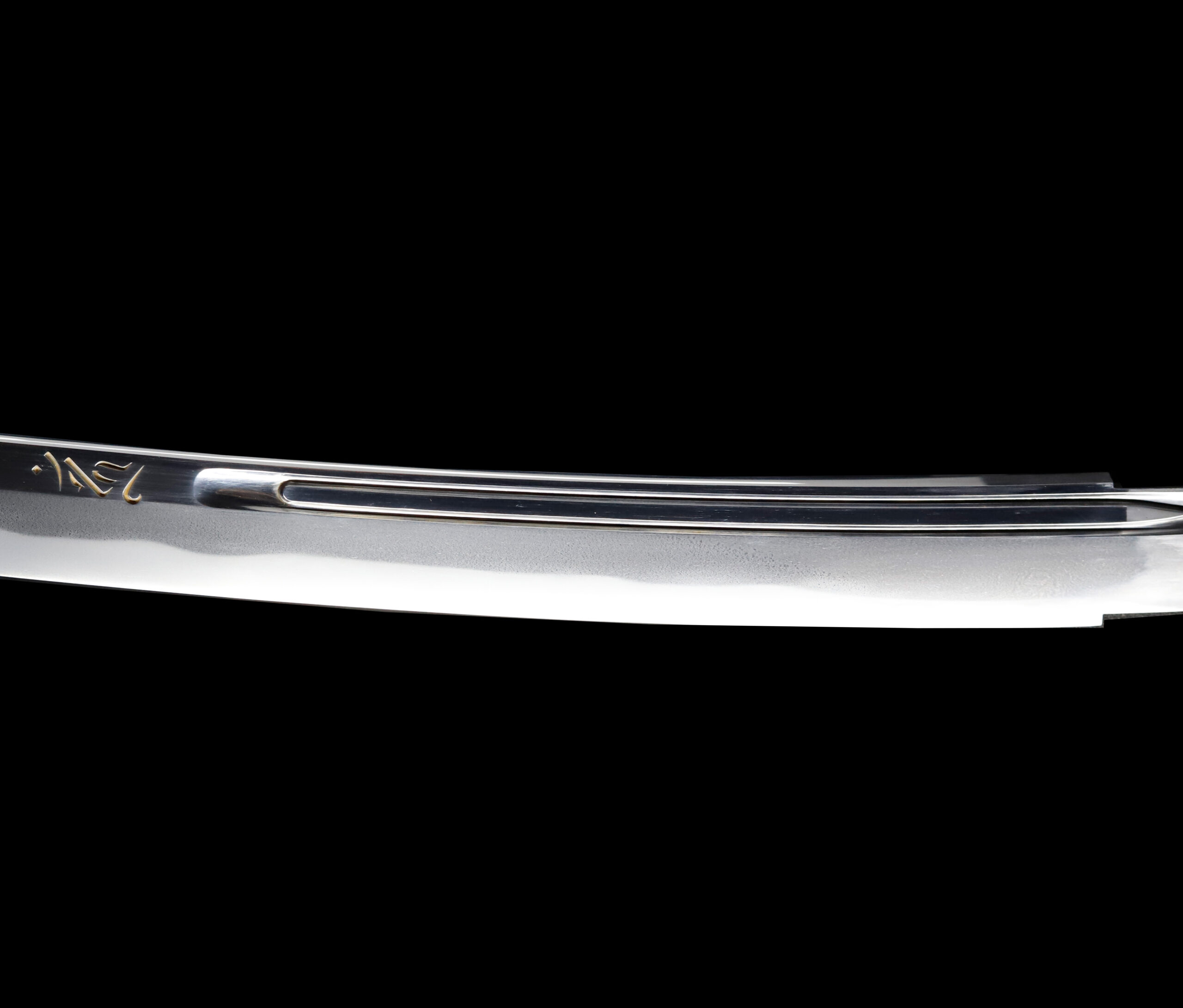
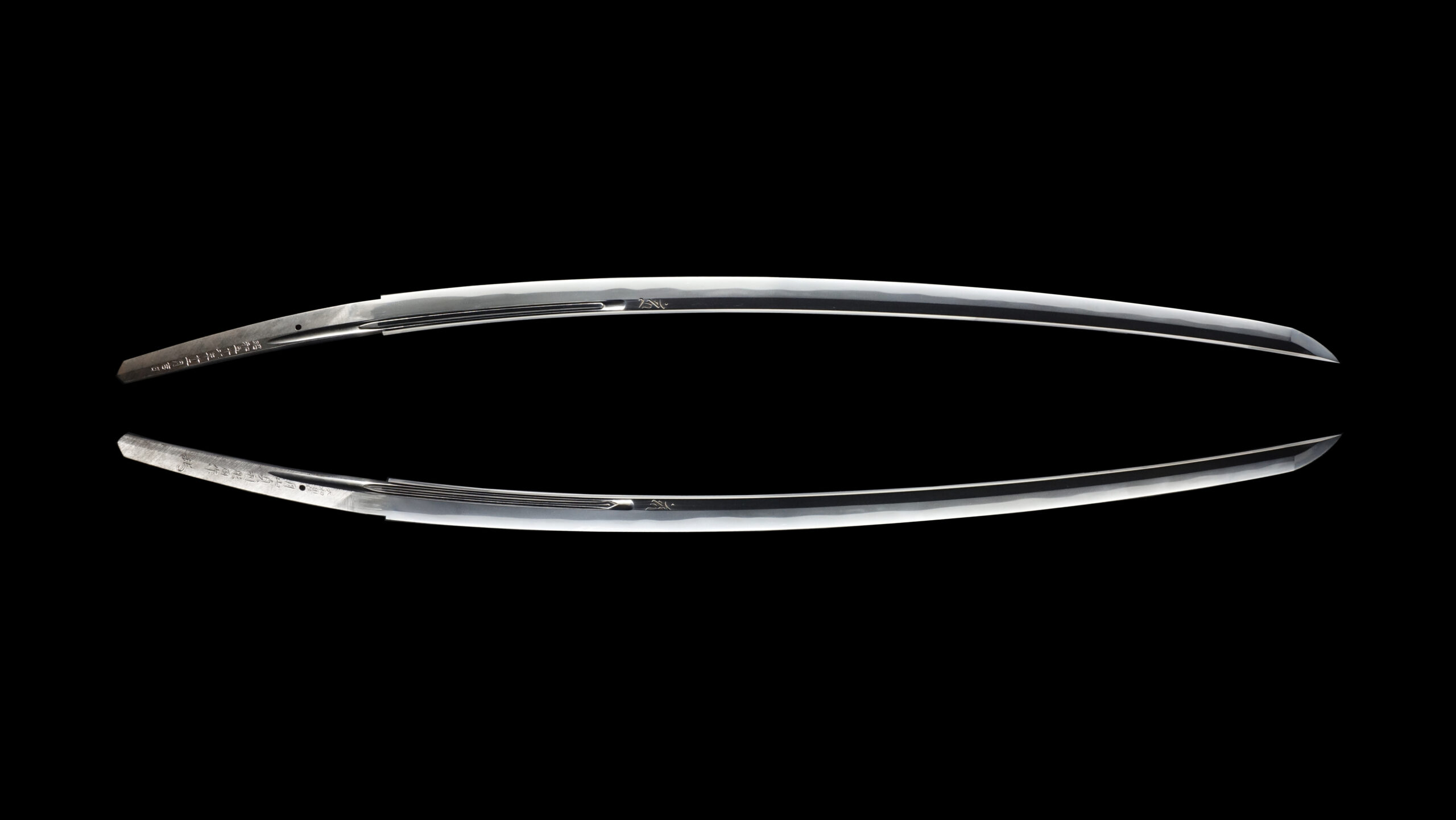
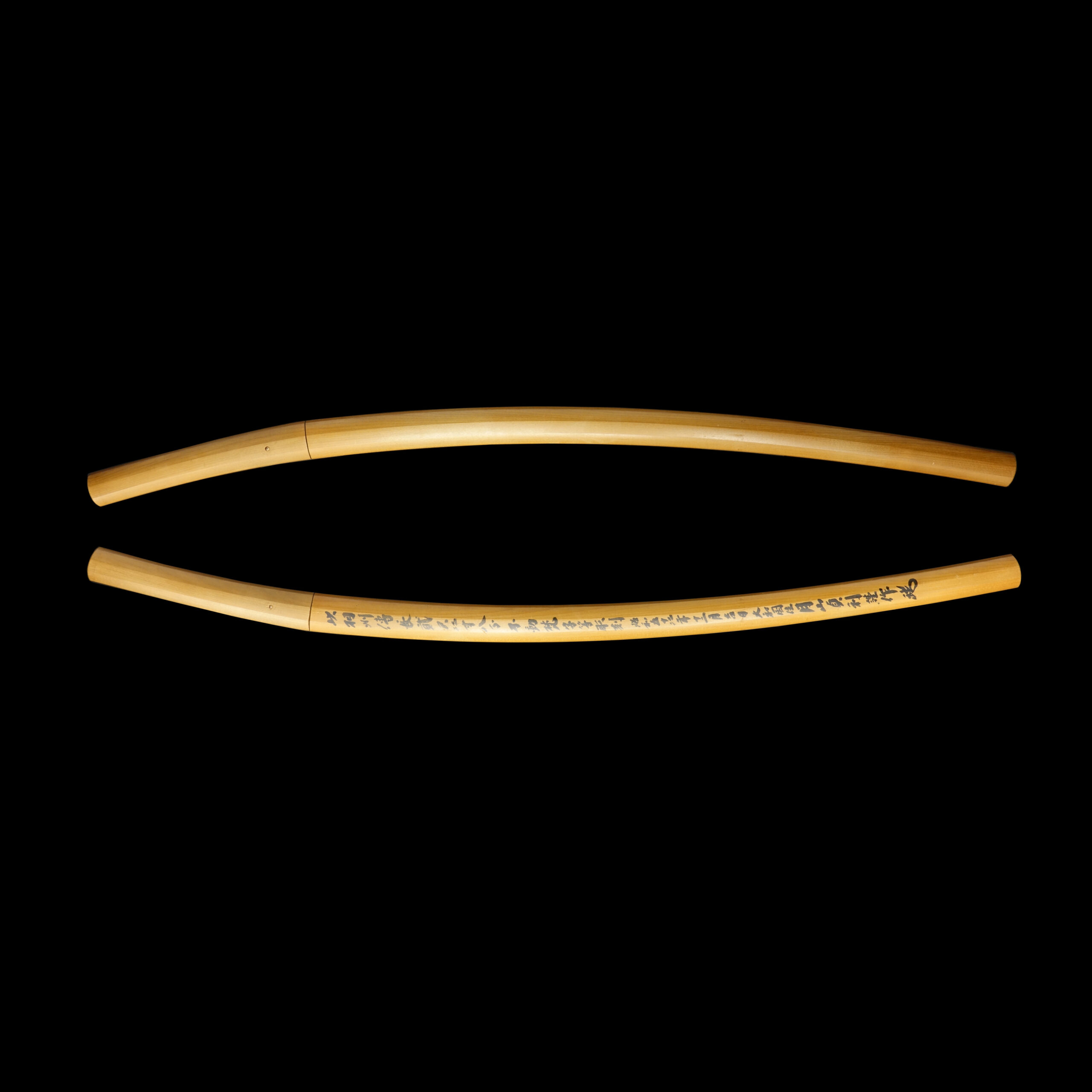
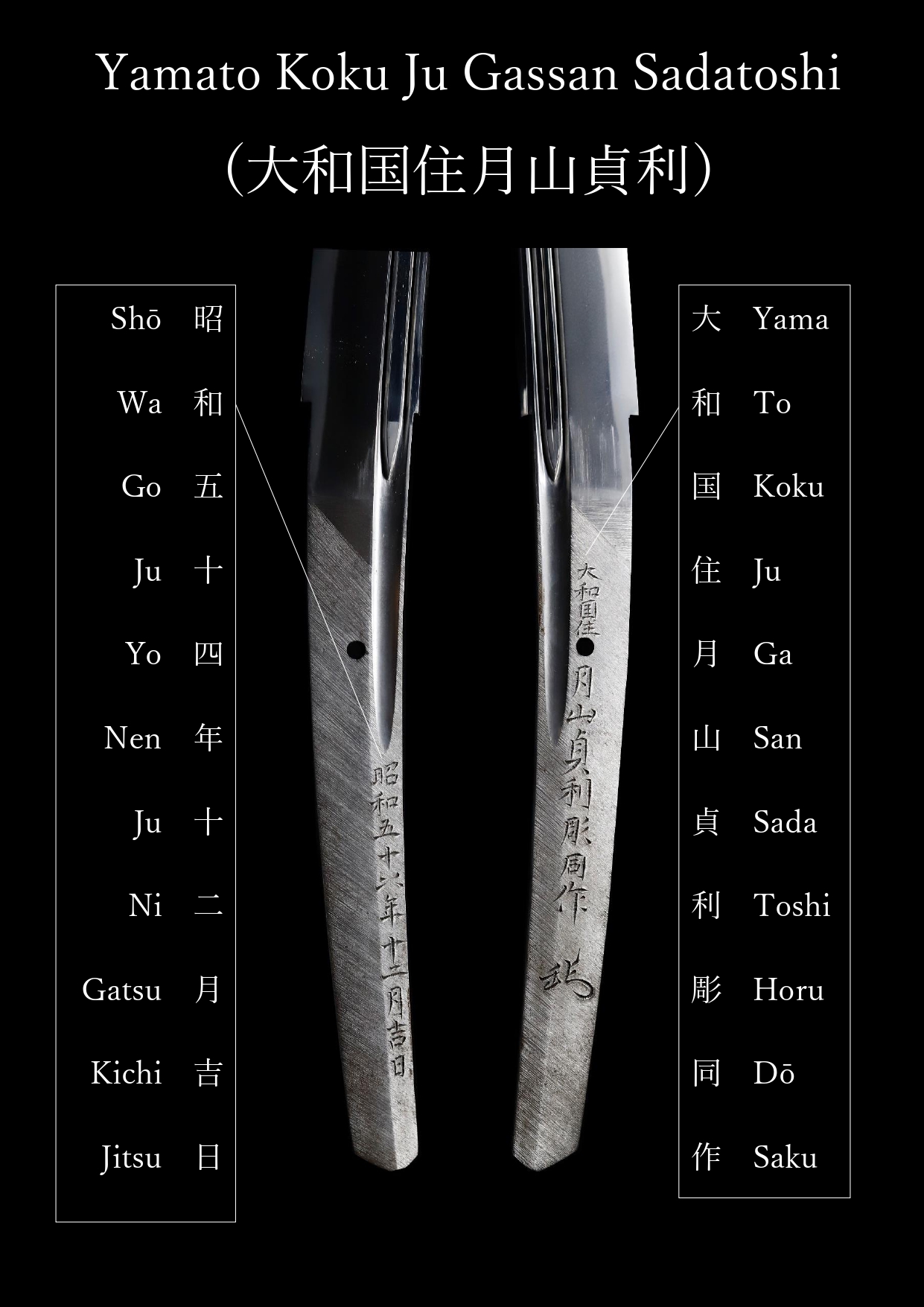
This blade was signed by Yamato Koku Jyu Gassan Sadatoshi (大和国住月山貞利) in December the 54th year of the Showa era (1979). Sadatoshi is the fifth head of Osaka Gassan School, which started at the end of the Edo period (Late 19th century). Yamato Koku is another name for Nara prefecture. Yamato Koku Jyu means that Sadatoshi lived in this prefecture when he forged this blade. The signature also says that this swordsmith also made the engraving. Sadatoshi is active today and known as one of the most famous modern Japanese swordsmiths. He has contributed to preserving Japanese sword forging techniques and training swordsmiths.
Gassan Sadatoshi was born in 1946 in Osaka as the third son of the second-gen Gassan Sadakazu, a national living treasure of Japan back then. Sadatoshi majored in architecture and graduated from Osaka Institute of Technology in 1969. He got interested in his father’s work from the beginning of his college days. And he learned sword-forging techniques from his father. Sadatoshi decided to take over his father’s school when his father was acknowledged as a *Mukansa Toko in 1967. Sadatoshi wanted to keep the tradition of Gassan school continuing.
Sadatoshi took the national examination held by the Agency for Cultural Affairs to legally forge Japanese swords in the same year he graduated from university and successfully passed it. In 1975, he received a special Takamatsumiya Award at Shinsaku Meito Ten, an event for modern Japanese swordsmiths to compete their craftsmanship. And in his career, he received countless awards.
In 1982, he was recognized as a *Mukansa Toko, an honorable title for any modern Japanese swordsmith. His works were exhibited at the Museum of Fine Arts in Boston and The Metropolitan Museum of Art in New York. His beautiful creations have been acknowledged by many Japanese sword experts and collectors worldwide. He was also designated as Intangible Cultural Property by Nara prefecture in 2003.
*What is Mukansa swordsmith?
It is one of the most honorable titles a modern swordsmith could receive.One with this title could submit his work to the Japanese sword exhibition held by NBTHK(Nihon Bijyutu Touken Hozon Kyokai) without being examined. In contrast, other sword makers must pass a rigorous test to participate in this event. This fact also suggests he was a great swordsmith in modern times. This exhibition is held by NBTHK once a year, and modern swordsmiths compete for their craftsmanship there. There are only 39 Mukansa swordsmiths now since the exhibition started in 1955.
Gassan School
Gassan is the name of the school he belonged to. It was initially founded during the Heian period(late 12th century). It is said that the school name “Gassan” (月山) came from the fact that they forged swords near the mountain called Gassan in Dewakoku.
Osaka Gassan School
Gassan Sadayoshi founded Osaka Gassan School in Osaka in 1833. While Gassan school had been known as one of the most prestigious schools from the Kamakura period(late 12th century), its presence faded in the early-mid Edo period. However, after Sadayoshi became a highly-regarded swordsmith at the end of the Edo period, the whole school flourished again because of his continuous effort and superb craftsmanship.
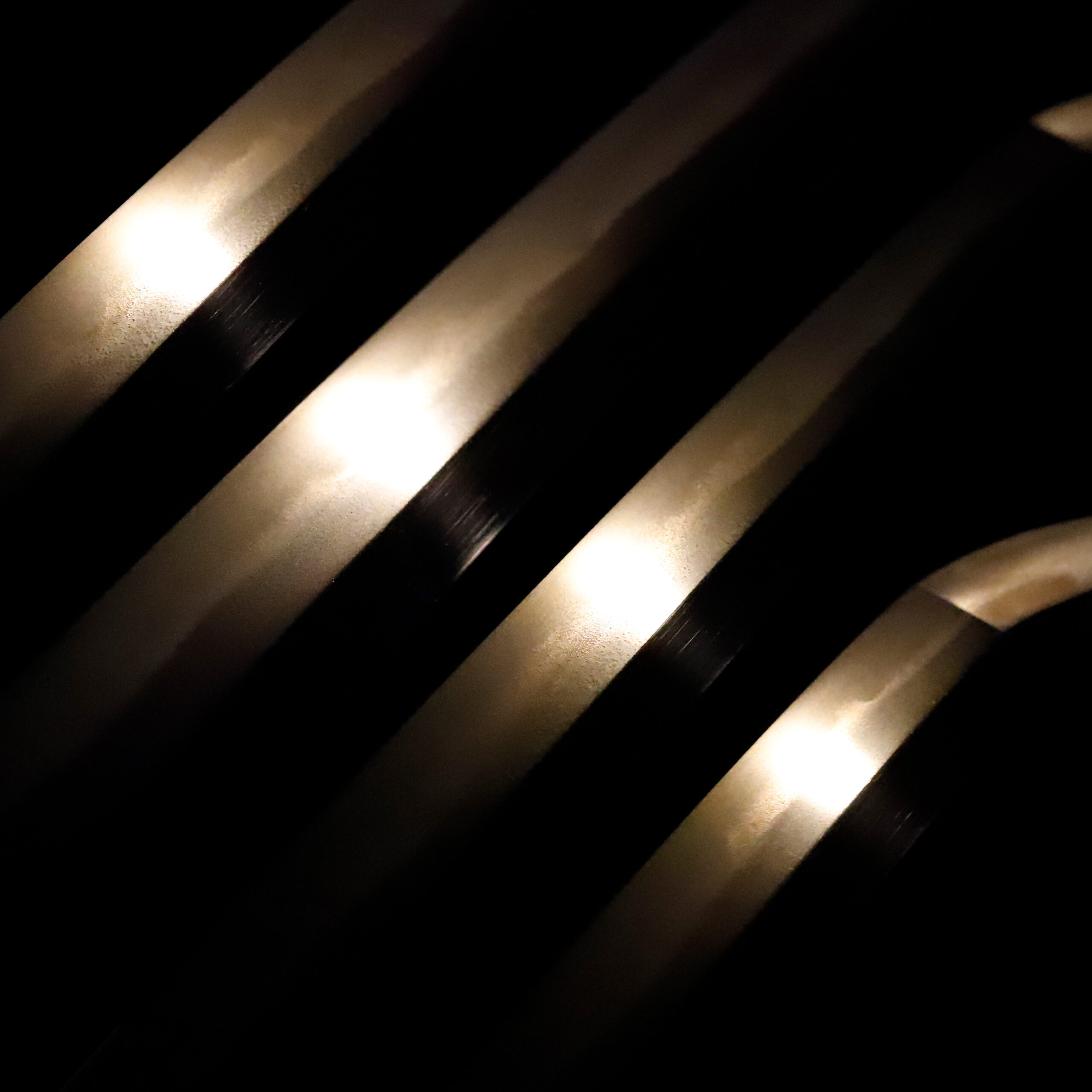
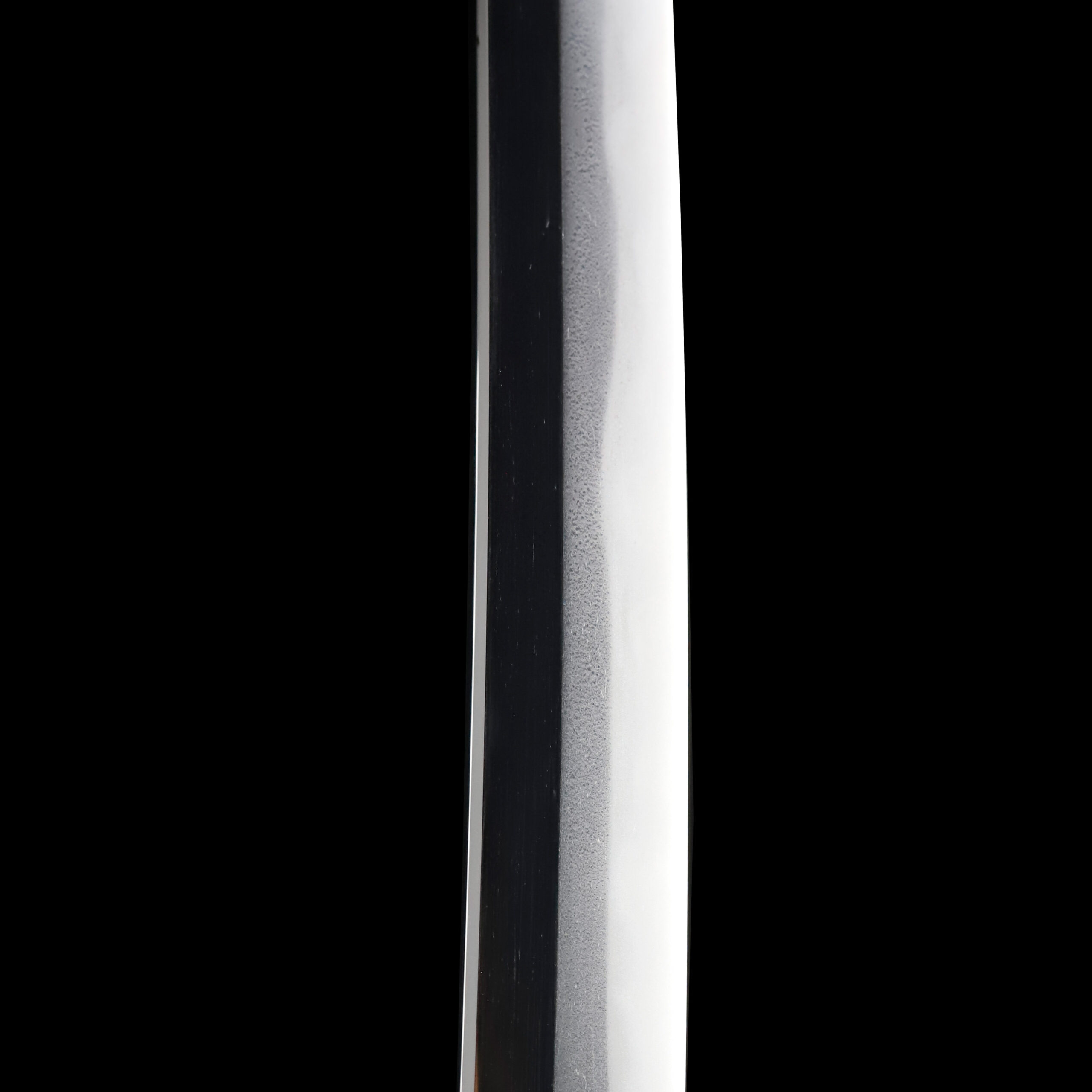
Gassan Sadakazu, his son, supported Sadayoshi, and they spent many years researching traditional Gassan-style swords and finally made Ayasugihada, the signature design of Gassan school. Ayasguhihada looks undulating grain pattern in the Jihada(steel surface), which resembles a Japanese cedar grain. Gassan Sadatoshi also mastered a superb level of craftsmanship passed down for generations.
Tachi Koshirae
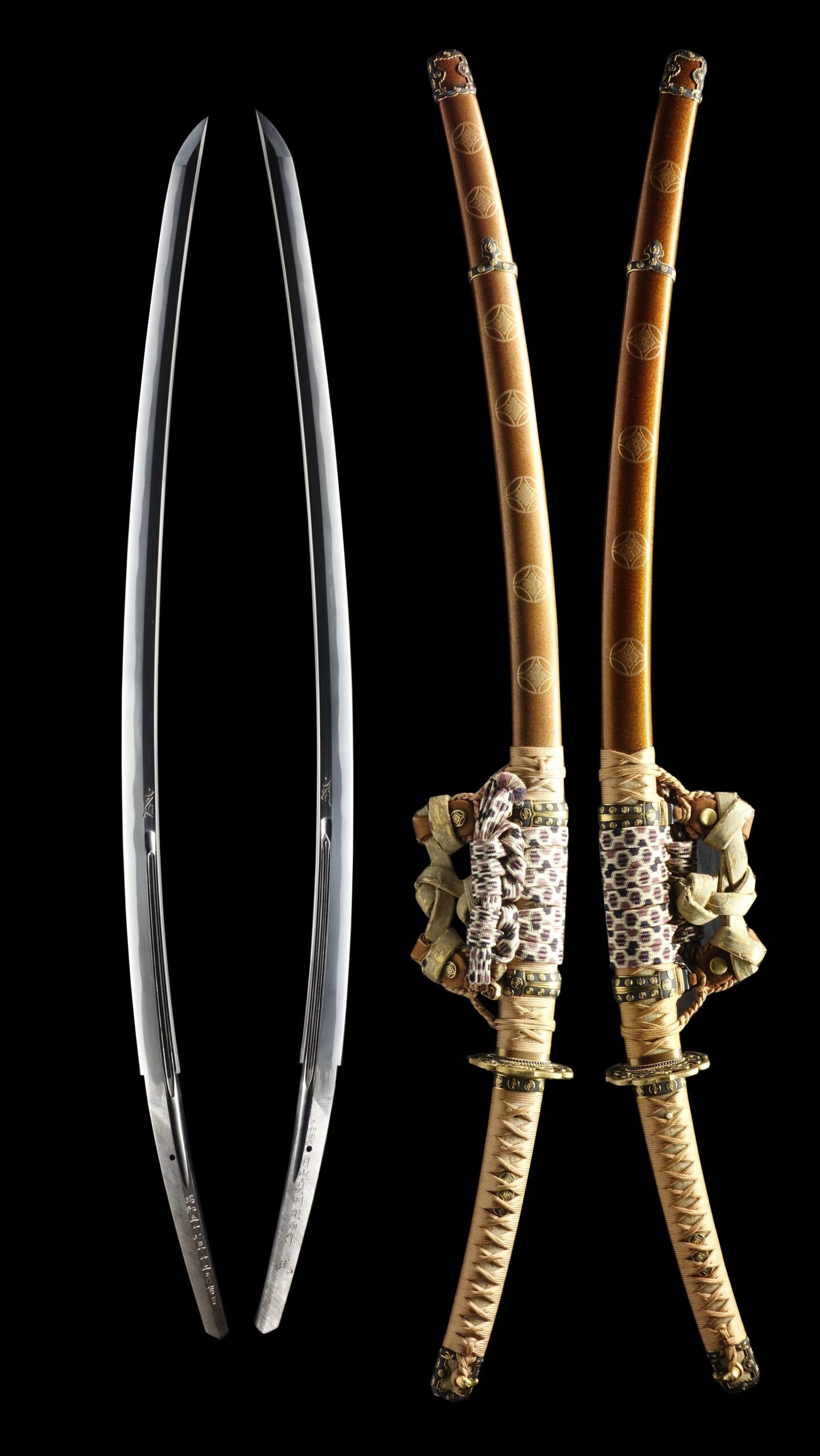
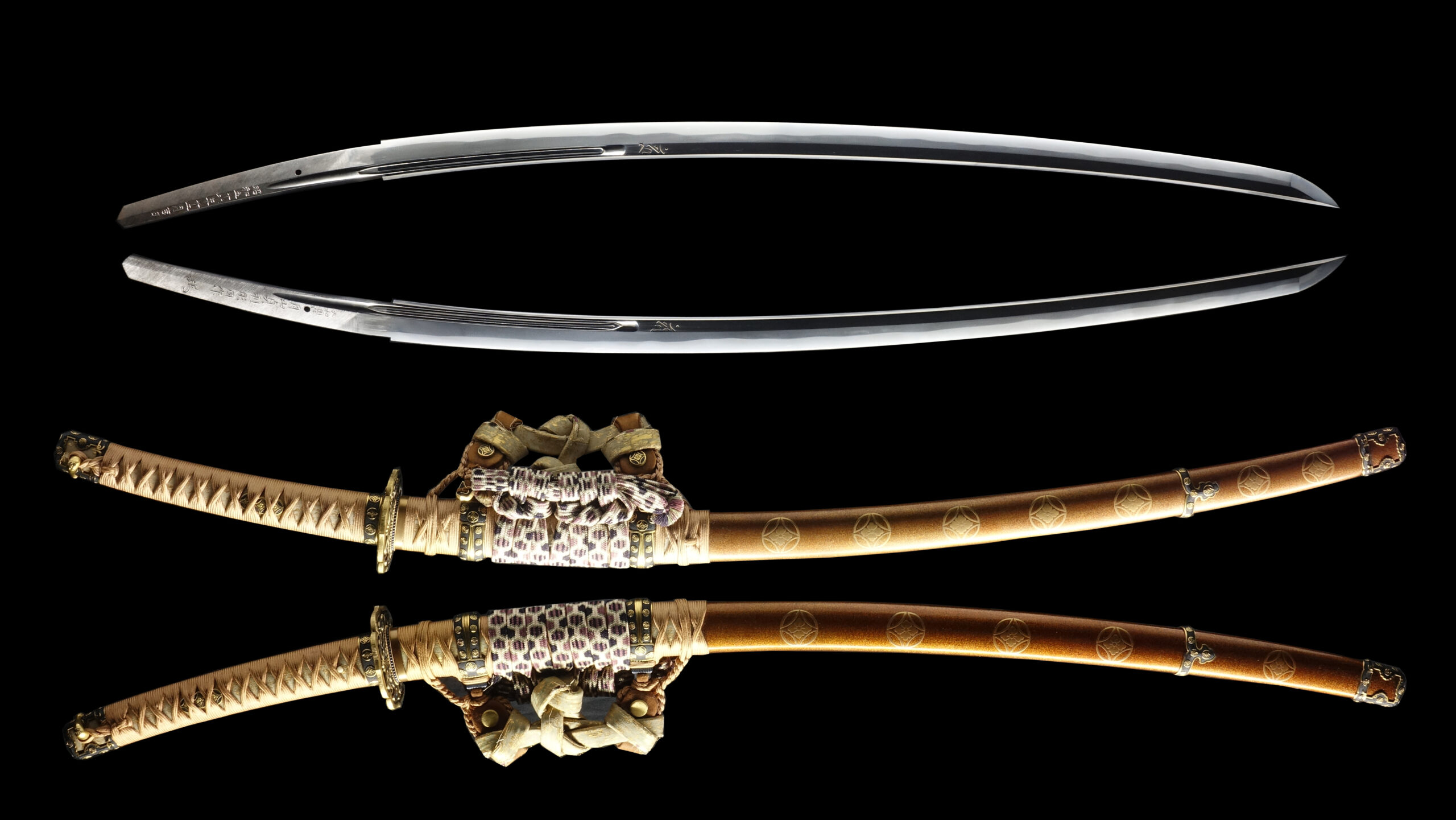
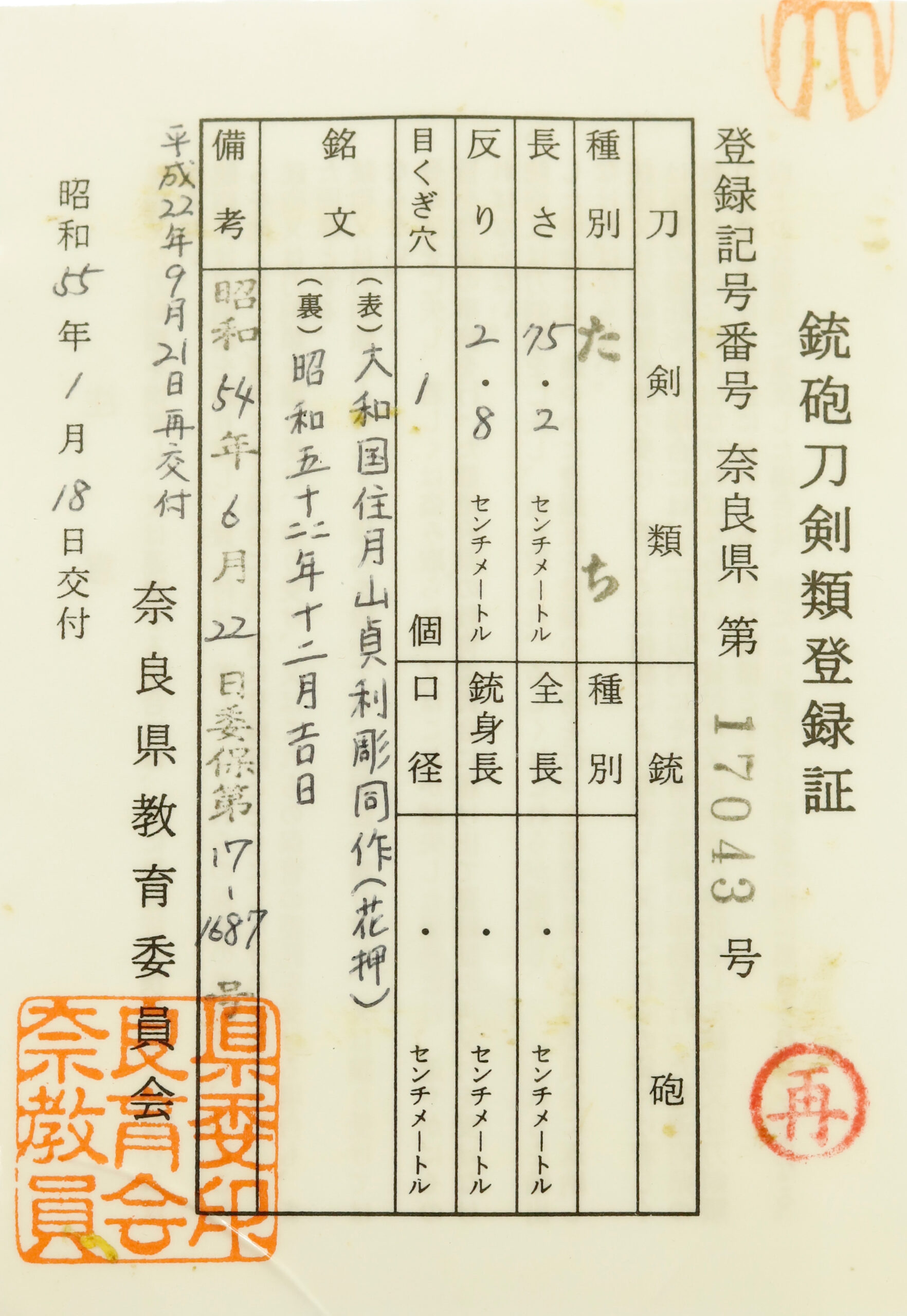
Based on the registration paper, this blade was created as a Tachi sword. This blade comes with a Tachi(太刀) Koshirae. Tachi was mainly used by an armored Samurai with one hand on horseback from the Heian period (794-1185 A.D.) until the early Muromachi period. TACHI was suspended loosely on the left waist with its edge facing the ground so that you could draw it faster to cut down soldiers on the ground. Because of its gorgeous looking, having a Tachi-style sword mounting became a social status among Samurai.
About Modern Swordsmith
There are around 150-200 swordsmiths in Japan today. To legally produce Japanese swords, one needs to pass the national exam given by the Agency for Cultural Affairs(Bunka-Cho) and receive the license. Before taking the exam, one must finish his or her apprenticeship under a licensed master for more than five years. Those who practice Iaido(居合道) tend to use those modern swords, and there are modern Japanese sword collectors nationwide.
Modern Japanese sword makers are researching old ways to forge swords and trying to recreate ancient-style swords. They are the ones who keep the tradition of Japanese history alive.
Koshirae
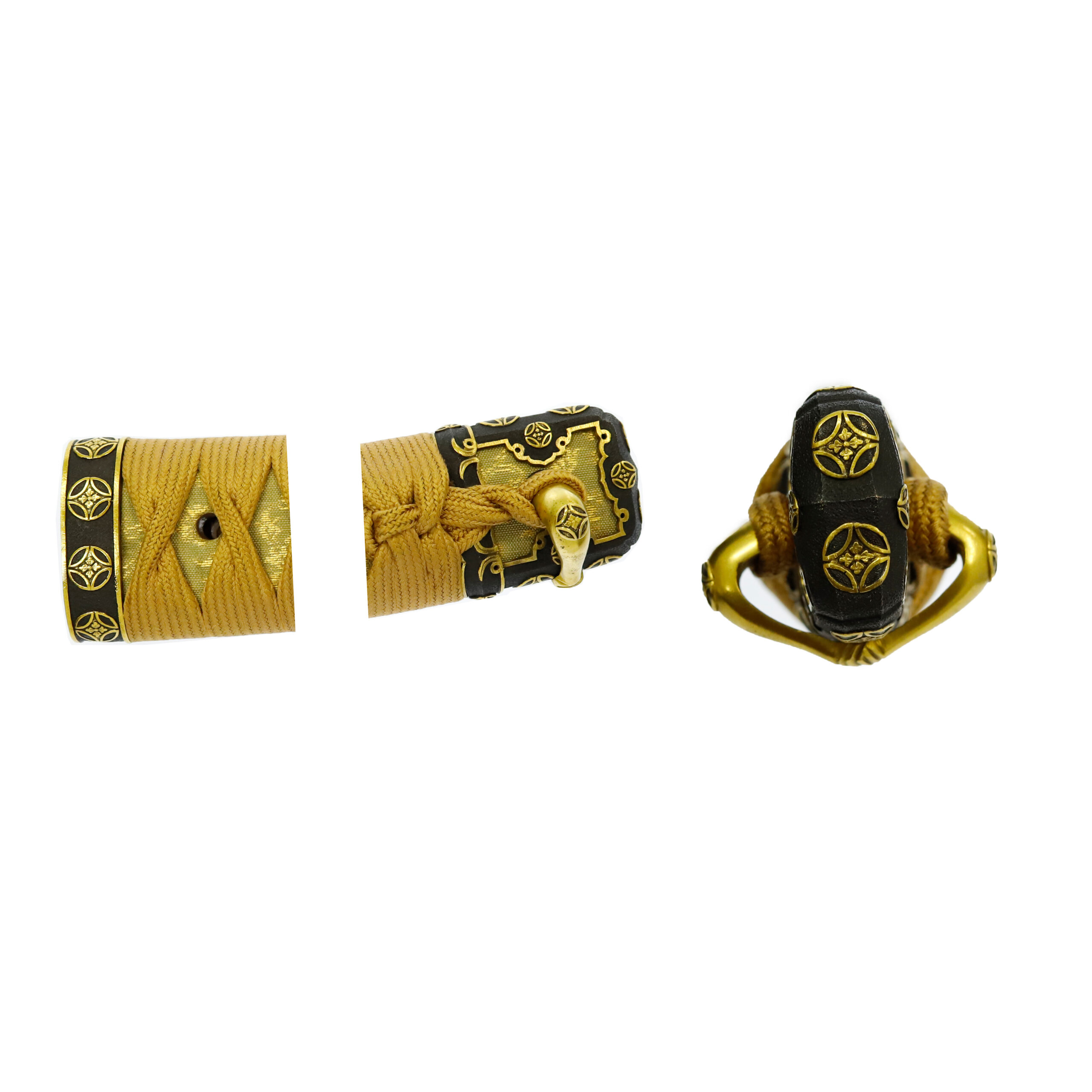
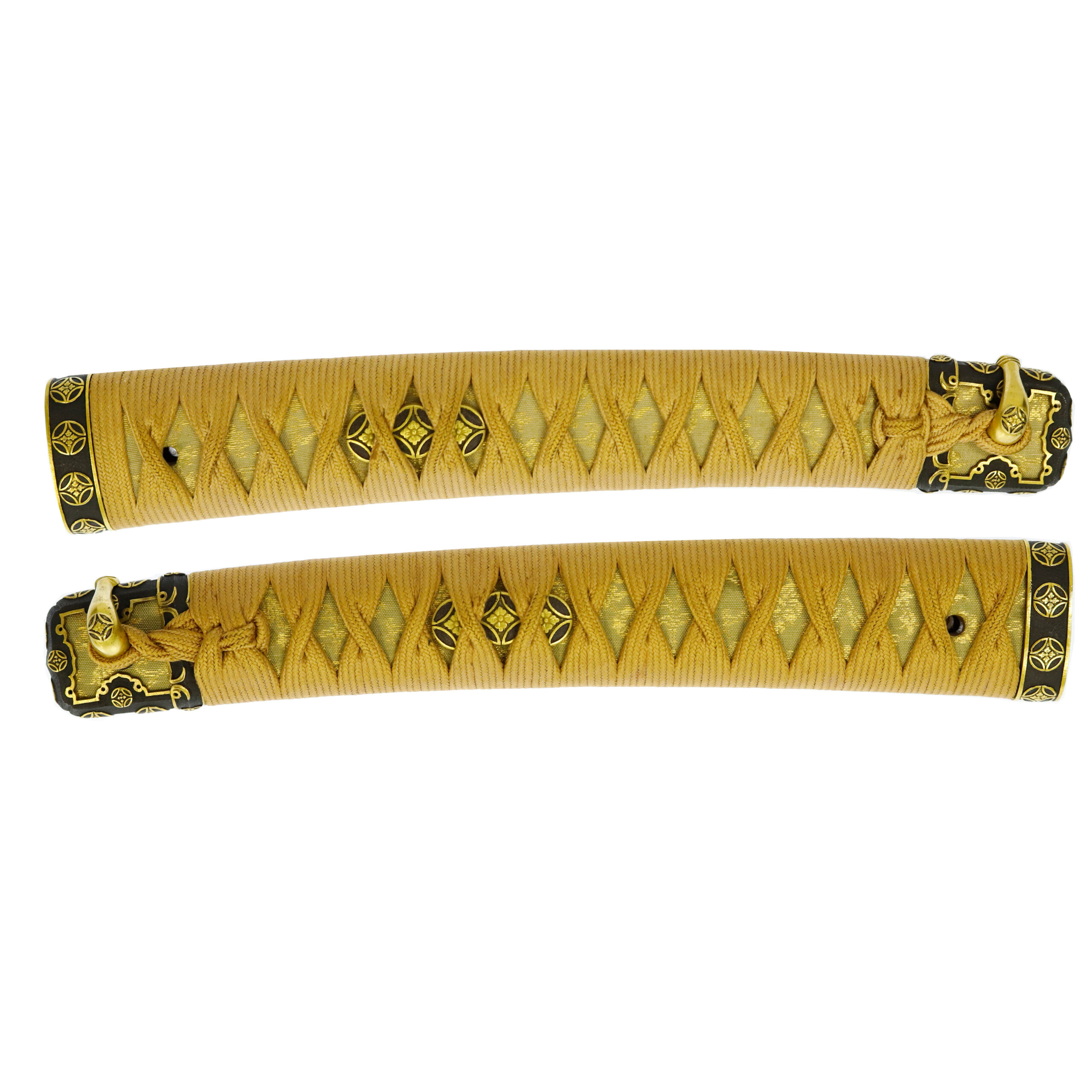
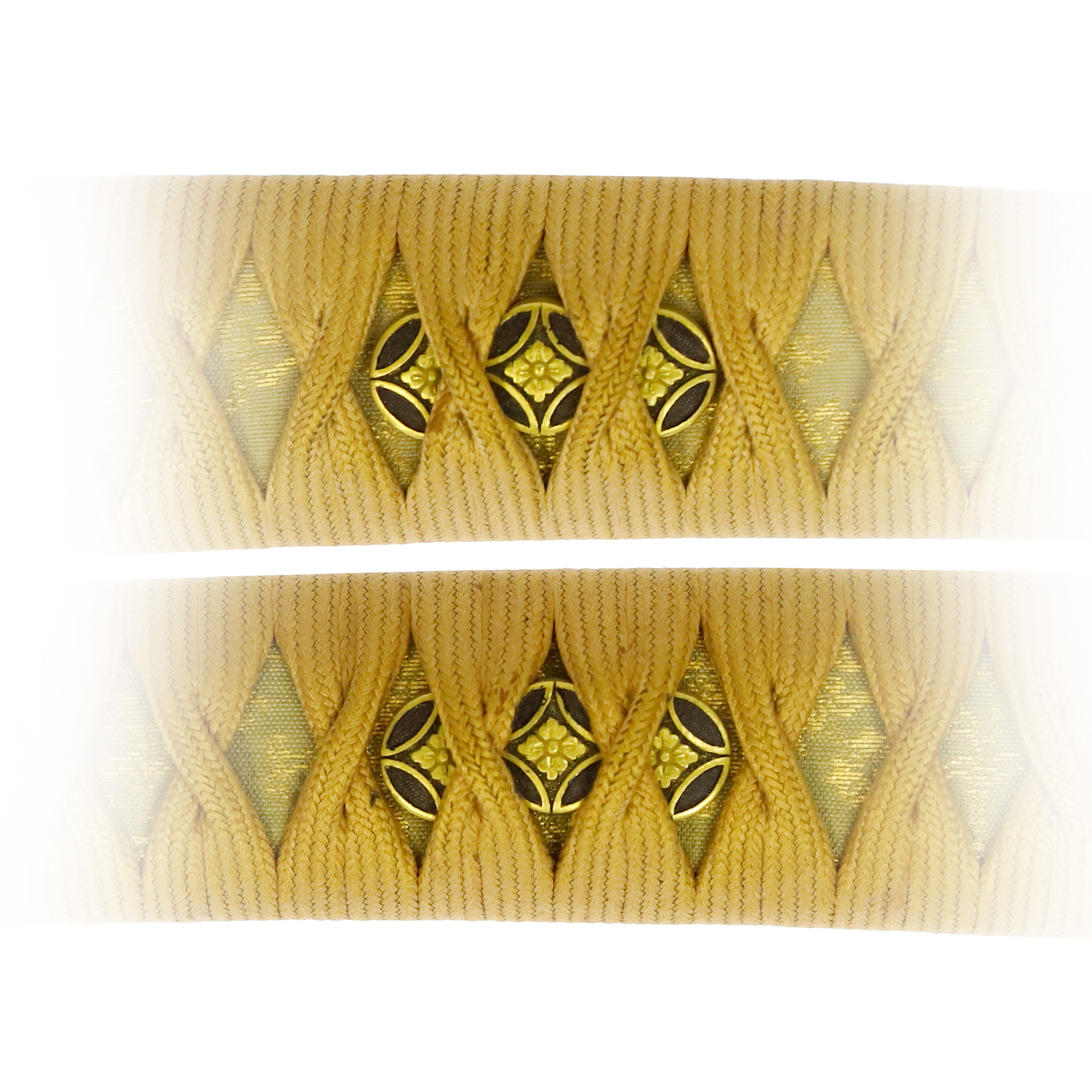
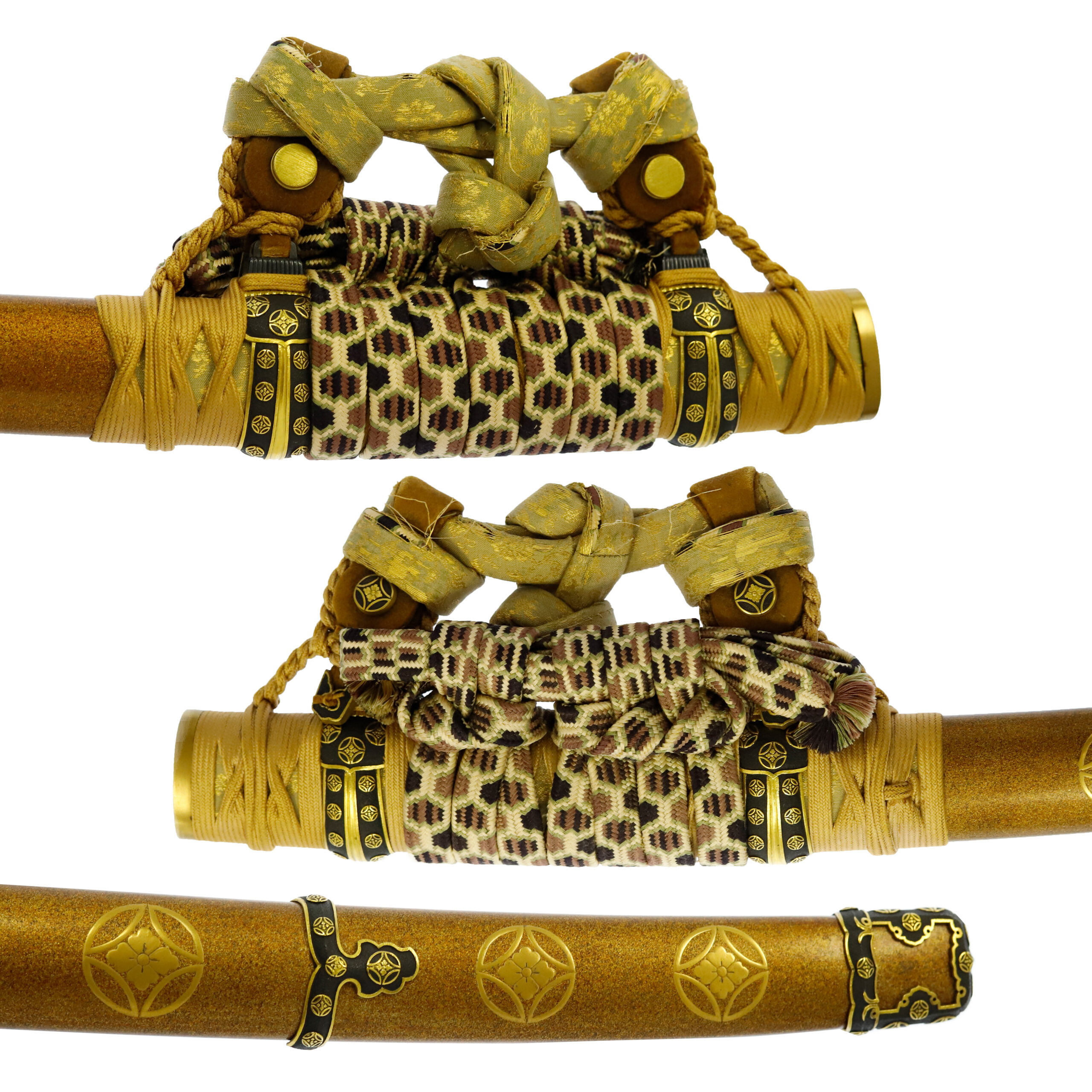
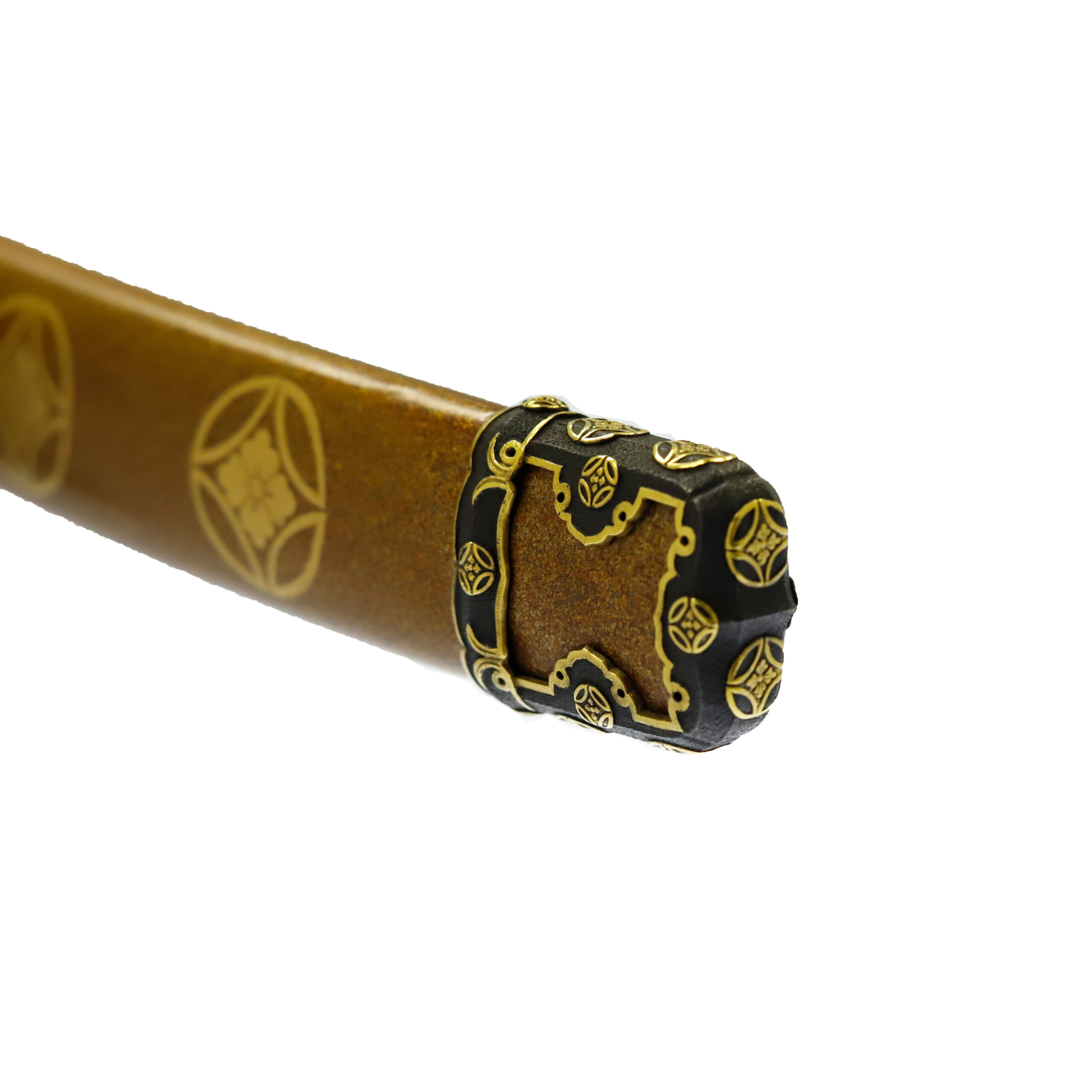
The sword mountings of this Tachi’s Koshirae are decorated with the same design: Shippou-ni Hanabishi (七宝に花菱). We assume it was incorporated here as a family crest. The Fuchi Kashira, Menuki, Tsuba, and other metal fittings have this pattern, such as the Seme Kanamono (責金物, a ring-shaped metal fitting placed in the middle of the scabbard to prevent the sheath from cracking), and also Ishiduki Kanamono (石突金物, a metal fitting that is attached to the end of the scabbard).
The Shippou-ni Hanabishi pattern depicts a Hanabishi (花菱) in a Shippou (七宝). It is categorized in the Shippou (七宝, which literally means seven treasures) design. The Shippou pattern came from the Wachigai Mon (輪違い文). Since a ring spreads in all four directions, the name changed to the Shihou (四方, four directions) and switched to the Shippou. In Buddhism, the seven jewels that adorn the pagoda refers to the blessings of the gods and Buddha. Therefore, the Shippou pattern has been regarded as an auspicious design, the same as the Hanabshi design.
Fuchi-Kashira
In a Tachi Koshirae (太刀拵), these sword mountings are called the Kabutogane (冑金/兜金) and the Fuchi Kanamono (縁金物). The Kabutogane is a metal fitting attached to a handle’s end. It corresponds to the Kashira (頭) part of the Fuchi Kashira (縁頭). And the Fuchi Kanamono is also a metal fitting attached to a handle but on the opposite side of Kabutogane. It corresponds to the Fuchi (縁) part of the Fuchi Kashira.
In addition, a Sarute/Sarude (猿手) is attached to this Kabutogane. The user of a sword passed the Udenukio (腕貫緒, a cord wrapped around the wrist to prevent a sword from falling out of the hand, mainly used when riding a horse) through this ring.
Tsuba and Habaki
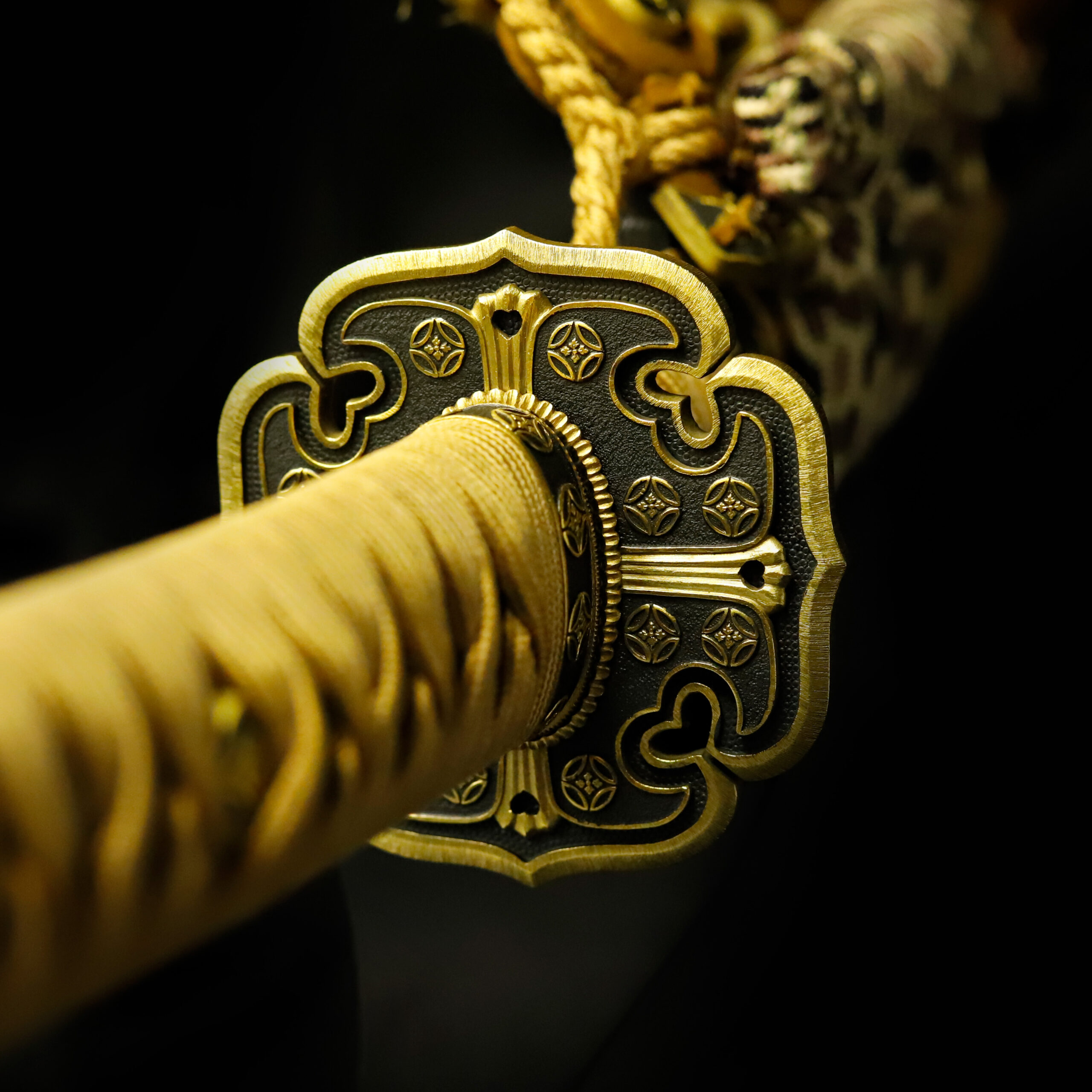
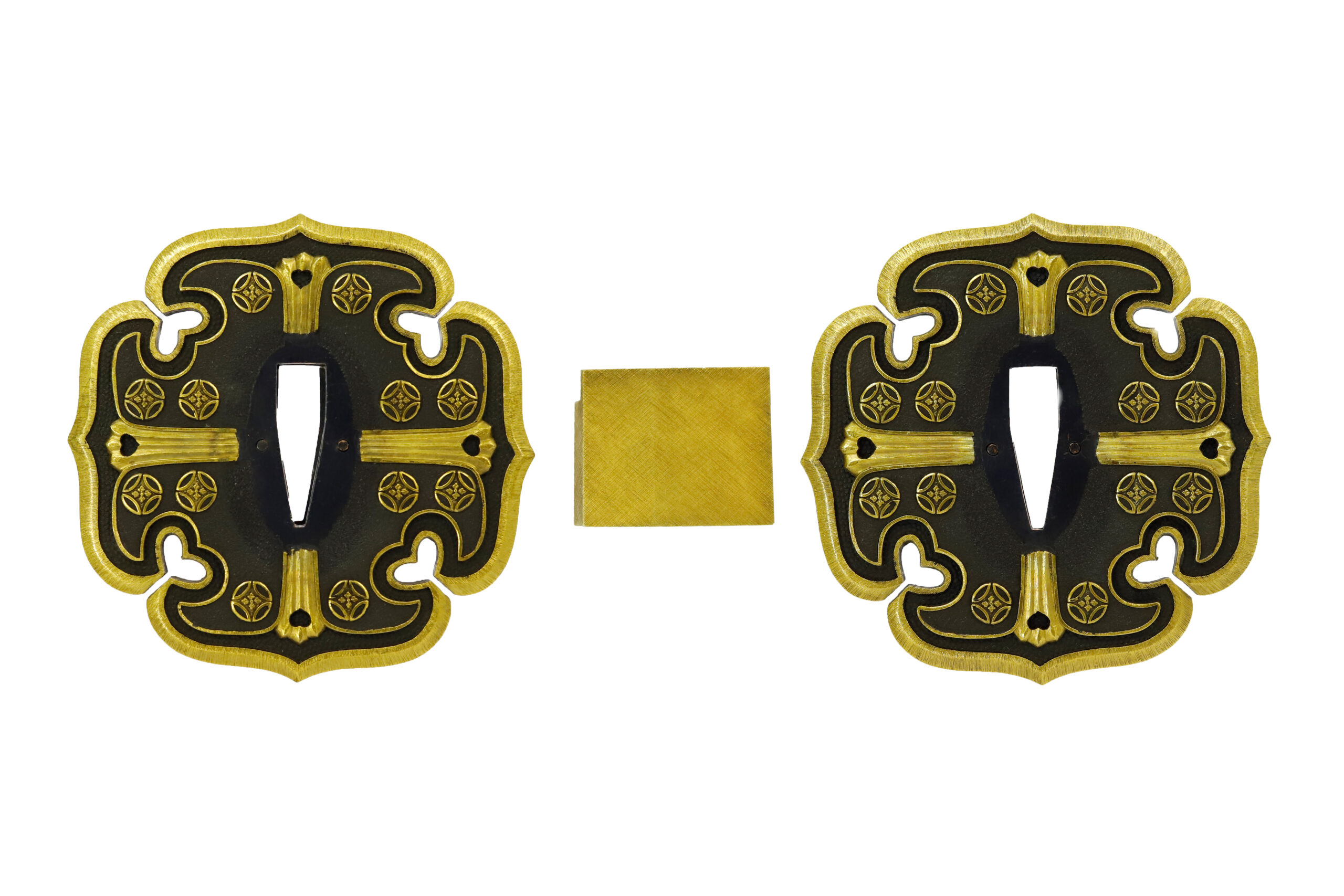
This is a typical shape of the Tachi Goshirae Tsuba (太刀拵鐔). The difference between Tachi Tsuba (太刀鐔) and Katana Tsuba (刀鐔) is that the top and bottom positions of the Nakago hole (茎櫃, center hole) are reversed. The Tsuba of this Koshirae has Aoi (葵) Tsuba shape. The Ju-Ji (十字, cross) pattern is designed with golden metal is applied to this cross pattern and the edge part.
If you focus on four corners and the tips of the golden cross mark, you will find a heart mark-shaped hole is engraved on each edge. It is called the Inome (猪の目) pattern. The Inome pattern has been used since ancient times. As its name implies, the boar’s eyes are the origin of this pattern. Some people believed the Inome design would work as an amulet to protect them from evil spirits or fire. Also, it is said it would bring good luck. This design is often found in Tachi Tsubas.

 NihontoWatch