Sengoku Seki was an industry: smiths organized under their tutelary Kasuga shrine, arming the war bands of central Japan. Magoroku Kanemoto’s sanbonsugi and the finest Kanesada work prove quality survived inside mass production.
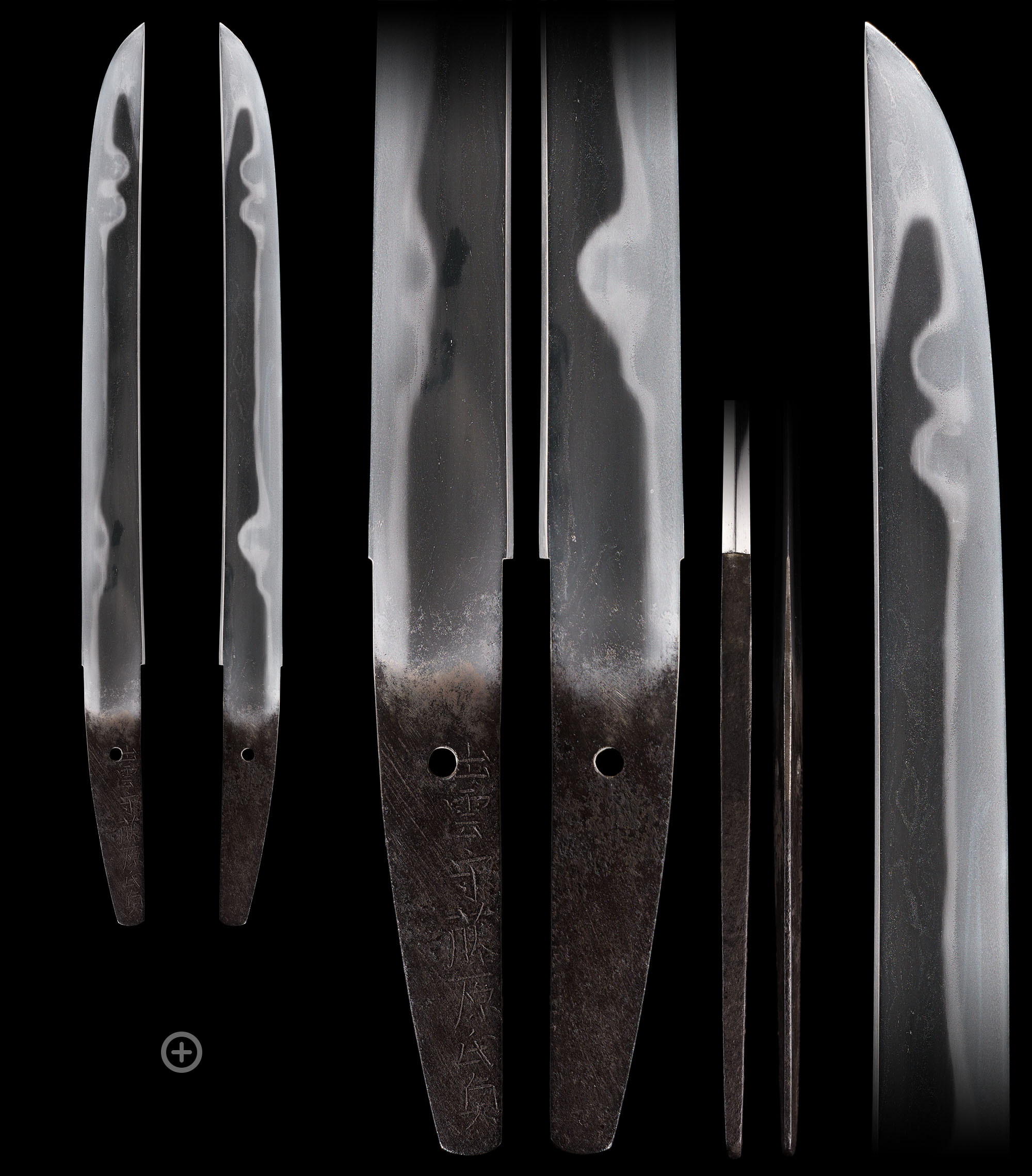
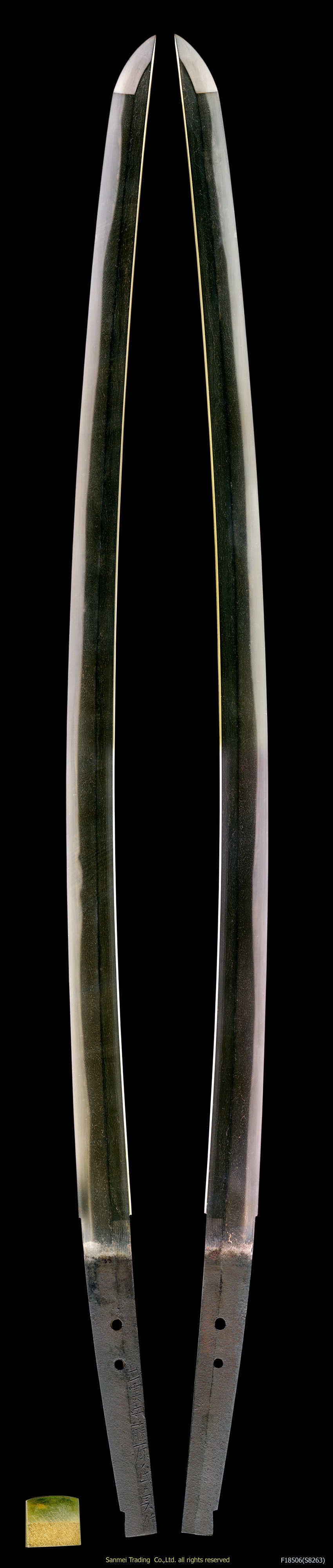
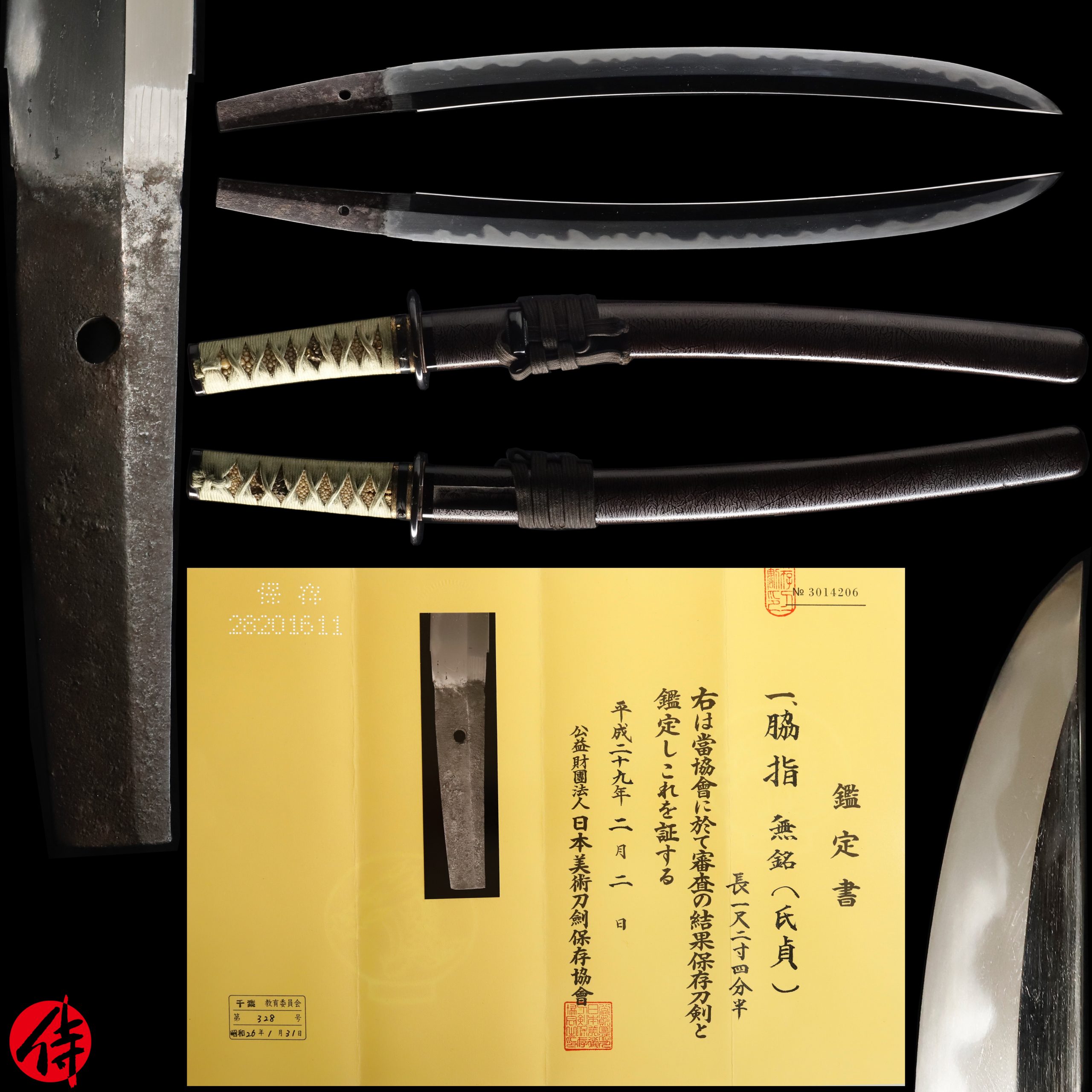
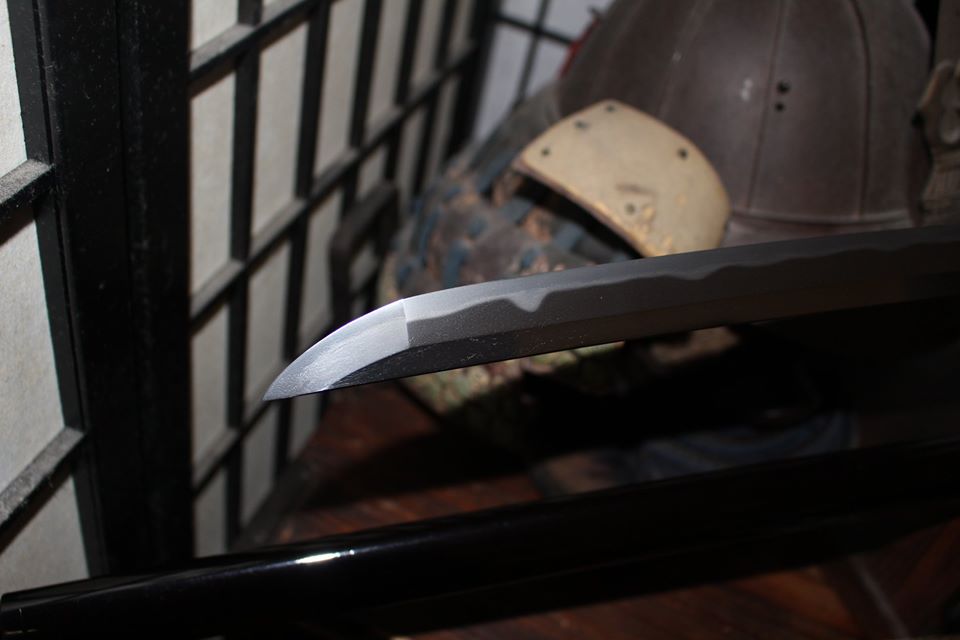
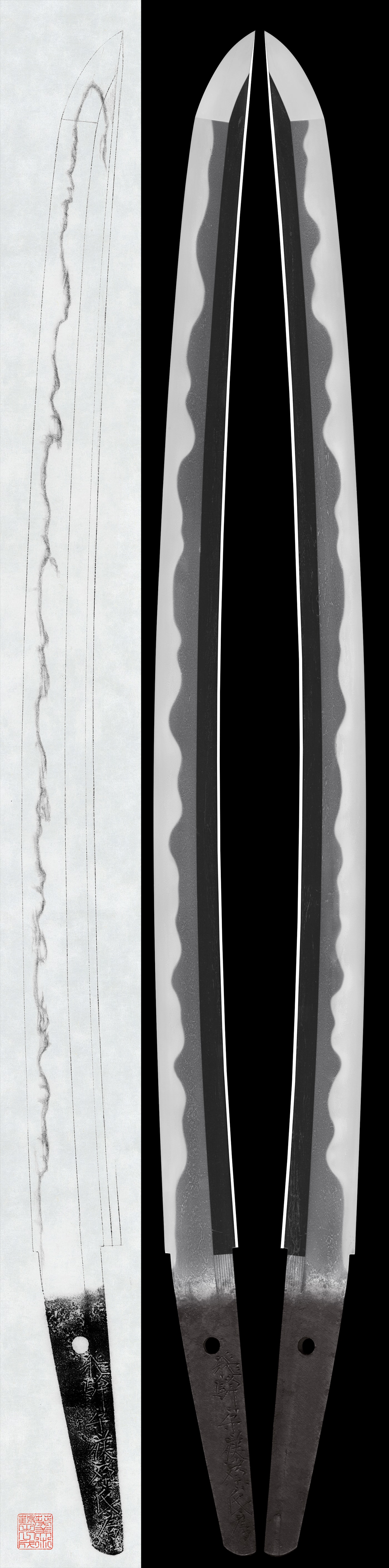
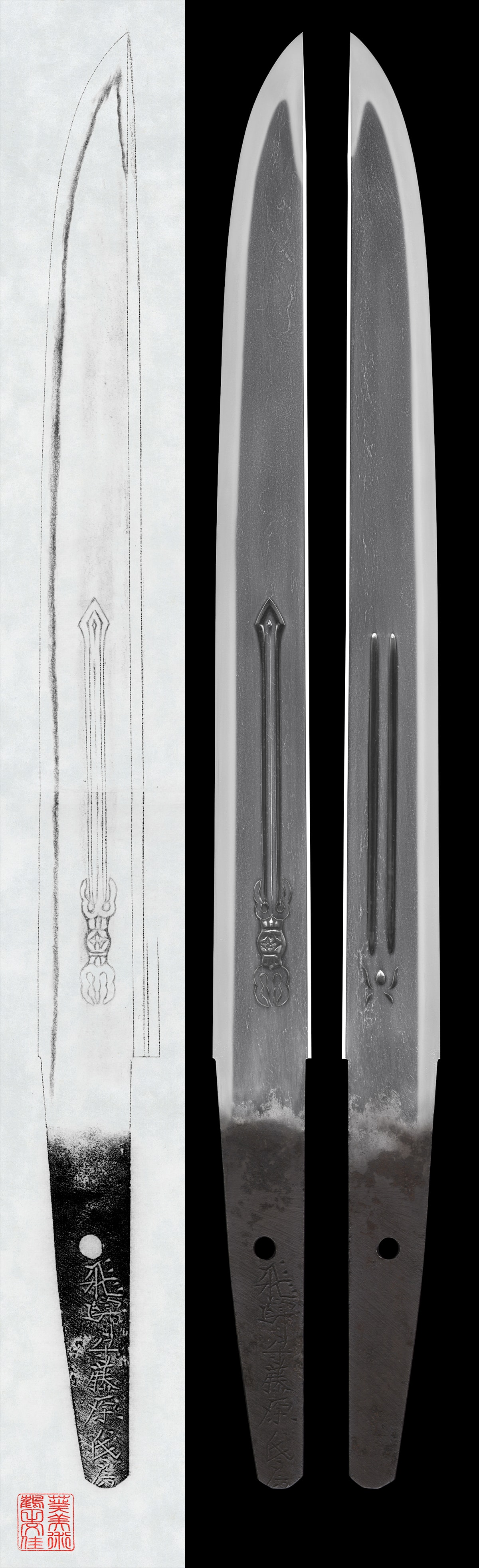
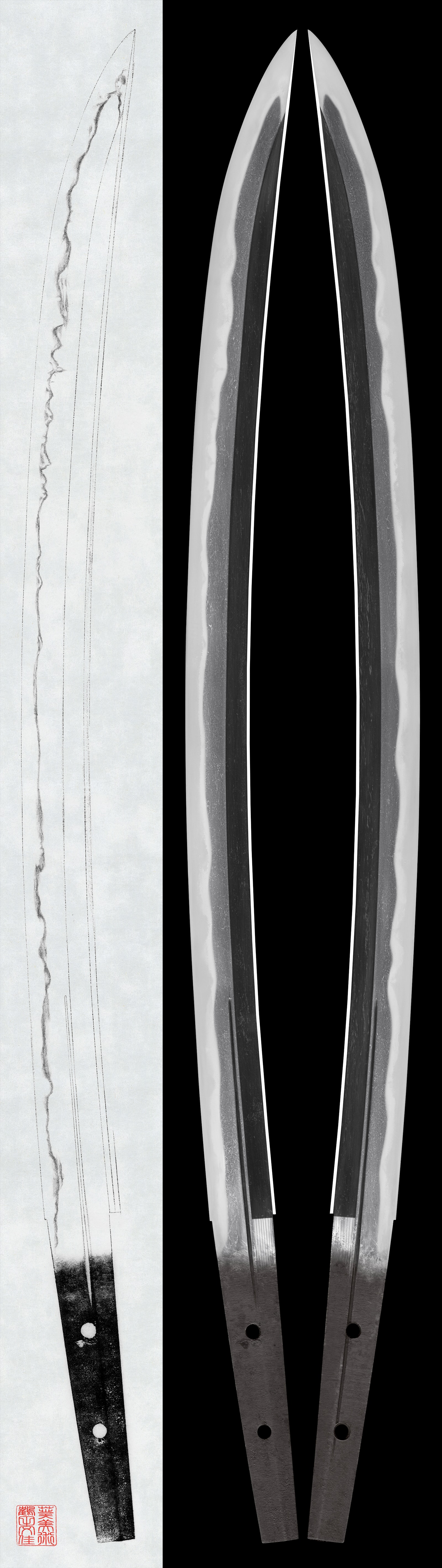
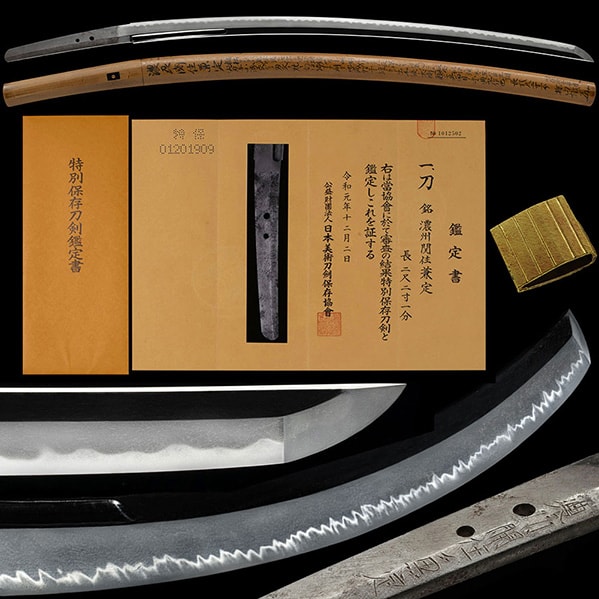
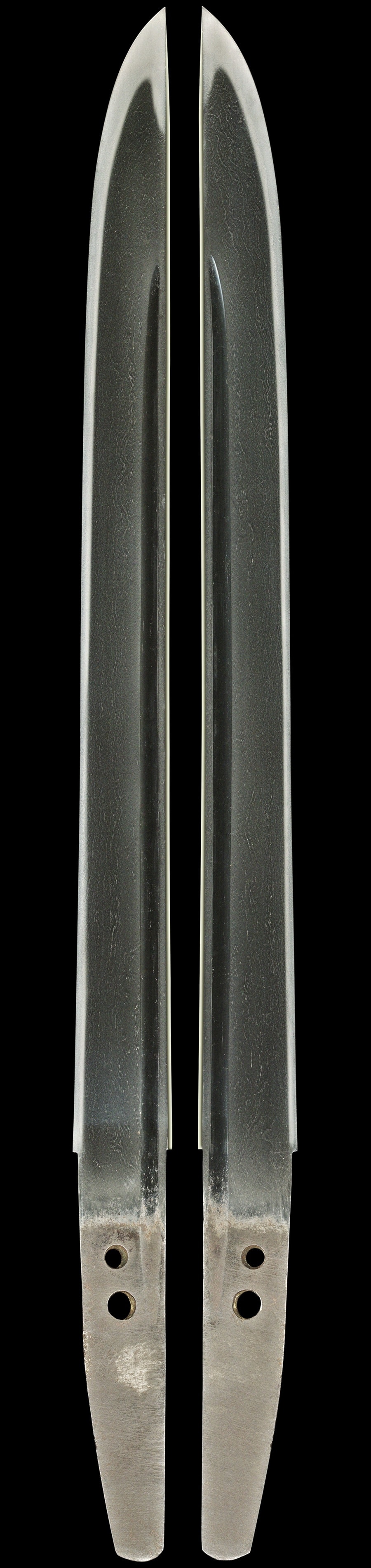
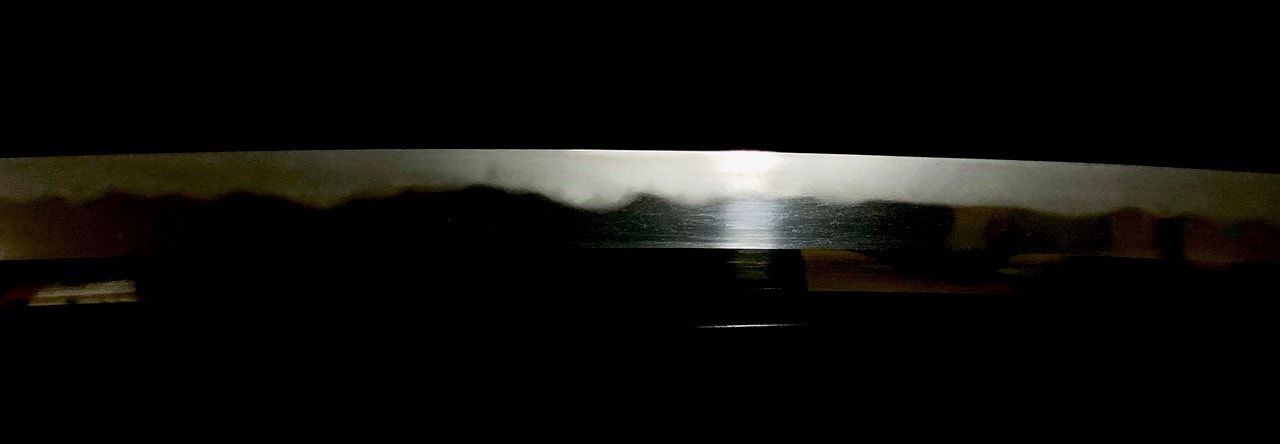
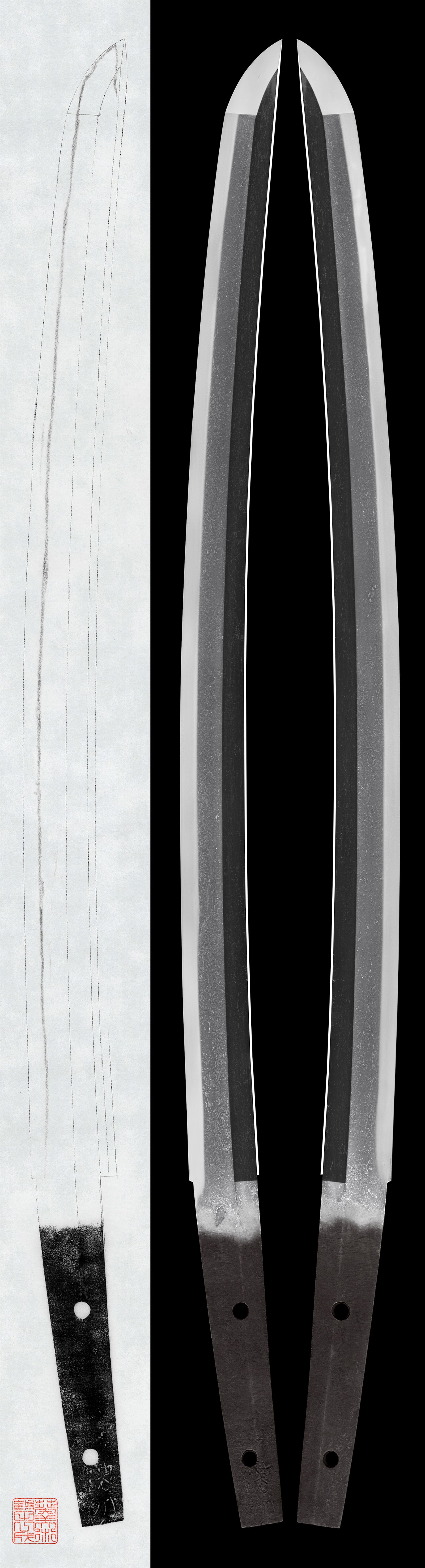
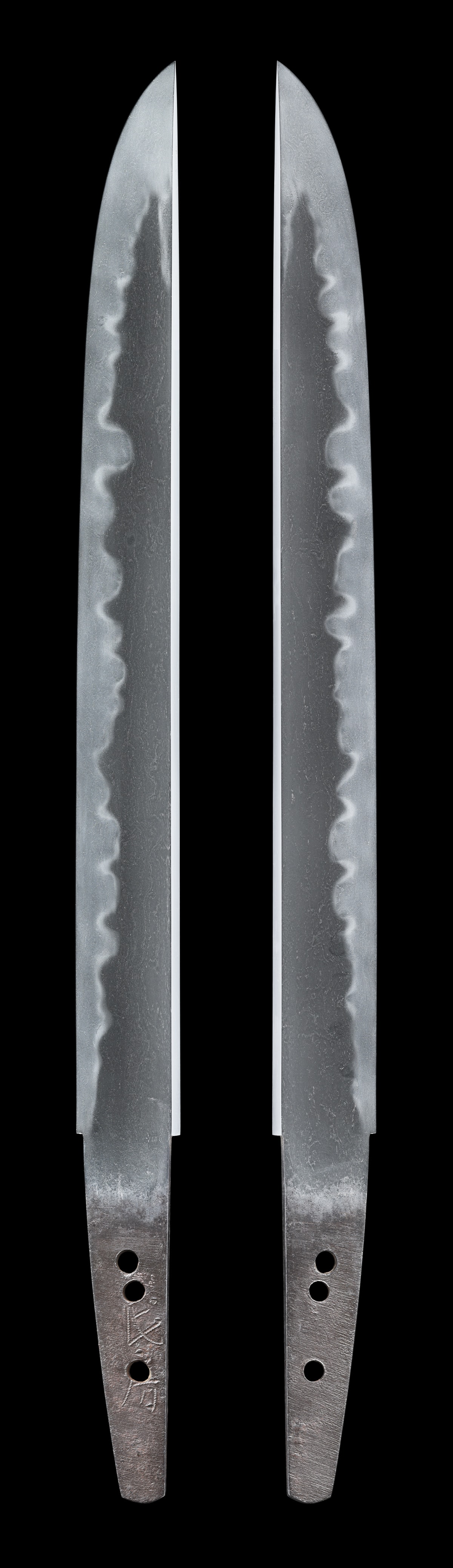
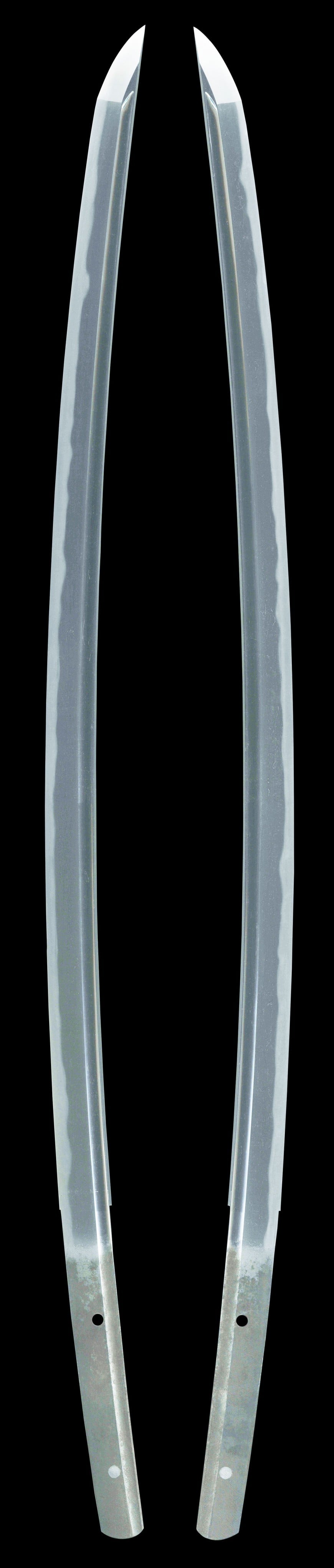
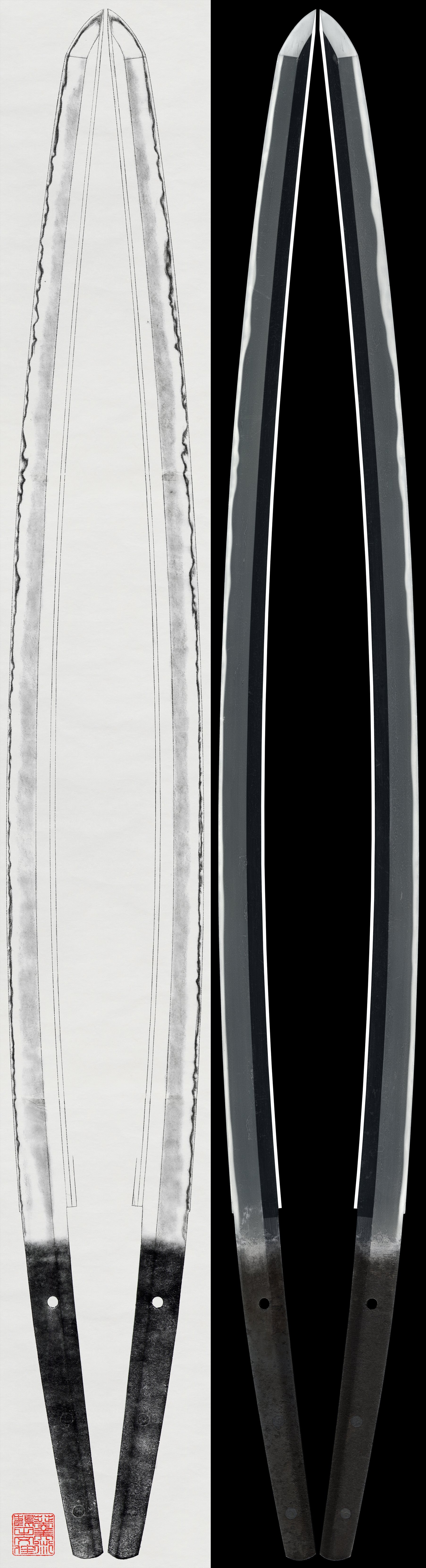
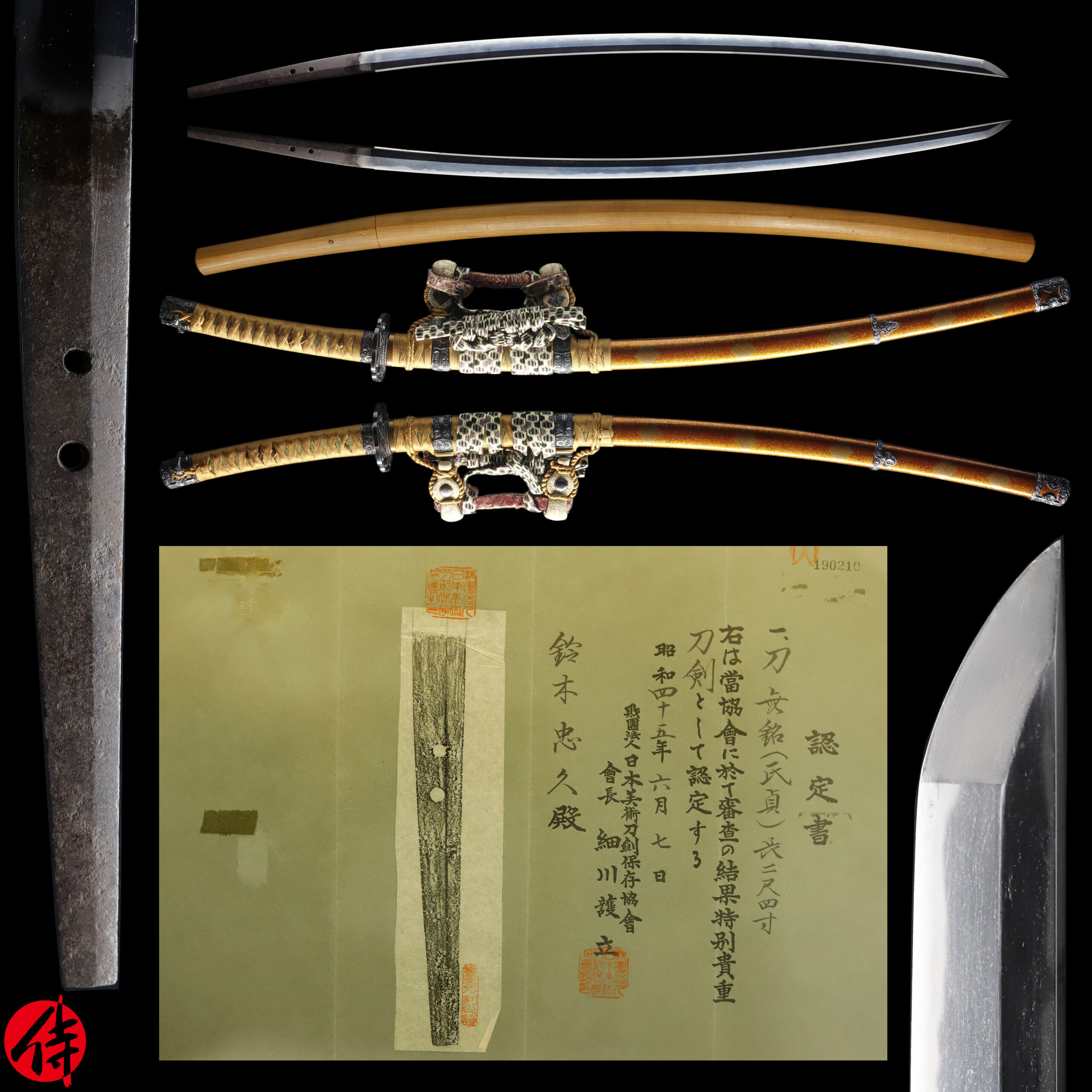
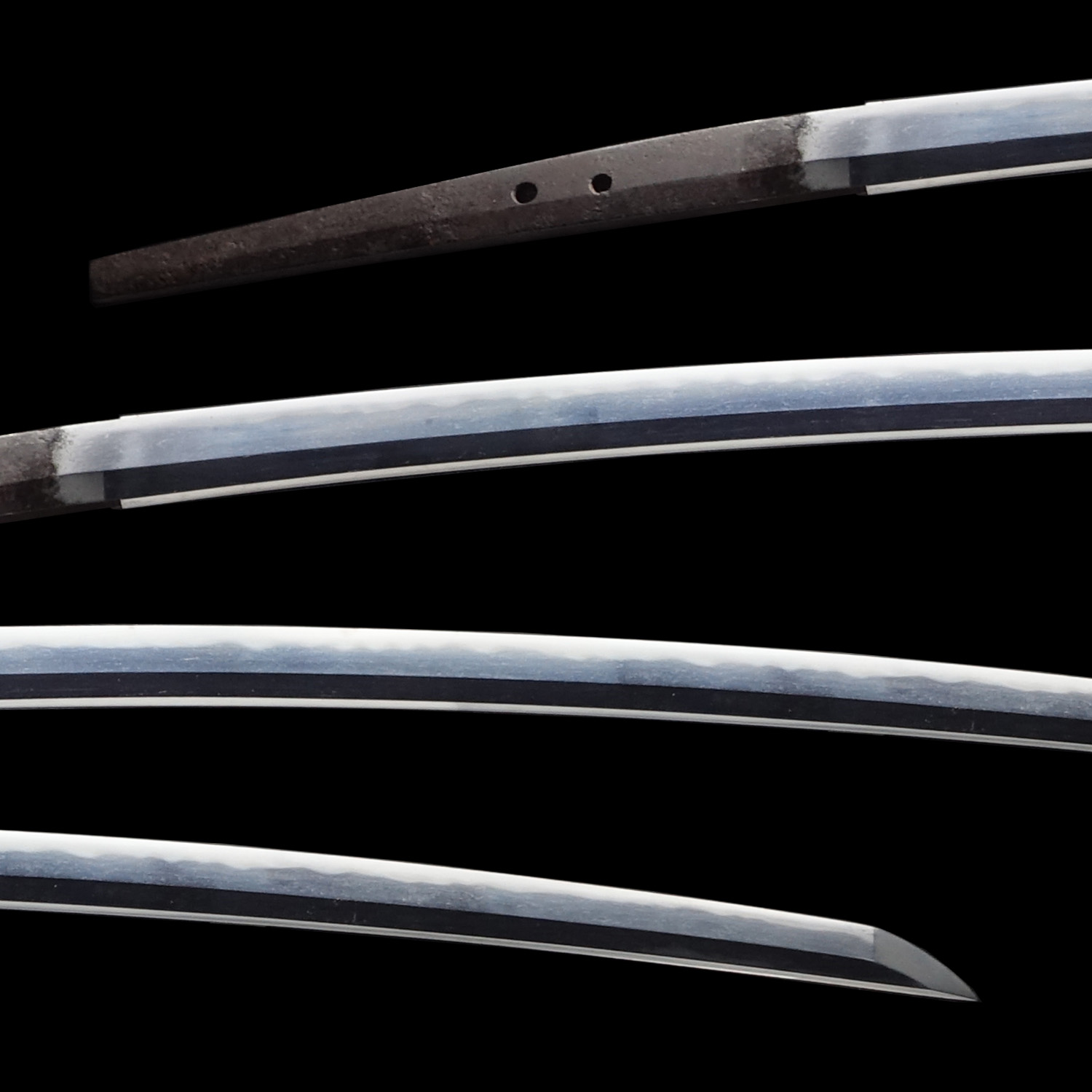
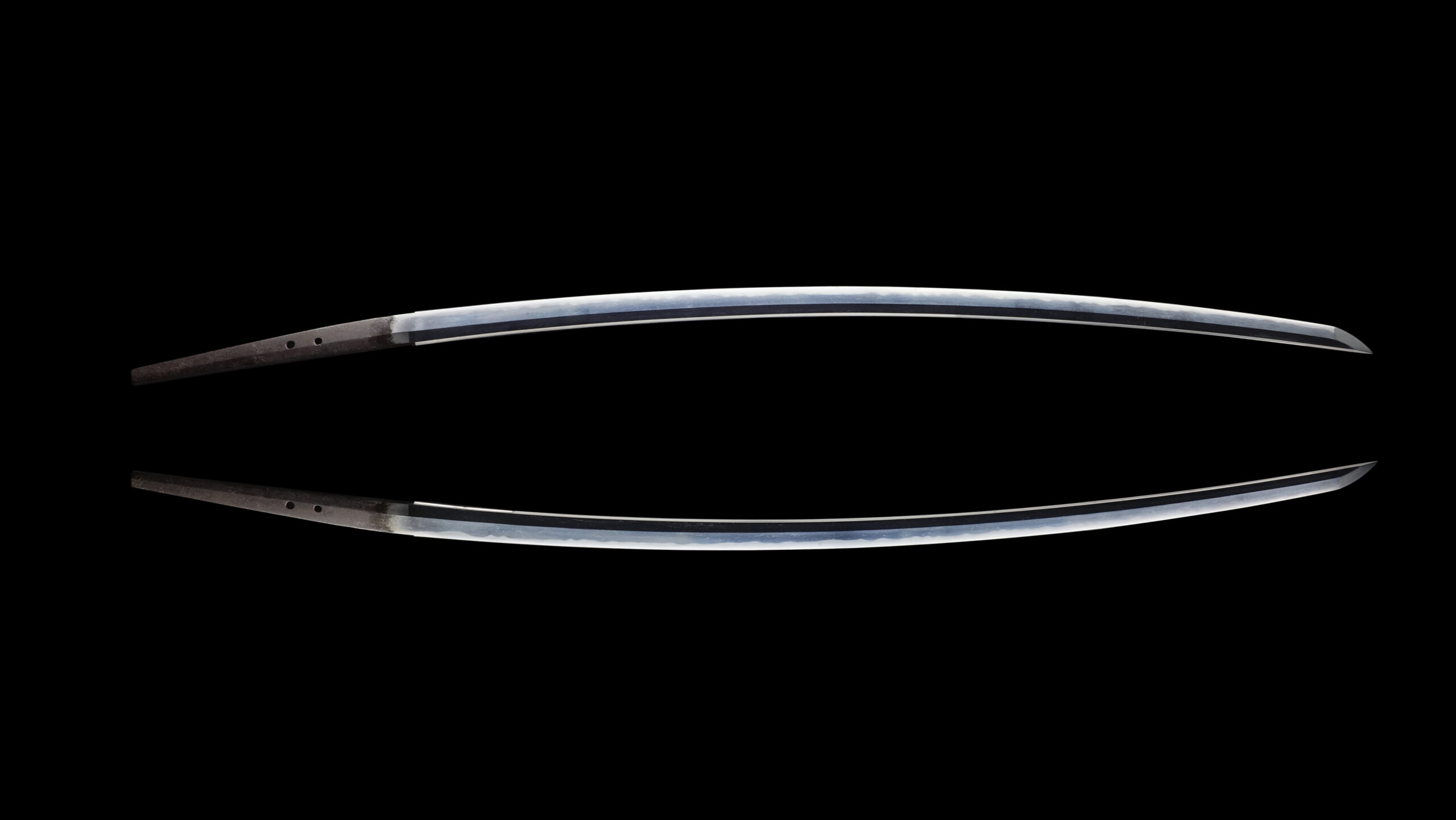
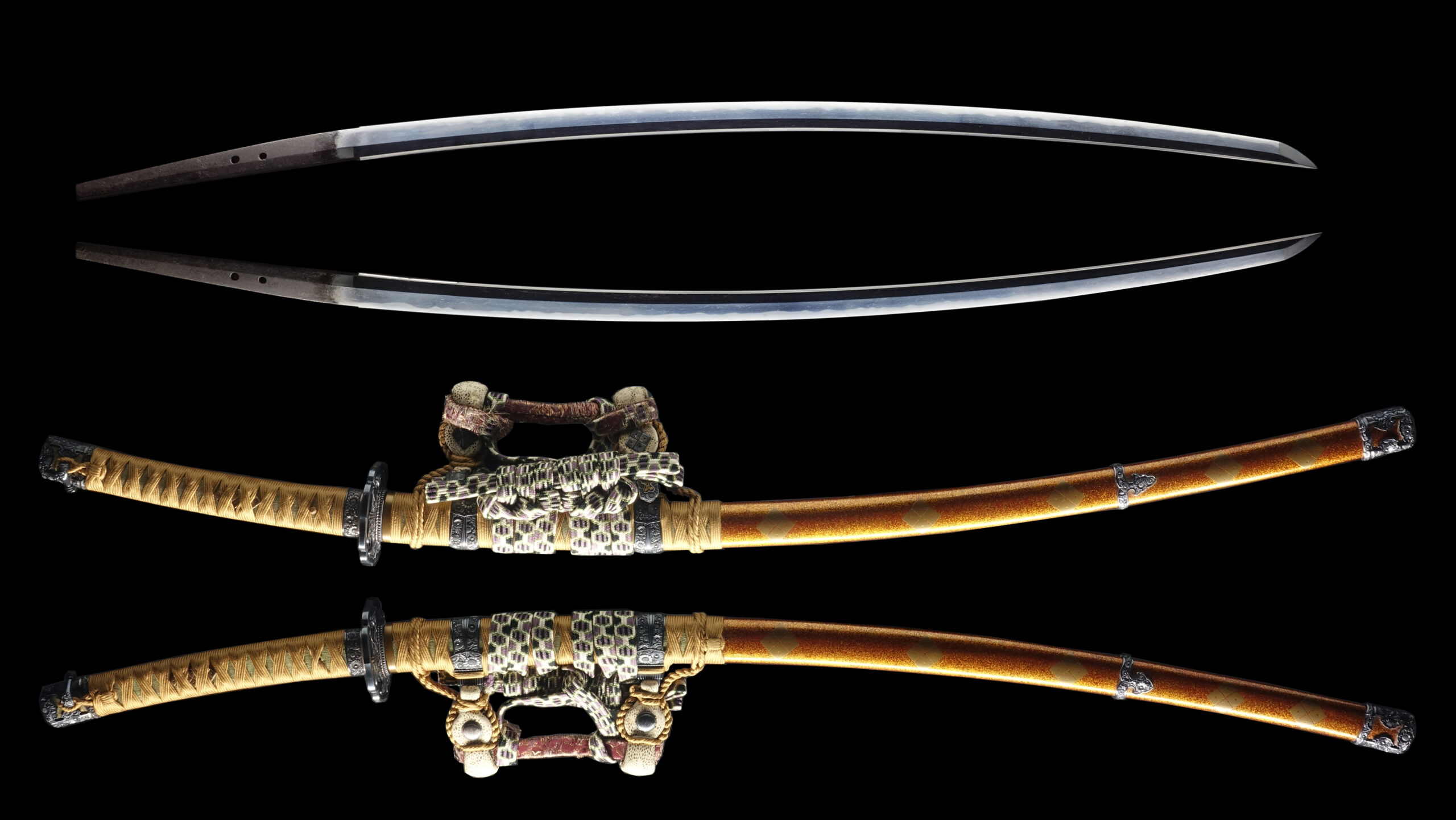
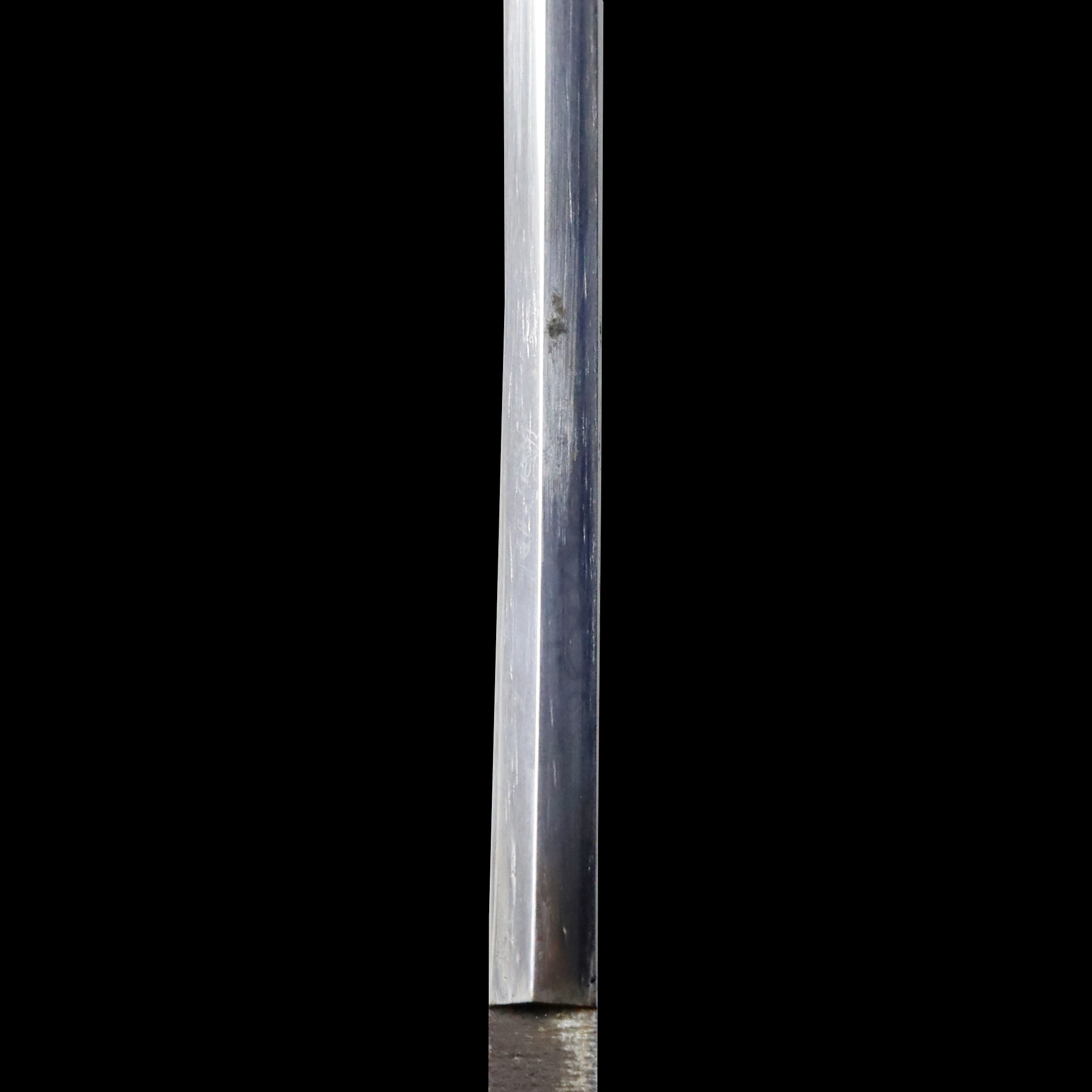
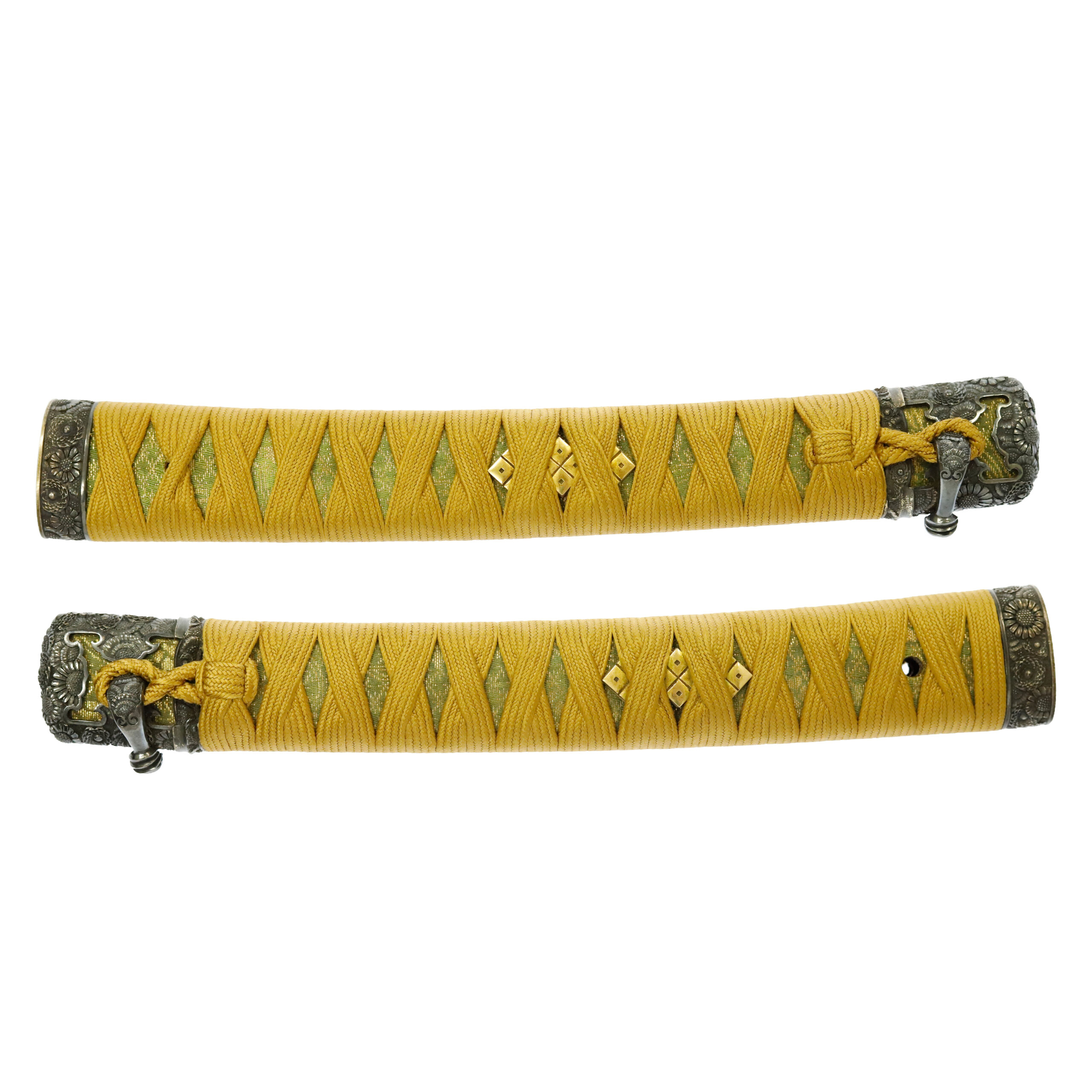
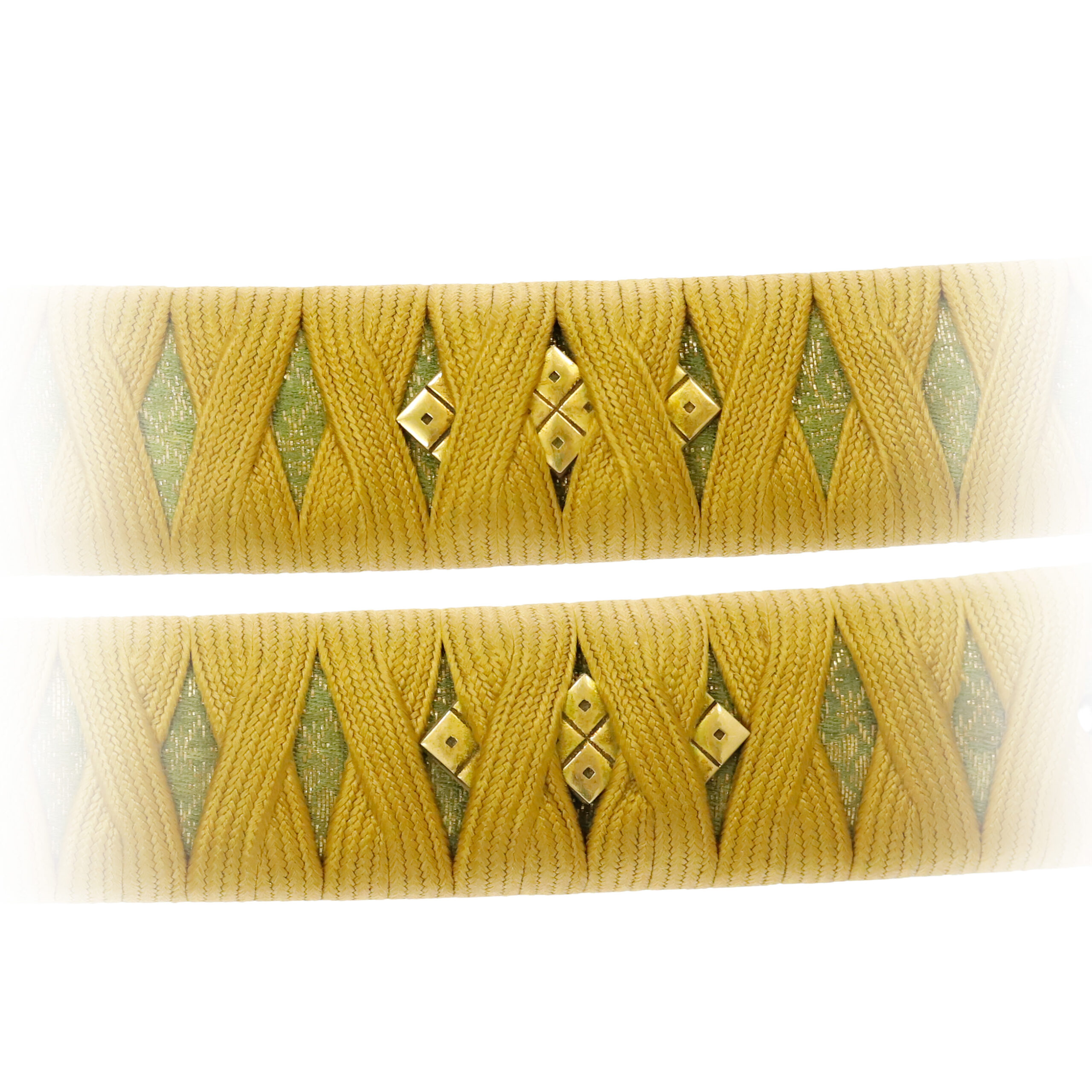
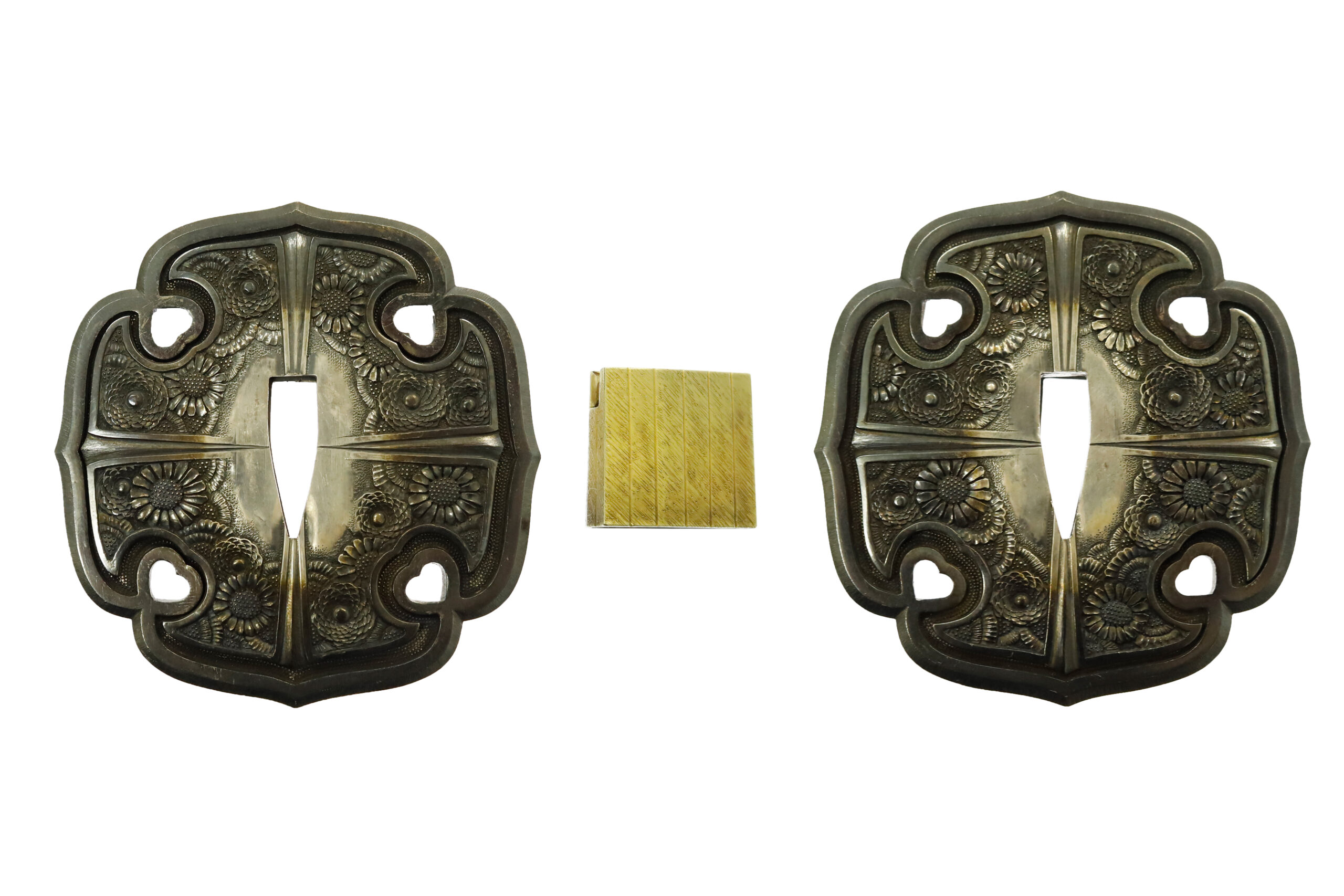
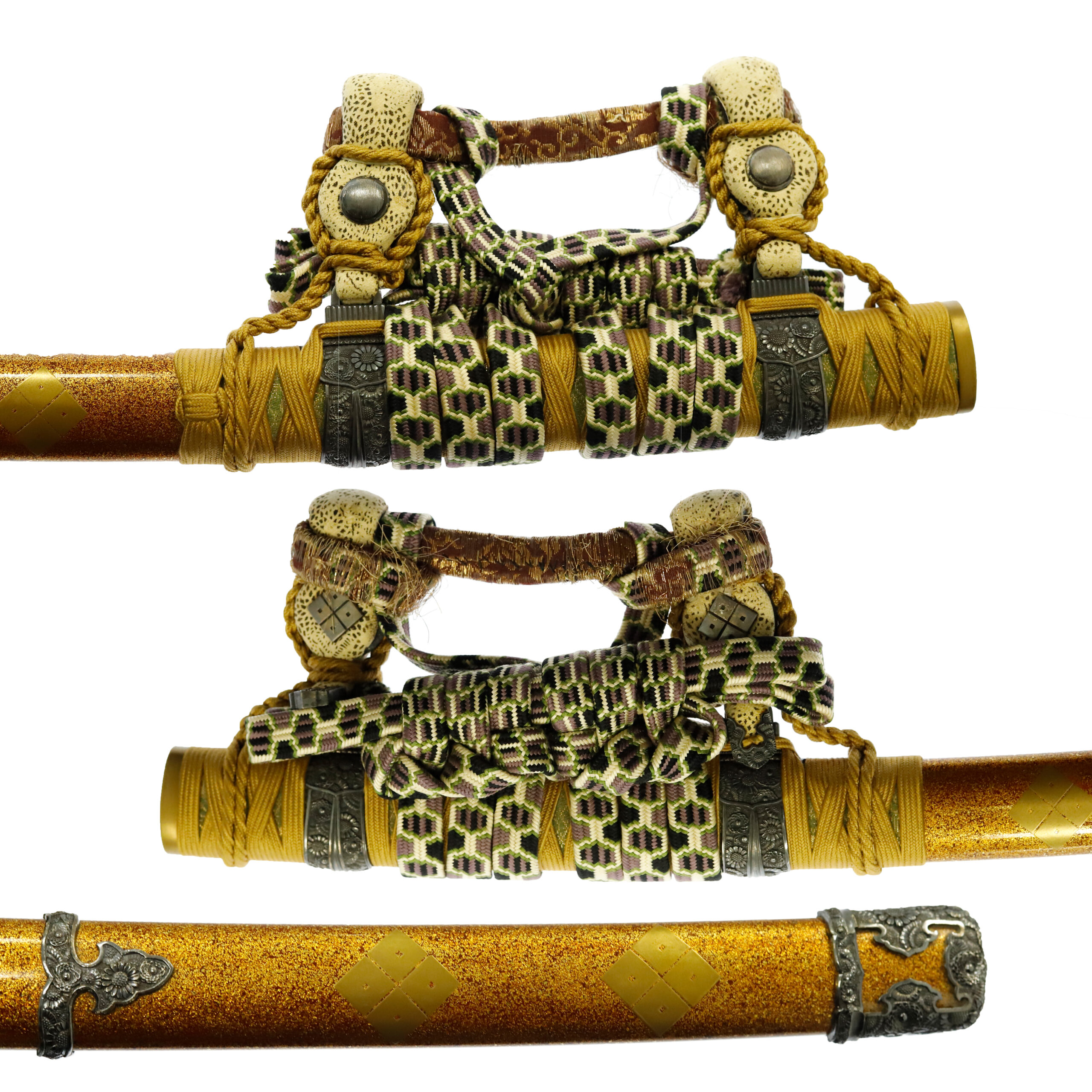
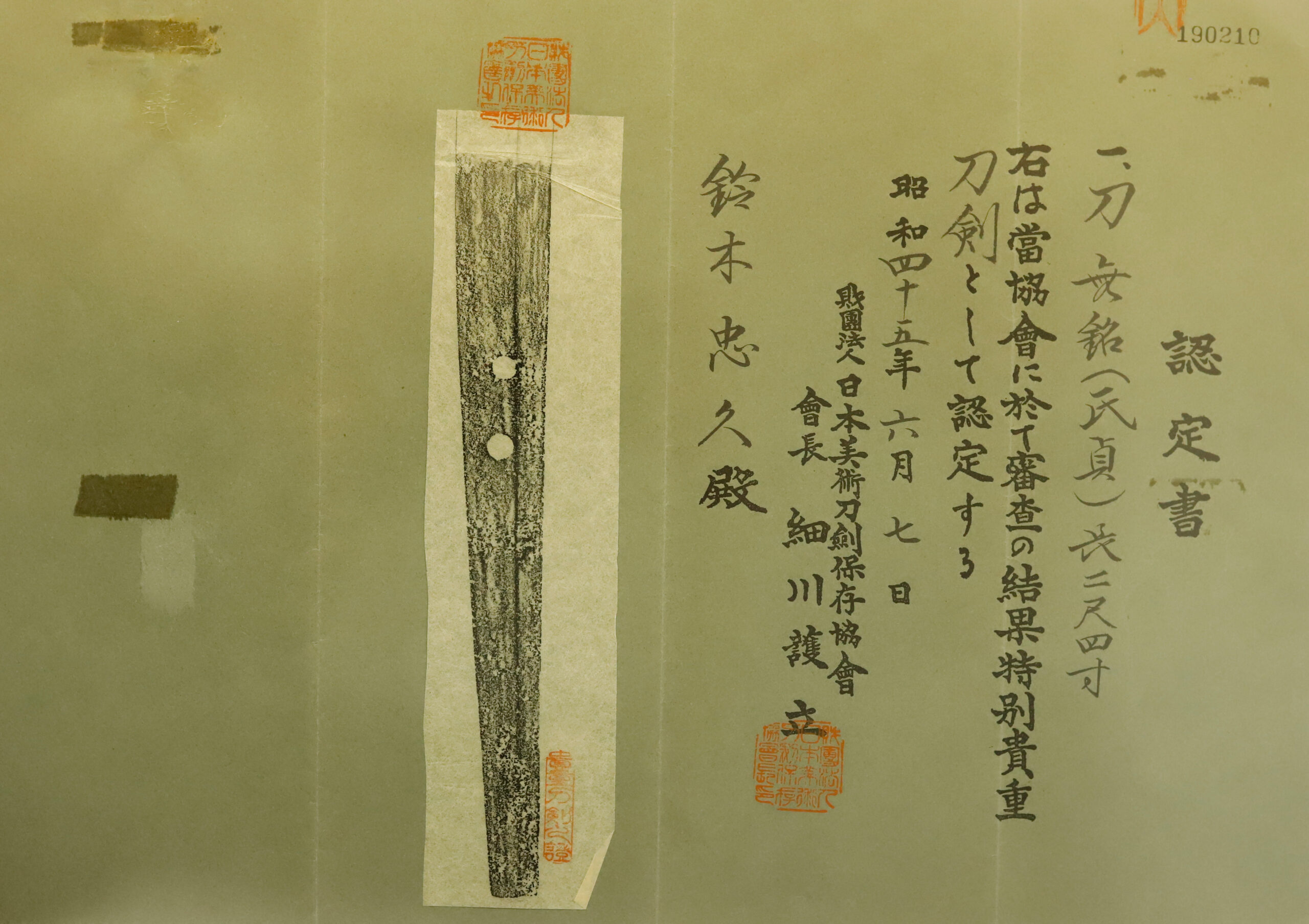
This antique katana is attributed to Ujisada, a smith active during the late Muromachi period (1570-1593) who originally forged in Mino province before moving to Owari. The blade comes with an NBTHK Tokubetsu Kicho Certificate and is housed in Tachi Koshirae, featuring a family crest on the Menuki believed to be Takeda Bishi. It also includes a shirasaya, sword maintenance kit, and carrying bags.
 NihontoWatch
mumei · Mino · Muromachi · nagasa 73cm · sori 3.03cm
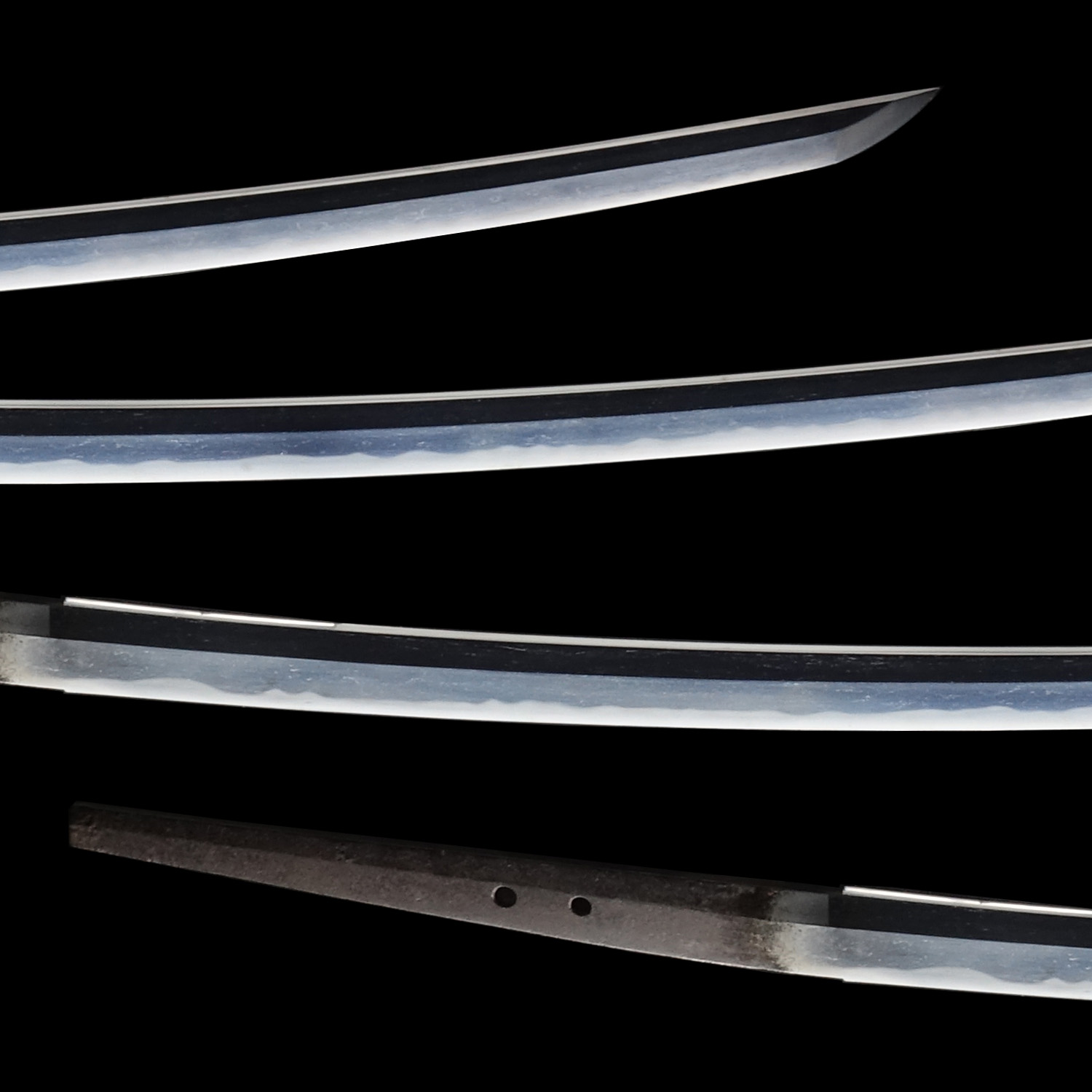
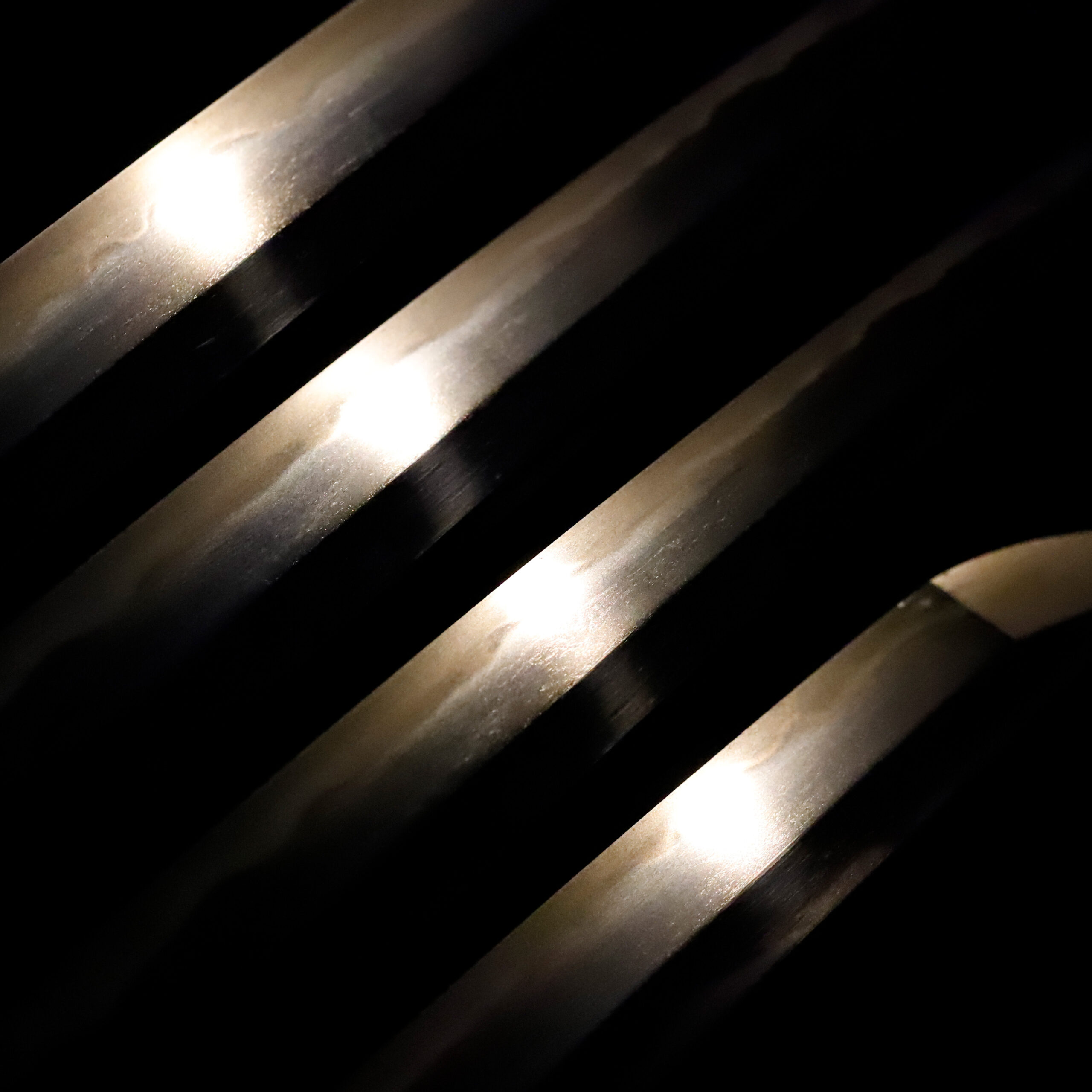
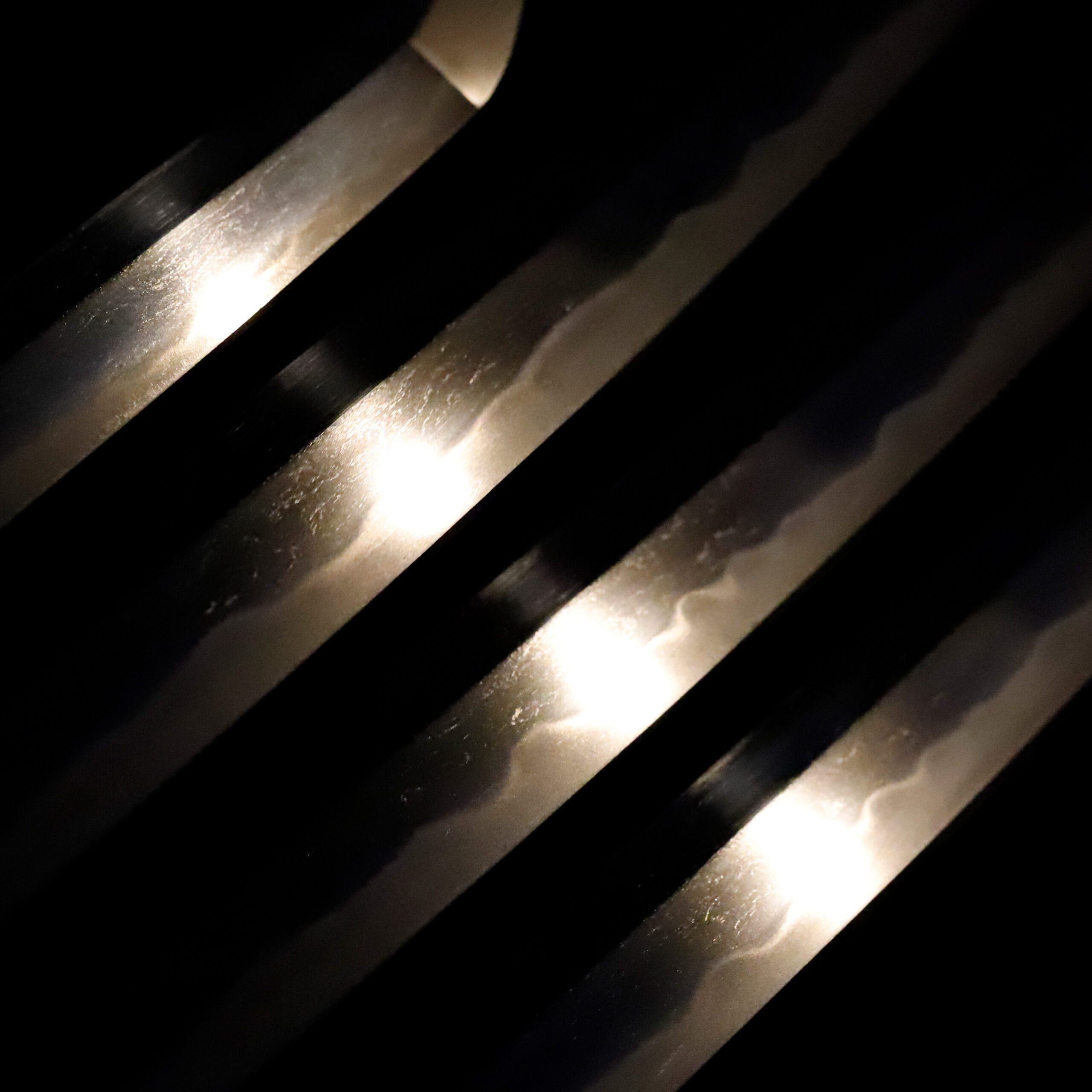
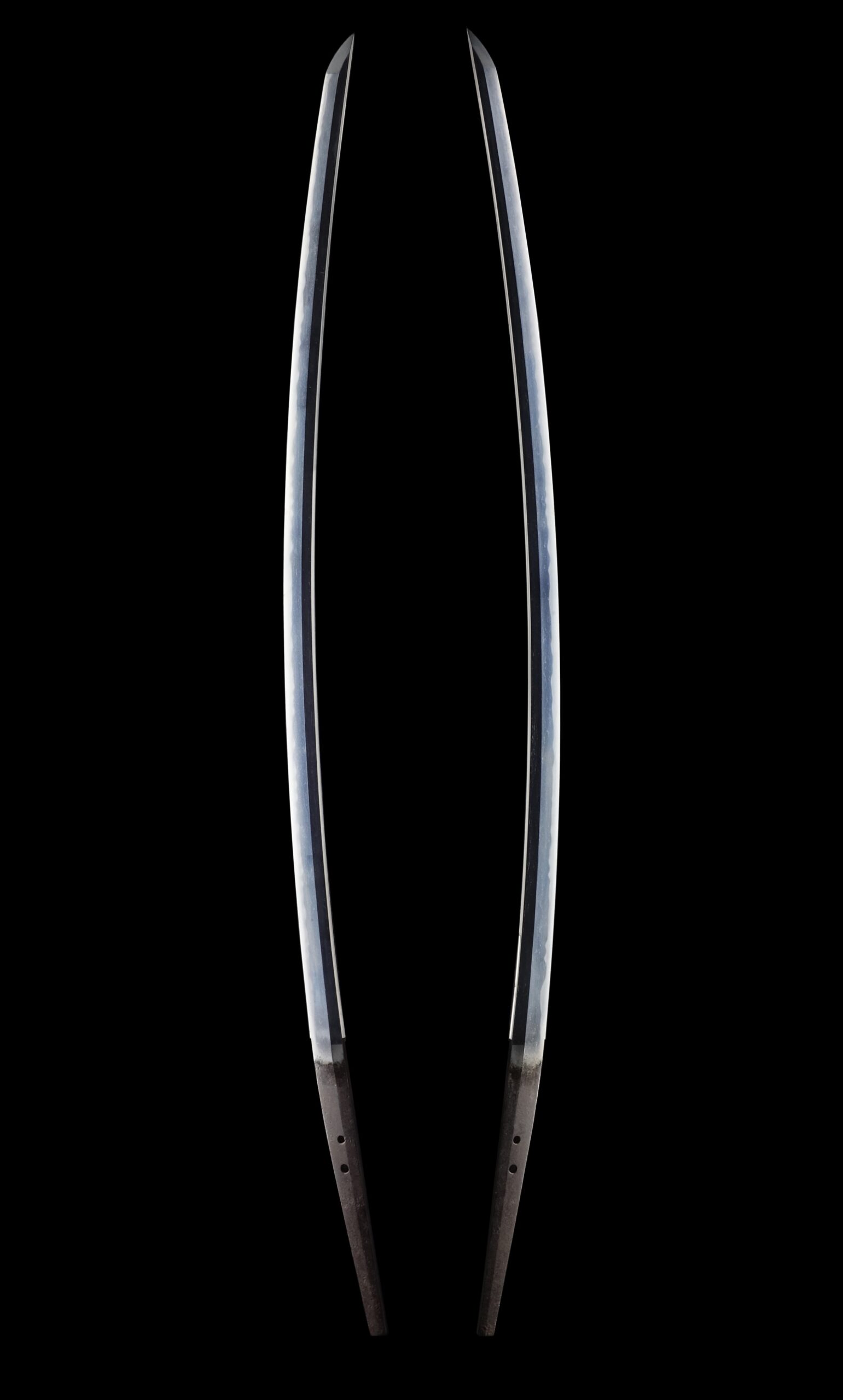
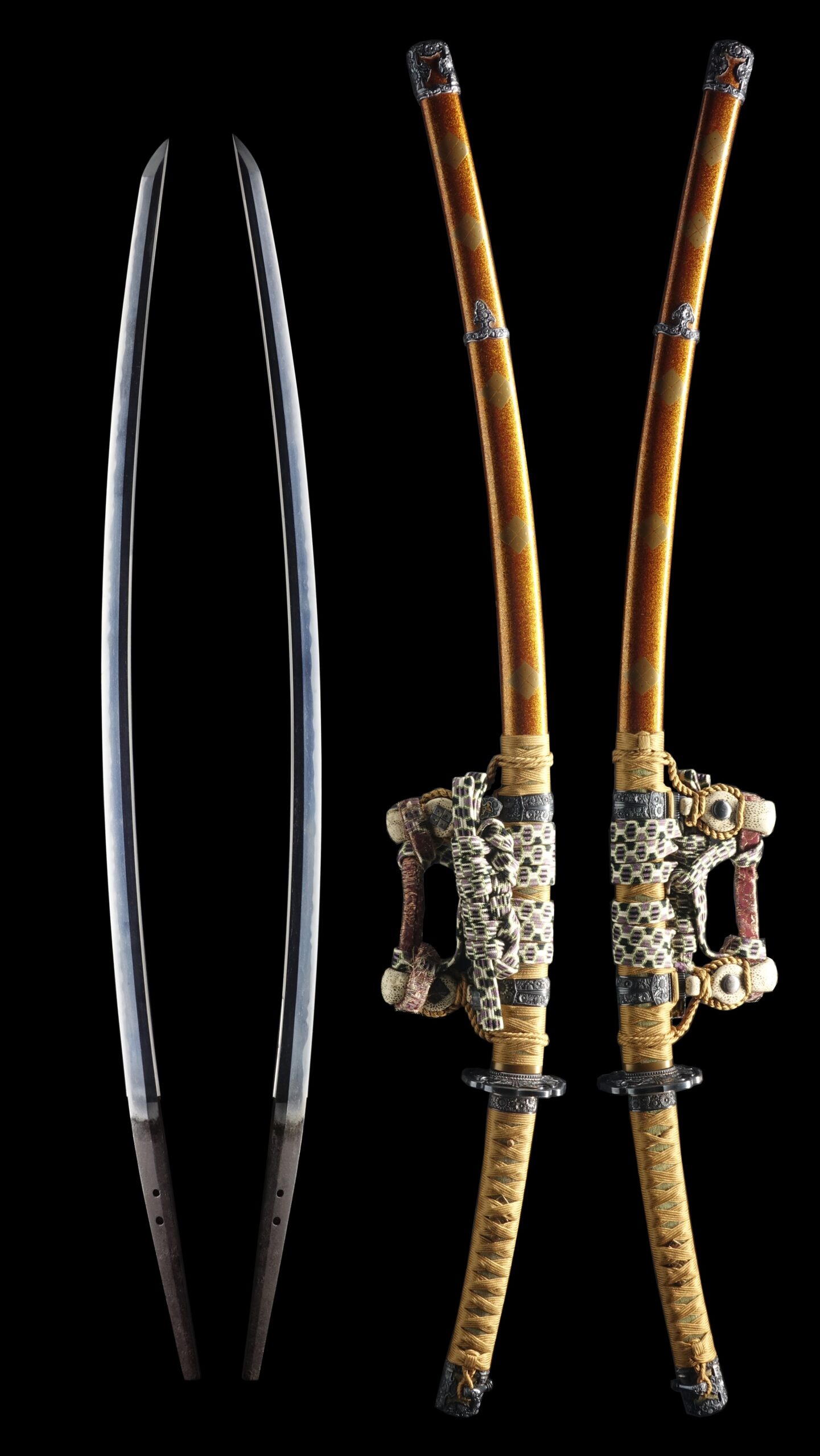
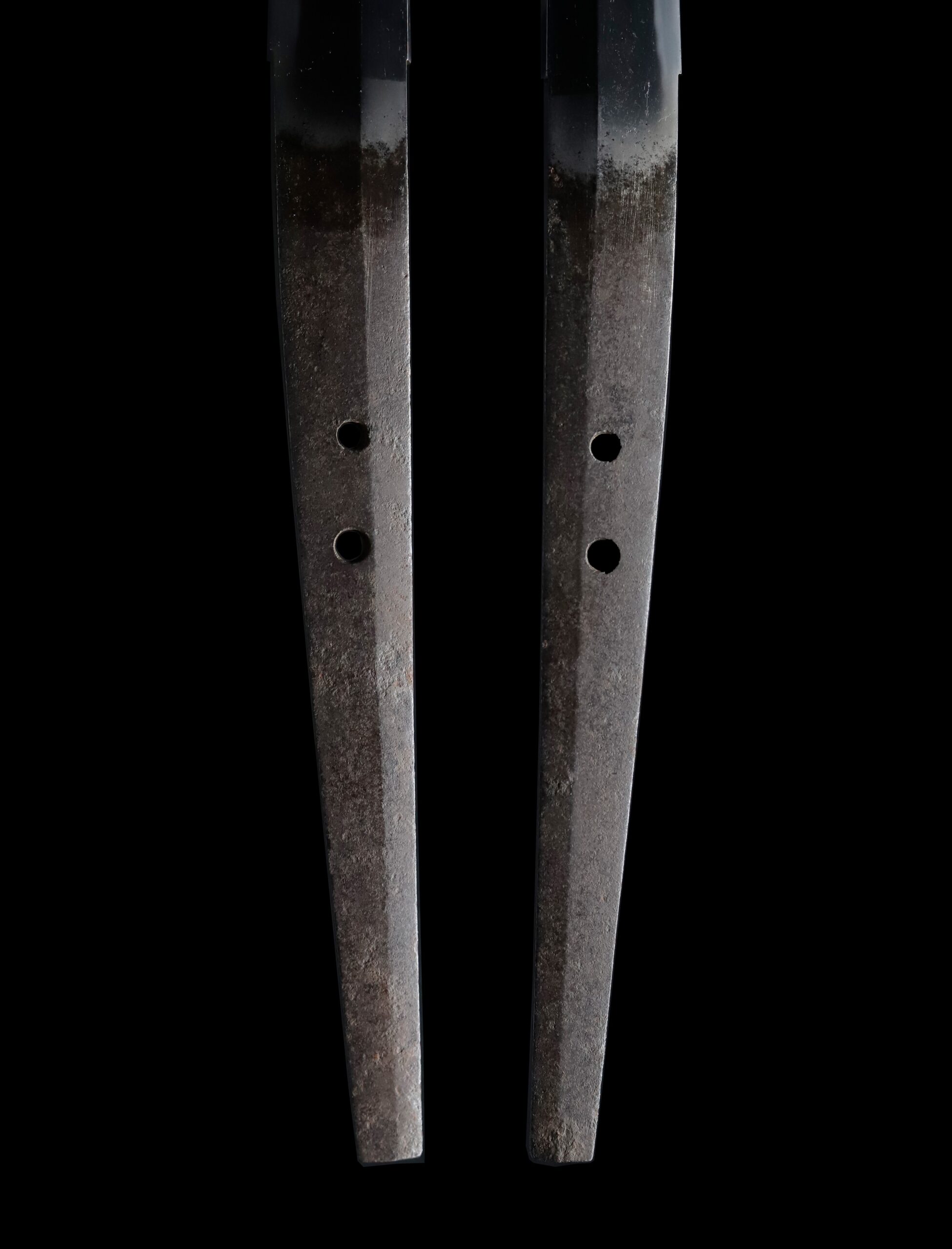
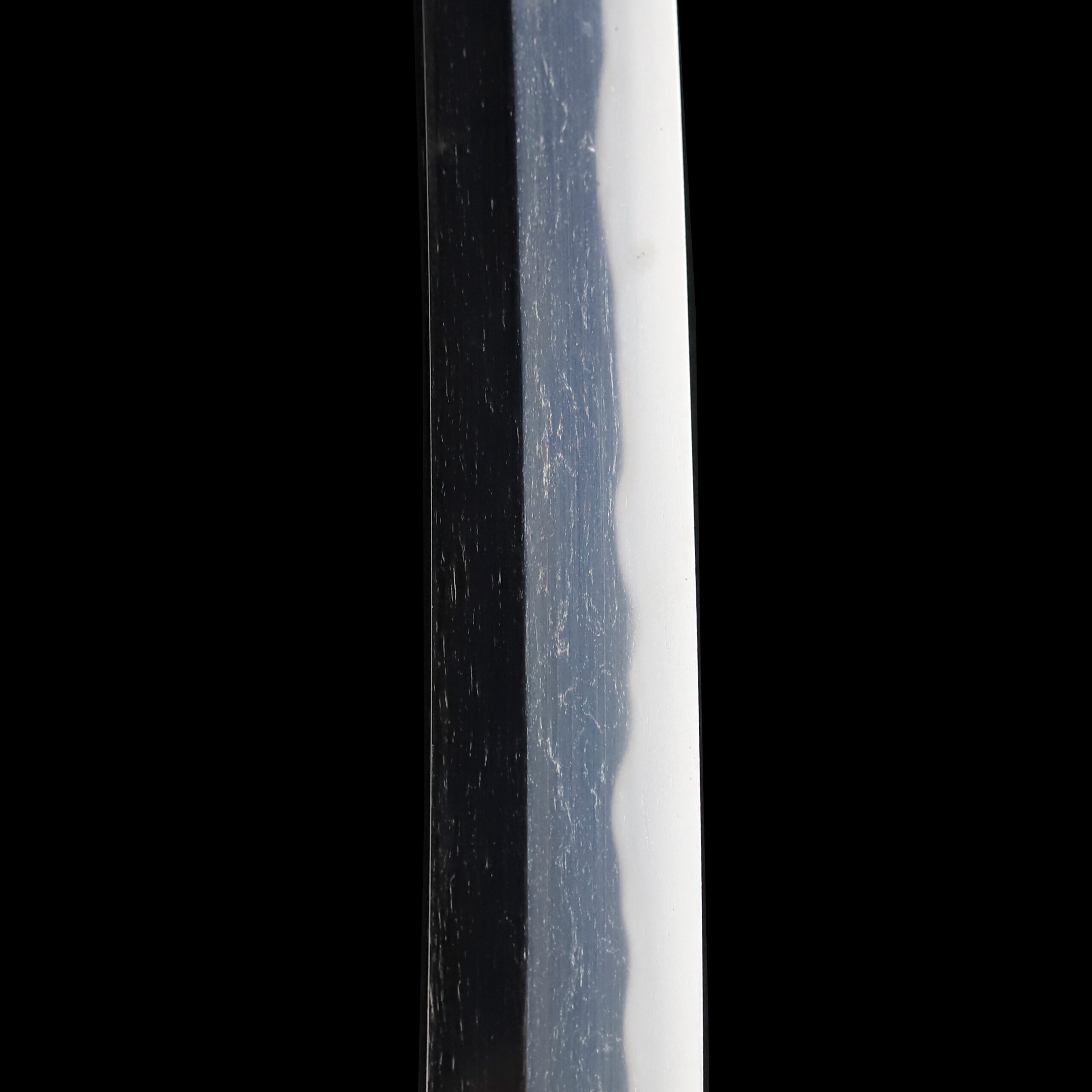
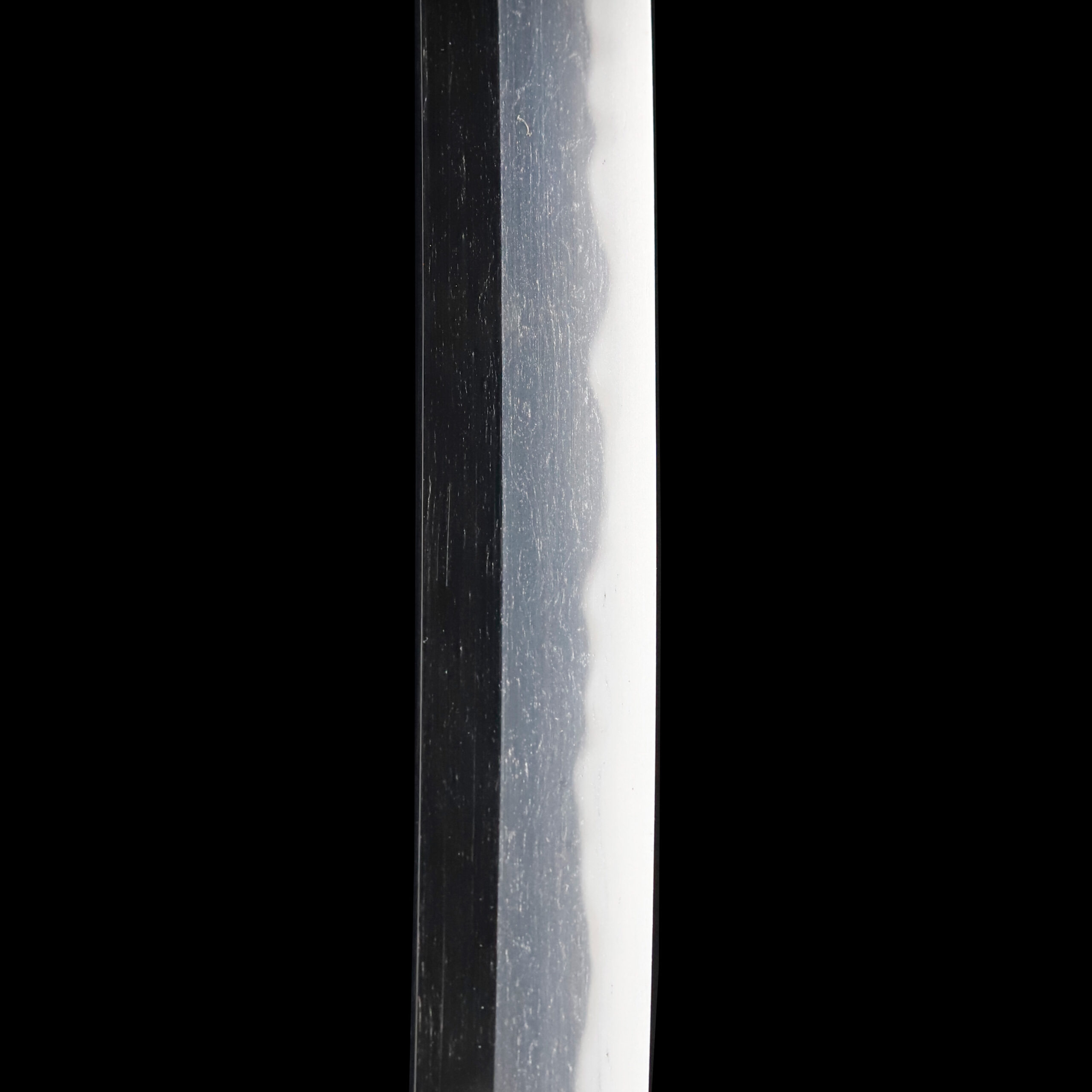
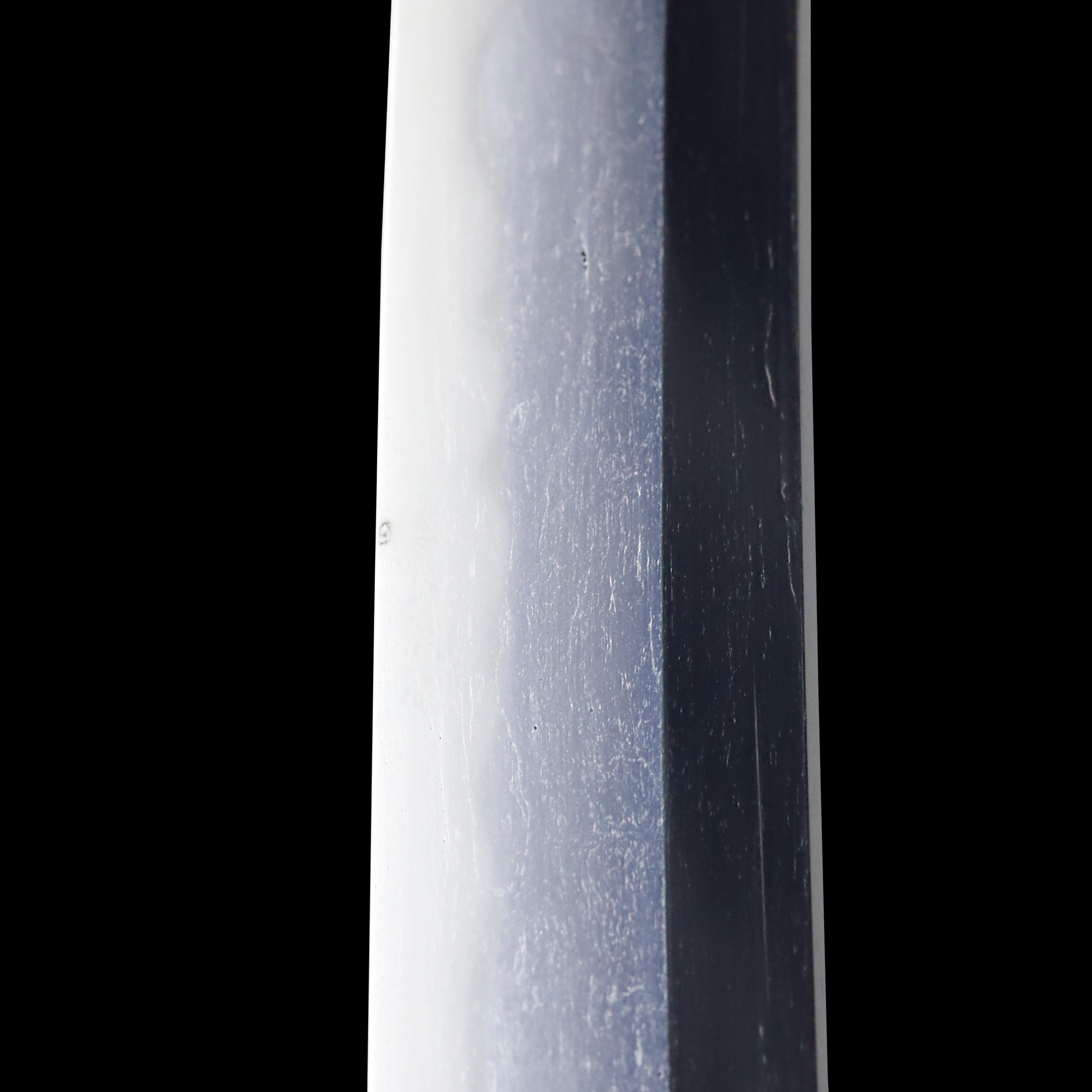
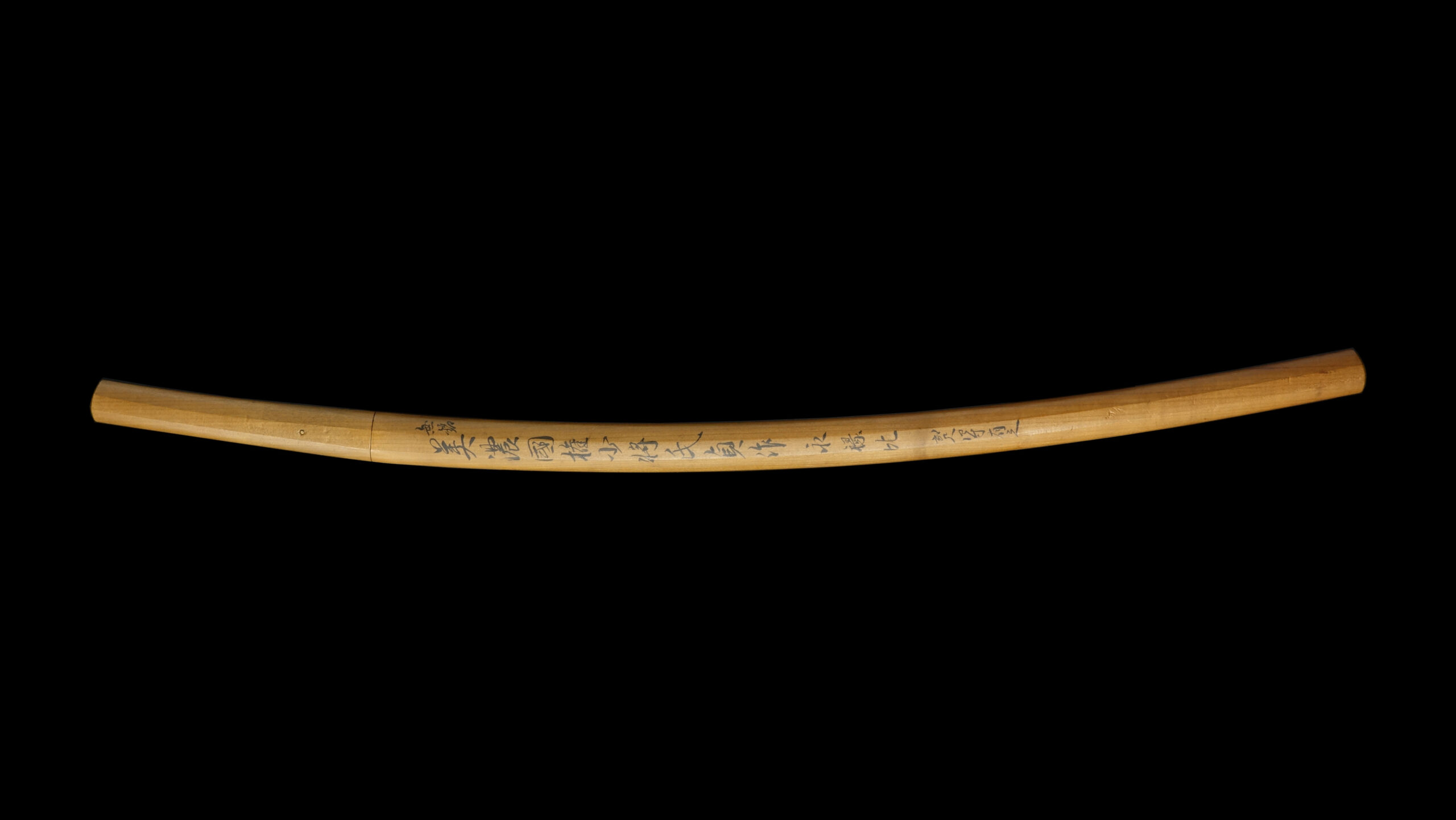
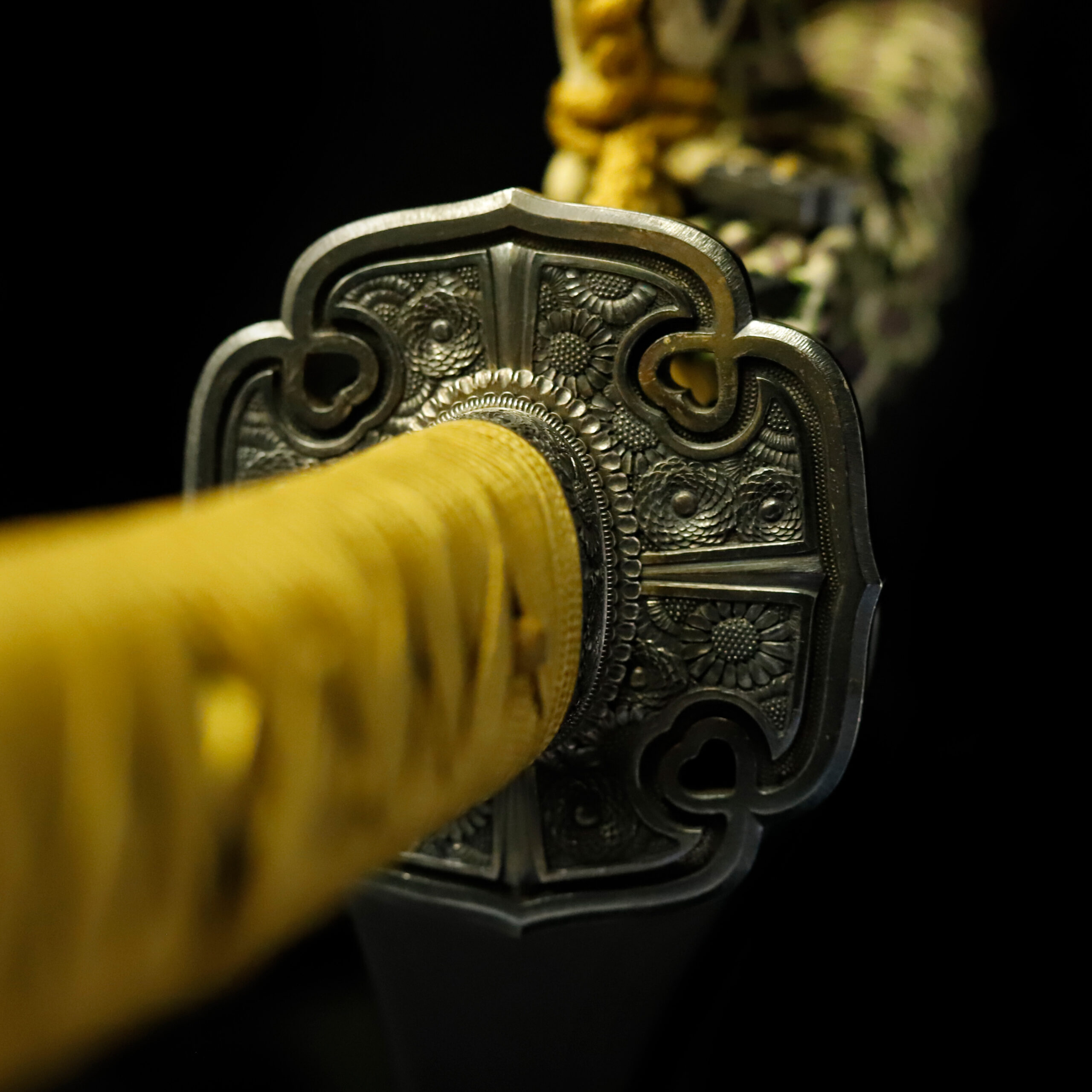
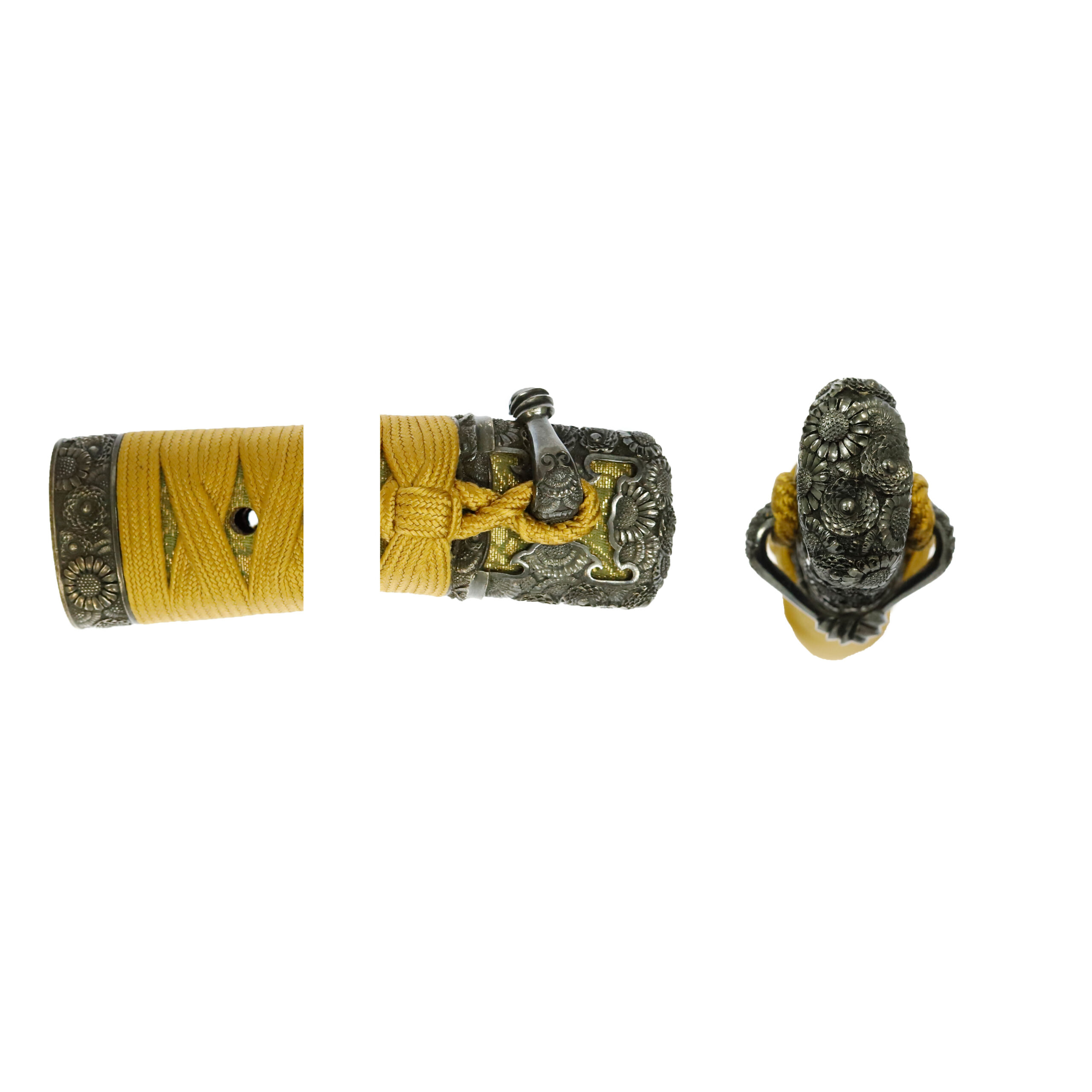
Mino-den · Mino · around 1558-1592
Fujishiro Chu-jo saku · Tōken Taikan top 31%
5 pieces on the market now
Ujisada is traditionally regarded as the son of the first-generation Wakasa no Kami Ujifusa of Seki in Mino province, and as the younger brother of the second-generation Wakasa no Kami Ujifusa. Active during the closing decades of the Muromachi period, with dated works spanning from Tensho 3 (1575) through Tensho 7 (1579), he occupied a distinguished position within the Sue-Seki group. He received the court title Izumo no Kami and signed variously as Sakon Shosho, Sakon Gonshosho, and Gonshosho. The sobriquet "Ikoku Ujisada" is said to have been bestowed in praise of the superb quality of his workmanship, an appellation reportedly arising when a discerning warrior requested one of his blades in preference to a sword from another province.
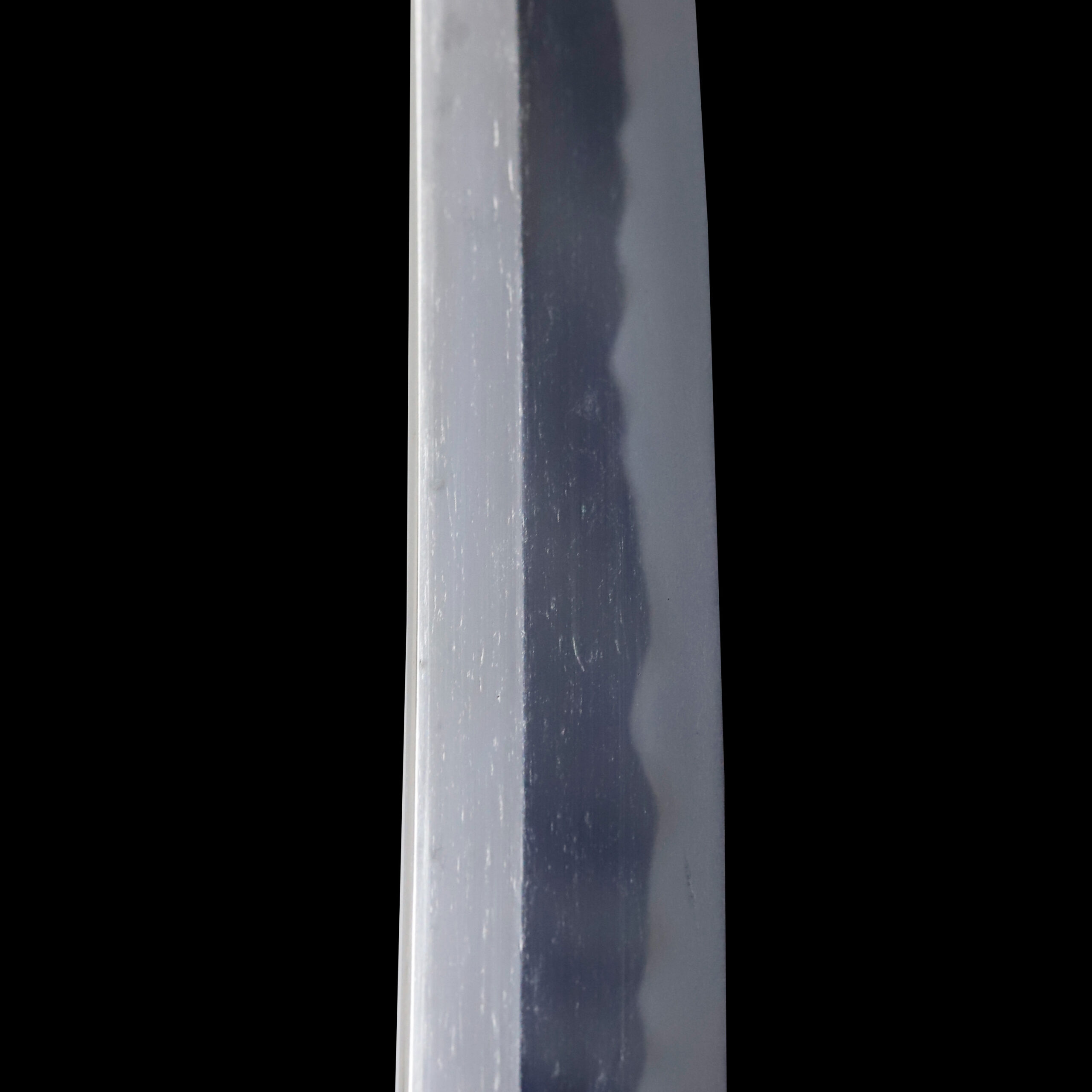
In the usual style of this smith, one finds a forging texture showing a combination of tight ko-itame with a masame-inclined character, and a temper that forms a gently undulating, shallow and broad notare, into which hako-shaped elements are mixed -- features that well display the characteristics of the Sue-Seki group and in particular of the Ujifusa line. His works range from katana exhibiting large notare that hardens into o-midare with tobiyaki assuming a minayaki-like character, to tanto bearing notare mixed with gunome in which slight ashi and yo enter with a tightening nioiguchi, according well with the transmitted manner of his master. Among tanto, many works bear skillfully executed carvings, placing "grass" kurikara or horimono such as gomabashi with rendai -- a hallmark of the line.
Across the body of designated works, the NBTHK repeatedly observes that Ujisada's blades "clearly display the characteristic features of this smith" and that the workmanship in both ji and ha is excellent. His finest pieces are distinguished by brightness and clarity in the steel -- both jihada and temper described as saeru -- to such a degree that one designated example is characterized as giving an impression that could be mistaken for a superior work by Kotetsu. The consistent presence of dated inscriptions among his surviving works adds documentary value to an oeuvre that stands as a representative achievement of late Seki craftsmanship.
Where Ujisada stands among comparable artisans: across all of nihontō, and within tradition, era, and period. The tiers (Foremost · Leading · Major · Notable) weigh official designations from the NBTHK and Japan's Agency for Cultural Affairs, together with historical honors of lasting repute such as the Sansaku and Meibutsu-chō.
Select a lens to see how it's measured.
Years he was demonstrably active, proven by signed-and-dated blades
Mino-den · Owari
19 pieces on the market now
Rooted in Owari province at the boundary between the kotō and shintō eras, the Ujifusa line carried Mino-den forging into the late Momoyama and early Edo decades, working under the Tokugawa establishment of Owari at Nagoya. The setsumei here cover several hands of the group. Wakasa no Kami Ujifusa and Hida no Kami Ujifusa stand as the reference points against which the others are read. Echigo no Kami Fujiwara Ujitsune, recorded in the Meikan and the Mino-tō Taikan as the second son of Wakasa no Kami Ujifusa, first signed Ujishige, received the Echigo no Kami title in Genna 6 (1620), and died at Nagoya in Meireki 2 (1656). Ujisada, who took the court title Izumo no Kami and signed Sakon Shōshō and Sakon Gonshōshō, is transmitted as a son of the first-generation Ujifusa and younger brother of the second-generation Wakasa no Kami Ujifusa; one of his tantō carries a date of Tenshō 5 (1577). The shared hand begins in the kitae: a dense itame mixed with mokume and nagare-hada, carrying ji-nie and, in the fuller work, fine chikei. The temper draws on the Mino-den vocabulary, a notare mixed with gunome, ko-gunome in tsure, large gunome, and pointed togari-leaning forms, the notare often taking angular turns (kado-gakari).
Ko-ashi and yō enter; nie attaches, at times slightly coarse and unevenly applied, with kinsuji and sunagashi in the lower body and tobiyaki and muneyaki scattered through, so that some blades verge on hitatsura and minayaki. The nioiguchi can incline toward shizumi. The bōshi is tempered deeply and far down (yakisage) with hakikake, the point sometimes drawn into a sanpin-style sharpness on one face and an ō-maru on the other. Ujitsune's signed katana reads as a near-textbook gathering of these traits; Ujisada's tantō tightens the nioiguchi (shimarigokoro) toward his master's manner. For kantei, the angular notare, the patchy nie, the shizumi-inclined nioiguchi, and the sanpin-pointed bōshi with long yakisage mark the Wakasa no Kami group; the larger work adds broad mihaba, ō-kissaki, and thick kasane. Carving belongs to the record: a "grass" kurikara and gomabashi with rendai appear on Ujisada's tantō. The Ujitsune katana, by a smith the setsumei call a scant producer, is named his representative work, holding coherence across a great nagasa. Learn more →
| Smith | Era | Designated |
|---|---|---|
| Ujifusa氏房 | 1596-1615 | 16 |
| Ujifusa氏房 | 1571-1592 | 9 |
| Ujitsune氏恒 | 1596-1615 | 1 |
| Ujisada氏貞 | 1558-1592 | 7 |
| Ujifusa氏房 | 1624-1644 | 0 |
Mino in the Muromachi period
Sengoku Seki was an industry: smiths organized under their tutelary Kasuga shrine, arming the war bands of central Japan. Magoroku Kanemoto’s sanbonsugi and the finest Kanesada work prove quality survived inside mass production.
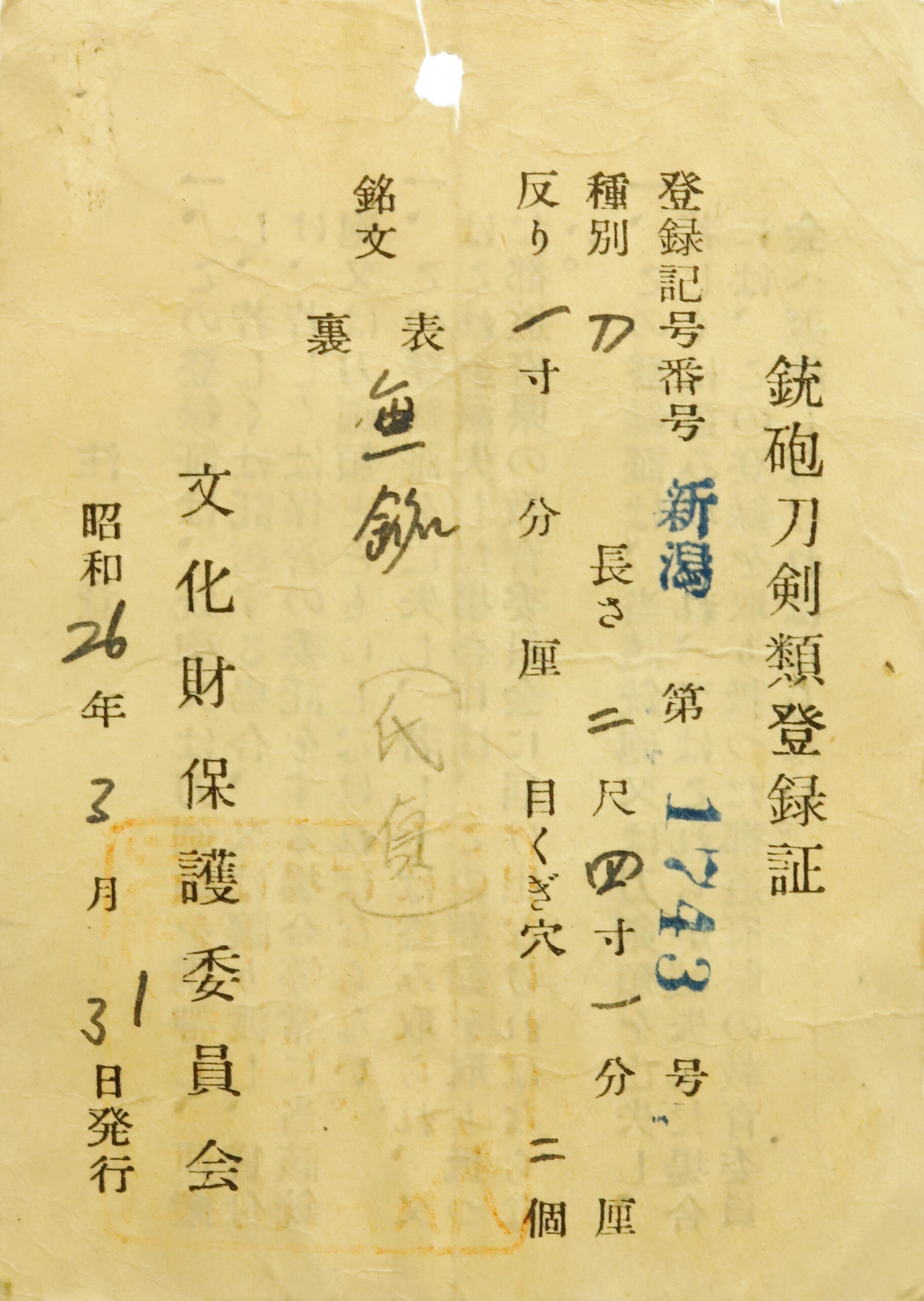
This work carries older NBTHK “Kichō”-era papers, which the NBTHK no longer issues and now regards as unreliable. To confirm the attribution, submission to an official Japanese examination body (such as the NBTHK or NTHK) for modern certification could be considered.
Returns/exchanges limited to defects caused by shipping (except willful misconduct or gross negligence by the company); customers must contact within 72 hours of receiving the product.
This antique katana is attributed to Ujisada, a smith active during the late Muromachi period (1570-1593) who originally forged in Mino province before moving to Owari. The blade comes with an NBTHK Tokubetsu Kicho Certificate and is housed in Tachi Koshirae, featuring a family crest on the Menuki believed to be Takeda Bishi. It also includes a shirasaya, sword maintenance kit, and carrying bags.
NihontoWatchmumei · Mino · Muromachi · nagasa 73cm · sori 3.03cm
Mino-den · Mino · around 1558-1592
Fujishiro Chu-jo saku · Tōken Taikan top 31%
5 pieces on the market now
Ujisada is traditionally regarded as the son of the first-generation Wakasa no Kami Ujifusa of Seki in Mino province, and as the younger brother of the second-generation Wakasa no Kami Ujifusa. Active during the closing decades of the Muromachi period, with dated works spanning from Tensho 3 (1575) through Tensho 7 (1579), he occupied a distinguished position within the Sue-Seki group. He received the court title Izumo no Kami and signed variously as Sakon Shosho, Sakon Gonshosho, and Gonshosho. The sobriquet "Ikoku Ujisada" is said to have been bestowed in praise of the superb quality of his workmanship, an appellation reportedly arising when a discerning warrior requested one of his blades in preference to a sword from another province.
In the usual style of this smith, one finds a forging texture showing a combination of tight ko-itame with a masame-inclined character, and a temper that forms a gently undulating, shallow and broad notare, into which hako-shaped elements are mixed -- features that well display the characteristics of the Sue-Seki group and in particular of the Ujifusa line. His works range from katana exhibiting large notare that hardens into o-midare with tobiyaki assuming a minayaki-like character, to tanto bearing notare mixed with gunome in which slight ashi and yo enter with a tightening nioiguchi, according well with the transmitted manner of his master. Among tanto, many works bear skillfully executed carvings, placing "grass" kurikara or horimono such as gomabashi with rendai -- a hallmark of the line.
Across the body of designated works, the NBTHK repeatedly observes that Ujisada's blades "clearly display the characteristic features of this smith" and that the workmanship in both ji and ha is excellent. His finest pieces are distinguished by brightness and clarity in the steel -- both jihada and temper described as saeru -- to such a degree that one designated example is characterized as giving an impression that could be mistaken for a superior work by Kotetsu. The consistent presence of dated inscriptions among his surviving works adds documentary value to an oeuvre that stands as a representative achievement of late Seki craftsmanship.
Where Ujisada stands among comparable artisans: across all of nihontō, and within tradition, era, and period. The tiers (Foremost · Leading · Major · Notable) weigh official designations from the NBTHK and Japan's Agency for Cultural Affairs, together with historical honors of lasting repute such as the Sansaku and Meibutsu-chō.
Select a lens to see how it's measured.
Years he was demonstrably active, proven by signed-and-dated blades
Mino-den · Owari
19 pieces on the market now
Rooted in Owari province at the boundary between the kotō and shintō eras, the Ujifusa line carried Mino-den forging into the late Momoyama and early Edo decades, working under the Tokugawa establishment of Owari at Nagoya. The setsumei here cover several hands of the group. Wakasa no Kami Ujifusa and Hida no Kami Ujifusa stand as the reference points against which the others are read. Echigo no Kami Fujiwara Ujitsune, recorded in the Meikan and the Mino-tō Taikan as the second son of Wakasa no Kami Ujifusa, first signed Ujishige, received the Echigo no Kami title in Genna 6 (1620), and died at Nagoya in Meireki 2 (1656). Ujisada, who took the court title Izumo no Kami and signed Sakon Shōshō and Sakon Gonshōshō, is transmitted as a son of the first-generation Ujifusa and younger brother of the second-generation Wakasa no Kami Ujifusa; one of his tantō carries a date of Tenshō 5 (1577). The shared hand begins in the kitae: a dense itame mixed with mokume and nagare-hada, carrying ji-nie and, in the fuller work, fine chikei. The temper draws on the Mino-den vocabulary, a notare mixed with gunome, ko-gunome in tsure, large gunome, and pointed togari-leaning forms, the notare often taking angular turns (kado-gakari).
Ko-ashi and yō enter; nie attaches, at times slightly coarse and unevenly applied, with kinsuji and sunagashi in the lower body and tobiyaki and muneyaki scattered through, so that some blades verge on hitatsura and minayaki. The nioiguchi can incline toward shizumi. The bōshi is tempered deeply and far down (yakisage) with hakikake, the point sometimes drawn into a sanpin-style sharpness on one face and an ō-maru on the other. Ujitsune's signed katana reads as a near-textbook gathering of these traits; Ujisada's tantō tightens the nioiguchi (shimarigokoro) toward his master's manner. For kantei, the angular notare, the patchy nie, the shizumi-inclined nioiguchi, and the sanpin-pointed bōshi with long yakisage mark the Wakasa no Kami group; the larger work adds broad mihaba, ō-kissaki, and thick kasane. Carving belongs to the record: a "grass" kurikara and gomabashi with rendai appear on Ujisada's tantō. The Ujitsune katana, by a smith the setsumei call a scant producer, is named his representative work, holding coherence across a great nagasa. Learn more →
| Smith | Era | Designated |
|---|---|---|
| Ujifusa氏房 | 1596-1615 | 16 |
| Ujifusa氏房 | 1571-1592 | 9 |
| Ujitsune氏恒 | 1596-1615 | 1 |
| Ujisada氏貞 | 1558-1592 | 7 |
| Ujifusa氏房 | 1624-1644 | 0 |
Mino in the Muromachi period
Sengoku Seki was an industry: smiths organized under their tutelary Kasuga shrine, arming the war bands of central Japan. Magoroku Kanemoto’s sanbonsugi and the finest Kanesada work prove quality survived inside mass production.
This work carries older NBTHK “Kichō”-era papers, which the NBTHK no longer issues and now regards as unreliable. To confirm the attribution, submission to an official Japanese examination body (such as the NBTHK or NTHK) for modern certification could be considered.
Returns/exchanges limited to defects caused by shipping (except willful misconduct or gross negligence by the company); customers must contact within 72 hours of receiving the product.