Edo was the sword’s age of connoisseurship: the Hon’ami appraisers, the shogunal register of famous blades of 1719, and a thriving literature turned the sword into an object of study even as it ceased to be drawn in war.
 NihontoWatchNihontoWatch
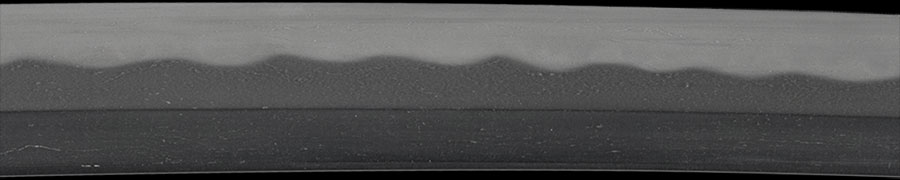
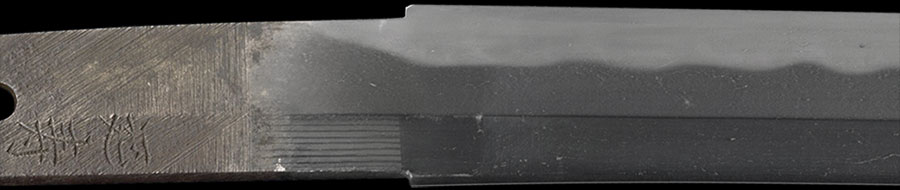
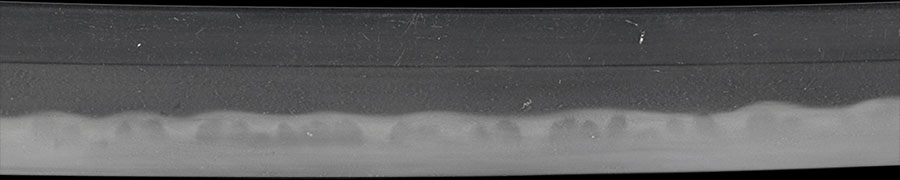
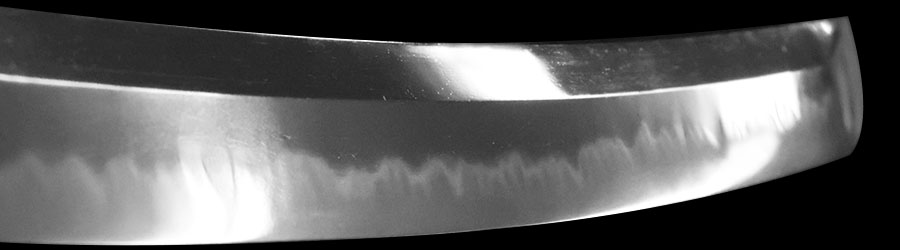
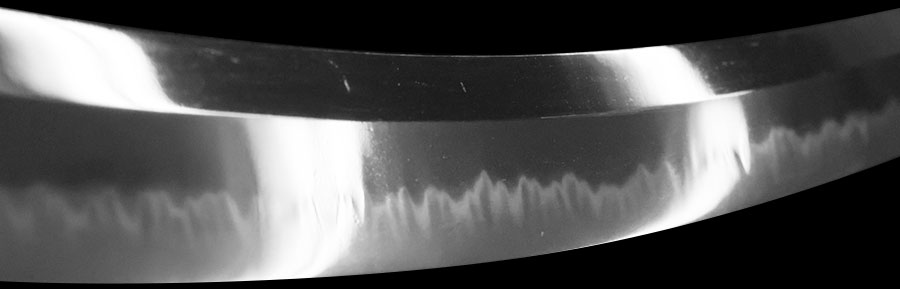
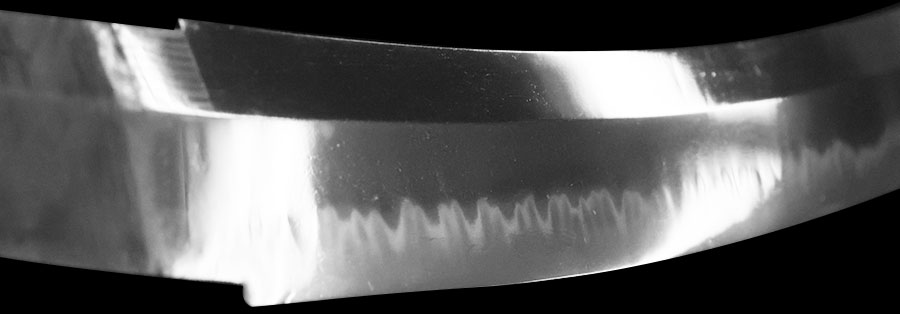
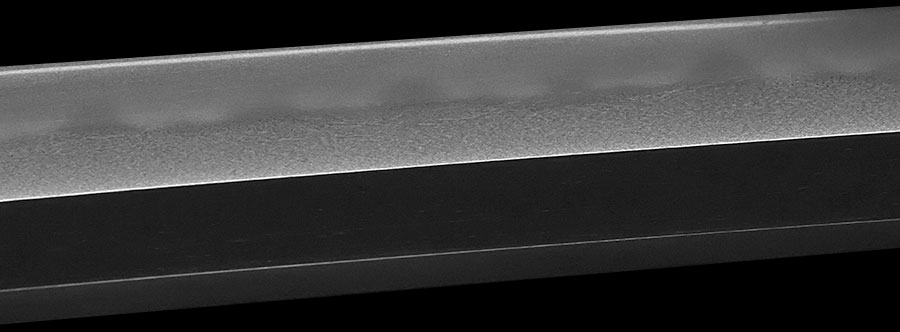
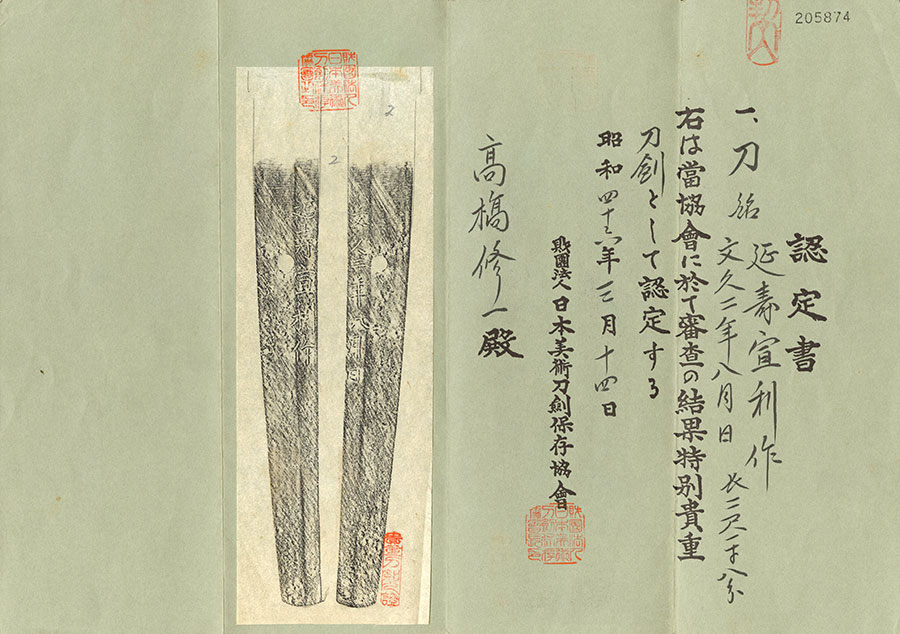
出ました出ました幕末肥後熊本細川藩54万石の藩工延寿宣利刀匠の名刀が出ました。宣利刀匠は有名な熊本細川藩藩工延寿宣勝刀匠本名武永喜三右衛門の子供です、父宣勝刀匠は藩命で江戸へ留学し幕末の巨匠で新々刀の祖と言われる水心子正秀の門下で有名な巨匠細川正義刀匠の門になります。帰国して肥後熊本藩藩工を務めました。本刀は子供の現存刀が幕末の廃刀令の為に少ない宣利刀匠本名武永喜三郎氏の細川藩の高級武士の為に作られた特別注文の刀です。時は幕末文久2年(1862年)(164年前)の作で、明治天皇の父120代仁孝天皇の皇女和宮内親王が江戸幕府14代将軍徳川家茂公に嫁いだ時、薩摩藩の前藩主島津久光公の一行が、横浜近郊の生麦で、行列を横切ったイギリス人を薩摩藩士が斬った生麦事件が起こった時です。本刀の姿は高級武士の注文の為に抜き打ちに適した寸法がやや短く、腰反りで元身幅と先身幅との差の有る切っ先のやや大きい豪快な刀姿を現し、地金は小板目肌に鍛え明るい良い地金を現し、刃紋は匂い出来に小沸の付いた互の目刃、互の目丁子刃、丁子刃を覇気有る明るい刃を焼いています。この度古い御数寄者様から自分も年を取りましたので大切にして頂ける方にお安くお譲り下さいとお預かりした為に特別保存刀剣には直ぐに成りますがご厚意で特別に超格安にて御提供いたします。有名ですが現存作が少ない特に熊本県には大切な肥後熊本細川藩の延寿宣利刀匠の貴重な名刀を是非お楽しみ下さい。
NihontoWatchEnju School延寿派
Offered by Nipponto
Its only papers are older green Kichō papers, which the NBTHK largely disavows today. Ask the dealer whether it has passed current shinsa. — Hoshi
15 on the market










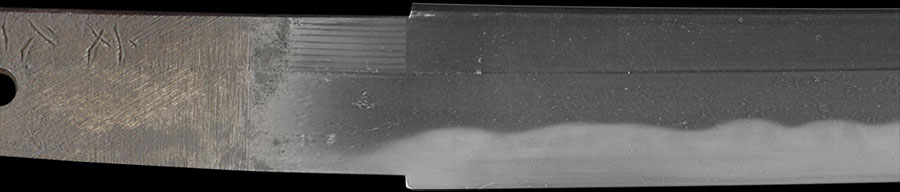

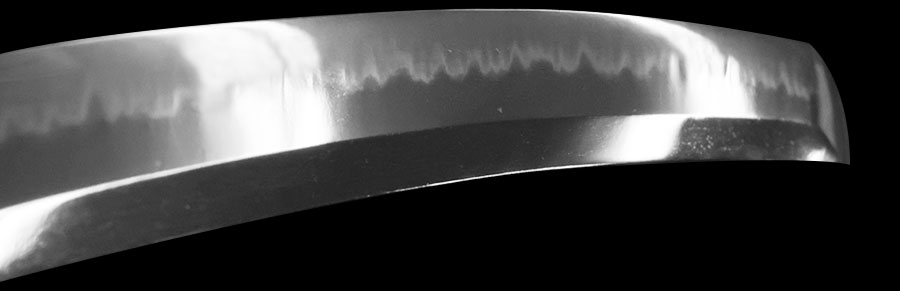
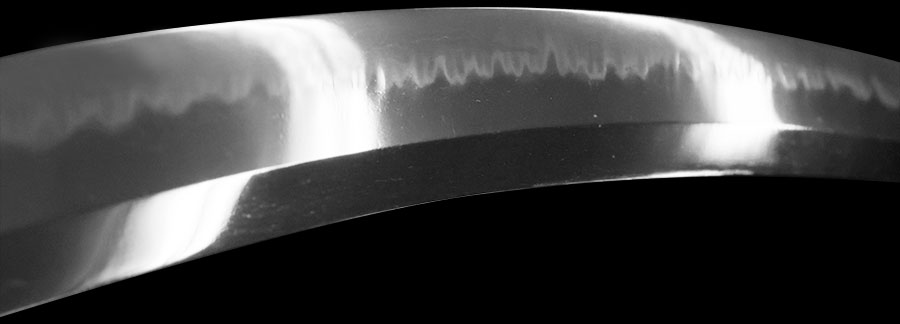
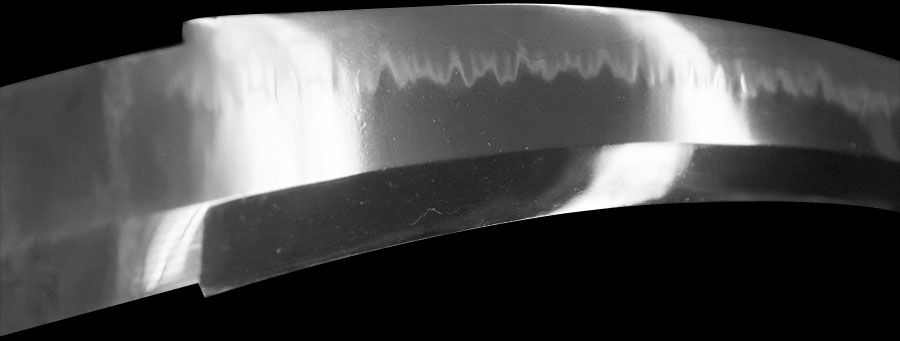
As written by the shop
(Translation unavailable)
Yamashiro-den · Higo
15 pieces on the market now
Among the provincial lines that carried the Kyoto manner beyond Yamashiro, the Enju (延寿) school of Higo province grew up at Kumafu in the Kikuchi District, working from the close of the Kamakura period through the Nanbokuchō era. Its founder, Tarō Kunimura, is transmitted in the prevailing account as the son of Hiromura of the Yamato Senjuin line, who married a daughter of Rai Kuniyuki of Yamashiro; by that marriage Kunimura is held to be Kuniyuki's grandson in the female line and a pupil of the Rai workshop (one early text instead places him in the gate of Rai Kunitoshi). The school name reads on the same characters as the Rai line itself, and from that double descent, Yamashiro through the Rai marriage and Yamato through the Senjuin side, the family took its character. Around the founder a cluster of named smiths arose almost at once, Kuniyoshi, Kunitoki, Kuniyasu, Kunitomo, Kunisuke, Kuninobu and Kunitsuna among them, the Enju line attached to the Kikuchi clan and loyal to the Southern Court, so that the dated blades carry that history in their Southern-Court eras. The published sources describe Enju work as one that broadly resembles the Rai school[[c:1]], refined in suguha yet cooler and whiter than its Kyoto parent, and they name the provincial accents by which the two are separated. The forging is an itame or closely packed ko-itame that flows toward the edge into masame, the grain standing a little, with fine ji-nie laid on and delicate chikei entering; over it rises a whitish shirake-utsuri, the surest single Enju tell, the cool reflection of a Kyushu steel that is not quite the bright Rai jigane. The temper is a chū-suguha or narrower hoso-suguha, the nioiguchi carried somewhat shizumi (sunken and quiet), often breaking into nijūba, the doubled line that recurs across the line; ko-ashi, yō, ko-nie, fine sunagashi and kinsuji play within it, the activity gentler than the brighter Rai suguha. The bōshi turns back on a larger radius than Rai's tight ko-maru, a shallow ō-maru with a short kaeri.
The signature is a tool of attribution: across the line the right half within the kuni (国) enclosure is cut in an ear-shaped form, a calligraphic habit the sources say cannot be confused with another school. Against true Rai, the school is read by its masame-lean, its whitish utsuri, its sinking nioiguchi and its quieter internal work, the ji and ha running a degree softer than the Yamashiro line. To kantei an Enju blade is to weigh those provincial accents against the Rai air it carries: a wheel-like wa-zori and Kyoto refinement may recall the parent at a glance, but the nagare in the ji, the shirake-utsuri, the subdued nioiguchi and the ear-shaped kuni settle the attribution, and the level of the work then narrows it to a hand. The founder Kunimura sets the quiet register and signs the slender, sharply tapering tachi the sources call distinctive even within the school; among the later smiths, Kunitoki survives in relative number and runs his suguha the busiest with ko-gunome and kinsuji, Kuniyasu is the most nie-laden and brightest, Kunisuke cuts the boldest chisel and hardens a unique flaming bōshi on his wide pieces, while Kuniyoshi, Kuninobu and the various other Kuni- smiths work the same vocabulary, the best of them refining the steel to a clarity that escapes the school's whitish thinness. The corpus runs mostly to slender signed tachi and to ō-suriage mumei katana attributed on appraisal, with broad sunobi tantō in the Nanbokuchō phase, the work confined to long blades in the founder's case. Provenance is unusually grand for a provincial line: blades pass through Toyotomi Hideyoshi and Tokugawa Ieyasu and rest in the Hosokawa, Date, Uesugi, Owari and Mito Tokugawa houses, with examples held today by the Sano, Tokugawa, Seikadō and other institutions. A signed ubu Enju tachi is among the rarer encounters in Higo work; most survive as the mumei attribution, held as heritage rather than offered. Learn more →
| Smith | Era | Designated |
|---|---|---|
| Kunimura國村 | 1275-1278 | 15 |
| Kunitoki國時 | 1317-1353 | 32 |
| Kunisuke國資 | 1346-1370 | 22 |
| Kuniyasu國泰 | 1329-1331 | 16 |
| Kunitoki國時 | 1275-1278 | 7 |
The Edo period (1615 to 1868)
Edo was the sword’s age of connoisseurship: the Hon’ami appraisers, the shogunal register of famous blades of 1719, and a thriving literature turned the sword into an object of study even as it ceased to be drawn in war.
This work carries older NBTHK “Kichō”-era papers, which the NBTHK no longer issues and largely disavows today. To confirm the attribution, submission to an official Japanese examination body (such as the NBTHK or NTHK) for modern certification could be considered.
For returns due to customer circumstances, the cost is the customer's responsibility. For returns due to our mis-shipment or a defective item, we bear the cost.
¥450,000