 NihontoWatchNihontoWatch
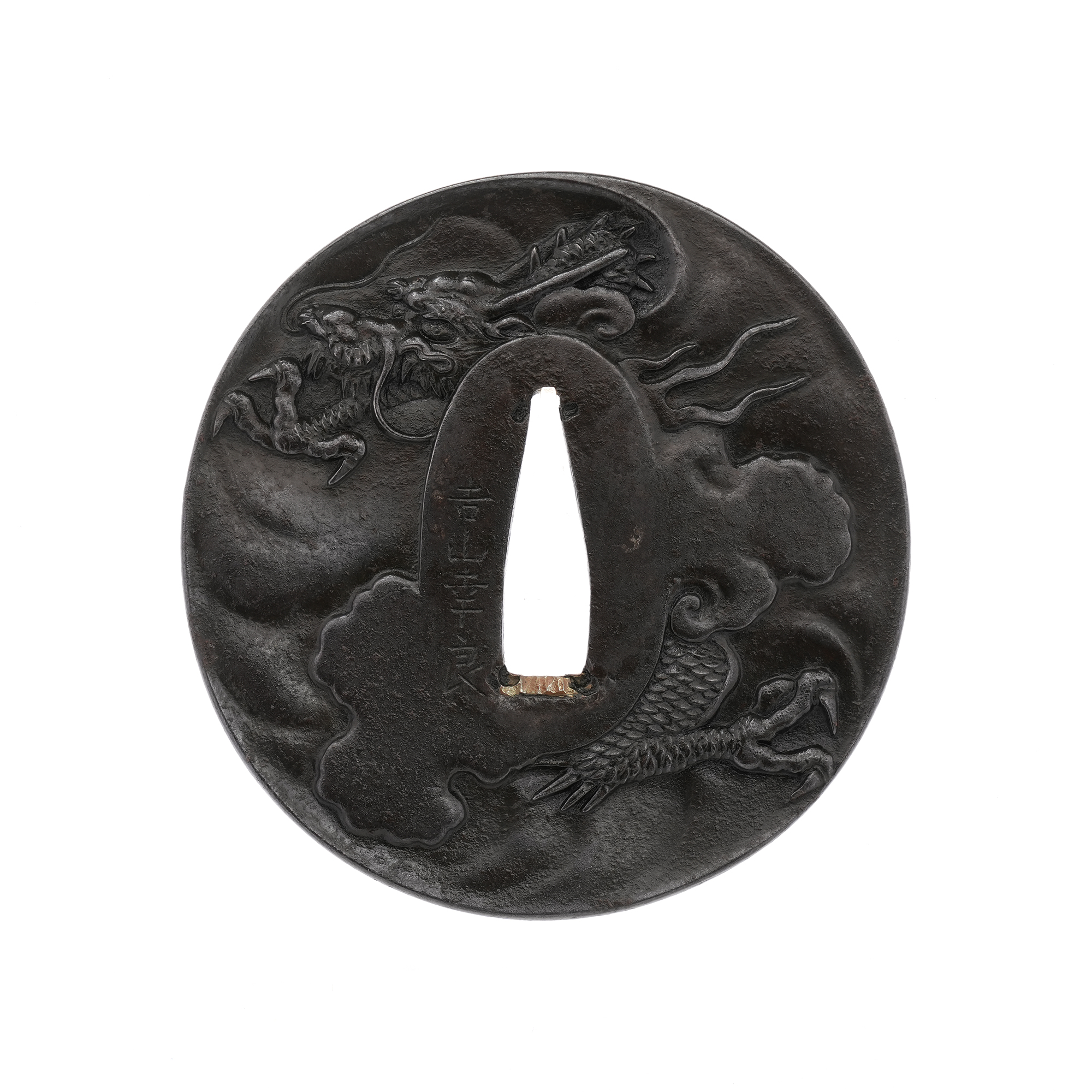
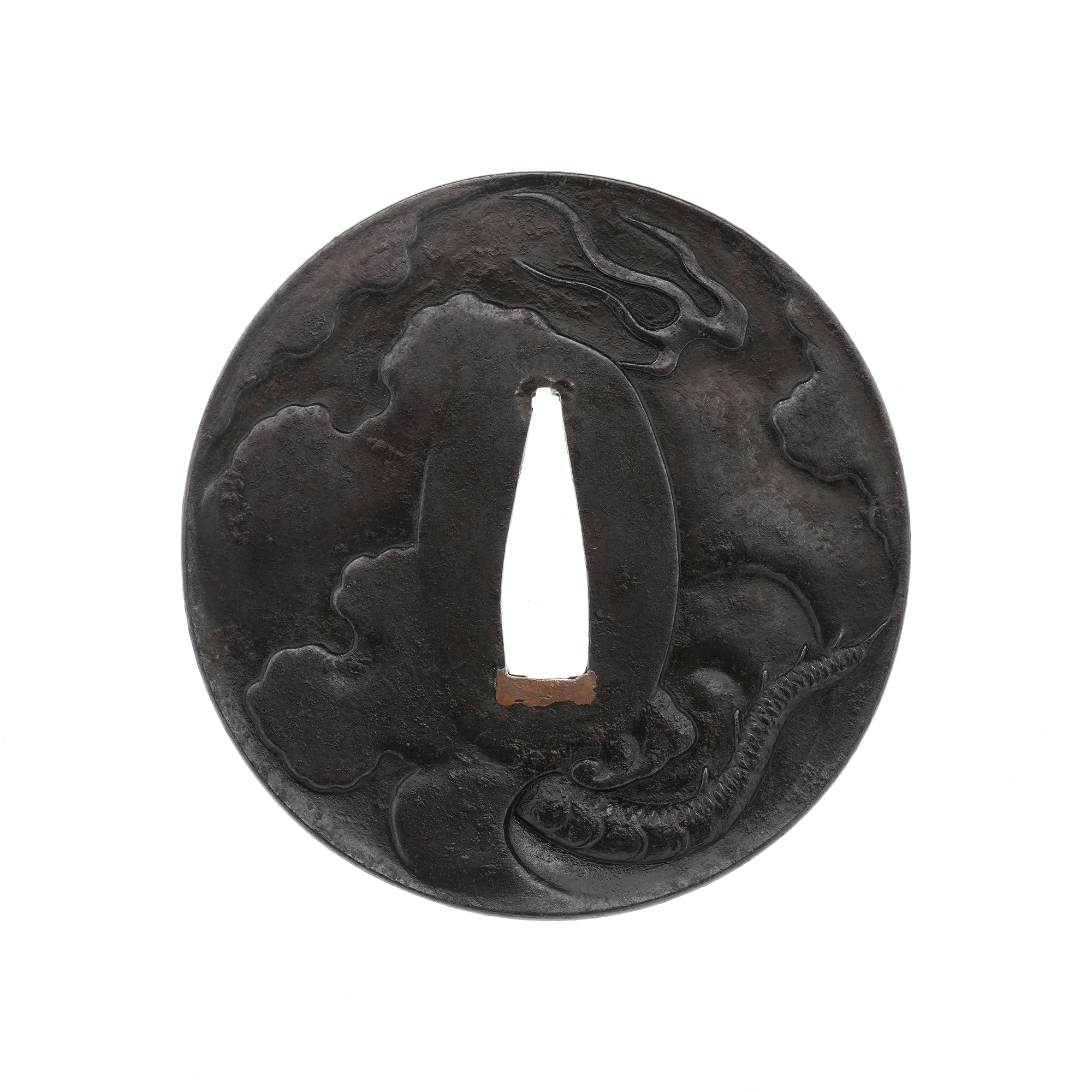
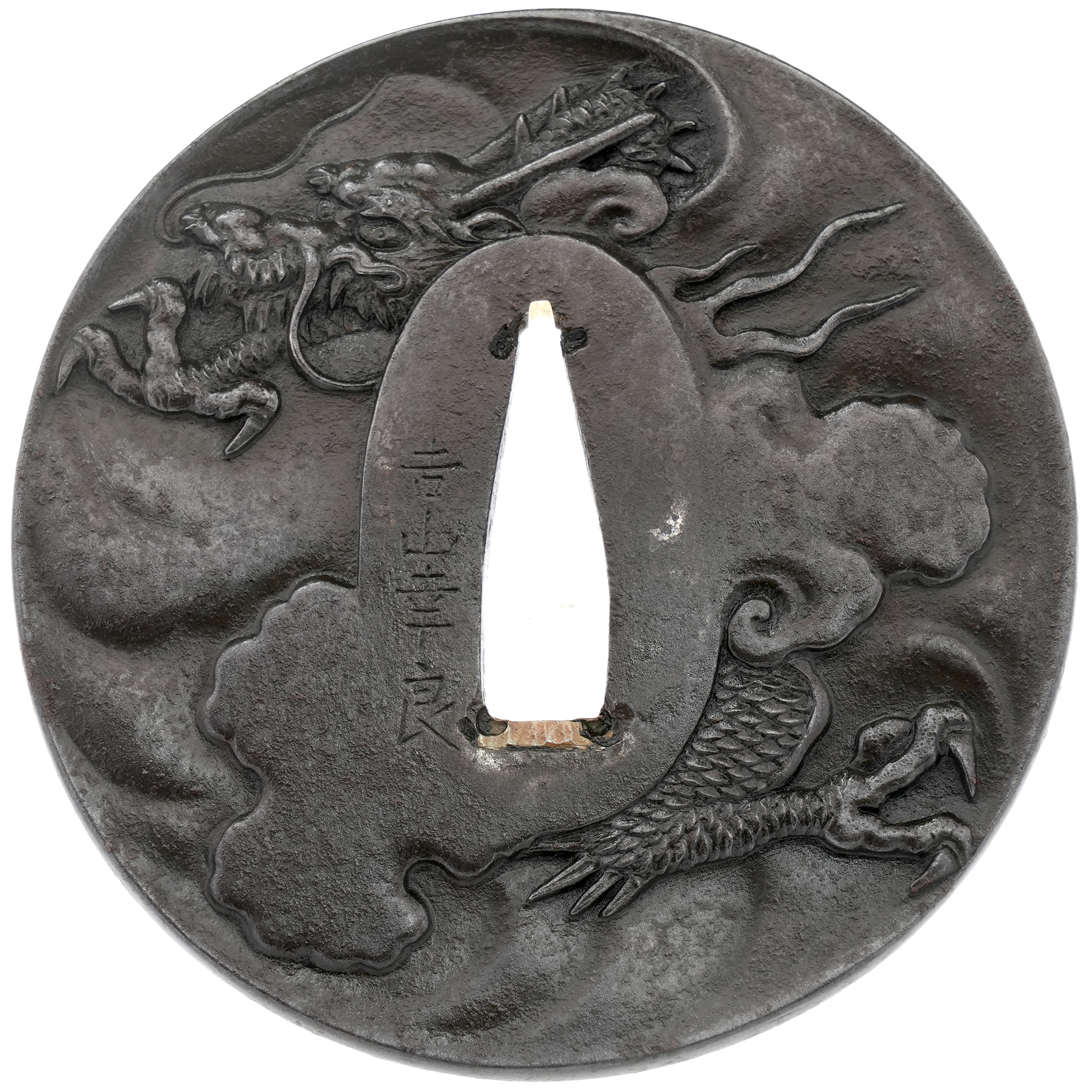
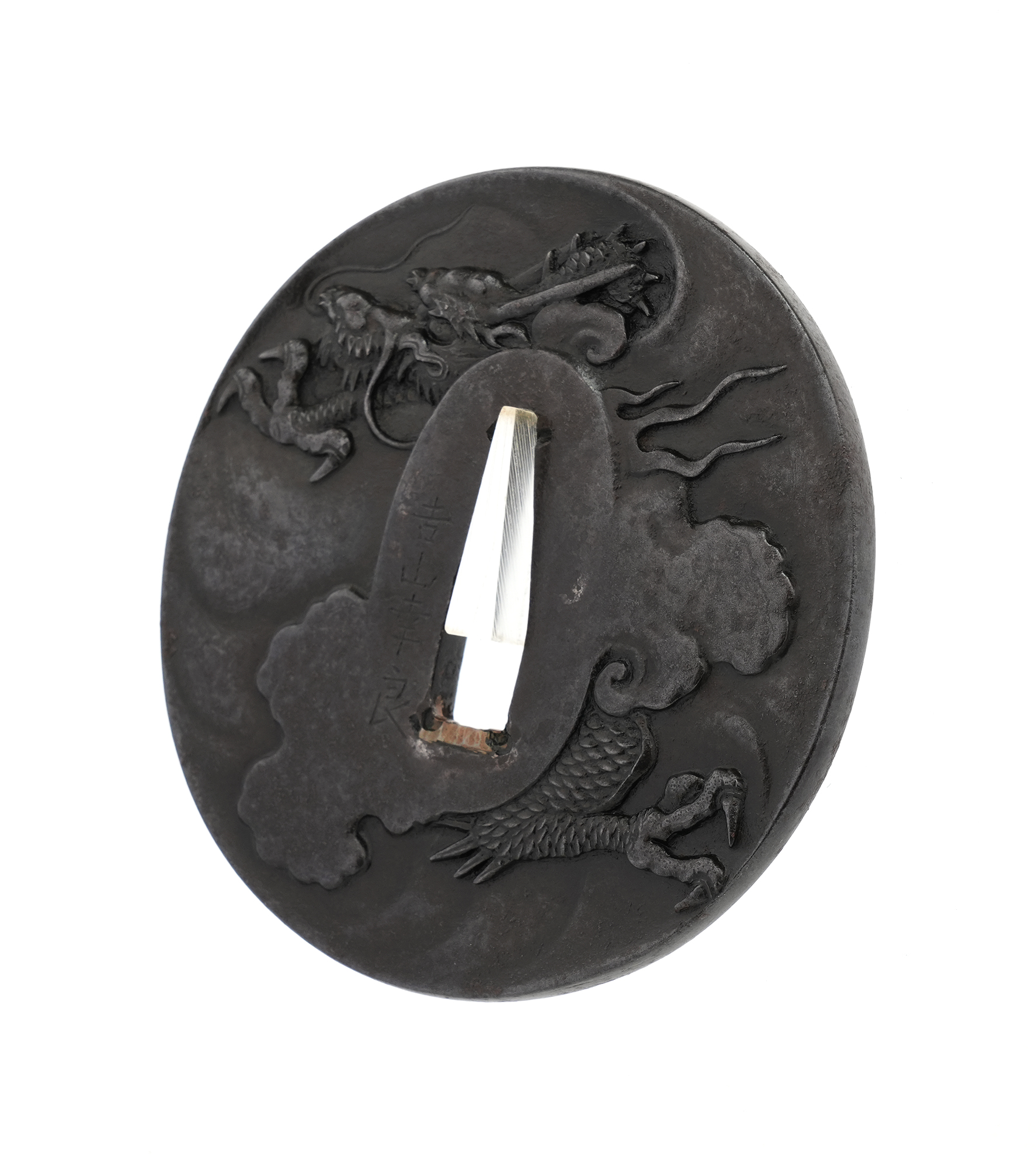
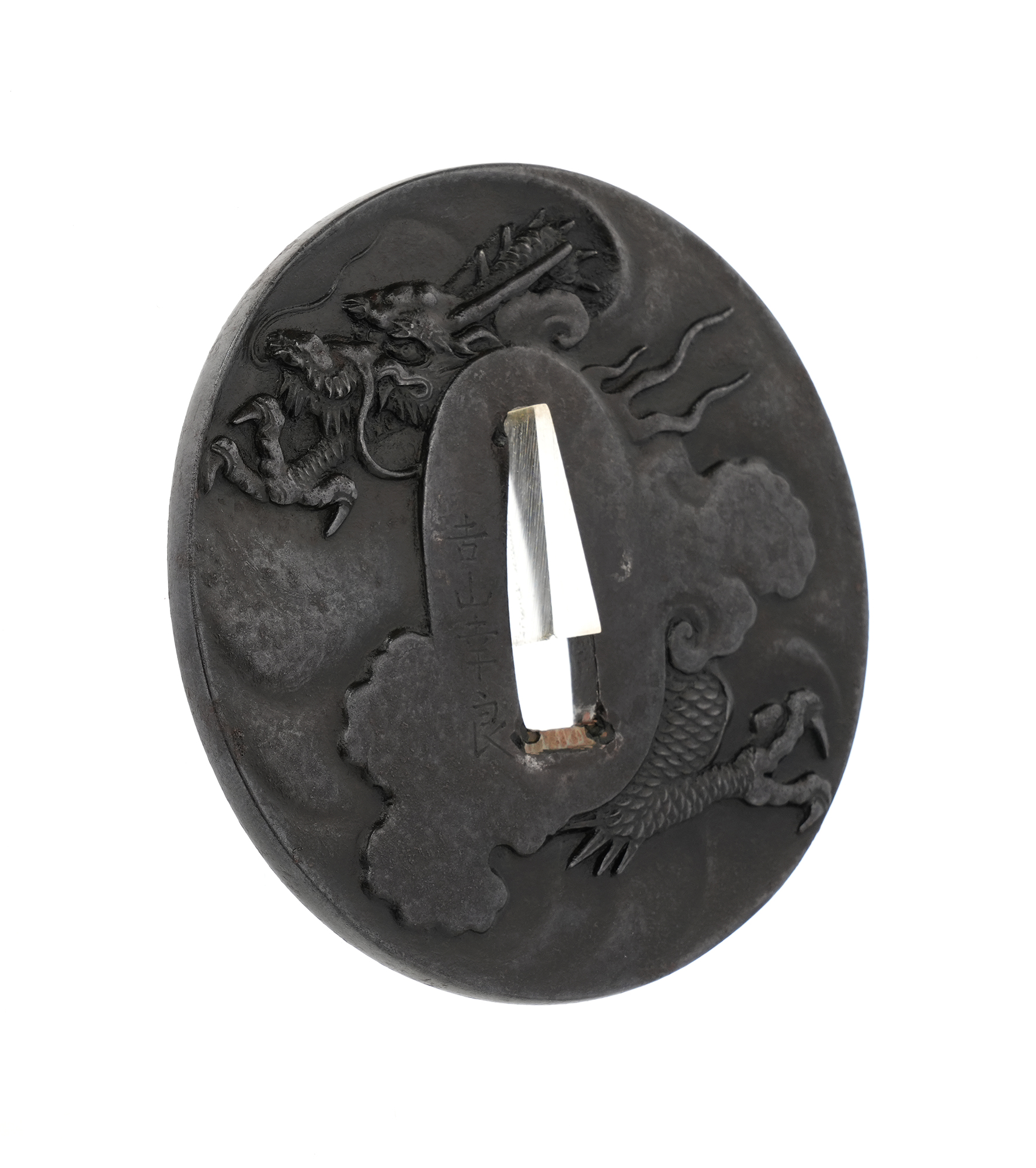
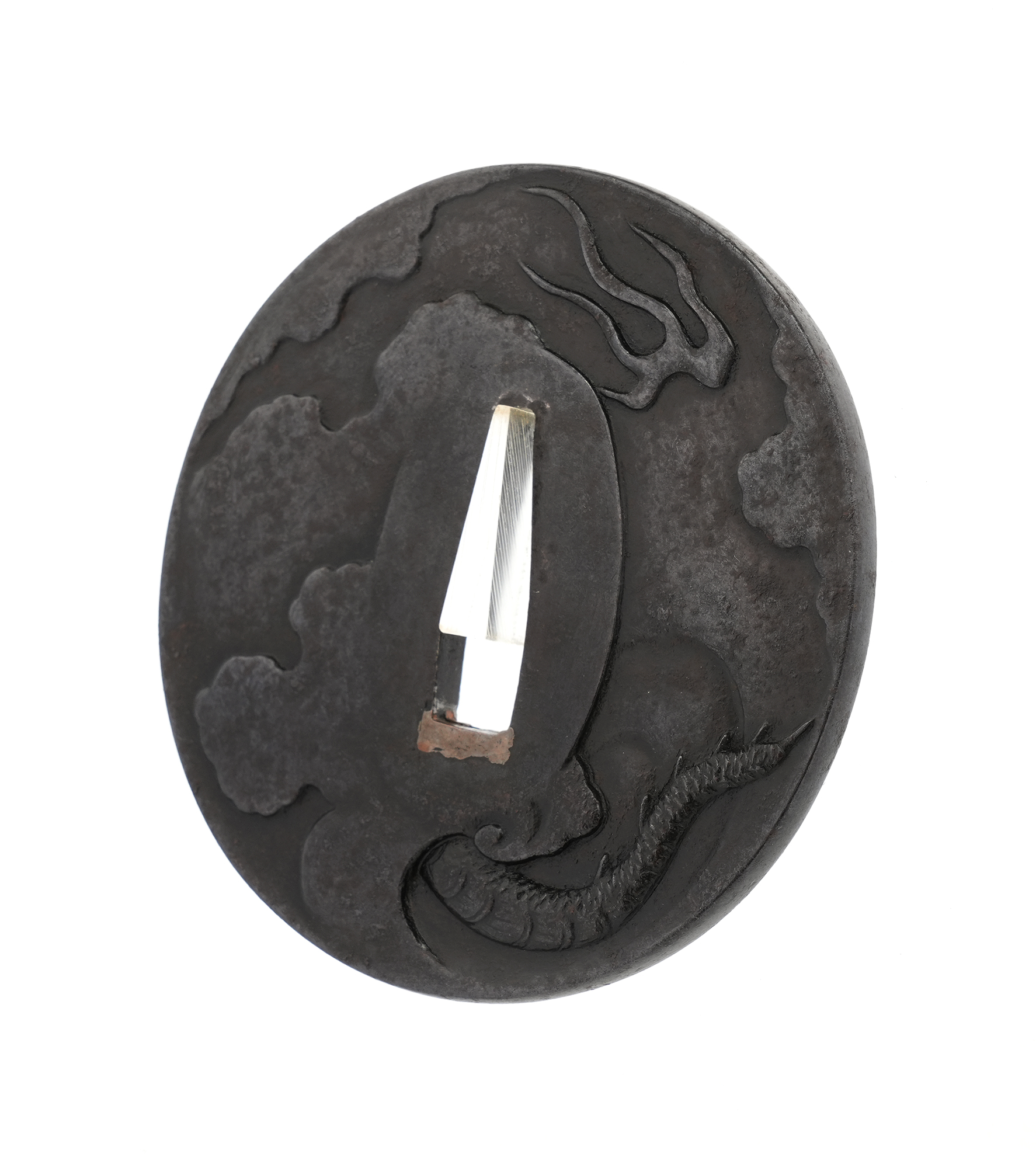
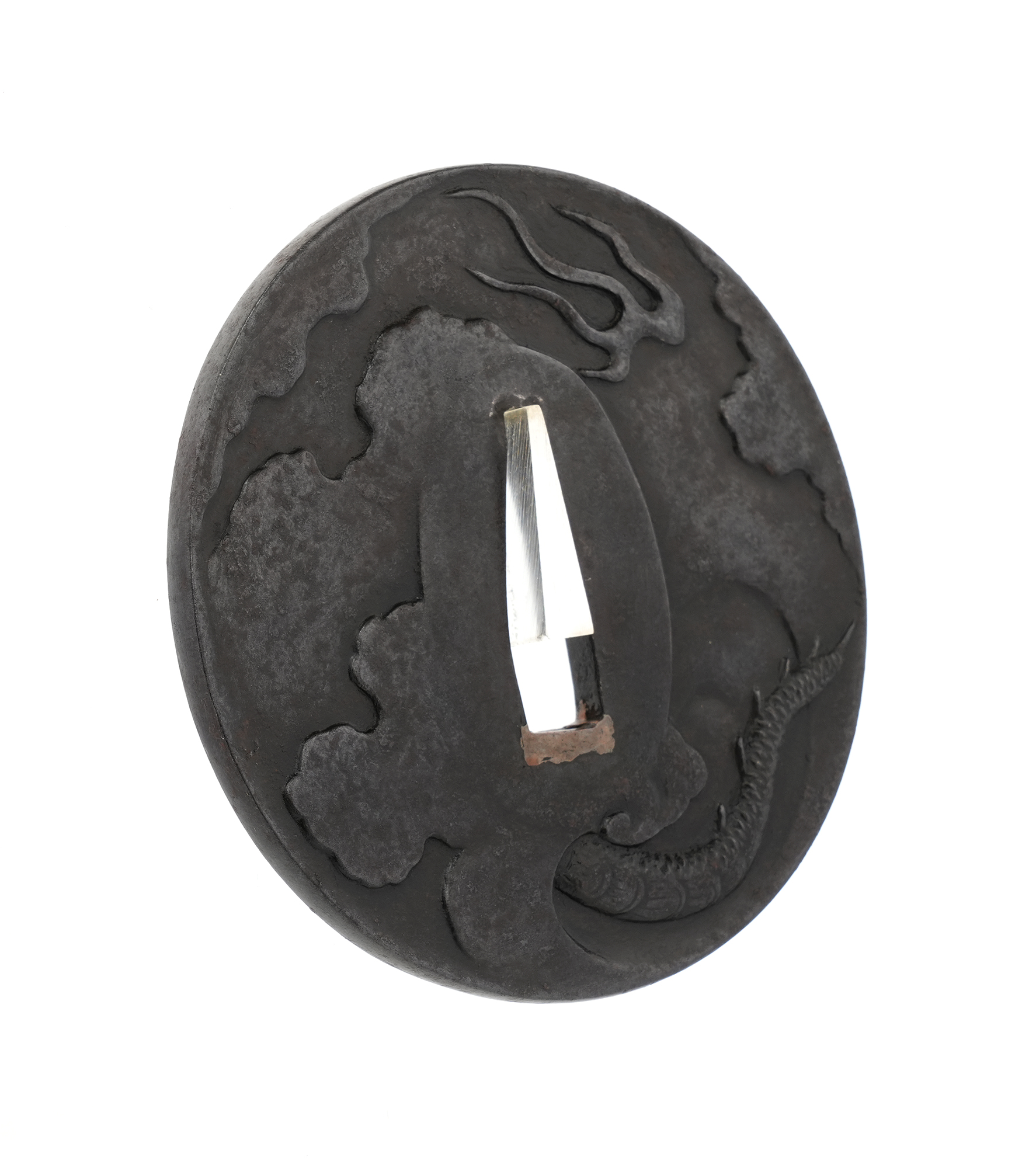
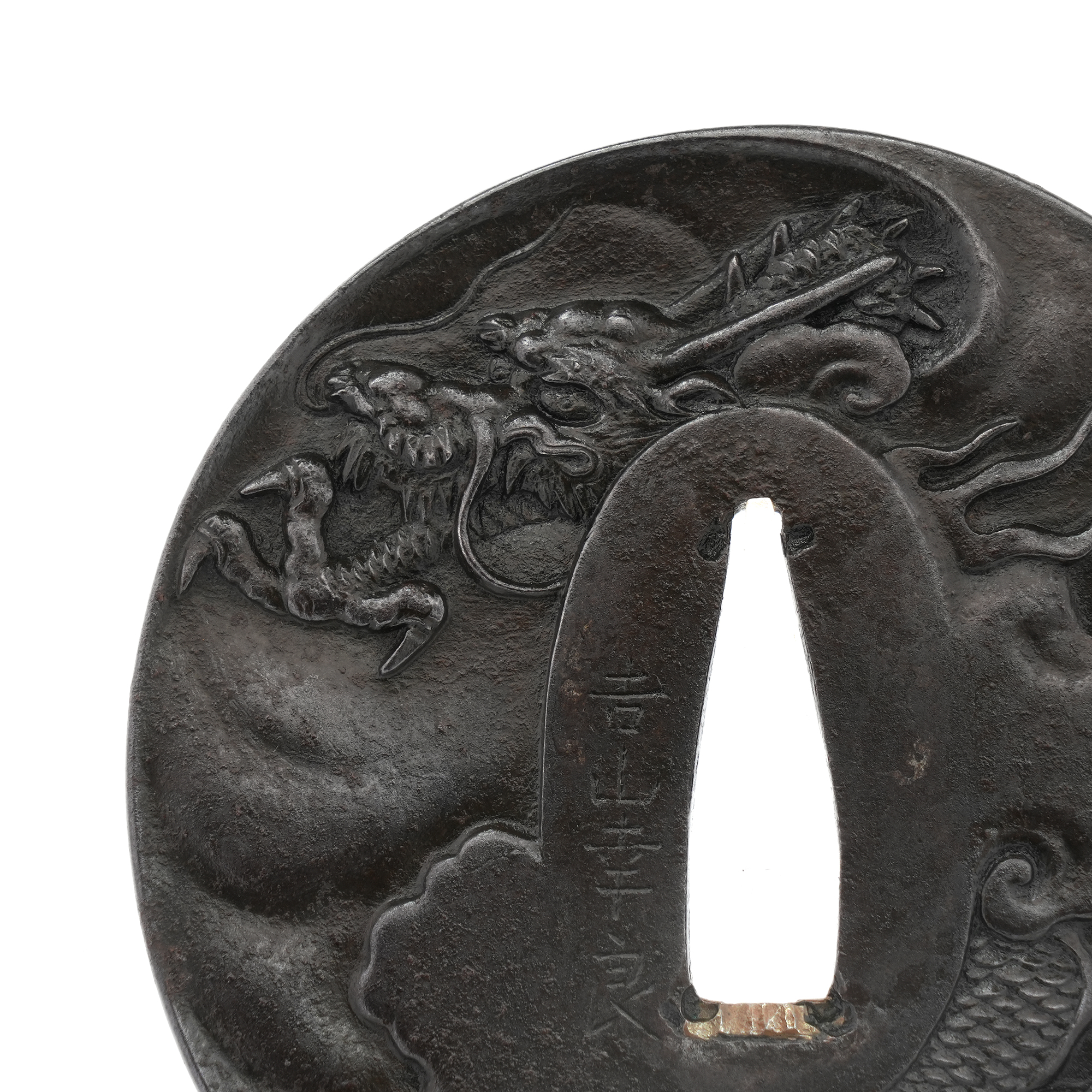
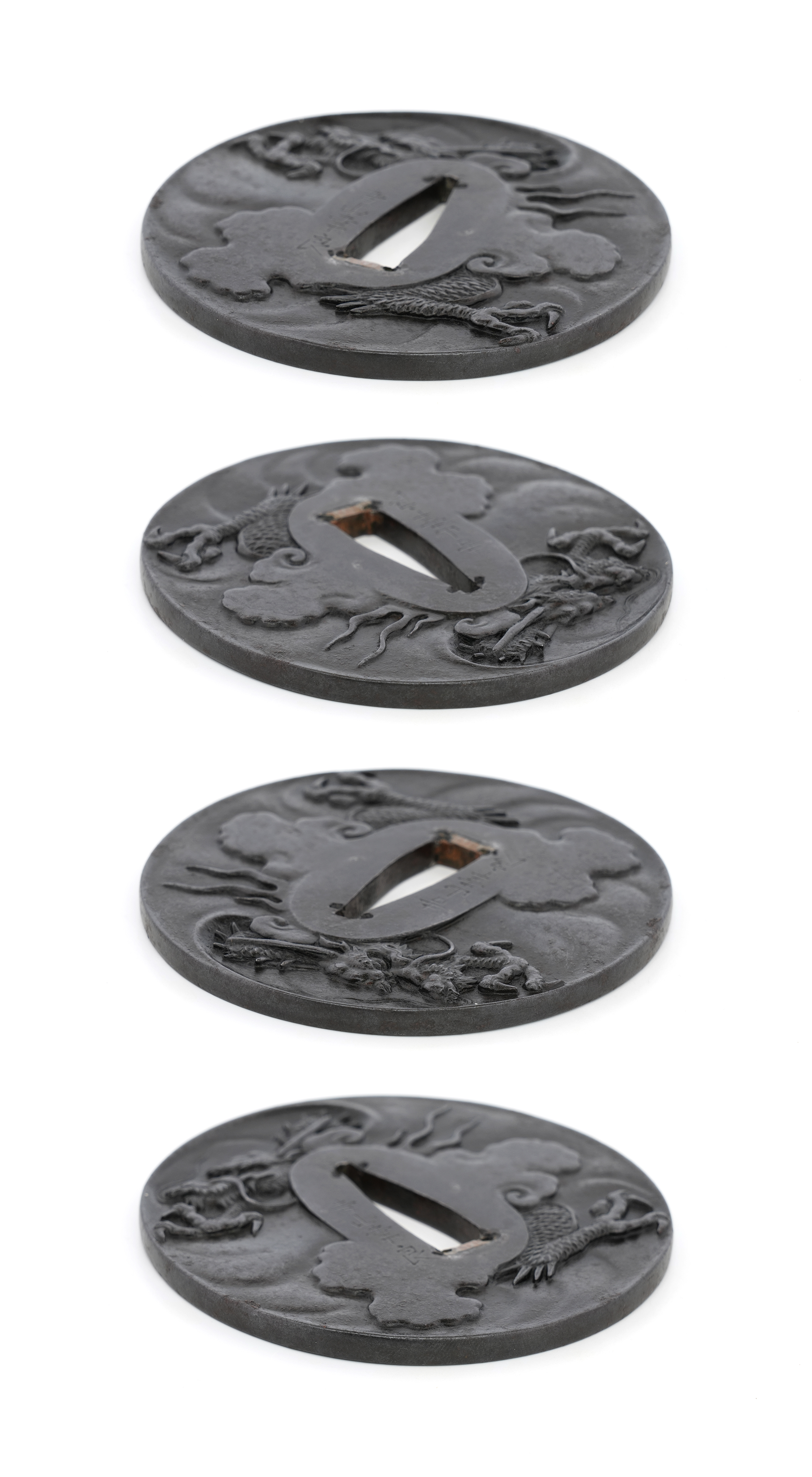
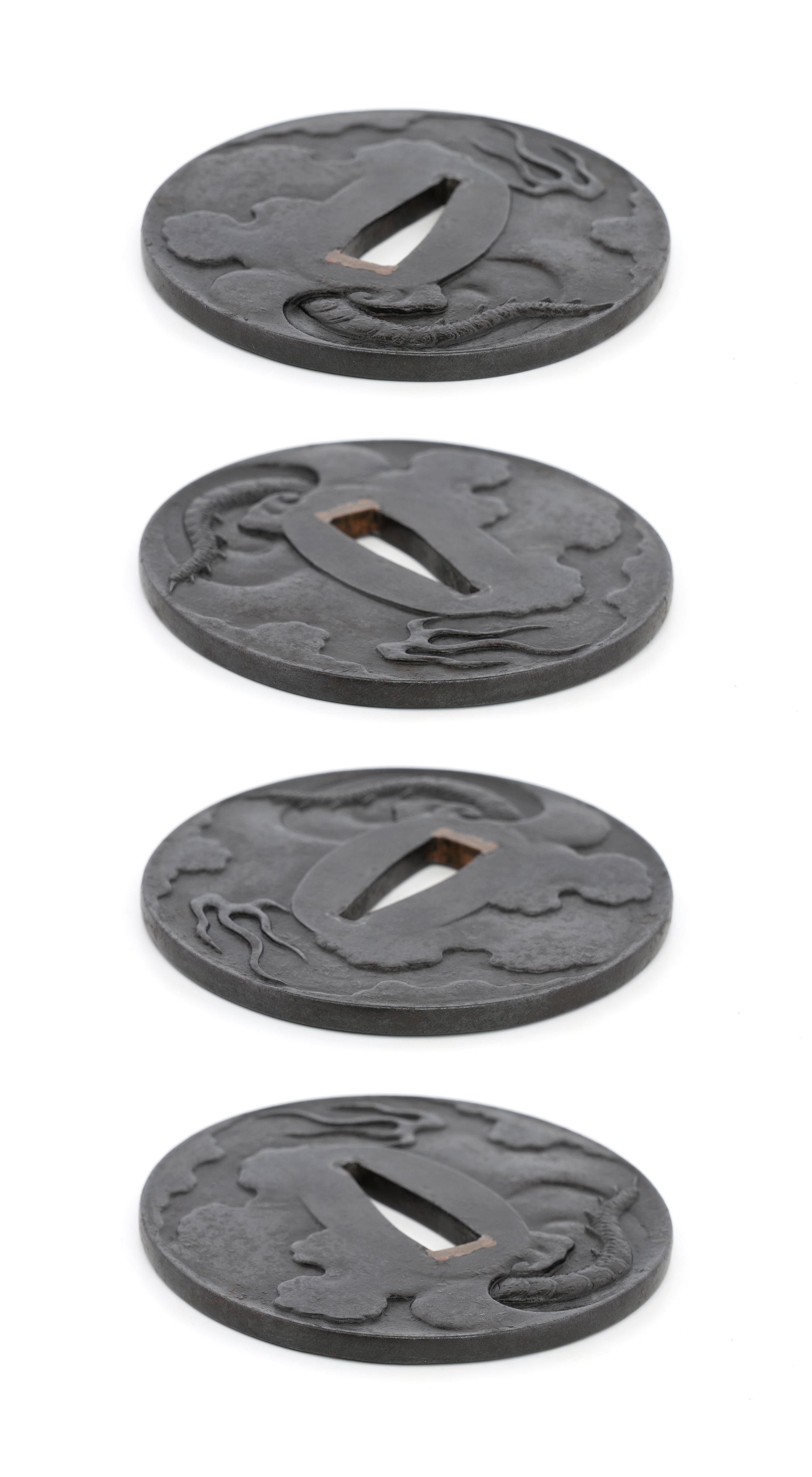
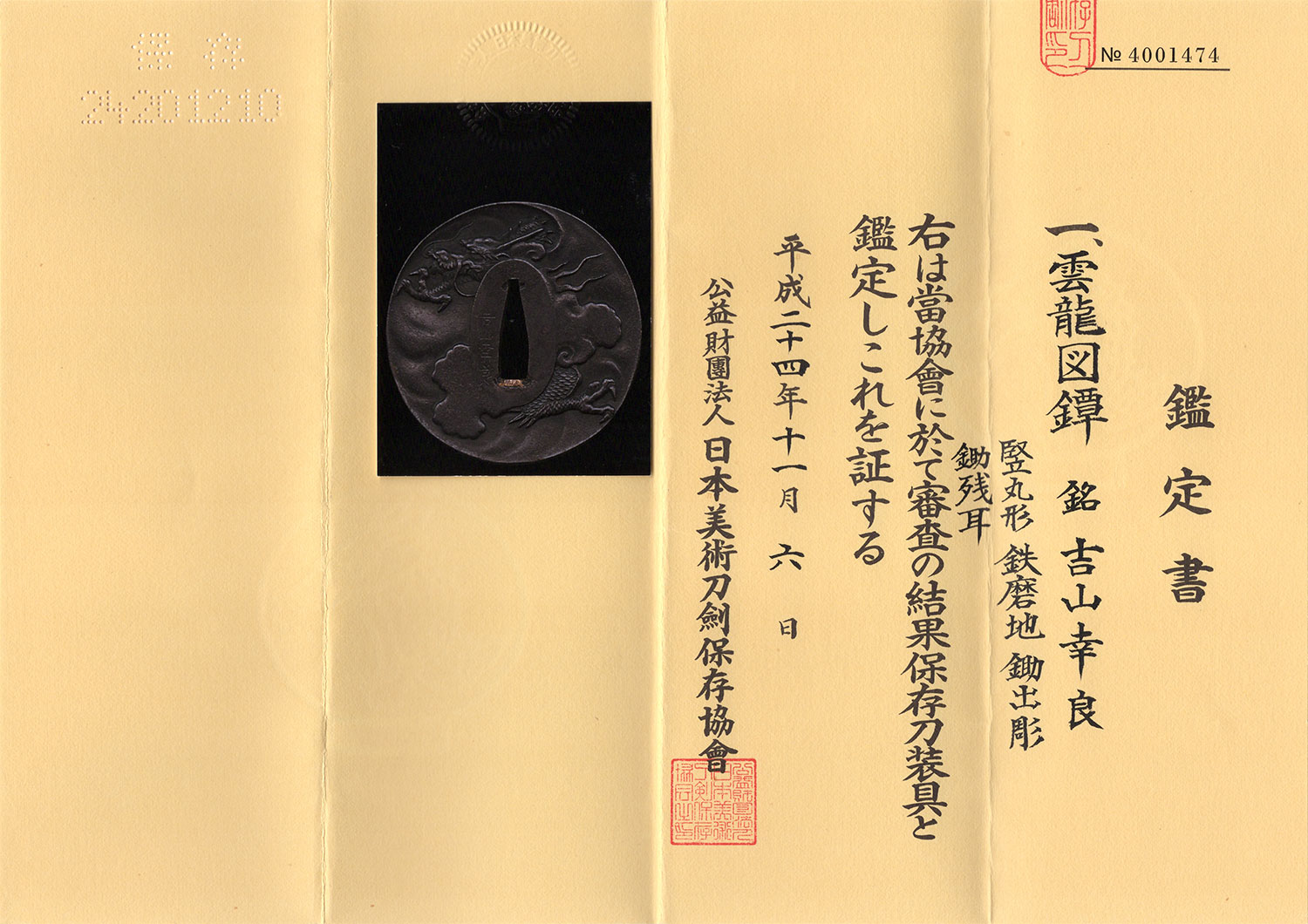
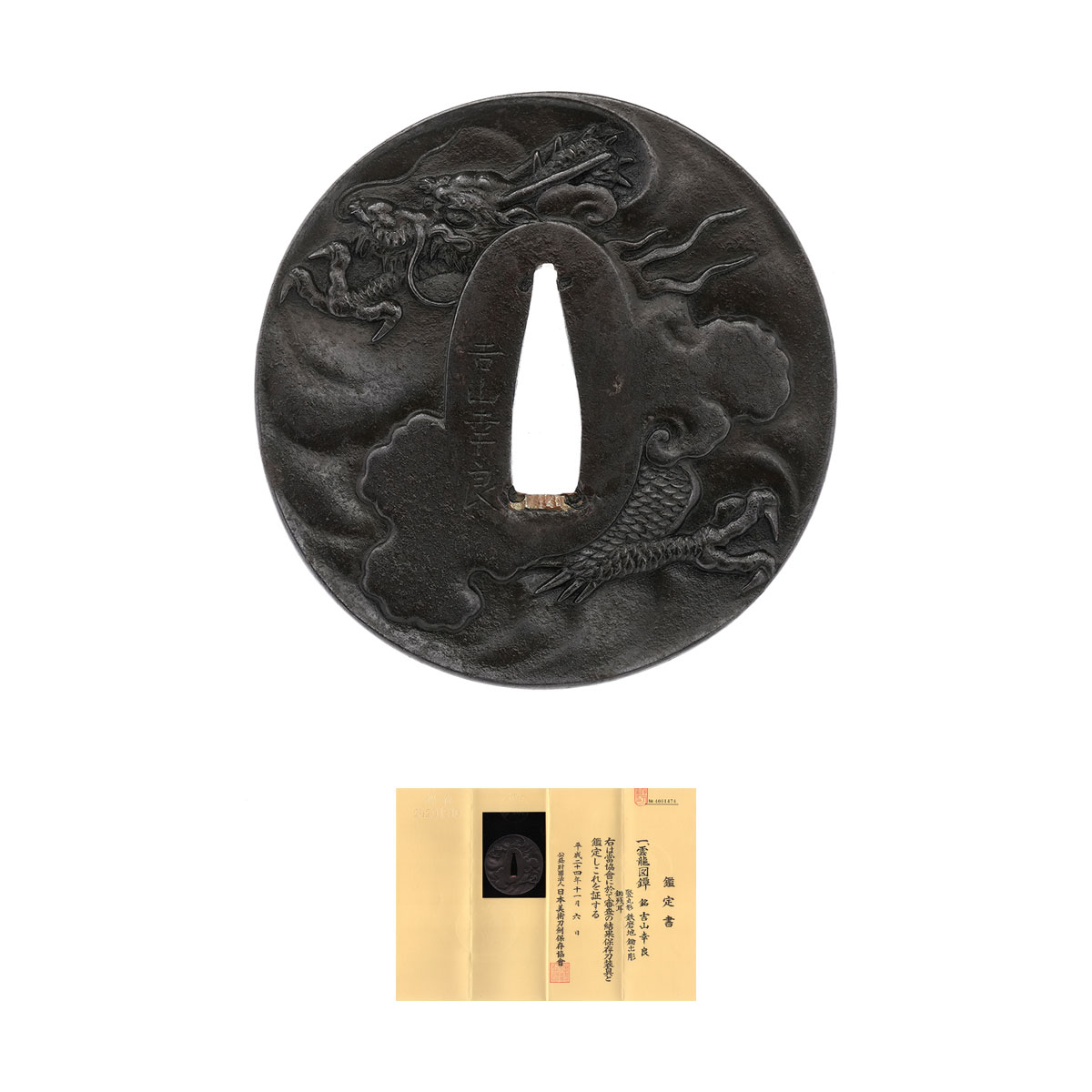
Yoshiyama Yukiyoshi does not have many detailed biographical records remaining, but this work is a masterpiece that grandly depicts a dragon among clouds using only the volume of sukidashibori and the work of the chisel, without relying on the flashiness of irogane, set upon a thick katanmaru-gata tetsu-ji; it is a piece that directly conveys the artist's formative power and certain skill in handling iron. The dragon is a spiritual beast that governs water, and at the same time, because of its form ascending to the heavens to call forth clouds and rain, it has been favored by the samurai class as an auspicious motif symbolizing authority, protection, leaps forward, and rising fortune. In this item, a large dragon head is placed at the upper part of the omote, revealing forelegs and sharp claws as if pushing through the clouds, while the long body winds toward the lower part of the composition. Through a bold composition that treats the circumference of the tsuba itself as a sea of clouds, it captures the moment the dragon is not stationary but looming before one's eyes from within thick clouds; when viewed from the front, it possesses a heavy and majestic appearance, and when the angle is changed, the undulations of the carving and the sense of dynamism emerge vividly. The details are carved distinctly, from the wide-open eyes, protruding eyebrows, and horns extending backward, to the whiskers undulating in the wind, and the overlapping fangs and beard at the mouth, forming a sharp expression characteristic of a spiritual beast through deeply set eye sockets and a powerfully tensed bridge of the nose. The claws extending from the jointed legs are sharp as if grasping clouds, and while the scales are carved orderly one by one, the roundness and perspective of the body are expressed by changing the depth of the carving for each section. In contrast, the surrounding clouds are given a soft sense of volume by gently raising their outlines, and the contrast with the hard horns, claws, and minute scales creates a rich intensity and depth within the monochrome iron surface. On the ura, the flow of cloud energy and the dragon's body continue without interruption, creating a composition where one can follow the dragon that appeared on the omote as it circles grandly through the clouds by turning the tsuba over. The artist's conceptual power is also evident in the way the pattern does not end as a highlight on only one side but integrates the omote and ura into a single scene; since the height of the clouds and the fine texture of the ji-tetsu quietly change expression depending on the direction of the light, one can enjoy the magnificent panoramic view from a distance and the chisel marks and tetsu-aji thoroughly at hand. It possesses substantial dimensions and weight, with a nagasa of 73.7 mm, a thickness of 4.6 mm, and a weight of 113.5 grams, and the calm koshoku of the ji-tetsu harmonizes well with the solemn atmosphere of the unryu. In addition to the peace of mind provided by the Hozon Tosogu Kanteisho, if one synthesizes the carving technique, tetsu-aji, composition, and state of preservation, it can be evaluated as a work possessing the status and spectacle to warrant sufficient expectations for the Tokubetsu Hozon Tosogu shinsa. It radiates a strong presence whether as the center of a heavy koshirae or displayed as an independent metalwork art piece, and for those who favor dragon designs or emphasize the power of tetsu-ji takabori, it is an attractive piece to be enjoyed at hand for a long time.
Offered by Toushin

As written by the shop
Machine translation from the shop's Japanese · may contain errors ·
Certifies a genuine fitting worth preserving: a correct signature, or, if unsigned, an identifiable era and school, with recognized artistic and craft value.
The NBTHK (Nihon Bijutsu Tōken Hozon Kyōkai, the Society for the Preservation of Japanese Art Swords) is a public-interest incorporated foundation founded in 1948 and supervised by Japan’s Agency for Cultural Affairs (Bunkachō); it is based at the Japanese Sword Museum in Tokyo. Its expert panels physically examine each submitted work (shinsa) and issue a certificate (kanteishō) ranking it by artistic and historical merit. NBTHK papers are the most widely recognized standard of authentication for Japanese swords and fittings.
NBTHK official siteAs a rule we do not accept returns, except when we have sent a different item from the one ordered or when there is a significant discrepancy between the description and the item. If you wish to return an item, please contact us within 3 days of its arrival and then send it back.
¥880,000