 NihontoWatchNihontoWatch
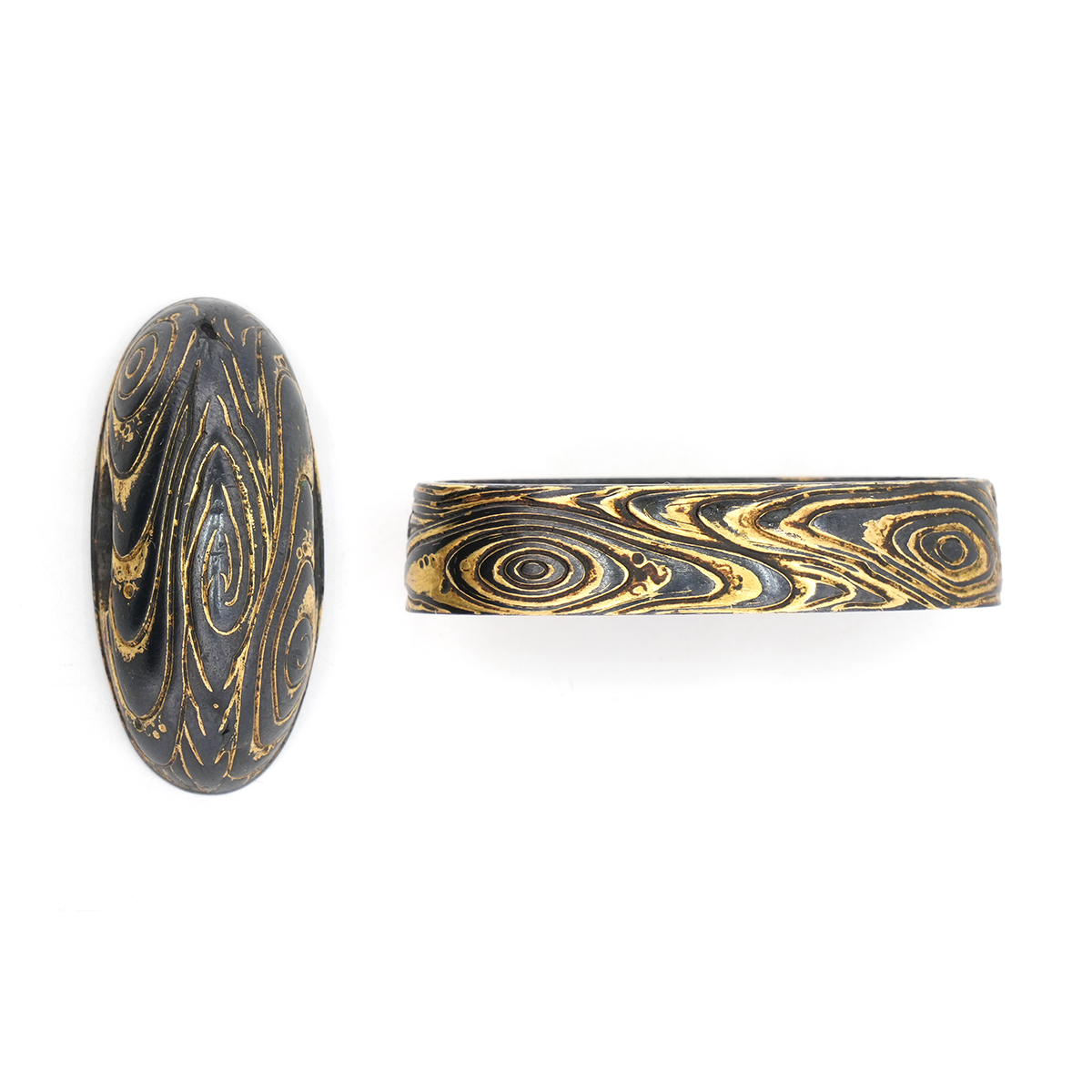
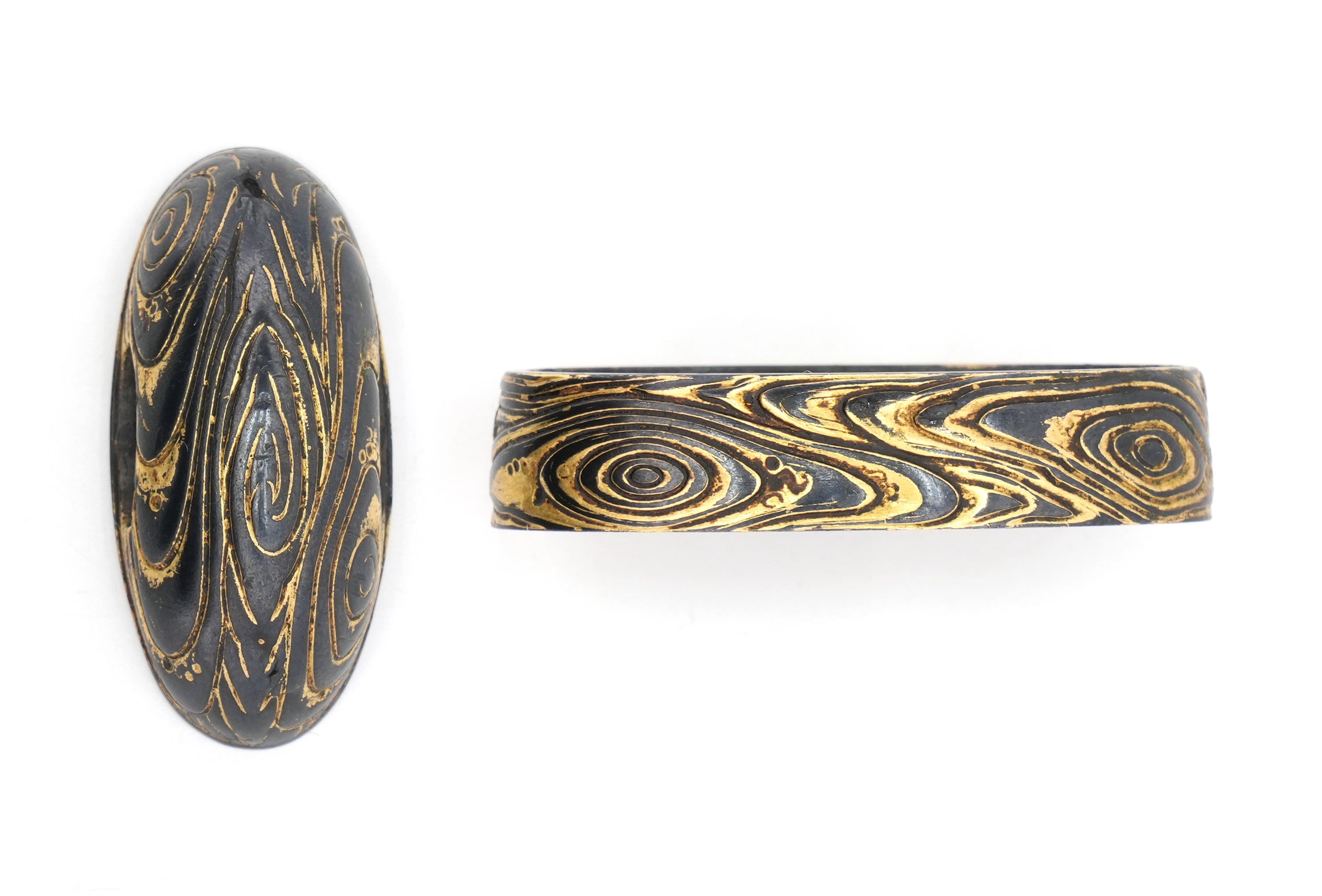
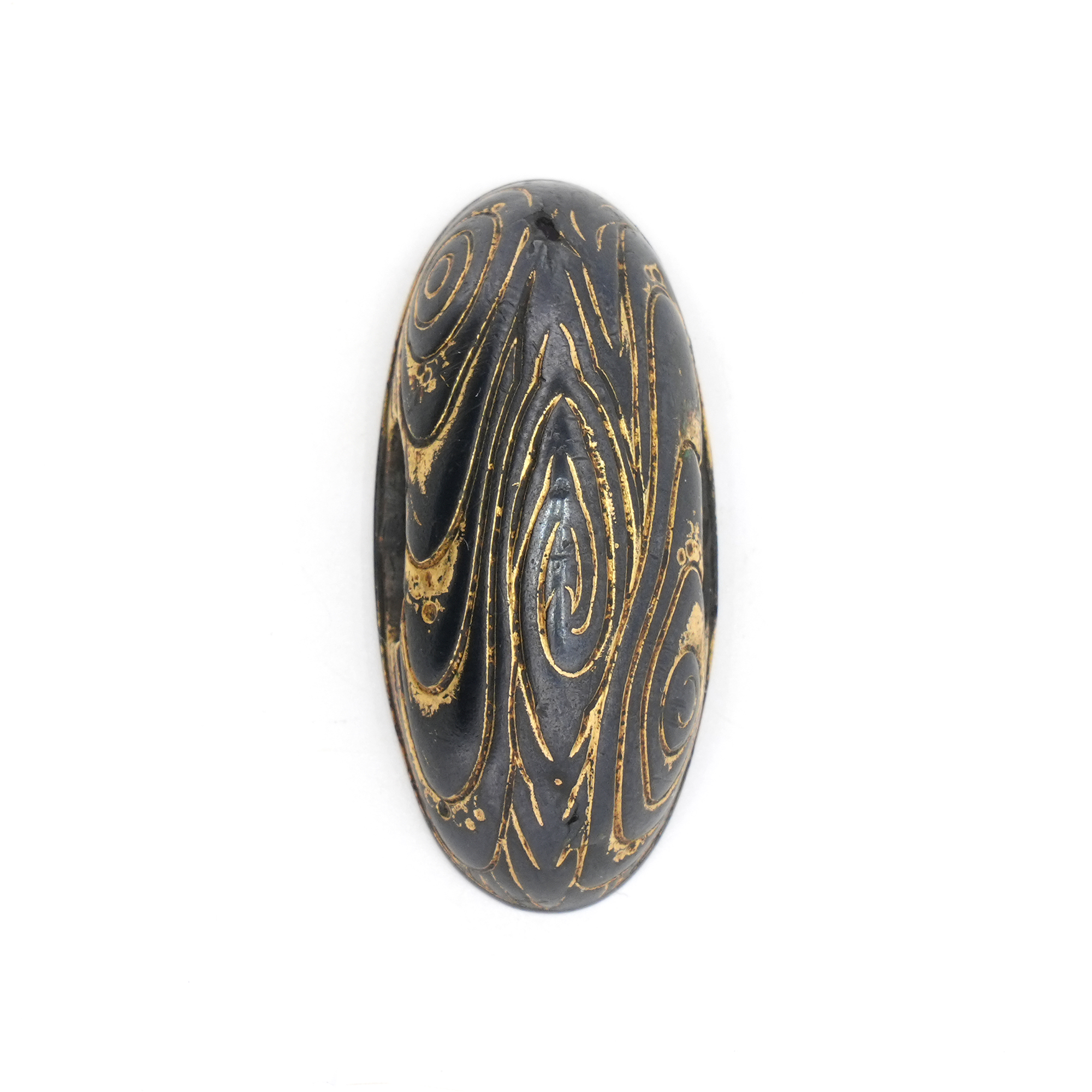
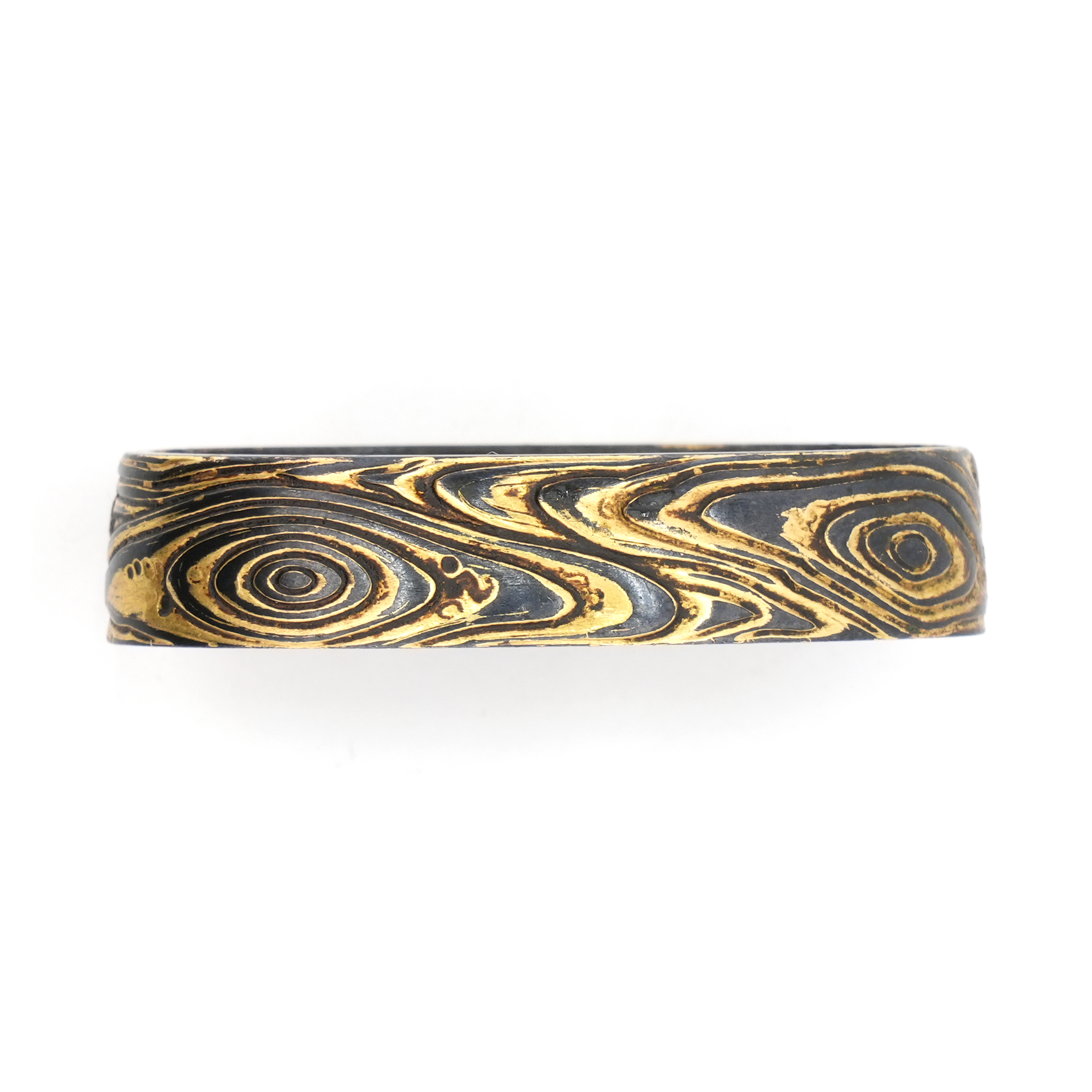
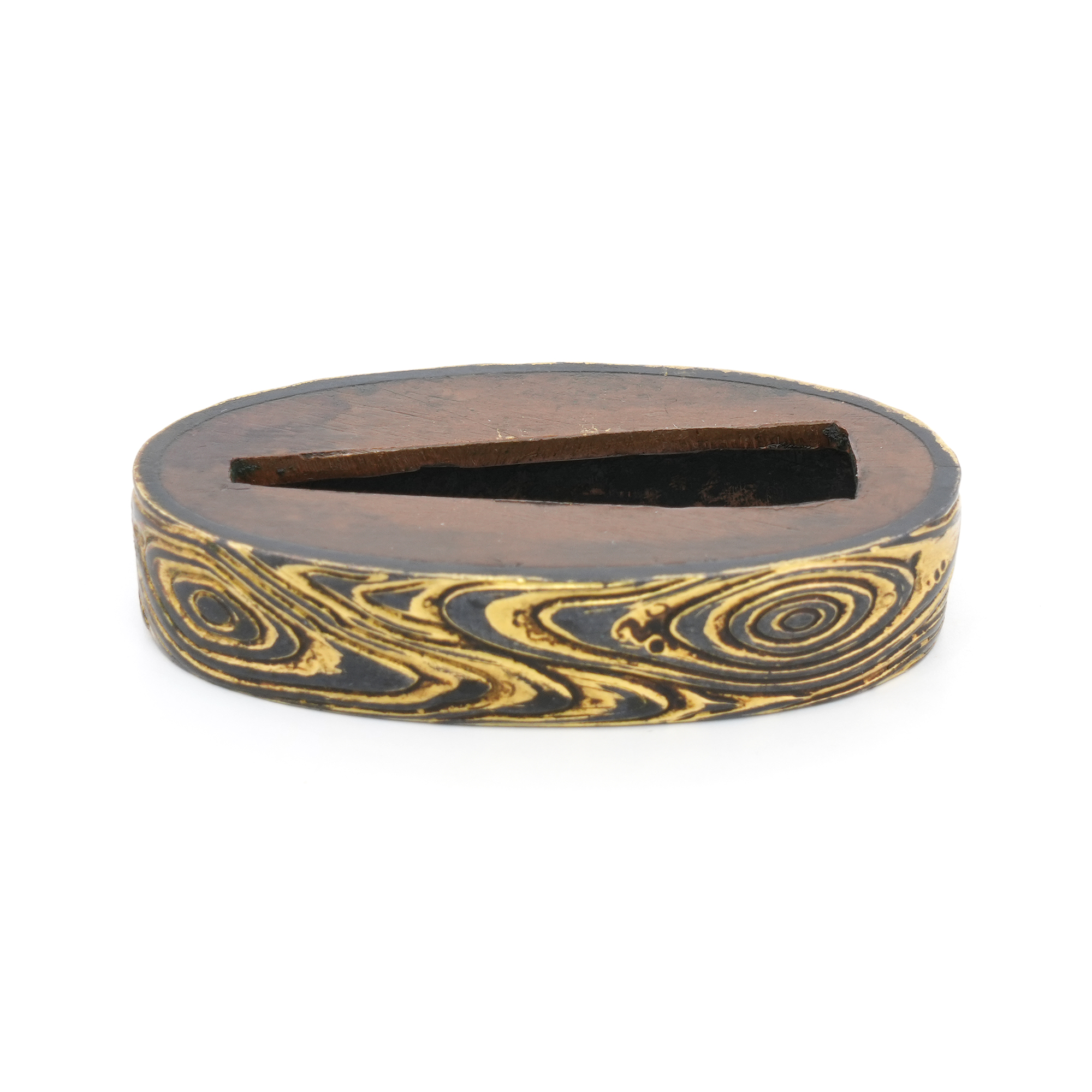
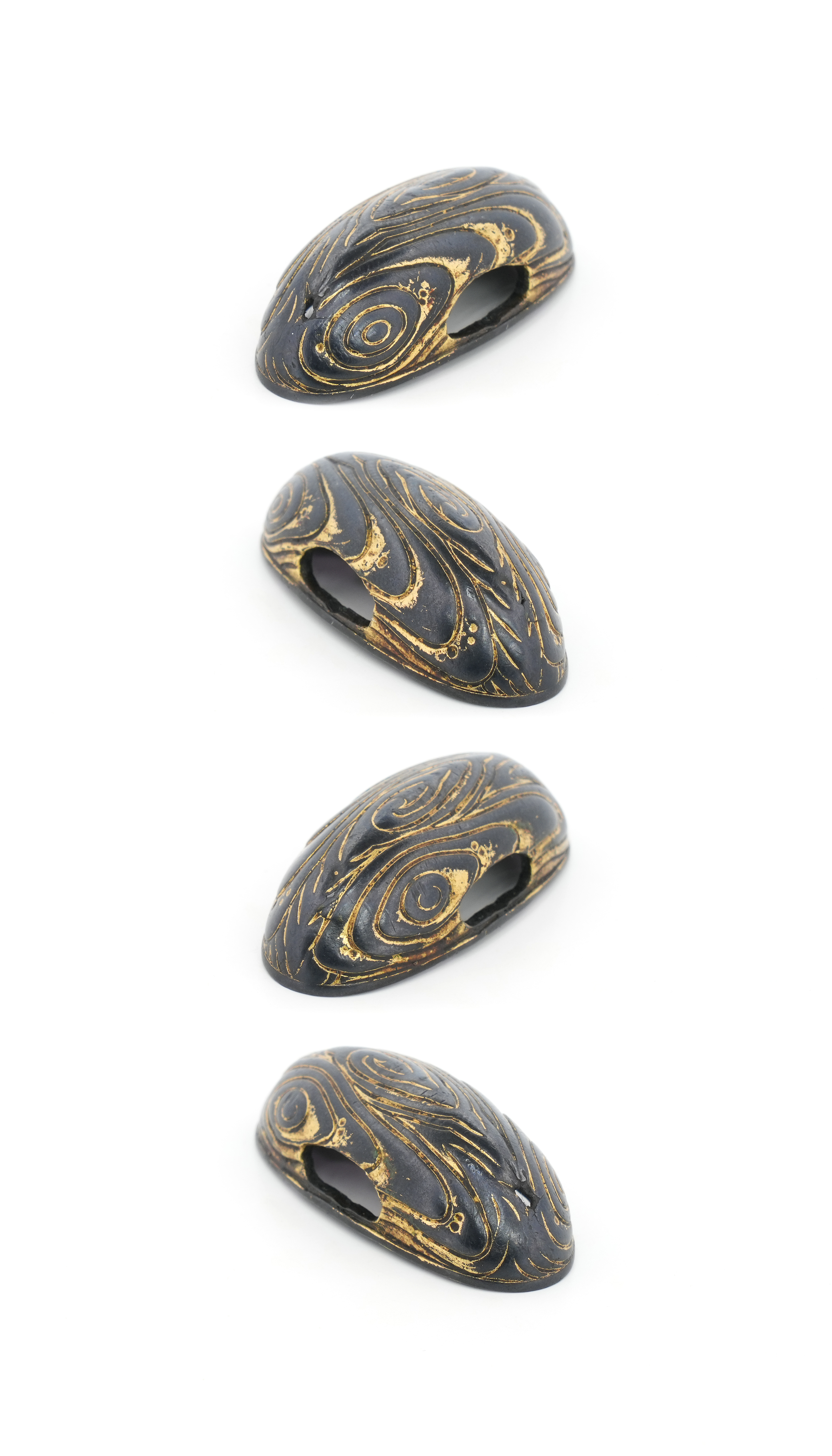
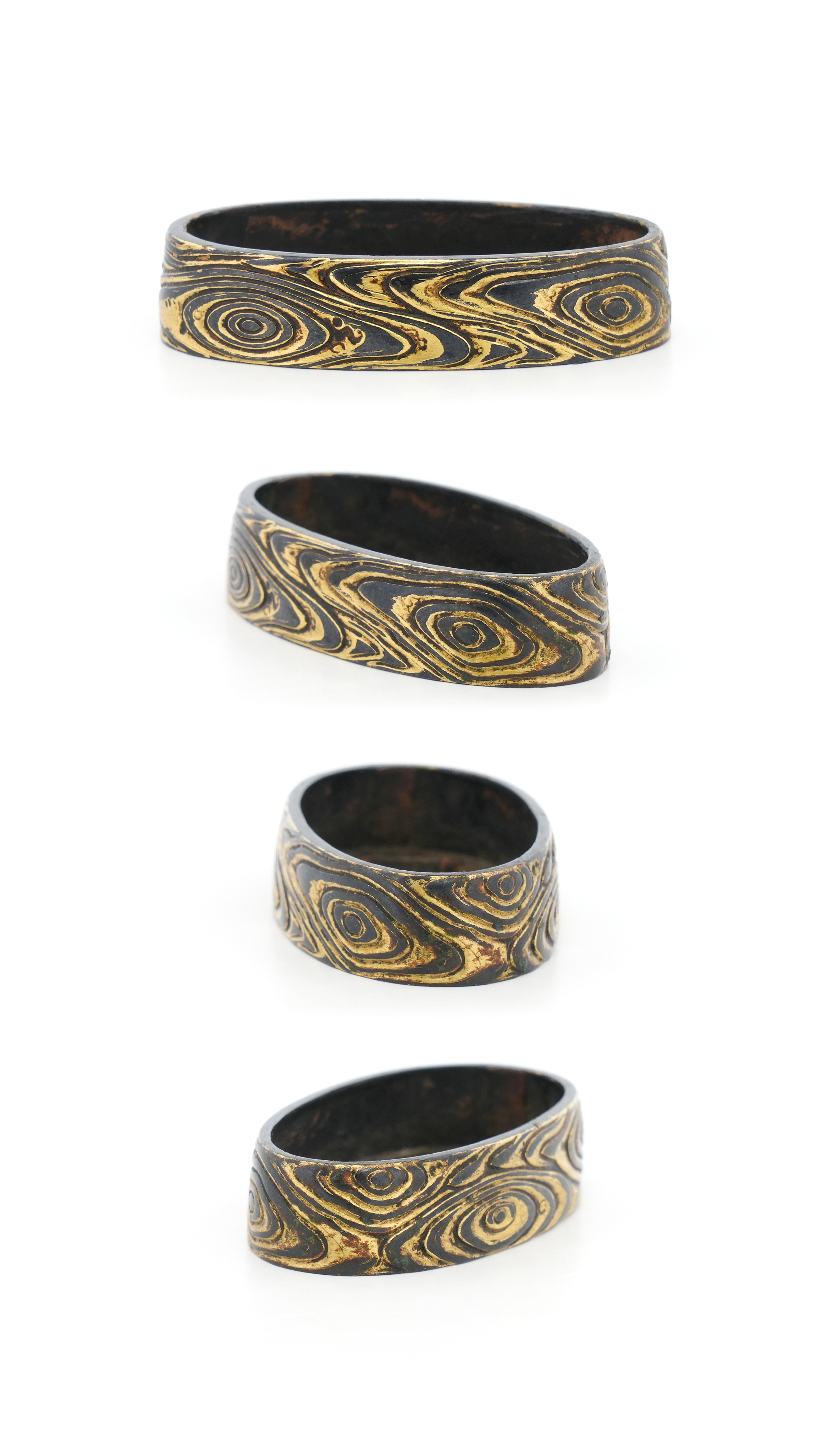
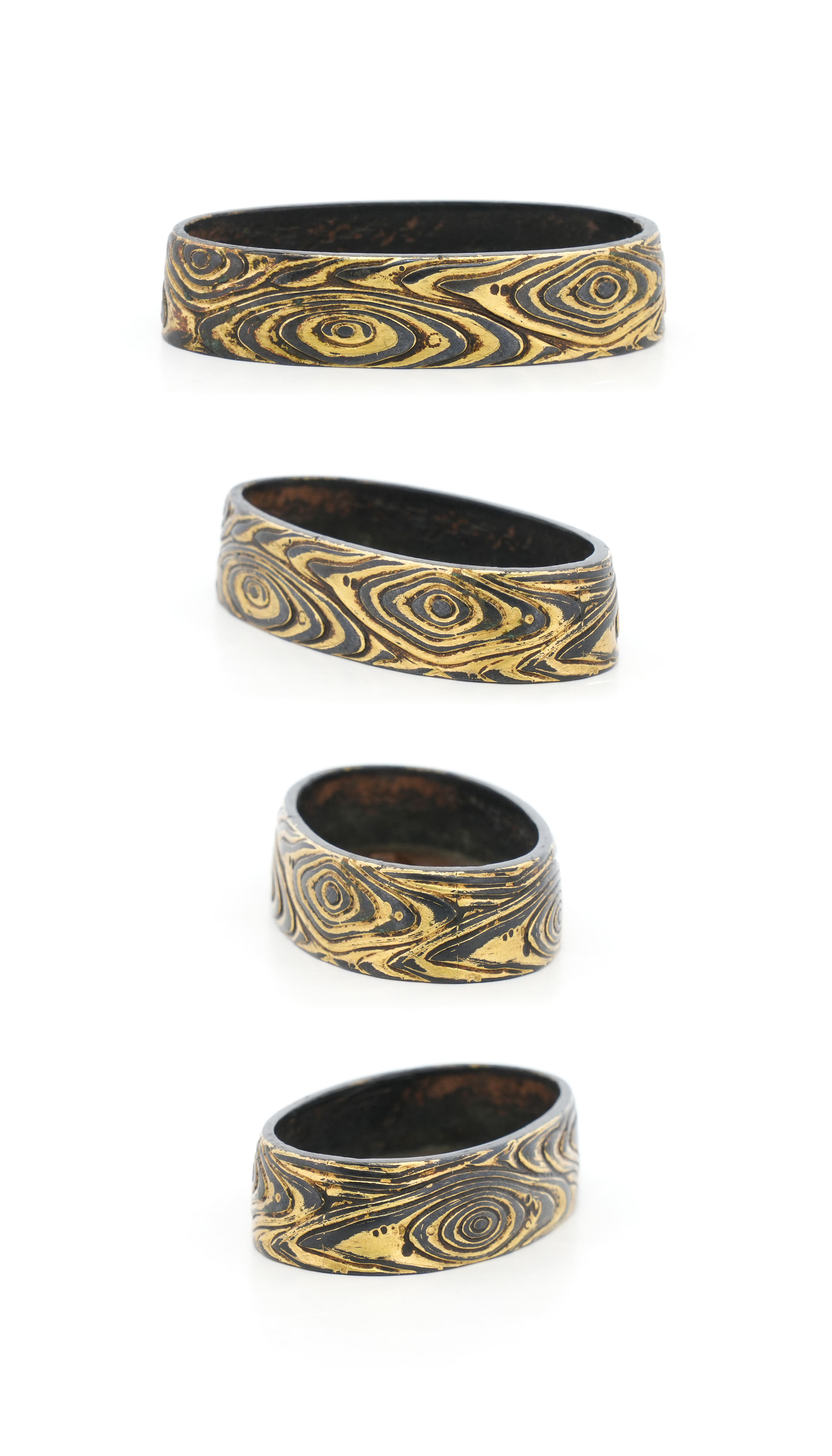
Mokume is a design motif that stylizes the growth rings and grain patterns formed by trees over many years. The concentrically overlapping knots, gently undulating grain, and thin streaks extending toward the trunk never take the same shape twice, condensing the order and variation created by nature into a single piece of metalwork. The image of a tree that continues to grow constantly is also layered with prayers for longevity and prosperity; it is a design that, while abstract, invites the viewer's imagination and shows well on tosogu. This item is a set where a mokume pattern is carved across the entire surface of the fuchi and kashira against a background of shakudo-ji exhibiting a deep black color, with kin-iroe applied along the flow of the grain. On the kashira, the composition centers on a large grain pattern extending vertically from the middle, with knots and growth rings encircling the left and right to evoke the cross-section of a tree, while on the fuchi, the elongated surface is treated as a single piece of timber, continuously developing the way multiple streaks of grain flow out from knots of various sizes. Although the same motif is used for both the fuchi and kashira, the direction and density of the pattern are changed according to the expanse of the surface, resulting in excellent cohesion when the two are viewed together. The outlines of the mokume are not merely flat lines; they are layered while finely varying the depth of the carving and the width of the lines, and by combining multiple rings around the knots with sharply extending lines and gently curving lines for the flow of the grain, a soft movement characteristic of wood surfaces is created upon the hard metal. While the vivid contrast between the black shakudo-ji and the gold makes the flow of the pattern stand out even from a distance, at hand, the swaying of the lines, the curling of the knots, and the shading of the gold appear one after another, changing the expression of the mokume depending on the viewing angle. The kin-iroe possesses gentle gradations aged by time, ensuring that the bright gold and the deep black of the shakudo do not become too uniform, creating a calm keshiki unique to old works. The workmanship, which wraps the pattern around the entire circumference of the fuchi without interruption and naturally fits the mokume to the curved surface of the kashira, has high aesthetic value, and the large, voluminous construction with a fuchi length of 40.0 mm and a koshi height of 8.8 mm further enhances the power of the pattern. When used for a koshirae, this is a fuchigashira that tightens the overall appearance of the tsuka while adding a strong individuality, allowing one to fully enjoy the bold design that makes the grain itself the protagonist without relying on figures or historical events, the dignity of the shakudo-ji, and the brilliance of the kin-iroe.
Offered by Toushin

We couldn’t find current papers for this piece. Ask the dealer whether it has been, or can be, submitted to shinsa. — Hoshi

Edo
Unsigned
As written by the shop
Machine translation from the shop's Japanese · may contain errors ·
We could not find an authenticity certificate on the seller’s listing. Japanese swords and fittings are normally papered by the NBTHK (or the NTHK). Without one, the attribution is the seller’s own assessment and has not been independently verified — treat it with caution and ask the dealer about certification before buying.
As a rule we do not accept returns, except when we have sent a different item from the one ordered or when there is a significant discrepancy between the description and the item. If you wish to return an item, please contact us within 3 days of its arrival and then send it back.
¥242,000