 NihontoWatchNihontoWatch
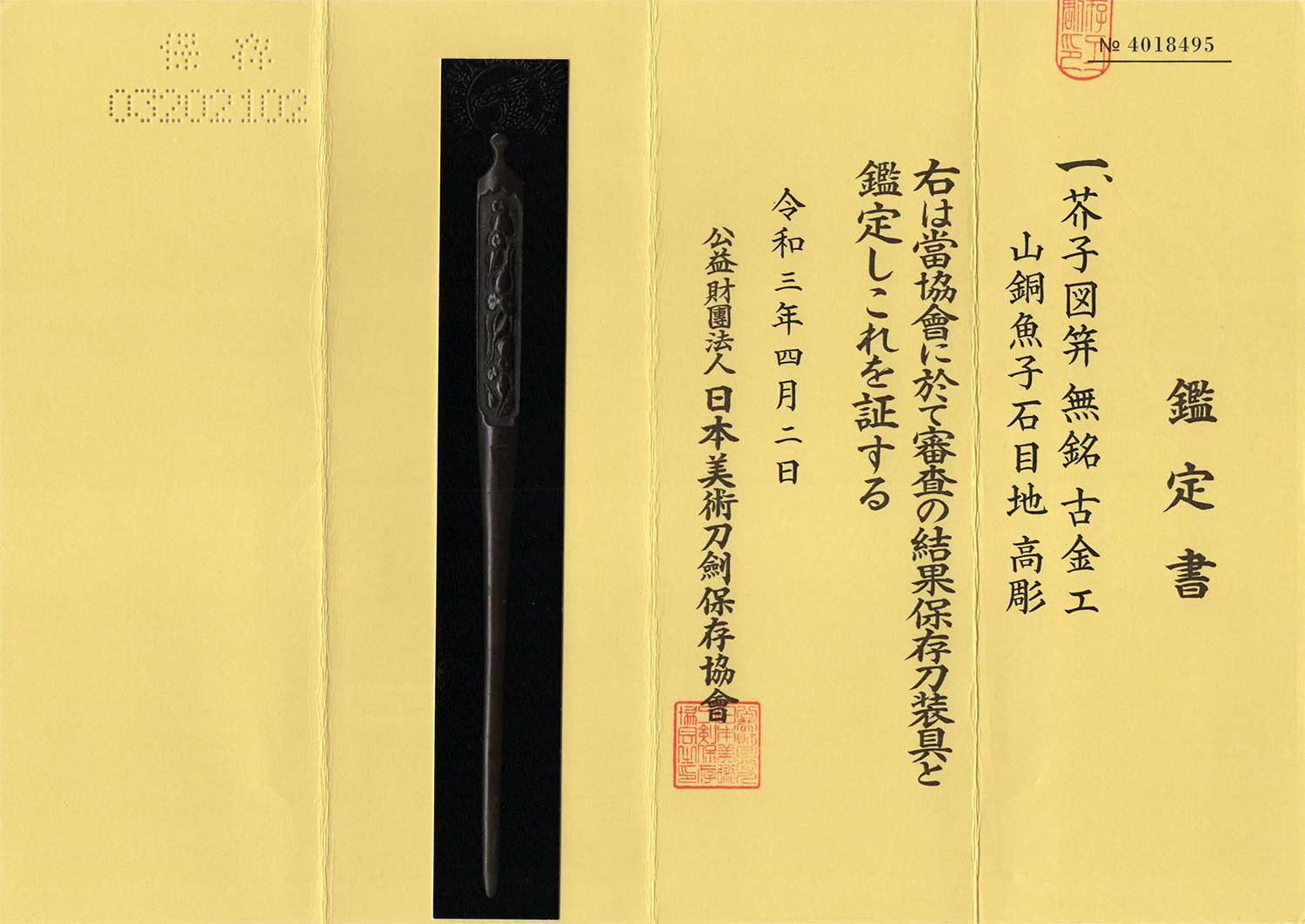
Ko-kinko is an appraisal term used for mumei iroe fittings produced primarily from the Muromachi period through the Momoyama and early Edo periods that are not attributed to specific schools such as the Goto family, but instead exhibit archaic styles in their jigane, nanako, carving techniques, and koshoku. This work is accompanied by a Hozon Tosogu Kanteisho from the Nippon Bijutsu Token Hozon Kyokai which explicitly states "Ko-kinko," providing reliable documentation that supports its value as an old iroe kogai. The poppy is a plant that opens lovely flowers at the tips of slender stems and bears rounded fruit after the flowers fade; the sight of flowers, buds, and fruit transitioning on a single plant evokes the cycle of life and a rich harvest. As a craft design, it is a motif that allows one to enjoy varied forms such as the curves of thin stems, round fruit, and soft petals. By carving down a single piece of yamagane-ji, the artist created a distinction between the pictorial surface and the outer ko-beri, struck nanako onto the recessed surface, and arranged poppy flowers, buds, fruit, and leaves in continuous takabori; by individually rendering the opening petals, the swelling fruit, and the stems growing with repeated nodes, a flow is created as if the plant is growing from bottom to top along the slender shape of the kogai. The fact that the design is made to stand out using only the color tones and koshoku of the yamagane itself and the depth of the carving, without using iroe such as gold, conveys a rustic and powerful charm characteristic of Ko-kinko. The texture of the "yamagane nanako ishime-ji" noted in the certificate possesses a soft fluctuation different from the uniformly arranged nanako of later periods, and harmonizes well with the rounded forms of the poppies raised in high relief. The warm brown of the yamagane, the deep blackish tones of the carved-down surface, and the calm luster developed over many years overlap, and its great appeal lies in expressing an archaic sense of life through the jigane and carving alone, without relying on flamboyant iroe. The reverse side shows the wide surface of the yamagane simply, creating a vivid contrast with the dense botanical carving on the front; with a grand presence exceeding 22 centimeters in total length, a period dating back from the late Muromachi to Momoyama, jigane that retains its koshoku, and the inclusion of a Hozon Tosogu Kanteisho, this is a highly collectible piece that allows one to fully appreciate the charm of an old kogai, of which few extant examples remain.
NihontoWatchOffered by Toushin

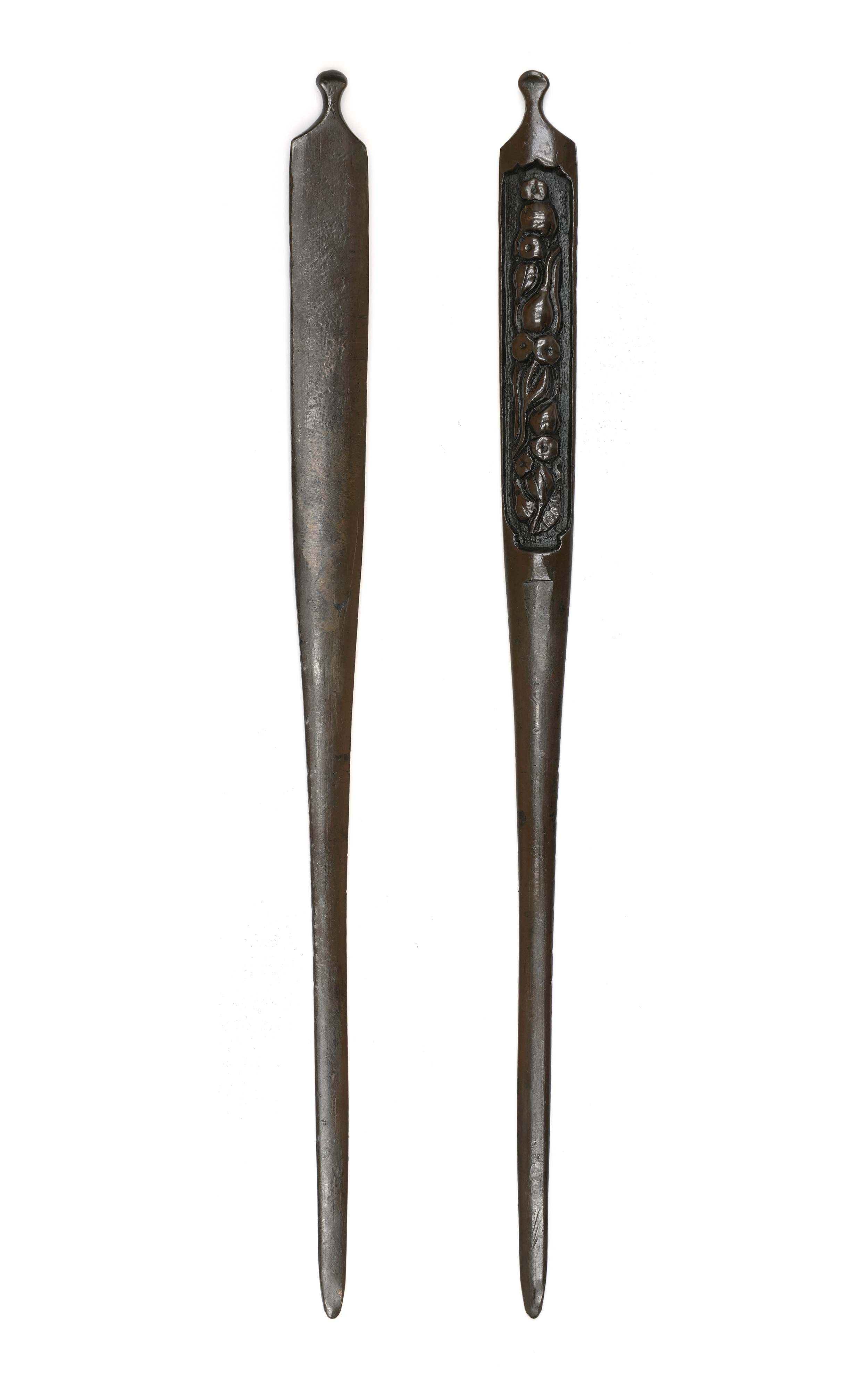
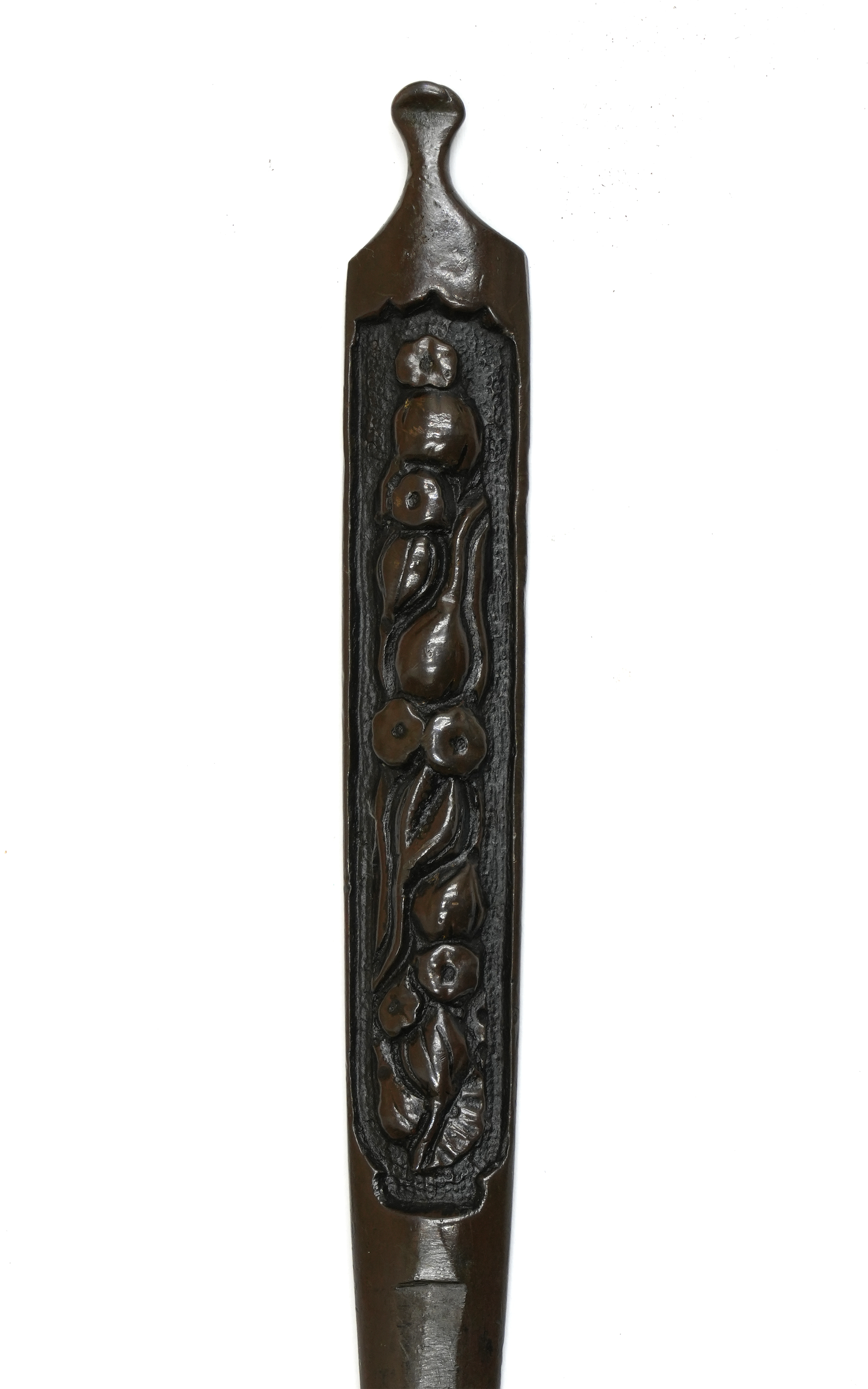
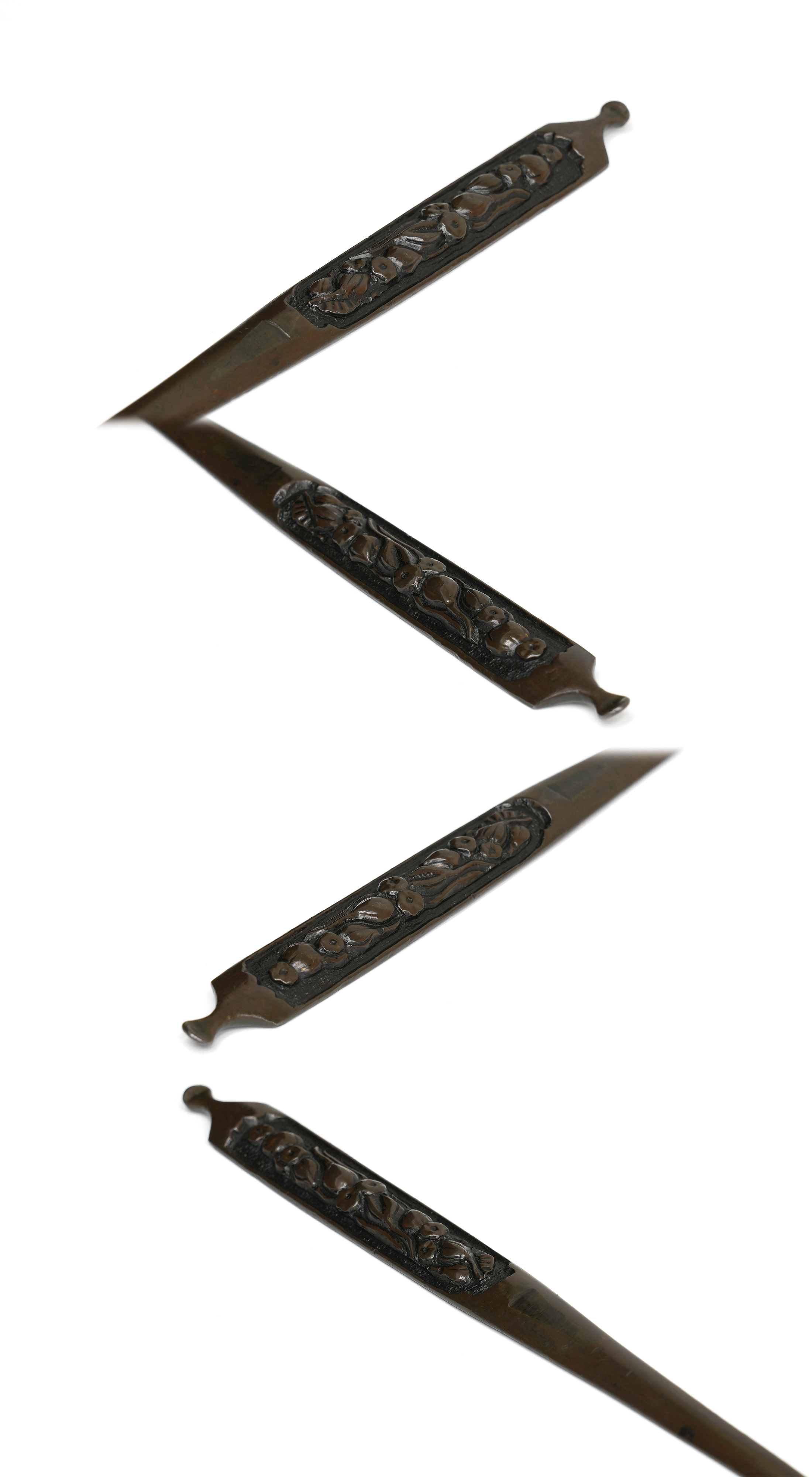
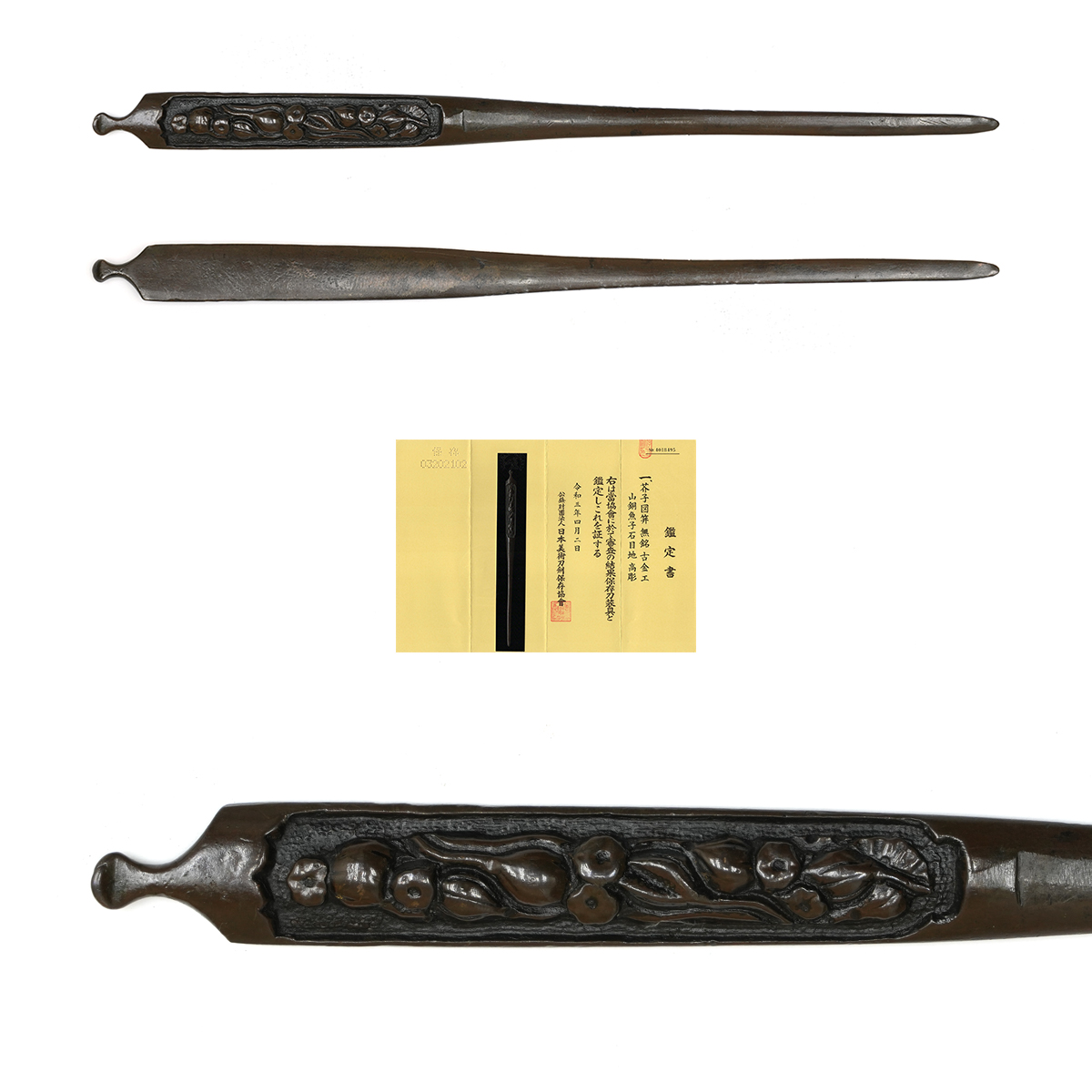
Muromachi
Unsigned
Hozon (NBTHK)
As written by the shop
Machine translation from the shop's Japanese · may contain errors ·
Certifies a genuine fitting worth preserving: a correct signature, or, if unsigned, an identifiable era and school, with recognized artistic and craft value.
The NBTHK (Nihon Bijutsu Tōken Hozon Kyōkai, the Society for the Preservation of Japanese Art Swords) is a public-interest incorporated foundation founded in 1948 and supervised by Japan’s Agency for Cultural Affairs (Bunkachō); it is based at the Japanese Sword Museum in Tokyo. Its expert panels physically examine each submitted work (shinsa) and issue a certificate (kanteishō) ranking it by artistic and historical merit. NBTHK papers are the most widely recognized standard of authentication for Japanese swords and fittings.
NBTHK official siteAs a rule we do not accept returns, except when we have sent a different item from the one ordered or when there is a significant discrepancy between the description and the item. If you wish to return an item, please contact us within 3 days of its arrival and then send it back.
¥242,000