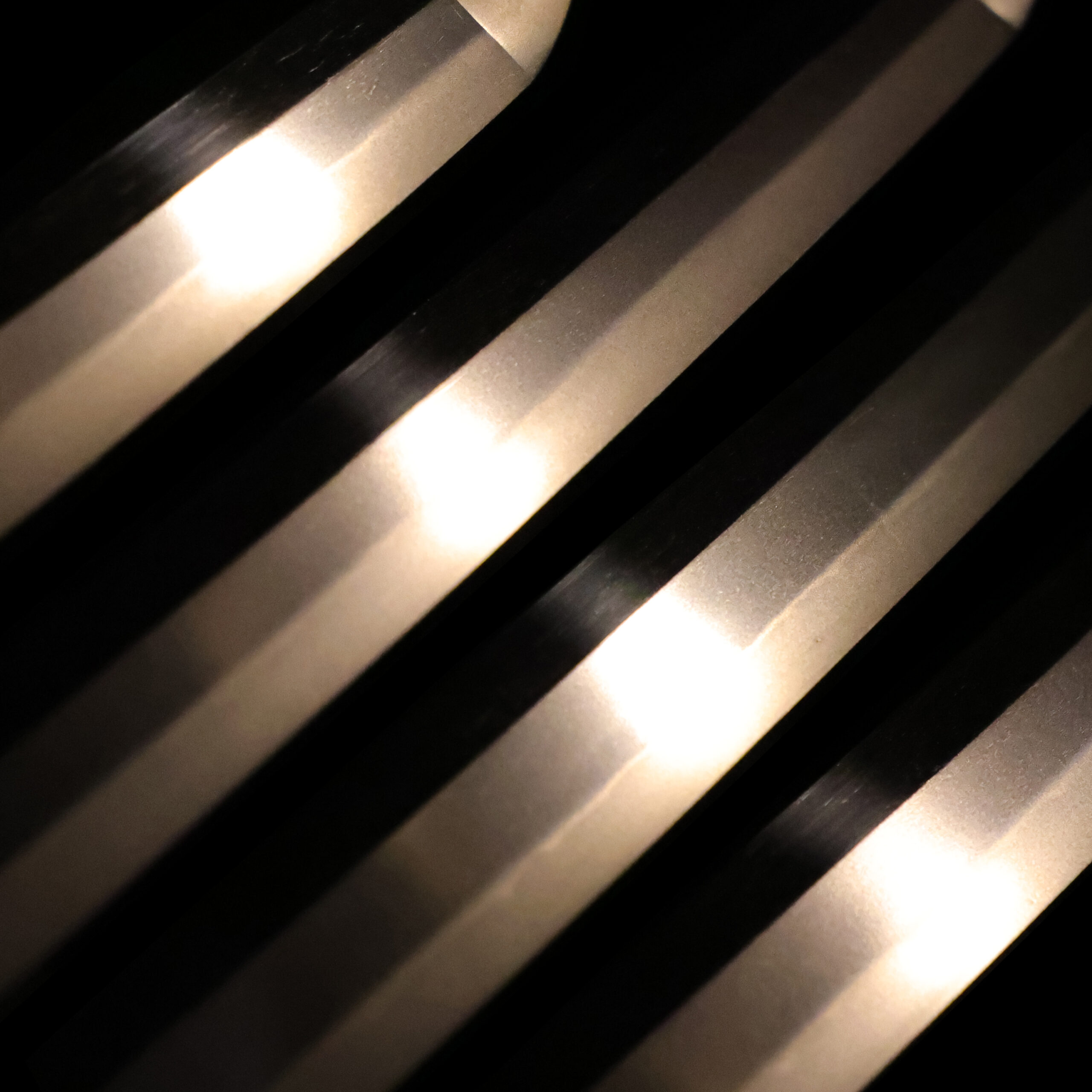
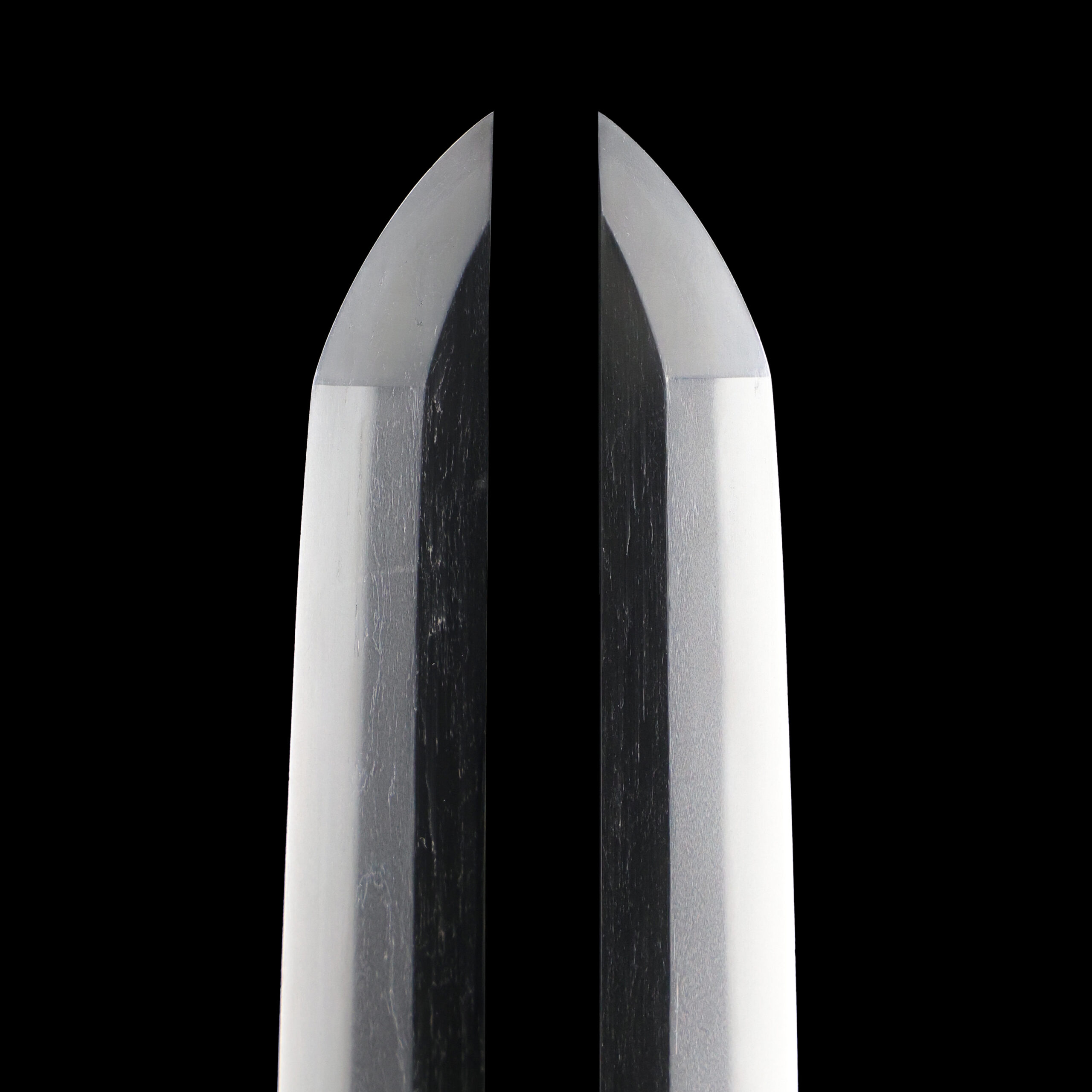
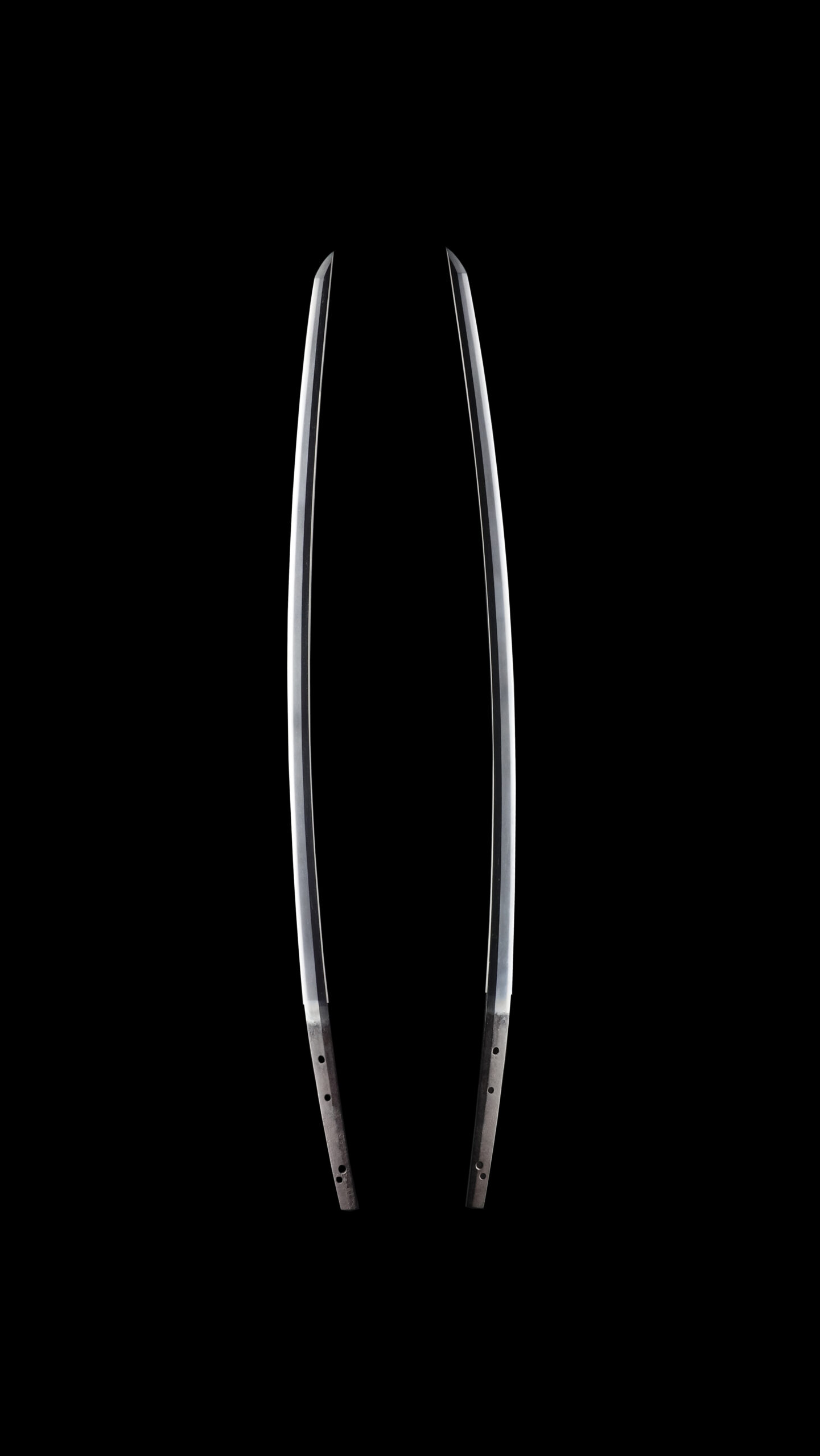
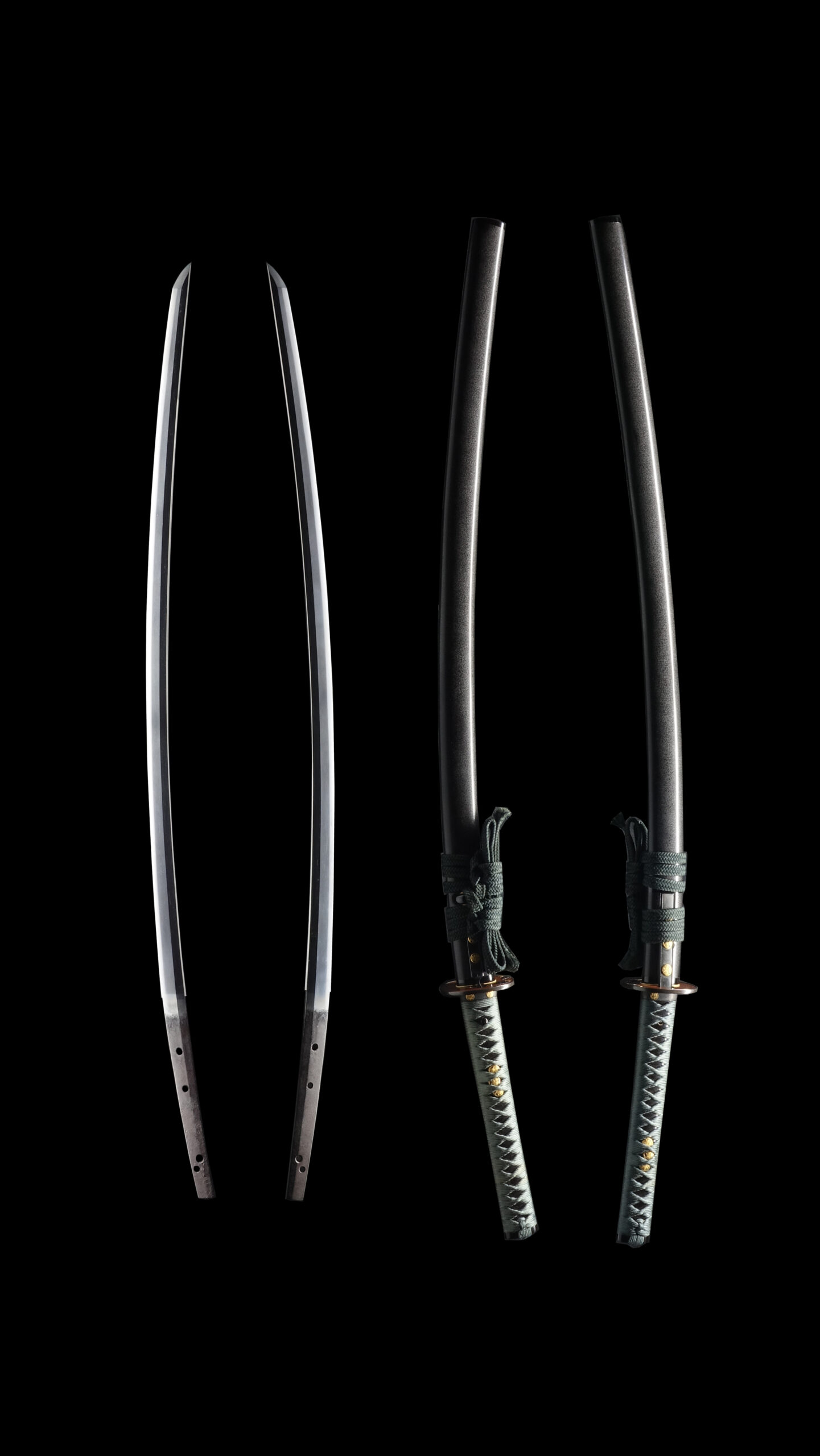
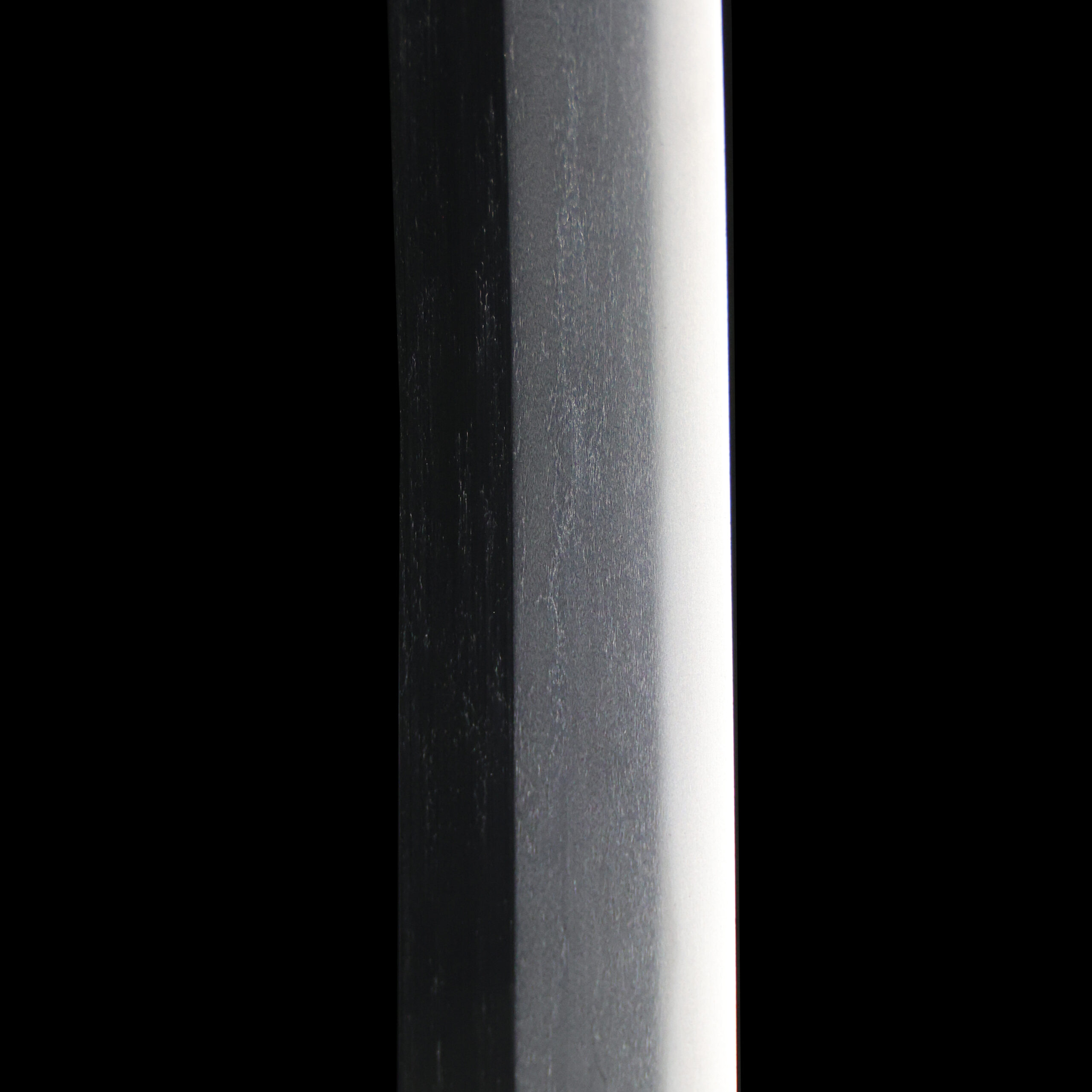
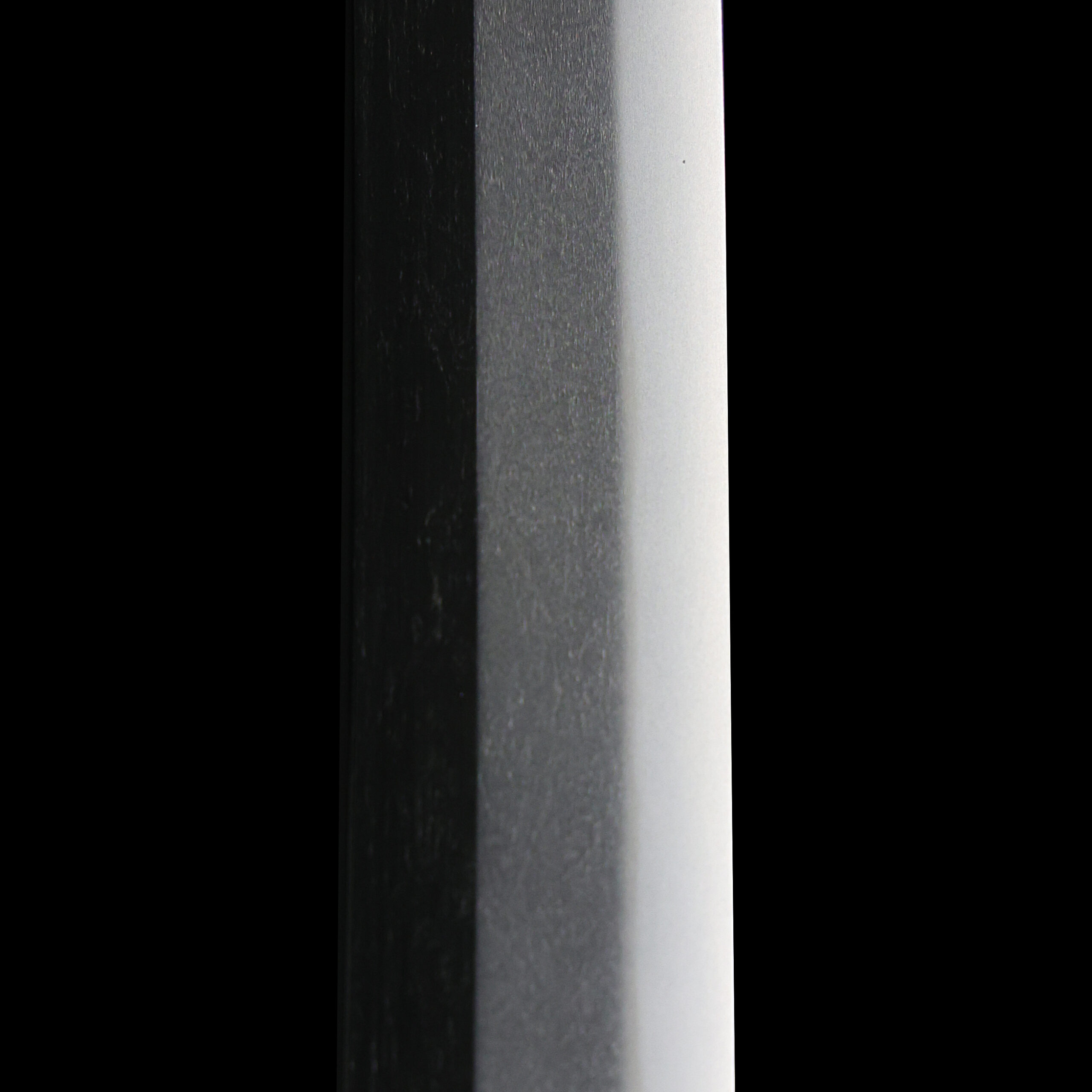
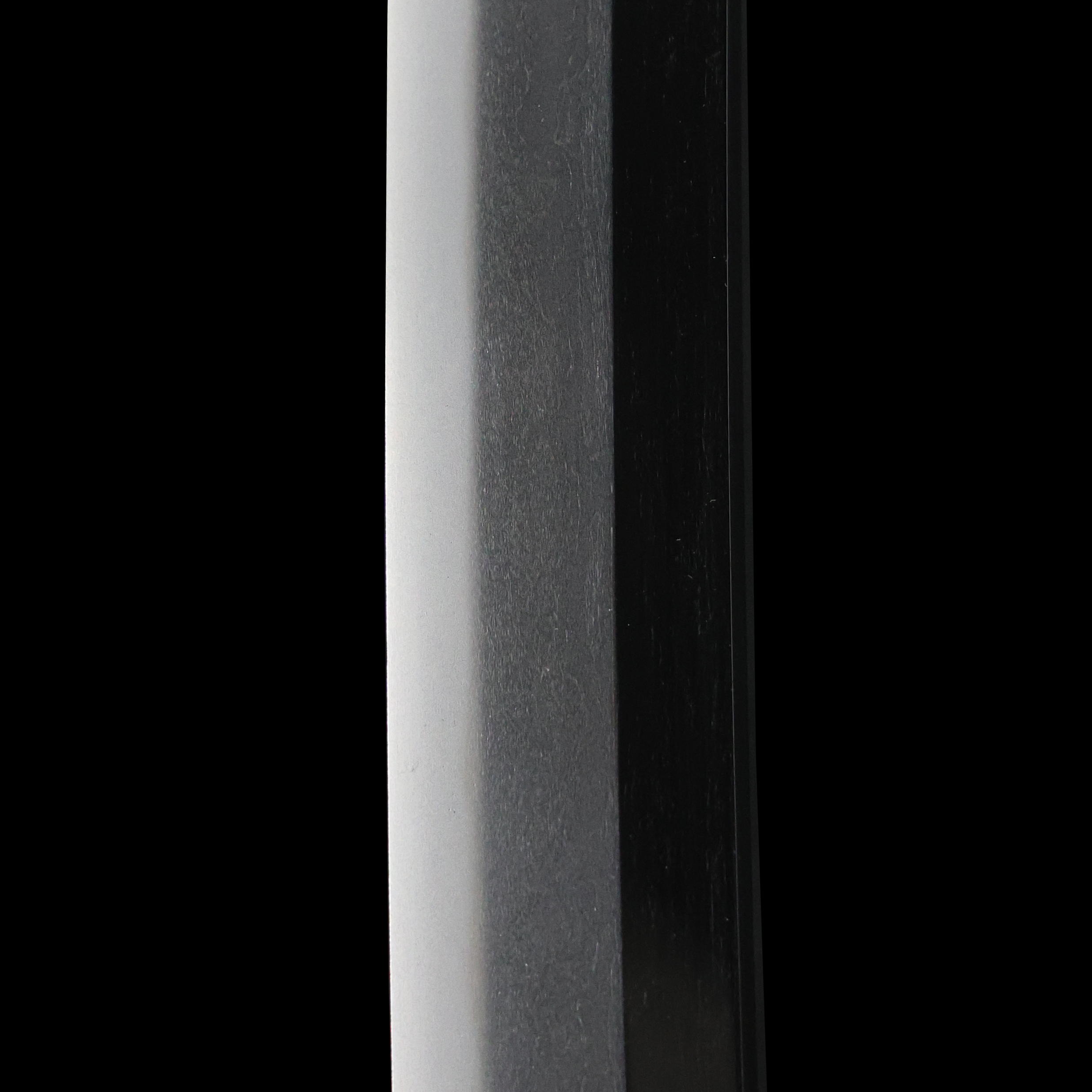
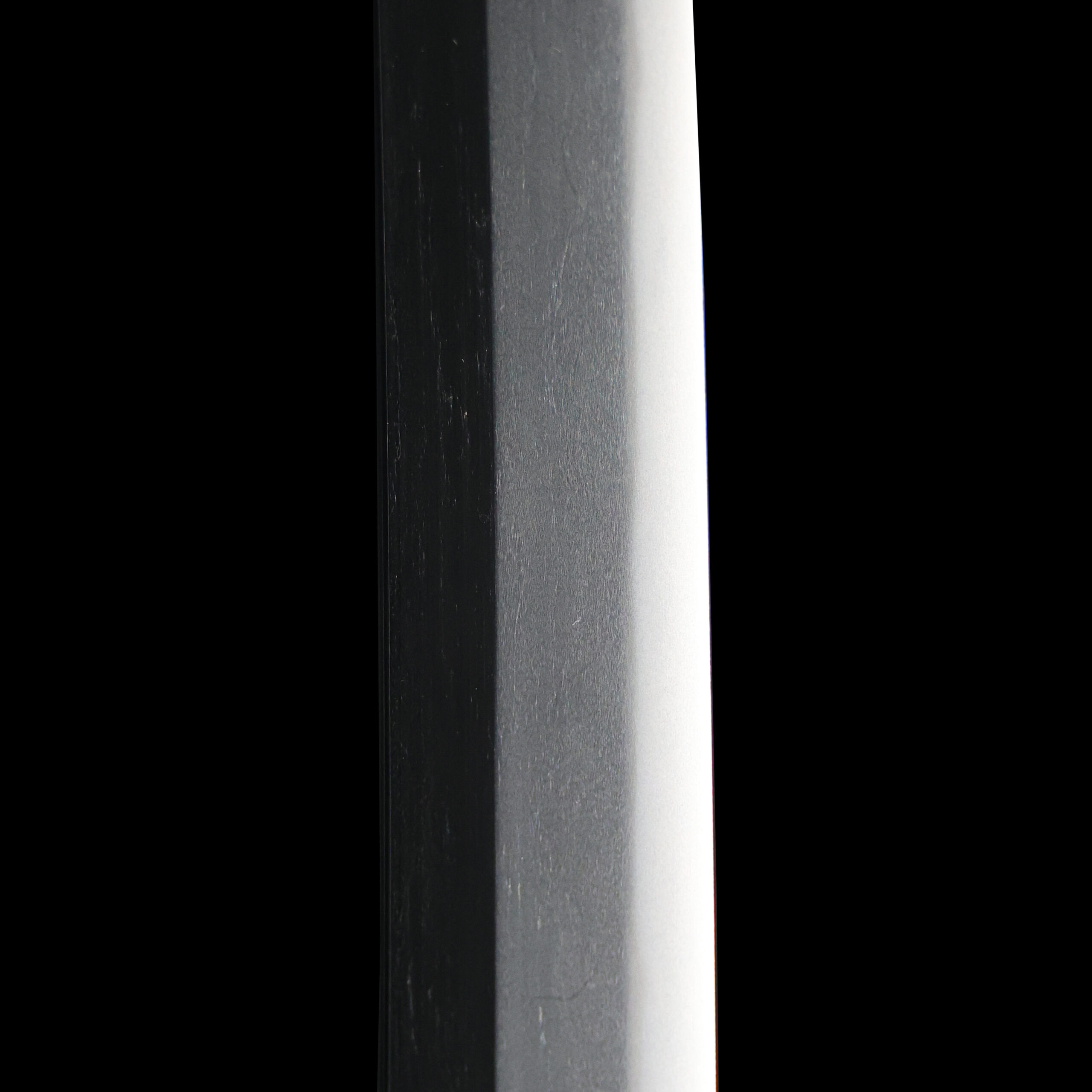
Sixty years of war between two courts drove blades long and broad, and Osafune met the demand: Kanemitsu and Chōgi led forges serving the provincial warriors who did the fighting, while Sōshū influence arrived with the armies to create Sōden-Bizen.
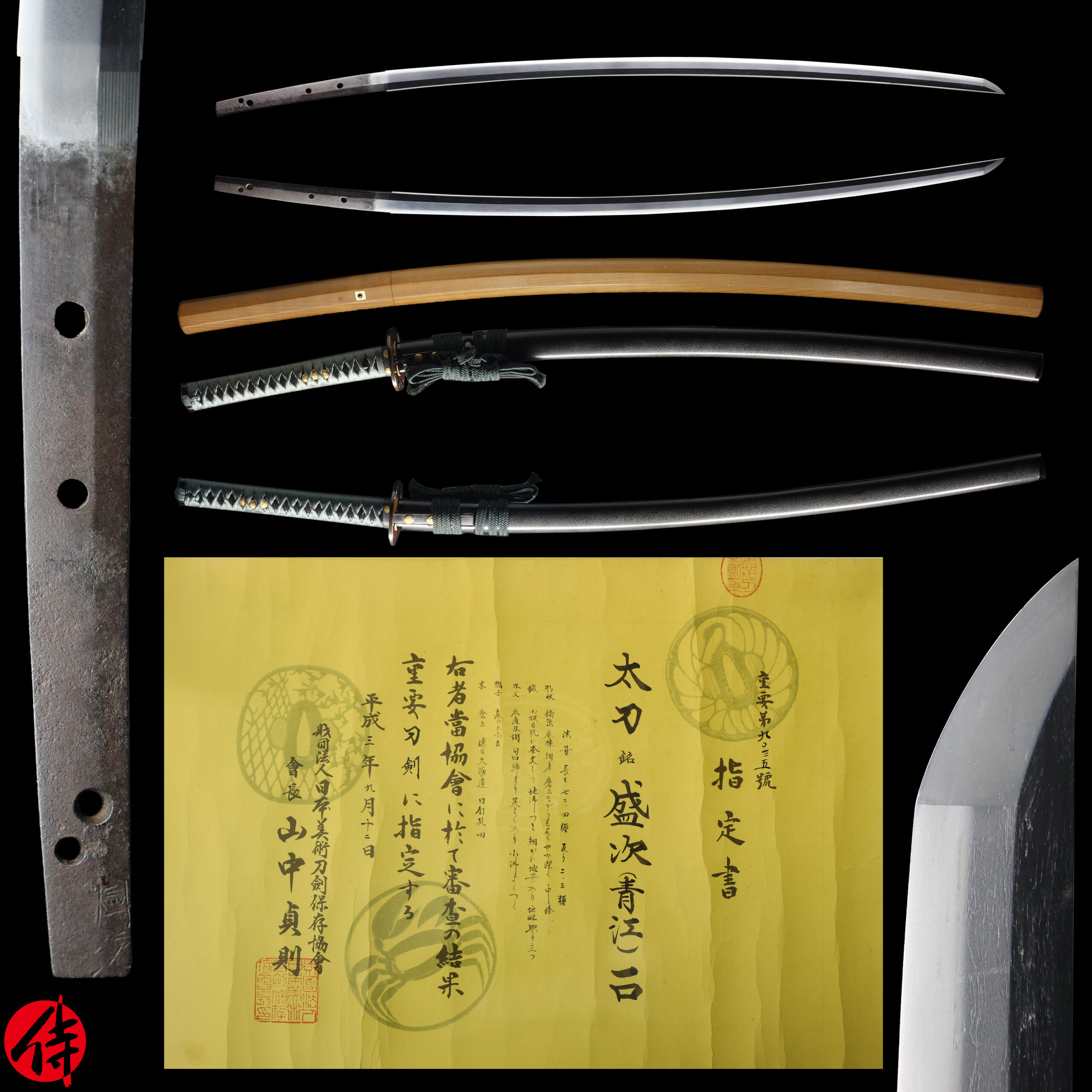
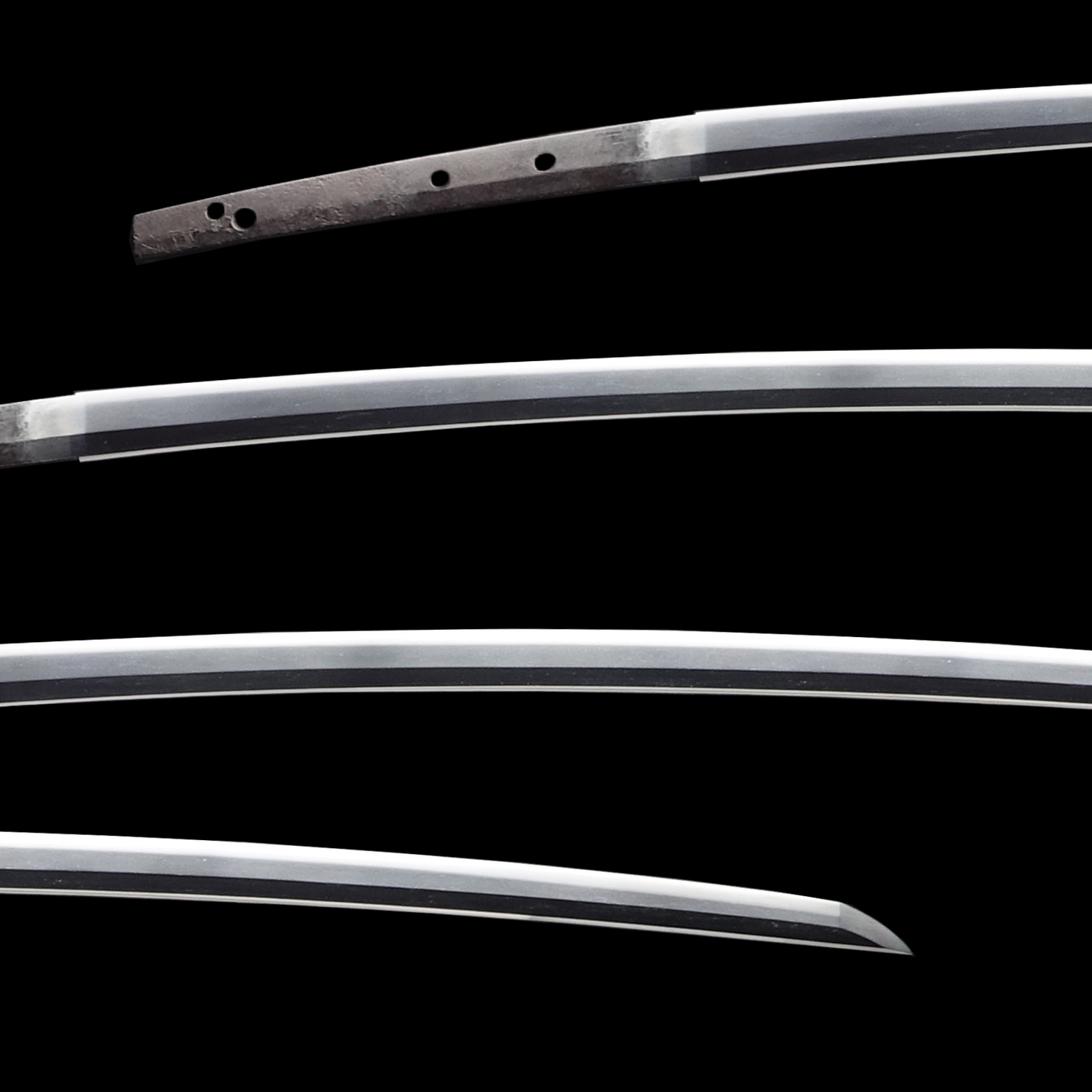
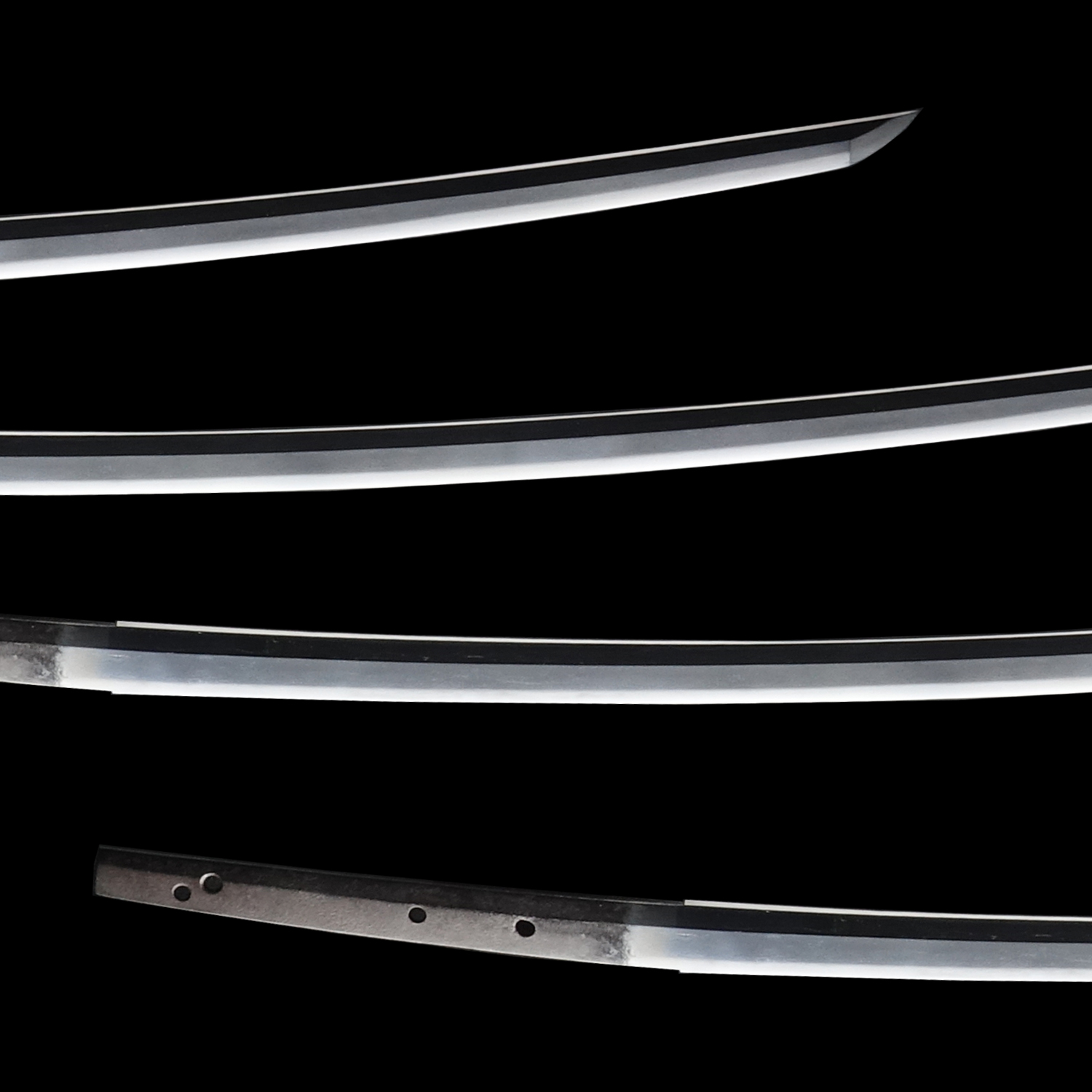
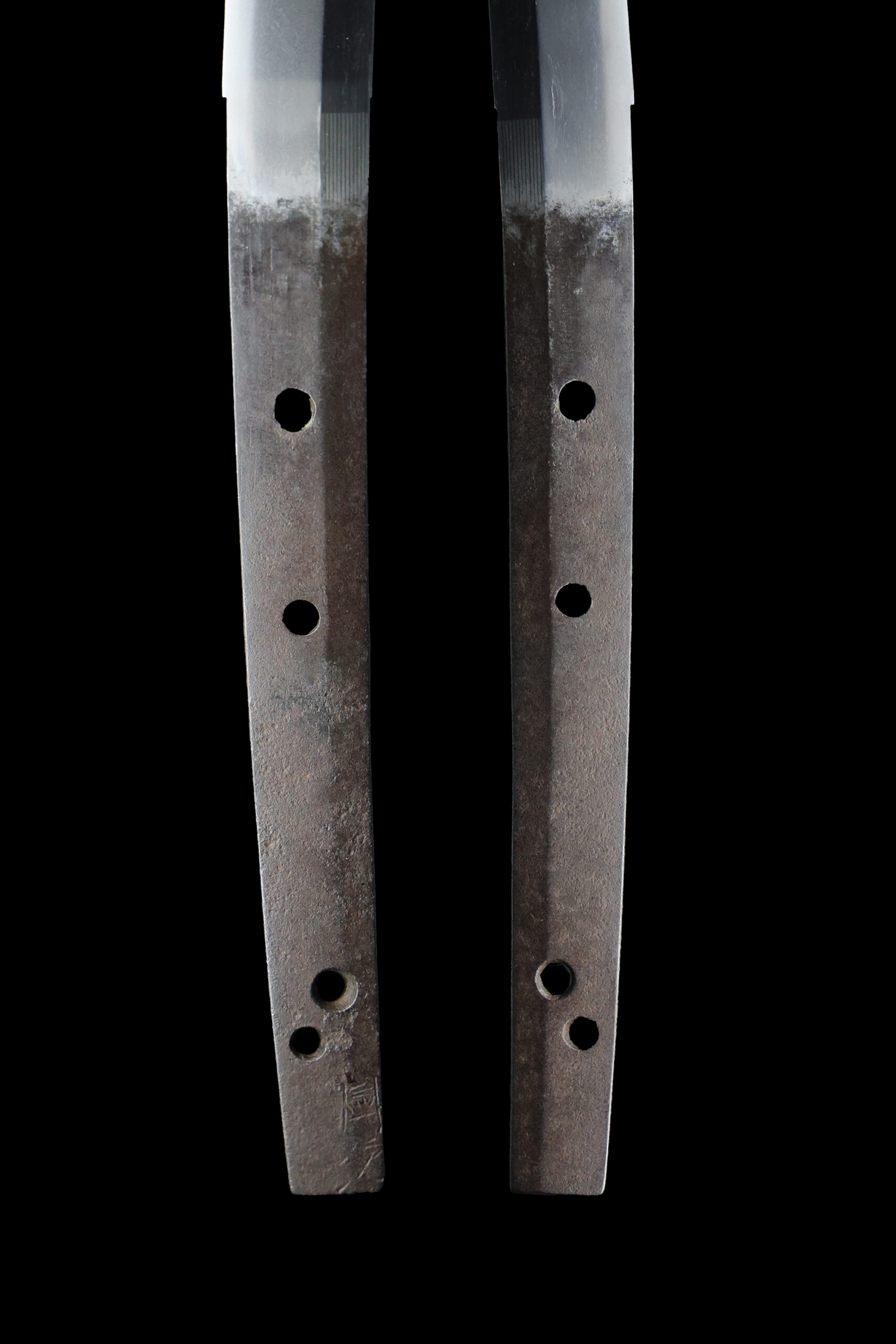
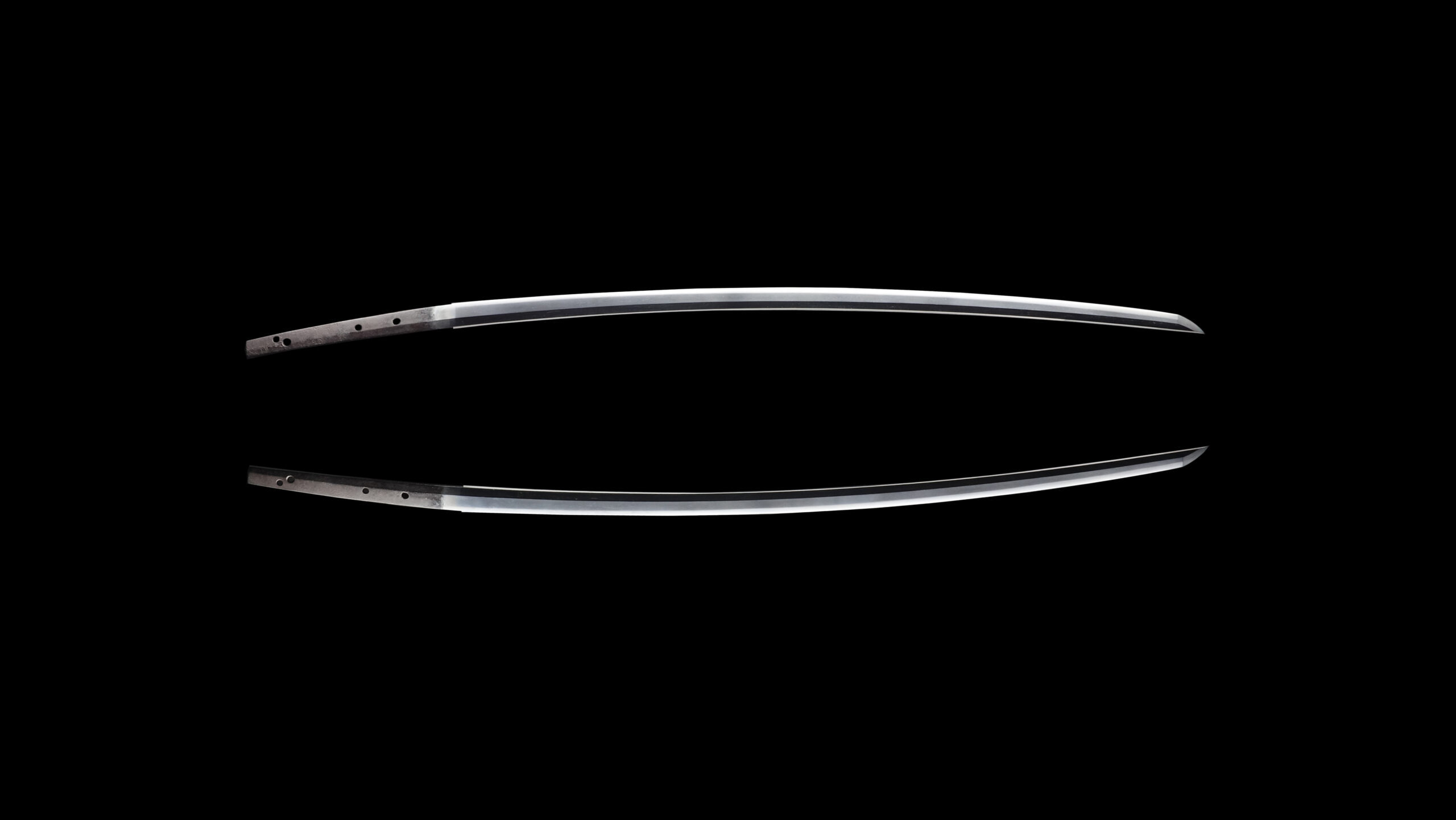
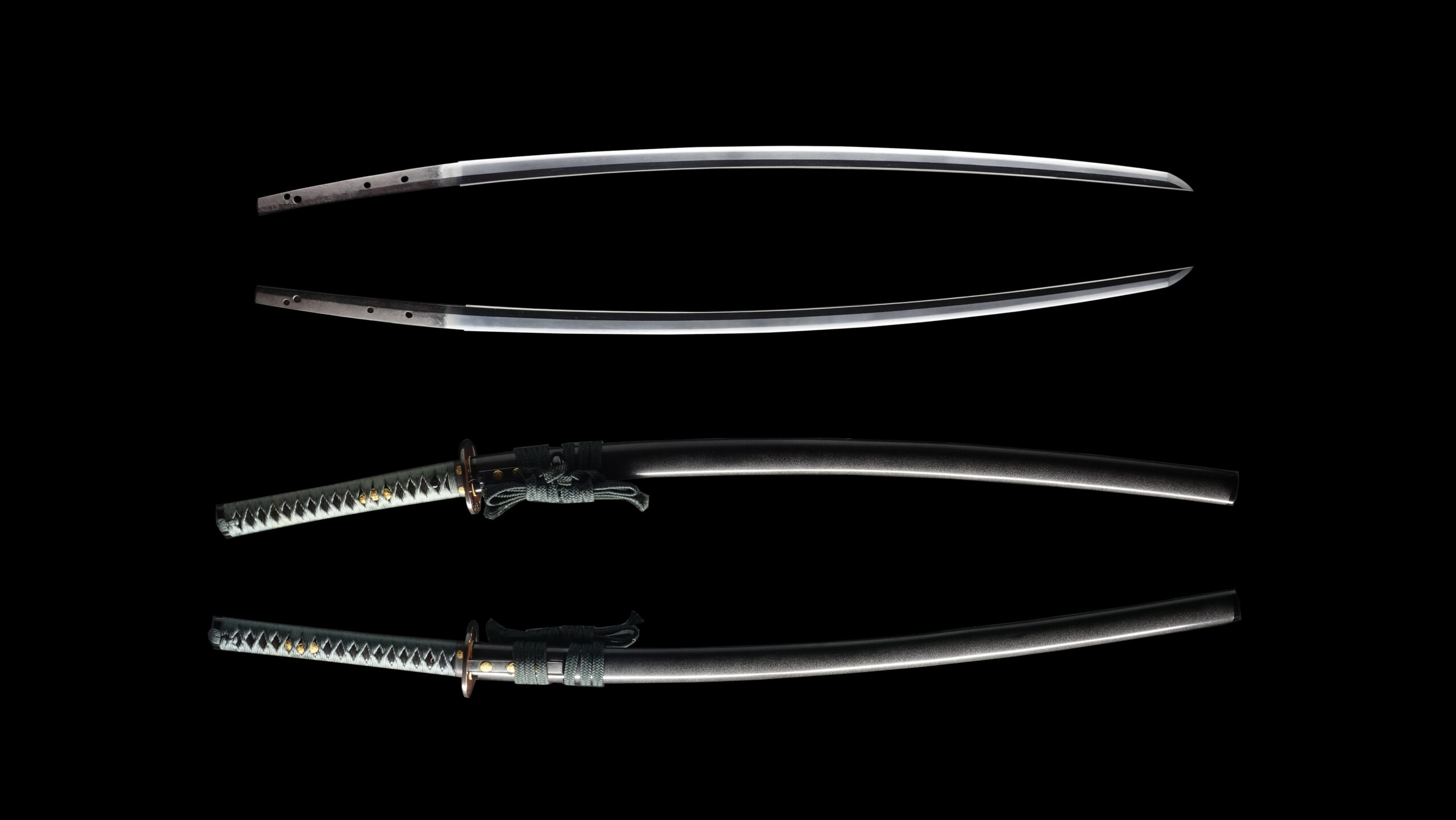
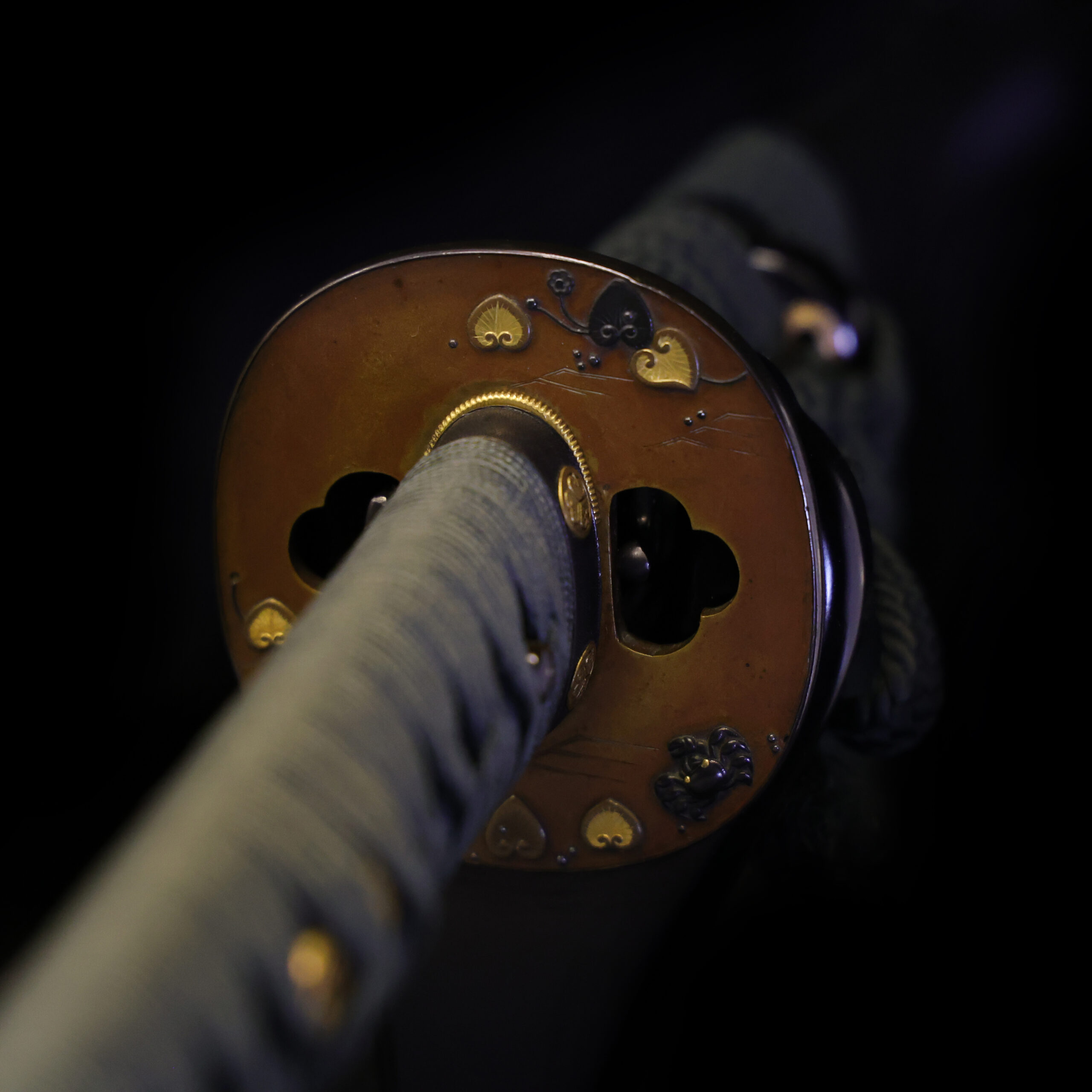
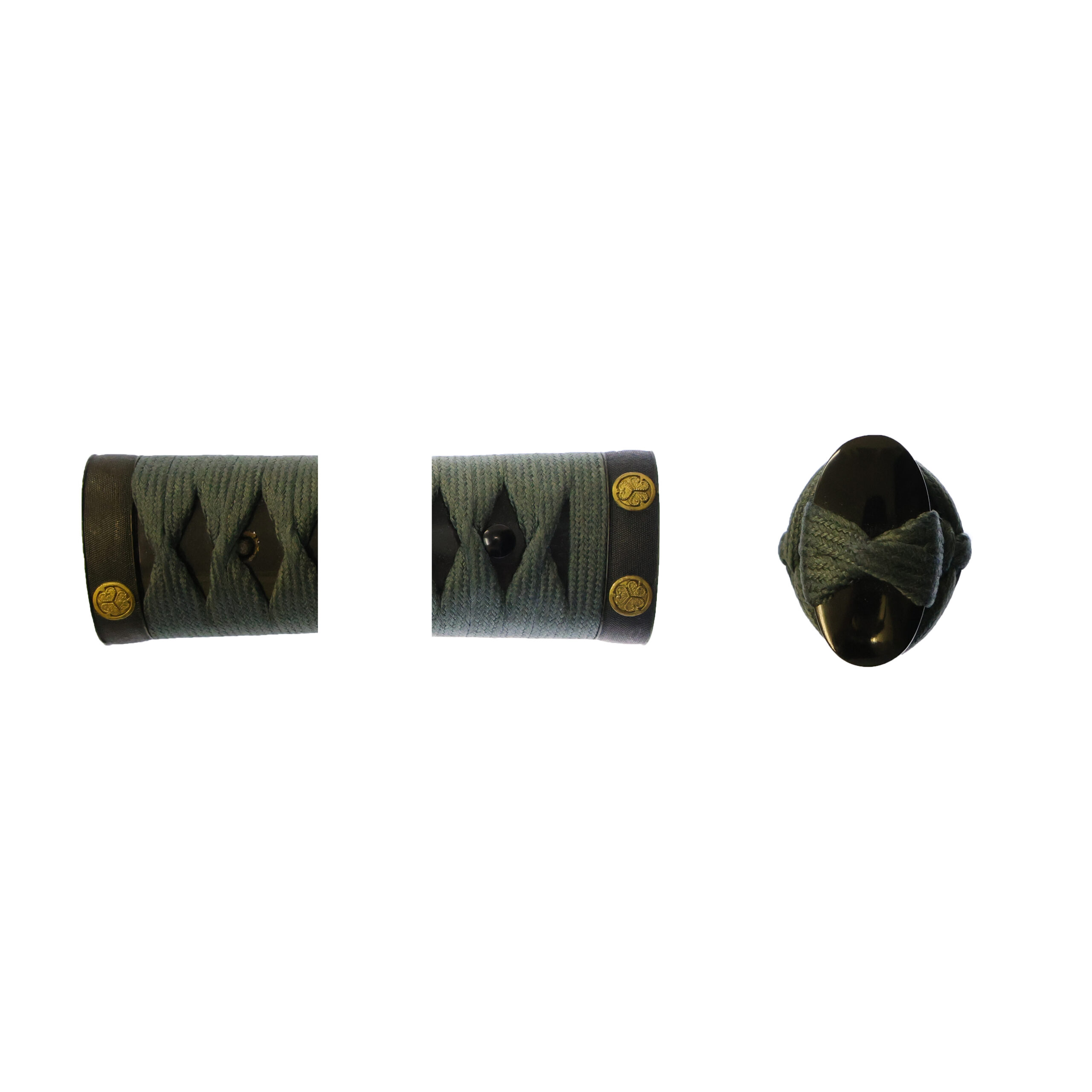
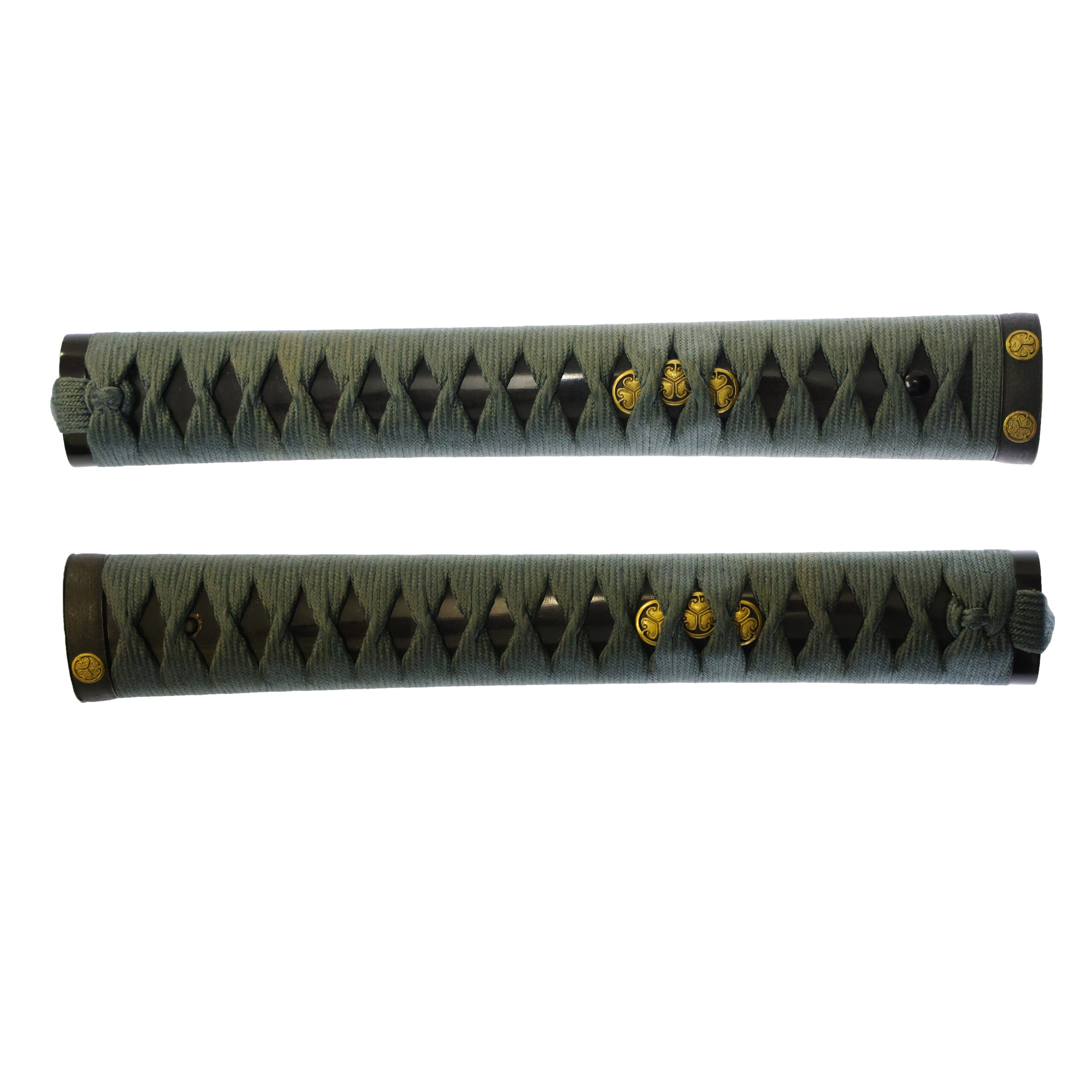
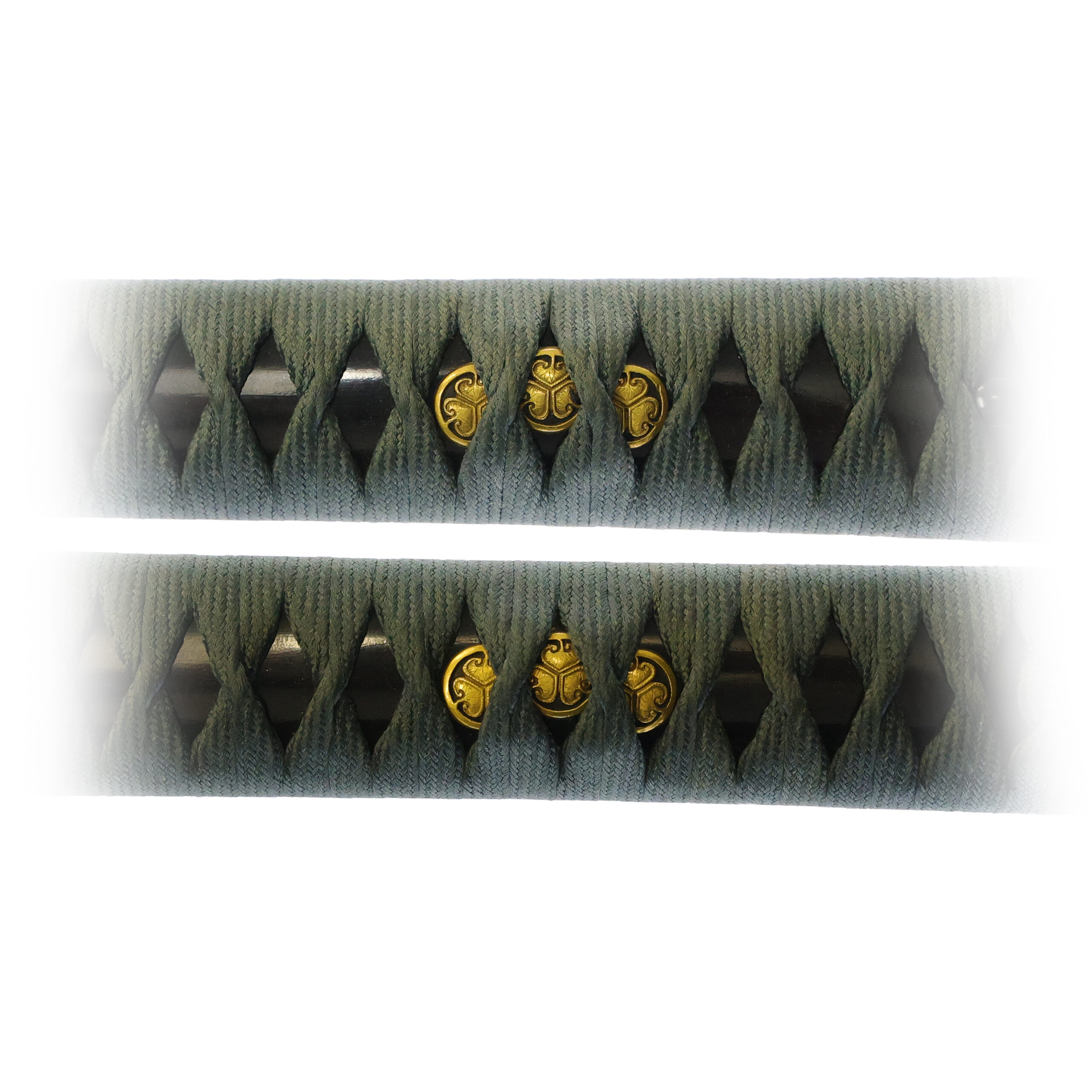
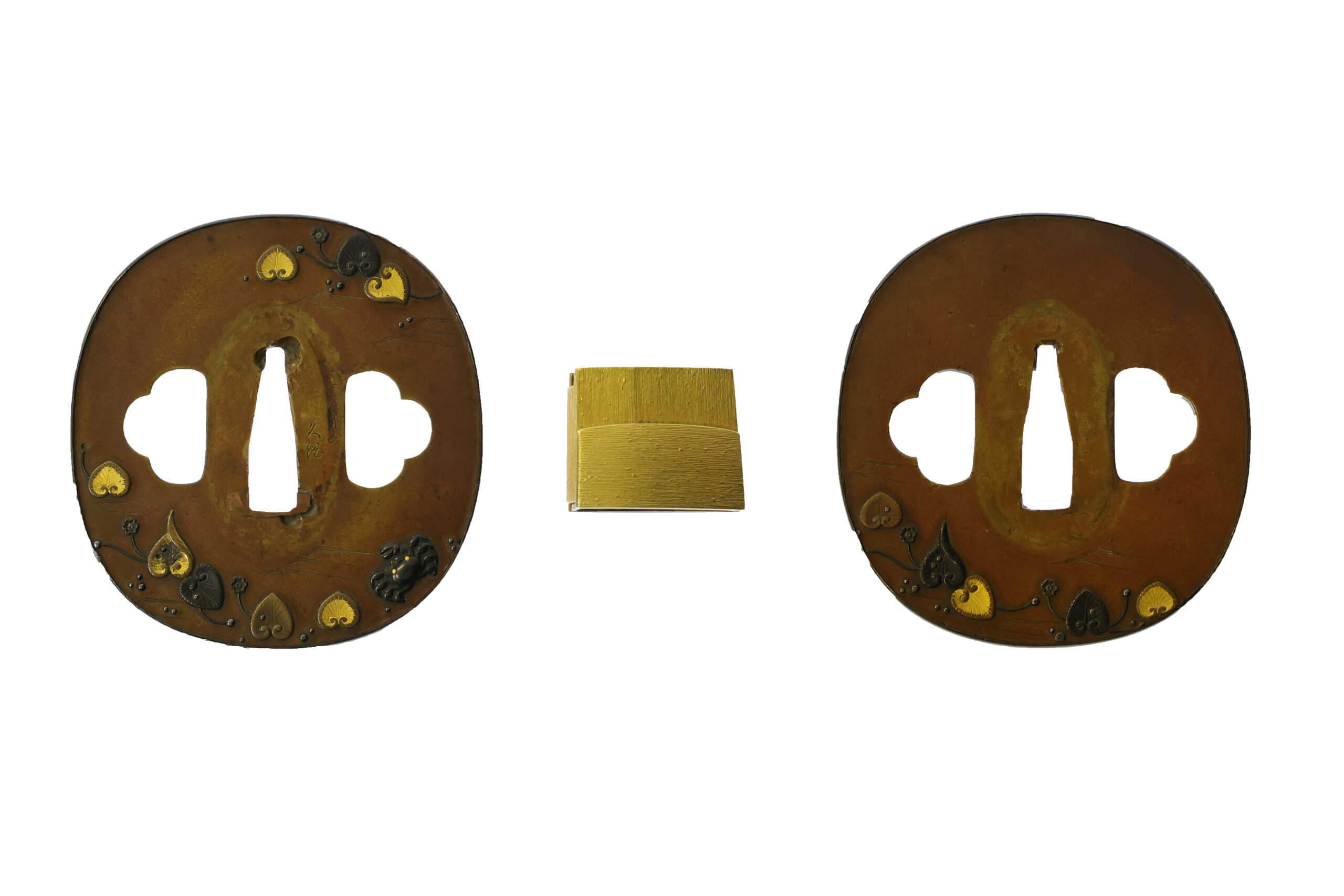
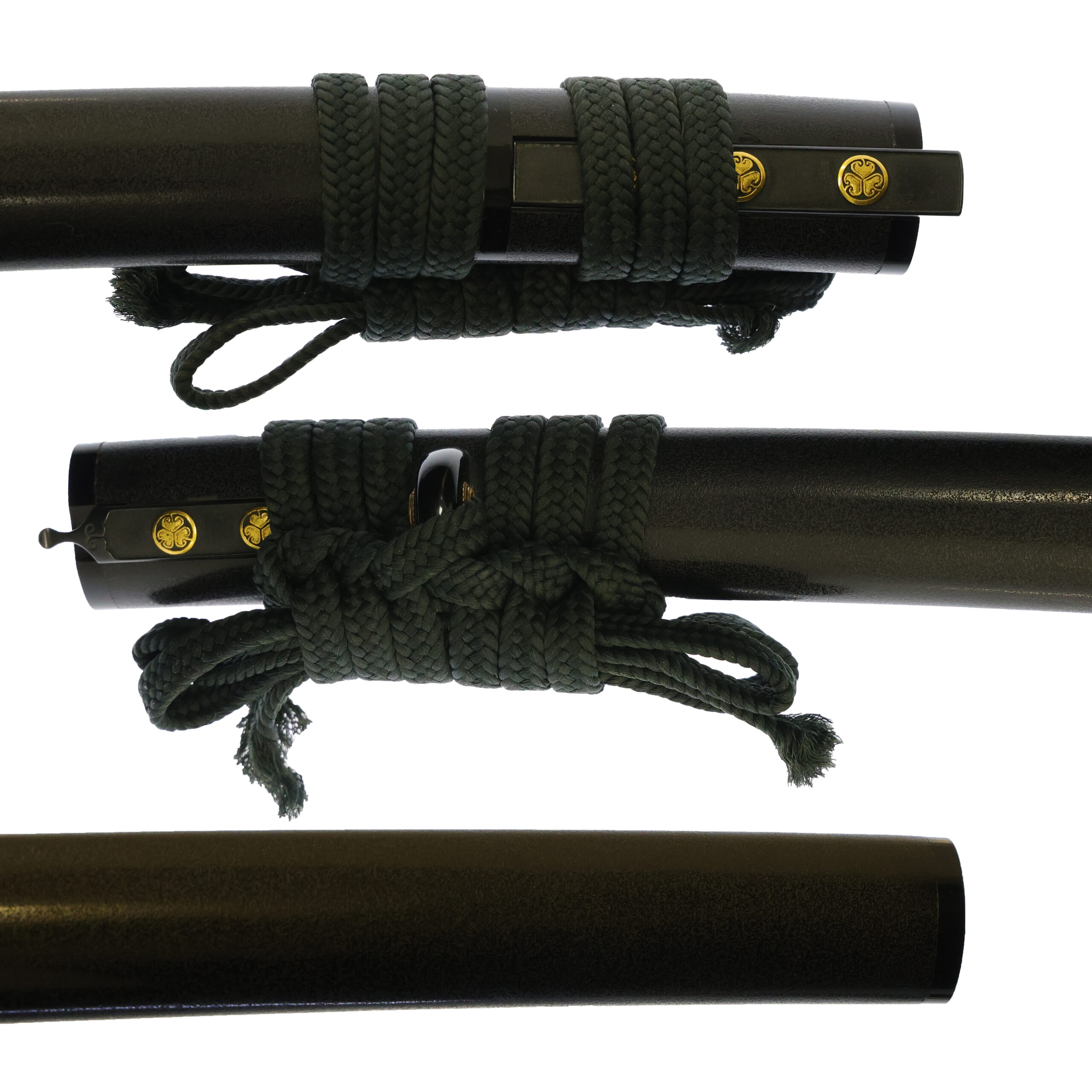
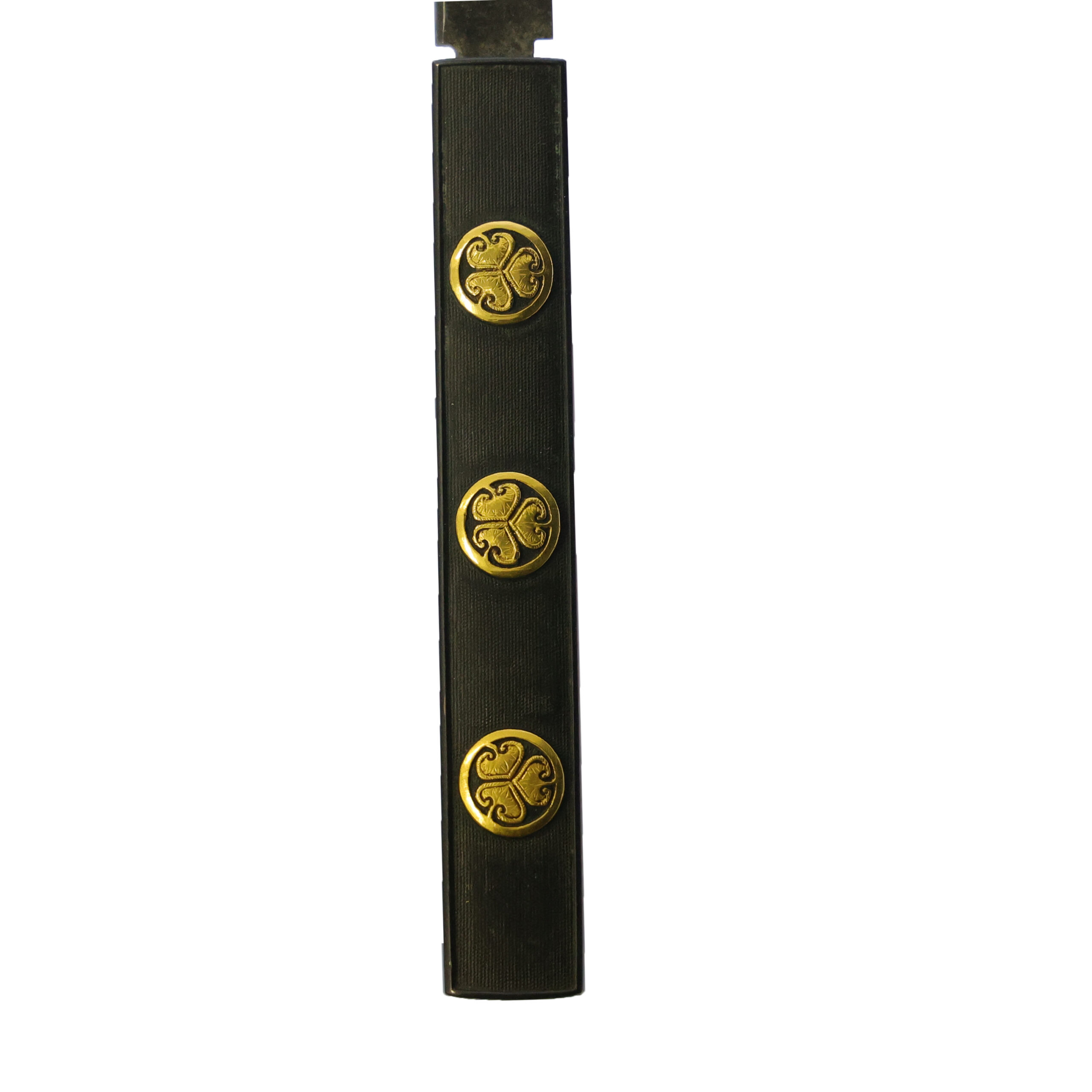
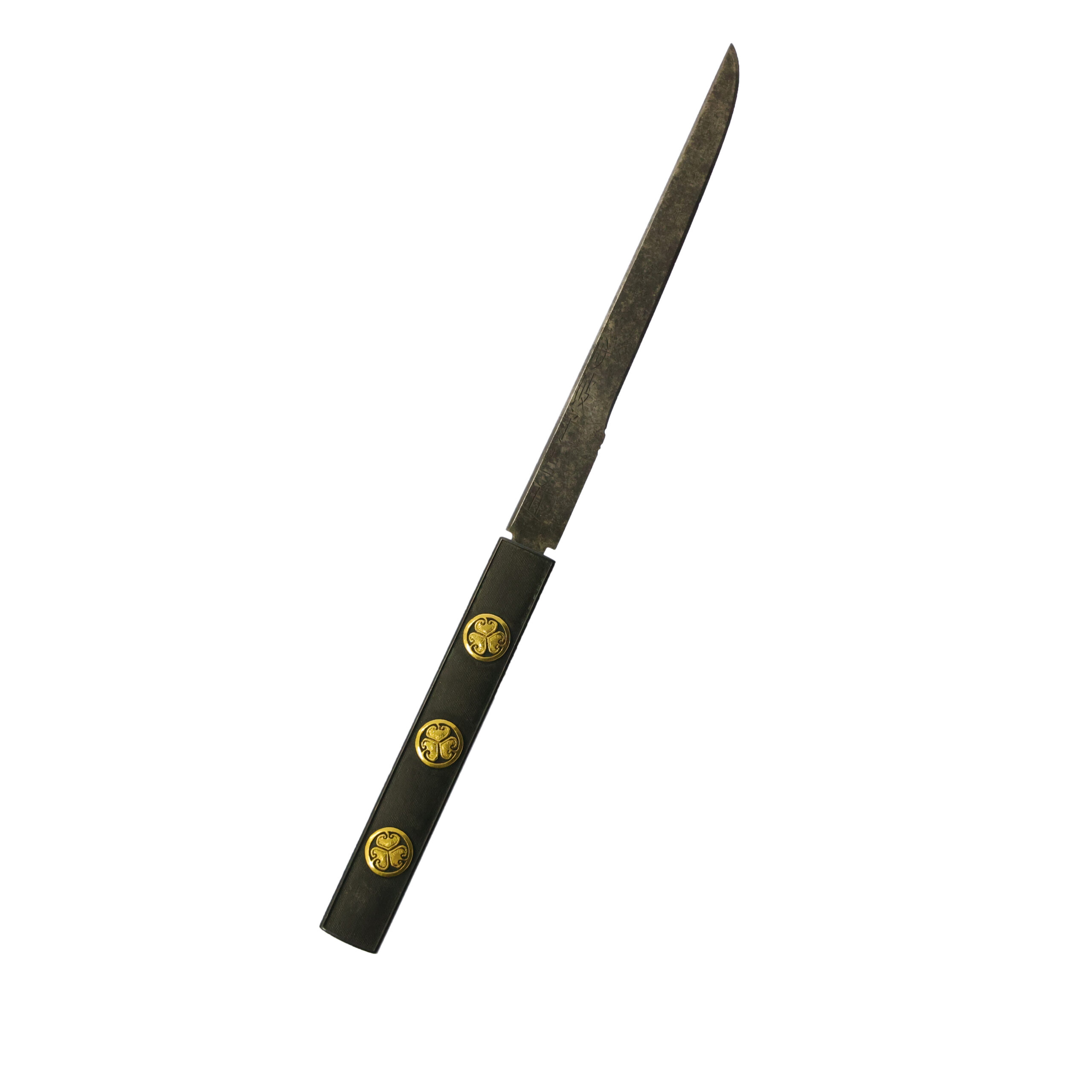
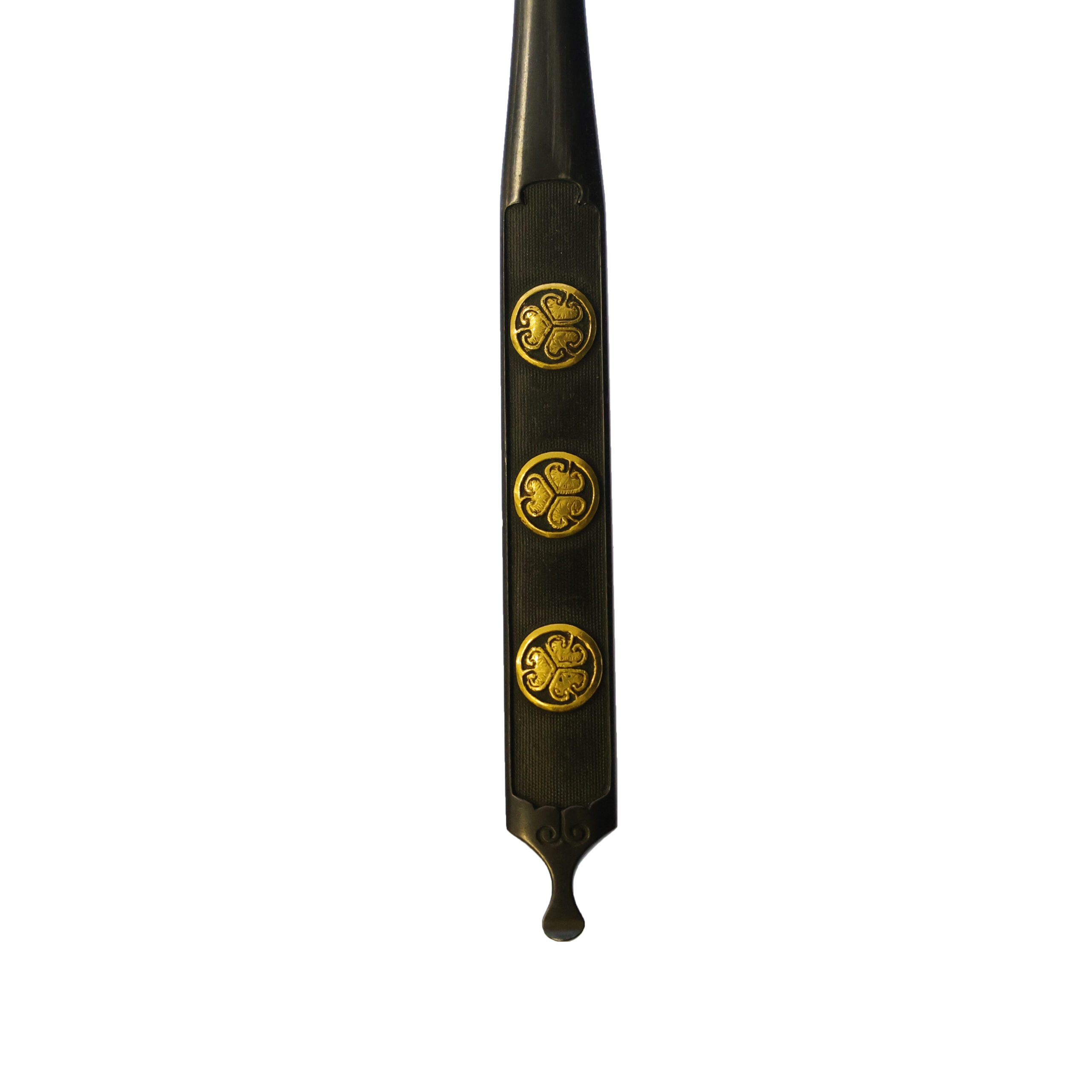
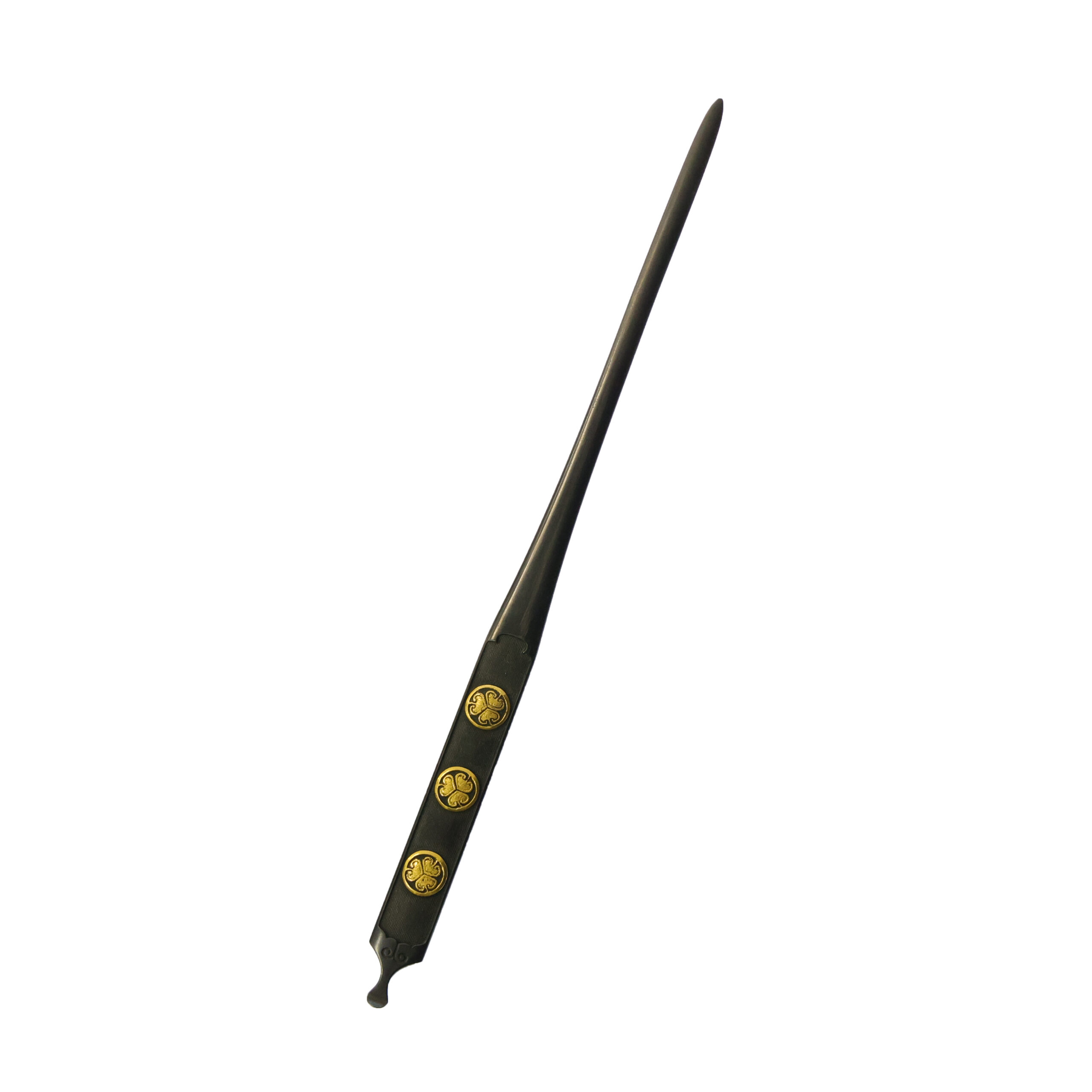
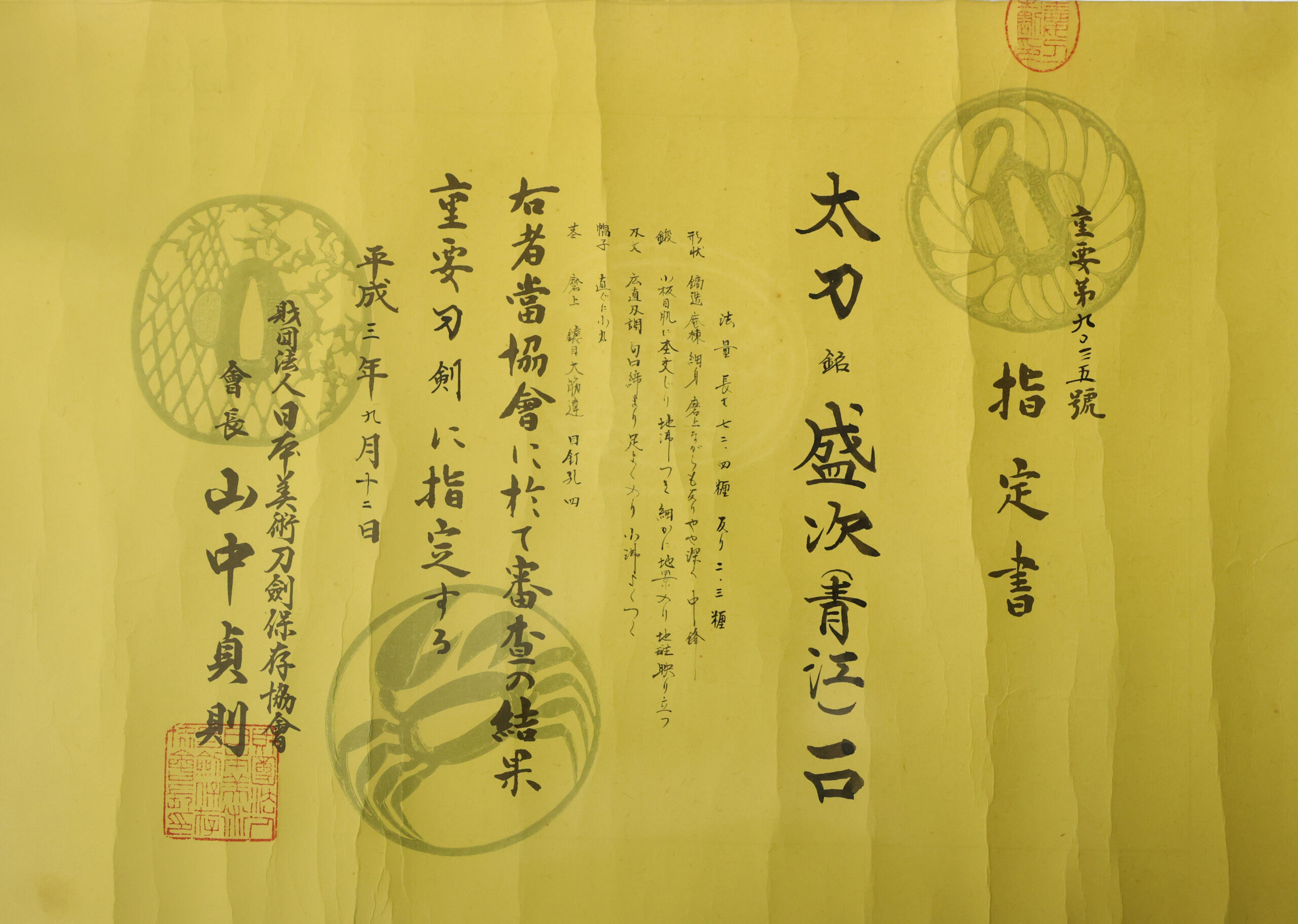
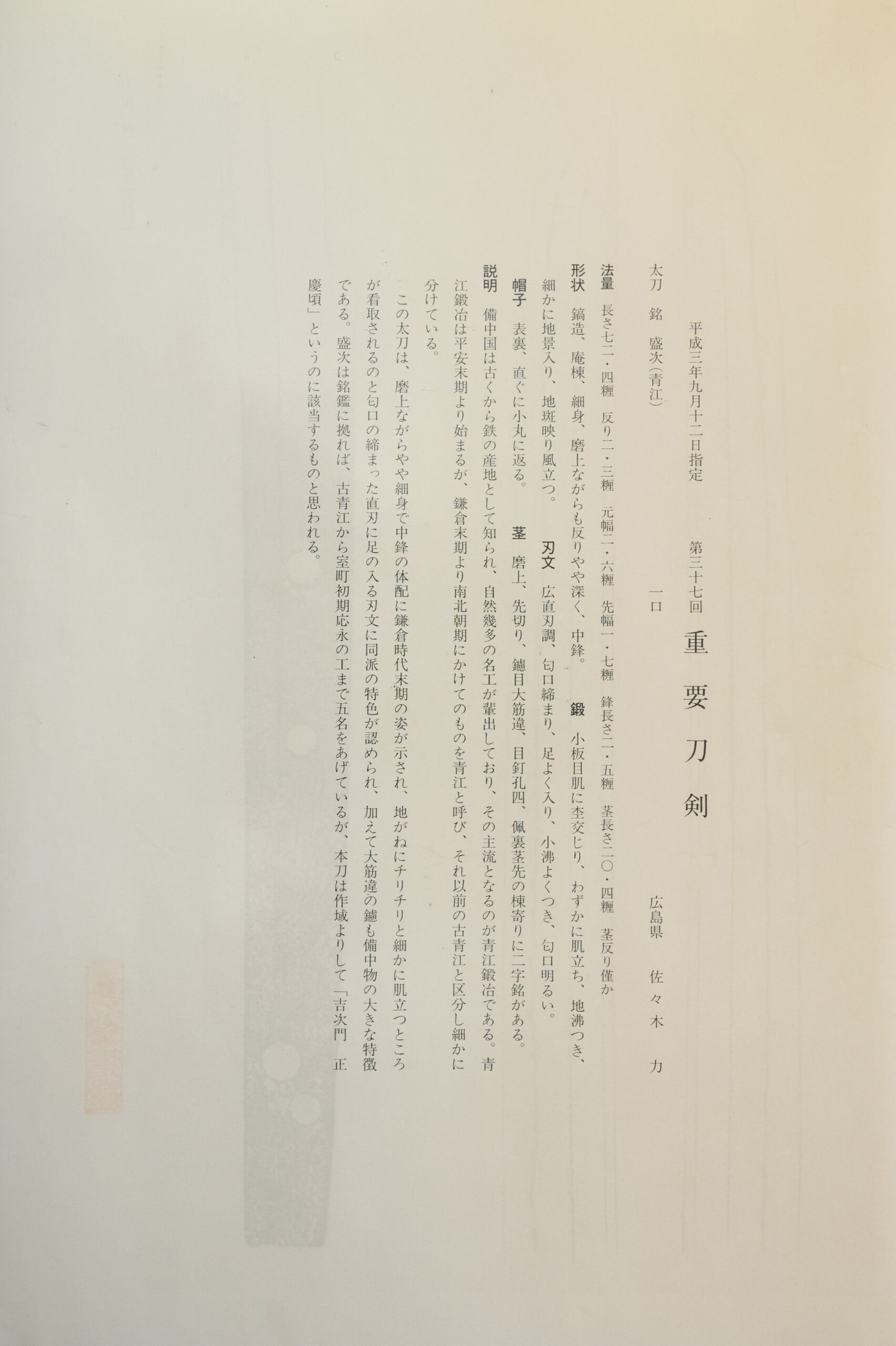
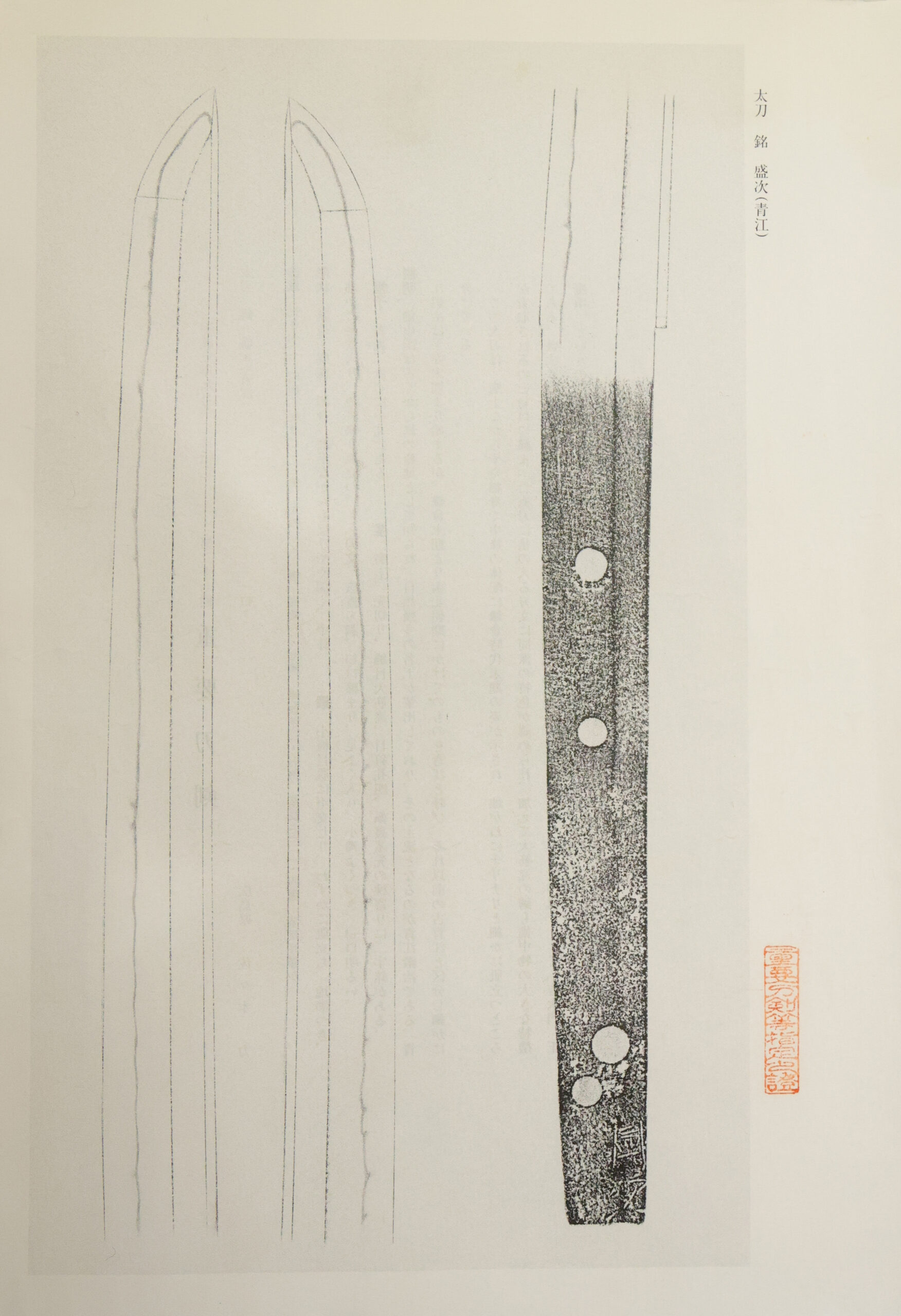
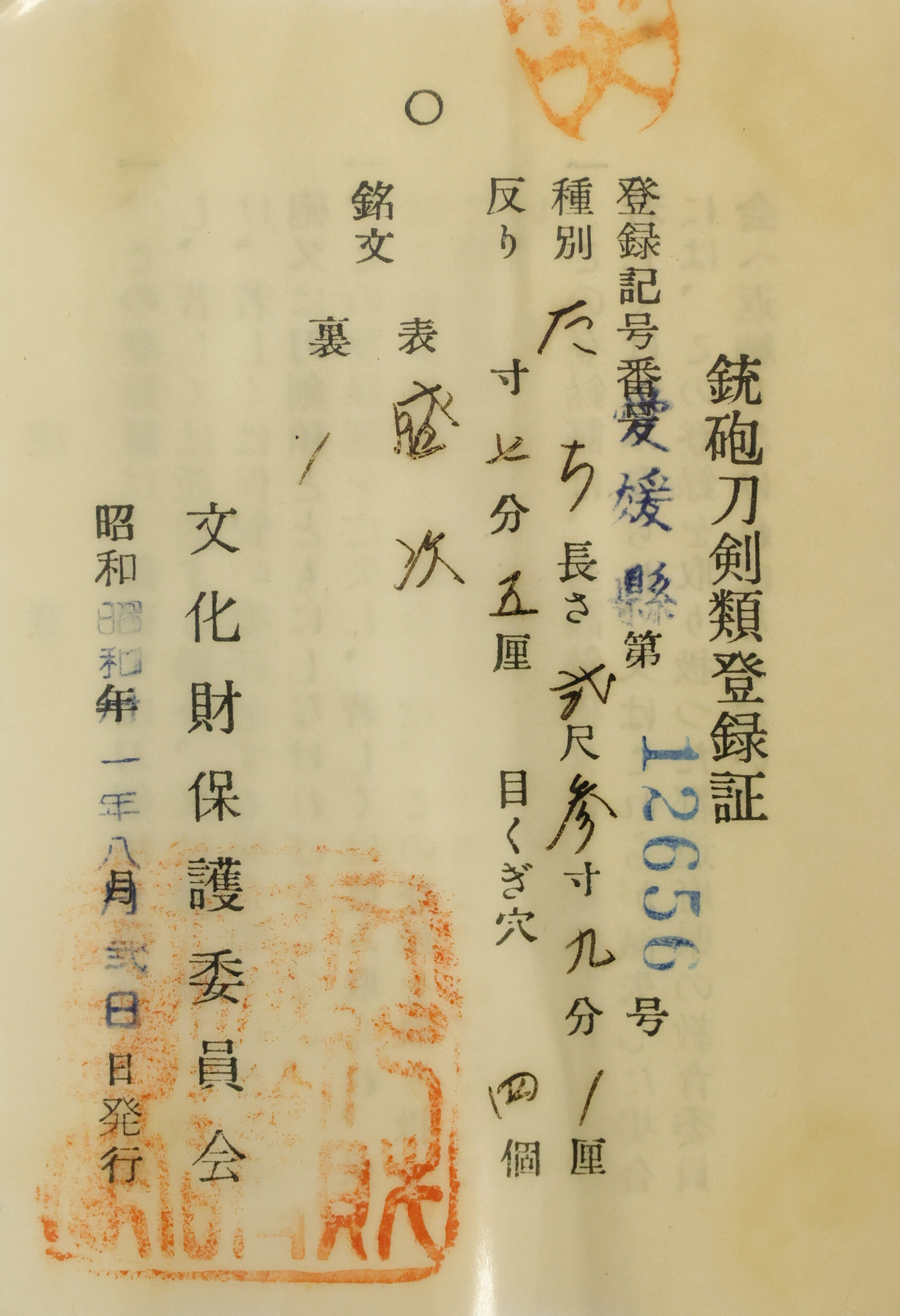
This blade is signed by Moritsugu (盛次), a swordsmith belonging to the prestigious Aoe school (青江派). There were five known smiths who bore the name Moritsugu, ranging from the Ko-Aoe period to the early Muromachi era (Ōei period, 1394–1428). Based on the workmanship of this blade, it is believed to have been forged by a smith of the Yoshitsugu group (吉次門) around the Shōkei era (正慶, 1332–1334). The Bitchū province (today’s western Okayama Prefecture) has long been known as one of Japan’s leading iron-producing regions, naturally giving rise to numerous outstanding swordsmiths. Among them, the Aoe school became the mainstream lineage. The school originated in the late Heian period and reached its peak from the late Kamakura through the Nanbokuchō period. In Japanese sword terminology, Aoe works are classified into three periods: Ko-Aoe (Old Aoe): Late Heian to early Kamakura, Chū-Aoe (Middle Aoe): Mid-Kamakura to early Nanbokuchō and Sue-Aoe (Late Aoe): Late Nanbokuchō and onward. The founder of the school is said to be Yasutsugu (安次), active in the late Heian period in what is now Kurashiki City. Another famous swordsmith family in Bitchū was the Seno school, founded by Noritaka (則高). Among the Aoe smiths, Moritsugu was particularly distinguished—he trained Sadatsugu, Tsuguie, and Tsunetsugu, who later became renowned as part of the Gobankaji (御番鍛冶), the twelve master swordsmiths selected by Emperor Go-Toba (後鳥羽上皇). The emperor, passionate about the art of sword forging, ordered one swordsmith each month to craft a blade for him, a system unique in Japanese history. The Bitchū region, situated near the Chūgoku Mountains, offered ideal conditions for swordmaking—abundant iron sand, plentiful water sources, and easy access to charcoal via the Takahashi River. This environment allowed the Aoe smiths to produce blades of exceptional purity and quality. Tachi Based on its characteristics, NBTHK judged it as a Tachi. Tachi was mainly used by an armored Samurai with one hand on horseback from the Heian period (794-1185 A.D.) until the early Muromachi period. TACHI was suspended loosely on the left waist with its edge facing the ground so that you could draw it faster to cut down soldiers on the ground. Appraisal This blade is appraised as a JUYO TOKEN (重要刀剣) issued by NBTHK (Nihon Bijutsu Touken Hozon Kyokai: 日本美術刀剣保存協会). JUYO is one rank higher than Tokubetsu Hozon. To be eligible for a Juyo Token, it needs to be appraised as a Tokubetsu Hozon Token first. It is extremely rare for an antique Japanese sword to be appraised as JUYO TOKEN, and it is highly desirable among Japanese sword collectors. Koshirae The Fuchi-Kashira are decorated with the Mitsuba Aoi (三つ葉葵紋, three hollyhock leaves) crest. The surface is finished in the Nanako-ji (魚々子地) technique, in which tiny circular grains are evenly punched to create a fine textured background. Tsuka and Menuki The theme of this Menuki is a Mitsuba-Aoi-no Mon (葵巴/三つ葉葵の紋). This family crest consists of three hollyhock leaves arranged in a circle with their heads together. And the petiole is curved to the left side. This crest is known as the family crest of Tokugawa Shogunate family led by Tokugawa Ieyasu, a famous military commander of the Warring States period. This plant pattern has also been used for the crest of the Kamo shrine in Kyoto prefecture. As mentioned above, the famous Shogunate family, the Tokugawa family, had their family crest with three leaves of Aoi due to the relationship with the Kamo shrine. As its leaves have a habit of always facing the sun, and the word “Aoi” is taken as “Aogu (仰ぐ, looking up)” for the sun, people thought the Aoi pattern would bring good fortune. Tsuba and Habaki This Tsuba also features an Aoi (葵, hollyhock) design combined with crab (蟹, kani )motifs, creating a distinctive and elegant composition. As crabs walk sideways, they were compared “Oukou Kunshi (横行君子),” which means to stick to one’s intention against authority. Samurais might have felt the strong will that they would not bow before power from this motif. Authentication Paper They authenticated the blade on September 12th in the 3rd year of Heisei (1991). They appraised it as JUYO TOKEN, the blade exceptionally worth preserving for Japanese society.
Offered by Samurai Museum
This piece has sold
Get an email when a new Aoe Moritsugu piece hits the market.


Bizen-den · Bitchu · around 1332-1334
1 piece on the market now
Where Moritsugu stands among comparable artisans: across all of nihontō, and within tradition, era, and period. The tiers (Foremost · Leading · Major · Notable) weigh official designations from the NBTHK and Japan's Agency for Cultural Affairs, together with historical honors of lasting repute such as the Sansaku and Meibutsu-chō.
Select a lens to see how it's measured.
Bizen-den · Bitchu
Phase: Chū-Aoe中青江· 1235–1334
21 pieces on the market now
The Chu-Aoe school represents the middle and culminating phase of the Aoe tradition of Bitchu Province, encompassing smiths active from the late Kamakura period through the Nanbokucho era. The lineage traces its origins to an ancient swordmaking heritage in the lower basin of the Takahashi River, a tradition already celebrated in the eleventh-century Shin Sarugakki, which counted "the swords of Bitchu" among the notable products of the provinces. Scholars conventionally distinguish earlier Ko-Aoe production, extending through the mid-Kamakura period, from the Chu-Aoe and later Sue-Aoe phases that carried the tradition forward. The name Sadatsugu -- transmitted since the Kanchiin-bon Meizukushi as one of the goban-kaji appointed to serve Retired Emperor Gotoba and accorded the highest valuation in the Shinkan Hiden-sho -- stands as the school's most prestigious lineage name, while Yoshitsugu, Naotsugu, Tsunetsugu, and Hidetsugu represent the principal working smiths whose signed and dated examples anchor the chronology of the late Kamakura Aoe group. With the transition into the Nanbokucho period, a second flowering emerged under Tsugunao, Tsuguyoshi, and Moritsugu, who are consistently identified by the NBTHK as the representative smiths of Aoe in that era. The technical identity of Chu-Aoe is defined by a constellation of traits that recur with remarkable consistency across the school's members. The forging characteristically displays tightly packed ko-itame-hada mixed with mokume, upon which extremely fine ji-nie adheres thickly and delicate chikei are interwoven. A mottled, patch-like jifu texture frequently appears, and the distinctive crepe-like surface known as chirimen-hada is encountered among several smiths. Most diagnostic of all is the school's utsuri, which manifests in multiple forms: midare-utsuri, the stepped dan-utsuri in which linear utsuri near the edge transitions to midare-utsuri toward the mune, and the dark-toned sumihada. The hamon is fundamentally suguha-based, ranging from narrow hoso-suguha to medium chu-suguha with shallow notare, into which ko-gunome, ko-choji, and saka-ashi are mixed. The nioiguchi is universally described as tight, bright, and clear -- the single most defining quality of the school -- producing a deep shio-ai that is repeatedly praised in NBTHK assessments.
The boshi characteristically runs straight, turning back in ko-maru with a tendency toward a pointed tip. A critical stylistic evolution occurred within the Nanbokucho period: while the late Kamakura smiths worked predominantly in suguha, the later generation developed a splendid, flamboyant saka-choji-midare that became the school's most celebrated mode. Tsugunao is recognized as "a master of saka-choji," producing tempering of such florid brilliance that the NBTHK characterizes it as "the exclusive forte of this group" -- an emblematic and highly individual domain. The reverse-slanting tendencies visible in earlier Kamakura-period works are understood as precursors to this splendid later development. The Chu-Aoe school occupies a position of enduring prestige within the Japanese sword canon. The Hon'ami family developed a longstanding practice of rendering Sadatsugu appraisals for unsigned Aoe works of particularly fine workmanship, treating the name as a mark of the highest quality within the tradition. Naotsugu and Yoshitsugu, whose signed examples bearing official court titles and era dates from Gentoku through Kanno survive in exceptional condition, furnish irreplaceable documentary material for the study of Bitchu swordmaking. Works from the school have been transmitted through distinguished collections -- the Choshu Mori, the Nabeshima of Hizen, the Uesugi, and the Maeda of Kaga -- attesting to sustained appreciation across centuries. Naotsugu occupies a pivotal position at the transition from the ko-nie-deki manner of the Kamakura period to the tighter, brighter nioi-deki workmanship of the Nanbokucho era, while Moritsugu's rare surviving works bridge the late Kamakura and early Nanbokucho phases with tanto displaying both the traditional suguha and a saka-choji not previously encountered in the school. In both the quiet restraint of their suguha and the gorgeous brilliance of their saka-choji-midare, the smiths of Chu-Aoe demonstrate the Bitchu tradition at its most refined and accomplished -- a school whose tightly forged steel, luminous nioiguchi, and distinctive utsuri constitute an aesthetic achievement of the first order. Learn more →
| Smith | Era | Designated |
|---|---|---|
| Tsugunao次直 | 1345-1361 | 26 |
| Masatsune正恒 | 1213-1219 | 31 |
| Naotsugu直次 | 1288-1350 | 20 |
| Yasutsugu康次 | 1211-1213 | 10 |
| Kanetsugu包次 | 1211-1213 | 9 |
Bizen in the Nanbokuchō period
Sixty years of war between two courts drove blades long and broad, and Osafune met the demand: Kanemitsu and Chōgi led forges serving the provincial warriors who did the fighting, while Sōshū influence arrived with the armies to create Sōden-Bizen.
A blade of top-grade workmanship and condition, formally judged to rank with a nationally recognized Important Art Object (Jūyō Bijutsuhin). Awarded only at the NBTHK’s competitive annual examination.
Of Japan’s roughly 2.5 million registered swords, only 12,348 (about 1 in 202) have ever attained Jūyō.
The NBTHK (Nihon Bijutsu Tōken Hozon Kyōkai, the Society for the Preservation of Japanese Art Swords) is a public-interest incorporated foundation founded in 1948 and supervised by Japan’s Agency for Cultural Affairs (Bunkachō); it is based at the Japanese Sword Museum in Tokyo. Its expert panels physically examine each submitted work (shinsa) and issue a certificate (kanteishō) ranking it by artistic and historical merit. NBTHK papers are the most widely recognized standard of authentication for Japanese swords and fittings.
NBTHK official siteReturns/exchanges limited to defects caused by shipping (except willful misconduct or gross negligence by the company); customers must contact within 72 hours of receiving the product.