After the Ōnin War broke the Ashikaga order, a century of Sengoku warfare armed nearly every province in Japan. The era rewards a discriminating eye: routine work exists in quantity, and beside it stand custom blades of the first rank.
 NihontoWatchNihontoWatch
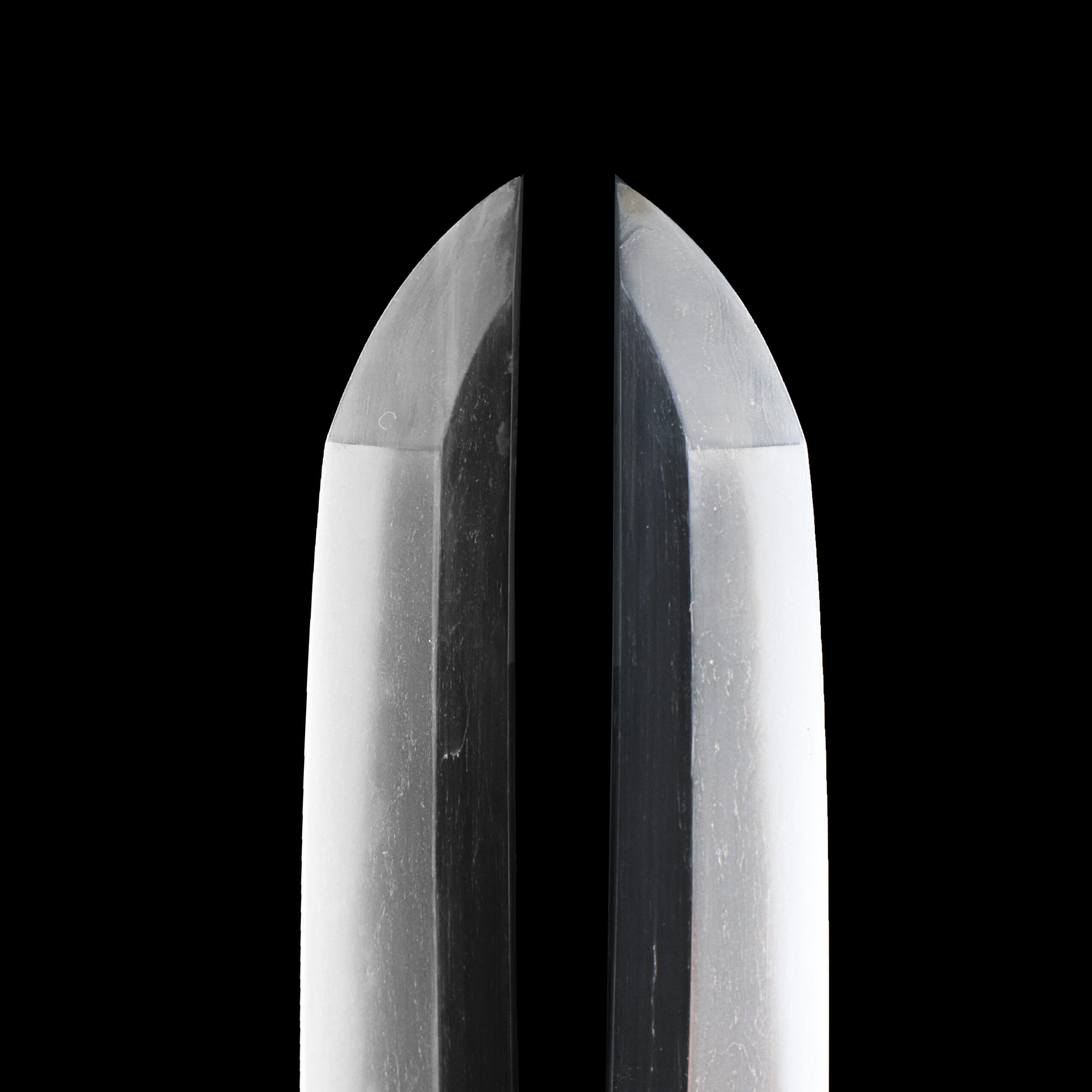
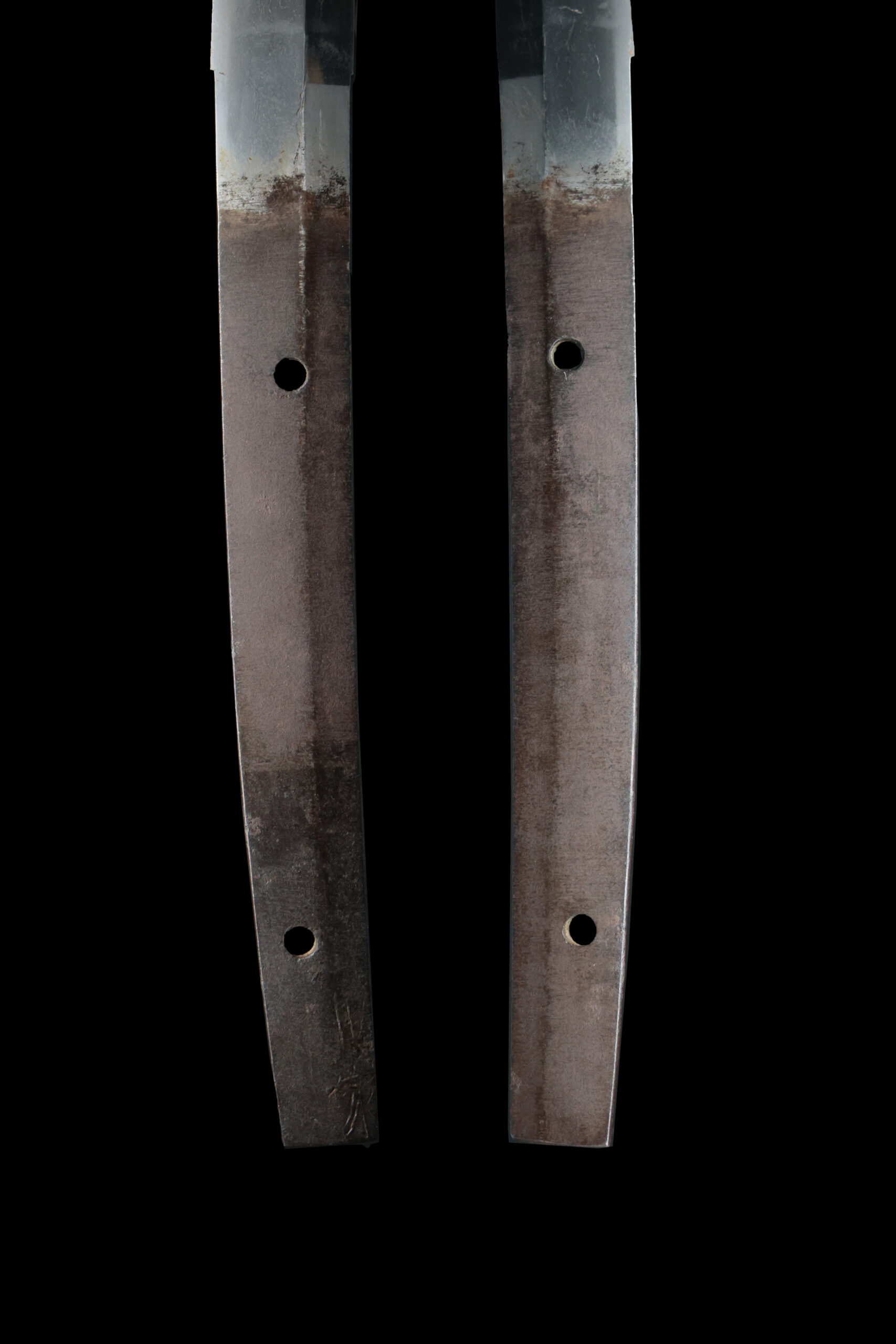
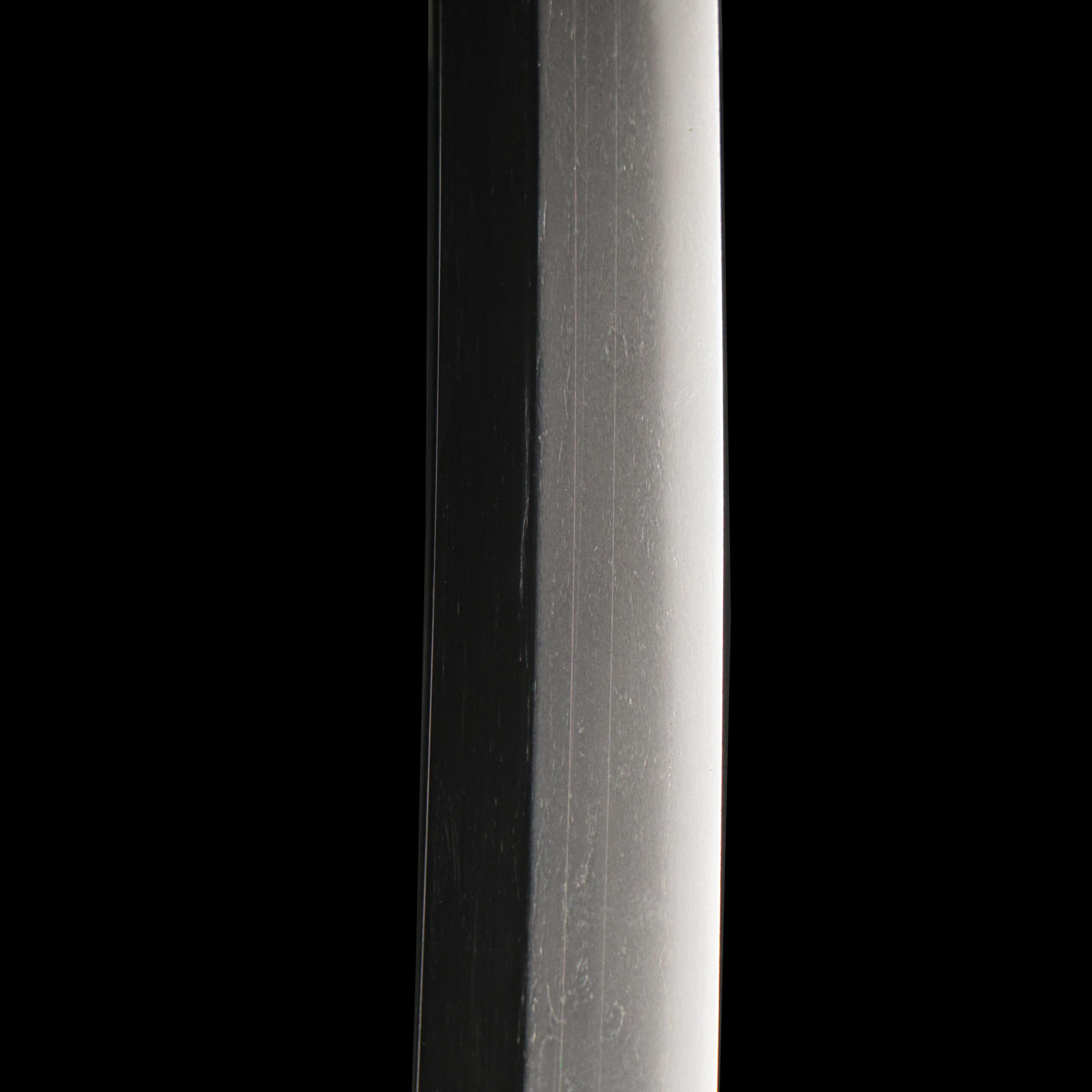
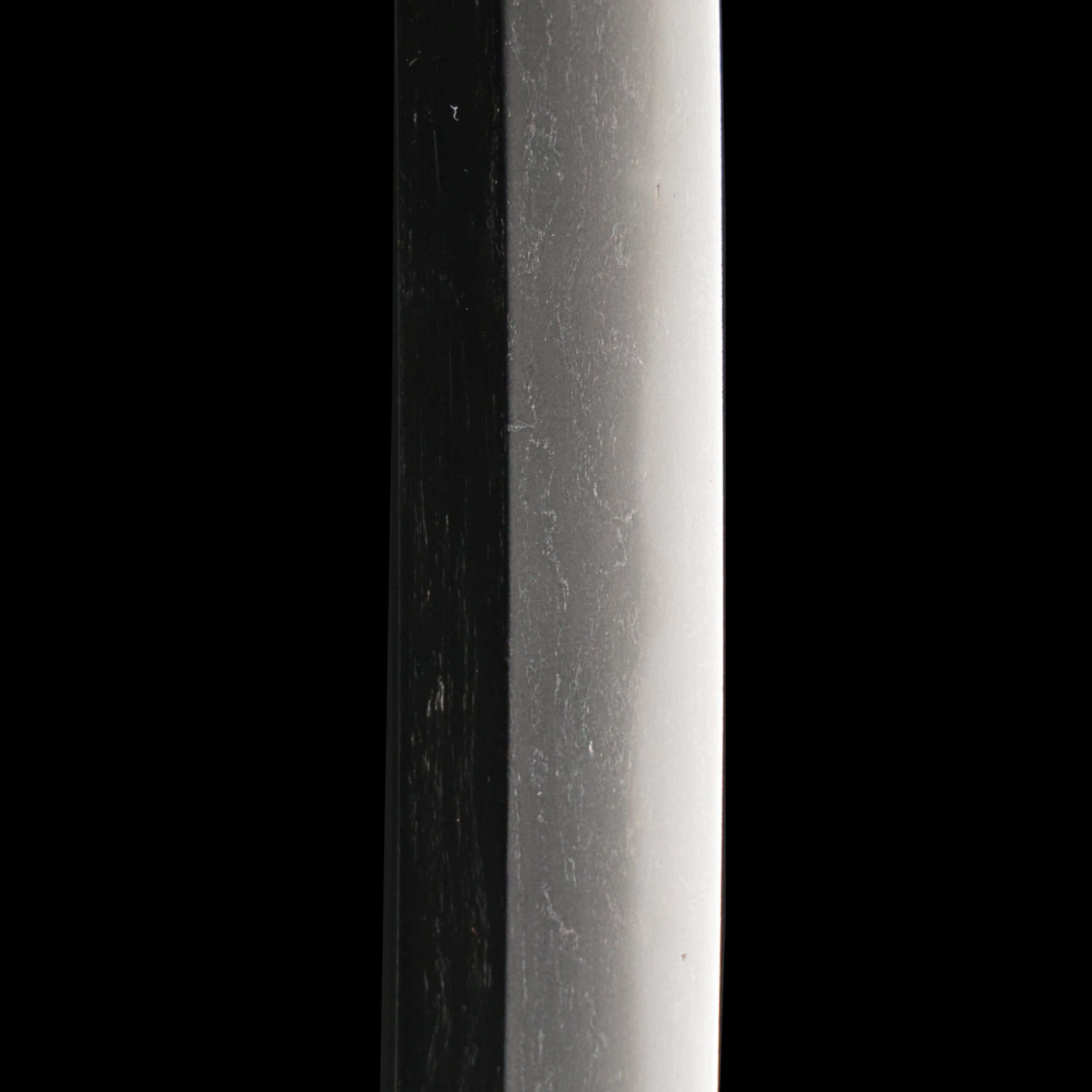
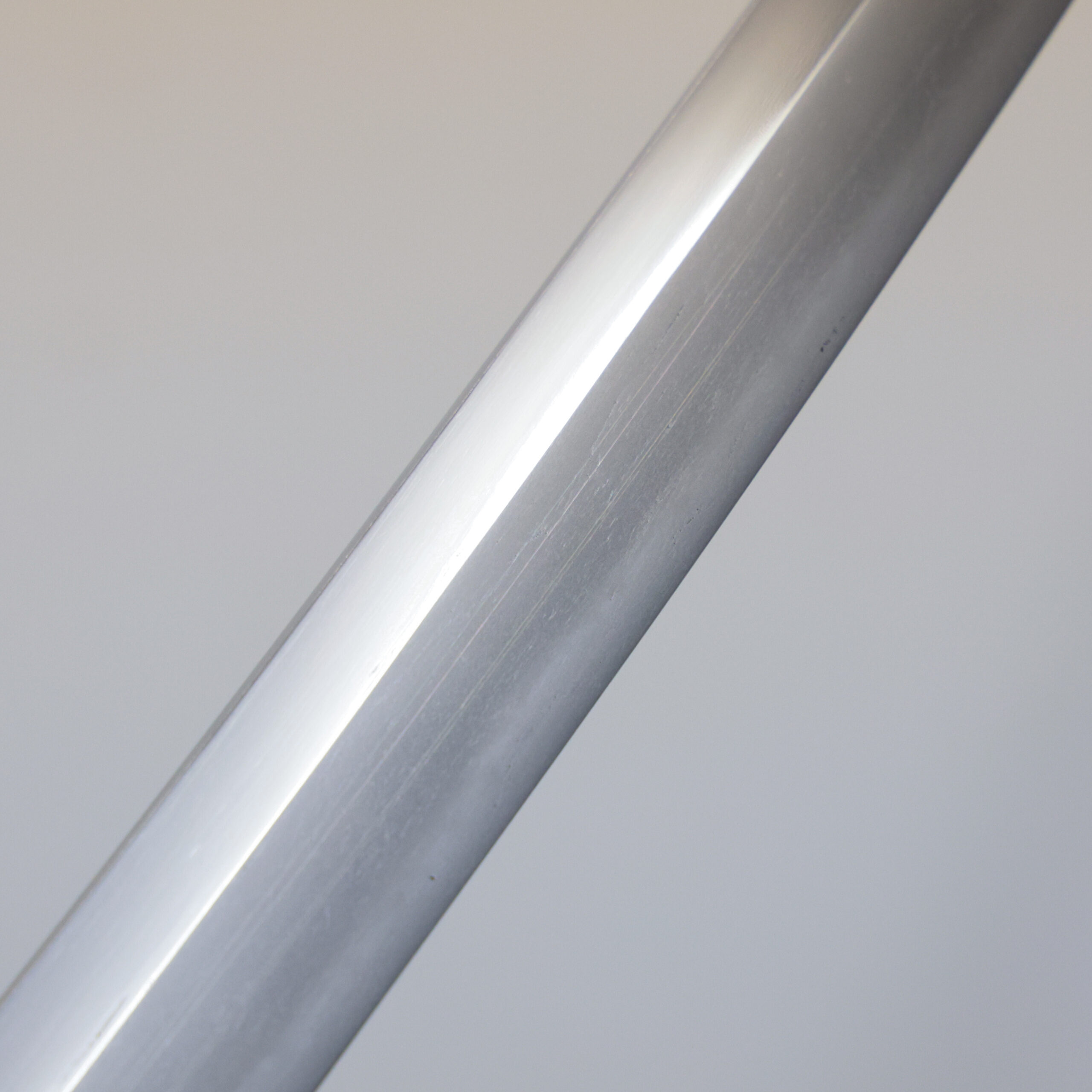
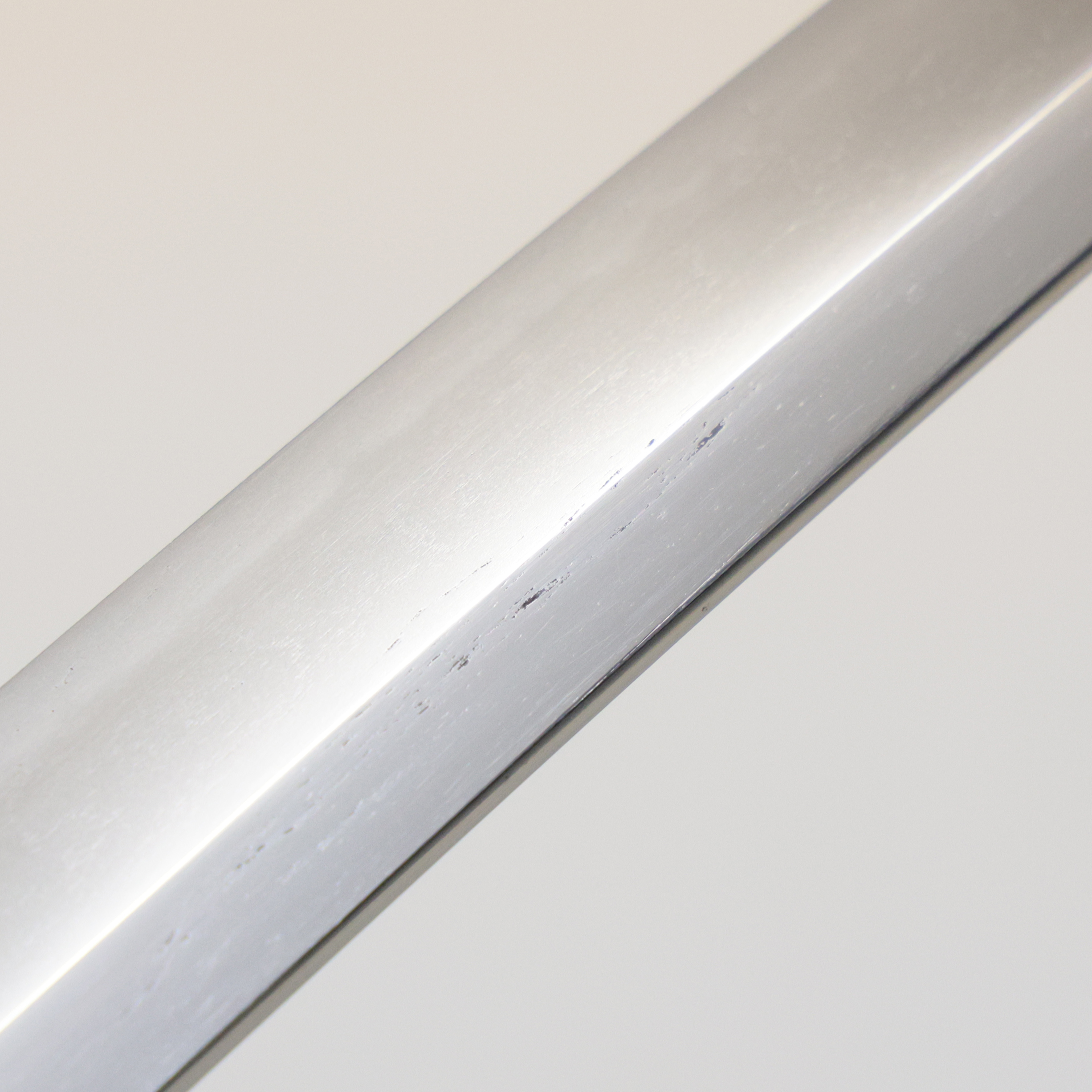
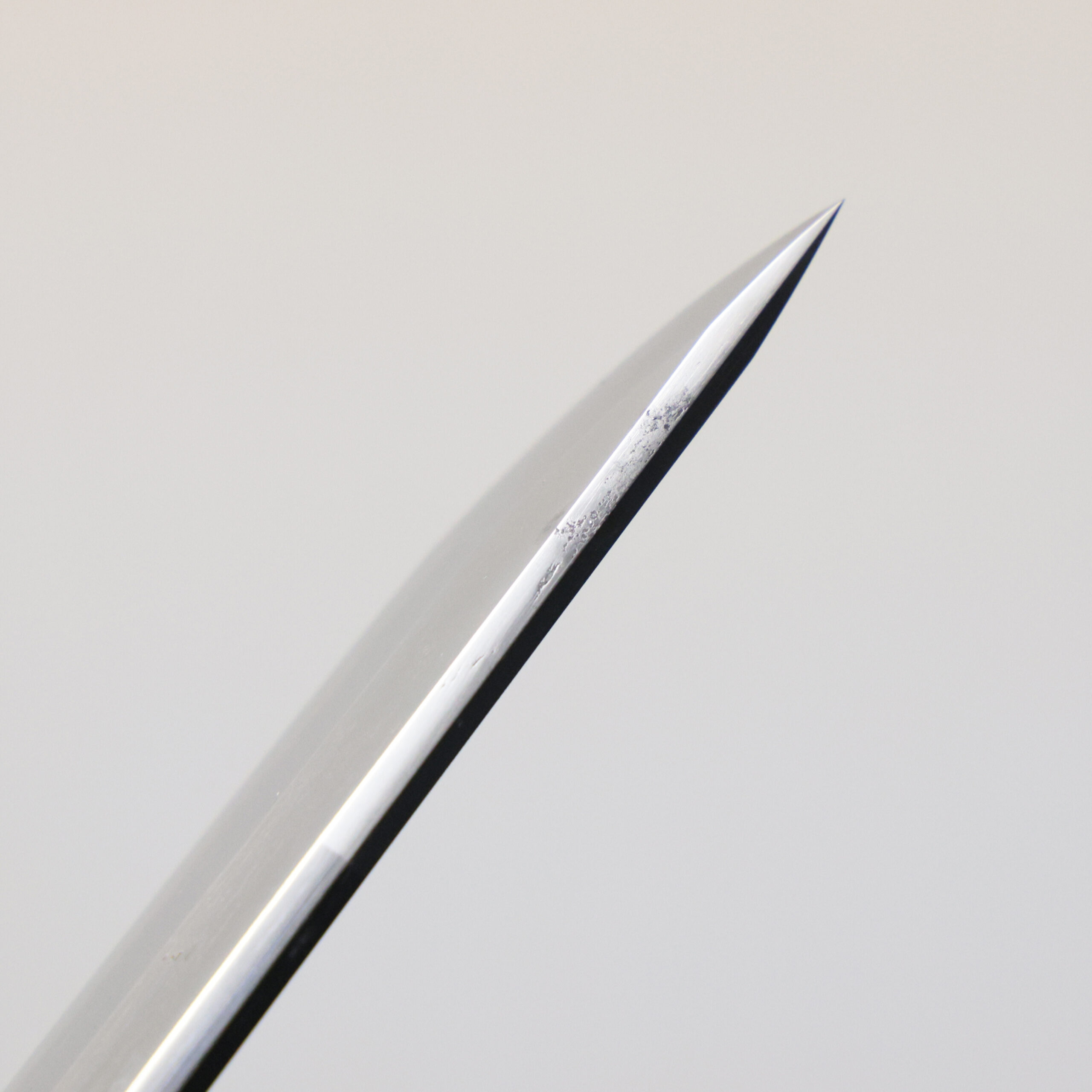
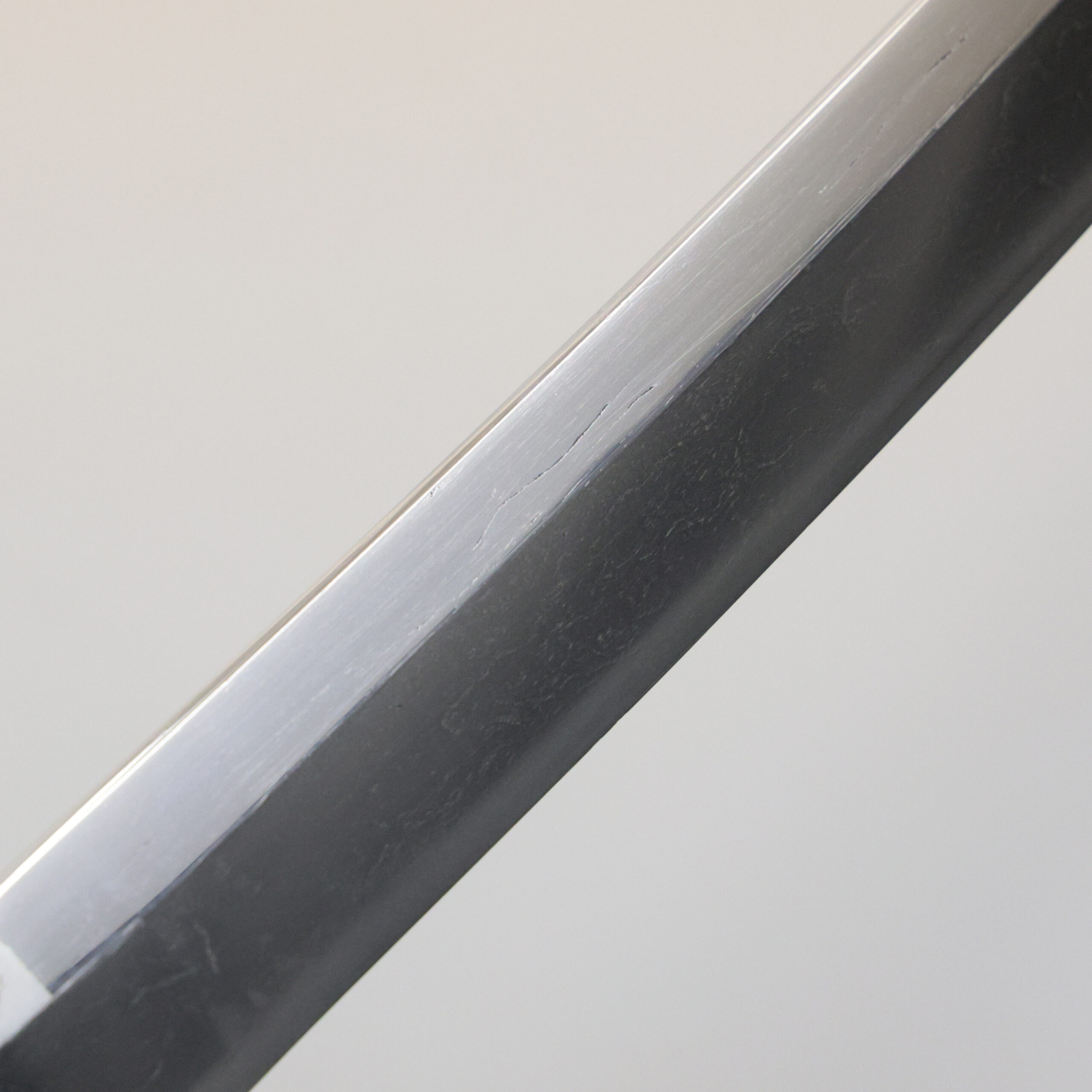
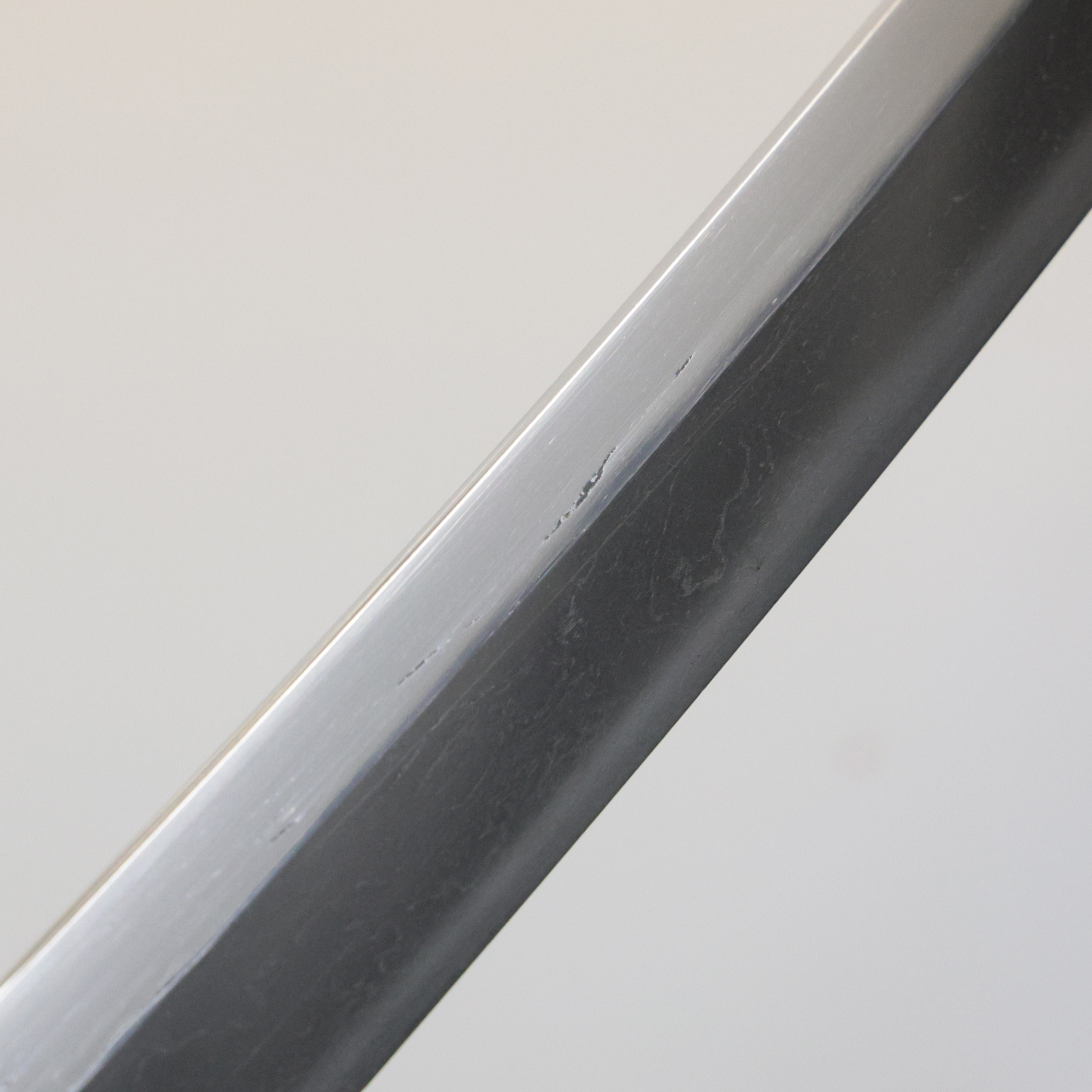
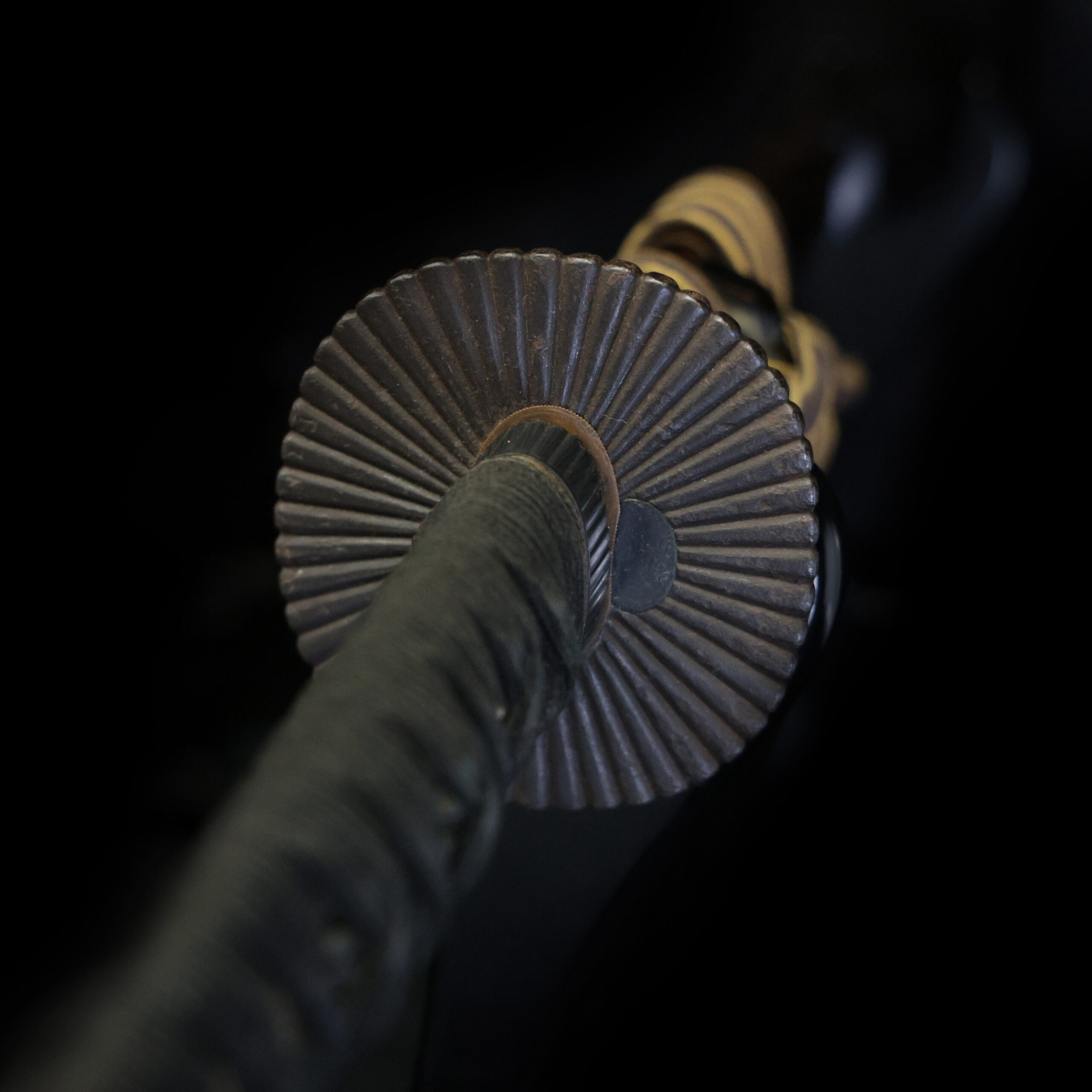
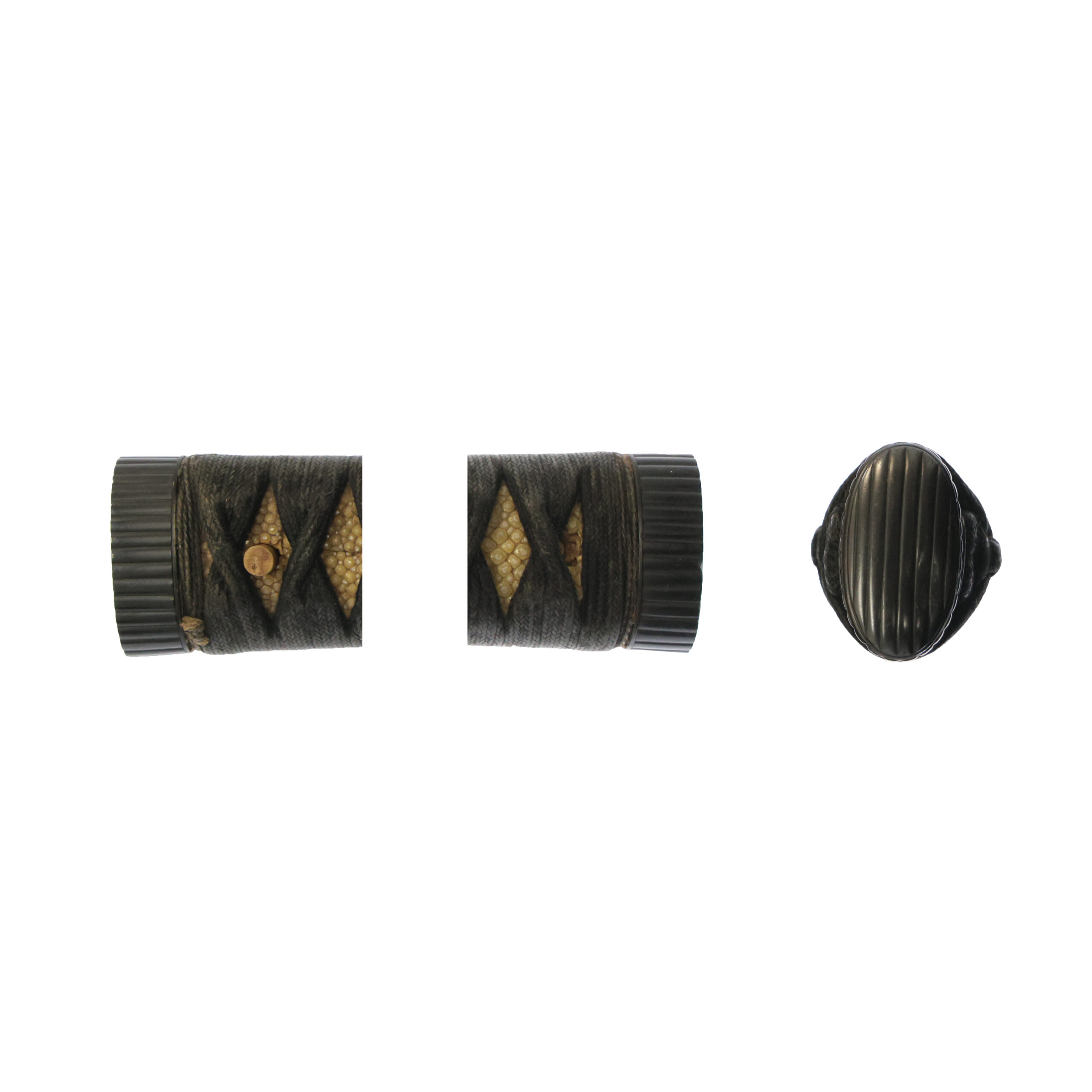
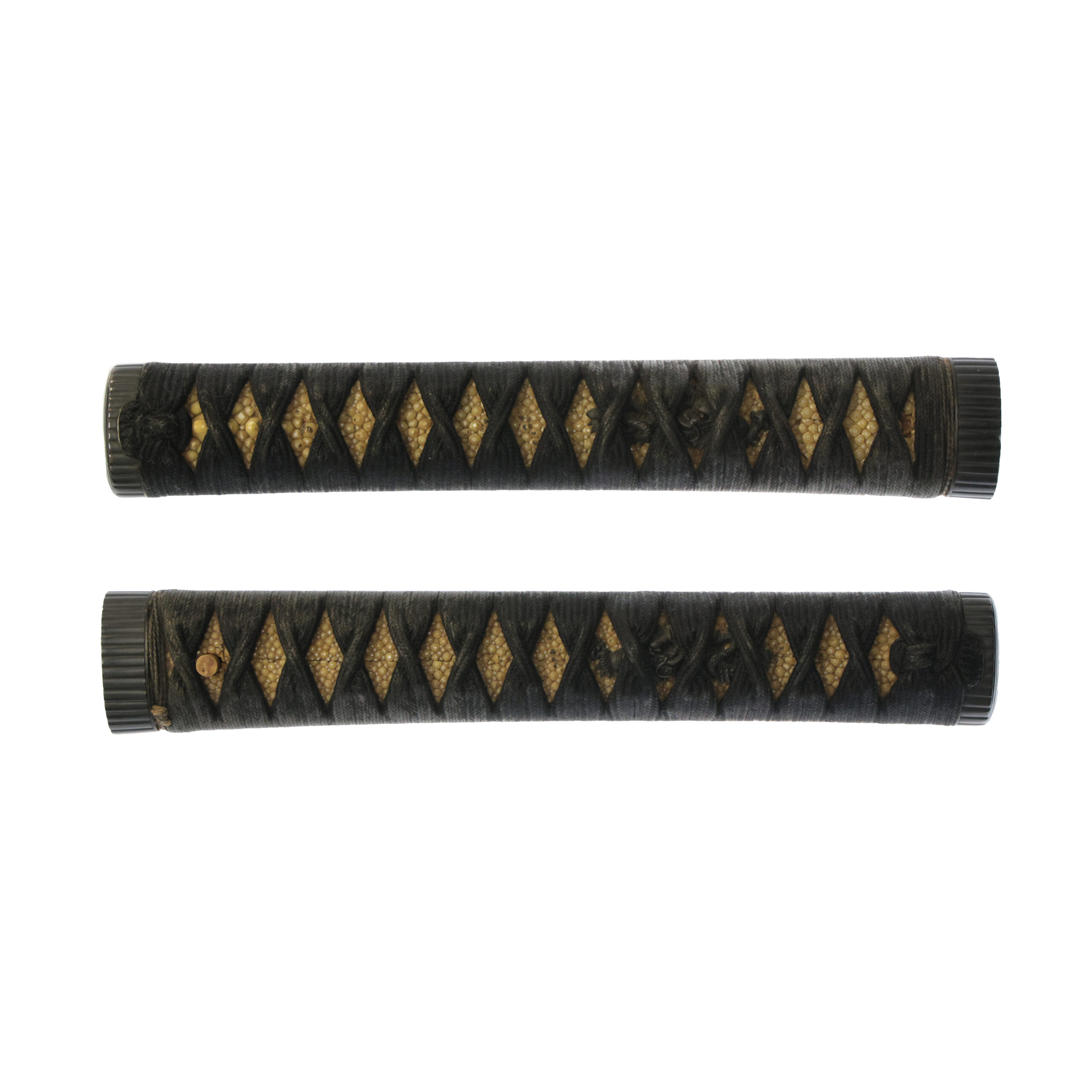
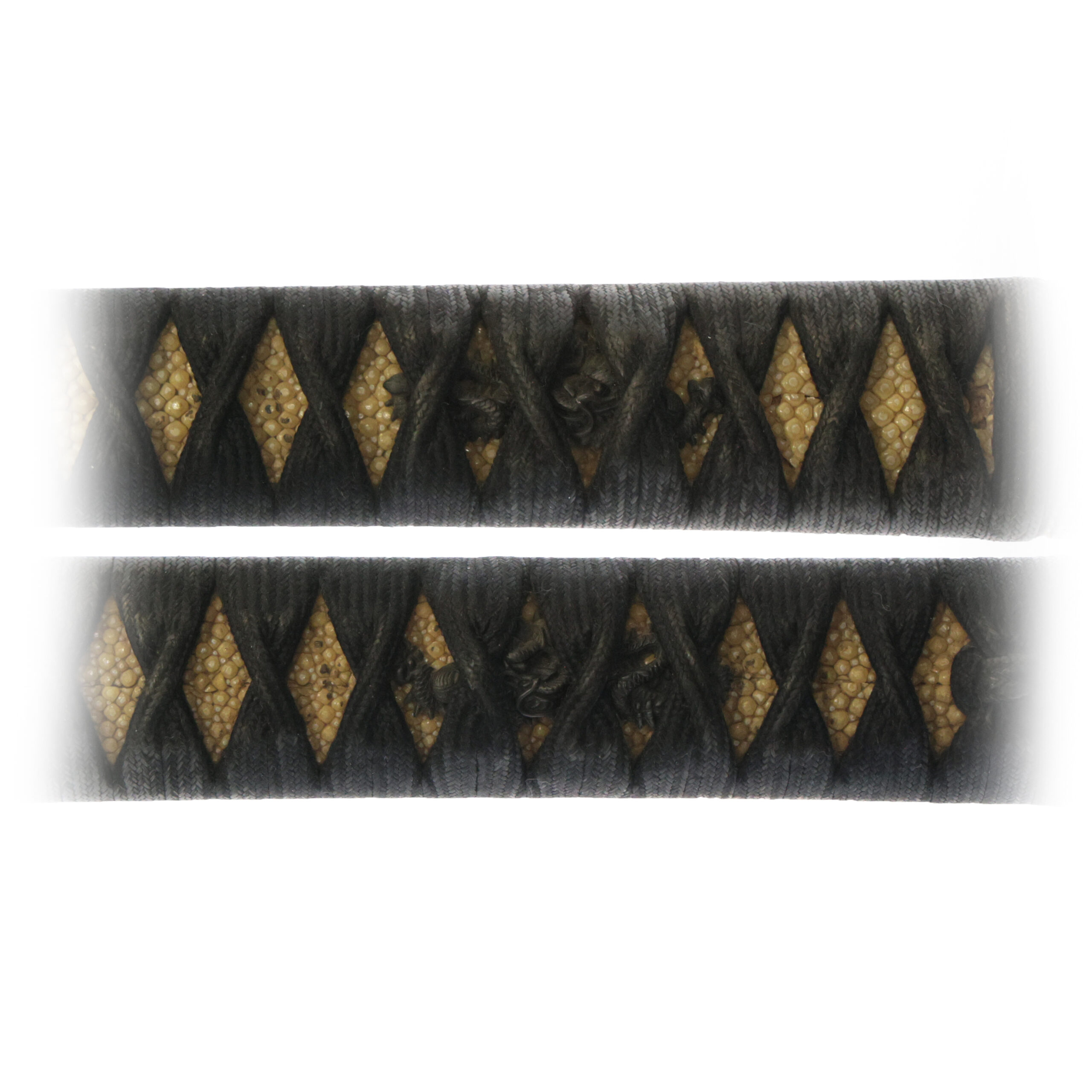
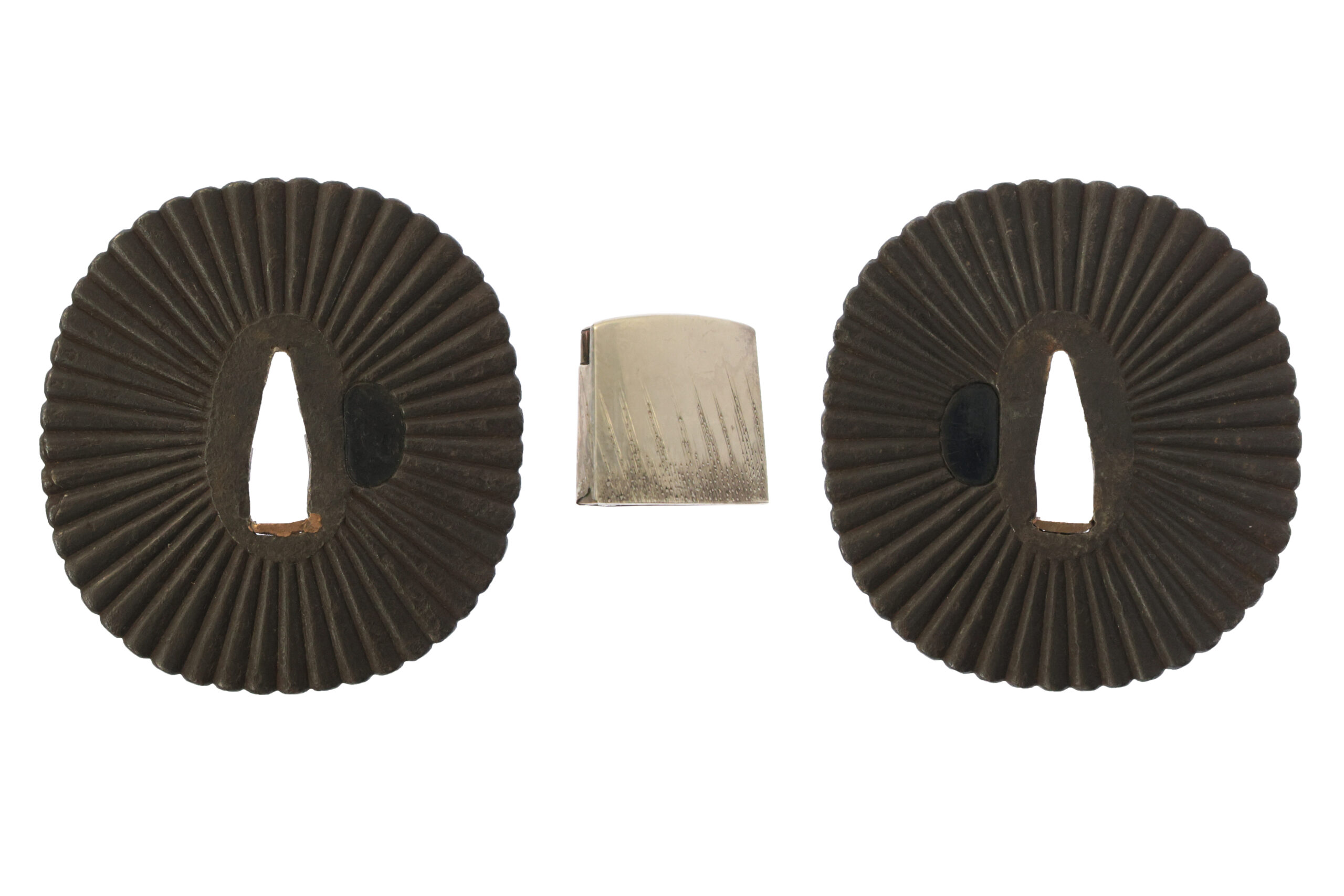
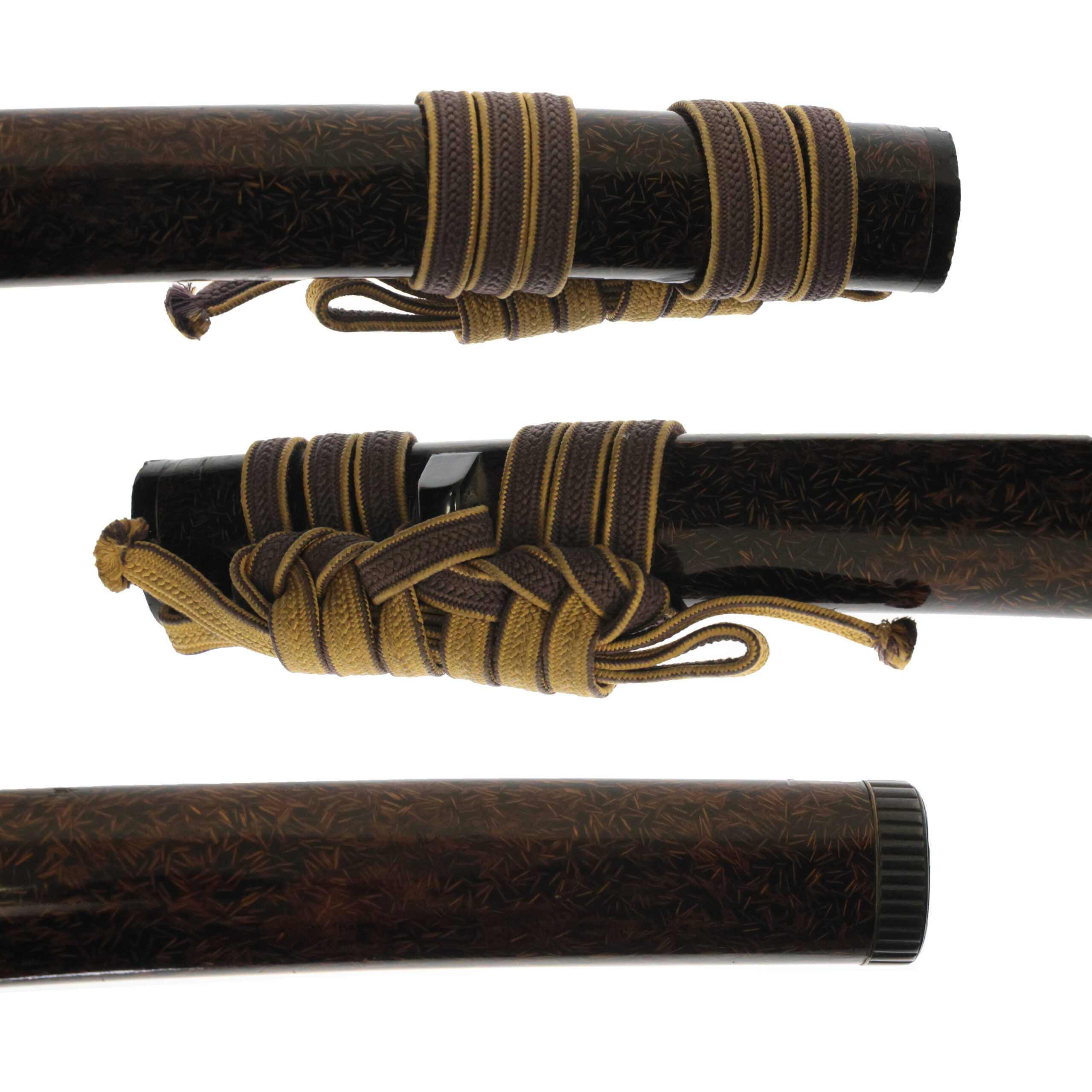
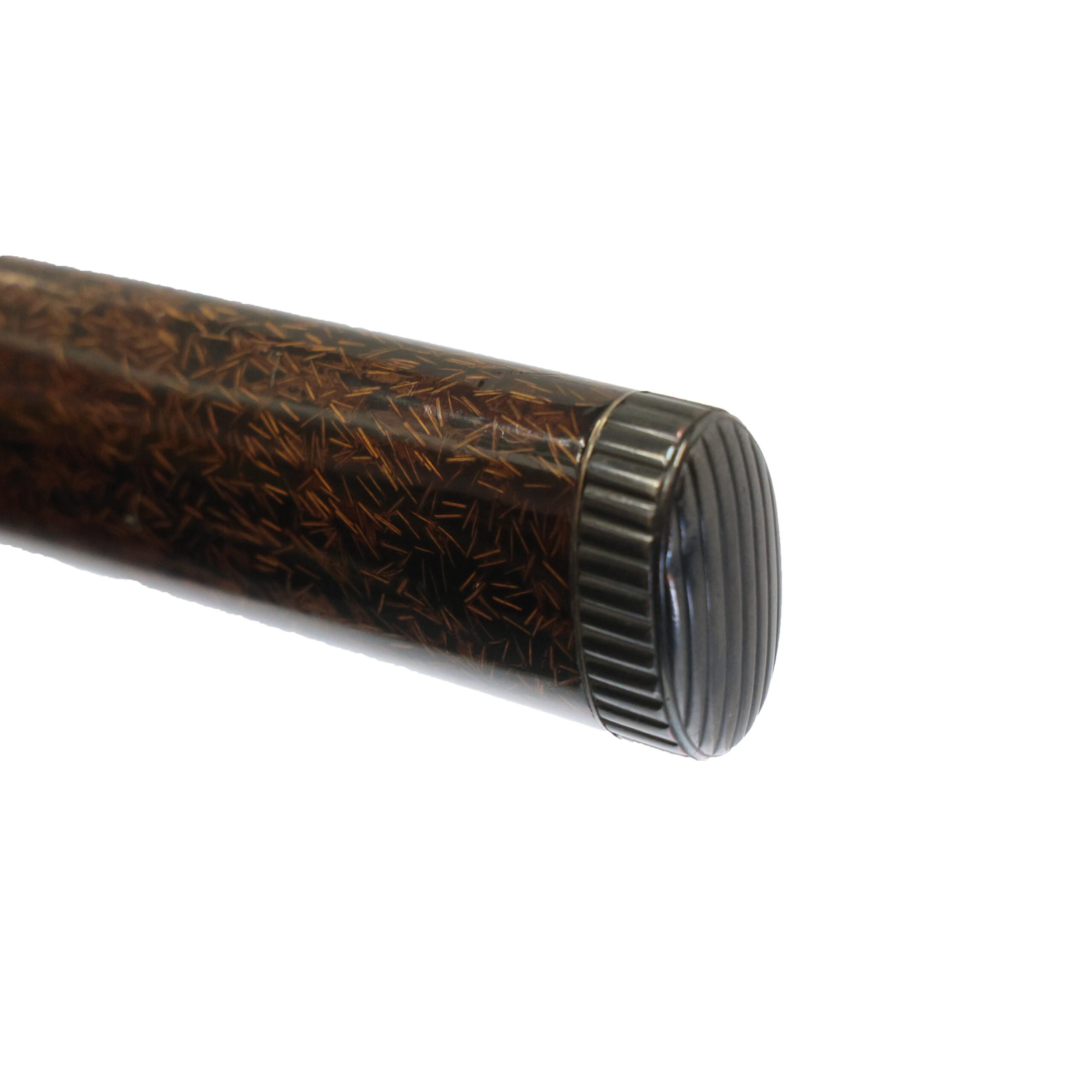
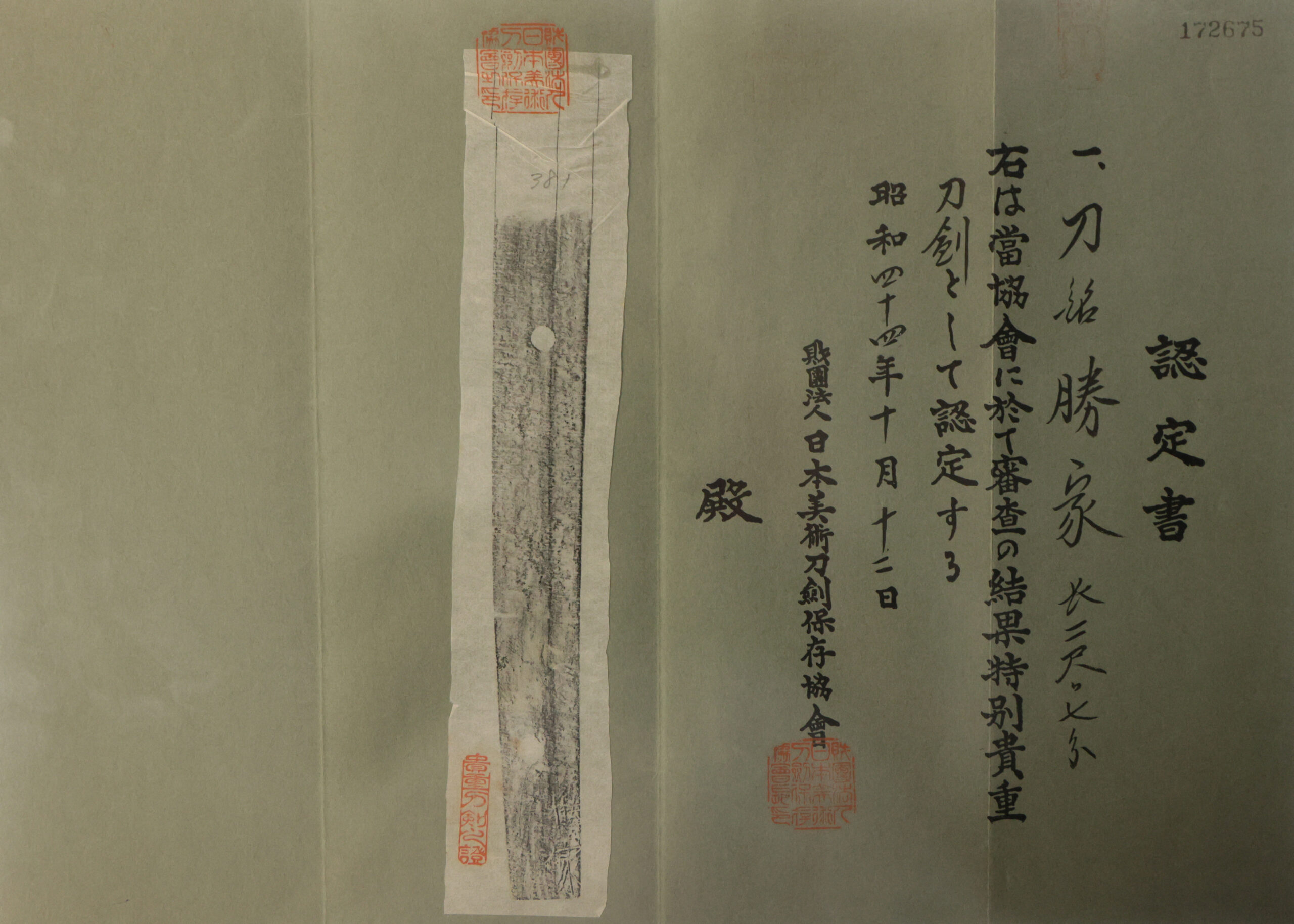
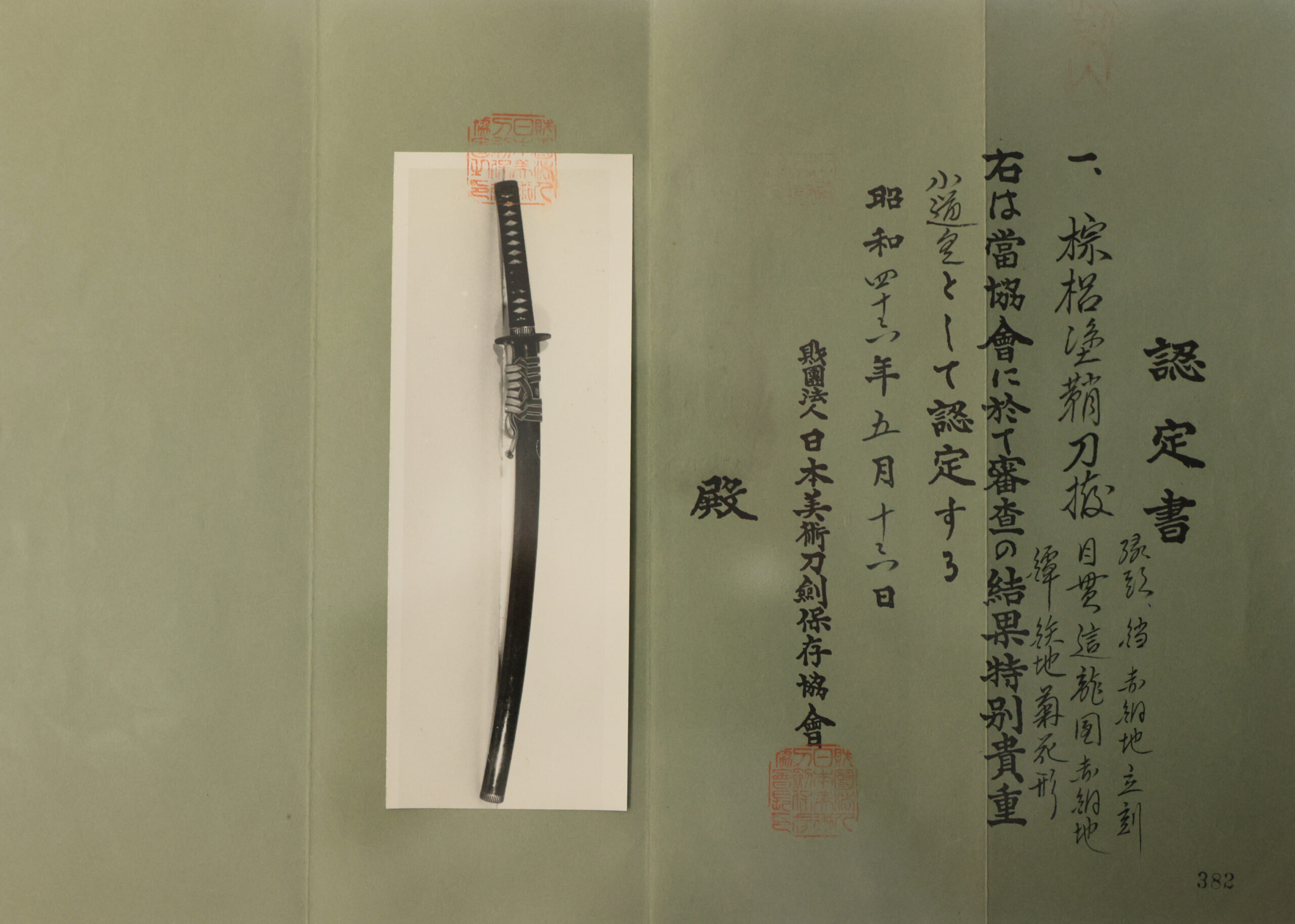
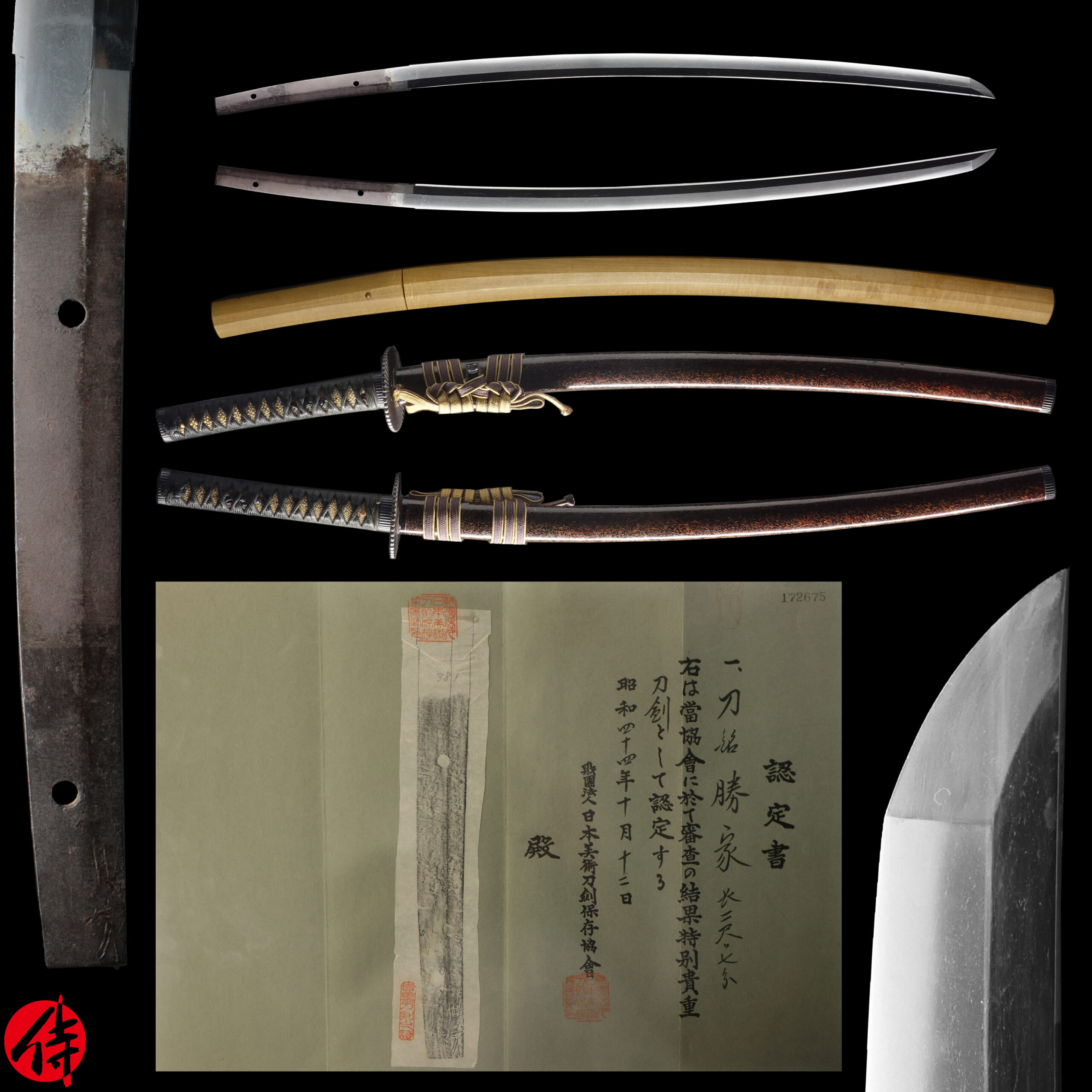
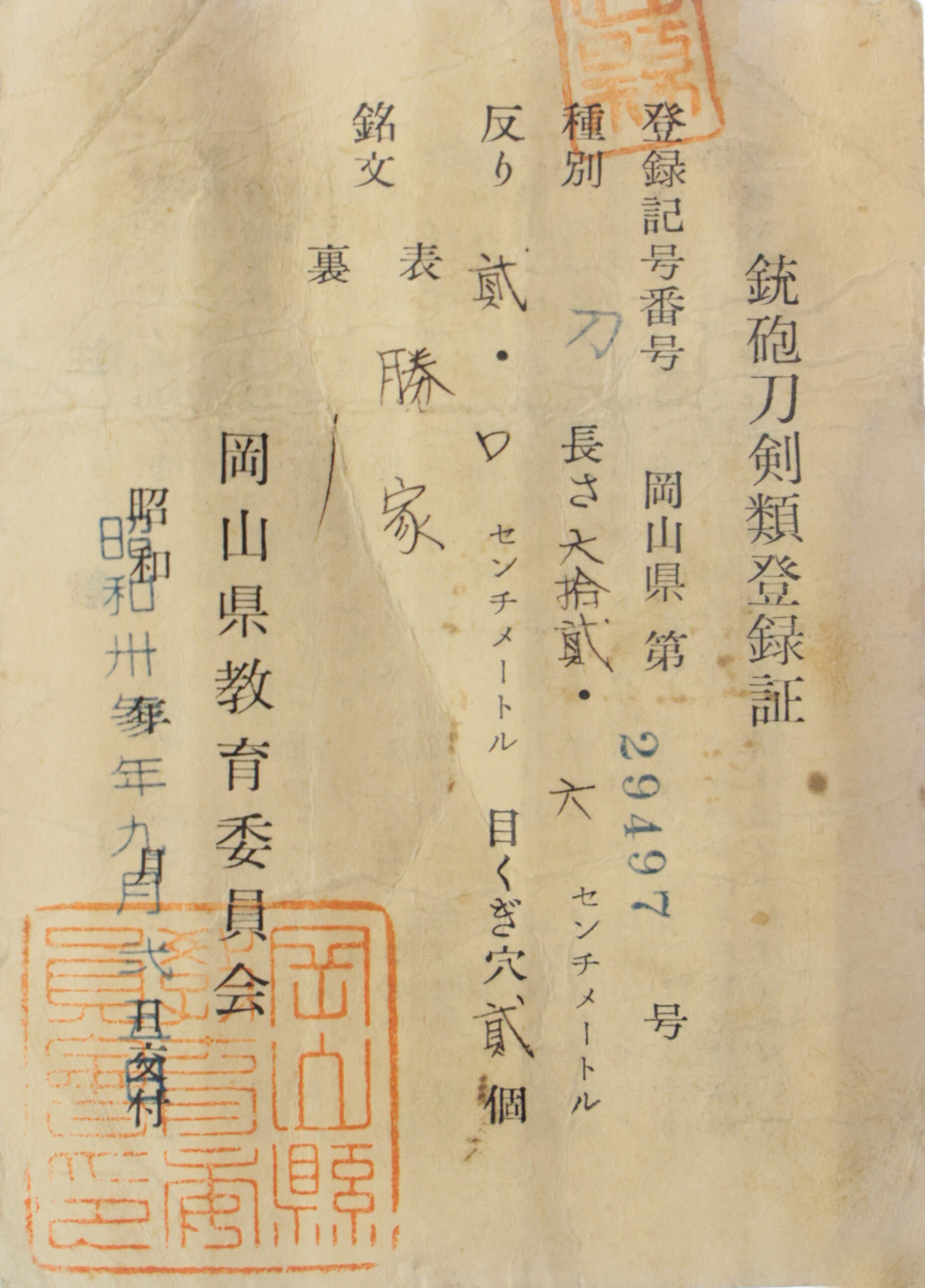
This blade bears the signature of Katsuie (勝家) and is estimated to date to the late Muromachi period (late 15th to mid-16th century). The swordsmith name “Katsuie” (勝家) lasted several generations from the middle of the Muromachi period to the early Edo period (1450s-1650s), and we believe the attribution was given to a late generation Katsuie in the late Murimachi period (the late 15th – mid 16th century). The first generation Katsuie was originally from Mino province, famous for the sword-forging tradition called MINO-DEN (美濃伝). He and his apprentices moved to Kaga Koku (today’s Ishikawa prefecture) in the middle of the Muromachi period (1450’s). They founded a Darani (陀羅尼) school after being hired by the monks who lived there. However, from the second generation, Katsuie served the famous feudal clan, Maeda clan, forging swords for famous Samurais. It was honorable for any swordsmiths to serve a feudal clan exclusively. This blade might have been made in the middle of Sengoku Jidai (Warring States period) when there was so much rivalry between warlords trying to gain political power nationwide. It would be nice to have a piece that survived through this period. Maeda Clan Maeda clan was originally a retainer of Oda family, who ruled Owari province (today’s Nagoya area in Aichi prefecture). The first head of the Maeda clan was Toshie Maeda. He climbed the social ladder of Samurai society and became the feudal lord of Kaga province (today’s Ishikawa prefecture). He had a vast rice fief that fed 1 million grown-up adults, which is called Hyakuman Goku. The Maeda clan was one of the most influential families in Samurai history. Toshie Maeda had a close tie with Oda Nobunaga and Hideyoshi Toyotomi. *Please keep in mind that there are a few Kitae Kizu on the blade. Fuchi-Kashira The fuchi-kashira are made of shakudo (a copper-gold alloy) and decorated with vertically engraved stripes. Tsuka and Menuki The certificate says that this Menuki’s motif is the Hairyu Zu (這龍図). You could see the dragon’s characteristic elongated body through the gaps in the Tsukamaki threads on each side. The figures of dragons crawling along with flames are designed. Initially, the dragon was an imaginary creature found in ancient foreign traditions or myths. Furthermore, it is regarded as a symbolic beast of auspicious signs. Its body is likened to nine animals: antlers are deer, the head is a camel, eyes are demons, the neck is a snake, belly is the Mizuchi (蛟, a mythical animal in Japan that looks like a snake and has a horn and four legs), scales are fish, claws are falcons, palms are tigers, and ears are cows. It was thought that the dragon would reign at the top of all animals because of its odd-looking appearance. Tsuba and Habaki This tsuba features a single chrysanthemum with petals radiating outward from its center. The chrysanthemum has held special significance in Japanese culture for centuries. Introduced from China during the Nara period, it became popular among the aristocracy during the Heian period and was later adopted as the Imperial family’s crest (菊花紋, kikkamon). It symbolizes nobility, longevity, and purity and is closely associated with autumn, frequently appearing in traditional poetry and paintings. Saya The saya (scabbards) feature a shuro-nuri (棕梠塗) finish, in which finely chopped palm fibers are embedded in black lacquer. Depending on how the light falls, the fibers shimmer with a golden sheen, creating a striking visual effect. Authentication Paper They authenticated its blade on October 12th in the 44th year of Showa (1973) and koshirae on May 16th in the 46nd year of Showa (1971). They appraised them as Tokubetsu Kichou Touken, an old form of the certificate.
Offered by Samurai Museum
This piece has sold
Get an email when a new Katsuie piece hits the market.

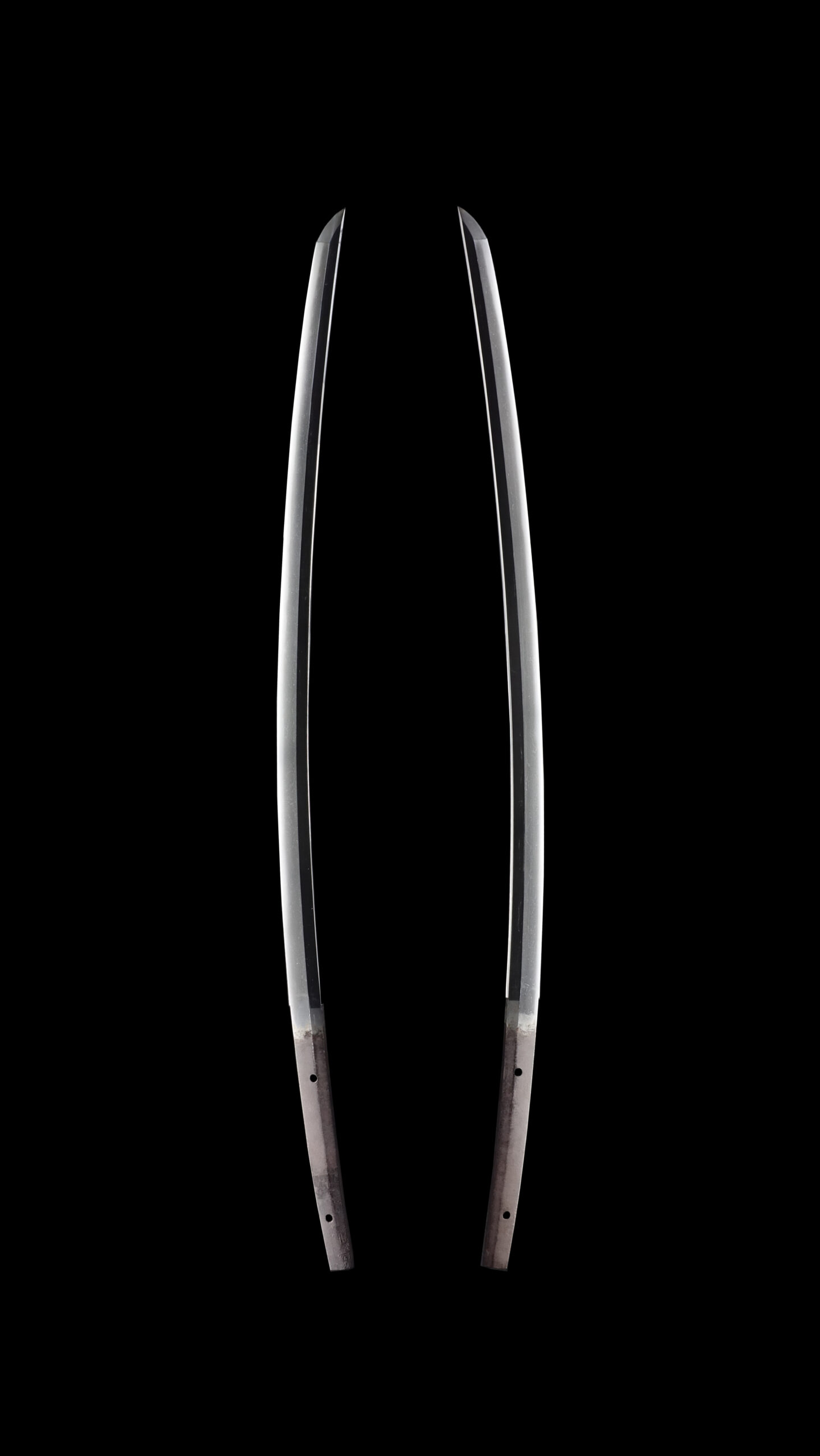
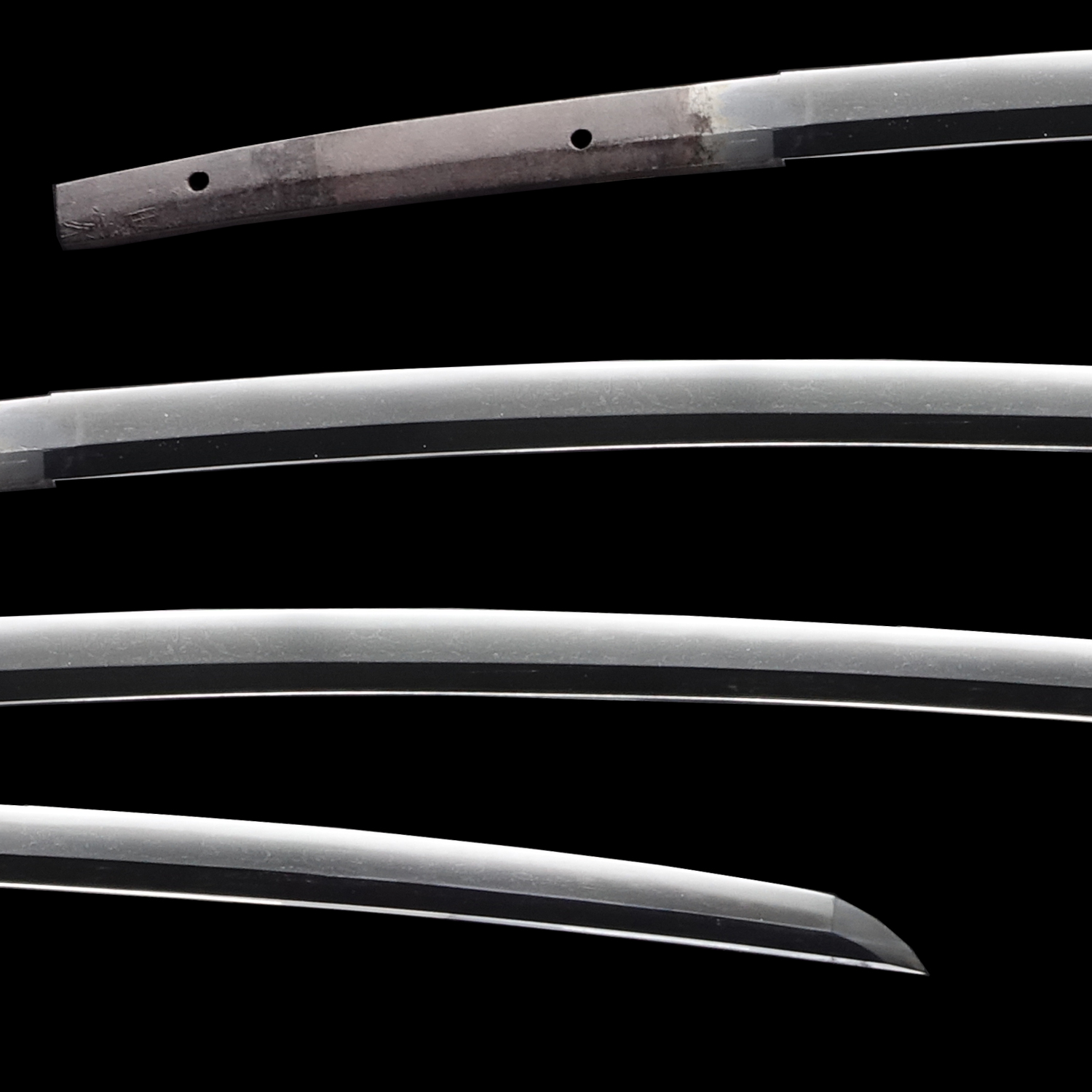
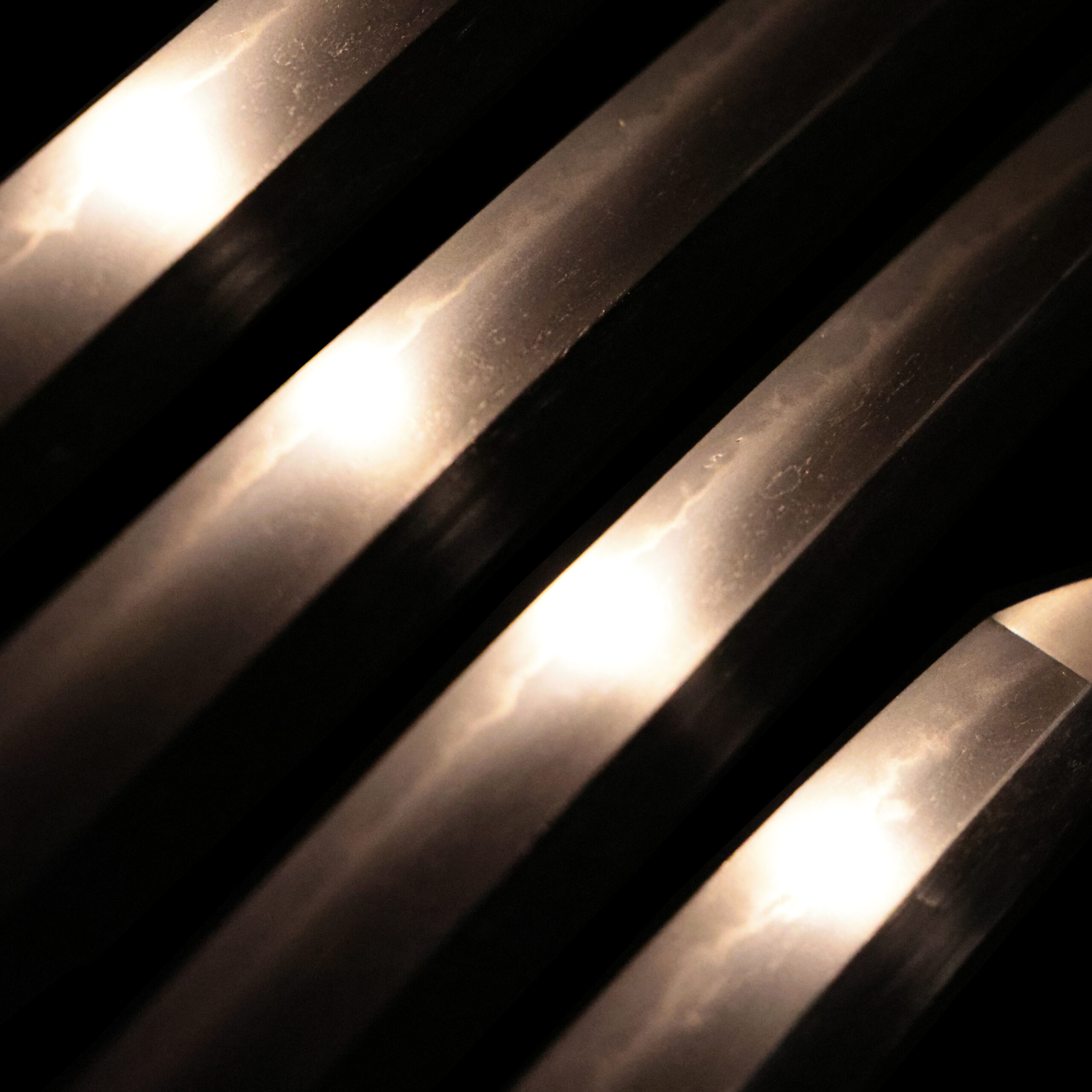
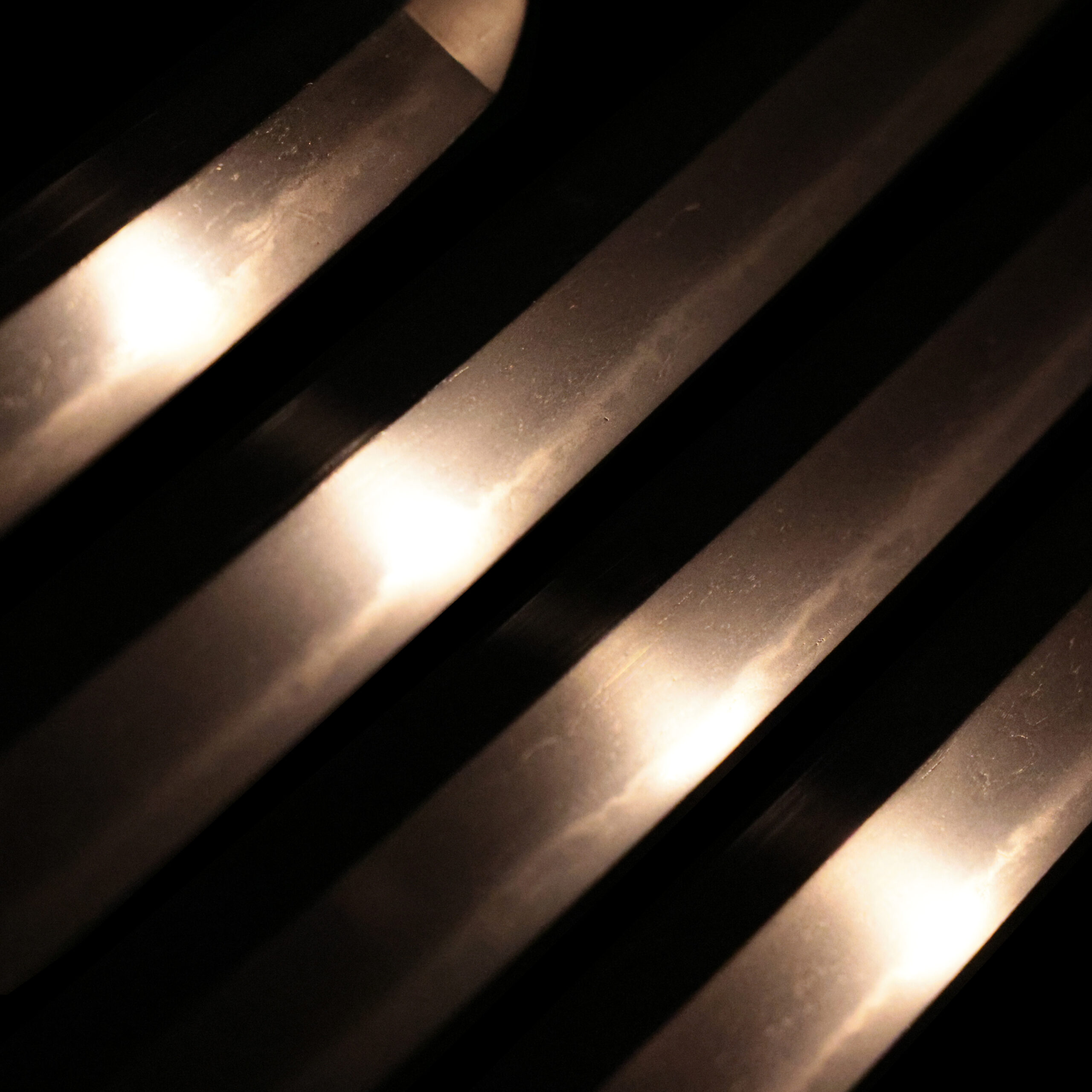
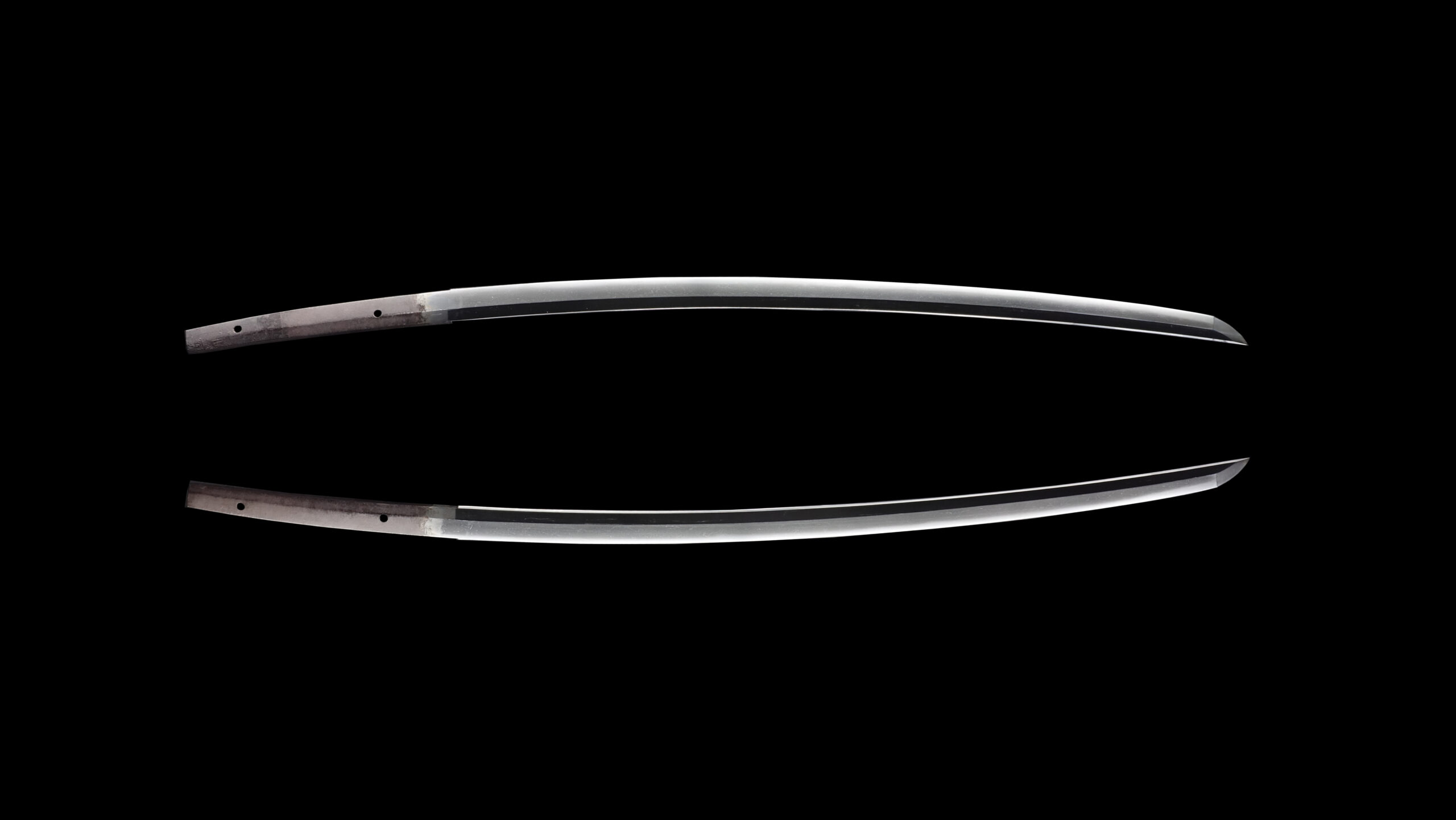
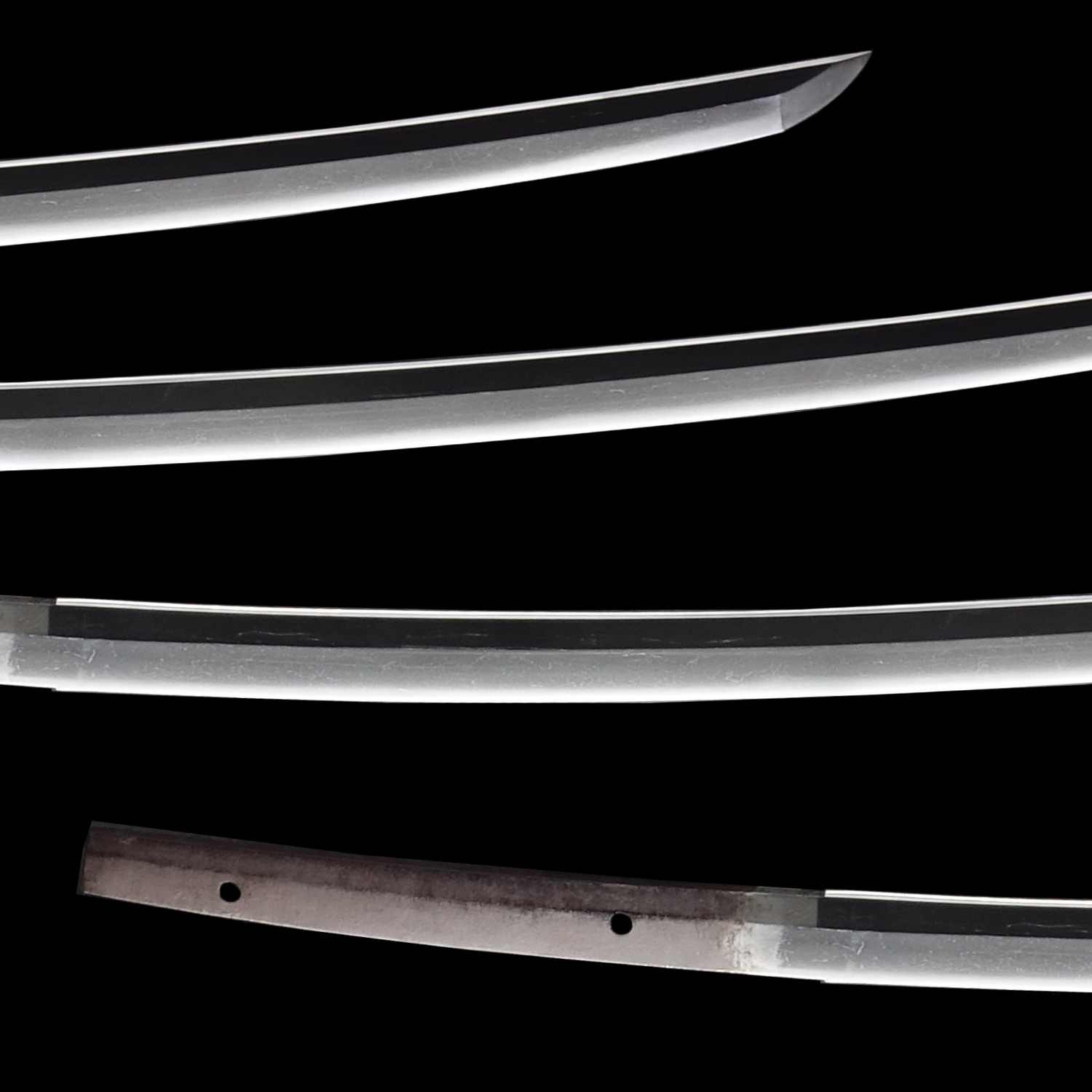
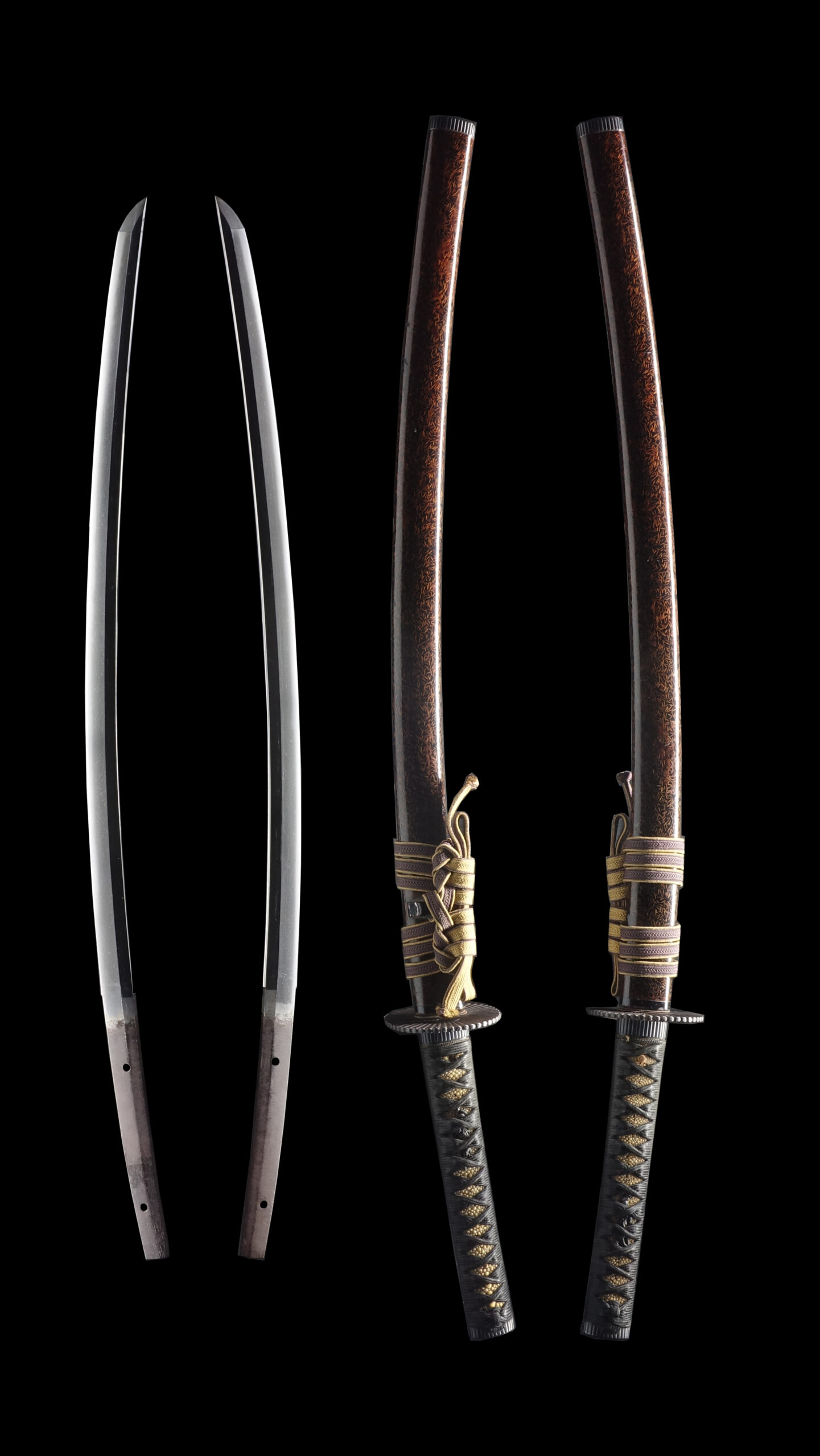
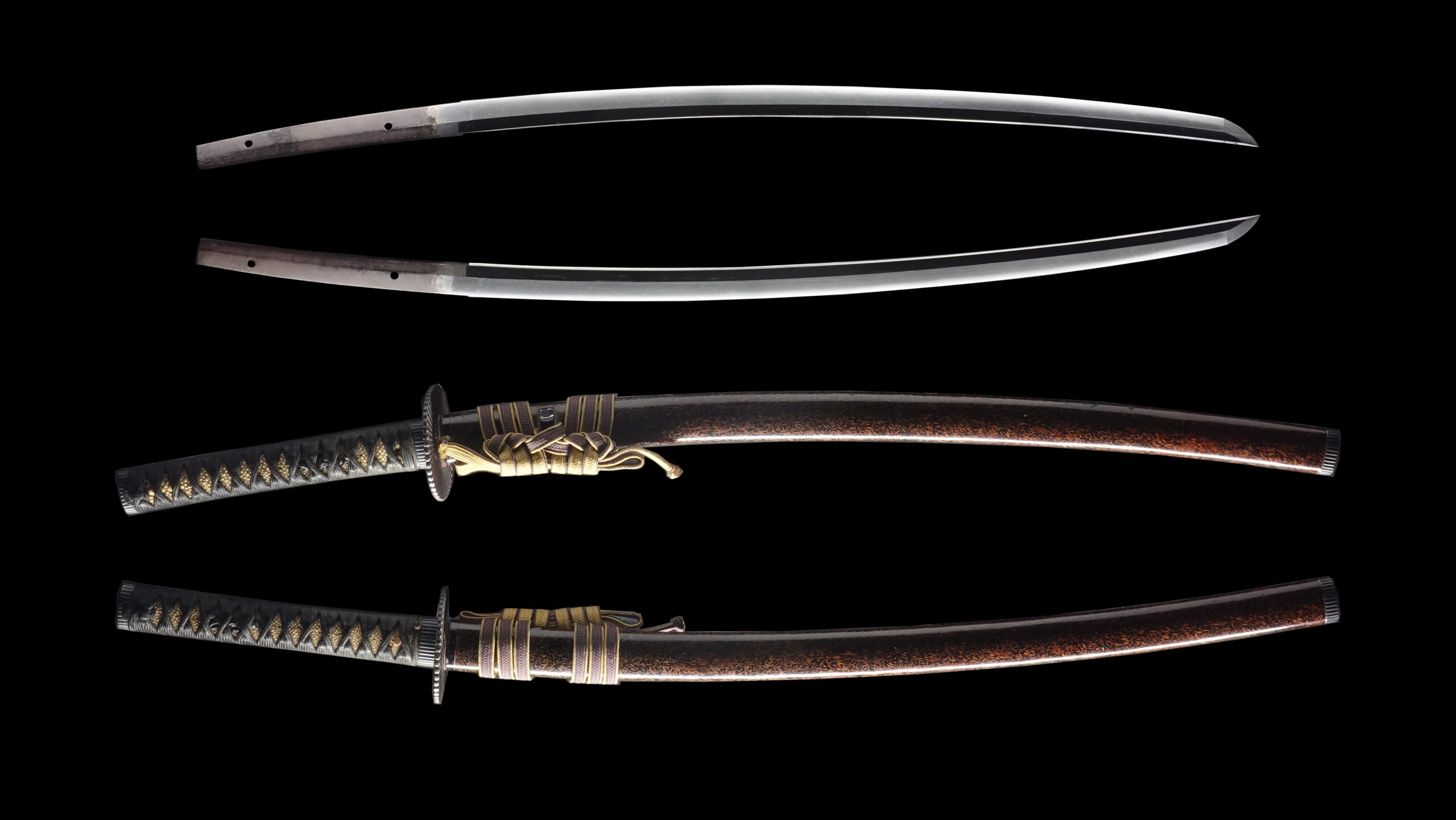
Kaga · around 1492-1501
The Muromachi period (1392 to 1573)
After the Ōnin War broke the Ashikaga order, a century of Sengoku warfare armed nearly every province in Japan. The era rewards a discriminating eye: routine work exists in quantity, and beside it stand custom blades of the first rank.
This work carries older NBTHK “Kichō”-era papers, which the NBTHK no longer issues and largely disavows today. To confirm the attribution, submission to an official Japanese examination body (such as the NBTHK or NTHK) for modern certification could be considered.
Returns/exchanges limited to defects caused by shipping (except willful misconduct or gross negligence by the company); customers must contact within 72 hours of receiving the product.