Edo was the sword’s age of connoisseurship: the Hon’ami appraisers, the shogunal register of famous blades of 1719, and a thriving literature turned the sword into an object of study even as it ceased to be drawn in war.
 NihontoWatchNihontoWatch
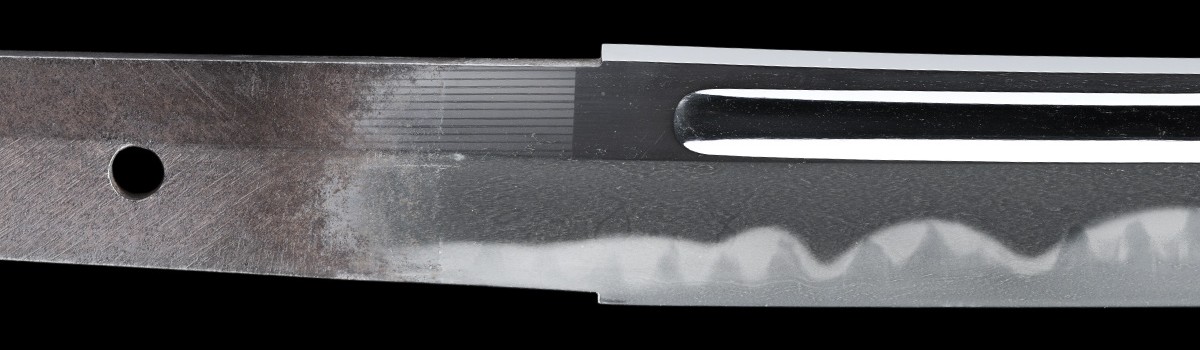
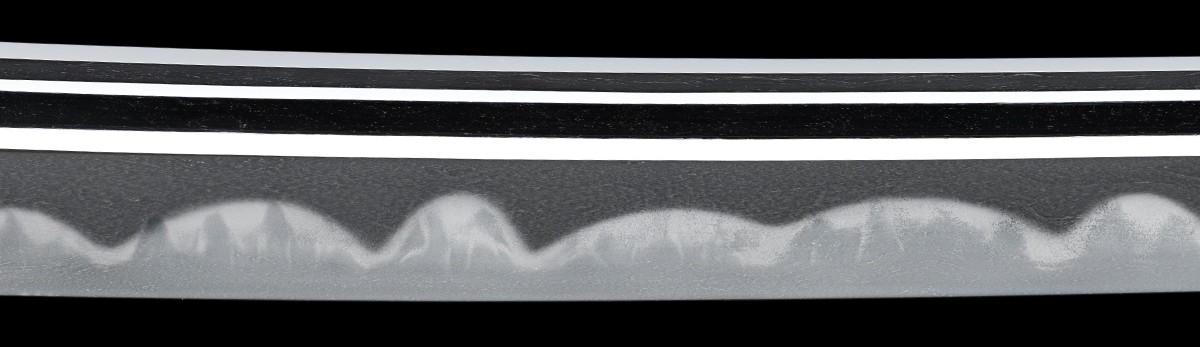
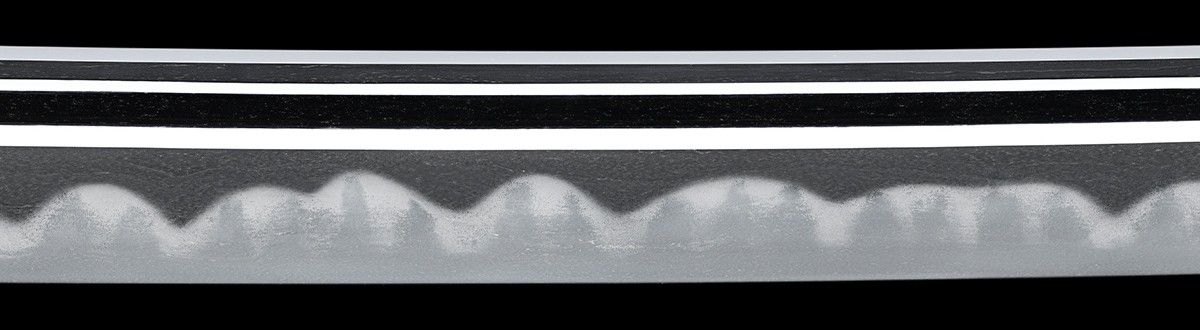
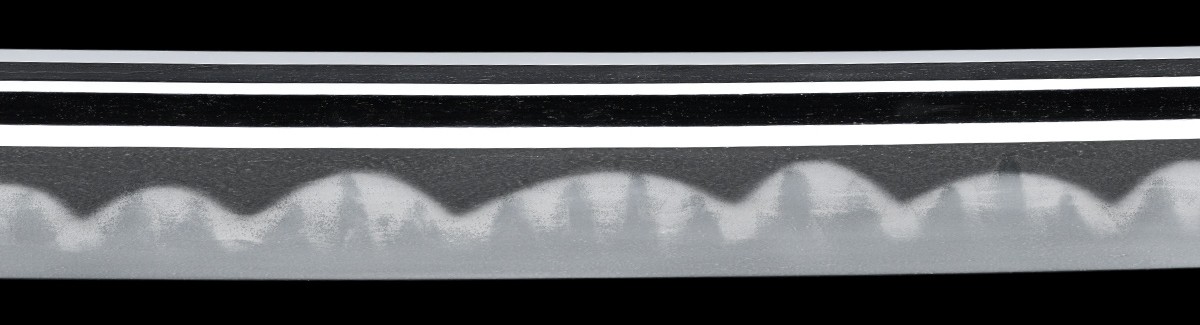
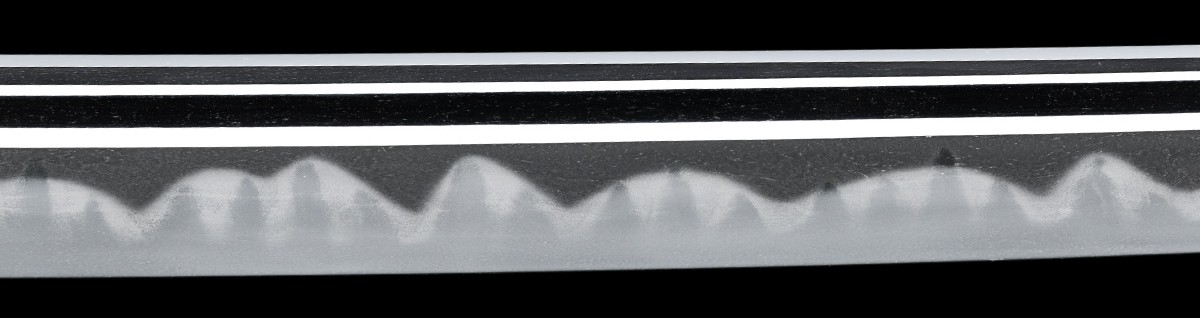
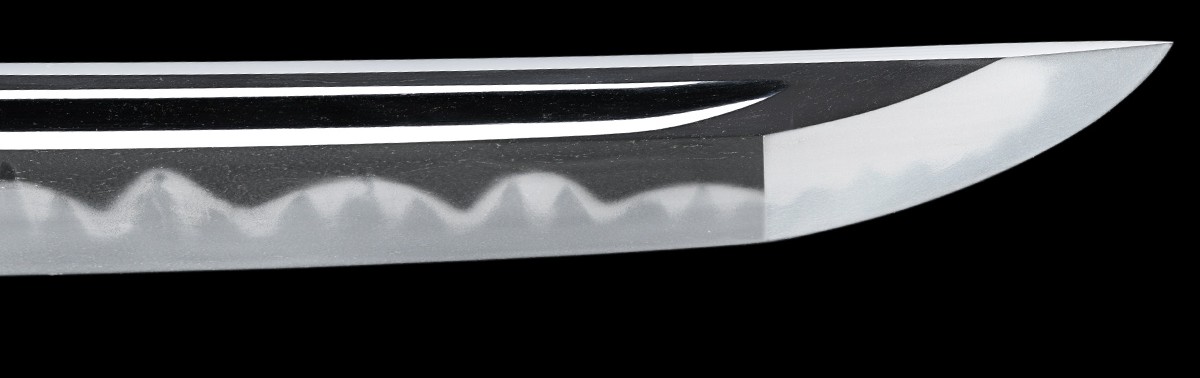
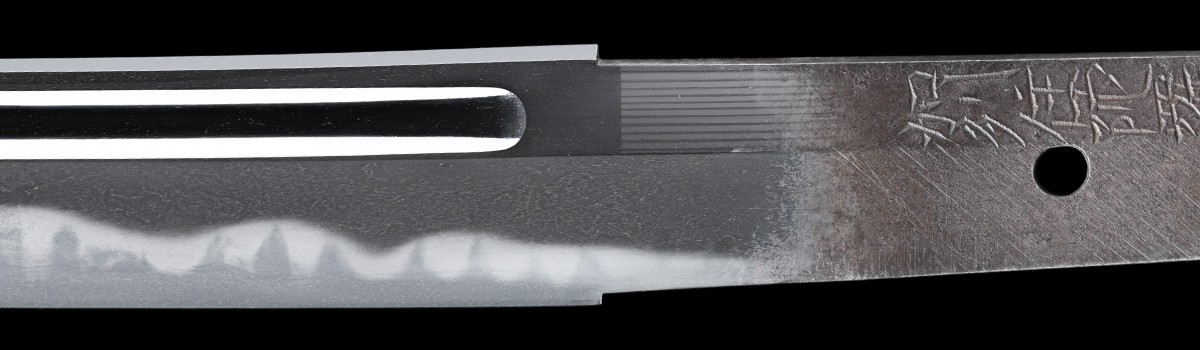
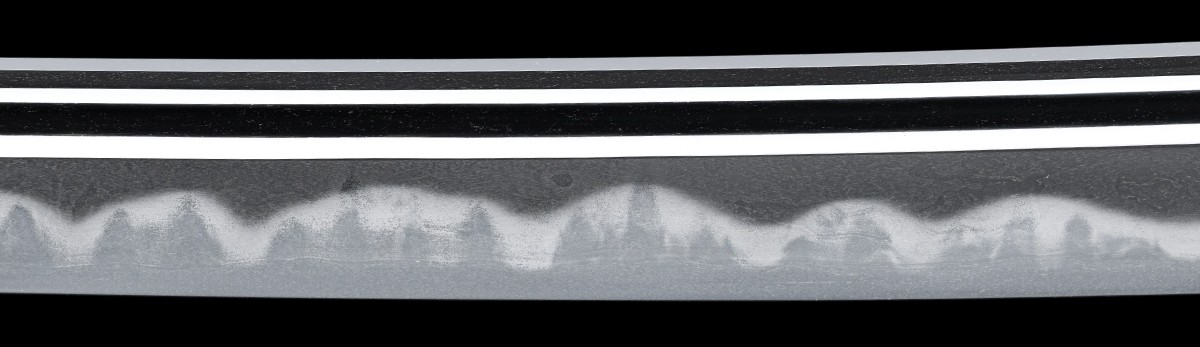
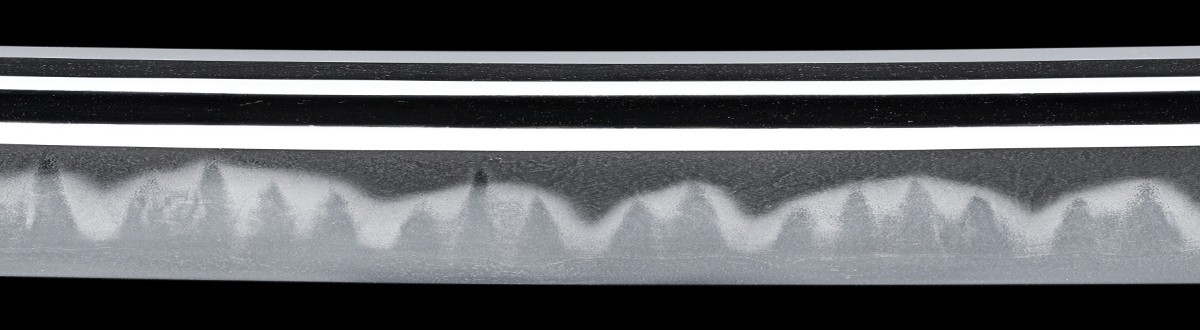
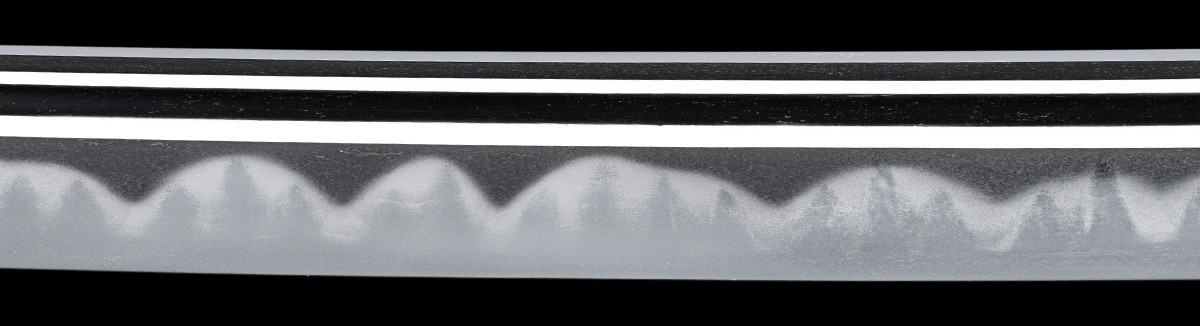
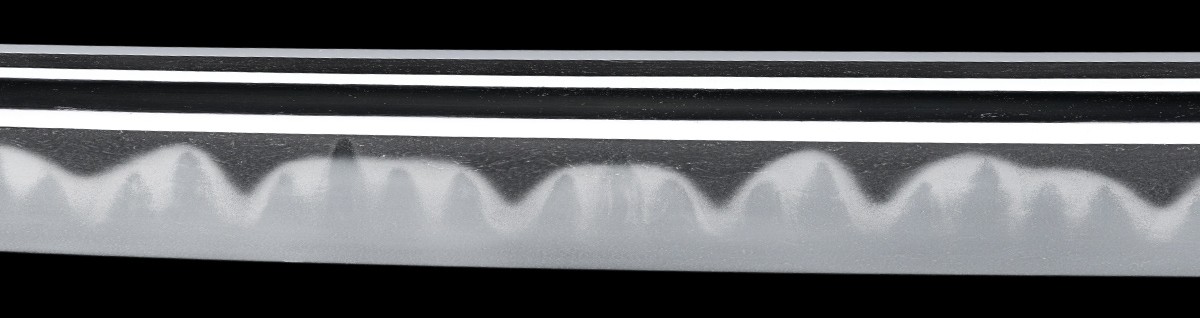
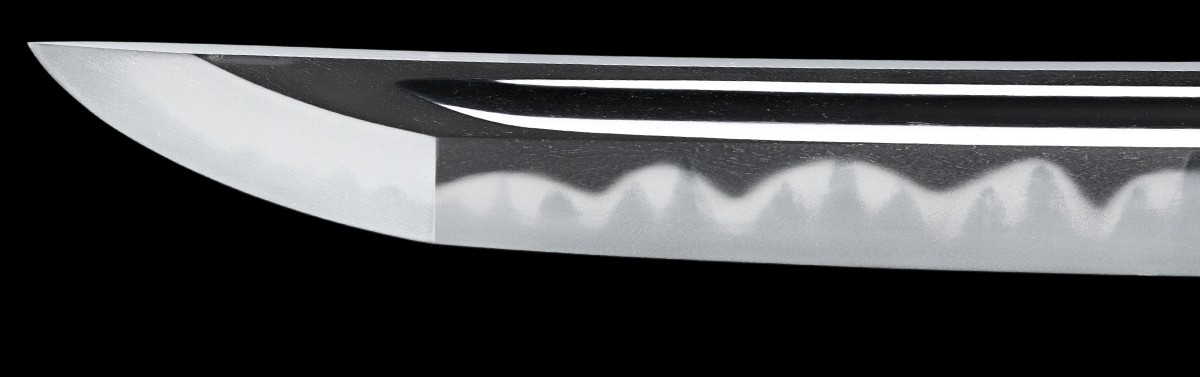
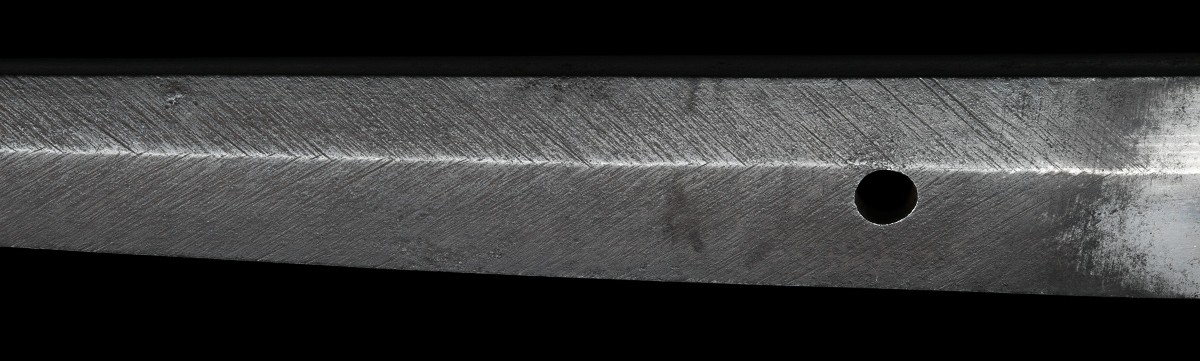
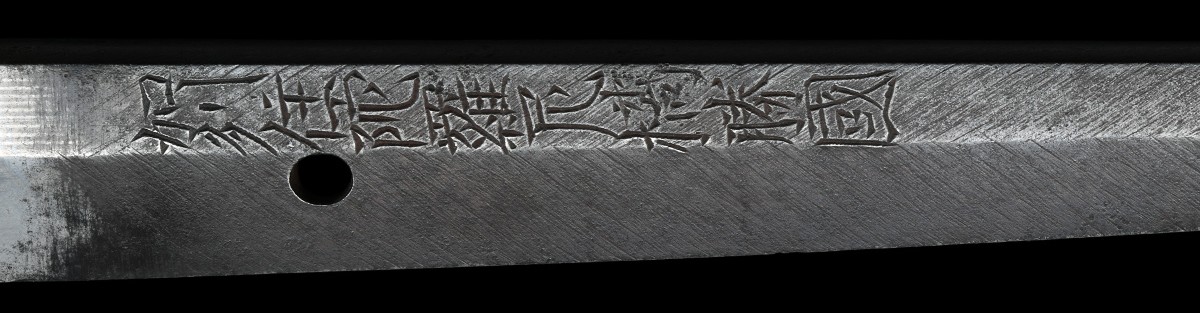
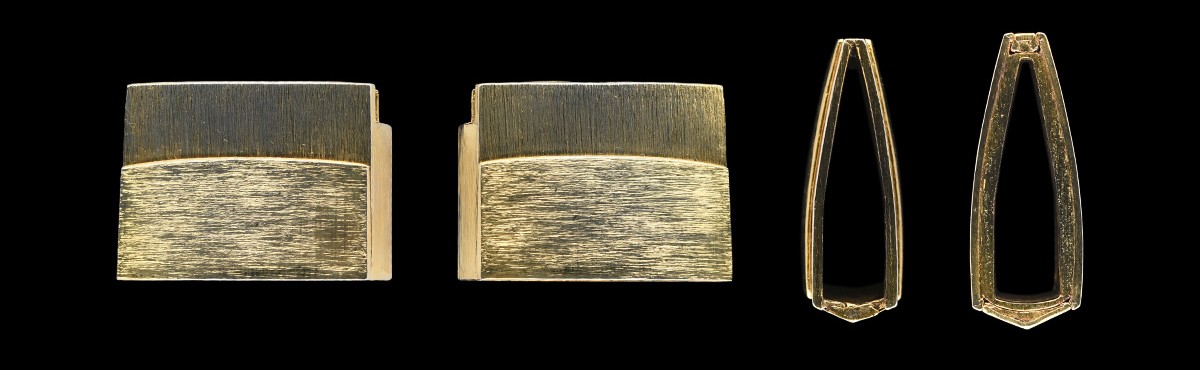
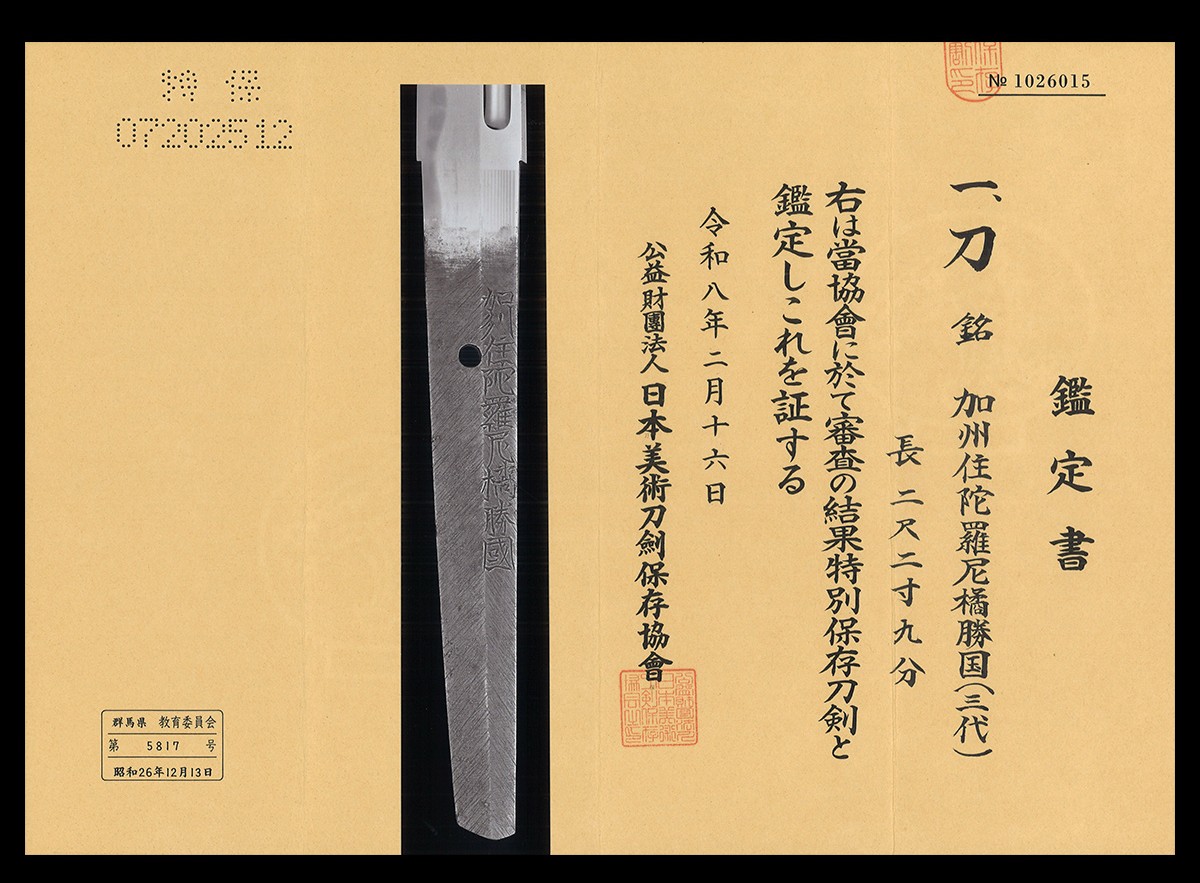
The Darani school is said to originate from the Hashizume school of Ietsugu, Ienaga, and others who resided in Hashizume, Kaga Province. Within this school, swordsmiths such as Tachibana Katsukuni, Iehira, Ietada, and Yoshiie were active. Regarding Darani Katsukuni, the Iyo Daijo Katsukuni of the Kanbun era (1661~) is famous; his first mei was Ieshige, and his secular name was Matsudo Zenzaburo. This mei was passed down throughout the Edo period, with records remaining until around the Meiji era. The style of Katsukuni is based primarily on the Mino-den, and he excelled at the sanbonsugi pattern modeled after Magoroku Kanemoto. This piece is a work by the third generation Darani Tachibana Katsukuni. This katana has a nagasa of 2 shaku 2 sun 9 bu, with a wide mihaba at the moto and saki, a standard kasane, a slight saki-sori, and a powerful sugata with an extended chu-kissaki. Bo-hi are carved on both the omote and ura. The kitae is itame-hada tsumi, with parts of the hada tending to nagare, covered in fine ji-nie, and containing chikei, resulting in a dark and clear hada texture. The hamon is a sanbonsugi-style togari-gunome midare, with workings such as nie-sunagashi and kinsuji appearing within the ha; it is nioi-gachi, with patches of coarse nie, appearing bright and clear. The boshi continues as midare, becoming slightly togari at the saki before returning. The nakago is ubu, with taka-no-ha yasurime, and bears the swordsmith's mei. We present this work as an outstanding masterpiece by the third generation Darani Katsukuni, exhibiting a grand taiku and a magnificent sanbonsugi-style togari-gunome. Shirasaya, gold-plated niju-habaki, Tokubetsu Hozon Token kanteisho.
3rd Gen. Darani Tachibana Katsukuni
Offered by World Seiyudo


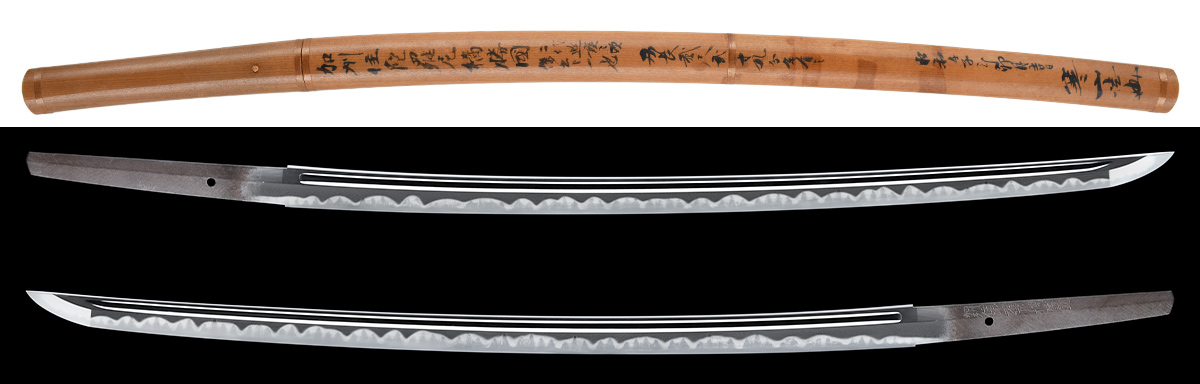
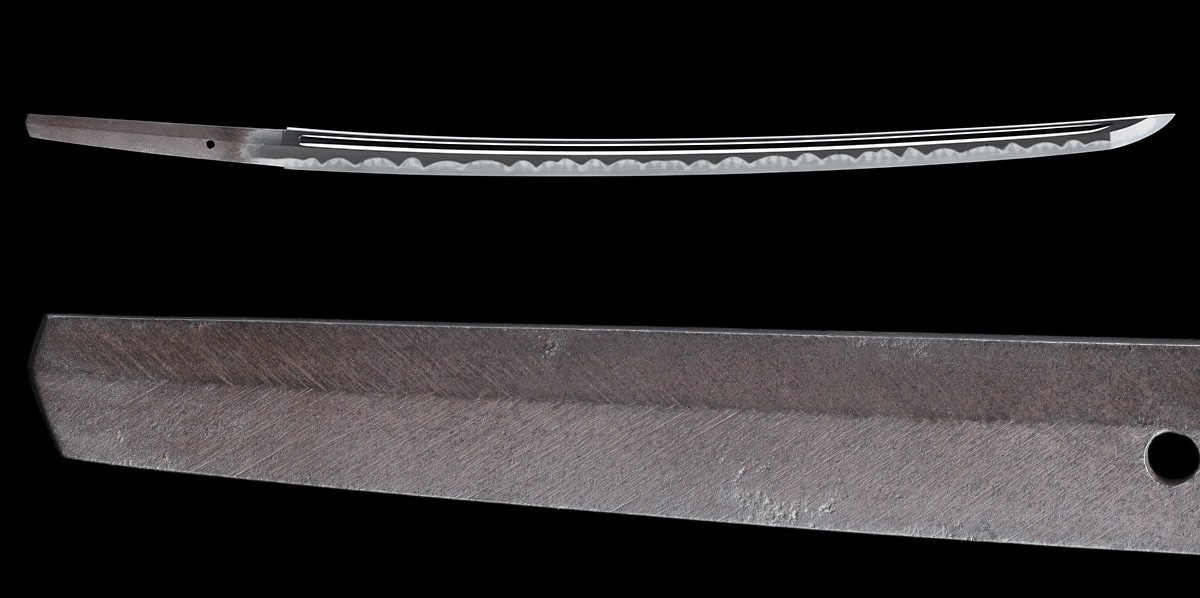
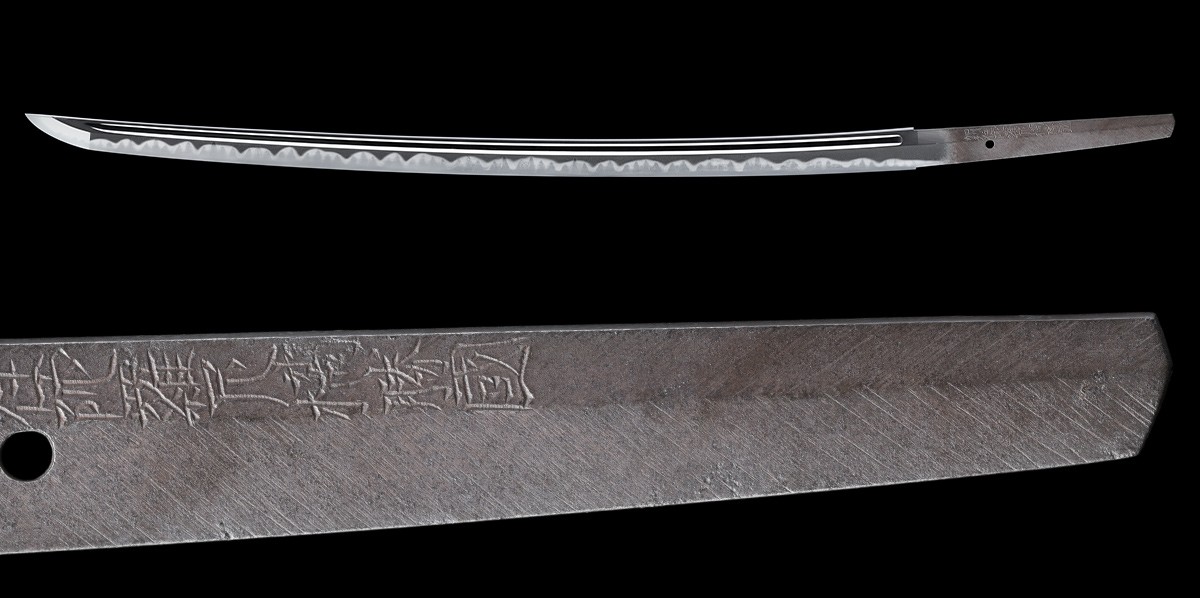
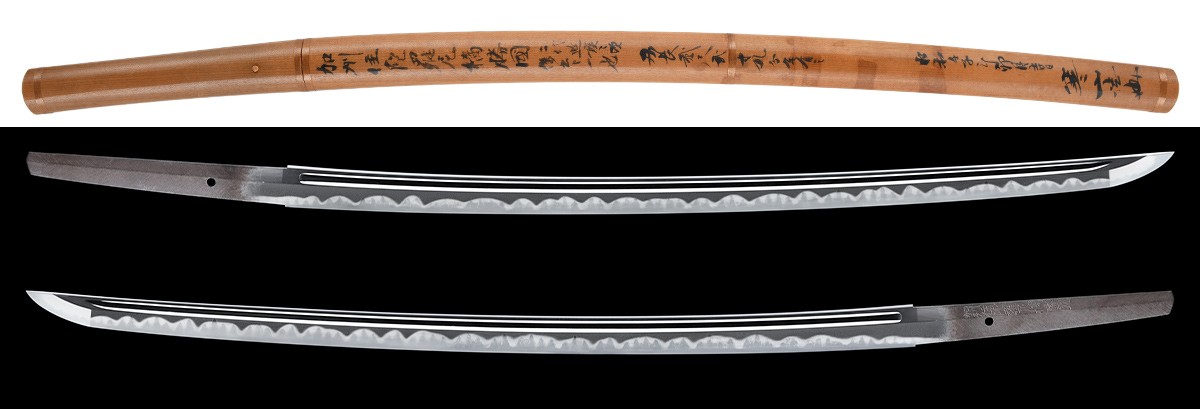
Machine translation from the shop's Japanese · may contain errors ·
The Edo period (1615 to 1868)
Edo was the sword’s age of connoisseurship: the Hon’ami appraisers, the shogunal register of famous blades of 1719, and a thriving literature turned the sword into an object of study even as it ceased to be drawn in war.
A Hozon-certified blade judged to show notably superior workmanship and a better state of preservation. The bar is higher: re-tempered blades and most unsigned Muromachi/Edo works are excluded.
The NBTHK (Nihon Bijutsu Tōken Hozon Kyōkai, the Society for the Preservation of Japanese Art Swords) is a public-interest incorporated foundation founded in 1948 and supervised by Japan’s Agency for Cultural Affairs (Bunkachō); it is based at the Japanese Sword Museum in Tokyo. Its expert panels physically examine each submitted work (shinsa) and issue a certificate (kanteishō) ranking it by artistic and historical merit. NBTHK papers are the most widely recognized standard of authentication for Japanese swords and fittings.
NBTHK official siteNo cooling-off period or returns; refund only if the purchased sword is proven fake, capped at purchase price (excludes commission sales, accessories, auction items).
¥2,500,000