NihontoWatch MonNihontoWatchBETA
MarketEncyclopedia
NihontoWatch Mon

NihontoWatchBETA

Market
Encyclopedia
Overview·Kantei·Designations·Work Types·Signatures·Lineage·School
OverviewKanteiDesignationsWork TypesSignaturesLineageSchool
  1. Schools
  2. Goto
  3. Waki-Goto
  4. Ichijo
  5. Nagatake

Ichijo Nagatake

永武

Jūyō
Vol. 30, No. 206 · Tsuba

Ichijo Nagatake

永武

13 ranked works

ProvinceYamashiroEralate Edo–Meiji (1818–1882)SchoolGoto>Waki-Goto>IchijoTraditionIeboriTeacherGoto IchijoTypeTosogu MakerCodeWGO054
13Jūyō Tōken

Overview

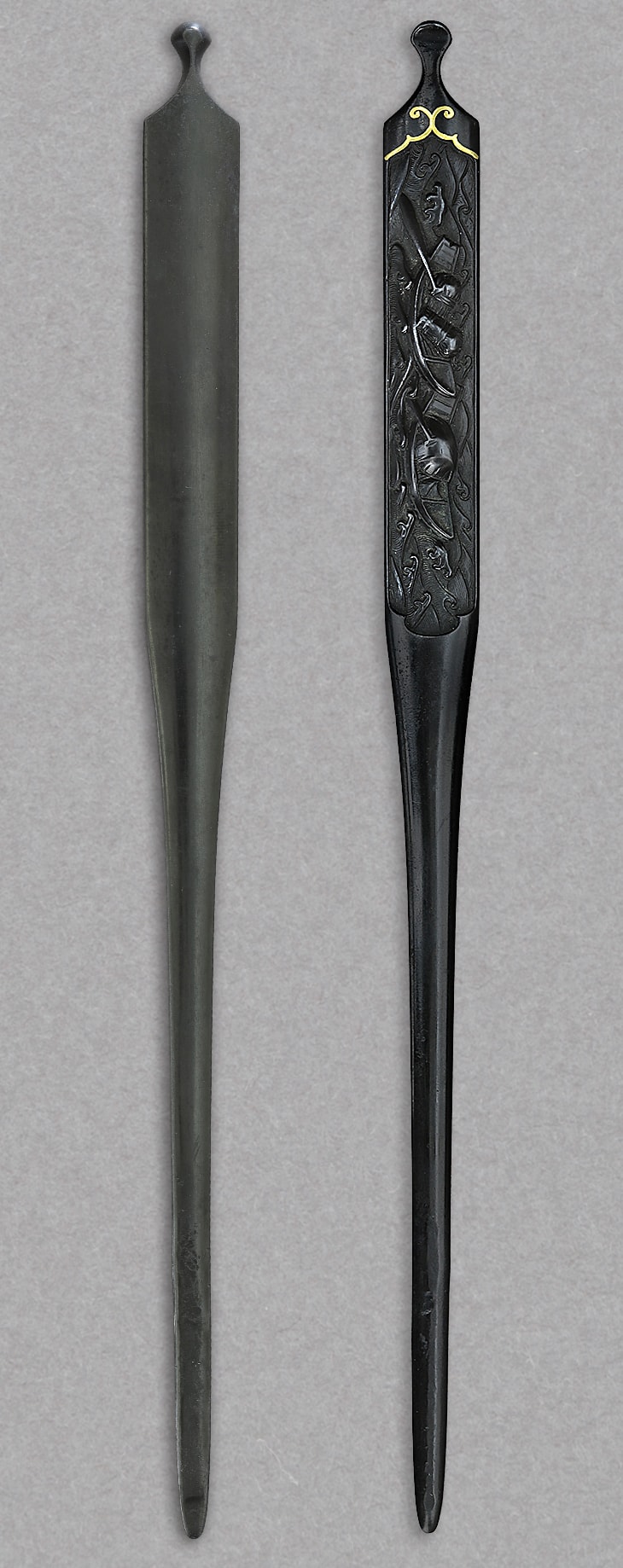
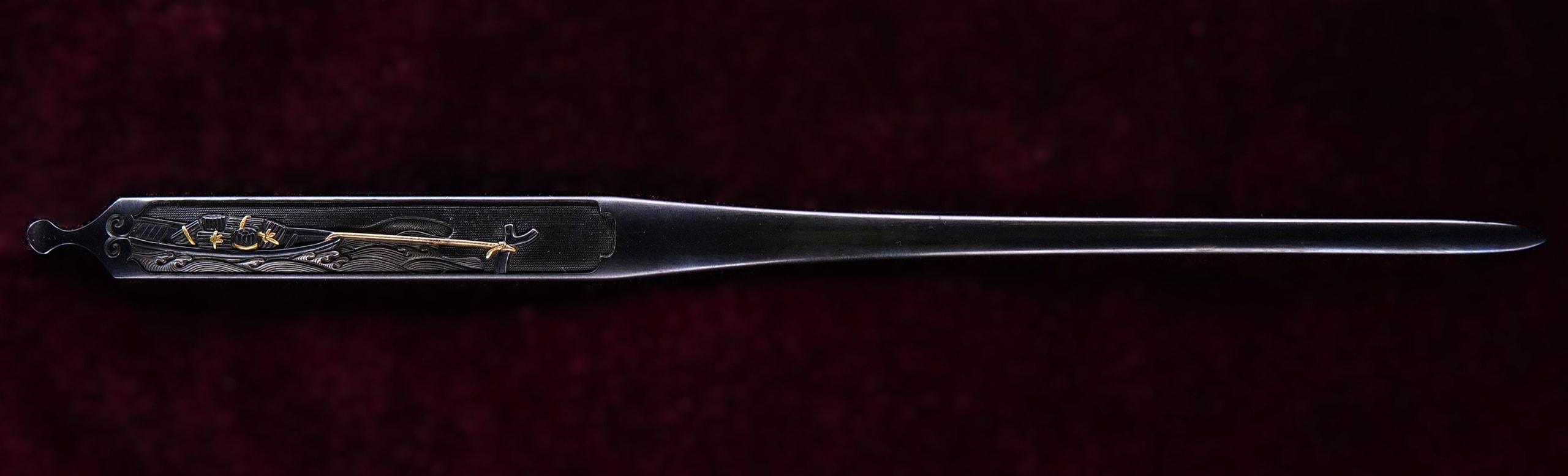
Imai Nagatake (1818--1882) was born in Kyoto as the fourth son of Sasaya Chubei, a paper merchant of Mushakoji. While still young he was adopted by Imai Kosaburo, a retainer of the Ichijo family, but after his adoptive father's death he withdrew from the Ichijo household's retainer ranks and entered the workshop of Fujiki Kyubei, a shiire-bori-shi of Goto lineage. During this apprenticeship he trained alongside Wada Isshin, who would later join the Ichijo circle as Wada Seiryu. After establishing himself independently, Nagatake maintained a deep association with Funada Ikkin, a leading senior figure among Goto Ichijo's disciples, and it is said that he constantly measured his own ability against Ikkin's virtuosity, striving to refine his craft through mutual emulation while devoting himself to the instruction of pupils. He took the art name Kyosai and in later years also used the name Butetsu. Notably, unlike other disciples, he did not adopt the character "" from his master's name, signing simply as Nagatake throughout his life. The record no Hana further notes that he was fond of tea and did not care for sake, that he loved bonsai and flowering plants as nourishment for spiritual cultivation, that he studied under Kasuga Sen'an, and that he was proficient in .

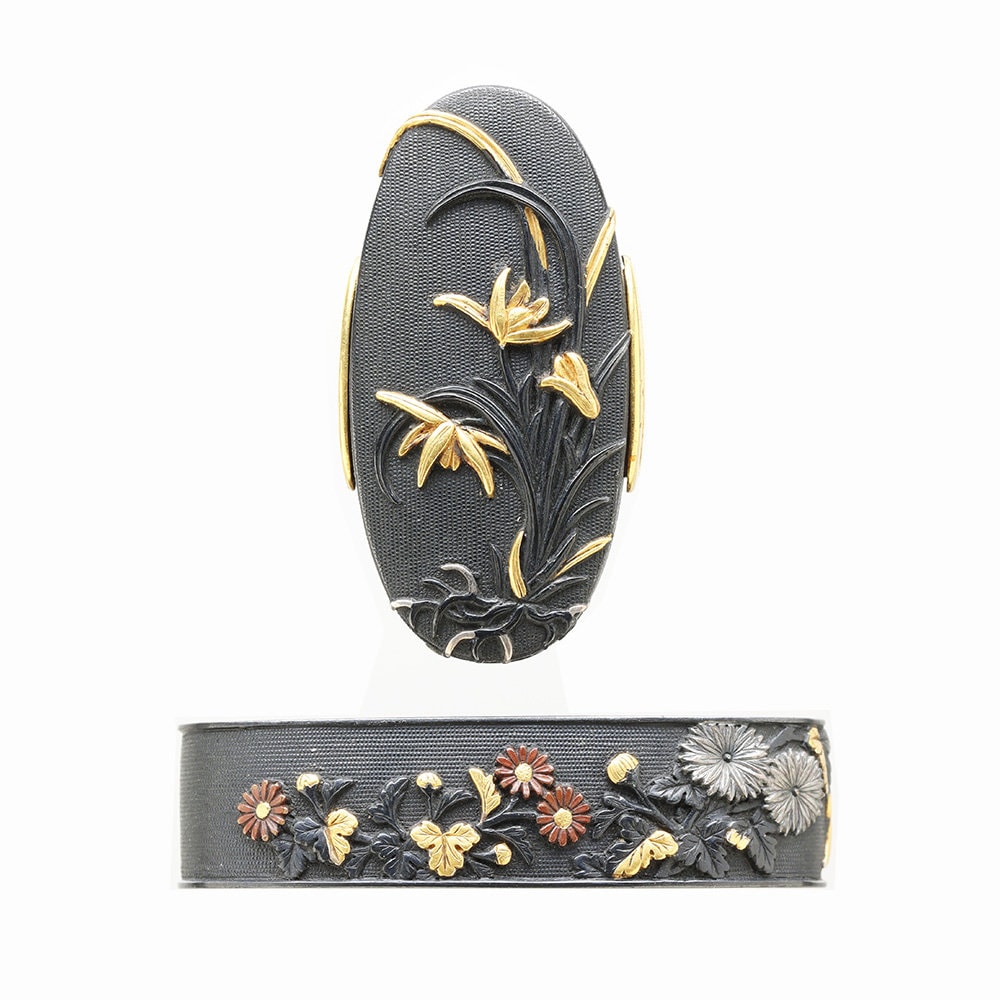
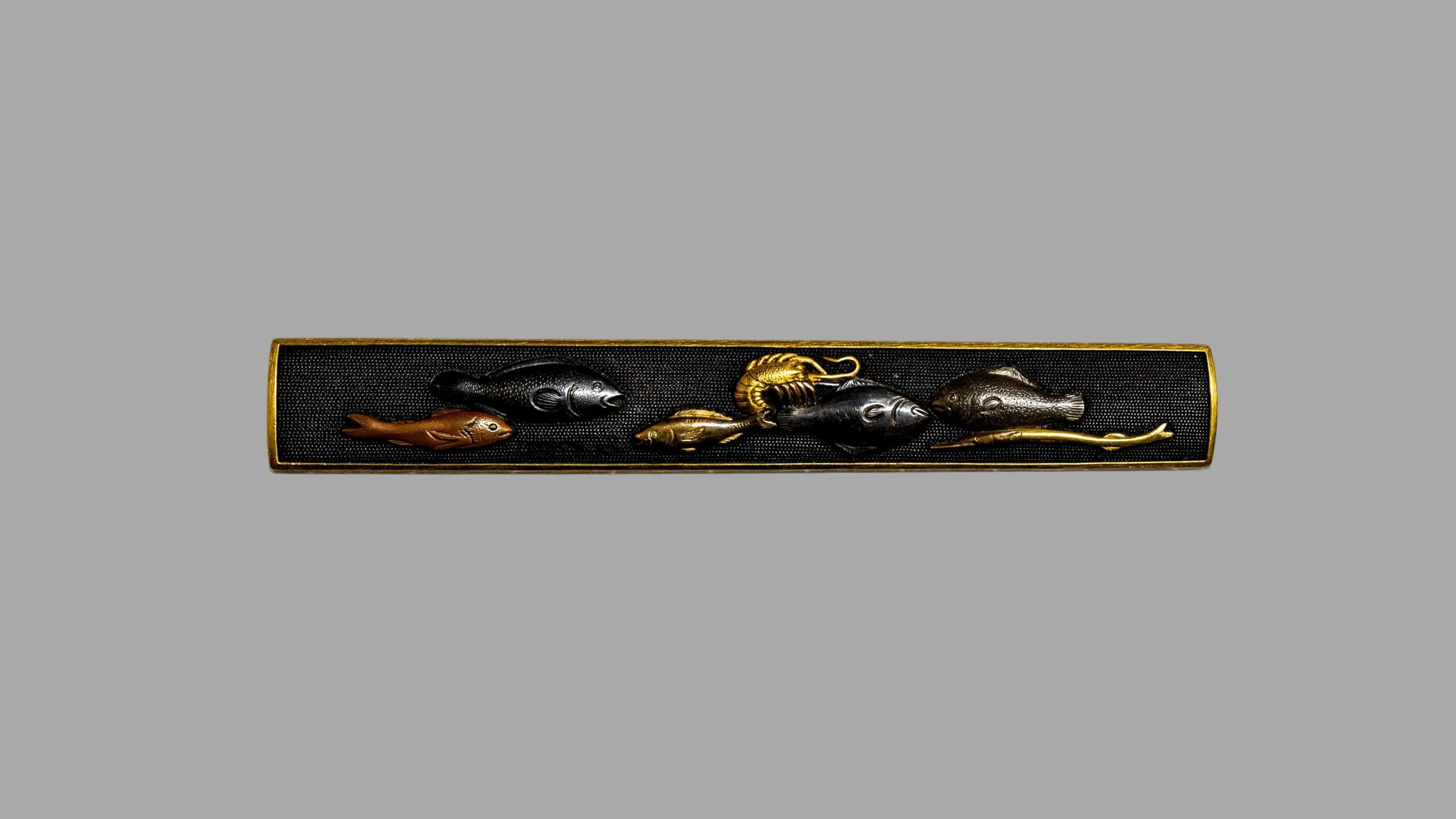
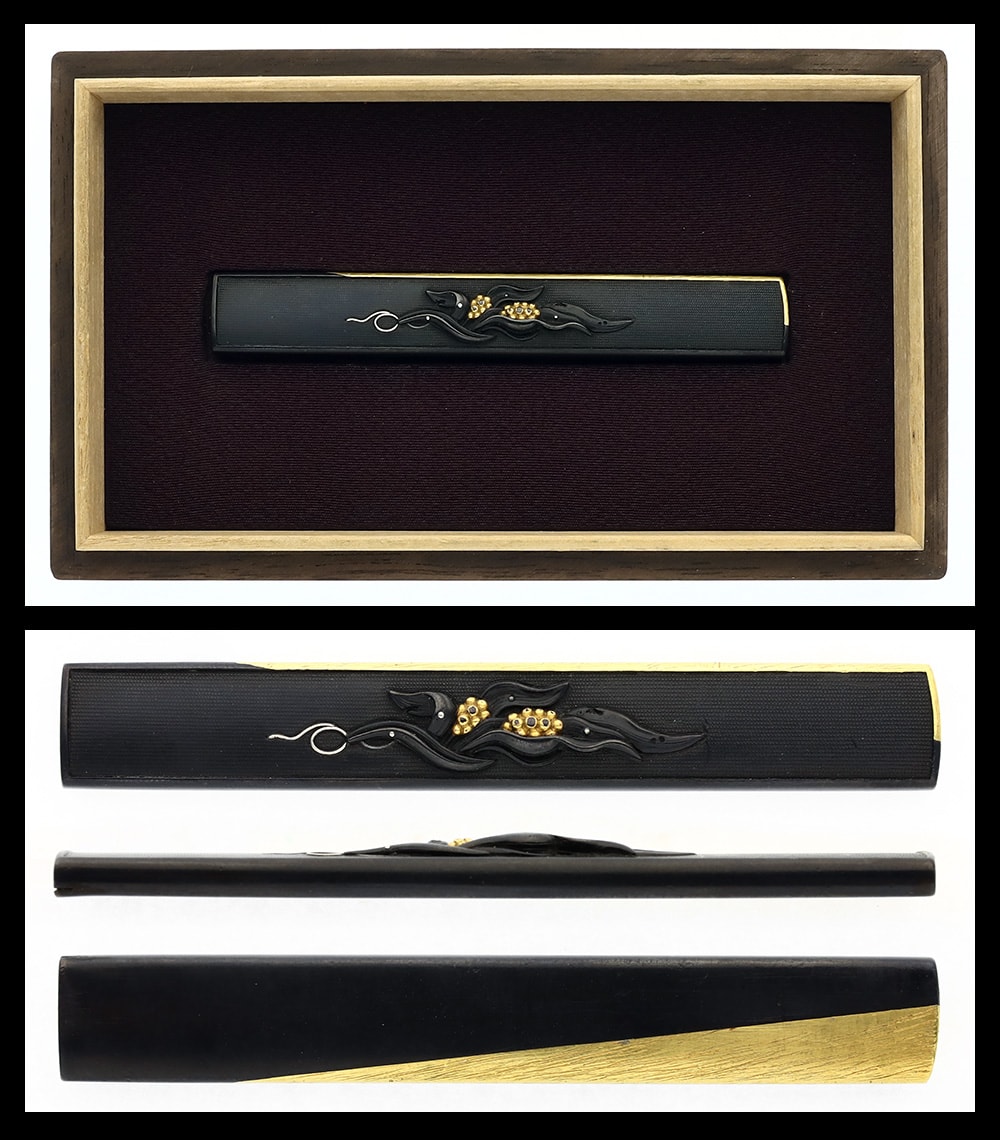
Nagatake's technical identity within the Ichijo school is defined by richly concentrated and splendid -- dense polychrome metalwork employing gold, silver, , , and in elaborate combination. His preferred ground is with finely executed , against which motifs stand out with striking effect. He works predominantly in with , supplemented where appropriate by , , sukibori, -, and sculptural yobori for . Flowers and grasses were Nagatake's particular forte; a hallmark of his style is to arrange seasonal plants densely across the entire surface and finish the work in a splendid manner through the use of richly varied colored metals. His chisel handling is characteristically straightforward, and his arrangement of is minute and well considered. The descriptions consistently note carving that is delicate, fluent, and graceful, with extremely meticulous execution extending to the smallest details. When working in the composite-forged gotan technique, as in his "day-and-night" chuya , he employs deliberately contrasting carving methods on obverse and reverse to striking effect, demonstrating outstanding control in both depiction and technique.

The repeatedly characterize Nagatake's finest works as pieces that "fully display the artist's capabilities" and "vividly demonstrate Nagatake's true strengths." His complete sokanagu sets -- coordinated programs of fittings organized around seasonal, auspicious, or literary-historical themes such as the Four Gentlemen, the Four Sacred Creatures, and scenes from the Twenty-four Filial Exemplars -- are described as painstaking works that clearly display the characteristics of the Goto Ichijo lineage. His mounting of 1849, produced at the commission of a patron named Hokufu, is assessed as a work created at the height of his powers. Within the Ichijo circle, Nagatake occupies a distinctive position: an artist who absorbed the school's elevated carving vocabulary yet expressed it through a personal idiom of ornamental density and chromatic richness, producing works of outstanding refinement that remain, in the 's recurrent phrase, carefully executed pieces in which his particular strengths are fully demonstrated.

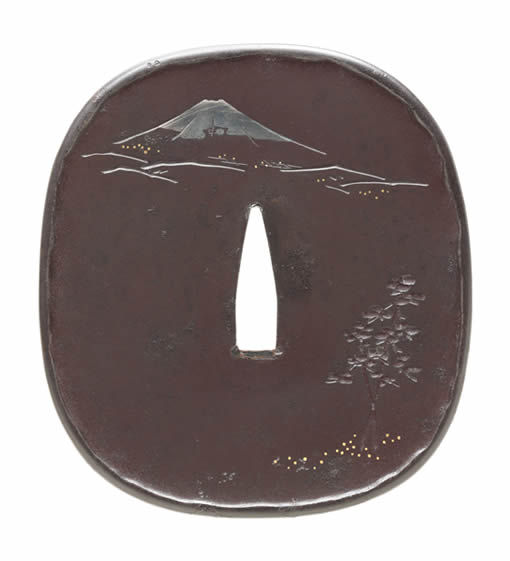
Kantei

3 descriptive axes: material (the Goto-derived grounds and metals) x technique (takabori, iro-e, applied suemon and inlay) x themes (the seasonal grasses-and-birds he favoured within the Ichijo naturalist register, with auspicious and Chinese-tale subjects on the larger sets). No temporal phases: his bakumatsu output is stylistically unified, and the records read him through the dense polychrome of his iro-e and the inherited Ichijo-workshop hand rather than a dated style trajectory.

Imai Nagatake is a Kyoto metalwork artist of the late period and a pupil of the Goto house's last great master Goto Ichijo. Born in 1818, the fourth son of the Kyoto paper merchant Sasaya Chubei of Mushanokoji, he was adopted young into the Imai family, retainers of the noble Ichijo house; after his adoptive father's death he left the Ichijo retainer rolls and trained first under Fujiki Kyubei, a fitting-carver of the Goto system, then entered the Goto Ichijo school together with his fellow-disciple Wada Isshin, taking the go Kyosai (and later Buttetsu). The records stress that he did not take the character of the Ichijo line: he signed his real name Nagatake his whole life. He works the orthodox soft-metal grounds of his Goto-derived training, with and iro-e, and within the school his recognised distinction is a dense, gorgeous polychrome, finishing seasonal grasses-and-birds with an abundant range of colour-metals. His separators from his own school are few and honest: almost everything in the ground and the hand is inherited Goto and Ichijo foundation, and his favoured subject (grasses and small birds) sits inside the school's naturalist register rather than being a subject he alone owns.

Diagnostic discriminators

the setsumei single this out as his recognised distinction within the Ichijo school (the school shows distinction in dense gorgeous iro-e in him): seasonal grasses-and-birds finished with an abundant range of colour-metals (gold, silver, shakudo, suaka). It is a relative emphasis of the inherited iro-e, not a technique he alone owns; his grounds and his hand are otherwise pure Goto/Ichijo foundation, so this is one of only a few honest personal separators

the records repeatedly state that, unlike his school-mates who took the Ichijo 'ichi' character (Issai Tomei, Funada Ikkin, Wada Isshin), Nagatake did not take it and cut his real name Nagatake his whole life, later also signing the go Buttetsu. This is a documentary / signature separator, not a stylistic one; it is a biography-recited fact, so the rate is its corpus fraction, not a per-piece tell

Material

His constant ground is worked in fine , the orthodox soft-metal field of his Goto-derived training, with the frequently given a filled or applied back plate (-fukumegane / -itagane); are often solid gold (). He ranges across the wider palette, ishime, plain copper (), and the difficult , gold ground on a few components, and on his bolder paired sets reaches to iron grounds for the , one of them a day-and-night (chuya) plate of iron and white-bronze. The metal choice serves a dense, abundant colour.

Technique

His hand is relief with polychrome iro-e in gold, silver, and copper, animated with applied , - crest-applique and flush inlay; are solid-gold or , and fine details the reverse plates. On the iron day-and-night he contrasts the two faces, inlay and iro-e on the front, katakiri-bori, and gold flush-inlay on the back. The rasp and the -and- together are repeatedly read as the inherited Ichijo-workshop manner, while the recognised personal note is the density and gorgeousness of the colour.

据紋象嵌suemon-zogan

Themes

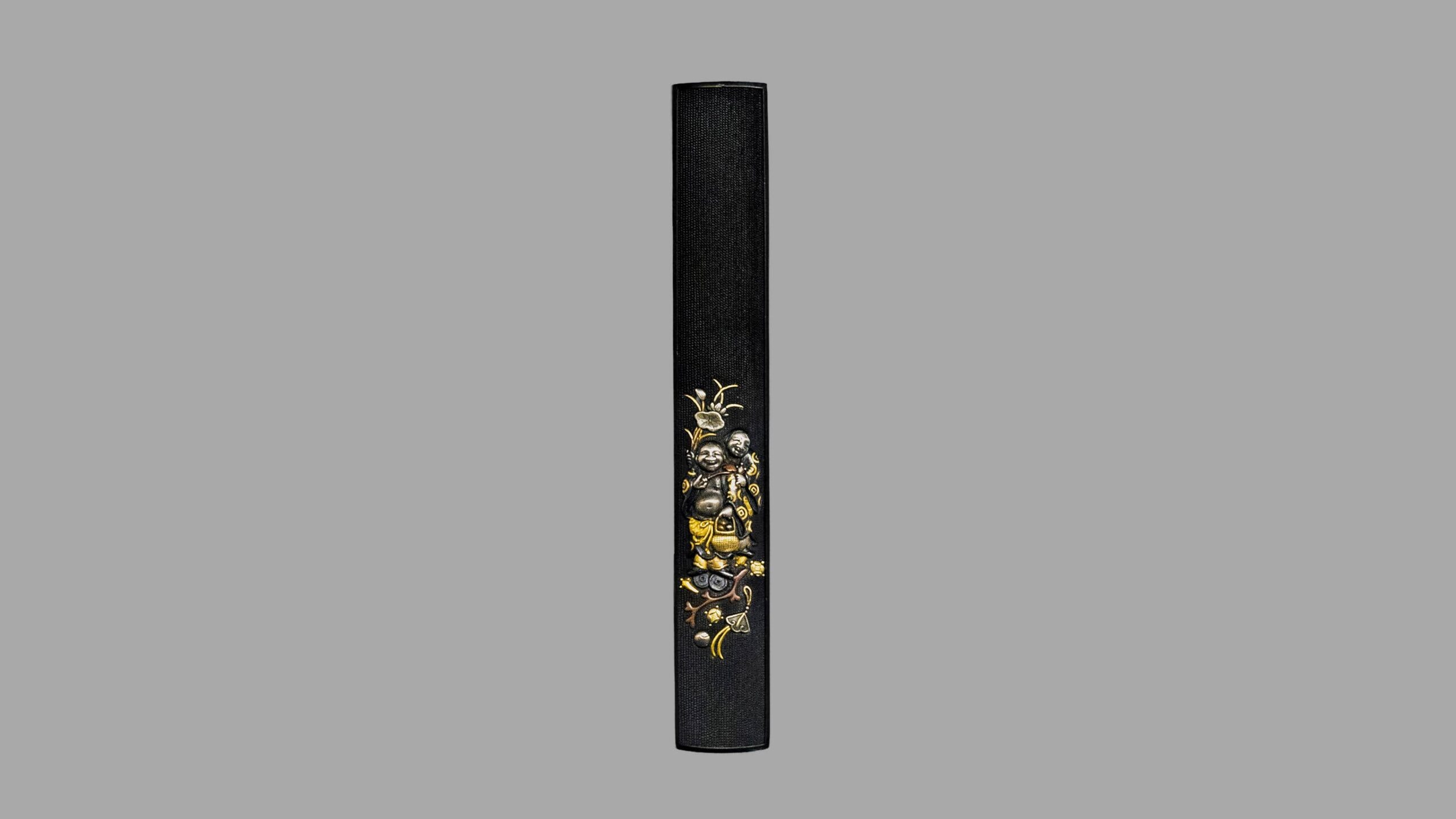
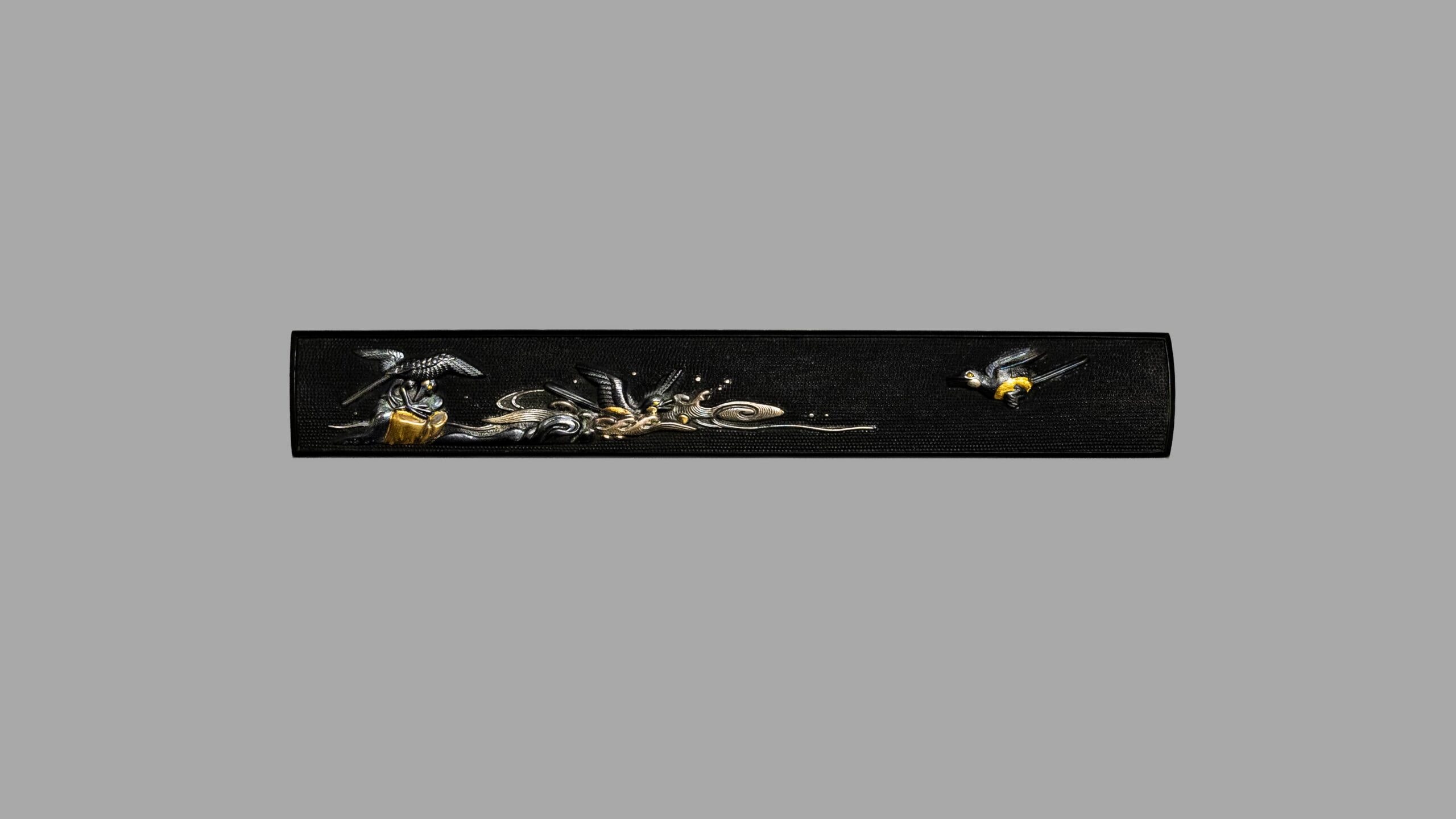
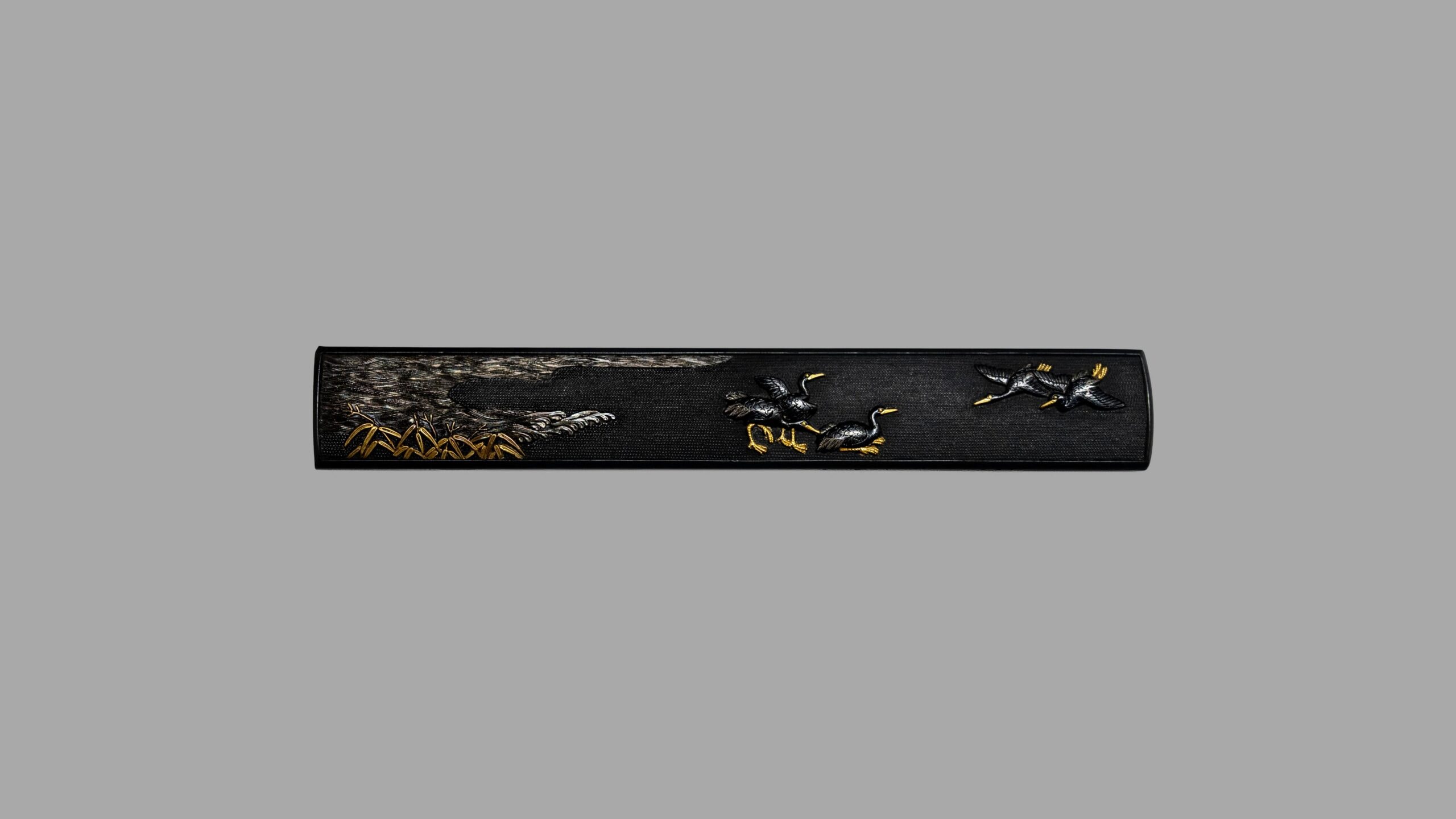
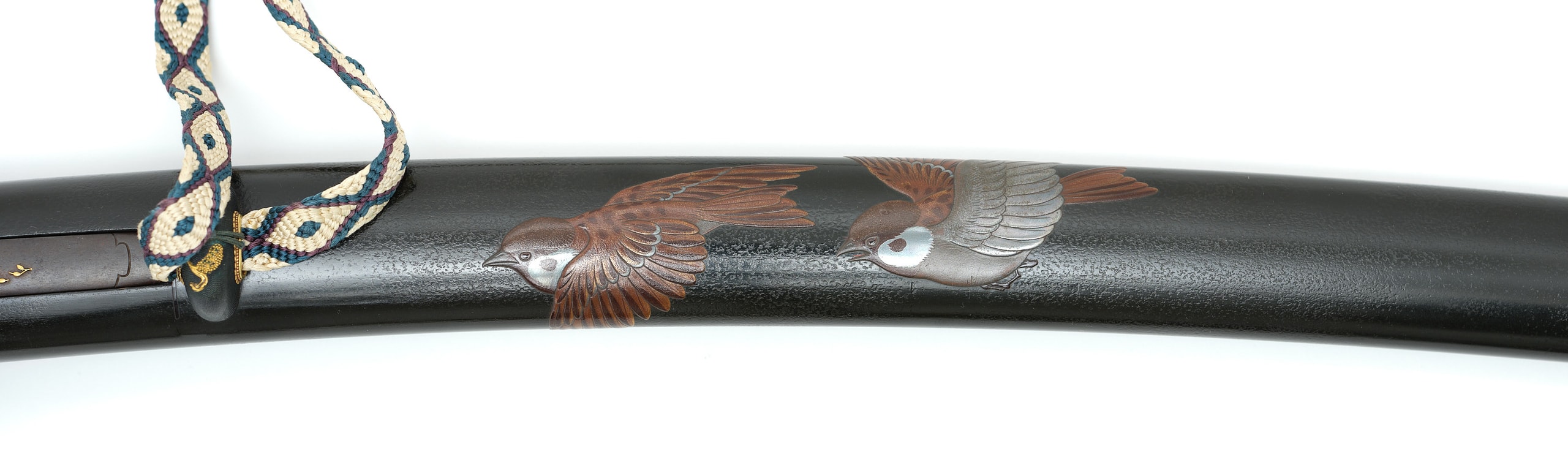
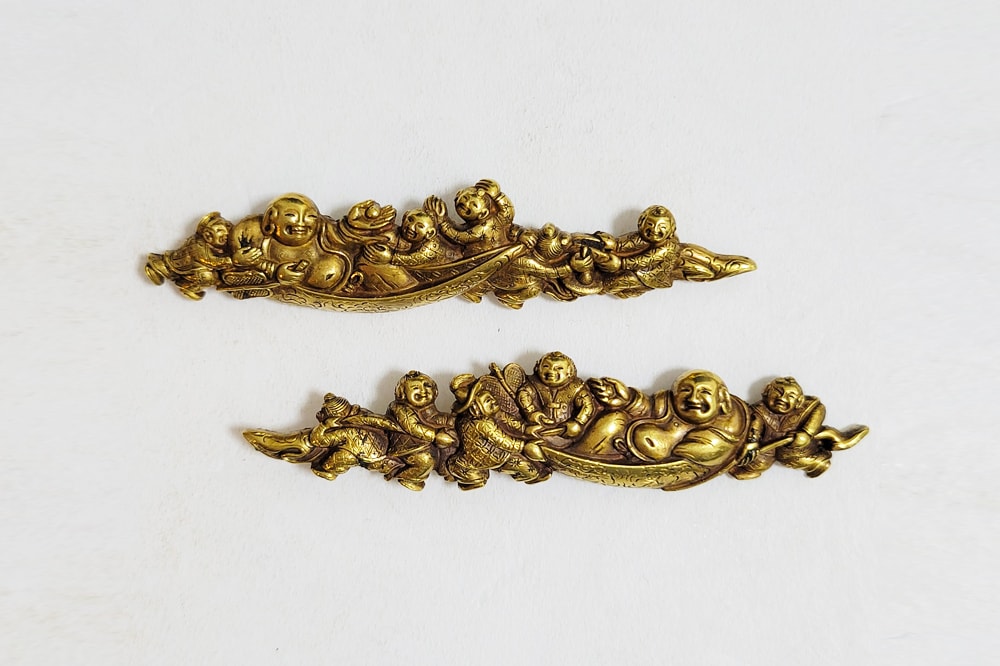
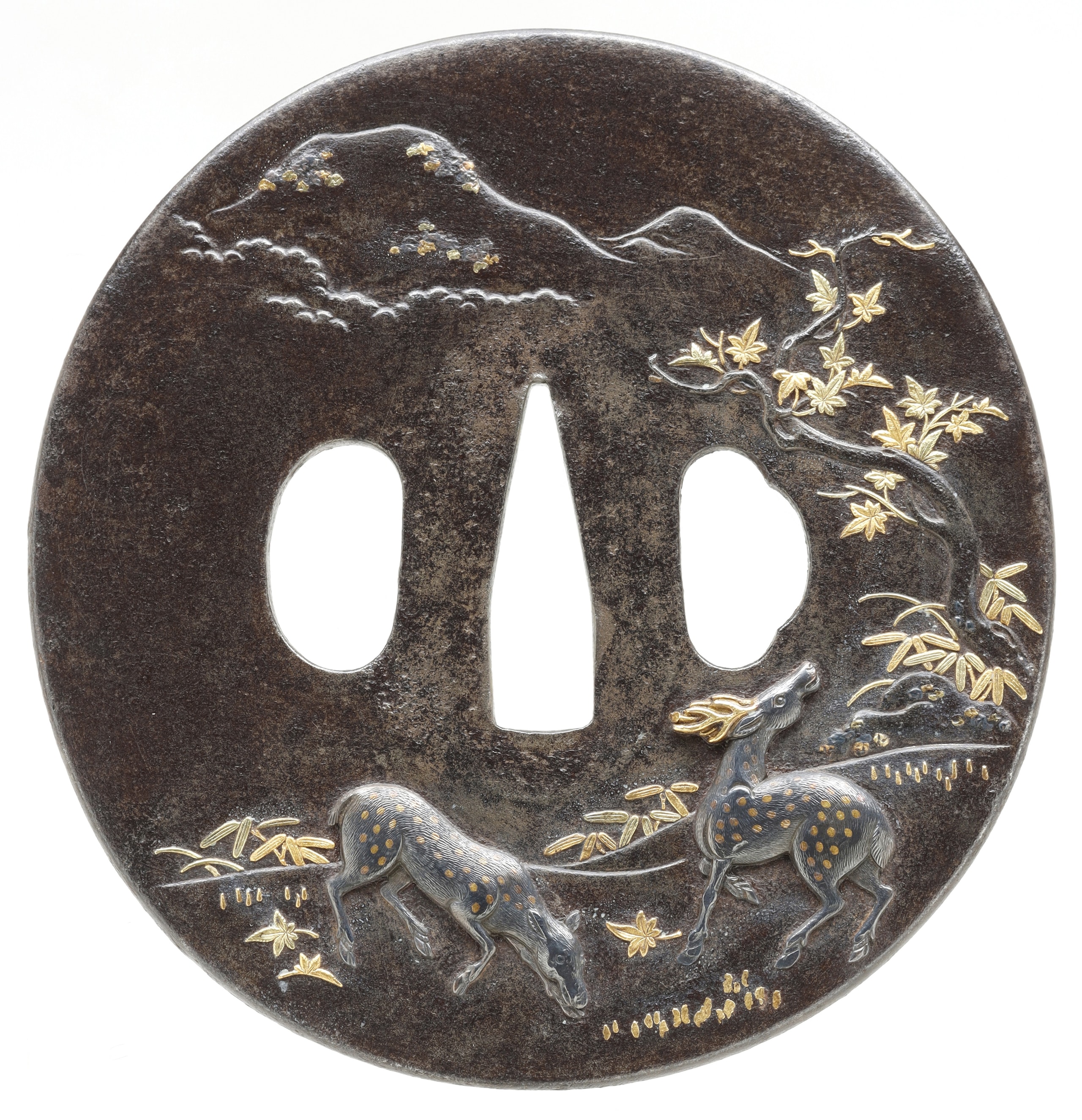
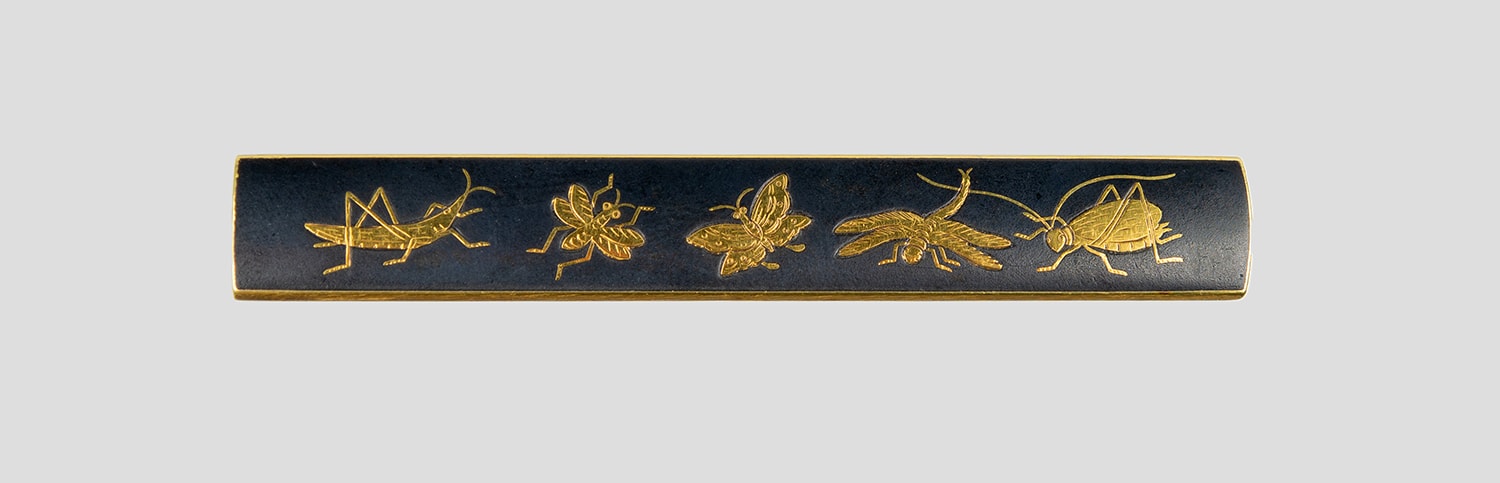
One register organizes most of his work: seasonal grasses and small birds, drawn within the Ichijo school's naturalist manner, the subject the records call the thing he most loved to carve. Around the grasses he gathers sparrows and quail, the bush warbler with plum, the swallow with morning-glory, geese, and bamboo-in-snow. A second group, mostly on his larger paired and three-piece sets, turns to auspicious and Chinese-tale subjects, the four numinous beasts (dragon, qilin, phoenix, tortoise), Fukurokuju of the southern-pole star, and the heroes of the Minamoto, all worked in the dense polychrome.

Seasonal grasses-and-birds (his favoured subject)

The grasses-and-flowers with small birds of the four seasons, the subject the records say he most loved to carve within the Ichijo school: plum with bush warbler, morning-glory with swallow, bush clover with quail, snow-laden bamboo with sparrows, in with iro-e. The recognised note is the dense, gorgeous colour and the precise, honest chisel.

Auspicious and Chinese-tale subjects (the larger sets)less firmly established

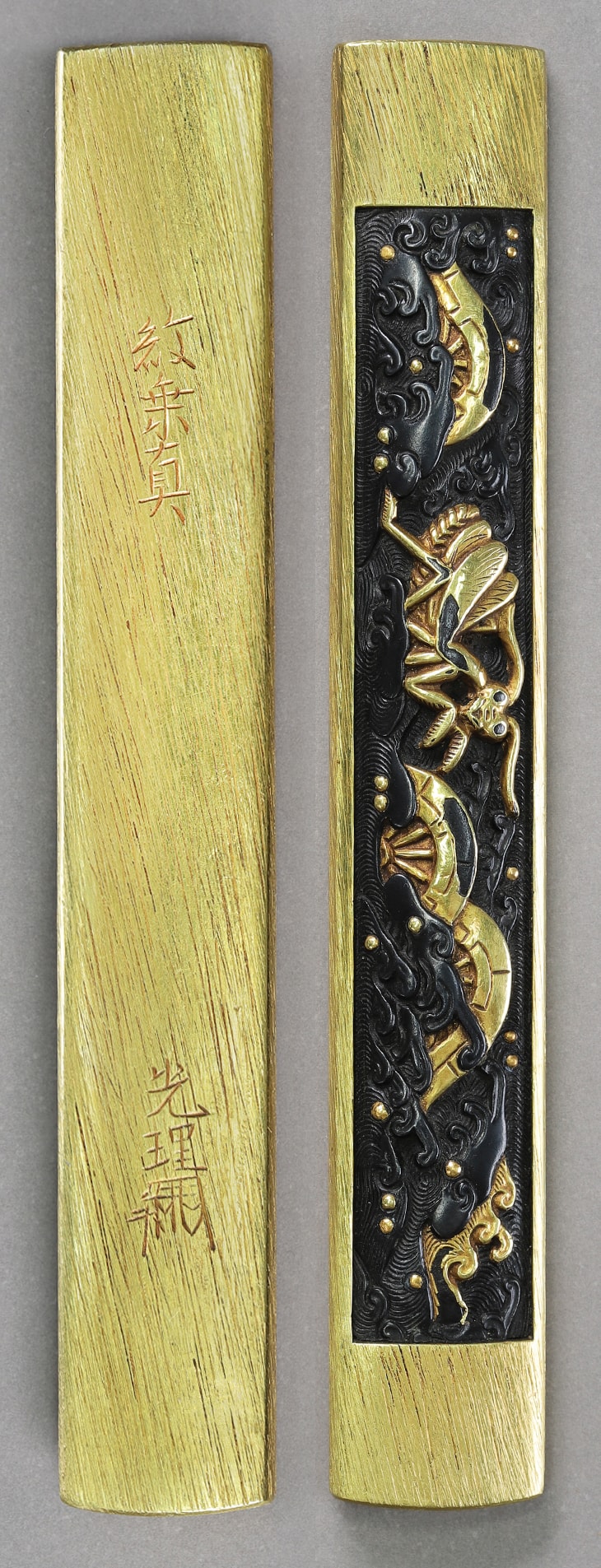
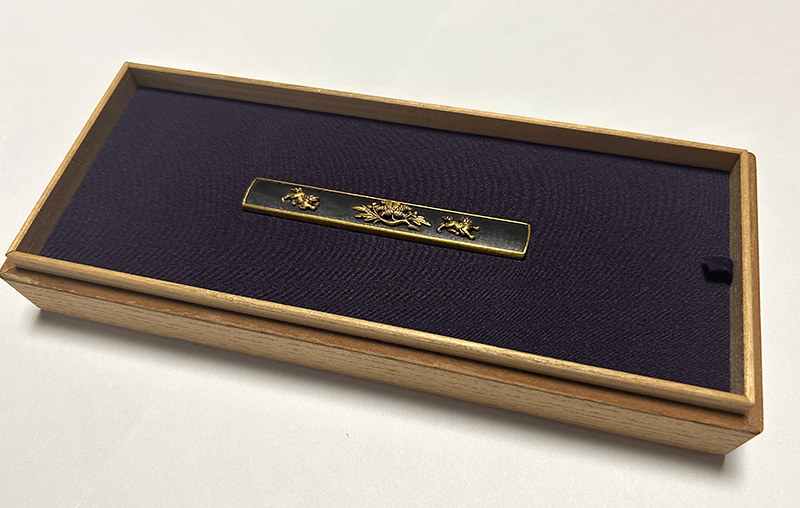
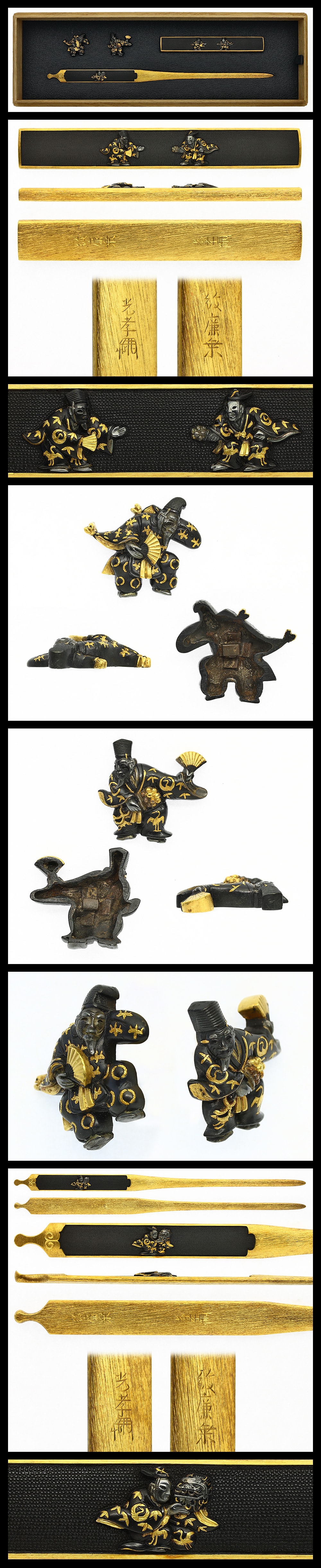
On his bigger paired and three-piece sets he turns to auspicious and Chinese-tale subjects: the four numinous beasts (dragon, qilin, phoenix, tortoise), Fukurokuju with the southern-pole star and a crane, and the Minamoto heroes. The praise the precision of the carving and the abundance of the colour-metals on these display pieces.

Full iconography

Signature chronology

Placement
Dated signatures
Recorded signatures

Documentary note

His pieces are signed in his real name Imai Nagatake, usually with a , the records stressing that he did not take the Ichijo '' character but cut Nagatake his whole life. On smaller components he uses the go-name Imai Kyosai (also the abbreviated Kyosai- on a or the lesser of a pair), and a few signatures carry the Kyoto residence or literati go (Heianjo, Shofu, Itsushi) or, early, the Yamashiro full address. On split (wari) the bare name appears as Imai-Nagatake or simply Nagatake. Several pieces are dated by year-mark, running from Kaei 7 (1854) through the Ansei era to Bunkyu 1 (1861). The later go Buttetsu, named in the biography, is not found as a signature in this corpus.

Scholarship

The biographical notice (drawn in part from the kinko reference Tagane no Hana) traditionally records that after independence he associated deeply with Funada Ikkin, and that he loved tea, did not drink, cherished bonsai and grasses as spiritual cultivation, studied Chinese verse under Kasuga Sen'an and was accomplished at waka.

Designations

Kokuhō—
Jūyō Bunkazai—
Jūyō Bijutsuhin—
Gyobutsu—
Tokubetsu Jūyō—
Jūyō Tōken13

Elite Standing

0.09 across 13 designated works

Top 15% among makers

Work Types

Distribution across 13 ranked works

Other
646%
Mitokoromono
431%
Tsuba
215%
Fuchi-Kashira
18%

Signatures

Signature types across 13 ranked works

Currently Available

Lineage

TeacherGoto Ichijo
Nagatake
Student
  1. 1.Ikkin一琴1 for sale11designated

Ichijo School

Other artisans of the Ichijo school

  1. 1.Goto Ichijo後藤一乗6 for sale90designated
  2. 2.Tomei東明5 for sale31designated
  3. 3.Ikkin一琴1 for sale11designated
  4. 4.Issho一匠8designated
  5. 5.Isshin一真1 for sale7designated
  6. 6.Yoshiteru義照2 for sale4designated
  7. 7.Koran光覧4designated
  8. 8.Ikken一拳1designated
  9. 9.Yoshinaga吉長1 for sale1designated
  10. 10.Wada Isshin Masatatsu和田一真政竜1designated
  11. 11.Kawashima Ichinyo川島一如1designated
  12. 12.Ichiju一寿2 for sale1designated

Nagatake

Nagatake(永武) was a maker of Japanese sword fittings (tōsōgu) of the Ichijo school in Yamashiro province, active during the late Edo–Meiji (1818–1882) period.

The work follows the Iebori tradition.

Designated works by Nagatake include 13 Jūyō.