
Particulars
- Maker
- Yukimitsu 行光
- Type
- Katana
- Period
- Late Kamakura period
- Measurements
- Nagasa 71.5 cm
- Papers
- Jūyō Tōken, NBTHK 70th shinsa, 2024 (item 16)
- Collection
- Private collection
A flamboyant Sōshū katana attributed to Yukimitsu, executed in nie-kuzure, late Kamakura period. In 1735 the shōgun Tokugawa Yoshimune gave it to the Date house of Sendai at the betrothal of his adopted daughter, Princess Tone, to Date Munemura, heir to Sendai, valued at 200 gold mai, the highest valuation in gold recorded for a long sword by Yukimitsu. It was handed down as an heirloom of the Date.
The sword in hand
The sword is a katana of the end of the Kamakura period, cut down from a much longer blade to 71.5 cm. Its back is rounded, a maru-mune, where Sōshū blades usually have a peaked one, and a groove runs down each face and on through the tang. Whatever signature it had went with the shortening. On the tang now stand two characters inlaid in gold, 行光, Yukimitsu, and on the other face the name and seal mark of the appraiser who set them there, Hon’ami Kōyū.1
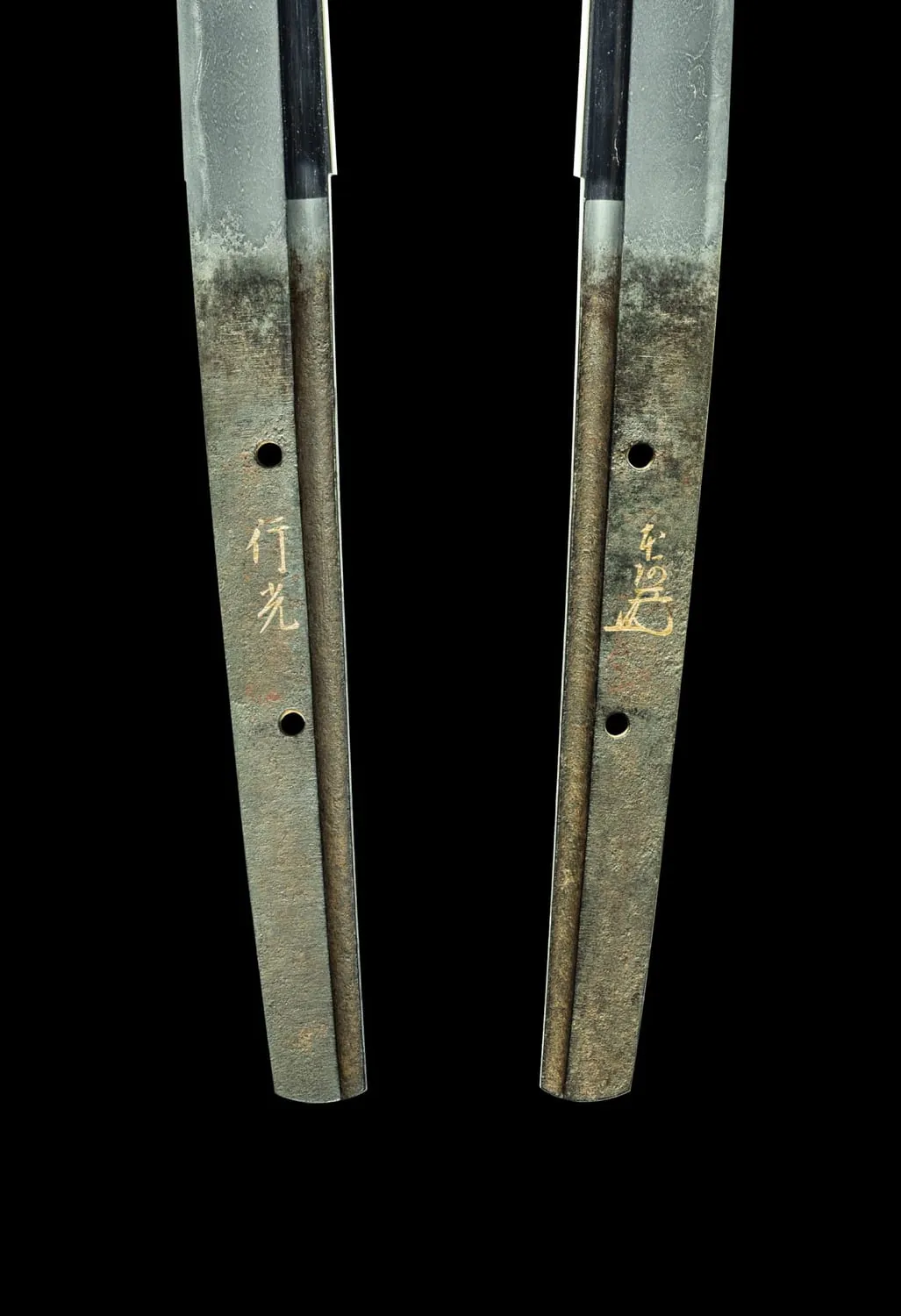
The surviving signed works of Yukimitsu of Sagami are all tantō.1 Every long sword that bears his name does so by someone’s judgement. This one has carried the name for almost three hundred years. The documents record the occasion on which it was given and the value set on it; the question is whether the steel bears the name out.
Spring 1735
Kōyū’s certificate for the sword, his origami, is dated the third day of the fourth month of Kyōhō 20 (1735) and values it at 200 gold mai.2 Twenty-four days later, on the twenty-seventh, the shōgun Tokugawa Yoshimune announced the marriage of his adopted daughter Princess Tone to Date Munemura, heir to the domain of Sendai.3 On the nineteenth day of the sixth month he gave the Date this sword.
Before the gift the sword belonged to the shōgun and was kept, it appears, in the shogunal sword store, the o-koshimono, where at least one unsigned blade is recorded under Yukimitsu’s name; in 1693 a Yukimitsu from the store was used in a cutting test.4 The sequence suggests that the attribution, the gold inlay and the valuation were made together that spring, for the occasion: an unsigned, much-shortened katana from the store made ready to be given. In the Date register the entry after this sword is a katana by Sadamune, also from Yoshimune, whose origami, at 250 mai, is dated the third day of the eighth month, after the gift.5
The Date recorded the gift in their own register. Their sword records, which Fukunaga Suiken judged the best kept of all the three hundred lords,6 include the Kensō hiroku, compiled in 1789 by the domain’s sword magistrate, Satō Tōzō; the sword is its entry 50, and every particular the entry gives fits this blade.2
「蔵刀記録の整備されていることは、三百諸侯中、第一なのには敬服せざるを得ない」
“That its records of its swords are the best kept of the three hundred lords is something one cannot but admire.”
「一 相模国行光 御刀 銘名判象眼 表裏樋 長弐尺三寸六分 享保弐拾年 金弐百枚」
“Item: a sword by Yukimitsu of the province of Sagami. The name and the seal mark inlaid; grooves on both faces. Length two shaku three sun six bu. Kyōhō 20: 200 gold mai.”
Princess Tone
Princess Tone, 利根姫, was born in 1717, a daughter of Tokugawa Munenao, lord of Kii, the house from which Yoshimune himself had come. Yoshimune adopted her on the twenty-third day of the fourth month of Kyōhō 20, four days before the marriage was announced. After her death early in 1746 she was known as Unshōin.7
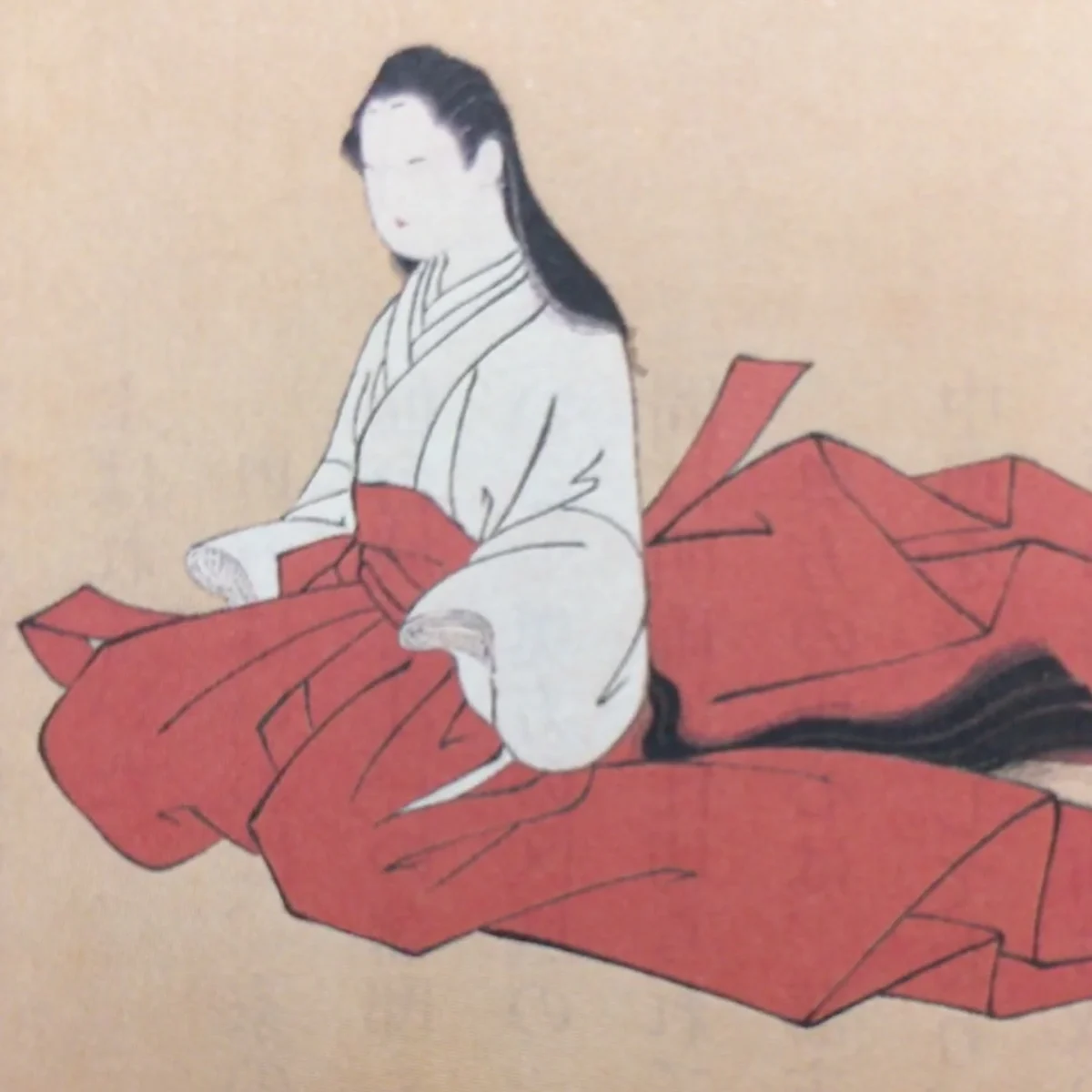
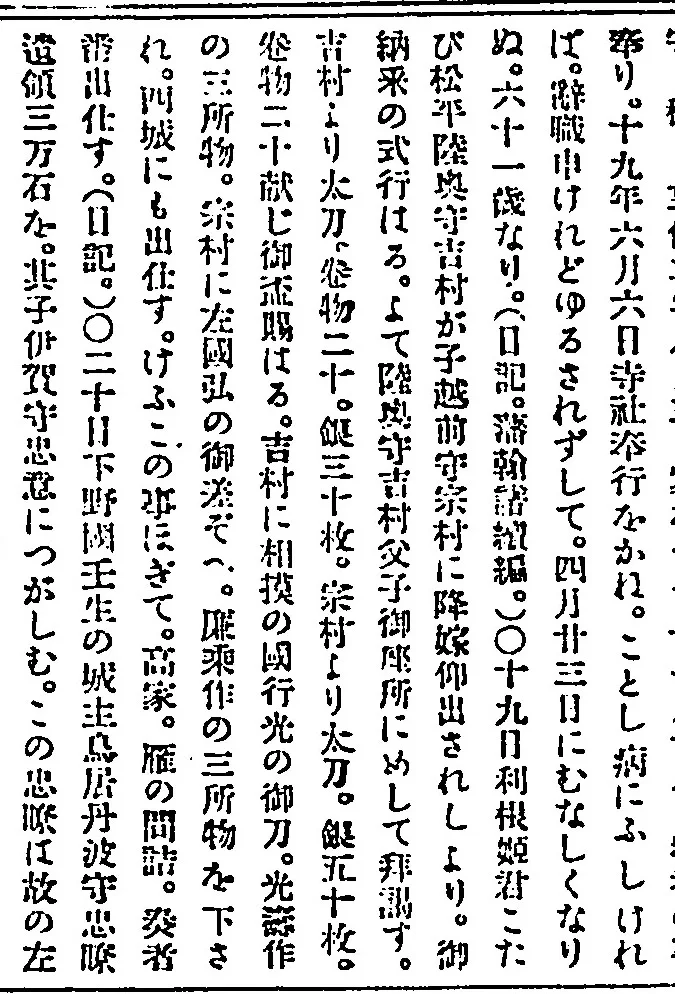
The betrothal ceremony, the nōsai, was held on the nineteenth day of the sixth month. Yoshimune came out to the Kuro-shoin, the inner hall of audience, where Date Yoshimura, lord of Sendai, and his son Munemura came to give thanks for the match. Gifts passed both ways. Yoshimura presented a tachi, twenty rolls of silk and thirty pieces of silver; Munemura a tachi, fifty pieces of silver and twenty rolls. Each was given the shōgun’s cup. The shogunate’s daily record of the audience then lists the shōgun’s gifts, and the first is this katana, at 代金弐百枚, two hundred gold mai, the figure Kōyū had written some eleven weeks before.8
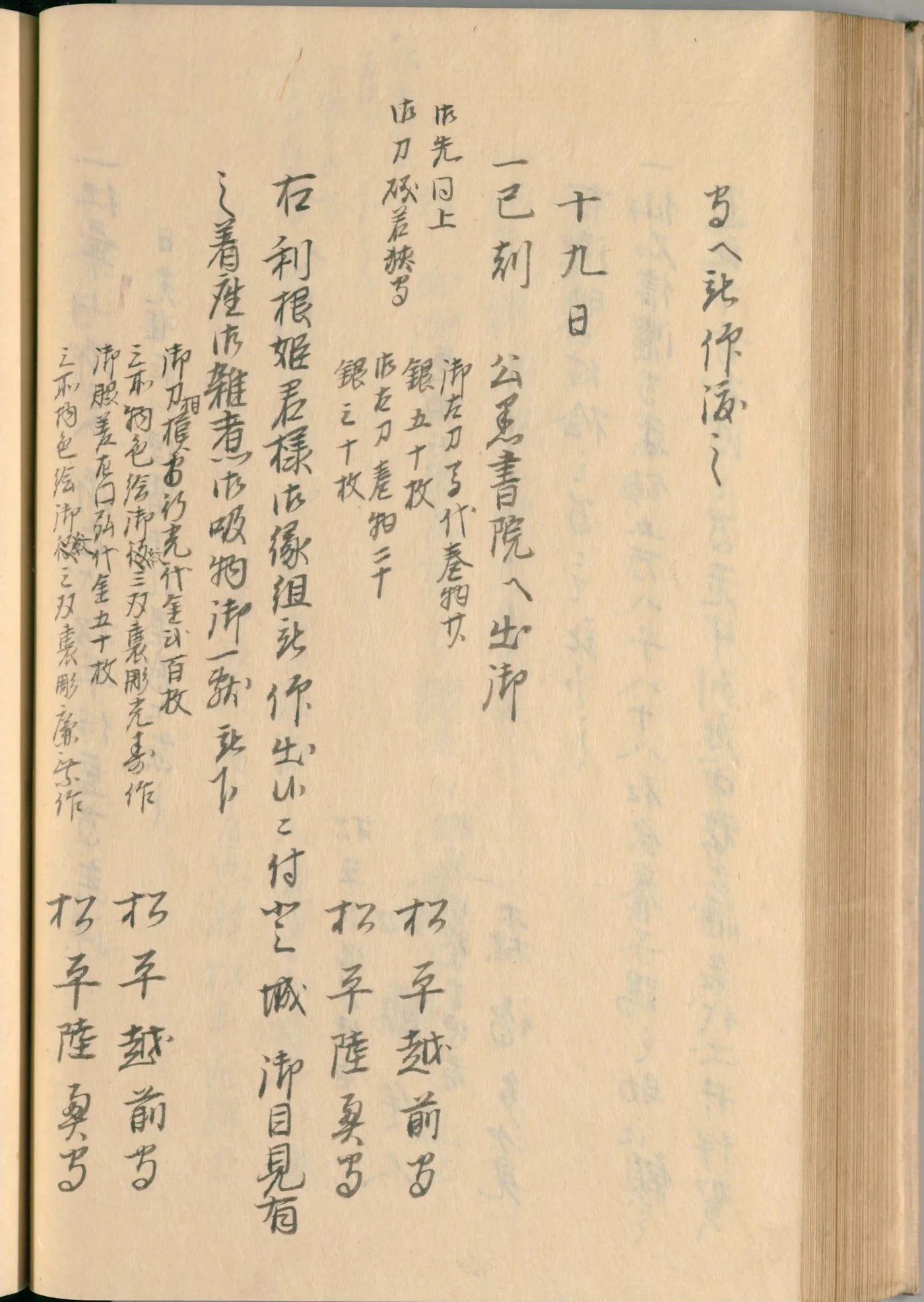
Father and son each received a sword with a set of mitokoromono: this Yukimitsu, with fittings by Gotō Tsūjō, and a short sword by Sa Kunihiro of the Chikuzen school of Samonji, with fittings by Gotō Renjō. The sources disagree on which lord received which, the Tokugawa jikki giving the Yukimitsu to Yoshimura and the Sa Kunihiro to Munemura, the Kansei genealogies and the house ledger quoted in the Date register giving the Yukimitsu to Munemura.9 The gift itself is recorded in at least six independent lines of transmission.10
「吉村に相摸の國行光の御刀。光壽作の三所物。宗村に左國弘の御差ぞへ。廉乘作の三所物を下され。」
“To Yoshimura, the sword by Yukimitsu of the province of Sagami, with mitokoromono made by 光壽 (Gotō Tsūjō); to Munemura, the companion short sword by Sa Kunihiro, with mitokoromono made by Renjō, were given.”
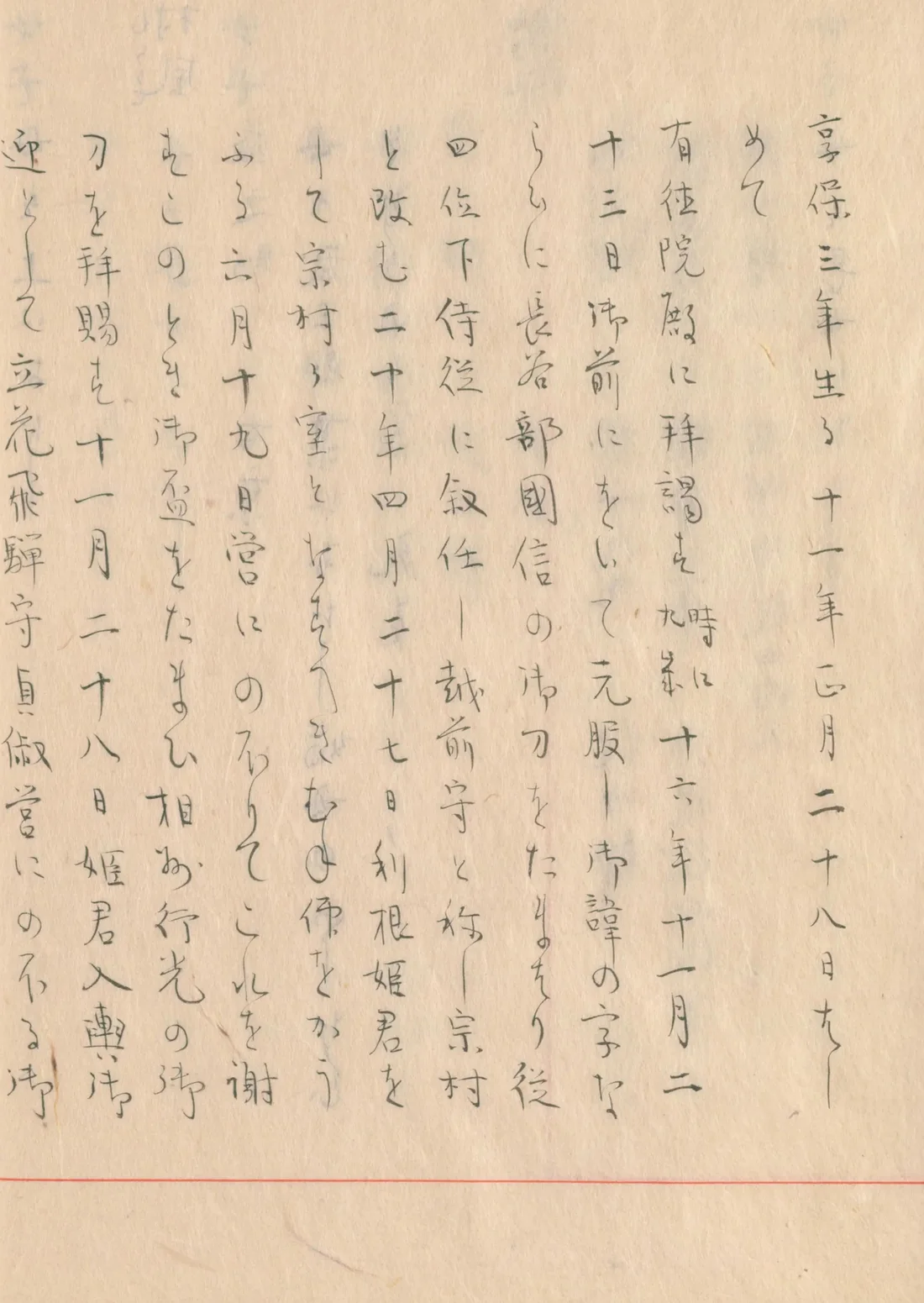
The princess entered the Date house on the twenty-eighth day of the eleventh month. On the first day of the twelfth, Yoshimura came to the castle to give thanks and received a short sword by Awataguchi Norikuni, valued at 100 mai.5
A sword the shōgun gave
Yukimitsu was a sword the shōgunate gave and received. In 1624 a Yukimitsu katana was among the swords presented to the retired shōgun Hidetada at the Mito residence. About 1656 the Sakai of Obama presented a Yukimitsu short sword at 200 mai when the shōgun Ietsuna visited their residence at Ushigome; in 1722 a tantō at 200 mai came to Yoshimune as the bequest of Matsudaira Yoshikuni of Echizen; and in 1729, on the day of another shogunal marriage, Matsudaira Kazusa-no-suke presented a third at 200 mai. Iemitsu gave a Yukimitsu katana to the Kuroda in 1648; Tsunayoshi, as shōgun, received a Yukimitsu wakizashi from Yanagisawa Yoshisato in 1695 and gave him another in 1701.11 The Yukimitsu named in the meibutsu-chō of 1719 whose lengths it records, the Satō, the Gotō and the Ōshima, are all short swords.12
The recorded valuations of Yukimitsu that the museum has found are set out in Annex A, with what is left out and why. Among the long swords, this sword’s 200 mai stands highest in gold. Next come two katana at 100 mai: one in the Tachibana house of Yanagawa, its attribution also inlaid and almost the same length, the other in the Satake house, first papered as Norishige. Kōchū valued an unsigned katana at 70 mai in 1721. Of Yukimitsu of any length, three reach the same figure, all short swords presented to the shōgun.
Kōyū issued origami from the later Kyōhō years, when, in the judgement of the Dai Nihon tōken-shi, Yoshimune’s reform of the sword world had restored a measure of trust to the family’s papers; the Kenwaroku finds them loosening from the middle of his tenure.13 Valuations were not prices, and they rose over the eighteenth century, though not evenly. The famous swords recorded in the meibutsu-chō that Kōchū compiled in 1719 already stood high: more than half at 200 mai or more, the Wakasa Masamune at 1,000. Among the swords the NBTHK has since designated, no valuation in gold before 1730 exceeds 200 mai (Kōjō’s for a Gō Yoshihiro in 1672; a Sadamune in 1701); from 1750 Kōyū wrote 700 and 300 mai for Masamune and 500 for Gō, the level of the catalogue’s famous pieces, and one description reads its old scabbard as recording him raising a Rai Kunitoshi to 100 mai in 1734.14 Kōyū’s figure for this sword belongs to his early years, fifteen years before the highest of them; the origami are plotted in Annex B.
「この代づけは、必ずしも物の売買値段ではなく、だいたいそれほどの資格があるという位づけであり、格づけのものである」
“This valuation is not necessarily the sum for which the thing would change hands; it is a ranking, a grading, saying that the thing is broadly of that standing.”
Within his accepted work
Yukimitsu’s surviving signed works are tantō, and the long swords given to him are attributions, made over three centuries by the Hon’ami and since by the NBTHK. The attribution has always been broad. The old sword books credit him with suguha, with midare and at times with hitatsura; most unsigned katana given to him are suguha or a gentle, shallow midare.1
The rounded back is rare in Sōshū work. Among the Yukimitsu katana the NBTHK has designated, one other has it: a sword designated Jūyō in 1971, 70.0 cm, with a rather wide blade and a shallow curve, a groove cut through the tang, a straight bōshi turning in a small curve, and the same file marks on the tang. Its temper line is a suguha.15 This sword shares its rounded back, its grooves and its shallow curve, though it tapers a little more and ends in a medium point, and its temper line is of mixed, irregular elements.
The steel
Under a point of light the ground shows a dense, fine scatter of ji-nie throughout, and through it run darker lines of chikei, following the grain of a close itame.
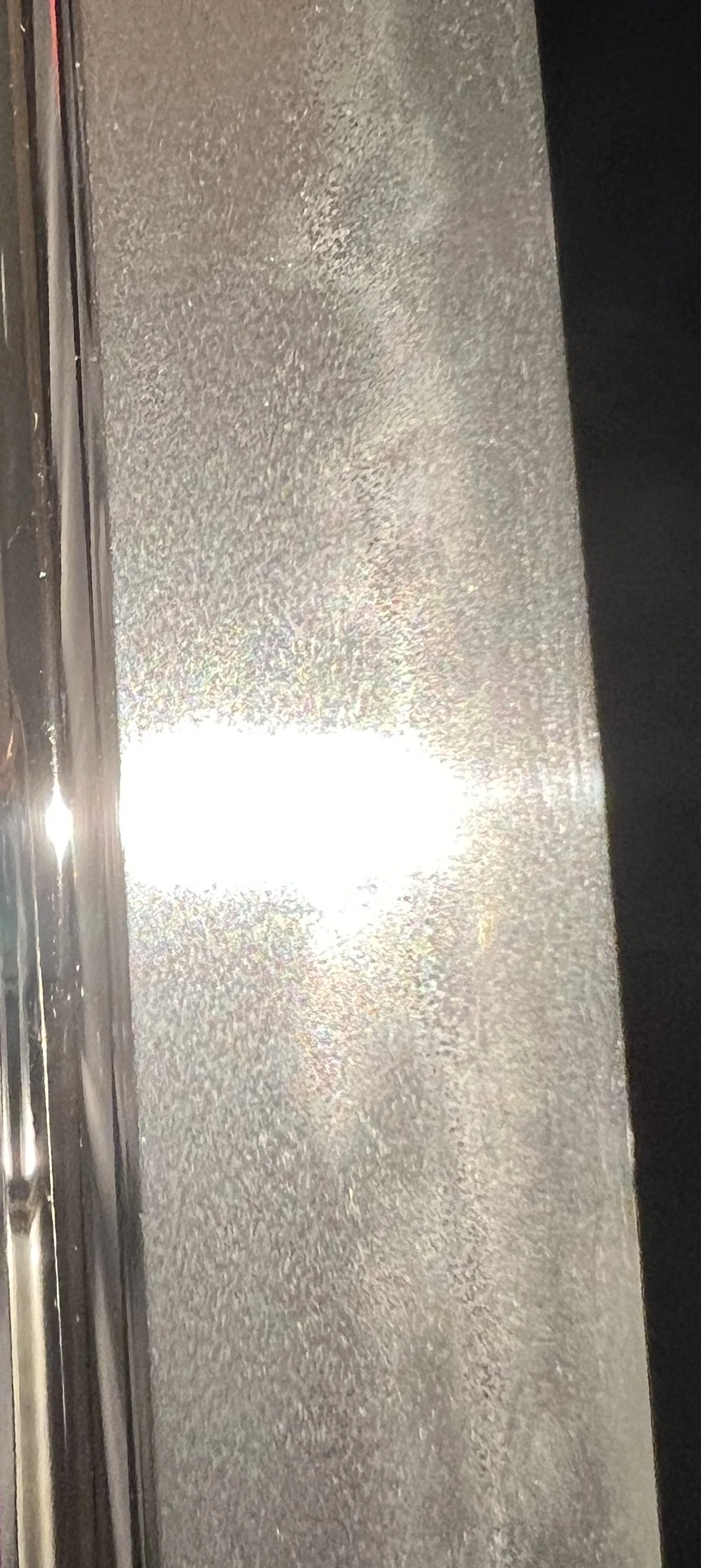
In the museum’s film, as the light moves along the blade, the temper line reads as a band of nie that rises and falls in small, uneven waves. It does not keep to one line: strands and grains of nie leave it and run out into the ground, and bright threads run along the grain beside it.
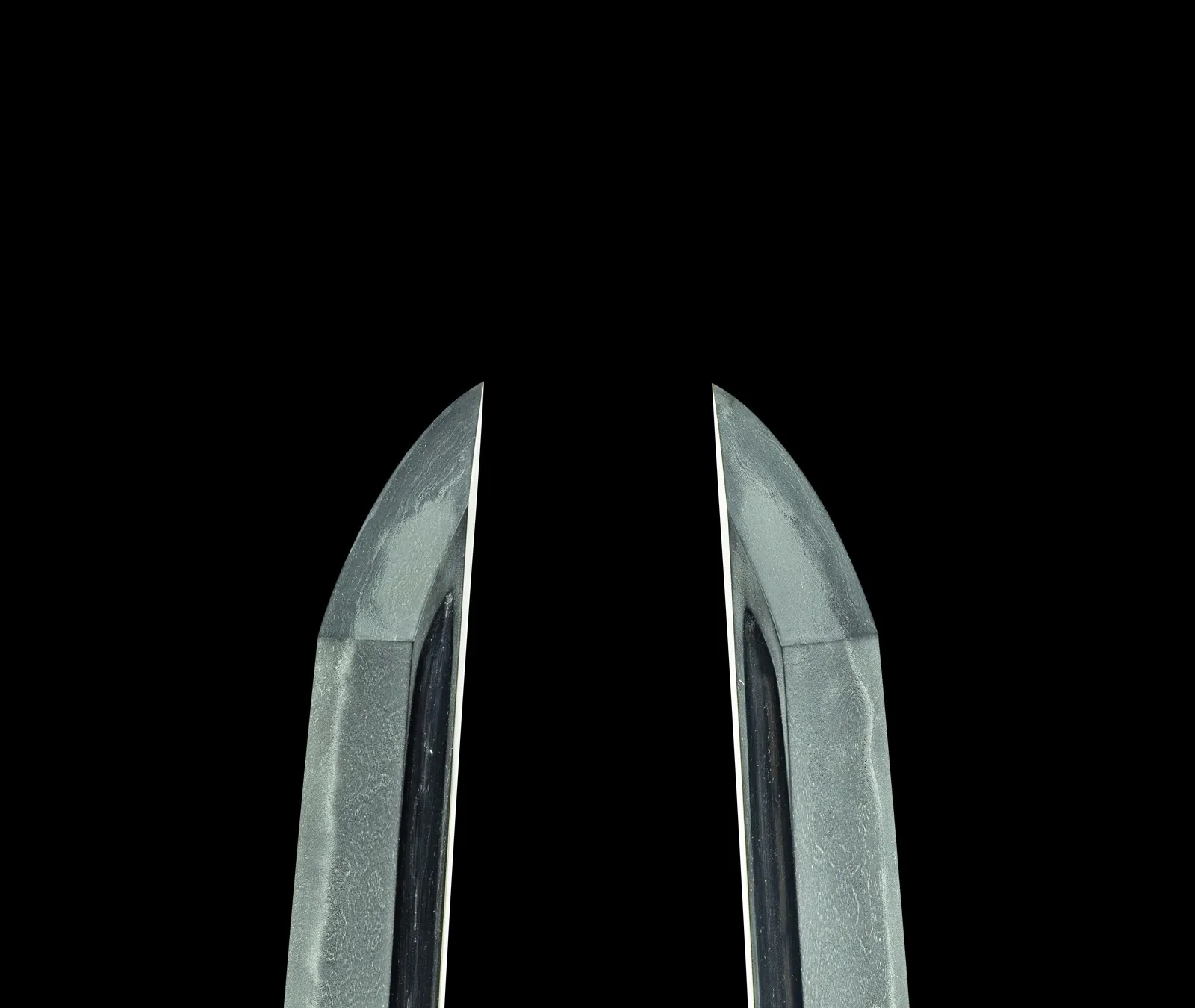
Towards the point the temper line keeps close to the edge and breaks into small, angular steps below the yokote; beyond it, the description of 2024 records the bōshi running straight and turning back in a small curve.1
The museum’s judgement
On 6 November 2024 the NBTHK designated the sword Jūyō Tōken at its 70th shinsa.1 Two modern descriptions of the work are quoted here. The NBTHK’s description finds “a fascination of changing effects”, 変化の妙味, a phrase found in this description alone among its descriptions of Yukimitsu. The sword scholar Tanobe Michihiro, writing on the scabbard in 2025, speaks of “the fascination of crumbling nie and of change”, 沸ノ崩レト変化ノ妙.16 In the NBTHK’s descriptions the crumbling of nie, 沸崩れ, is common, said of Yukimitsu as well as of Masamune, Shizu and Gō; “the fascination of the nie’s changes” is otherwise said only of Masamune.17 Both conclude for Yukimitsu: the NBTHK that Kōyū’s attribution may be accepted, Tanobe that the old attribution is appropriate.
「相州上工としての特色が顕らかなる優品である」
“an excellent work in which the characteristics of a superior Sōshū master are plainly apparent”
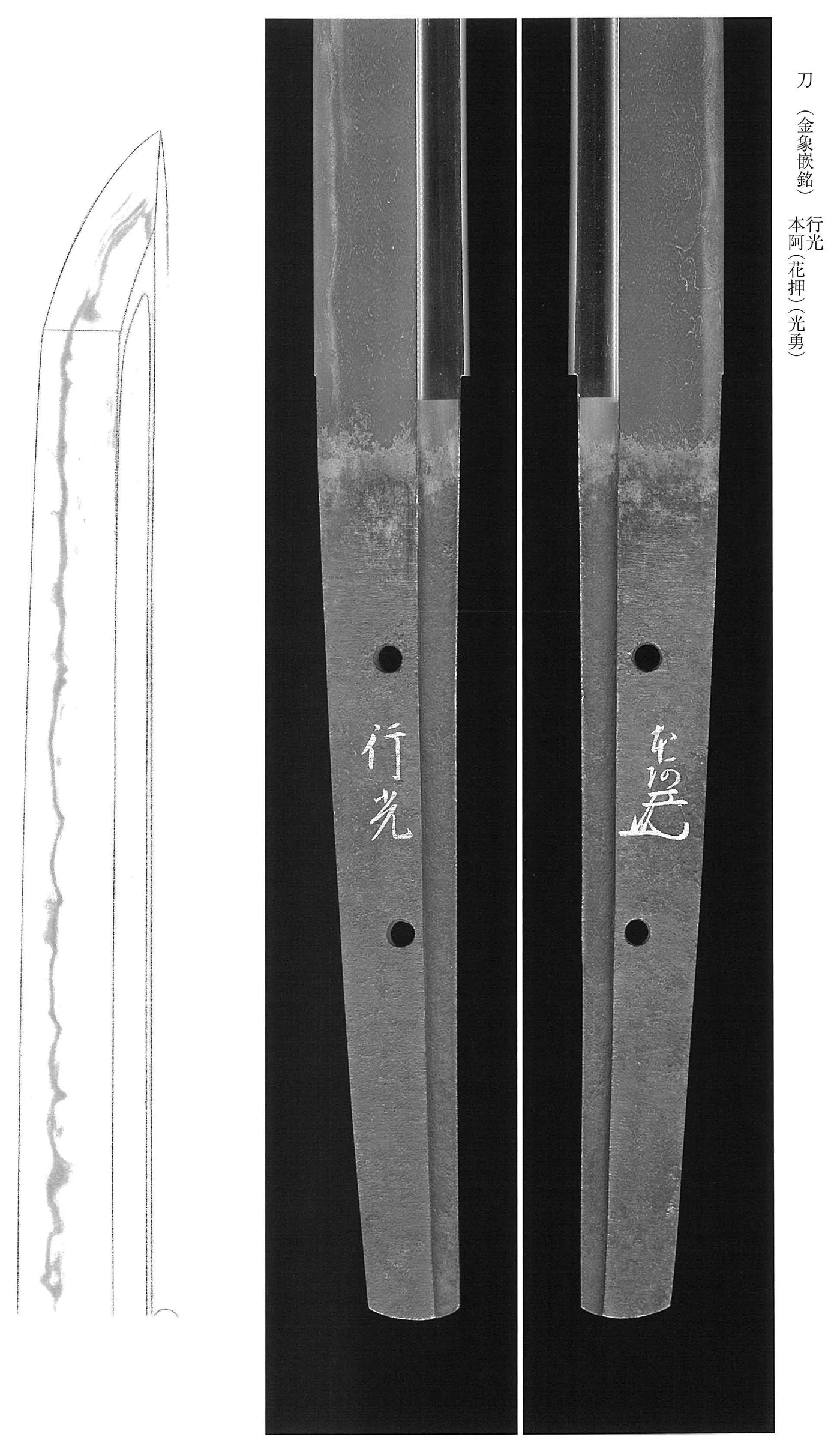
The museum reads the sword as belonging to the dynamic end of Yukimitsu’s range: the rounded back of the one other such katana given to him, steel the NBTHK finds finely forged, and a temper line livelier than most of the long swords given to him. It holds the attribution to Yukimitsu as the most probable.
The NBTHK’s description closes with a note on the rounded back, naming among its few parallels the Kōsetsu Samonji, the one signed tachi of Sa of Chikuzen, who is counted among the pupils of Masamune.18 The rounded back and the pointed and angular elements of the temper line recall Sa. On the evidence of the steel the museum holds with Kōyū’s attribution to Yukimitsu, and keeps Sa in view as a possibility, though the less probable one.
In November 2025 Tanobe Michihiro (Tanzan) wrote a sayagaki on the plain wooden scabbard. After recording Kōyū’s gold attribution and the gift of 1735, it describes the work:
「地沸ヲ厚ク敷ク板目ノ肌合ニ地景ヲ織成シ濡色ヲ呈シ焼刃ハ直心ノ穏ヤカナ部分ト賑ヤカニ乱レル部分トガアッテ変化ヲ見セ煌メク沸ガ豊富ニ付キ砂流・金筋絡ム地ニハ無作為ノ湯走ガカゝリ匂口明ルク冴ヘ帽子ハ烈シク掃掛ケルナド地刃共ニ沸ノ崩レト変化ノ妙ガ把握サレ相州上工ノ特味ヲ存分ニ示ス優品而古極ハメハ妥當也」
“The ji-nie lies thick over an itame interwoven with chikei, and the steel has a moist sheen. The temper line has calm stretches tending to suguha and lively stretches of midare, and so shows variety; sparkling nie is abundant, with sunagashi and kinsuji entwined, unforced yubashiri in the ji, a bright and clear nioiguchi, and vigorous hakikake in the bōshi. In ji and ha alike the breaking and the variety of the nie are fully mastered: an excellent work that shows to the full the character of a superior Sōshū master, and the old attribution is appropriate.”
Afterwards
The sword stayed, it appears, with the Date for two centuries. Between 1883 and 1893 the house moved 370 swords from Sendai to its residence in Tokyo, and in 1933 and 1934 swords of the collection were certified Jūyō Bijutsuhin while it was still largely together.19
It left the family, it appears, in the dispersal of the collection that followed the war.
A sayagaki by Hon’ami Nisshū is reported, in a published description of the sword, to record it as an heirloom of the Date of Ōshū (奥州伊達家伝来).20
Provenance

Documented Heirloom of the Date House of Sendai
Late Kamakura period
Made in Sagami at the end of the Kamakura period; attributed to Yukimitsu.
Per the papers
1735
Origami by Hon’ami Kōyū, at 200 gold mai.
Established
1735
Given by the shōgun Tokugawa Yoshimune to the Date house of Sendai. The sources differ on whether Yoshimura or his son Munemura received it.
Established
1757
The fittings by Gotō Tsūjō receive their own origami; the sword is in the Date house.
Established
1789
Entered in the Date register of swords, the Kensō Hiroku, as entry 50.
Established
To 1947
In the Date collection, it appears, until the death of Count Okimune.
Well supported
c. 1947–1955
Leaves the Date family, it appears, in the post-war dispersal of the collection.
Well supported
Undated
A sayagaki by Hon’ami Nisshū is reported to have recorded the sword as a Date heirloom.
Well supported
2024
Designated Jūyō Tōken, NBTHK 70th shinsa (item 16).
Established
2025
Sayagaki by Tanobe Michihiro (Tanzan), November.
Established
Enter the case
The work in its KATANA BAKO case, in the museum’s rooms.
Notes
- 1NBTHK, Jūyō Tōken, 70th shinsa, designated 6 November 2024, item 16 (koto): the designation record and the description of the work. ↩
- 2Kensō hiroku (compiled 1789), section 未収の部, entry 50, read from photographs of the manuscript copy accompanying the sword; Fukunaga Suiken, Kōshitsu, shōgun-ke, daimyō-ke tōken mokuroku (Yūzankaku, 1997), the Date house, entry 44. ↩
- 3The announcement on the 27th day of the 4th month: Fukunaga 1997, the Date house, note to entry 42 (pid 14030426, frame 113). ↩
- 4On unsigned swords of the shōgun’s store held under an attribution to Yukimitsu: Tokugawa jikki (National Diet Library, pid 772978, frame 48). On the cutting test of Genroku 6 (1693): Budō zenshū (pid 1236793, frame 173). ↩
- 5Fukunaga 1997, the Date house, entries 42 to 45 (pid 14030426, frame 113). ↩
- 6Fukunaga Suiken, Kōshitsu, shōgun-ke, daimyō-ke tōken mokuroku (Yūzankaku, 1997), the Date house, introduction (National Diet Library, pid 14030426, frame 106). ↩
- 7Tokugawa shoke keifu, vol. 2 (1974): born on the 1st day of the 8th month of Kyōhō 2 (1717), adopted on the 23rd day of the 4th month of Kyōhō 20 (National Diet Library, pid 12211157, frame 69); the same volume: died on the 16th day of the intercalary 12th month of Enkyō 2, early in 1746 (frame 128). ↩
- 8Nenroku 年録, vol. 229 (inner title Ryūei hinamiki), the shogunate’s daily record, entry for the 19th day of the 6th month of Kyōhō 20 (National Diet Library, manuscript 833-1; pid 2561909, frame 82); Tokugawa jikki, Yūtokuin-den o-jikki, the same day (Keizai zasshisha printing, part 5, 1907; pid 772969, frame 577). ↩
- 9To Yoshimura: Tokugawa jikki (see note on the audience). To Munemura: Kansei chōshū shokafu, the entry for Date Munemura (National Diet Library, manuscript 828-1; pid 2577472, frame 98), and the house ledger quoted in the Kensō hiroku, entry 50 (「忠山様御拝領」). ↩
- 10Tokugawa jikki; Kansei chōshū shokafu; Kinsei tōken nenpyō (1935); Sendai shishi, vol. 8, Shiryō-hen; Dai Nihon komonjo, Iewake 3, Date family documents, vol. 10; Kensō hiroku, entry 50. Each is listed with its reference in the Record of Provenance. ↩
- 11Fukunaga 1997: the Mito house, 1624 (National Diet Library, pid 14030426, frame 92); the shōgun’s house, 1695 and 1701 (frames 32 and 181); the Kuroda house, 1648 (frame 143). Sakai-ke Ushigome betsugyō onari no ki (1911), the visit of Ietsuna, its year inferred (pid 772783, frame 24). NBTHK, Tokubetsu Jūyō Tōken, 17th session (2002), for 1722. Kyōhō tsūkan, Kyōhō 14 (pid 12229566, frame 234). All are listed in Annex A. ↩
- 12The Kyōhō meibutsu-chō (1719), as printed in Shōchū tōken meibutsu-chō (1919; National Diet Library, pid 951683–951684). ↩
- 13Dai Nihon tōken-shi, vol. 2 (National Diet Library, pid 1258868, frame 365); Kenwaroku (pid 854114, frame 61); Nihontō zenshū, vol. 4 (pid 2475222, frame 103). ↩
- 14The meibutsu-chō of 1719 as printed in Shōchū tōken meibutsu-chō (1919; National Diet Library, pid 951683–951684). The NBTHK descriptions: Jūyō Tōken 15-90 (a Gō, Kōjō), 33-48 and 53-51 (Masamune, Kōyū), 30-38 (a Gō, Kōyū); Tokubetsu Jūyō Tōken 17-7 (a Rai Kunitoshi raised to 100 mai, 1734). The test of the rise is set out with the chart in Annex B. ↩
- 15NBTHK, Jūyō Tōken, 20th session (1971), item 79: the description. That it is the one other is the museum’s finding, from a search of all the NBTHK’s descriptions for Yukimitsu with a maru-mune. ↩
- 16Sayagaki by Tanobe Michihiro (Tanzan) on the shirasaya, dated November 2025, read in full from photographs of the scabbard; quoted at the end of this section. ↩
- 17The museum’s search of the NBTHK’s descriptions: 沸崩れ in some 380 descriptions, among them a Yukimitsu (Tokubetsu Jūyō Tōken 13-12) and Masamune (Jūyō Tōken 33-48, 53-51), and the exact form 沸の崩れ in Jūyō Tōken 46-39 and 60-26 (Shizu) and Tokubetsu Jūyō Tōken 25-20 (Gō); 沸の変化の妙 in Jūyō Tōken 45-44 and 45-45 and Tokubetsu Jūyō Tōken 16-14 (Masamune; 45-44 and 16-14 are the same sword); 変化の妙味 among the descriptions of Yukimitsu in this one alone. ↩
- 18The parallel: the NBTHK’s description of 2024 (「『号江雪左文字』など僅かながら類例が確認される」). The Kōsetsu Samonji, a National Treasure: its designation and description in the national register of cultural properties. ↩
- 19Date Masamune to katana: Sendai tōkō shiwa (1993; National Diet Library, pid 13449337, frame 113); the lists of works certified Jūyō Bijutsuhin in 1933 and 1934, the swords of Count Date Okimune (pid 12743662, frame 69). The continuity of the collection is set out in the Record of Provenance. ↩
- 20Reported in a published description of the sword (online, after 1980), cited only as the source of that report. ↩
Annex AThe recorded valuations of Yukimitsu of Sagami
| Value | Year · appraiser | The sword | Record |
|---|---|---|---|
| Long swords · valued in gold (mai) | |||
| 200 mai | 1735 · Kōyū | This sword. Unsigned, much shortened, the attribution inlaid in gold; 71.5 cm | Gift of the shōgun Yoshimune to the Date, 1735 |
| 100 mai | 1767 · Hon’ami Kōso | Katana; 2 shaku 3 sun 5.5 bu (71.4 cm). Papered at 20 mai as Norishige in 1716, re-judged Yukimitsu | Satake of Akita |
| 100 mai | n.d. | Katana, the attribution inlaid; 2 shaku 3 sun 9.5 bu (72.6 cm) | Tachibana of Yanagawa |
| 70 mai | 1721 · Kōchū | Katana, unsigned; 71.3 cm. Heirloom of the Asano of Hiroshima | Jūyō Tōken, 7th session (1961); Tokubetsu Jūyō Tōken, 12th session (1992) |
| 35 mai | 1648 | Katana; 2 shaku 3 sun 4 bu (70.9 cm) | Gift of the shōgun Iemitsu to Kuroda Nagayuki, 1648 (the value as recorded; the house notes that gifts carried no origami before this time) |
| 15 mai | 1686 | Katana, unsigned; grooves carved with bonji and a sword; 2 shaku 3 sun 1.5 bu (70.2 cm) | Nanbu of Morioka |
| 10 mai | n.d. | Katana, unsigned; 2 shaku 3 sun 5 bu (71.2 cm). Hon’ami Kumajirō later judged it worth seventy and more | Tachibana of Yanagawa |
| Long swords · valued in kan | |||
| 3,000 kan | n.d. | Katana, unsigned; 2 shaku 4 sun 7 bu (74.8 cm). Judged Enju Kunisuke by Imamura Chōga in 1895 | Tachibana of Yanagawa (acquired 1764) |
| 1,500 kan | 1705 · Kōchū | Katana, unsigned, much shortened; 70.0 cm (the origami recorded on the old scabbard) | Tokubetsu Jūyō Tōken, 15th session (1998) |
| 350 kan | 1677 | Katana, attributed; 71.7 cm | Jūyō Bunkazai |
| 350 kan | 1715 | Katana, unsigned, shortened; 2 shaku 4 sun 5 bu (74.2 cm) | Date of Sendai |
| Short swords · valued in gold (mai) | |||
| 200 mai | c. 1656 | Wakizashi | Presented by the Sakai to the shōgun Ietsuna at his visit to their Ushigome residence |
| 200 mai | 1722 | Tantō, the attribution in red lacquer by Kōon; 27.7 cm (the value from the account on its old scabbard) | Bequest of Matsudaira Yoshikuni of Echizen, presented to the shōgun Yoshimune; Tokubetsu Jūyō Tōken, 17th session (2002) |
| 200 mai | 1729 | Wakizashi | Presented to the shōgun Yoshimune by Matsudaira Kazusa-no-suke, with a Niji Kunitoshi katana |
| 130 mai | 1719 | The Satō Yukimitsu, tantō, unsigned; 8 sun 4 bu (25.5 cm). Earlier papered by the Hon’ami at 100 mai | Kyōhō meibutsu-chō (Matsudaira of Saijō) |
| 120 mai | 1753 · Kōyū | Short sword (the attribution in gold powder); 27.5 cm | Jūyō Tōken, 37th session (1991) |
| 100 mai | 1704 · Kōchū | The Ōshima Yukimitsu, wakizashi, the attribution in red lacquer by Kōshitsu; 33.3 cm | Kyōhō meibutsu-chō (Katō of Minakuchi); Tokubetsu Jūyō Tōken, 23rd session (2014) |
| 100 mai | 1717 · Kōchū | The Fudō Yukimitsu, tantō, a two-character signature, re-tempered; 25.5 cm | Kyōhō meibutsu-chō (Ogasawara of Kokura); Jūyō Tōken, 21st session (1973) |
| 70 mai | 1695 | Wakizashi | Presented to the shōgun Tsunayoshi by Yanagisawa Yoshisato |
| 70 mai | 1702 · Kōchū | Tantō, unsigned; 29.2 cm | Jūyō Tōken, 52nd session (2006); Tokubetsu Jūyō Tōken, 20th session (2008) |
| 70 mai | 1767 · Hon’ami Kōso | Short sword signed Masamune, the signature judged poor, valued as Yukimitsu; 7 sun 6 bu (23.0 cm) | Satake of Akita |
| 35 mai | 1717 · Hon’ami | Short sword, the attribution in red lacquer; 9 sun 6 bu (29.1 cm) | Matsudaira of Tsuyama, received from the shōgun |
| 35 mai | n.d. | Wakizashi; 1 shaku 0 sun 1.5 bu (30.8 cm) | Matsudaira of Saijō |
| 30 mai | 1651 | Tantō, unsigned; 9 sun 2.5 bu (28.0 cm) | Date of Sendai |
| 30 mai | 1730 · Kōyū | Tantō, the attribution in red lacquer; 9 sun 1 bu (27.6 cm) | Maeda of Kaga (sale of 1925) |
| 30 mai | 1761 · Kōjun | Tantō, the attribution in red lacquer; 9 sun 4 bu (28.5 cm) | Bequest of the shōgun Ieshige to the Kii Tokugawa, 1761 |
| 25 mai | 1642 · Kōon | Tantō, signed; 25.85 cm. Heirloom of the Mōri princes | Tokubetsu Jūyō Tōken, 12th session (1992) |
| 20 mai | 1658 | Wakizashi, unsigned; grooves with a sword and bonji; 9 sun 7 bu (29.4 cm) | Date of Sendai |
| 20 mai | 1760 · Kōyū | Tantō, unsigned; 27.7 cm | Jūyō Tōken, 17th session (1968) |
| 15 mai | 1668 | Wakizashi | Presented to Tokugawa Tsunayoshi, then lord of Tatebayashi, by Kutsuki Gonza |
| 15 mai | 1686 · Kōjō | Wakizashi, the attribution in gold powder, the value in red lacquer on the tang; 34.0 cm | Jūyō Tōken, 39th session (1993) |
| 15 mai | 1717 | Tantō, the attribution in red lacquer; 9 sun 1 bu (27.6 cm) | Jūyō Tōken, 14th session (1966) |
| 13 mai | 1680 · Kōjō | Tantō, unsigned; 23.8 cm | Jūyō Tōken, 24th session (1976) |
| Short swords · valued in kan | |||
| 3,000 kan | 1704 · Kōchū | The Gotō Yukimitsu, tantō, unsigned; 26.8 cm | Kyōhō meibutsu-chō (Katō of Minakuchi); Jūyō Tōken, 21st session (1973) |
| 1,500 kan | 1674 · Kōjō | Tantō, unsigned; 27.3 cm | Jūyō Tōken, 14th session (1966); probably the paper of the Nanbu ledger, “Enpō 2, 1,500 kan” |
| 1,000 kan | 1716 | Short sword, unsigned; 9 sun (27.3 cm) | Matsudaira of Tsuyama |
| 1,000 kan | 1719 · Hon’ami | Tantō, the attribution and the value in red lacquer; 25.9 cm | Jūyō Tōken, 22nd session (1974) |
| 700 kan | 1700 · Kōchū | Tantō, signed; 28.35 cm. Heirloom of the Ōmura counts | Jūyō Tōken, 21st session (1973); Tokubetsu Jūyō Tōken, 10th session (1987) |
| 500 kan | 1667 | Wakizashi, unsigned; 9 sun 1.5 bu (27.7 cm) | Given by the shōgun Tsunayoshi to Yanagisawa Yoshisato, 1701 |
Gold (mai, ōban pieces) and kan were separate units of account in the Hon’ami valuations. Both were in use through the period, and the two are not converted here. Years are given by the era year.
Every entry names Yukimitsu of Sagami, or Yukimitsu without a province in a context that admits no other. The Yukimitsu of Kaga, Bizen, Bungo and Echigo are left out, as is a signed long sword recorded simply as 行光, since the Sagami smith signed no katana. Lengths in shaku are converted at 30.3 cm.
The level of valuations rose over the eighteenth century, most of all among the highest figures, from Hon’ami Kōyū’s later years onward; a figure is best read against others of its time.
Left out: a signed long sword recorded simply as 行光 (Kii sale, 150 mai); a 相州行光 at 25 mai and a 行光 at 75 mai in a Maeda list whose form is not recorded; a Bizen Yukimitsu tachi at 150 kan (Tokubetsu Jūyō Tōken 13-18); and, until the printed page is read, an entry of 1649 printed 「参拾六折」 (Jūyō Tōken 24-143) and a shogunal wakizashi whose figure the text has displaced (Fukunaga 1997).
Values recorded at a gift or a presentation are the record’s own; they are not always those of an origami.
Sources
- NBTHK, Jūyō Tōken / Tokubetsu Jūyō Tōken zufu, by session (the description of each designated sword).
- The national register of Important Cultural Properties (Jūyō Bunkazai).
- Satō Tōzō, Kensō hiroku (1789), entry 50; as transcribed in Fukunaga 1997, Date house, entry 44.
- Fukunaga Suiken, Kōshitsu, shōgun-ke, daimyō-ke tōken mokuroku (Yūzankaku, 1997), by house.
- Fukunaga Suiken, Daimyō-ke, chomei-ke tōken mokuroku (Yūzankaku, 2000), by house.
- The Kyōhō meibutsu-chō (1719), as printed in Shōchū tōken meibutsu-chō (1919).
- Sakai-ke Ushigome betsugyō onari no ki (1911), frame 24 (the visit of the shōgun Ietsuna; the year, about 1656, is inferred).
- Kyōhō tsūkan (ed. Tsuji Tatsuya, 1984), Kyōhō 14 (1729).
Annex BHon’ami origami in gold, 1632–1857
Hon’ami origami in gold, 1632–1857
Each point is one sword valued by an origami of the Hon’ami, as the NBTHK’s descriptions of designated swords record it: the year of the origami and the value in gold mai, on a scale that rises by multiples (142 swords). Most stay between 5 and 30 mai throughout; before 1730 none exceeds 200, and from 1750 figures of 300 to 700 appear. This sword, at 200 mai in 1735, is marked.
NBTHK, Jūyō Tōken / Tokubetsu Jūyō Tōken zufu, by session; this sword: Kensō hiroku (1789), entry 50.
The data
- 1632 · 17 mai · Jūyō Tōken 51-129
- 1632 · 15 mai · Jūyō Tōken 2-23
- 1632 · 10 mai · Jūyō Tōken 13-9
- 1633 · 60 mai · Jūyō Tōken 20-24
- 1636 · 7 mai · Jūyō Tōken 53-134
- 1638 · 13 mai · Tokubetsu Jūyō Tōken 5-40
- 1639 · 25 mai · Tokubetsu Jūyō Tōken 14-2
- 1642 · 25 mai · Tokubetsu Jūyō Tōken 12-16
- 1648 · 100 mai · Tokubetsu Jūyō Tōken 20-12
- 1648 · 20 mai · Tokubetsu Jūyō Tōken 15-2
- 1655 · 25 mai · Tokubetsu Jūyō Tōken 9-14
- 1655 · 10 mai · Jūyō Tōken 7-2
- 1657 · 10 mai · Tokubetsu Jūyō Tōken 24-60
- 1657 · 8 mai · Tokubetsu Jūyō Tōken 12-25
- 1657 · 6 mai · Jūyō Tōken 4-18
- 1658 · 10 mai · Jūyō Tōken 14-168
- 1661 · 7 mai · Jūyō Tōken 39-112
- 1661 · 5 mai · Jūyō Tōken 38-116
- 1661 · 5 mai · Jūyō Tōken 50-124
- 1662 · 5 mai · Jūyō Tōken 17-19
- 1663 · 5 mai · Jūyō Tōken 54-13
- 1664 · 30 mai · Jūyō Tōken 5-20
- 1665 · 100 mai · Jūyō Tōken 39-13
- 1665 · 70 mai · Jūyō Tōken 19-276
- 1665 · 35 mai · Tokubetsu Jūyō Tōken 24-19
- 1668 · 150 mai · Jūyō Tōken 64-43
- 1669 · 20 mai · Tokubetsu Jūyō Tōken 24-52
- 1670 · 20 mai · Jūyō Tōken 19-8
- 1670 · 10 mai · Jūyō Tōken 36-17
- 1670 · 10 mai · Tokubetsu Jūyō Tōken 10-19
- 1672 · 200 mai · Jūyō Tōken 15-90
- 1672 · 20 mai · Tokubetsu Jūyō Tōken 13-8
- 1674 · 20 mai · Tokubetsu Jūyō Tōken 19-34
- 1674 · 20 mai · Tokubetsu Jūyō Tōken 5-15
- 1674 · 10 mai · Tokubetsu Jūyō Tōken 20-19
- 1675 · 13 mai · Jūyō Tōken 53-70
- 1676 · 30 mai · Jūyō Tōken 9-29
- 1676 · 10 mai · Jūyō Tōken 52-61
- 1676 · 10 mai · Jūyō Tōken 66-96
- 1676 · 5 mai · Jūyō Tōken 47-77
- 1676 · 5 mai · Tokubetsu Jūyō Tōken 16-32
- 1676 · 5 mai · Tokubetsu Jūyō Tōken 18-43
- 1677 · 13 mai · Jūyō Tōken 39-15
- 1677 · 7 mai · Jūyō Tōken 10-68
- 1678 · 100 mai · Jūyō Tōken 41-53
- 1678 · 35 mai · Jūyō Tōken 38-55
- 1678 · 15 mai · Tokubetsu Jūyō Tōken 2-22
- 1679 · 10 mai · Jūyō Tōken 49-164
- 1680 · 15 mai · Jūyō Tōken 21-36
- 1680 · 5 mai · Tokubetsu Jūyō Tōken 18-52
- 1681 · 5 mai · Jūyō Tōken 10-13
- 1681 · 5 mai · Jūyō Tōken 47-82
- 1682 · 13 mai · Tokubetsu Jūyō Tōken 13-40
- 1682 · 5 mai · Jūyō Tōken 17-238
- 1683 · 5 mai · Jūyō Tōken 57-26
- 1684 · 30 mai · Jūyō Tōken 21-274
- 1686 · 50 mai · Tokubetsu Jūyō Tōken 26-22
- 1686 · 15 mai · Jūyō Tōken 4-29
- 1686 · 15 mai · Jūyō Tōken 60-14
- 1688 · 25 mai · Tokubetsu Jūyō Tōken 10-2
- 1689 · 10 mai · Jūyō Tōken 13-6
- 1689 · 7 mai · Jūyō Tōken 11-9
- 1692 · 6 mai · Tokubetsu Jūyō Tōken 13-10
- 1695 · 10 mai · Tokubetsu Jūyō Tōken 20-14
- 1697 · 100 mai · Tokubetsu Jūyō Tōken 25-67
- 1698 · 15 mai · Jūyō Tōken 5-8
- 1699 · 100 mai · Jūyō Tōken 36-30
- 1699 · 70 mai · Tokubetsu Jūyō Tōken 7-5
- 1699 · 20 mai · Tokubetsu Jūyō Tōken 19-48
- 1699 · 15 mai · Tokubetsu Jūyō Tōken 18-45
- 1699 · 10 mai · Jūyō Tōken 19-138
- 1701 · 200 mai · Jūyō Tōken 14-53
- 1701 · 13 mai · Jūyō Tōken 60-25
- 1701 · 6 mai · Jūyō Tōken 47-25
- 1702 · 70 mai · Jūyō Tōken 52-42
- 1702 · 15 mai · Jūyō Tōken 66-36
- 1702 · 15 mai · Tokubetsu Jūyō Tōken 24-61
- 1702 · 10 mai · Jūyō Tōken 4-3
- 1703 · 30 mai · Tokubetsu Jūyō Tōken 11-23
- 1703 · 10 mai · Jūyō Tōken 13-62
- 1704 · 100 mai · Tokubetsu Jūyō Tōken 23-7
- 1704 · 30 mai · Jūyō Tōken 19-125
- 1704 · 20 mai · Jūyō Tōken 5-35
- 1704 · 15 mai · Jūyō Tōken 23-282
- 1705 · 15 mai · Jūyō Tōken 49-53
- 1706 · 100 mai · Jūyō Tōken 51-82
- 1706 · 15 mai · Jūyō Tōken 14-7
- 1706 · 13 mai · Jūyō Tōken 11-58
- 1707 · 20 mai · Tokubetsu Jūyō Tōken 17-27
- 1708 · 100 mai · Jūyō Tōken 51-10
- 1708 · 30 mai · Tokubetsu Jūyō Tōken 12-33
- 1708 · 20 mai · Jūyō Tōken 54-9
- 1708 · 15 mai · Jūyō Tōken 38-39
- 1708 · 13 mai · Jūyō Tōken 15-166
- 1709 · 15 mai · Jūyō Tōken 57-14
- 1709 · 7 mai · Jūyō Tōken 30-78
- 1710 · 7 mai · Jūyō Tōken 53-93
- 1710 · 5 mai · Jūyō Tōken 10-127
- 1711 · 30 mai · Tokubetsu Jūyō Tōken 9-10
- 1711 · 20 mai · Tokubetsu Jūyō Tōken 17-50
- 1711 · 10 mai · Jūyō Tōken 34-81
- 1711 · 6 mai · Jūyō Tōken 46-31
- 1712 · 30 mai · Jūyō Tōken 46-4
- 1712 · 5 mai · Jūyō Tōken 54-67
- 1714 · 7 mai · Jūyō Tōken 48-120
- 1715 · 100 mai · Jūyō Tōken 4-1
- 1715 · 20 mai · Jūyō Tōken 46-10
- 1715 · 10 mai · Tokubetsu Jūyō Tōken 12-21
- 1716 · 20 mai · Jūyō Tōken 54-48
- 1716 · 20 mai · Tokubetsu Jūyō Tōken 24-56
- 1716 · 13 mai · Jūyō Tōken 37-81
- 1717 · 100 mai · Jūyō Tōken 21-91
- 1717 · 30 mai · Jūyō Tōken 38-119
- 1717 · 7 mai · Jūyō Tōken 14-117
- 1718 · 30 mai · Tokubetsu Jūyō Tōken 16-17
- 1719 · 30 mai · Jūyō Tōken 9-68
- 1720 · 15 mai · Jūyō Tōken 53-87
- 1721 · 70 mai · Tokubetsu Jūyō Tōken 12-14
- 1721 · 30 mai · Tokubetsu Jūyō Tōken 2-4
- 1722 · 70 mai · Tokubetsu Jūyō Tōken 12-13
- 1724 · 20 mai · Tokubetsu Jūyō Tōken 17-18
- 1734 · 100 mai · Tokubetsu Jūyō Tōken 17-7
- 1735 · 200 mai · This sword (Kensō hiroku, entry 50)
- 1735 · 7 mai · Jūyō Tōken 53-95
- 1738 · 15 mai · Jūyō Tōken 38-8
- 1740 · 10 mai · Jūyō Tōken 1-16
- 1742 · 25 mai · Jūyō Tōken 15-221
- 1745 · 50 mai · Jūyō Tōken 58-20
- 1745 · 25 mai · Jūyō Tōken 43-8
- 1747 · 15 mai · Jūyō Tōken 15-196
- 1749 · 50 mai · Jūyō Tōken 19-173
- 1750 · 700 mai · Jūyō Tōken 33-48
- 1751 · 300 mai · Jūyō Tōken 53-51
- 1753 · 15 mai · Tokubetsu Jūyō Tōken 7-41
- 1756 · 500 mai · Jūyō Tōken 30-38
- 1760 · 20 mai · Jūyō Tōken 17-56
- 1761 · 500 mai · Jūyō Tōken 52-37
- 1769 · 20 mai · Jūyō Tōken 15-193
- 1771 · 20 mai · Jūyō Tōken 3-28
- 1780 · 700 mai · Jūyō Tōken 53-48
- 1785 · 500 mai · Tokubetsu Jūyō Tōken 22-4
- 1816 · 250 mai · Tokubetsu Jūyō Tōken 23-15
- 1857 · 150 mai · Jūyō Tōken 52-66
Private collection
The presentation
- The case
- KATANA BAKO, by Keisuke Nakamura
- Film
- Ōhira Takeko and Hoshi
- Presentation
- The Meihin Museum
- The full-length photographs
- Paul Kremers, tsuba.info
- The papers
- NBTHK, Jūyō Tōken, 70th shinsa, 2024 (item 16)