Muromachi turned sword making into an industry: the uchigatana rose with massed infantry warfare, Osafune and Seki produced bundle swords beside custom orders, and the Ming trade carried Japanese blades abroad by the tens of thousands.
 NihontoWatchNihontoWatch
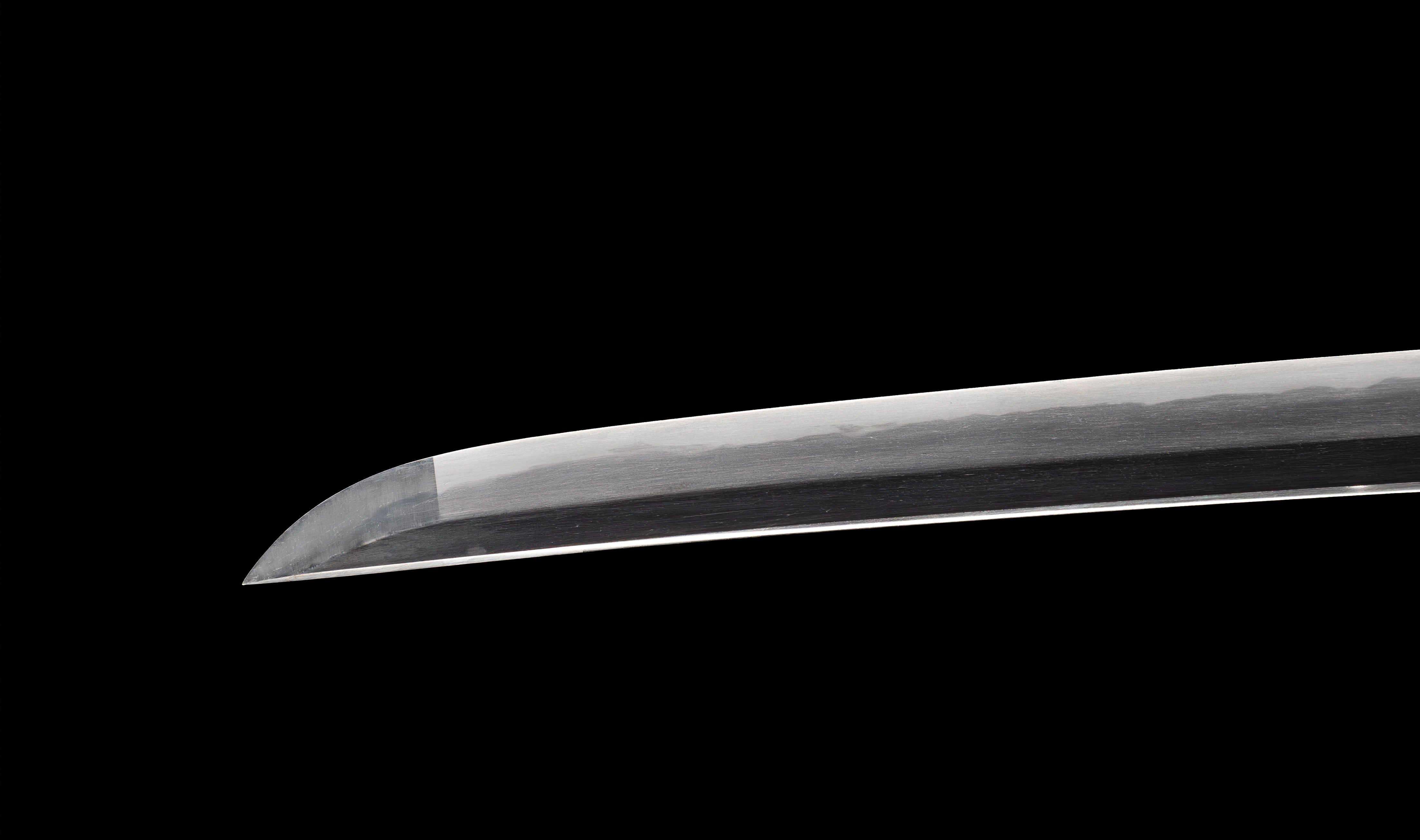
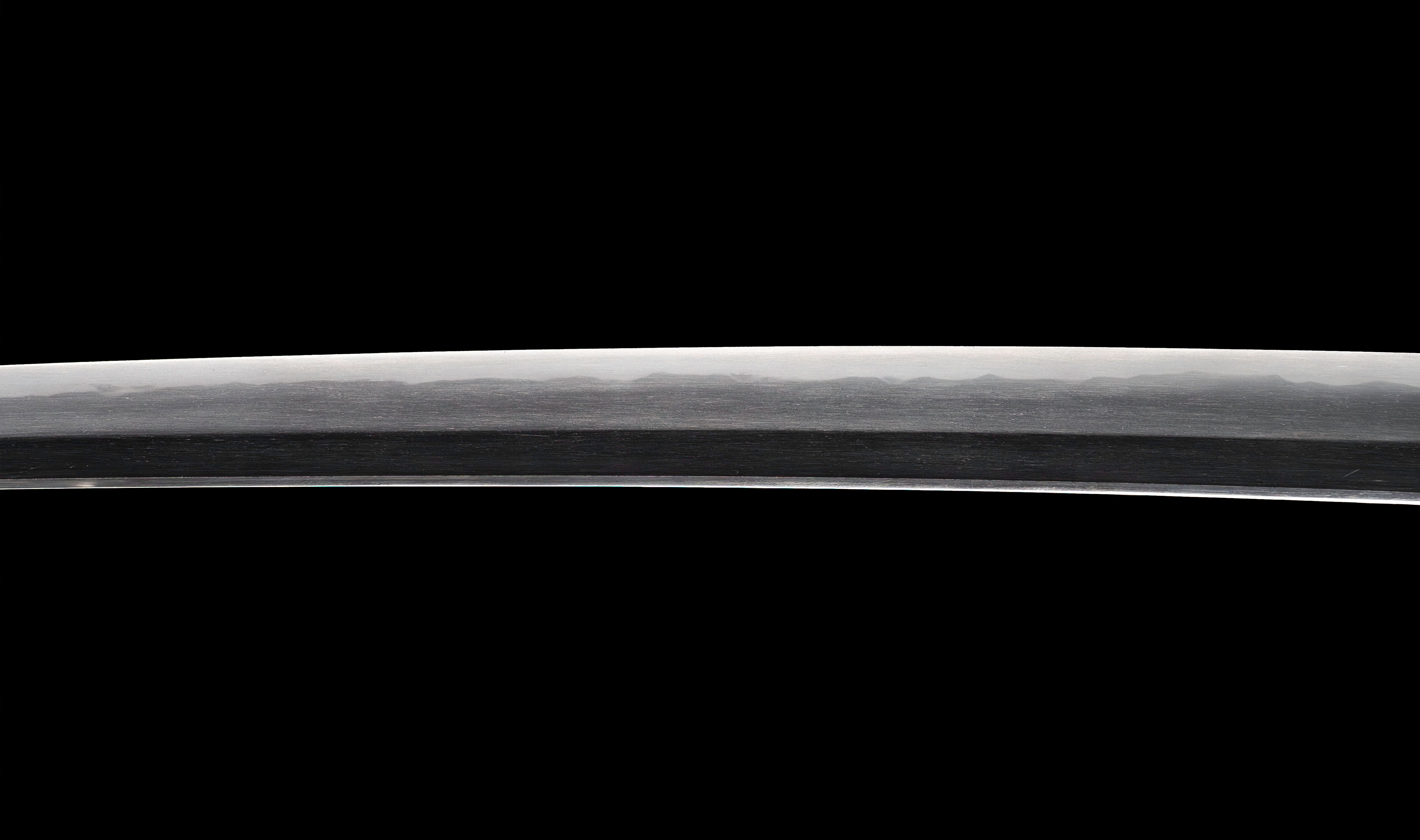
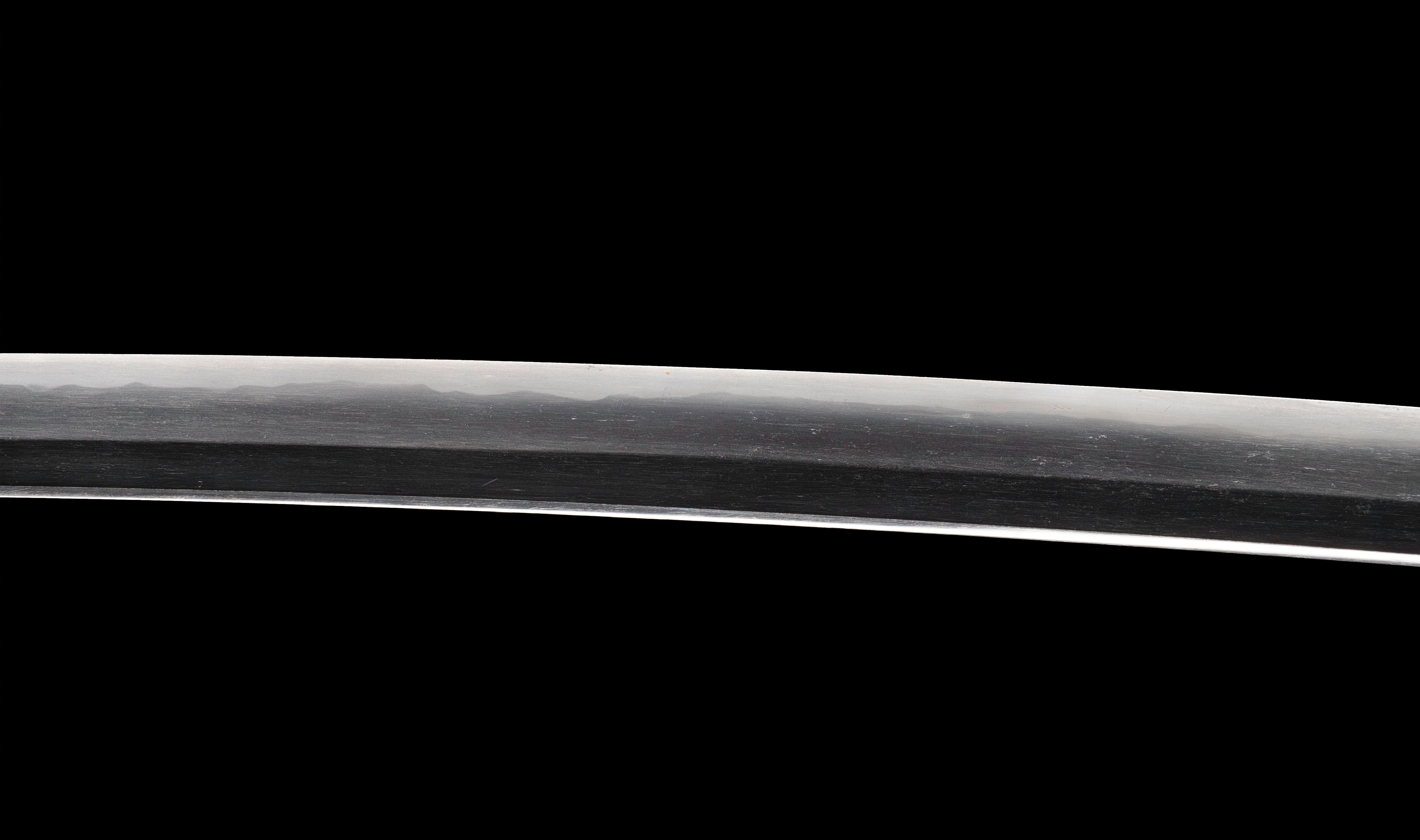
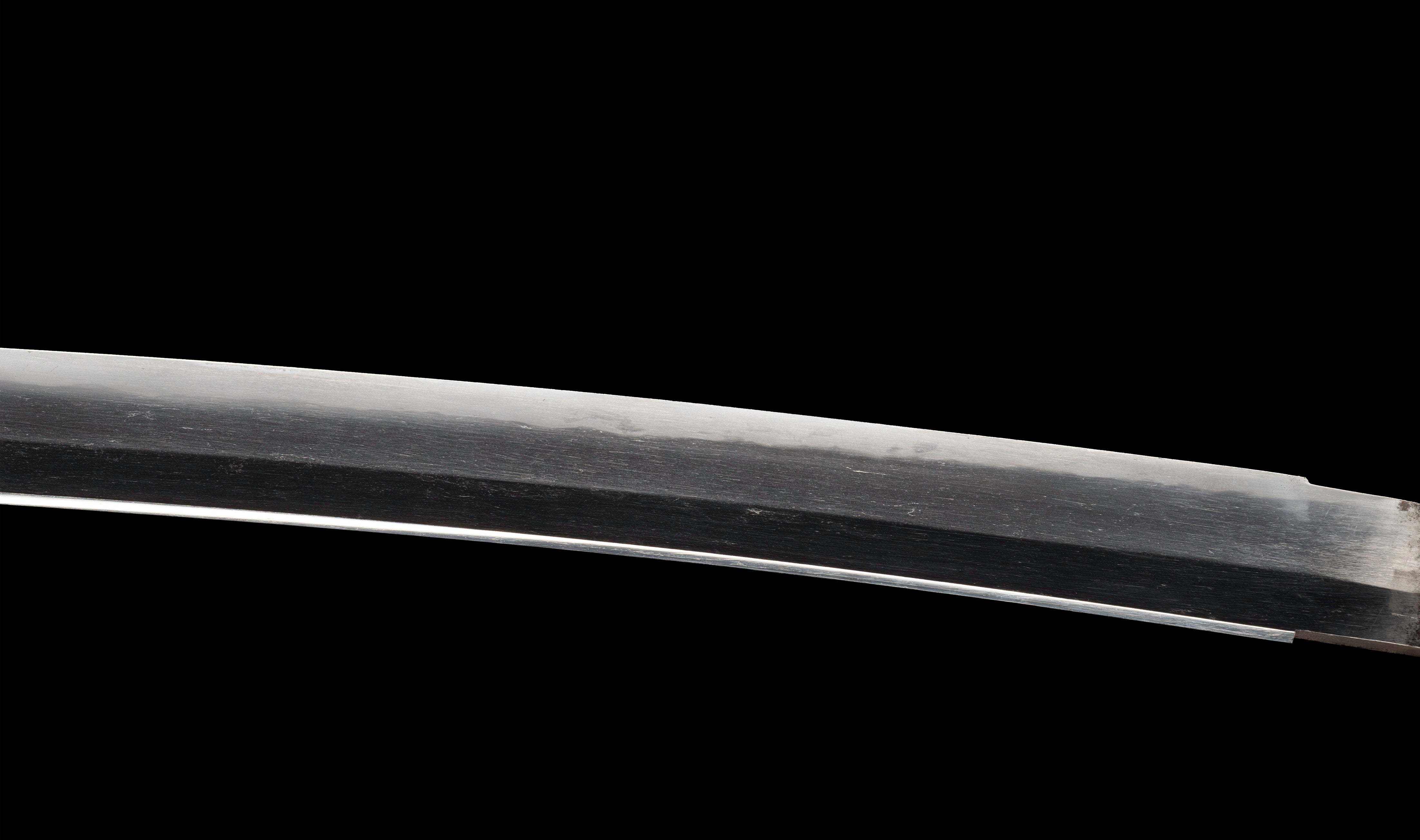
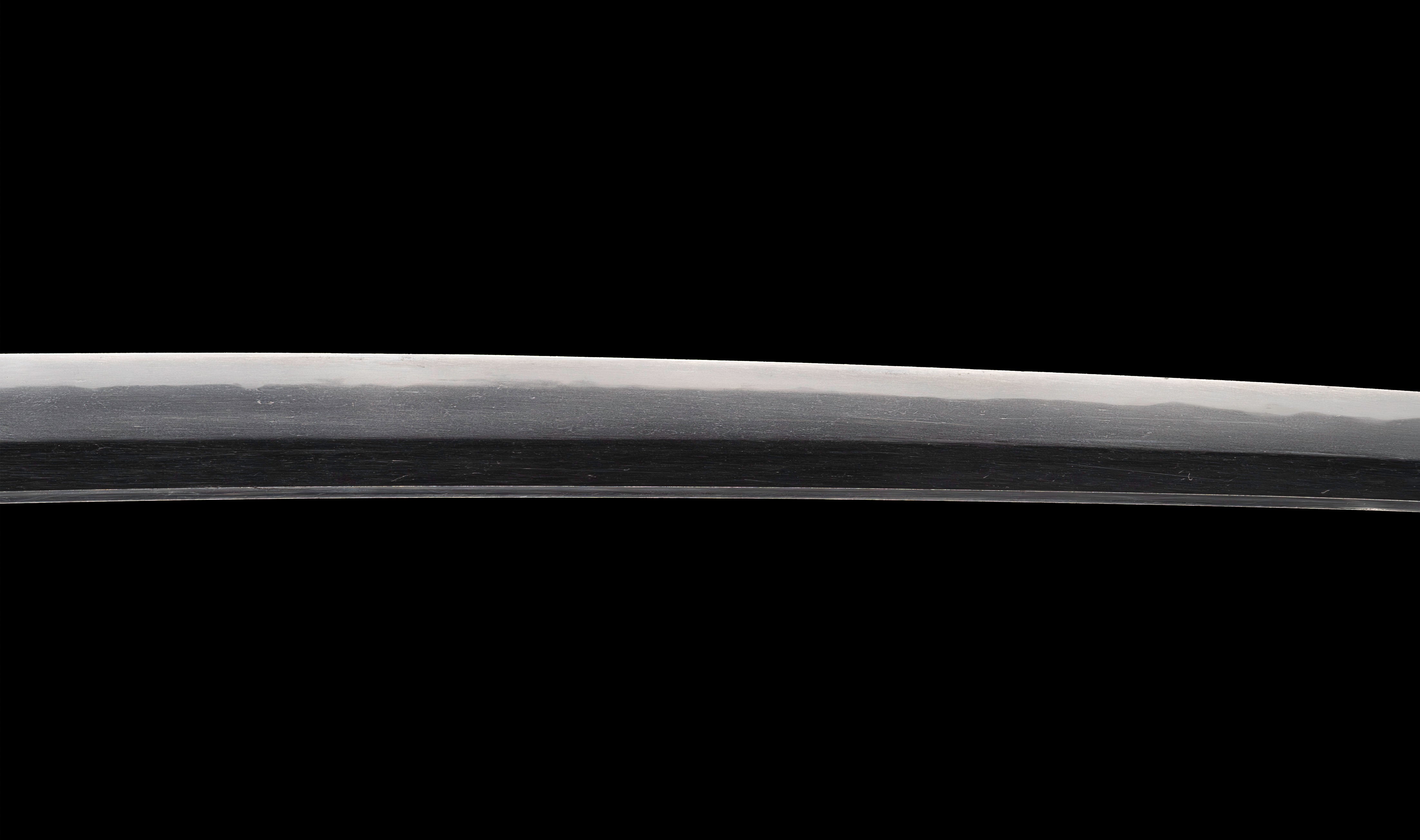
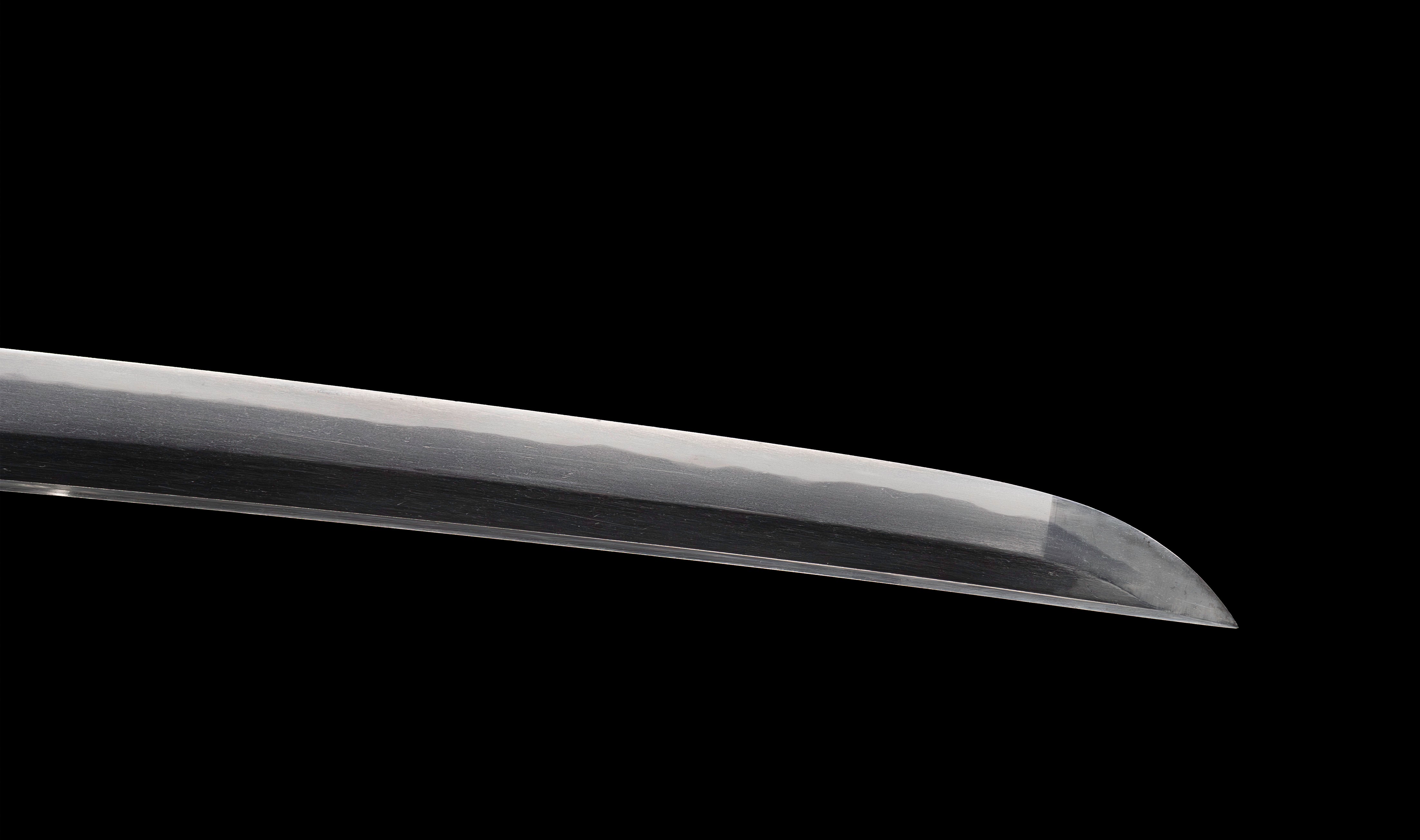
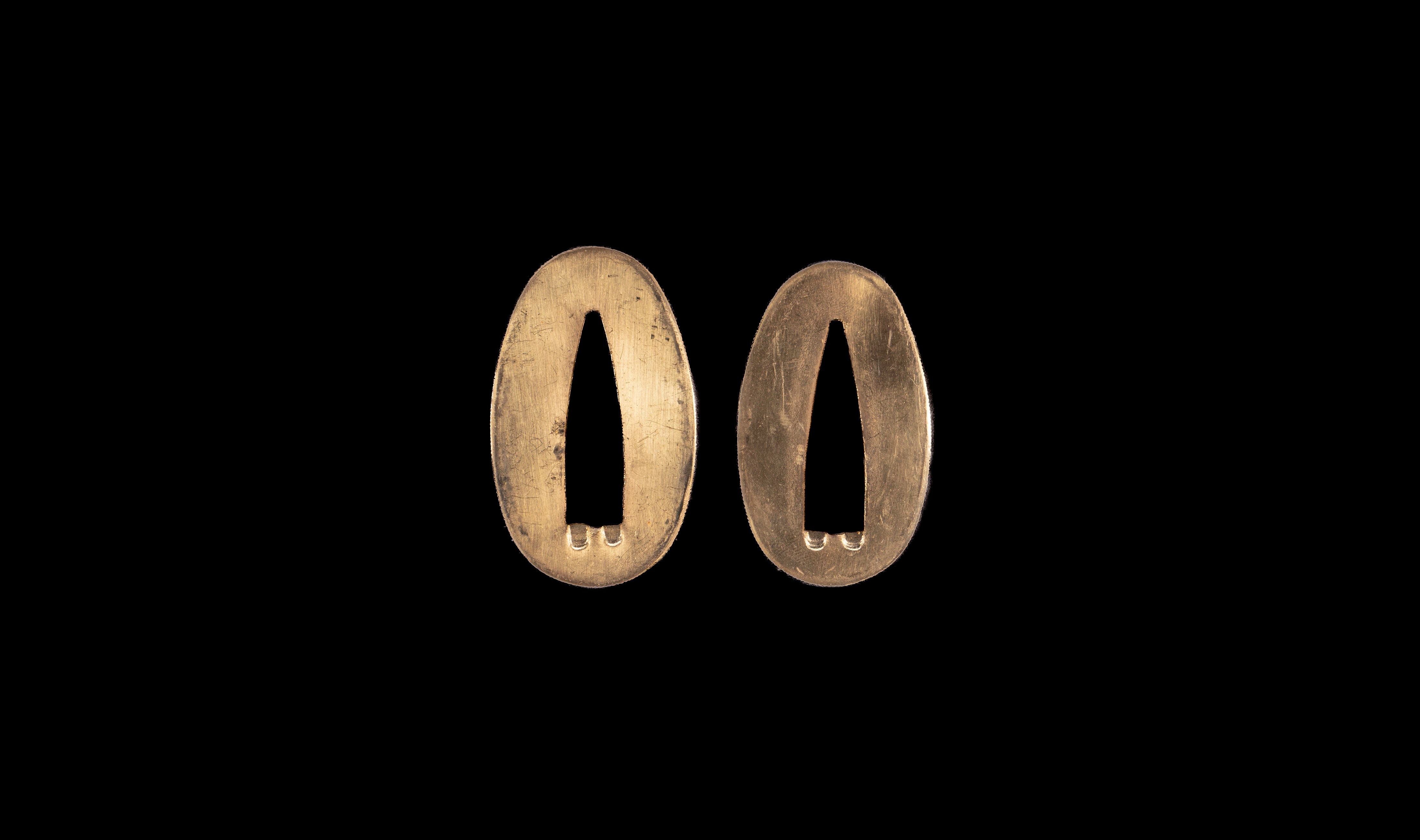
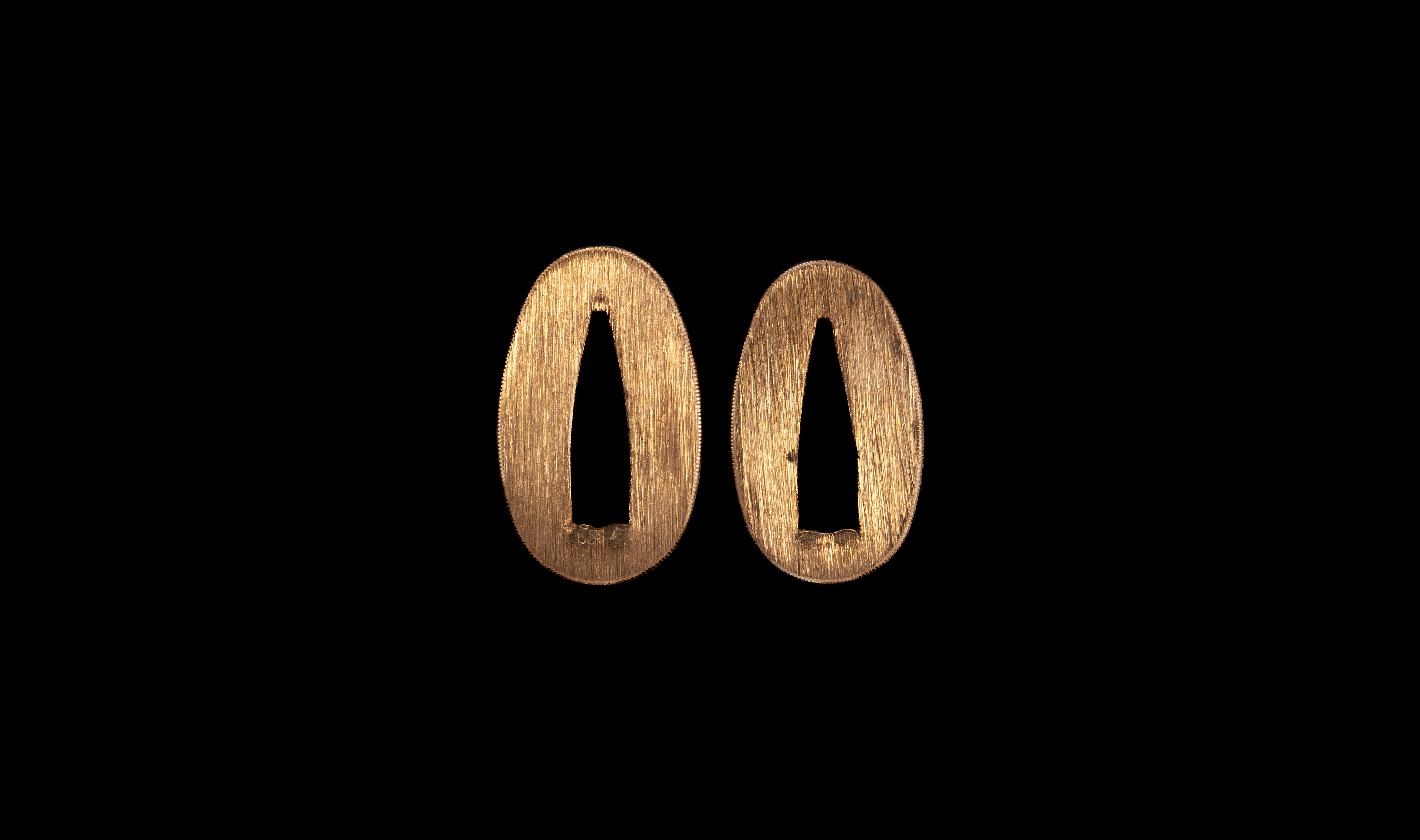
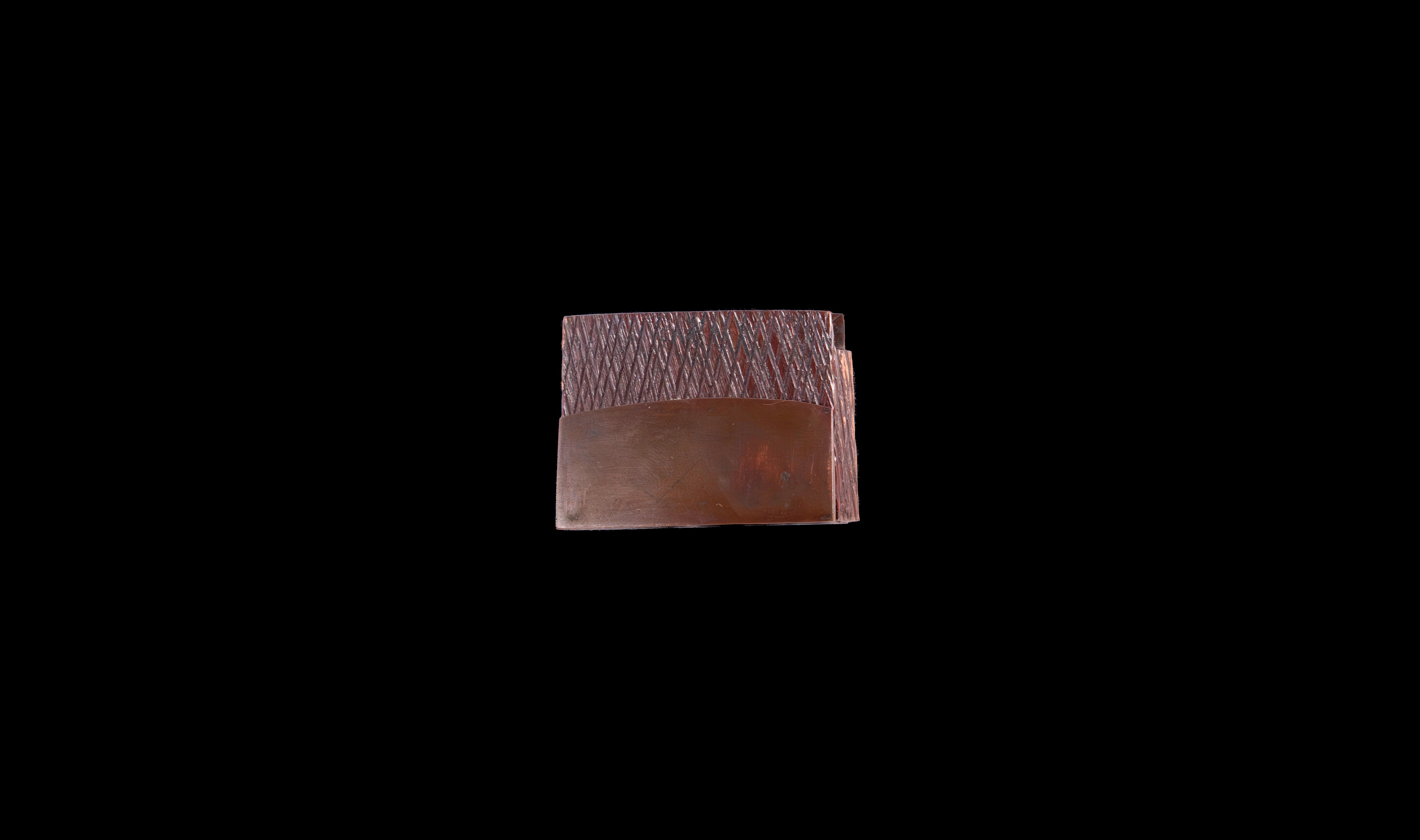
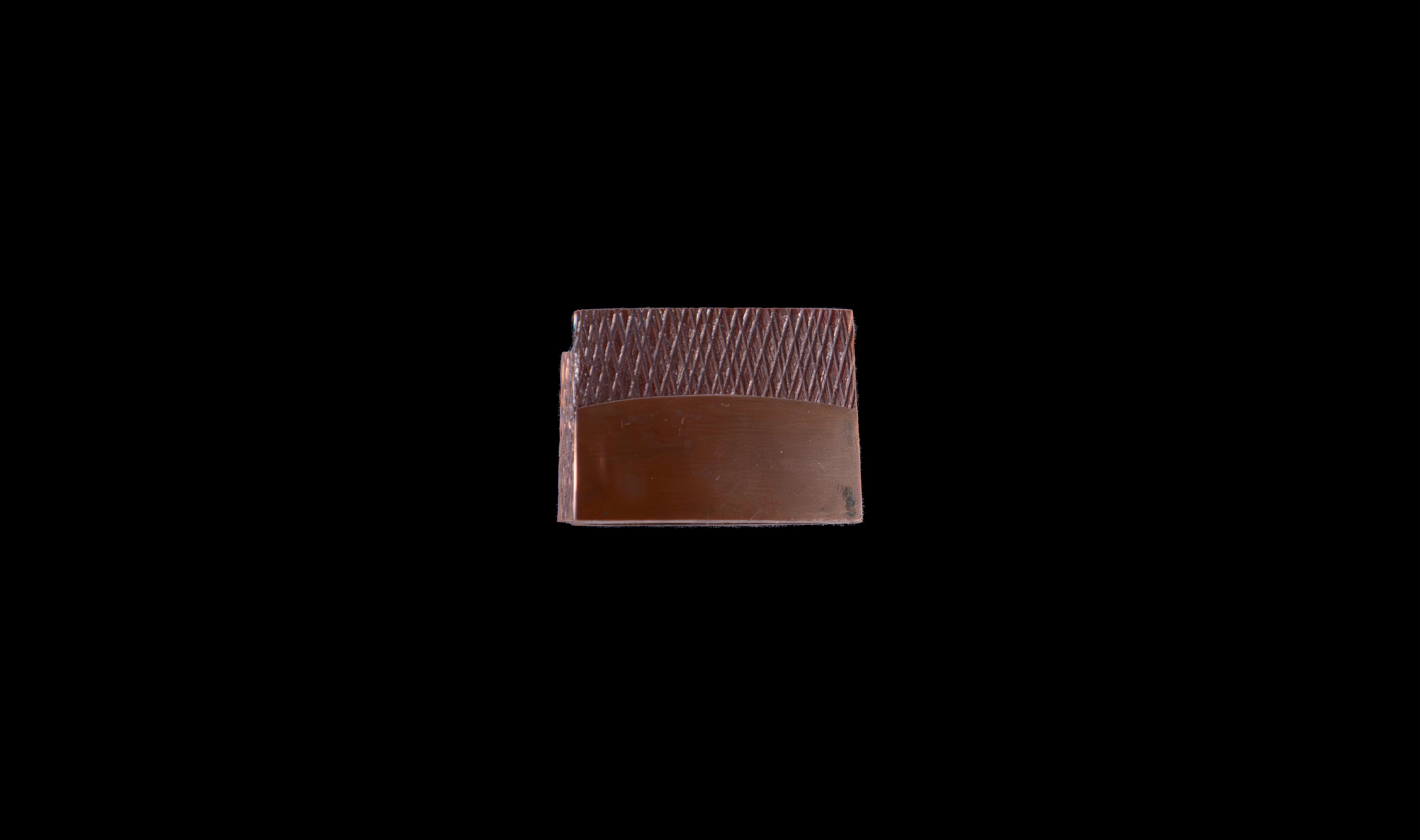
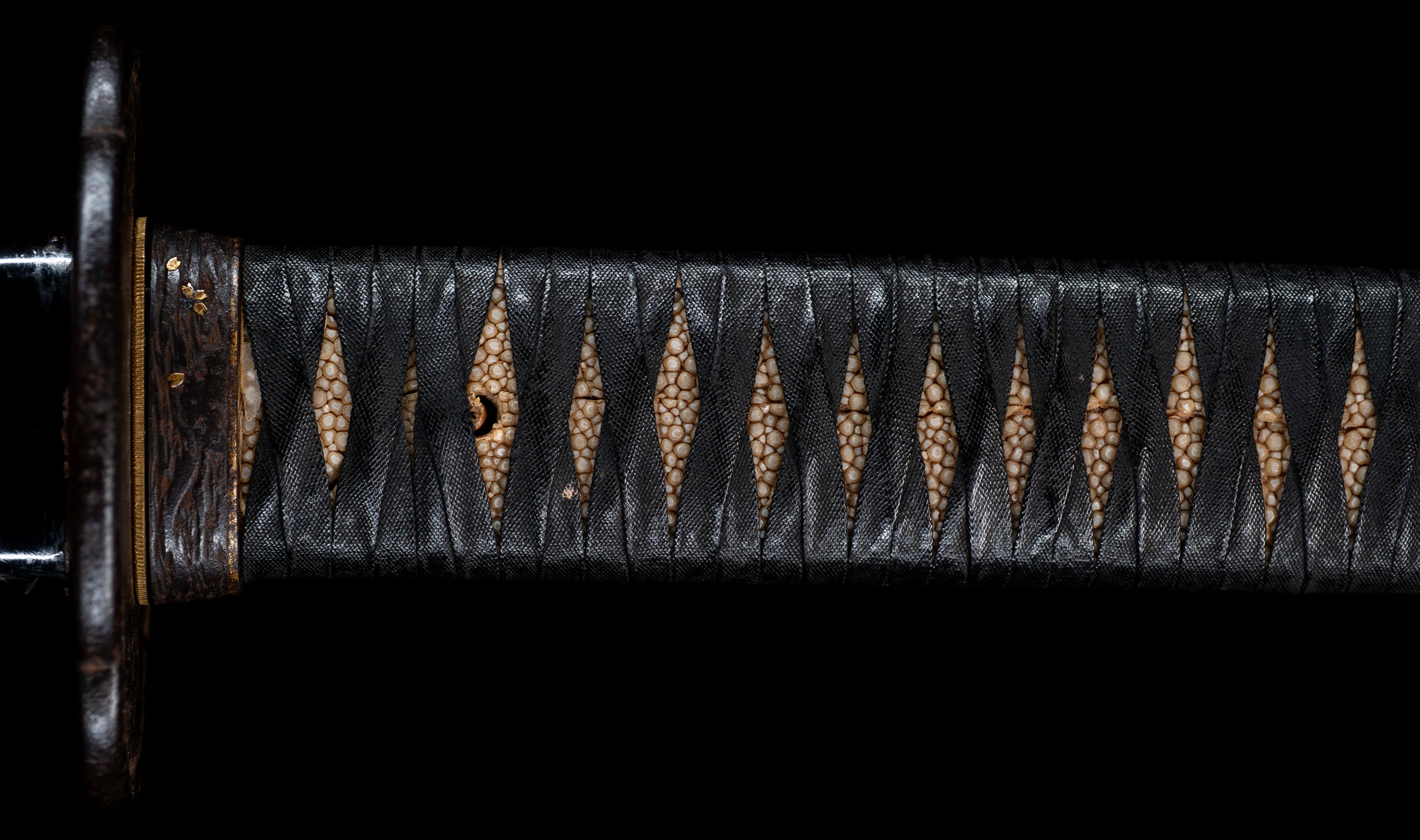
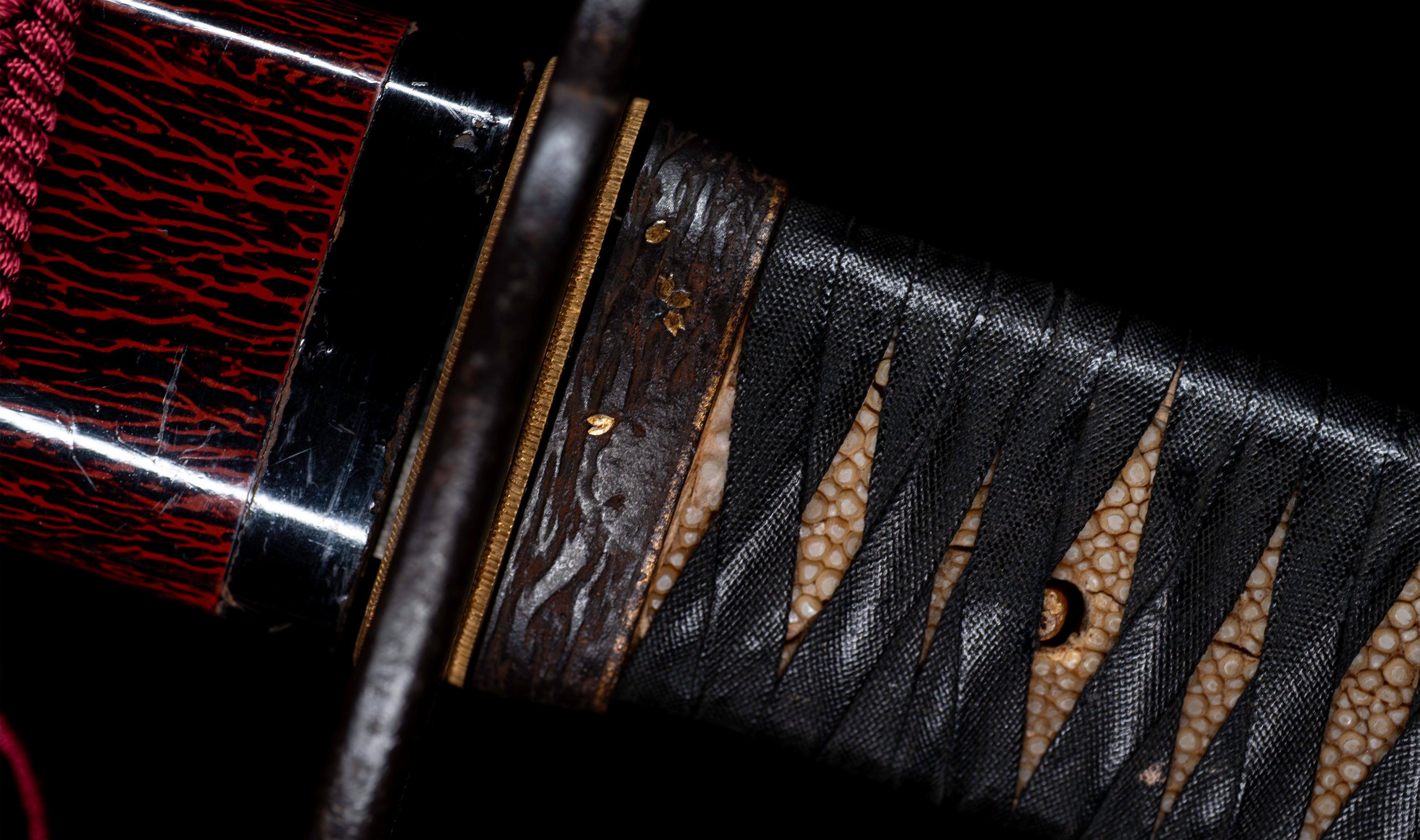
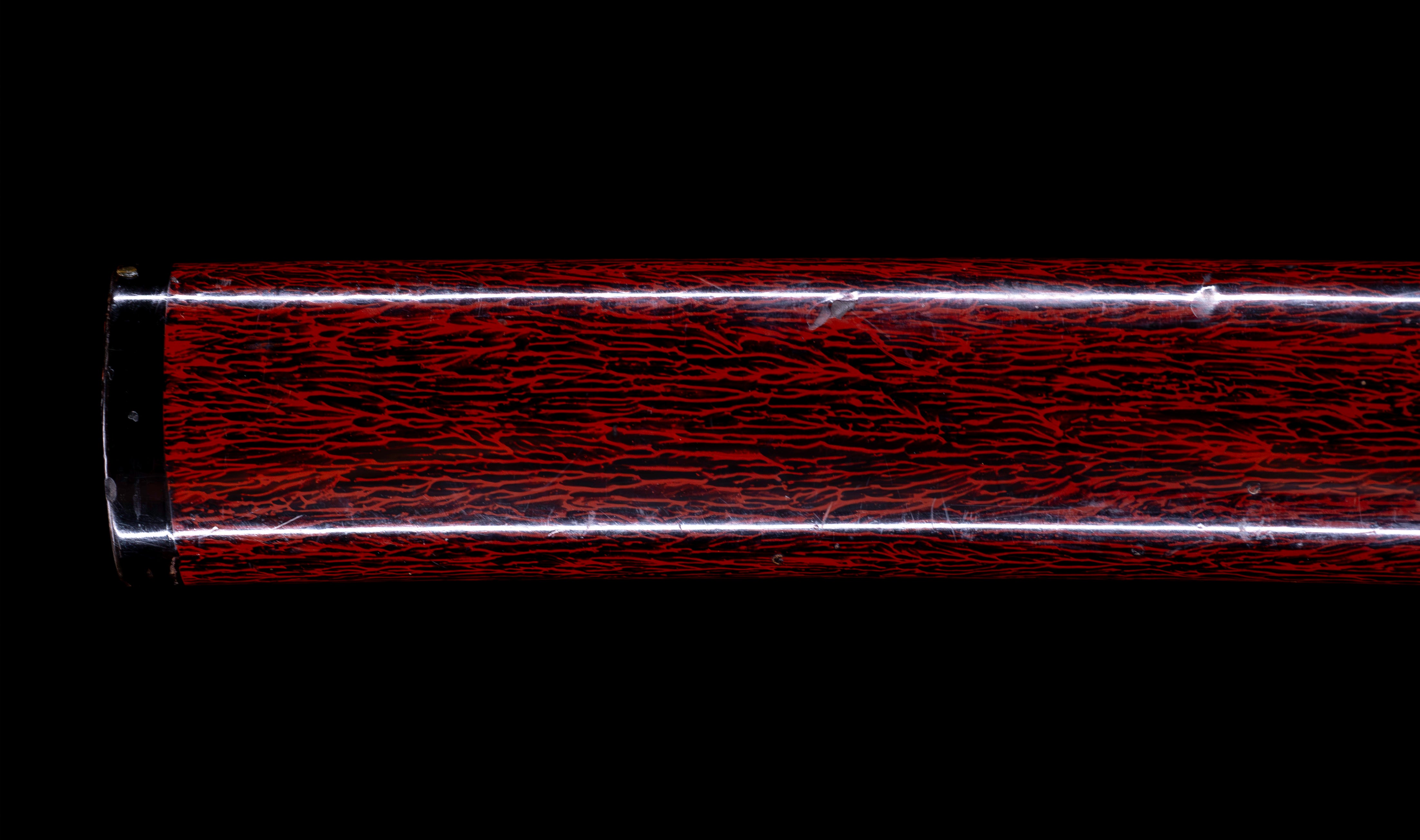
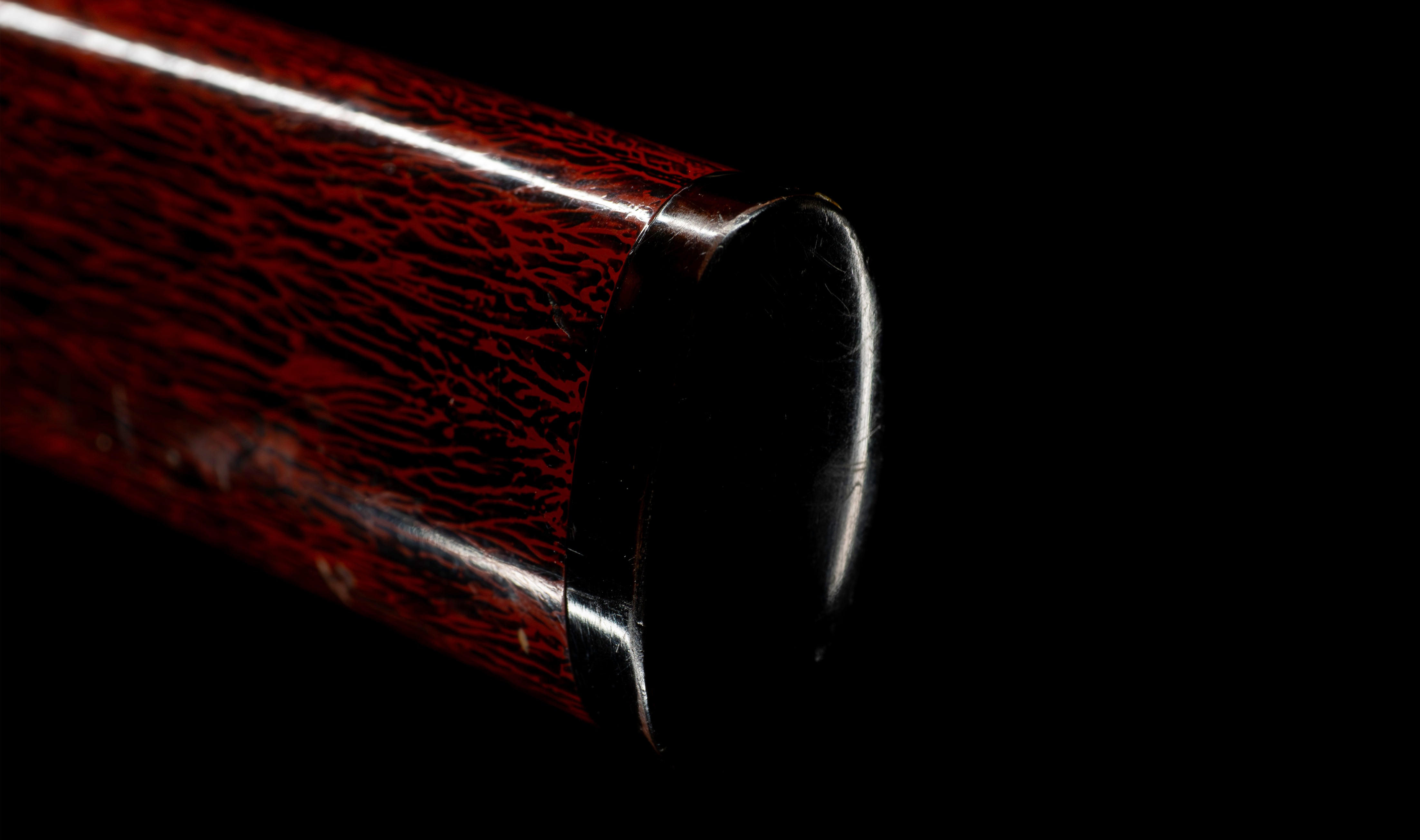
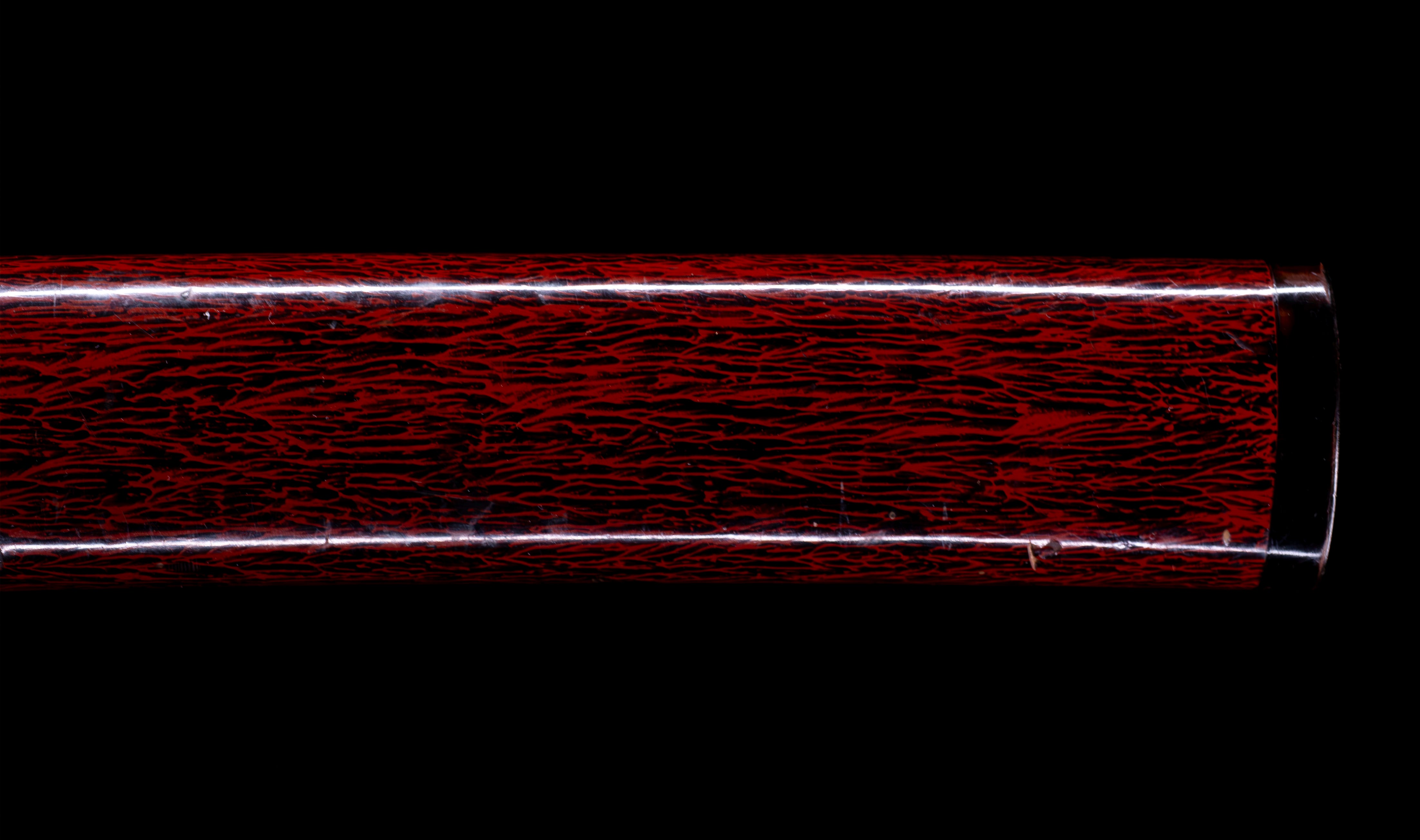
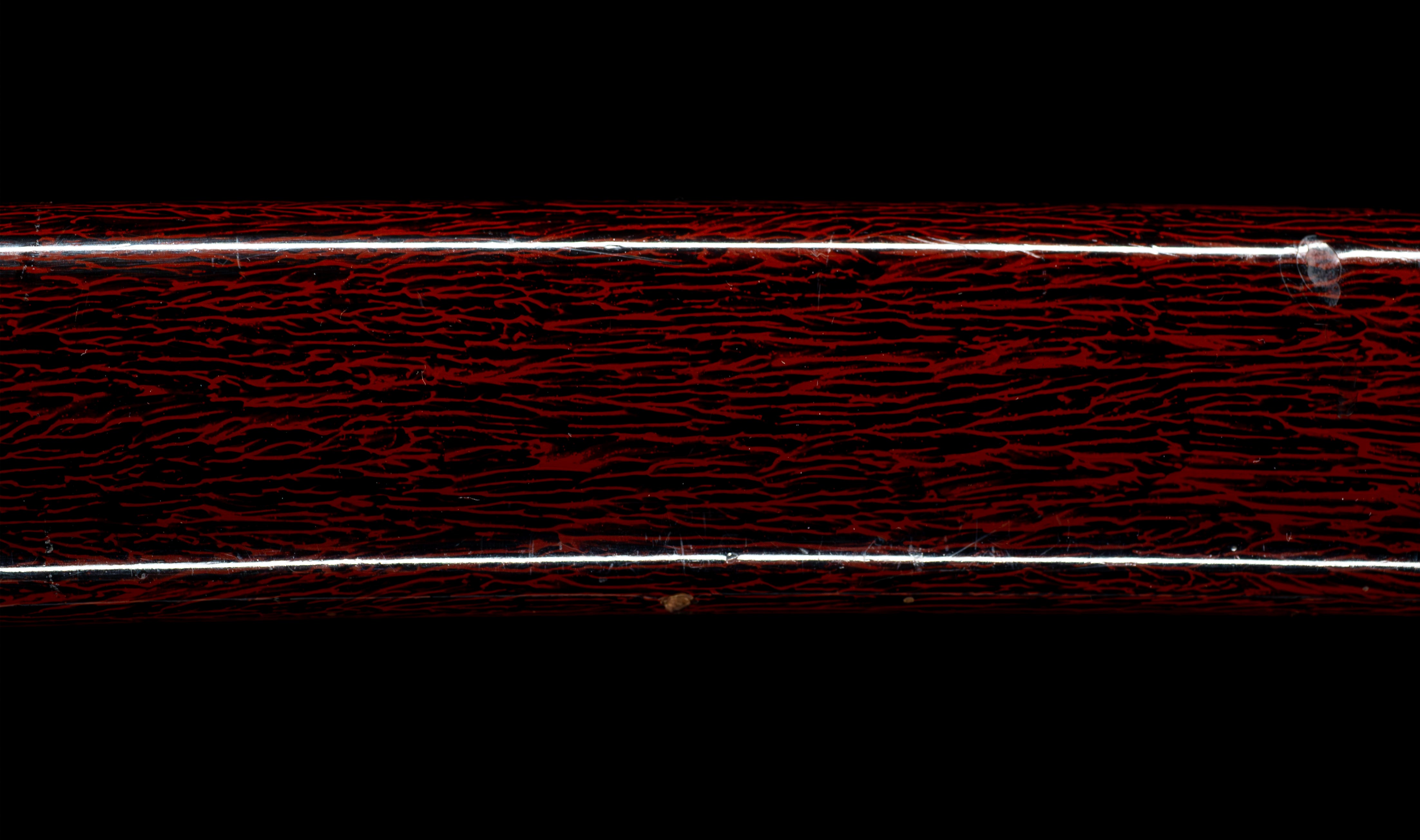
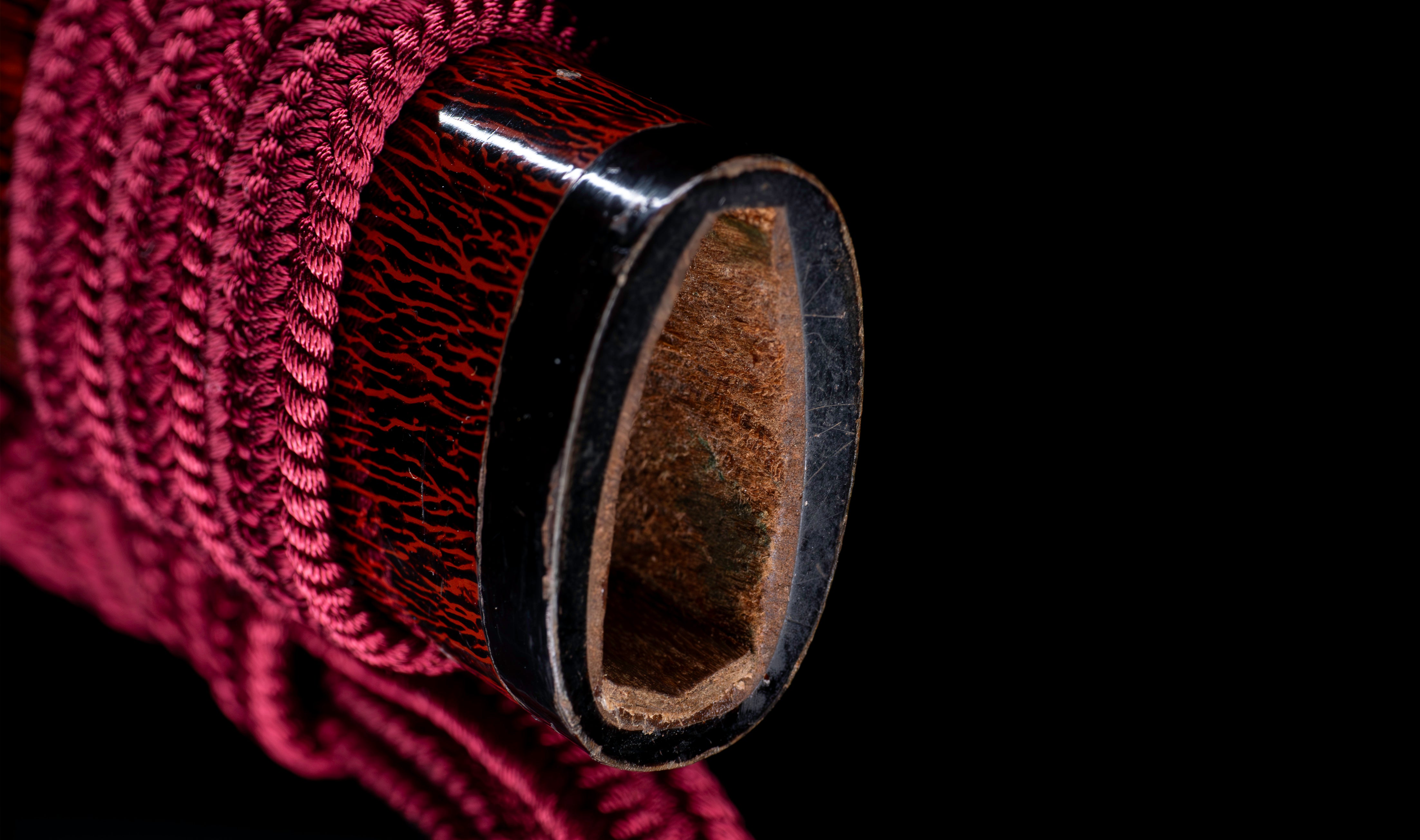
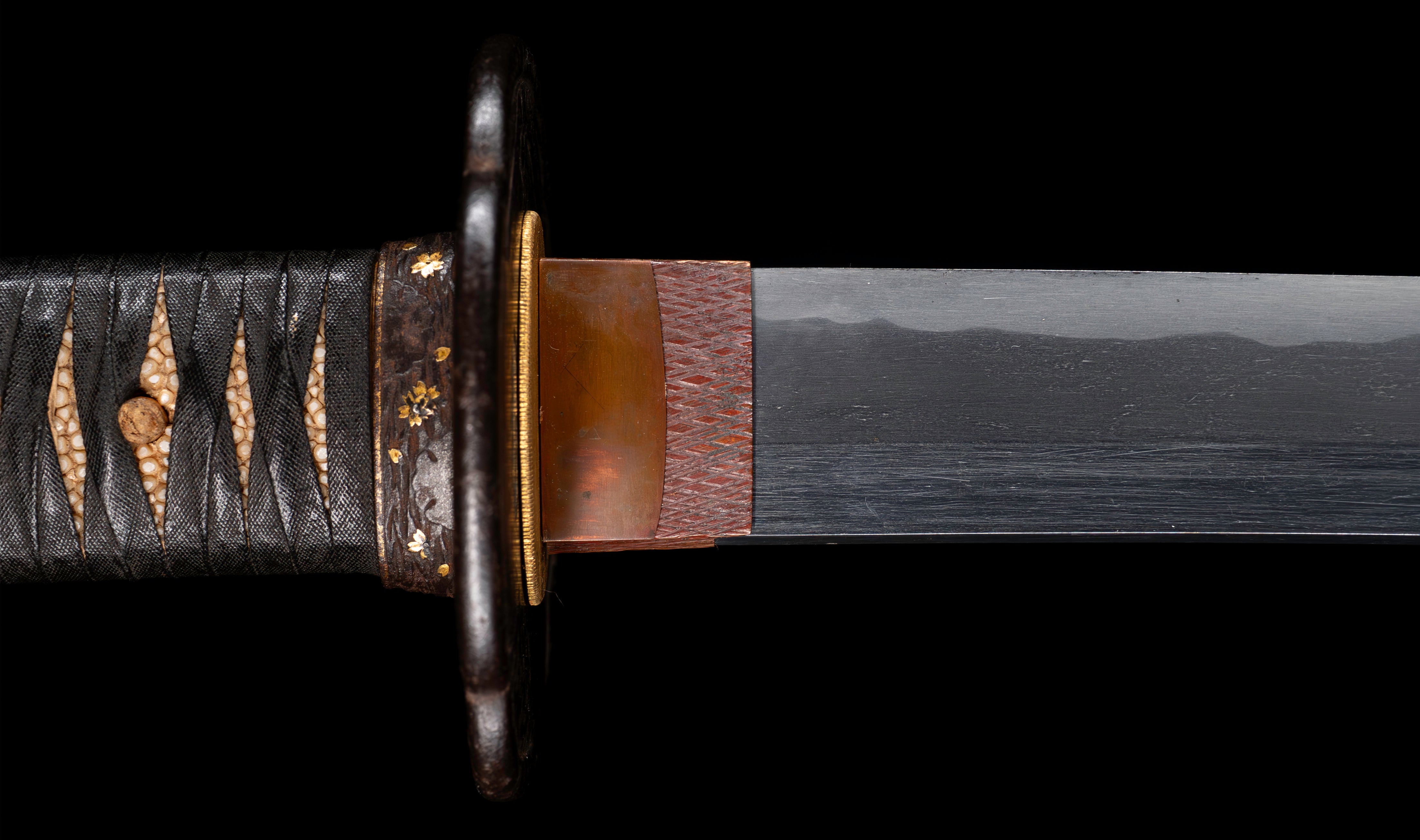
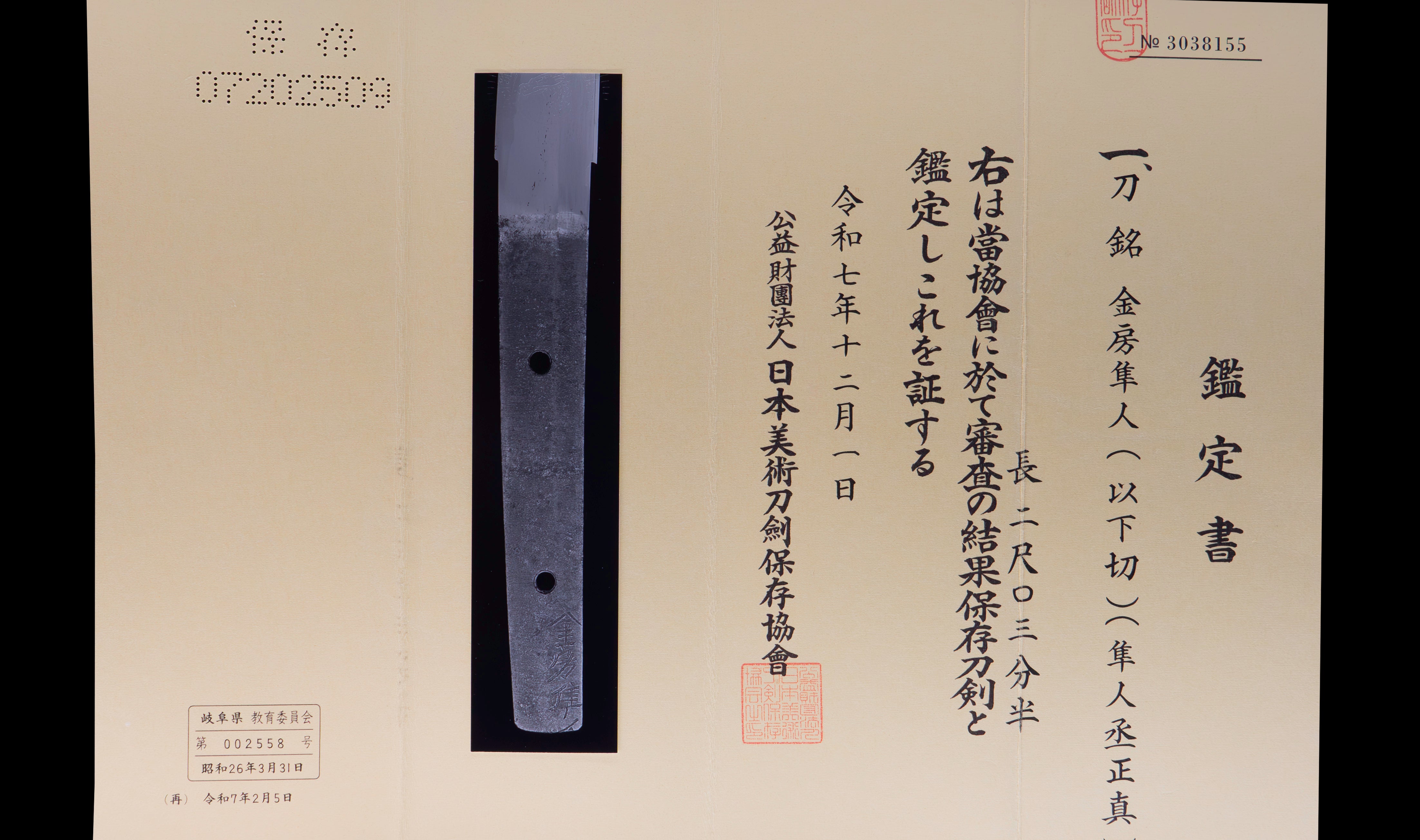
A signed katana by Kanabō Hayato no Jō Masazane 金房隼人丞正真, the best-known name of the Kanabō school of Nara, papered NBTHK Hozon in December 2025. The blade measures 61.7 cm with 1.4 cm of curvature and remains in a complete, recently restored period mounting. The signature survives on the omote of the tang as 金房隼人, cut just above the tip. The rest of the inscription disappeared when the blade was shortened, which the NBTHK records as ika kiri (以下切, "cut below"), before reading the full name as 隼人丞正真. That kind of partially surviving signature is typical of late Muromachi blades that stayed in service and were adapted to the fighting style of the following generation. The shape is a shinogi-zukuri katana with an iori-mune and a chū-kissaki. At 61.7 cm and with a shallow curvature, it has the compact, quick profile of the uchigatana carried in the late 16th century, when swords were drawn and used with one hand as often as two. The hamon is the main event: a lively gunome-midare mixed with notare and pointed elements, in nie-deki, with ashi running down into the edge and streaks of sunagashi through the nie. It continues into the point as midare-komi and turns back in a ko-maru. This is the Mino-influenced, practical temper the Kanabō smiths were known for, rather than the quiet straight temper of older Yamato work. The steel is an itame mixed with mokume, with masame flowing along the shinogi-ji and visible ji-nie, the standing, slightly open grain typical of late Yamato forging. The tang carries a deep, even age patina and two mekugi-ana. Koshirae Details The saya is the first thing anyone sees: a striking red-and-black textured lacquer that reads like the grain of weathered wood, finished with black horn koiguchi, kurigata and kojiri, and dressed with a deep crimson sageo. The tsuba is iron, in a four-lobed mokkō shape, with a dark, dense patina and fine engraving worn soft by age; what appears to be a dragonfly (tombo) is engraved at the top of one face. Dragonflies were a favourite samurai emblem, the kachi-mushi or "victory insect", because they only fly forward. Both hitsu-ana are plugged and copper sekigane sit in the central opening. An engraved inscription is visible beside the seppa-dai but is too worn to read. The fuchi and kashira are a matching pair, dark metal carved to imitate rough tree bark, scattered with falling cherry blossoms in gold. The menuki are gold chrysanthemums with leaves, set under a black silk wrap in hineri-maki over white same, with a prominent oyatsubu nodule on the omote. The wrap and the lacquer are in excellent, fresh condition, a professional modern restoration built around genuine Edo-period metal fittings. The habaki is single-piece copper filed with diagonal yasurime, and the pair of seppa have coin-edge filing. The Swordsmith: Kanabō Hayato no Jō Masazane 金房隼人丞正真 Masazane is the leading name of the Kanabō school, a group of smiths who lived in the Kanabō-tsuji 金房辻 district of Nara, in front of Kōfuku-ji, and took the name of the street as their family name. He signed with the court title Hayato no Jō (also written Hayato no Suke), and his known signatures include 南都住金房隼人丞正真作, "made by Kanabō Hayato no Jō Masazane, resident of Nanto (Nara)". Japanese references place the first Masazane around the Tenbun era (1532–1555), with a second generation of the same name recorded around Tenshō (1573–1592). The NBTHK certificate attributes this blade to Hayato no Jō Masazane without naming a generation, and we do not claim one. The Kanabō smiths are remembered above all for their spears. Their yari and cross-bladed jūmonji-yari armed the warrior monks of the Hōzō-in, the temple that gave its name to one of the most famous spear schools in Japanese history, and many Sengoku warlords besides. Their katana are less common and are valued for the same qualities: sturdy, sharp, made to be used. The Kanabō School and Late Yamato Yamato, the old Nara region, is the oldest of the five classical sword traditions, built around the great temples and their armed monks. Its classic style is conservative: straight grain, a restrained straight temper. The Kanabō school, which appears in the early 16th century, broke with that convention. Working for temple forces and warlords in the middle of the Sengoku wars, its smiths borrowed freely from the Mino and Bizen traditions and produced practical, hard-cutting blades with active gunome tempers. This katana shows exactly that mix: Yamato steel under a Mino-style hamon. What is offered here is a signed late Muromachi katana by Kanabō Hayato no Jō Masazane, papered NBTHK Hozon, registered in Japan since 1951, complete in a restored koshirae with a red textured-lacquer saya, sakura fuchi-kashira and gold chrysanthemum menuki.
Offered by Tokyo Nihonto
9 on the market
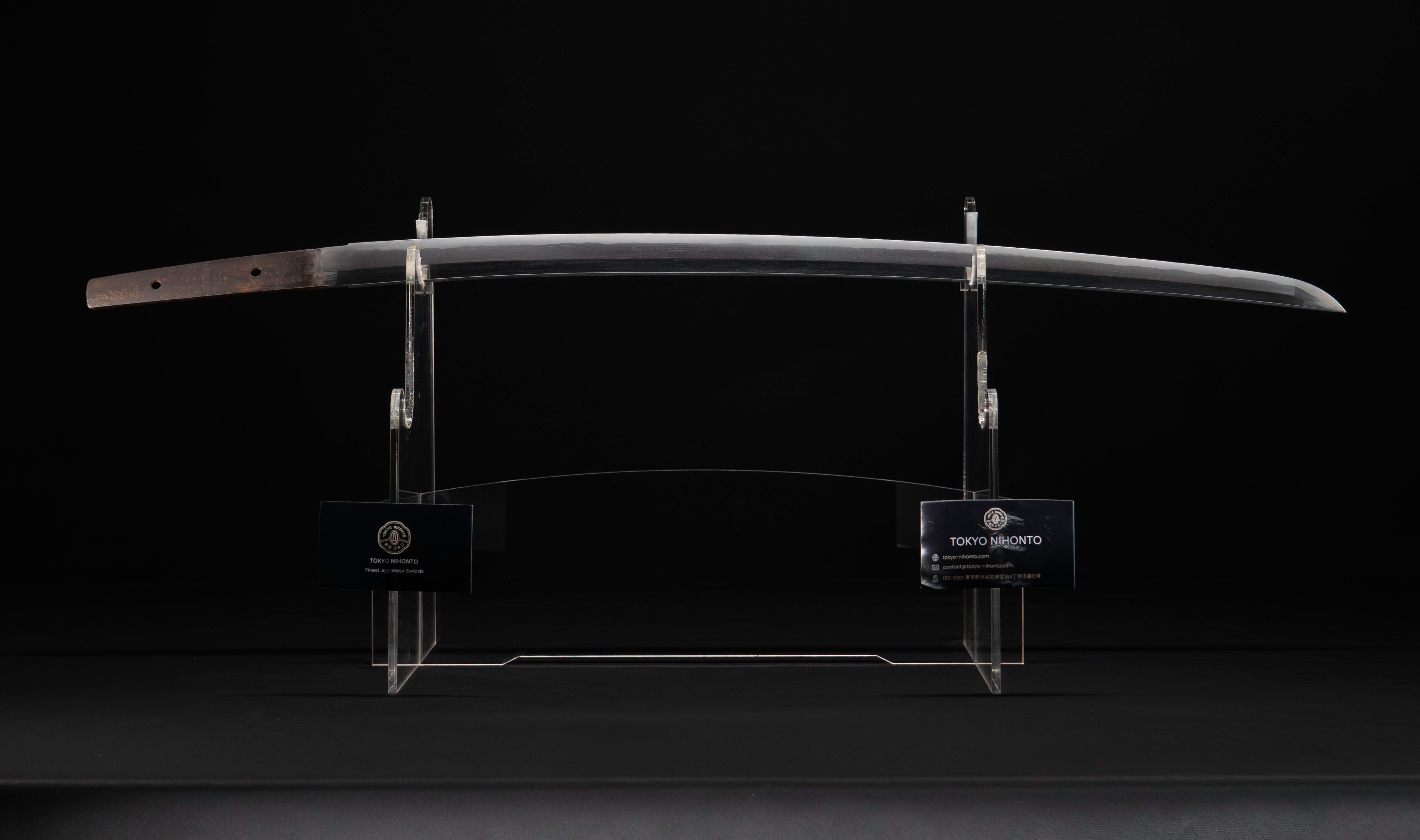
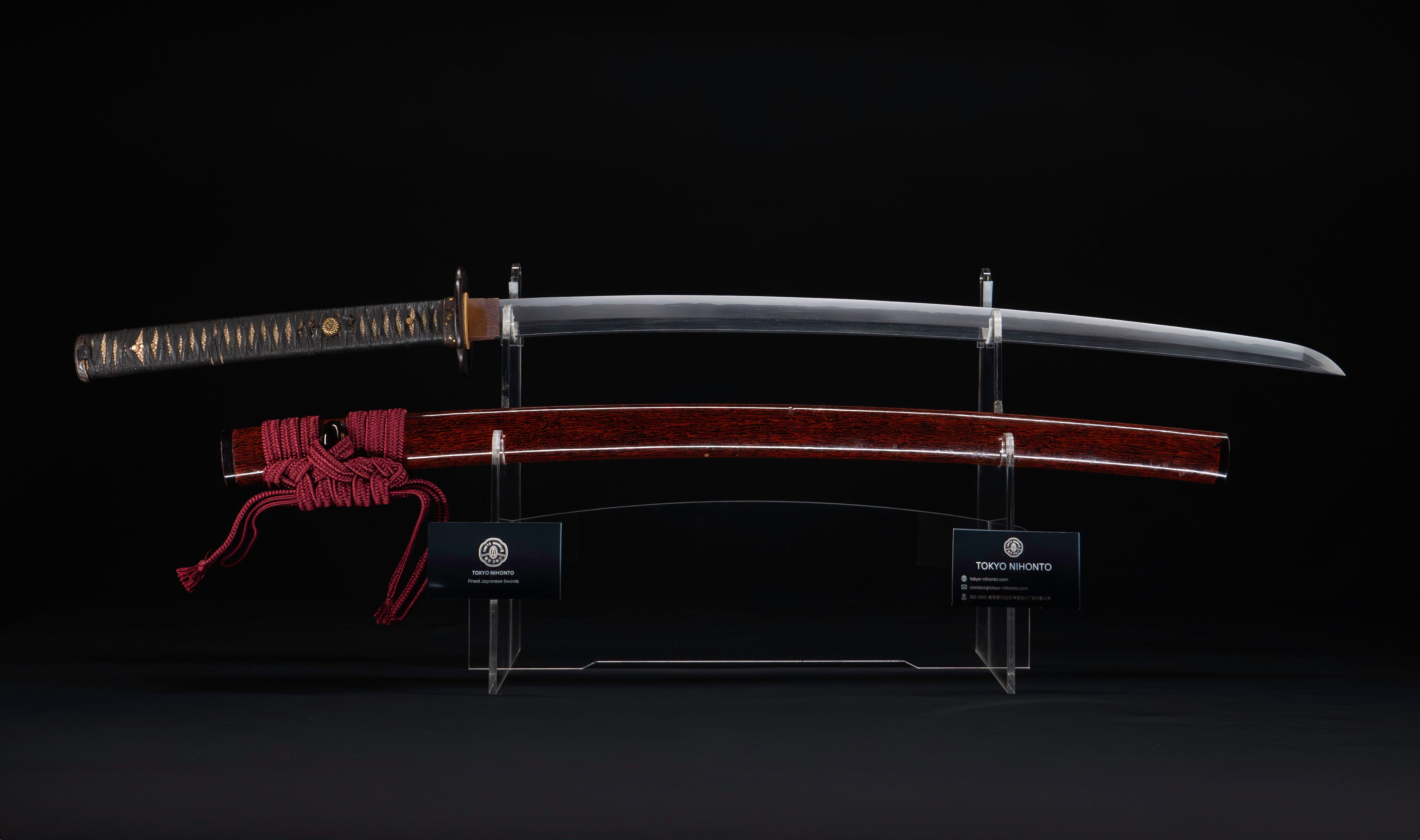
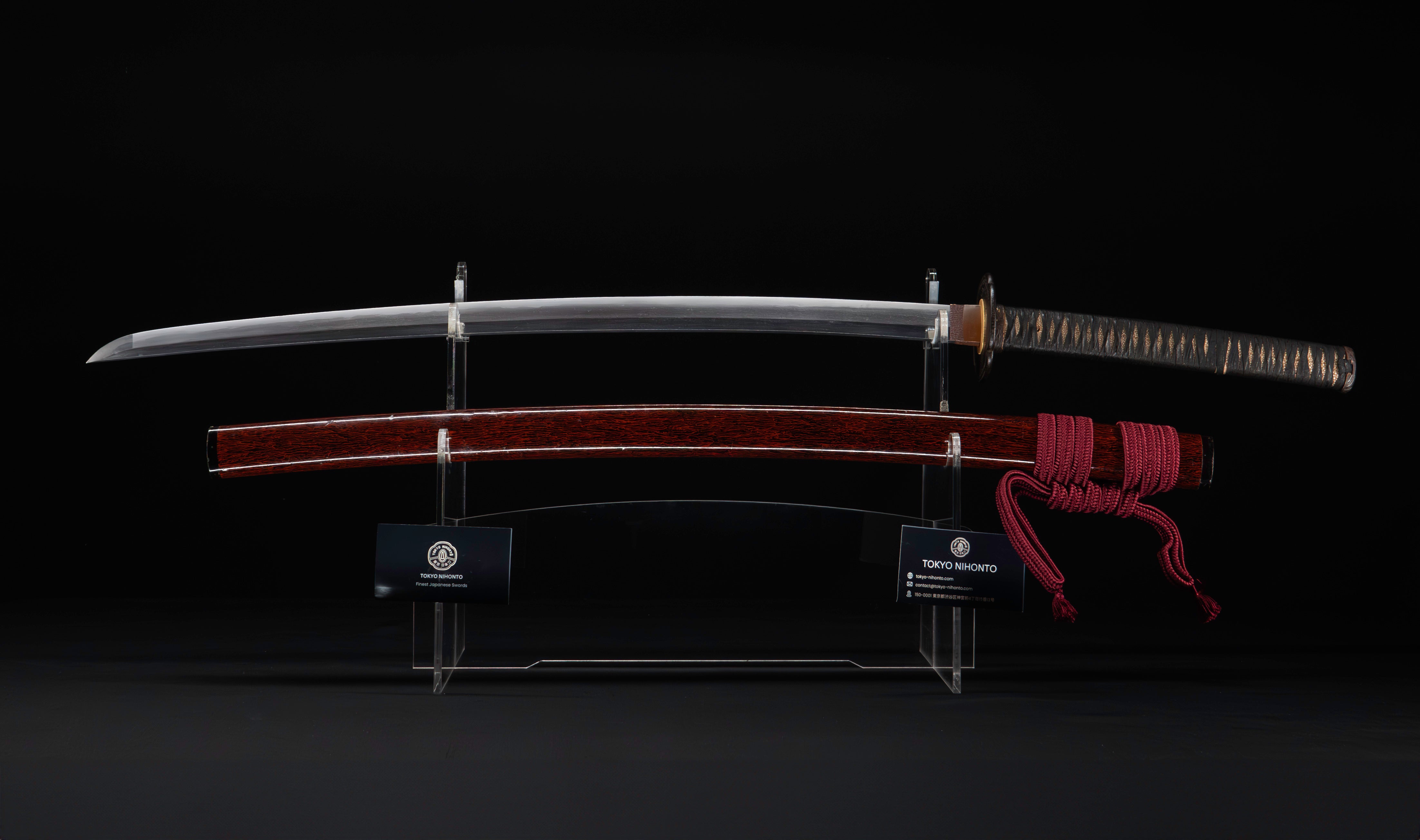
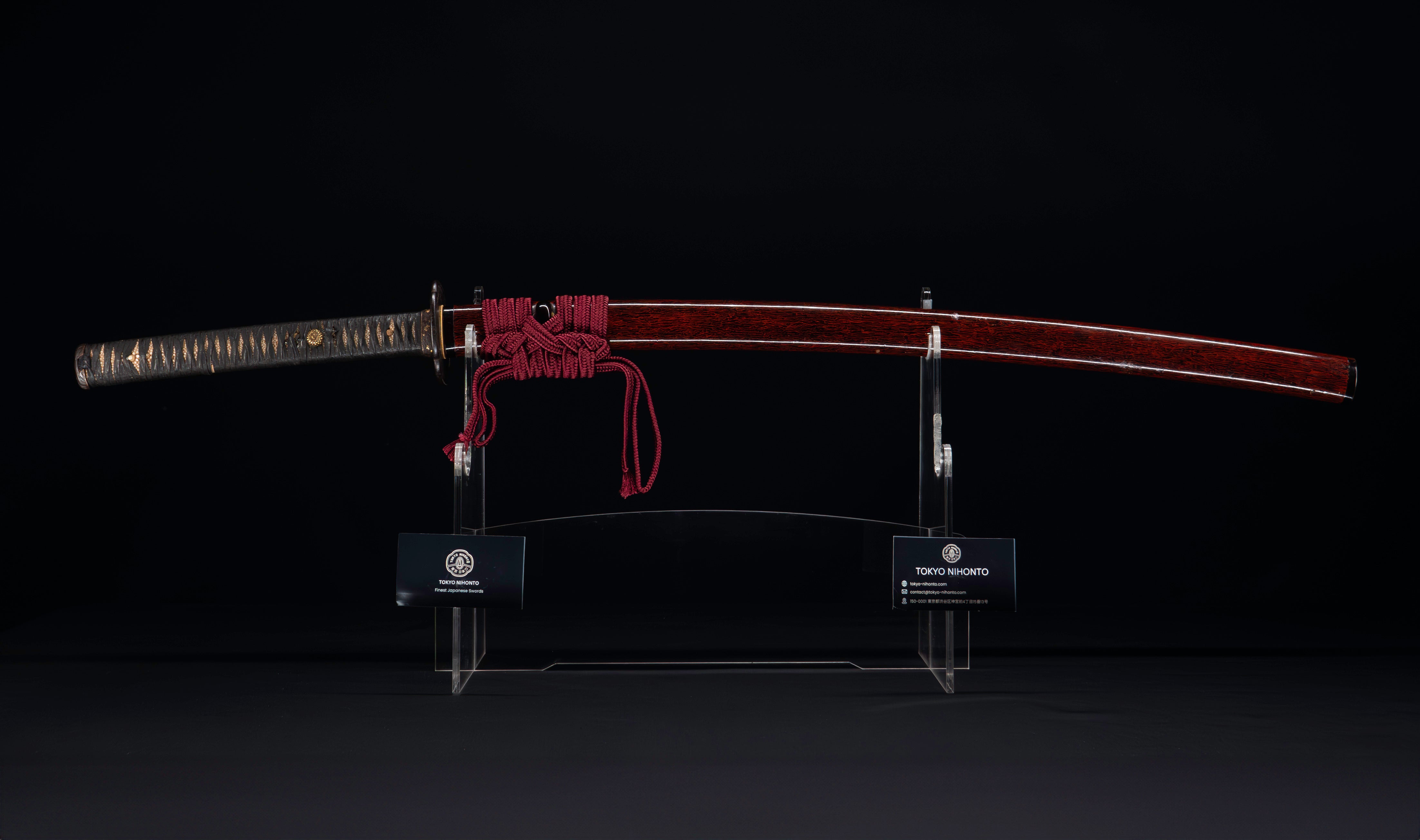
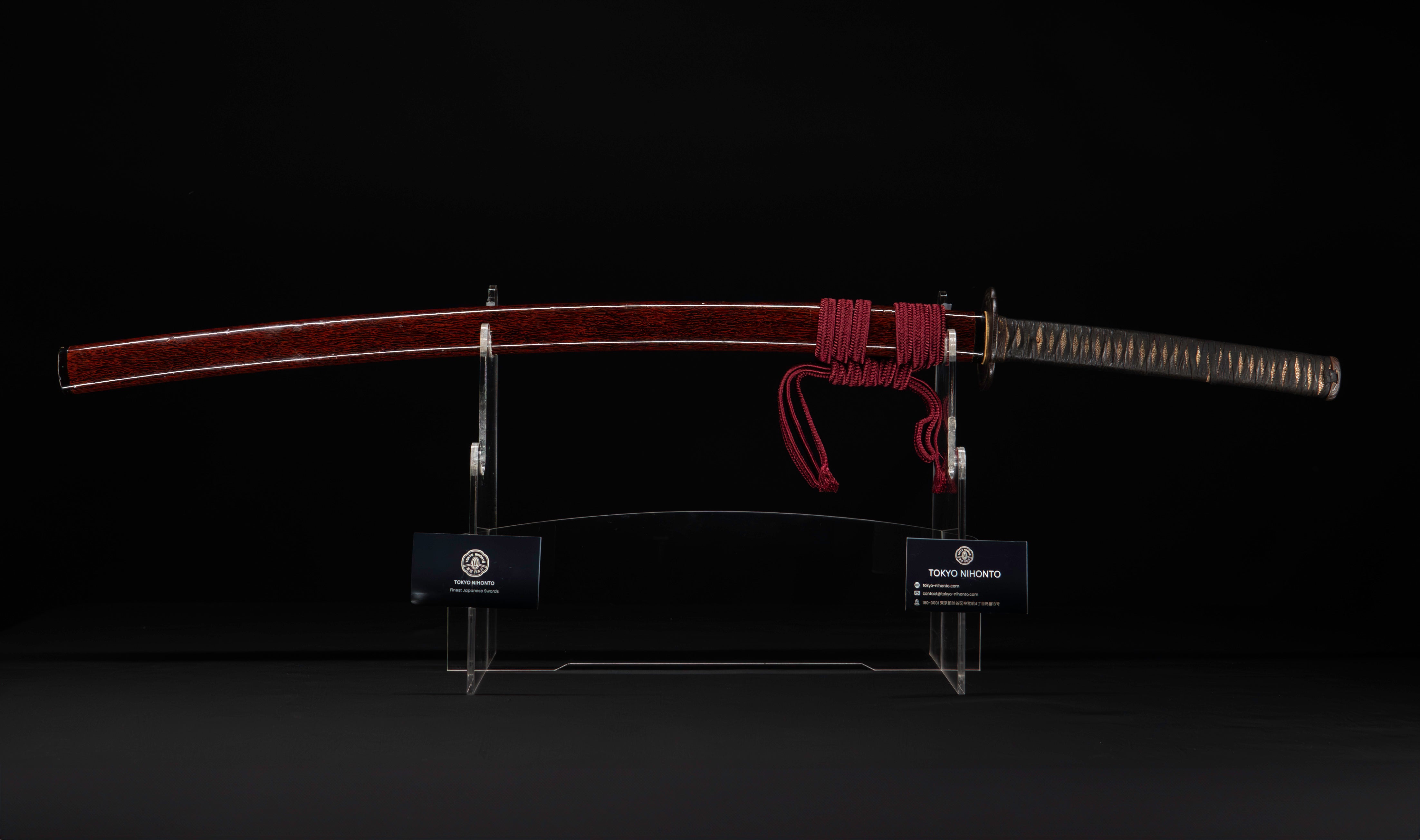
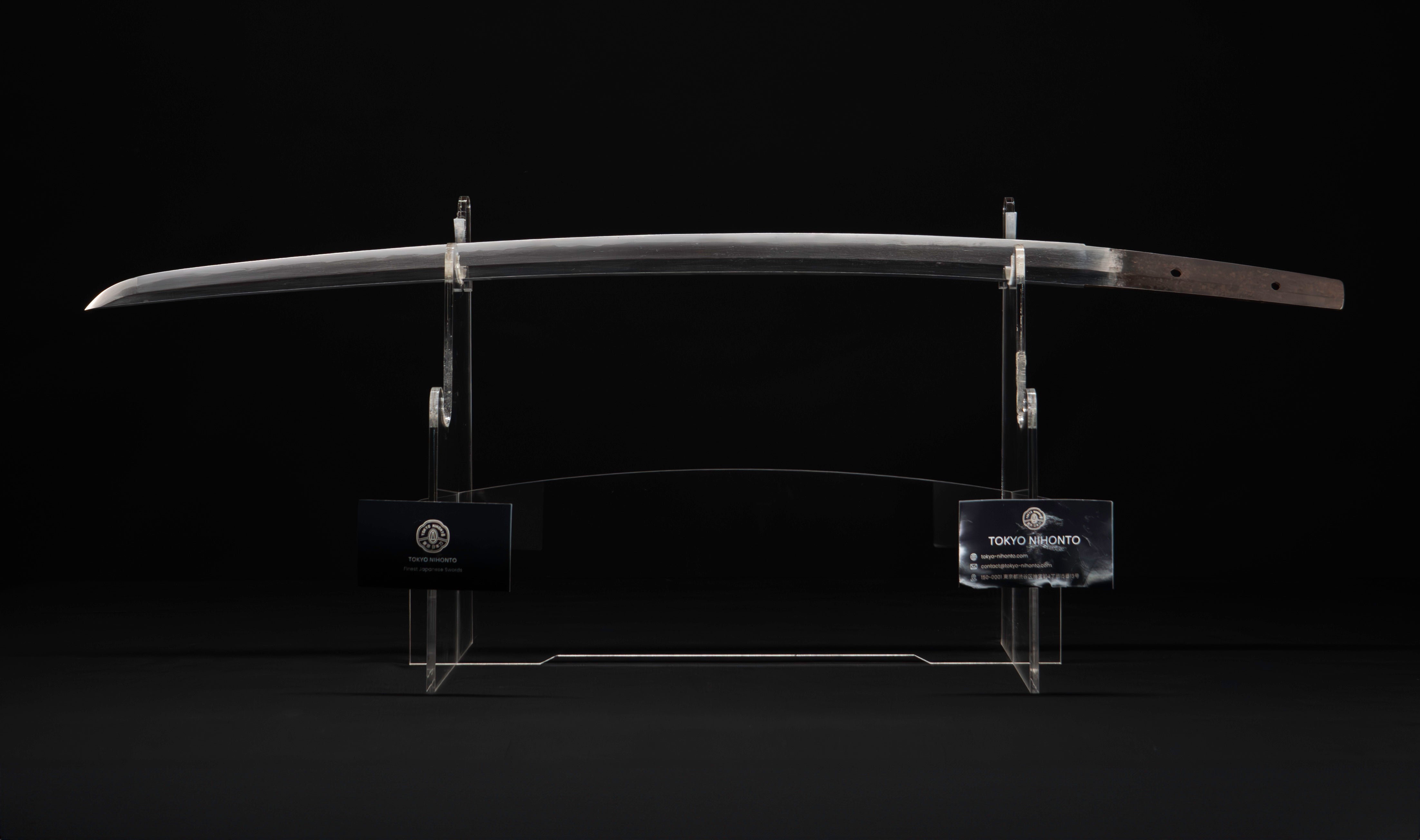
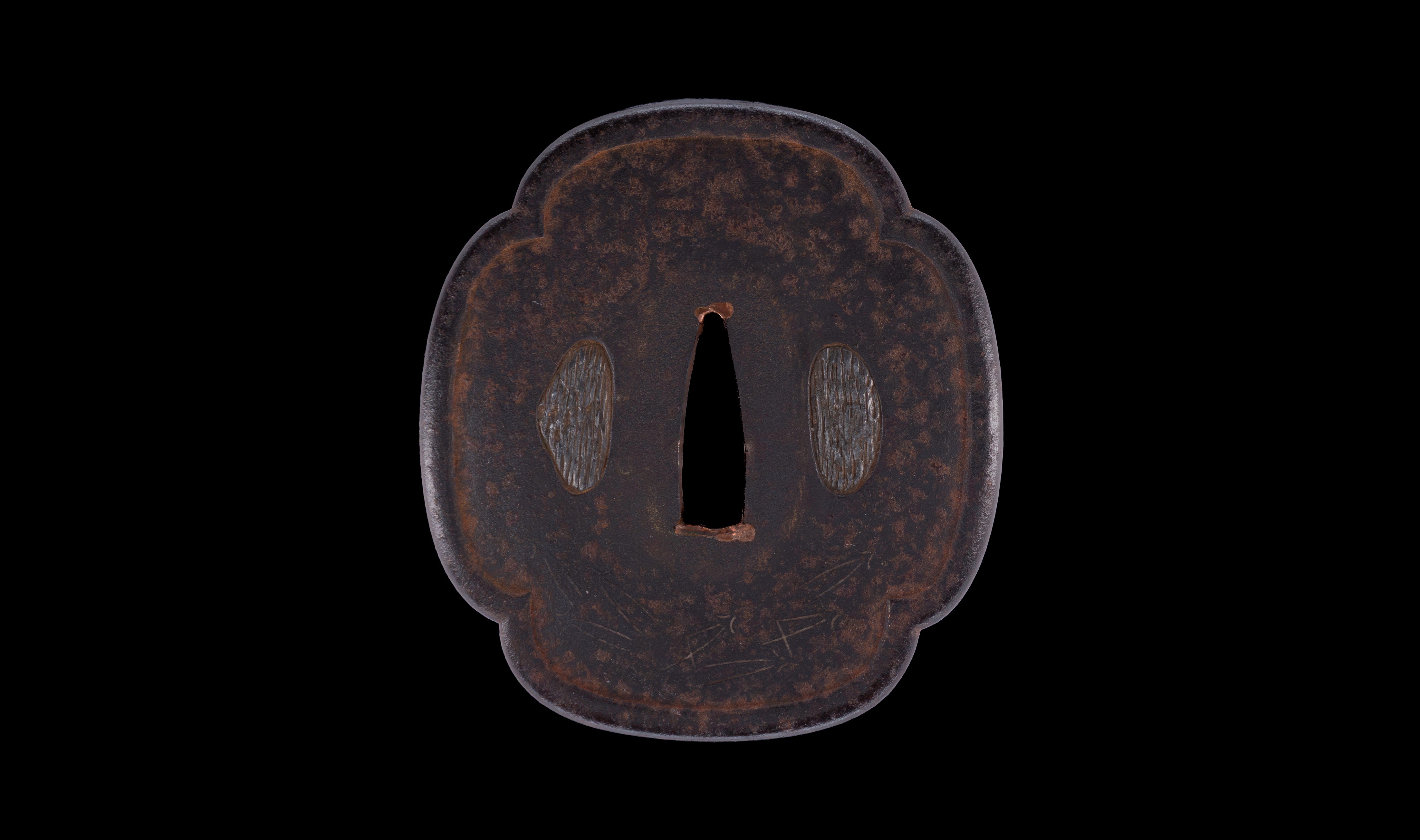
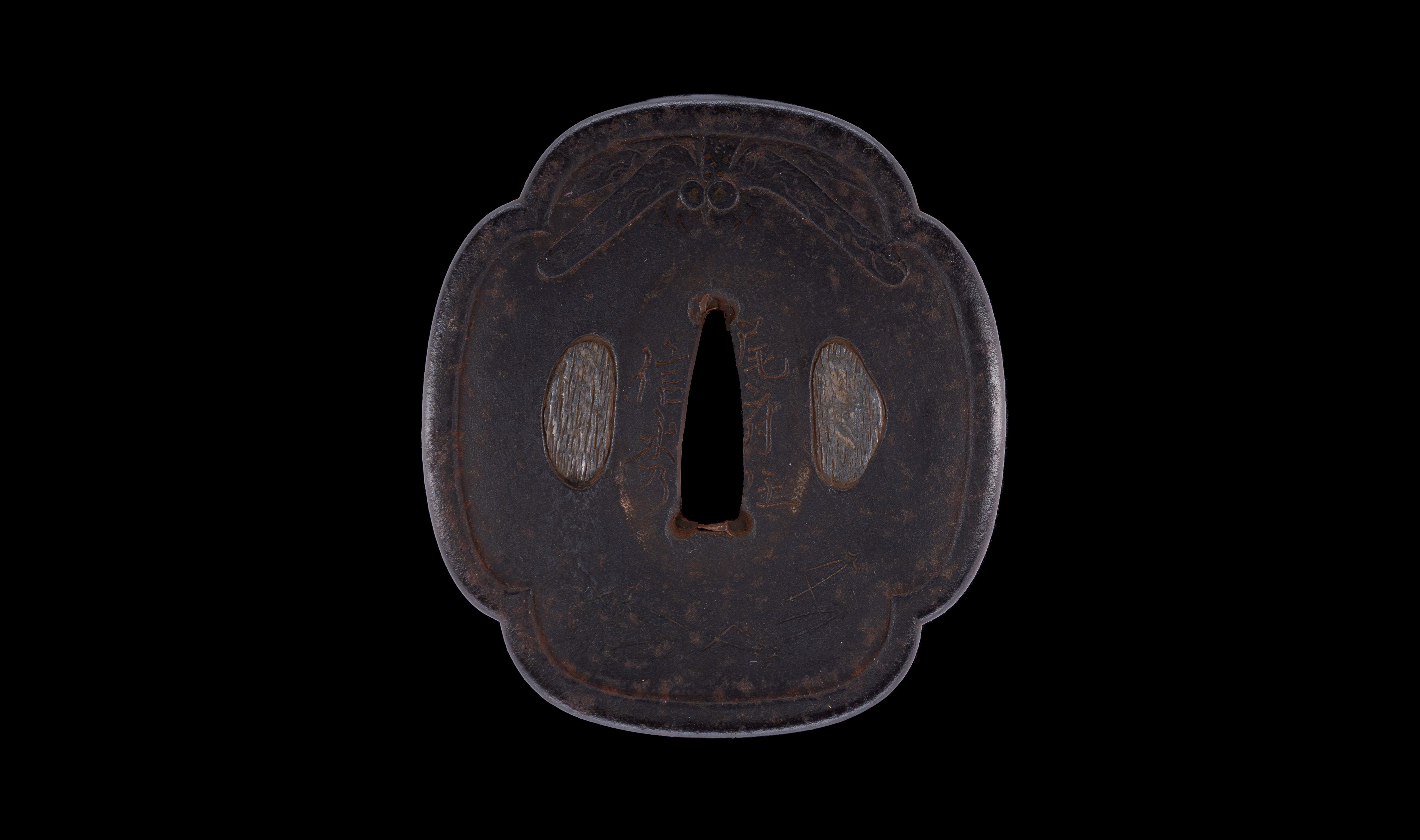
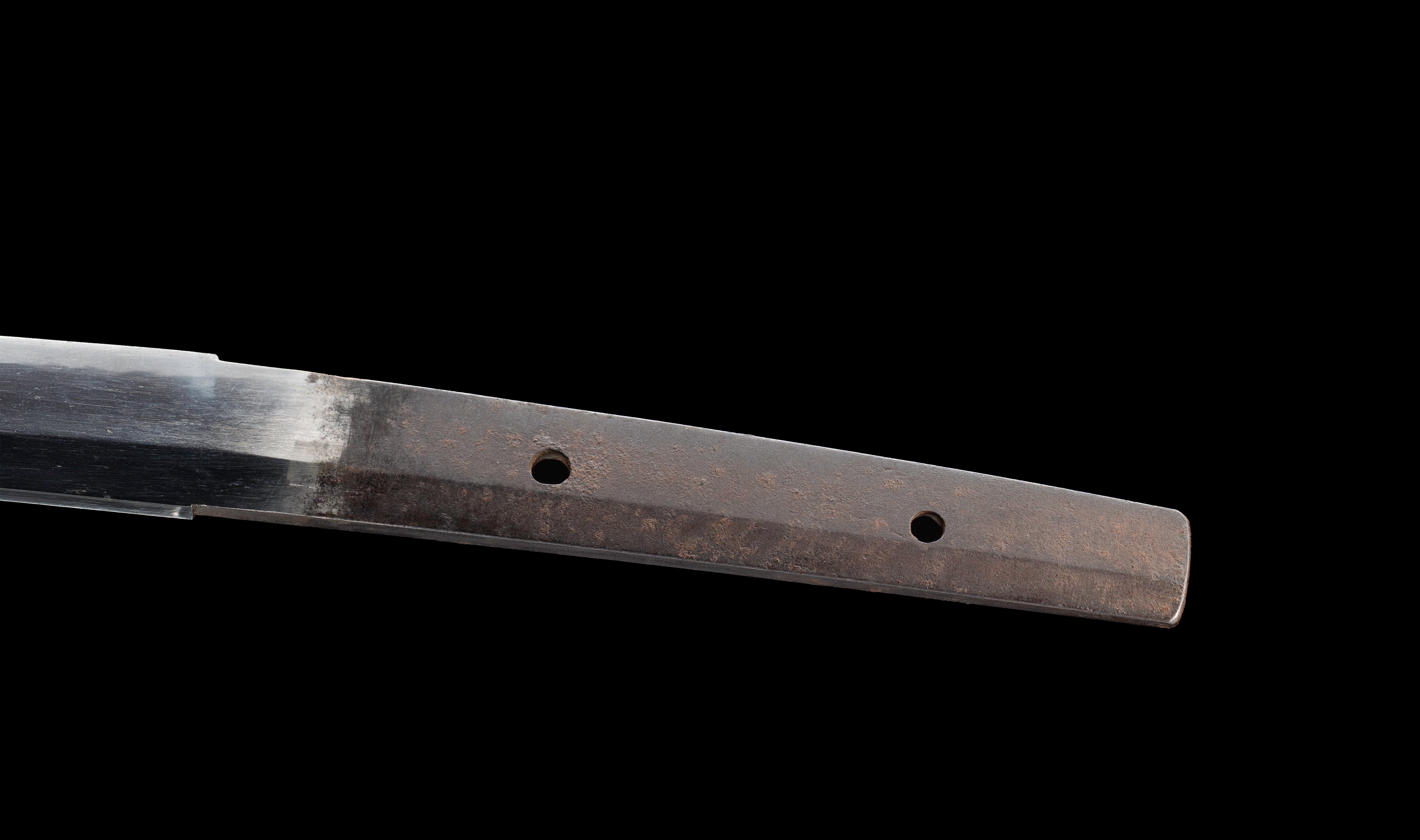
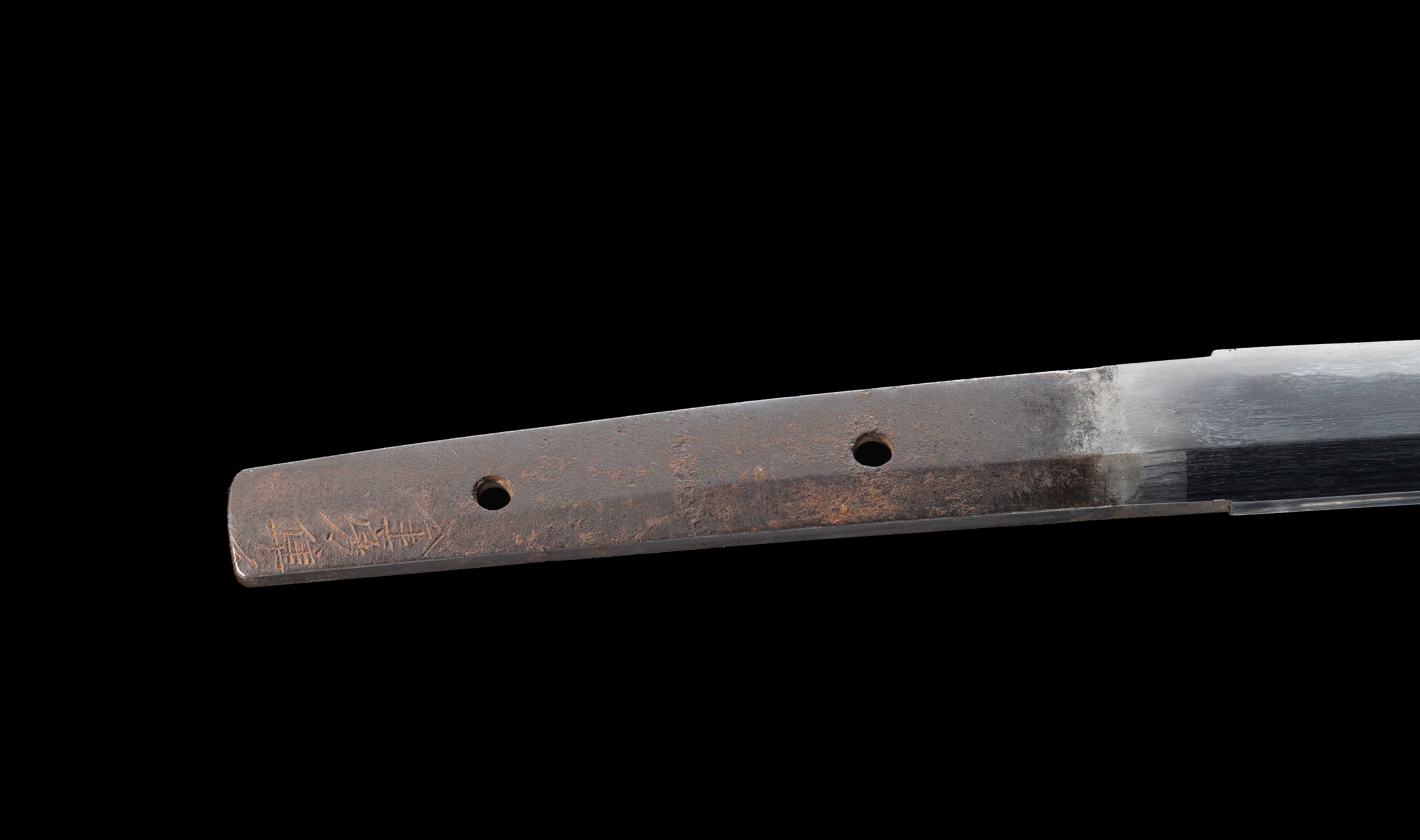
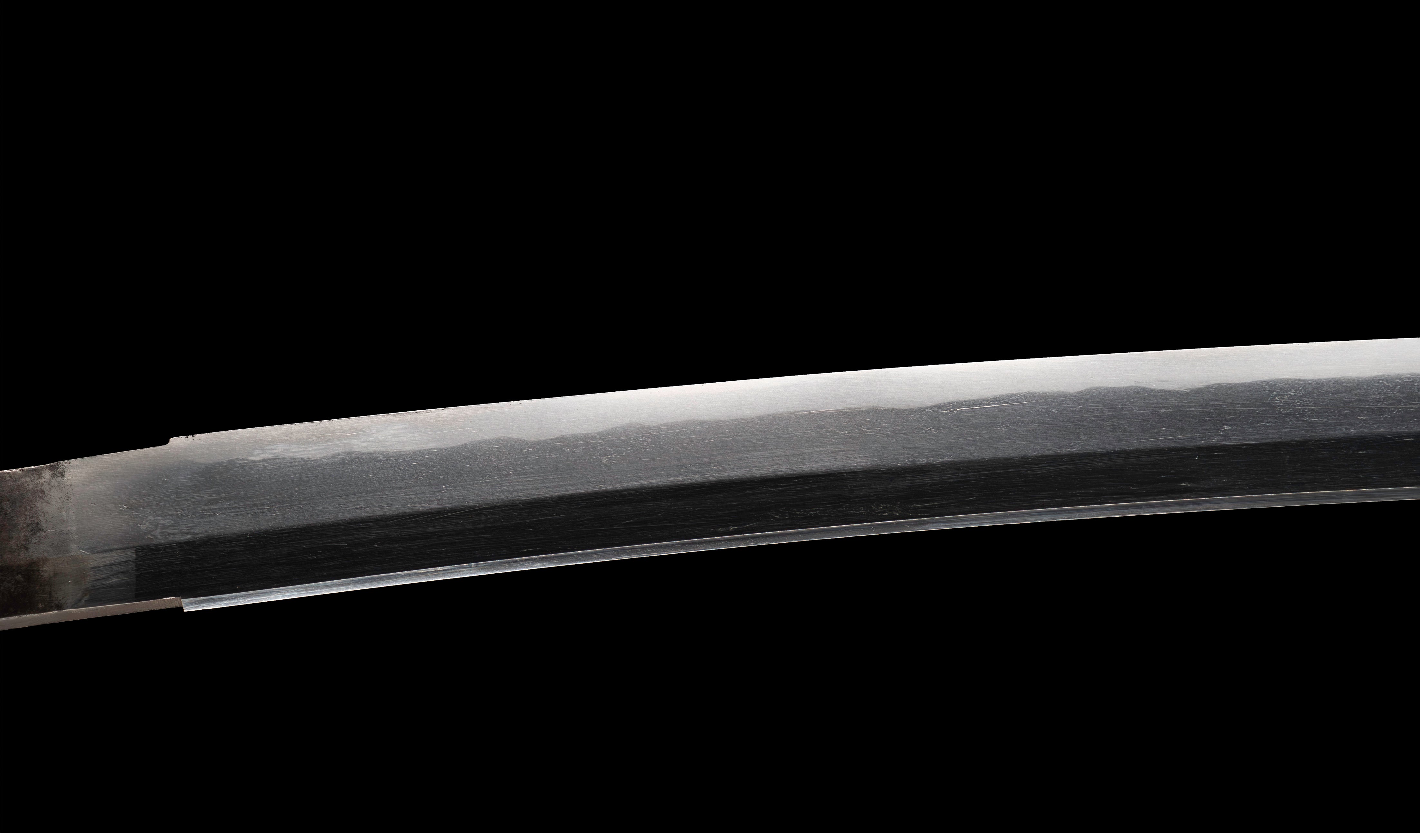
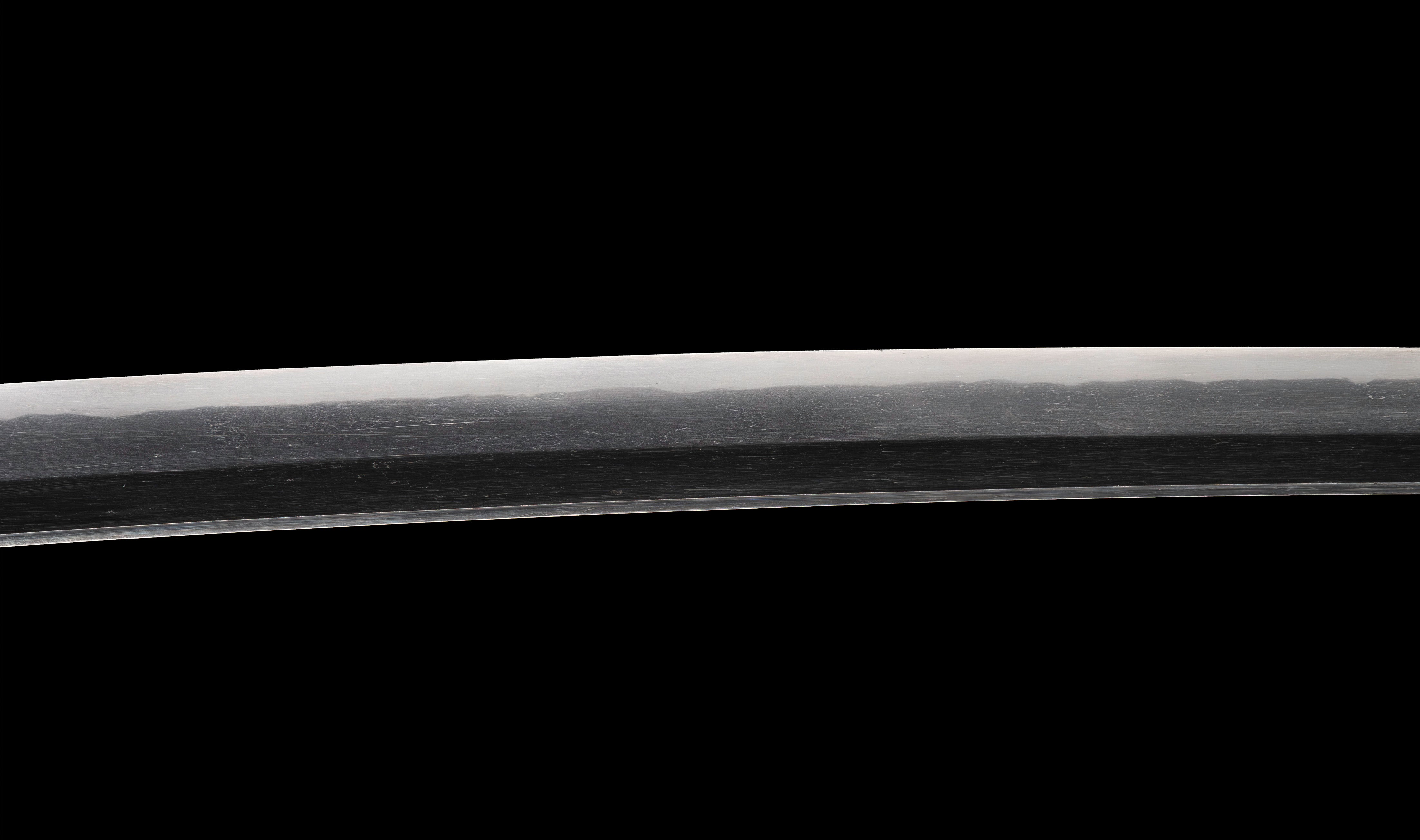
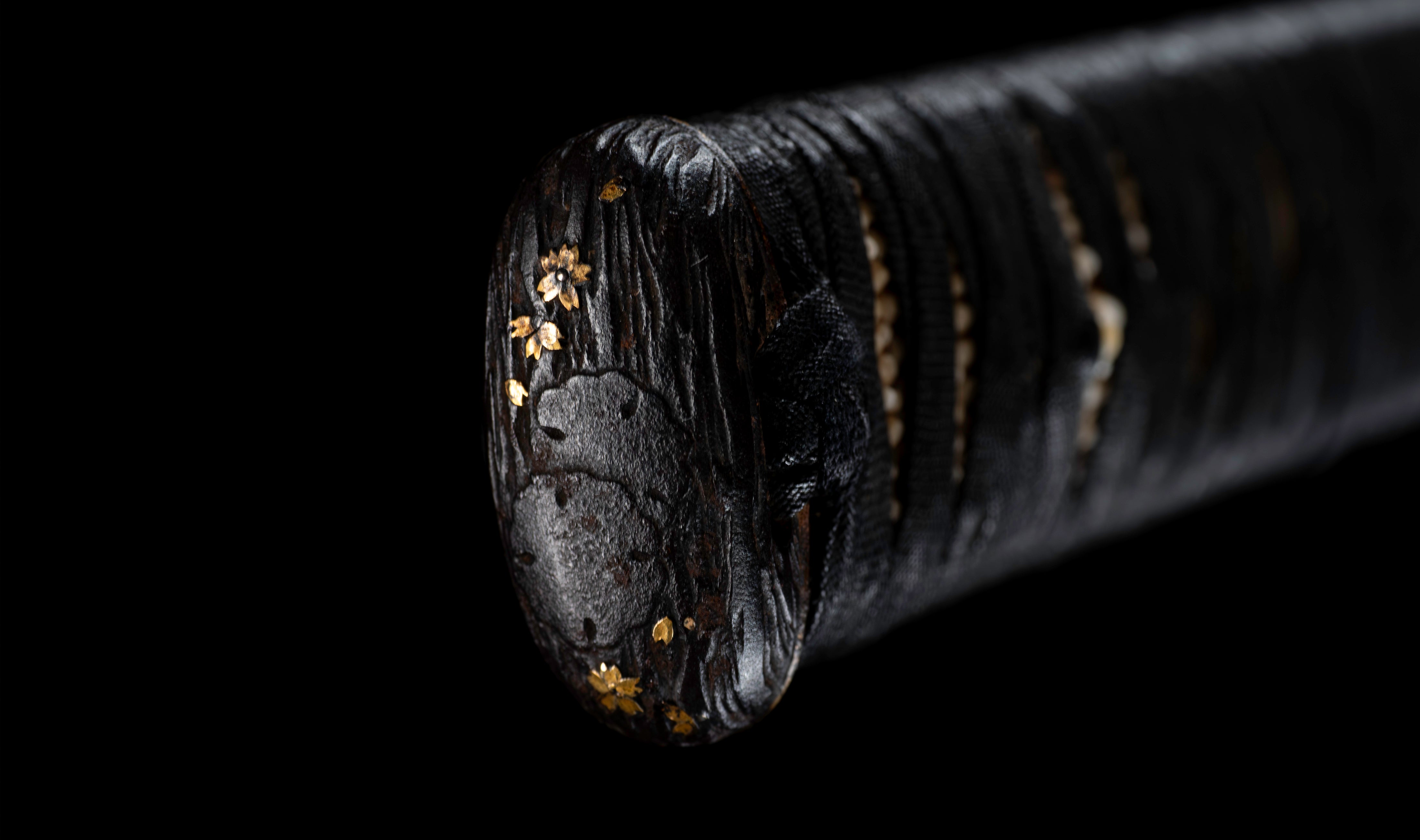
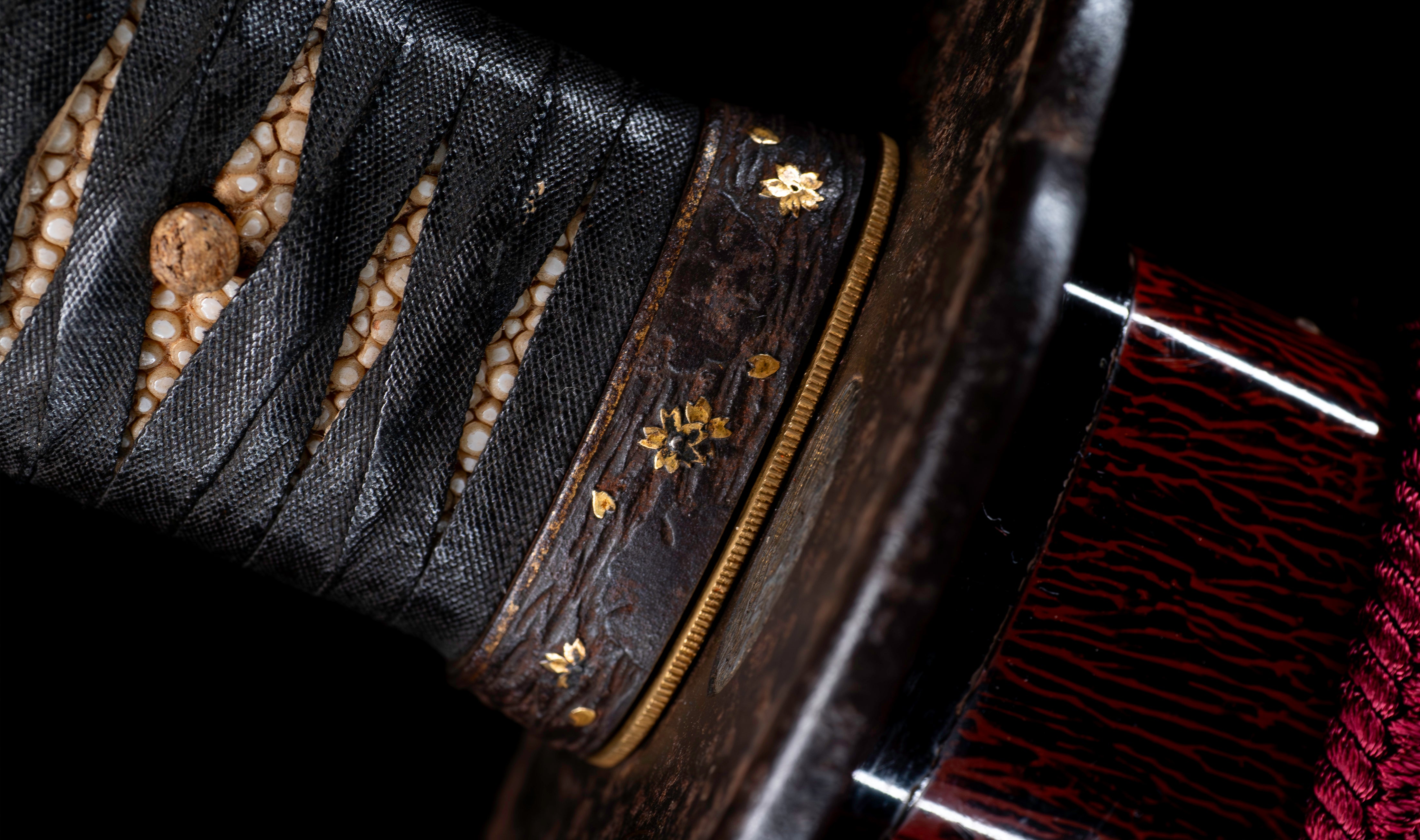
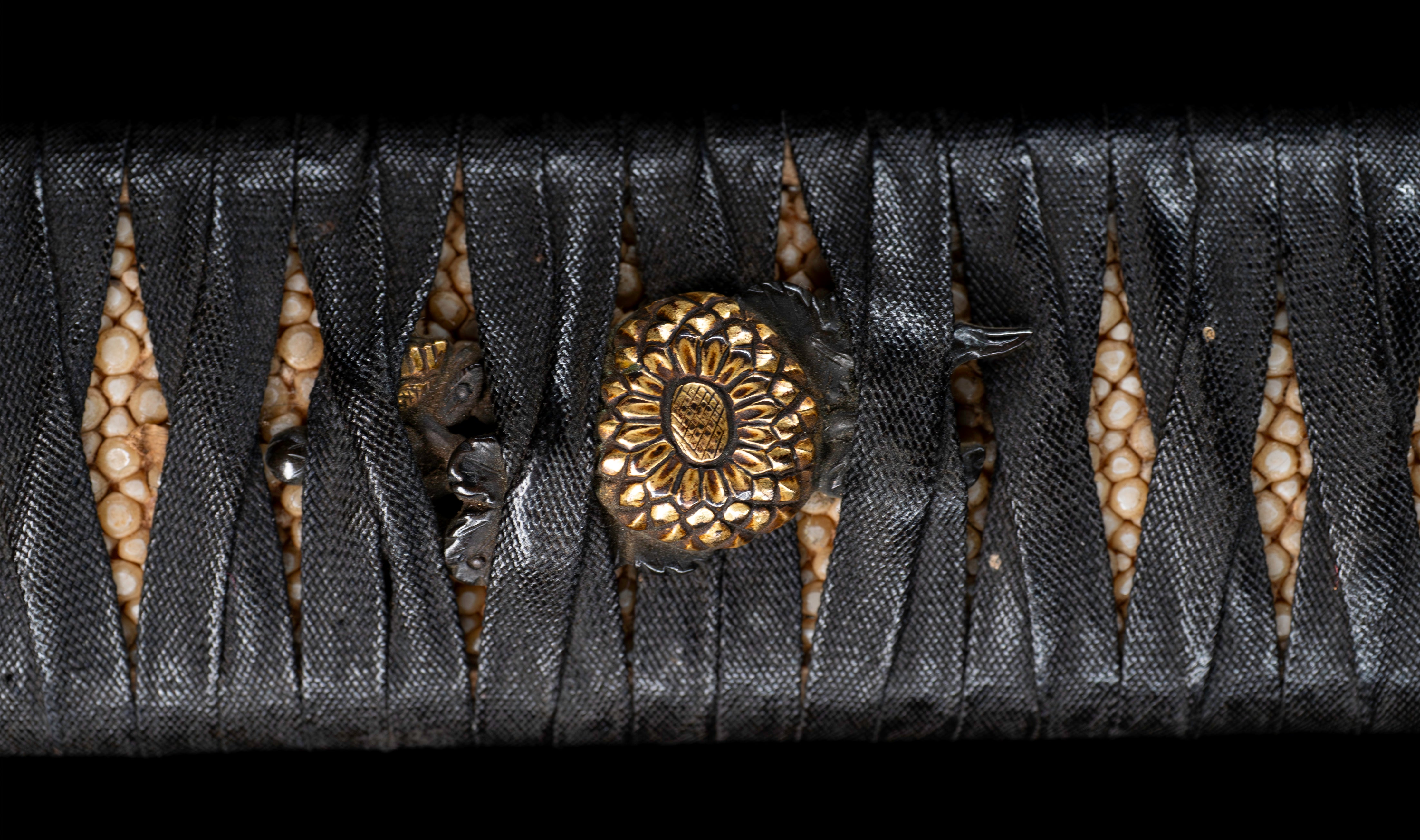
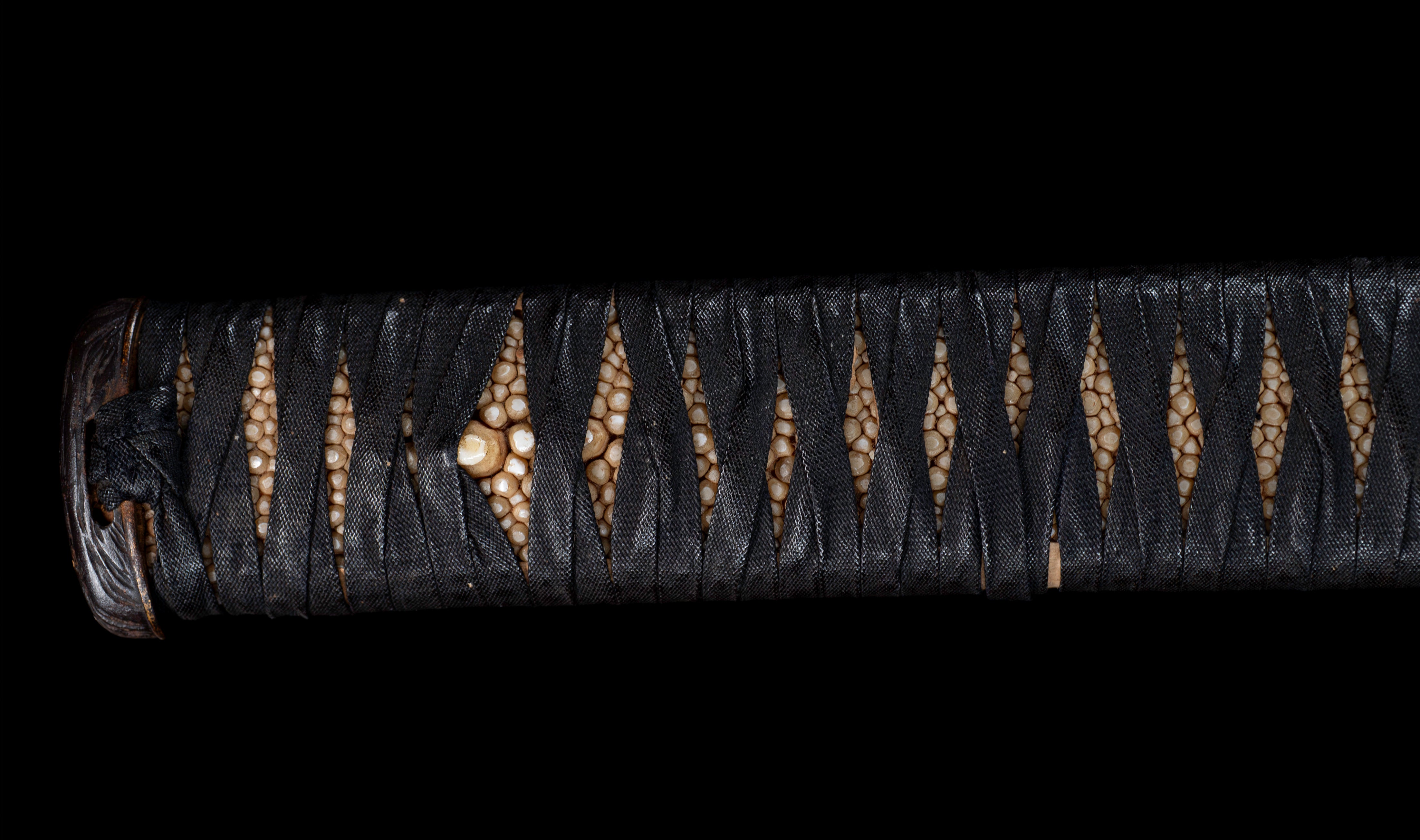
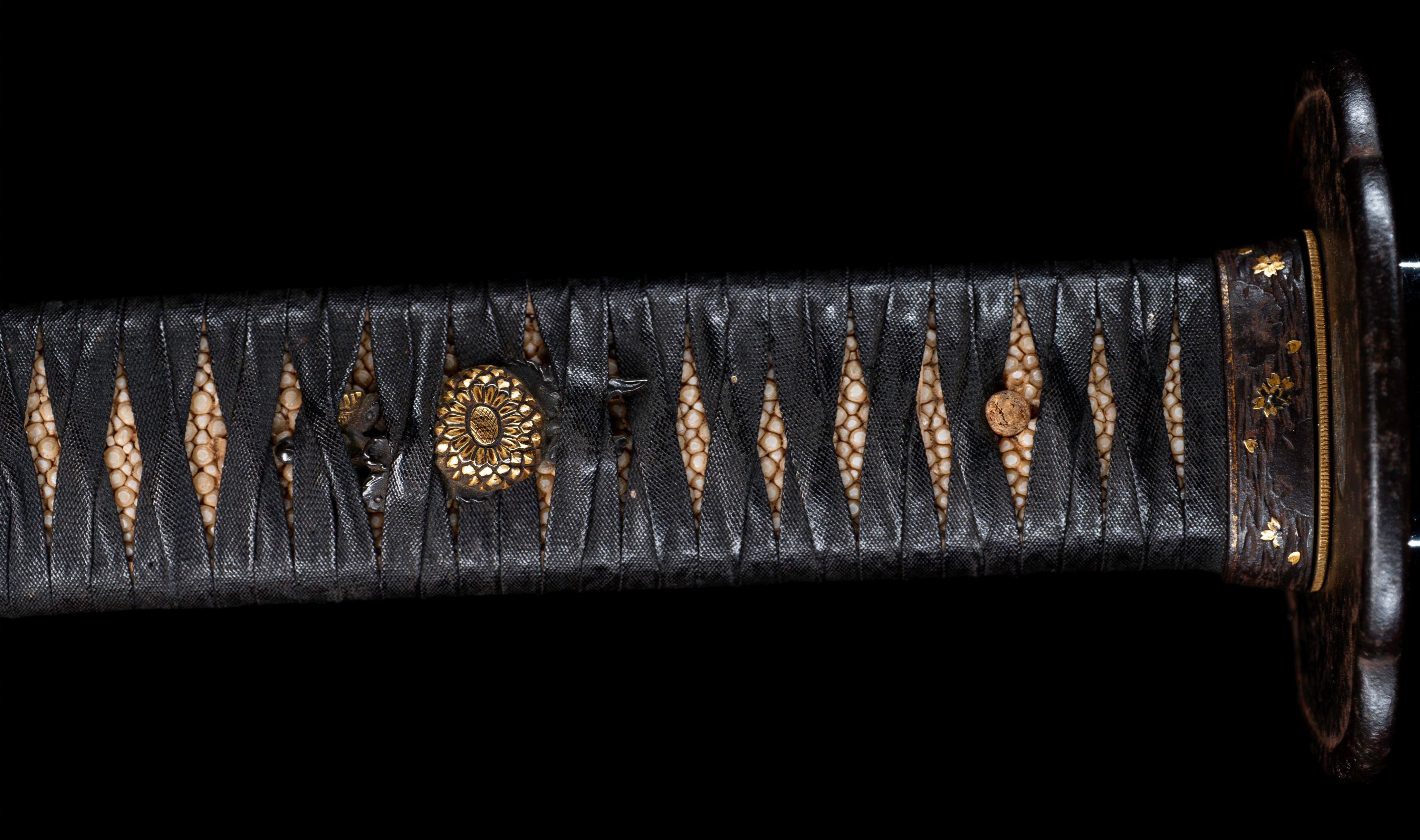
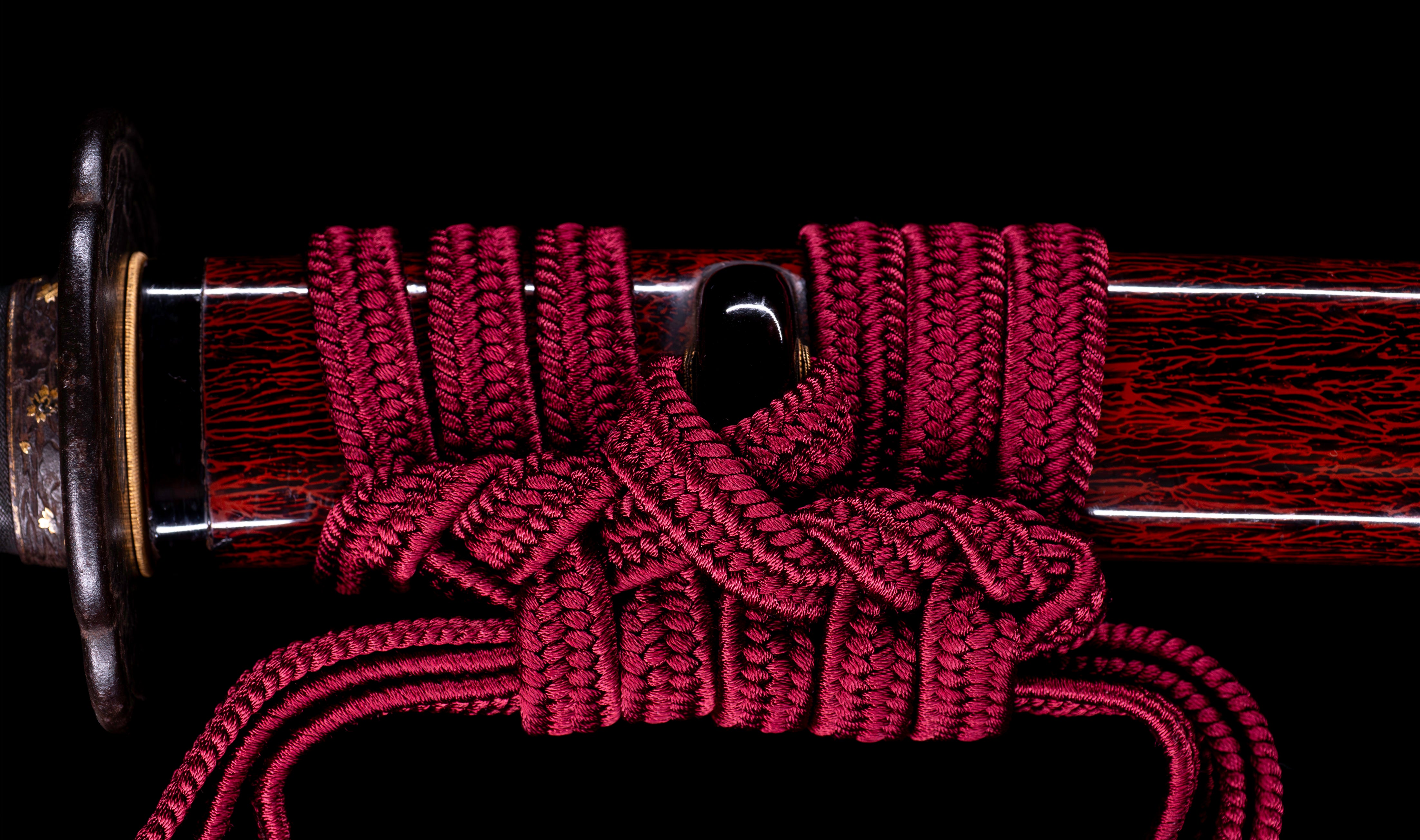
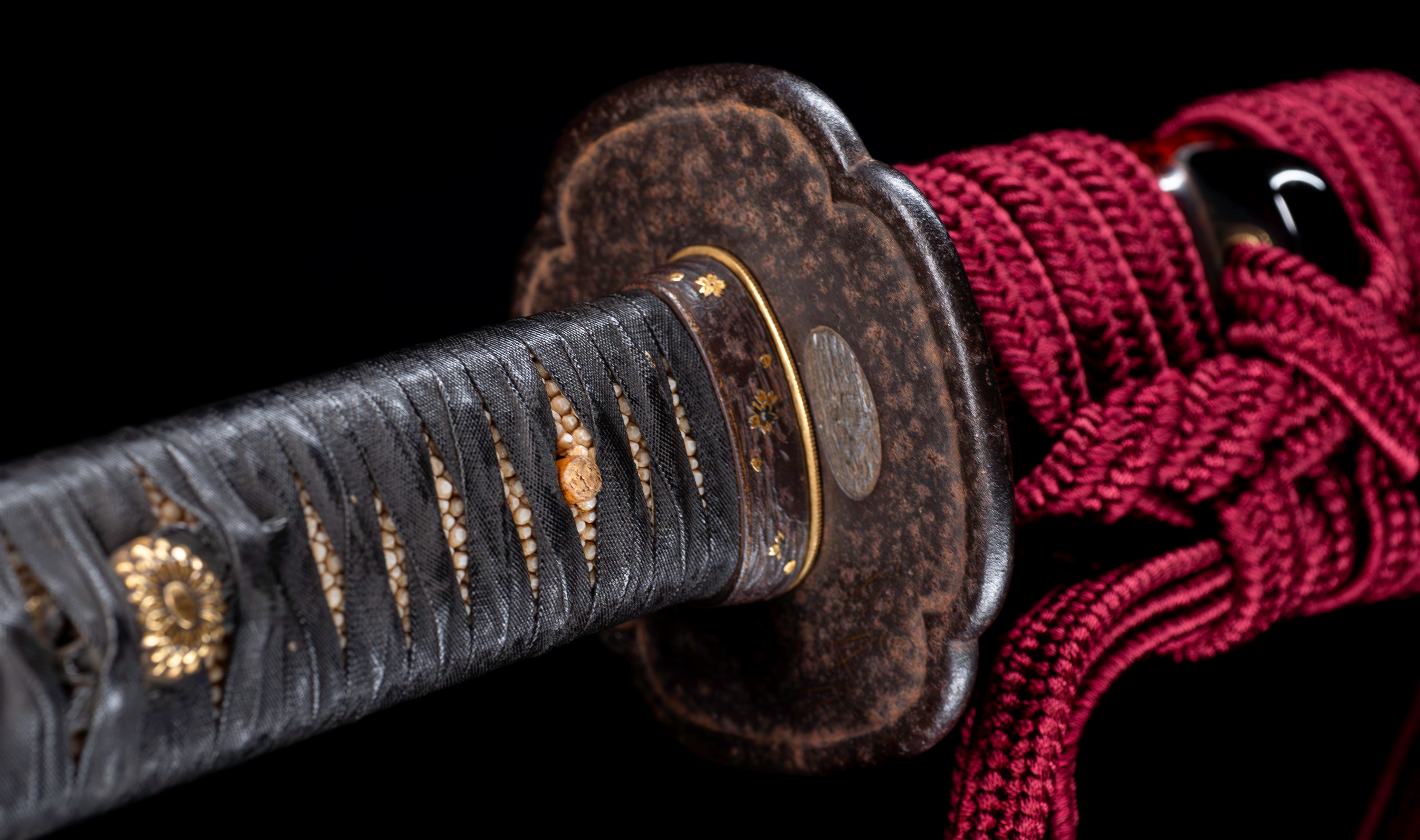
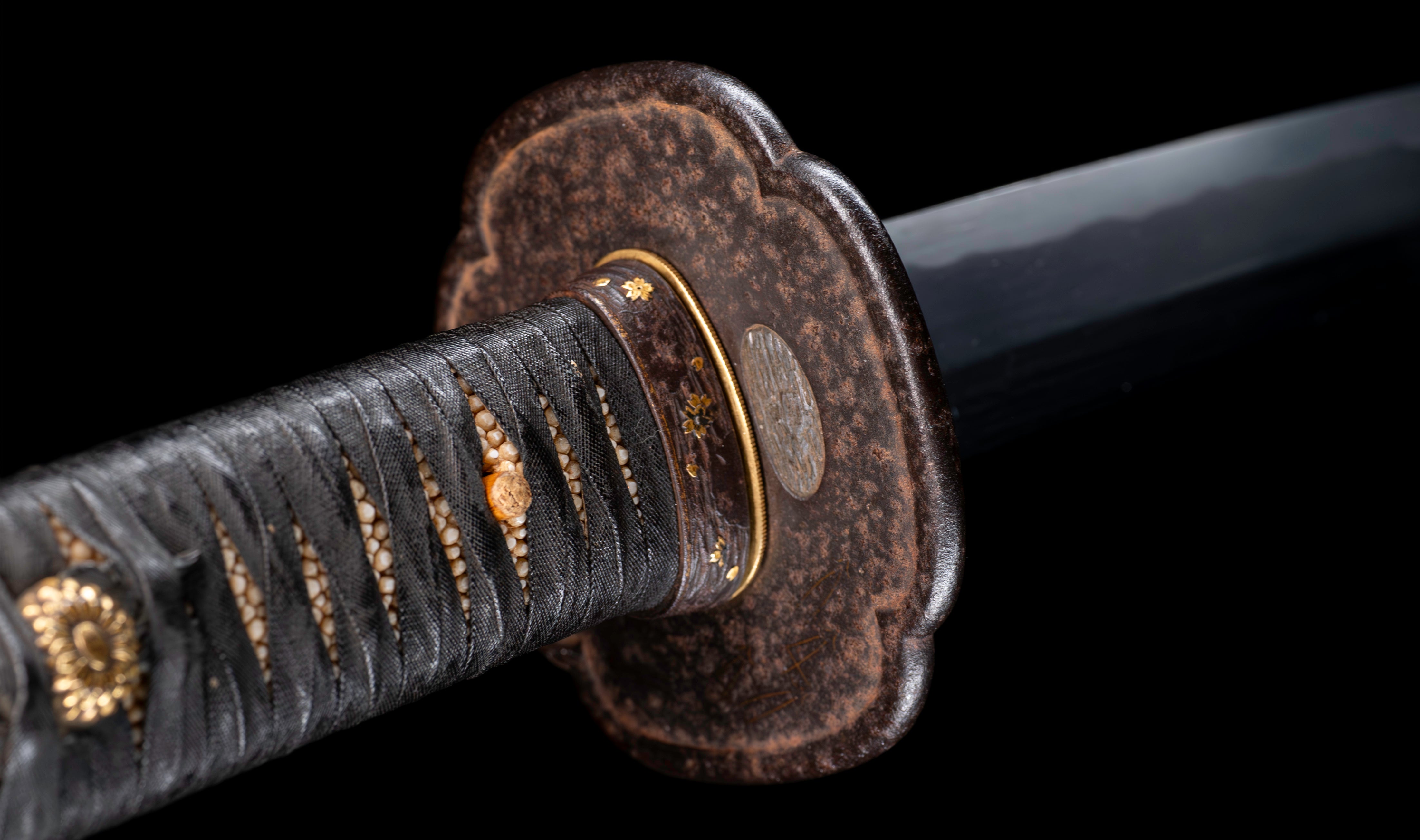
As written by the shop
Wakimono · Yamato · around 1532-1555
1 piece on the market now
Wakimono · Yamato
9 pieces on the market now
The Kanabō (金房) smiths worked in Nanto, the old name for Nara in Yamato province, from the end of the Muromachi period into the early Shintō era. Their relationship to any of the five established Yamato schools is not clearly fixed in the record, and the NBTHK setsumei treat the group as one that rose and flourished in Nara during the late Muromachi decades, with dated examples encountered from the Eishō era onward. The blades here name several hands. Masatsugu (政次), who signed as Kanabō Hyōe no Jō Masatsugu and as Kanefusa Hyōe no Jō Masatsugu, is described as the representative and best-known smith of the line. Masasada (政定), signing Kanefusa Saemon-no-jō Masasada, left an uchigatana dated Eiroku 2 (1559). " Rather than the classical Yamato-den manner of the earlier five schools, the Kanabō hand reads as a Muromachi uchigatana idiom that shares points with the Sue-Bizen and Sue-Seki spheres. The kitae is itame that flows into nagare and tends toward masame, with the grain often standing and growing large, and a whitish utsuri appearing in places. The hamon divides between two registers the setsumei repeatedly cite: a large gunome-based midare, the "hips" of the gunome opening out and mixed at times with togari-ba, chōji, or ko-notare; and a suguha carried on a tight nioiguchi.
Across both, ashi and yō enter well and stand out, ko-nie and ji-nie adhere, and sunagashi with kinsuji run through; the nioiguchi frequently takes a shizumi, subdued cast. The bōshi runs midare-komi, often with hakikake and a pointed or ko-maru return. The build tends to broad mihaba with sakizori on the swords, while naginata are conspicuously common, a production read as answering the demands of the warrior monks (sōhei) of Kōfukuji and the great Nanto temples. For kantei, the line is held by the flowing masame-tending itame, the broad gunome-midare with prominent ashi and yō over a tight or subdued nioiguchi, and the marked presence of naginata and long polearm blades among extant work. The setsumei single out Masatsugu's polearms as typical of his hand, several preserved with their vermilion-lacquer nagamaki mounts (shunuri nagamaki koshirae) and one black-lacquer naginata mounting, the fittings inferred to have been made together with the blade. The records grant that true masterworks within the group are rare, yet they describe individual blades by Masatsugu and Masasada with fine jigane, skillfully cut horimono, and workmanship judged excellent and dignified. Within the wider Yamato sphere the Kanabō stand as a late, utilitarian offshoot whose polearms and serviceable swords carry the group's name into the NBTHK register. Learn more →
| Smith | Era | Designated |
|---|---|---|
| Masatsugu政次 | 1492-1570 | 4 |
| Masazane正眞 | 1532-1555 | 0 |
| Masasada政定 | 1521-1559 | 1 |
The Muromachi period (1392 to 1573)
Muromachi turned sword making into an industry: the uchigatana rose with massed infantry warfare, Osafune and Seki produced bundle swords beside custom orders, and the Ming trade carried Japanese blades abroad by the tens of thousands.
Certifies a genuine blade worth preserving: a signature confirmed correct, or, if unsigned, an era, province, and school that the NBTHK can reliably identify.
The NBTHK (Nihon Bijutsu Tōken Hozon Kyōkai, the Society for the Preservation of Japanese Art Swords) is a public-interest incorporated foundation founded in 1948 and supervised by Japan’s Agency for Cultural Affairs (Bunkachō); it is based at the Japanese Sword Museum in Tokyo. Its expert panels physically examine each submitted work (shinsa) and issue a certificate (kanteishō) ranking it by artistic and historical merit. NBTHK papers are the most widely recognized standard of authentication for Japanese swords and fittings.
NBTHK official siteReturns/exchanges only for manufactured defects or incorrect products; notify within 72 hours of delivery. Cancellation only within 2 hours of placing. Customer pays return shipping. Refund within 3 business days of package arrival.
$5,400