Muromachi turned sword making into an industry: the uchigatana rose with massed infantry warfare, Osafune and Seki produced bundle swords beside custom orders, and the Ming trade carried Japanese blades abroad by the tens of thousands.
 NihontoWatchNihontoWatch
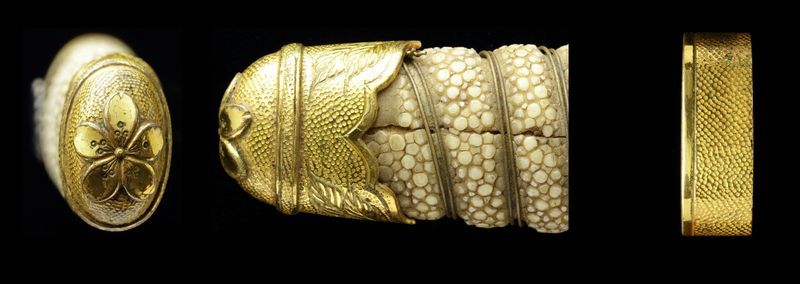
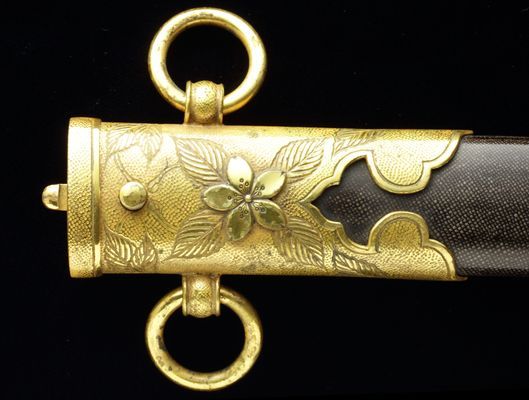
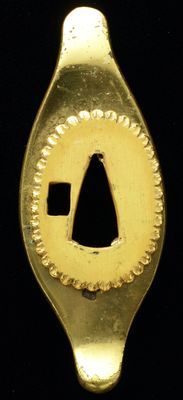
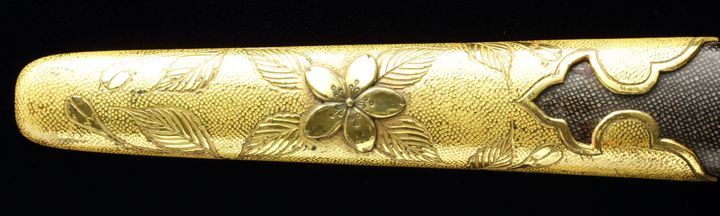
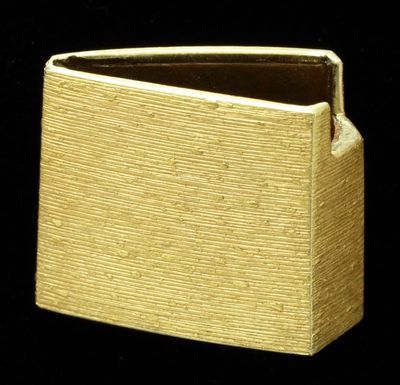
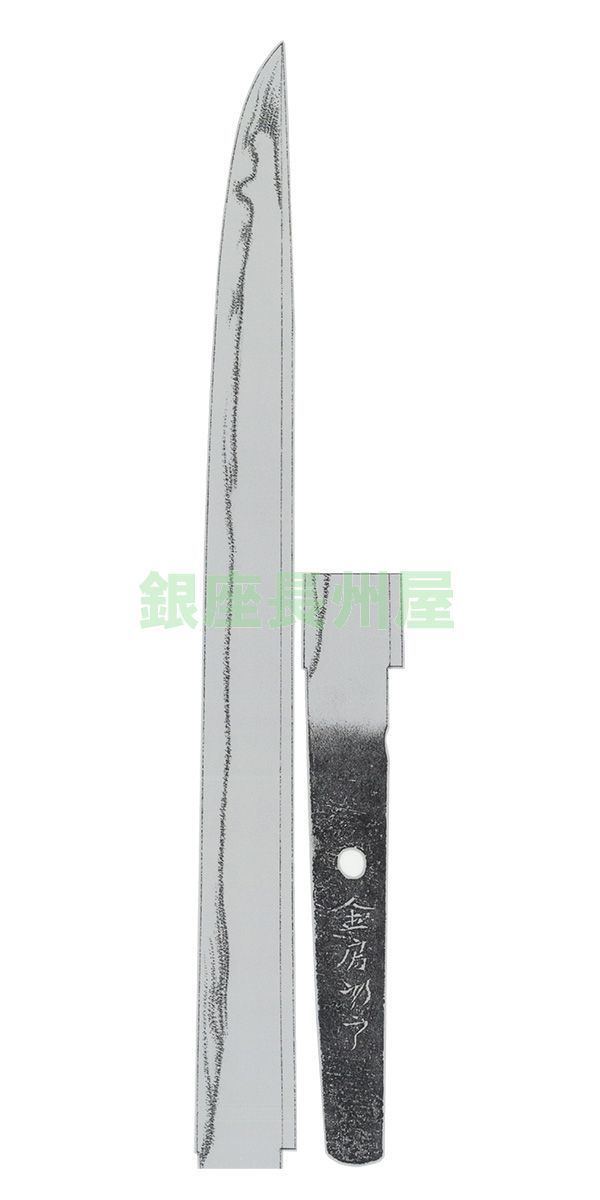
Kofuku-ji was a powerful family that held vast manors and military force, ruling the entire Yamato province. During the Sengoku period, the Kanabo school of swordsmiths resided in a section in front of the temple gates, boasting master smiths such as Hyoe-no-jo Masatsugu and Hayato-no-jo Masazane, who met the demands of military commanders with powerful swords, spears, and naginata. This tanto is a rare work with only the zokumei "Kanabo Shinro" carved on the nakago, and the maker is Kanabo Masazane. The mihaba is modest while the kasane is extremely thick, and the length is extended relative to the width, resulting in a fukura-kare yoroitoshi sugata. The jigane is itame-hada with thick chikei entering, making the grain stand out clearly, and granular ji-nie attaches thickly with a strong luster, while nie-utsuri stands out near the mune. The suguha-style hamon mixes in small gunome and hotsure-like elements, with yubashiri, uchinoke, kinsan, and sunagashi appearing at the habuchi to form double and triple layers; it is covered in ko-nie with a bright habuchi, and the interior of the blade is brimming with nie and nioi, reflecting light strongly with high luminosity. The boshi on the omote is midare-komi and yakizume, while the ura is shallow notare-komi, tsukiage, and returns in komaru with a long kaeri. The nakago is made to a length that fits perfectly in the palm, giving a sense of good maneuverability, and the mei characters are carved solemnly with effective chisel work. Despite being a small piece, it overflows with a sense of power, conveying to the present day the true image of the tanto that Sengoku military commanders relied upon as their final resort. The accompanying koshirae is a Navy dagger wrapped in indigo-dyed samegawa; the fittings with cherry blossom motifs have a vivid gold color, and the screw-type silver mekugi fittings are solemn with the sixteen-petal chrysanthemum crest. It calls to mind the image of a high-ranking officer of the Imperial Navy who challenged the world wearing this piece, as if saying "a kanabo for an oni." Note 1... Said to be near the present-day Motokomori-cho, Nara City. The place name Kanabo-zushi remains. Note 2... In the "Nihonto Meikan," it is known that the second generation Masazane (around Tensho) signed "Nanto-ju Kanabo Shinjiro Masazane," and his zokumei was Shinjiro. If so, should Shinro be seen as the zokumei of the first generation Masazane who bore the title Hayato-no-jo? Note 3... There is a theory ("Kokon Kaji Biko") that Honda Tadakatsu's Tonbogiri was the work of Kanabo Masazane.
NihontoWatchOffered by Choshuya
This piece has sold
Get an email when a new Kanabo Masazane piece hits the market.






Machine translation from the shop's Japanese · may contain errors ·
Wakimono · Yamato · around 1532-1555
1 piece on the market now
Wakimono · Yamato
9 pieces on the market now
The Kanabō (金房) smiths worked in Nanto, the old name for Nara in Yamato province, from the end of the Muromachi period into the early Shintō era. Their relationship to any of the five established Yamato schools is not clearly fixed in the record, and the NBTHK setsumei treat the group as one that rose and flourished in Nara during the late Muromachi decades, with dated examples encountered from the Eishō era onward. The blades here name several hands. Masatsugu (政次), who signed as Kanabō Hyōe no Jō Masatsugu and as Kanefusa Hyōe no Jō Masatsugu, is described as the representative and best-known smith of the line. Masasada (政定), signing Kanefusa Saemon-no-jō Masasada, left an uchigatana dated Eiroku 2 (1559). " Rather than the classical Yamato-den manner of the earlier five schools, the Kanabō hand reads as a Muromachi uchigatana idiom that shares points with the Sue-Bizen and Sue-Seki spheres. The kitae is itame that flows into nagare and tends toward masame, with the grain often standing and growing large, and a whitish utsuri appearing in places. The hamon divides between two registers the setsumei repeatedly cite: a large gunome-based midare, the "hips" of the gunome opening out and mixed at times with togari-ba, chōji, or ko-notare; and a suguha carried on a tight nioiguchi.
Across both, ashi and yō enter well and stand out, ko-nie and ji-nie adhere, and sunagashi with kinsuji run through; the nioiguchi frequently takes a shizumi, subdued cast. The bōshi runs midare-komi, often with hakikake and a pointed or ko-maru return. The build tends to broad mihaba with sakizori on the swords, while naginata are conspicuously common, a production read as answering the demands of the warrior monks (sōhei) of Kōfukuji and the great Nanto temples. For kantei, the line is held by the flowing masame-tending itame, the broad gunome-midare with prominent ashi and yō over a tight or subdued nioiguchi, and the marked presence of naginata and long polearm blades among extant work. The setsumei single out Masatsugu's polearms as typical of his hand, several preserved with their vermilion-lacquer nagamaki mounts (shunuri nagamaki koshirae) and one black-lacquer naginata mounting, the fittings inferred to have been made together with the blade. The records grant that true masterworks within the group are rare, yet they describe individual blades by Masatsugu and Masasada with fine jigane, skillfully cut horimono, and workmanship judged excellent and dignified. Within the wider Yamato sphere the Kanabō stand as a late, utilitarian offshoot whose polearms and serviceable swords carry the group's name into the NBTHK register. Learn more →
| Smith | Era | Designated |
|---|---|---|
| Masatsugu政次 | 1492-1570 | 4 |
| Masazane正眞 | 1532-1555 | 0 |
| Masasada政定 | 1521-1559 | 1 |
The Muromachi period (1392 to 1573)
Muromachi turned sword making into an industry: the uchigatana rose with massed infantry warfare, Osafune and Seki produced bundle swords beside custom orders, and the Ming trade carried Japanese blades abroad by the tens of thousands.
Certifies a genuine blade worth preserving: a signature confirmed correct, or, if unsigned, an era, province, and school that the NBTHK can reliably identify.
The NBTHK (Nihon Bijutsu Tōken Hozon Kyōkai, the Society for the Preservation of Japanese Art Swords) is a public-interest incorporated foundation founded in 1948 and supervised by Japan’s Agency for Cultural Affairs (Bunkachō); it is based at the Japanese Sword Museum in Tokyo. Its expert panels physically examine each submitted work (shinsa) and issue a certificate (kanteishō) ranking it by artistic and historical merit. NBTHK papers are the most widely recognized standard of authentication for Japanese swords and fittings.
NBTHK official siteIf, due to our fault, the item differs significantly from its proper condition, the item may be returned. Cooling-off is within one week of the item's arrival.