 NihontoWatchNihontoWatch
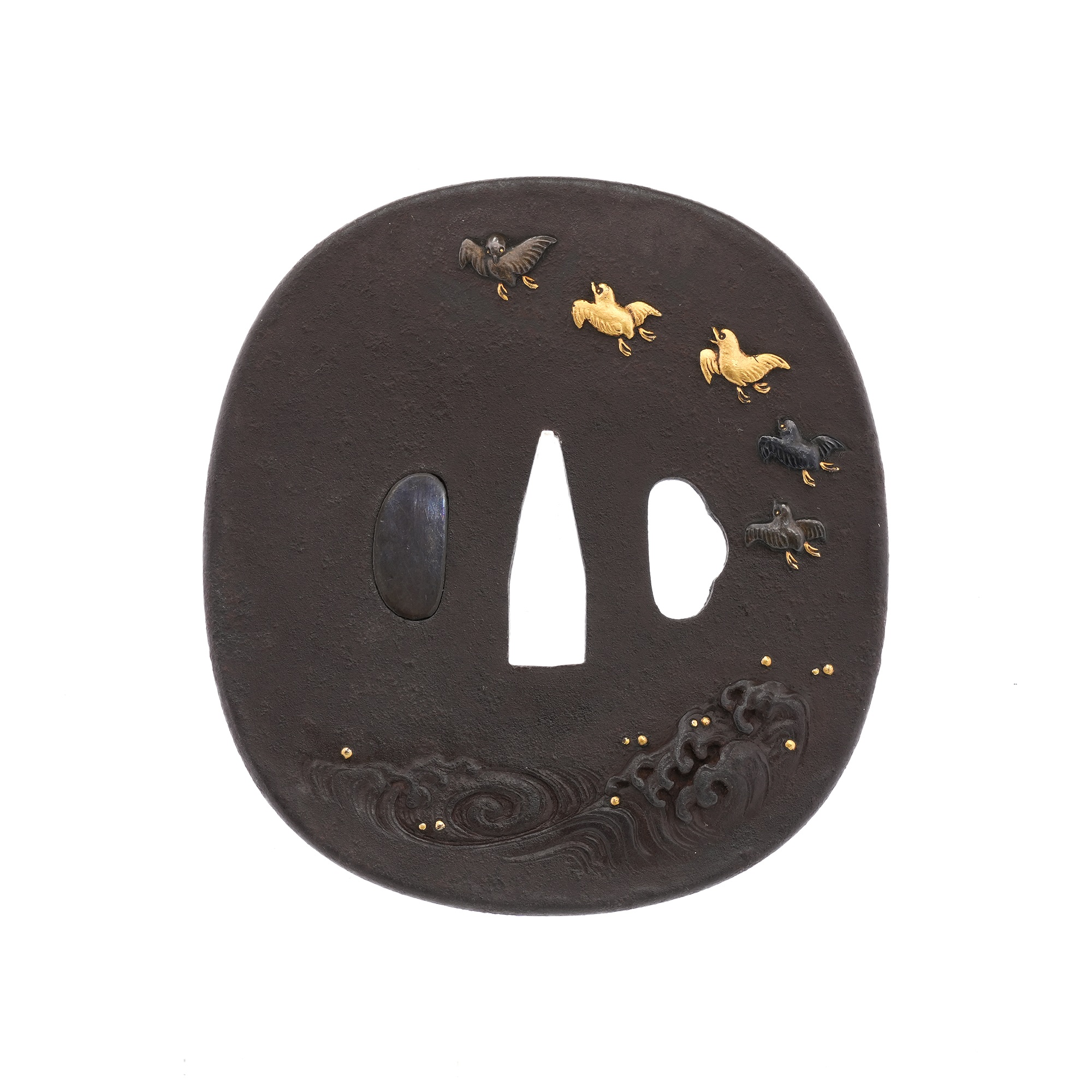
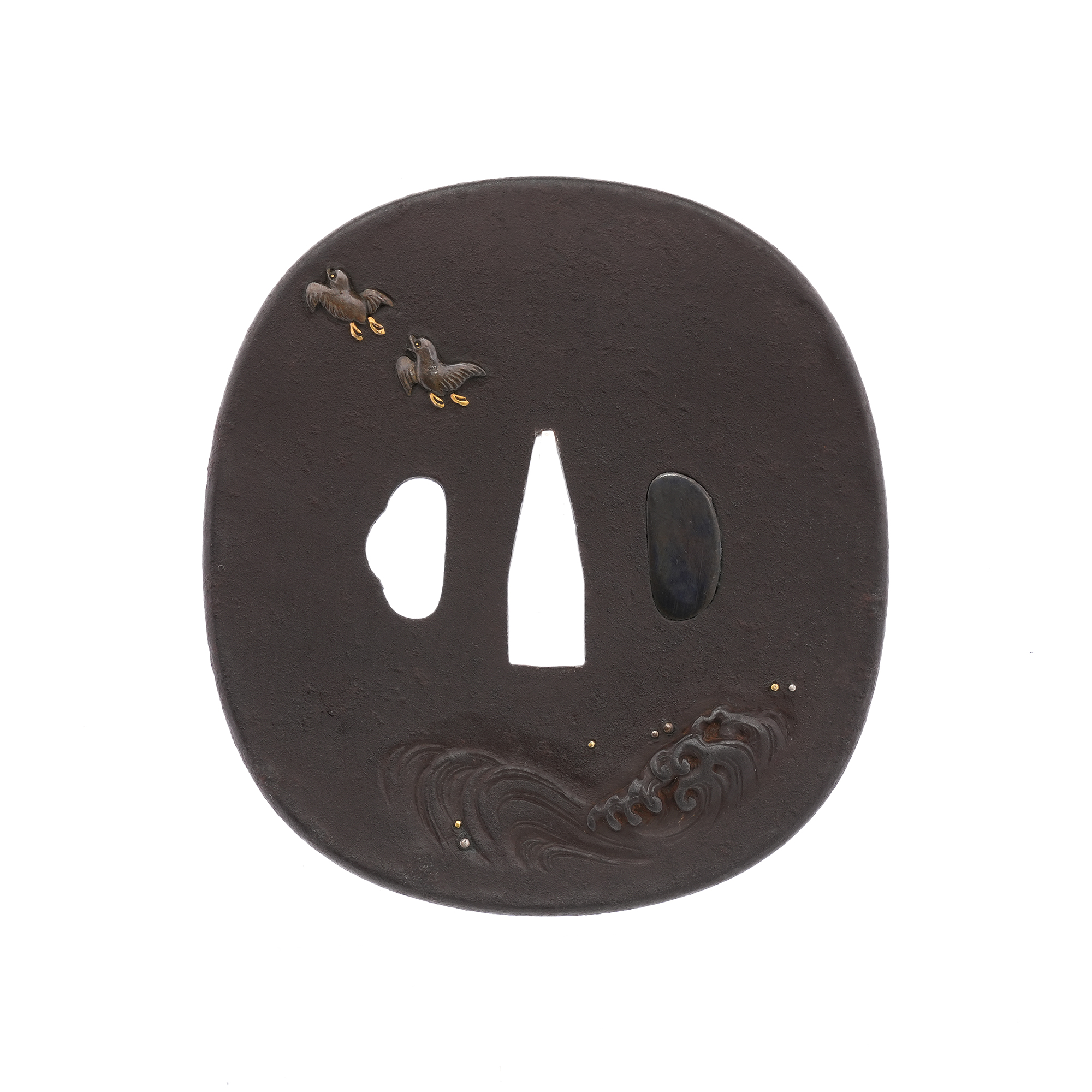
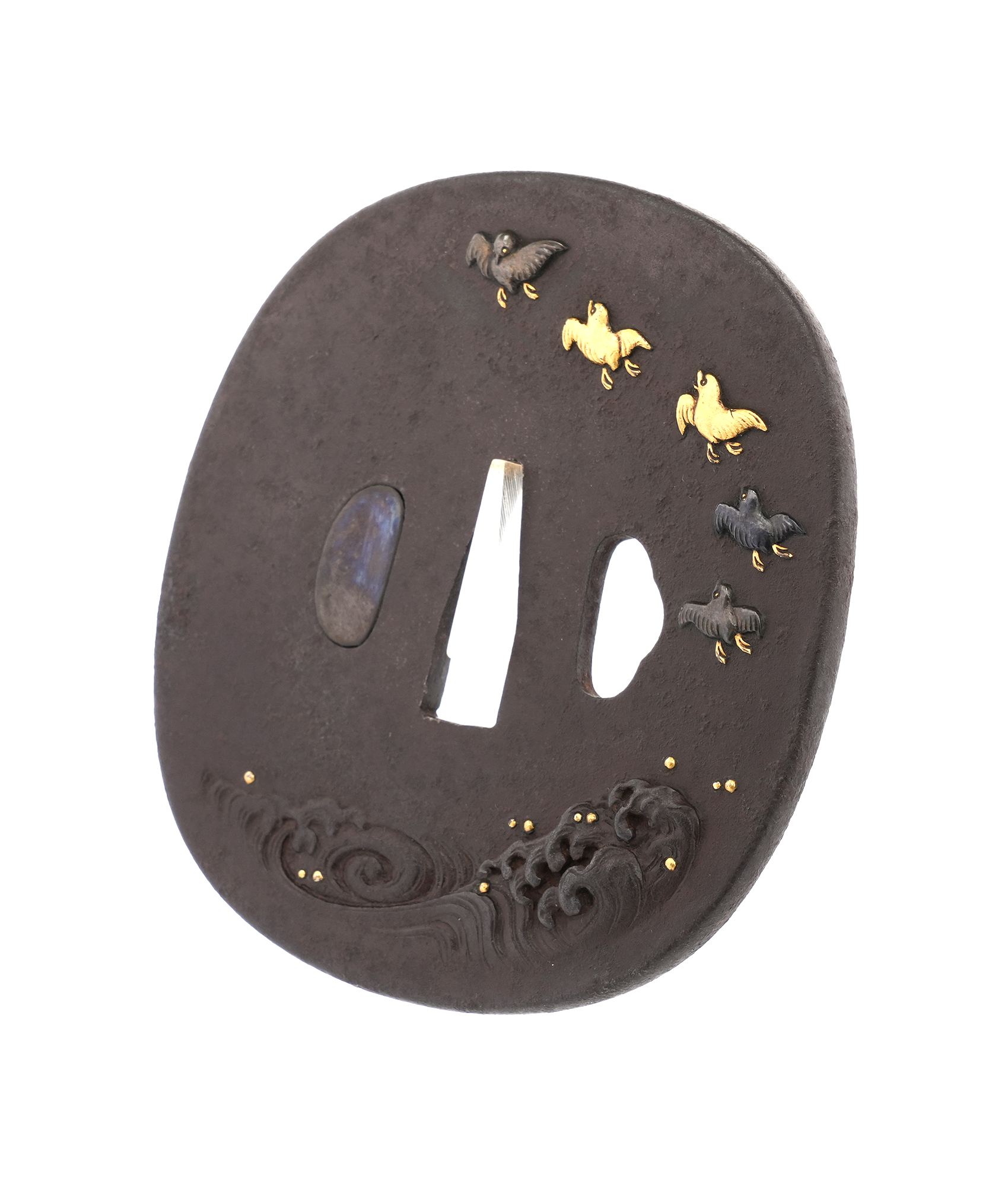
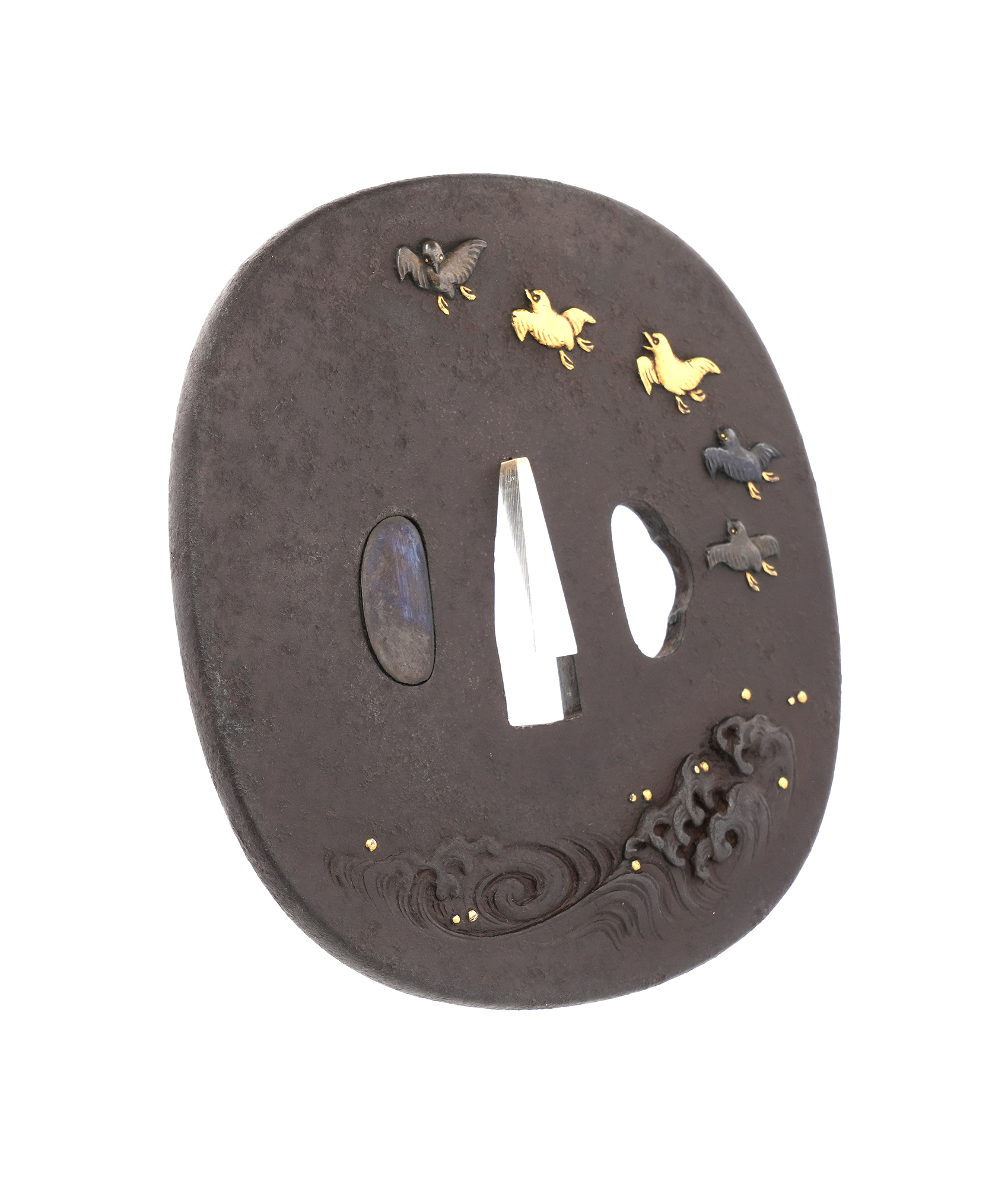
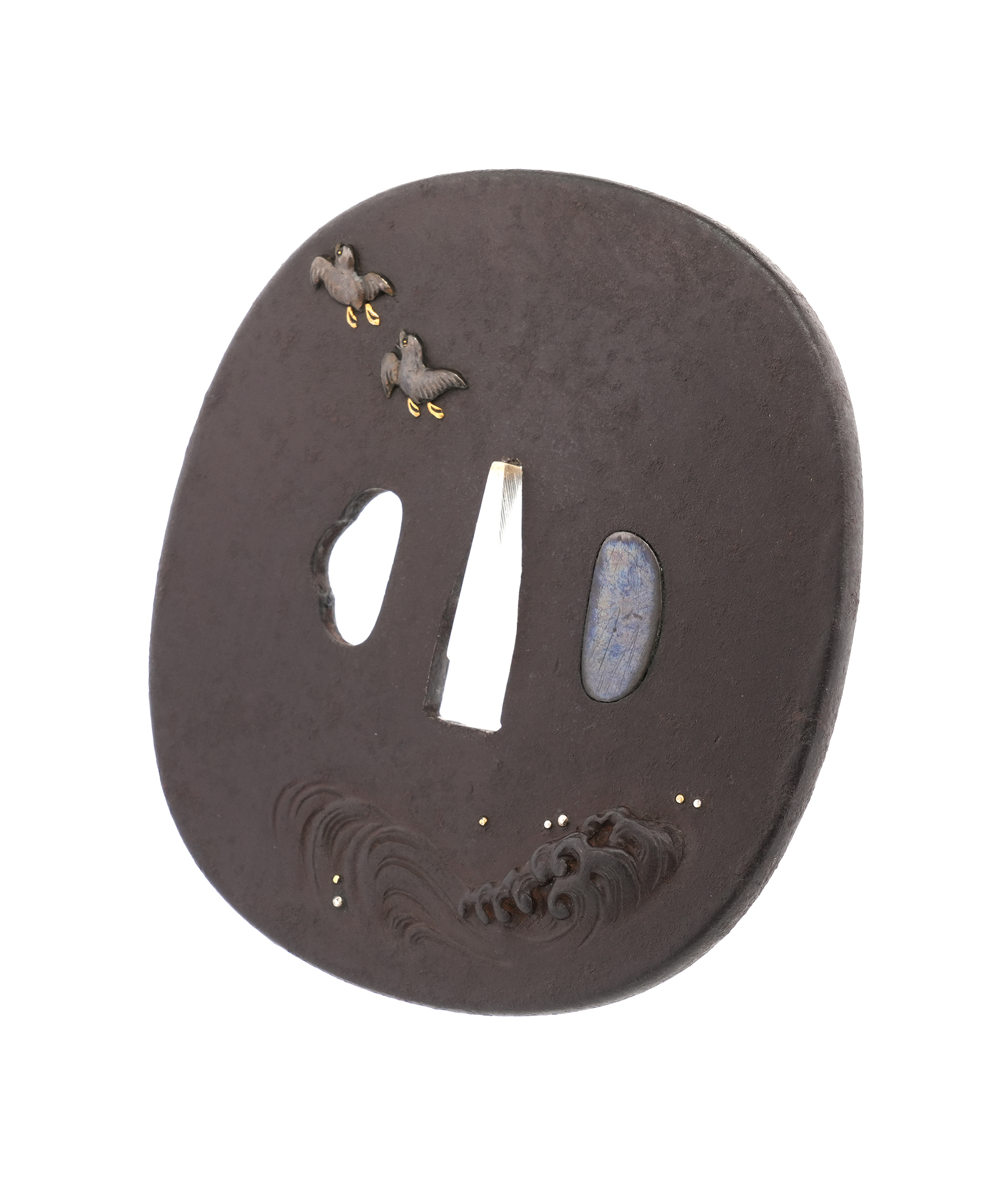
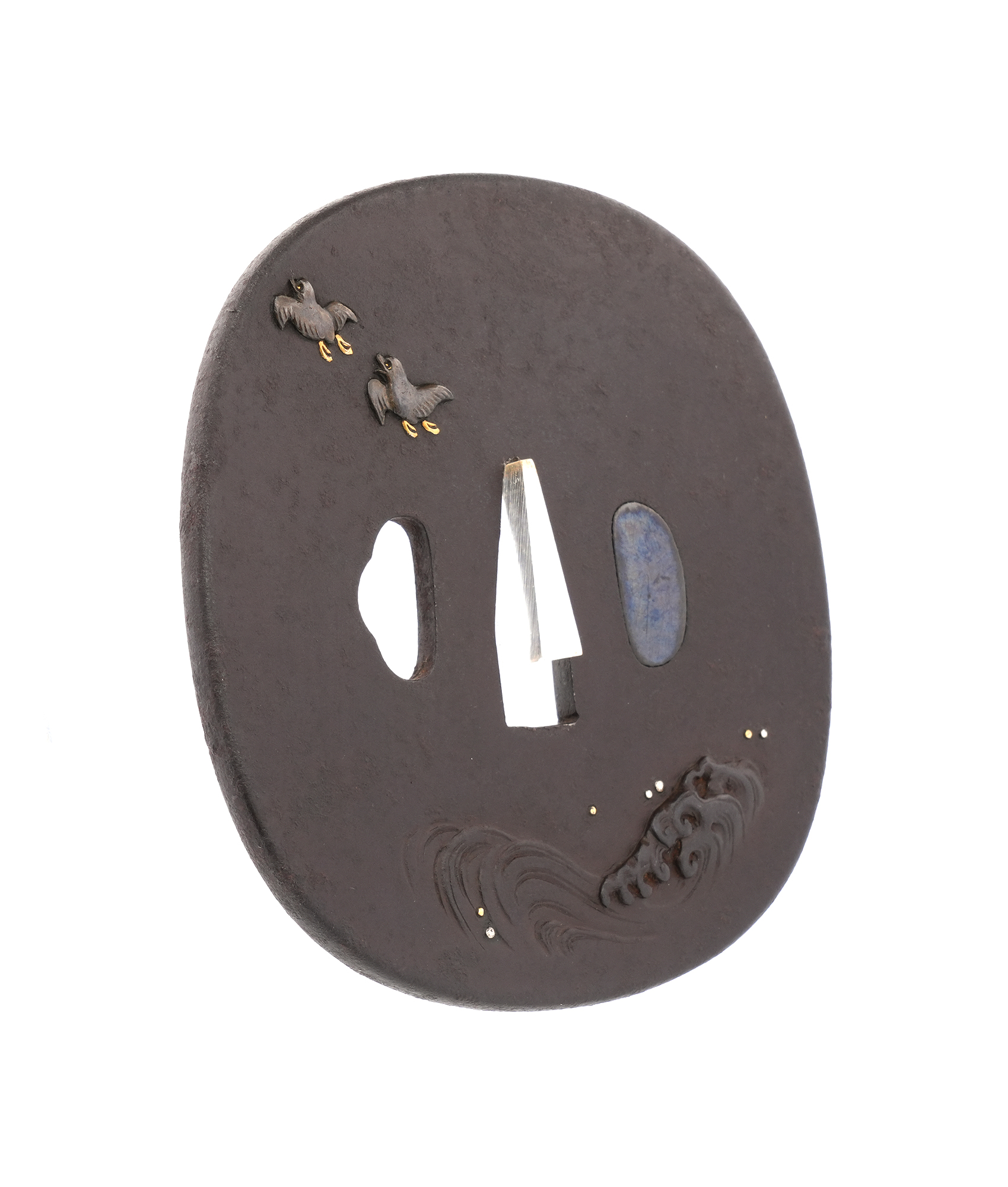
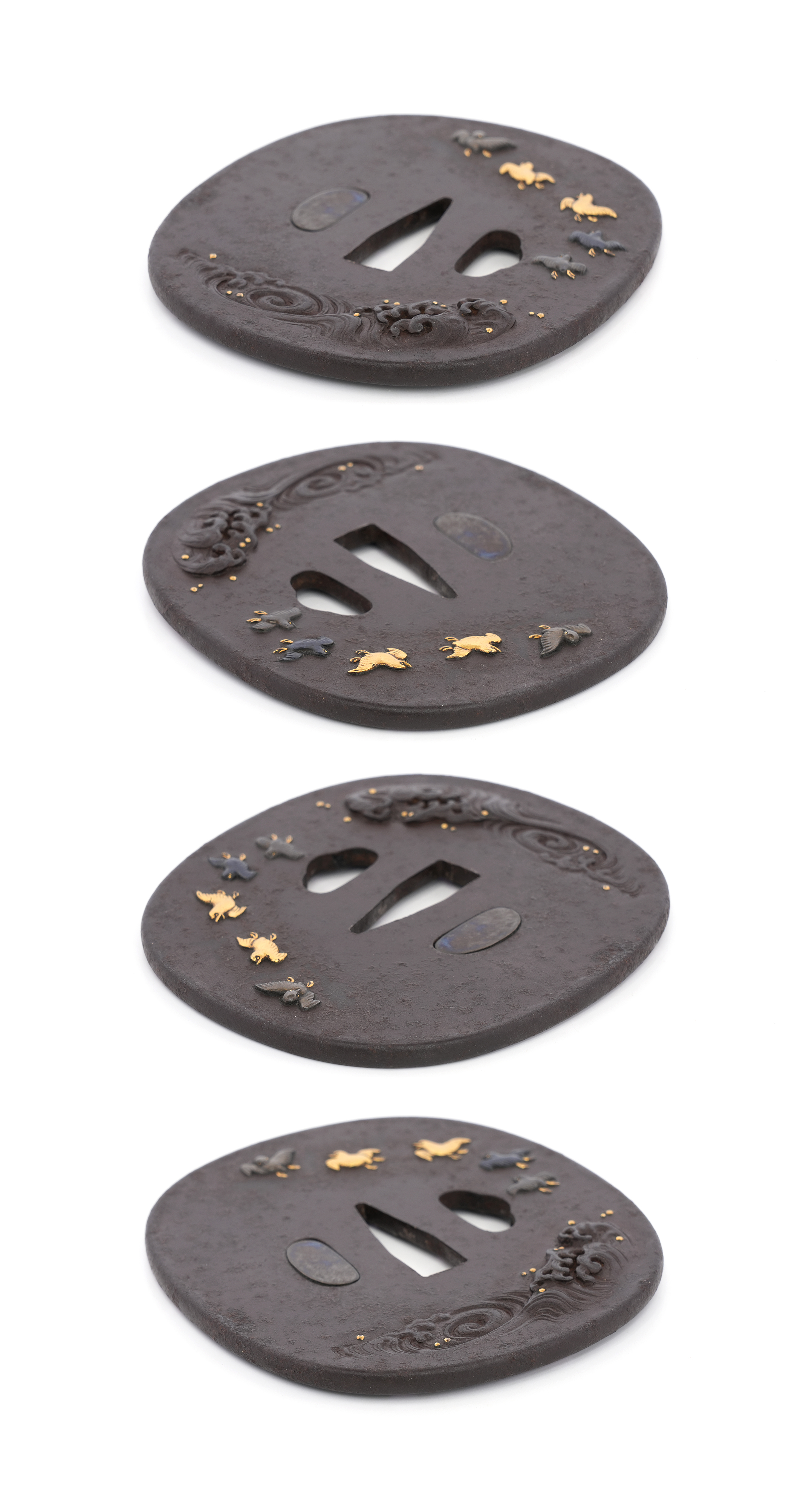
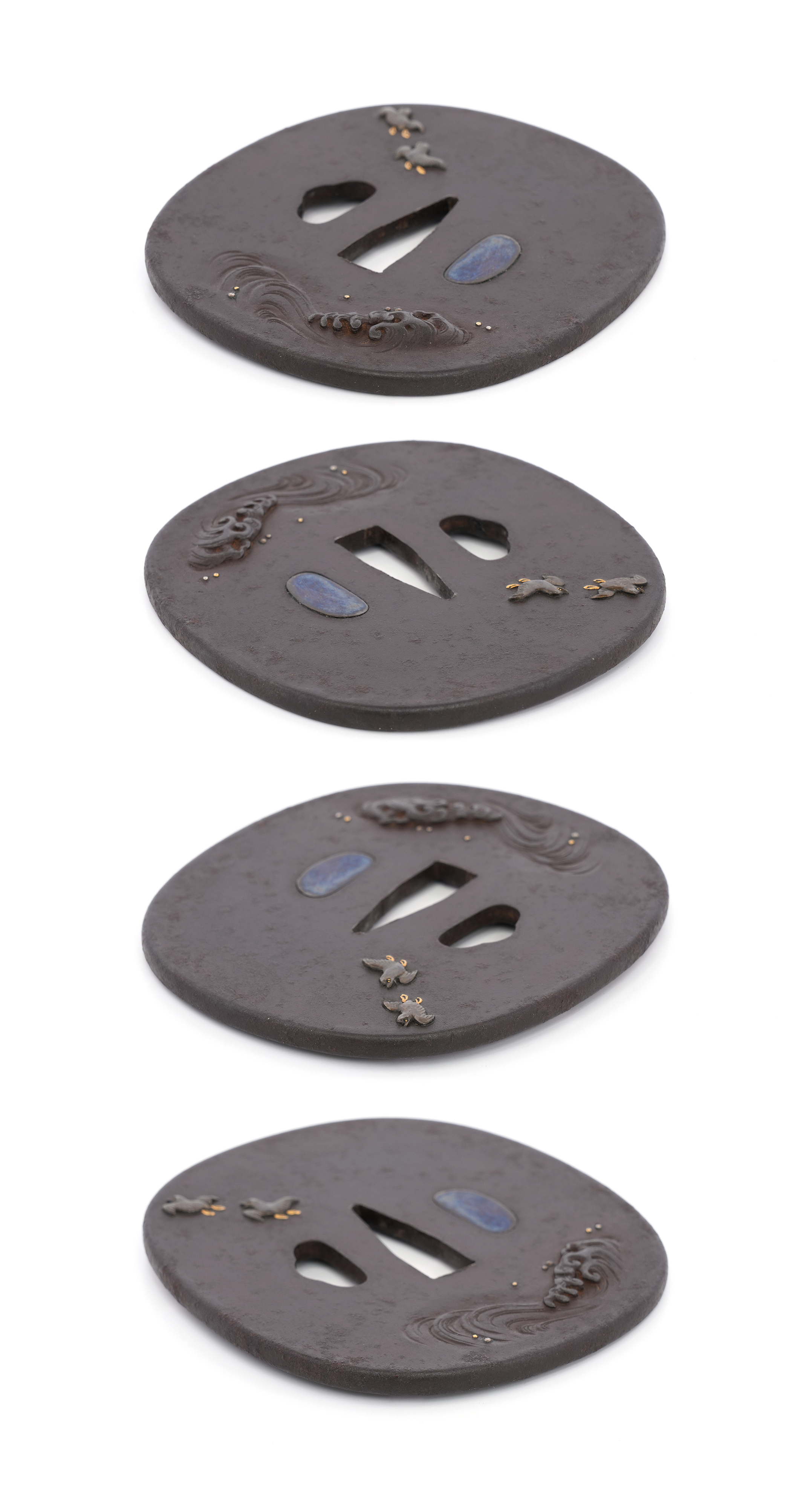
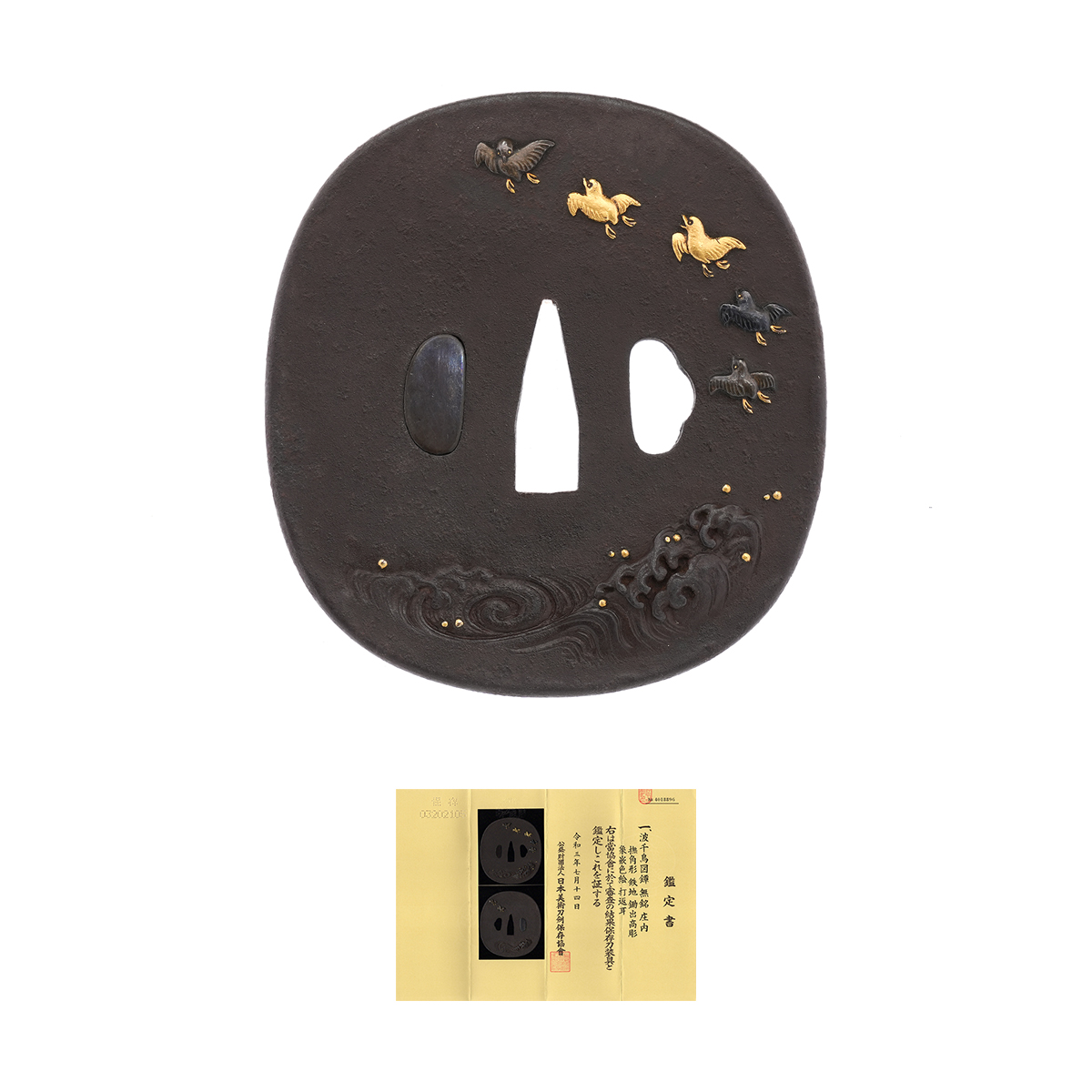
Shonai kinko developed primarily around the castle town of the Shonai domain in Dewa Province, and against the background of the local traditions that produced Tsuchiya Yasuchika, they fostered a style that skillfully combined sukidashibori, katakiribori, suemon zogan, and kin-gin iroe on base metals such as tetsu and shibuichi to express refined natural scenes within a sturdy, sober character. In works where realistic birds, waves, insects, and fish are arranged with abundant yohaku, there dwells a quiet poetic sentiment unique to Shonai kinko that captures a momentary movement without leaning toward flamboyance. Nami-chidori is an auspicious motif symbolizing unity in overcoming difficulties together, marital harmony, and the safety of the household, derived from the sight of small plovers crossing the waves that come and go in groups; in this piece, a large nadekaku-gata tetsu-ji is likened to the vast sea and sky, with five chidori on the omote and two on the ura flying in an arc, and by placing the swirling hatou low beneath them, it freely depicts the moment the birds catch the wind to cross the sea. The chidori are crafted using a mix of kin, shibuichi, and shakudo, carefully varying the flapping wings and direction of each bird down to the fine details of the legs, beaks, and eyes, while the wave crests are carved out from the tetsu-ji with a rich sense of volume, and the gold and silver grains scattered as spray appear like the glint of the sea surface whenever they catch the light. The calm color scheme with the kozuka hitsu-ana filled with shakudo, the wide yohaku, and the lightly uchikaeshi mimi tighten the composition, allowing one to appreciate a handsome o-tsuba from a distance and the exquisite work of the irogane and tagane close at hand; it is a piece to be placed at the center of a collection, combining the dignity of Shonai kinko with the celebratory spirit of the nami-chidori.
NihontoWatchOffered by Toushin

As written by the shop
Machine translation from the shop's Japanese · may contain errors ·
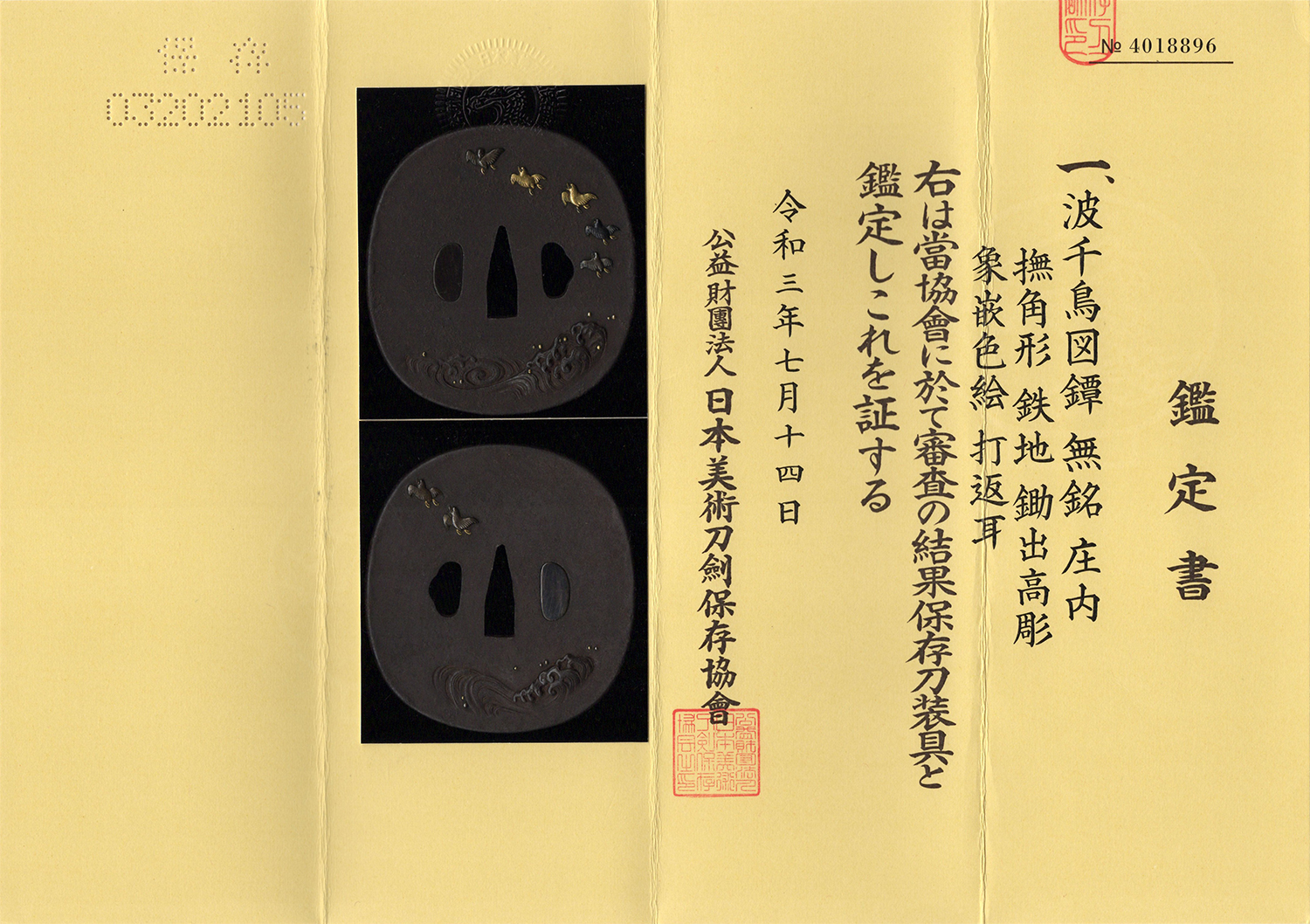
Certifies a genuine fitting worth preserving: a correct signature, or, if unsigned, an identifiable era and school, with recognized artistic and craft value.
The NBTHK (Nihon Bijutsu Tōken Hozon Kyōkai, the Society for the Preservation of Japanese Art Swords) is a public-interest incorporated foundation founded in 1948 and supervised by Japan’s Agency for Cultural Affairs (Bunkachō); it is based at the Japanese Sword Museum in Tokyo. Its expert panels physically examine each submitted work (shinsa) and issue a certificate (kanteishō) ranking it by artistic and historical merit. NBTHK papers are the most widely recognized standard of authentication for Japanese swords and fittings.
NBTHK official siteAs a rule we do not accept returns, except when we have sent a different item from the one ordered or when there is a significant discrepancy between the description and the item. If you wish to return an item, please contact us within 3 days of its arrival and then send it back.
¥220,000