 NihontoWatchNihontoWatch
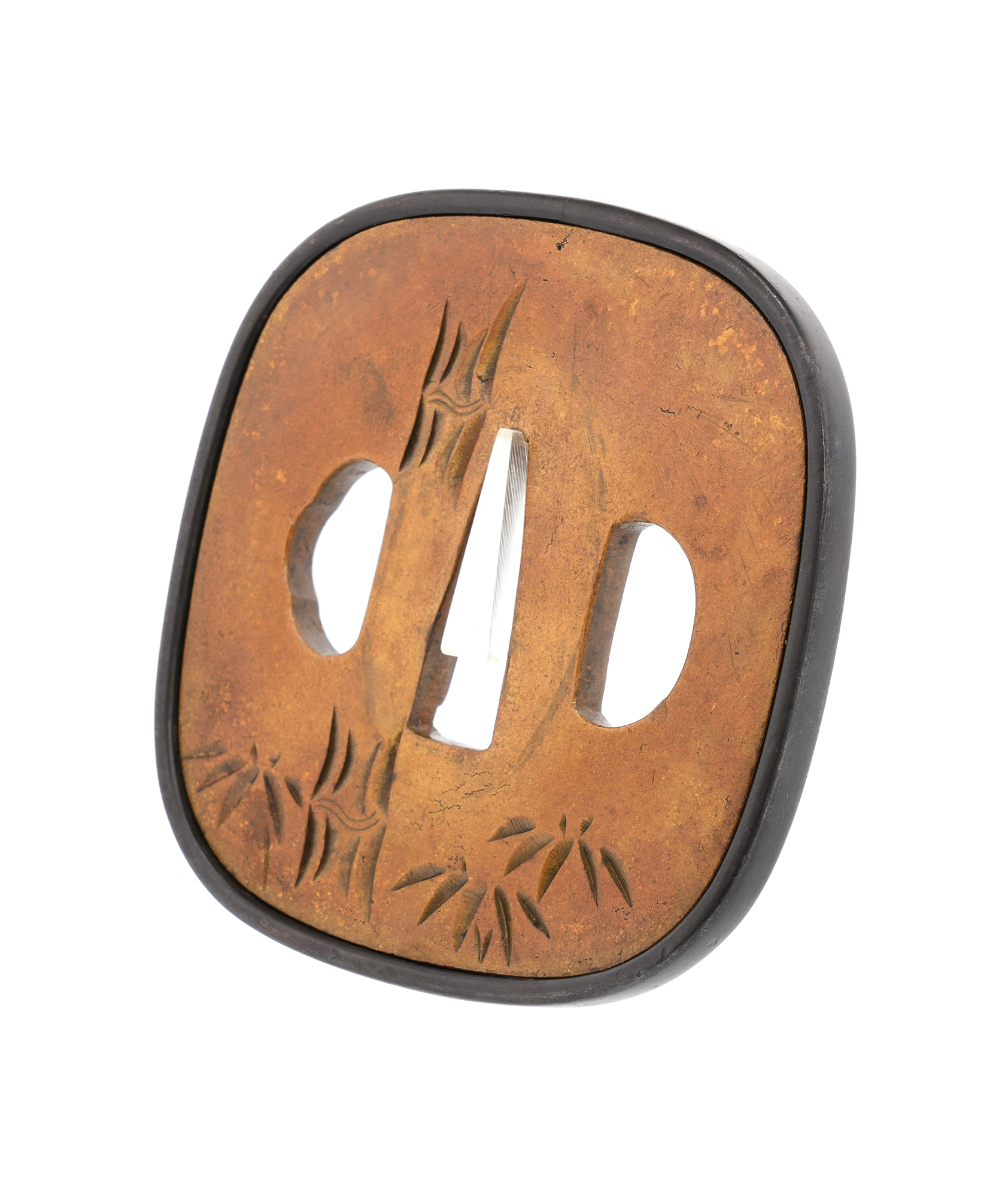
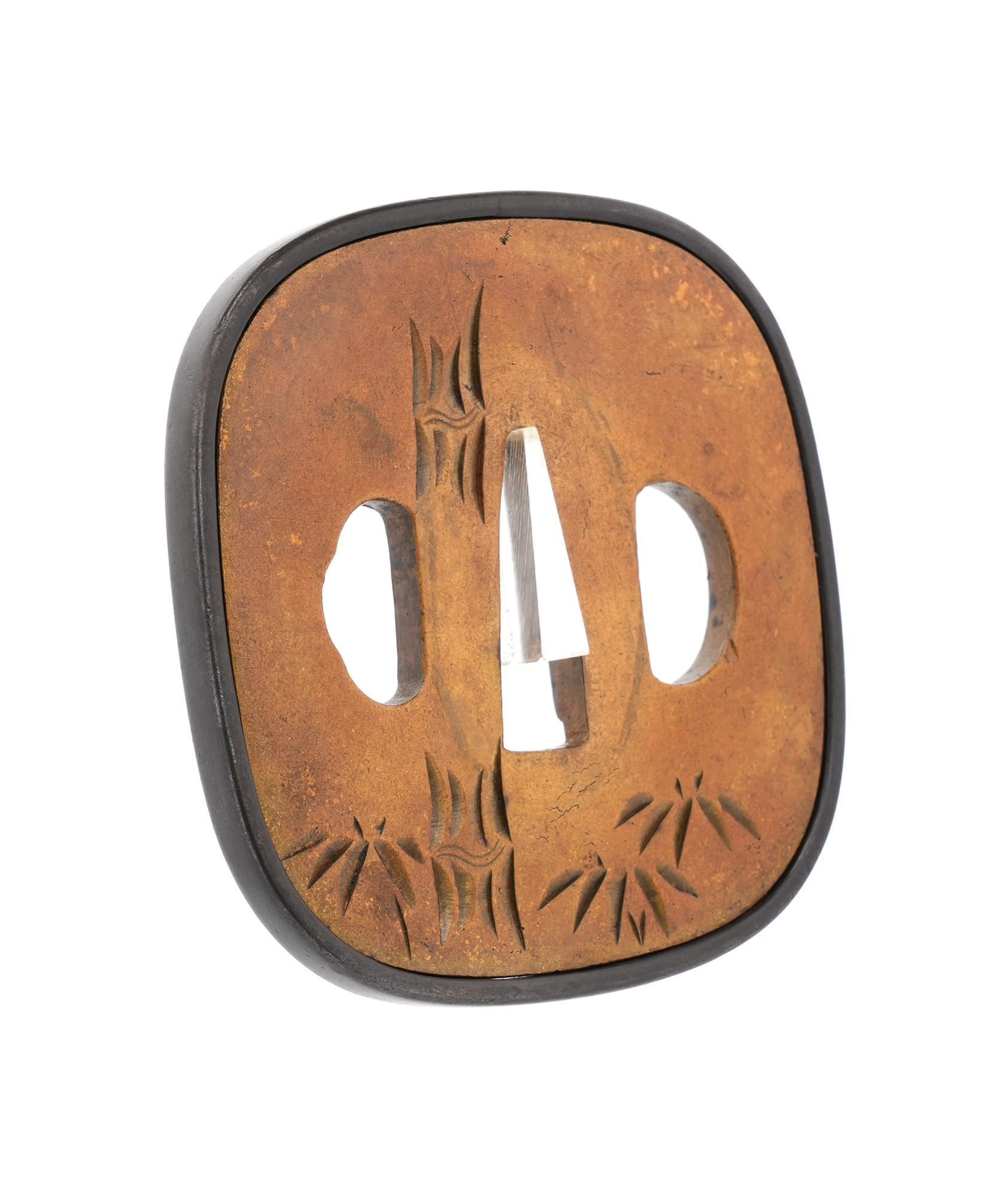
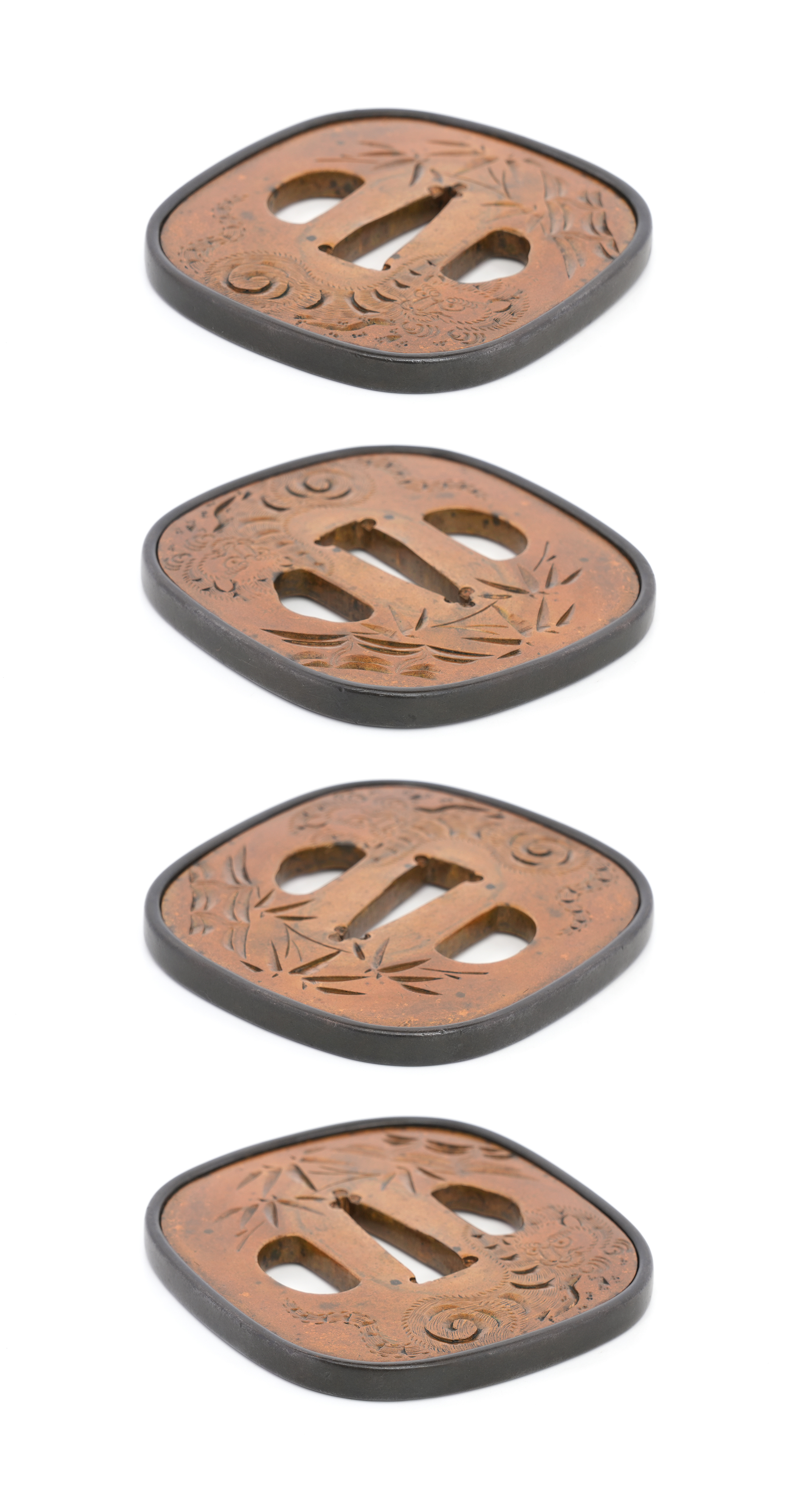
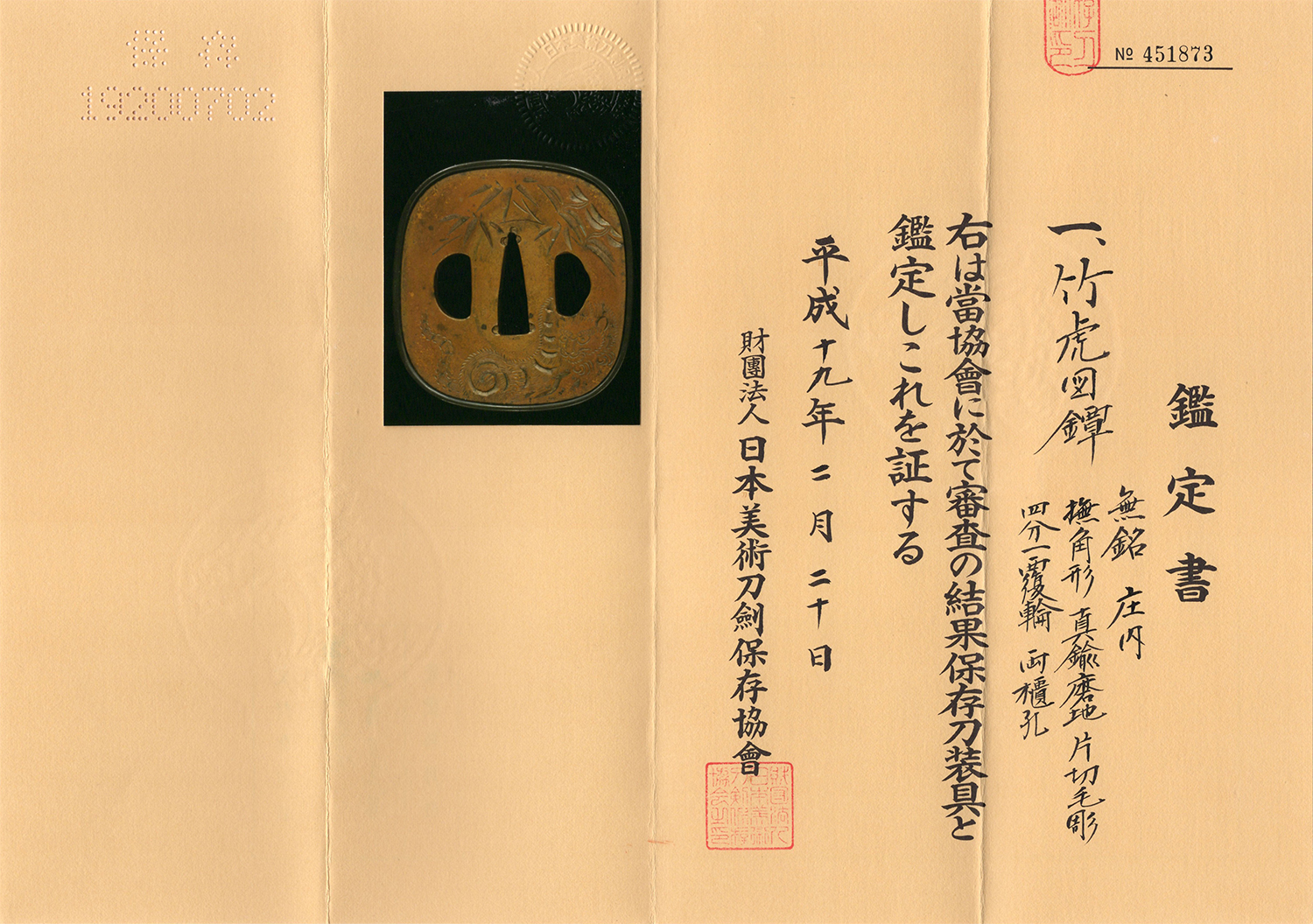
Shonai kinko is a regional collective term for sword fitting metalwork that developed during the Edo period in Dewa no Kuni Shonai, particularly centered around Tsuruoka. Its full-scale development is seen after Sakai Tadakatsu entered Shonai, and in records, it is known as an early example that Shoami Matahachiro served the Sakai family in Kanbun 4 (1664). Among them, Tsuchiya Yasuchika, who was born in Tsuruoka, studied under Sato Yoshihisa, a Shoami-lineage metalworker in Shonai, and later went to Edo to enter the school of Nara Tatsumasa, becoming a master smith praised alongside Nara Toshinaga and Sugiura Joi as the "Nara Sansaku". Afterward, metalworkers who mastered techniques of different lineages, such as Watanabe Arichika, the Washida school, Katsurano Sekibun, and Funada Ikkin, were active in Shonai, forming a unique regional metalwork culture while incorporating the influence of Edo kinko. This work is a Take-tora zu tsuba that is mumei but was given a kiwame of "Shonai" in the Hozon Tosogu Kanteisho. It features katakiri-kebori on a nade-kaku-gata shinchu migaki-ji, with a shibuichi fukurin around the edge and two hitsu-ana. The composition features bamboo as the main subject on one side with large margins, and on the other side, a tiger crouching beneath a bamboo grove. The tiger's fur is expressed through overlapping fine tagane, and a soft sense of volume is created by connecting lines from the head to the torso and the curled tail. On the other hand, the bamboo has its trunk nodes powerfully carved and its leaves expressed with sharp katakiri-kebori, showing a contrast with the detailed kebori of the tiger. Another highlight is how the blackish shibuichi fukurin surrounds the shinchu-ji, which has settled into a reddish-brown, tightening the color tone of the simple jigane. Furthermore, although it can be confirmed in documents that Katsurano Sekibun, who became a retained smith of the Shonai clan, was skilled at tigers, there is no basis to link this work to Sekibun or his lineage, and I think it is appropriate to evaluate it as a "Shonai" kiwame as stated in the kanteisho.
NihontoWatchOffered by Toushin

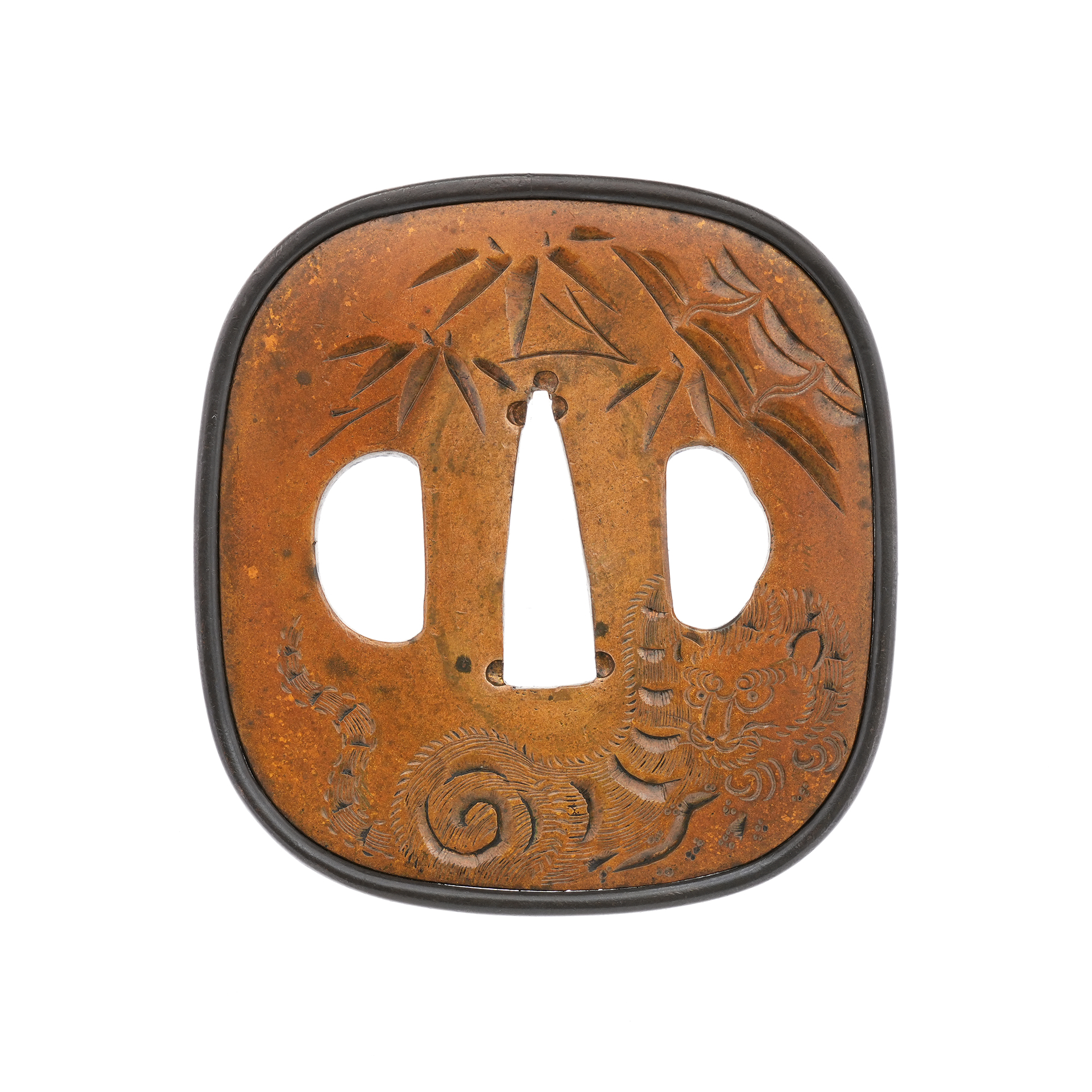
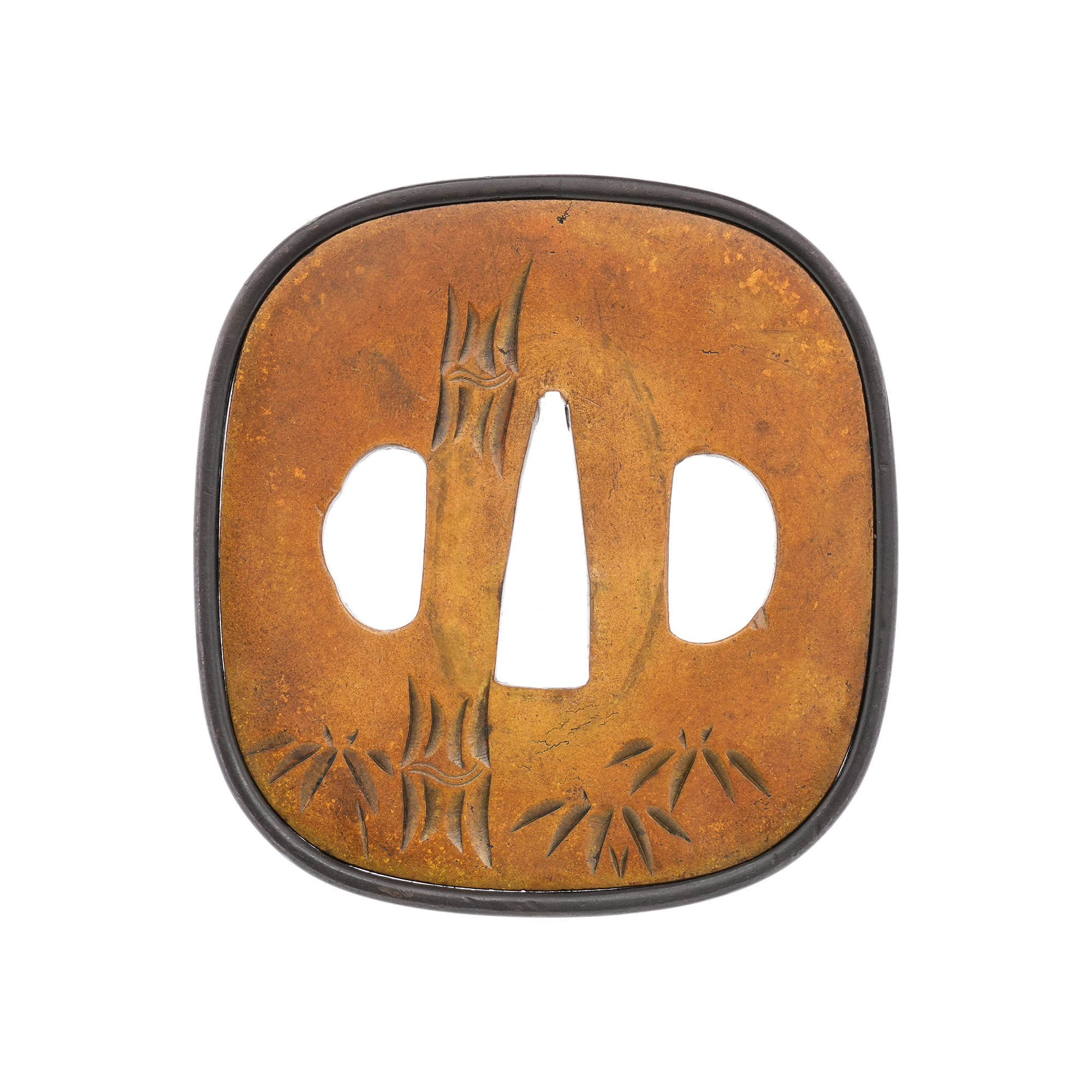
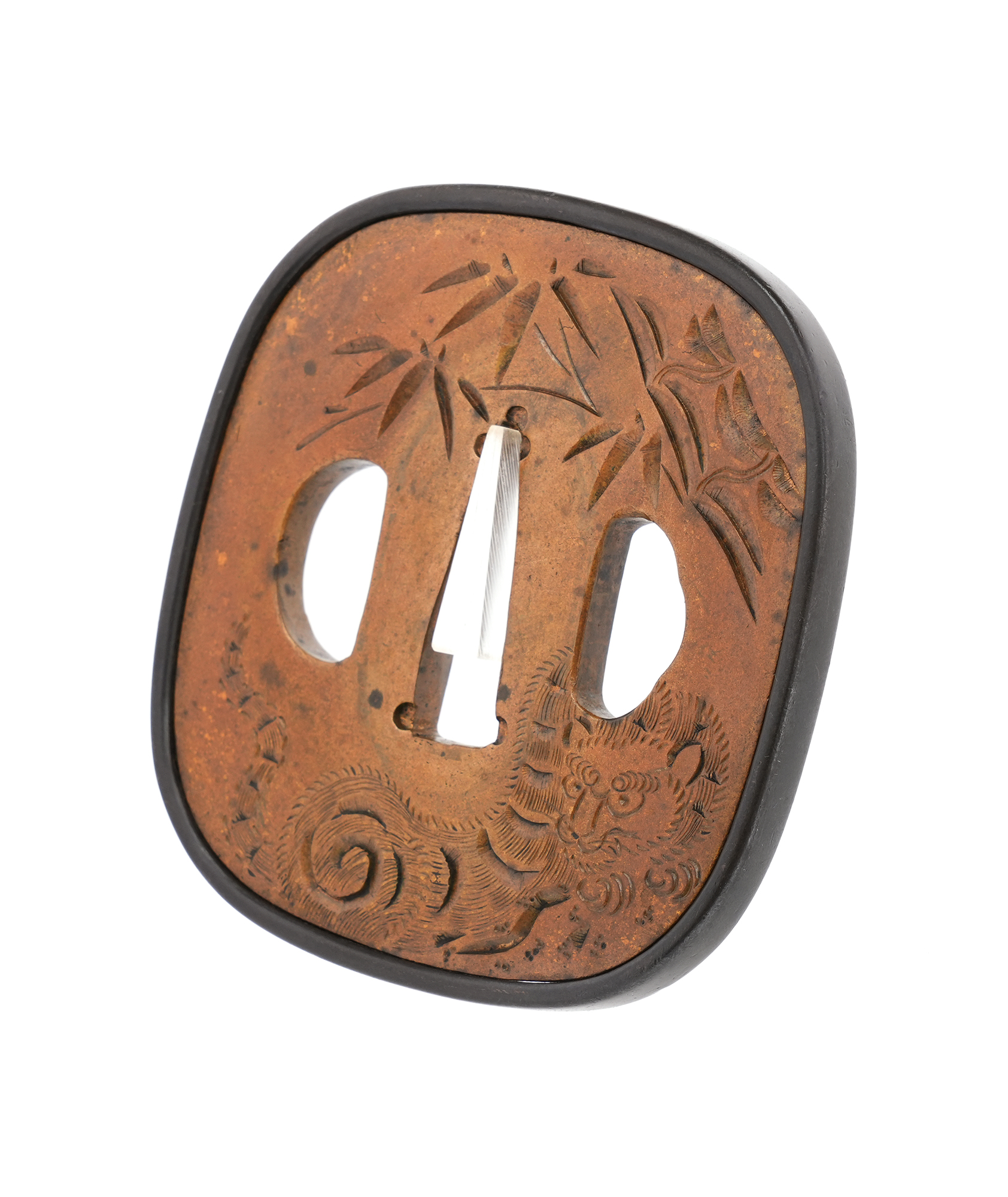
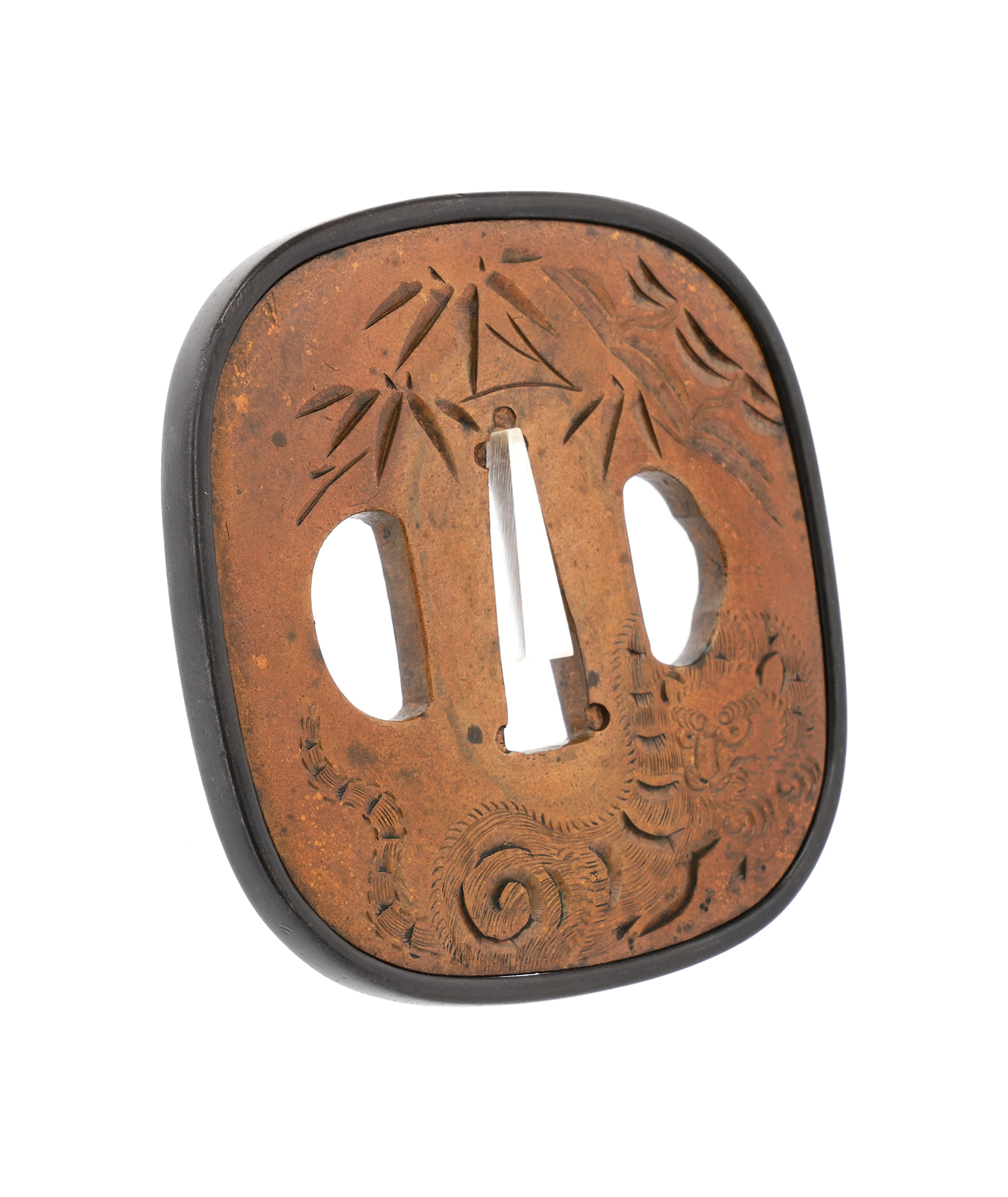
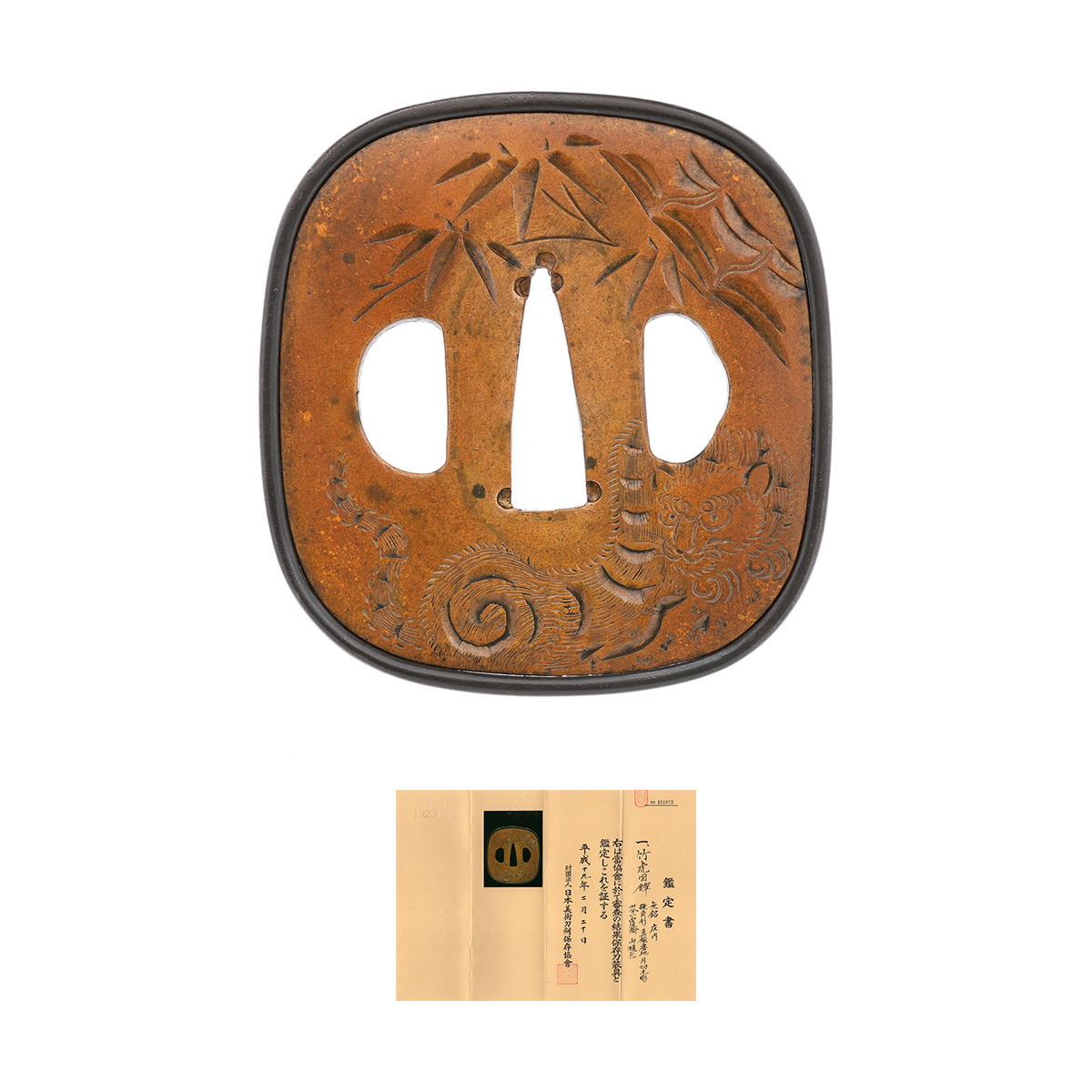
As written by the shop
Machine translation from the shop's Japanese · may contain errors ·
Certifies a genuine fitting worth preserving: a correct signature, or, if unsigned, an identifiable era and school, with recognized artistic and craft value.
The NBTHK (Nihon Bijutsu Tōken Hozon Kyōkai, the Society for the Preservation of Japanese Art Swords) is a public-interest incorporated foundation founded in 1948 and supervised by Japan’s Agency for Cultural Affairs (Bunkachō); it is based at the Japanese Sword Museum in Tokyo. Its expert panels physically examine each submitted work (shinsa) and issue a certificate (kanteishō) ranking it by artistic and historical merit. NBTHK papers are the most widely recognized standard of authentication for Japanese swords and fittings.
NBTHK official siteAs a rule we do not accept returns, except when we have sent a different item from the one ordered or when there is a significant discrepancy between the description and the item. If you wish to return an item, please contact us within 3 days of its arrival and then send it back.
¥330,000