 NihontoWatchNihontoWatch
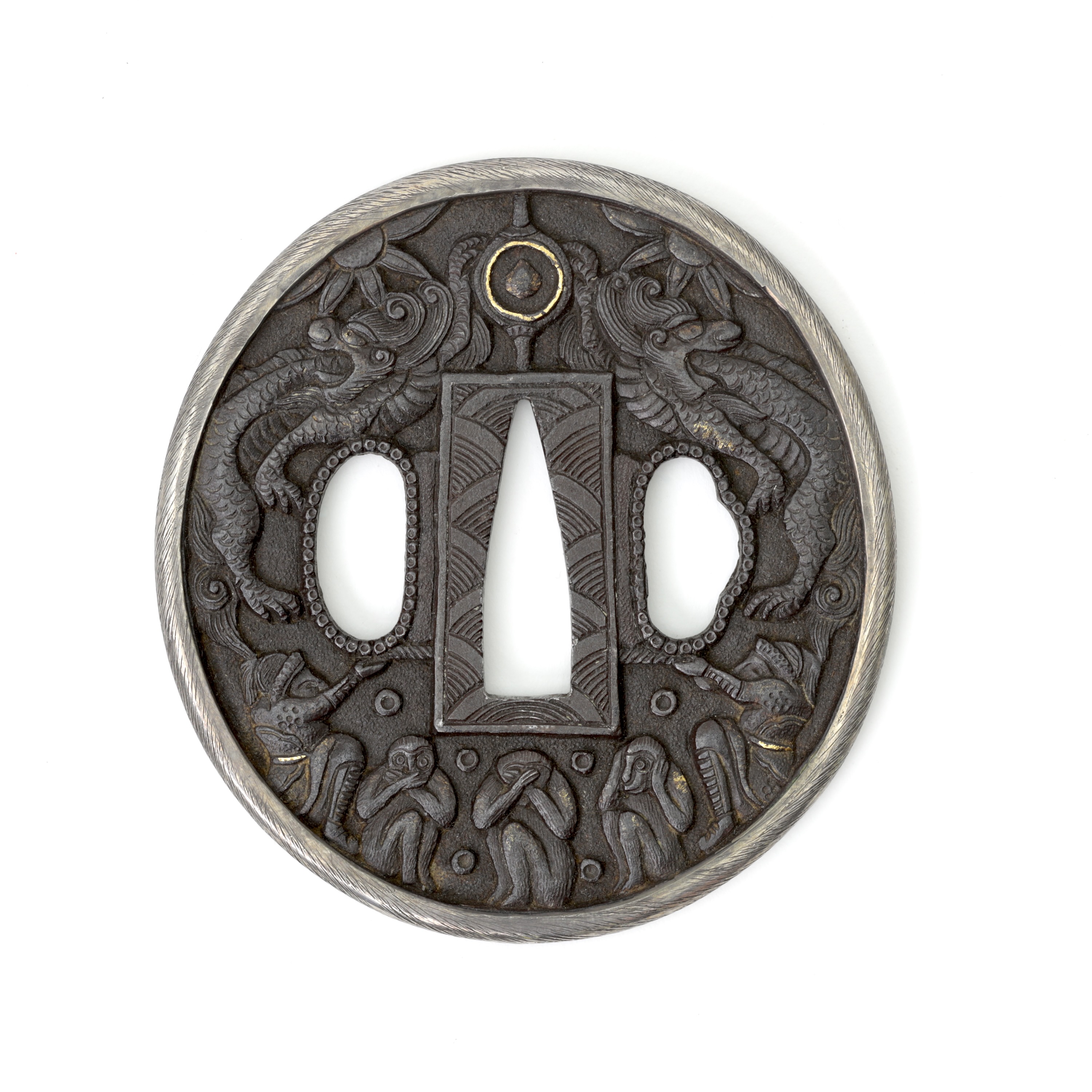
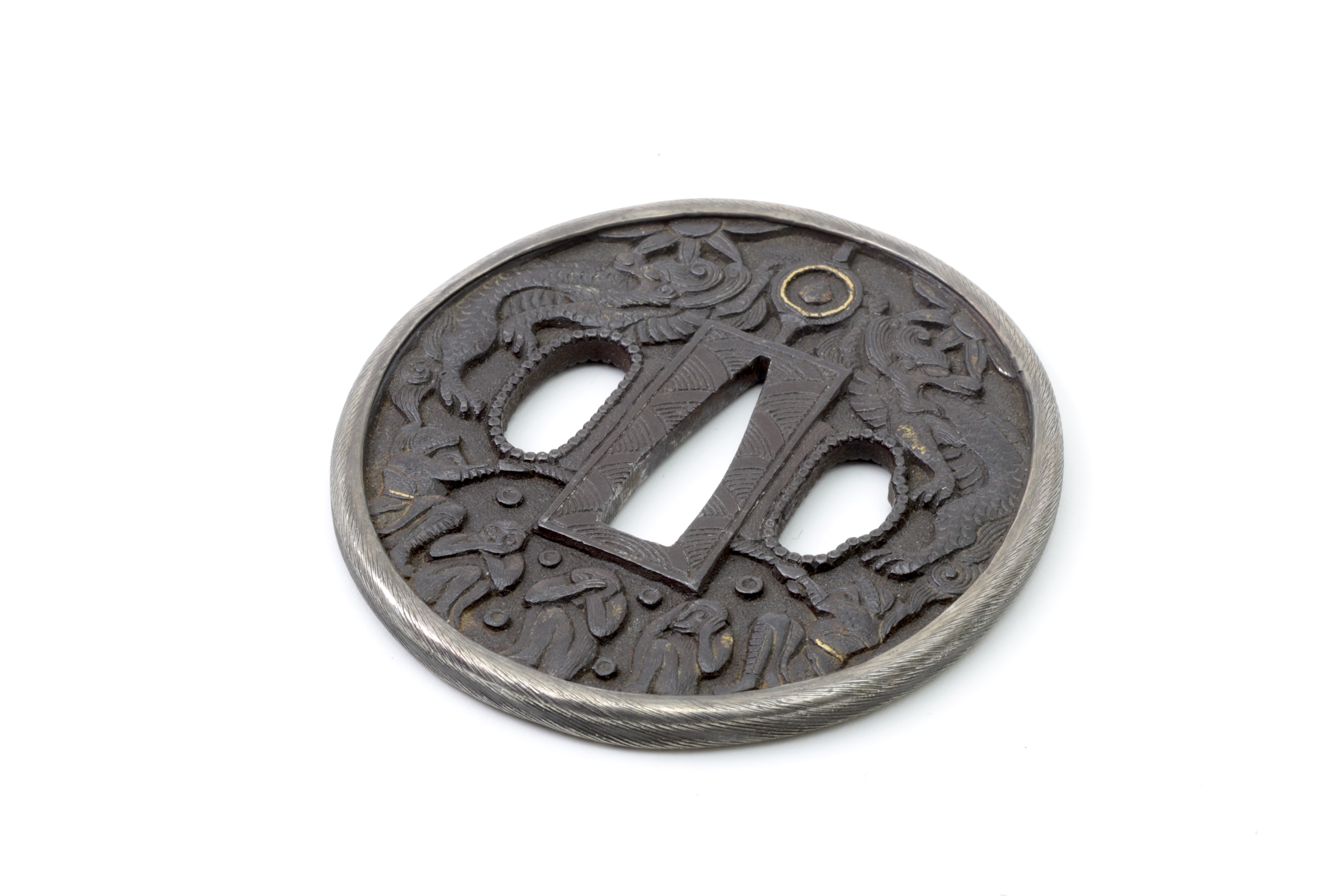
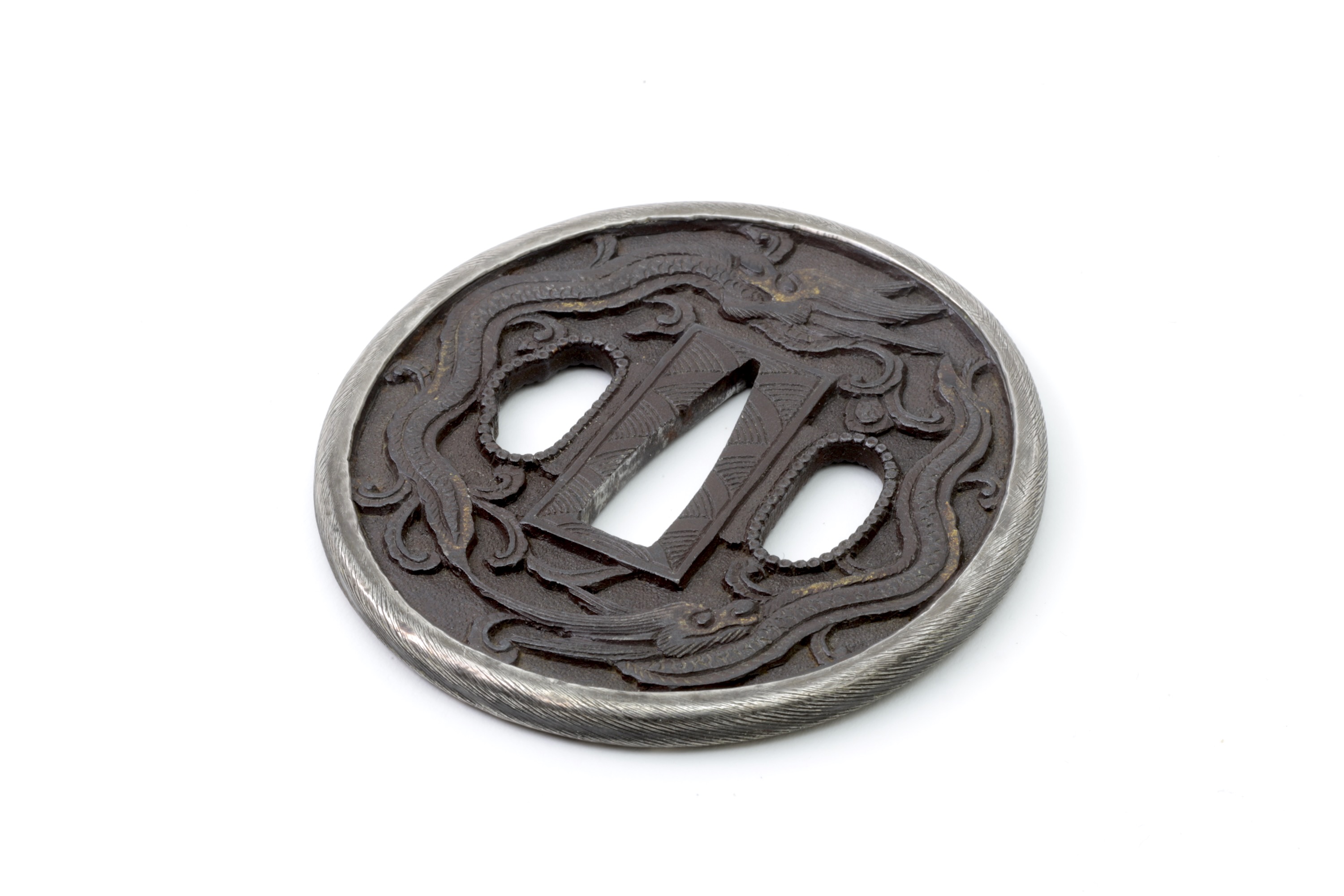
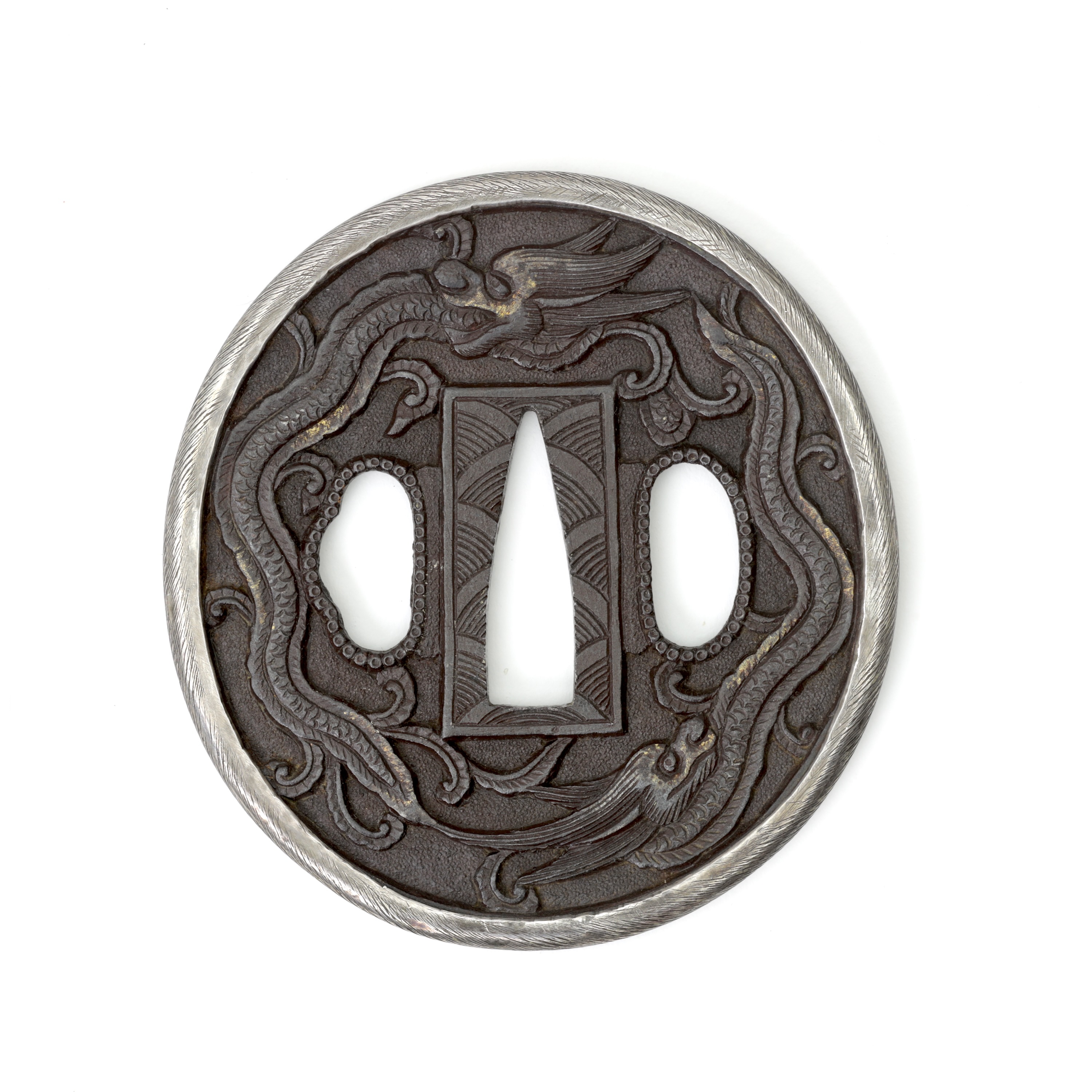
Description An interesting Japanese tsuba (sword guard). The base plate is made out of iron, forged to its general shape and then carved to detail. The fukurin (rim) is a separate piece of silver, decorated with with diagonal grooves over its surface. The style of the decoration is today classified as nanban, "Southern Barbarian", a catch-all for items that show foreign influences. It features a rectangular seppa-dai (washer plate) with stylized waves carved into it. It has hitsu-ana for both kogai and kozuka that with beaded rims. The entire background is stamped with small dots to give a matte appearance. Omote (facing side) There is a lot going on on the omote side. It is decorated with two dragon, positioned symmetrically and looking away from each other. There is a circular element in-between them which they each touch with one paw. The sphere contains a tama or sacred jewel. Above each dragon is also a flower-like motif. The observer will also notice a number of small circles scattered around the base of the design, six in total. If we count the circular element that contains the tama at the top we reach seven, the number associated with the Big Dipper, a significant constellation in Chinese Daoism and Japanese Shintoism where it belongs to Amenominakanushi, the oldest and most powerful of kami -spirits. In the lower section, left and right, are foreign figures that are holding up what appears to be a rope. The hats appear like they could be Chinese, Manchu or Mongolian. At the very bottom of the design are the Three Wise Monkeys. Three Wise Monkeys Mizaru, who sees no evil, covering his eyes Kikazaru, who hears no evil, covering his ears Iwazaru, who speaks no evil, covering his mouth1 They depict the Japanese maxim "see no evil, hear no evil, speak no evil". The concept has been popularized in the western world as well, and is usually seen as turning a blind eye to something improper. In the original Buddhist meaning it was probably more about not dwelling on negativity. The monkeys are servants of Saruta-Hiko, the Japanese God of Crossroads.2 Notes 1. Lafcadio Hearn; Glimpses of unfamiliar Japan. Vol 2. 1894. Page 127. 2. Ibid. Ura (reverse side) The other side shows two snake-like dragon with no paws like the ones on the omote side, circling around the center of the tsuba. Some scrolling elements emanate from their bodies. The decor on both sides features some highlights done in gold, now mostly worn.
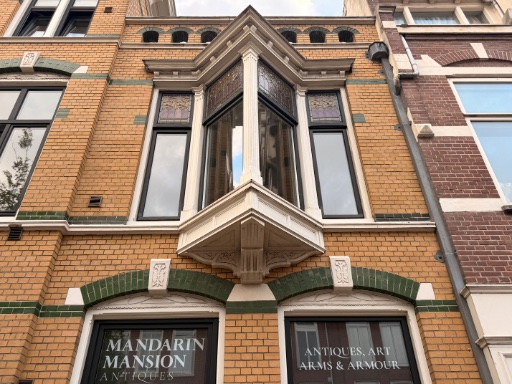
NihontoWatchOffered by Mandarin Mansion
This piece has sold

Hizen
Returns accepted on items ordered from the site when an item does not appear to be as depicted and described; buyer must notify via email within 7 days of receipt. Refund covers purchase price minus shipping, bank fees, and currency conversion. Sales on items paid in terms are final, as are sales of items personally inspected.