 NihontoWatchNihontoWatch
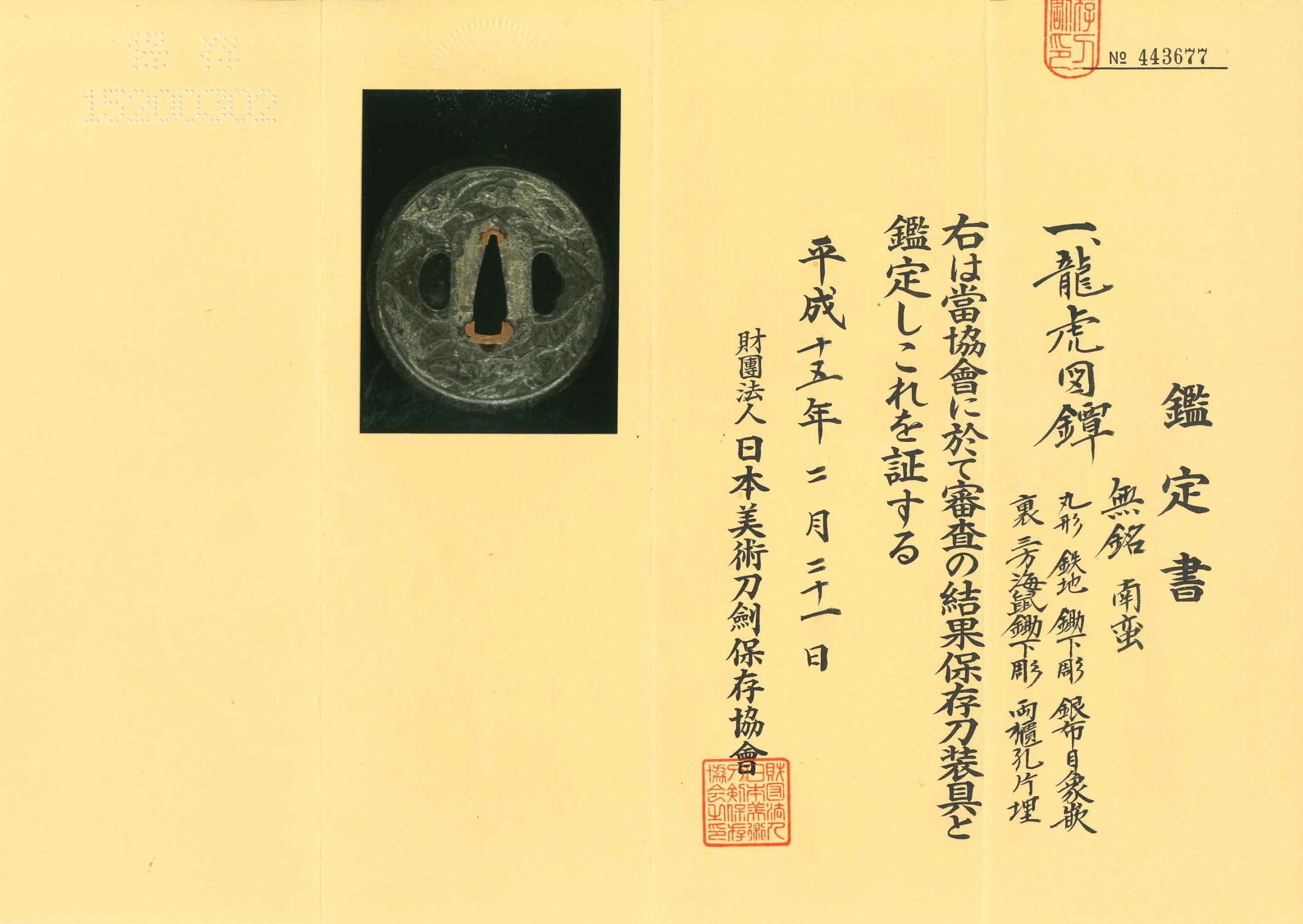
On the upper part of the omote is a ryu twisting its neck to look toward the left. On the lower part, an animal with four legs and a long tail can be seen. It has been given a kiwame of Ryuko-zu (Nanban) by the Nippon Bijutsu Token Hozon Kyokai. Nanban refers to countries such as Spain and Portugal that introduced firearms to Japan, and later became a word referring to foreign countries including China. Regarding tosogu such as tsuba, those with exotic designs based on improved imported goods are called Nanban. The ura side is Sanpo-namako. Thanks to the large sukishabori, the tsuba is also light.
NihontoWatchOffered by Nosyudo

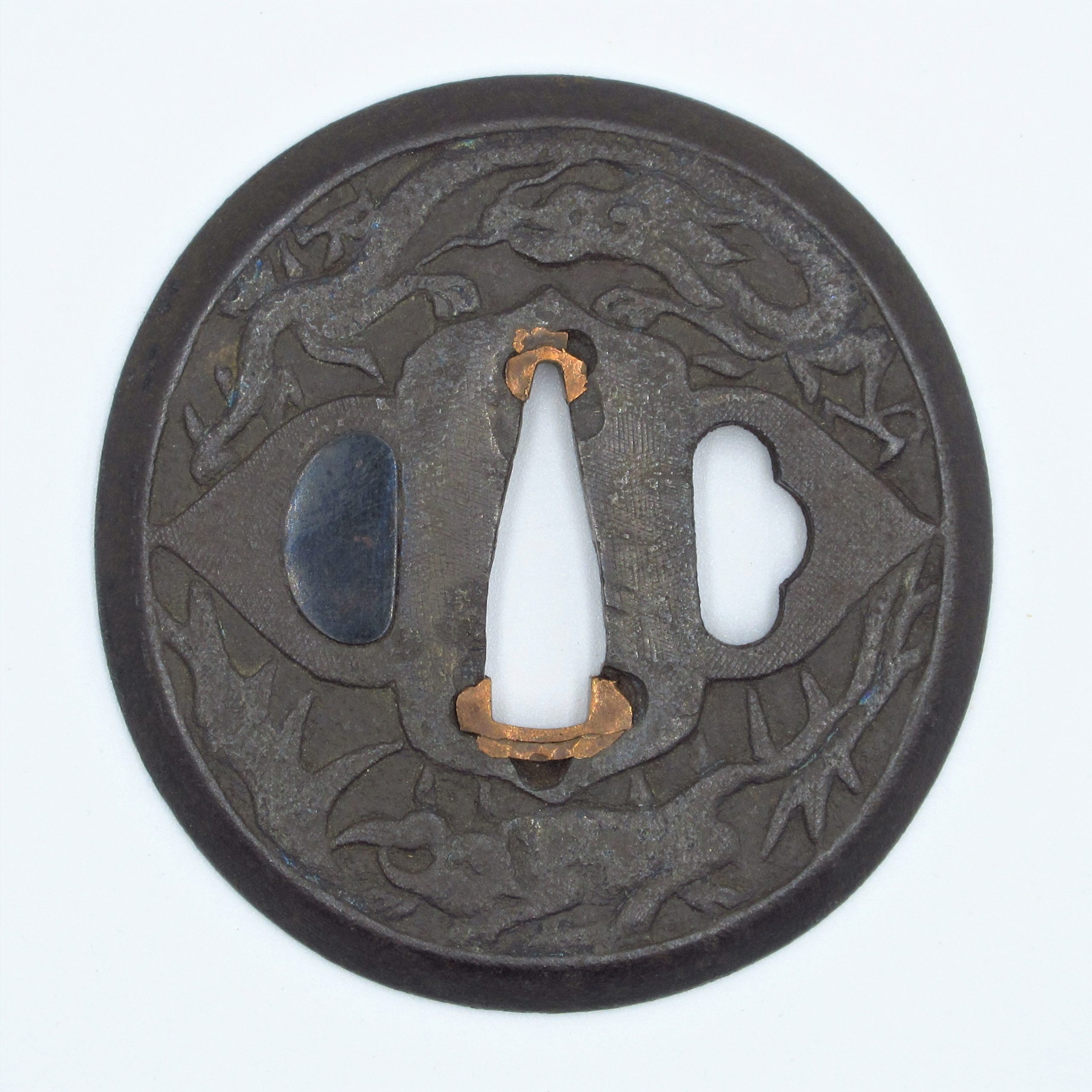
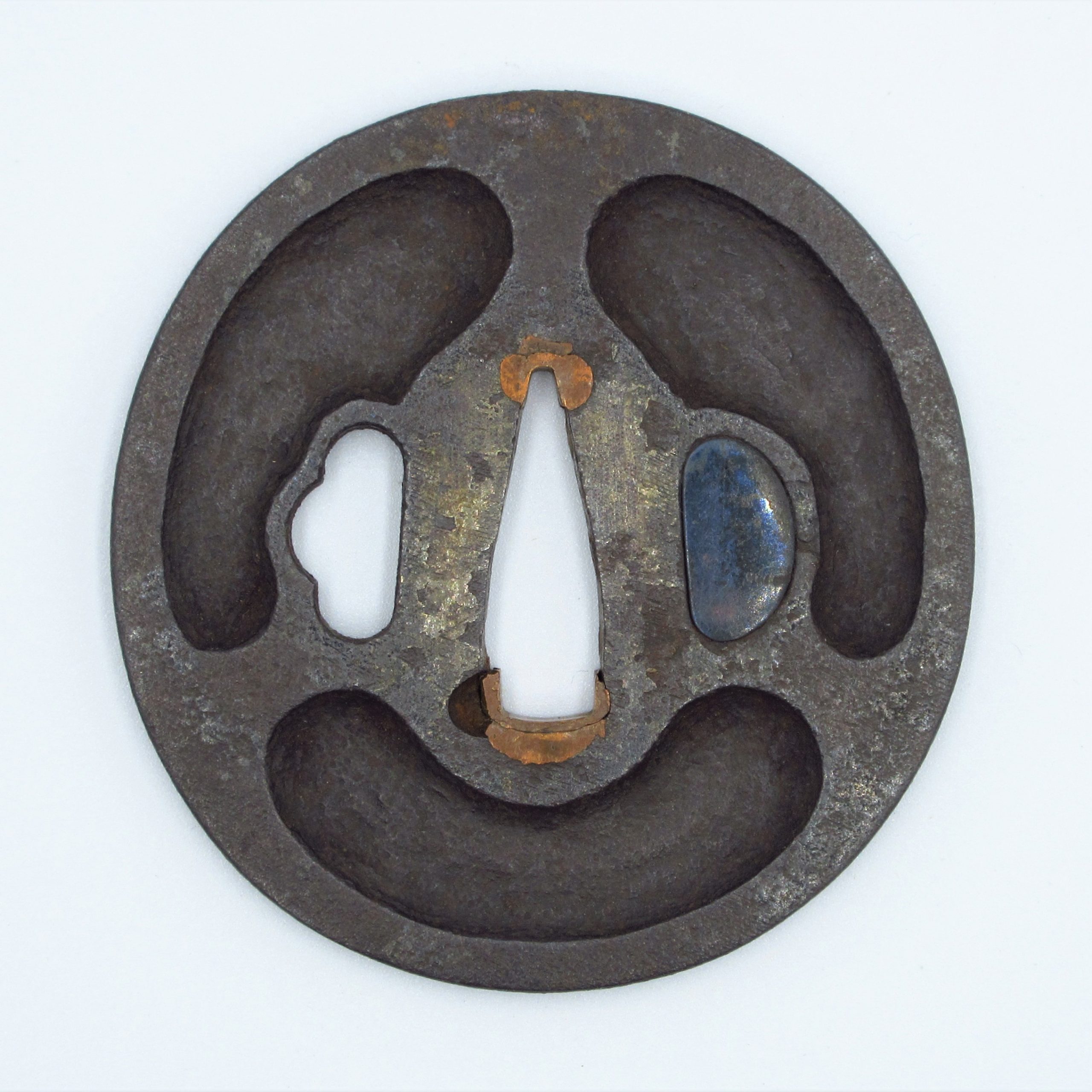
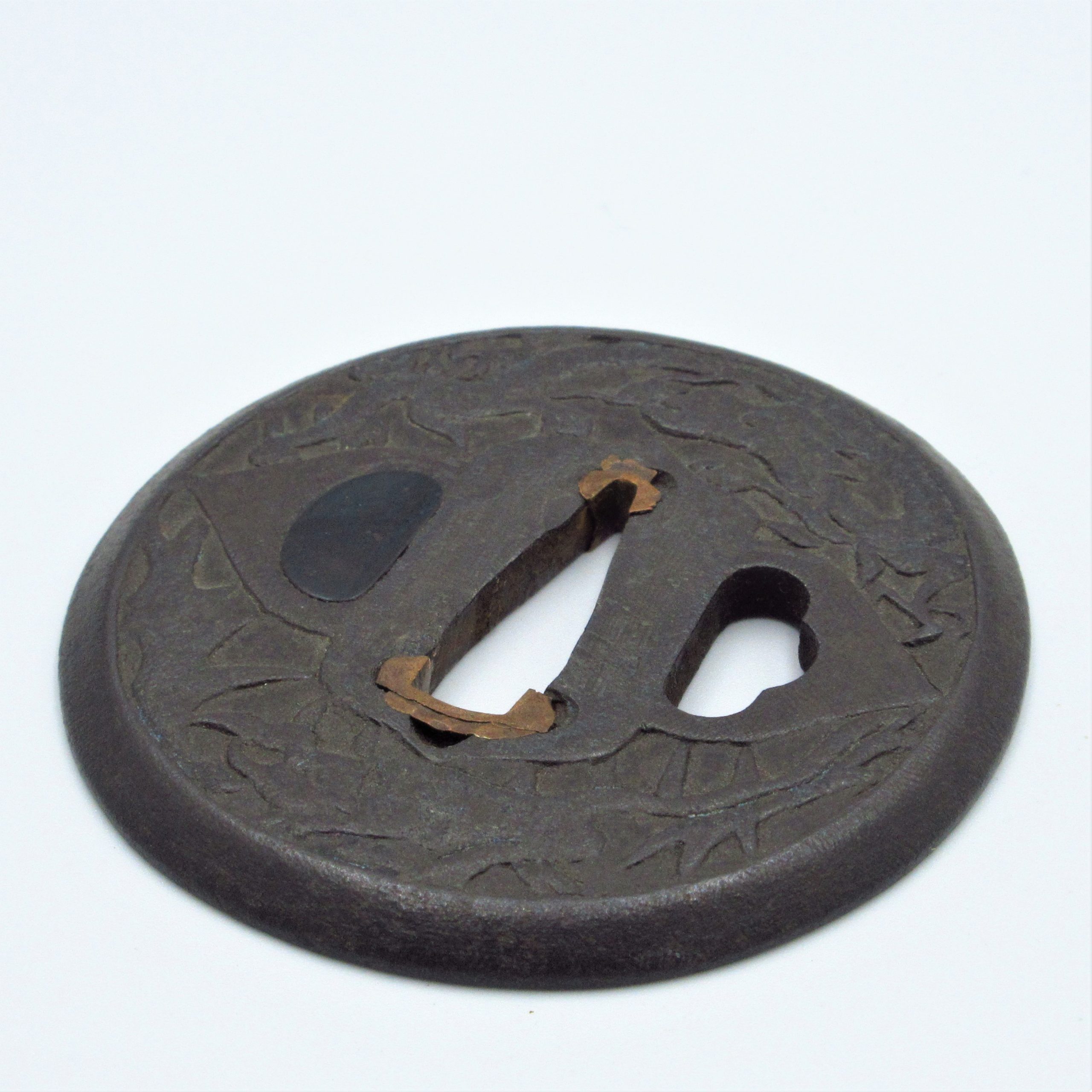
Unsigned
Hozon (NBTHK)
As written by the shop
Machine translation from the shop's Japanese · may contain errors ·
Certifies a genuine fitting worth preserving: a correct signature, or, if unsigned, an identifiable era and school, with recognized artistic and craft value.
The NBTHK (Nihon Bijutsu Tōken Hozon Kyōkai, the Society for the Preservation of Japanese Art Swords) is a public-interest incorporated foundation founded in 1948 and supervised by Japan’s Agency for Cultural Affairs (Bunkachō); it is based at the Japanese Sword Museum in Tokyo. Its expert panels physically examine each submitted work (shinsa) and issue a certificate (kanteishō) ranking it by artistic and historical merit. NBTHK papers are the most widely recognized standard of authentication for Japanese swords and fittings.
NBTHK official site¥45,000