War at home and trade abroad made Muromachi Bizen the busiest forge region in Japan: a century of Sengoku demand after the Ōnin War, and export missions to Ming China carrying blades by the tens of thousands.
 NihontoWatchNihontoWatch
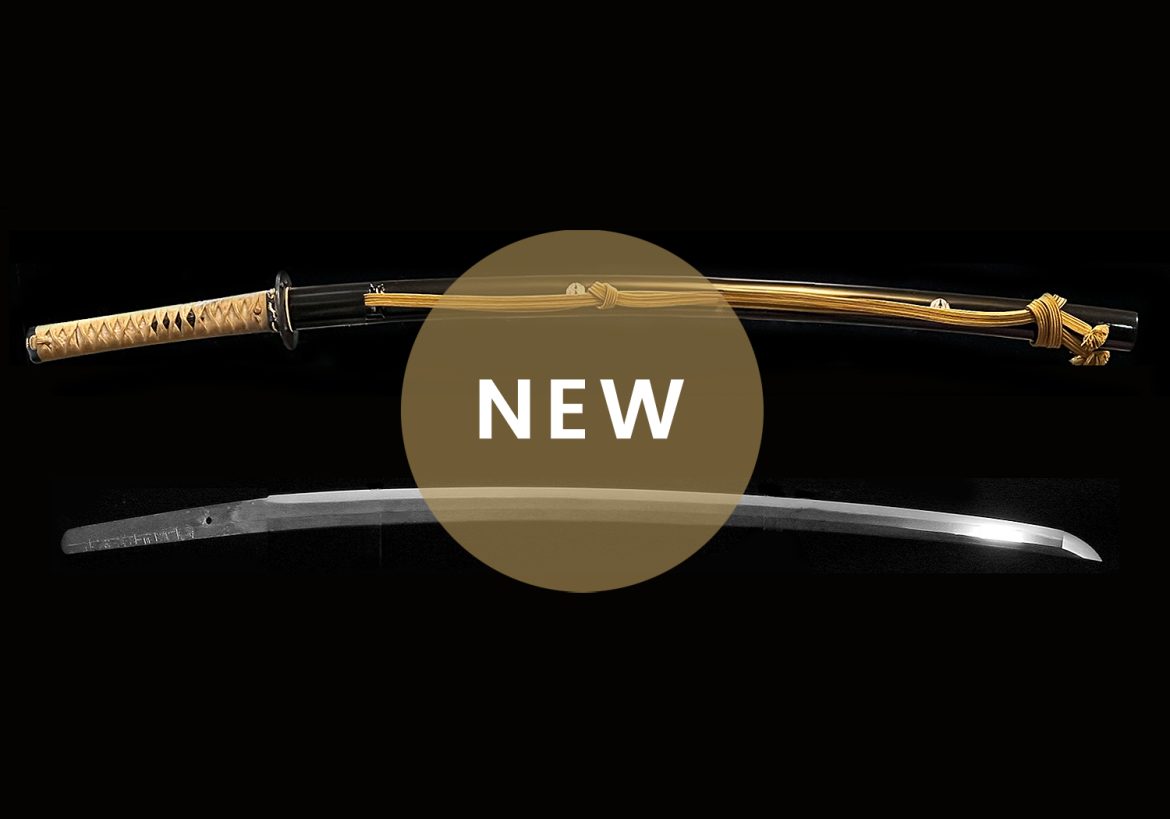
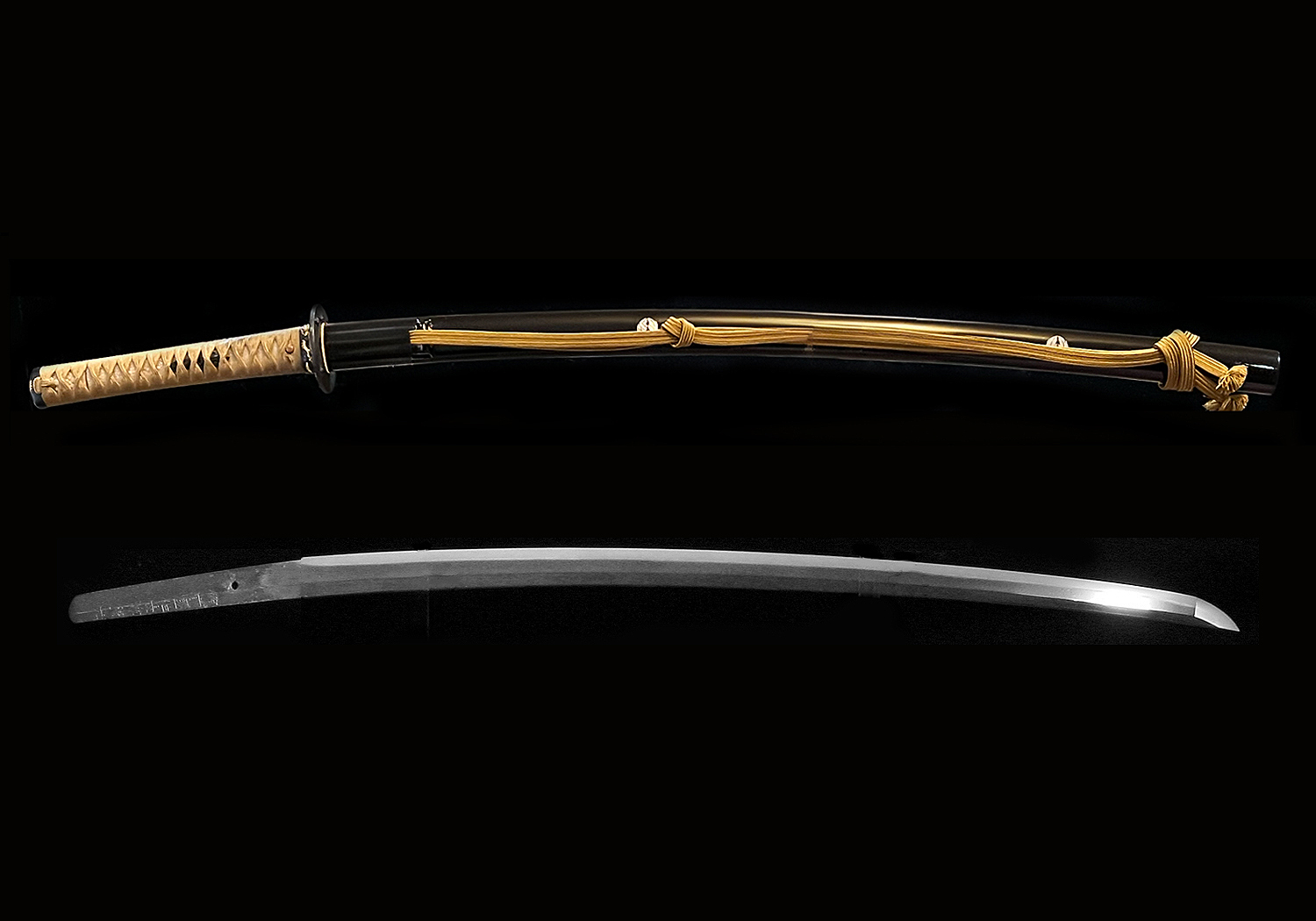
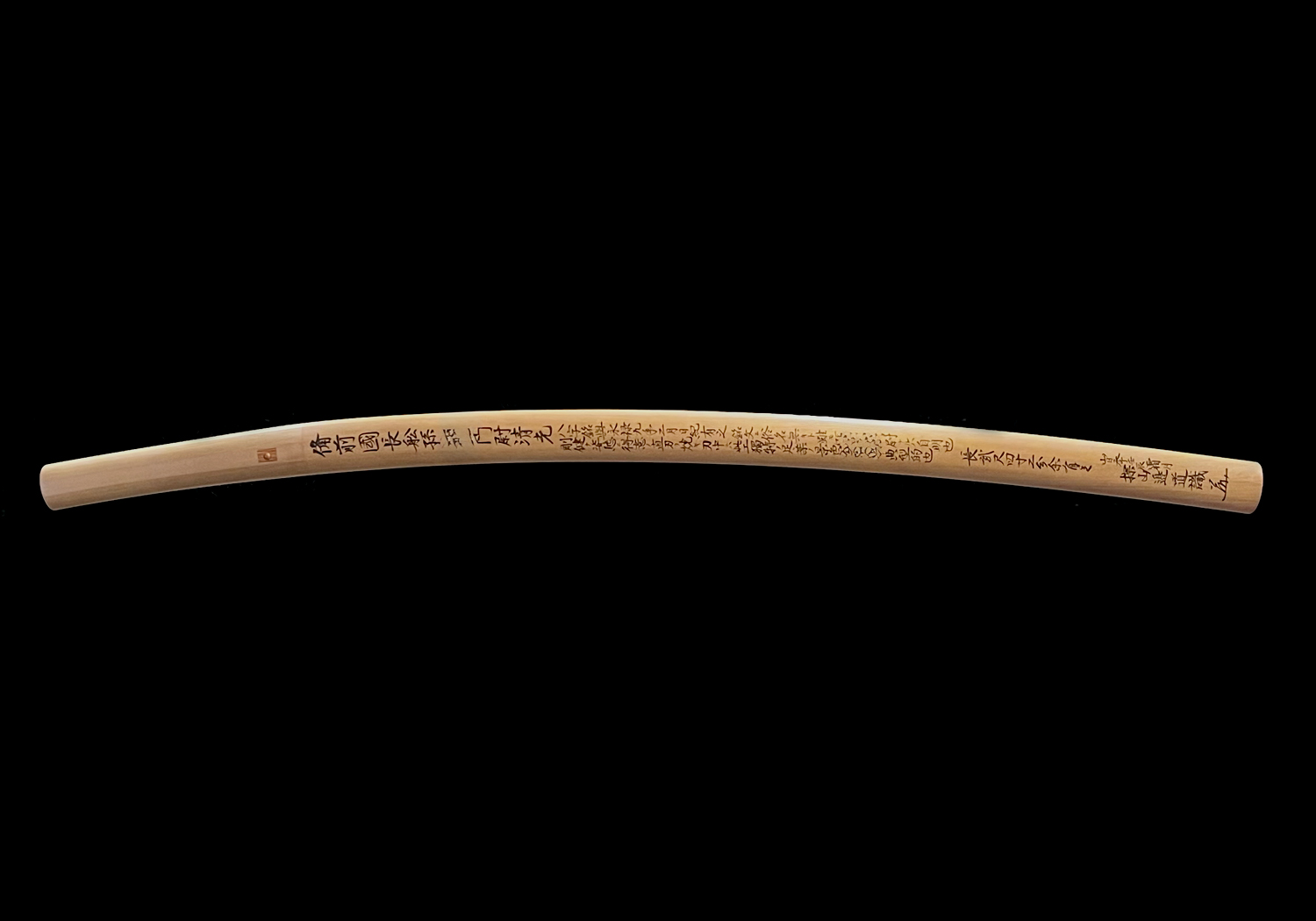
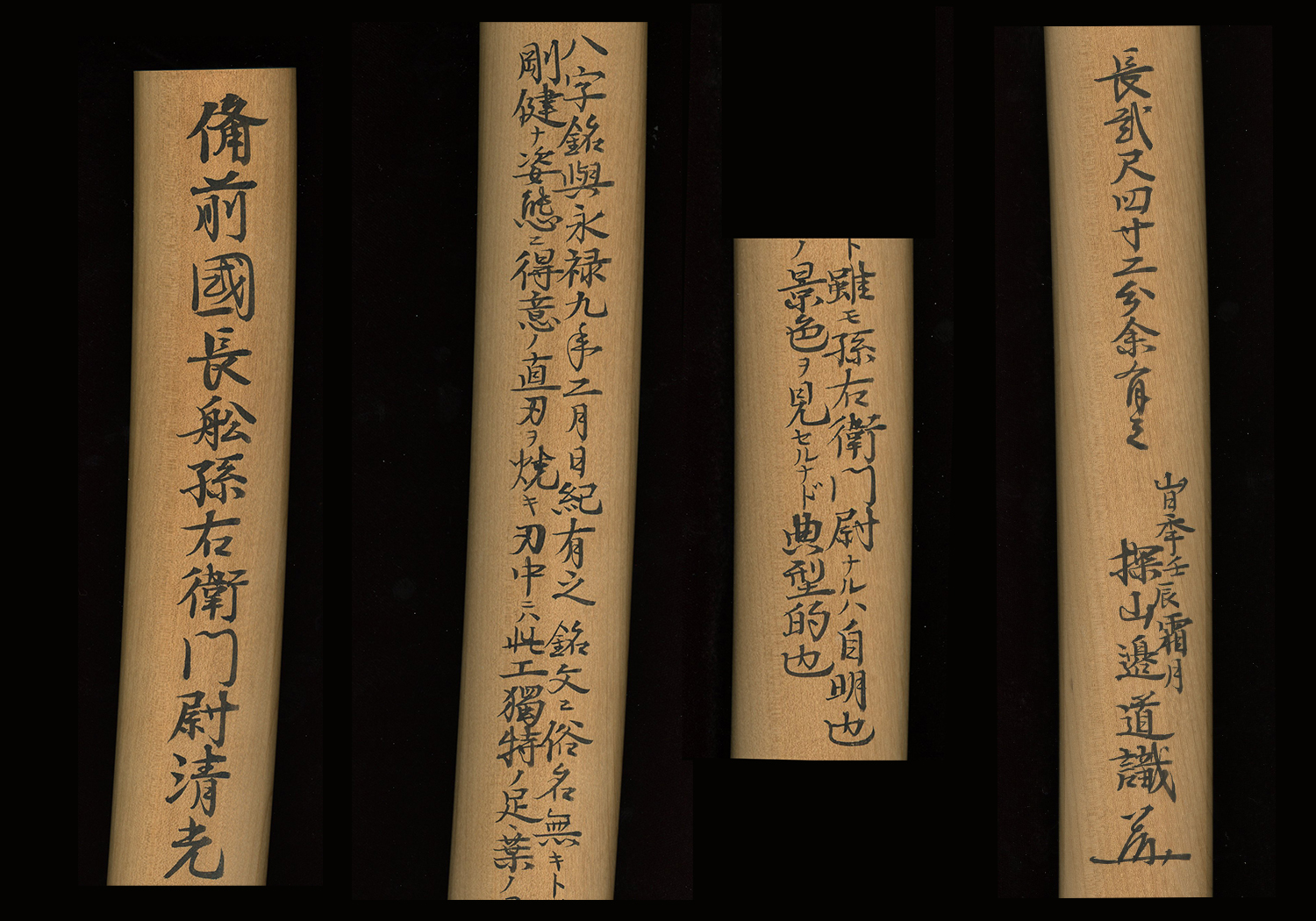
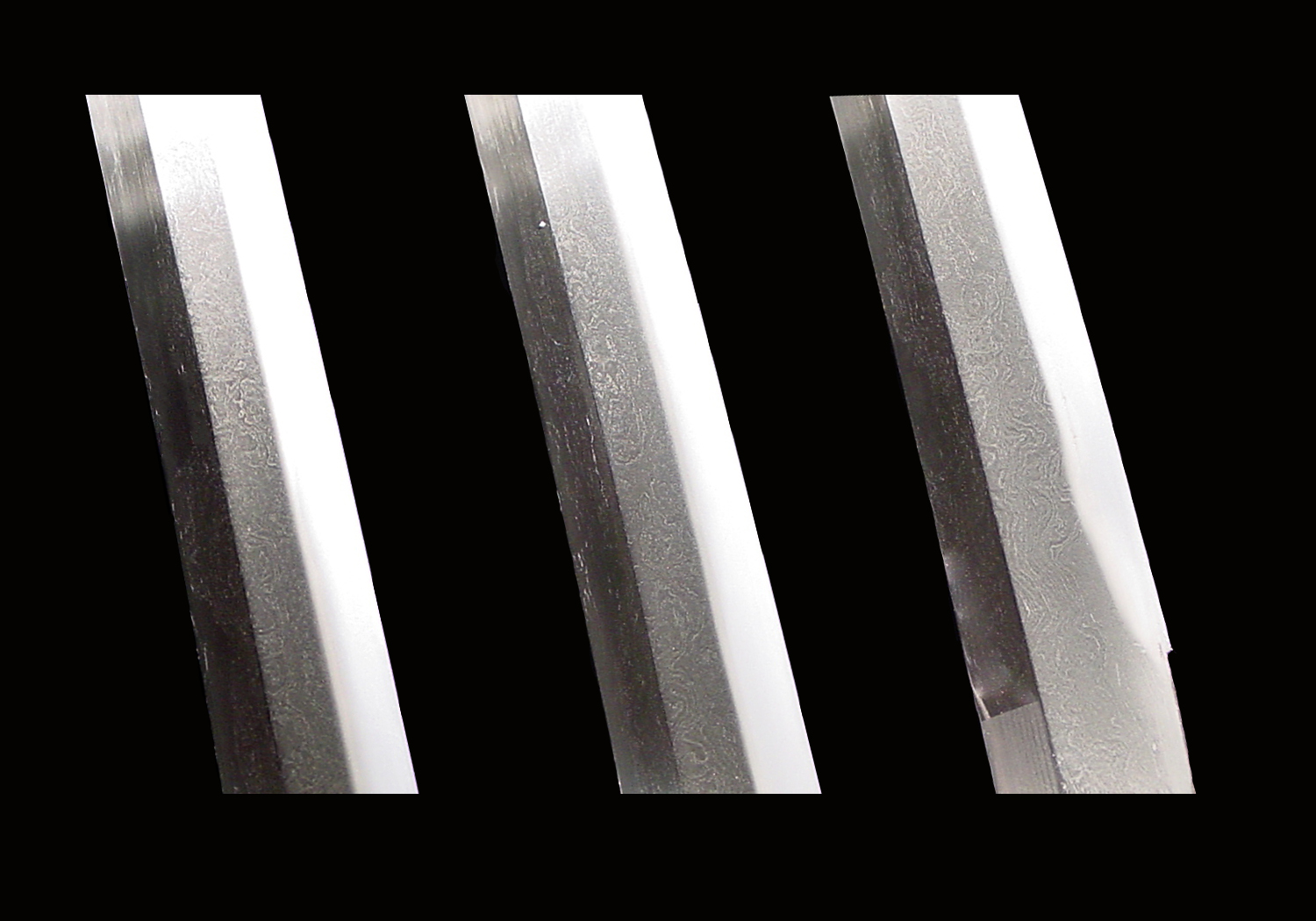
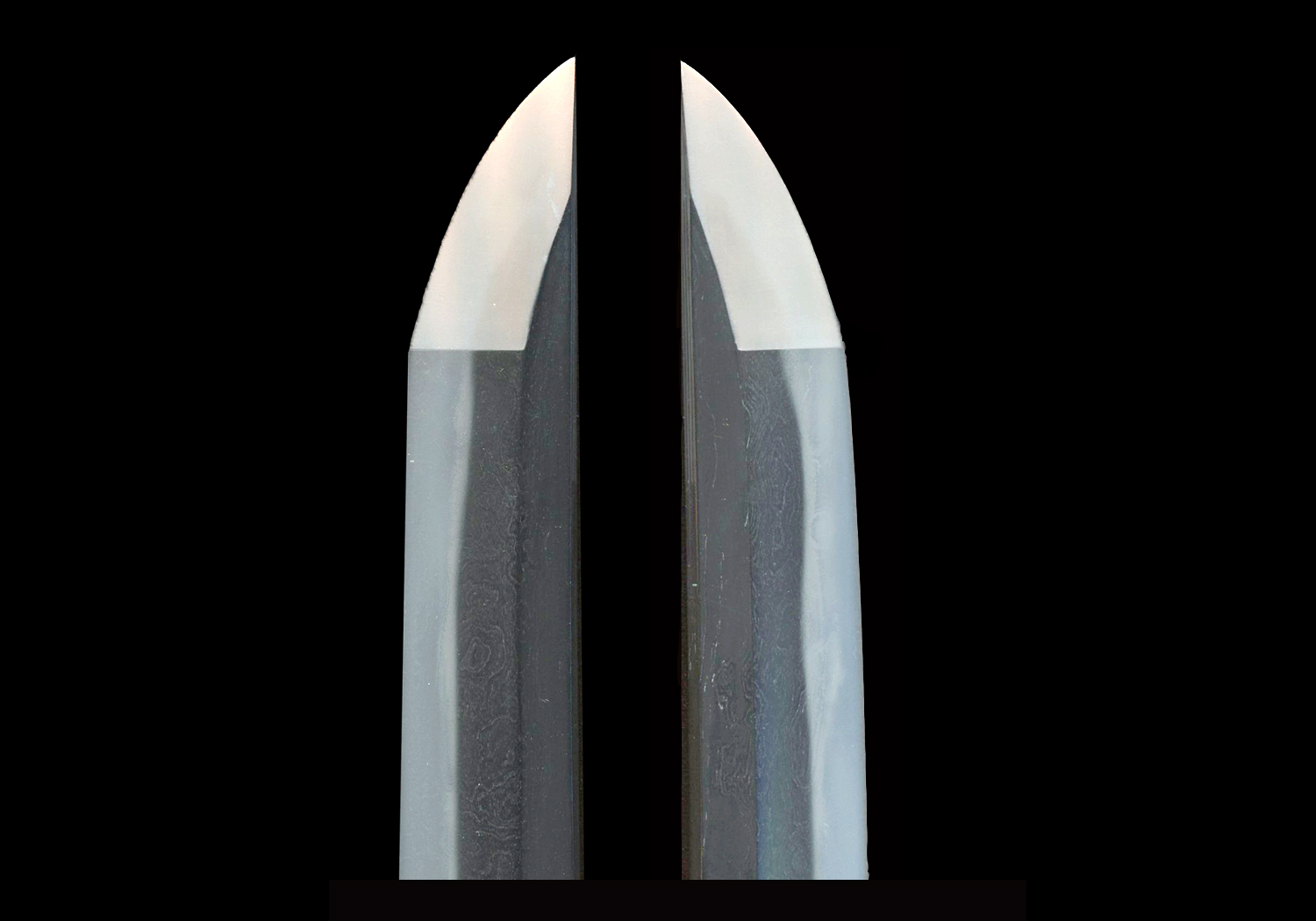
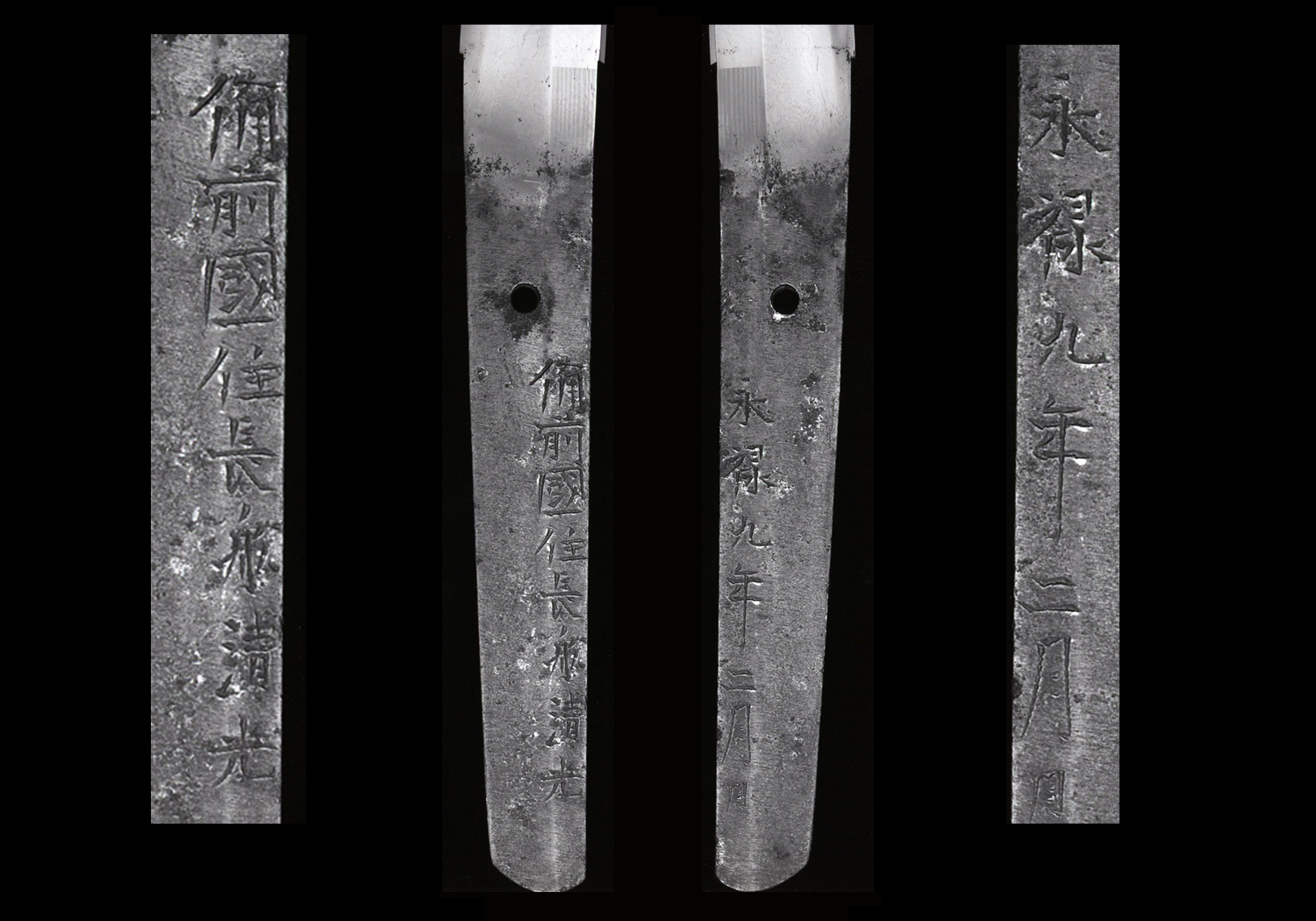
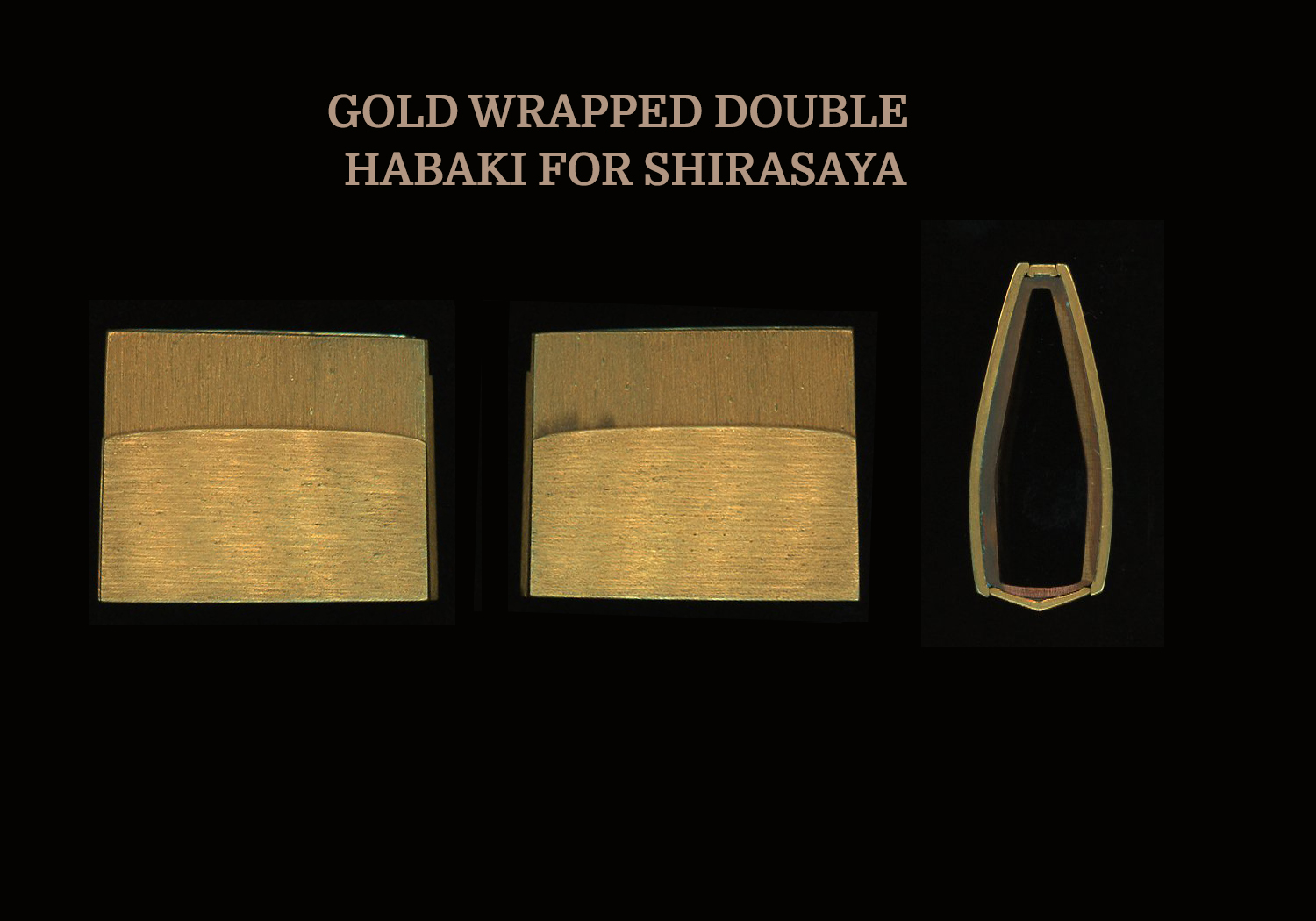
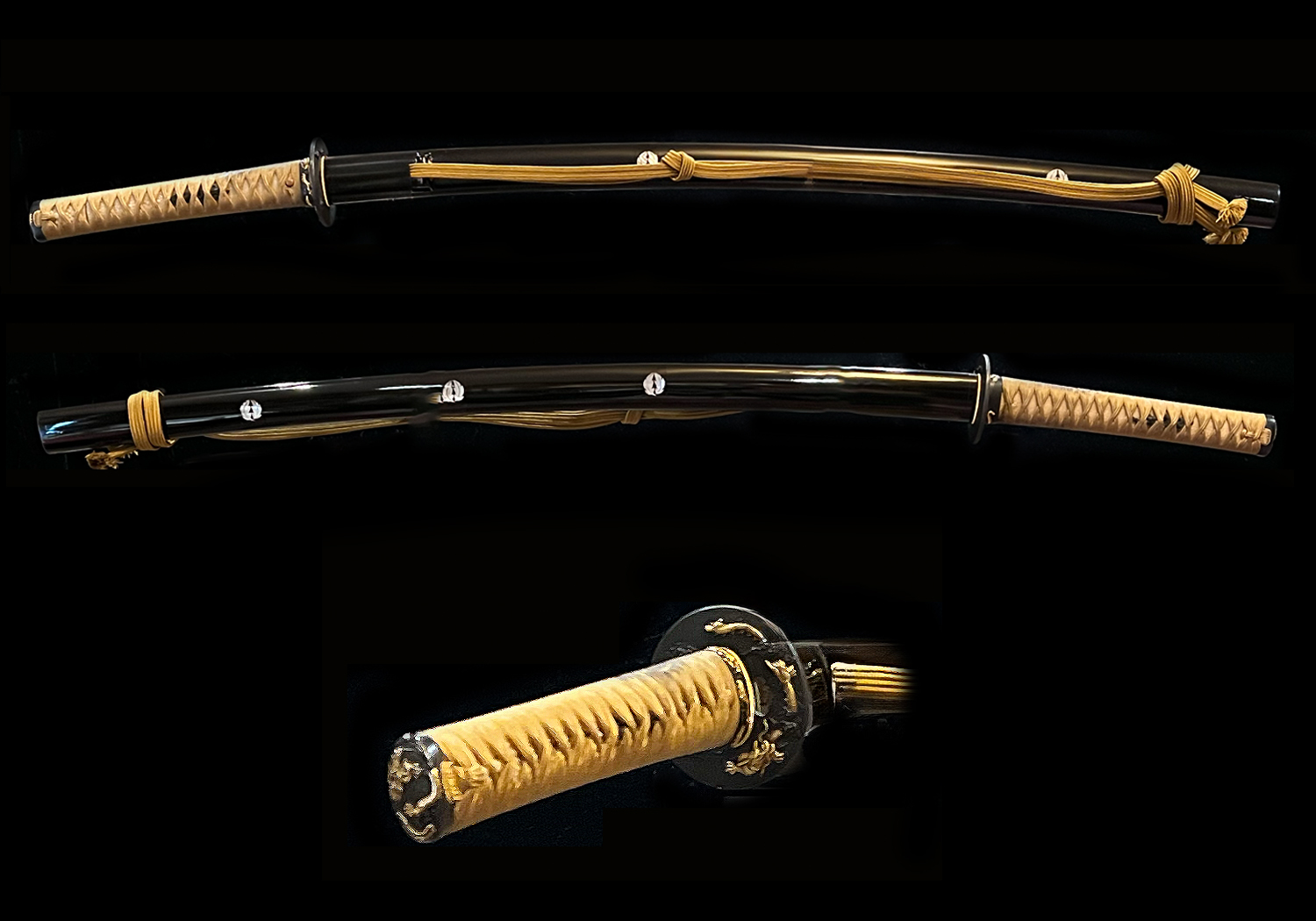
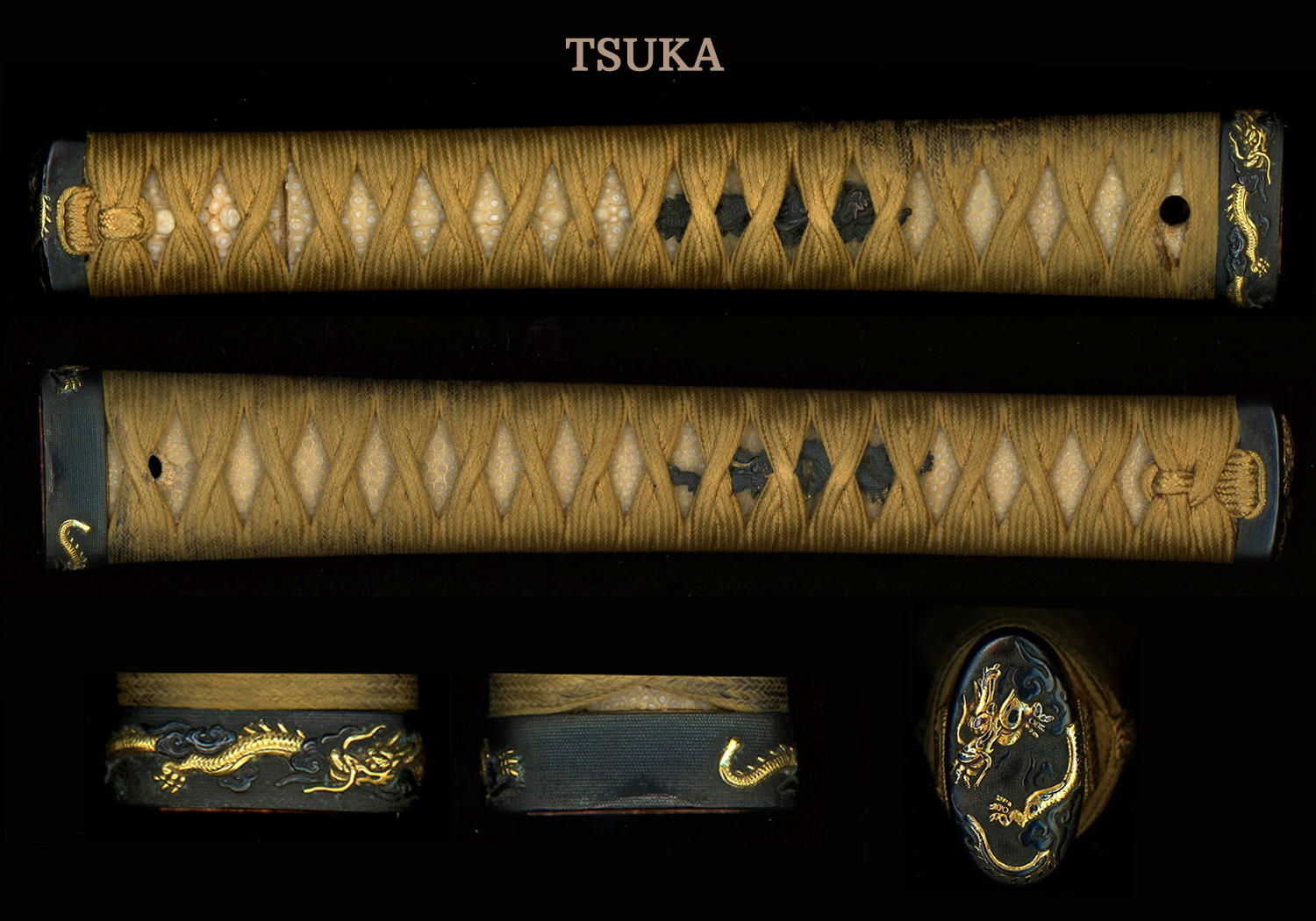
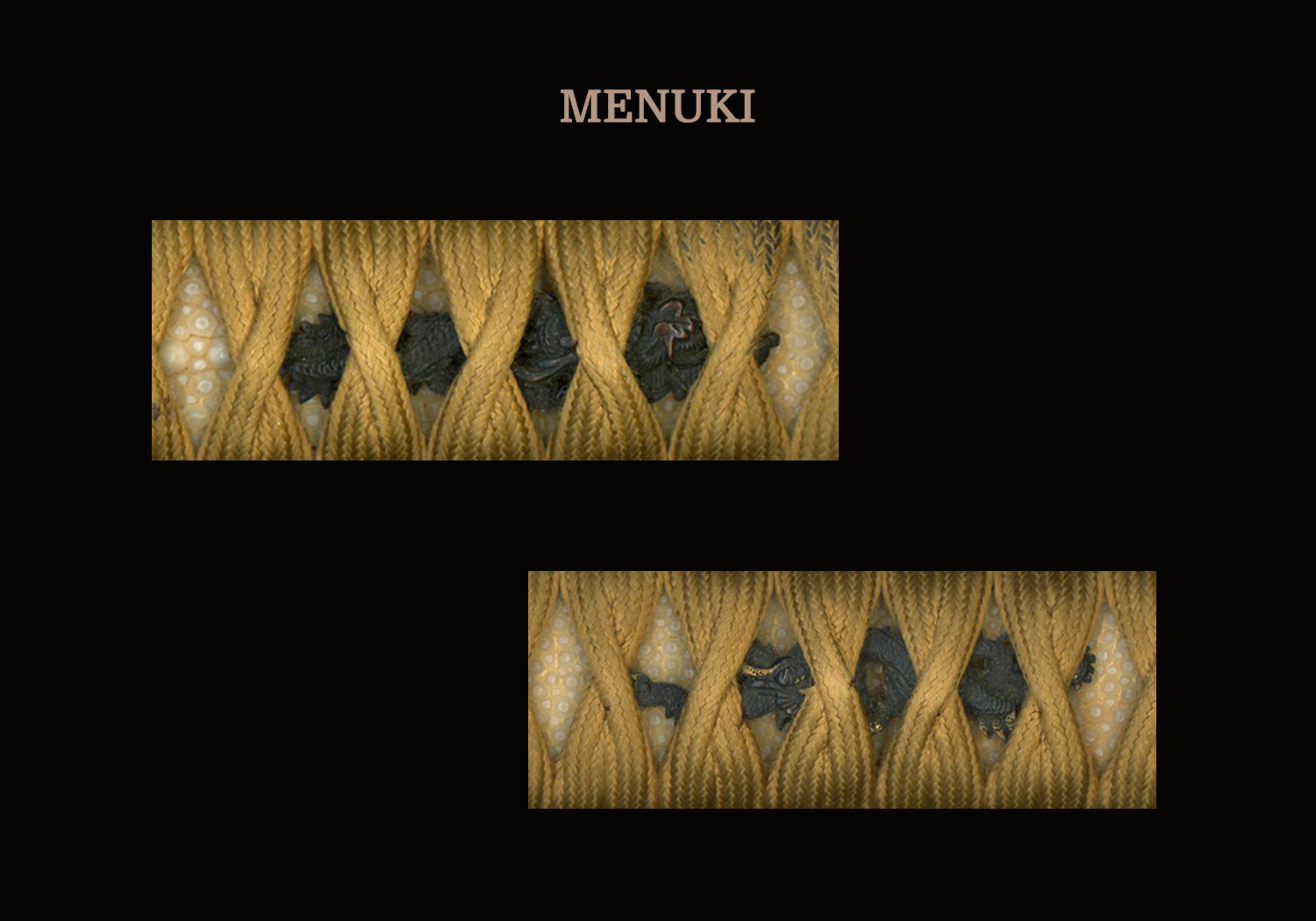
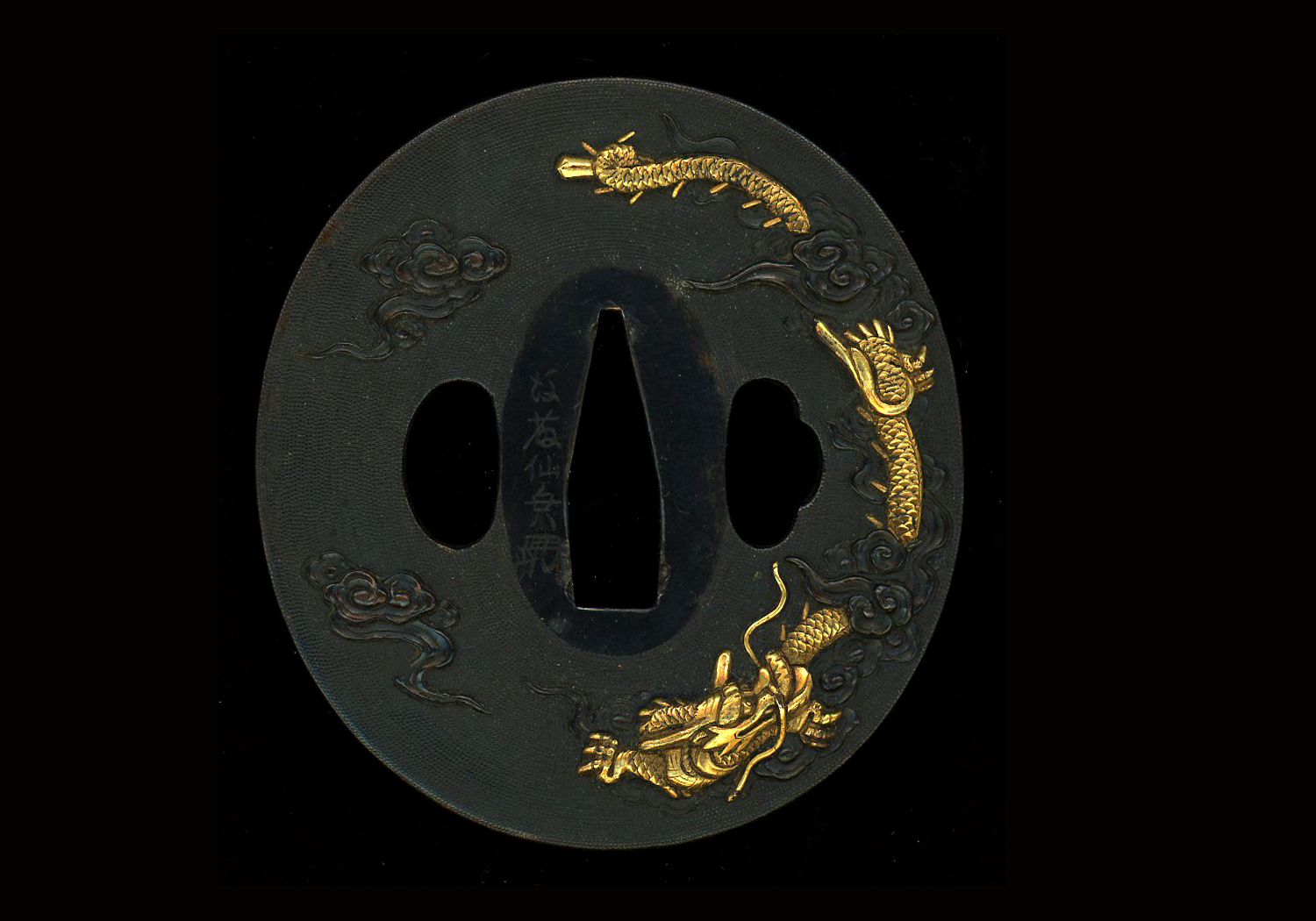
The Bunmei era (starting in 1469) marked what we commonly call the late Muromachi period or the Sue Muromachi period, hence Bizen swords made after that starting point are generally referred to as being Sue-Bizen swords. Technically the Muromachi era ended in 1573 when Oda Nobunaga drove the last of the Ashikaga Shoguns, Ashikaga Yoshiaki, out of Kyoto. In the sword world, however, we consider the end of the Muromachi era to be 1596 when the Keicho era signaled the beginning of the Shintō sword period (new sword period). It should be noted that in the ninth year of Tenshō (1591), there was a great flooding of the Yoshii River in Bizen (備前) Province. This flood ended the golden age of sword making in Bizen (備前). The sword trade had prospered here through centuries of warfare and civil disturbances and in this one brief period was swept away forever. While sword making did continue in Bizen (備前) throughout the Shintō and Shinshintō Eras, it never again reached its prior height in quality or quantity of swords produced. The later Muromachi (室町) period was commonly known as the Sengoku Jidai (戰国時代) which translates as the age of the country at war. It was called this because it was a period in Japanese history that was unprecedented in the amount and intensity of warfare between the feudal lords, Daimyō, as they struggled for supremacy. A by-product of this constant warfare was a demand for swords and other weapons that was unrivaled either before or after this period of conflict. One of the most prolific schools in the Muromachi period was the Bizen (備前) school. Unfortunately, there were relatively few good smiths working in Bizen (備前) province at this time. Because of the great demand for weapons, most of the Sue-Bizen (末備前) smiths produced numerous kazu–uchi mono pieces (mass produced blades). These were basically factory-produced blades that were made without giving any regard to the quality of the pieces. Generally, they were made by less skilled smiths who used less steel in an attempt to economize on tamahagane. This, of course, led to more flaws and the common appearance of shingane. These blades were made after the Eisho era (1504). However, it must be noted that during the Sue-Bizen (末備前) era, quality swords were also produced, the workmanship of which is clearly distinct from that of the kazu-uchi mono. Leading smiths were Katsumitsu (勝光), Munemitsu (宗光), Kiyomitsu (清光), Tadamitsu (忠光), Yoshimitsu (賀光), Sukesada (祐定), Yukimitsu (幸光) and Harumitsu (春光). Some of these names were used by several generations of smiths with Sukesada (祐定), being the most common. Often, on better, custom ordered blades made by these smiths, a smith’s given name such as Uemon no Jō (右衛門尉) was used in his signature. Generally, the signature of quality made blades will start with the characters, “Bizen (no) Kuni Jū Osafune……(備前国住長船…). The blade presented here was made by one of these highly regarded Sue-Bizen smiths, Magouemon no Jō Kiyomitsu. He is regarded as a very skillful swordsmith belonging to the Osafune Kiyomitsu family which was one of the most prestigious swordsmith lineages in the Sue-Bizen school. This blade is signed without the use of his personal name (Magouemon no Jō 孫右衛門尉). However, his work is so distinctive that when the NBTHK awarded the rating of Tokubetsu Hozon for this sword, they included his given name in their smith designation. Also, when Tanobe Sensei, probably the foremost Japanese sword expert living today, did the sayagaki, he stated that it can certainly be identified as a “textbook example’ of the work of Magouemon no Jō Kiyomitsu. As noted, this sword is signed Bizen (no) Kuni Jū Osafune Kiyomitsu (備前国住長船清光). It is also dated Eiroku Kyūnen Nigatsu Hi (永禄九年二月日) meaning “A day in February of the ninth year of Eiroku (1565). This is a big blade that is still at its original length and exudes strength as well as beauty. It has a nagasa (length) of 28.875 inches or 73.4 cm. It has a graceful koshi sori (curvature) of 0.75 inches or 1.91 cm that is combined with a modest saki-zori. This combination is indicative of the late Muromachi era Bizen blades. The moto-haba (width at the habaki) is 1.22 inches or 3.1 cm and a saki-zori (width at the point) is .075 inches or 2.3 cm. The jihada (grain of the steel) is a really beautiful combination of itame and mokume that has no openings or problems. There are also areas of feint utsuri along both sides of this lovely katana. The hamon (temper) of the blade is done in a hiro-suguha (wide straight style) with a very shallow notare in areas (slightly undulating) done in a nioi covering with a ko-nie structure and with areas of ashi and yō as would be expected of this smith. Also, there are areas of kinsuji and sunagashi in the monouchi on the sashi ura side of the blade. The kissaki (point) of the blade is slightly extended and the temper is done in a notare form with a small turnback or short kaeri. The are also nie in the point’s temper. The nakagois ubu (unshortened) with only the original mekugi ana (hole for the mekugi). The mune (back edge) of the nakago is flat. The yasurime are katte-sagari and the nakago-jiri is ha-agari kurijiri. The mei and the nengo are carved in bold chisel strokes along the back edge of the mune on both sides. This blade comes in a shirasaya with a double habaki with one part wrapped in thick gold foil and the other part in solid gold. The shirasaya has a sayagaki by Tanobe Sensei describing the blade which is translated as follows: Bizen no Kuni Osafune Magouemon no Jō Kiyomitsu Hachiji-mei oyobi Eiroku kyūnen nigatsu hi no ki kore ari. Meibun ni zokumyō naki to iedomo Mago’emon no Jō naru wa jimei nari. Gōken na shitai ni tokui no suguha o yaki hachū ni wa kono kō dokutoku no ashi, yō no keshiki o miseru nado tenkei-teki nari. Nagasa ni-shaku yon-sun ni-bu yo kore ari. Toki ni mizunoe-tatsu shimotsuki Tanzan Hendō shirusu + kaō Translated into English, it reads as follows: Osafune Magouemon no Jō Kiyomitsu from Bizen province This blade is signed in eight characters and is dated a day of the second month, the ninth year of Eiroku (1566). Although it is not inscribed with any first name, it can certainly be identified as a work of Magouemon no Jō. The blade is of a powerful shape and is hardened in suguha mixed with the typical ashi and yō of this smith, hence it can be regarded as textbook. Blade length ~ 73.3 cm (28 7/8 in.) Written by Tanzan Hendō [Tanobe Michihiro] in November, the year of the dragon of this era (2012) + monogram. This katana also comes with a NBTHK Tokubetsu Hozon certification attesting to its authenticity and quality. Also accompanying this katana is a very nice set of koshirae from when it was worn by one of its prior Samurai owners. The saya (scabbard) is lacquered black with six inlaid “double leaf” family mon made of mother-of-pearl. The tsuba and fuchi/kashira are of shakudo nanako with gold and shakudo dragons. The menuki are also dragons done in solid shakudo. All in all, a very tasteful koshirae worn by an upper ranking Samurai.
NihontoWatchOffered by Nihonto.com
This piece has sold
Get an email when a new Kiyomitsu piece hits the market.

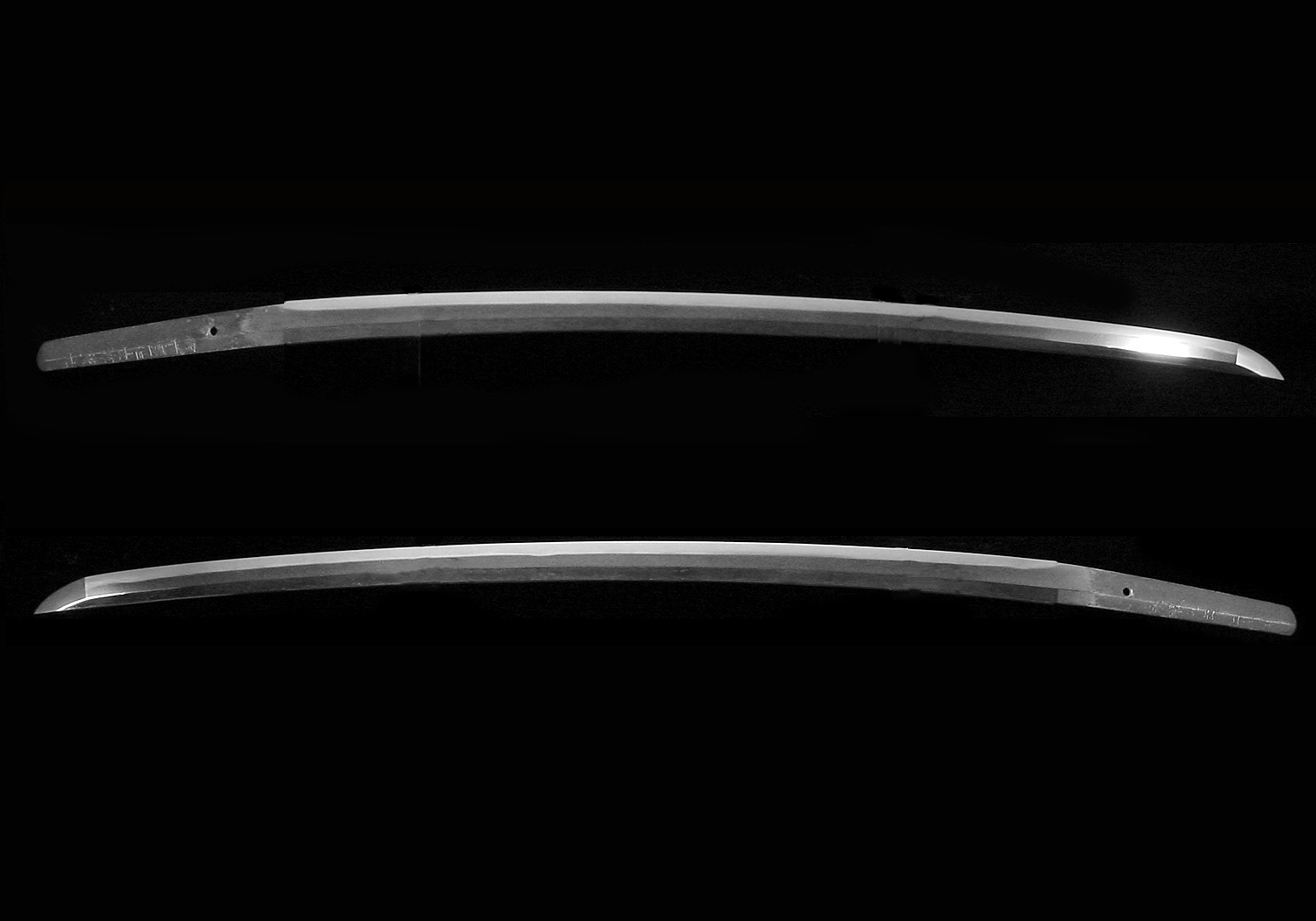
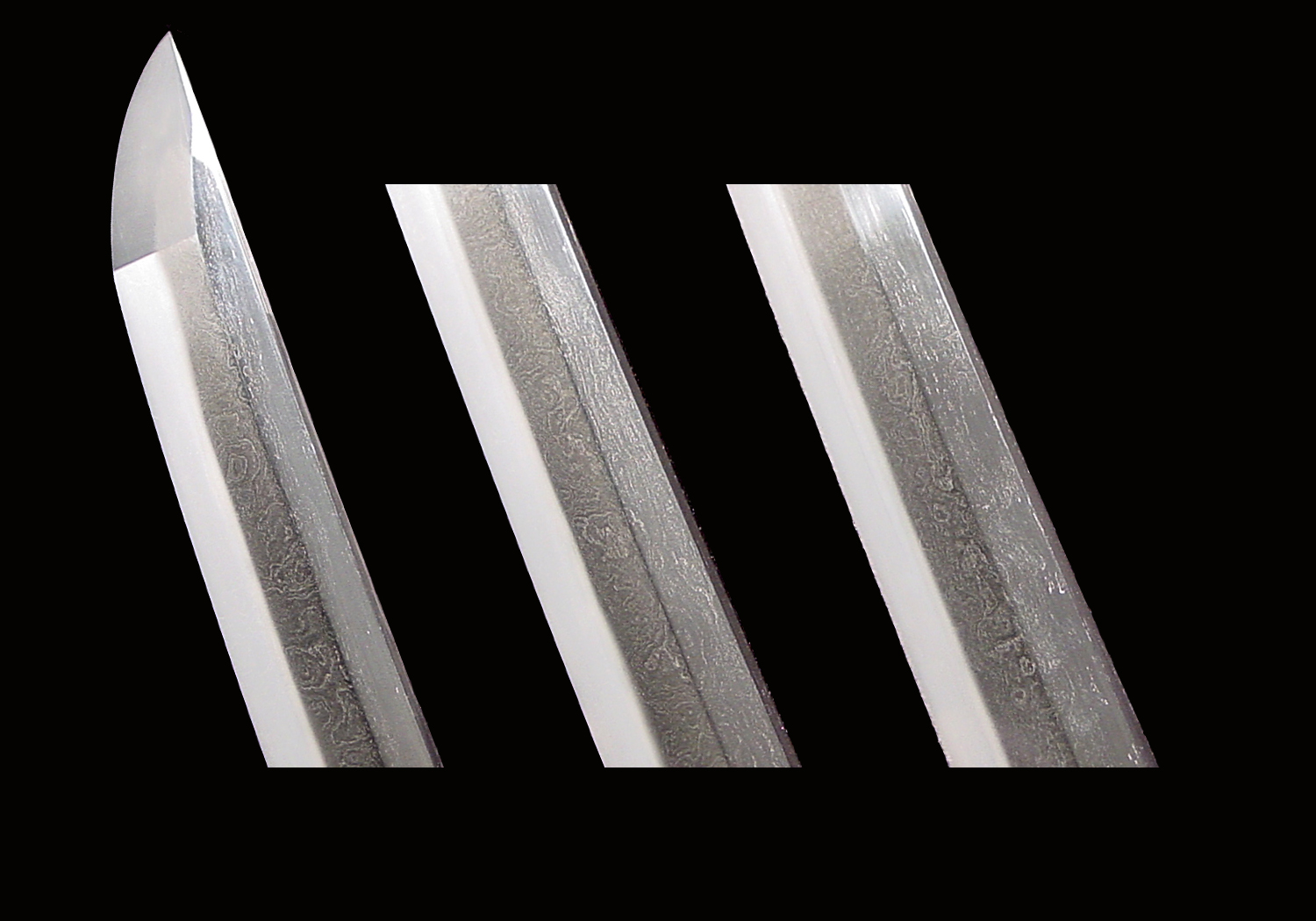
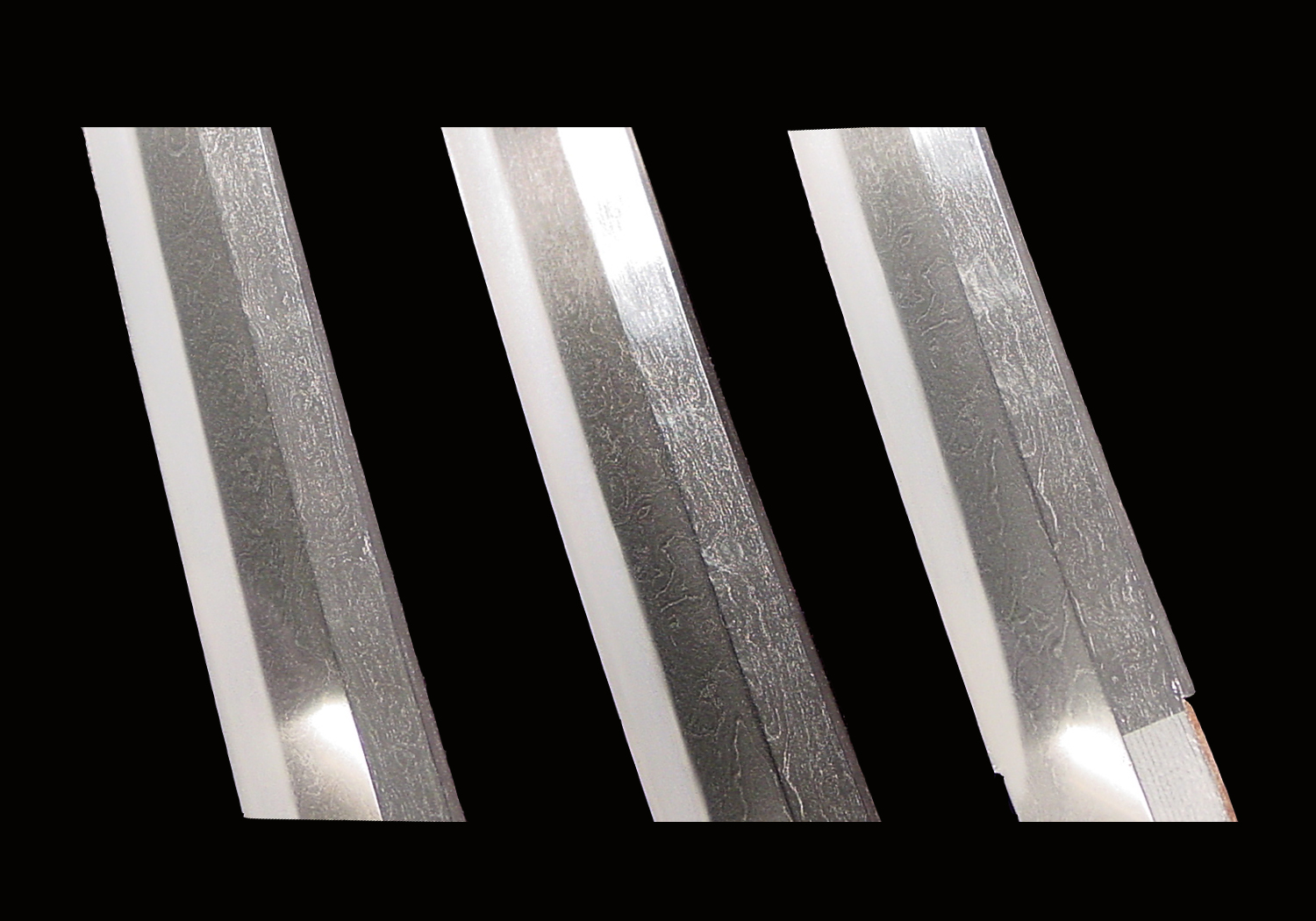
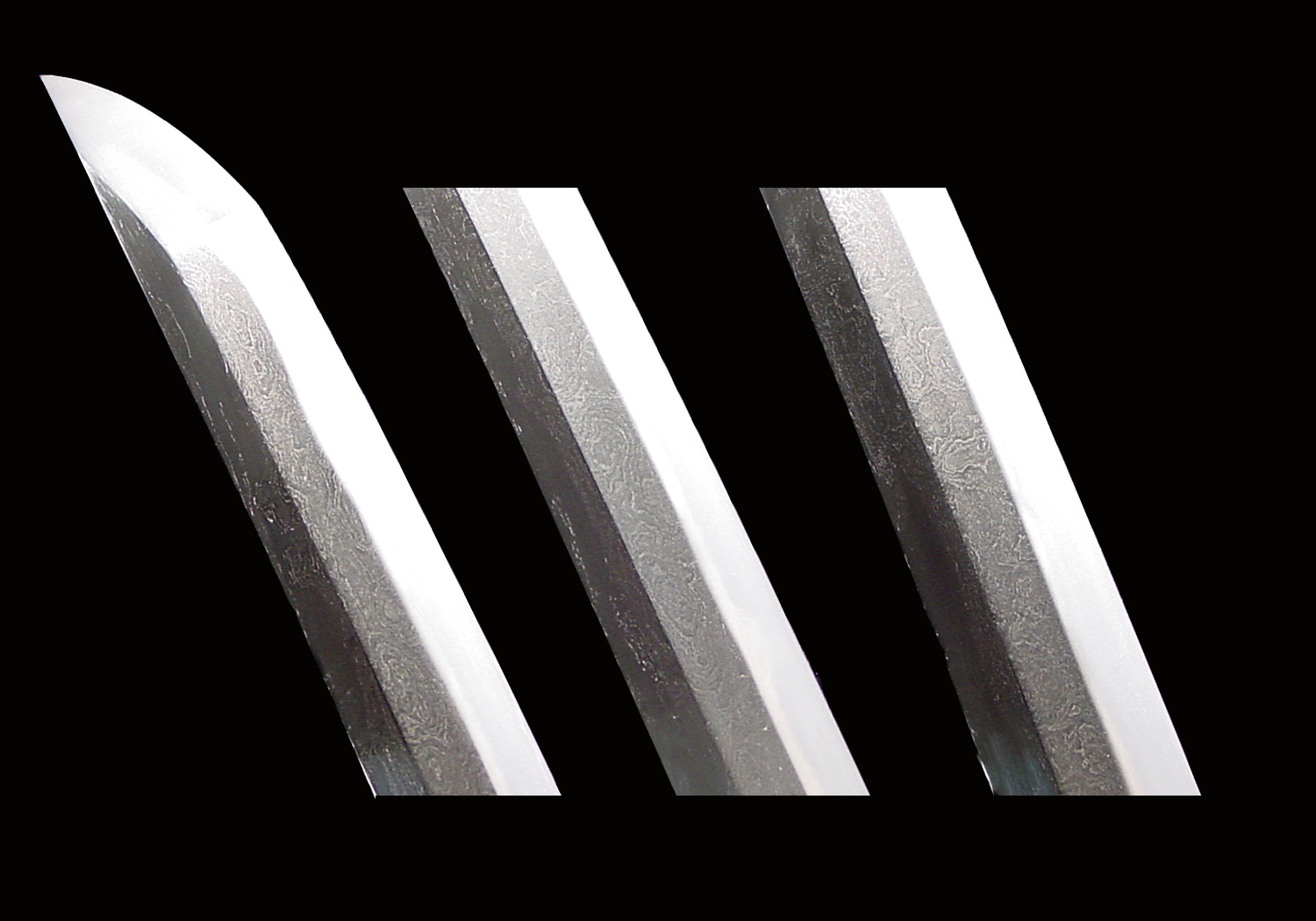
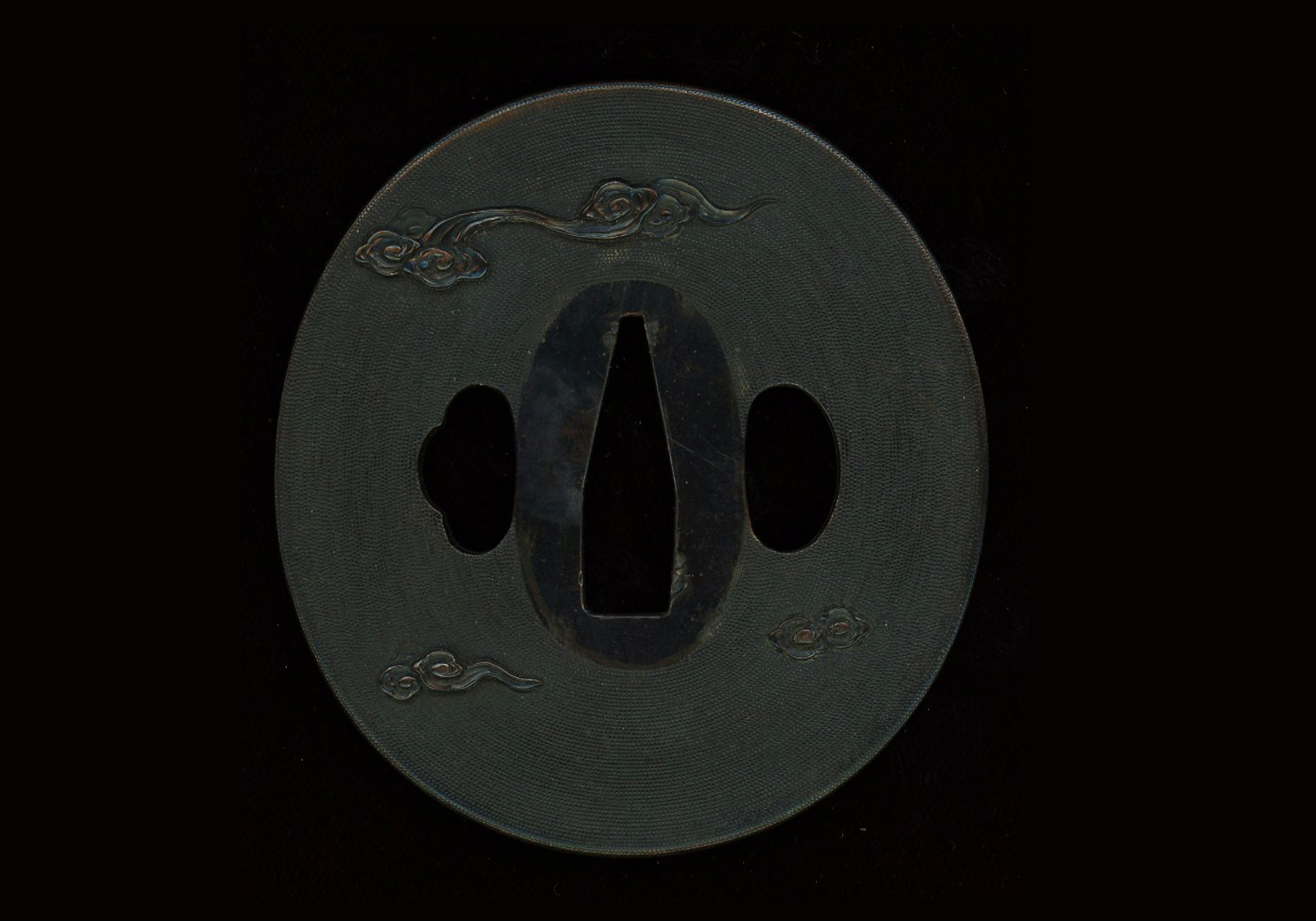
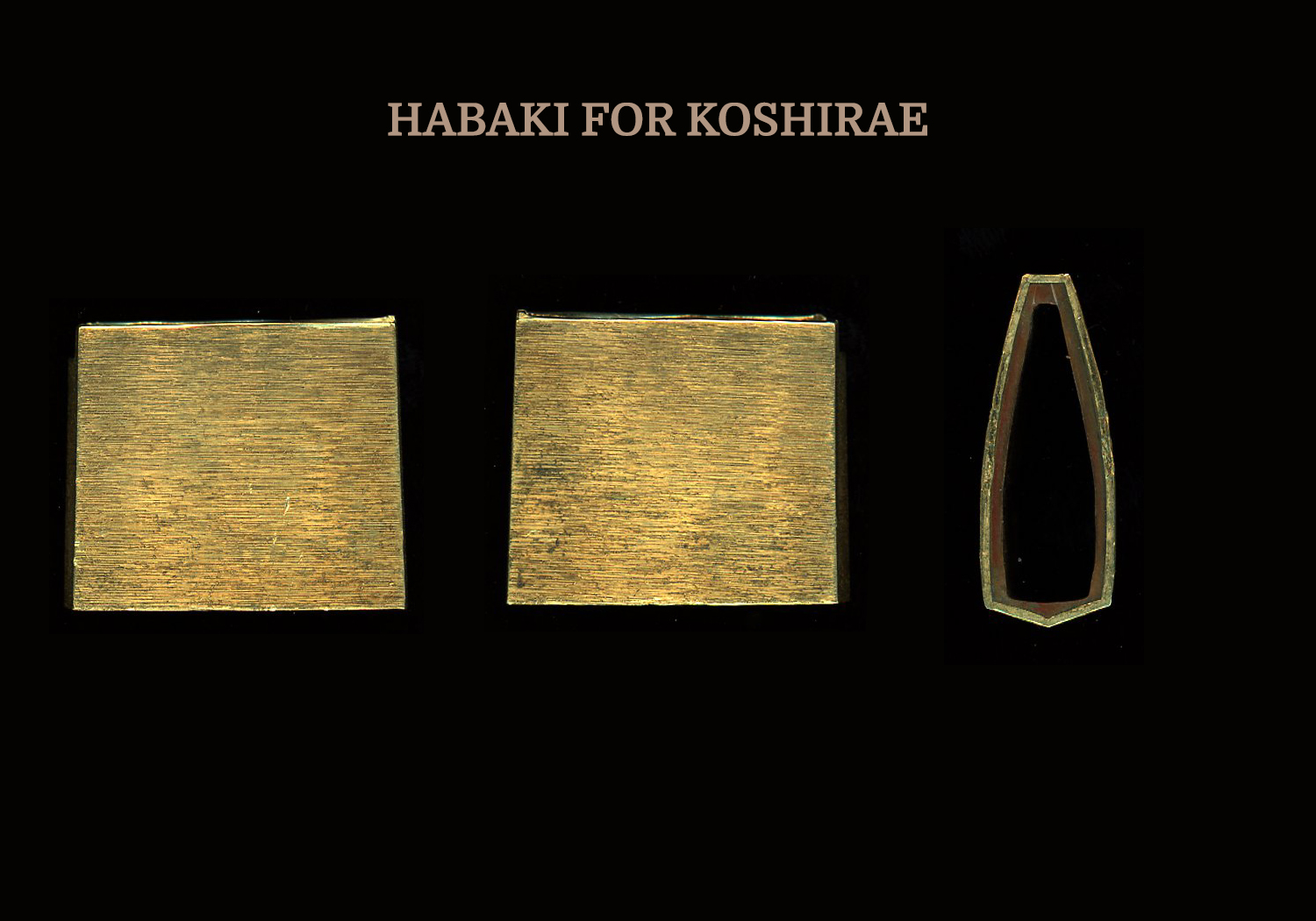
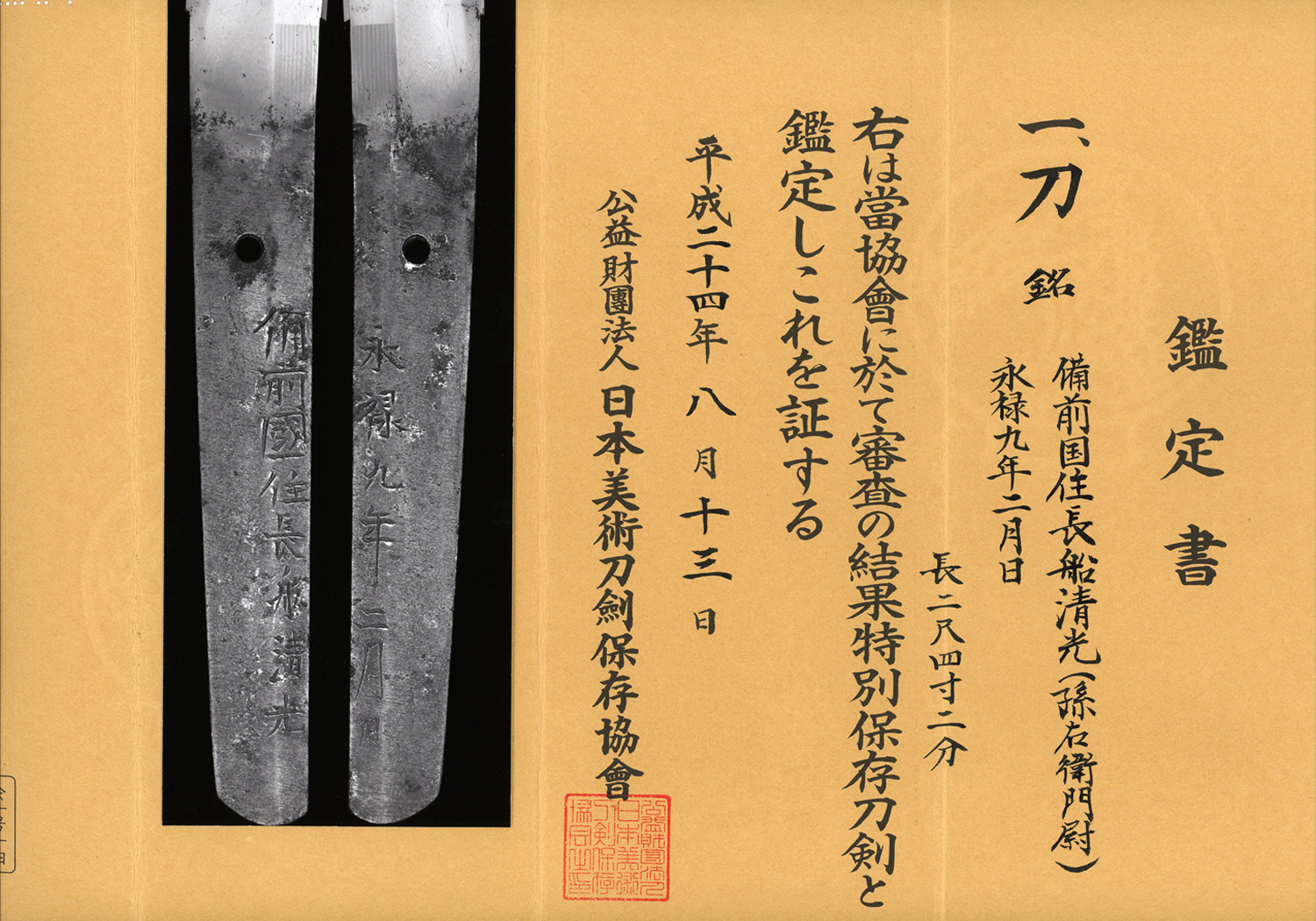
Osafune (Sue-Bizen), Bizen · Bizen · around 1532-1572
Tōken Taikan top 21%
5 pieces on the market now
The single piece that anchors Kiyomitsu on record is the katana dated Tenmon twenty-three (1554) and signed at full length "Bizen no Kuni ju Osafune Kiyomitsu,"[[c:1]] raised to Tokubetsu Jūyō in 2014, a broad, deep-curved uchigatana that carries no byname yet which the published sources read, from the breadth of its signature, as the work of Gorōzaemon-no-jō (「銘振りよりして, 五郎左衛門尉と鑑せられる」)[[c:2]]. He is one of the leading names of Sue-Bizen, the term used for the late-Muromachi Osafune workshops and their output collectively, and within that crowded field he is almost wholly knowable: every blade here carries an ubu tang with a long signature and a date, most of them clustered in the Tenmon years between 1532 and 1555. The published record lists as many as ten smiths who signed Kiyomitsu in this period, bearing the bynames Gorōzaemon-no-jō, Magouemon-no-jō, Yosozaemon-no-jō, Hikobei and Magobei, and singles out Gorōzaemon-no-jō and Magouemon-no-jō as the two superior hands. It is the first, the Tenmon-dated Gorōzaemon, whose work fills this record, and whom the published sources place at the head of a line that runs on into a second generation of the same byname in the Eiroku and Tenshō years.
His reputation rests first on suguha. The published sources name him, with Tadamitsu, as the master of the straight temper among the Sue-Bizen smiths (「忠光と並んで直刃の名手」)[[c:3]], and call the wide suguha the very signboard of the Kiyomitsu house (「清光家の看板であるところの広直刃」)[[c:4]]. His characteristic blade is a thick, sturdy uchigatana, broad in the body with the kasane heavy and the shinogi high, saki-zori standing toward a chū-kissaki that extends a little, over which he lays a wide suguha mixed with small gunome and small chōji. Within it the ashi and yō enter freely, and the abundant yō the sources record as his typical tell, with fine kinsuji and sunagashi running and the nioiguchi bright and clear. A robust shape tempered in this manner, with the edge well worked and the nioiguchi shining, is what the published sources call the true heart of the smith who excelled at the straight temper (「直刃を得意とする清光の真骨頂」)[[c:5]].
The jigane beneath that temper is as much a part of his recognition. He forges a packed itame and ko-itame with mokume mixed in, ji-nie applied in fine grain, chikei entering, and a faint utsuri standing pale over the surface. The published sources distinguish his jigane from that of Tadamitsu and of Yosozaemon Sukesada by its tendency to stand a little more, an itame in which the mokume shows, so that on the run of his blades the hada is the slightly more open one of the three. The exception is telling: on his finest pieces, including the Tokubetsu Jūyō katana, the same sources remark that the jigane is unusually well packed and refined by contrast with his common work, its quality lifting those blades above the rest. The bōshi returns in a small round with a sweep of hakikake, and on the straight-tempered blades runs straight to that small round, in places pointing or doubling toward the back.
Against that calm register he forges two showier manners, and the published sources treat them as fully typical of him rather than as departures. The first is a gunome-midare whose mark is the koshi-no-hiraita gunome, the gunome opened at the base, mixed with ko-chōji and small gunome over a chū-suguha base, ashi and yō well in and sunagashi running, which the sources read as bringing him near Yosozaemon-no-jō Sukesada (「与三左衛門尉祐定に近い」)[[c:6]], the other great Sue-Bizen midare hand. The second is hitatsura: the temper taken high, chōji-midare with gunome and small chōji, tobiyaki entering and muneyaki running strongly until the whole edge takes a hitatsura form, the nie laid strongly and sunagashi running. Here the published sources name a structural tell: Sue-Bizen is generally thick in the kasane, but a blade tempered in hitatsura is necessarily made thinner (「皆焼を焼いた場合は必ず重ねが薄くなる」)[[c:7]], so the thinned construction itself is the feature to watch, sometimes joined by a maru-mune the school occasionally shows. The same flamboyance appears on a shōbu-zukuri blade and on a wide tantō, the form varying while the hand stays constant.
What sets Gorōzaemon-no-jō apart within Sue-Bizen is read through his own work rather than by contrast. His bright wide suguha with its abundant yō is the manner the sources tie to his name, the calmest of his three registers, while the koshi-no-hiraita gunome and the tobiyaki-and-muneyaki hitatsura extend his range toward Sukesada and toward the showy late-Bizen taste; Tadamitsu shares the suguha but not the hitatsura, Sukesada the midare but not the straight temper held at full breadth. Several of his blades carry order-inscriptions that fix him in time and place, among them one forged below Tatsuno castle in Harima, which the published sources value as documentary evidence of the smith's movements, and one whose patron Masahide was a commander of the Urakami faction. The broad, deeply curved shapes, made for the wars of the period, are themselves part of the reading; the sources note of a wide moroha-zukuri tantō that the temper of the warring age shows plainly even in its bearing (「戦国時代の気風が姿にもよくあらわれて」)[[c:8]].
The weight of designation behind his name is steady rather than vast. One of his blades holds the Tokubetsu Jūyō rank and eighteen more are Jūyō, with nothing on record in the highest designated tiers, so his is a record built in the upper-middle reaches of designation rather than at its summit. The Tōkō Taikan values him in the middle range of the Osafune masters, and his provenance, where it is recorded, runs through houses of consequence: one katana descends from the Matsudaira house of Shinobu (「忍の松平家伝来」), and another from the swordsmith-scholar Masahide. Genuine signed, dated Gorōzaemon-no-jō blades survive in fair number for a Sue-Bizen name, and an ubu, signed example in its original form, of the kind the published sources hold up as an outstanding piece of his hand, is among the more attainable of the great late-Bizen smiths for a collector who waits, the Jūyō tier appearing from time to time, the single Tokubetsu Jūyō a landmark when it does.
Where Kiyomitsu stands among comparable artisans: across all of nihontō, and within tradition, era, and period. The tiers (Foremost · Leading · Major · Notable) weigh official designations from the NBTHK and Japan's Agency for Cultural Affairs, together with historical honors of lasting repute such as the Sansaku and Meibutsu-chō.
Select a lens to see how it's measured.
Years he was demonstrably active, proven by signed-and-dated blades
Bizen-den · Bizen
Phase: Sue-Bizen末備前· 1441–1596
19 pieces on the market now
The last great chapter of Osafune unfolds in the Eisho and Tenbun years of the late Muromachi, when the riverside workshop turned its accumulated craft toward an age of constant war. Where Oei-Bizen had looked backward, reviving the tachi shape and the choji temper of the Kamakura masters under Yasumitsu and Morimitsu, Sue-Bizen faces forward into Sengoku demand. The leading hands carry the same family characters one generation further: the Sukesada group, headed by Yosazaemon-no-jo Sukesada and the Hikobee-jo Sukesada said to be his father, alongside Katsumitsu (often Jirozaemon-no-jo), Munemitsu, Tadamitsu of the Heiroemon-jo line, and the Kiyomitsu smiths Magoemon-no-jo and Gorozaemon-no-jo. The setsumei draw a sharp line through their output. Commissioned blades, chumon-uchi, were signed with full zokumyo, dated, and frequently inscribed with the name of the ordering party, as on the Katsumitsu and Sadamitsu naginata of Meio 8 made for the Miyake of Kojima, a house that fed into the Ukita. Below them ran the bulk trade of kazu-uchimono, the arms that supplied the warring provinces, and it is the chumon-uchi masters that the designations preserve. What the steel does in this window is distinct from every earlier Osafune register. The shape is the uchigatana: wide mihaba with thick kasane, pronounced sakizori, an extended chu-kissaki or o-kissaki, and a short nakago suited to the katate-uchi one-handed draw, a body unlike the koshizori tachi of Ko-Osafune or the broad Nanbokucho profile of Soden-Bizen. The forging tightens into ko-itame over which a midare-utsuri stands faintly rather than vividly, weaker than the bright reflection of the founding generation.
The signature temper is the open-waisted koshi-no-hiraita gunome, splitting at the heads into fukushiki compound midare and mixed with togariba and choji; it is nioi-based with ko-nie and a bright nioiguchi, with ashi, yo, kinsuji and small tobiyaki worked through. Against this, Soden-Bizen had pushed Soshu nie and notare, while the founders had tempered flamboyant choji over a vivid utsuri. Two specialties branch off the gunome base: the Kiyomitsu and Tadamitsu suguha, calm and tightly forged, and the hitatsura of high-tempered pieces with long muneyaki and yubashiri, seen in the warlord-smiths Akamatsu Masanori and Ishikawa Yukihisa. To kantei a Sue-Bizen blade is to read the body first and the temper second. The compact uchigatana sugata with thick kasane and a short tang fixes the late-Muromachi date; the faint utsuri over dense ko-itame keeps it in Bizen; the open-waisted compound gunome names the group. The masters then separate by hand: Katsumitsu is set apart by the abundant choji he folds into the gunome, yielding a more florid, brilliant dekiguchi than his peers; Tadamitsu and the Kiyomitsu smiths are read out by their suguha, with Magoemon-no-jo's itame standing in mokume to distinguish his ground. The cutting reputation is documented directly, as on the Hikobee-jo Sukesada katana of Keicho 5 carrying a tameshi inscription naming the tester Ichihara Hachibee. Provenance threads through the supplementary signatures: Masanori's reward blades cut for his retainers, the Miyake names tying the workshop to the Ukita, and the Shinjuro Sukesada whose few large works may have ended in the Tensho flood. The horimono carried from the mainline, bonji with rendai, Fudo Myoo, and shrine dedications, persist on these blades as a final mark of the line. Learn more →
| Smith | Era | Designated |
|---|---|---|
| Kiyomitsu清光 | 1532-1572 | 19 |
| Kiyomitsu清光 | 1558-1571 | 11 |
Bizen in the Muromachi period
War at home and trade abroad made Muromachi Bizen the busiest forge region in Japan: a century of Sengoku demand after the Ōnin War, and export missions to Ming China carrying blades by the tens of thousands.
A Hozon-certified blade judged to show notably superior workmanship and a better state of preservation. The bar is higher: re-tempered blades and most unsigned Muromachi/Edo works are excluded.
The NBTHK (Nihon Bijutsu Tōken Hozon Kyōkai, the Society for the Preservation of Japanese Art Swords) is a public-interest incorporated foundation founded in 1948 and supervised by Japan’s Agency for Cultural Affairs (Bunkachō); it is based at the Japanese Sword Museum in Tokyo. Its expert panels physically examine each submitted work (shinsa) and issue a certificate (kanteishō) ranking it by artistic and historical merit. NBTHK papers are the most widely recognized standard of authentication for Japanese swords and fittings.
NBTHK official siteThree-day inspection period and seven-day return period; buyer notifies by email within three days of receipt, no reason needed; full refund once item returned undamaged and unaltered.