 NihontoWatchNihontoWatch
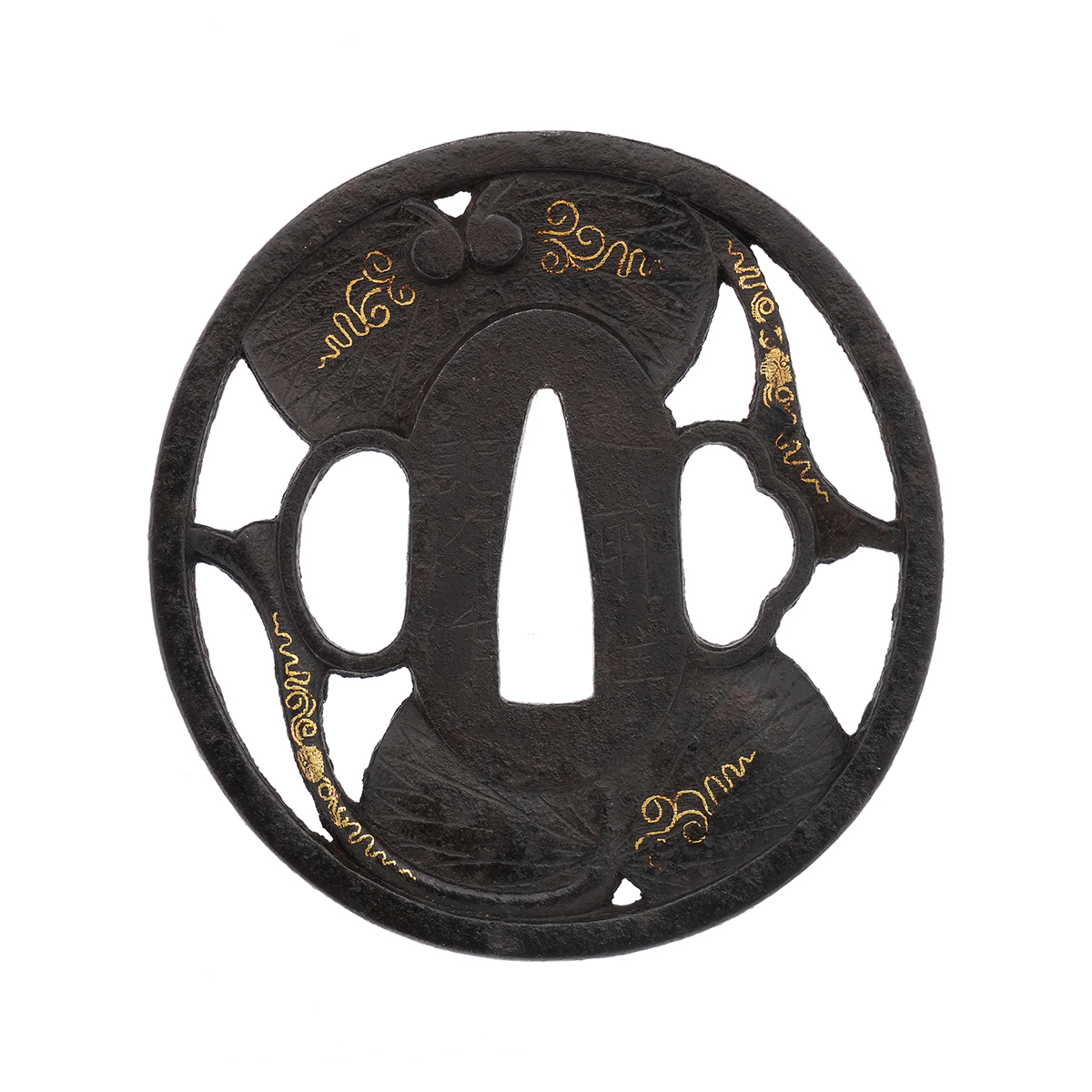
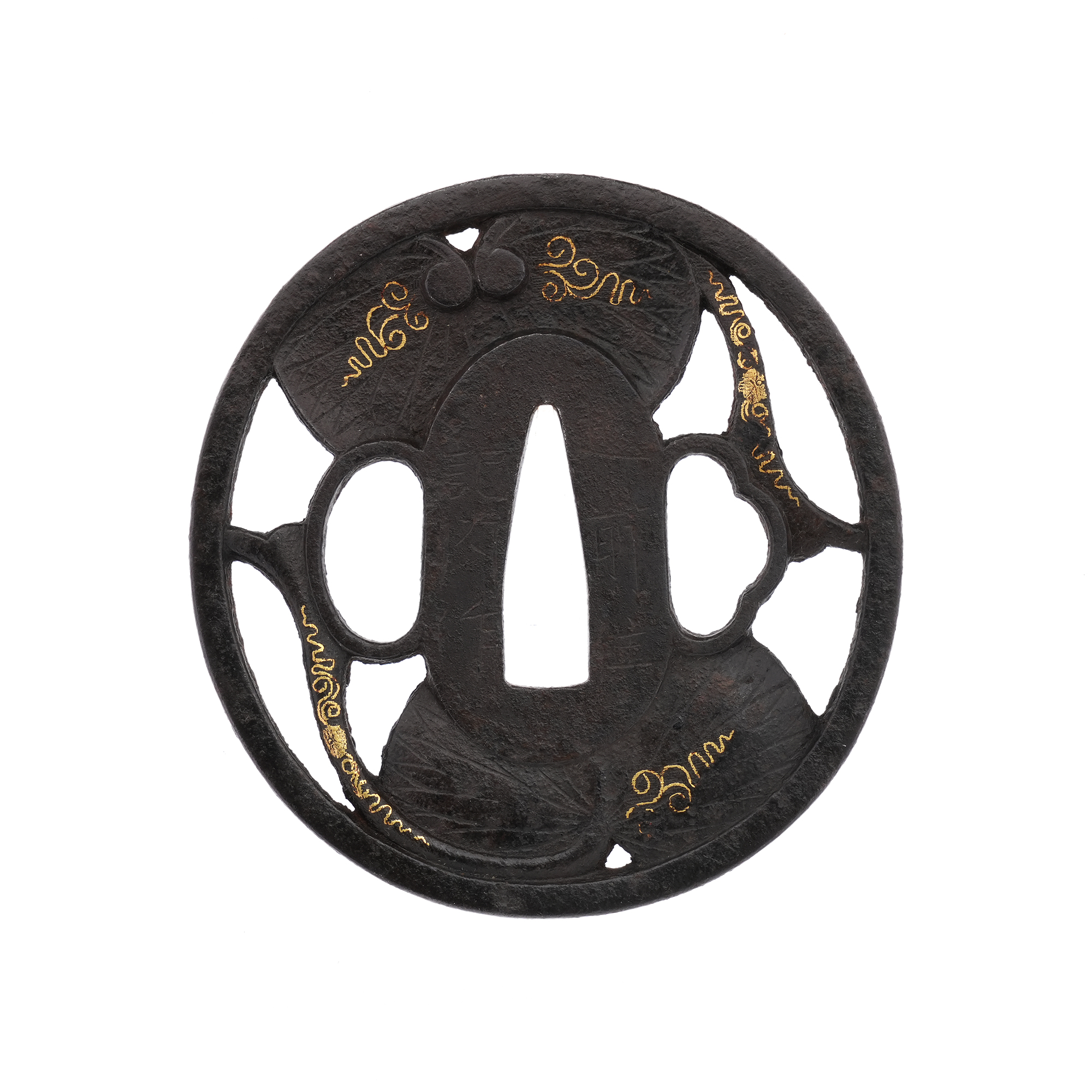
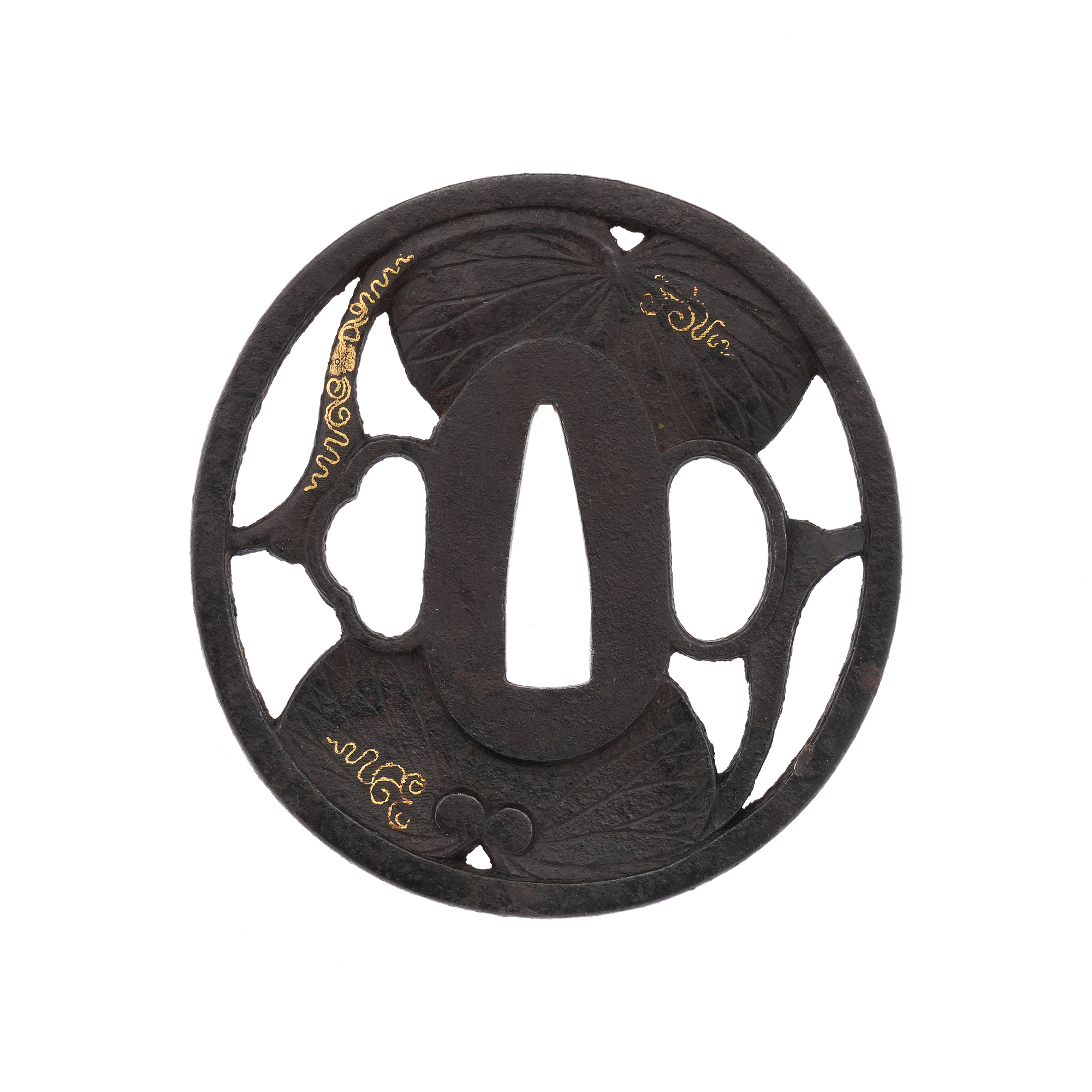
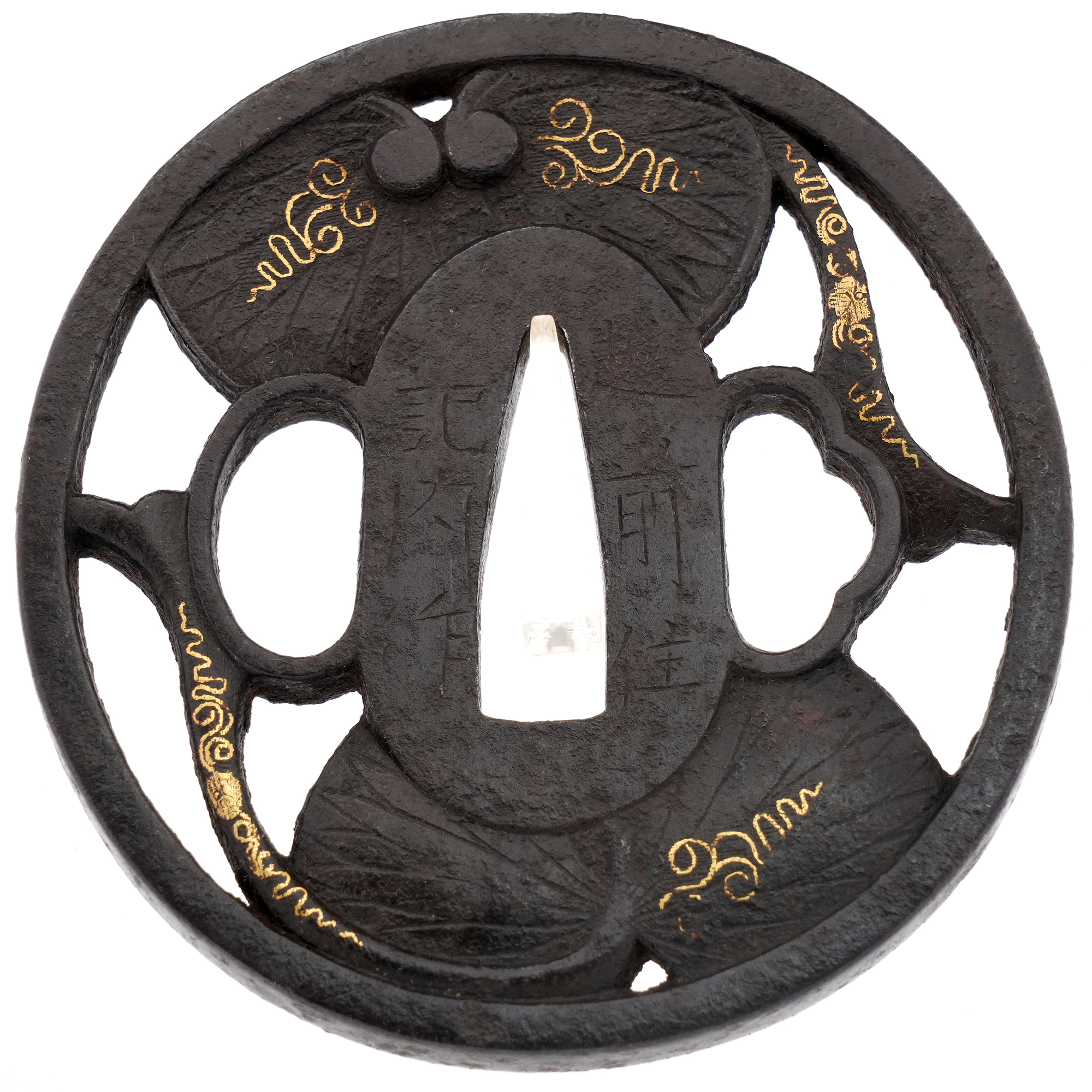
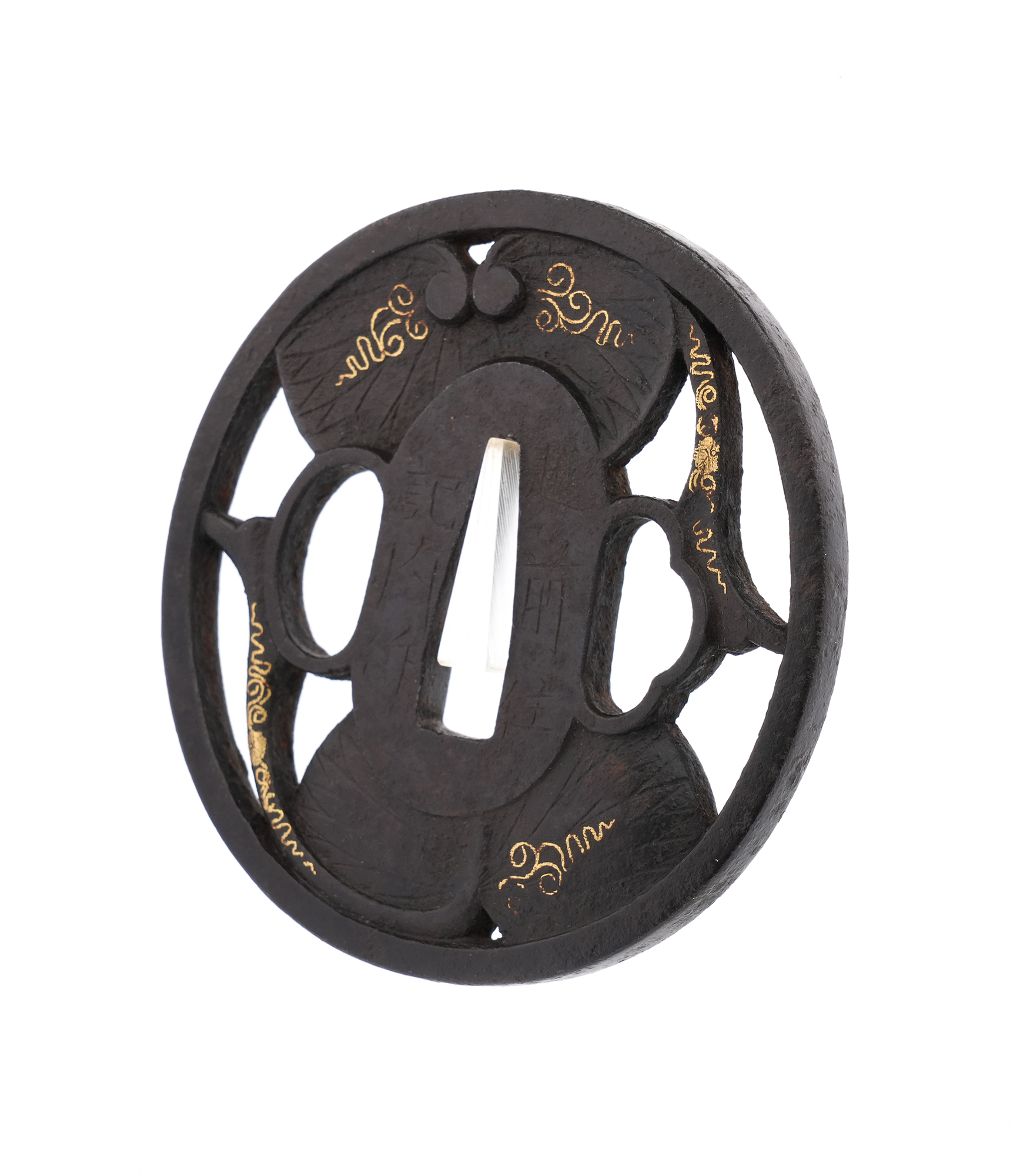
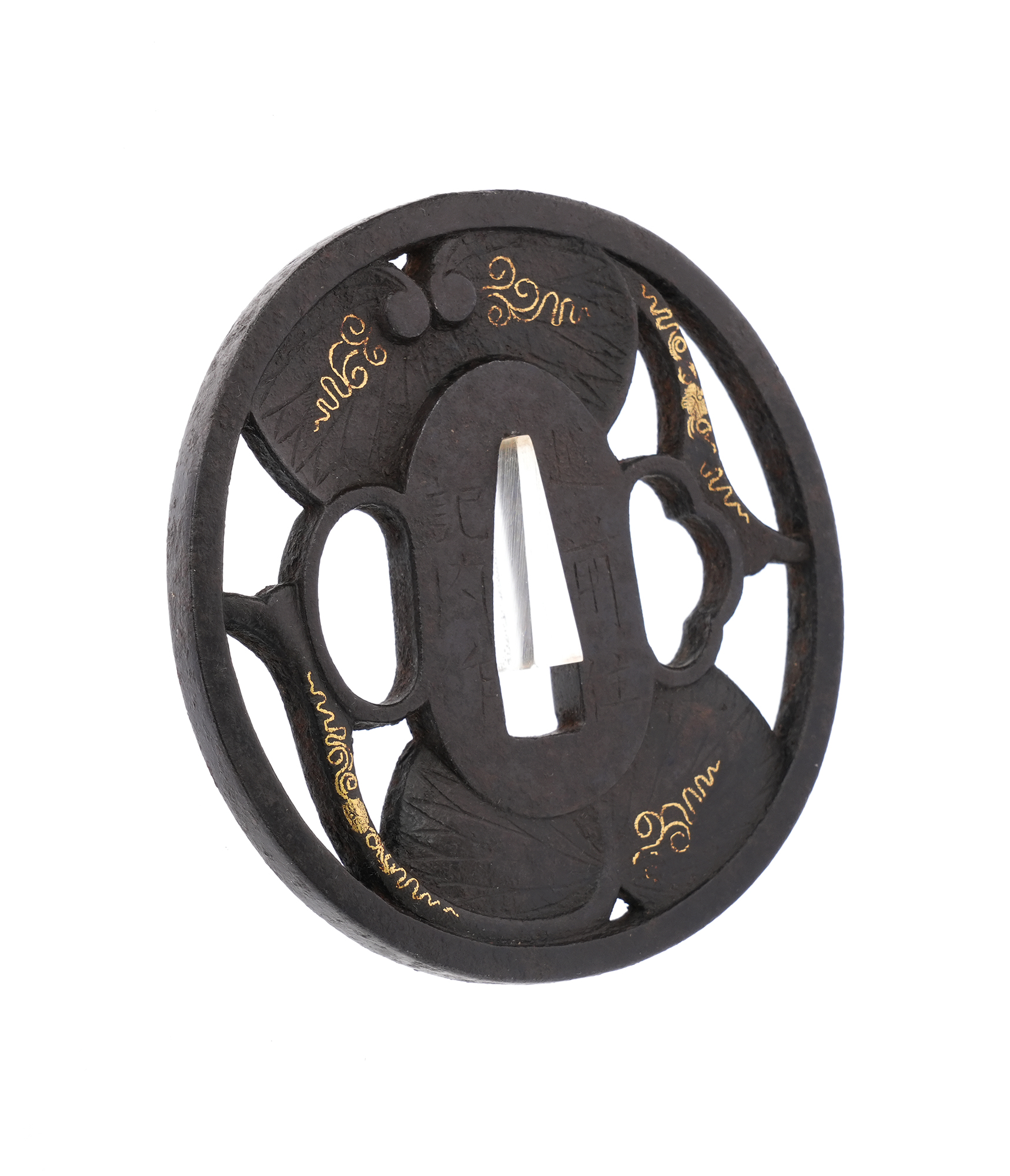
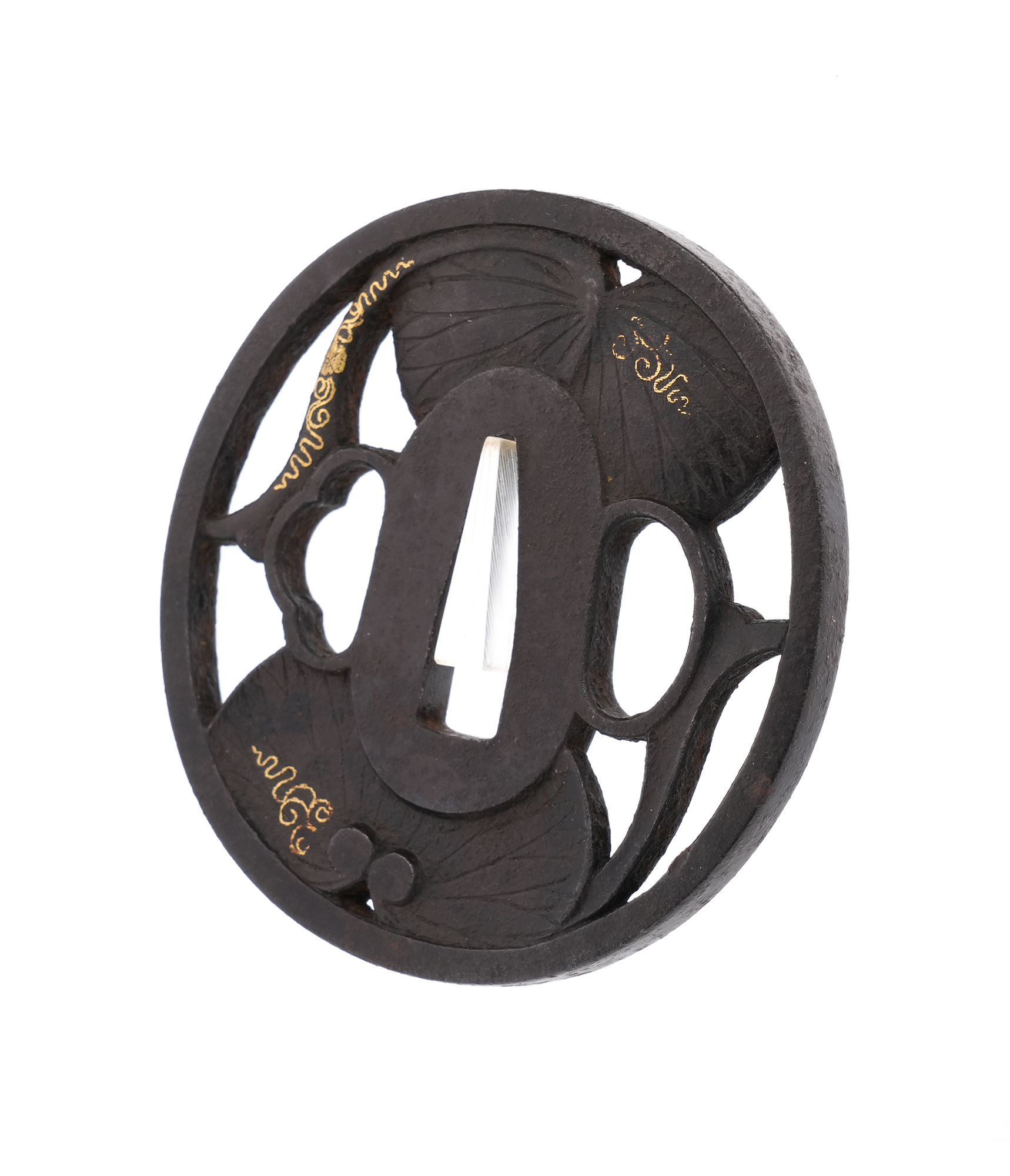
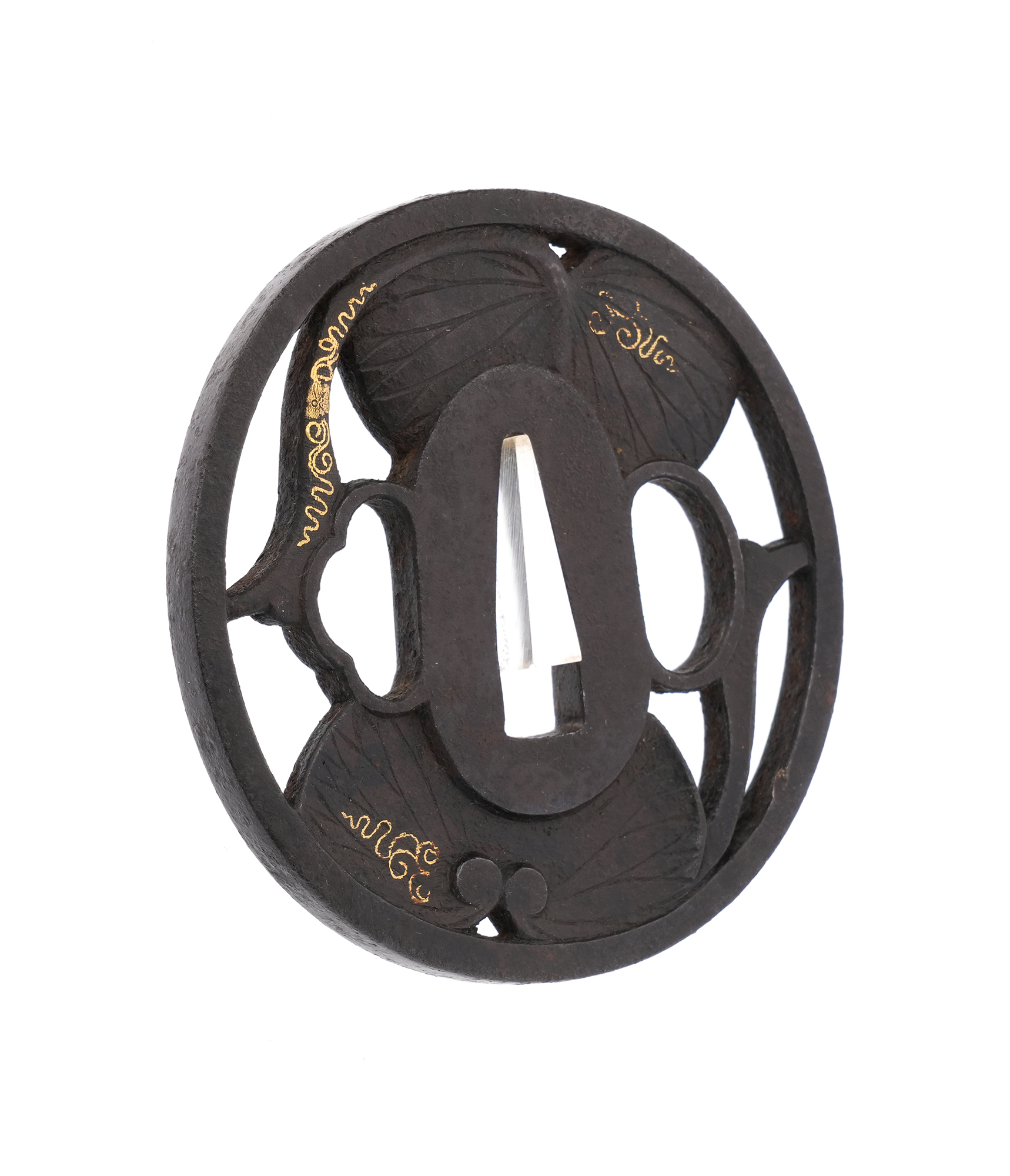
Echizen Kinai was a school of tsubako that flourished based in Fukui, Echizen Province, and they specialized in works that powerfully carved and pierced iron ji, expressing subjects such as aoi, ginkgo, and dragons with a rich sense of volume. A futaba-aoi zu sukashi tsuba bearing the same mei of "Echizen Ju Kinai Saku" as this work is also held in the collection of the Tokyo National Museum, and the futaba-aoi is known as one of the representative motifs of Kinai tsuba. This work is a tsuba featuring aoi expressed in nikubori ji-sukashi on a maru-gata iron ji, provided with ryohitsuan on the left and right; by arranging large aoi leaves at the top and bottom of the composition and winding the stems extending from each leaf in a curvilinear fashion, it is brought together in a relaxed composition that makes use of the circular space. Fine, straight veins are carved into the aoi leaves, and the leaves and stems are decorated with kin-nunome-zogan; the gold lines stand out vividly against the calm, blackish-brown iron ji, adding brilliance and prestige to the powerful sukashibori. The orientation and overlapping of the aoi leaves are varied between the omote and ura, creating a design where one can enjoy different scenery despite using the same motif. The mei "Echizen Ju Kinai Saku" is clearly carved on the seppa-dai, and while the roundly finished mimi is given sufficient thickness, by boldly piercing the areas around the aoi leaves and stems, it is finished in a form that allows one to feel lightness within the dignity. A natural koshoku from the passage of time appears in the jitetsu, and although partial fading is observed in the kin-nunome-zogan, the patterns remain well overall, and one can appreciate the powerful tagane work characteristic of Kinai tsuba in the carving of the leaf veins and the curves of the stems. This is a piece of high appreciation value, possessing the aoi motif symbolic of Echizen Kinai, kin-nunome-zogan that shines beautifully against the deep iron color, and a skillful composition showing variation between the omote and ura.
NihontoWatchOffered by Toushin

We couldn’t find current papers for this piece. Ask the dealer whether it has been, or can be, submitted to shinsa. — Hoshi
26 on the market

As written by the shop
Machine translation from the shop's Japanese · may contain errors ·
Echizen
26 pieces on the market now
We could not find an authenticity certificate on the seller’s listing. Japanese swords and fittings are normally papered by the NBTHK (or the NTHK). Without one, the attribution is the seller’s own assessment and has not been independently verified — treat it with caution and ask the dealer about certification before buying.
As a rule we do not accept returns, except when we have sent a different item from the one ordered or when there is a significant discrepancy between the description and the item. If you wish to return an item, please contact us within 3 days of its arrival and then send it back.
¥99,000