Edo was the sword’s age of connoisseurship: the Hon’ami appraisers, the shogunal register of famous blades of 1719, and a thriving literature turned the sword into an object of study even as it ceased to be drawn in war.
 NihontoWatchNihontoWatch
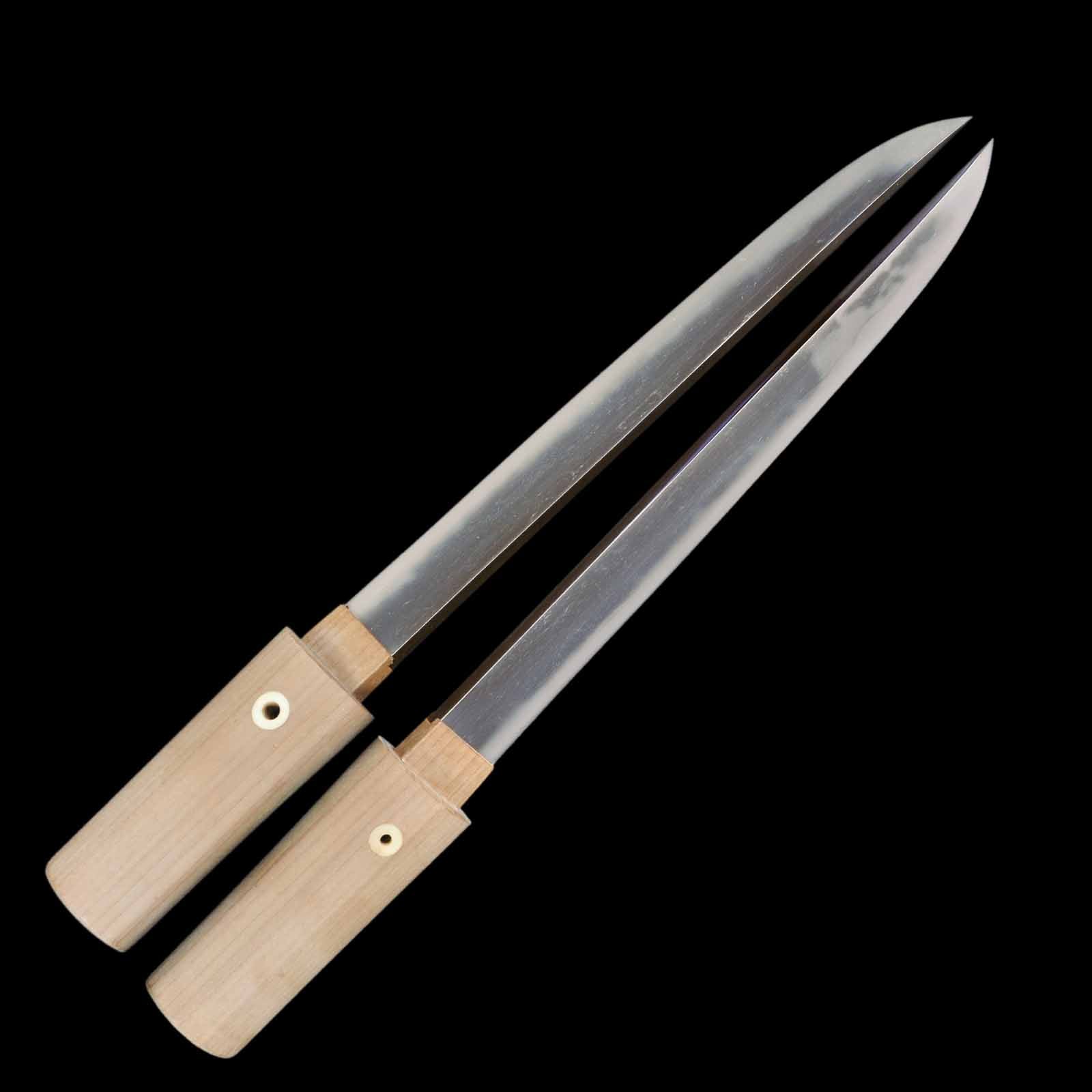
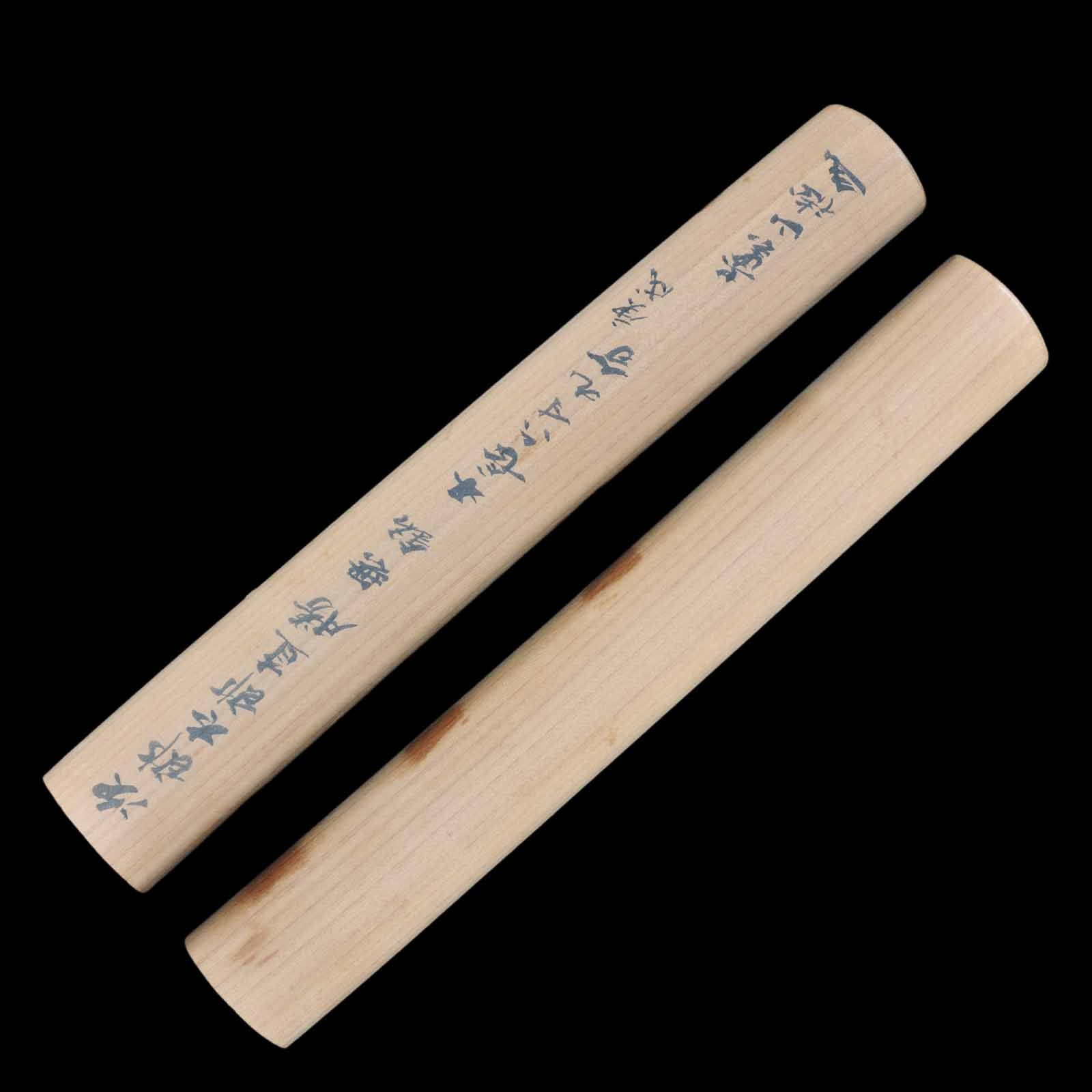
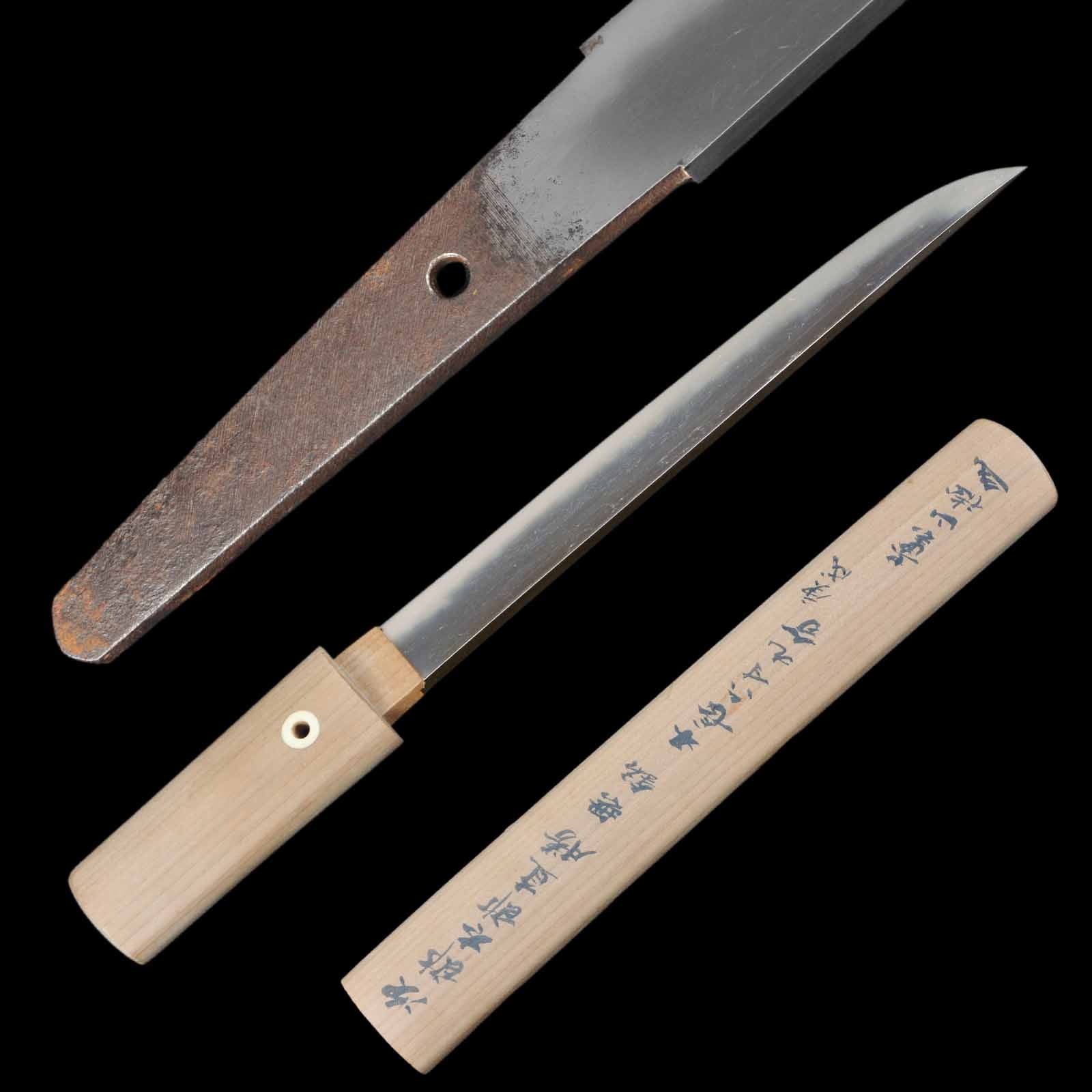
A very healthy, dignified Shinshintō tantō in a bright suguha with enchanting yubashiri — in shirasaya bearing the scabbard inscription of the great Edo master Jirō Tarō Naokatsu An exceptionally healthy and high-class unsigned (mumei) tantō, transmitting to the present day the skill of a master smith active in Musashi Province in the mid-to-late Edo period (around the Tenpō era). It is finely polished and preserved in condition essentially free of flaws or defects. The shirasaya bears a scabbard inscription (sayagaki) by Jirō Tarō Naokatsu (次郎太郎直勝), one of the representative Shinshintō masters of Musashi — his appraisal testifying to the high quality and dignity of the work. Workmanship and condition Freshly polished, the blade is in superb, essentially flawless condition. The jigane is a finely and densely packed ko-itame (small wood-grain), so refined and clear that it appears almost grainless (muji-fū). The temper line is based on a clean, upright suguha (straight hamon) with a shallow notare (undulation), covered with fine nie so that the habuchi (temper edge) glows brightly. Its greatest highlight is the vivid yubashiri (drifting patches of nie) appearing within both the temper and the ground, creating a distinctive, shimmering charm and visual appeal. Form The tantō has a clean, slender, and elegant figure with plenty of blade-flesh (ha-niku) retained — a powerful, well-made construction with no curvature (mu-sori). The excellence of the shape combined with the exquisite refinement of the steel and temper conveys, when taken in hand, the polished bearing characteristic of a Bakumatsu Edo smith. The mounting (shirasaya) & the Naokatsu sayagaki The shirasaya bears a sayagaki by Jirō Tarō Naokatsu. Naokatsu was a master smith who — alongside Koyama Munetsugu and Kawai Hisayuki — took the Bakumatsu Musashi (Edo) sword world by storm during the Shinshintō era. This blade closely accords with Naokatsu's own style and technique, and attests to the high forging skill of Musashi Province around the Tenpō era. The blade is fitted with a simple wooden habaki (ki-habaki) that sits snugly against it — unobtrusive, and letting the charm of the blade shine through without disturbing the mood of appreciation. The sayagaki of the Musashi master Jirō Tarō Naokatsu, and the enchanting yubashiri shimmering across a nie-laden ground and edge — a piece worthy of any collection, offering the refined technique and high dignity of a Bakumatsu Edo blade to the fullest.
Offered by Tozando

We couldn’t find current papers for this piece. Ask the dealer whether it has been, or can be, submitted to shinsa. — Hoshi

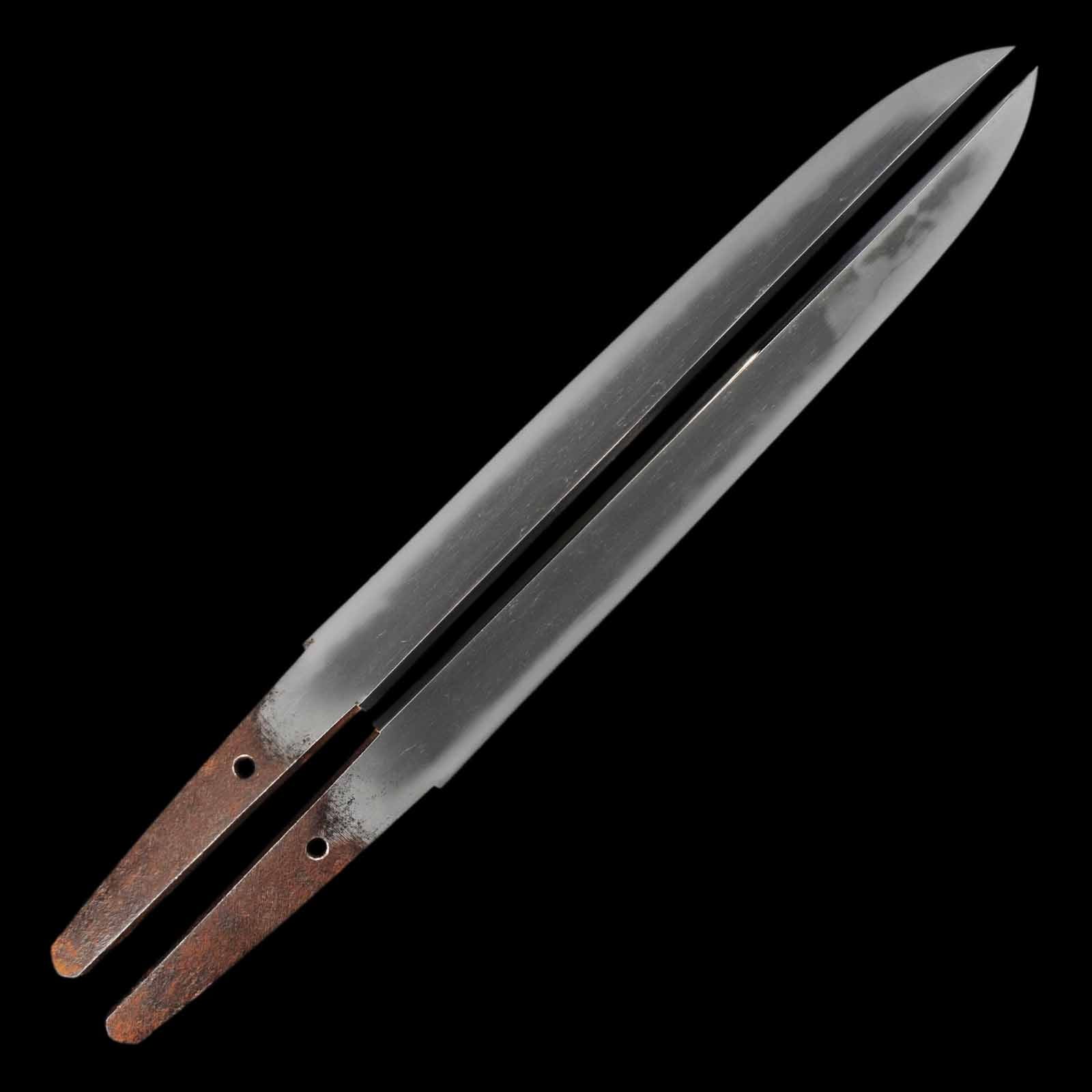
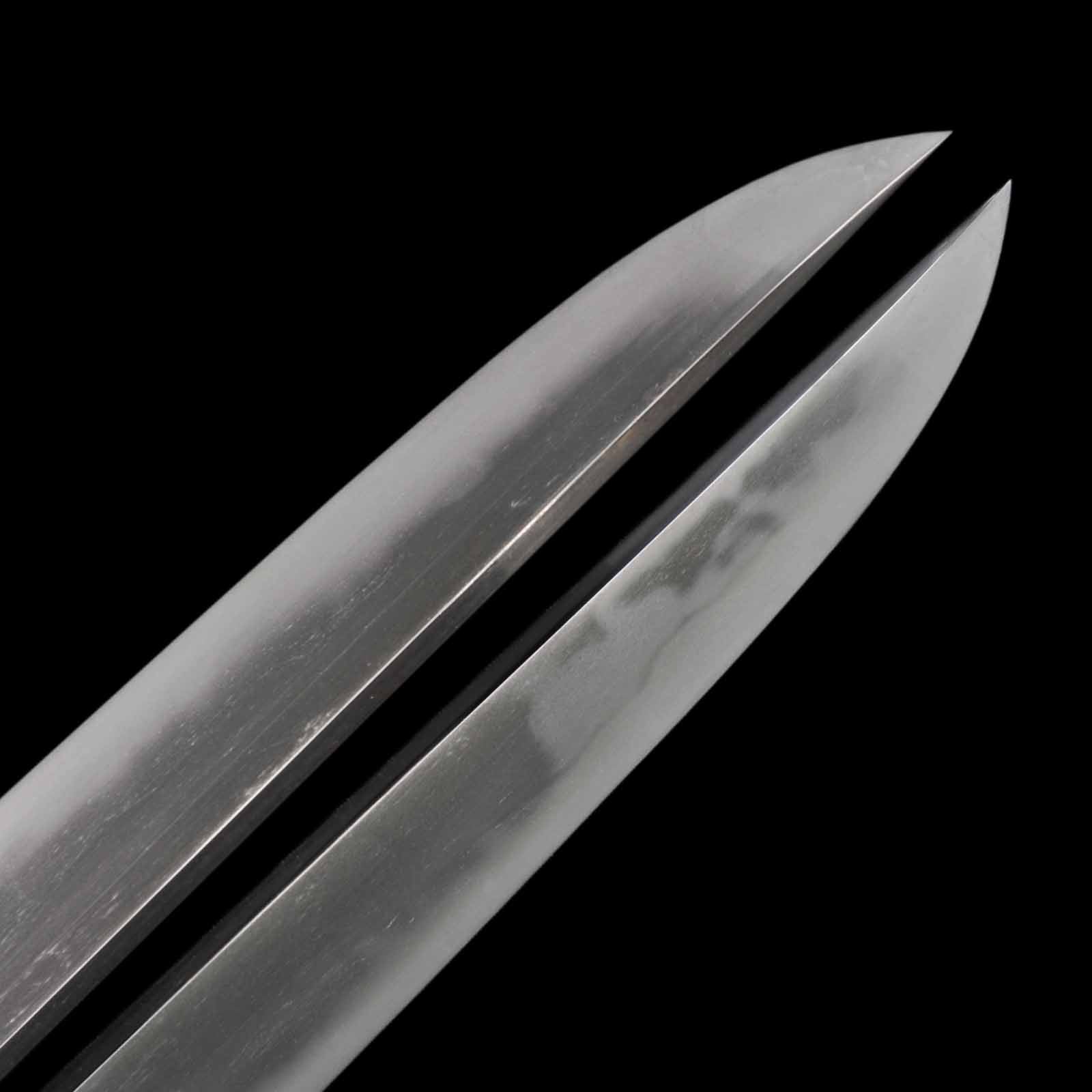
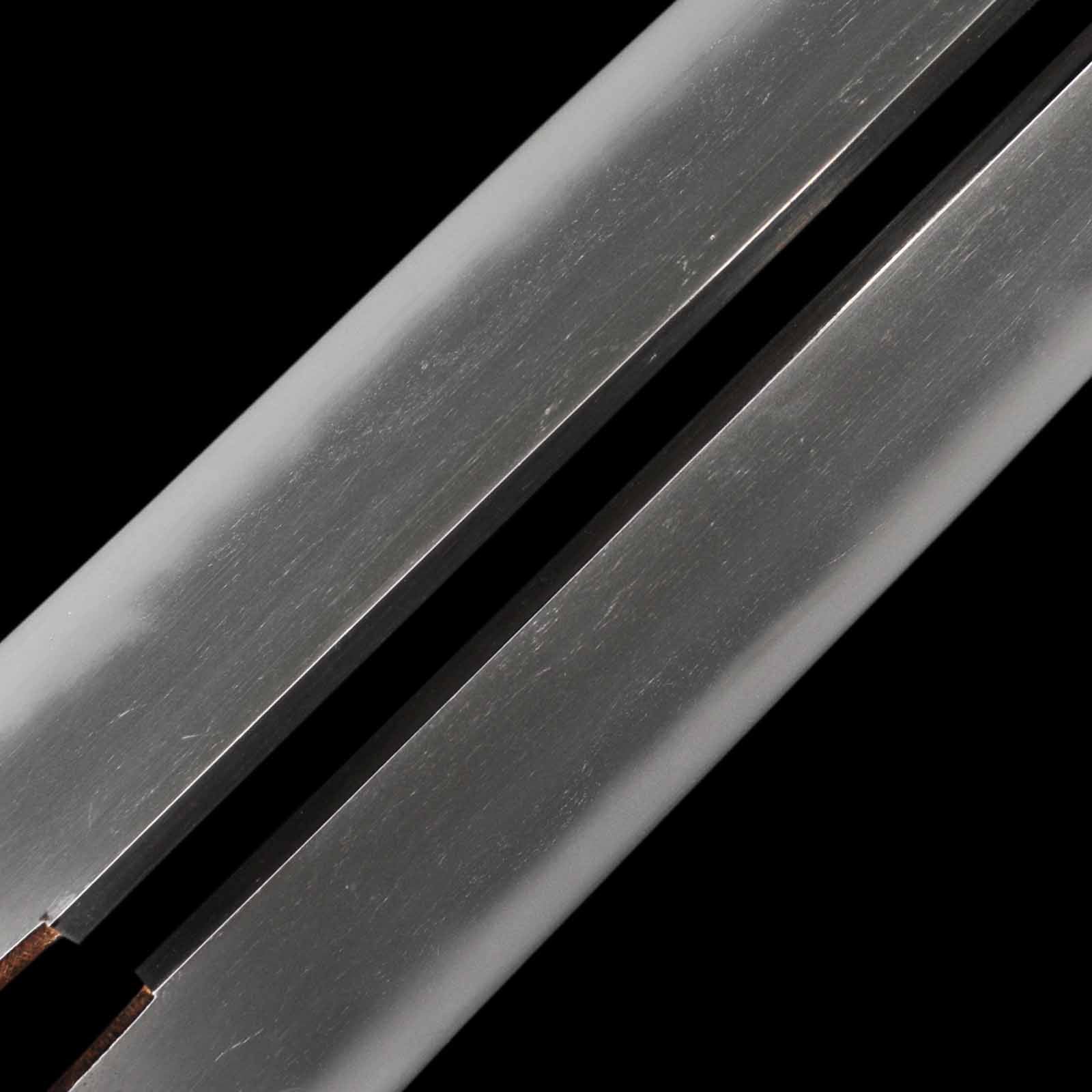
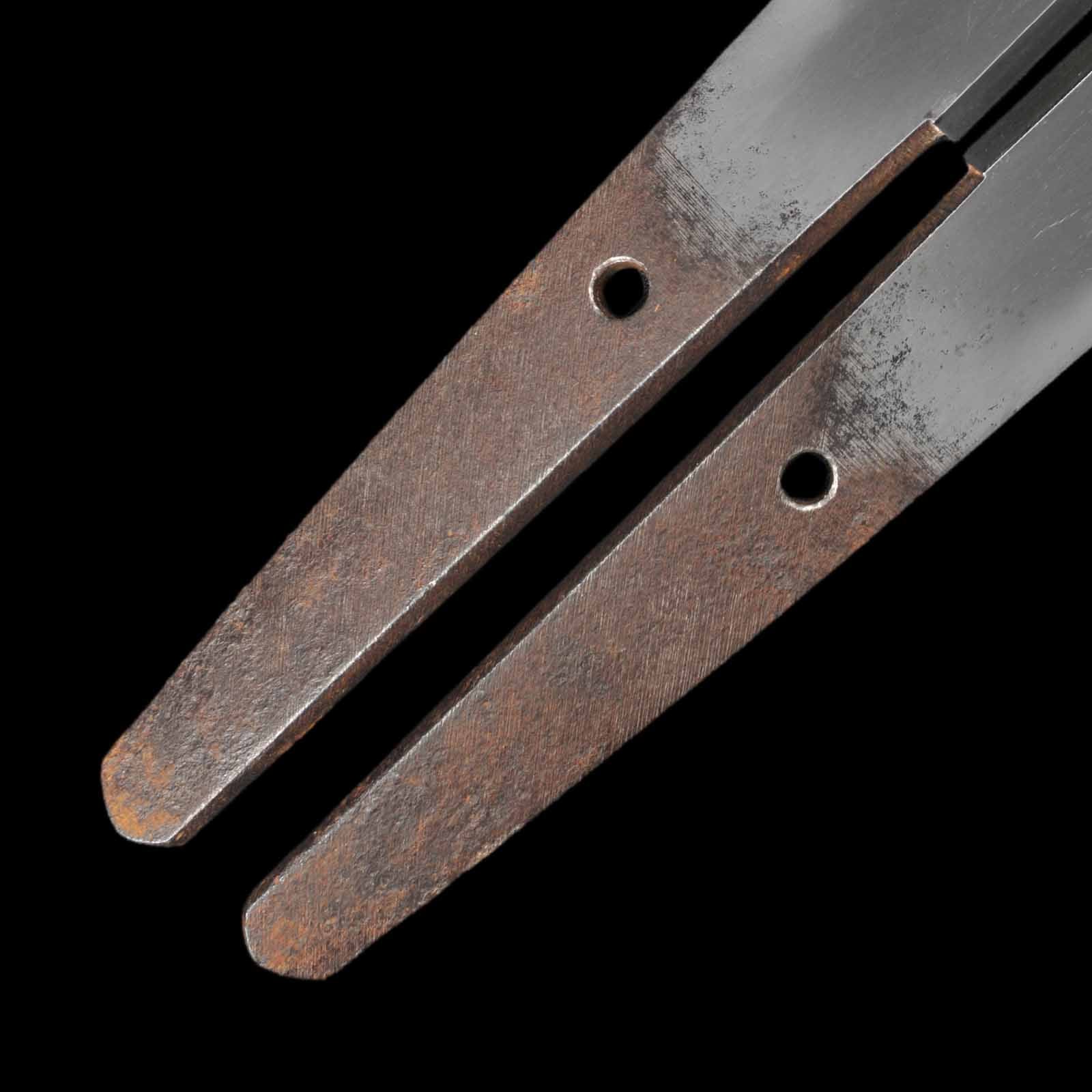
As written by the shop
The Edo period (1615 to 1868)
Edo was the sword’s age of connoisseurship: the Hon’ami appraisers, the shogunal register of famous blades of 1719, and a thriving literature turned the sword into an object of study even as it ceased to be drawn in war.
We could not find an authenticity certificate on the seller’s listing. Japanese swords and fittings are normally papered by the NBTHK (or the NTHK). Without one, the attribution is the seller’s own assessment and has not been independently verified — treat it with caution and ask the dealer about certification before buying.
As a general rule, returns/exchanges are not accepted on Japanese sword orders unless damaged upon delivery. Other items: returns/exchanges accepted within 7 days of delivery. Cancellation for personal reasons incurs a 30% restocking fee (70% refunded). Return shipping must be prepaid and insured by the buyer; shipping/handling fees are non-refundable. Contact katana@tozando.co.jp to initiate a return.
¥270,000