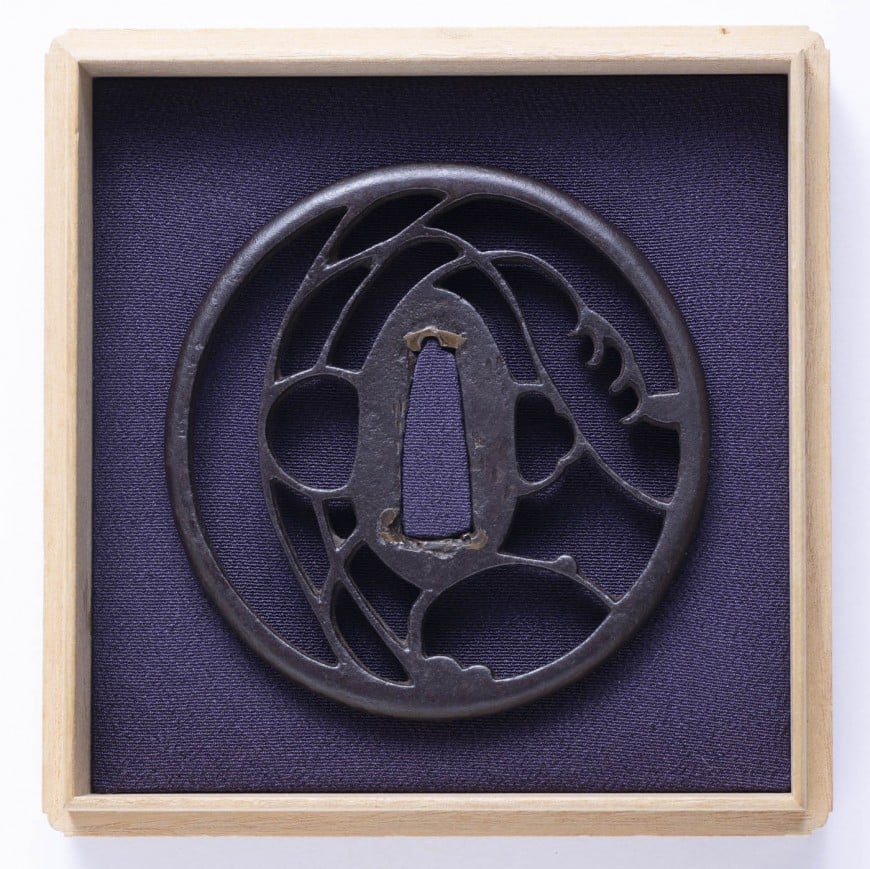
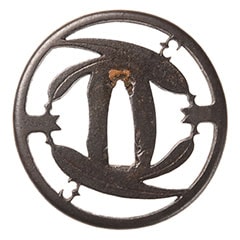
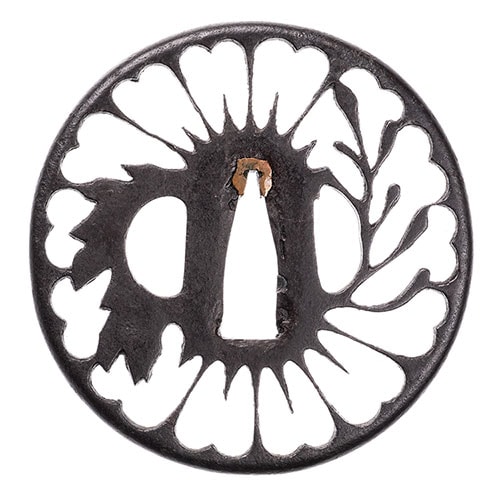
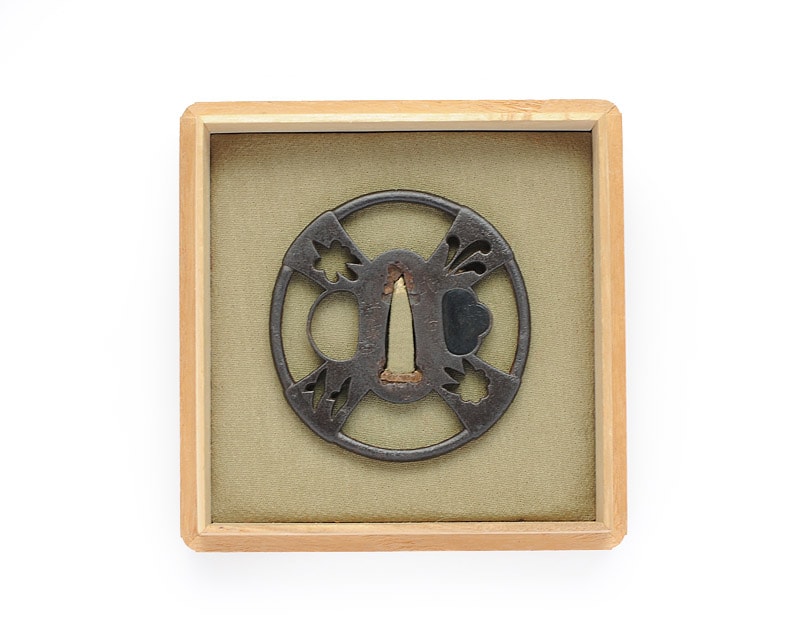
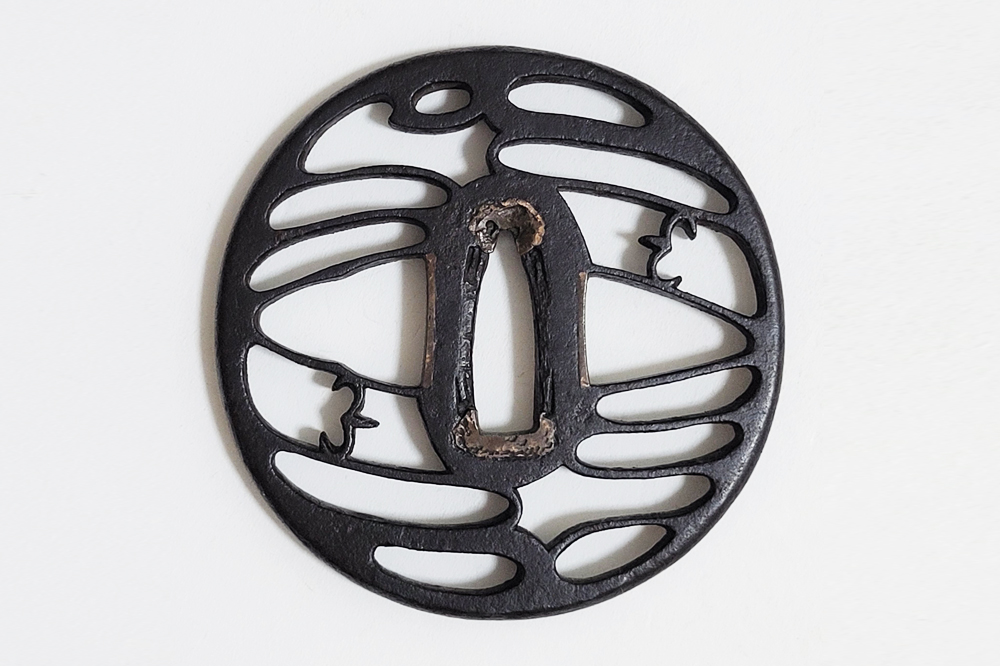
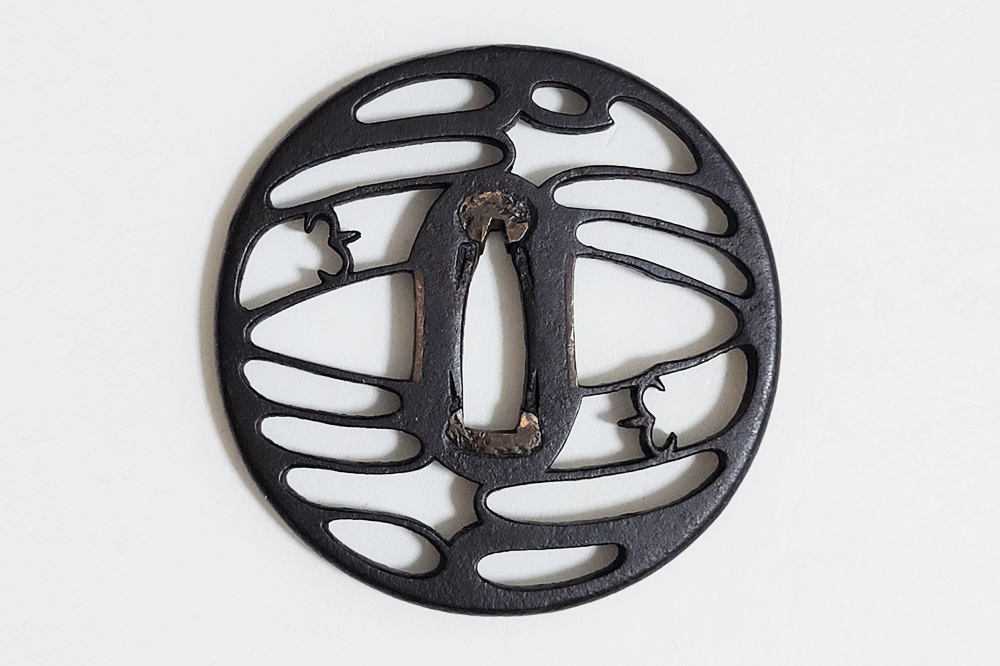
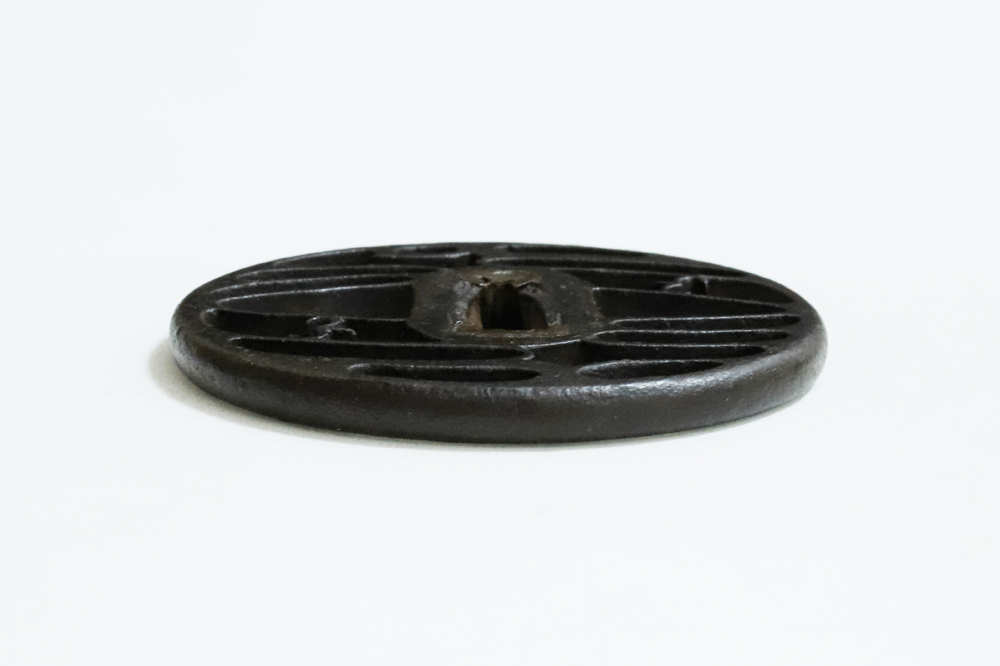
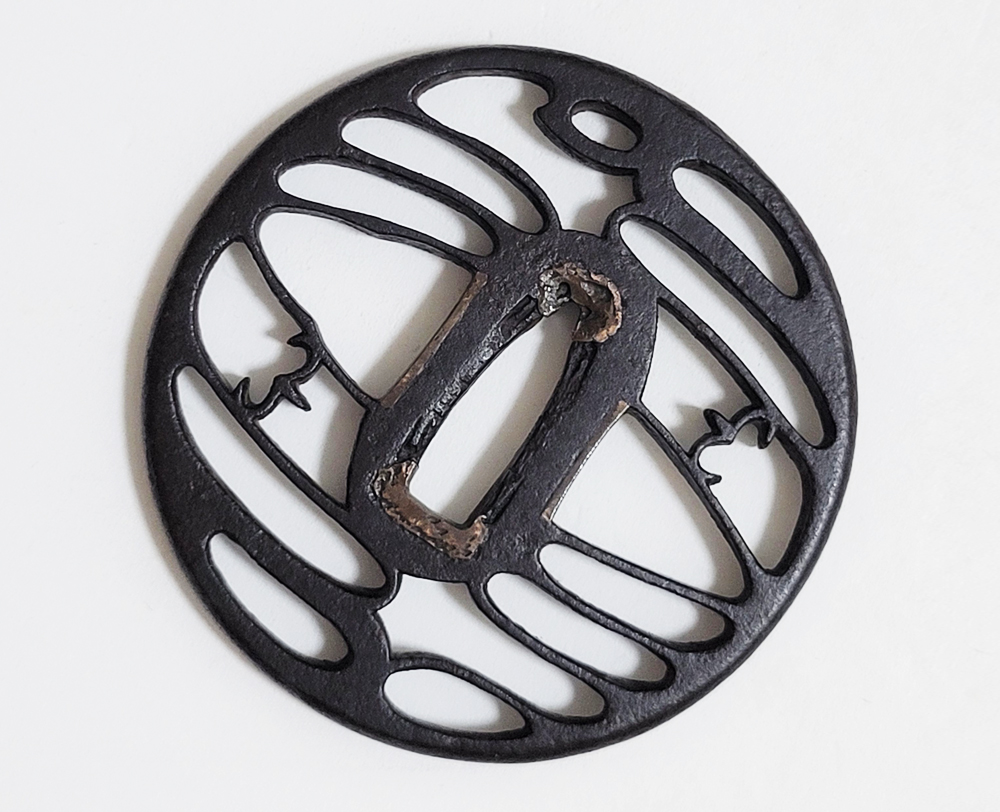
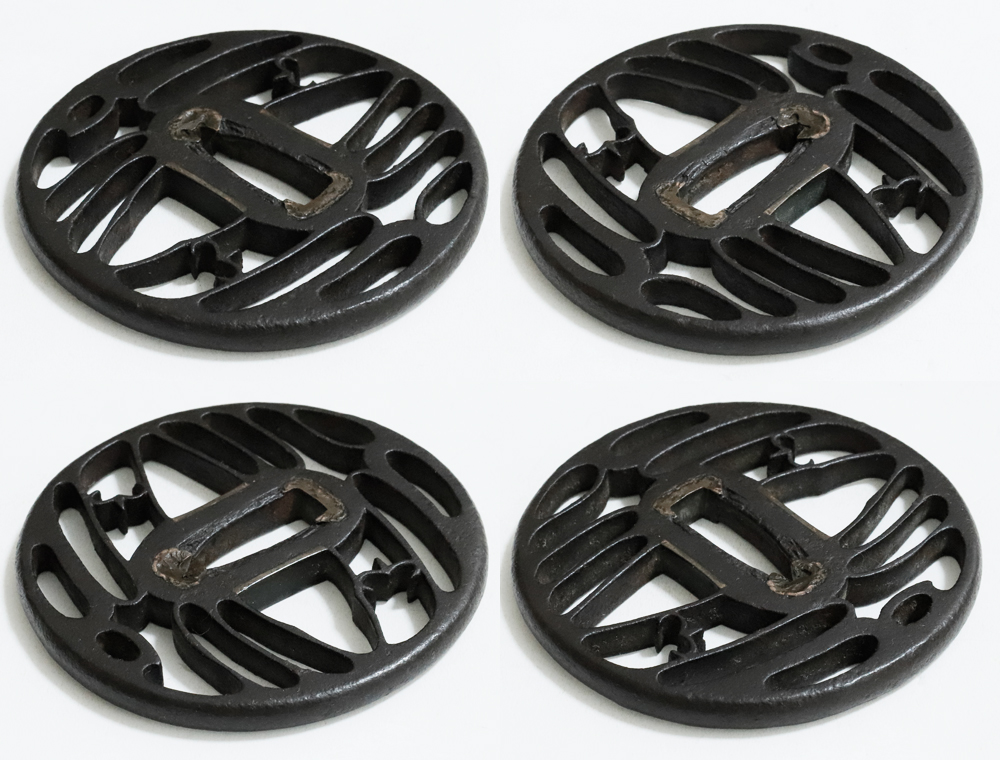
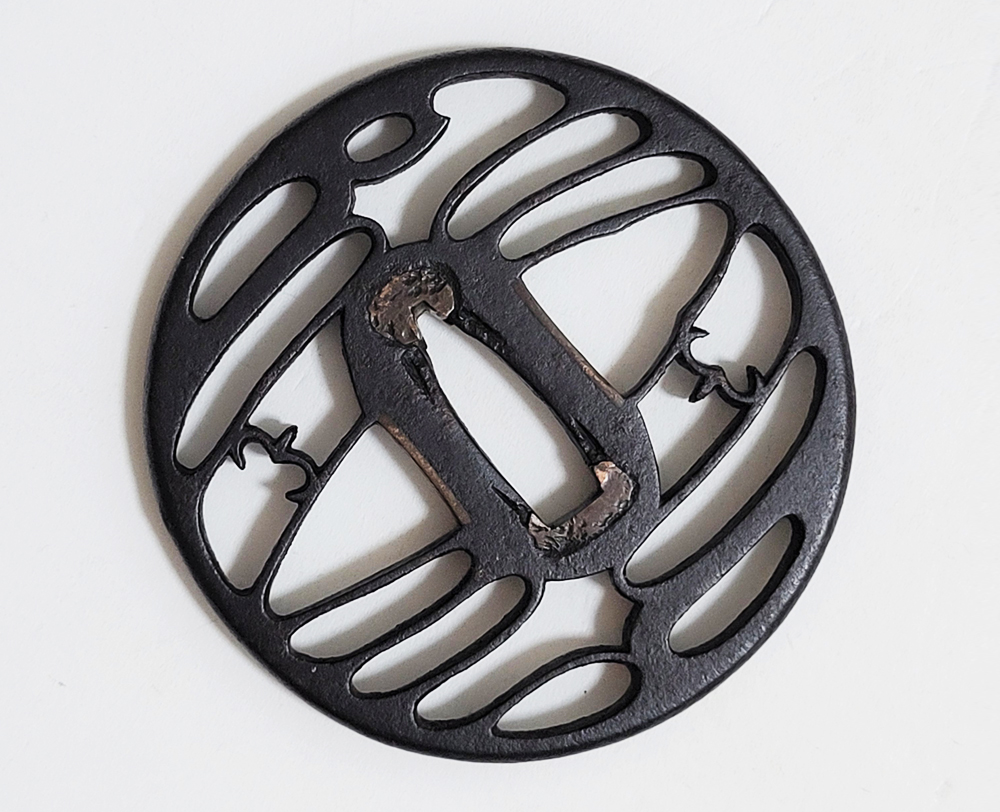
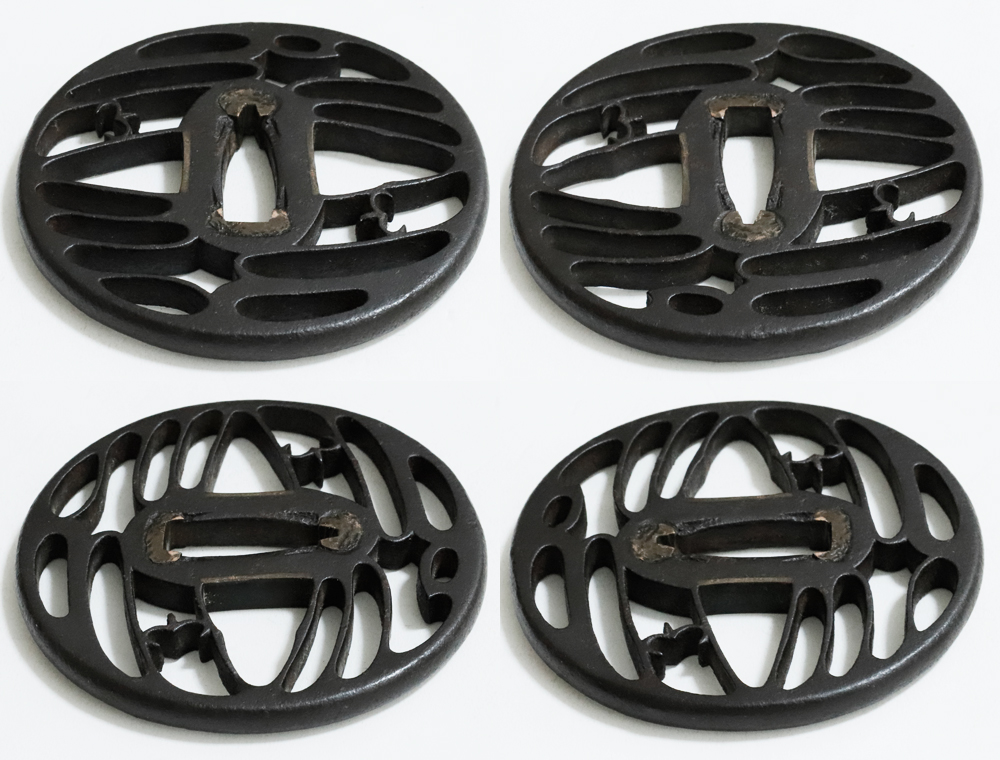
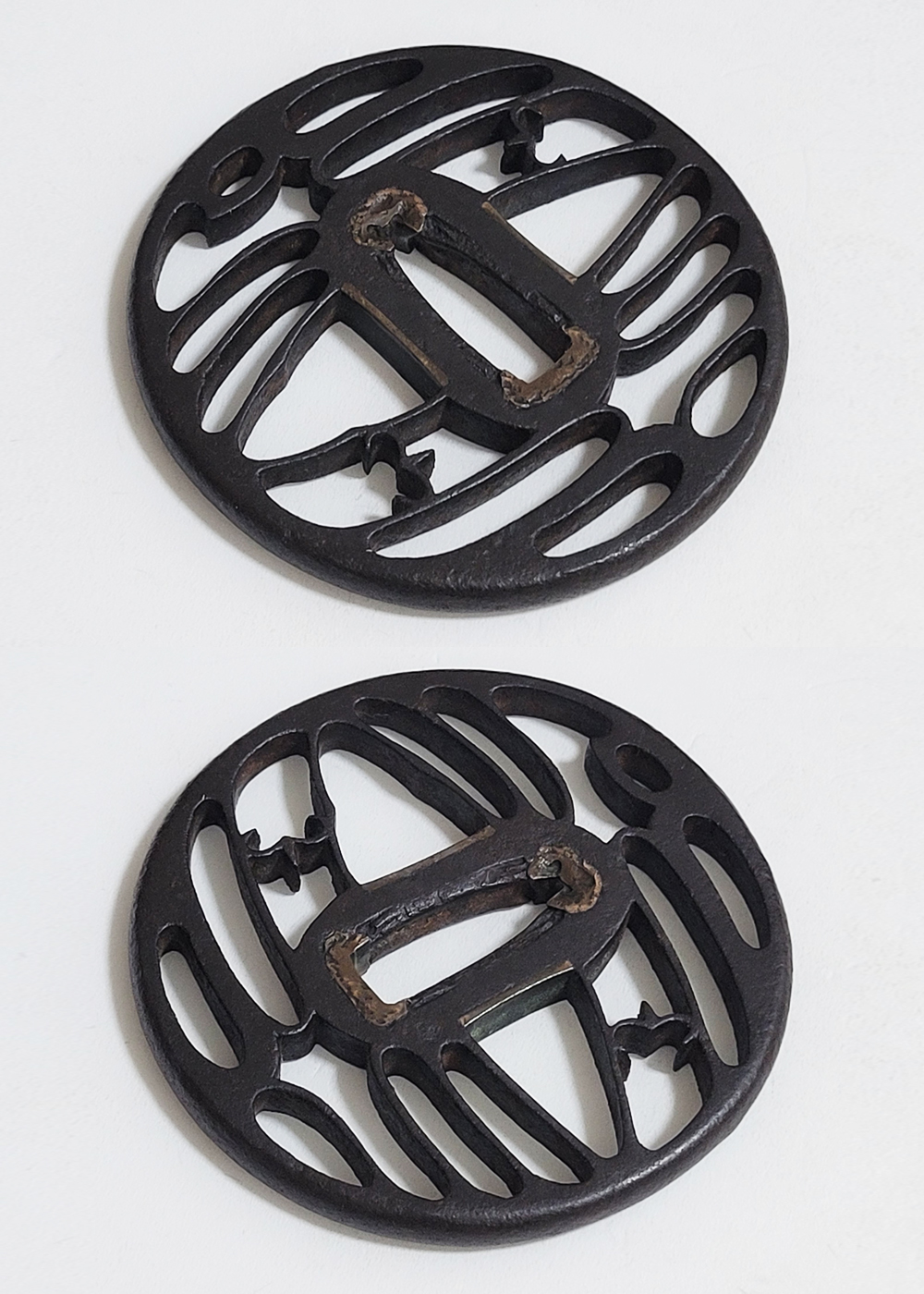
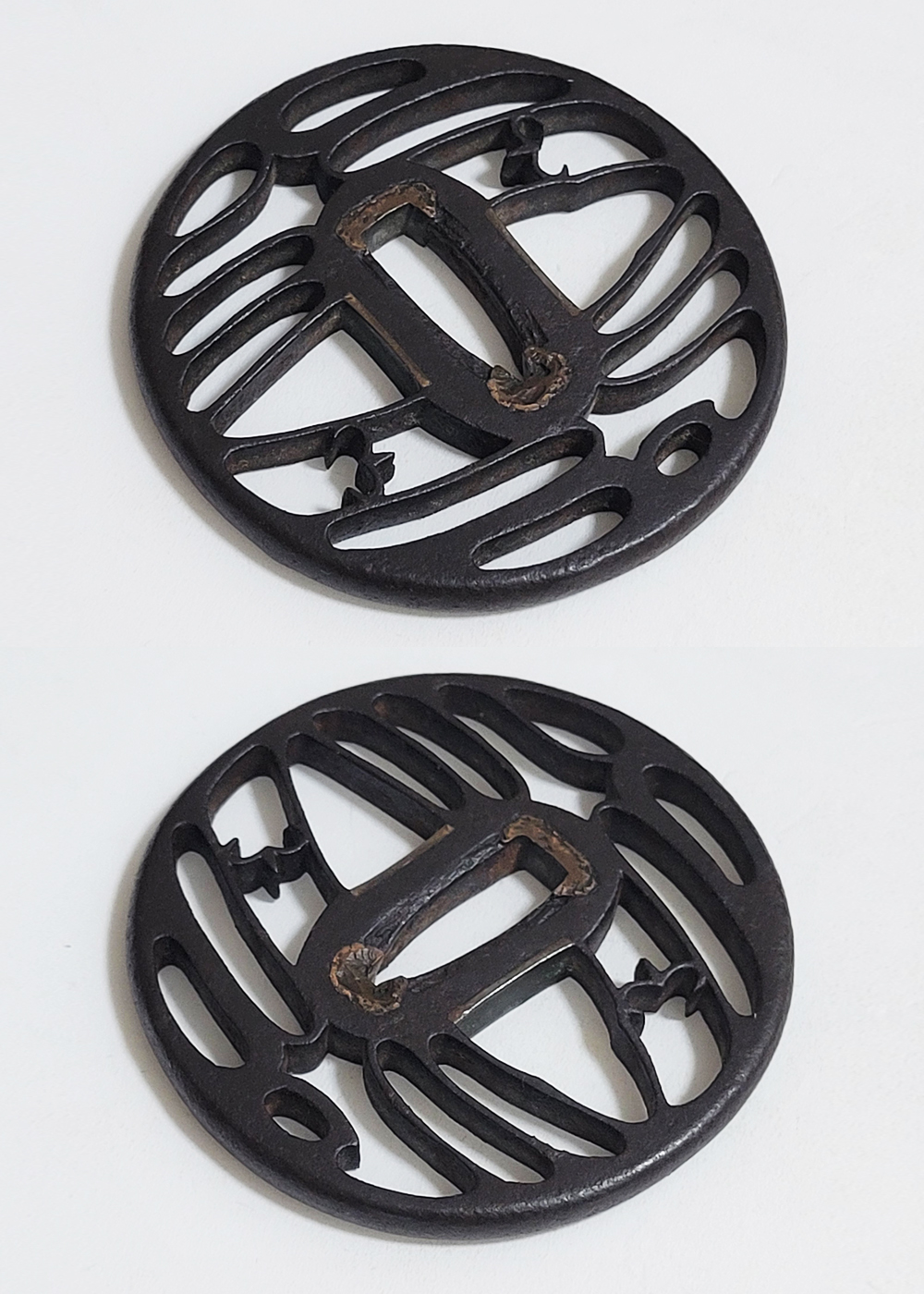
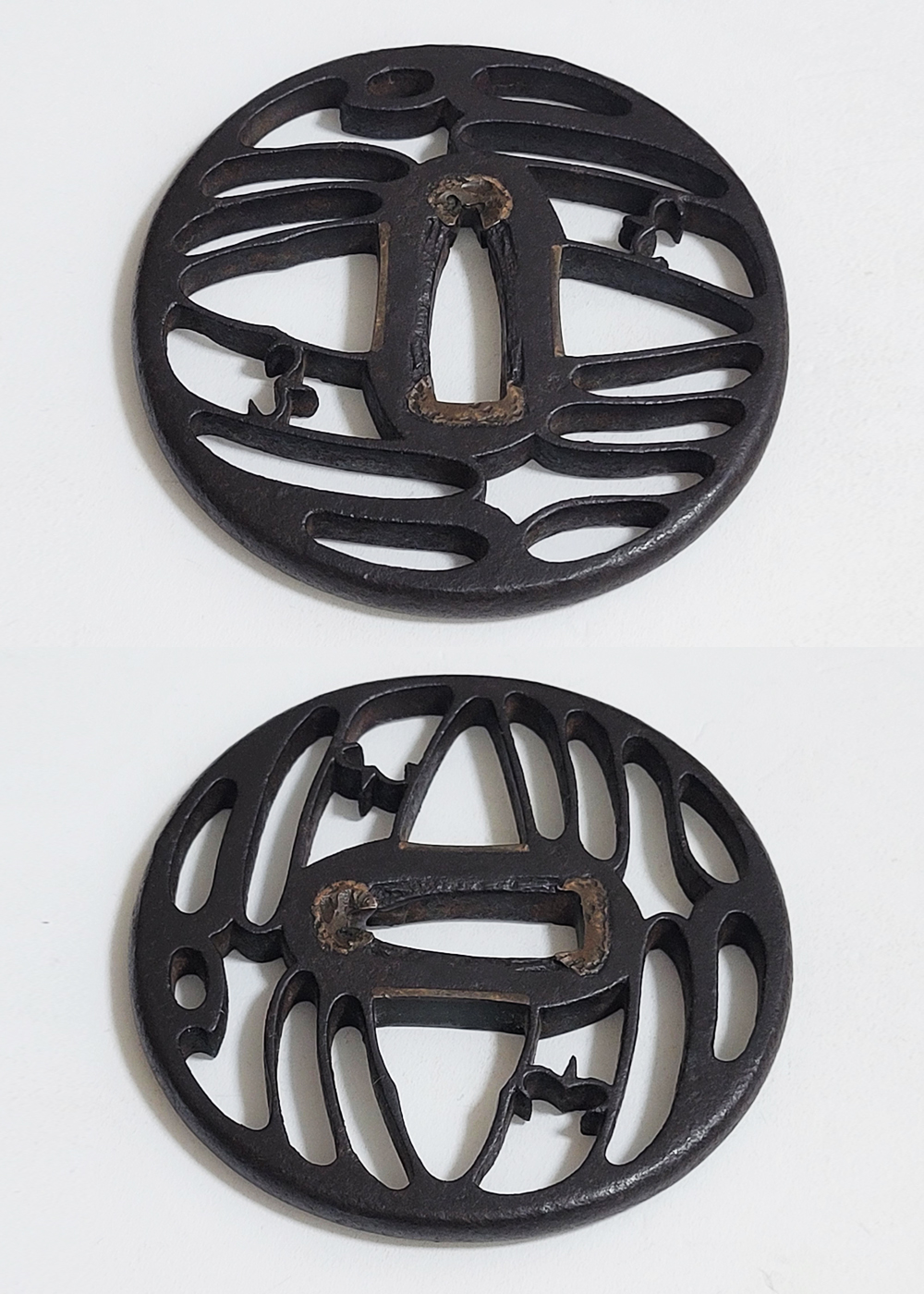
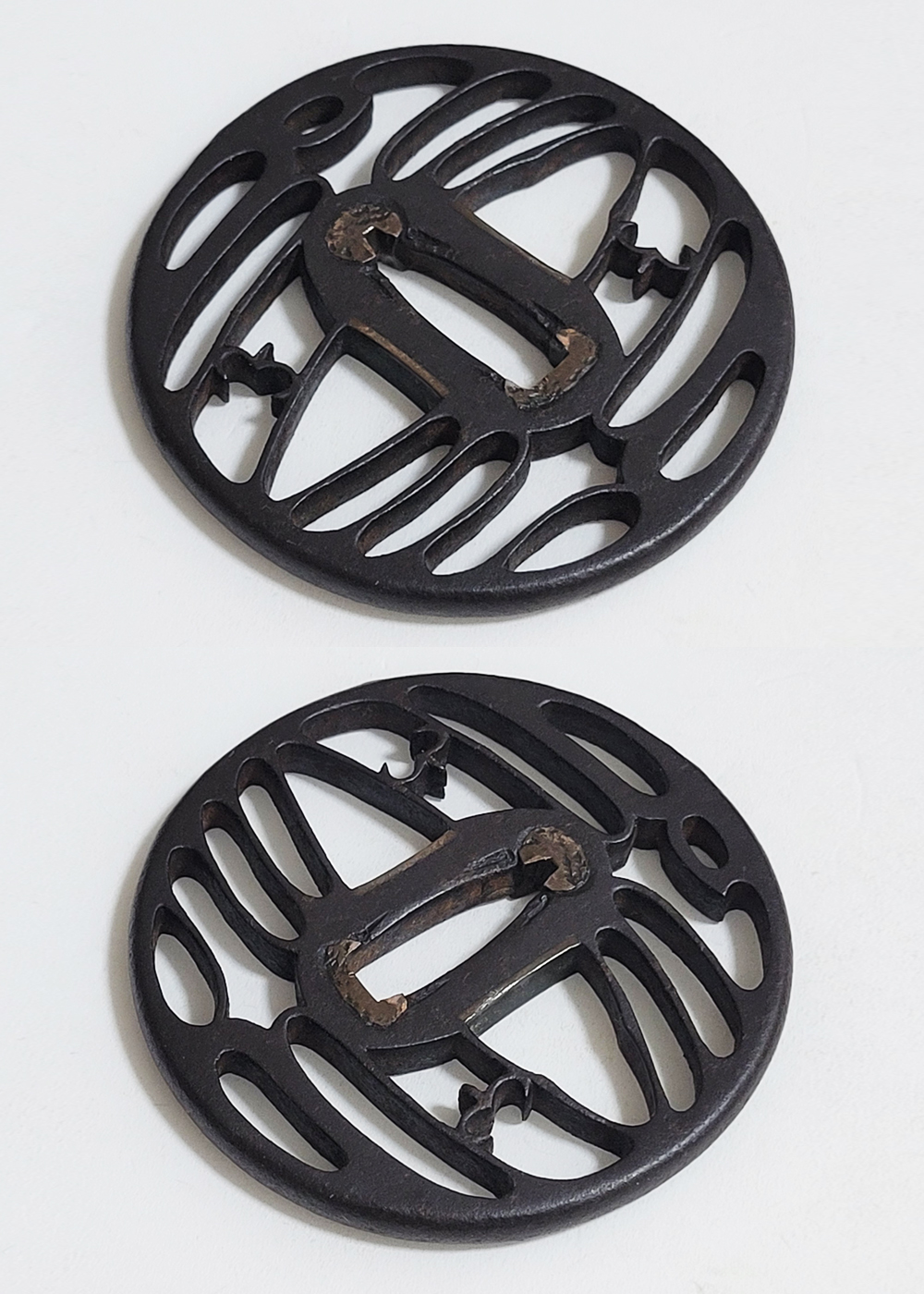
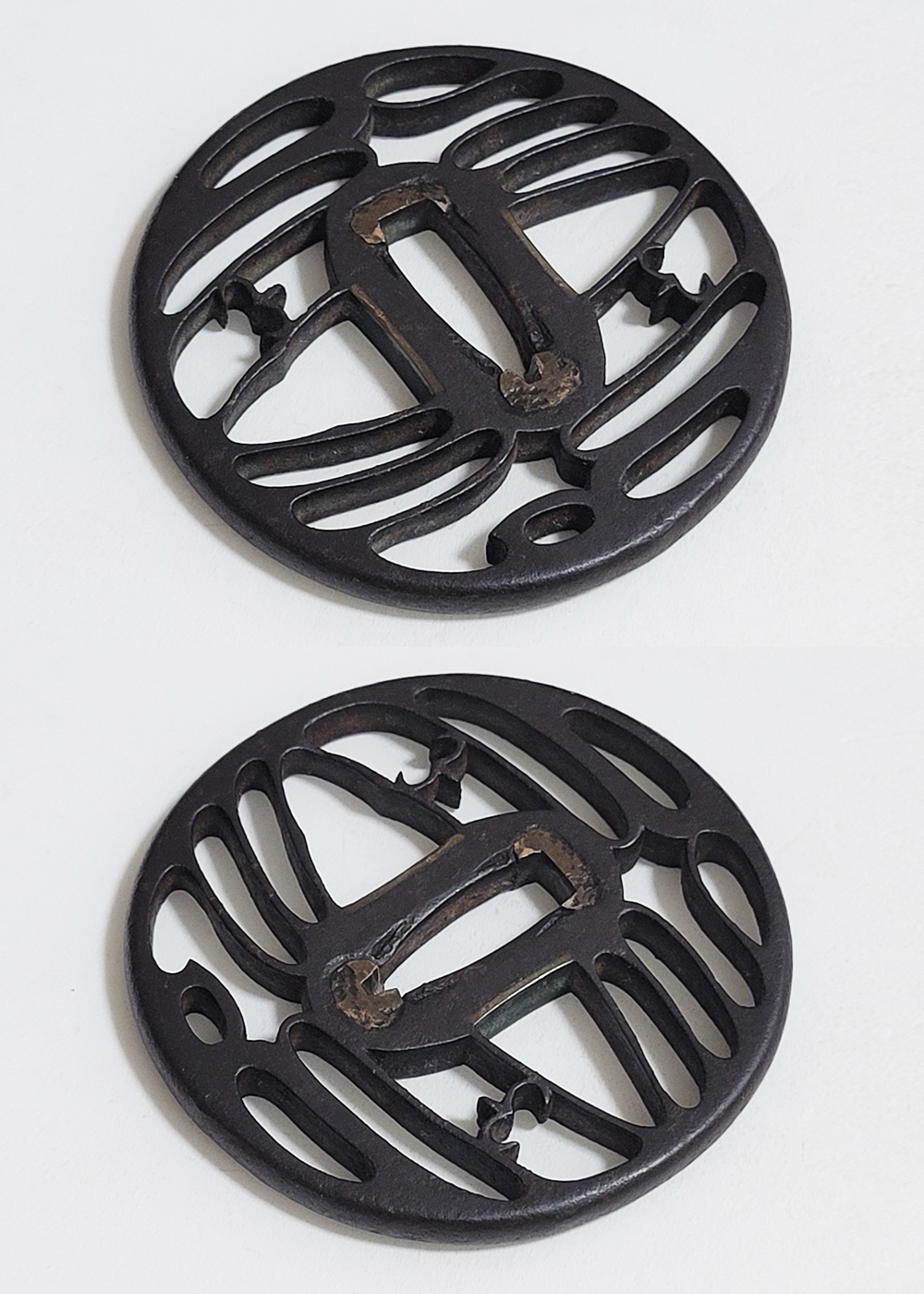
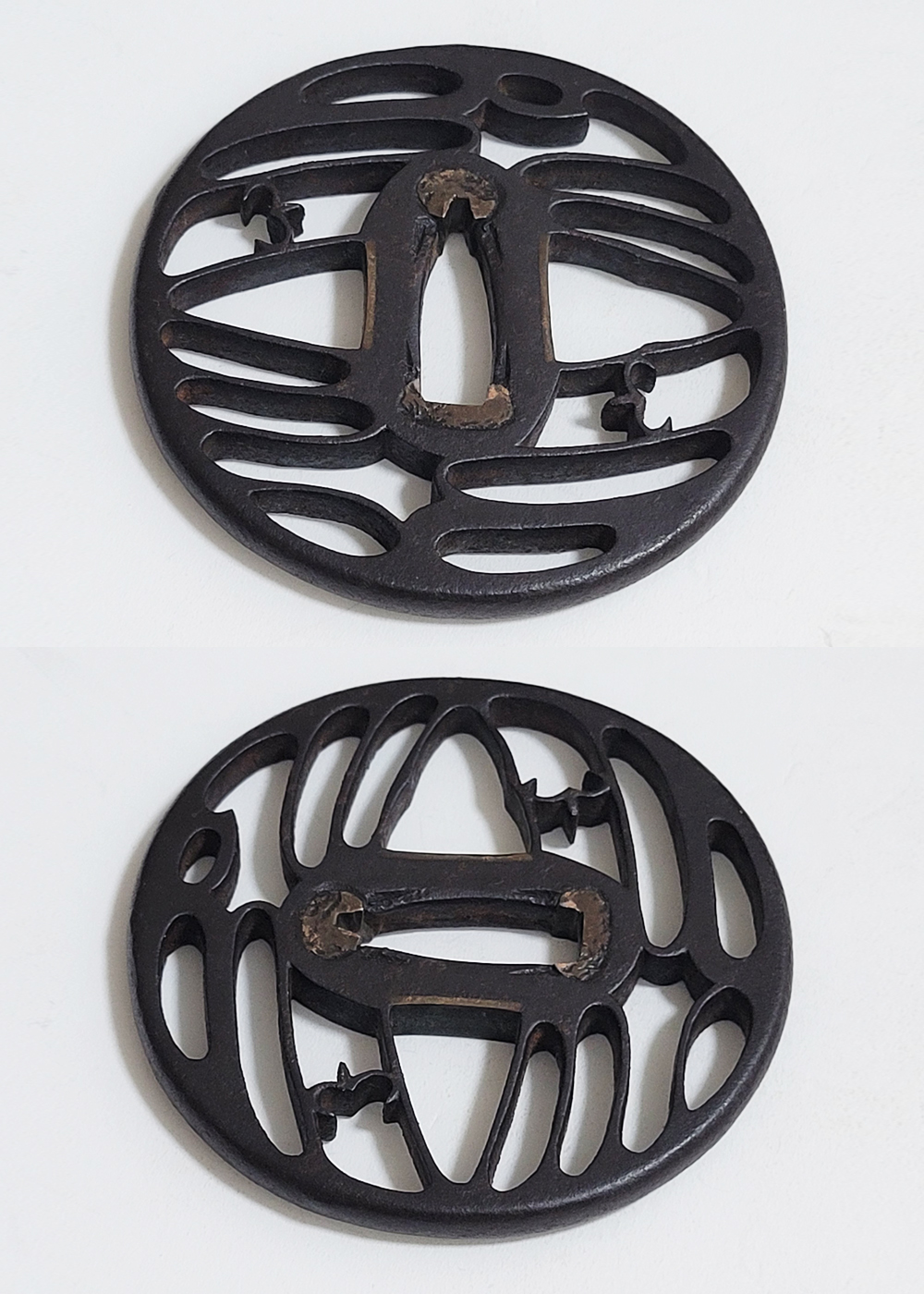
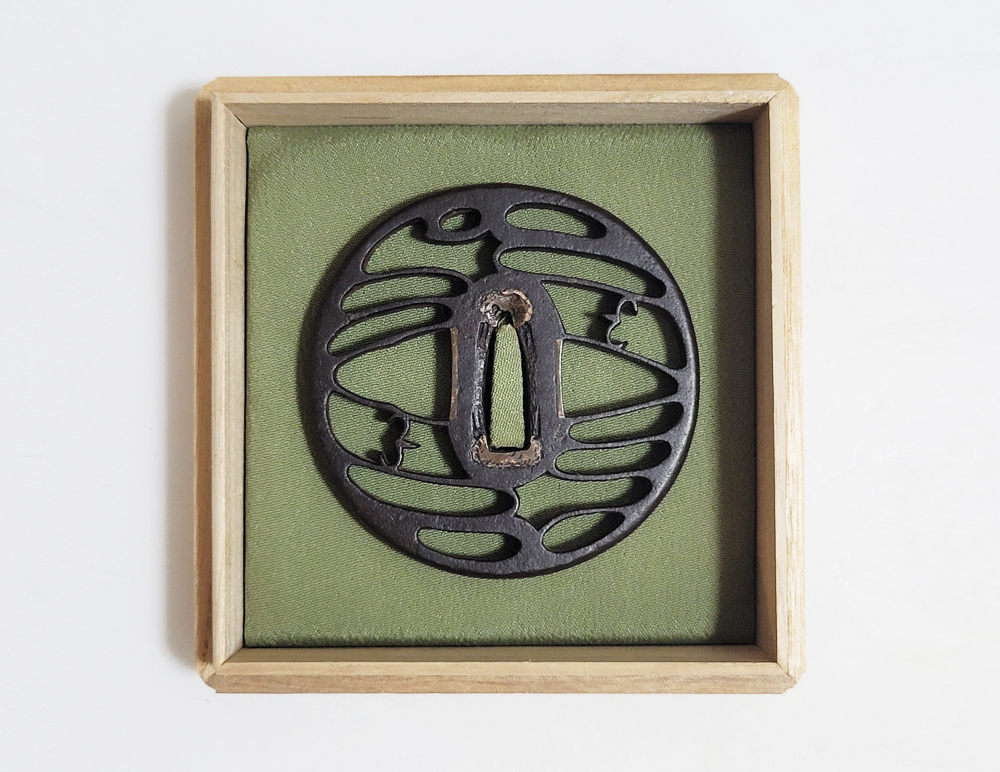
This tsuba features a skillfully arranged design of two geese within a horizontally sectioned openwork pattern on a well-forged iron ground. The elegant design integrates the geese into abstract linear openwork. Its refined style suggests it is an Akasaka tsuba, originating from Musashi Province during the late Edo period.
 NihontoWatch
mumei · Akasaka · Edo
We could not find an authenticity certificate on the seller’s listing. Japanese swords and fittings are normally papered by the NBTHK (or the NTHK). Without one, the attribution is the seller’s own assessment and has not been independently verified — treat it with caution and ask the dealer about certification before buying.
Domestic: items may be returned within 7 days in original condition for a full refund (buyer covers transport). Overseas orders: no-refunds, no-returns.
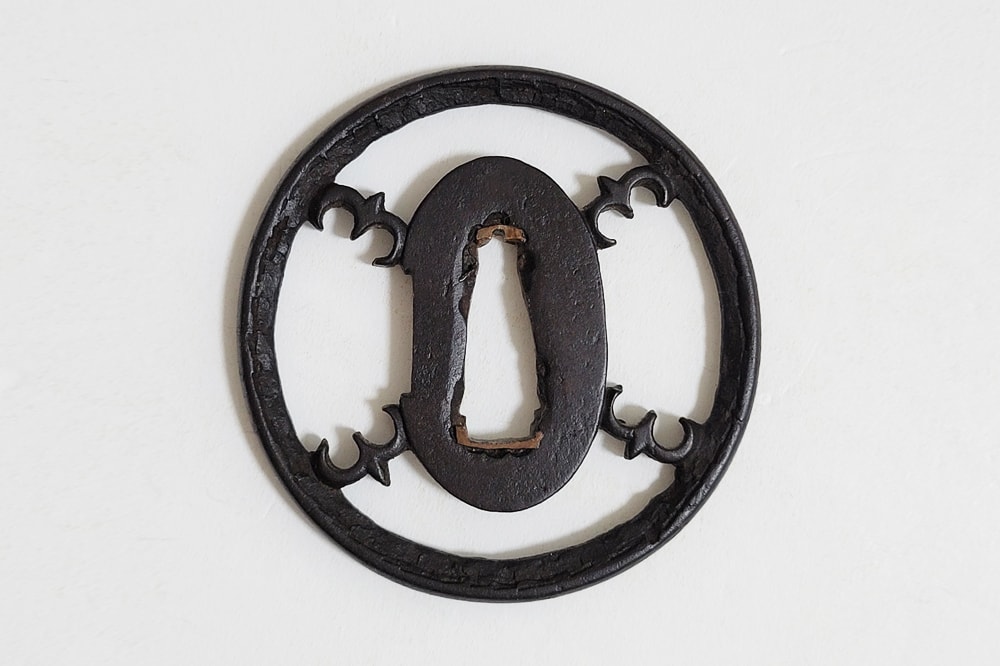
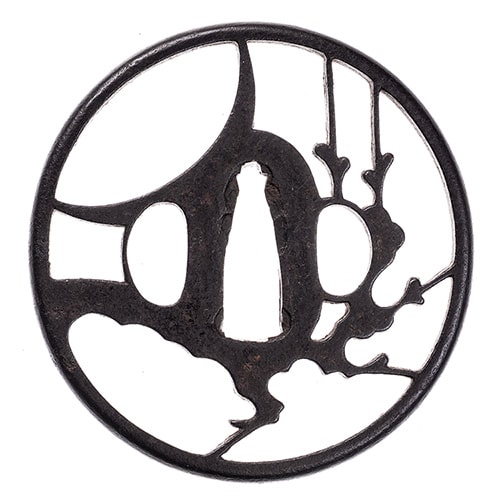
This tsuba features a skillfully arranged design of two geese within a horizontally sectioned openwork pattern on a well-forged iron ground. The elegant design integrates the geese into abstract linear openwork. Its refined style suggests it is an Akasaka tsuba, originating from Musashi Province during the late Edo period.
NihontoWatchmumei · Akasaka · Edo
We could not find an authenticity certificate on the seller’s listing. Japanese swords and fittings are normally papered by the NBTHK (or the NTHK). Without one, the attribution is the seller’s own assessment and has not been independently verified — treat it with caution and ask the dealer about certification before buying.
Domestic: items may be returned within 7 days in original condition for a full refund (buyer covers transport). Overseas orders: no-refunds, no-returns.