 NihontoWatchNihontoWatch
This finely carved iron tsuba, attributed to Akasaka Tadatoki, is most plausibly the work of the seventh master of the Akasaka school and depicts Musashino reeds, a classical poetic theme associated with autumnal fields and quiet melancholy. The composition is restrained yet expressive: slender reeds emerge rhythmically across the plate, their forms rendered with confident chiseling that balances strength and elegance. The iron shows a well-forged, compact plate with a subdued patina, while subtle carving marks remain visible, enhancing the sense of handwork and vitality. Negative space is used with great sensitivity, allowing the reeds to breathe and reinforcing the feeling of wind moving through an open plain. Overall, the tsuba exemplifies the later Akasaka aesthetic—technically accomplished, formally disciplined, and intellectually refined—where natural motifs are reduced to their essence without sacrificing depth or atmosphere.
NihontoWatchOffered by Nihonto Art

We couldn’t find current papers for this piece. Ask the dealer whether it has been, or can be, submitted to shinsa. — Hoshi
6 on the market

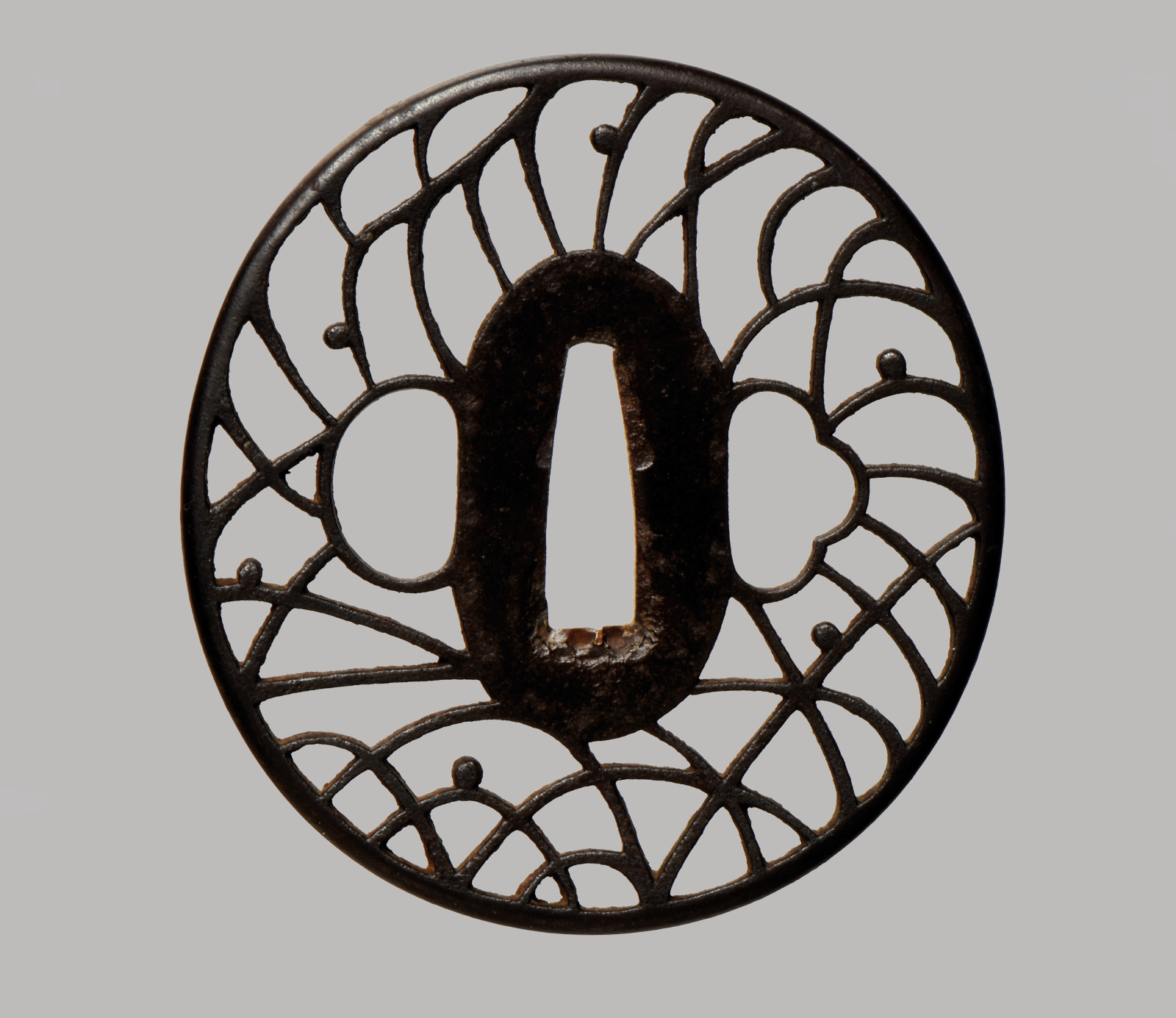
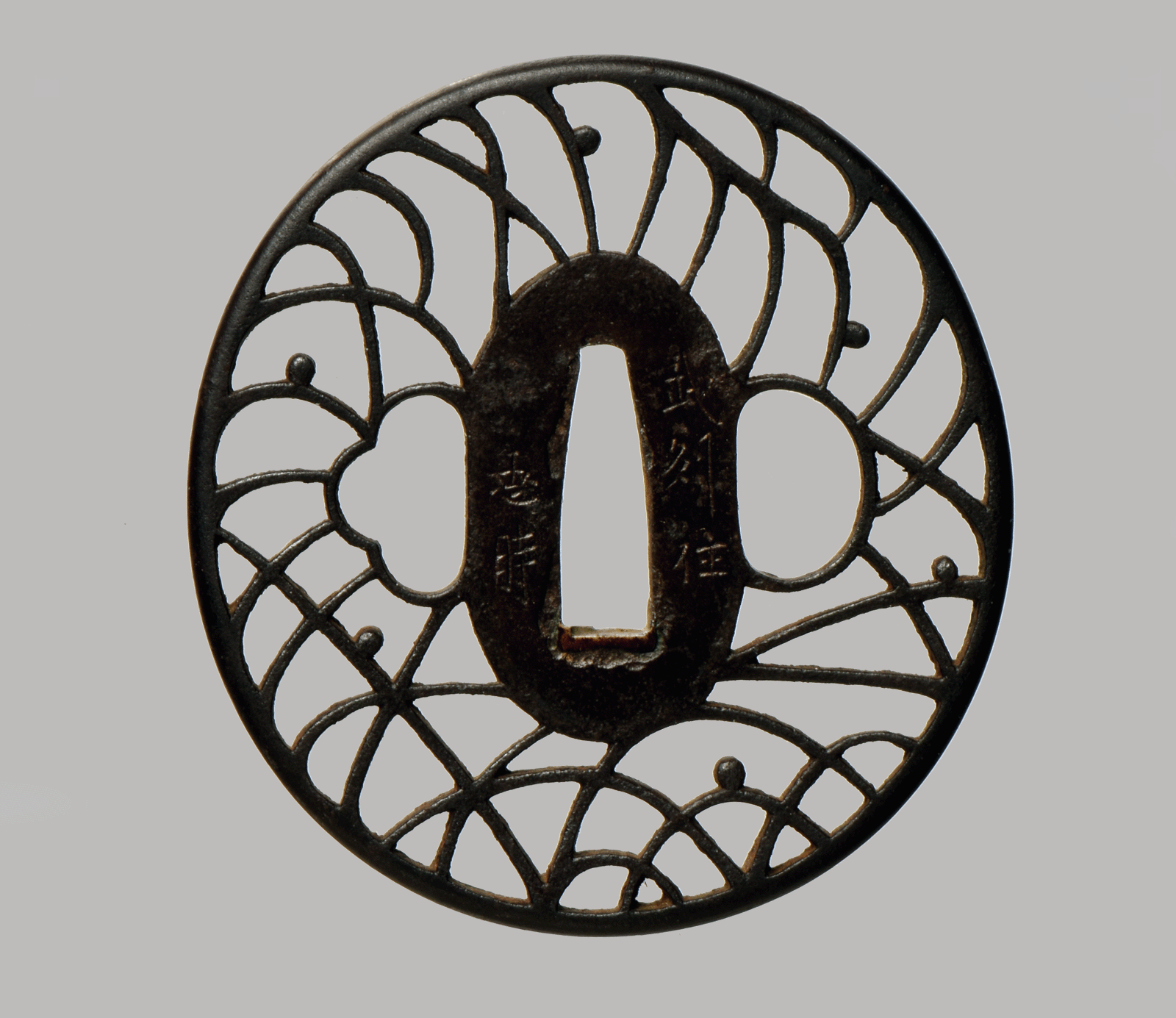
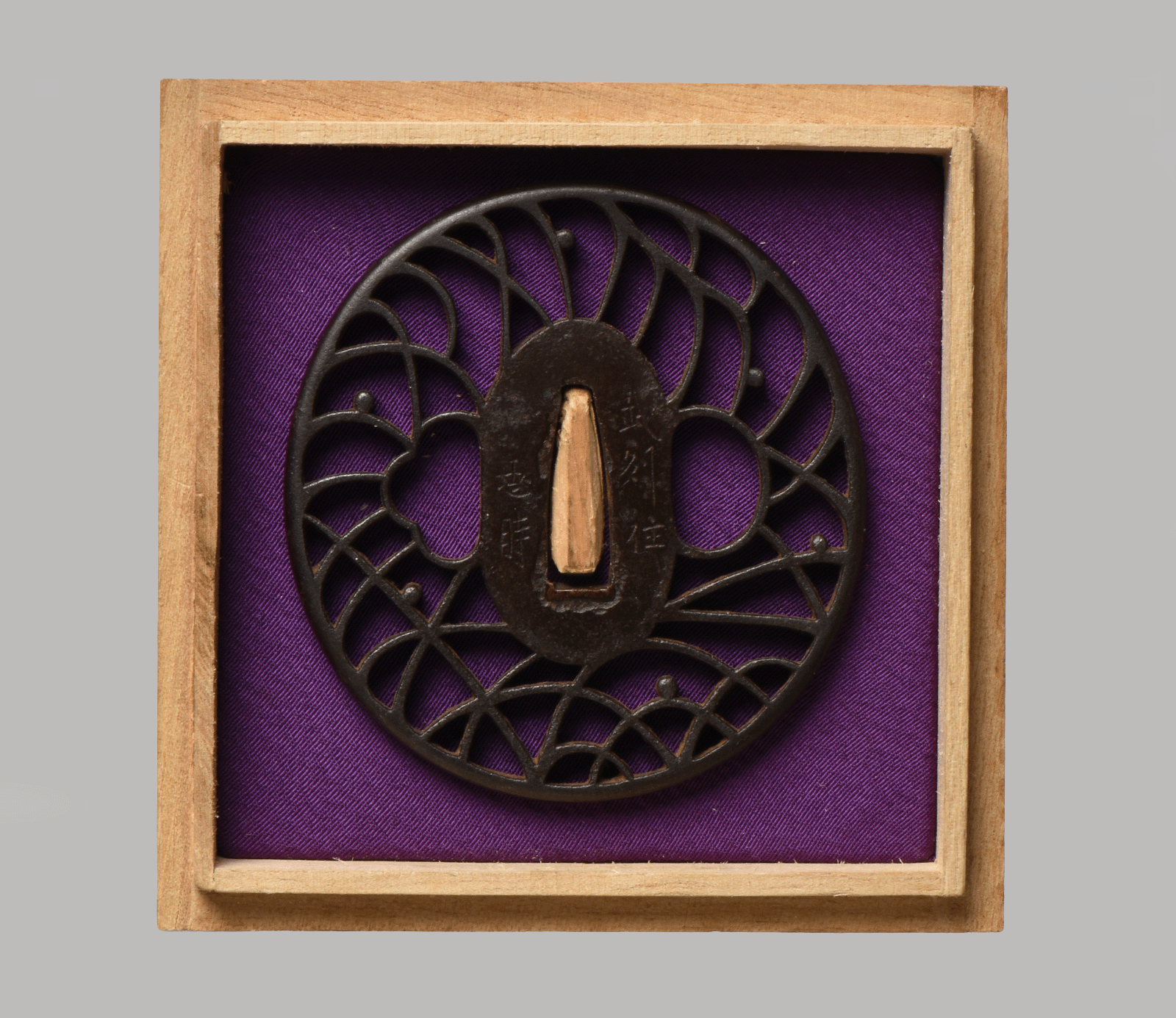
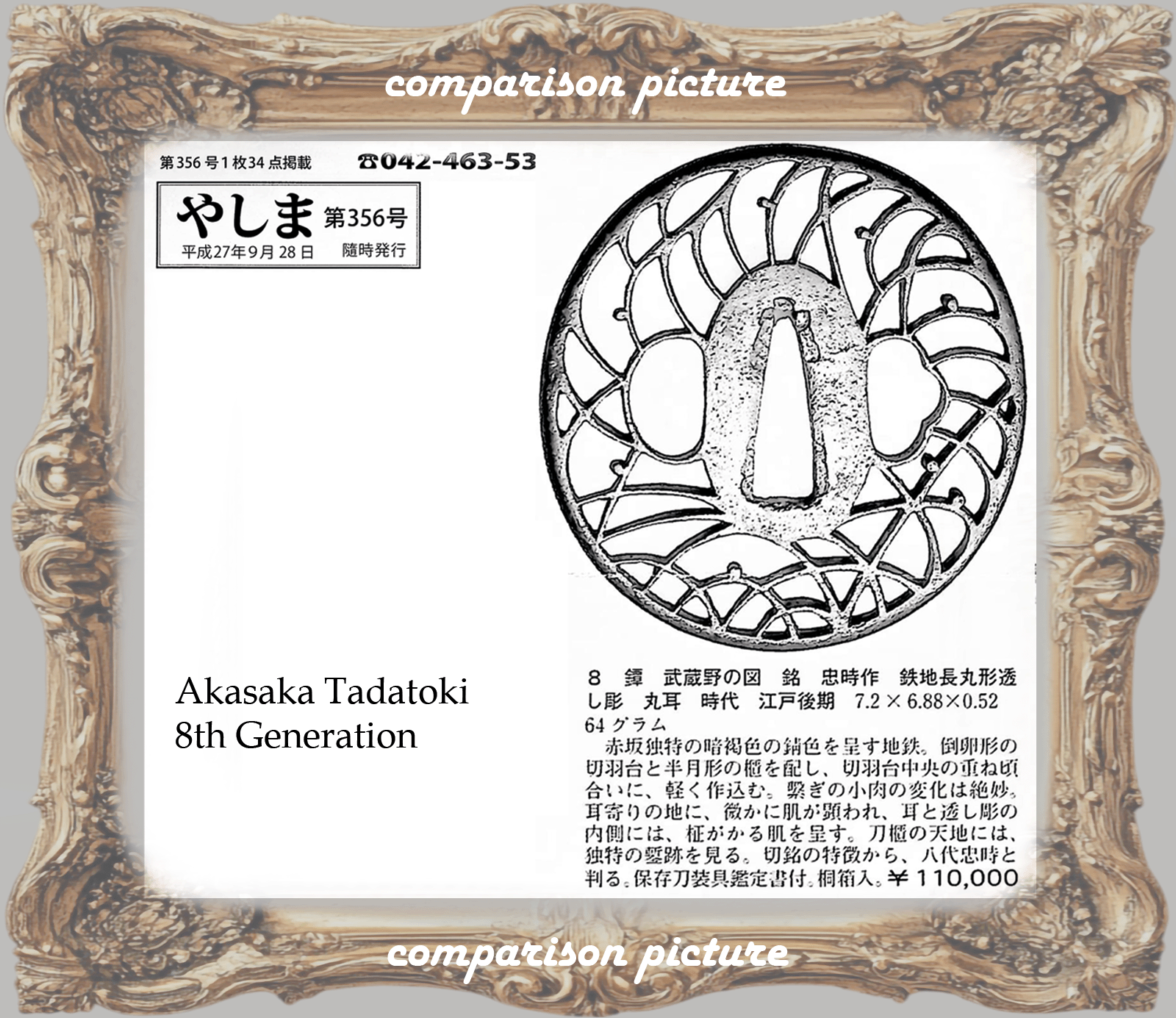
Iron-tsuba · Musashi · around 1704-1764
6 pieces on the market now
Iron-tsuba · Edo
Phase: Akasaka赤坂· 1688–1860
59 pieces on the market now
| Smith | Era | Designated |
|---|---|---|
| Tadamasa忠正 | 1624-1657 | 5 |
| Tadashige忠重 | 1730-1816 | 5 |
| Tadatoki忠時 | 1704-1764 | 0 |
| Juchiku/Toshitake寿竹 | — | 0 |
| Tadanori忠則 | 1730-1780 | 0 |
We could not find an authenticity certificate on the seller’s listing. Japanese swords and fittings are normally papered by the NBTHK (or the NTHK). Without one, the attribution is the seller’s own assessment and has not been independently verified — treat it with caution and ask the dealer about certification before buying.
14-day return window in original/unused condition; antique items (swords, menuki, tsuba and similar) are expressly excluded from exchange; EU consumers retain a 14-day cancellation right; refunds within 10 business days of approval.