Edo was the sword’s age of connoisseurship: the Hon’ami appraisers, the shogunal register of famous blades of 1719, and a thriving literature turned the sword into an object of study even as it ceased to be drawn in war.
 NihontoWatchNihontoWatch
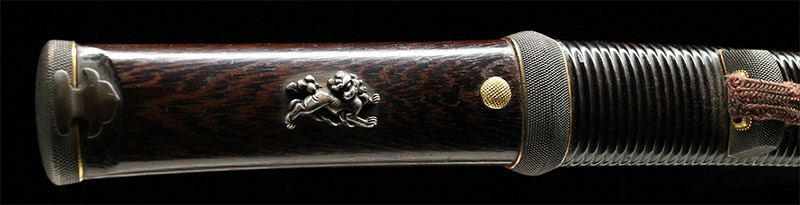
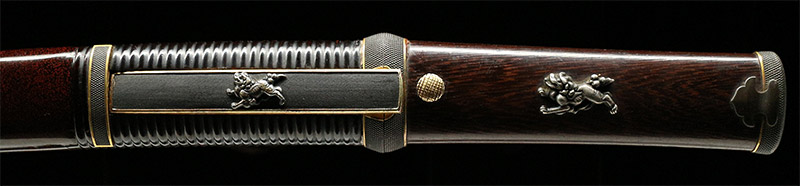
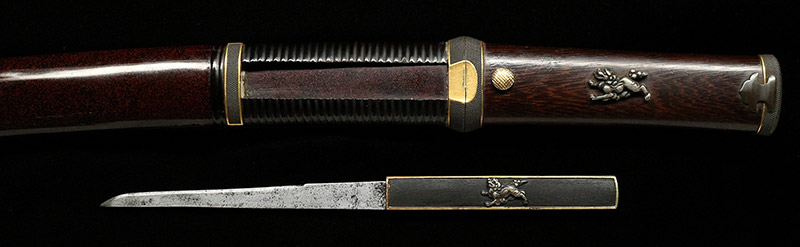
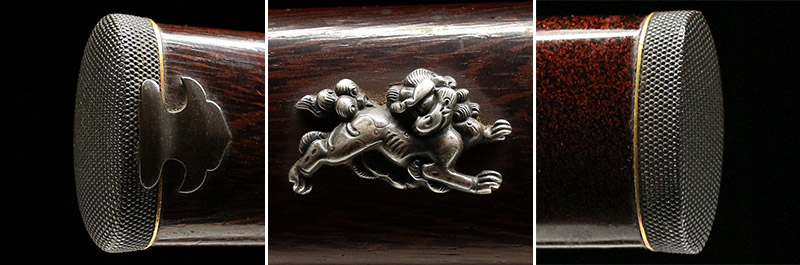
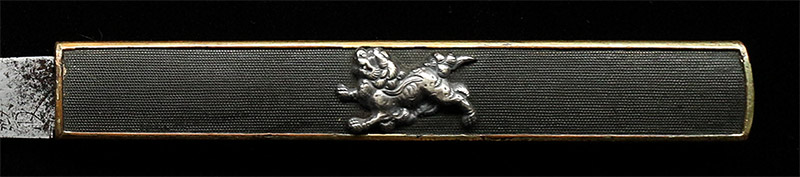
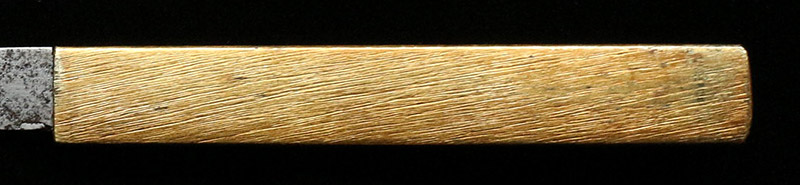
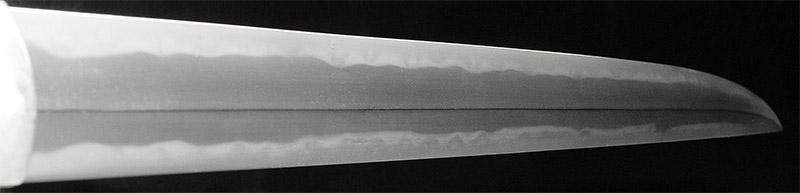
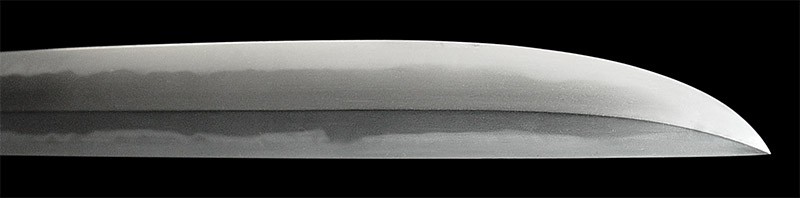
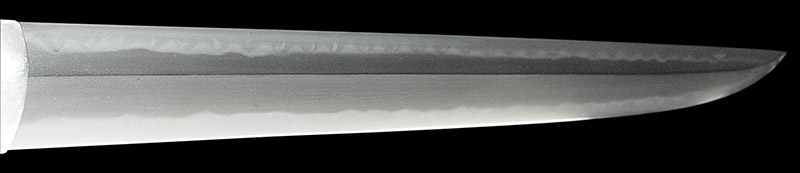
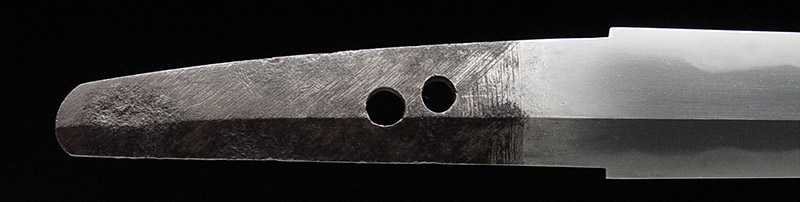
優雅な佇まいを見せる合口拵は刀身と同時代。金小縁の赤銅七々子地金具は丁寧に仕立てられ、栗型や瓦金まで一作。小柄と目貫は二所物で、赤銅七々子地に銀地獅子図小柄、目貫も同様に銀地獅子図で瀟洒な拵に色を添えている。鞘は腰元を黒の一分刻みとし、艶のある黒茶鞘は裏側に経年による傷と膨れがある。柄は鉄刀木と思われる堅木造りで、目貫はねじ形。拵だけでも相当の価値がある。 刀身は一寸近い長さの両刃造り。生ぶ無銘で江戸後期の寿命に極められている。鎌倉時代から代々続く美濃寿命は、その縁起のよい名前から人気を博したという。刃文は互の目乱れで尖り刃が交じり、地鉄は練れた小板目肌。古研ぎで僅かに鞘ヒケあるも錆などはなく研ぎの必要はない。保存刀剣鑑定書附。
NihontoWatchOffered by Tokka Biz
This piece has sold
9 on the market
Get an email when new Jumyo School work hits the market.





As written by the shop
Mino-den · Mino
9 pieces on the market now
The Edo period (1615 to 1868)
Edo was the sword’s age of connoisseurship: the Hon’ami appraisers, the shogunal register of famous blades of 1719, and a thriving literature turned the sword into an object of study even as it ceased to be drawn in war.
Certifies a genuine blade worth preserving: a signature confirmed correct, or, if unsigned, an era, province, and school that the NBTHK can reliably identify.
The NBTHK (Nihon Bijutsu Tōken Hozon Kyōkai, the Society for the Preservation of Japanese Art Swords) is a public-interest incorporated foundation founded in 1948 and supervised by Japan’s Agency for Cultural Affairs (Bunkachō); it is based at the Japanese Sword Museum in Tokyo. Its expert panels physically examine each submitted work (shinsa) and issue a certificate (kanteishō) ranking it by artistic and historical merit. NBTHK papers are the most widely recognized standard of authentication for Japanese swords and fittings.
NBTHK official siteIf the item is not to your liking, please feel free to return it for any reason. Return shipping is the customer's responsibility. After the item arrives and we confirm it is in the same condition as at the time of sale, we transfer the refund to your designated account the same day. Purchases made at the store are outside the scope of cooling-off.