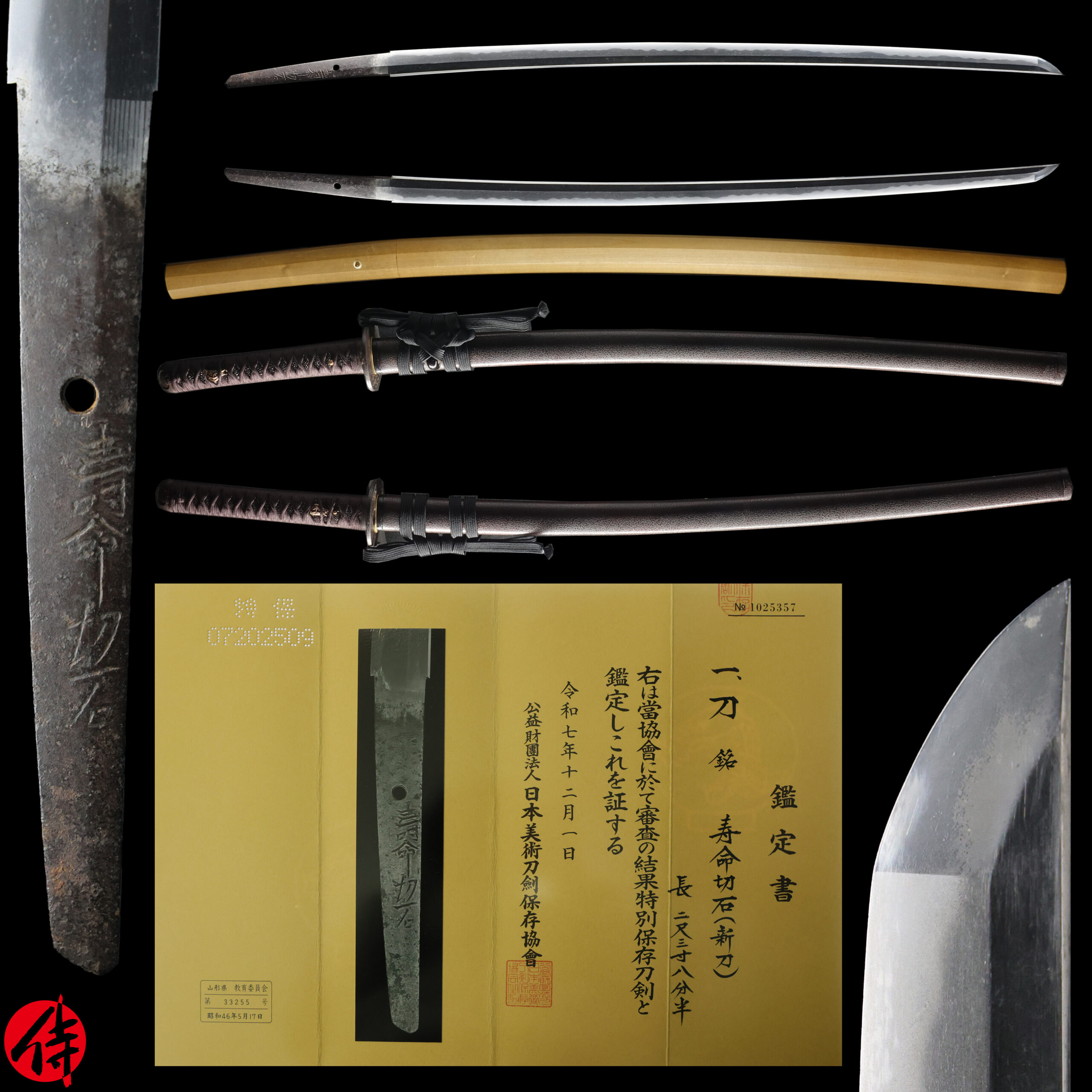
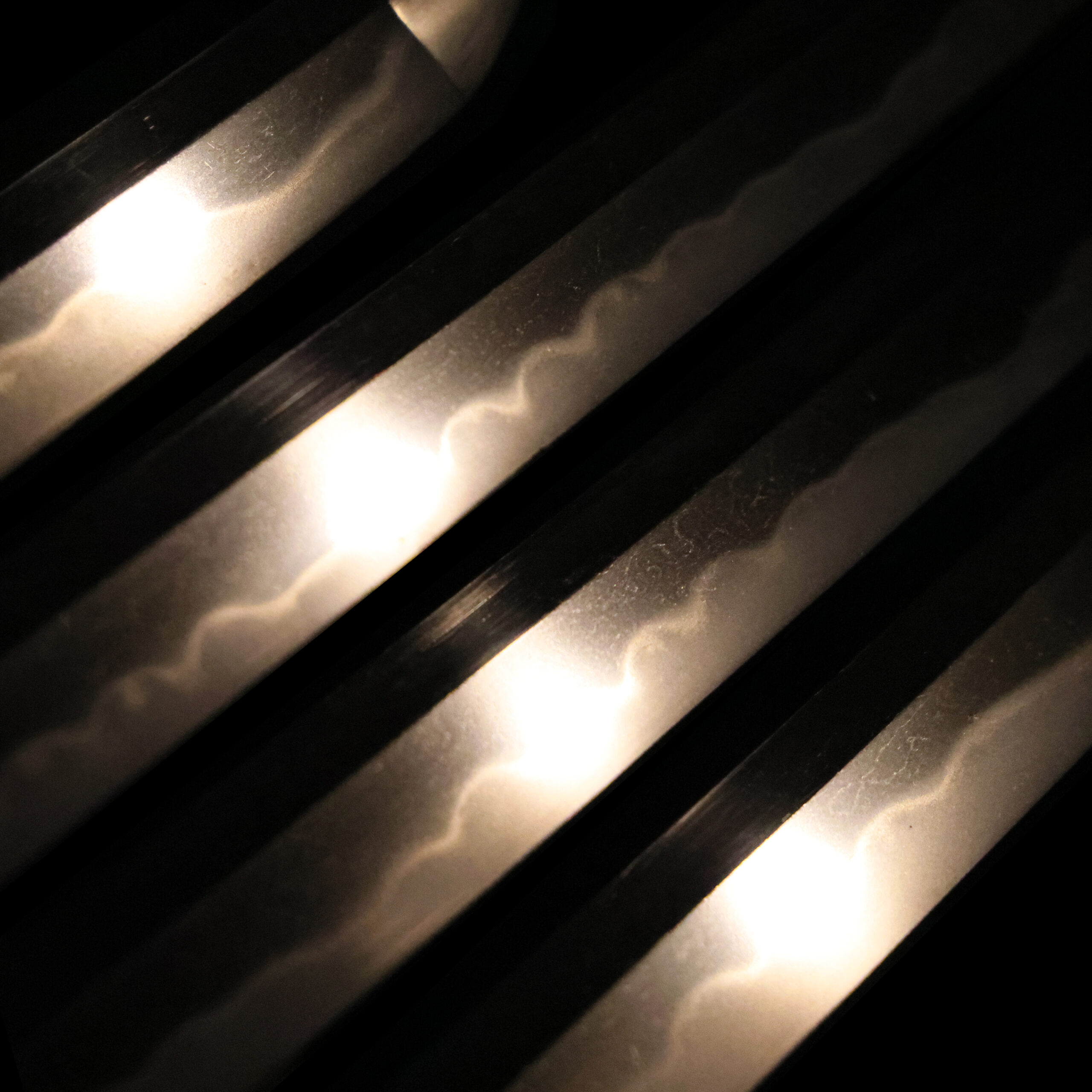
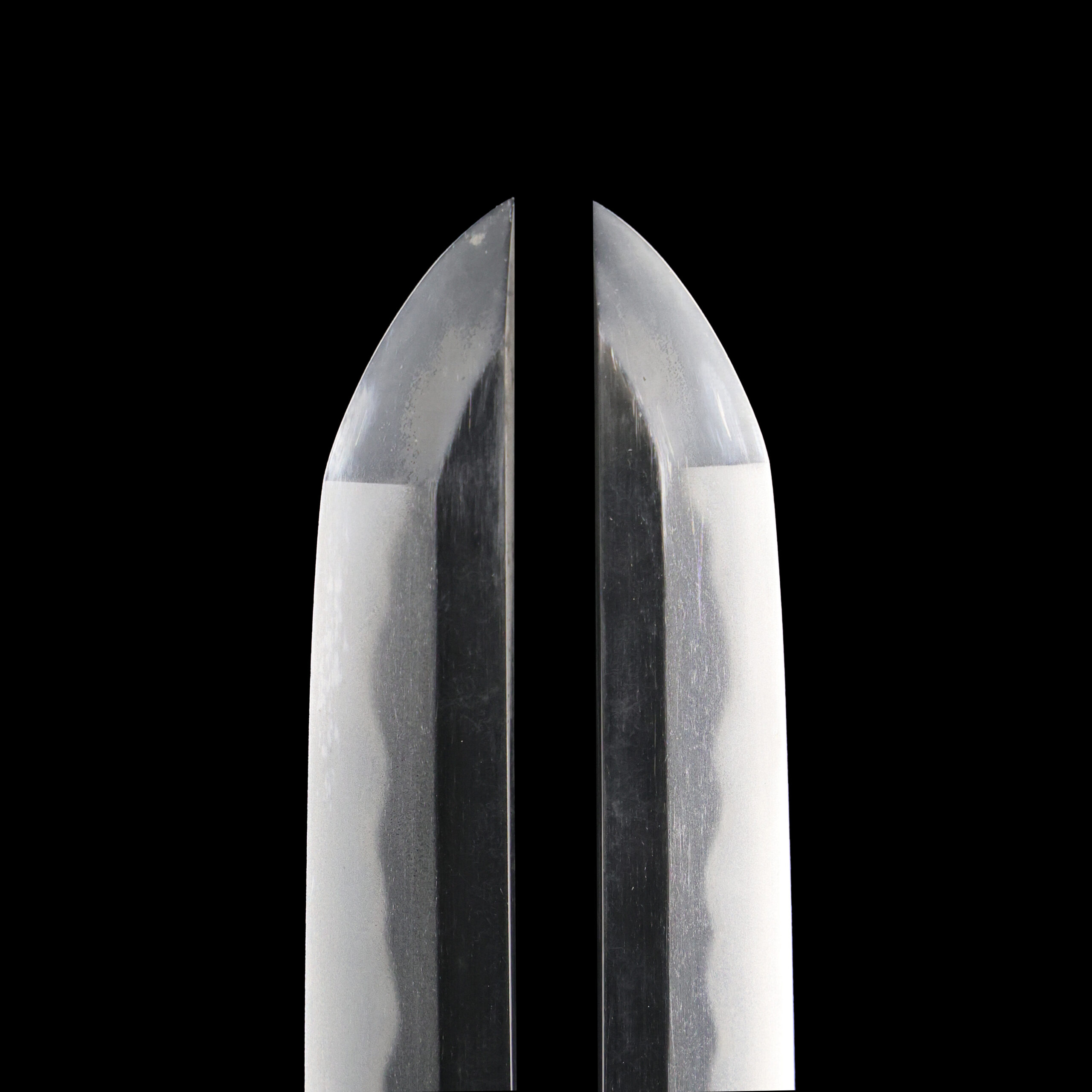
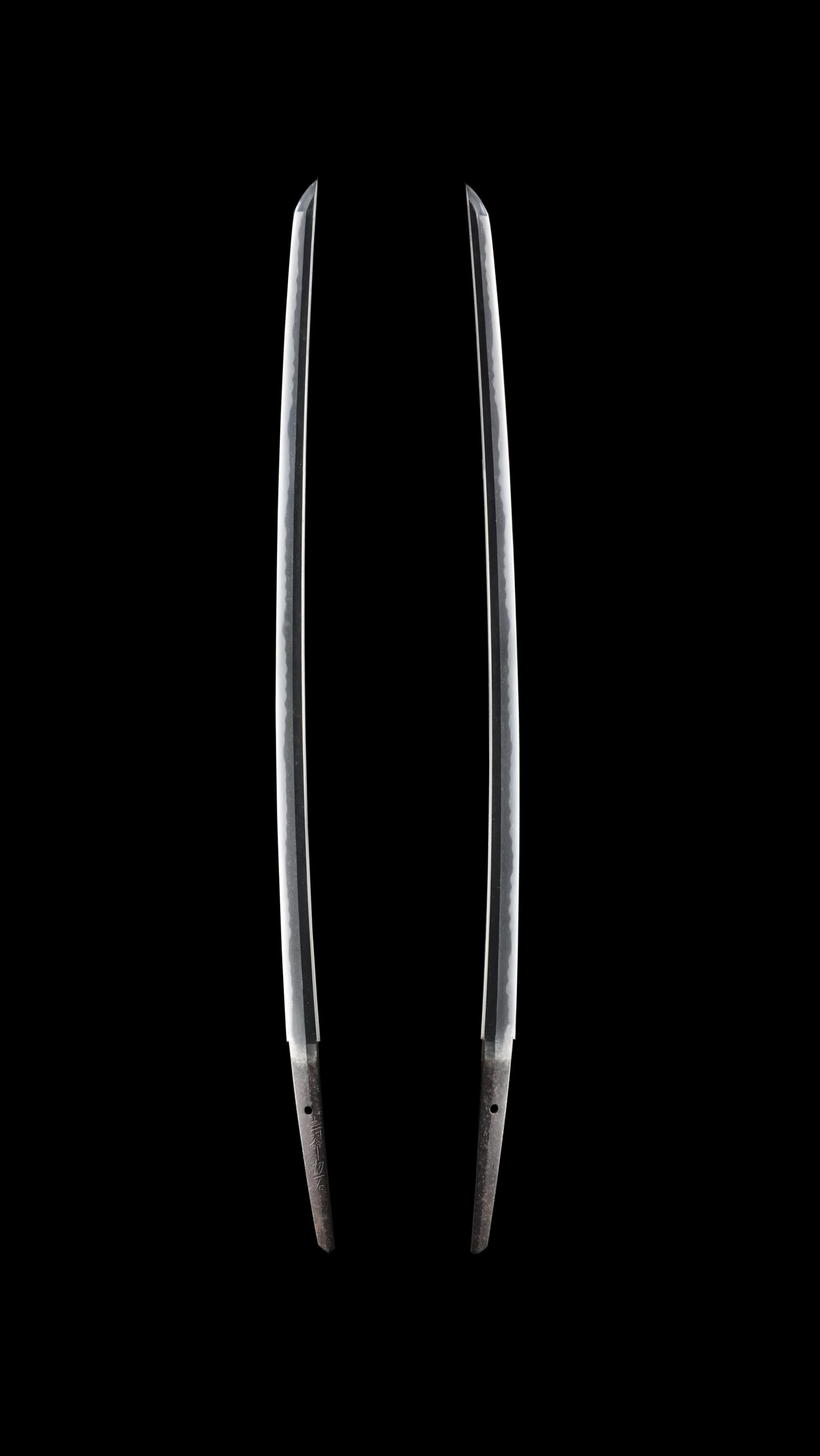
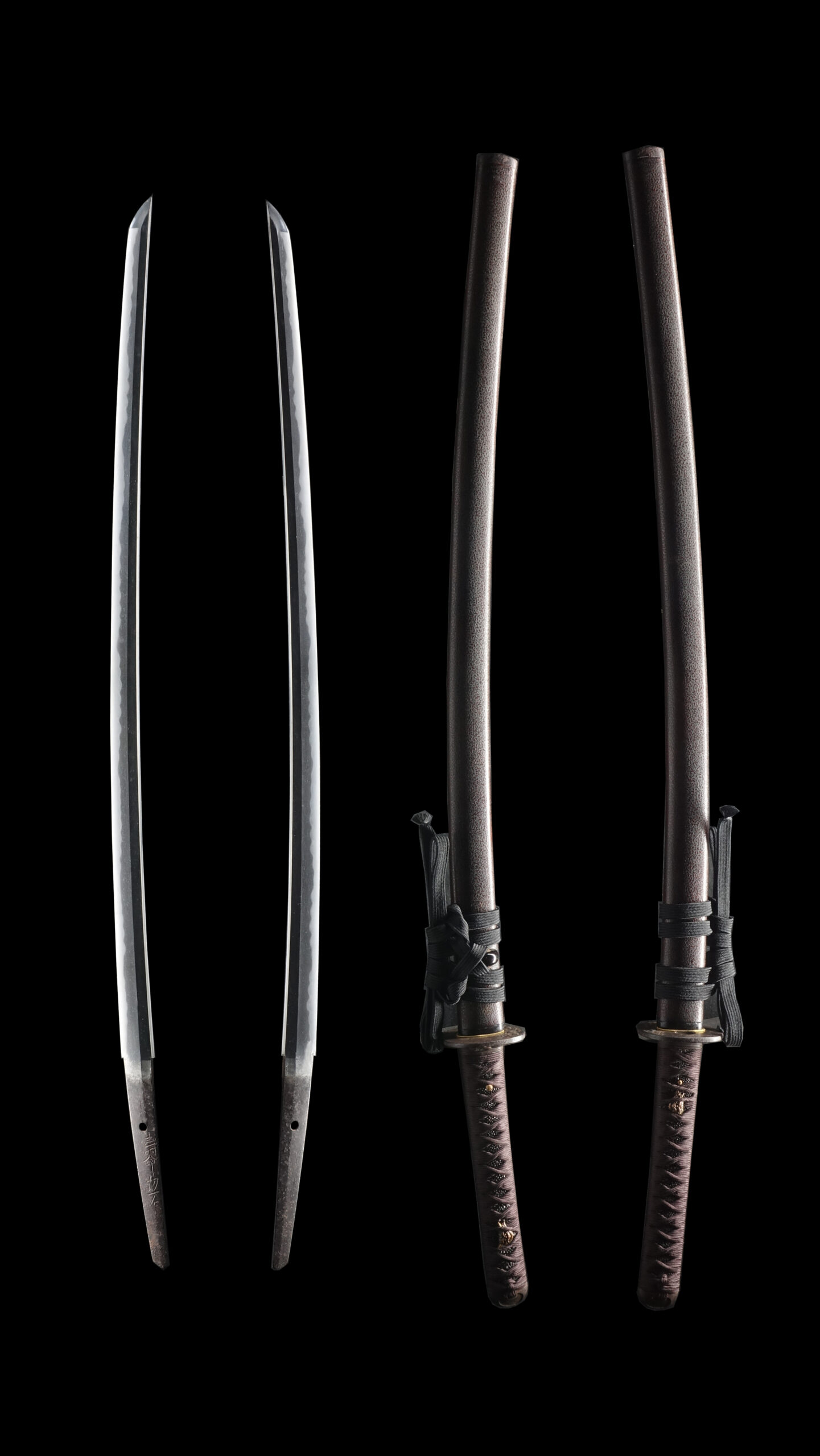
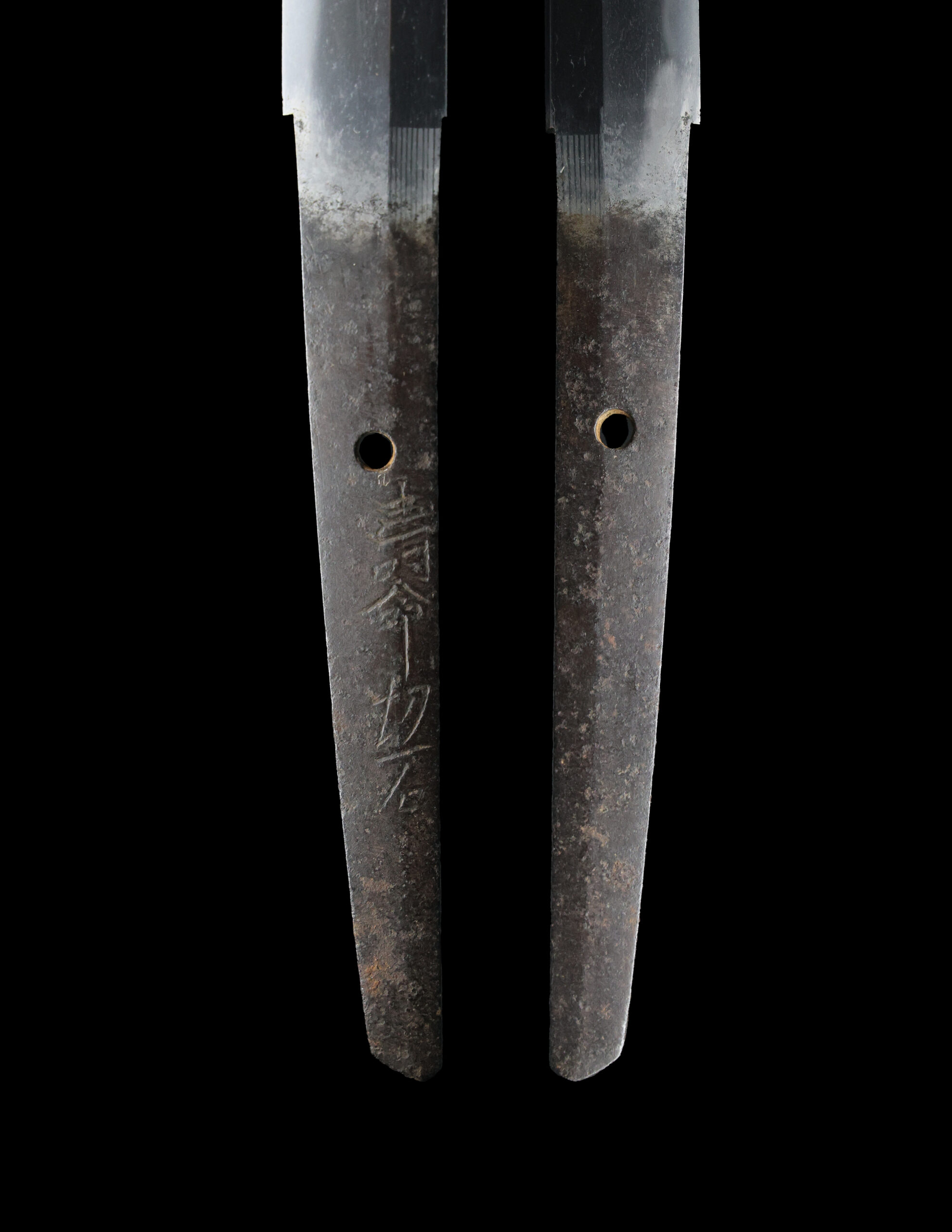
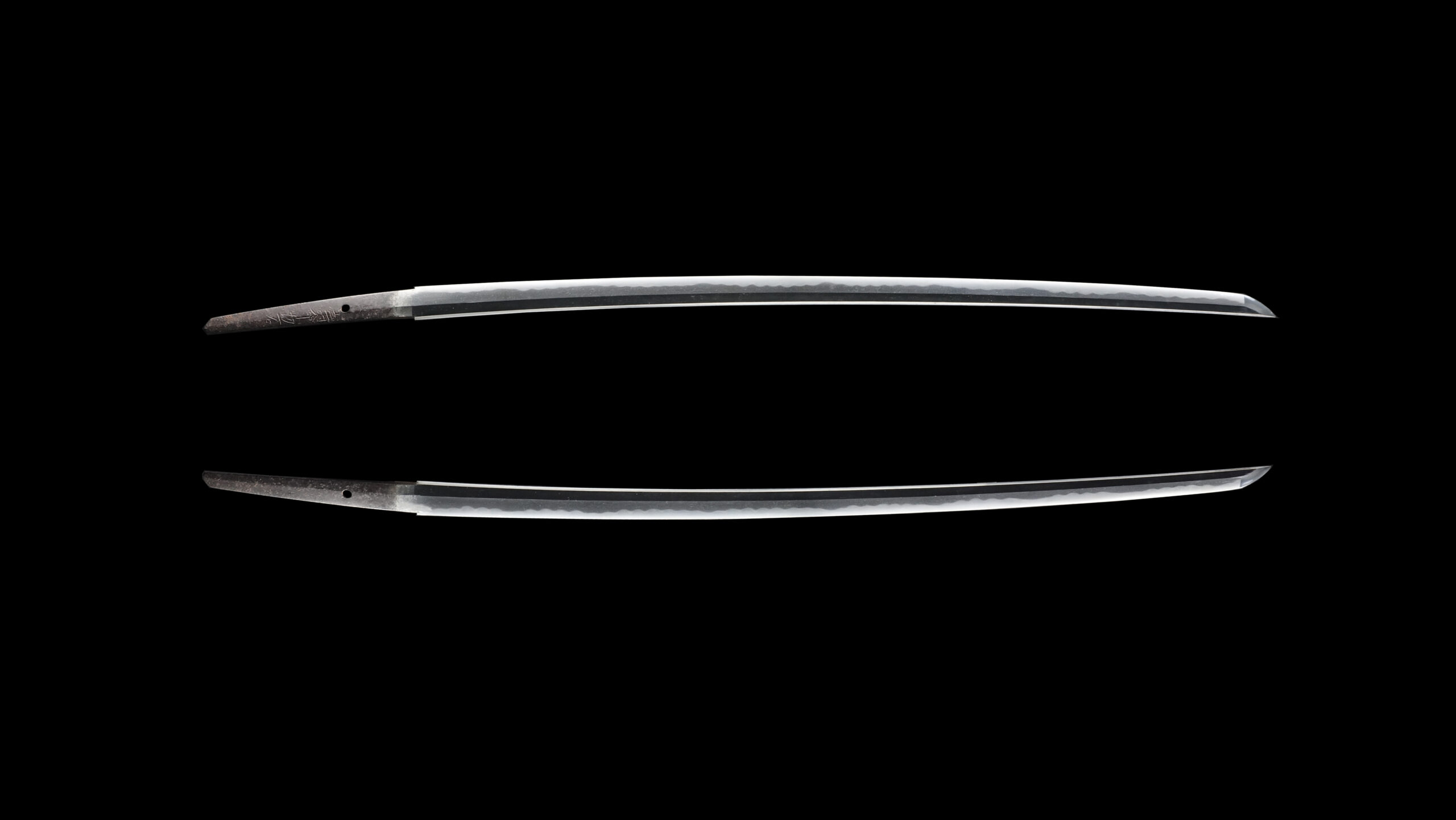
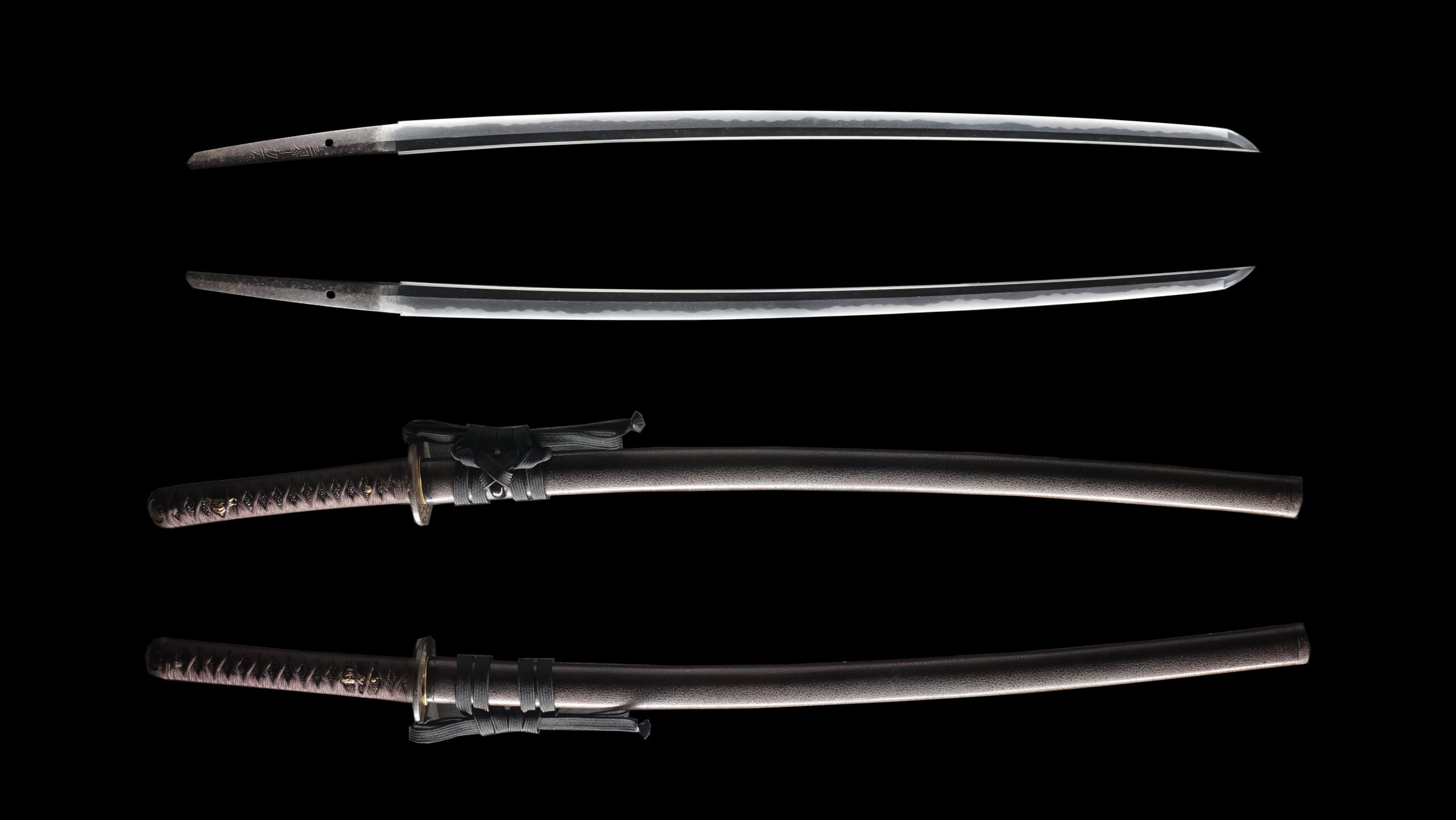
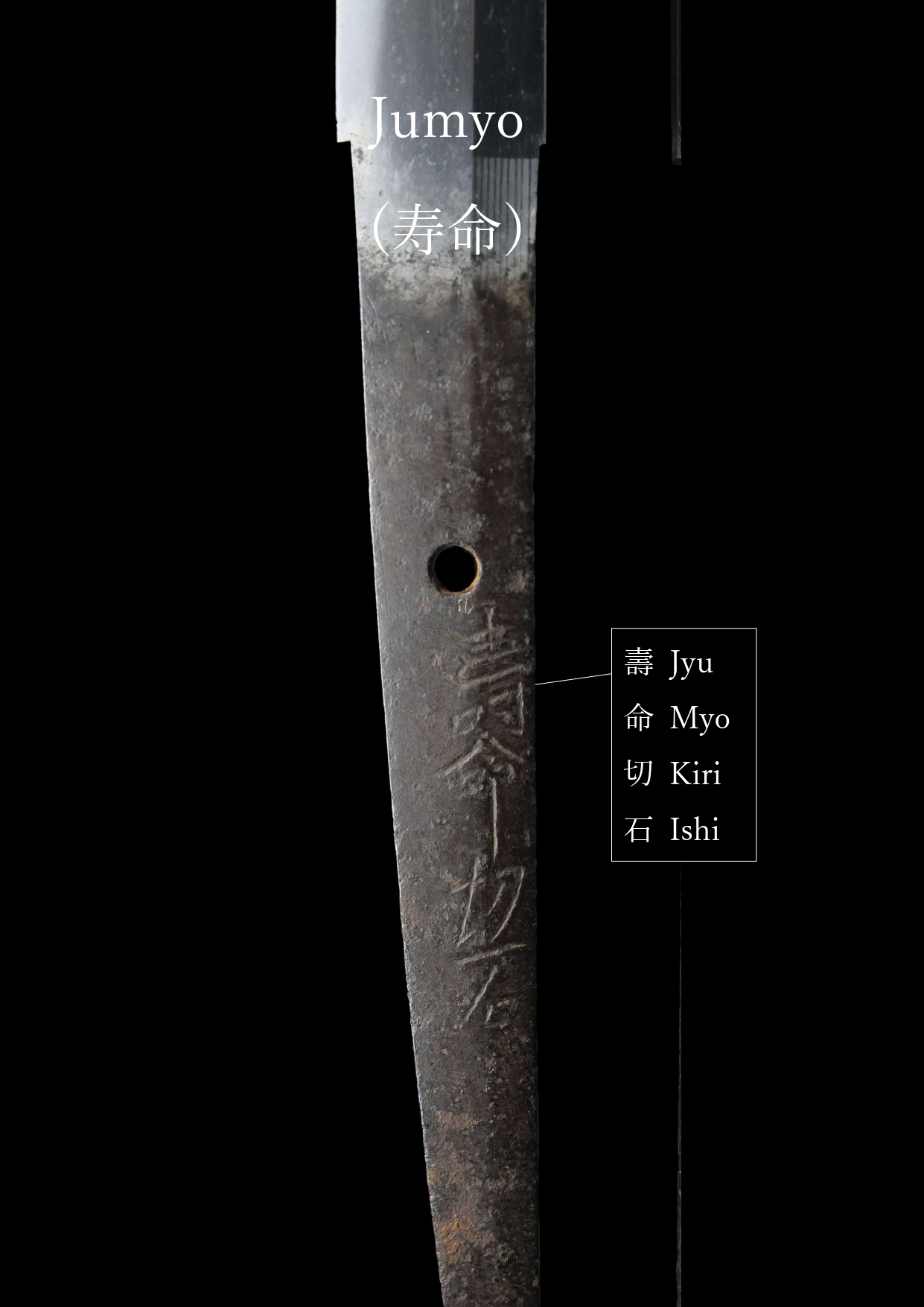
This blade was signed by a member of the Jyumyo school, dating to the early Edo period (early–mid 17th century). The Jyumyo school, also known as Toshinaga, originated in Yamato Province (present-day Nara Prefecture) and later moved to Mino Province during the Kamakura period. The tradition continued for centuries, lasting until the end of the Edo period.
The name “Jyumyo” means longevity or long life, and due to its auspicious meaning, their swords were highly valued and often presented as celebratory gifts to daimyo families within samurai society. Additionally, this blade bears the inscription “Kiriishi” (切石) following the smith’s signature “Jyumyo.” Blades of this school were even nicknamed “Ishikiri” (石切, Stone-Cutter), reflecting their renowned cutting ability.
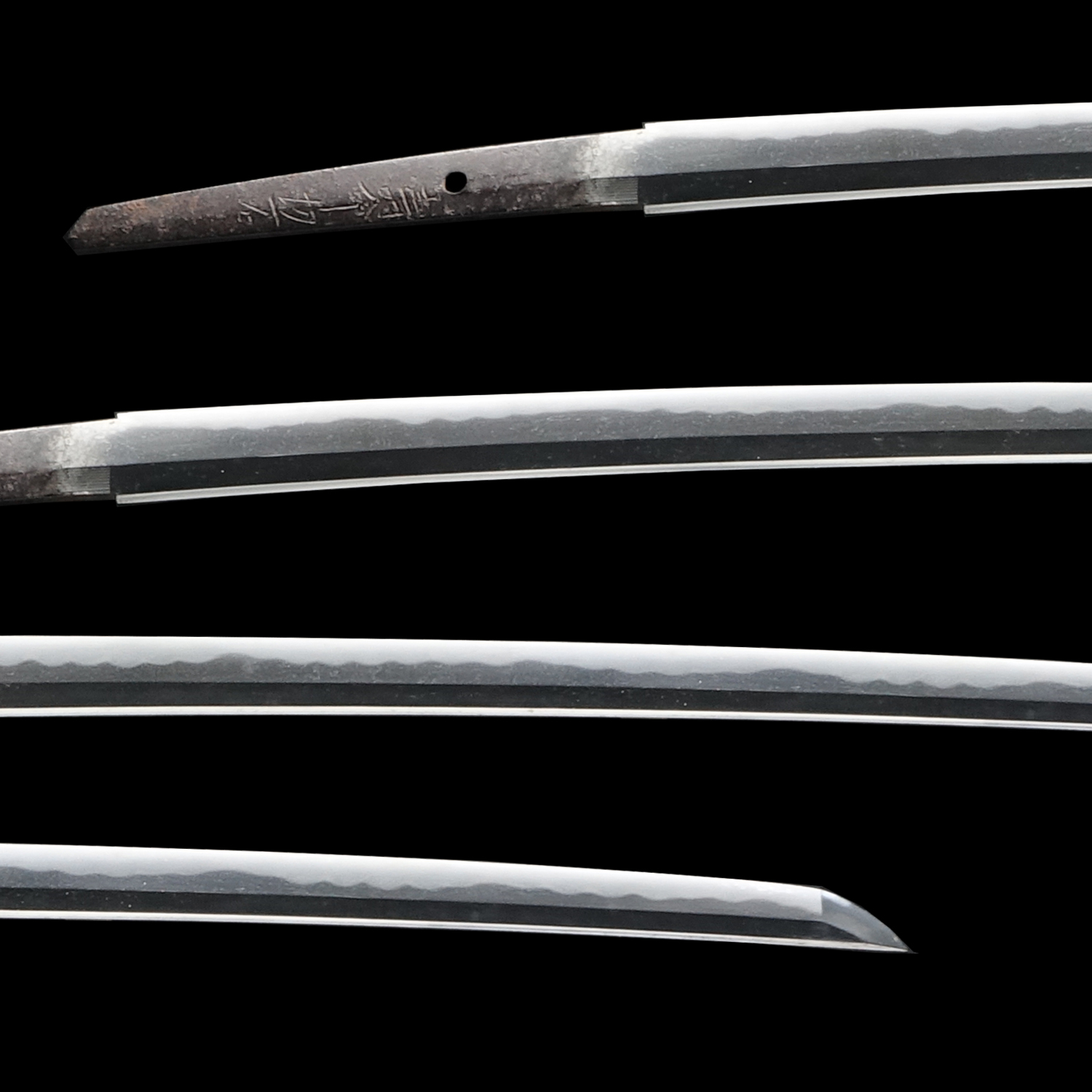
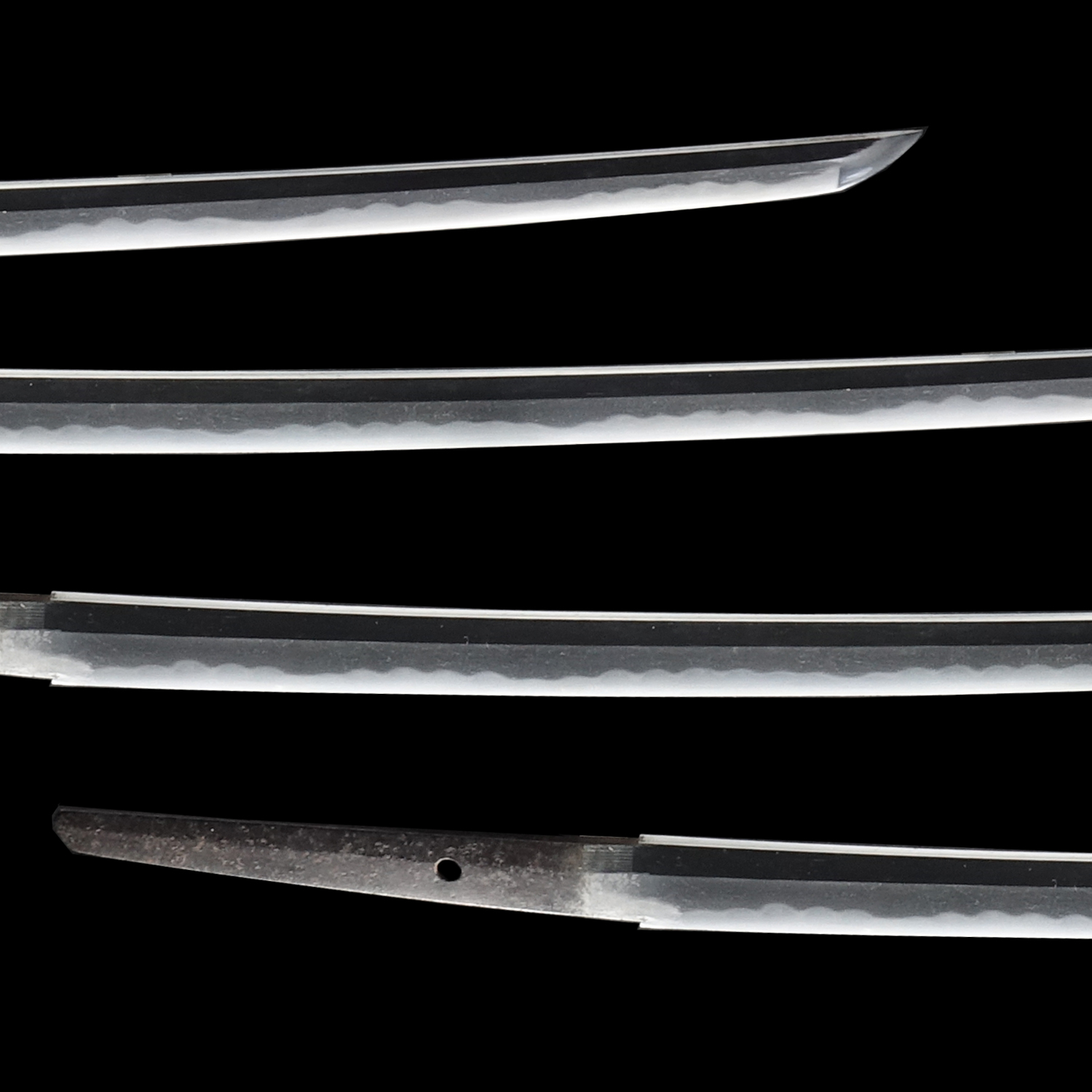
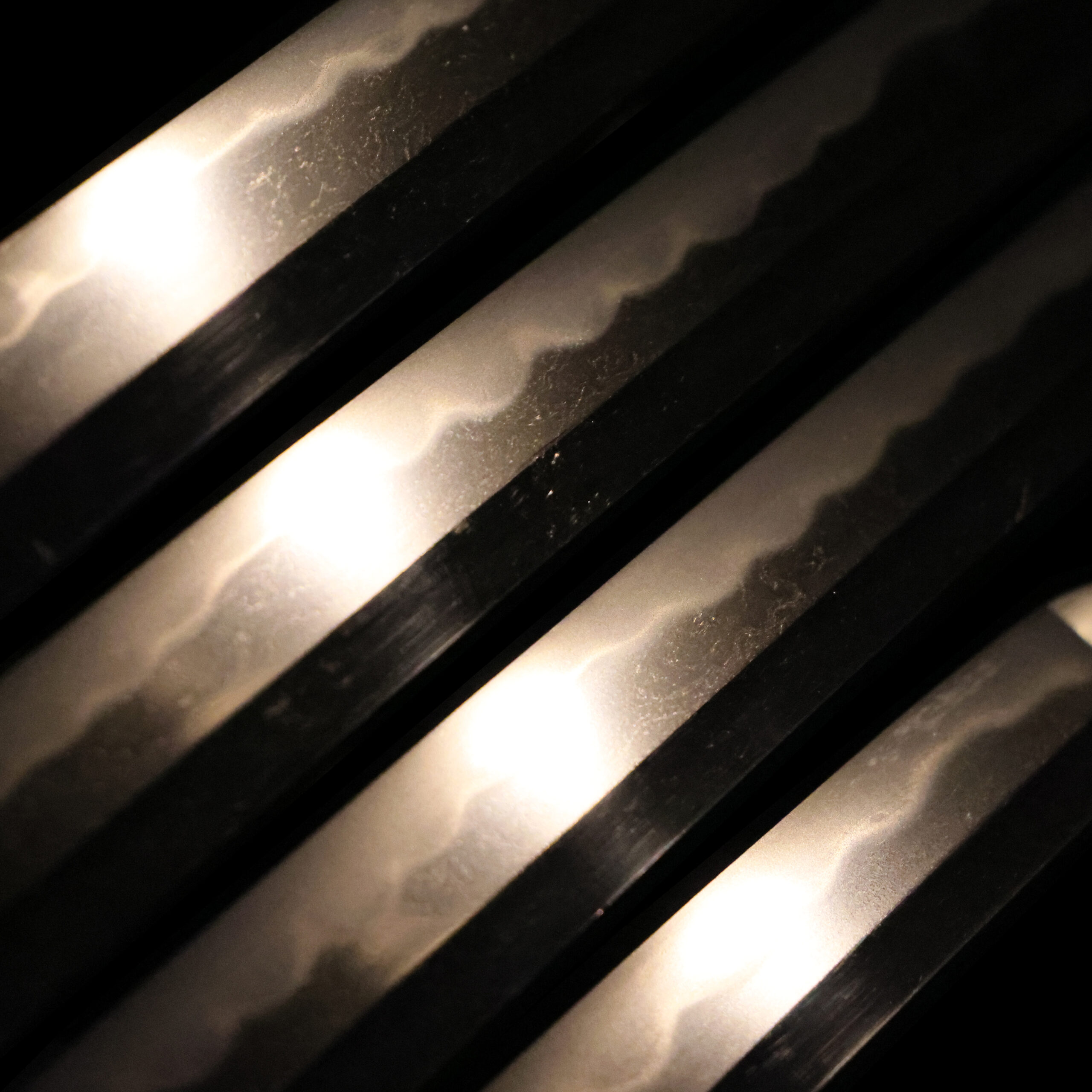
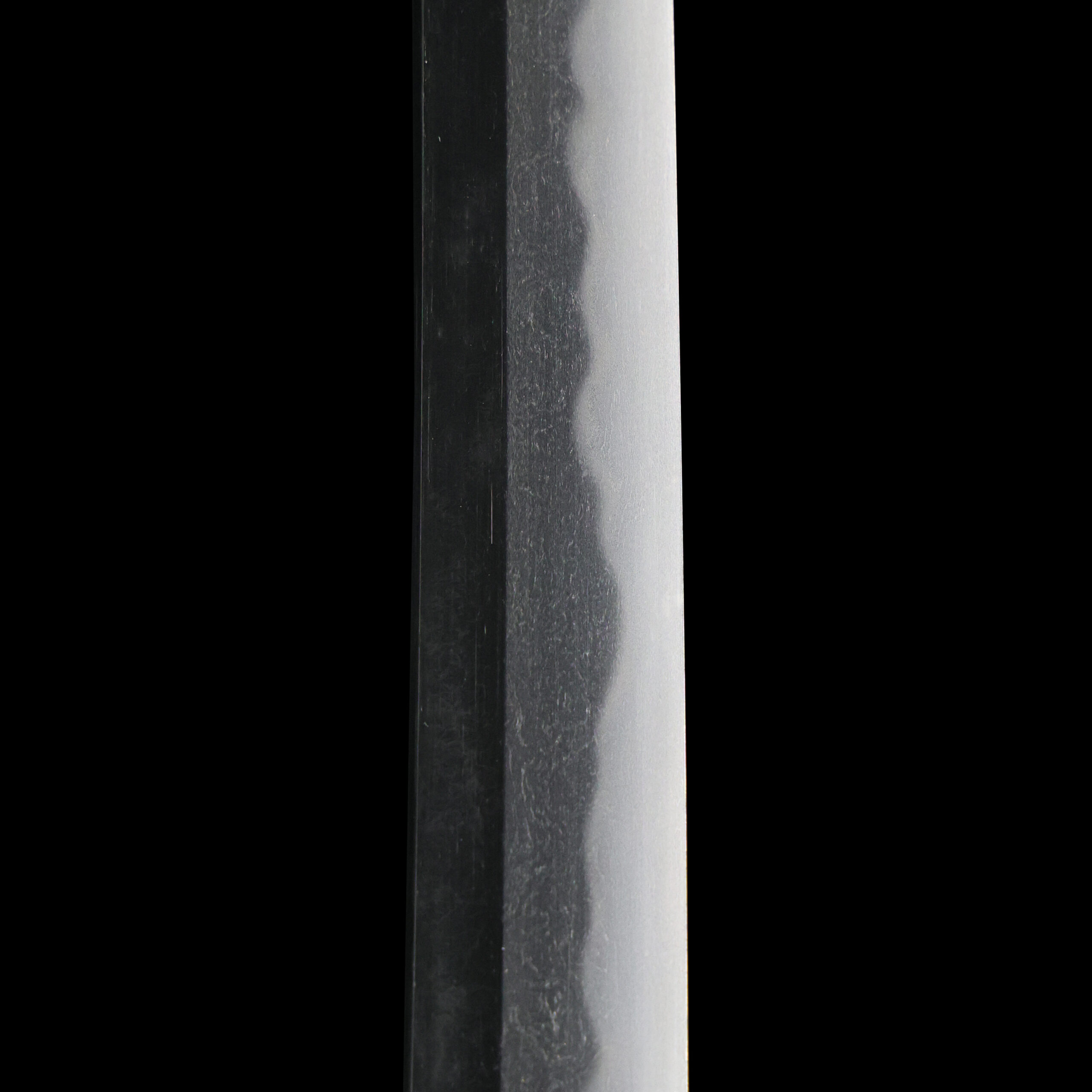
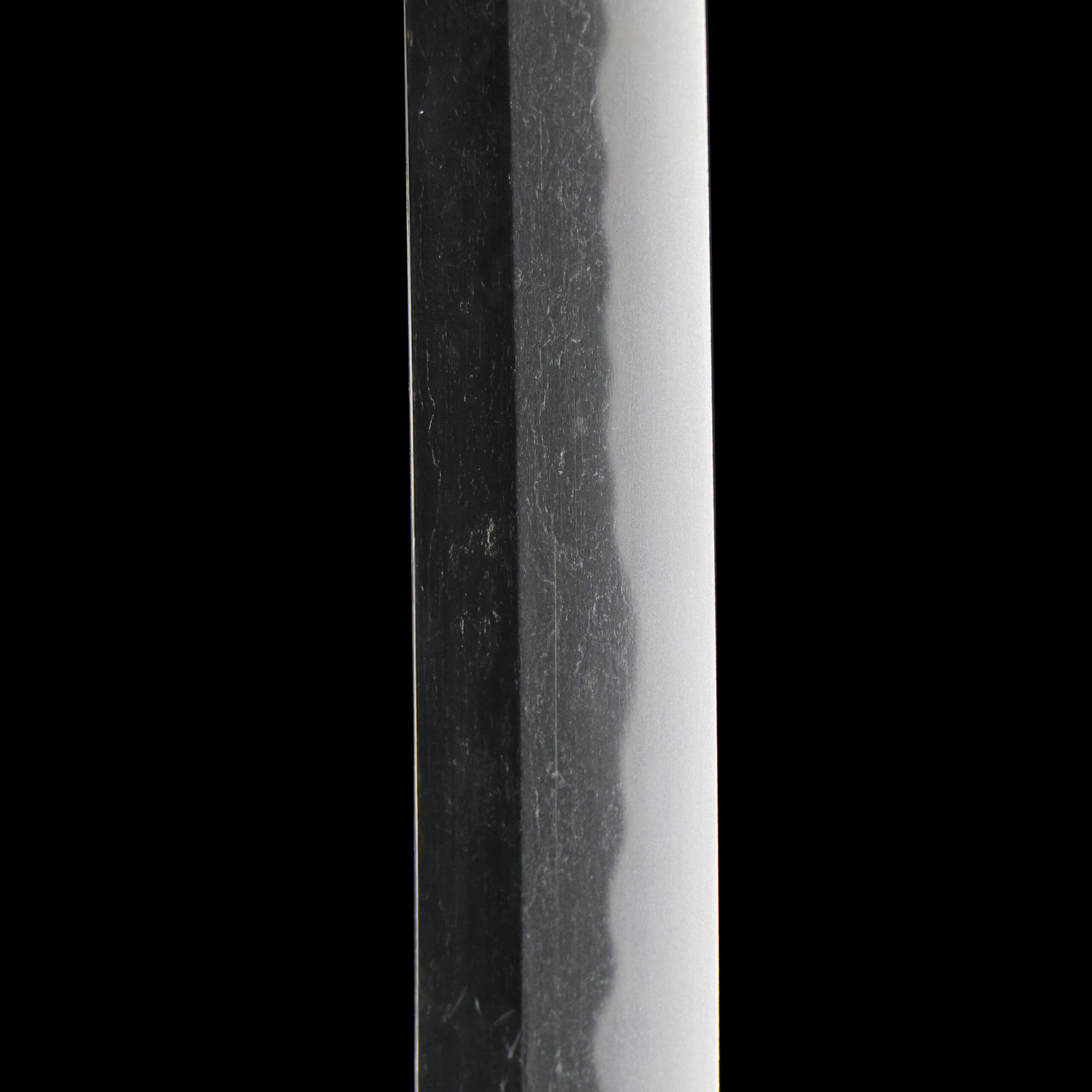
The swordsmiths of Mino province, with their unwavering dedication and unparalleled craftsmanship, developed a unique sword-forging tradition known as MINO-DEN. This tradition was characterized by the TOGARI(Pointed shapes protruding from the Hamon ) in a classic straight line and a random temper line with some white Utsuri. MINO-DEN, with its roots in YAMATO-DEN in the late KAMAKURA period(1280-1330), flourished during the Nanbokucho-Muromachi period(1333-1573) and continued its legacy until the Edo period(1603-1868). The evolution and endurance of MINO-DEN stand as a testament to the skill and artistry of these swordsmiths.
MINO-DEN especially prospered during Sengoku Jidai (Warring State period) due to the high demand for weapons. And the location of Mino province beat others. Akechi Mitsuhide controlled Mino province, Nobunaga Oda ruled Owari province, and Tokugawa Ieyasu was the lord of Suruga (Neighboring areas). There was high demand from those powerful feudal lords and their retainers. Furthermore, so many wars occurred between the Kanto region and the Kyoto area. Mino was located in the middle, making feudal lords feel it was convenient to order swords from MINO-DEN. The blades forged in MINO provinces also had a reputation for their practical design and sharpness. Many feudal lords demanded swords forged in the Mino province. The tradition of excellent sword forging skills had been passed to the Edo period, and Jyumyo is a good example.
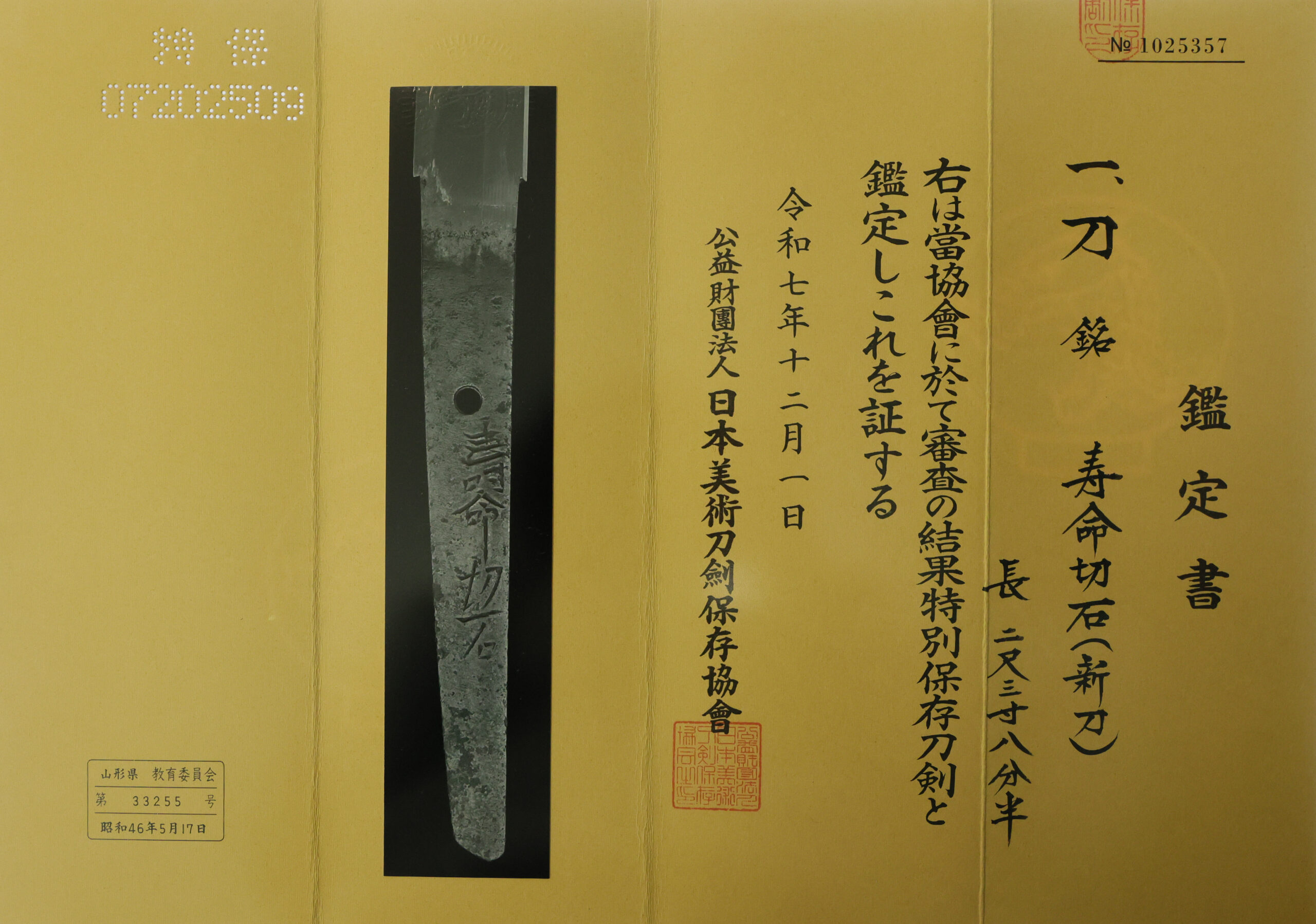
It is appraised as a Tokubetsu Hozon Token (特別保存刀剣) issued by NBTHK (Nihon Bijutsu Touken Hozon Kyokai:日本美術刀剣保存協会).
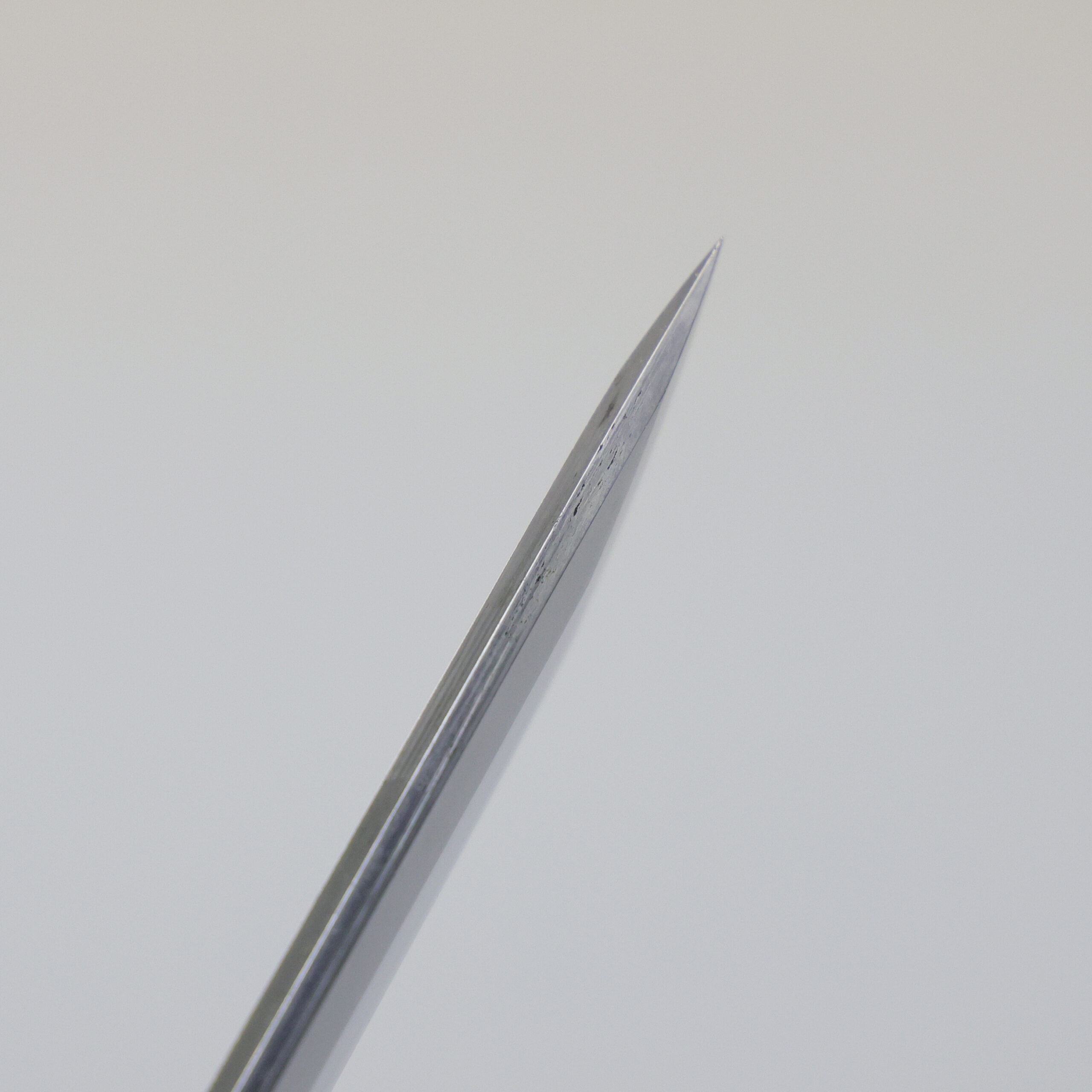
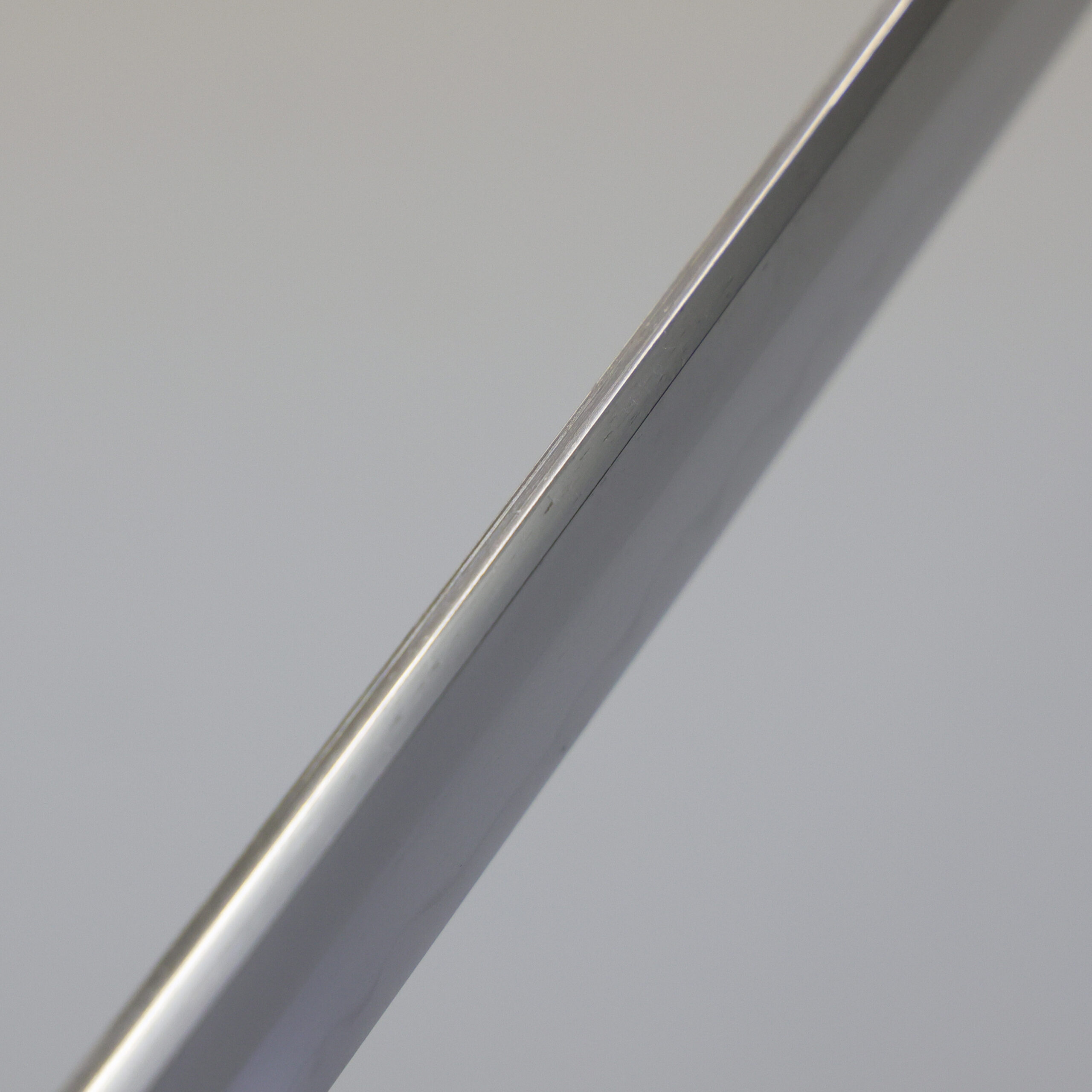
*Please keep in mind that there is a couple of Kitae Kizu on the Mune.
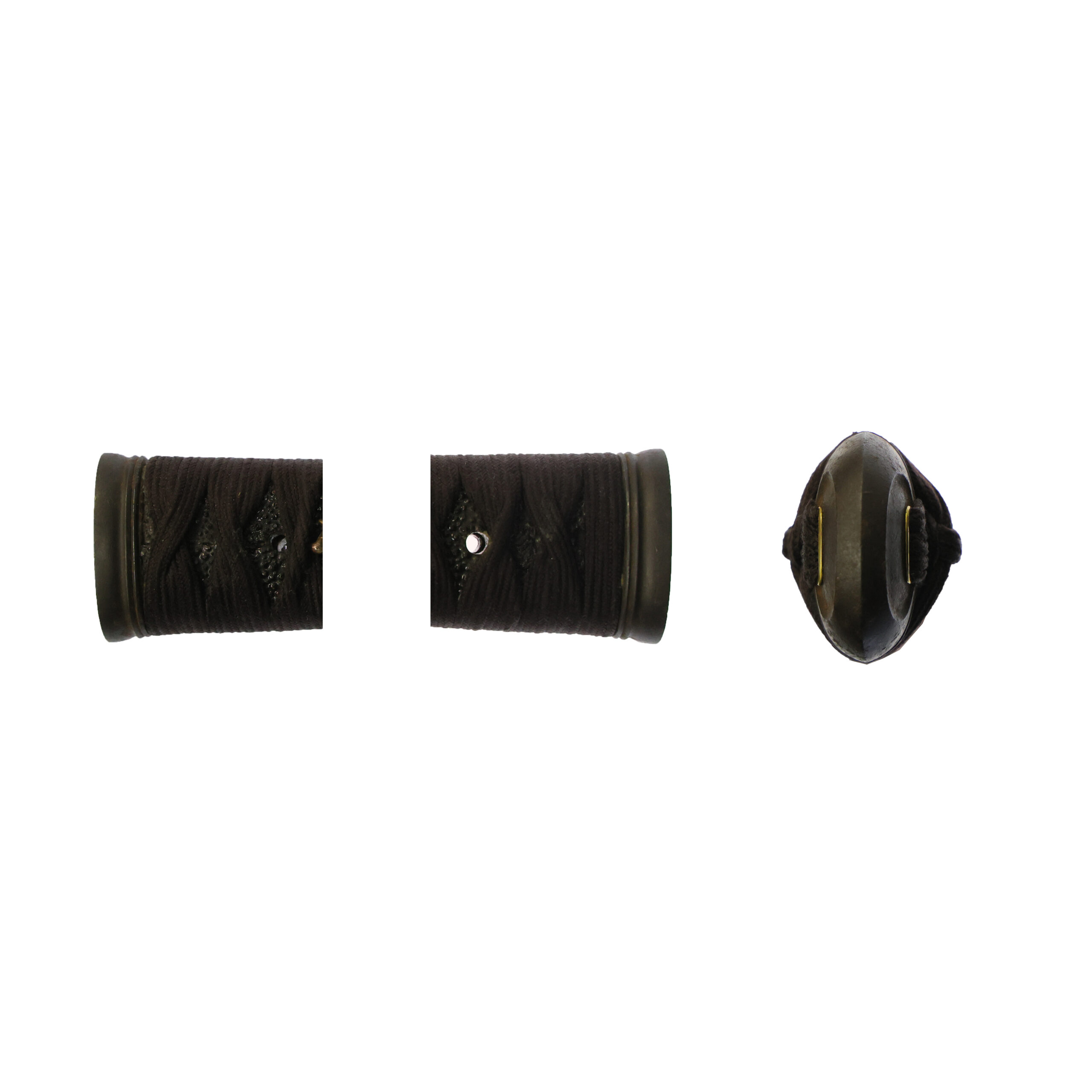
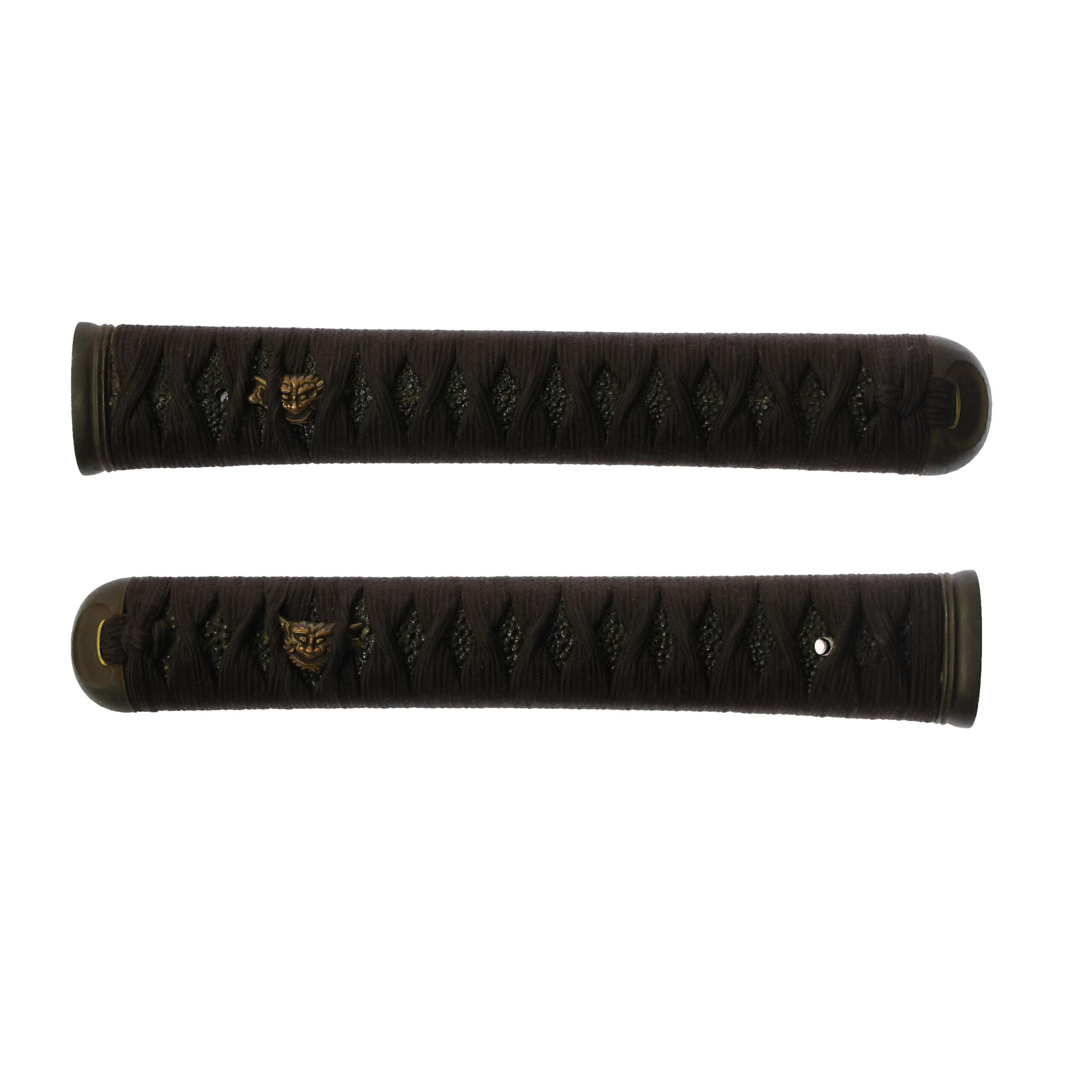
Tsuka and Menuki
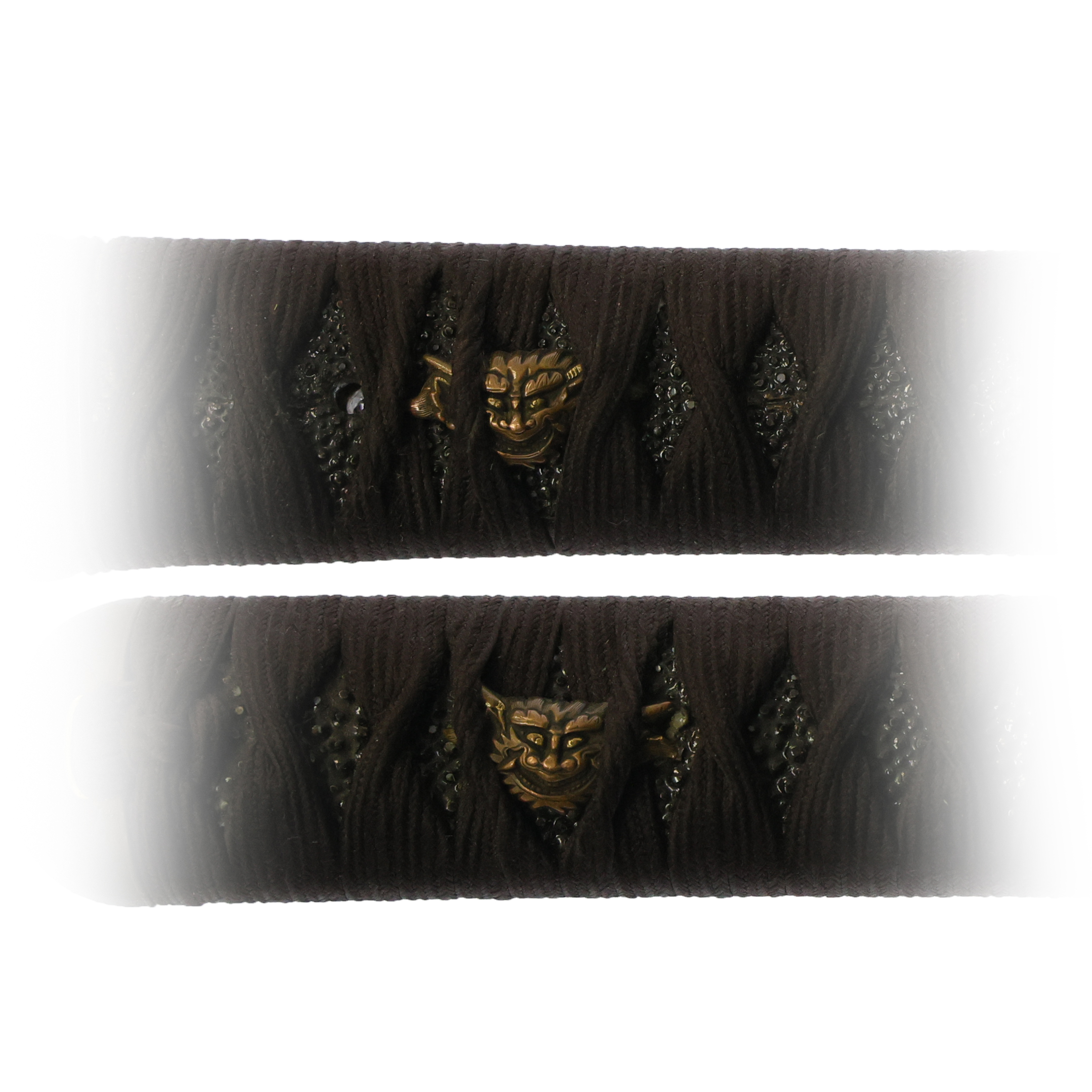
The design of these menuki is likely inspired by a motif known as “Shigami” (獅噛). The term is related to “Shikami” (顰), which refers to a fierce expression characterized by raised eyebrows, a wide-open mouth, and bared fangs—features often seen on masks of lions or demons.
In Japanese culture, “oni” (鬼) are typically depicted as horned, fanged humanoid beings and are often regarded as fearsome entities. However, depending on the context, they can also serve protective or benevolent roles. This duality arises from their varied interpretations—as vengeful spirits, deities, yokai (supernatural beings), or spiritual presences.
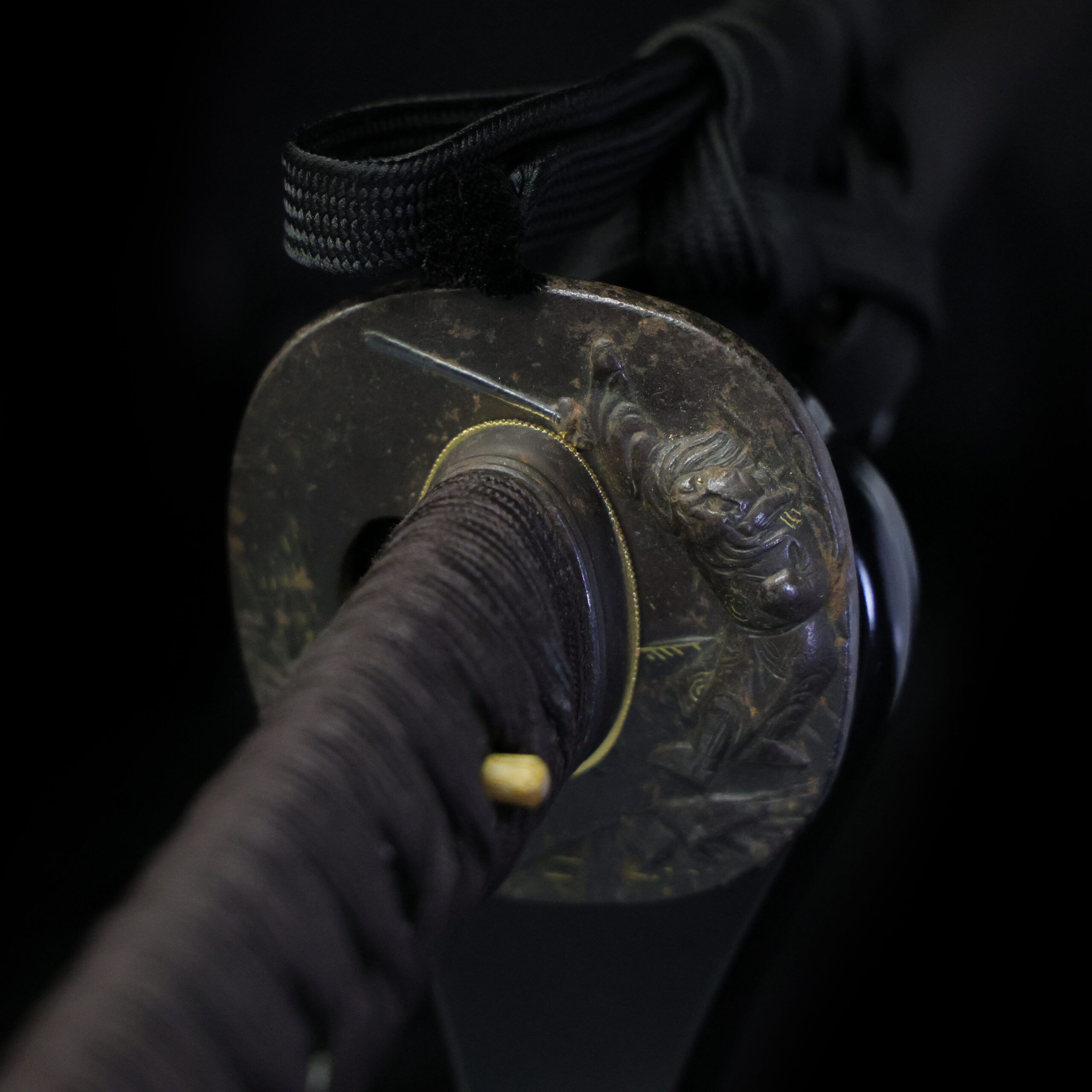
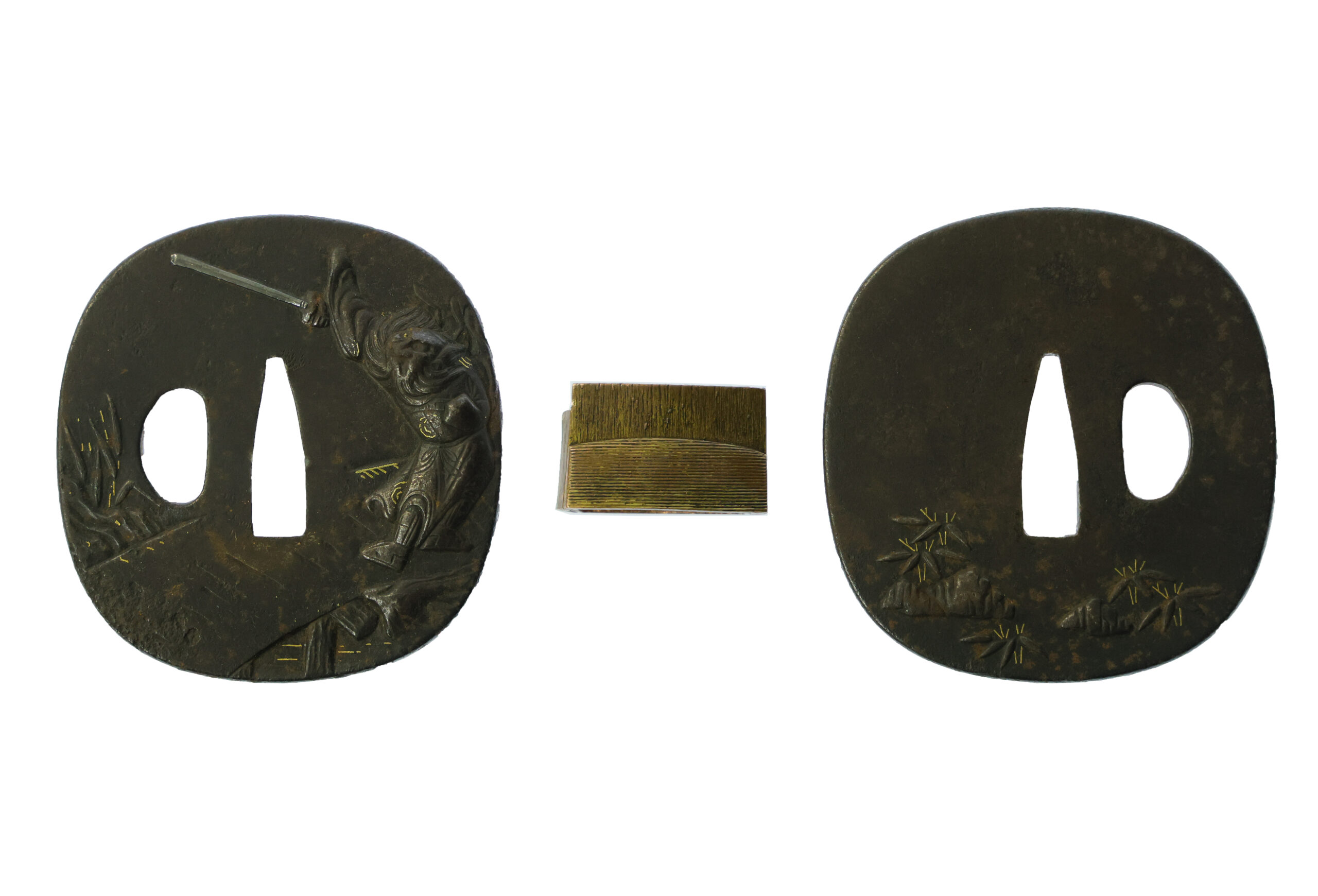
Tsuba and Habaki
This tsuba depicts a figure, likely a samurai dressed in traditional attire, raising his sword in a dynamic pose. The figure appears to be standing on a bridge, and although no opponent is depicted, the expression conveys a strong sense of bravery and tension. The design is executed in high relief carving (高彫り, takabori), a technique in which the motif is boldly raised from the iron base, creating a remarkable sense of depth and dimensionality.
Authentication Paper
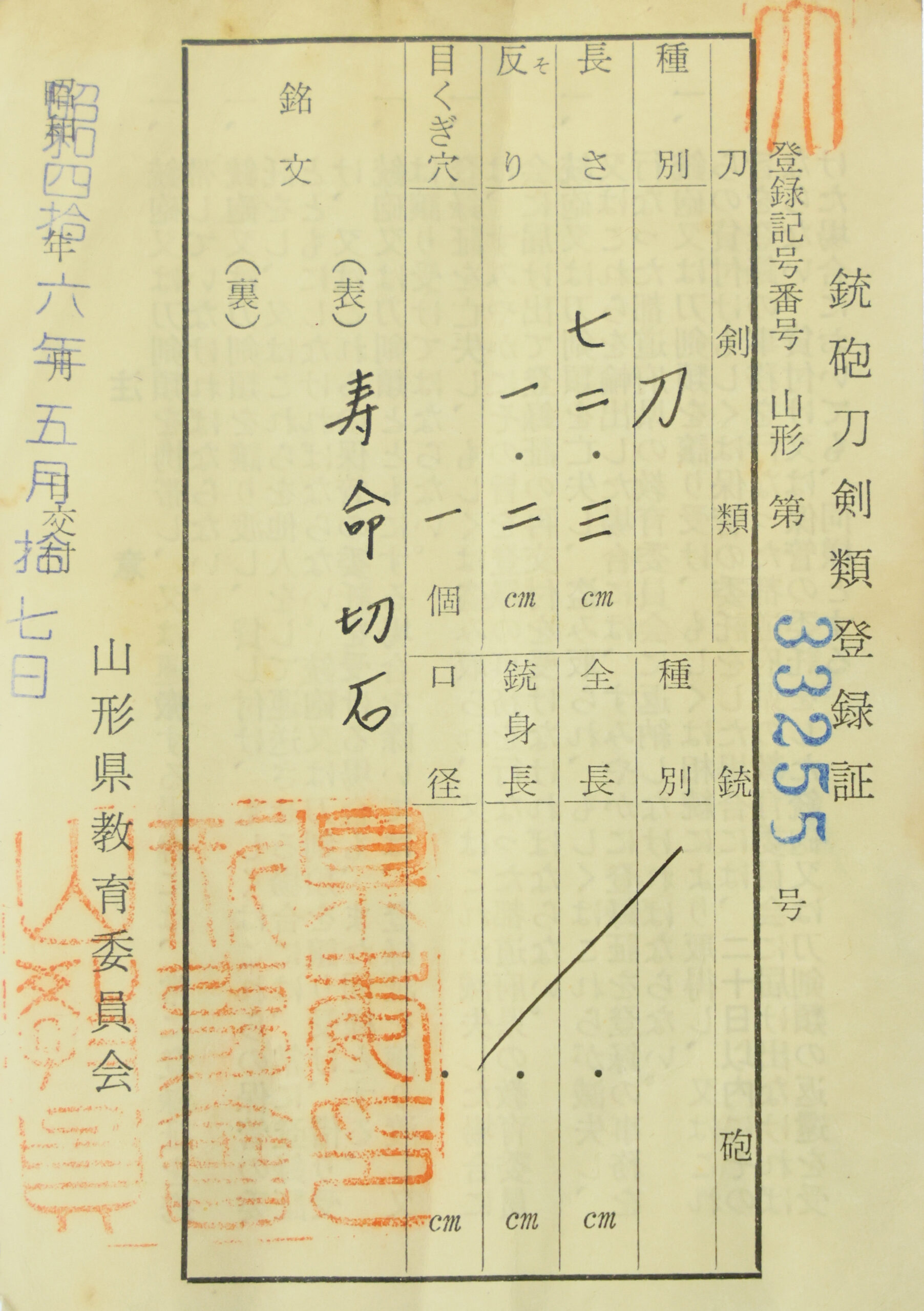
They authenticated the blade on December 1st in the 7th year of Reiwa (2025). They appraised it as Tokubetsu Hozon Touken, the blade especially worth preserving for Japanese society.

 NihontoWatch