NihontoWatch MonNihontoWatch
Market
Encyclopedia
Kantei
NihontoWatch MonNihontoWatch
Market
Encyclopedia
Kantei

Description

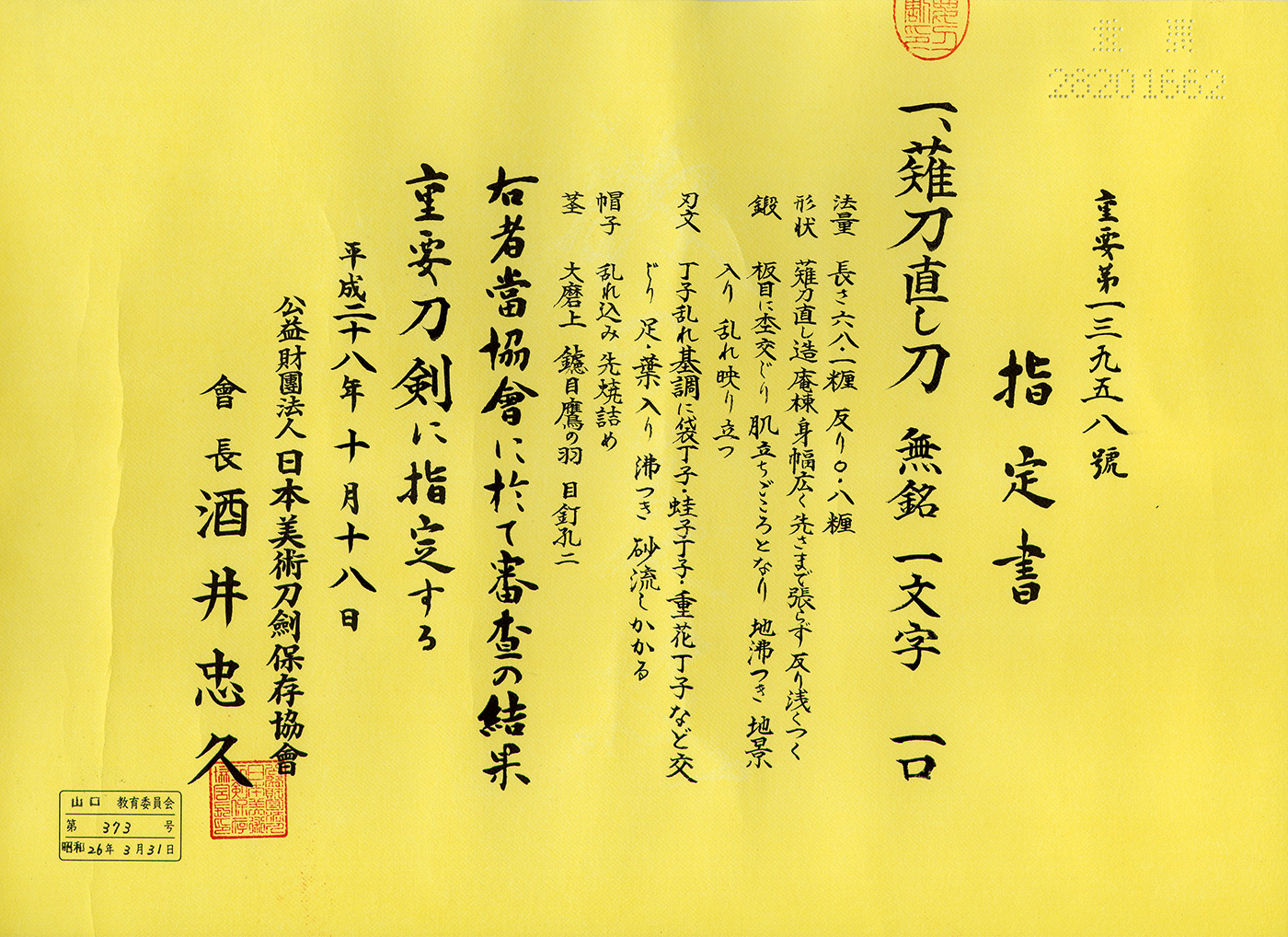
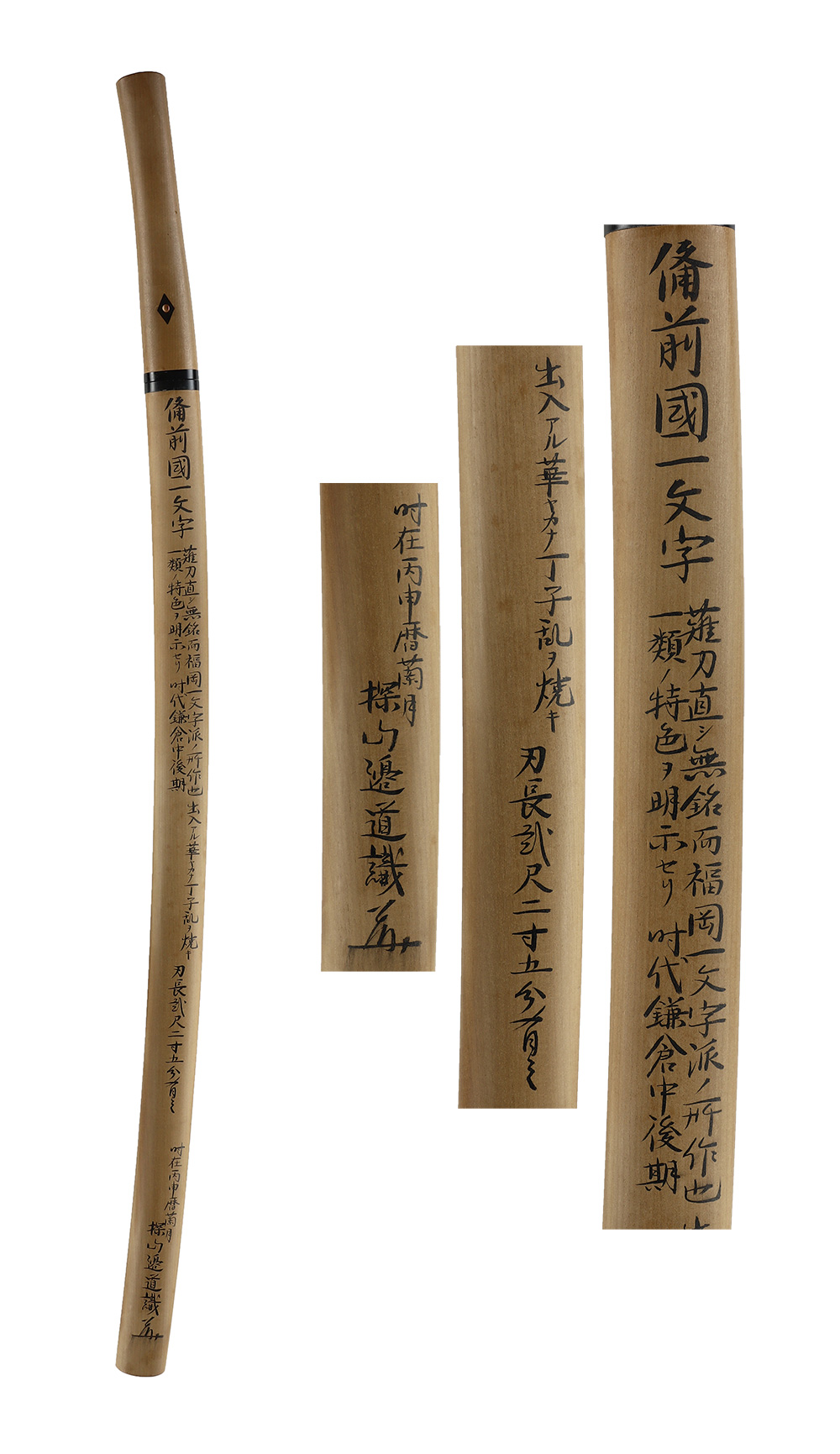
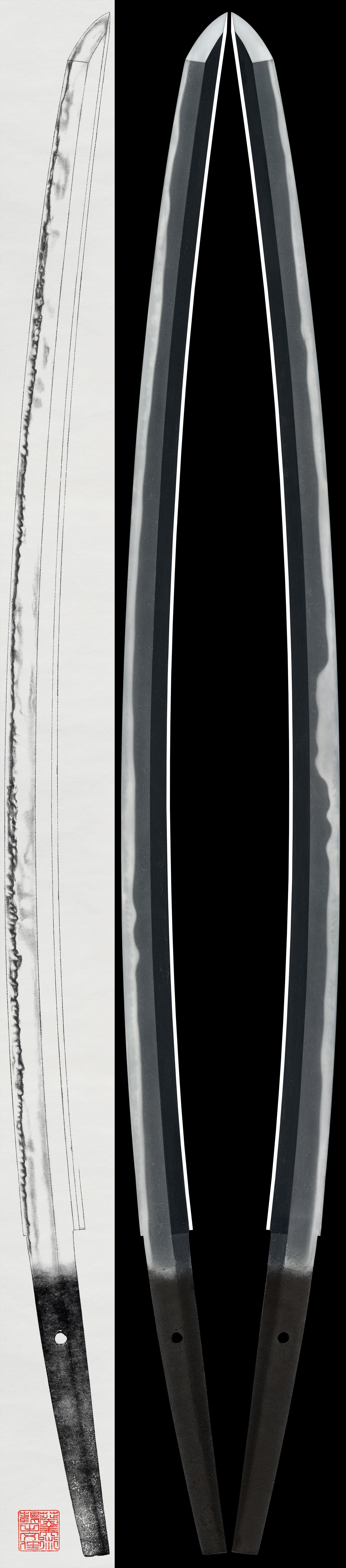
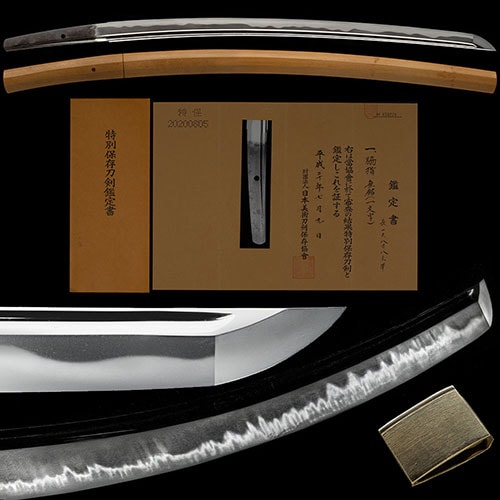
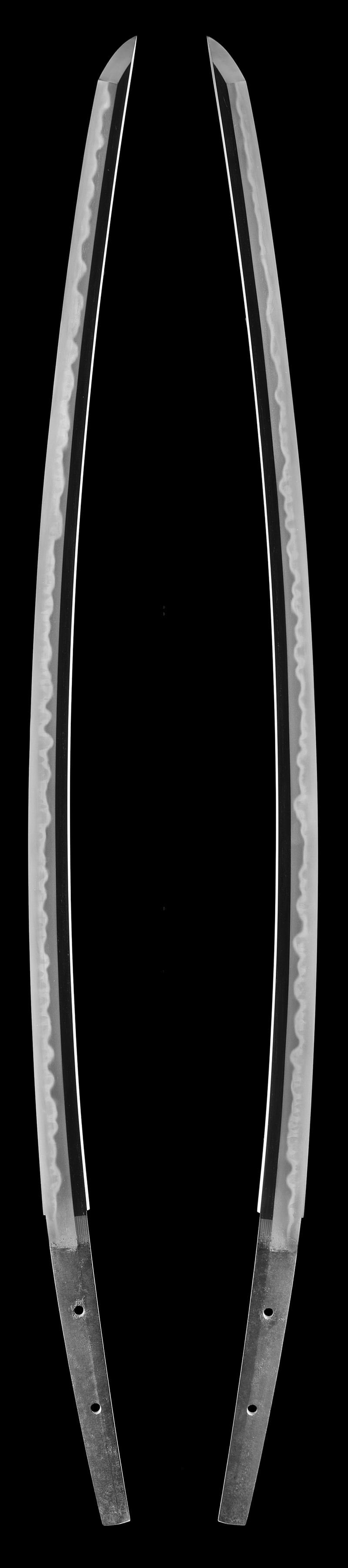
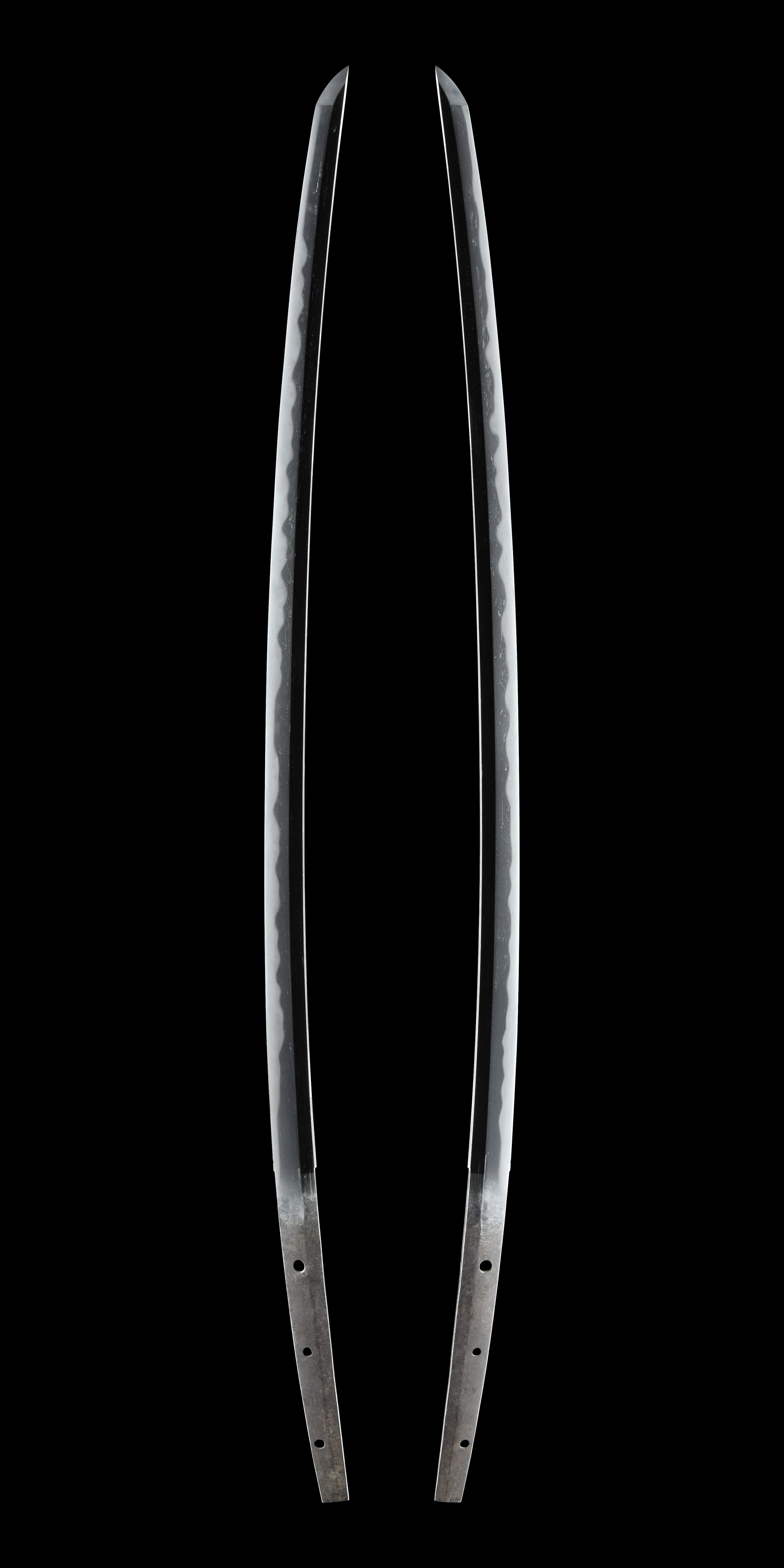
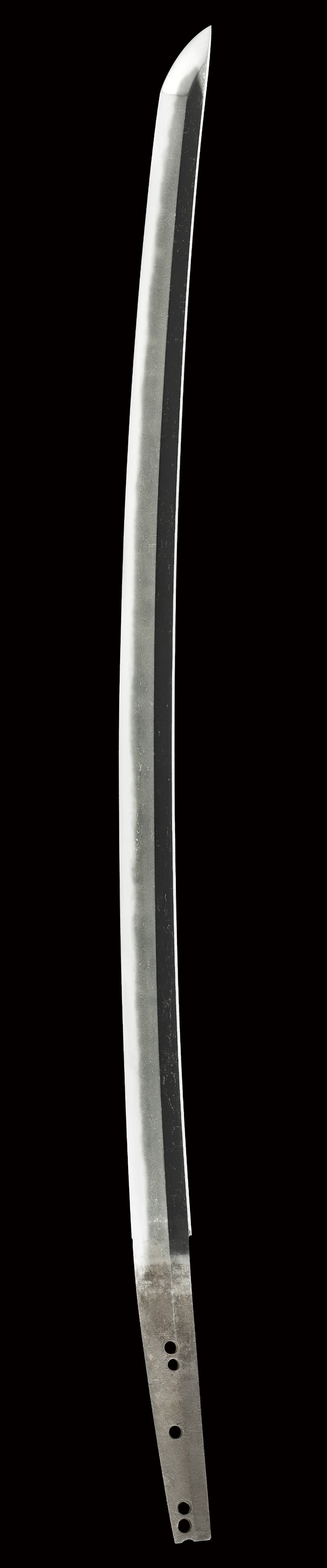
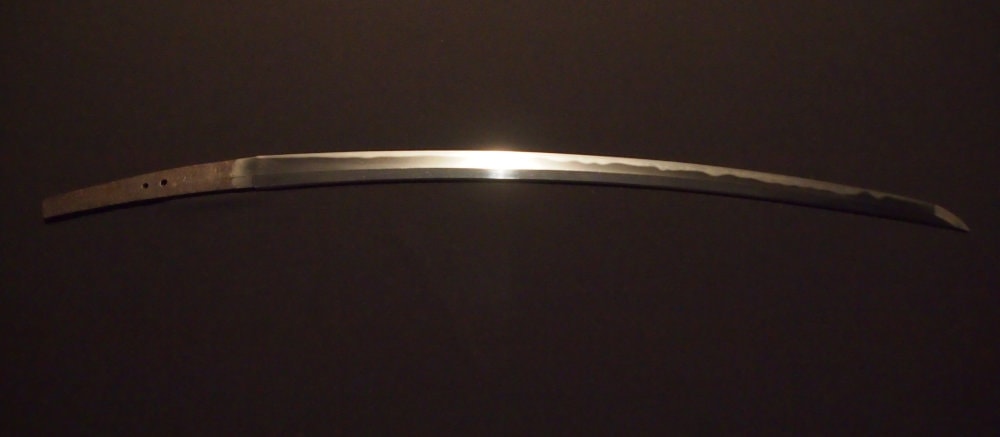
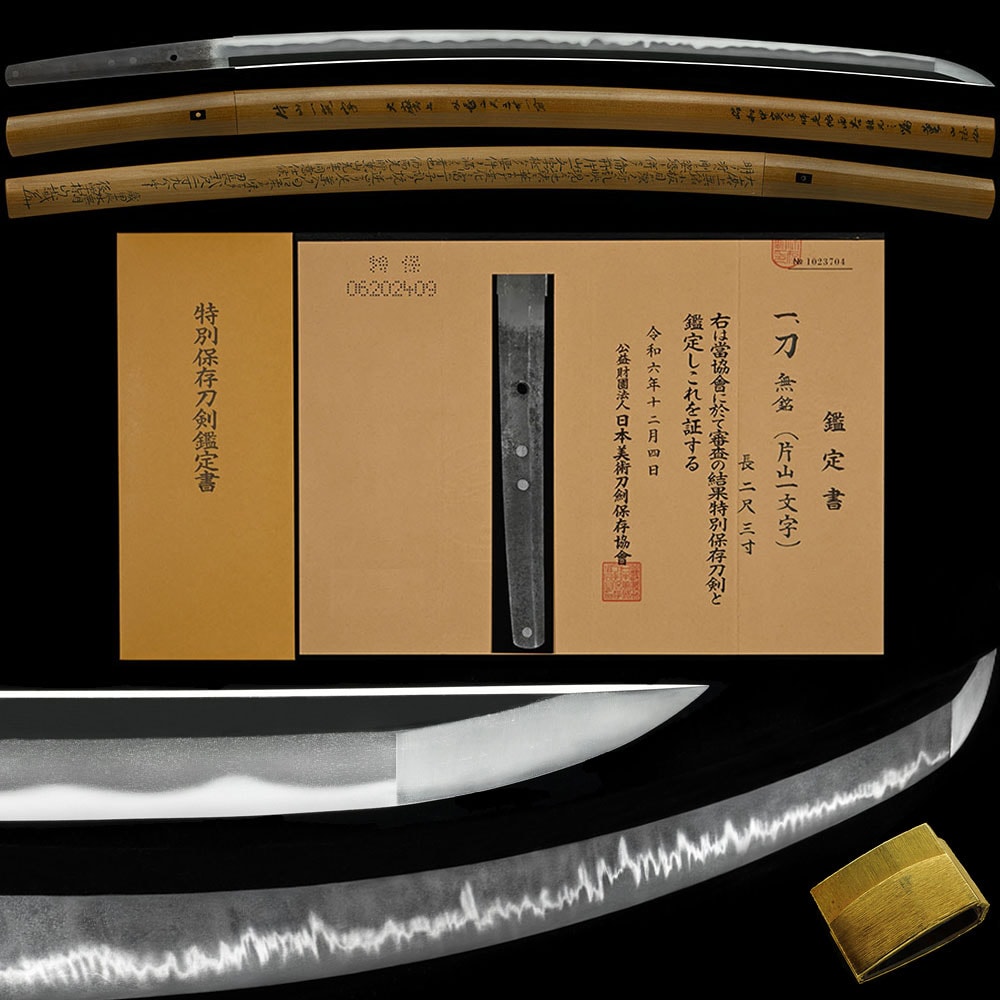
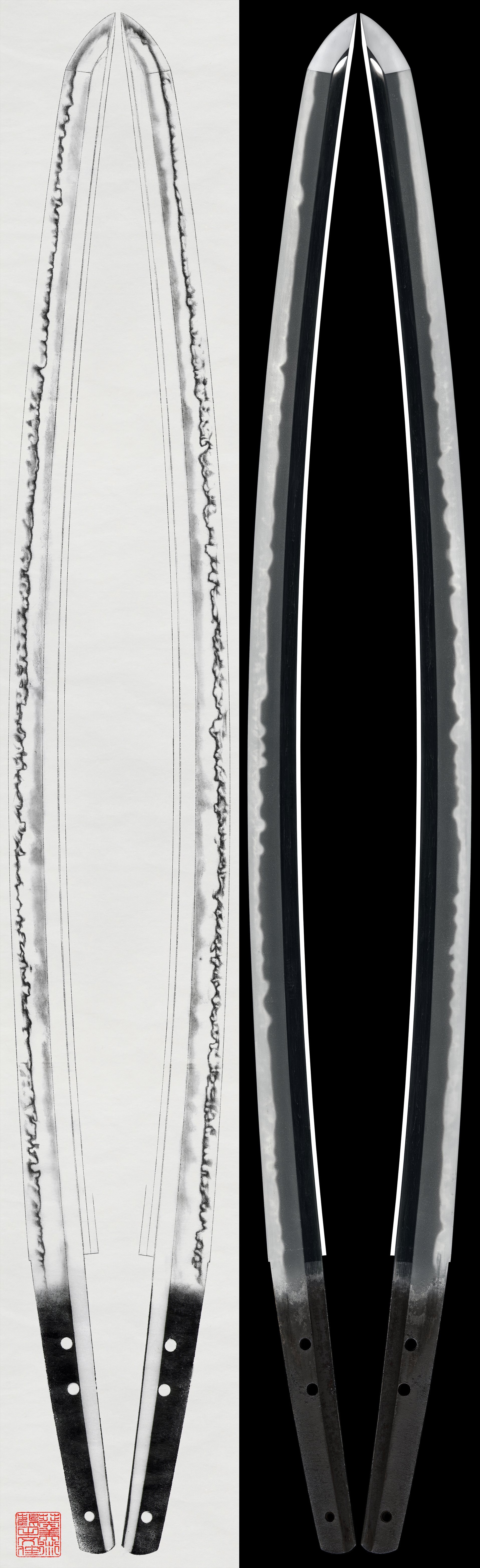
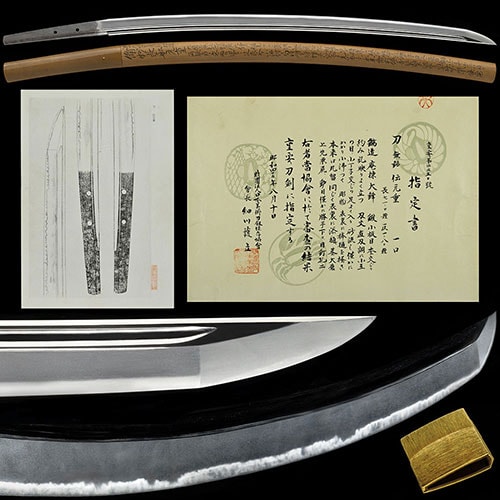
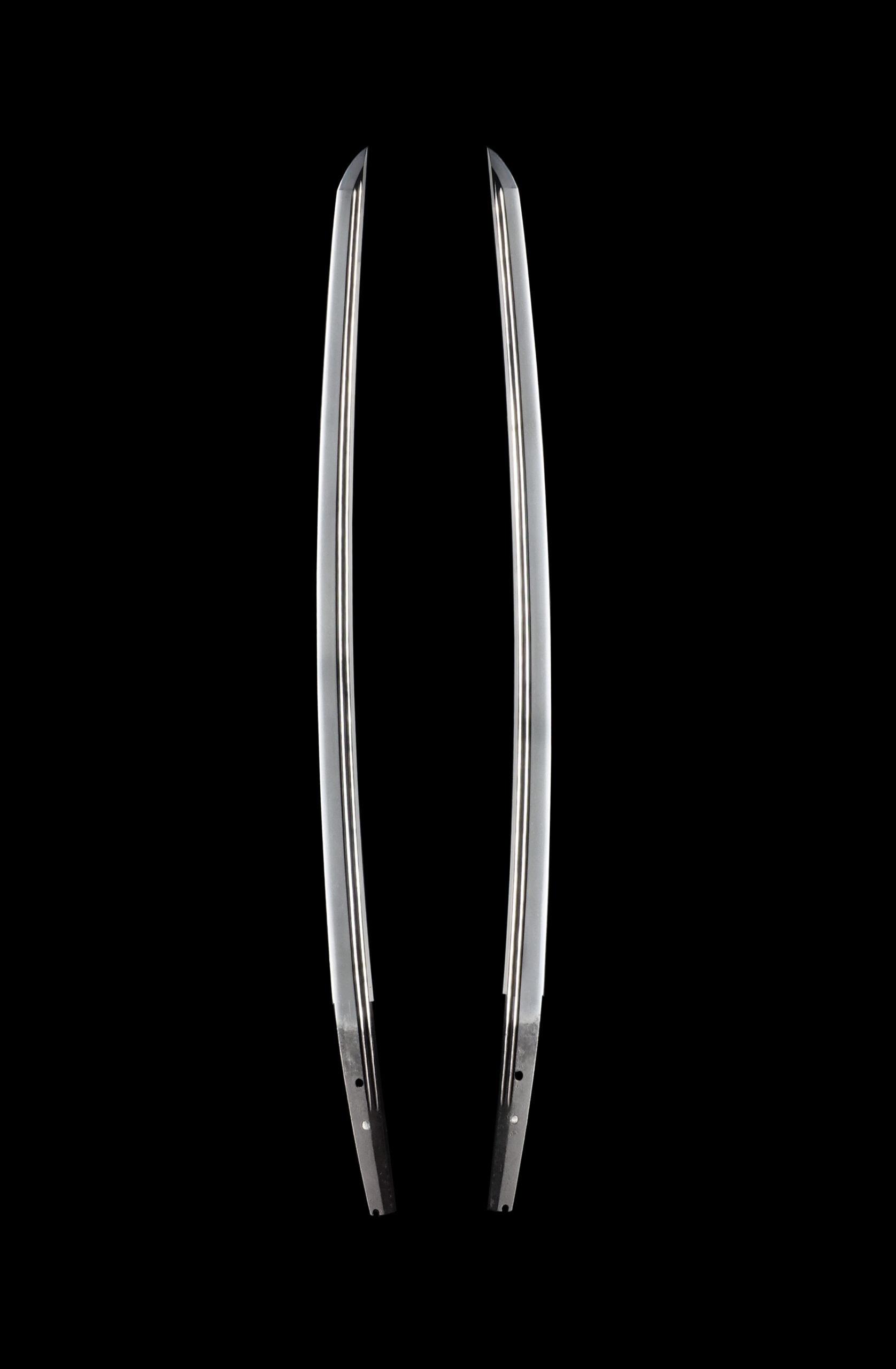
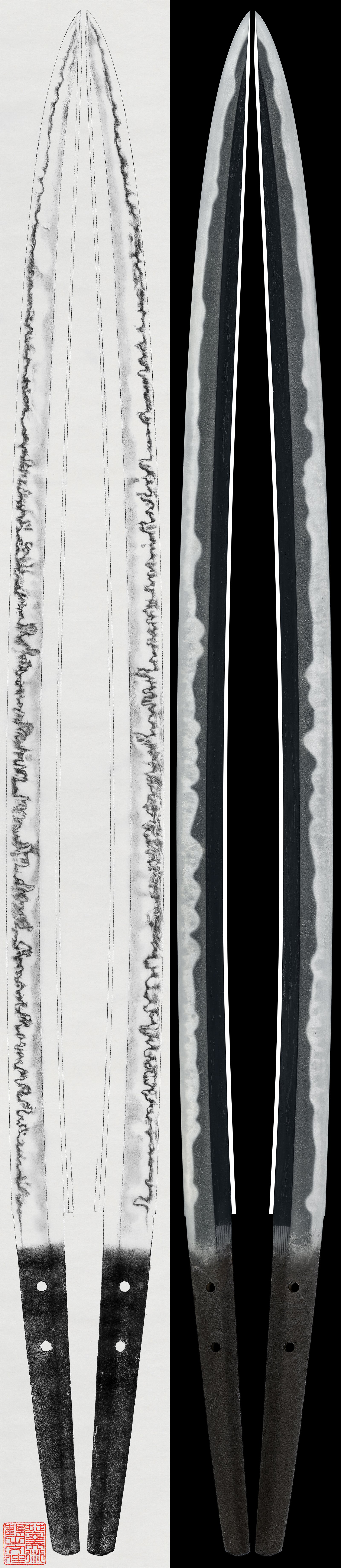
This is a naginata-naoshi katana attributed to the Fukuoka Ichimonji school, from the mid-Kamakura period. It features a brilliant choji-midare hamon with dynamic variations and vivid midare-utsuri. The blade is accompanied by a koshirae with NBTHK Hozon Tosogu certification, and the blade itself holds a 62nd NBTHK Juyo Token designation.

NBTHK Setsumei

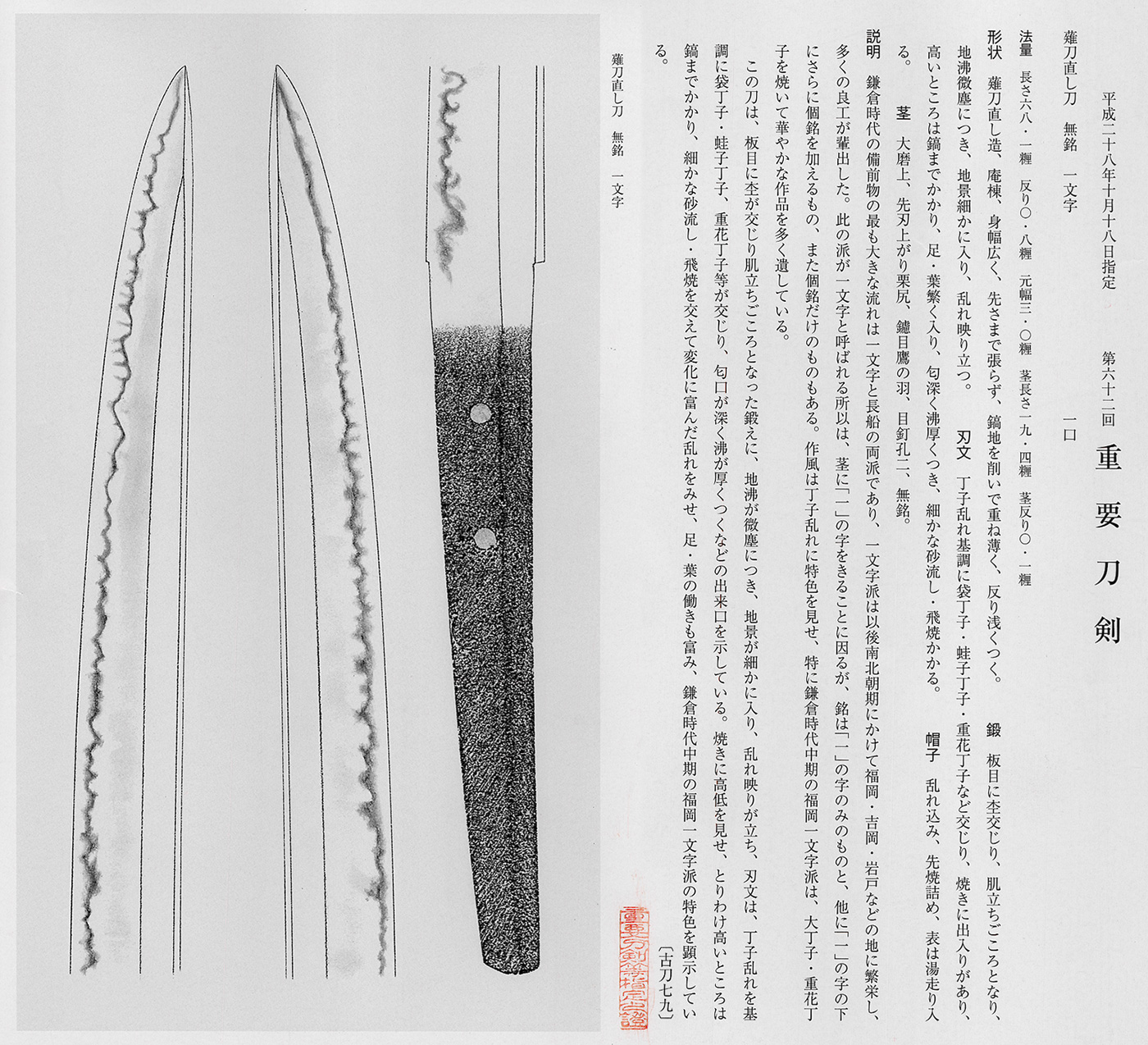
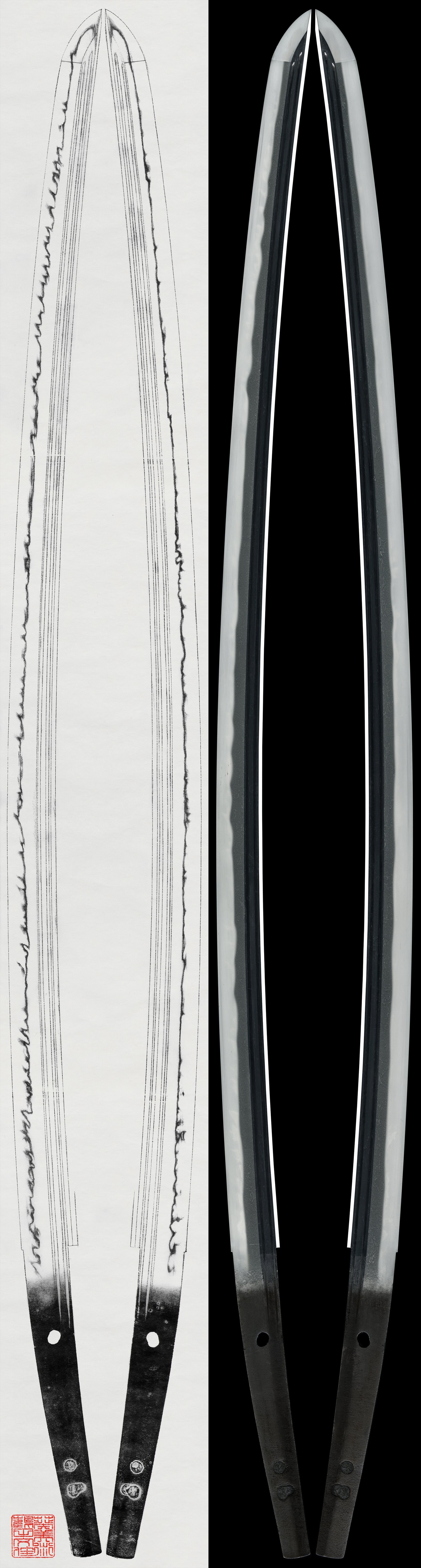
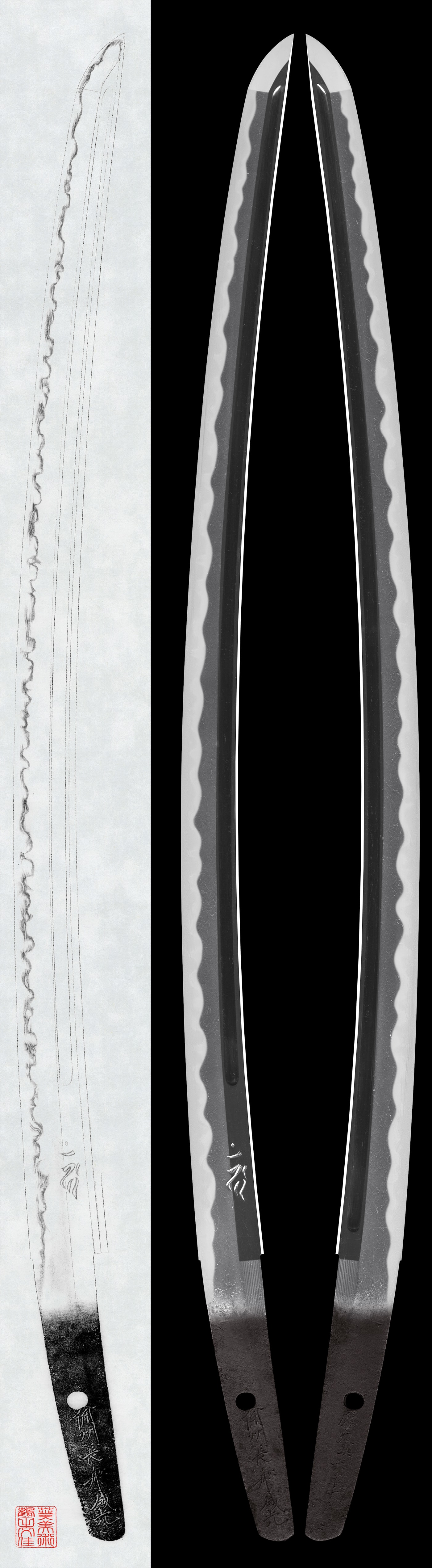
Jūyō-Tōken, 62nd Session — Designated October 18, 2016 Naginata-naoshi katana, mumei: Ichimonji (一文字) Measurements Nagasa 68.1 cm, kasane 0.8 cm, motohaba 3.0 cm, nakago-nagasa 19.4 cm, nakago-sori 0.1 cm Description Keijō: naginata-naoshi-zukuri; iori-mune; wide mihaba with little taper toward the tip; the shinogi-ji has been planed down and the kasane is thin; sori is shallow. Kitae: itame-hada mixed with mokume, showing a tendency toward hada-dachi (standing grain); very fine ji-nie covers the surface, with fine chikei, and midare-utsuri appears. Hamon: Based on chōji-midare, mixing fukuro-chōji, kawazu-ko-chōji, and jūka-chōji; in the higher portions it rises up to the shinogi; ashi and yō enter densely; the nioi is deep and nie adheres thickly, with fine sunagashi and tobiyaki intermingled. Bōshi: midare-komi with yakitsume; on the omote there is yubashiri. Horimono: None. Nakago: Greatly shortened (ō-suriage); sakihabari with ha-agari kurijiri; file marks taka-no-ha; two mekugi-ana; unsigned. Artisan Ichimonji school (Bizen) (一文字) Era Mid Kamakura period Explanation Among Kamakura-period Bizen workmanship, the two largest currents are the Ichimonji and the Osafune lineages. The Ichimonji group continued to flourish into the Nanbokuchō period in locales such as Fukuoka, Yoshioka, and Iwato, producing many fine smiths. The reason this group is called “Ichimonji” derives from the practice of cutting the character “ichi” (一) on the tang. Some works bear only the single character “ichi,” while others add an individual personal name beneath the “ichi,” and still others carry only a personal name. In style, the school is distinguished by chōji-midare; and in particular, the mid-Kamakura Fukuoka Ichimonji tradition left many flamboyant works, forging large chōji and jūka-chōji. This blade shows a forging of itame mixed with mokume that tends toward hada-dachi; very fine ji-nie adheres, fine chikei enters, and midare-utsuri stands out. The hamon is fundamentally chōji-midare, mixing fukuro-chōji, kawazu-ko-chōji, and jūka-chōji among others, and shows a manner in which the nioiguchi is deep and nie adheres thickly. The temper displays height variation; especially where it rises high it reaches the shinogi. Interweaving fine sunagashi and tobiyaki, it presents a richly varied midare. The activities of ashi and yō are also abundant, and the piece clearly manifests the distinctive features of the mid-Kamakura Fukuoka Ichimonji tradition. 〔Kotō 79〕

NihontoWatch MonNihontoWatch
MarketEncyclopediaKantei
Swords›Bizen-den›Ichimonji›Naginata-Naoshi Katana: Mumei (Ichimonji) (62nd NBTHK Juyo Token) (Koshirae: NBTHK Hozon Tosogu)
naginata naoshiJūyō
Ichimonji School

Naginata-Naoshi Katana: Mumei (Ichimonji) (62nd NBTHK Juyo Token) (Koshirae: NBTHK Hozon Tosogu)

mumei · Fukuoka Ichimonji · Late Heian (c. 1180) · nagasa 68.2cm · sori 1cm

SOLD
Naginata NaoshiJūyō
Could you name the smith from the blade alone? Today’s kantei →
Ichimonji School — 1 of 7
Ichimonji School — 2 of 7
Ichimonji School — 3 of 7
Ichimonji School — 4 of 7
Ichimonji School — 5 of 7
Ichimonji School — 6 of 7
Ichimonji School — 7 of 7
1 / 7
1 / 7
Ichimonji School — 1 of 7Ichimonji School — 2 of 7Ichimonji School — 3 of 7Ichimonji School — 4 of 7Ichimonji School — 5 of 7Ichimonji School — 6 of 7Ichimonji School — 7 of 7
Naginata NaoshiJūyō
Could you name the smith from the blade alone? Today’s kantei →
Measurements & details
Smith
Ichimonji School
Type
Naginata naoshi
School
Ichimonji
Period
Late Heian (c. 1180)(Late Heian)
Province
Bizen
Signature
Unsigned(6% of this smith's designated works are signed)
Measurements
Nagasa 68.2cmSori 1cmMotohaba 2.98cmKasane 0.72cmWeight 695g
Description

This is a naginata-naoshi katana attributed to the Fukuoka Ichimonji school, from the mid-Kamakura period. It features a brilliant choji-midare hamon with dynamic variations and vivid midare-utsuri. The blade is accompanied by a koshirae with NBTHK Hozon Tosogu certification, and the blade itself holds a 62nd NBTHK Juyo Token designation.

NBTHK Zufu Commentary

Juyo #62

AI translation — may contain errors

-, 62nd Session — Designated October 18, 2016

, : (一文字)

Measurements 68.1 cm, 0.8 cm, 3.0 cm, 19.4 cm, 0.1 cm

Description Keijō: -zukuri; ; wide with little taper toward the tip; the has been planed down and the is thin; is shallow. : mixed with , showing a tendency toward (standing grain); very fine covers the surface, with fine , and appears. : Based on , mixing fukuro-chōji, -, and ; in the higher portions it rises up to the ; and enter densely; the is deep and adheres thickly, with fine and intermingled. : with ; on the there is . : None. : Greatly shortened (); sakihabari with ; file marks taka-no-; two ; unsigned.

Artisan school () (一文字)

Era Mid period

Explanation Among -period workmanship, the two largest currents are the and the lineages. The group continued to flourish into the period in locales such as Fukuoka, Yoshioka, and Iwato, producing many fine smiths.

The reason this group is called “” derives from the practice of cutting the character “” (一) on the tang. Some works bear only the single character “,” while others add an individual personal name beneath the “,” and still others carry only a personal name. In style, the school is distinguished by ; and in particular, the mid- Fukuoka tradition left many flamboyant works, forging large and .

This blade shows a forging of mixed with that tends toward ; very fine adheres, fine enters, and stands out. The is fundamentally , mixing fukuro-chōji, -, and among others, and shows a manner in which the is deep and adheres thickly.

The temper displays height variation; especially where it rises high it reaches the . Interweaving fine and , it presents a richly varied . The activities of and are also abundant, and the piece clearly manifests the distinctive features of the mid- Fukuoka tradition.

〔 79〕

About the school

Ichimonji

一文字

Bizen-den · Bizen

23 pieces on the market now

›

The Ichimonji school (Ichimonji-ha) represents one of the two paramount traditions of Bizen Province swordmaking during the Kamakura period, flourishing alongside the Osafune lineage from the early thirteenth century through the Nanbokuchō era. The school's name derives from the practice of carving the character ichi (一, "one") onto the nakago, though signatures varied considerably—some blades bear only this single ideograph, others append an individual maker's name beneath it, and still others carry personal names alone. The tradition prospered across multiple geographic centers within Bizen, most notably at Fukuoka during the mid-Kamakura period, followed by Yoshioka from the late Kamakura into the Nanbokuchō era, with additional branches at Katayama and Iwato. Each locale developed its own stylistic nuances while maintaining the school's fundamental aesthetic principles. The collective technical signature of Ichimonji work centers on brilliant chōji-midare tempering executed with extraordinary virtuosity. The mid-Kamakura Fukuoka Ichimonji masters in particular forged blades of exceptional flamboyance, tempering large-scale chōji, layered jūka-chōji (multi-petaled clove patterns), fukuro-chōji (bag-shaped clove forms), and kawazu-kochōji (frog-leg small clove patterns) that rise and fall dramatically across the blade surface. The jigane characteristically displays vivid midare-utsuri (irregular reflection in the steel) standing clearly against an itame foundation, with densely adhering ji-nie (martensitic particles in the ground steel) and fine chikei (地景, steel veining). The tempering itself is distinguished by a soft, luminous nioiguchi (hardening boundary) rich in internal activity—ashi and yō (leg-like and leaf-like crystalline formations) appear in profusion, while kinsuji and sunagashi (金筋・砂流し, lightning-like and sand-flow patterns) run frequently through the ha.

The Yoshioka Ichimonji branch, which rose to prominence as Fukuoka's influence waned, typically produced more restrained work with chōji patterns of smaller scale, often incorporating conspicuous gunome (clover-shaped elements) and occasionally showing saka-gakari (reverse-slanting) tendencies. The Katayama Ichimonji group, reportedly founded when the smith Norifusa relocated from Fukuoka, became particularly renowned for naginata (polearms), forging strong, clear steel with somewhat smaller chōji-midare patterns that characteristically lean in reverse, featuring fine, intricate ashi within the temper. The Ichimonji school's enduring influence stems from its synthesis of technical excellence with aesthetic grandeur. Early works of the tradition often display ko-midare (small irregular patterns) more prominently than chōji and retain a Ko-Bizen character, but by the middle Kamakura period the school had perfected the magnificent chōji-midare for which it became celebrated. These blades preserve the powerful tachi form of their era—deep koshizori (curvature concentrated at the base), pronounced funbari (flaring at the base), and well-balanced nikuoki (flesh or convexity of the blade)—combined with forging of exceptional quality in which both ji and ha achieve a bright, kenzen (sound and healthy) character. The school's masters succeeded in creating works that unite martial vigor with ornamental brilliance, tempering patterns that alternate between sumptuous, boldly undulating compositions and more controlled arrangements with aligned yakigashira (temper peaks), combining motion and stillness in a manner that engages the viewer without exhausting the eye. This aesthetic achievement, coupled with the school's technical sophistication in producing dense, fine-textured steel with vivid utsuri and richly active tempering, secured Ichimonji's position as one of the most celebrated and influential sword-forging lineages in Japanese history. Learn more →


92 recorded smiths810 designated works
Leading smiths
SmithEraDesignated
Tsunetsugu恒次1321-132411
Chikatsugu親次1306-13082
Sukemasa資正1469-14871
Explore the Ichimonji school →

Historical context

Bizen in the Heian period

›

The Bizen tradition begins where iron sand, charcoal forests, and the Inland Sea shipping lanes met. By the late Heian period the Ko-Bizen smiths were forging tachi for court nobles and the rising warrior houses, and both sides of the Genpei War carried Bizen steel.

Bizen in the Heian period →

NBTHK Certificate
Jūyō Tōken重要刀剣
Important Sword
›

A blade of top-grade workmanship and condition, formally judged to rank with a nationally recognized Important Art Object (Jūyō Bijutsuhin). Awarded only at the NBTHK’s competitive annual examination.

About the NBTHK›

The NBTHK (Nihon Bijutsu Tōken Hozon Kyōkai, the Society for the Preservation of Japanese Art Swords) is a public-interest incorporated foundation founded in 1948 and supervised by Japan’s Agency for Cultural Affairs (Bunkachō); it is based at the Japanese Sword Museum in Tokyo. Its expert panels physically examine each submitted work (shinsa) and issue a certificate (kanteishō) ranking it by artistic and historical merit. NBTHK papers are the most widely recognized standard of authentication for Japanese swords and fittings.

NBTHK official site→
Seller
A
Aoi Art
🇯🇵Ships from Japan
›
✓Verified dealeraoijapan.com
✓Ships worldwide✓English supportWire transferPayPalCredit card
Return policy

If you wish to return an item, please notify us within 3 days of receipt. After this period we cannot accept cancellations. Please ship the return to us within 5 business days. Cancellation is conditional on the item being kept in the same condition as at the time of sale, so please handle it with care.

View all of Aoi Art’s listings→View this item on the dealer’s site→

Previously sold — Ichimonji School

View all →
Aoi Art
Tokuho
Katana - Tokuho - by Ichimonji School - Mumei (Ichimonji)Katana - Tokuho - by Ichimonji School - Mumei (Ichimonji)
Sold

Katana

ByIchimonji School
SOLD
Kusanagi
Tokuho
Katana - Tokuho - by Ichimonji School - Tokubetsu Hozon Katana by Sukemune of Fukuoka Ichimonji, Miura Gorō's field sword, transferred to Itō Miyoji, with Sayagaki and Umetada Tsuba KoshiraeKatana - Tokuho - by Ichimonji School - Tokubetsu Hozon Katana by Sukemune of Fukuoka Ichimonji, Miura Gorō's field sword, transferred to Itō Miyoji, with Sayagaki and Umetada Tsuba Koshirae
Sold

Katana

ByIchimonji School
SOLD
Choshuya
Wakizashi - by Ichimonji School - O-suriage Mumei: Yoshioka IchimonjiWakizashi - by Ichimonji School - O-suriage Mumei: Yoshioka Ichimonji
Sold

Wakizashi

ByIchimonji School
SOLD
Aoi Art
Katana - by Ichimonji School - Mumei (attributed to Den Ichimonji) - NBTHK Tokubetsu Hozon TokenKatana - by Ichimonji School - Mumei (attributed to Den Ichimonji) - NBTHK Tokubetsu Hozon Token
Sold

Katana

ByIchimonji School
SOLD
Choshuya
Wakizashi - by Ichimonji School - Ichimonji with Gold Powder Inscription (Kao)Wakizashi - by Ichimonji School - Ichimonji with Gold Powder Inscription (Kao)
Sold

Wakizashi

ByIchimonji School
SOLD
Aoi Art
Katana - by Ichimonji School - Mumei (Attributed to Ichimonji) - Tokubetsu Hozon TokenKatana - by Ichimonji School - Mumei (Attributed to Ichimonji) - Tokubetsu Hozon Token
Sold

Katana

ByIchimonji School
SOLD
Aoi Art
Tokuho
Katana - Tokuho - by Ichimonji School - Mumei (Ichimonji) (Consignment Sale)Katana - Tokuho - by Ichimonji School - Mumei (Ichimonji) (Consignment Sale)
Sold

Katana

ByIchimonji School
SOLD
Eirakudo
Tokuho
Katana - Tokuho - by Ichimonji School - Fukuoka Ichimonji Katana Tokubetsu Hozon TokenKatana - Tokuho - by Ichimonji School - Fukuoka Ichimonji Katana Tokubetsu Hozon Token
Sold

Katana

ByIchimonji School
SOLD

More from the Ichimonji school

View all →
Hyozaemon
Tokuho
Tokuho - by Fukuoka Ichimonji Yoshifusa - Naginata Naoshi Wakizashi by Fukuoka Ichimonji Yoshifusa, a Master of IchimonjiTokuho - by Fukuoka Ichimonji Yoshifusa - Naginata Naoshi Wakizashi by Fukuoka Ichimonji Yoshifusa, a Master of Ichimonji

Naginata Naoshi Wakizashi by Fukuoka Ichimonji Yoshifusa, a Master of Ichimonji

ByFukuoka Ichimonji Yoshifusa
Ask
Eirakudo
Tokuho
Katana - Tokuho - by Katayama Ichimonji School - Katayama Ichimonji - Tokubetsu Hozon TokenKatana - Tokuho - by Katayama Ichimonji School - Katayama Ichimonji - Tokubetsu Hozon Token

Katana

ByKatayama Ichimonji School
¥4,500,000
Eirakudo
Tokuho
Wakizashi - Tokuho - by Ichimonji School - Fukuoka Ichimonji Wakizashi Tokubetsu Hozon TokenWakizashi - Tokuho - by Ichimonji School - Fukuoka Ichimonji Wakizashi Tokubetsu Hozon Token

Wakizashi

ByIchimonji School
¥3,500,000
Tsuruginoya
Jūyō
Katana - Jūyō - by Fukuoka Ichimonji School - Mumei Fukuoka IchimonjiKatana - Jūyō - by Fukuoka Ichimonji School - Mumei Fukuoka Ichimonji

Katana

ByFukuoka Ichimonji School
Ask
Toushin
Katana - by Ichimonji School - Mumei (Hatakeda Mitsumori) (Bizen no kuni Yoshioka Ichimonji Sukemitsu)Katana - by Ichimonji School - Mumei (Hatakeda Mitsumori) (Bizen no kuni Yoshioka Ichimonji Sukemitsu)

Katana

ByIchimonji School
¥1,210,000
Samurai Nippon
Tokuho
Wakizashi - Tokuho - by Iwato Ichimonji School - Iwato Ichimonji (Unsigned)Wakizashi - Tokuho - by Iwato Ichimonji School - Iwato Ichimonji (Unsigned)

Wakizashi

ByIwato Ichimonji School
¥1,200,000
Kanda Toukodo
Jūyō
Katana - Jūyō - by Ichimonji School - Juyo Token (25th Session)Katana - Jūyō - by Ichimonji School - Juyo Token (25th Session)

Katana

ByIchimonji School
Ask
Eirakudo
Tokuho
Katana - Tokuho - by Katayama Ichimonji School - Katayama Ichimonji - Tokubetsu Hozon TokenKatana - Tokuho - by Katayama Ichimonji School - Katayama Ichimonji - Tokubetsu Hozon Token

Katana

ByKatayama Ichimonji School
¥4,000,000

More from the Bizen tradition

View all →
Aoi Art
Jūyō
Katana - Jūyō - by Osafune Shigezane - Mumei (Attributed to Shigezane) - 27th NBTHK Juyo TokenKatana - Jūyō - by Osafune Shigezane - Mumei (Attributed to Shigezane) - 27th NBTHK Juyo Token

Katana

ByOsafune Shigezane
Starting Bid¥4,600,000
Aoi Art
Tokuho
Wakizashi - Tokuho - by Oei-Bizen Morimitsu - Bishū Osafune Morimitsu, dated Ōei 26 (1419) - NBTHK Tokubetsu Hozon TokenWakizashi - Tokuho - by Oei-Bizen Morimitsu - Bishū Osafune Morimitsu, dated Ōei 26 (1419) - NBTHK Tokubetsu Hozon Token

Wakizashi

ByOei-Bizen Morimitsu
Starting Bid¥1,500,000
Aoi Art
Jūyō Bijutsuhin
Daisho - Jubi - by Osafune Nagamitsu - Dai Sho: Katana (Important Art Object): Mumei (Attributed to Nagamitsu) / Wakizashi: Mumei (Attributed to Sekishu Naotsuna)Daisho - Jubi - by Osafune Nagamitsu - Dai Sho: Katana (Important Art Object): Mumei (Attributed to Nagamitsu) / Wakizashi: Mumei (Attributed to Sekishu Naotsuna)

Daishō

ByOsafune Nagamitsu
Ask
Eirakudo
Jūyō
Katana - Jūyō - by Motoshige - Motoshige - Juyo TokenKatana - Jūyō - by Motoshige - Motoshige - Juyo Token

Katana

ByMotoshige
¥6,000,000
Samurai Museum
Tokuho
Wakizashi - Tokuho - by Osafune Kagemitsu - Antique Japanese Sword Wakizashi Attributed to Den Osafune Kagemitsu NBTHK Tokubetsu Hozon CertificateWakizashi - Tokuho - by Osafune Kagemitsu - Antique Japanese Sword Wakizashi Attributed to Den Osafune Kagemitsu NBTHK Tokubetsu Hozon Certificate

Wakizashi

ByOsafune Kagemitsu
¥3,200,000
Nihonto.com
Jūyō
Tanto - Jūyō - by Osafune Kagemitsu - Juyo Tanto by Bizen KagemitsuTanto - Jūyō - by Osafune Kagemitsu - Juyo Tanto by Bizen Kagemitsu

Tantō

ByOsafune Kagemitsu
¥89,500
Goushuya
Jūyō Bijutsuhin
Tachi - Jubi - by Ukai Unsho - Kumoio - From the collection of the Okouchi family, lord of Otaki Domain, Kazusa ProvinceTachi - Jubi - by Ukai Unsho - Kumoio - From the collection of the Okouchi family, lord of Otaki Domain, Kazusa Province

Tachi

ByUkai Unsho
Ask
Aoi Art
Jūyō
Katana - Jūyō - by Aoe School - Mumei (Aoe school)Katana - Jūyō - by Aoe School - Mumei (Aoe school)

Katana

ByAoe School
¥3,200,000

Swords

  • Katana
  • Wakizashi
  • Tantō
  • Tachi
  • Naginata
  • Yari
  • Japanese Swords
  • Samurai Swords

Fittings

  • Tsuba
  • Fuchi-Kashira
  • Kozuka
  • Menuki
  • Sword Guards (Tsuba)

Armor

  • Kabuto
  • Samurai Armor
  • All Samurai Armor

By Certification

  • Tokujū
  • Jūyō
  • Tokuho
  • Hozon

Resources

  • Dealer Directory
  • Artist Directory
  • The Daily Kantei
  • Glossary
  • Browse All
Nihontowatch© 2026
TermsPrivacyCookiesAbout
Sold

Description

This is a naginata-naoshi katana attributed to the Fukuoka Ichimonji school, from the mid-Kamakura period. It features a brilliant choji-midare hamon with dynamic variations and vivid midare-utsuri. The blade is accompanied by a koshirae with NBTHK Hozon Tosogu certification, and the blade itself holds a 62nd NBTHK Juyo Token designation.

NBTHK Setsumei

Jūyō-Tōken, 62nd Session — Designated October 18, 2016 Naginata-naoshi katana, mumei: Ichimonji (一文字) Measurements Nagasa 68.1 cm, kasane 0.8 cm, motohaba 3.0 cm, nakago-nagasa 19.4 cm, nakago-sori 0.1 cm Description Keijō: naginata-naoshi-zukuri; iori-mune; wide mihaba with little taper toward the tip; the shinogi-ji has been planed down and the kasane is thin; sori is shallow. Kitae: itame-hada mixed with mokume, showing a tendency toward hada-dachi (standing grain); very fine ji-nie covers the surface, with fine chikei, and midare-utsuri appears. Hamon: Based on chōji-midare, mixing fukuro-chōji, kawazu-ko-chōji, and jūka-chōji; in the higher portions it rises up to the shinogi; ashi and yō enter densely; the nioi is deep and nie adheres thickly, with fine sunagashi and tobiyaki intermingled. Bōshi: midare-komi with yakitsume; on the omote there is yubashiri. Horimono: None. Nakago: Greatly shortened (ō-suriage); sakihabari with ha-agari kurijiri; file marks taka-no-ha; two mekugi-ana; unsigned. Artisan Ichimonji school (Bizen) (一文字) Era Mid Kamakura period Explanation Among Kamakura-period Bizen workmanship, the two largest currents are the Ichimonji and the Osafune lineages. The Ichimonji group continued to flourish into the Nanbokuchō period in locales such as Fukuoka, Yoshioka, and Iwato, producing many fine smiths. The reason this group is called “Ichimonji” derives from the practice of cutting the character “ichi” (一) on the tang. Some works bear only the single character “ichi,” while others add an individual personal name beneath the “ichi,” and still others carry only a personal name. In style, the school is distinguished by chōji-midare; and in particular, the mid-Kamakura Fukuoka Ichimonji tradition left many flamboyant works, forging large chōji and jūka-chōji. This blade shows a forging of itame mixed with mokume that tends toward hada-dachi; very fine ji-nie adheres, fine chikei enters, and midare-utsuri stands out. The hamon is fundamentally chōji-midare, mixing fukuro-chōji, kawazu-ko-chōji, and jūka-chōji among others, and shows a manner in which the nioiguchi is deep and nie adheres thickly. The temper displays height variation; especially where it rises high it reaches the shinogi. Interweaving fine sunagashi and tobiyaki, it presents a richly varied midare. The activities of ashi and yō are also abundant, and the piece clearly manifests the distinctive features of the mid-Kamakura Fukuoka Ichimonji tradition. 〔Kotō 79〕

NihontoWatch MonNihontoWatch
MarketEncyclopediaKantei
Swords›Bizen-den›Ichimonji›Naginata-Naoshi Katana: Mumei (Ichimonji) (62nd NBTHK Juyo Token) (Koshirae: NBTHK Hozon Tosogu)
naginata naoshiJūyō
Ichimonji School

Naginata-Naoshi Katana: Mumei (Ichimonji) (62nd NBTHK Juyo Token) (Koshirae: NBTHK Hozon Tosogu)

mumei · Fukuoka Ichimonji · Late Heian (c. 1180) · nagasa 68.2cm · sori 1cm

SOLD
Naginata NaoshiJūyō
Could you name the smith from the blade alone? Today’s kantei →
Ichimonji School — 1 of 7
Ichimonji School — 2 of 7
Ichimonji School — 3 of 7
Ichimonji School — 4 of 7
Ichimonji School — 5 of 7
Ichimonji School — 6 of 7
Ichimonji School — 7 of 7
1 / 7
1 / 7
Ichimonji School — 1 of 7Ichimonji School — 2 of 7Ichimonji School — 3 of 7Ichimonji School — 4 of 7Ichimonji School — 5 of 7Ichimonji School — 6 of 7Ichimonji School — 7 of 7
Naginata NaoshiJūyō
Could you name the smith from the blade alone? Today’s kantei →
Measurements & details
Smith
Ichimonji School
Type
Naginata naoshi
School
Ichimonji
Period
Late Heian (c. 1180)(Late Heian)
Province
Bizen
Signature
Unsigned(6% of this smith's designated works are signed)
Measurements
Nagasa 68.2cmSori 1cmMotohaba 2.98cmKasane 0.72cmWeight 695g
Description

This is a naginata-naoshi katana attributed to the Fukuoka Ichimonji school, from the mid-Kamakura period. It features a brilliant choji-midare hamon with dynamic variations and vivid midare-utsuri. The blade is accompanied by a koshirae with NBTHK Hozon Tosogu certification, and the blade itself holds a 62nd NBTHK Juyo Token designation.

NBTHK Zufu Commentary

Juyo #62

AI translation — may contain errors

-, 62nd Session — Designated October 18, 2016

, : (一文字)

Measurements 68.1 cm, 0.8 cm, 3.0 cm, 19.4 cm, 0.1 cm

Description Keijō: -zukuri; ; wide with little taper toward the tip; the has been planed down and the is thin; is shallow. : mixed with , showing a tendency toward (standing grain); very fine covers the surface, with fine , and appears. : Based on , mixing fukuro-chōji, -, and ; in the higher portions it rises up to the ; and enter densely; the is deep and adheres thickly, with fine and intermingled. : with ; on the there is . : None. : Greatly shortened (); sakihabari with ; file marks taka-no-; two ; unsigned.

Artisan school () (一文字)

Era Mid period

Explanation Among -period workmanship, the two largest currents are the and the lineages. The group continued to flourish into the period in locales such as Fukuoka, Yoshioka, and Iwato, producing many fine smiths.

The reason this group is called “” derives from the practice of cutting the character “” (一) on the tang. Some works bear only the single character “,” while others add an individual personal name beneath the “,” and still others carry only a personal name. In style, the school is distinguished by ; and in particular, the mid- Fukuoka tradition left many flamboyant works, forging large and .

This blade shows a forging of mixed with that tends toward ; very fine adheres, fine enters, and stands out. The is fundamentally , mixing fukuro-chōji, -, and among others, and shows a manner in which the is deep and adheres thickly.

The temper displays height variation; especially where it rises high it reaches the . Interweaving fine and , it presents a richly varied . The activities of and are also abundant, and the piece clearly manifests the distinctive features of the mid- Fukuoka tradition.

〔 79〕

About the school

Ichimonji

一文字

Bizen-den · Bizen

23 pieces on the market now

›

The Ichimonji school (Ichimonji-ha) represents one of the two paramount traditions of Bizen Province swordmaking during the Kamakura period, flourishing alongside the Osafune lineage from the early thirteenth century through the Nanbokuchō era. The school's name derives from the practice of carving the character ichi (一, "one") onto the nakago, though signatures varied considerably—some blades bear only this single ideograph, others append an individual maker's name beneath it, and still others carry personal names alone. The tradition prospered across multiple geographic centers within Bizen, most notably at Fukuoka during the mid-Kamakura period, followed by Yoshioka from the late Kamakura into the Nanbokuchō era, with additional branches at Katayama and Iwato. Each locale developed its own stylistic nuances while maintaining the school's fundamental aesthetic principles. The collective technical signature of Ichimonji work centers on brilliant chōji-midare tempering executed with extraordinary virtuosity. The mid-Kamakura Fukuoka Ichimonji masters in particular forged blades of exceptional flamboyance, tempering large-scale chōji, layered jūka-chōji (multi-petaled clove patterns), fukuro-chōji (bag-shaped clove forms), and kawazu-kochōji (frog-leg small clove patterns) that rise and fall dramatically across the blade surface. The jigane characteristically displays vivid midare-utsuri (irregular reflection in the steel) standing clearly against an itame foundation, with densely adhering ji-nie (martensitic particles in the ground steel) and fine chikei (地景, steel veining). The tempering itself is distinguished by a soft, luminous nioiguchi (hardening boundary) rich in internal activity—ashi and yō (leg-like and leaf-like crystalline formations) appear in profusion, while kinsuji and sunagashi (金筋・砂流し, lightning-like and sand-flow patterns) run frequently through the ha.

The Yoshioka Ichimonji branch, which rose to prominence as Fukuoka's influence waned, typically produced more restrained work with chōji patterns of smaller scale, often incorporating conspicuous gunome (clover-shaped elements) and occasionally showing saka-gakari (reverse-slanting) tendencies. The Katayama Ichimonji group, reportedly founded when the smith Norifusa relocated from Fukuoka, became particularly renowned for naginata (polearms), forging strong, clear steel with somewhat smaller chōji-midare patterns that characteristically lean in reverse, featuring fine, intricate ashi within the temper. The Ichimonji school's enduring influence stems from its synthesis of technical excellence with aesthetic grandeur. Early works of the tradition often display ko-midare (small irregular patterns) more prominently than chōji and retain a Ko-Bizen character, but by the middle Kamakura period the school had perfected the magnificent chōji-midare for which it became celebrated. These blades preserve the powerful tachi form of their era—deep koshizori (curvature concentrated at the base), pronounced funbari (flaring at the base), and well-balanced nikuoki (flesh or convexity of the blade)—combined with forging of exceptional quality in which both ji and ha achieve a bright, kenzen (sound and healthy) character. The school's masters succeeded in creating works that unite martial vigor with ornamental brilliance, tempering patterns that alternate between sumptuous, boldly undulating compositions and more controlled arrangements with aligned yakigashira (temper peaks), combining motion and stillness in a manner that engages the viewer without exhausting the eye. This aesthetic achievement, coupled with the school's technical sophistication in producing dense, fine-textured steel with vivid utsuri and richly active tempering, secured Ichimonji's position as one of the most celebrated and influential sword-forging lineages in Japanese history. Learn more →
92 recorded smiths810 designated works
Leading smiths
SmithEraDesignated
Tsunetsugu恒次1321-132411
Chikatsugu親次1306-13082
Sukemasa資正1469-14871
Explore the Ichimonji school →

Historical context

Bizen in the Heian period

›

The Bizen tradition begins where iron sand, charcoal forests, and the Inland Sea shipping lanes met. By the late Heian period the Ko-Bizen smiths were forging tachi for court nobles and the rising warrior houses, and both sides of the Genpei War carried Bizen steel.

Bizen in the Heian period →

NBTHK Certificate
Jūyō Tōken重要刀剣
Important Sword
›

A blade of top-grade workmanship and condition, formally judged to rank with a nationally recognized Important Art Object (Jūyō Bijutsuhin). Awarded only at the NBTHK’s competitive annual examination.

About the NBTHK›

The NBTHK (Nihon Bijutsu Tōken Hozon Kyōkai, the Society for the Preservation of Japanese Art Swords) is a public-interest incorporated foundation founded in 1948 and supervised by Japan’s Agency for Cultural Affairs (Bunkachō); it is based at the Japanese Sword Museum in Tokyo. Its expert panels physically examine each submitted work (shinsa) and issue a certificate (kanteishō) ranking it by artistic and historical merit. NBTHK papers are the most widely recognized standard of authentication for Japanese swords and fittings.

NBTHK official site→
Seller
A
Aoi Art
🇯🇵Ships from Japan
›
✓Verified dealeraoijapan.com
✓Ships worldwide✓English supportWire transferPayPalCredit card
Return policy

If you wish to return an item, please notify us within 3 days of receipt. After this period we cannot accept cancellations. Please ship the return to us within 5 business days. Cancellation is conditional on the item being kept in the same condition as at the time of sale, so please handle it with care.

View all of Aoi Art’s listings→View this item on the dealer’s site→

Previously sold — Ichimonji School

View all →
Aoi Art
Tokuho
Katana - Tokuho - by Ichimonji School - Mumei (Ichimonji)Katana - Tokuho - by Ichimonji School - Mumei (Ichimonji)
Sold

Katana

ByIchimonji School
SOLD
Kusanagi
Tokuho
Katana - Tokuho - by Ichimonji School - Tokubetsu Hozon Katana by Sukemune of Fukuoka Ichimonji, Miura Gorō's field sword, transferred to Itō Miyoji, with Sayagaki and Umetada Tsuba KoshiraeKatana - Tokuho - by Ichimonji School - Tokubetsu Hozon Katana by Sukemune of Fukuoka Ichimonji, Miura Gorō's field sword, transferred to Itō Miyoji, with Sayagaki and Umetada Tsuba Koshirae
Sold

Katana

ByIchimonji School
SOLD
Choshuya
Wakizashi - by Ichimonji School - O-suriage Mumei: Yoshioka IchimonjiWakizashi - by Ichimonji School - O-suriage Mumei: Yoshioka Ichimonji
Sold

Wakizashi

ByIchimonji School
SOLD
Aoi Art
Katana - by Ichimonji School - Mumei (attributed to Den Ichimonji) - NBTHK Tokubetsu Hozon TokenKatana - by Ichimonji School - Mumei (attributed to Den Ichimonji) - NBTHK Tokubetsu Hozon Token
Sold

Katana

ByIchimonji School
SOLD
Choshuya
Wakizashi - by Ichimonji School - Ichimonji with Gold Powder Inscription (Kao)Wakizashi - by Ichimonji School - Ichimonji with Gold Powder Inscription (Kao)
Sold

Wakizashi

ByIchimonji School
SOLD
Aoi Art
Katana - by Ichimonji School - Mumei (Attributed to Ichimonji) - Tokubetsu Hozon TokenKatana - by Ichimonji School - Mumei (Attributed to Ichimonji) - Tokubetsu Hozon Token
Sold

Katana

ByIchimonji School
SOLD
Aoi Art
Tokuho
Katana - Tokuho - by Ichimonji School - Mumei (Ichimonji) (Consignment Sale)Katana - Tokuho - by Ichimonji School - Mumei (Ichimonji) (Consignment Sale)
Sold

Katana

ByIchimonji School
SOLD
Eirakudo
Tokuho
Katana - Tokuho - by Ichimonji School - Fukuoka Ichimonji Katana Tokubetsu Hozon TokenKatana - Tokuho - by Ichimonji School - Fukuoka Ichimonji Katana Tokubetsu Hozon Token
Sold

Katana

ByIchimonji School
SOLD

More from the Ichimonji school

View all →
Hyozaemon
Tokuho
Tokuho - by Fukuoka Ichimonji Yoshifusa - Naginata Naoshi Wakizashi by Fukuoka Ichimonji Yoshifusa, a Master of IchimonjiTokuho - by Fukuoka Ichimonji Yoshifusa - Naginata Naoshi Wakizashi by Fukuoka Ichimonji Yoshifusa, a Master of Ichimonji

Naginata Naoshi Wakizashi by Fukuoka Ichimonji Yoshifusa, a Master of Ichimonji

ByFukuoka Ichimonji Yoshifusa
Ask
Eirakudo
Tokuho
Katana - Tokuho - by Katayama Ichimonji School - Katayama Ichimonji - Tokubetsu Hozon TokenKatana - Tokuho - by Katayama Ichimonji School - Katayama Ichimonji - Tokubetsu Hozon Token

Katana

ByKatayama Ichimonji School
¥4,500,000
Eirakudo
Tokuho
Wakizashi - Tokuho - by Ichimonji School - Fukuoka Ichimonji Wakizashi Tokubetsu Hozon TokenWakizashi - Tokuho - by Ichimonji School - Fukuoka Ichimonji Wakizashi Tokubetsu Hozon Token

Wakizashi

ByIchimonji School
¥3,500,000
Tsuruginoya
Jūyō
Katana - Jūyō - by Fukuoka Ichimonji School - Mumei Fukuoka IchimonjiKatana - Jūyō - by Fukuoka Ichimonji School - Mumei Fukuoka Ichimonji

Katana

ByFukuoka Ichimonji School
Ask
Toushin
Katana - by Ichimonji School - Mumei (Hatakeda Mitsumori) (Bizen no kuni Yoshioka Ichimonji Sukemitsu)Katana - by Ichimonji School - Mumei (Hatakeda Mitsumori) (Bizen no kuni Yoshioka Ichimonji Sukemitsu)

Katana

ByIchimonji School
¥1,210,000
Samurai Nippon
Tokuho
Wakizashi - Tokuho - by Iwato Ichimonji School - Iwato Ichimonji (Unsigned)Wakizashi - Tokuho - by Iwato Ichimonji School - Iwato Ichimonji (Unsigned)

Wakizashi

ByIwato Ichimonji School
¥1,200,000
Kanda Toukodo
Jūyō
Katana - Jūyō - by Ichimonji School - Juyo Token (25th Session)Katana - Jūyō - by Ichimonji School - Juyo Token (25th Session)

Katana

ByIchimonji School
Ask
Eirakudo
Tokuho
Katana - Tokuho - by Katayama Ichimonji School - Katayama Ichimonji - Tokubetsu Hozon TokenKatana - Tokuho - by Katayama Ichimonji School - Katayama Ichimonji - Tokubetsu Hozon Token

Katana

ByKatayama Ichimonji School
¥4,000,000

More from the Bizen tradition

View all →
Aoi Art
Jūyō
Katana - Jūyō - by Osafune Shigezane - Mumei (Attributed to Shigezane) - 27th NBTHK Juyo TokenKatana - Jūyō - by Osafune Shigezane - Mumei (Attributed to Shigezane) - 27th NBTHK Juyo Token

Katana

ByOsafune Shigezane
Starting Bid¥4,600,000
Aoi Art
Tokuho
Wakizashi - Tokuho - by Oei-Bizen Morimitsu - Bishū Osafune Morimitsu, dated Ōei 26 (1419) - NBTHK Tokubetsu Hozon TokenWakizashi - Tokuho - by Oei-Bizen Morimitsu - Bishū Osafune Morimitsu, dated Ōei 26 (1419) - NBTHK Tokubetsu Hozon Token

Wakizashi

ByOei-Bizen Morimitsu
Starting Bid¥1,500,000
Aoi Art
Jūyō Bijutsuhin
Daisho - Jubi - by Osafune Nagamitsu - Dai Sho: Katana (Important Art Object): Mumei (Attributed to Nagamitsu) / Wakizashi: Mumei (Attributed to Sekishu Naotsuna)Daisho - Jubi - by Osafune Nagamitsu - Dai Sho: Katana (Important Art Object): Mumei (Attributed to Nagamitsu) / Wakizashi: Mumei (Attributed to Sekishu Naotsuna)

Daishō

ByOsafune Nagamitsu
Ask
Eirakudo
Jūyō
Katana - Jūyō - by Motoshige - Motoshige - Juyo TokenKatana - Jūyō - by Motoshige - Motoshige - Juyo Token

Katana

ByMotoshige
¥6,000,000
Samurai Museum
Tokuho
Wakizashi - Tokuho - by Osafune Kagemitsu - Antique Japanese Sword Wakizashi Attributed to Den Osafune Kagemitsu NBTHK Tokubetsu Hozon CertificateWakizashi - Tokuho - by Osafune Kagemitsu - Antique Japanese Sword Wakizashi Attributed to Den Osafune Kagemitsu NBTHK Tokubetsu Hozon Certificate

Wakizashi

ByOsafune Kagemitsu
¥3,200,000
Nihonto.com
Jūyō
Tanto - Jūyō - by Osafune Kagemitsu - Juyo Tanto by Bizen KagemitsuTanto - Jūyō - by Osafune Kagemitsu - Juyo Tanto by Bizen Kagemitsu

Tantō

ByOsafune Kagemitsu
¥89,500
Goushuya
Jūyō Bijutsuhin
Tachi - Jubi - by Ukai Unsho - Kumoio - From the collection of the Okouchi family, lord of Otaki Domain, Kazusa ProvinceTachi - Jubi - by Ukai Unsho - Kumoio - From the collection of the Okouchi family, lord of Otaki Domain, Kazusa Province

Tachi

ByUkai Unsho
Ask
Aoi Art
Jūyō
Katana - Jūyō - by Aoe School - Mumei (Aoe school)Katana - Jūyō - by Aoe School - Mumei (Aoe school)

Katana

ByAoe School
¥3,200,000

Swords

  • Katana
  • Wakizashi
  • Tantō
  • Tachi
  • Naginata
  • Yari
  • Japanese Swords
  • Samurai Swords

Fittings

  • Tsuba
  • Fuchi-Kashira
  • Kozuka
  • Menuki
  • Sword Guards (Tsuba)

Armor

  • Kabuto
  • Samurai Armor
  • All Samurai Armor

By Certification

  • Tokujū
  • Jūyō
  • Tokuho
  • Hozon

Resources

  • Dealer Directory
  • Artist Directory
  • The Daily Kantei
  • Glossary
  • Browse All
Nihontowatch© 2026
TermsPrivacyCookiesAbout
Sold
NihontoWatch MonNihontoWatch
Market
Encyclopedia
Kantei
NihontoWatch MonNihontoWatch
Market
Encyclopedia
Kantei