 NihontoWatchNihontoWatch
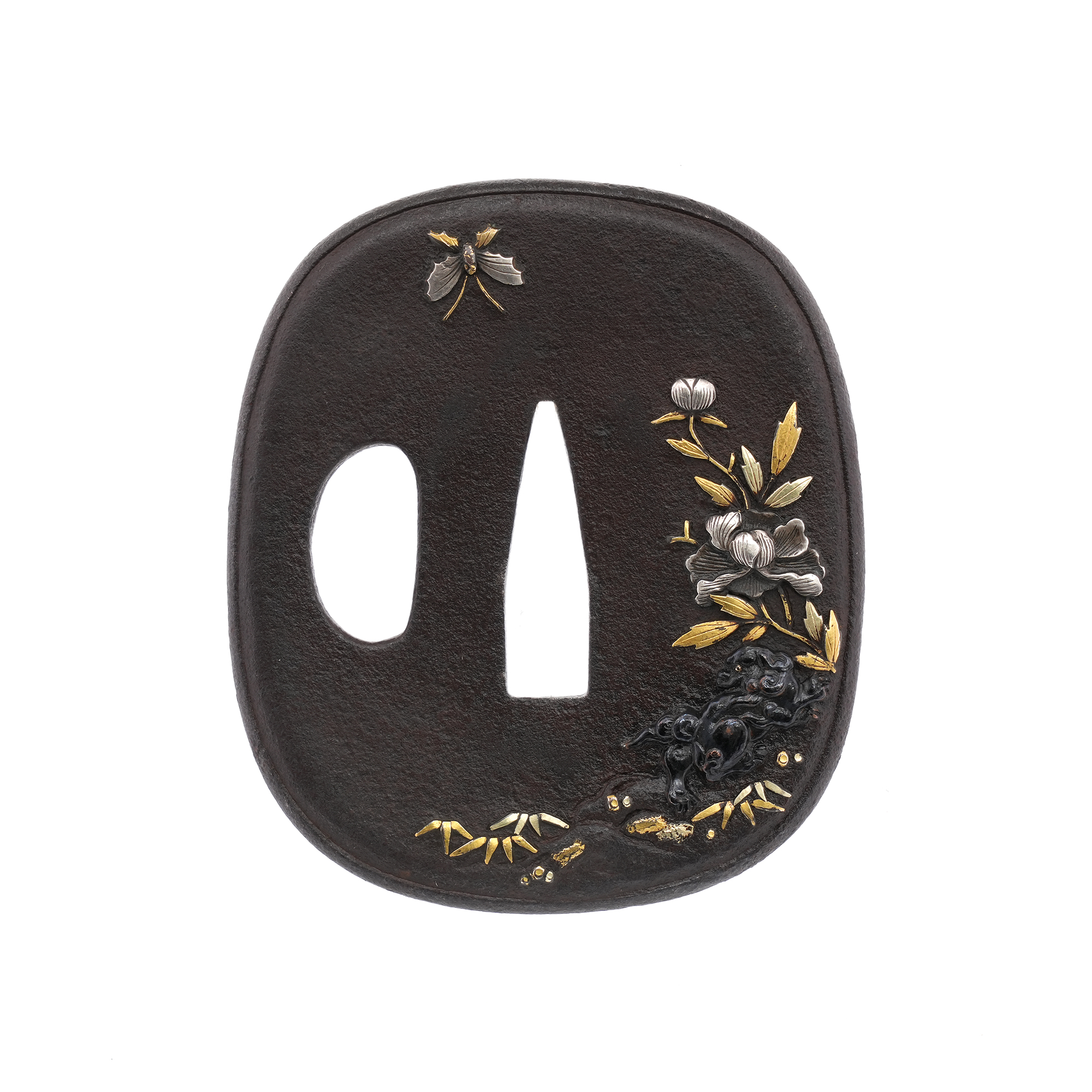
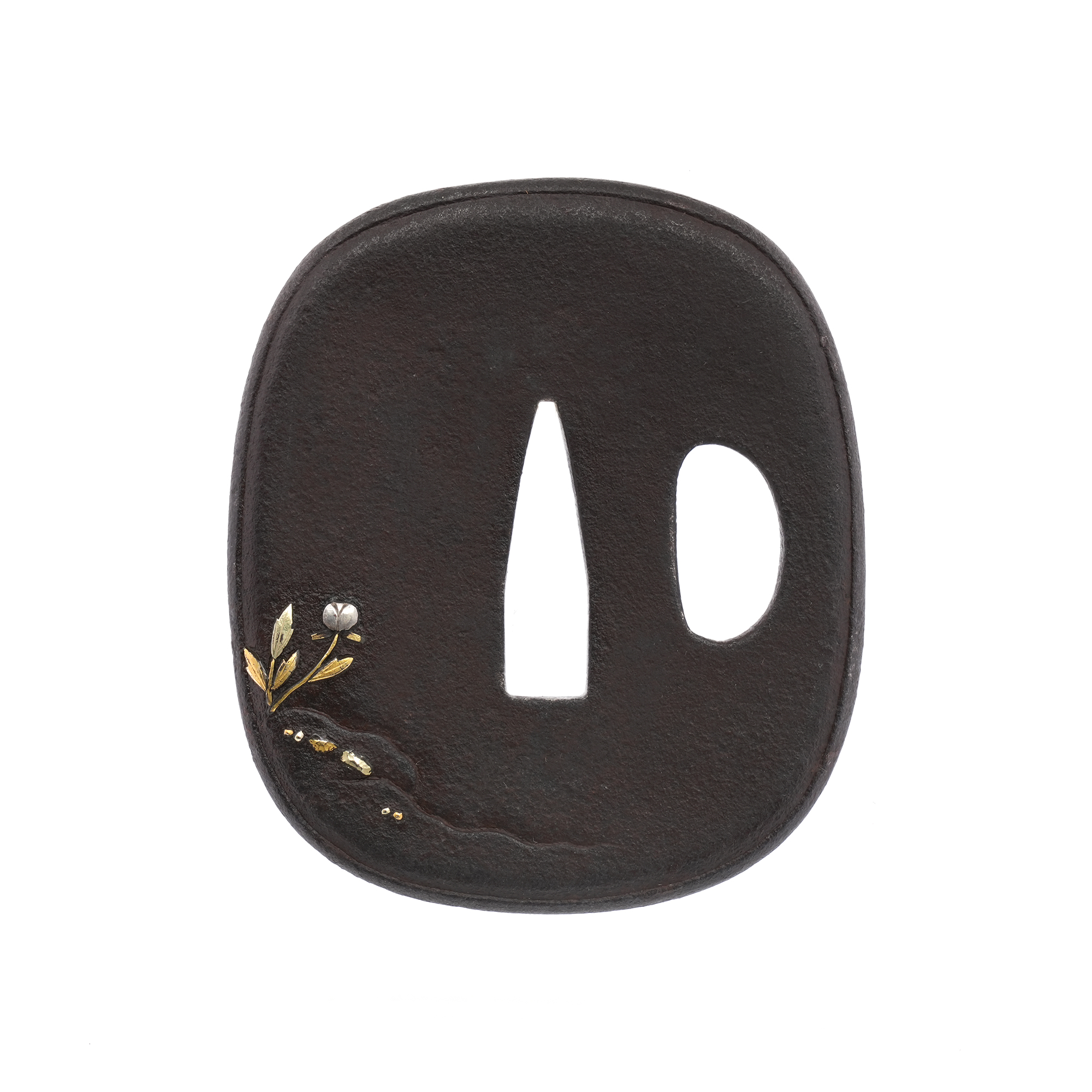
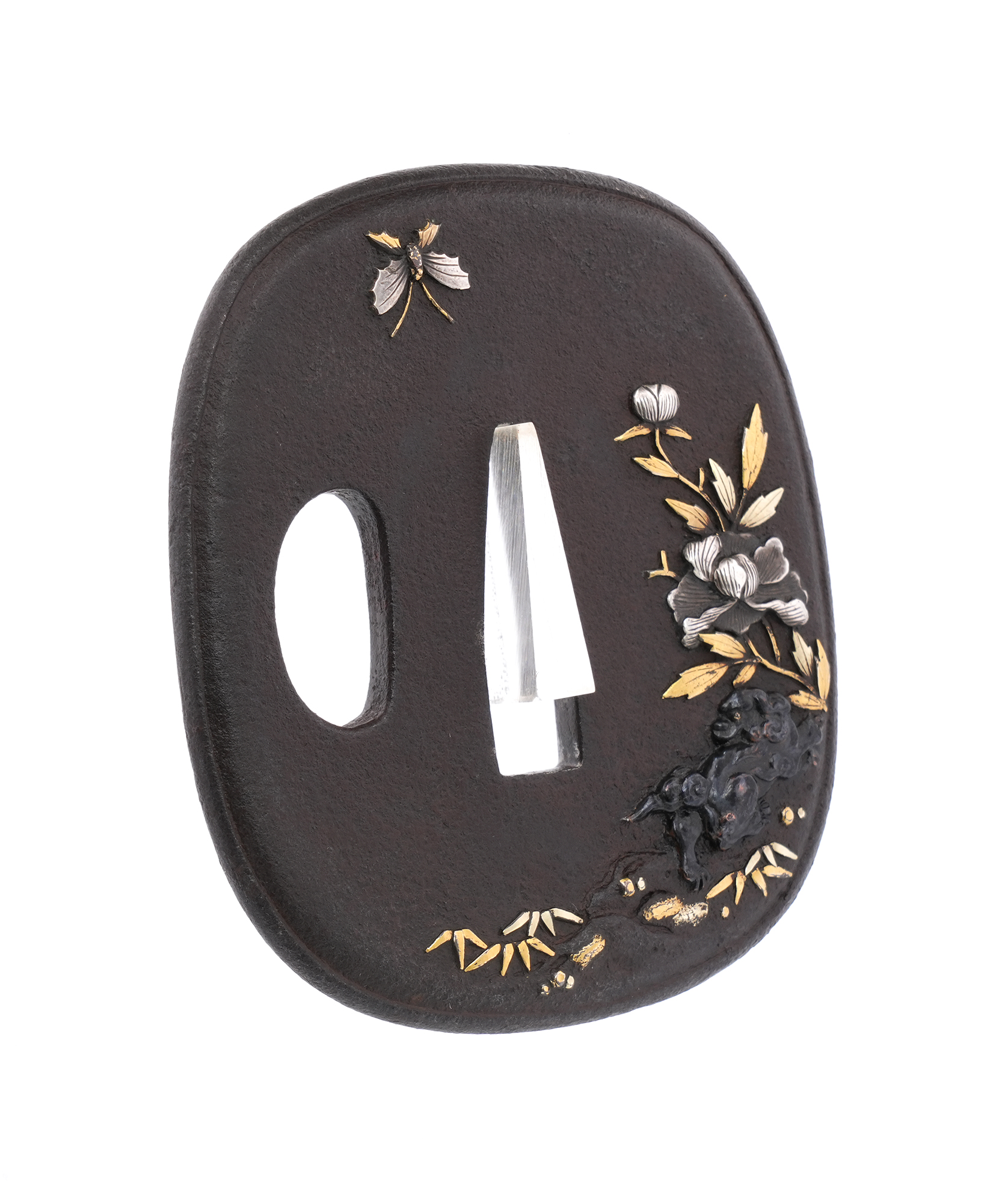
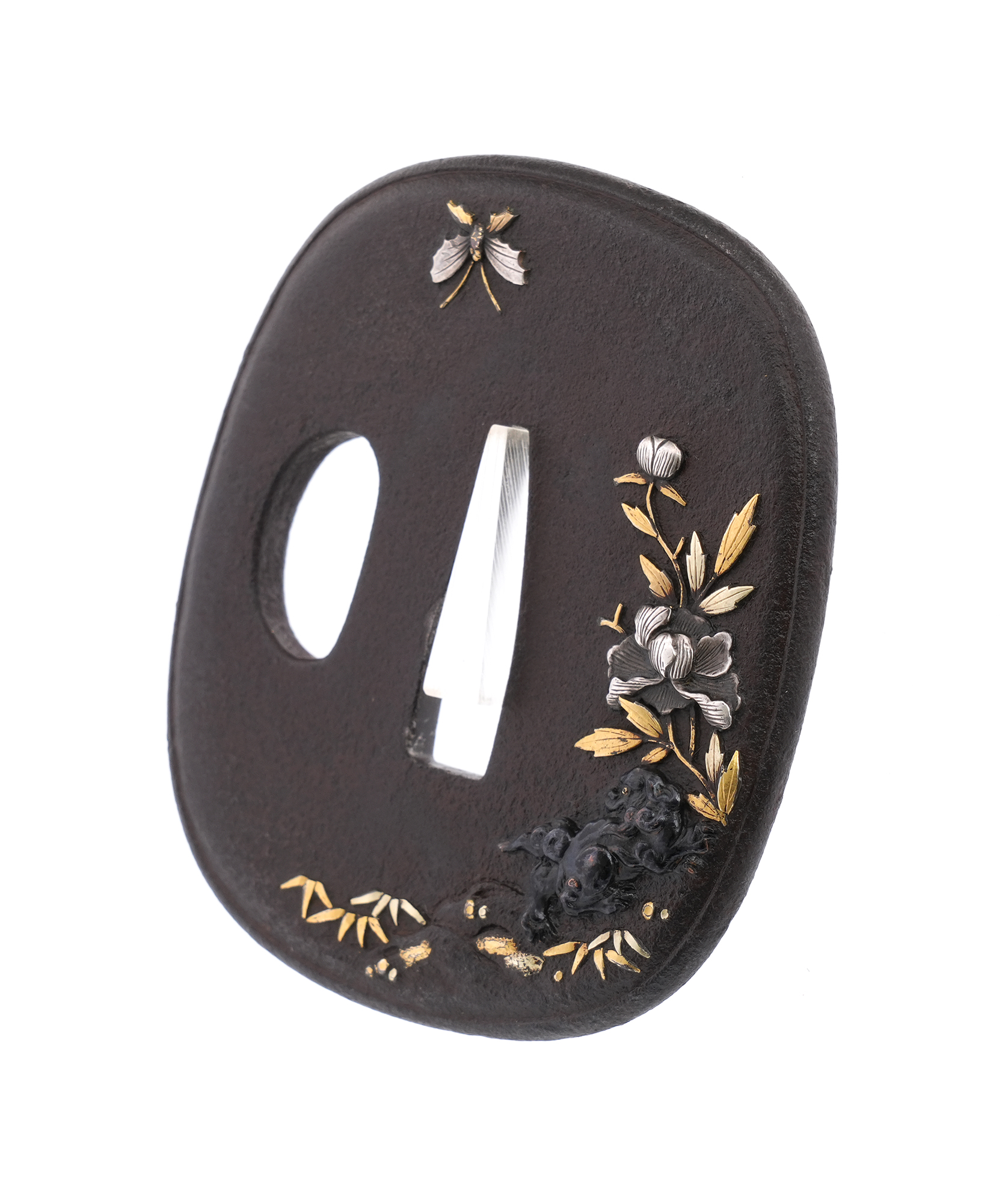
Aizu Shoami is a branch of the Shoami school that developed under the protection of the Aizu domain during the Edo period. While based on the techniques of Kyoto Shoami, they were characterized by the neat, precise engraving and flamboyant iroe typical of Aizu metalwork, producing many high-grade tosogu that skillfully utilized tetsu-ji. This work is a small tetsu-ji nade-kaku gata tsuba, a refined masterpiece of high character that elegantly arranges butterflies, peonies, and karashishi through the extensive use of suemon zogan and iroe. The peonies skillfully combine gin-iroe and kin-iroe to express the three-dimensional feel of petals and buds, while at their base, a karashishi powerfully rendered in takabori is set, creating a quiet scene by applying detailed zogan even to the bamboo grass and pebbles crawling along the ground. A single butterfly is added to the upper part of the omote, and by arranging only lovely flowering plants on the ura while making great use of blank space, it forms a sophisticated composition where the front and back correspond. The tetsu-ji, finished with a komochi-mimi, overflows with a calm luster, and despite being a small piece, one can fully appreciate the precise workmanship characteristic of Aizu Shoami. The state of preservation is extremely good, and although it is a small work, the level of perfection in the engraving, iroe, and composition are all high, making it a piece of high appreciative value where one can enjoy the refined aesthetic sense and advanced metalworking techniques of Aizu Shoami.
NihontoWatchOffered by Toushin

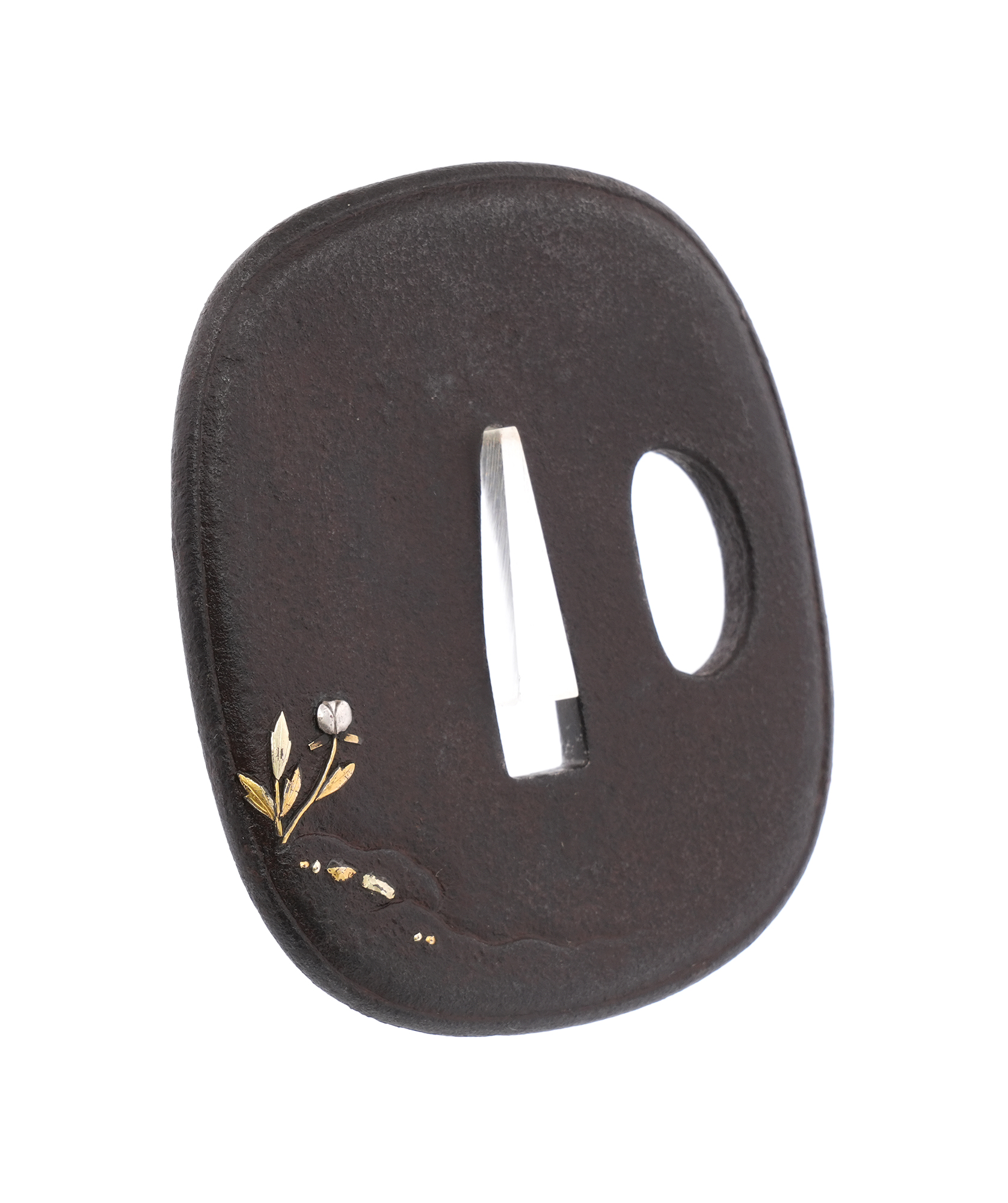
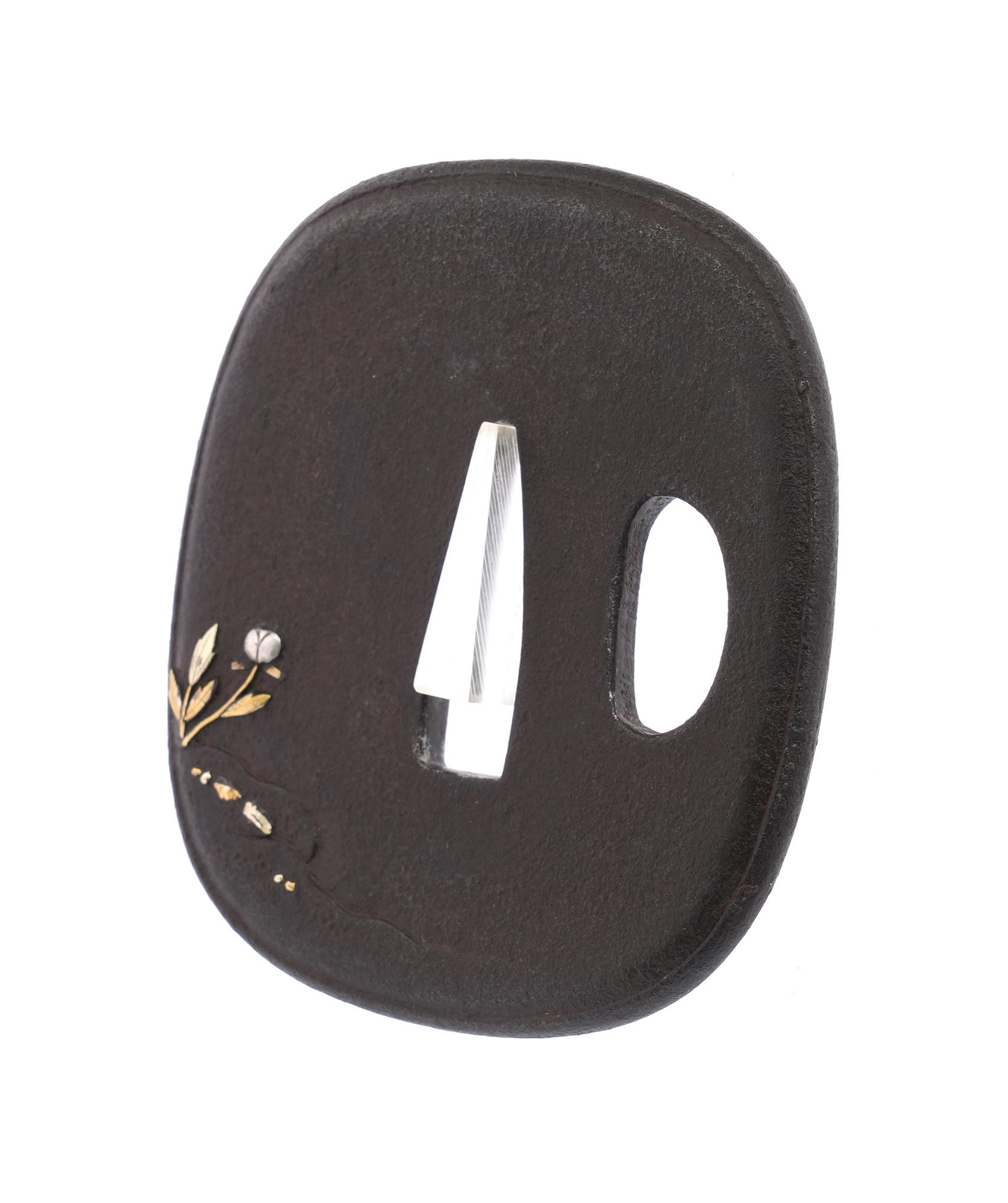
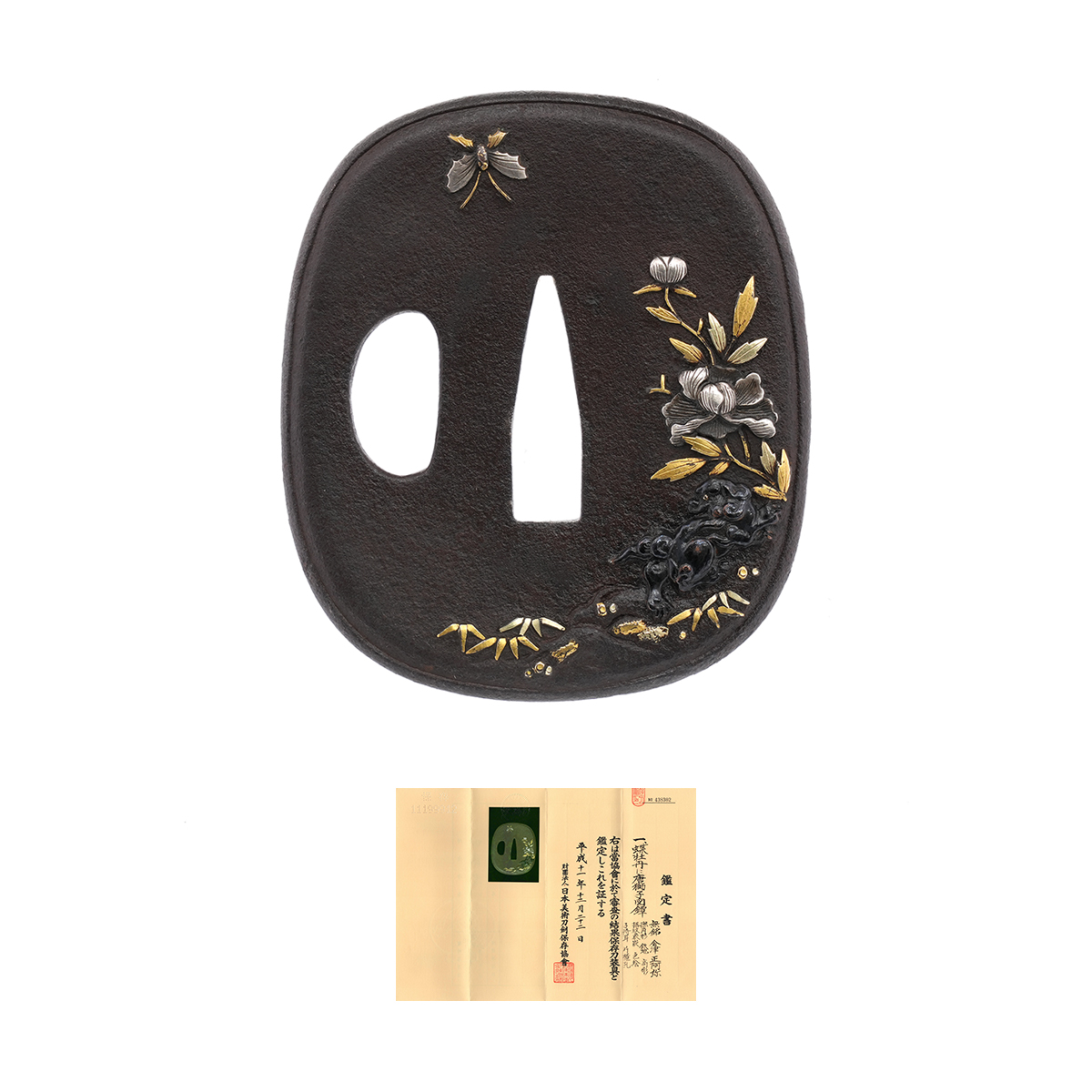
As written by the shop
Machine translation from the shop's Japanese · may contain errors ·
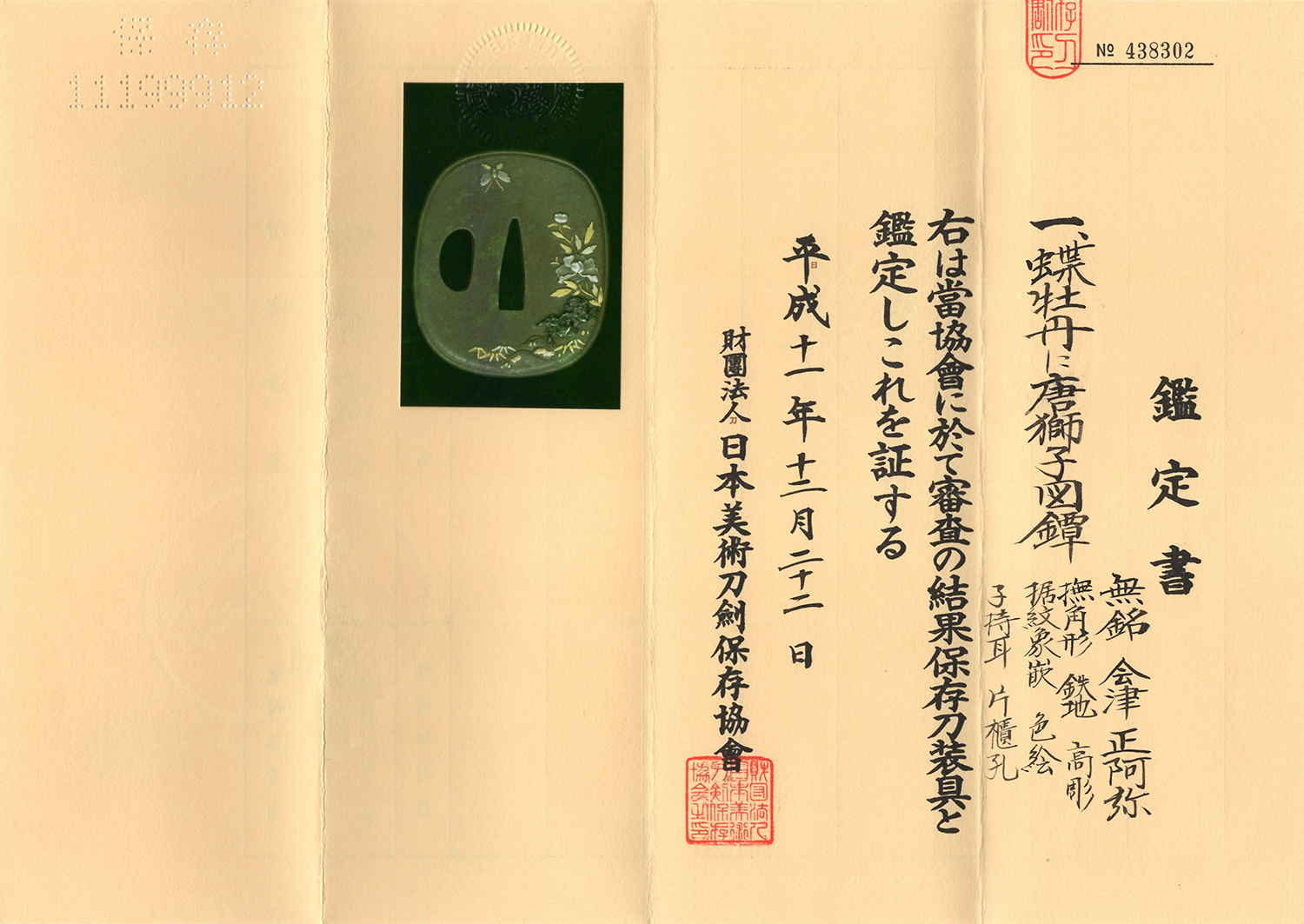
Certifies a genuine fitting worth preserving: a correct signature, or, if unsigned, an identifiable era and school, with recognized artistic and craft value.
The NBTHK (Nihon Bijutsu Tōken Hozon Kyōkai, the Society for the Preservation of Japanese Art Swords) is a public-interest incorporated foundation founded in 1948 and supervised by Japan’s Agency for Cultural Affairs (Bunkachō); it is based at the Japanese Sword Museum in Tokyo. Its expert panels physically examine each submitted work (shinsa) and issue a certificate (kanteishō) ranking it by artistic and historical merit. NBTHK papers are the most widely recognized standard of authentication for Japanese swords and fittings.
NBTHK official siteAs a rule we do not accept returns, except when we have sent a different item from the one ordered or when there is a significant discrepancy between the description and the item. If you wish to return an item, please contact us within 3 days of its arrival and then send it back.
¥187,000