Mutsu no Kami Yoshiyuki was a tosotsu of the Enpo era in the middle of the Edo period, and is famous as the maker of Sakamoto Ryoma's sword. His real name was Morishita Heisuke, and he was born in Nakamura, Uda-gun, Oshu (Soma City, Fukushima Prefecture) as the second son of the tosotsu Morishita Harima no Kami Yoshinari; his elder brother was Kozuke no Kami Yoshikuni. He went to Osaka with his father and brother, resided in Sumiyoshi, and studied under Yamato no Kami Yoshimichi of the Mishina school. After mastering the craft, he received the titles of Mutsu no Daijo and later Mutsu no Kami, became the adopted son of the Yamaoka family, and became Yamaoka Heisuke. During the Genroku (1688) years, he was invited by the Tosa clan to become the kaji bugyo and moved to Tanezaki-cho, east of Kochi Castle. Due to the patronage of the clan lord Yamauchi Toyomasa, he was granted 1 cho 5 tan 5 bu of rice fields in Niida-mura, Nagaoka-gun (Kochi City). Then, in the Kajizura (Johoku-cho, Kochi City) east of Kutanda, he actively forged the clan's bankata. When that was completed, it appears he was released from his duties as a kanko, returned to Osaka, and passed away. Yoshiyuki's style inherited the style of his teacher, the first generation Yamato no Kami Yoshimichi, and he tempered flamboyant kobushigata choji in the style of Kawachi no Kami Kunisuke which was popular in Osaka at the time, as well as suguha and, in his early period, sudareba. He signed as "Mutsu no Kami Yoshiyuki", "Sesshu Ju Yoshiyuki", "Mutsu no Daijo Yoshiyuki", "Yoshiyuki", and so on. His sword-making period was around the Kanbun, Enpo, Tenna, Jokyo, and Genroku eras.
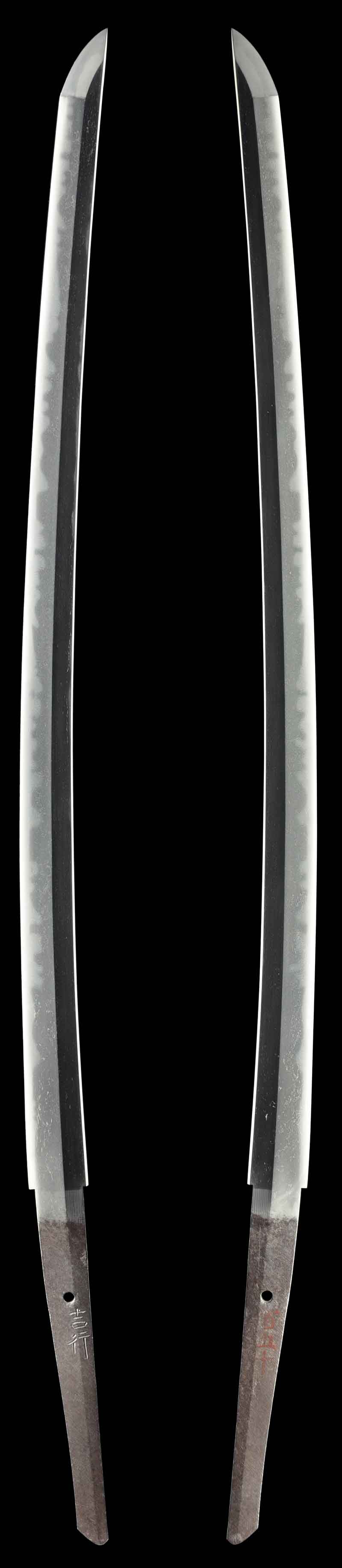
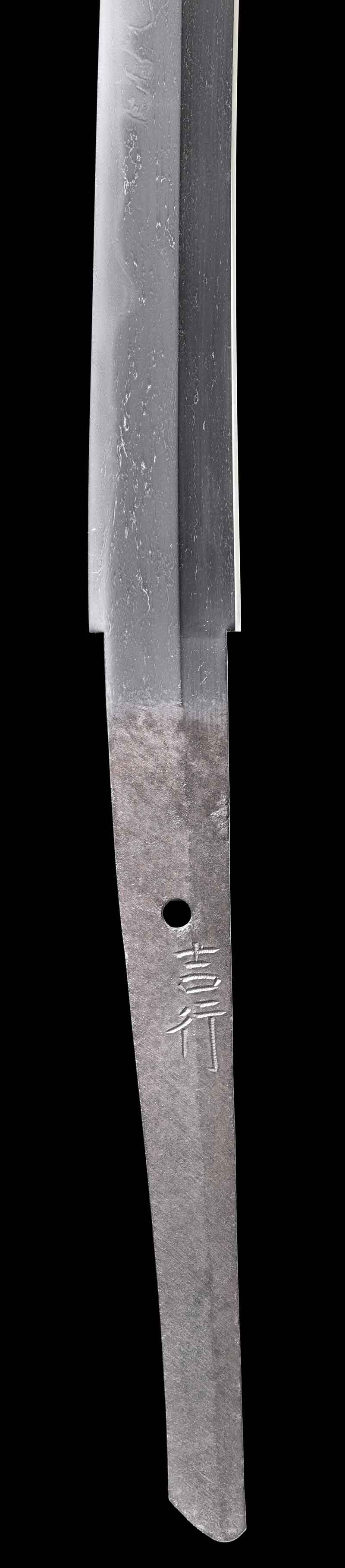
In this work, the hamon shows a short sugu-yakidashi style, and above that, it consists of gunome, ko-gunome, and choji-style ha mixed with ko-notare, with ashi, dominated by nioiguchi with a slight amount of ko-nie, sunagashi, and small tobiyaki-style yubashiri mixed into the habuchi, showing a workmanship that tempers the mune; the upper part partially shows sudareba and kikusui-ba styles, giving a sense of playfulness. The nakago has a unique tanagobara shape, and the meiburi is the so-called "Ashinaga Yoshiyuki" where the two vertical lines of the character "Yuki" extend long, and it is said that there are many masterworks among those with this meiburi.
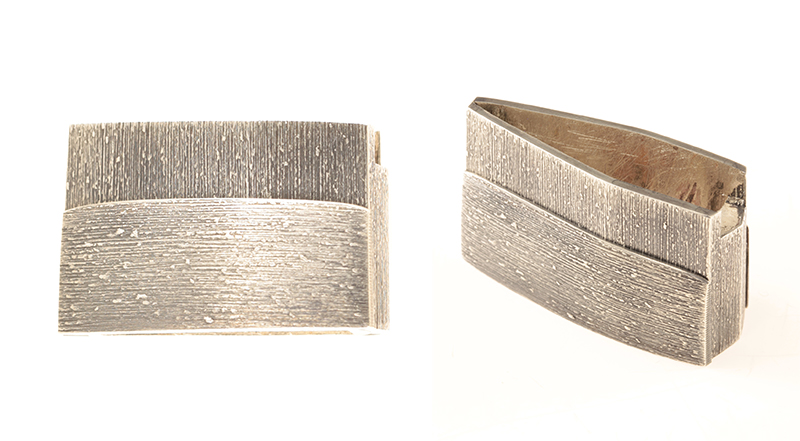
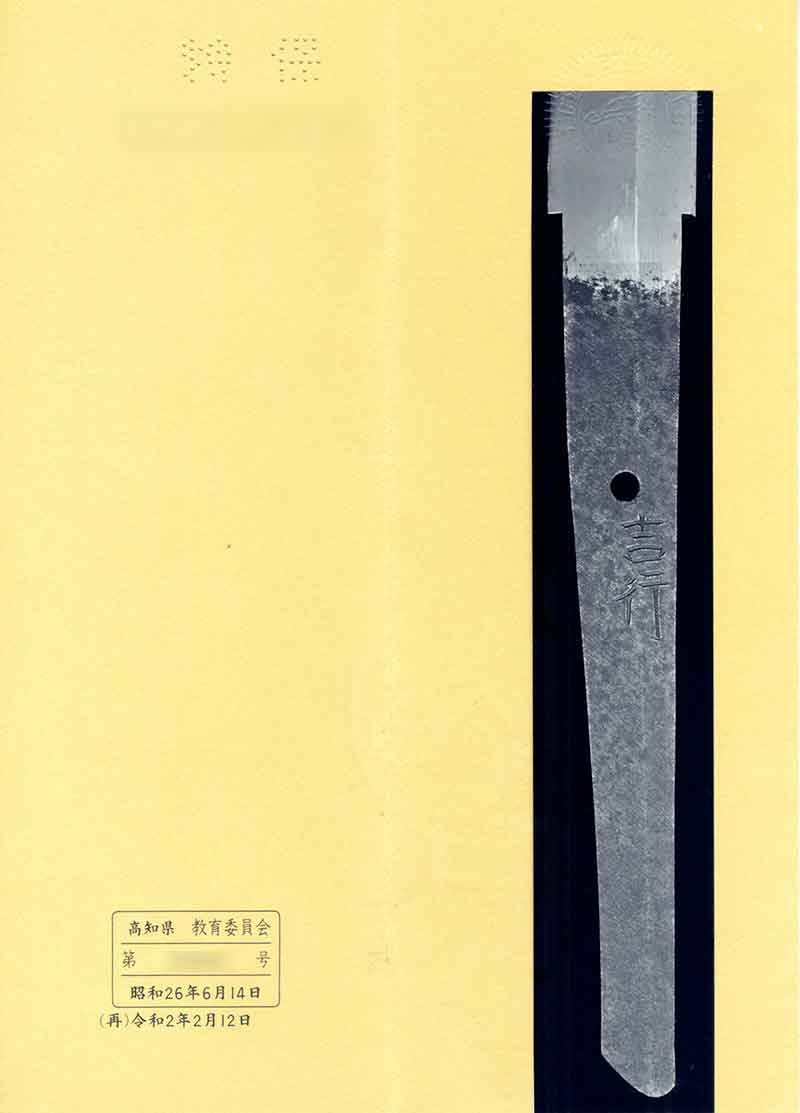
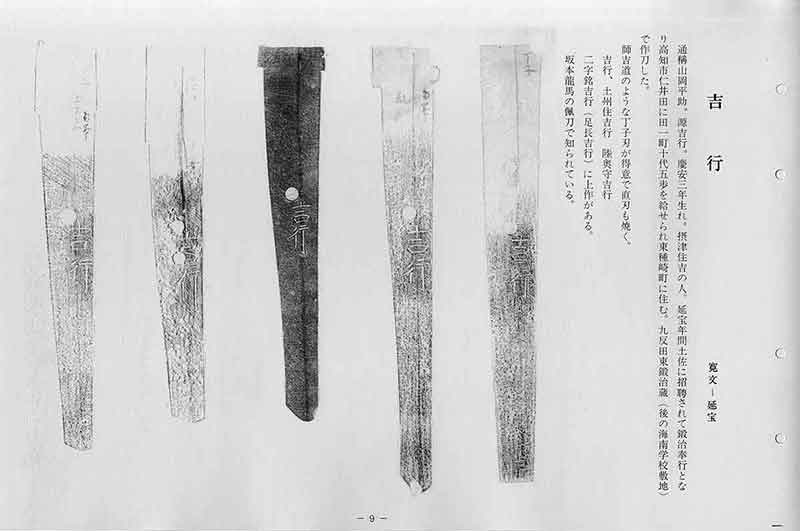
It has a Showa 26 registration from Kochi Prefecture and is also recorded in the Tosa Tosotsu Oshigata Shu, so it was likely passed down for a long time in its home province of Kochi Prefecture as a mikunimono. High-quality polishing by sashikomi has been applied, and a shirasaya and solid silver habaki have been newly made, so the good condition is also desirable.
Shinto Chu-jo saku
High-quality polishing completed (sashikomi)
New shirasaya and habaki production
Machine translation from the shop's Japanese · may contain errors ·
Mutsu no Kami Yoshiyuki was a tosotsu of the Enpo era in the middle of the Edo period, and is famous as the maker of Sakamoto Ryoma's sword. His real name was Morishita Heisuke, and he was born in Nakamura, Uda-gun, Oshu (Soma City, Fukushima Prefecture) as the second son of the tosotsu Morishita Harima no Kami Yoshinari; his elder brother was Kozuke no Kami Yoshikuni. He went to Osaka with his father and brother, resided in Sumiyoshi, and studied under Yamato no Kami Yoshimichi of the Mishina school. After mastering the craft, he received the titles of Mutsu no Daijo and later Mutsu no Kami, became the adopted son of the Yamaoka family, and became Yamaoka Heisuke. During the Genroku (1688) years, he was invited by the Tosa clan to become the kaji bugyo and moved to Tanezaki-cho, east of Kochi Castle. Due to the patronage of the clan lord Yamauchi Toyomasa, he was granted 1 cho 5 tan 5 bu of rice fields in Niida-mura, Nagaoka-gun (Kochi City). Then, in the Kajizura (Johoku-cho, Kochi City) east of Kutanda, he actively forged the clan's bankata. When that was completed, it appears he was released from his duties as a kanko, returned to Osaka, and passed away. Yoshiyuki's style inherited the style of his teacher, the first generation Yamato no Kami Yoshimichi, and he tempered flamboyant kobushigata choji in the style of Kawachi no Kami Kunisuke which was popular in Osaka at the time, as well as suguha and, in his early period, sudareba. He signed as "Mutsu no Kami Yoshiyuki", "Sesshu Ju Yoshiyuki", "Mutsu no Daijo Yoshiyuki", "Yoshiyuki", and so on. His sword-making period was around the Kanbun, Enpo, Tenna, Jokyo, and Genroku eras.
In this work, the hamon shows a short sugu-yakidashi style, and above that, it consists of gunome, ko-gunome, and choji-style ha mixed with ko-notare, with ashi, dominated by nioiguchi with a slight amount of ko-nie, sunagashi, and small tobiyaki-style yubashiri mixed into the habuchi, showing a workmanship that tempers the mune; the upper part partially shows sudareba and kikusui-ba styles, giving a sense of playfulness. The nakago has a unique tanagobara shape, and the meiburi is the so-called "Ashinaga Yoshiyuki" where the two vertical lines of the character "Yuki" extend long, and it is said that there are many masterworks among those with this meiburi.
It has a Showa 26 registration from Kochi Prefecture and is also recorded in the Tosa Tosotsu Oshigata Shu, so it was likely passed down for a long time in its home province of Kochi Prefecture as a mikunimono. High-quality polishing by sashikomi has been applied, and a shirasaya and solid silver habaki have been newly made, so the good condition is also desirable.
Shinto Chu-jo saku
High-quality polishing completed (sashikomi)
New shirasaya and habaki production
About the maker
Yoshiyuki
吉行
Tosa · around 1661-1673
Tōken Taikan top 60%
2 pieces on the market now
›
Historical importance
Where Yoshiyuki stands among comparable artisans: across all of nihontō, and within tradition, era, and period. The tiers (Foremost · Leading · Major · Notable) weigh official designations from the NBTHK and Japan's Agency for Cultural Affairs, together with historical honors of lasting repute such as the Sansaku and Meibutsu-chō.
Under the Tokugawa peace the daishō became a regulated uniform, and demand gathered in the castle towns, above all Edo itself. The craft split two ways: brilliant display work for connoisseurs, and tested blades whose cutting results were sometimes inlaid in gold.
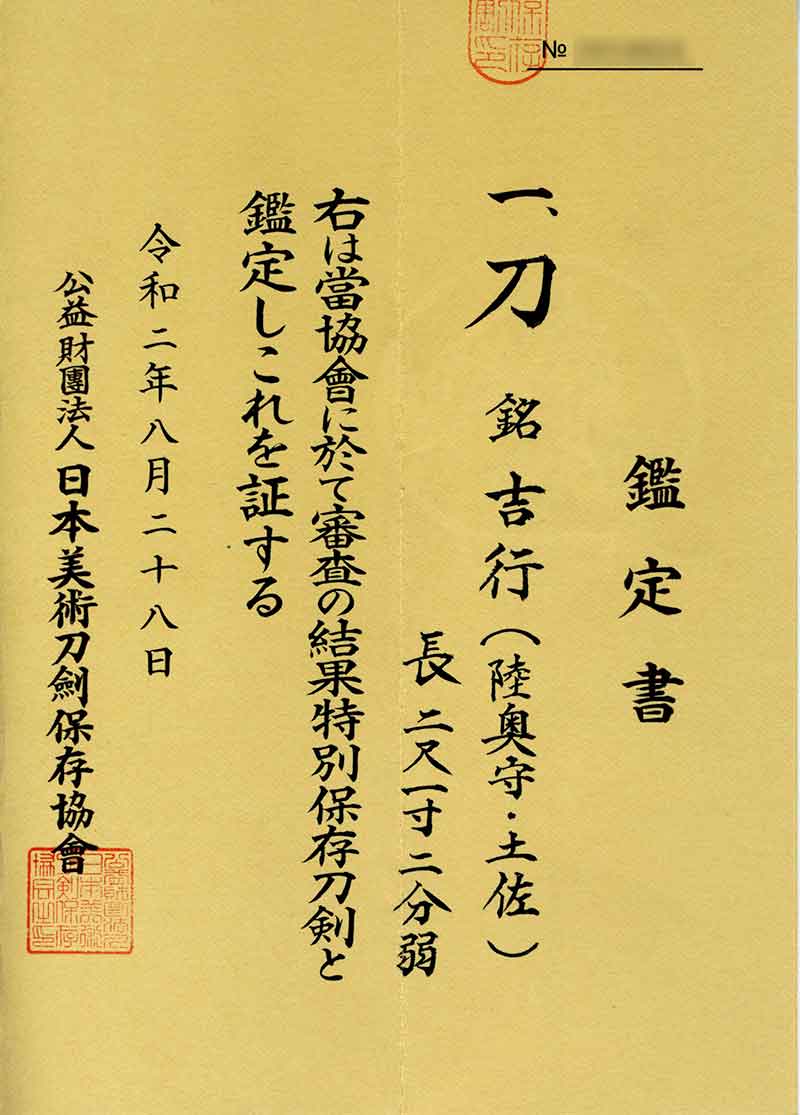
A Hozon-certified blade judged to show notably superior workmanship and a better state of preservation. The bar is higher: re-tempered blades and most unsigned Muromachi/Edo works are excluded.
Signed: 吉行 (Yoshiyuki)
As written on the certificate
About the NBTHK›
The NBTHK (Nihon Bijutsu Tōken Hozon Kyōkai, the Society for the Preservation of Japanese Art Swords) is a public-interest incorporated foundation founded in 1948 and supervised by Japan’s Agency for Cultural Affairs (Bunkachō); it is based at the Japanese Sword Museum in Tokyo. Its expert panels physically examine each submitted work (shinsa) and issue a certificate (kanteishō) ranking it by artistic and historical merit. NBTHK papers are the most widely recognized standard of authentication for Japanese swords and fittings.
Please exercise cooling-off within 8 days of the item's arrival.
(1) We cannot accept items that have been altered or worked on in any way (e.g. test cutting, polishing or other work, display at viewing meetings, photography, taking oshigata rubbings, use for appreciation, copying of books).
(2) Return shipping is at the customer's expense.
(3) Costs other than the item price (bank transfer fees, cash-on-delivery fees, installment fees, etc.) cannot be refunded.
(4) For cash-on-delivery and similar payments, the refund is made after the payment has reached us.
(5) We cannot accept a return when a trade-in item is involved.
(6) Items delivered overseas cannot be returned or refunded (because of the time involved and, for swords, the surrender of the registration certificate and other circumstances).




 NihontoWatch