The twentieth century nearly killed the craft twice: wartime distortion, then the occupation ban. The NBTHK’s founding in 1948 and licensed forging from 1953 rebuilt the sword as an art, crowned by Living National Treasures and the mukansa rank.
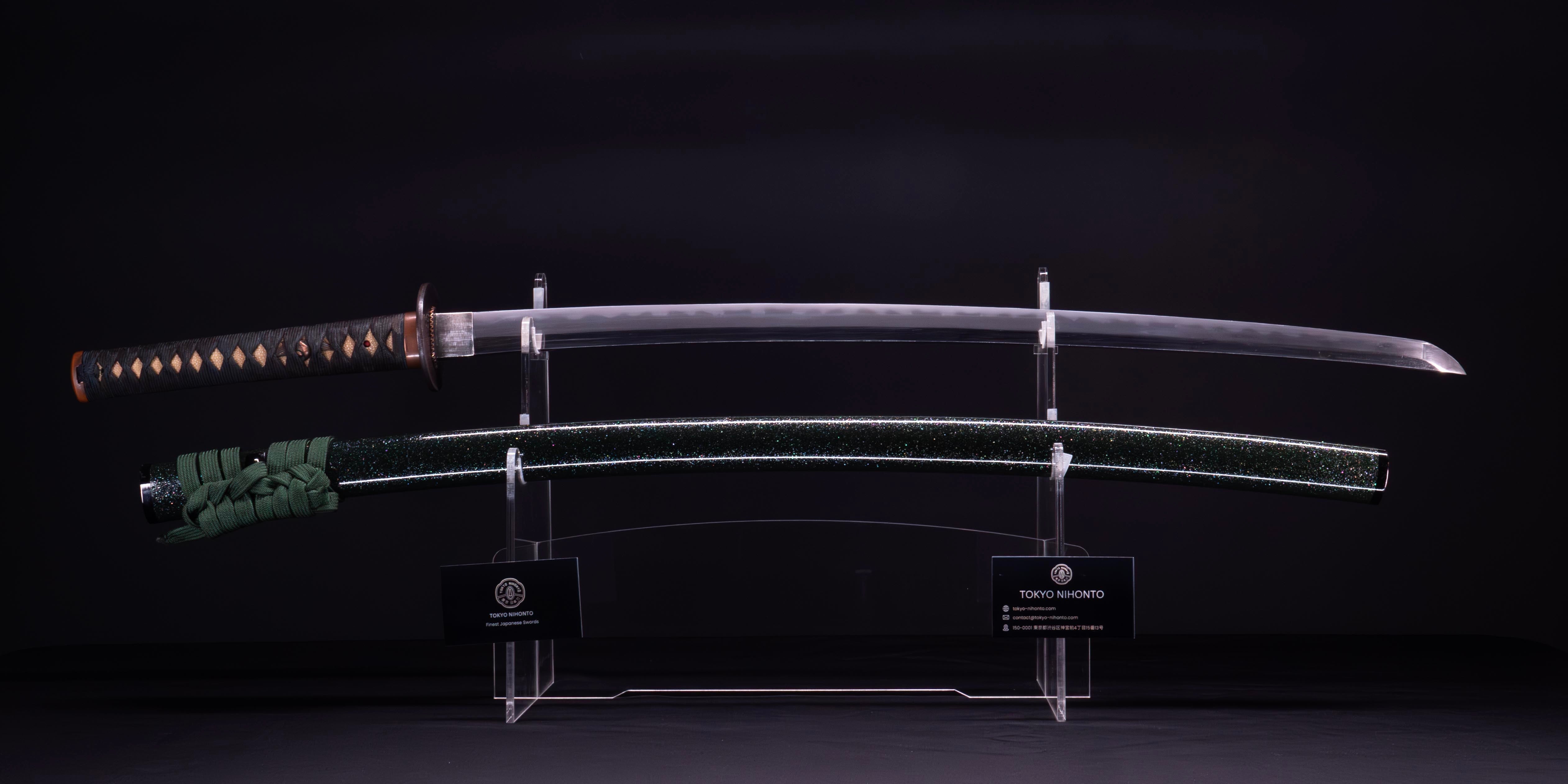
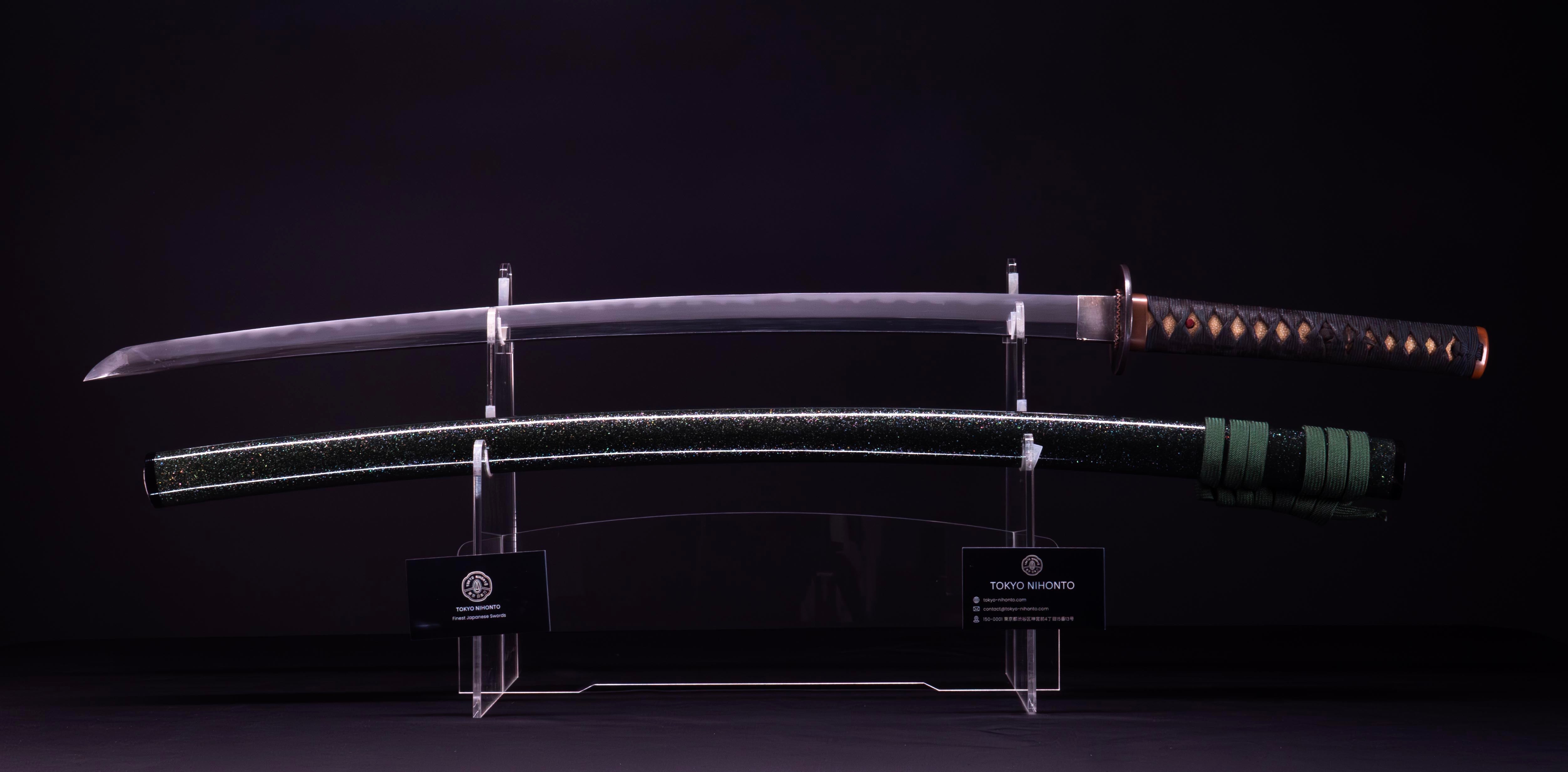
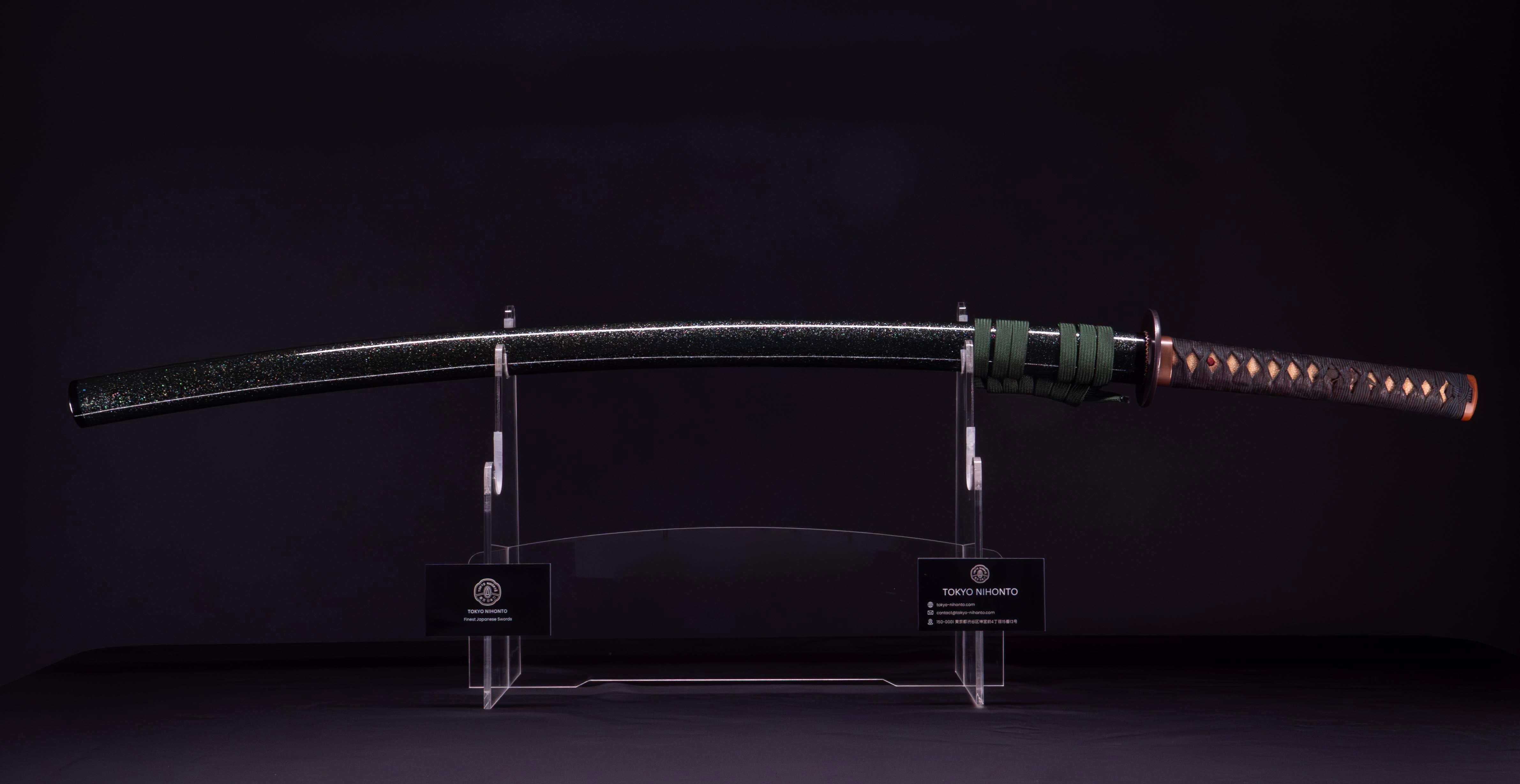
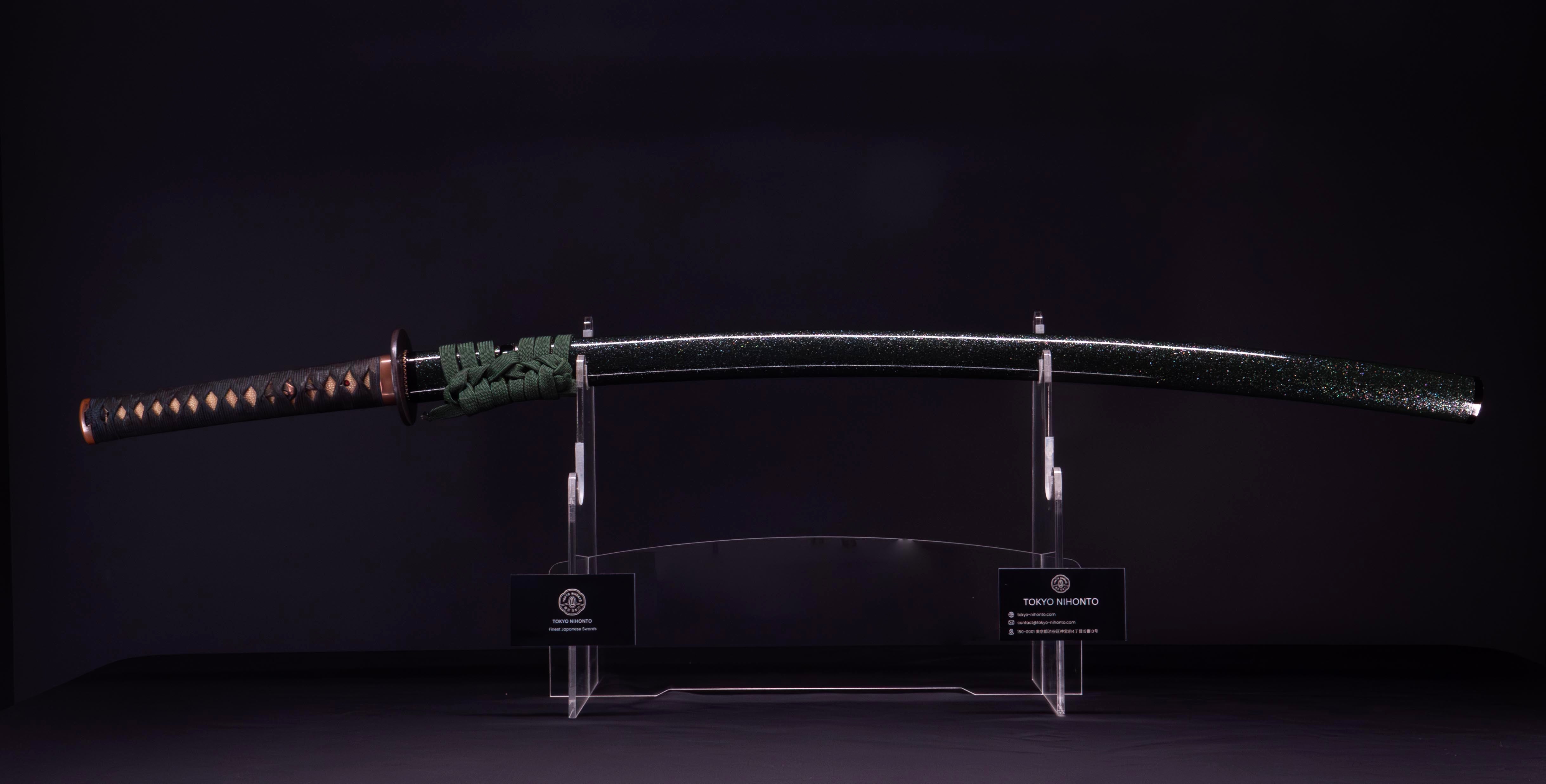
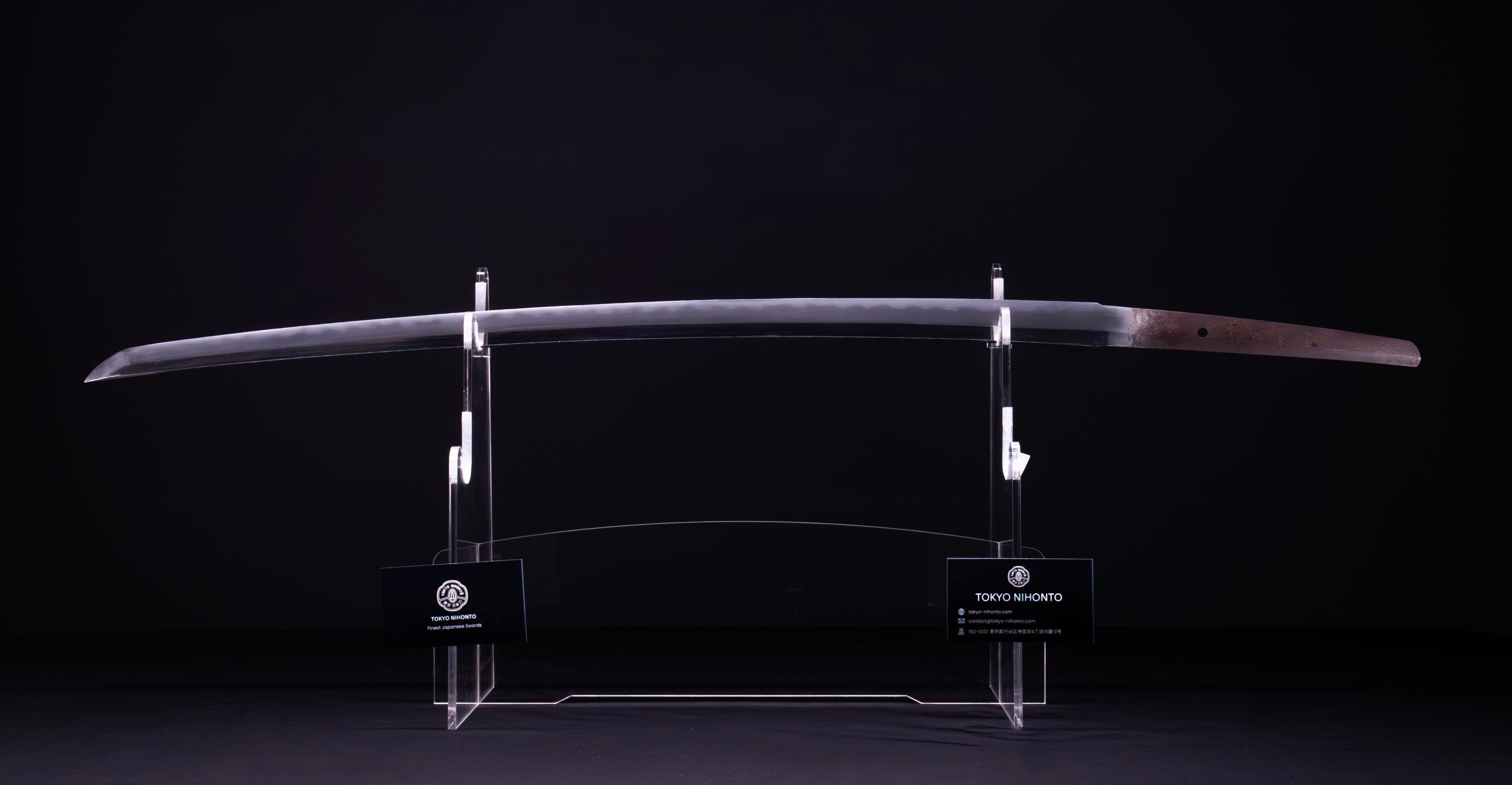
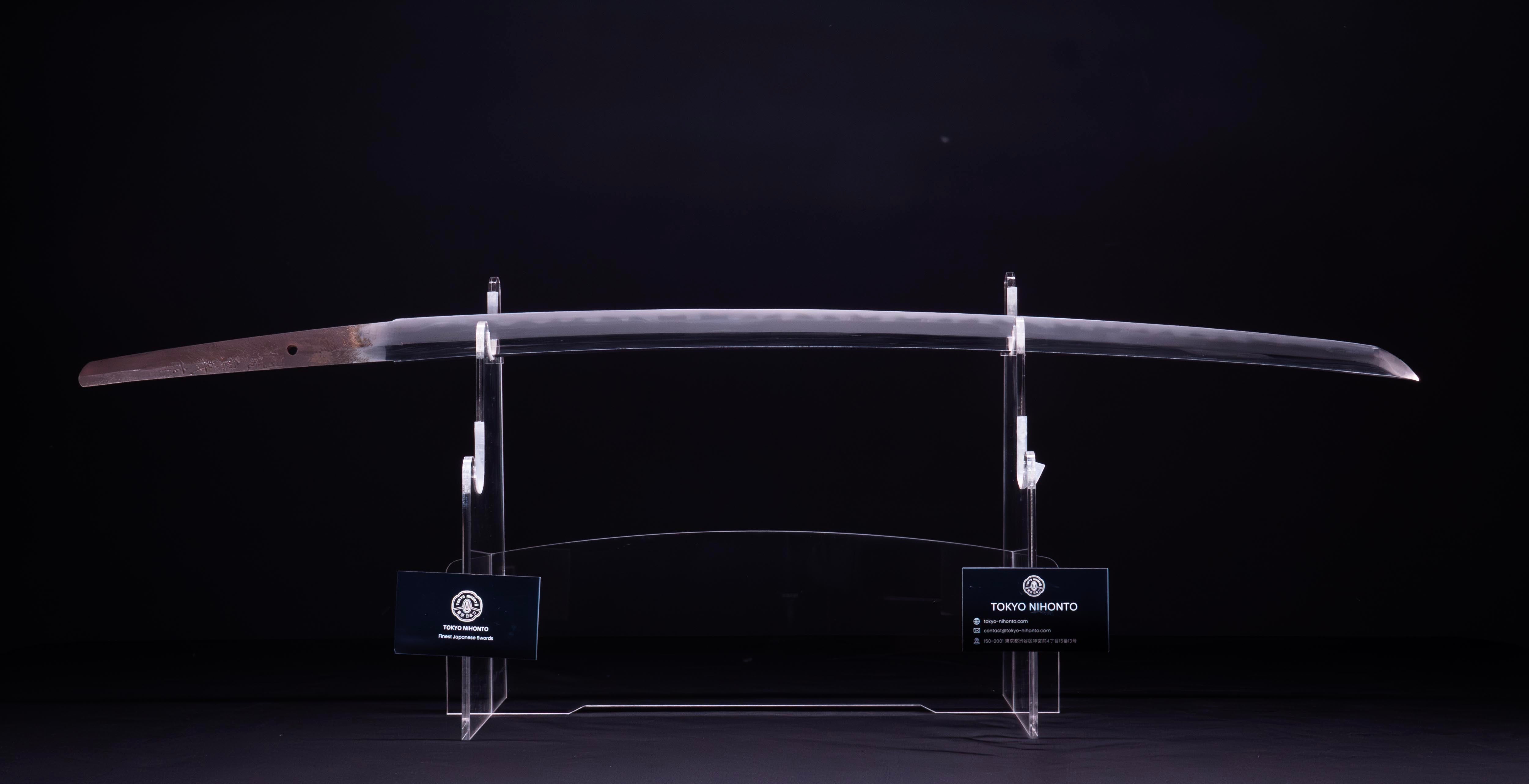
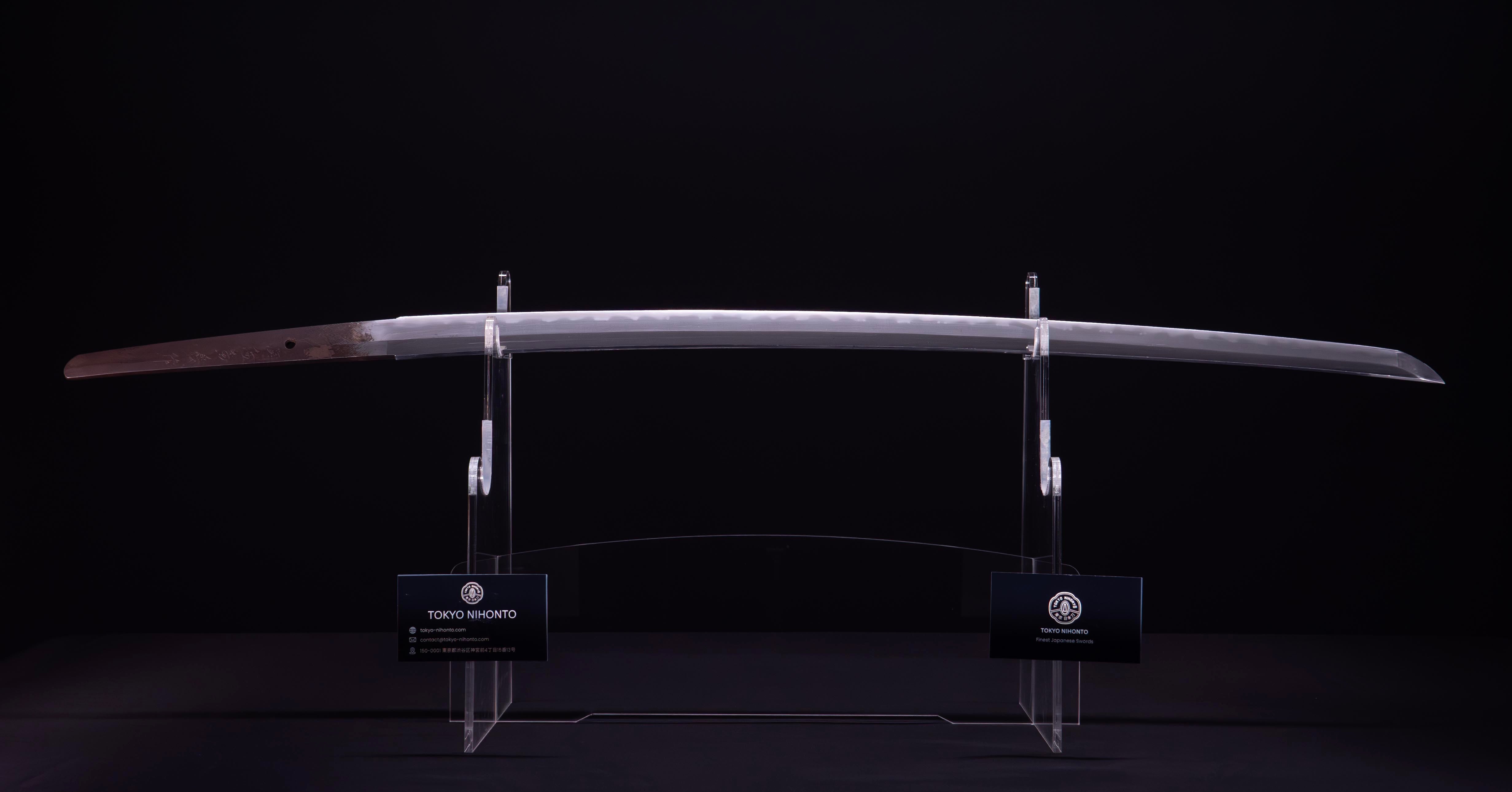
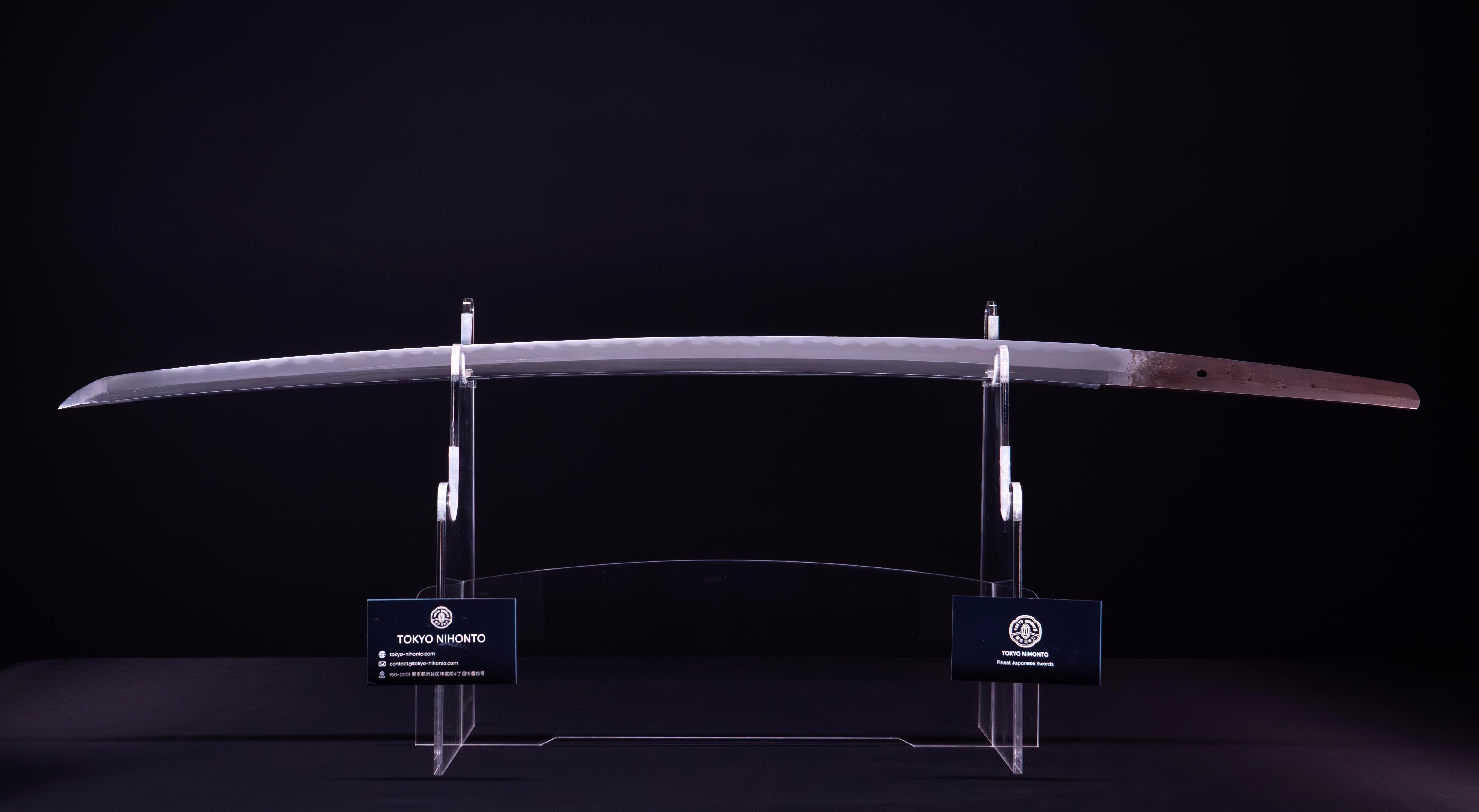
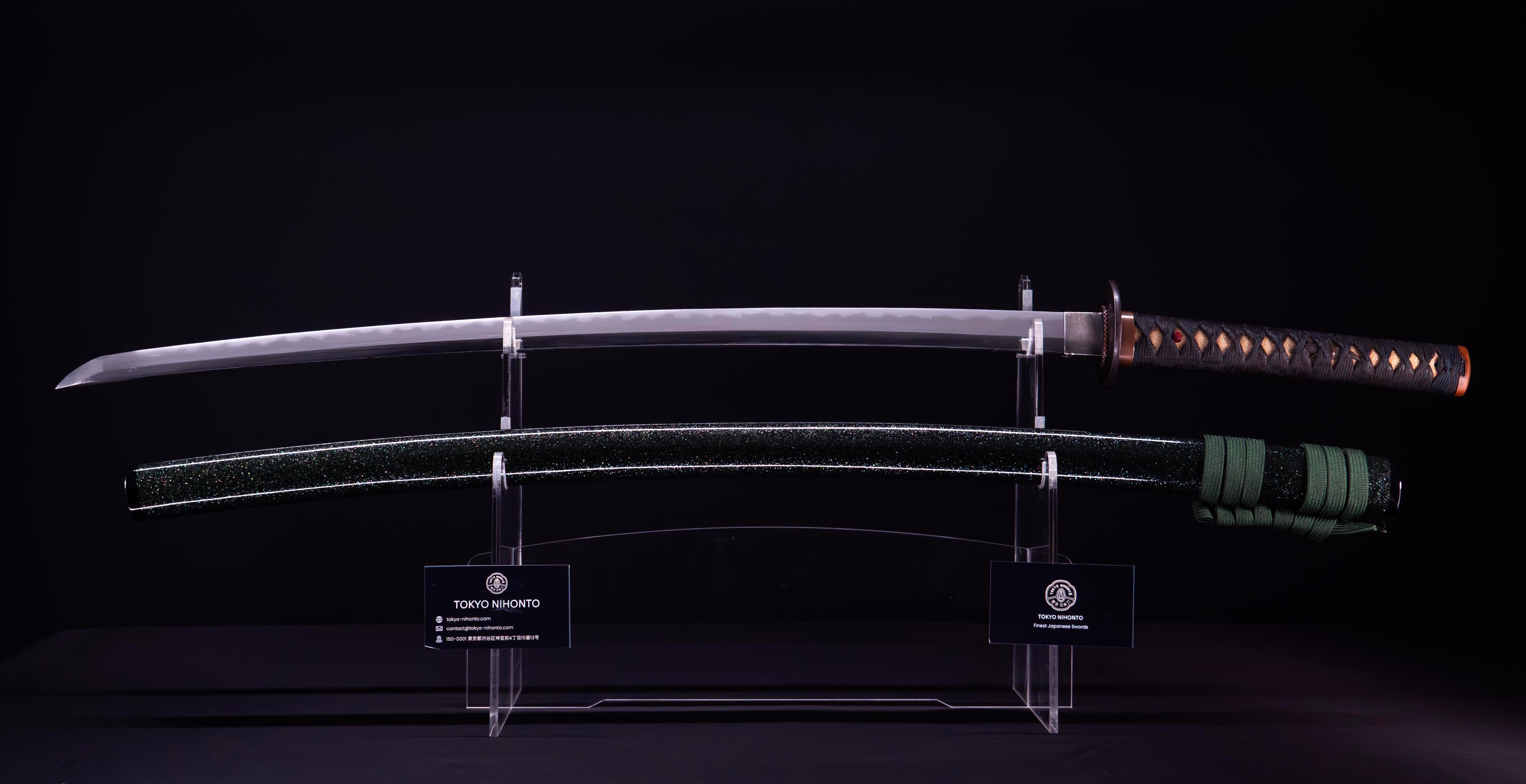
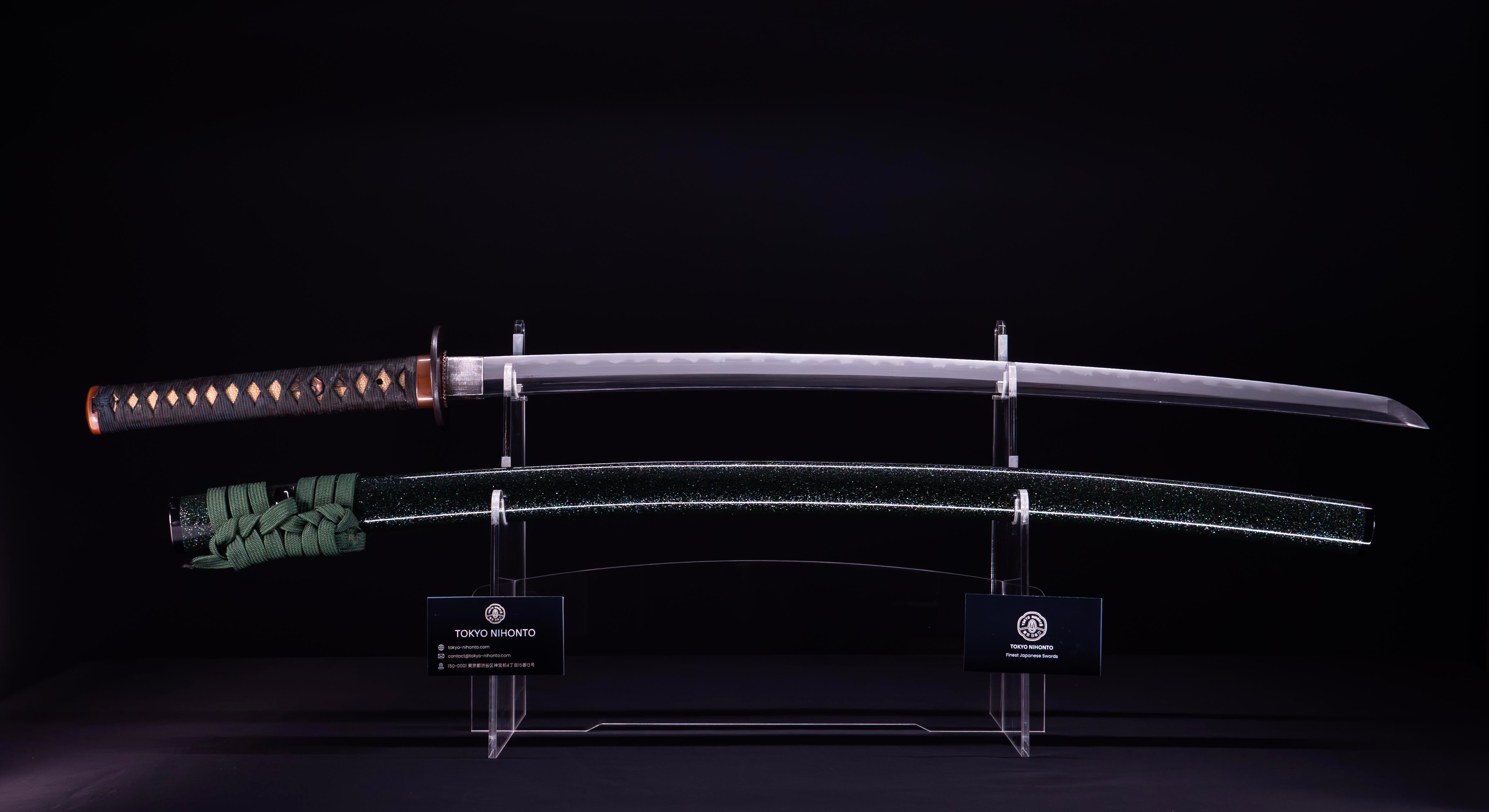
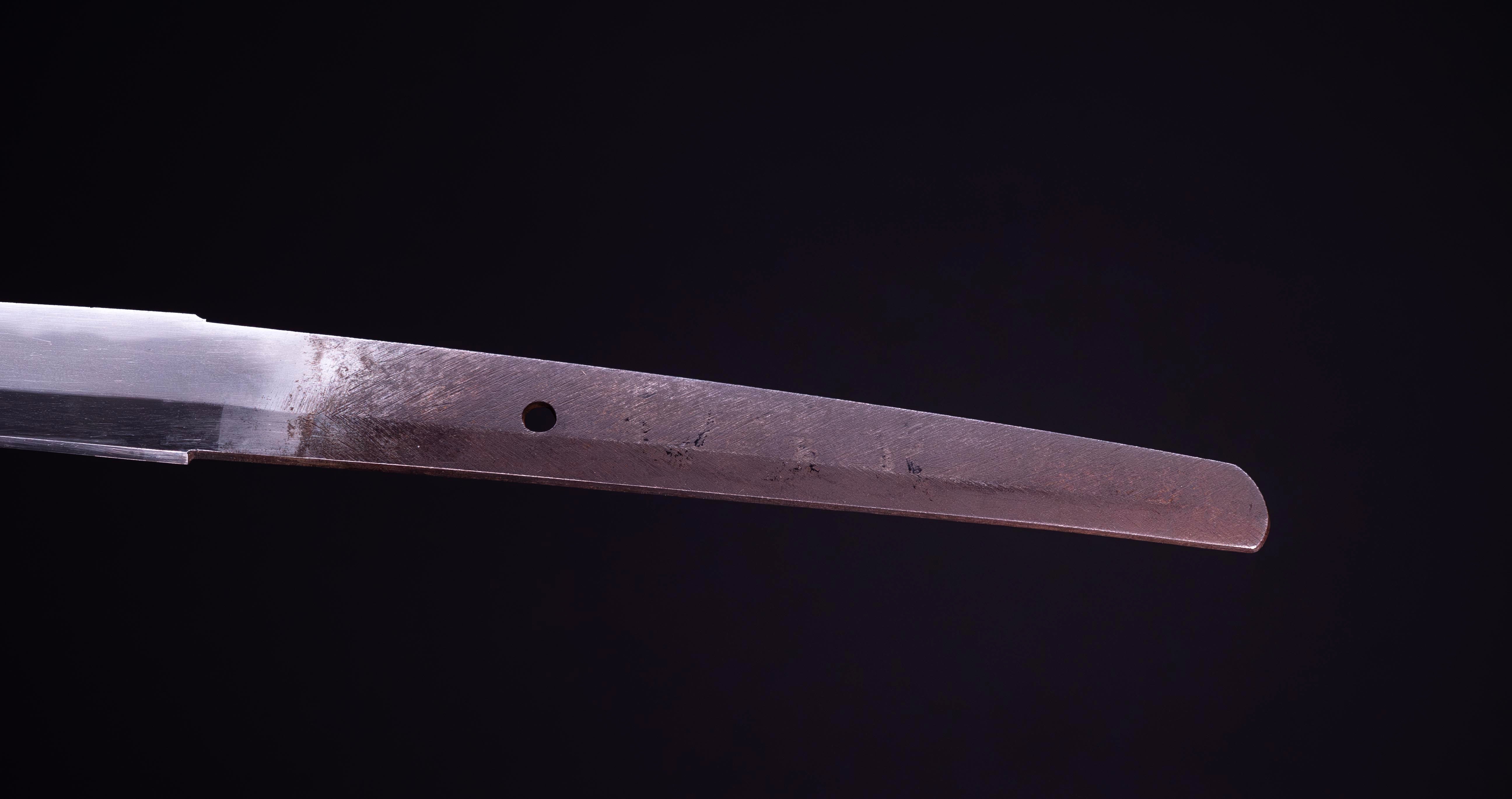
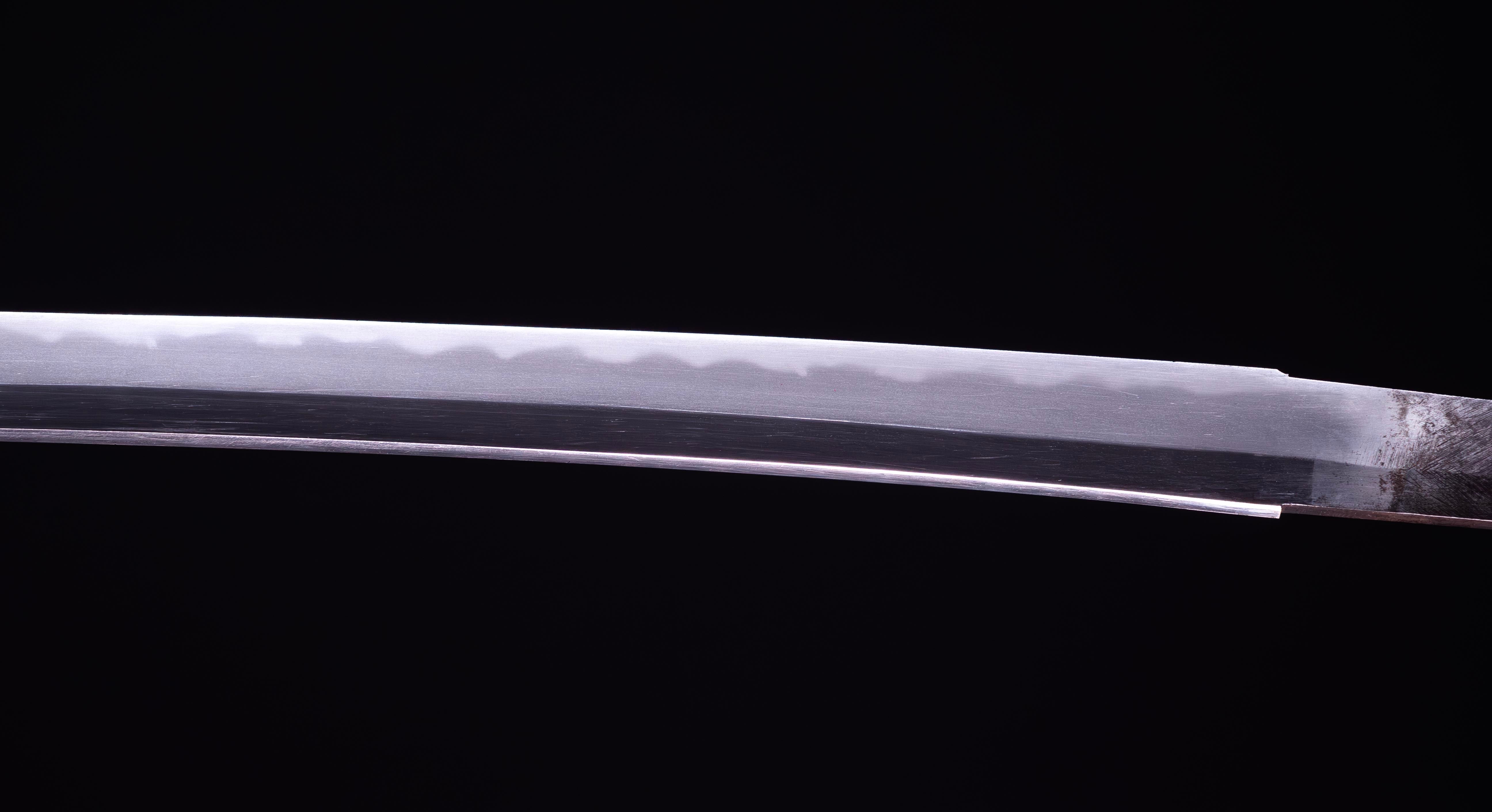
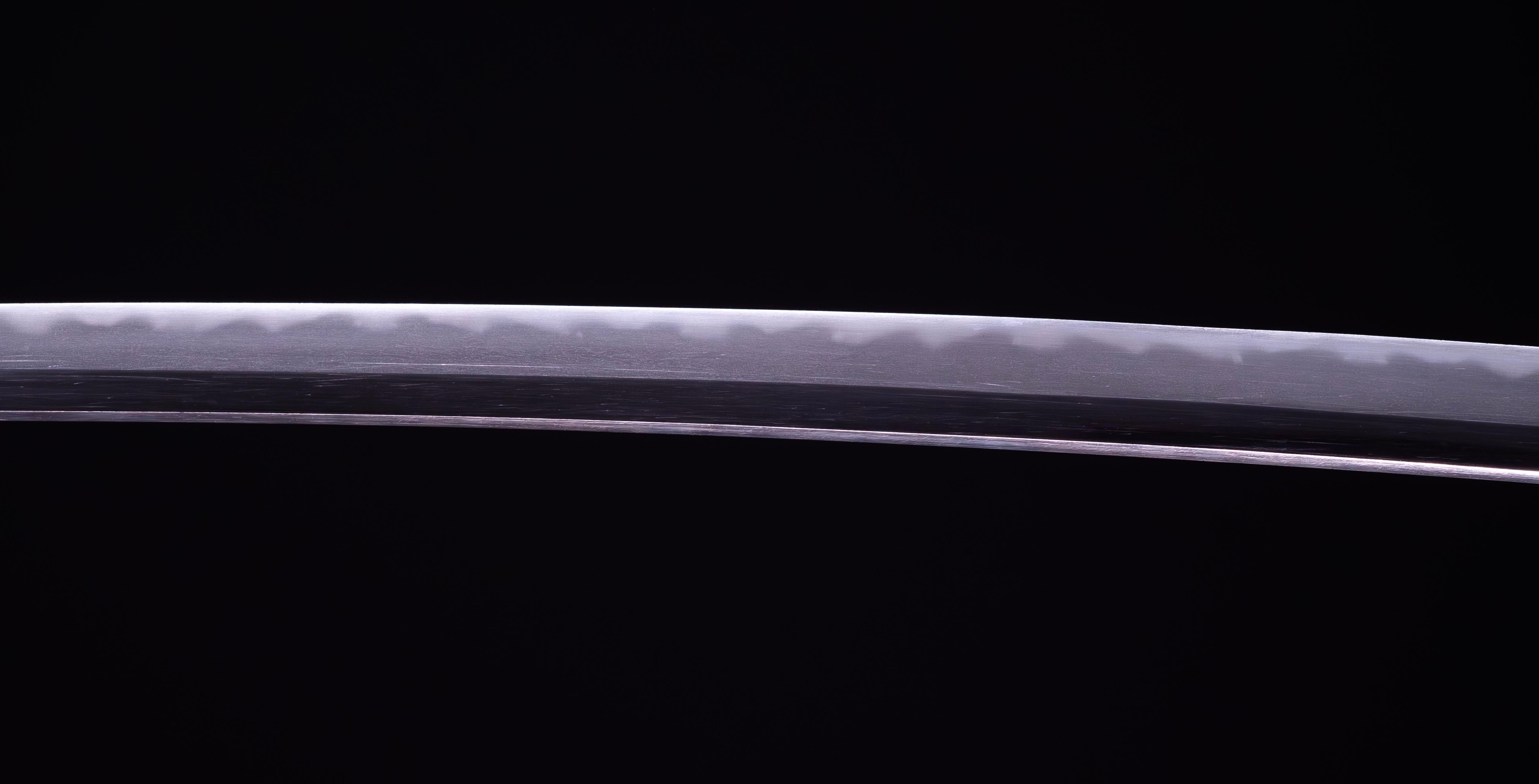
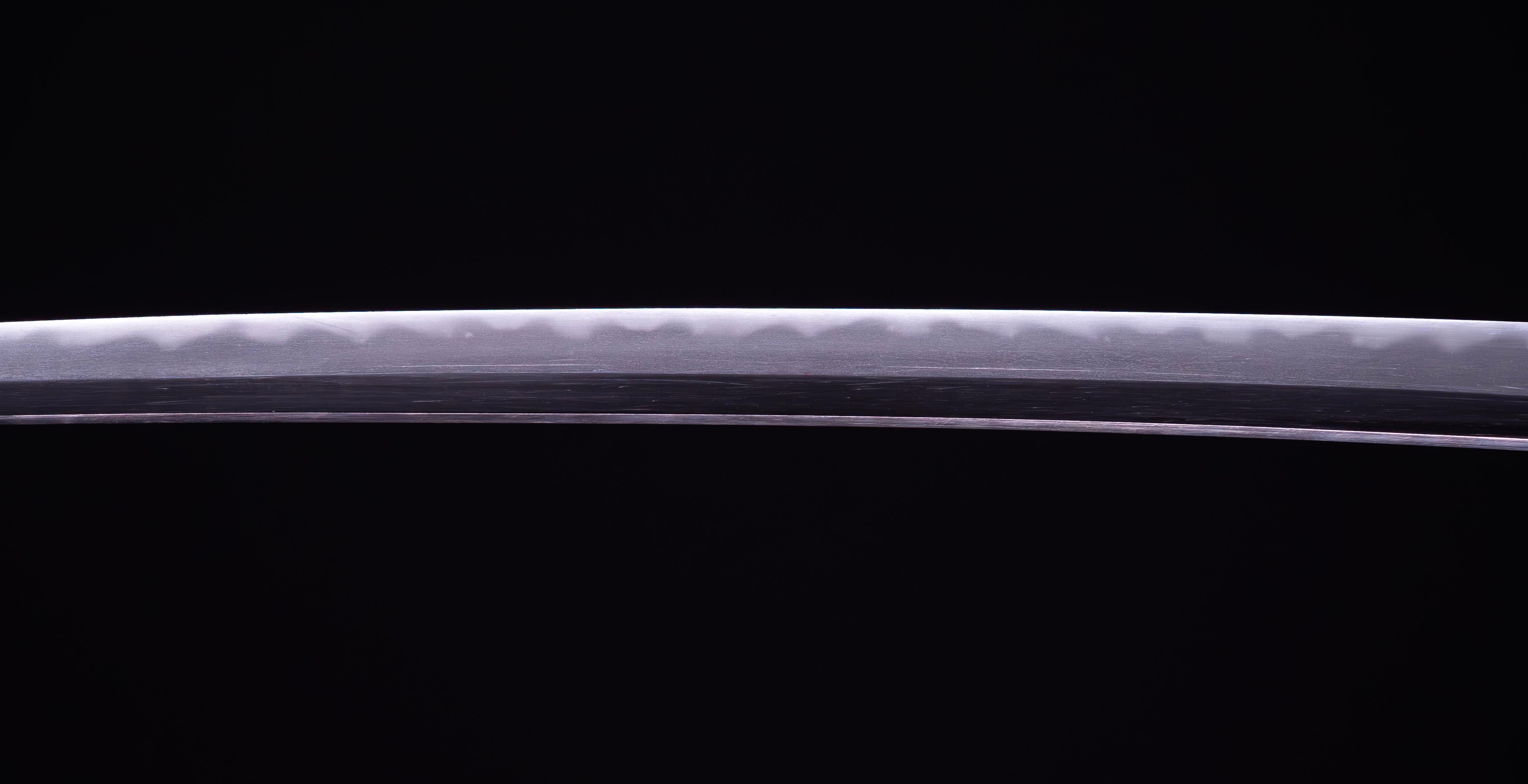
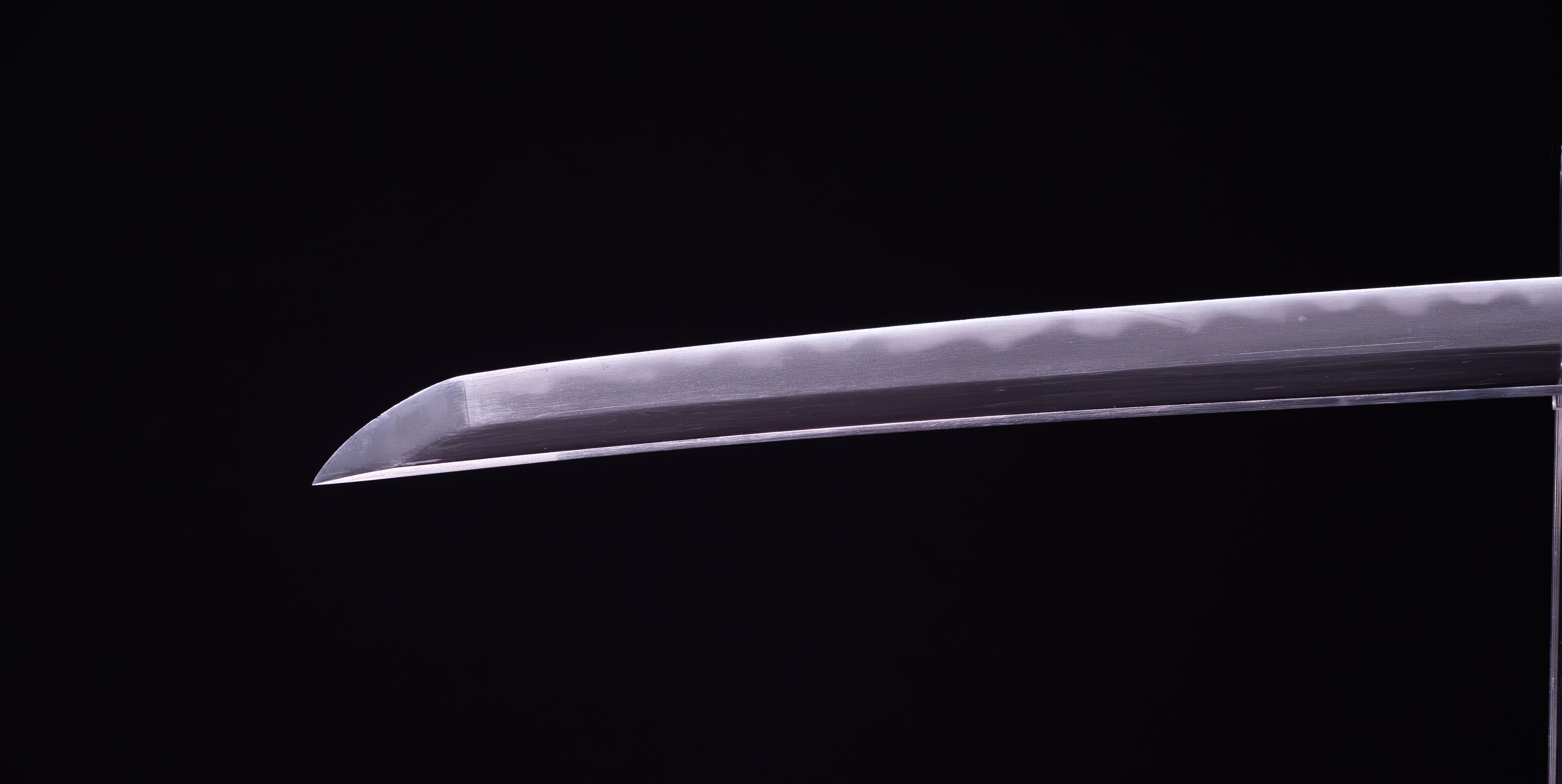
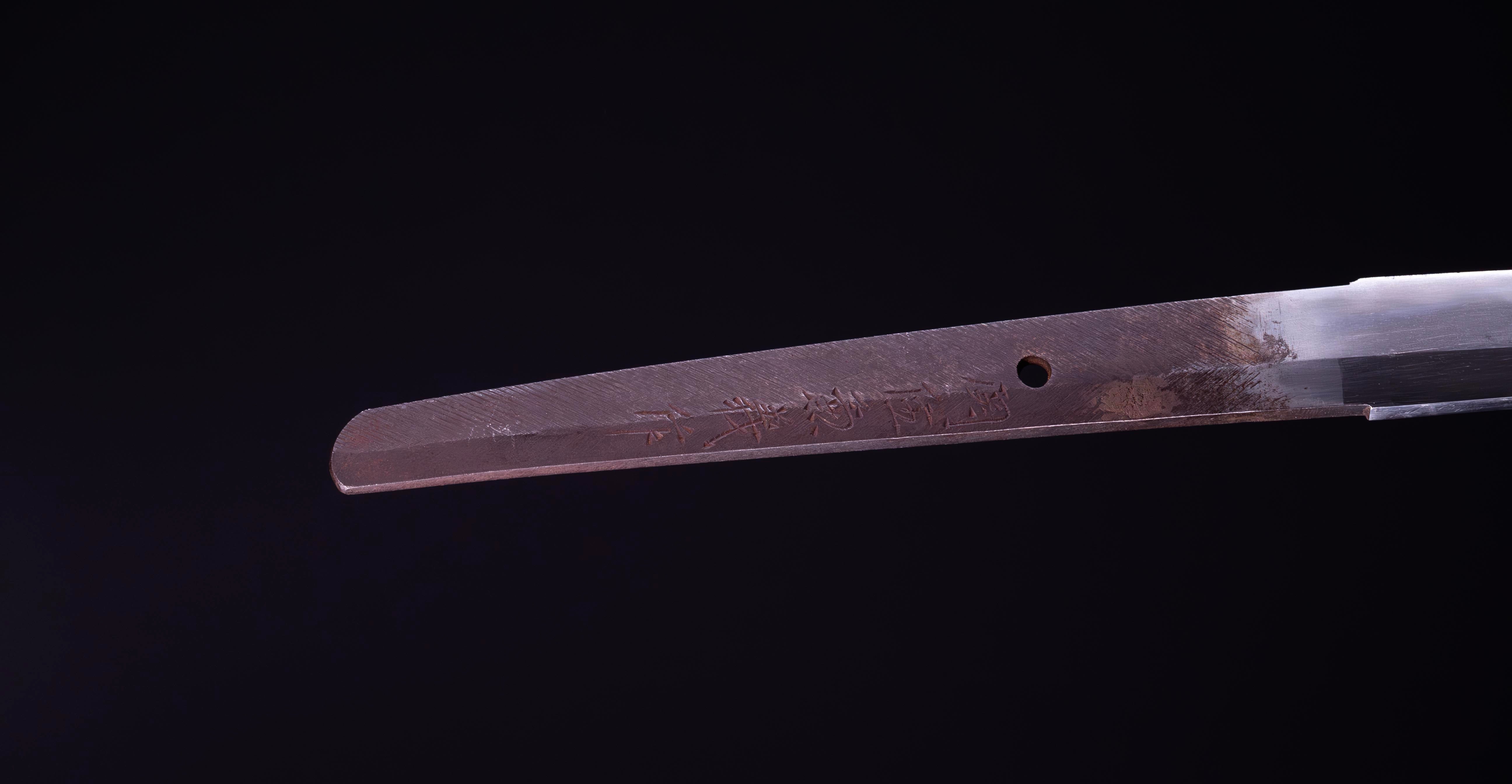
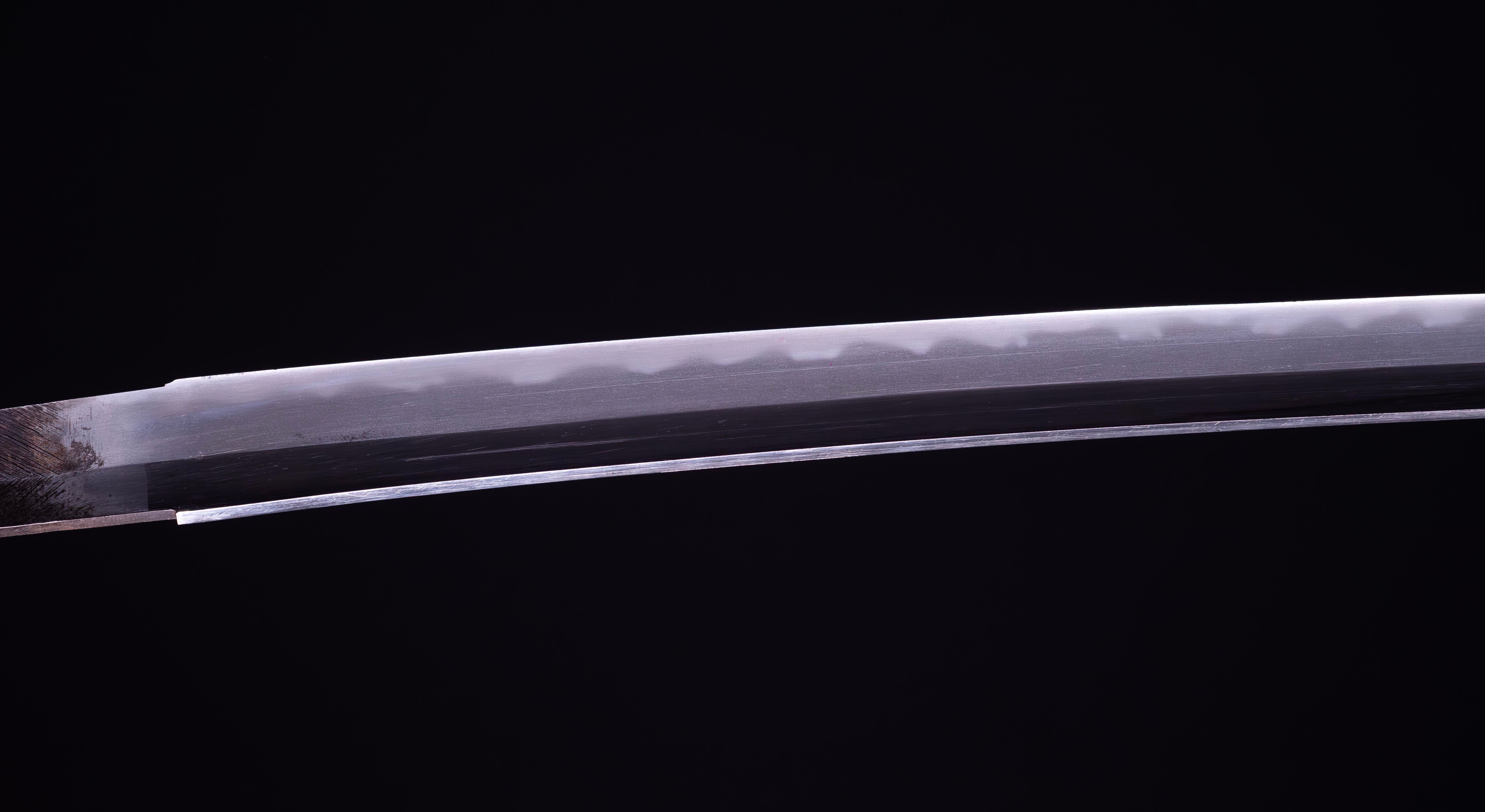
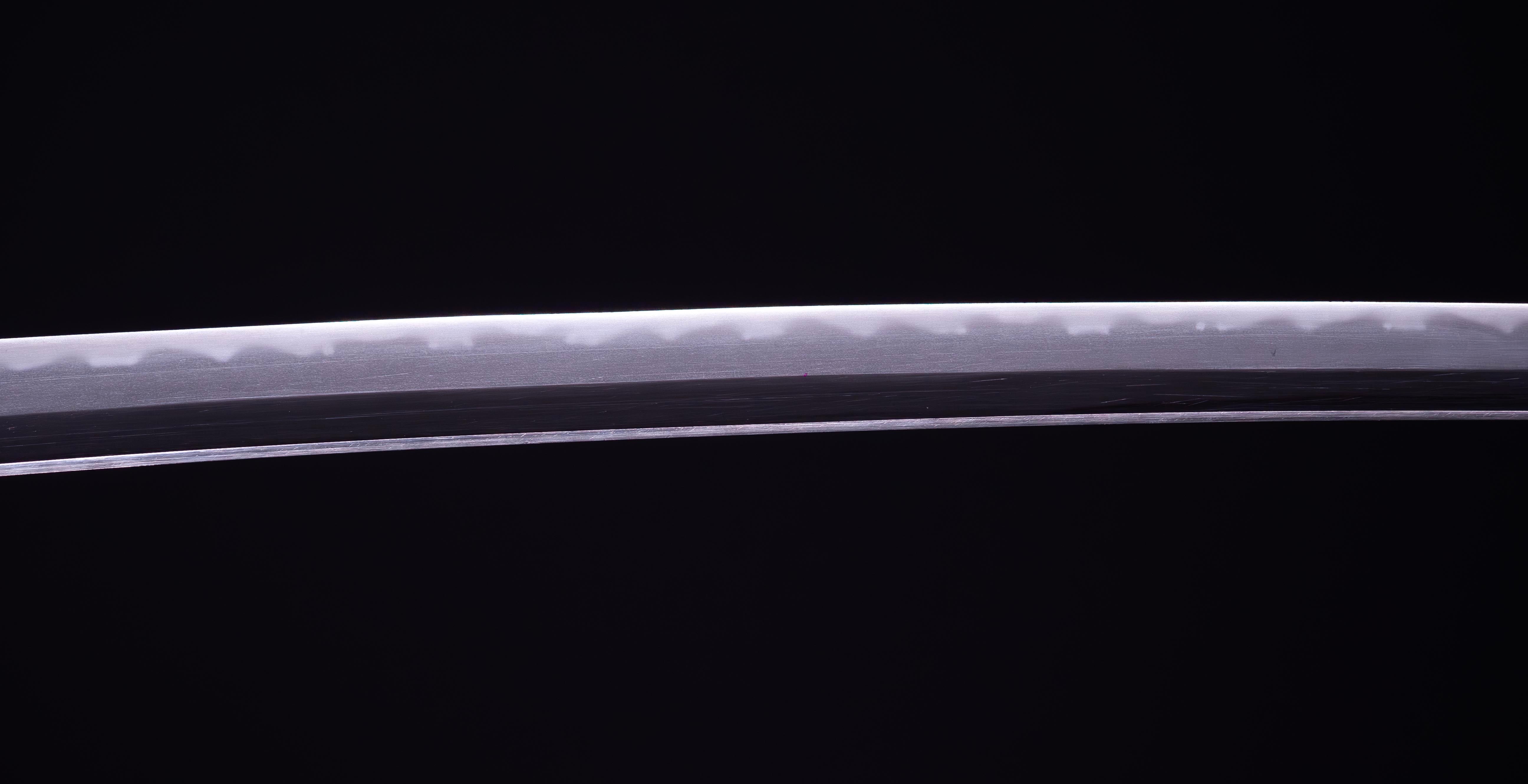
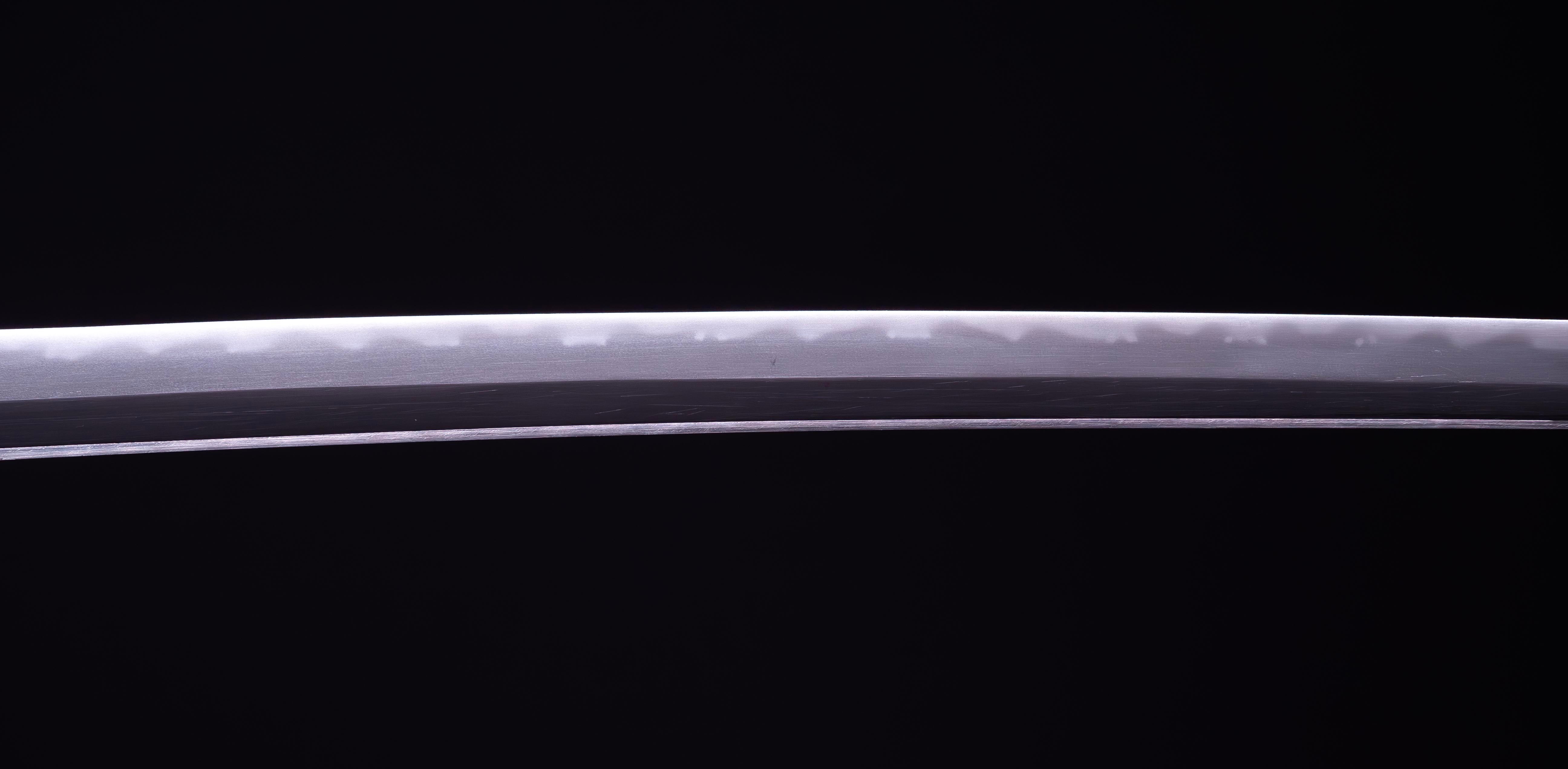
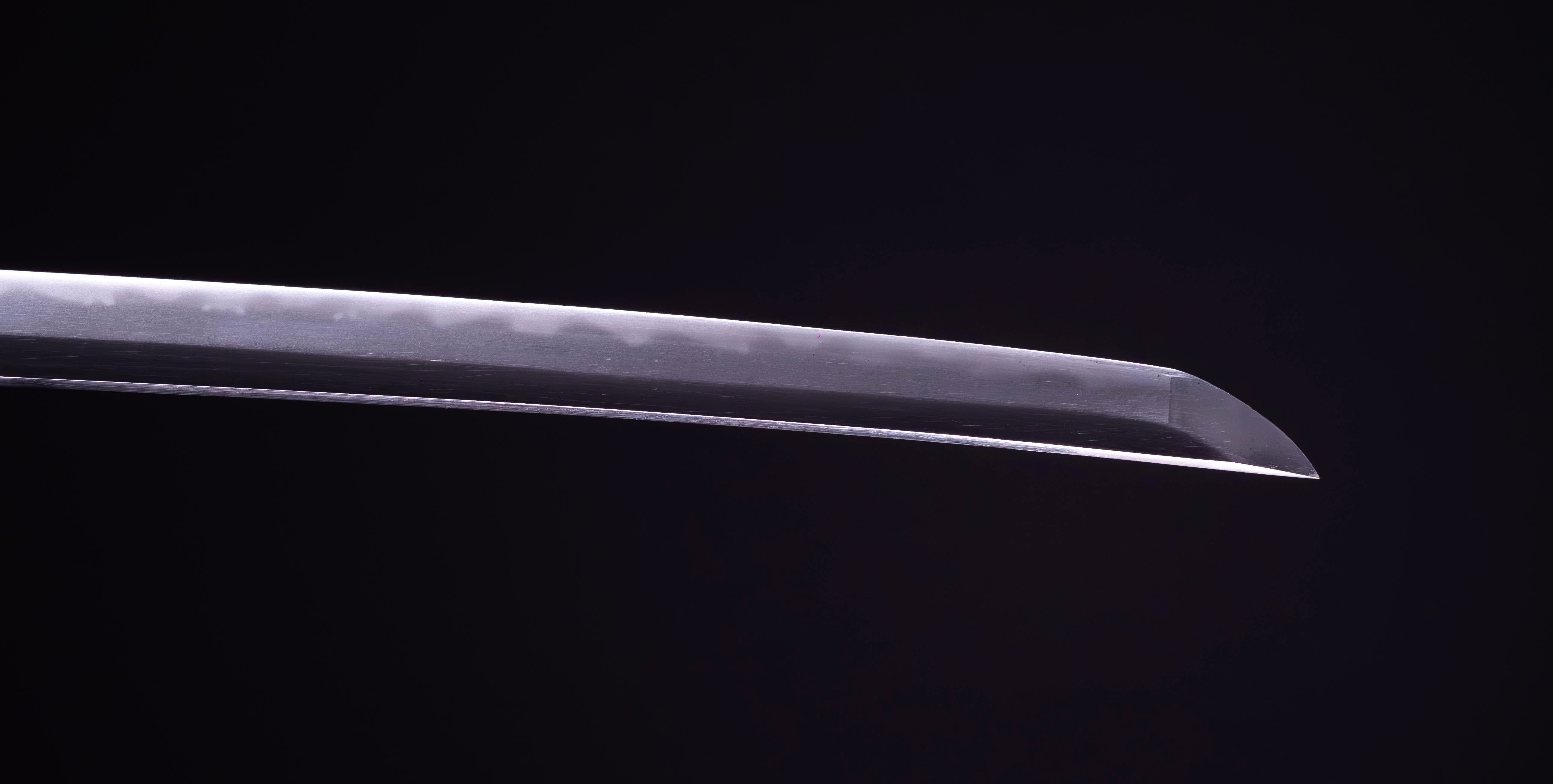
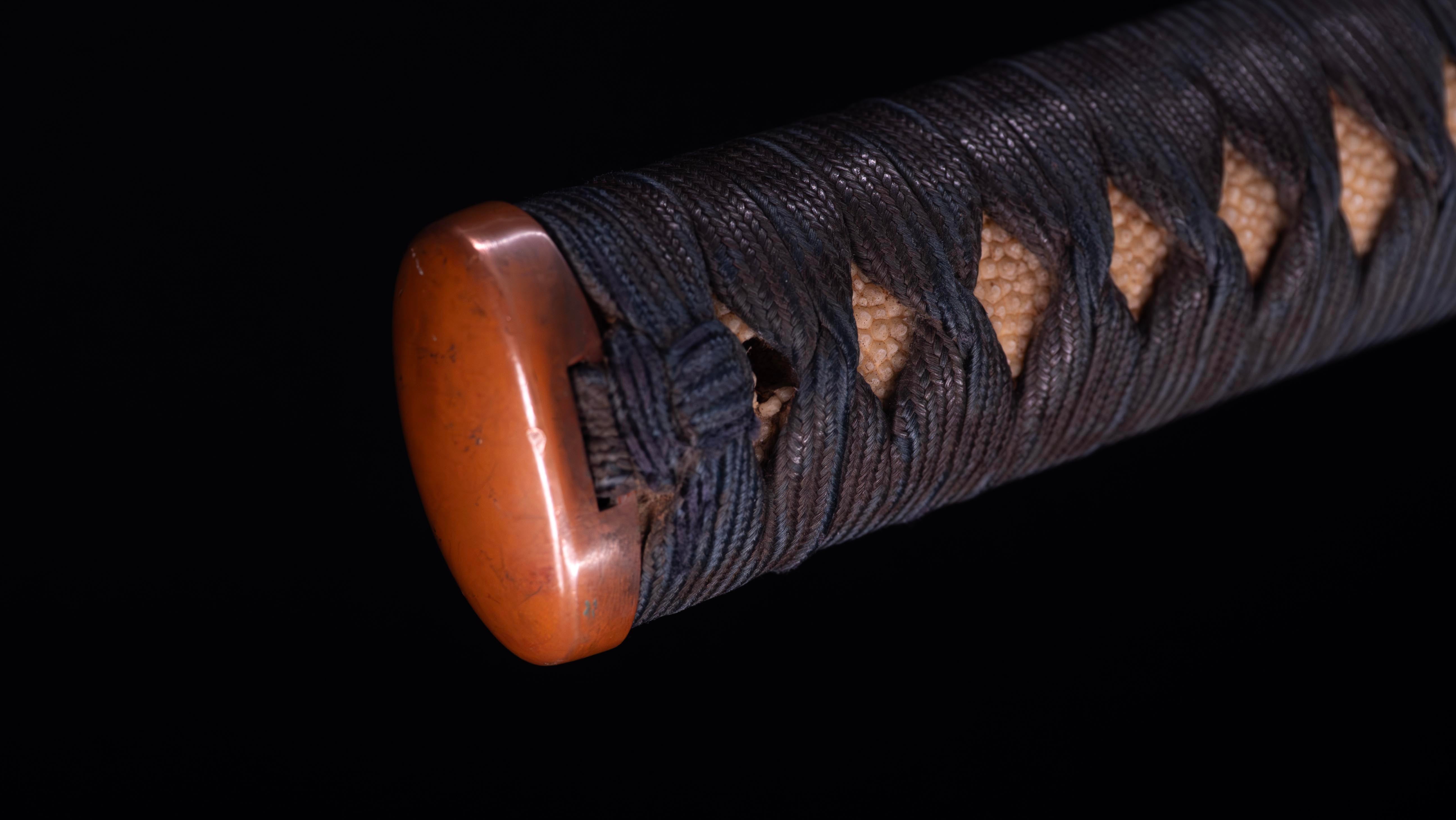
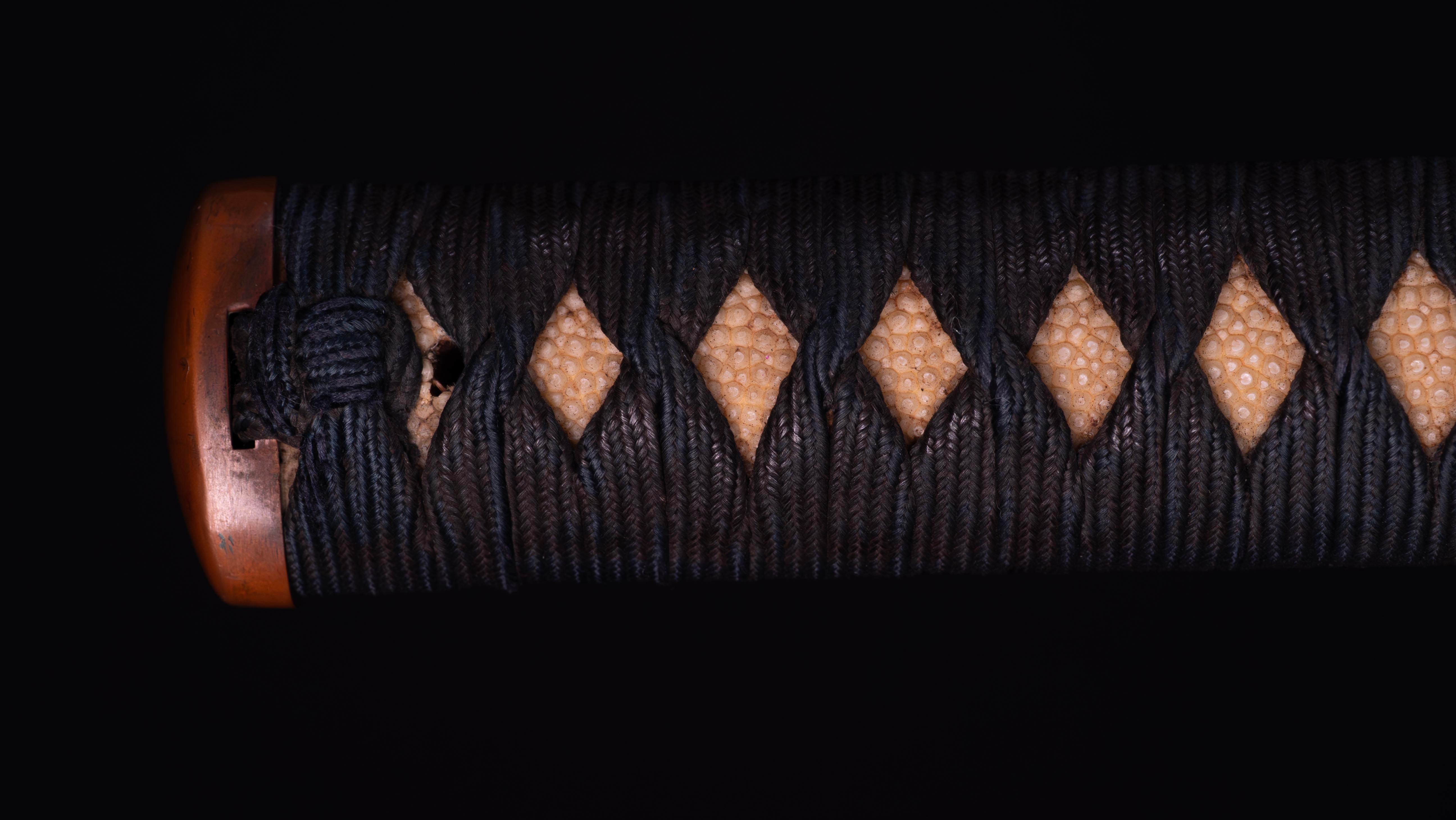
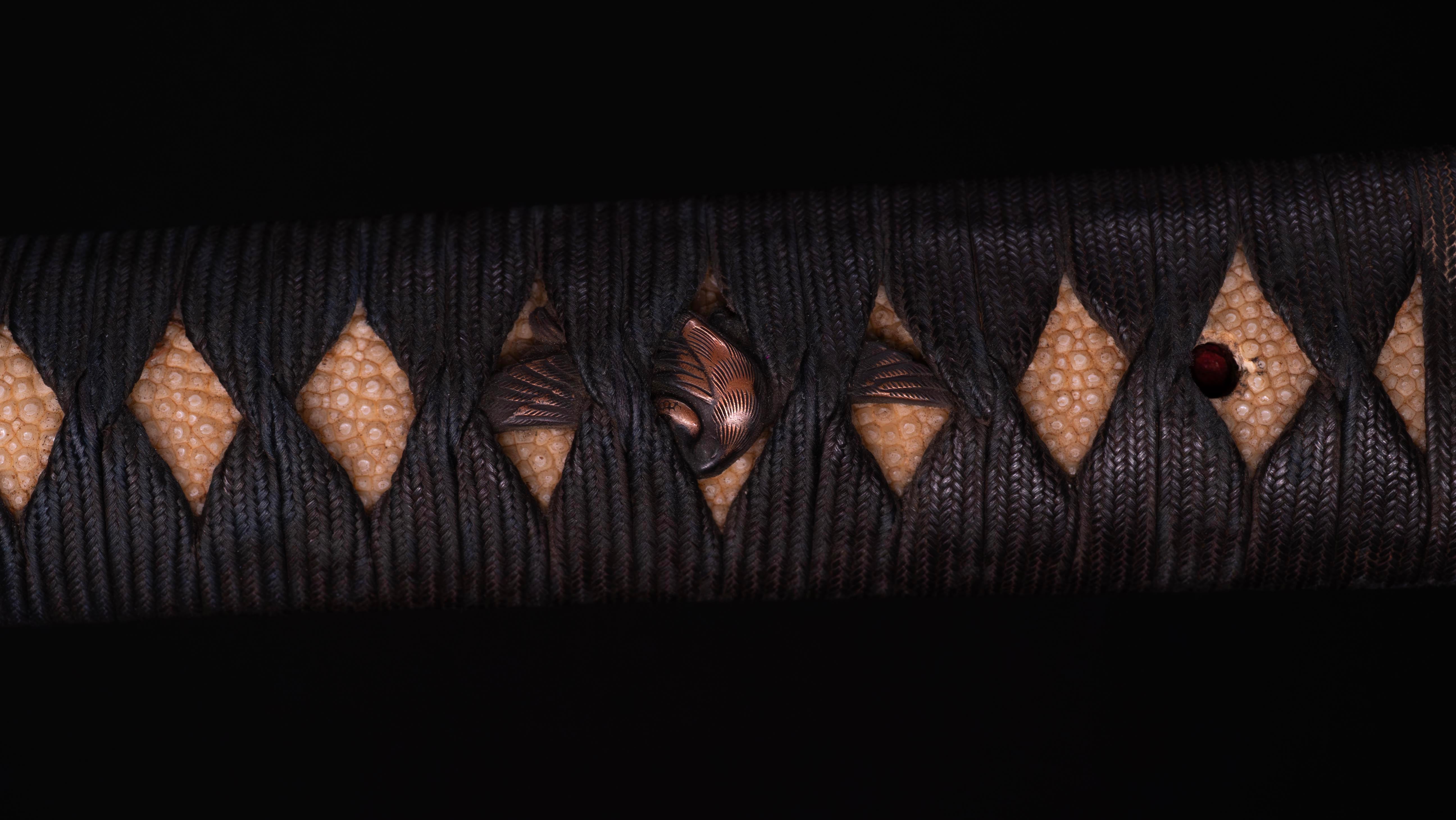
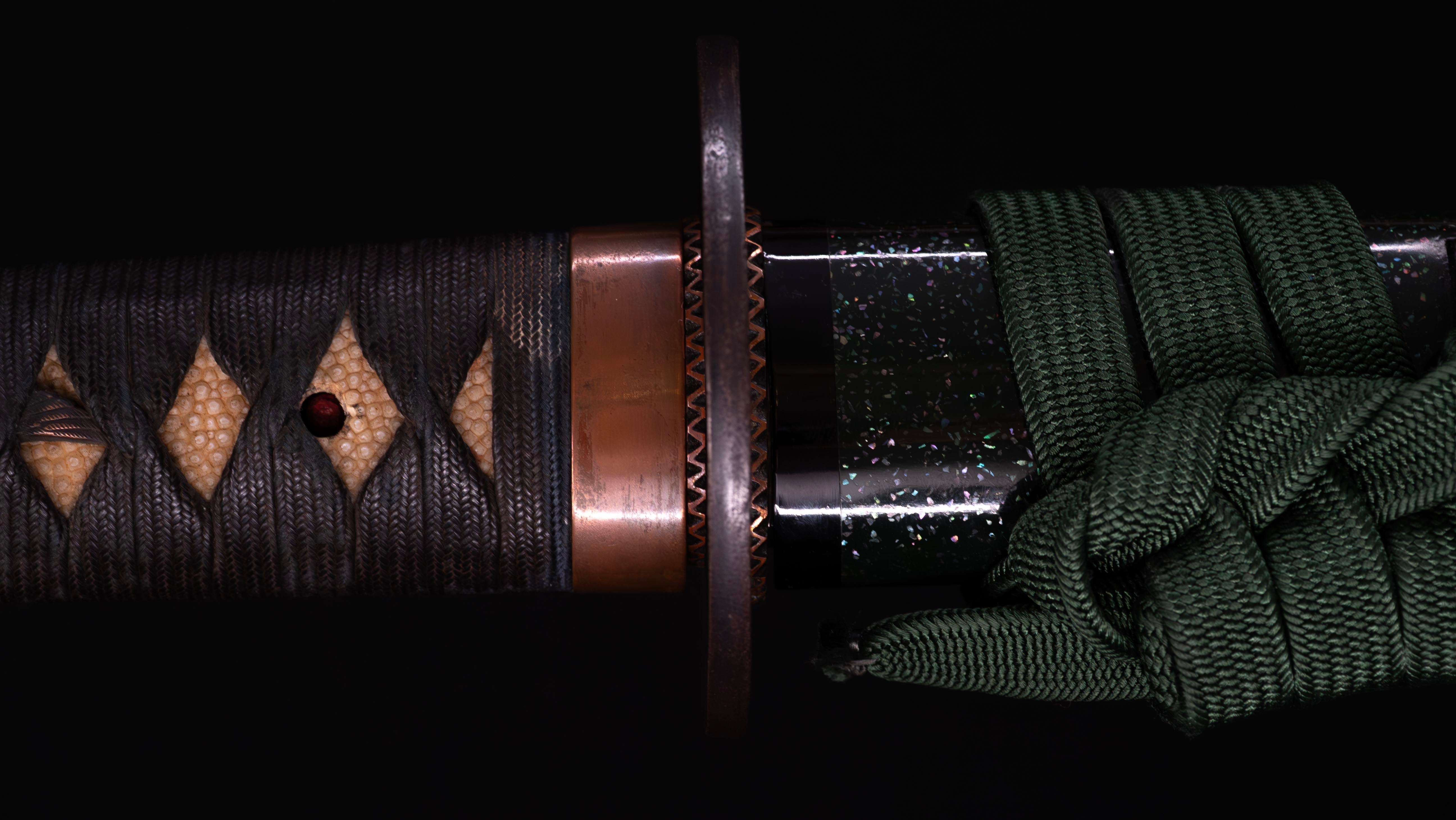
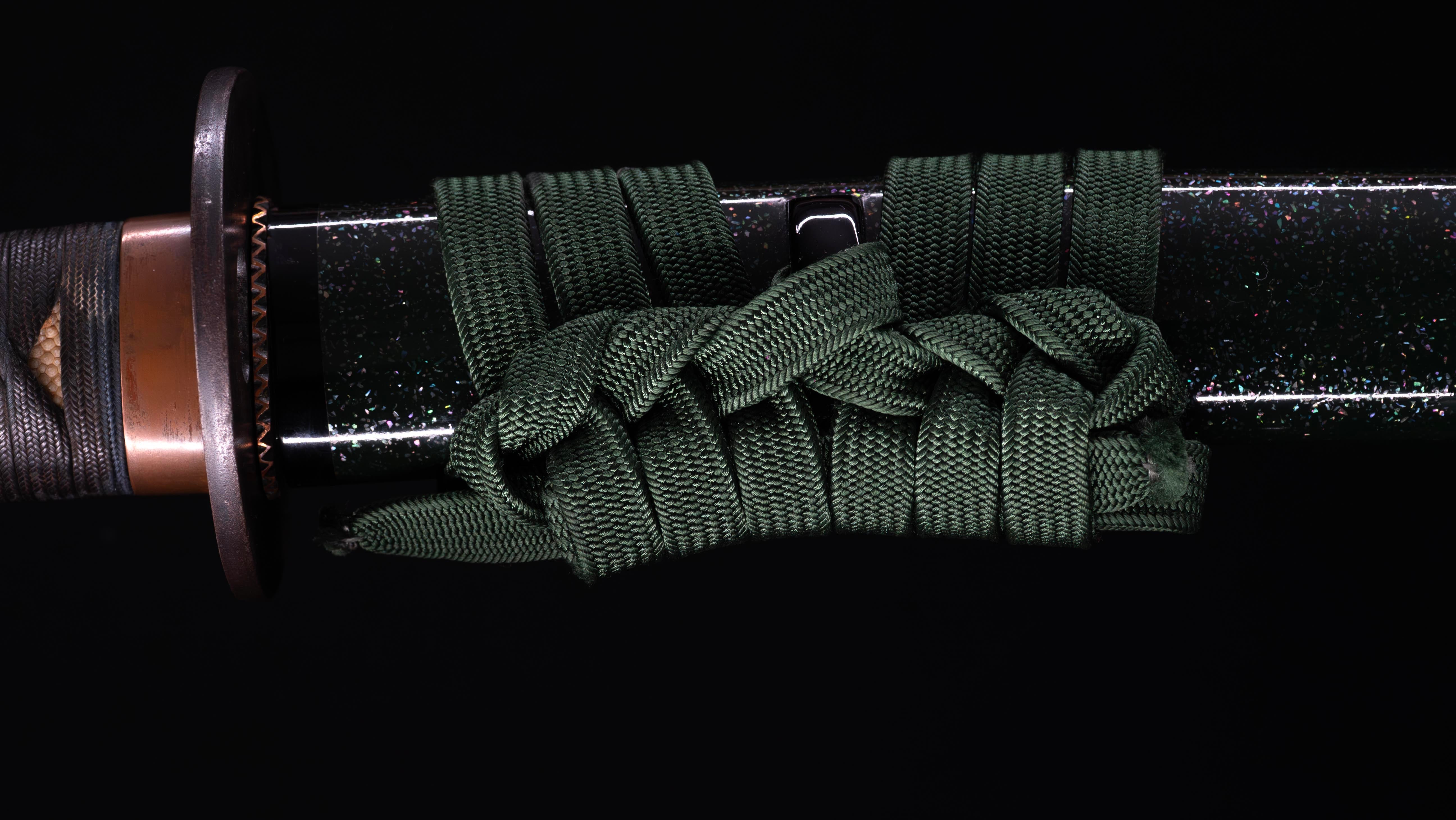
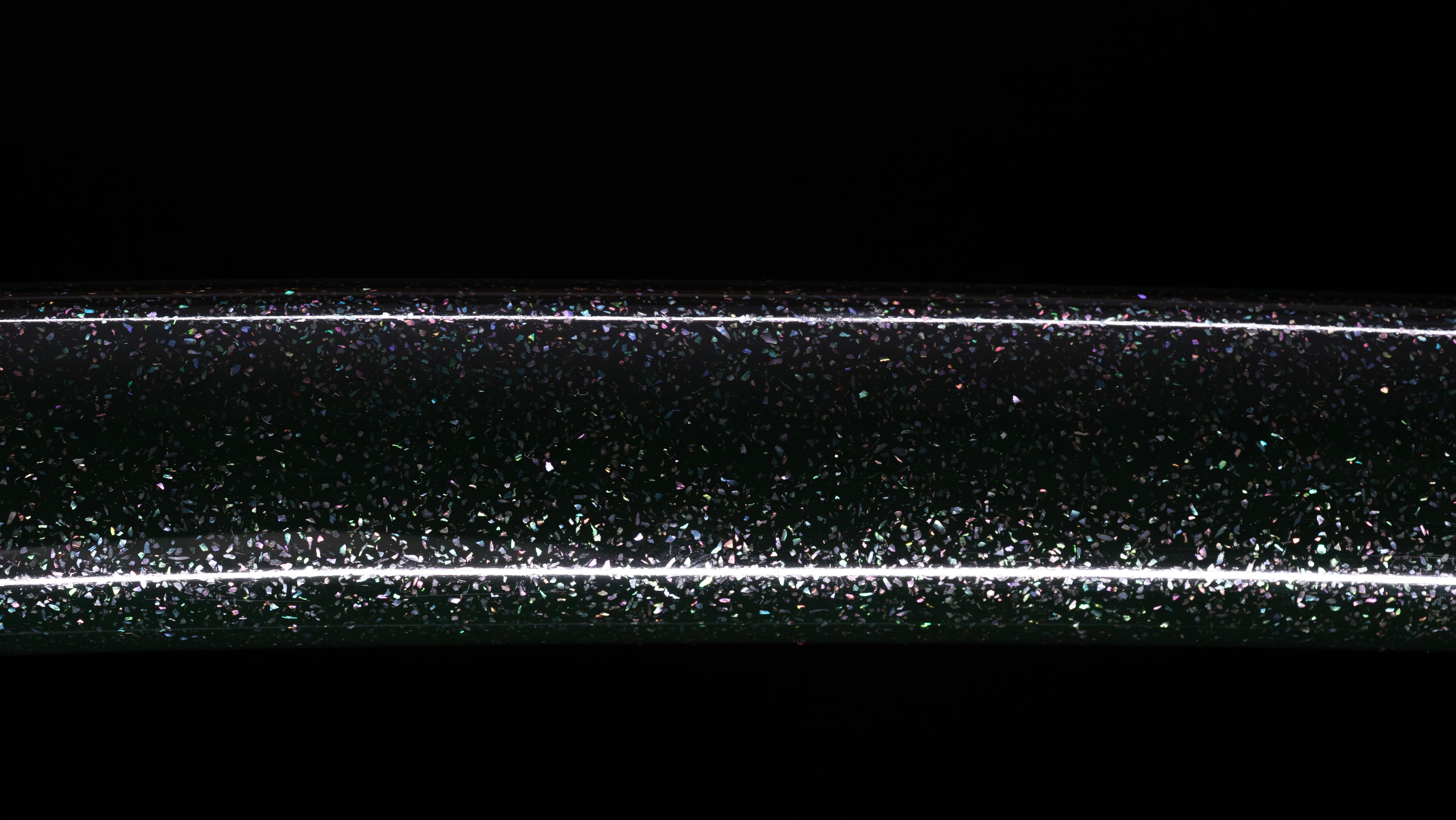
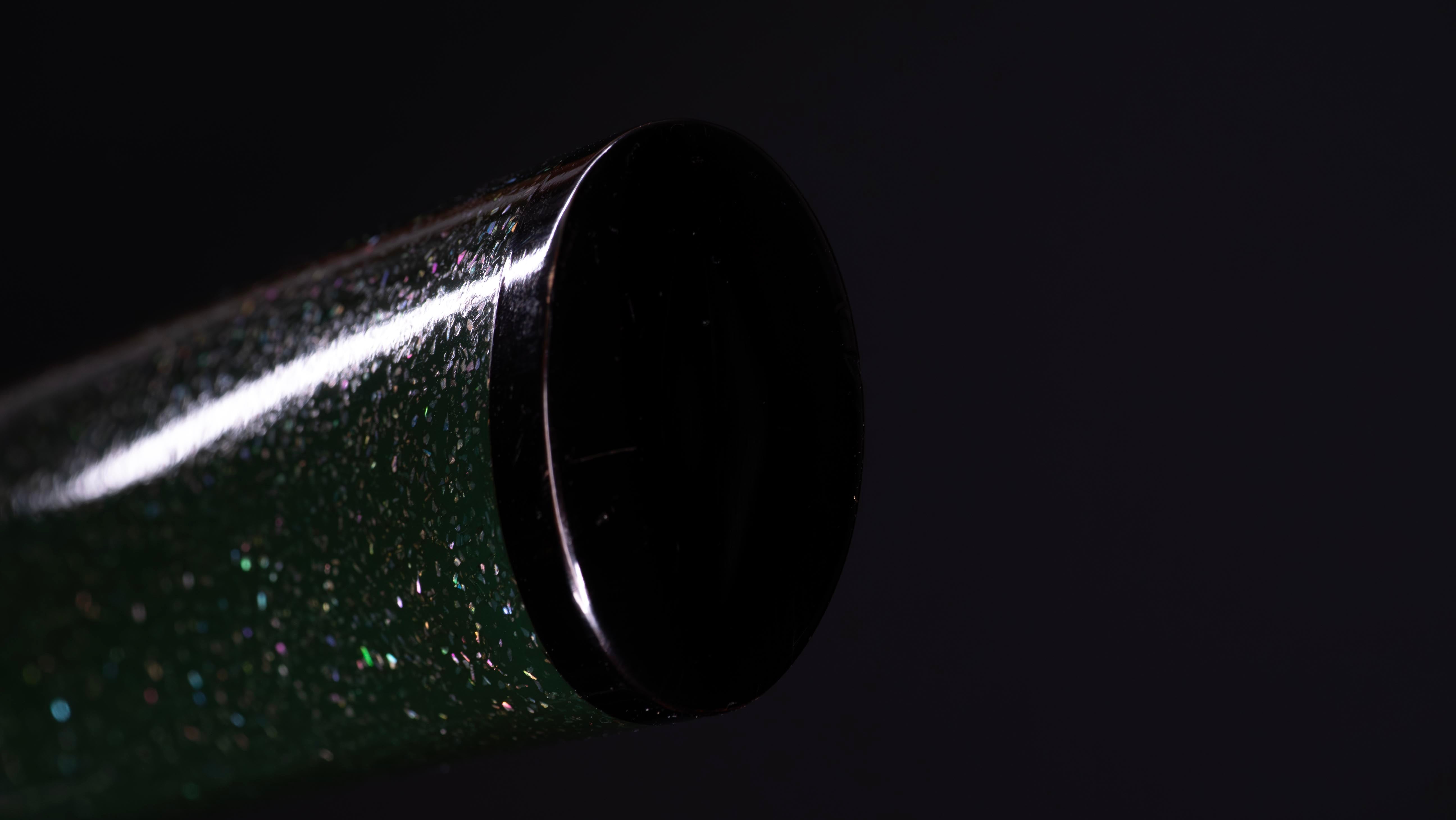
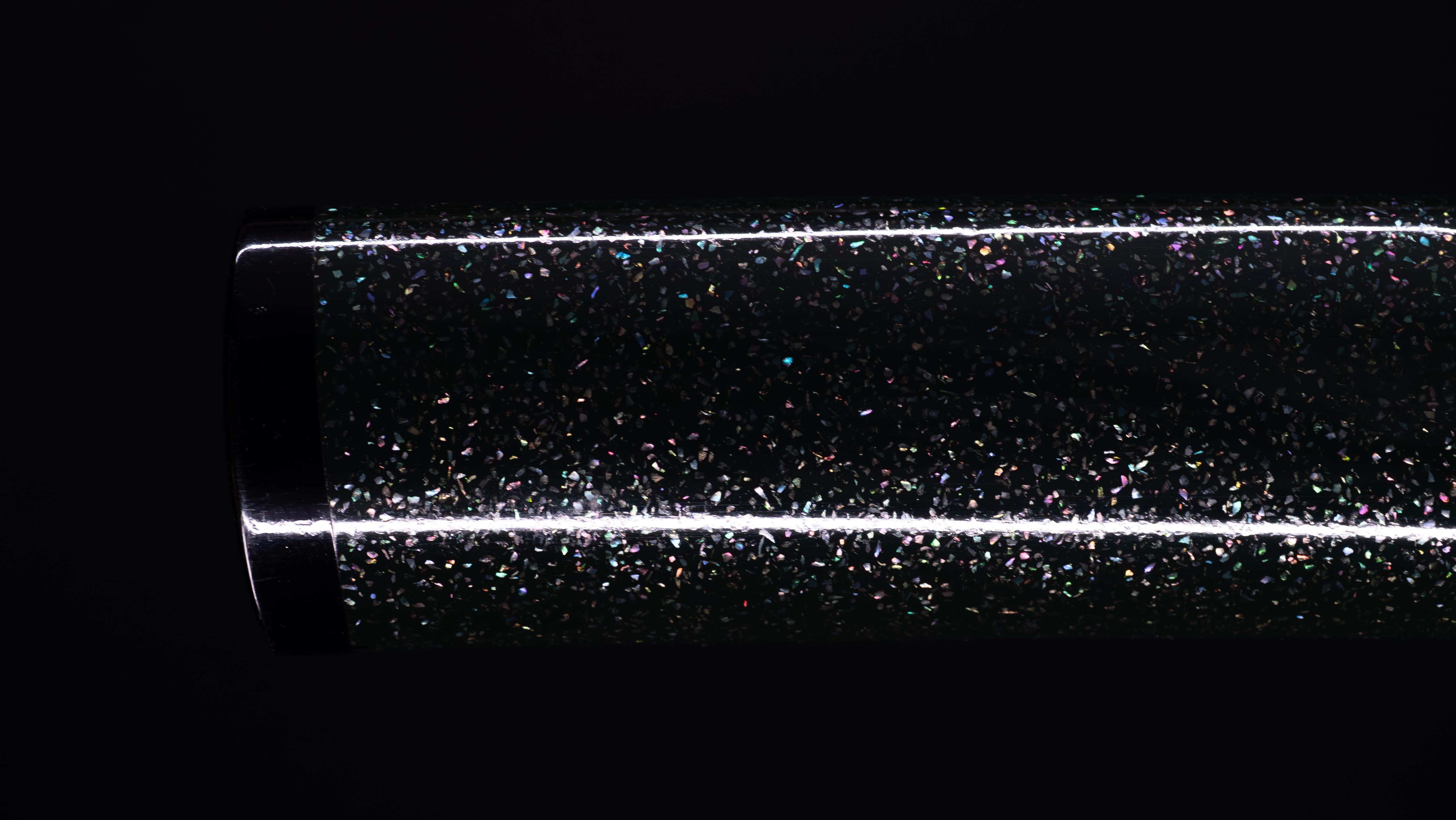
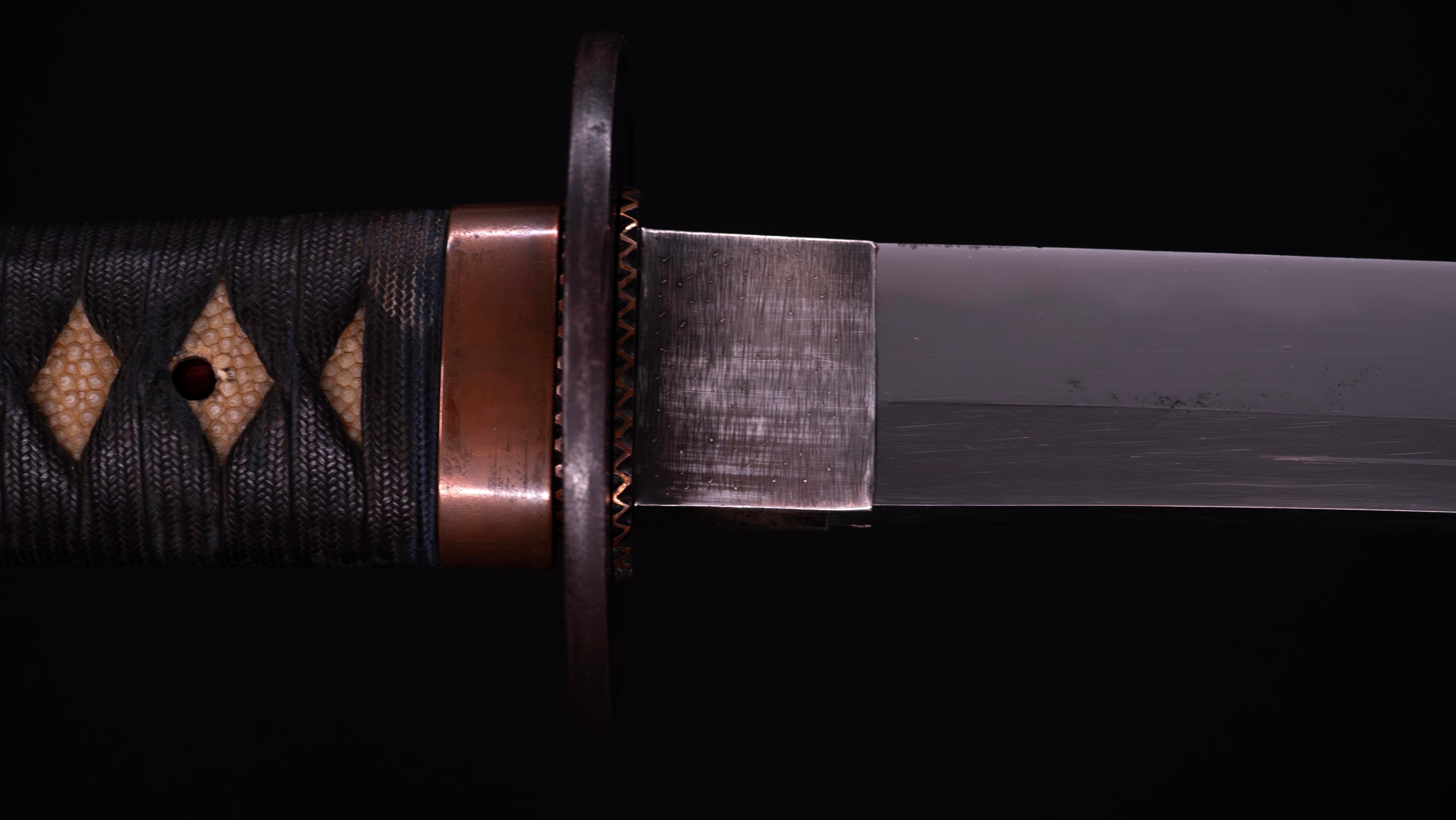
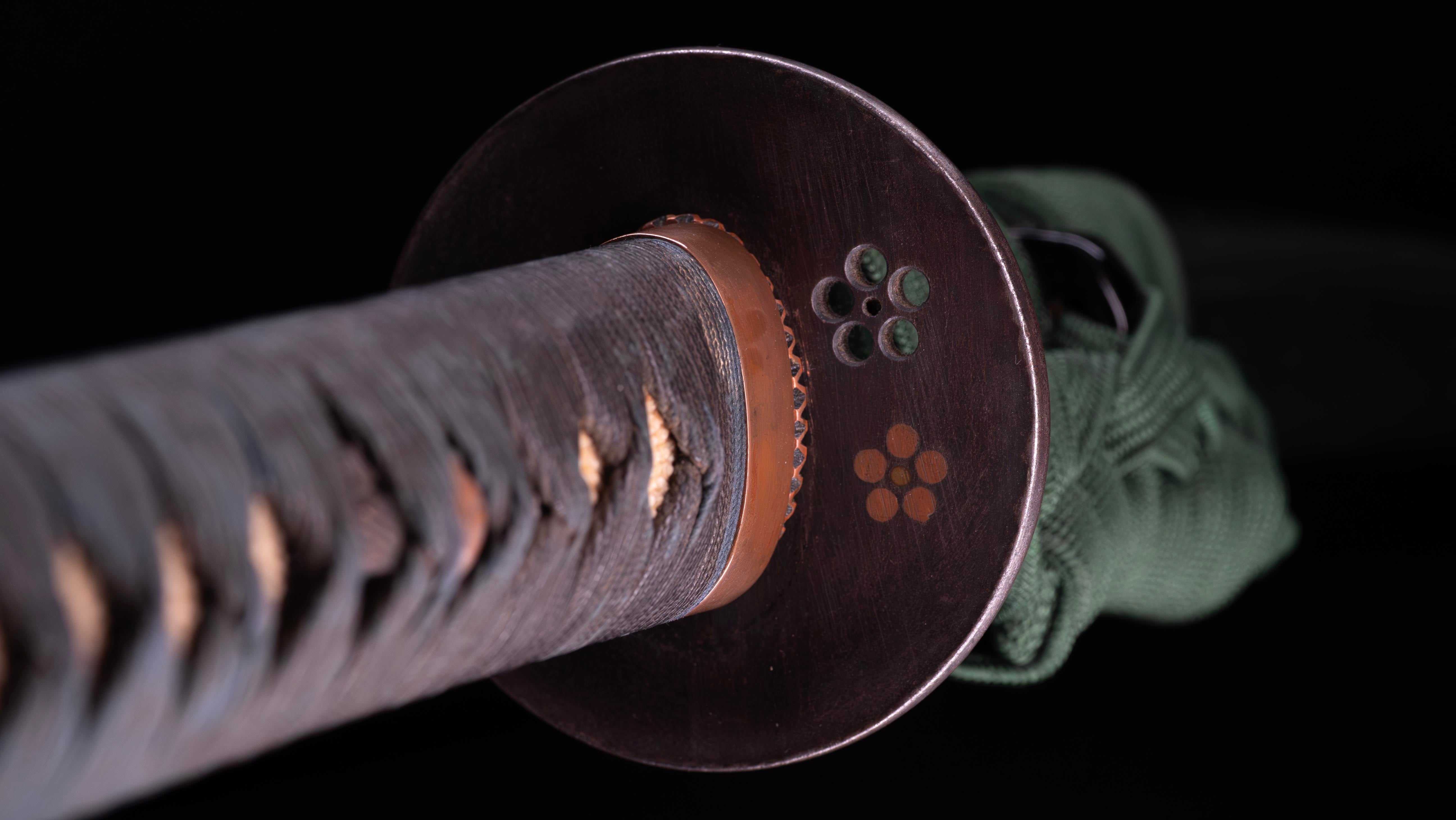
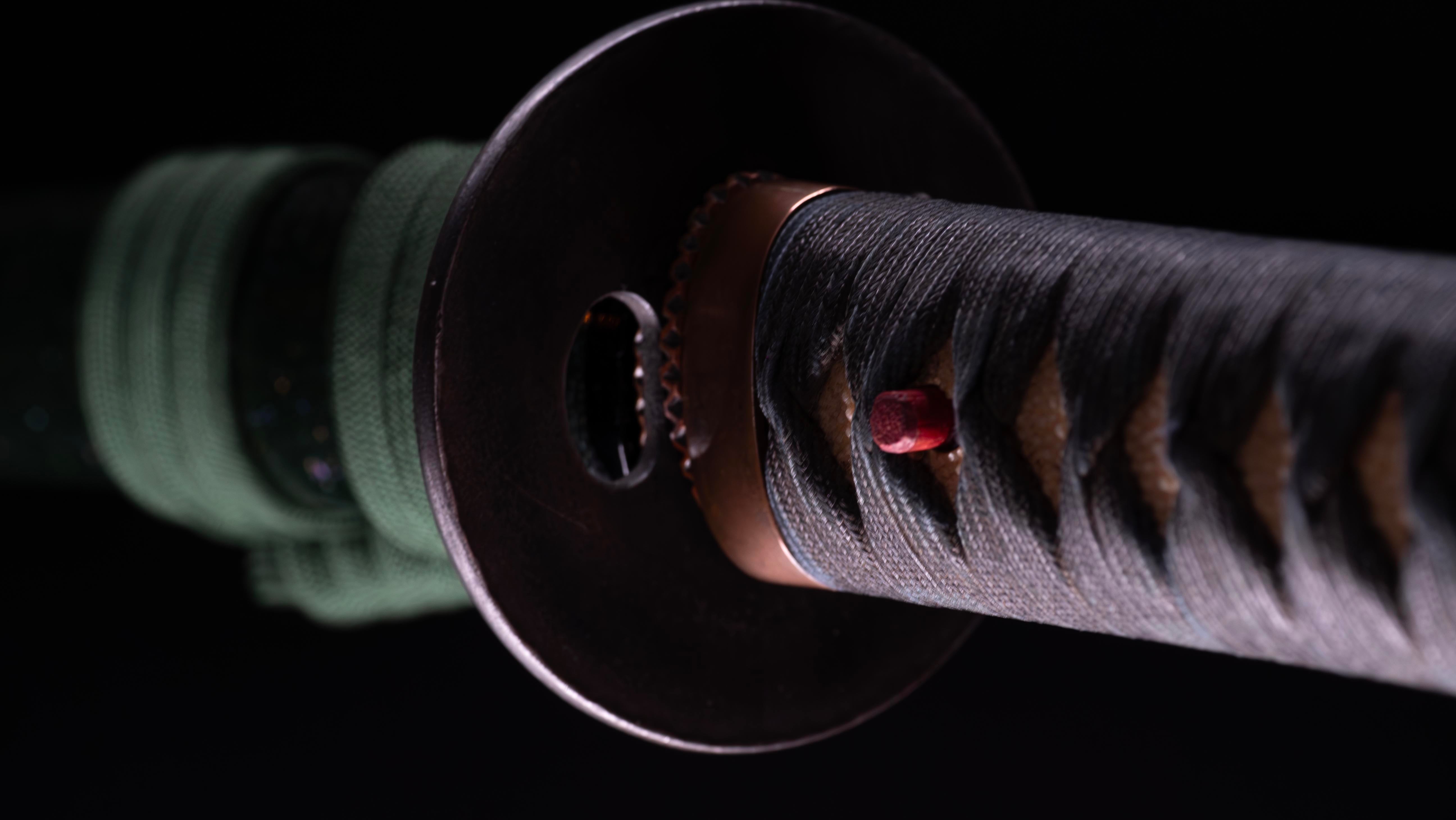
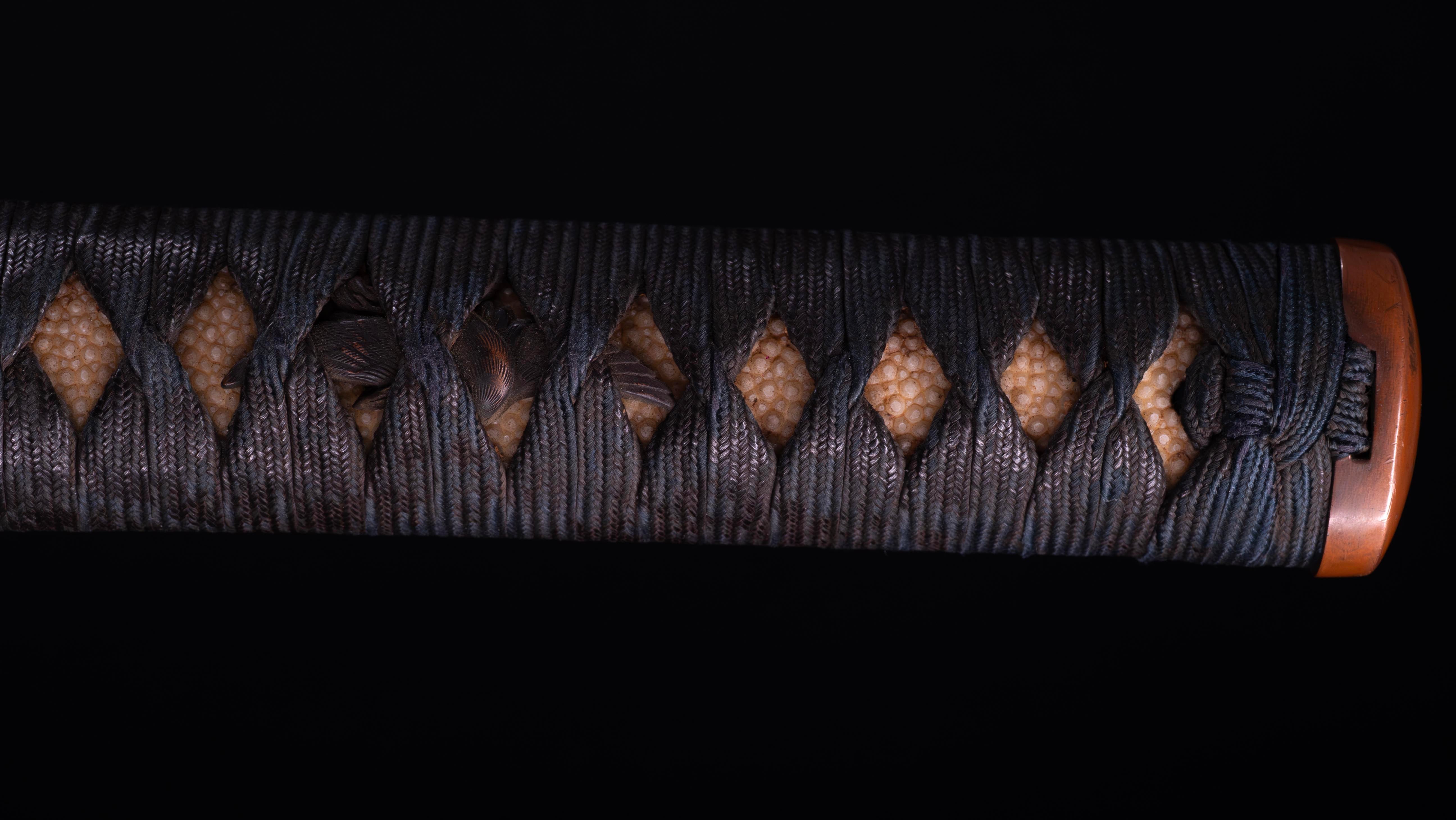
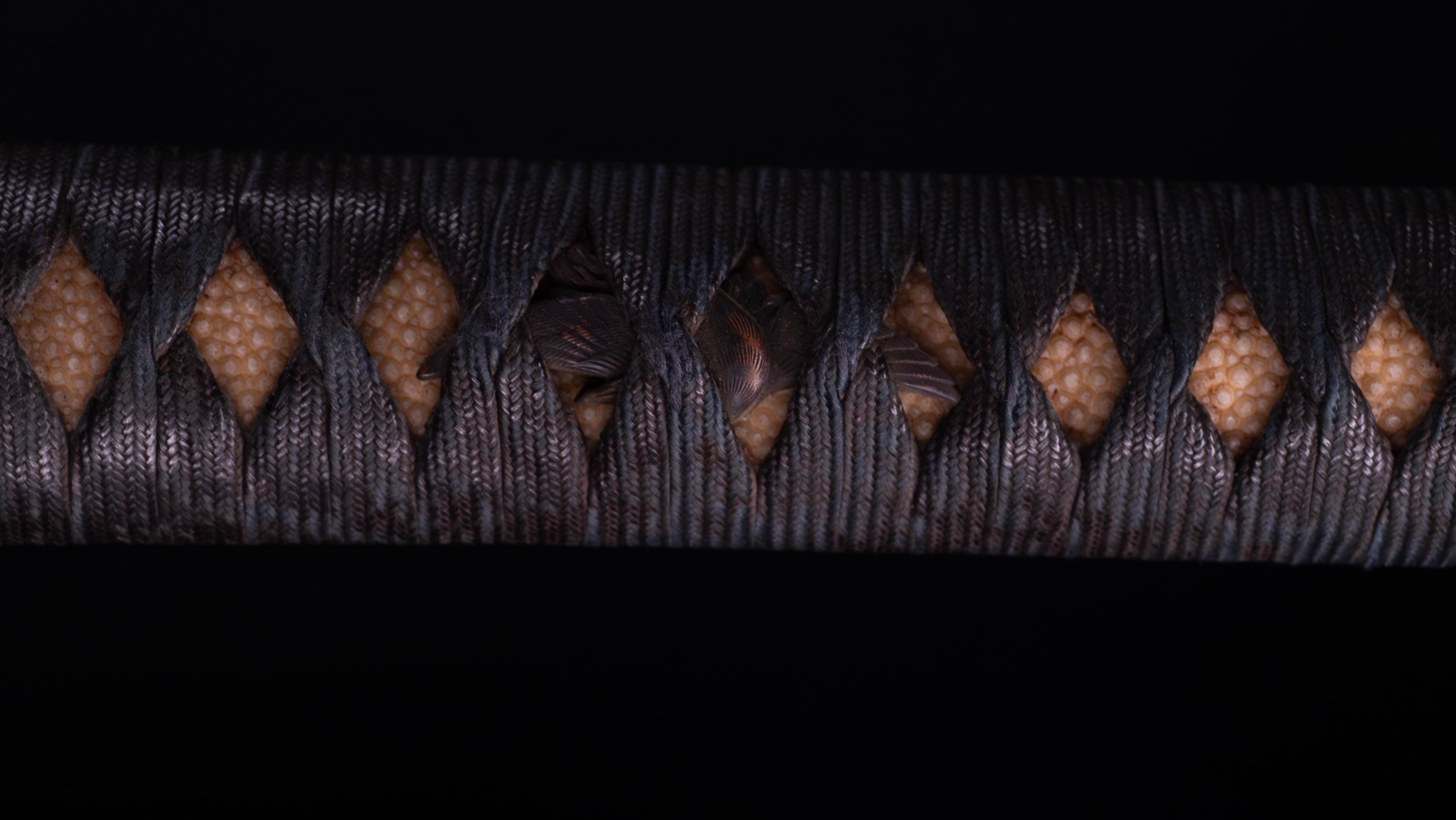
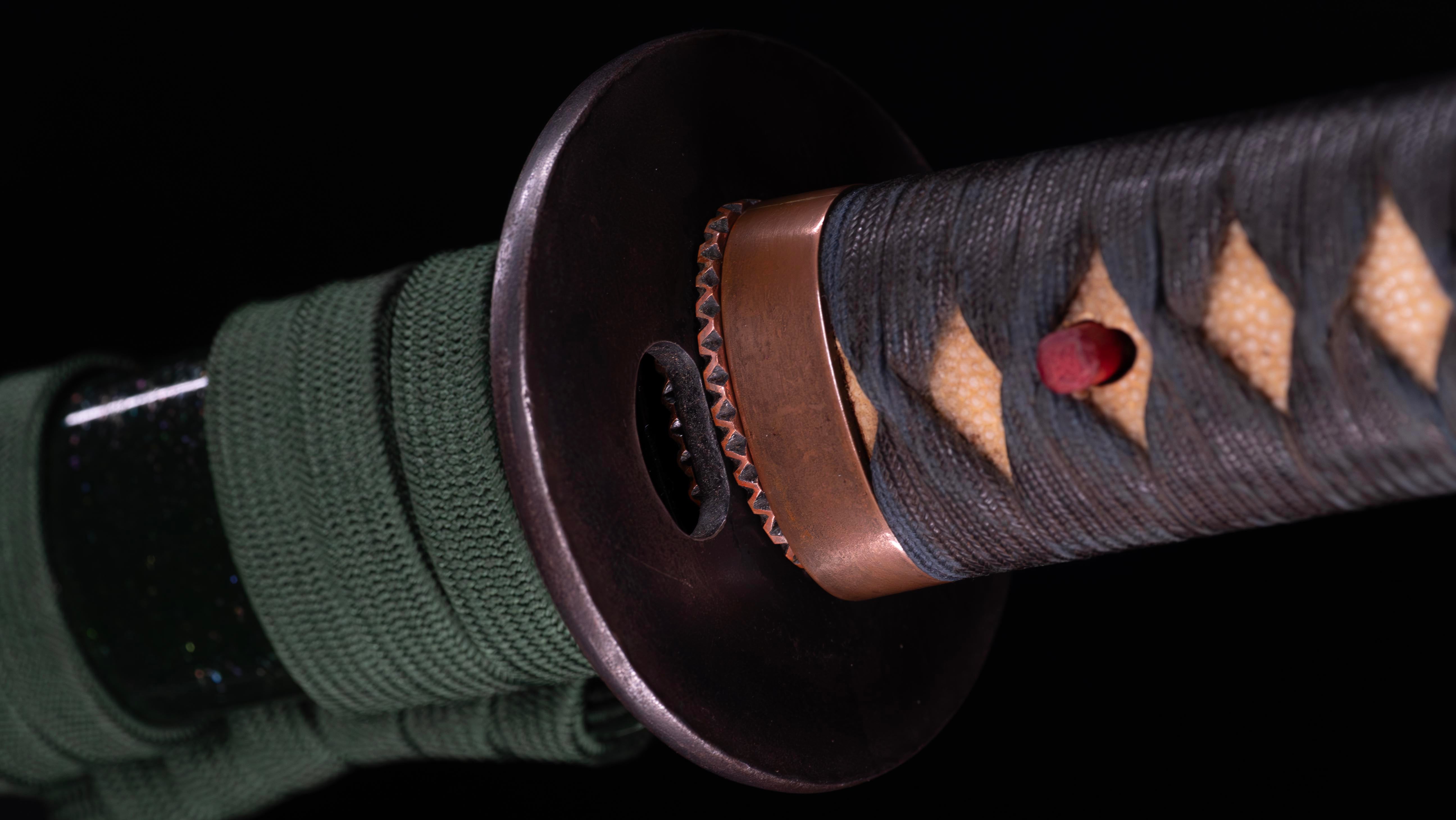
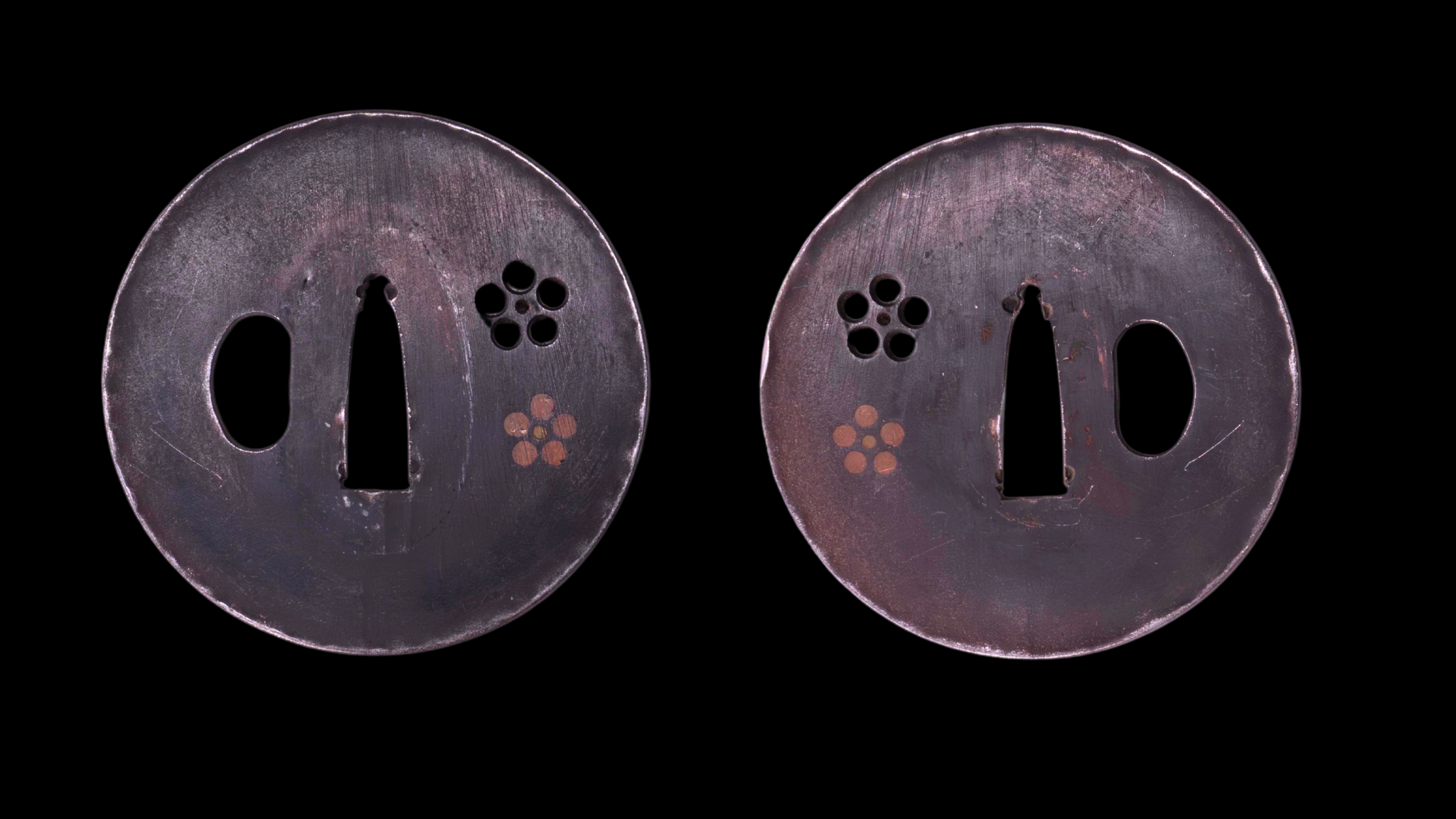
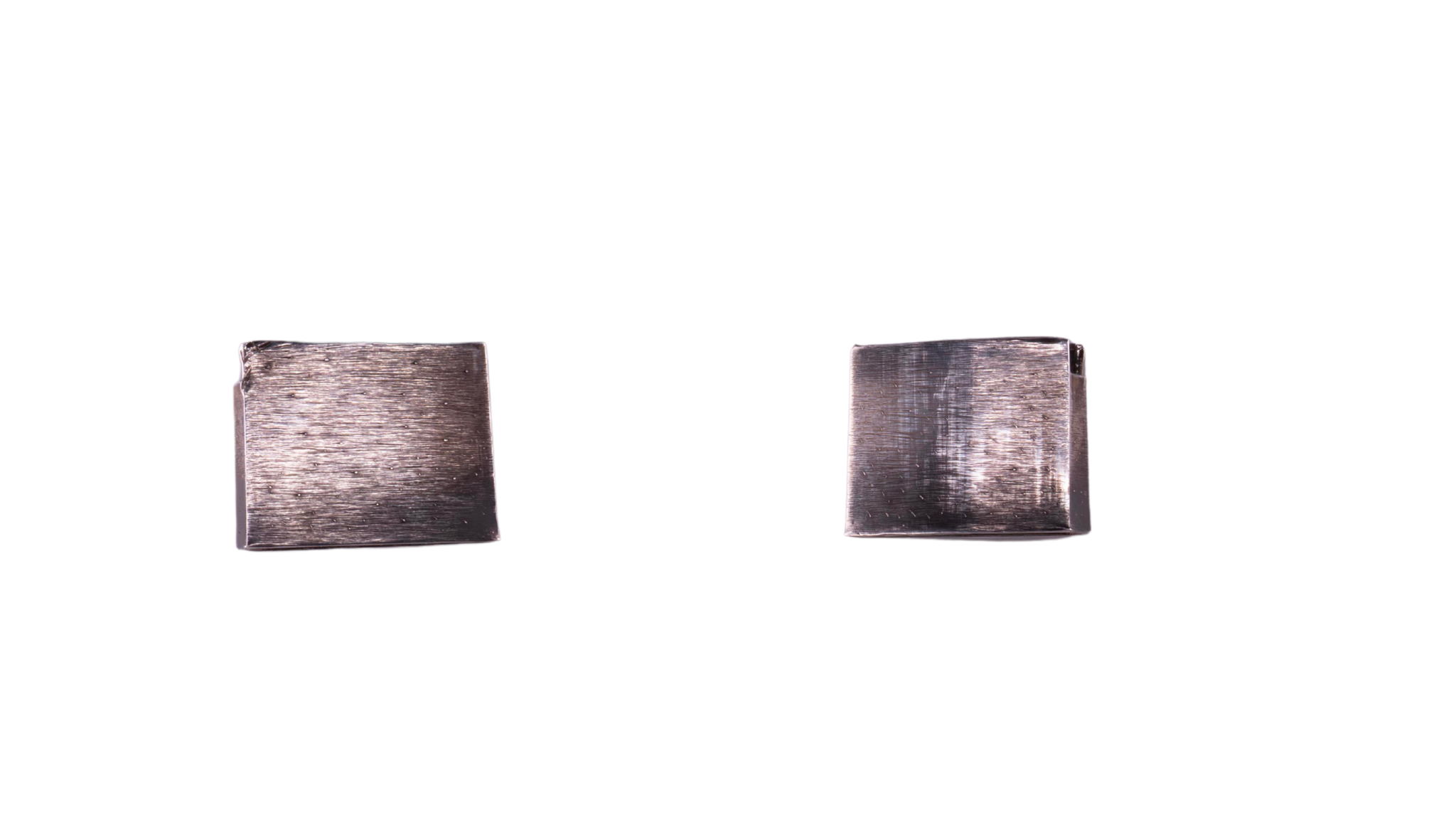
Attribution Signature: Seki-ju Kaneyoshi saku Origin: Seki City, Gifu Prefecture (Showa period, mid-20th c.) Blade Specifications Type : Gendaito Blade Length (Ha-chō): 67.0 cm Curvature (Sori): 1.4 cm Mekugi-ana: 1 hole Base Width (Moto-haba): ~30.6 mm Base Thickness (Moto-kasane): ~6.5 mm Tip Width (Saki-haba): ~19.6 mm Tip Thickness (Saki-kasane): ~5.0 mm Hamon: Gunome midare Blade Weight (nakago off): 710 g Mountings (Koshirae) Overall Length: 105 cm Saya: Green lacquer with fine metallic sparkle Sageo & Kurikata: Thick green silk cord in kikkō knot Fittings: Blackened iron tsuba & menuki, matching green ito wrap Notes This modern Showa-era bladework from the famed Seki tradition combines a graceful silhouette with a perfectly straight hamon, offering both beauty and functionality. The vibrant green lacquered saya with glitter highlights makes it a standout when displayed, while the gunome midare temper line and balanced geometry ensure reliable performance for Iaido practice and tatami practice. Background Nōshū Seki-jū Kaneyoshi, born Yoshifumi Okada in 1900 in the renowned sword-making town of Seki, Gifu Prefecture, was selected by the Imperial Japanese Army as an official military swordsmith. Under his art name “Kaneyoshi,” he crafted blades for officers who pledged their lives to defend Japan. Though rooted in traditional techniques, his modern Showa-period swords combine elegance, strength, and historical significance, making them treasured heirlooms for future generations.
Offered by Katana Sword
This piece has sold
Get an email when a new Kaneyoshi piece hits the market.


Mino · around 1926-1989
1 piece on the market now
Shōwa to the present: destruction and revival
The twentieth century nearly killed the craft twice: wartime distortion, then the occupation ban. The NBTHK’s founding in 1948 and licensed forging from 1953 rebuilt the sword as an art, crowned by Living National Treasures and the mukansa rank.
30-day money-back guarantee from receipt; items must be unused, complete, in original packaging. Sale items Final Sale. Antique swords non-returnable (Japanese export law). Damage reported within 72 hours. Customer pays return shipping unless seller error/defect. Refunds within 14 days of inspection.