Edo was the sword’s age of connoisseurship: the Hon’ami appraisers, the shogunal register of famous blades of 1719, and a thriving literature turned the sword into an object of study even as it ceased to be drawn in war.
 NihontoWatchNihontoWatch
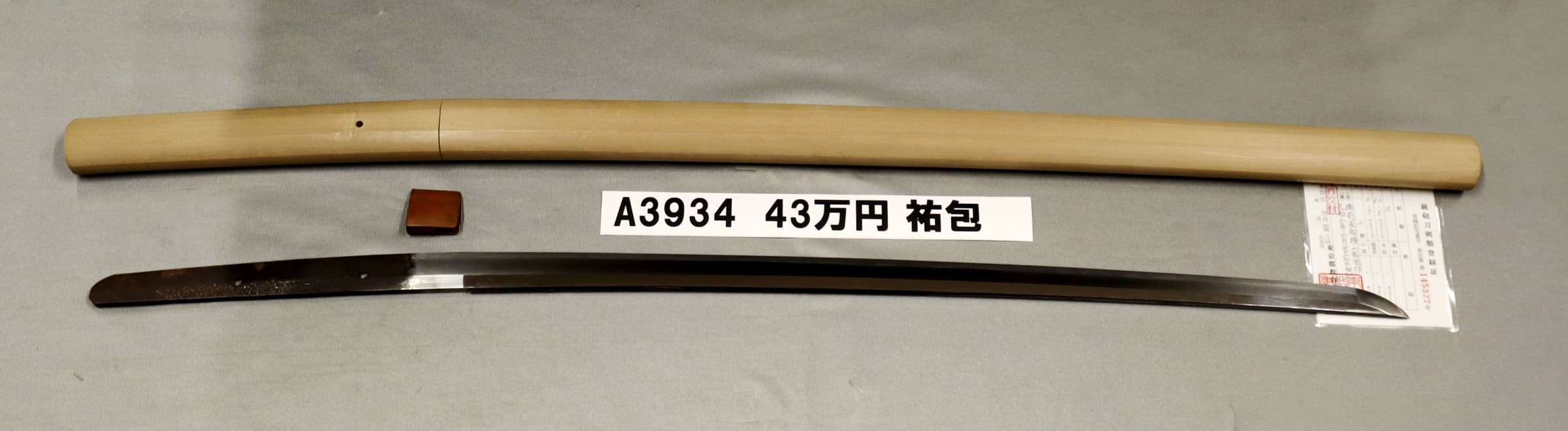
No rust, no chips. Shinogi-zukuri, iori-mune. Small mokume-hada, tightly packed. Suguha mixed with notare. Chu-kissaki. Ubu-nakago. Kurijiri. Copper habaki. Omote: "Bizen Osafune Yokoyama Sukekane saku". Ura: "Genji 2, 2nd month, a lucky day (remainder cut)". Around the time of the Sakuradamon Incident.
NihontoWatchOffered by Nakano Kosen

We couldn’t find current papers for this piece. Ask the dealer whether it has been, or can be, submitted to shinsa. — Hoshi
8 on the market
As written by the shop
Machine translation from the shop's Japanese · may contain errors ·
Bizen-den · Bizen · around 1834-1872
Tōken Taikan top 60%
8 pieces on the market now
Bizen-den · Bizen
24 pieces on the market now
| Smith | Era | Designated |
|---|---|---|
| Sukenobu祐信 | 1830-1844 | 0 |
| Suketaka祐高 | 1865-1868 | 0 |
| Sukeharu祐春 | 1864-1865 | 0 |
| Sukehiro祐廣 | 1854-1860 | 0 |
| Sukekane祐包 | 1868-1912 | 0 |
The Edo period (1615 to 1868)
Edo was the sword’s age of connoisseurship: the Hon’ami appraisers, the shogunal register of famous blades of 1719, and a thriving literature turned the sword into an object of study even as it ceased to be drawn in war.
We could not find an authenticity certificate on the seller’s listing. Japanese swords and fittings are normally papered by the NBTHK (or the NTHK). Without one, the attribution is the seller’s own assessment and has not been independently verified — treat it with caution and ask the dealer about certification before buying.
¥430,000