Muromachi turned sword making into an industry: the uchigatana rose with massed infantry warfare, Osafune and Seki produced bundle swords beside custom orders, and the Ming trade carried Japanese blades abroad by the tens of thousands.
 NihontoWatchNihontoWatch
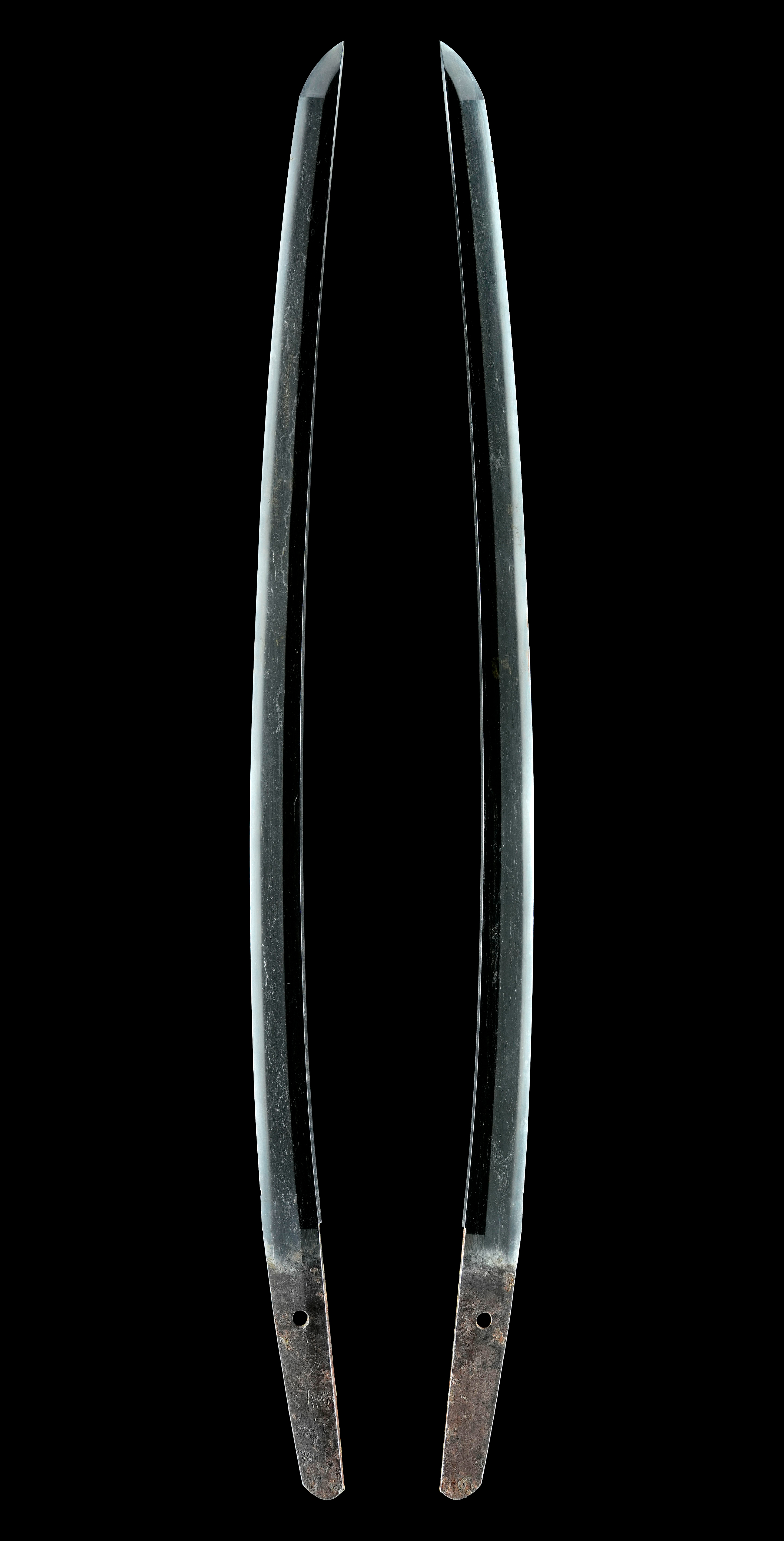
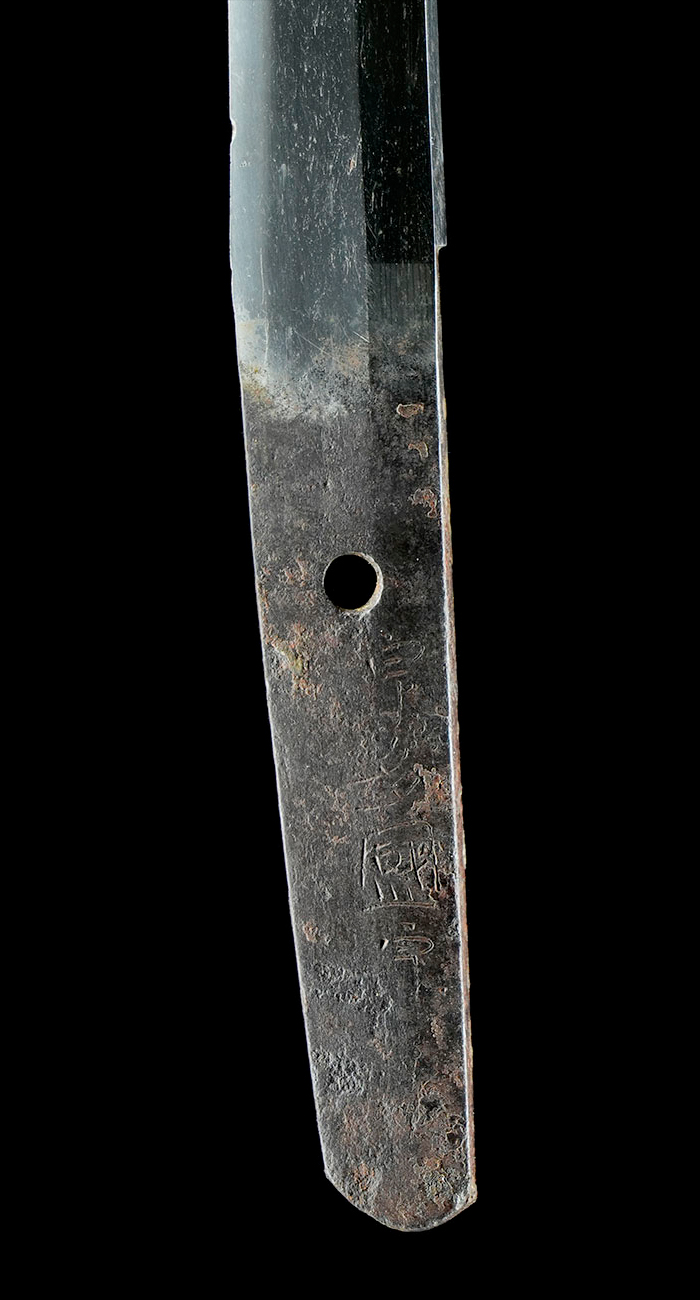
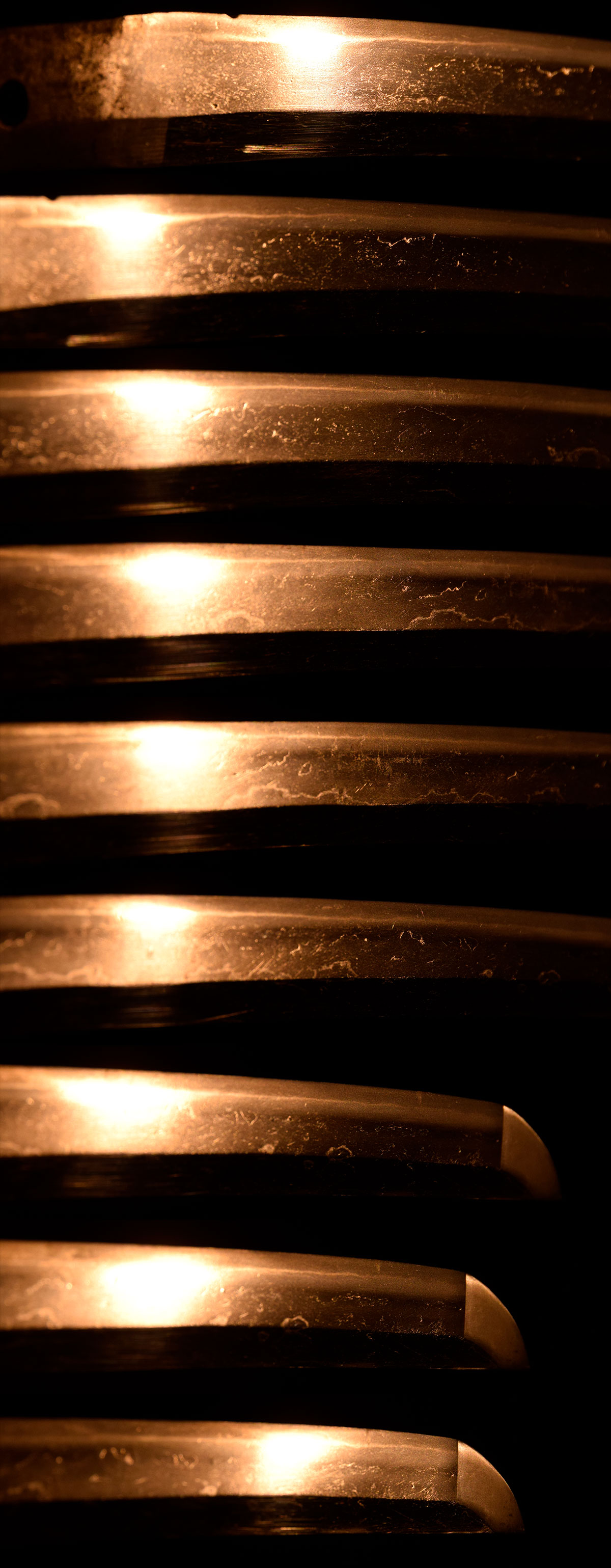
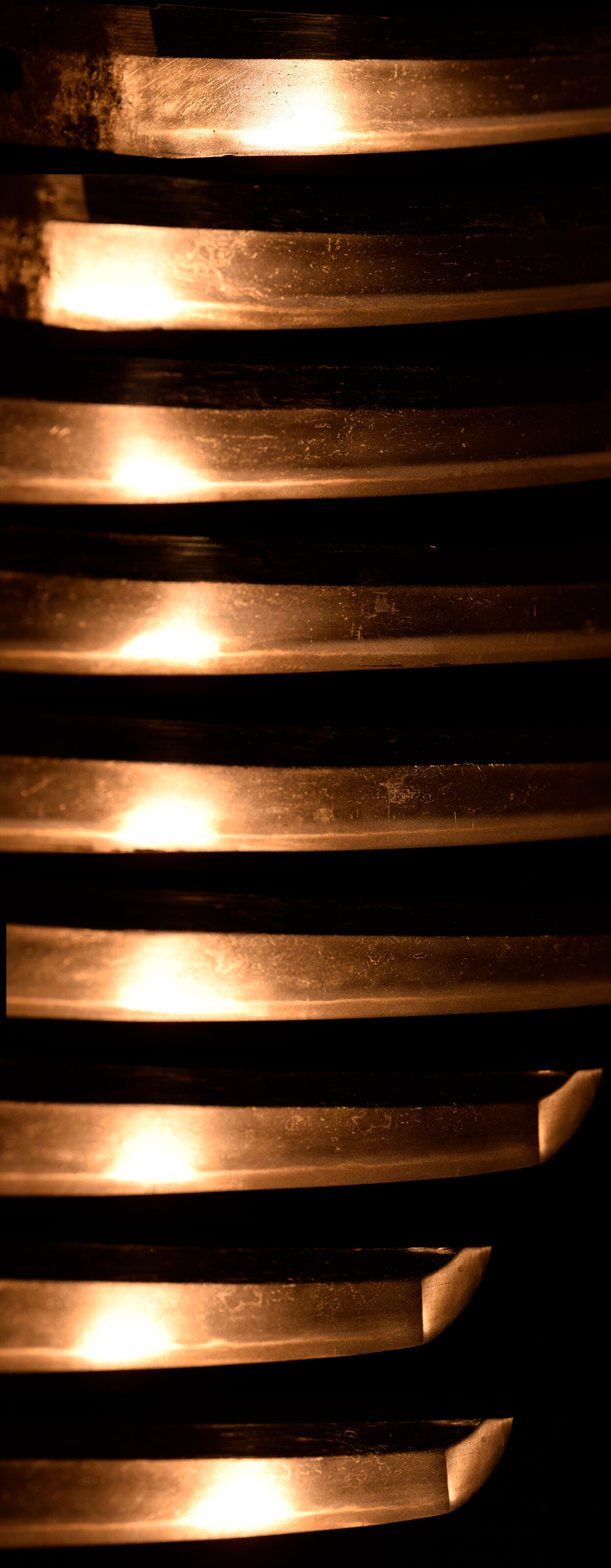
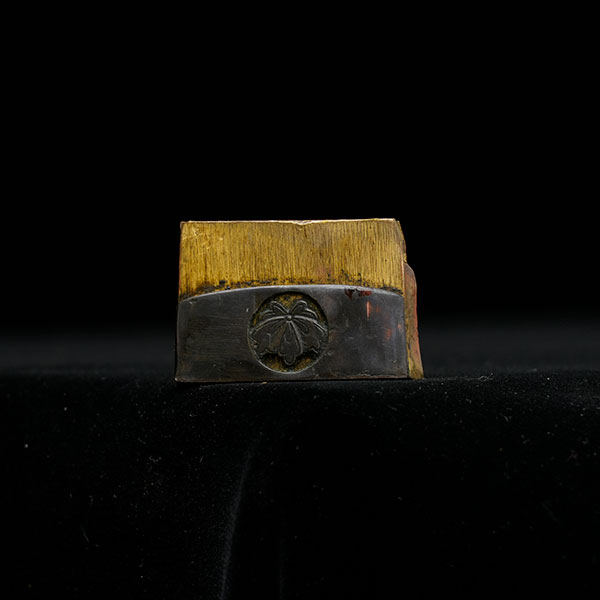
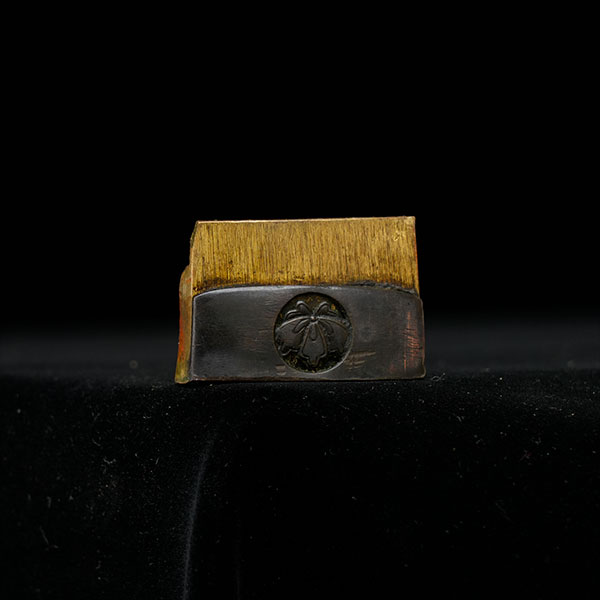
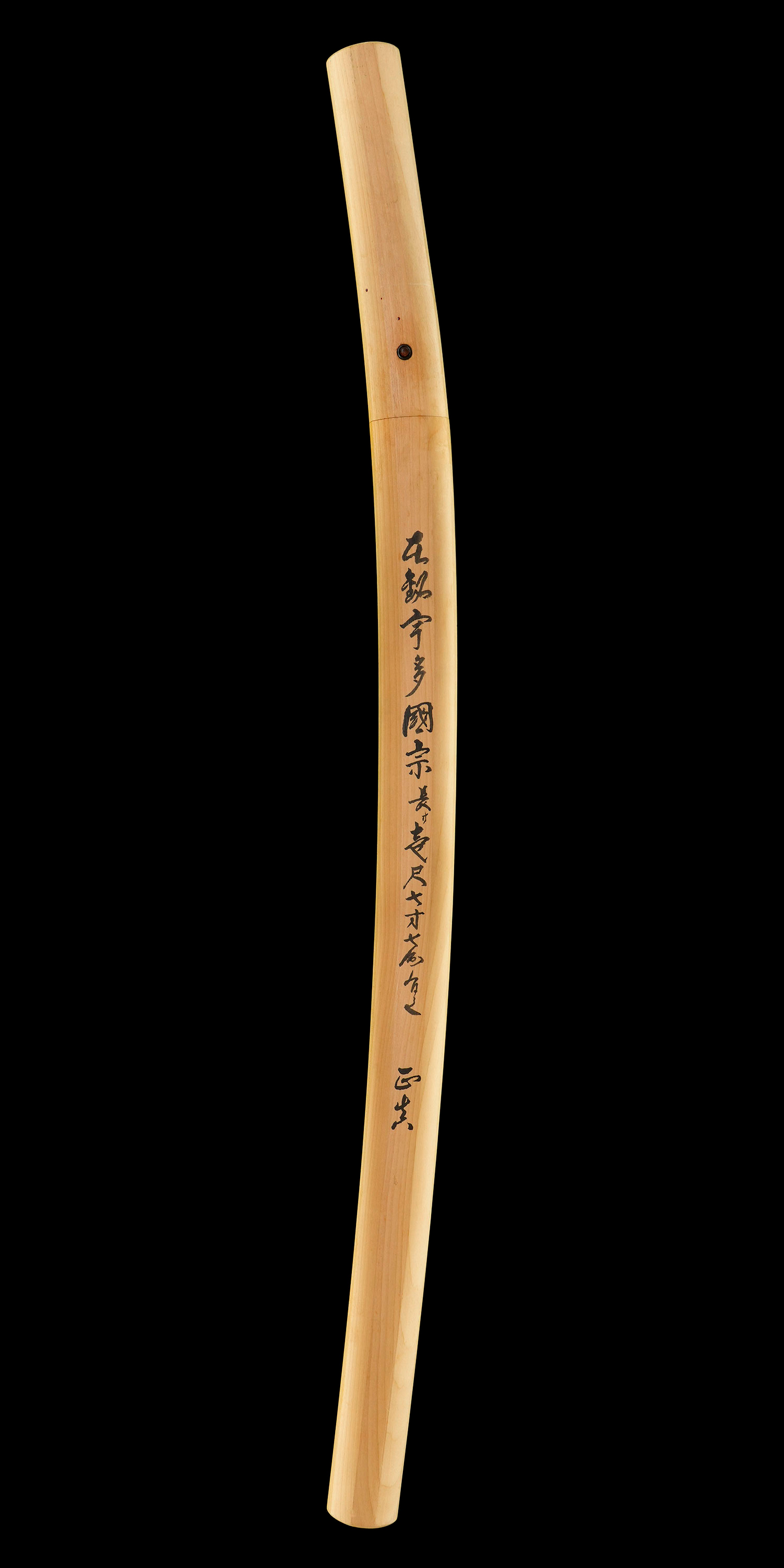
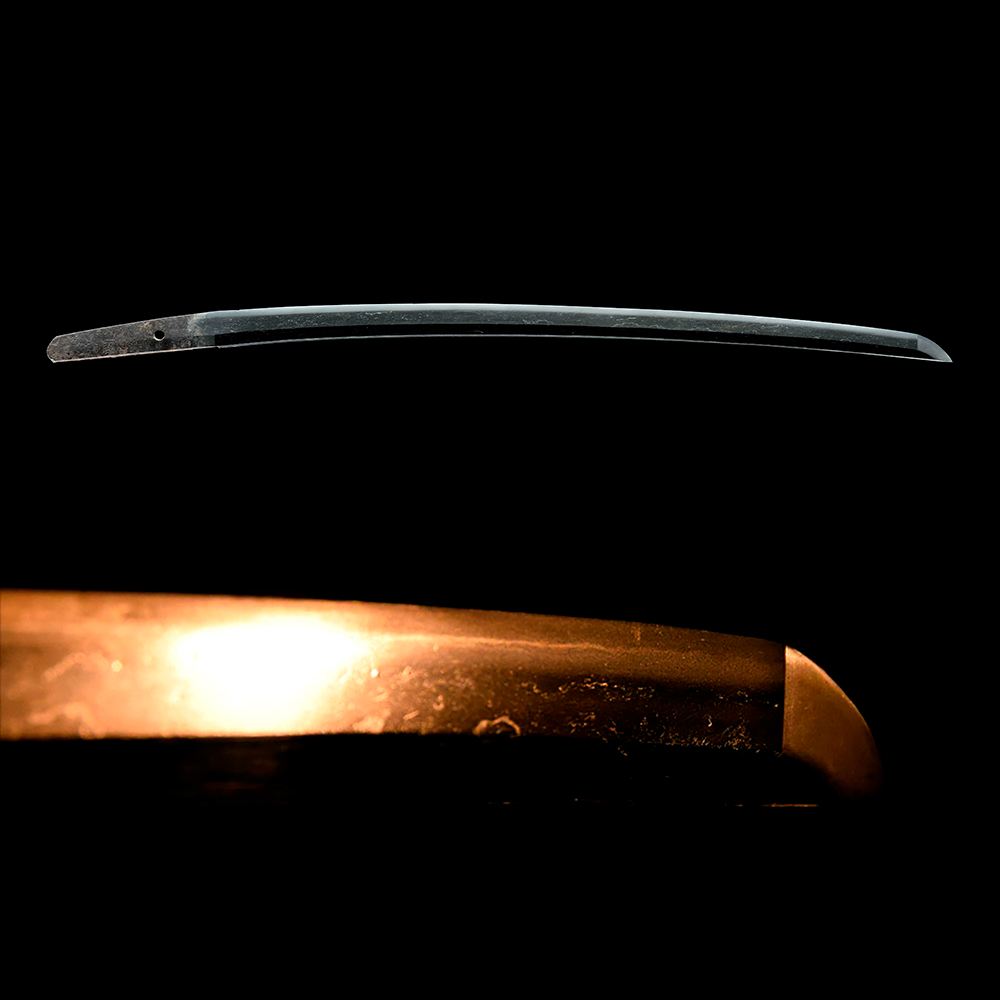
The Uda school originated around the Bunpo era at the end of the Kamakura period when Ko-Nyudo Kunimitsu moved from Uda District in Yamato Province to Etchu Province, and it flourished thereafter throughout the Muromachi period. Among these, works from the end of the Kamakura period through the Nanboku-cho period are called Ko-Uda, while works from the Muromachi period are called Uda. Uda Kunimune was the son of Kunimitsu and the younger brother of Kunifusa, and the same name flourished over several generations. Works of the Uda school have a strong Yamato-den temperament, but there are also aspects that lean toward Soshu-den, and the jitetsu is itame mixed with mokume where the hada appears clearly. This wakizashi has a well-proportioned difference between the moto-haba and saki-haba with a solid kasane, the jitetsu is ko-itame mixed with mokume and is hada-dachi with chikei, the hamon is chu-suguba with hataraki in a very fine nijuba style, and the boshi is sugu with a maru kaeri. Looking at the accompanying habaki, one can clearly see that it conveys its excellent provenance to the present day. It can be appreciated in its current condition, but for those with the means, I would certainly like you to perform polishing and various works to cherish it as a beloved possession for a long time.
NihontoWatchOffered by Toushin
We couldn’t find current papers for this piece. Ask the dealer whether it has been, or can be, submitted to shinsa. — Hoshi

As written by the shop
Machine translation from the shop's Japanese · may contain errors ·
The Muromachi period (1392 to 1573)
Muromachi turned sword making into an industry: the uchigatana rose with massed infantry warfare, Osafune and Seki produced bundle swords beside custom orders, and the Ming trade carried Japanese blades abroad by the tens of thousands.
We could not find an authenticity certificate on the seller’s listing. Japanese swords and fittings are normally papered by the NBTHK (or the NTHK). Without one, the attribution is the seller’s own assessment and has not been independently verified — treat it with caution and ask the dealer about certification before buying.
As a rule we do not accept returns, except when we have sent a different item from the one ordered or when there is a significant discrepancy between the description and the item. If you wish to return an item, please contact us within 3 days of its arrival and then send it back.
¥132,000