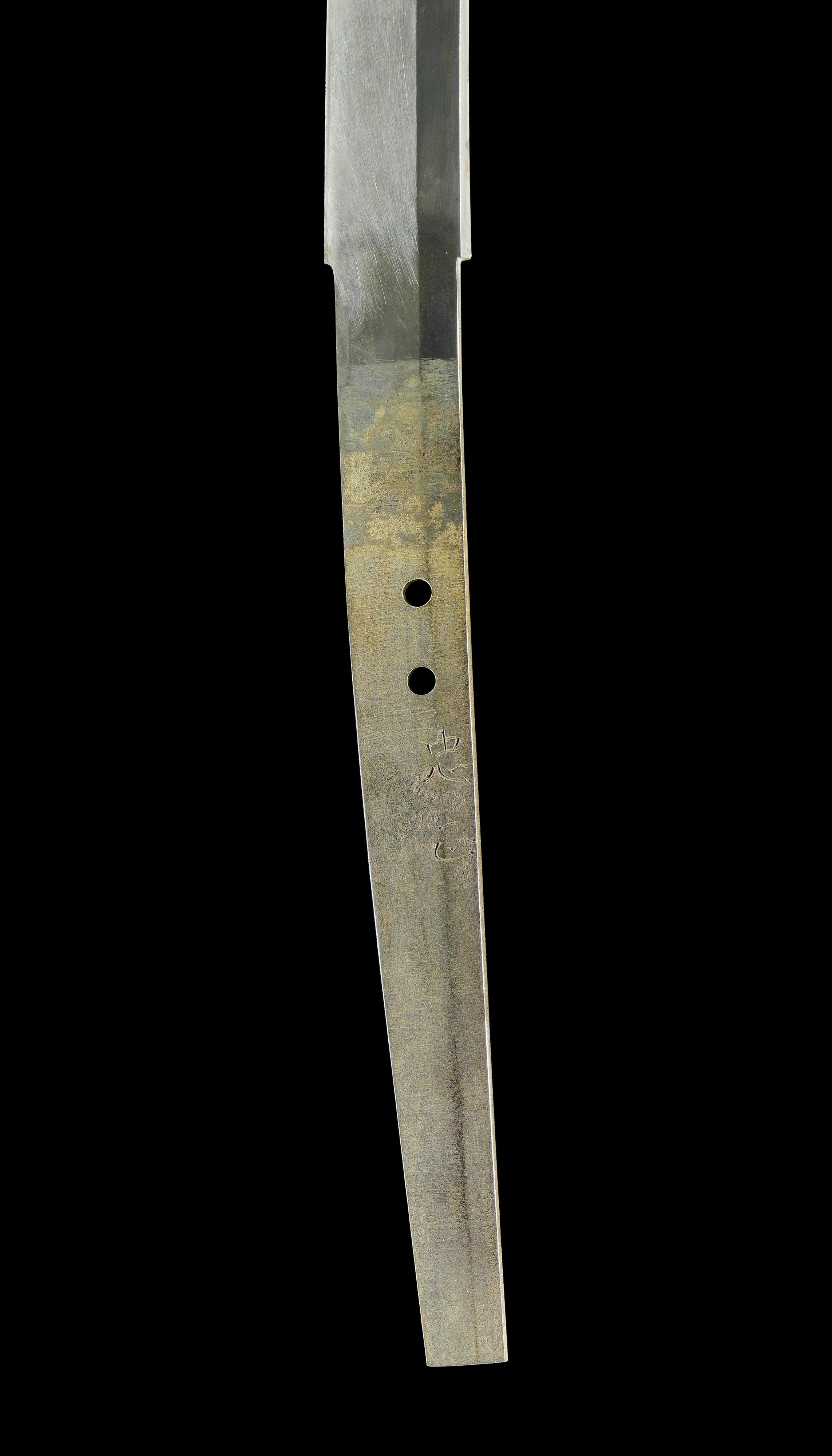
Real name, Suzuki Tetsutaro. He resided at 1-3508 Asahi-cho, Utsunomiya-shi, Tochigi-ken. As an army-appointed swordsmith, he forged many sharp swords before and during the war, and at the Army Gunto Art Encouragement Society held in Showa 19, he received the Chairman's Award in the test-cutting category.
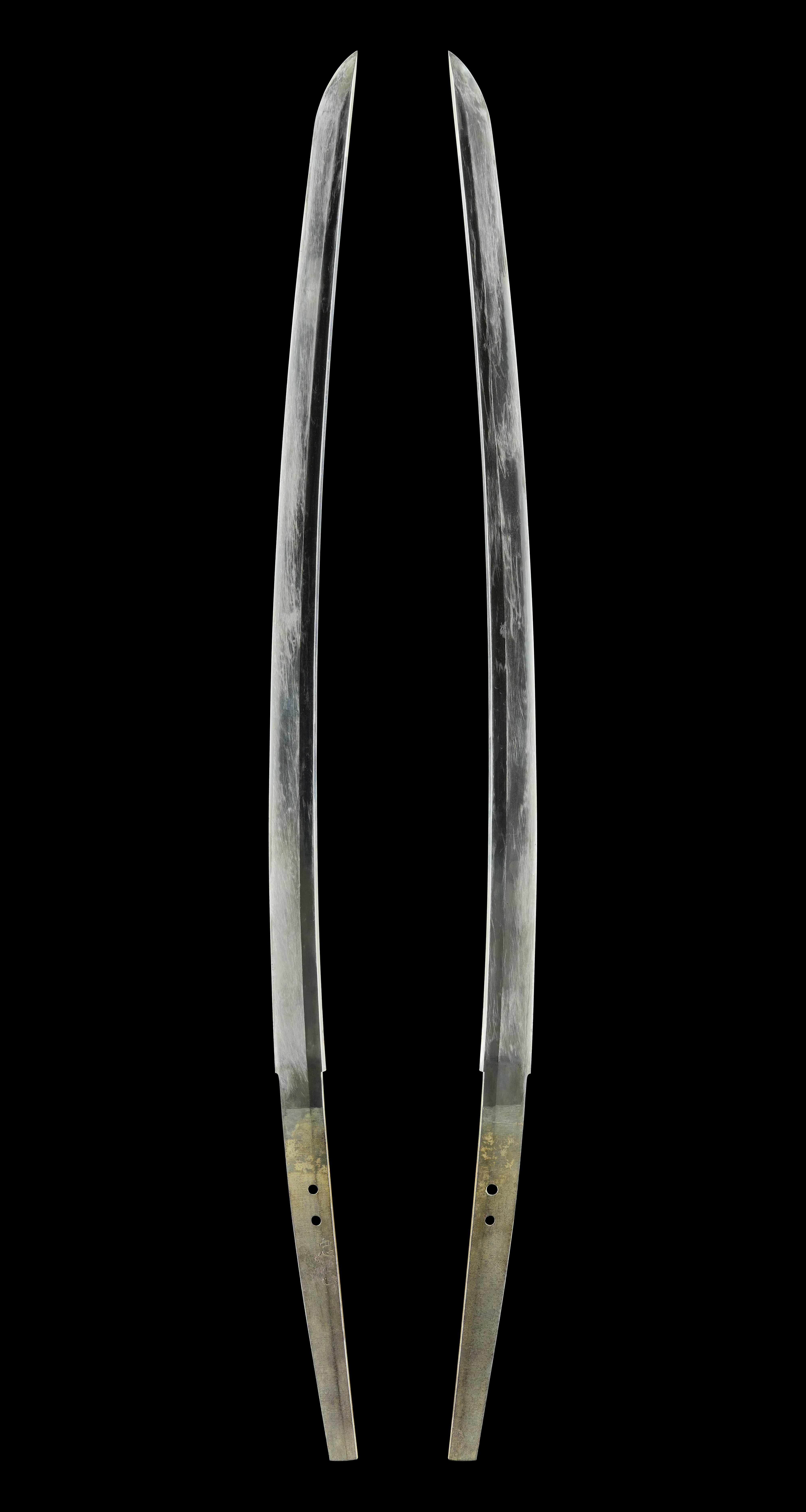
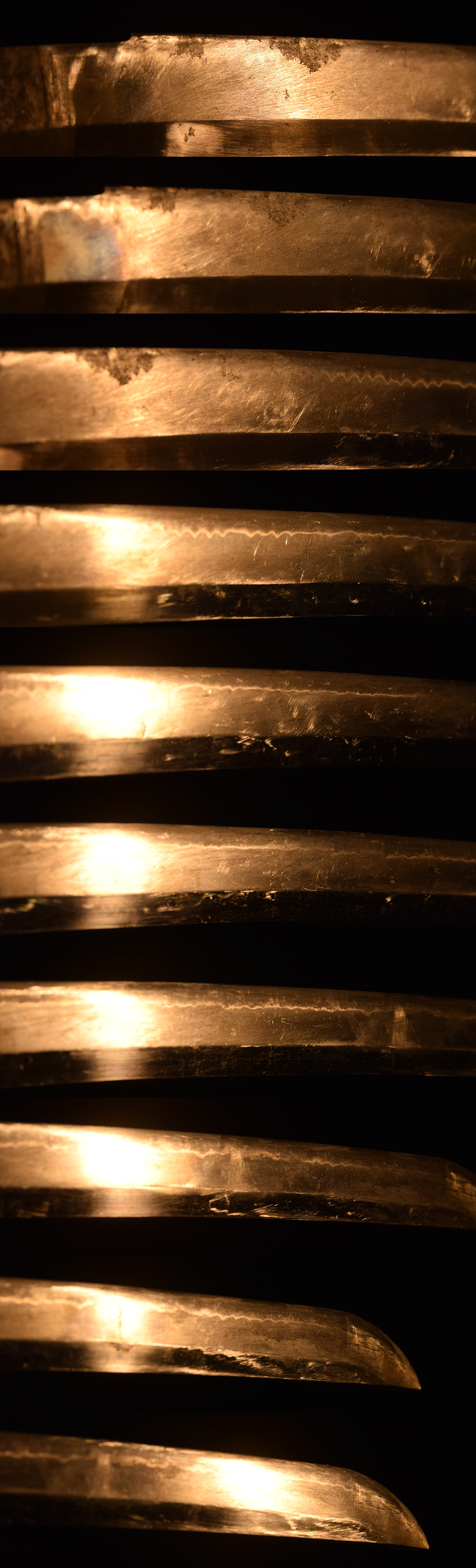
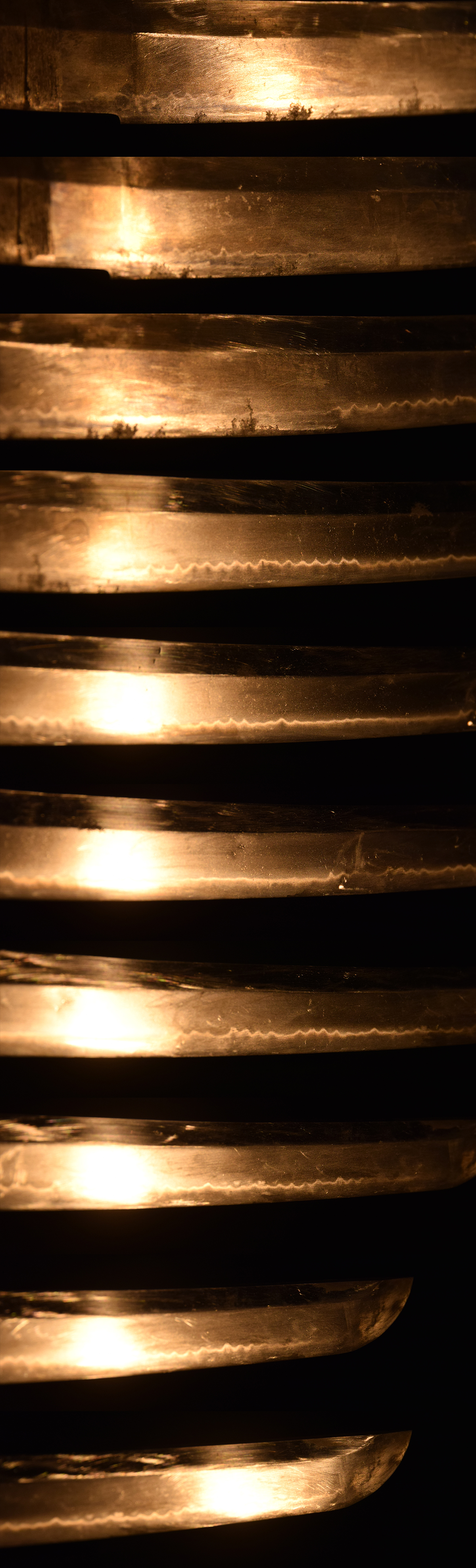
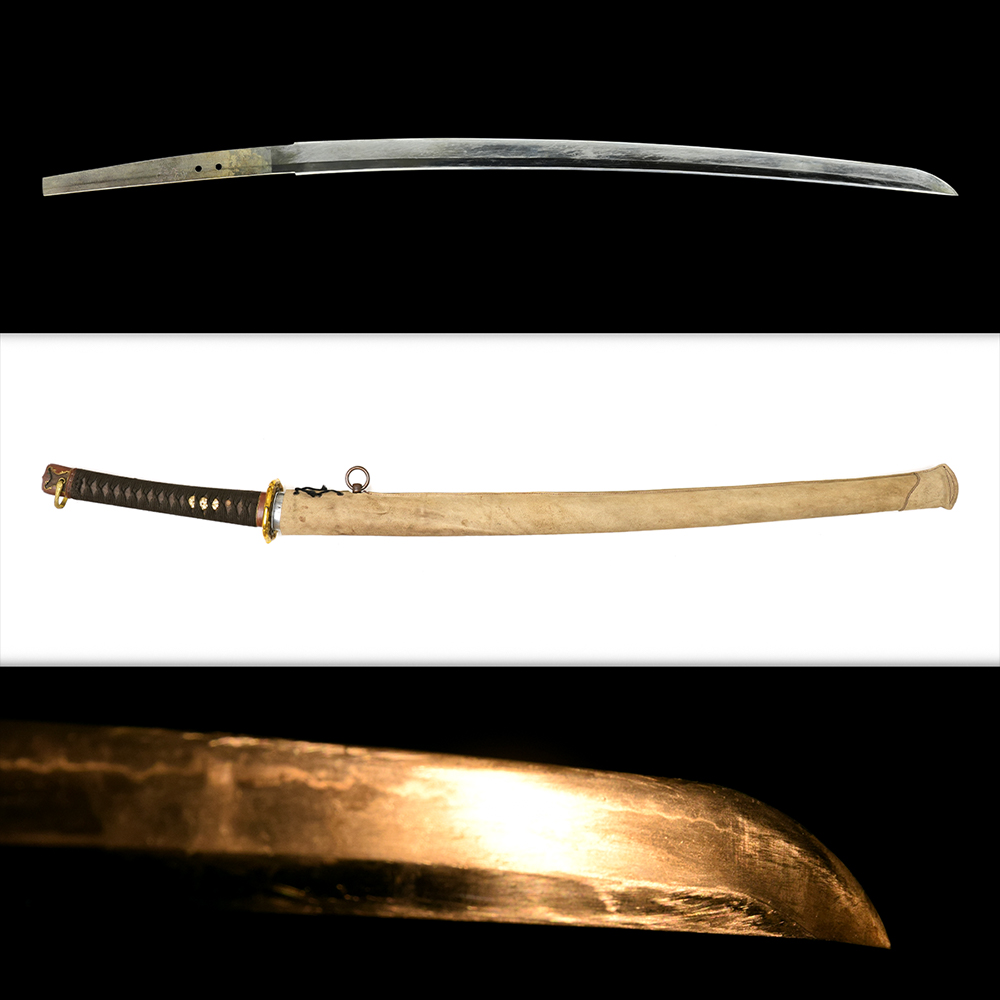
This katana has a grand sugata with a well-proportioned difference between the width at the moto and saki and an extended chu-kissaki; due to the rust having been removed by an amateur in its current state, it is difficult to discern the jigane, but it is thought to be a sword forged using traditional methods. The hamon is a bright and clear nioiguchi with small gunome-midare, mixed with togari-gokoro, containing ashi and yo, and the boshi is sugu with a maru-kaeri.
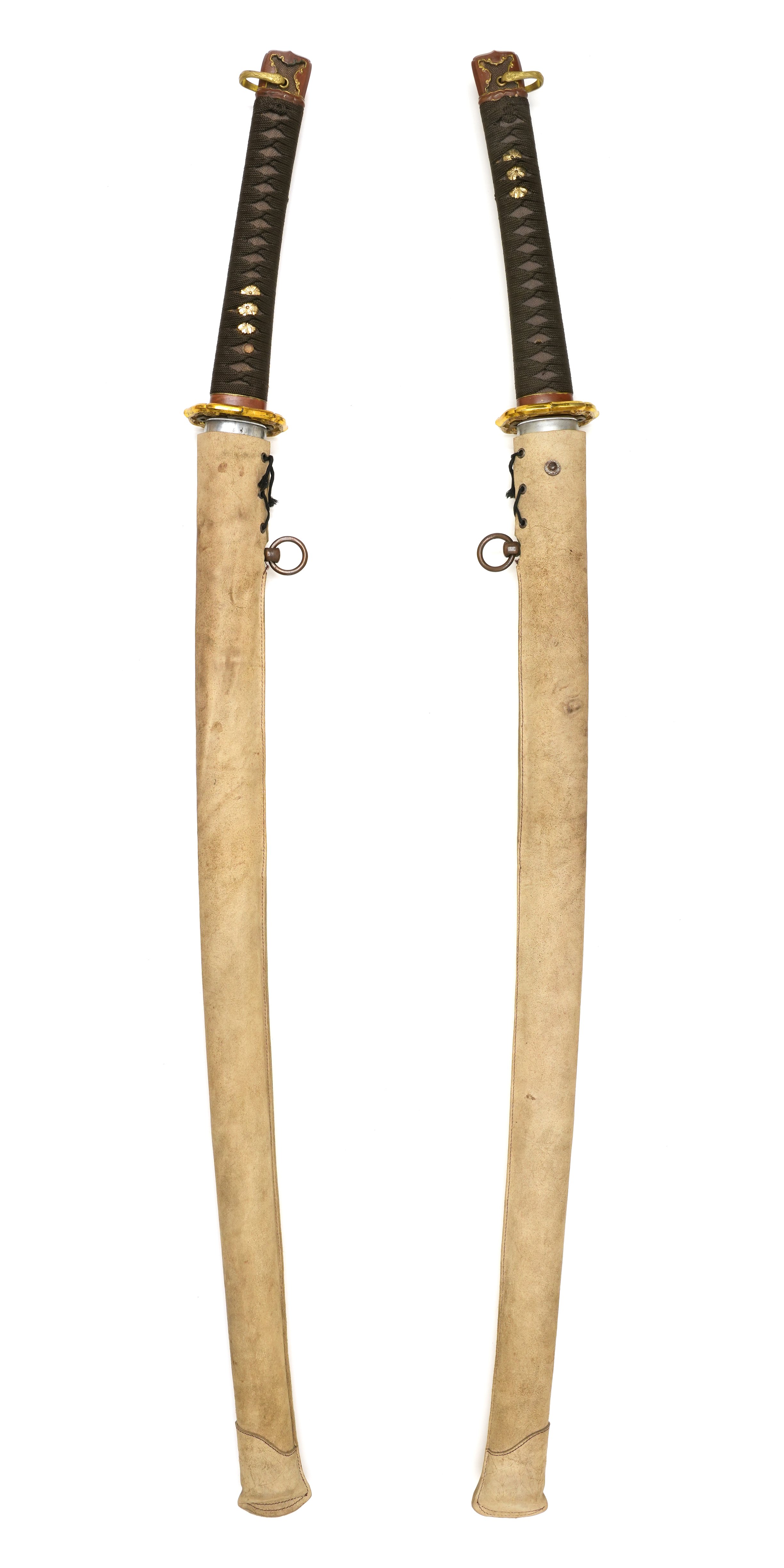
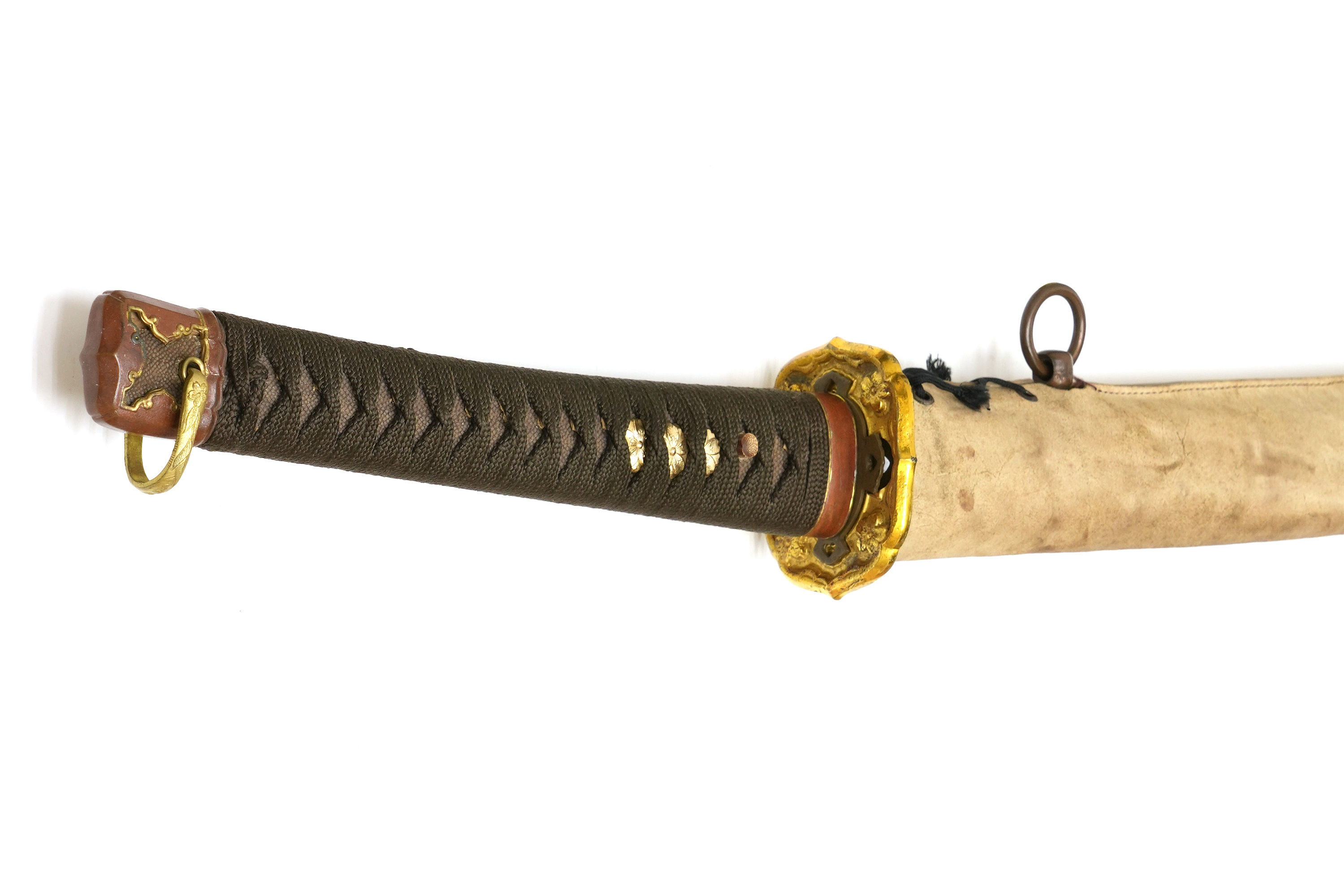
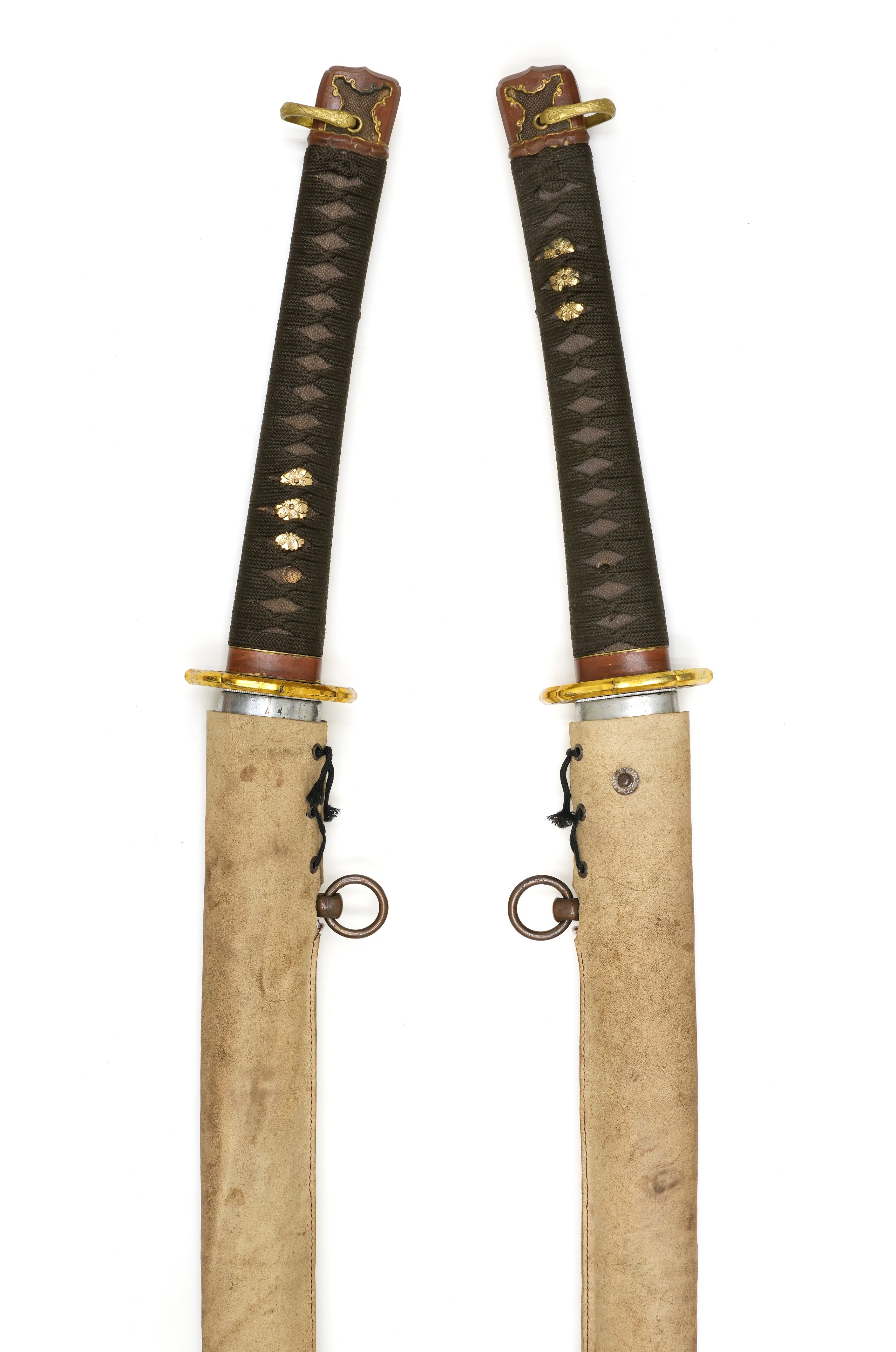
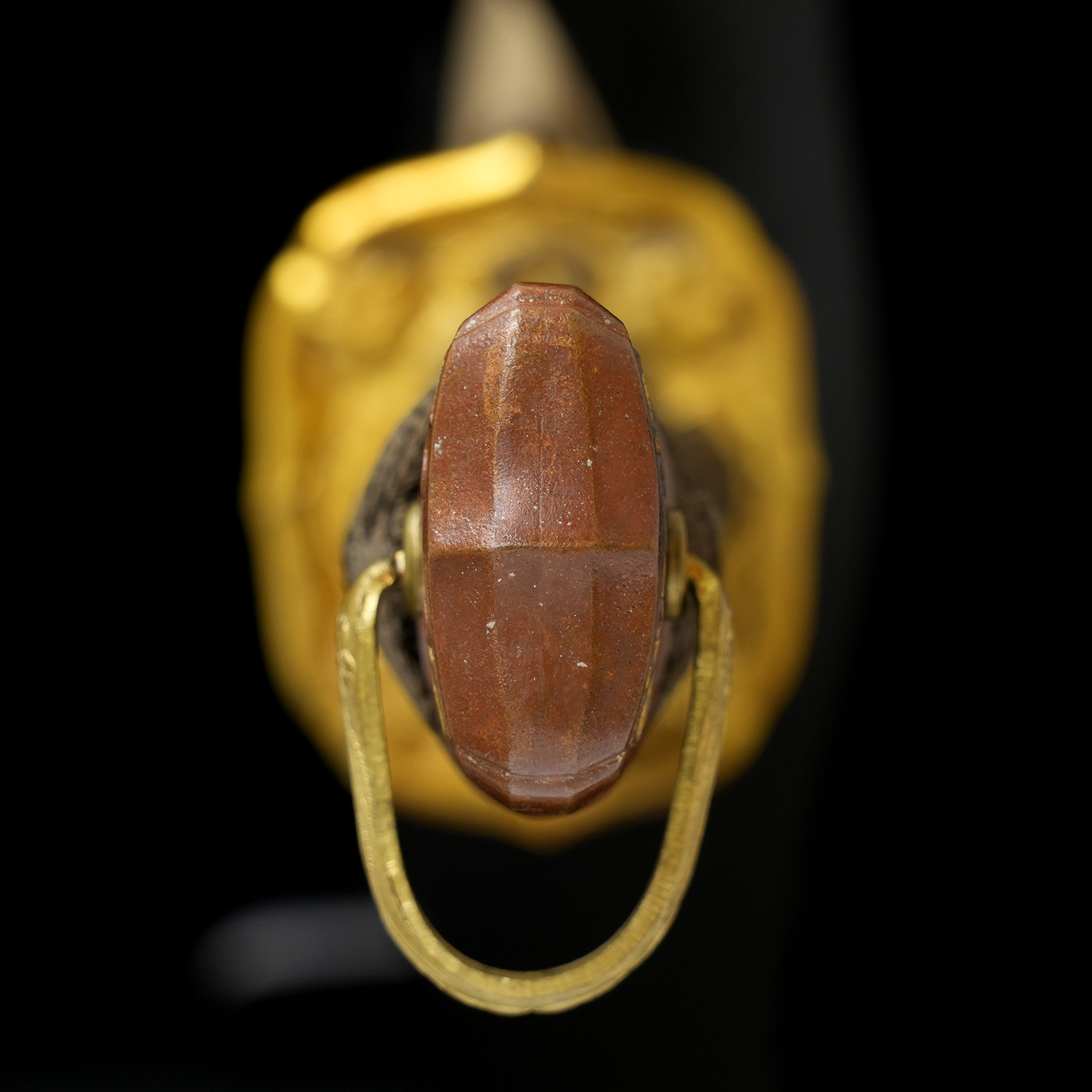
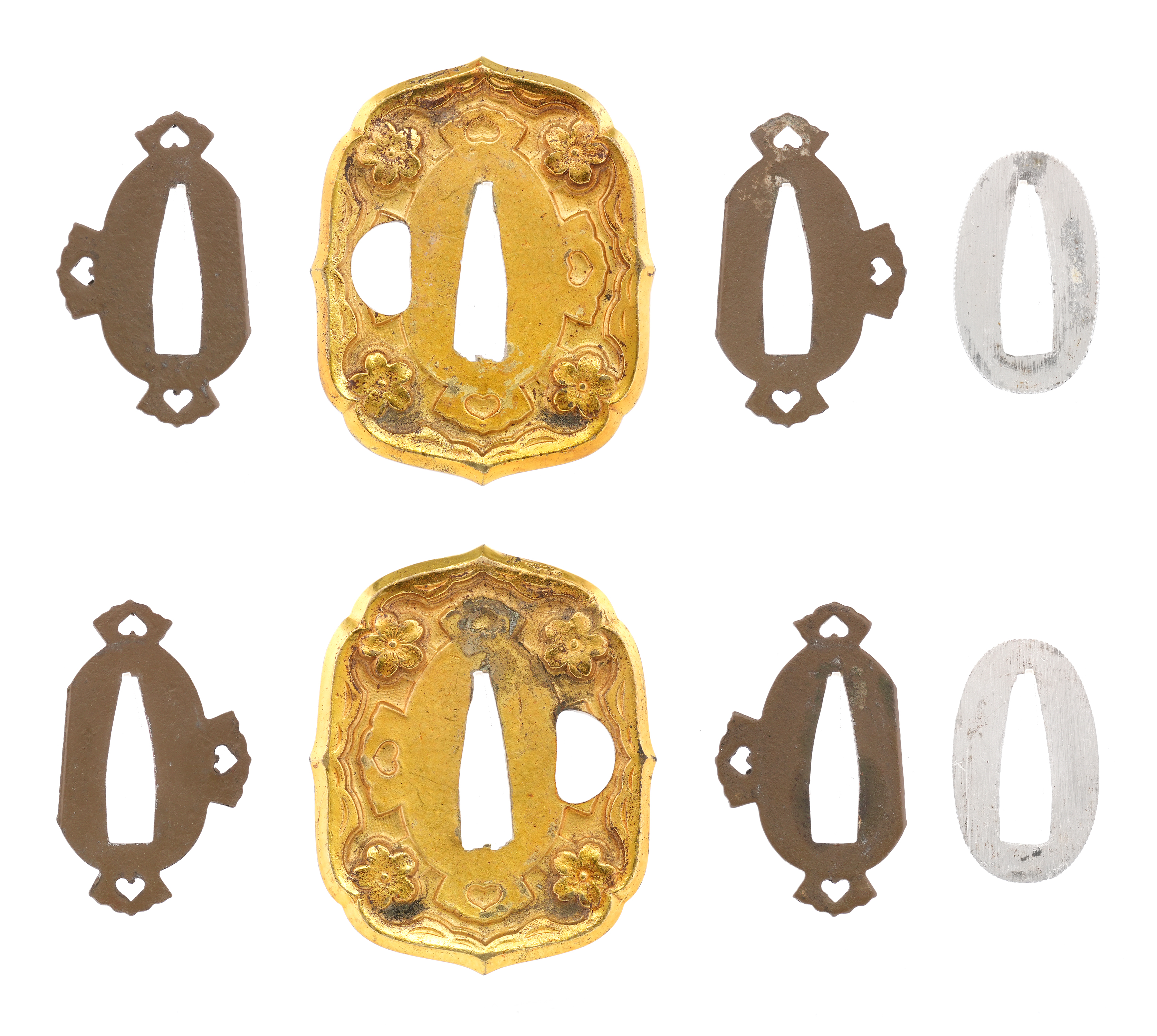
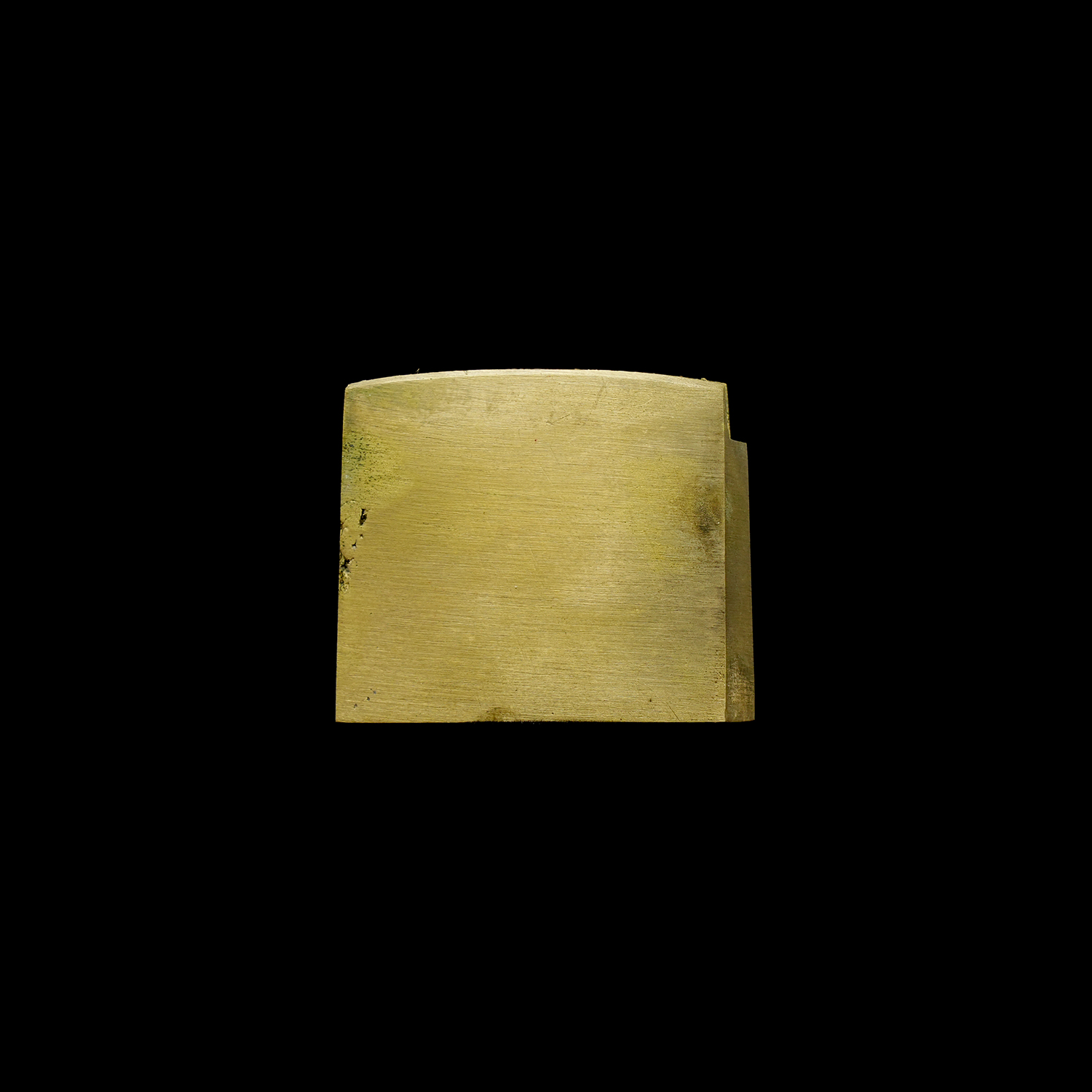
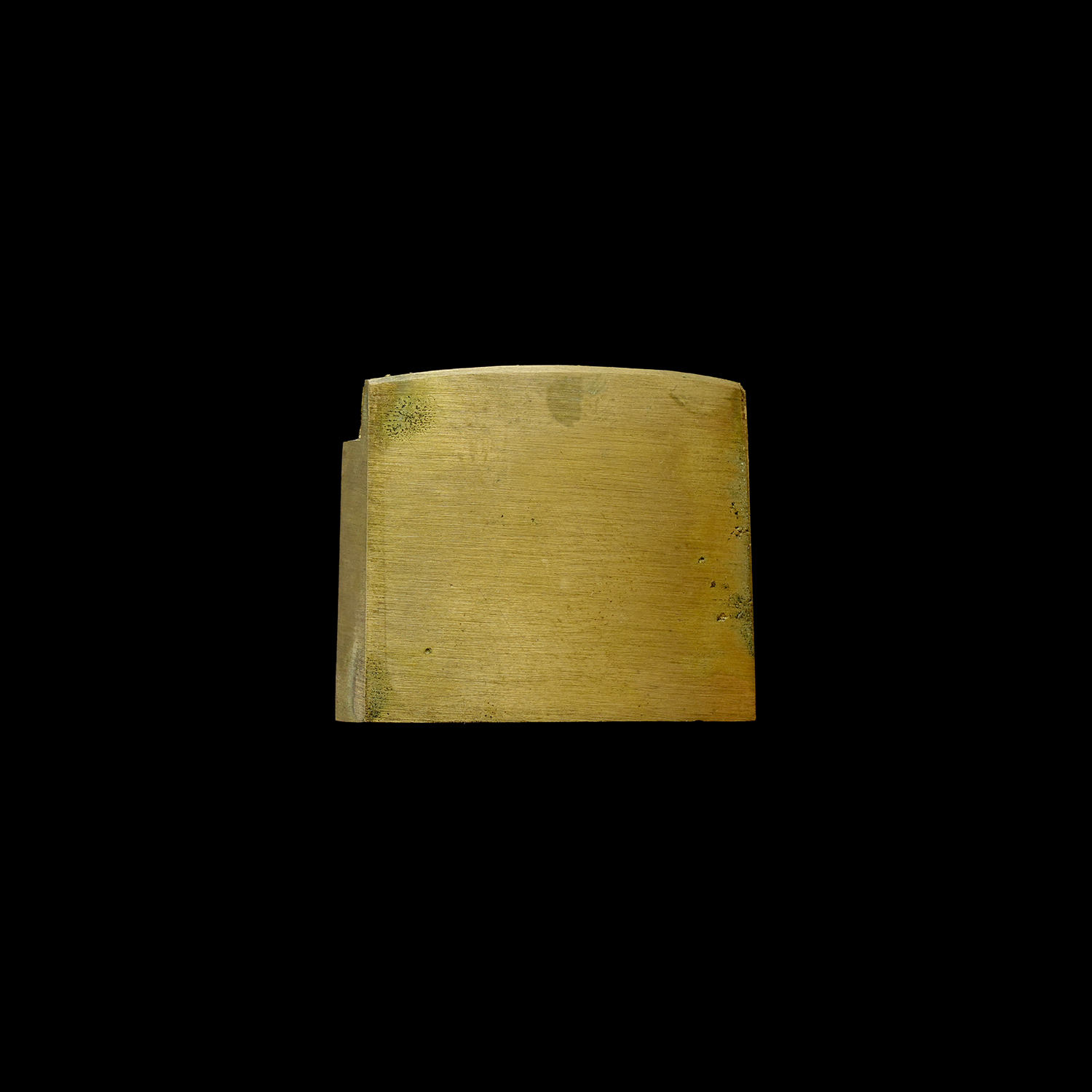
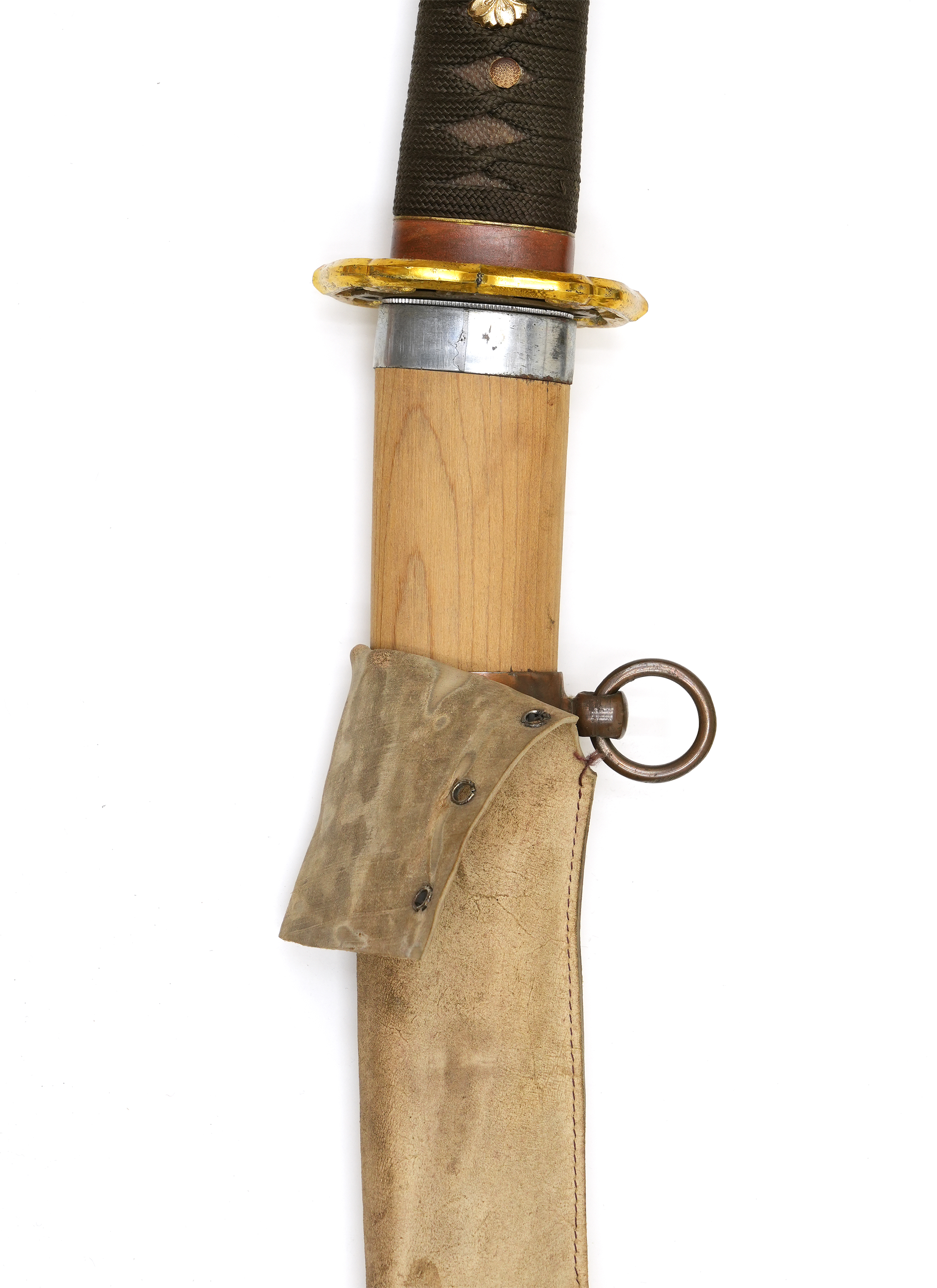
The accompanying koshirae is a Type 98 Army informal guno koshirae, and the fuchi-kashira lack the engraved cherry blossoms and leaves, being fitted with simple yet practical migaki-ji finished kanagu. Indigo-dyed same was used for the tsuka, and judging from the fact that the corners of the cherry blossoms on the tsuba are somewhat rounded, it is inferred that it was custom-made between around Showa 19 and just before the end of the war; furthermore, from the relationship between the two mekugi-ana and the position of the yakidashi, it is conjectured that a machi-okuri was performed at the request of the owner at that time. Tsuba-nari is observed, but there is no rattling in the tsuka and it is firm. Originally, a leather seppa with a snap fastener should have been attached, but it is currently lost, so if you add one seppa of appropriate thickness, the vertical rattling of the tsuba will disappear.
Tadamasa's work is a sword already certified as a sharp blade by the former military, and its practicality is guaranteed. It is a blade that can be recommended with confidence for shidan-keiko to check the hasuji, or as a buyo-to. Please commission a solid shitaji-togi and keep it as a companion for your training.
Machine translation from the shop's Japanese · may contain errors ·
Real name, Suzuki Tetsutaro. He resided at 1-3508 Asahi-cho, Utsunomiya-shi, Tochigi-ken. As an army-appointed swordsmith, he forged many sharp swords before and during the war, and at the Army Gunto Art Encouragement Society held in Showa 19, he received the Chairman's Award in the test-cutting category.
This katana has a grand sugata with a well-proportioned difference between the width at the moto and saki and an extended chu-kissaki; due to the rust having been removed by an amateur in its current state, it is difficult to discern the jigane, but it is thought to be a sword forged using traditional methods. The hamon is a bright and clear nioiguchi with small gunome-midare, mixed with togari-gokoro, containing ashi and yo, and the boshi is sugu with a maru-kaeri.
The accompanying koshirae is a Type 98 Army informal guno koshirae, and the fuchi-kashira lack the engraved cherry blossoms and leaves, being fitted with simple yet practical migaki-ji finished kanagu. Indigo-dyed same was used for the tsuka, and judging from the fact that the corners of the cherry blossoms on the tsuba are somewhat rounded, it is inferred that it was custom-made between around Showa 19 and just before the end of the war; furthermore, from the relationship between the two mekugi-ana and the position of the yakidashi, it is conjectured that a machi-okuri was performed at the request of the owner at that time. Tsuba-nari is observed, but there is no rattling in the tsuka and it is firm. Originally, a leather seppa with a snap fastener should have been attached, but it is currently lost, so if you add one seppa of appropriate thickness, the vertical rattling of the tsuba will disappear.
Tadamasa's work is a sword already certified as a sharp blade by the former military, and its practicality is guaranteed. It is a blade that can be recommended with confidence for shidan-keiko to check the hasuji, or as a buyo-to. Please commission a solid shitaji-togi and keep it as a companion for your training.
The twentieth century nearly killed the craft twice: wartime distortion, then the occupation ban. The NBTHK’s founding in 1948 and licensed forging from 1953 rebuilt the sword as an art, crowned by Living National Treasures and the mukansa rank.
We could not find an authenticity certificate on the seller’s listing. Japanese swords and fittings are normally papered by the NBTHK (or the NTHK). Without one, the attribution is the seller’s own assessment and has not been independently verified — treat it with caution and ask the dealer about certification before buying.
As a rule we do not accept returns, except when we have sent a different item from the one ordered or when there is a significant discrepancy between the description and the item. If you wish to return an item, please contact us within 3 days of its arrival and then send it back.

 NihontoWatch