The twentieth century nearly killed the craft twice: wartime distortion, then the occupation ban. The NBTHK’s founding in 1948 and licensed forging from 1953 rebuilt the sword as an art, crowned by Living National Treasures and the mukansa rank.
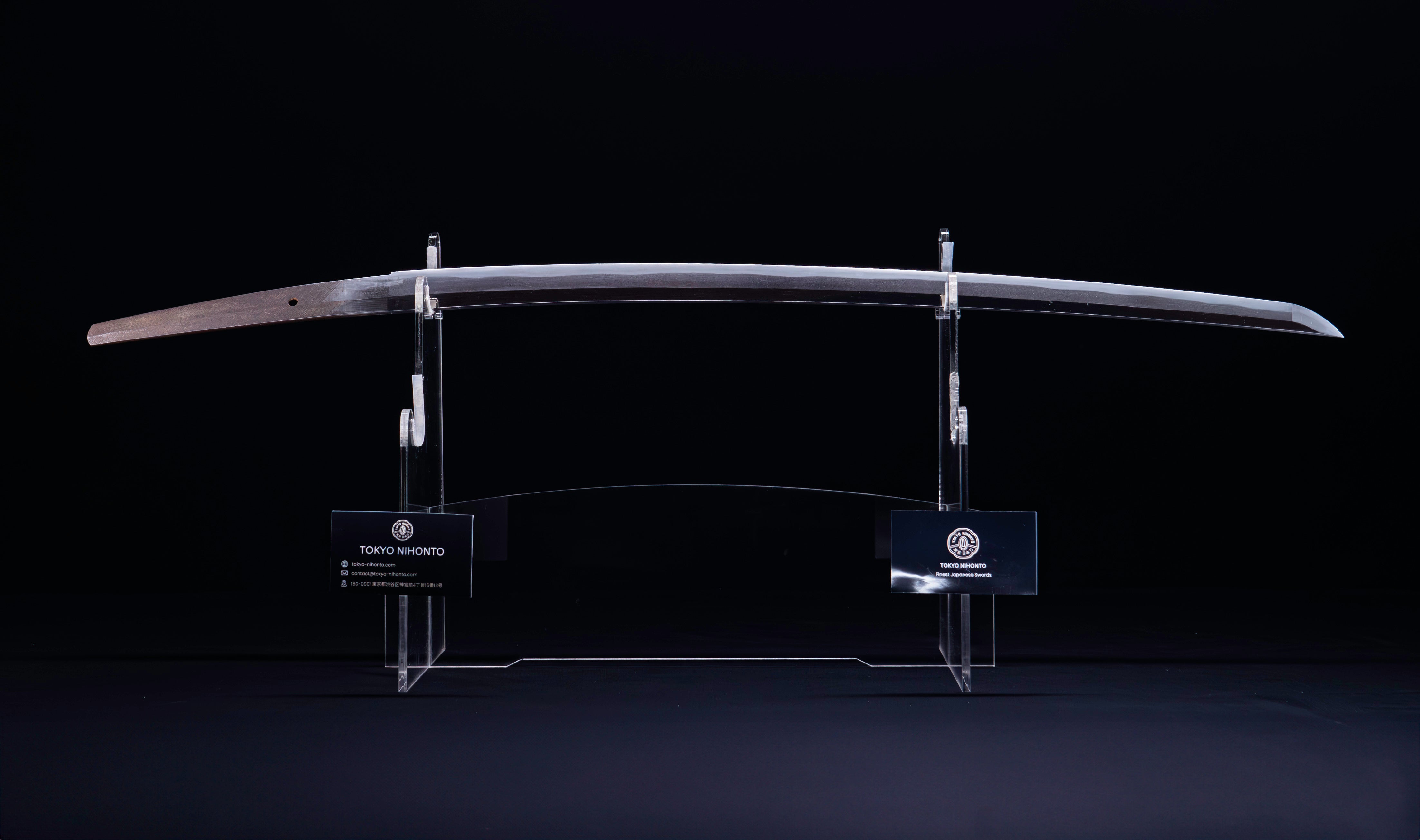
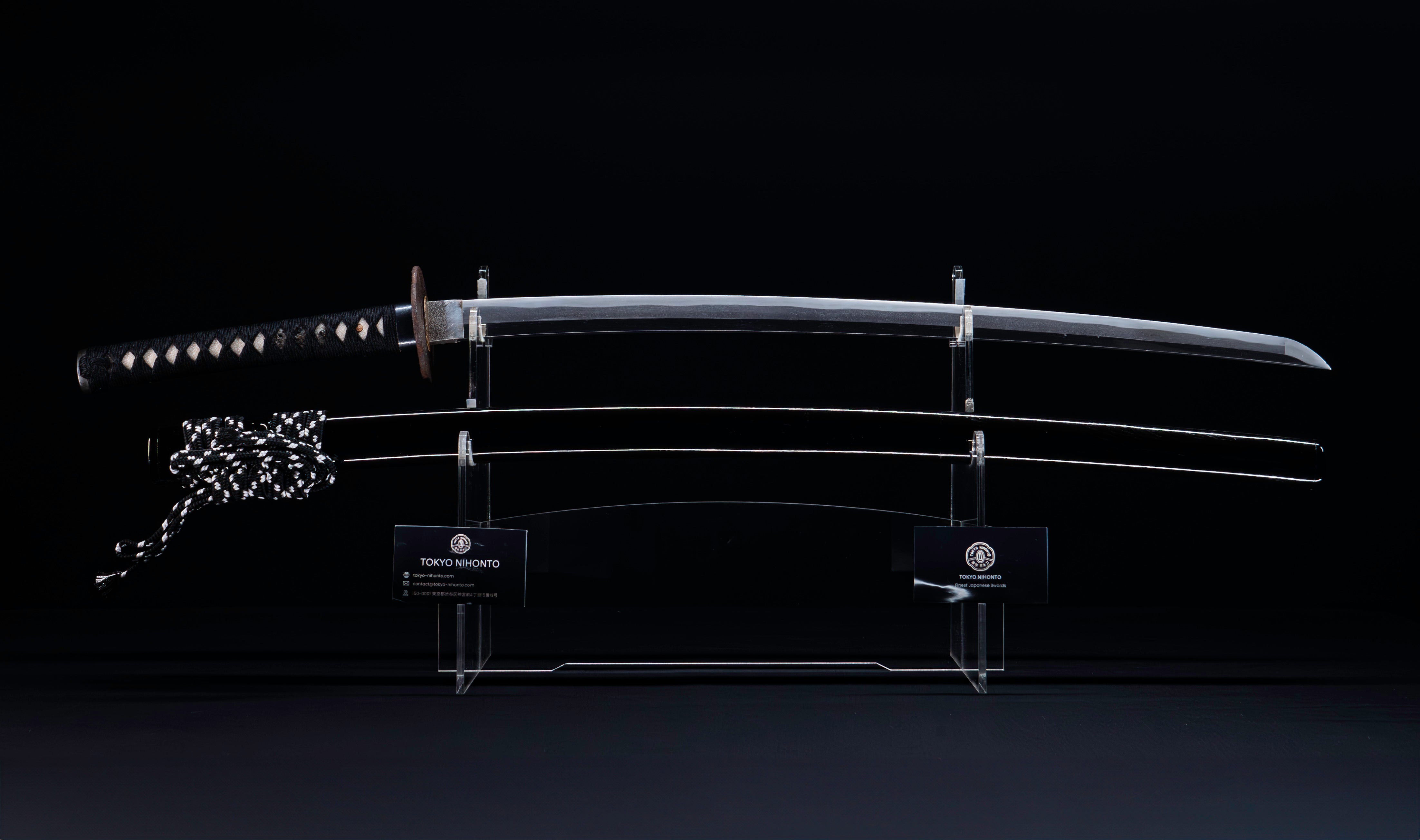
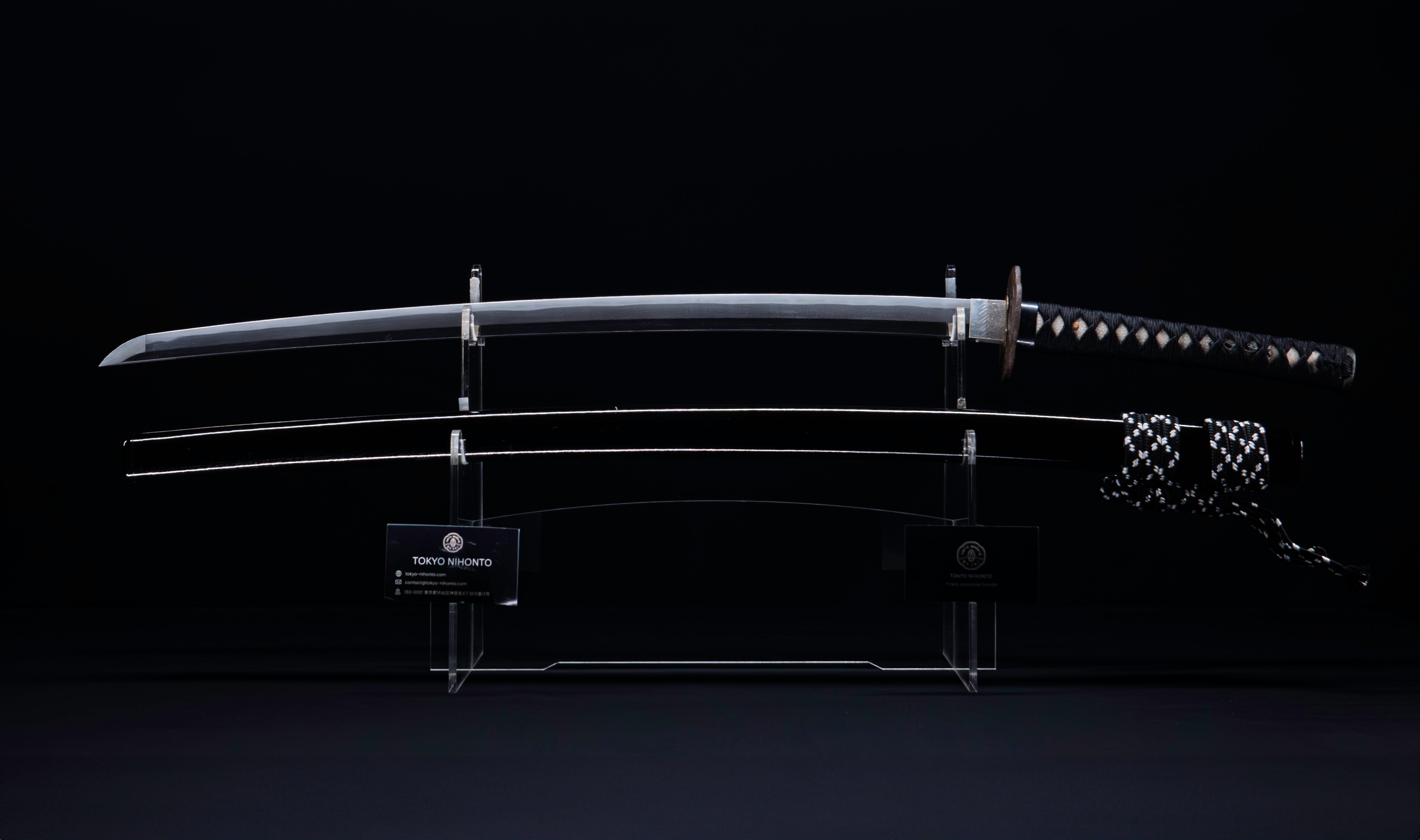
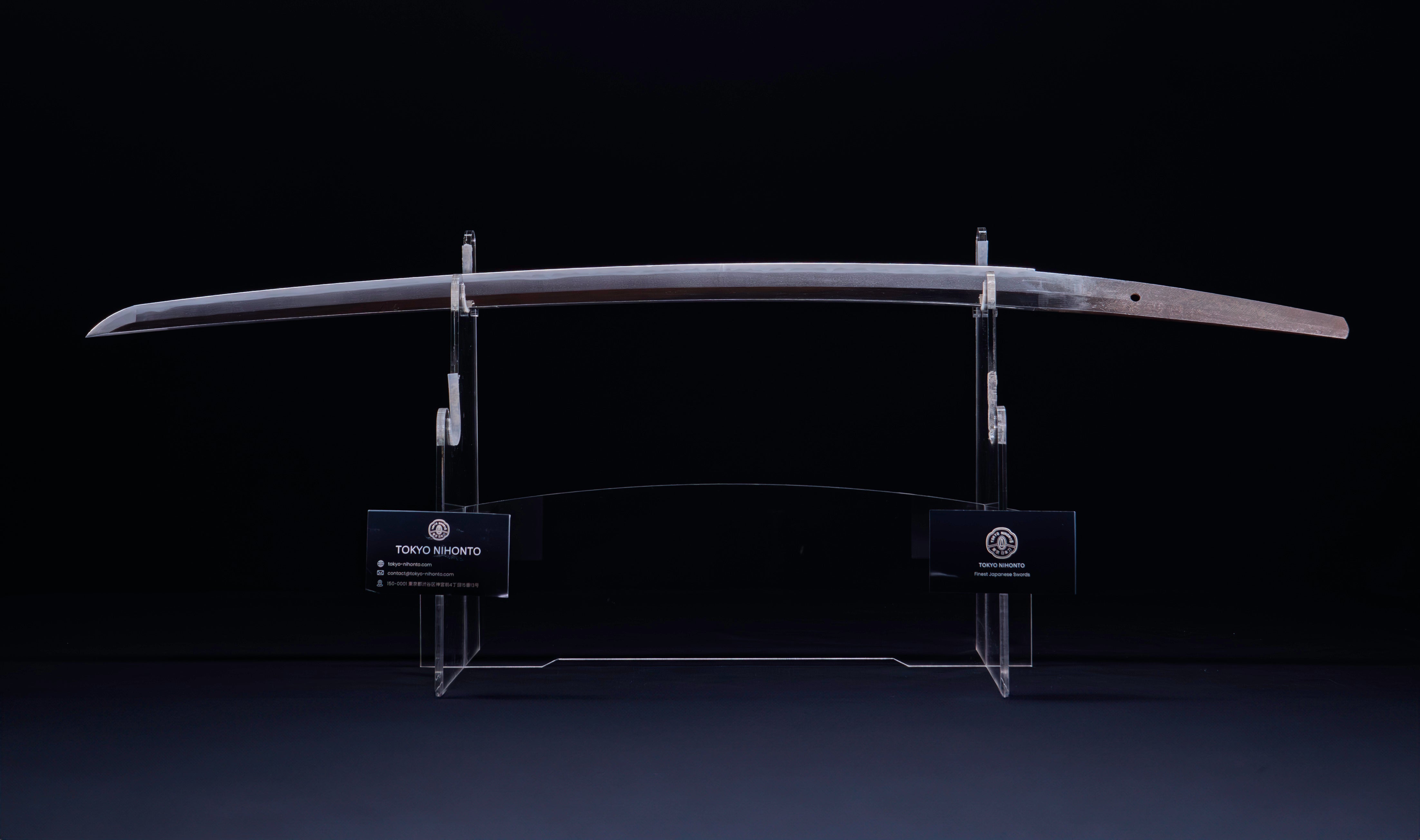
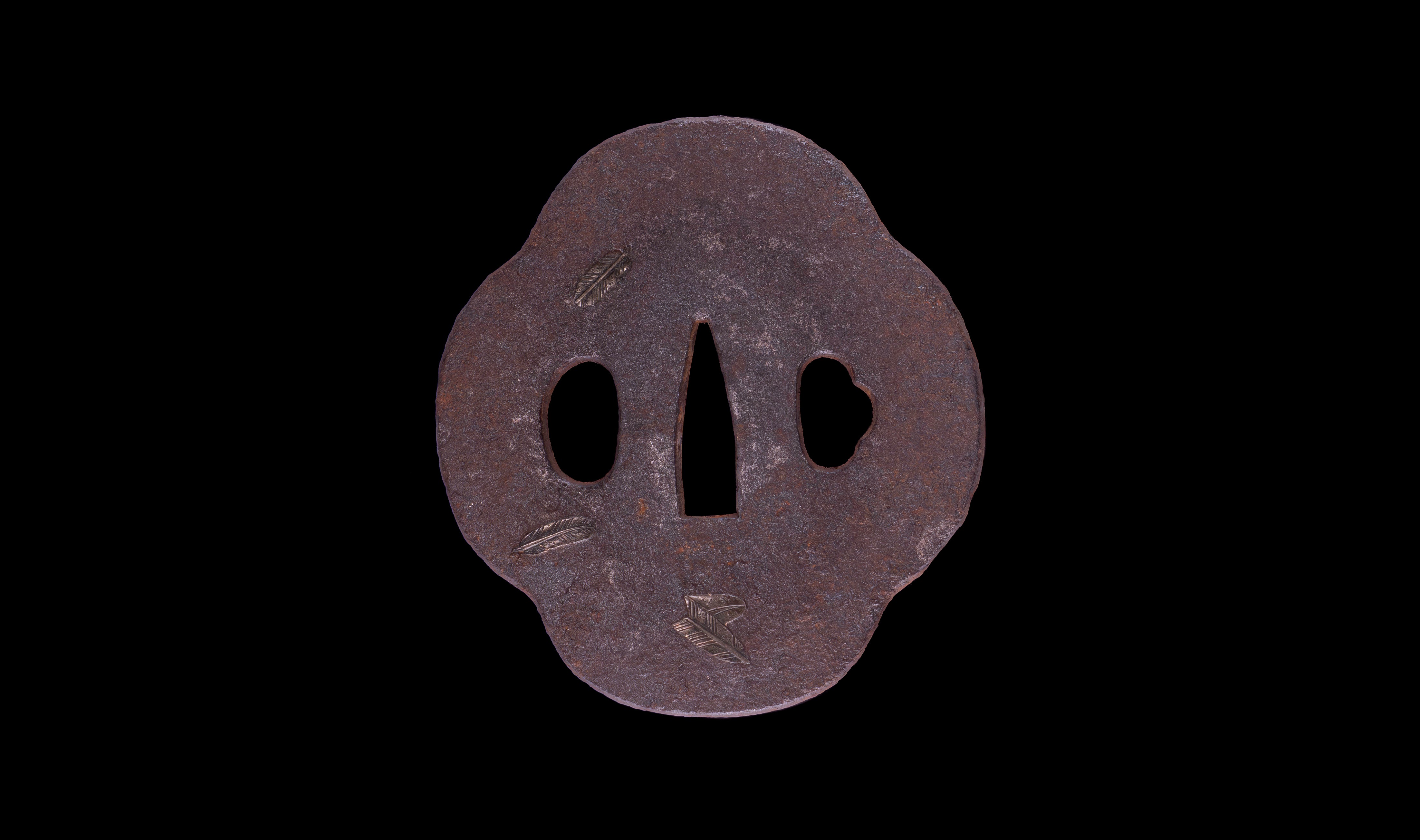
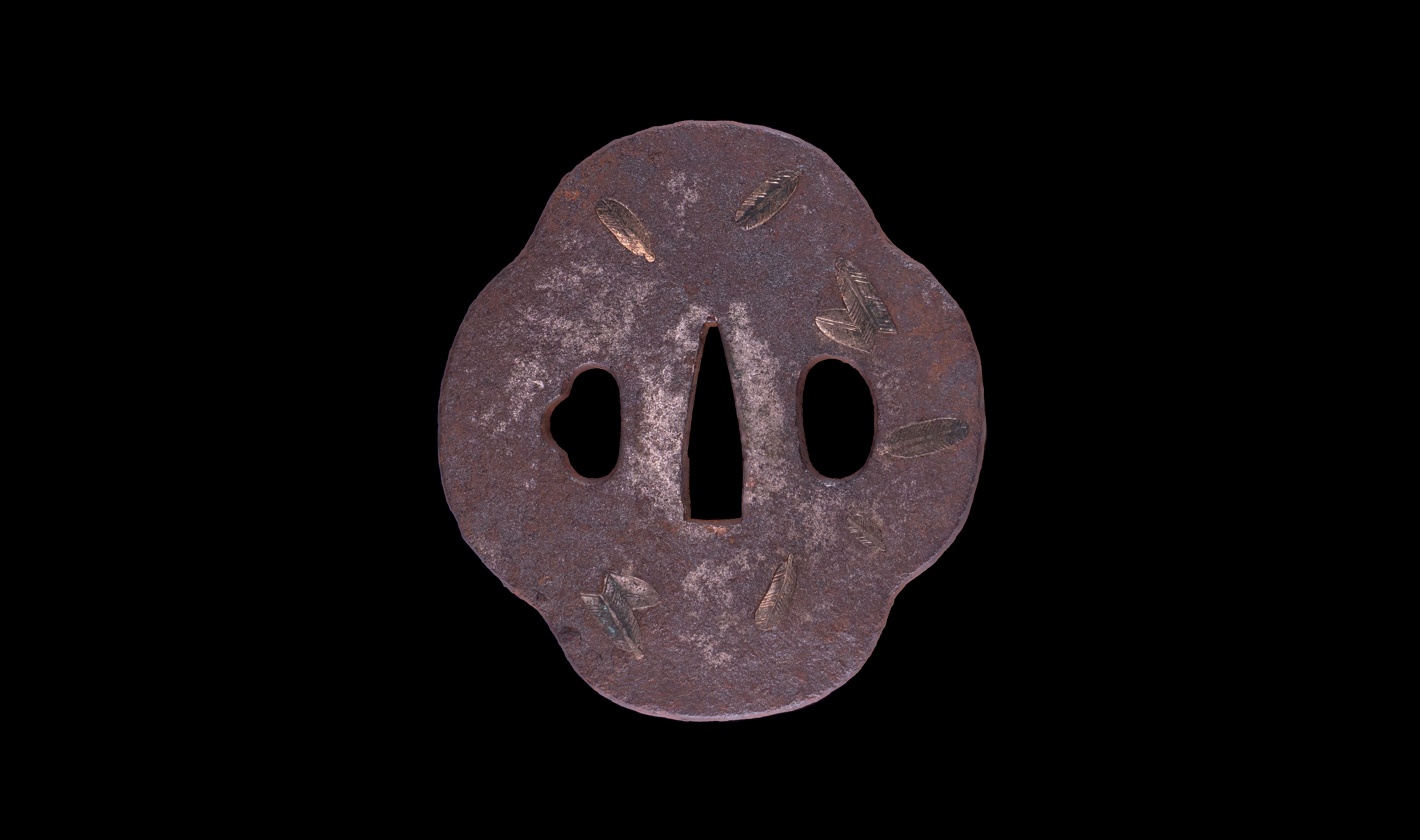
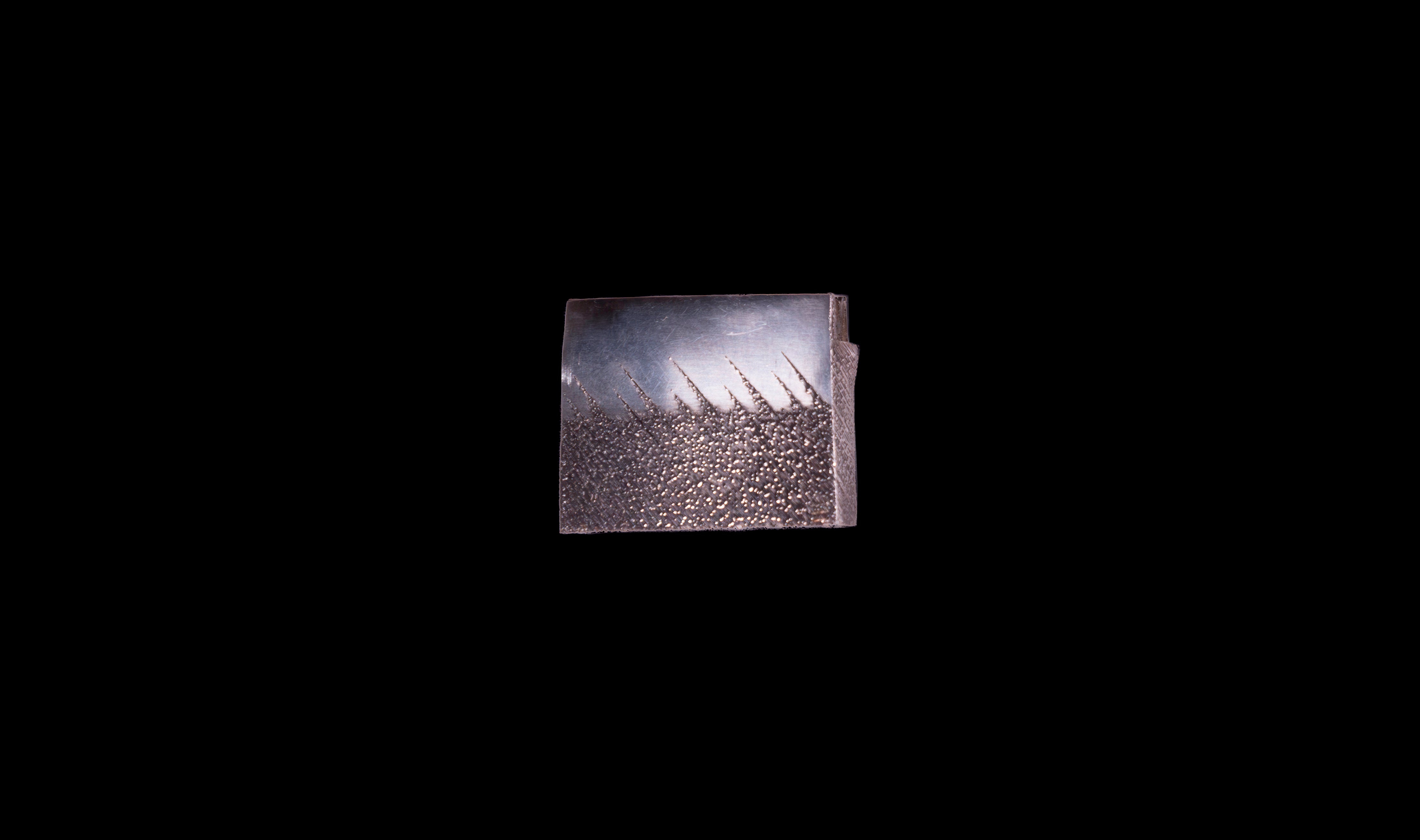
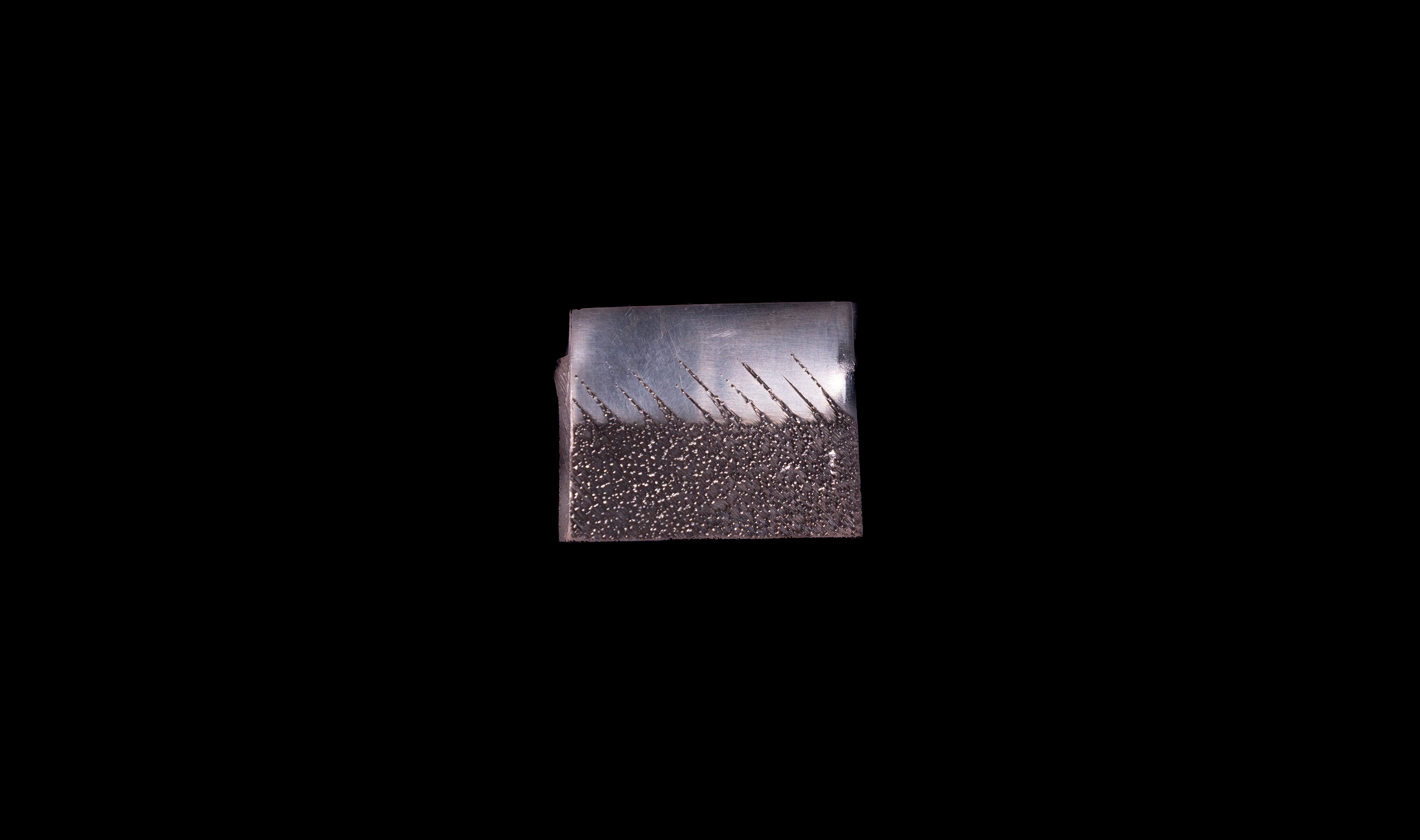
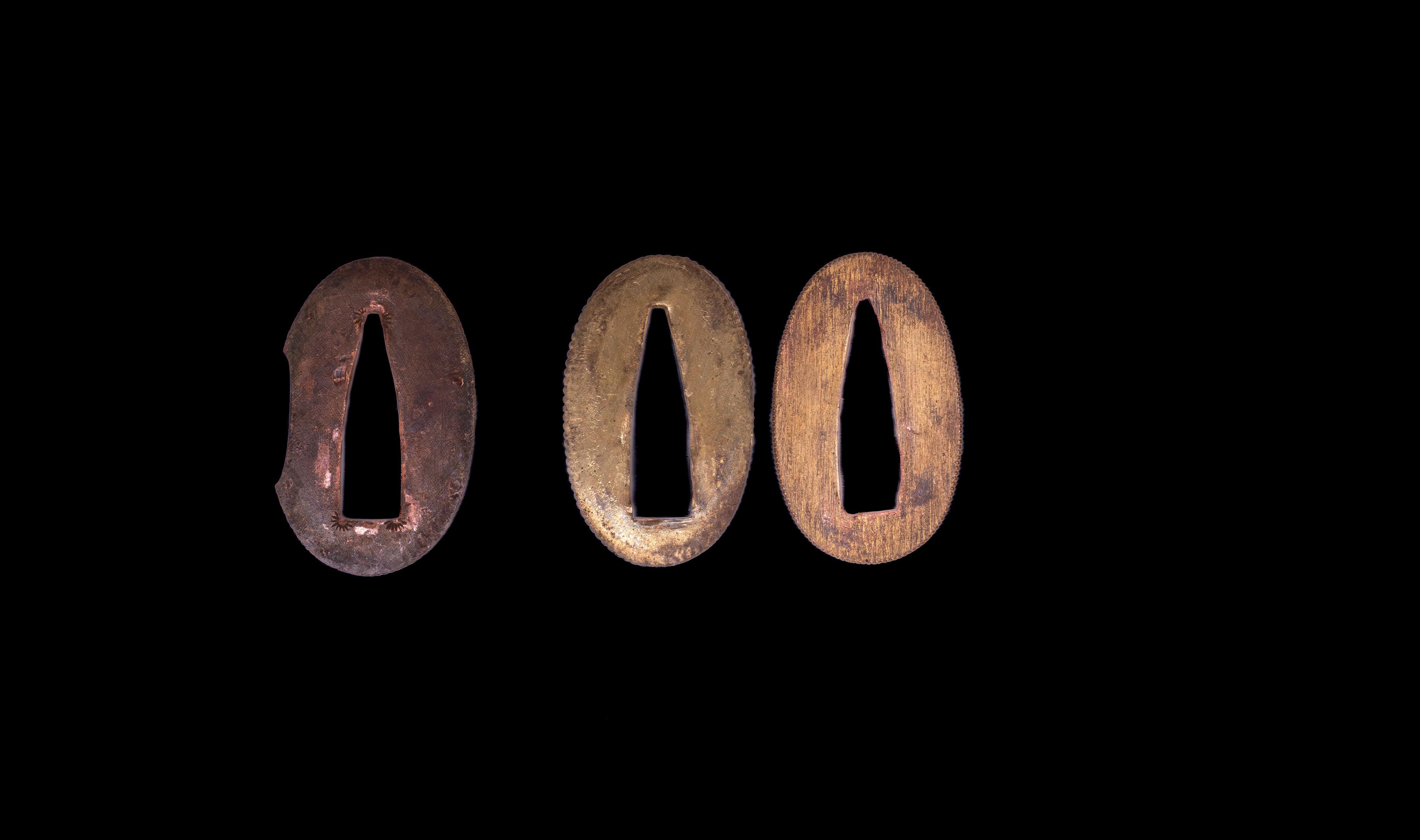
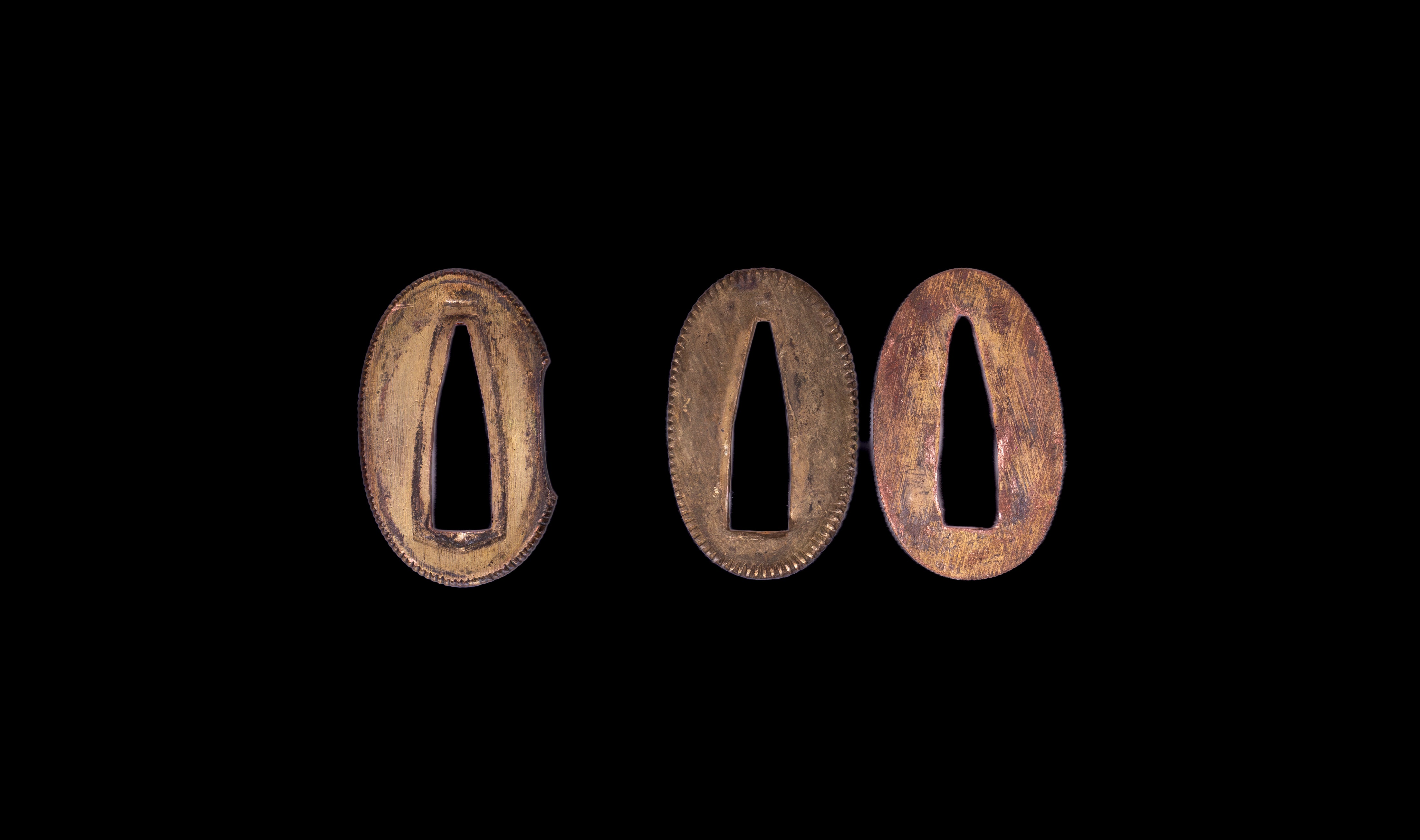
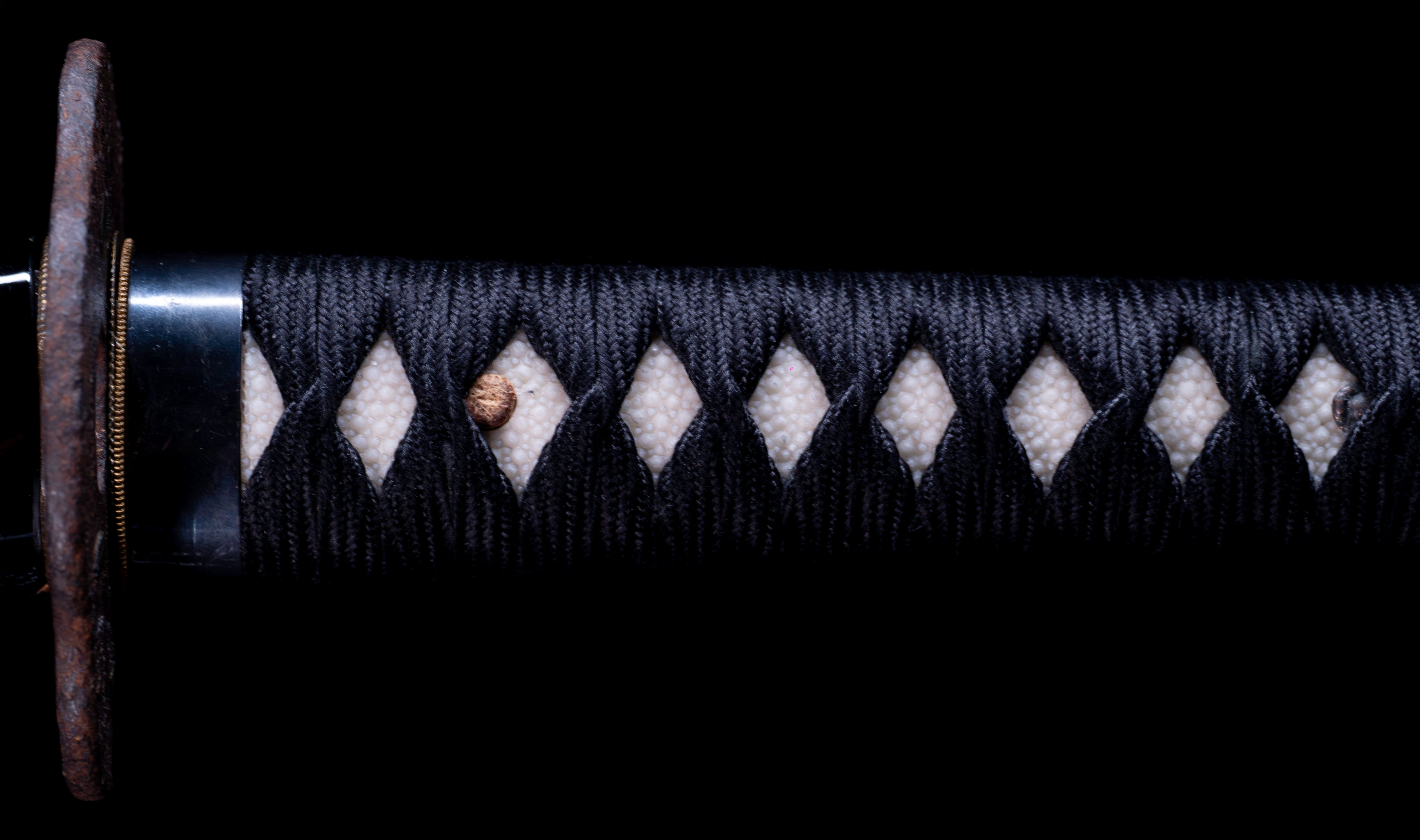
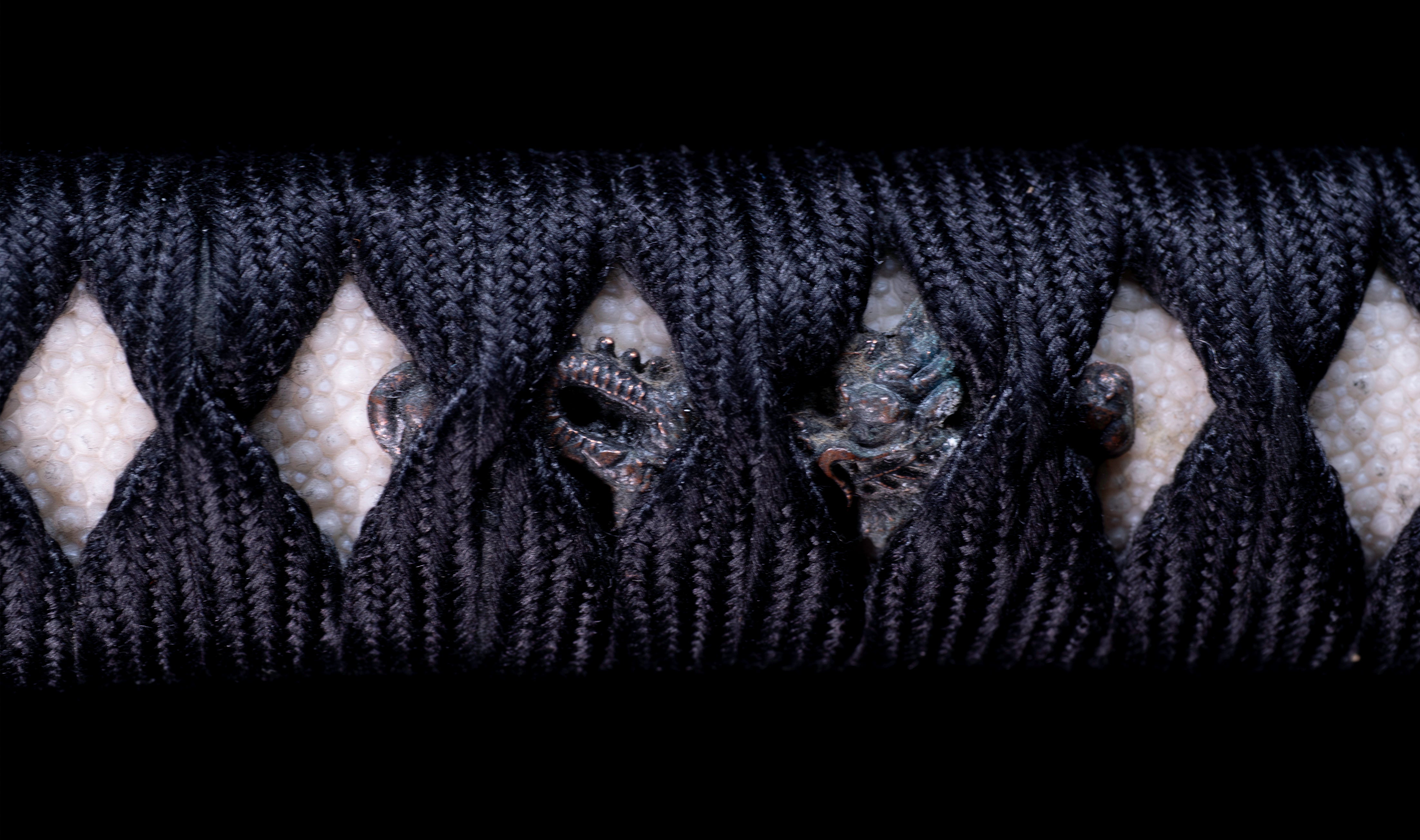
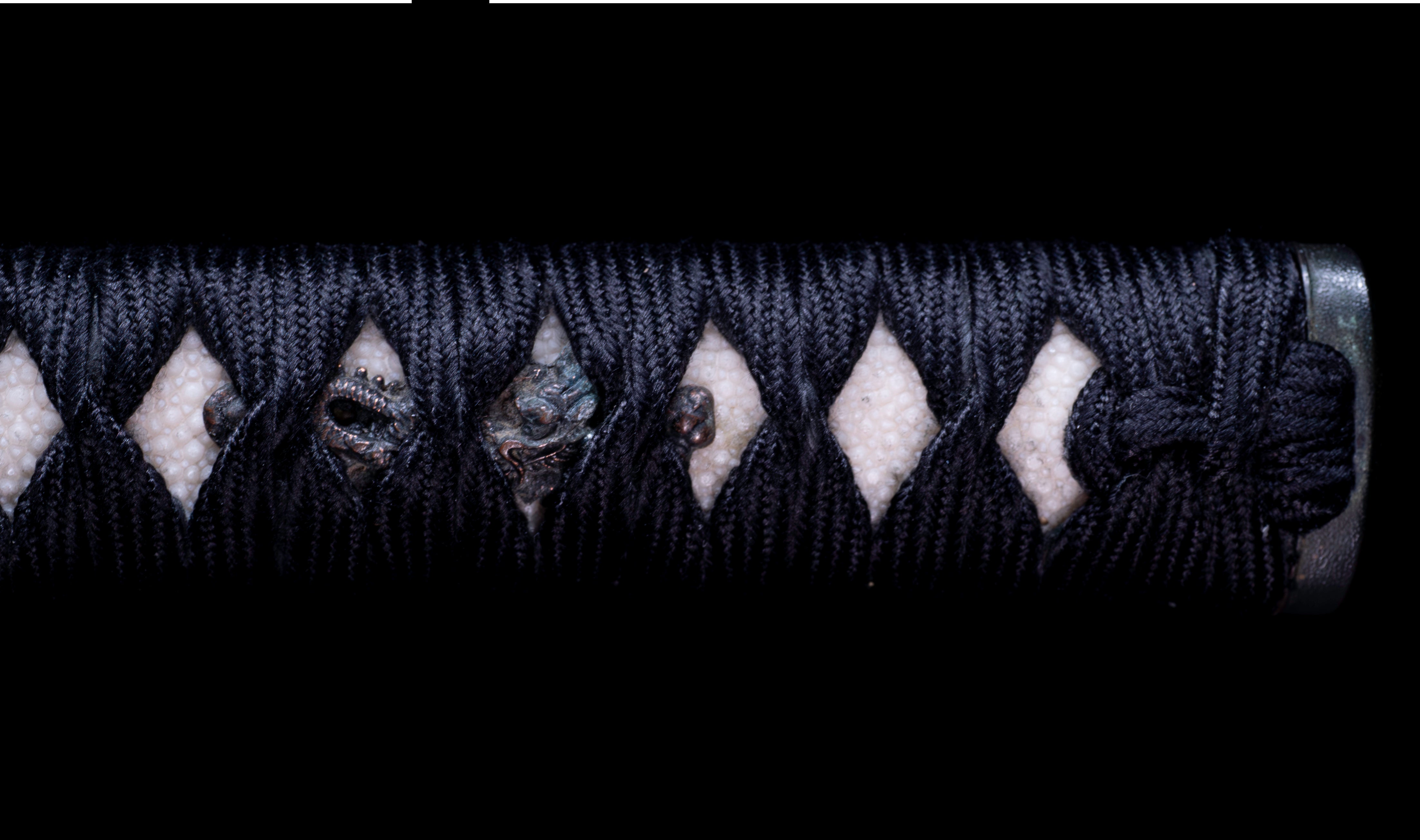
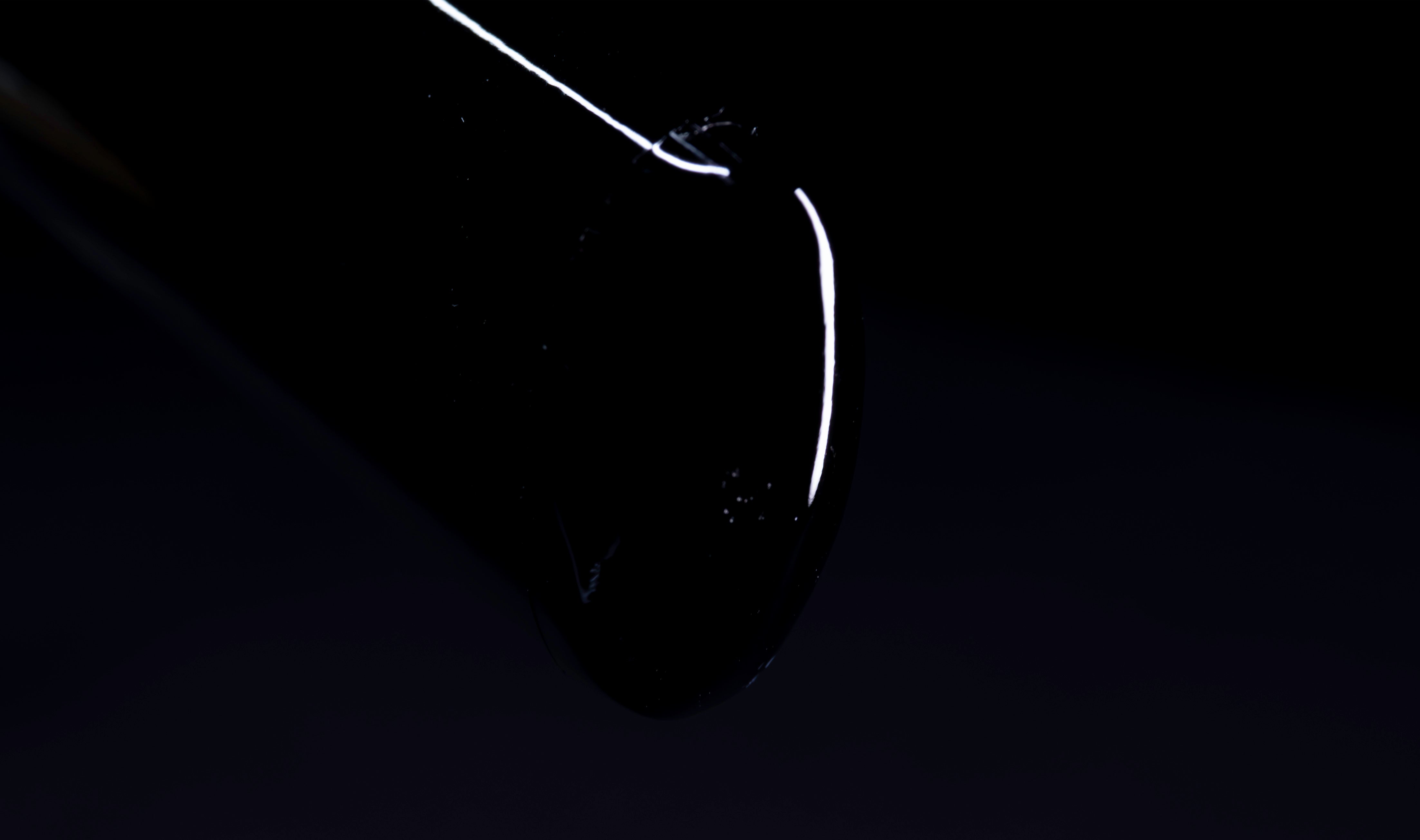
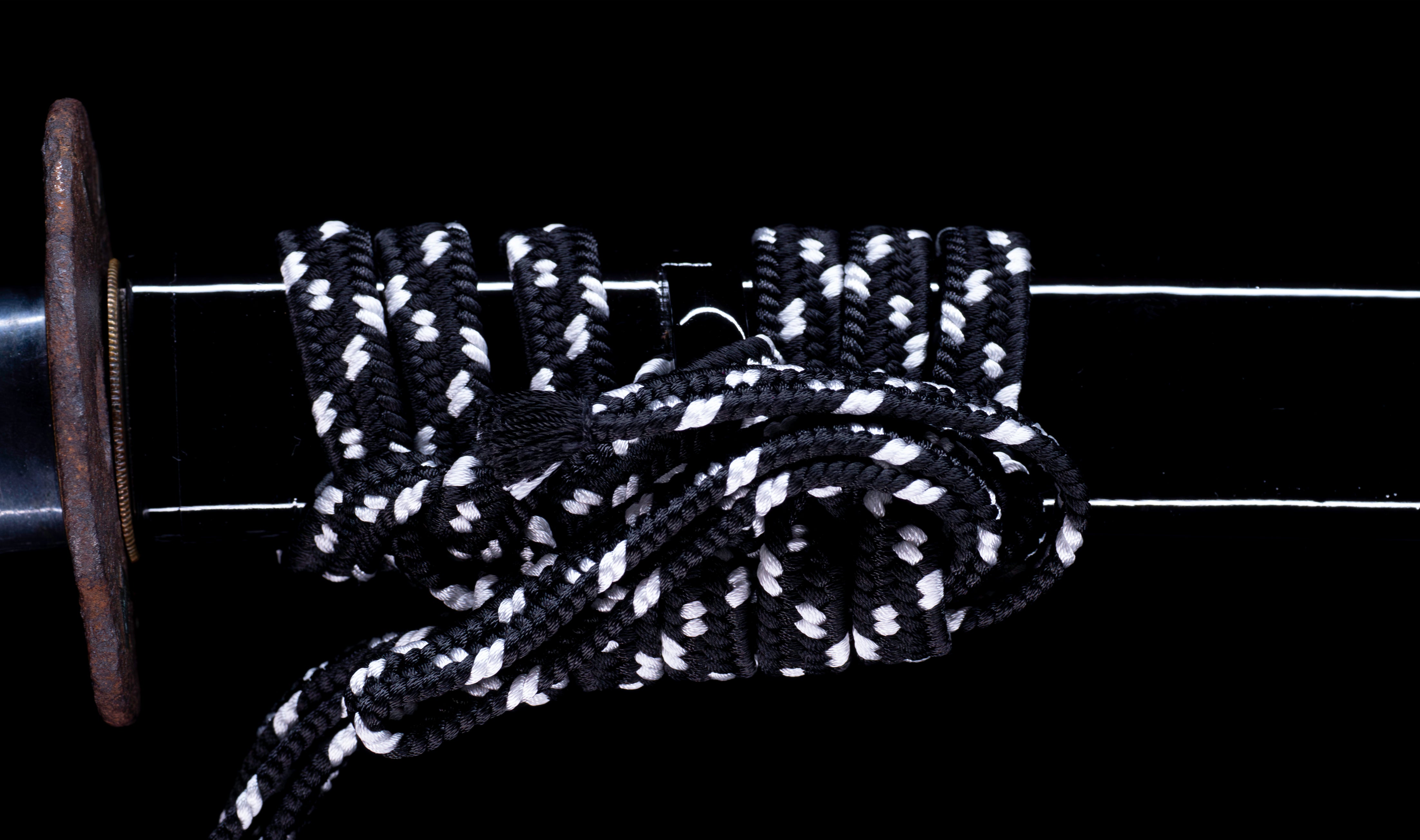
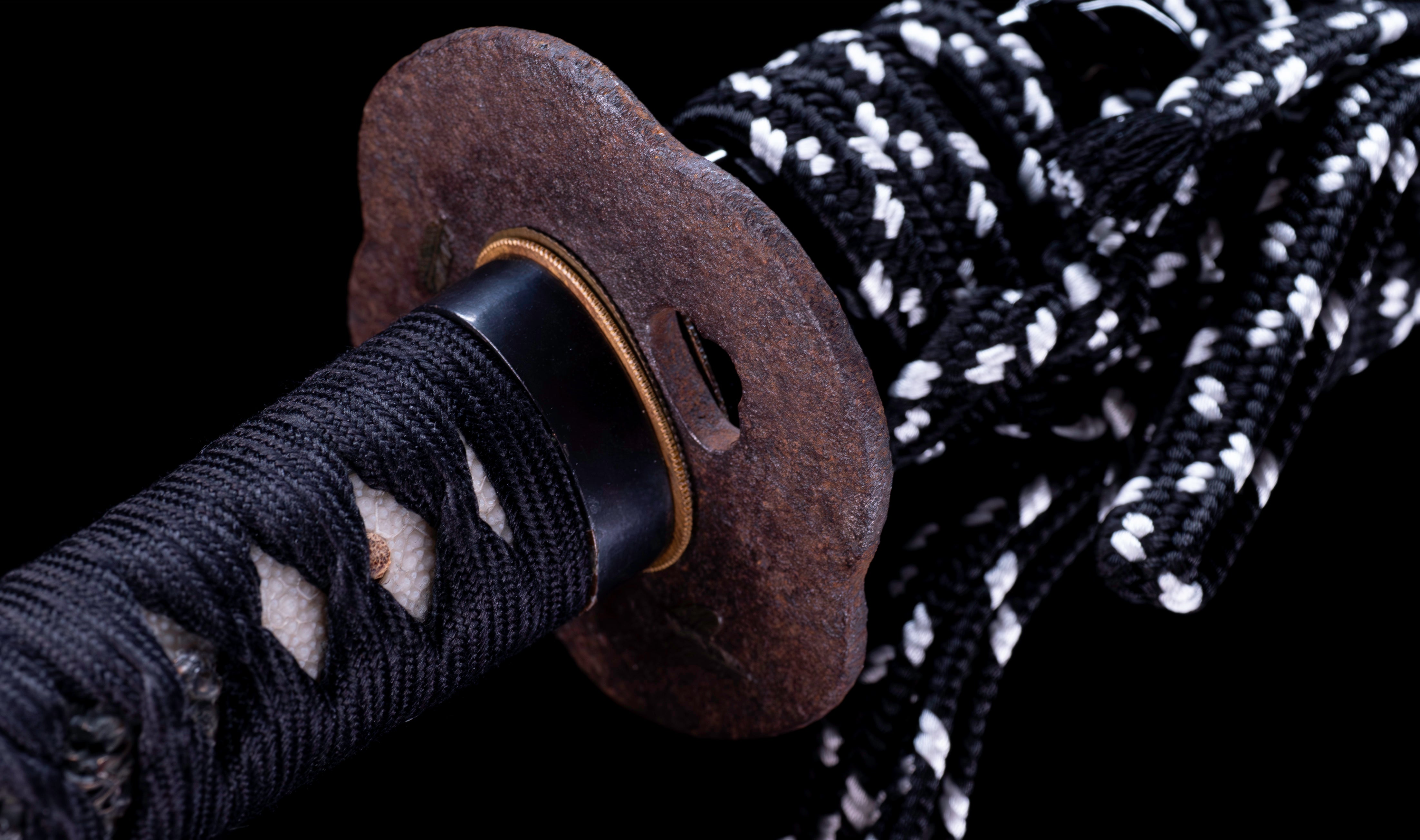
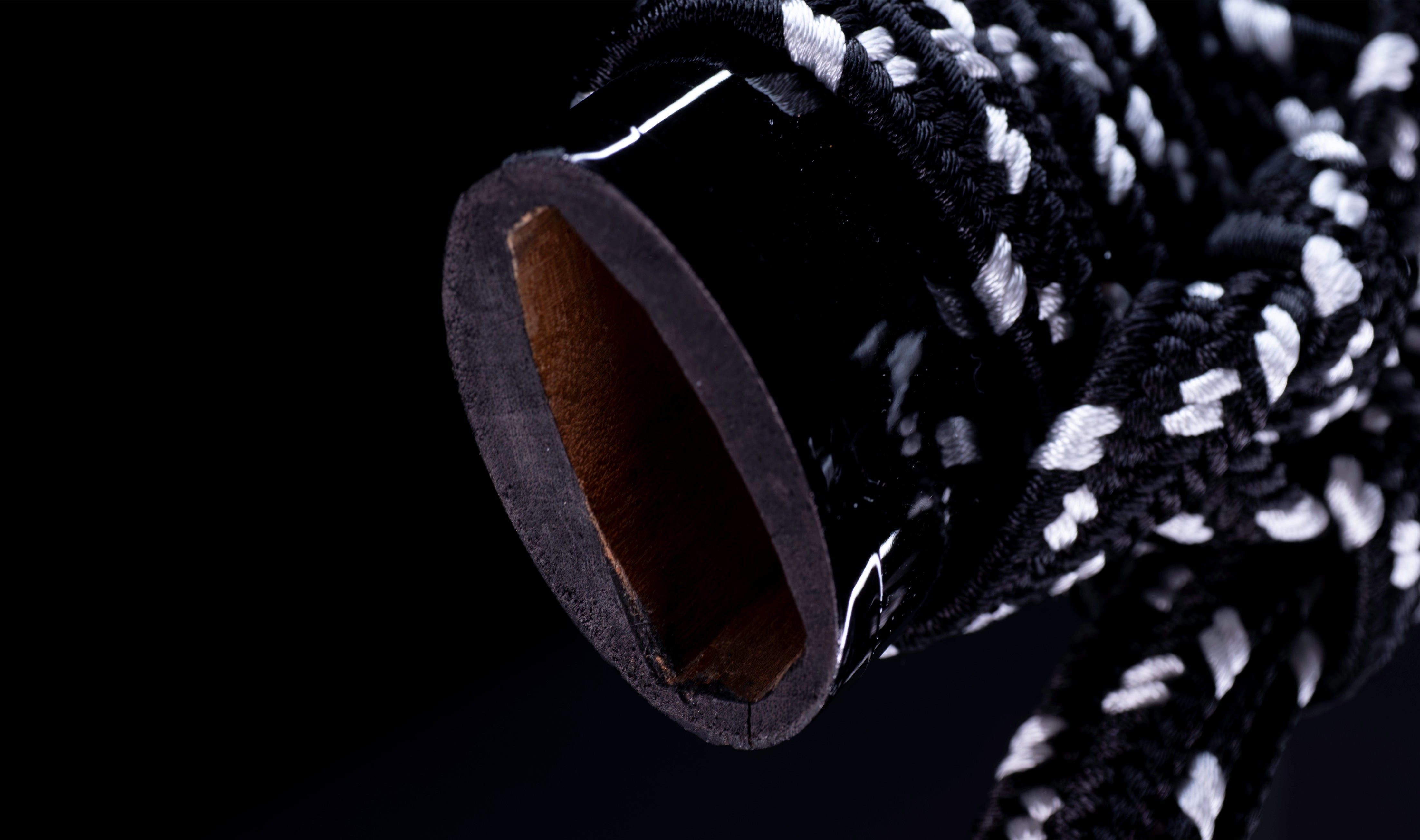
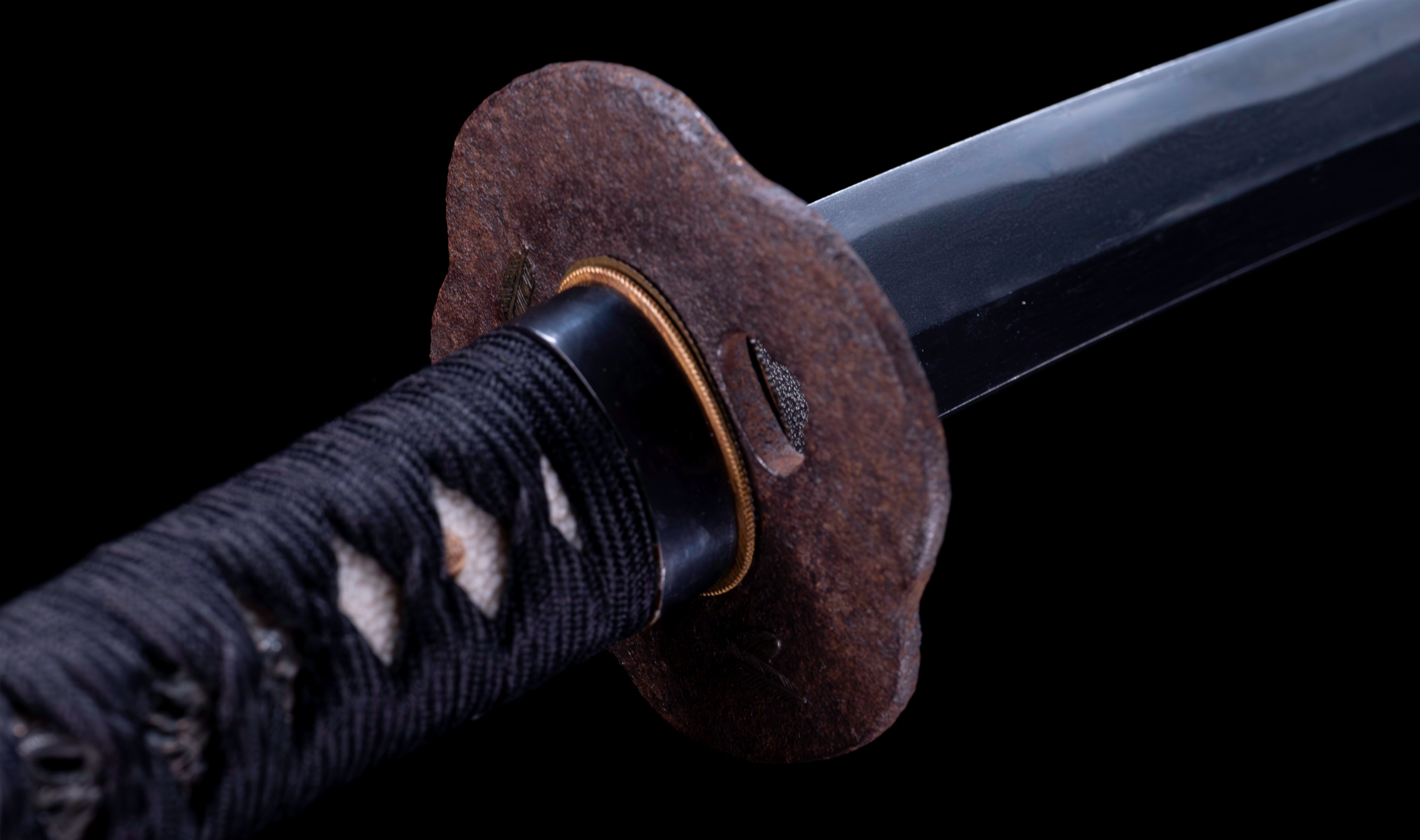
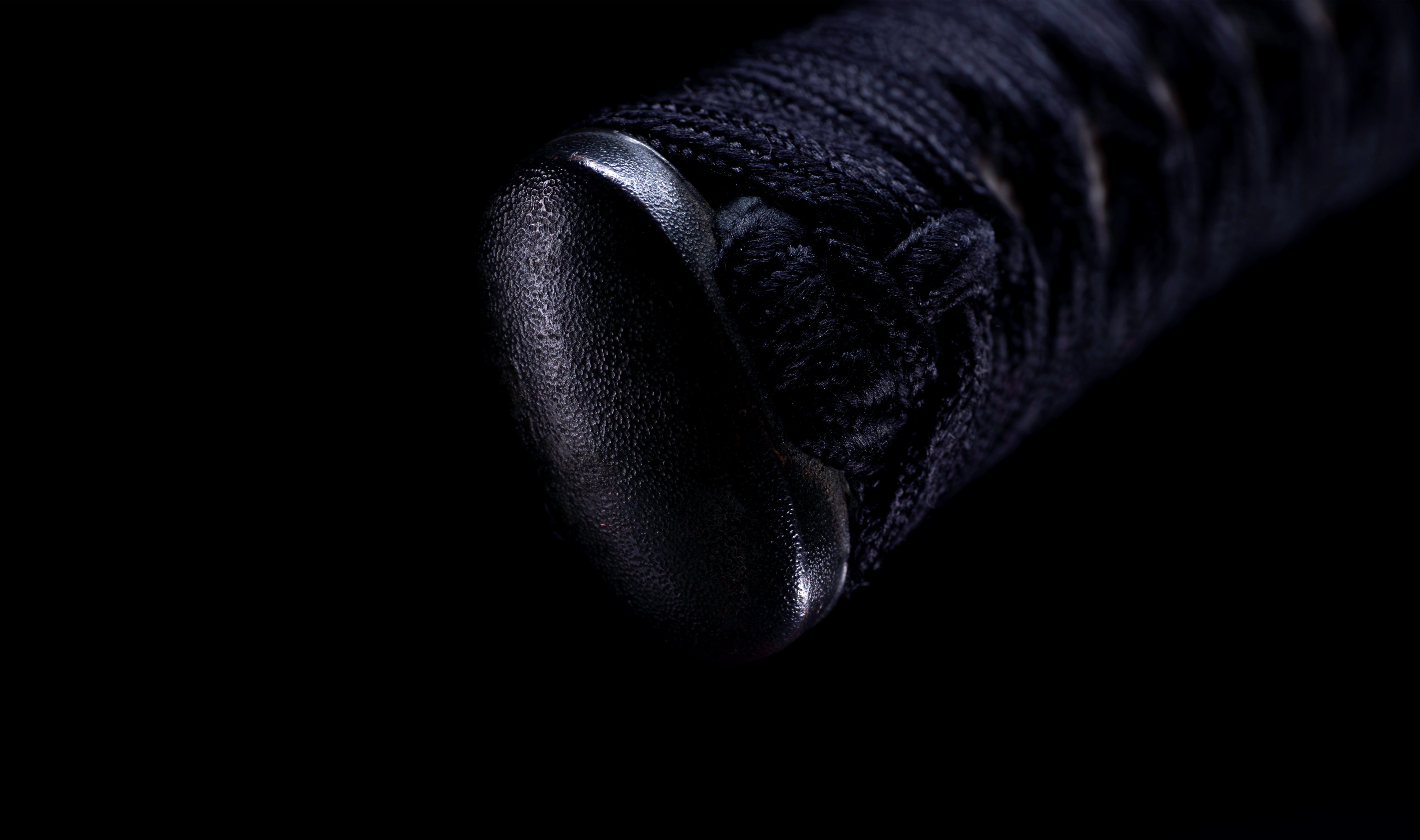
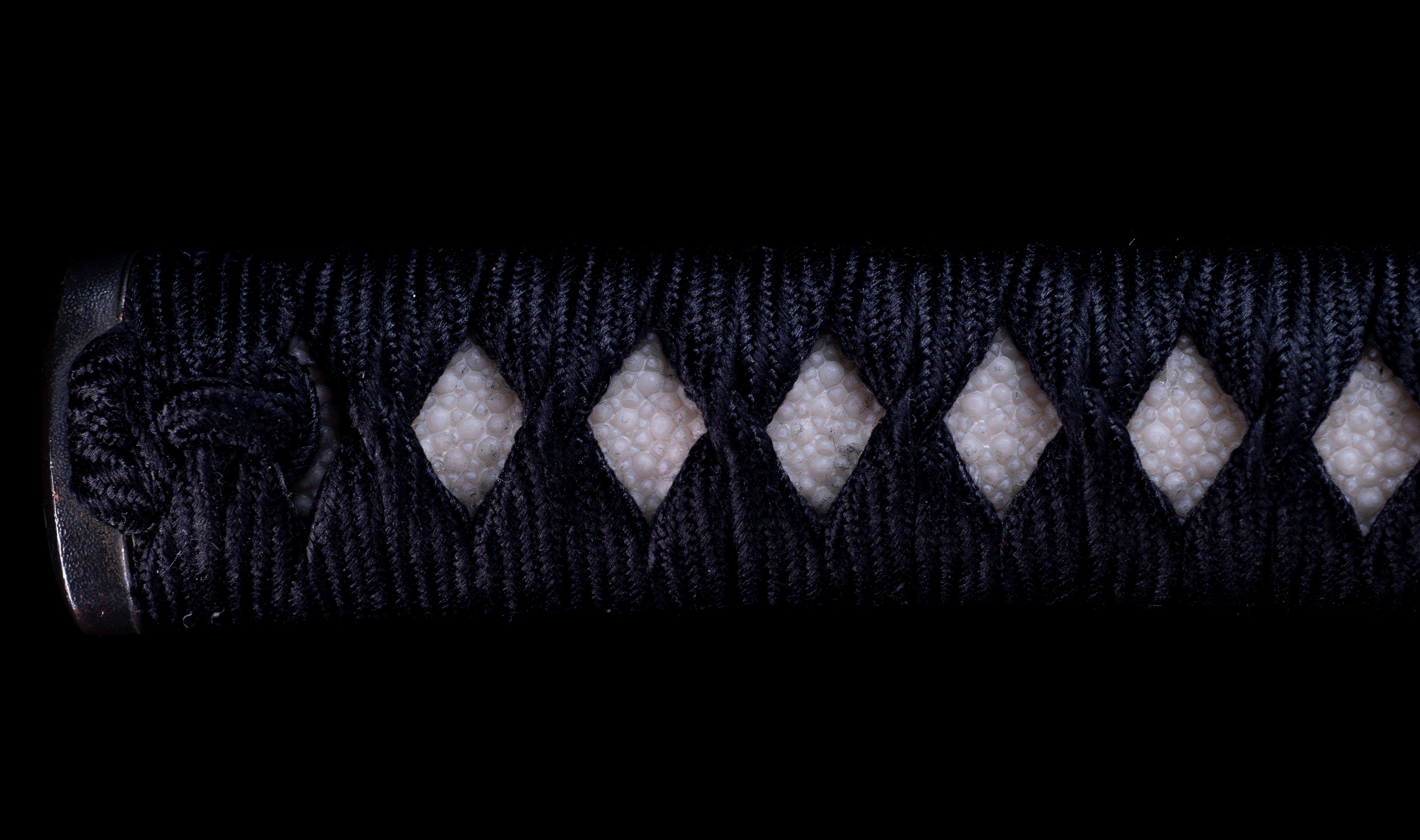
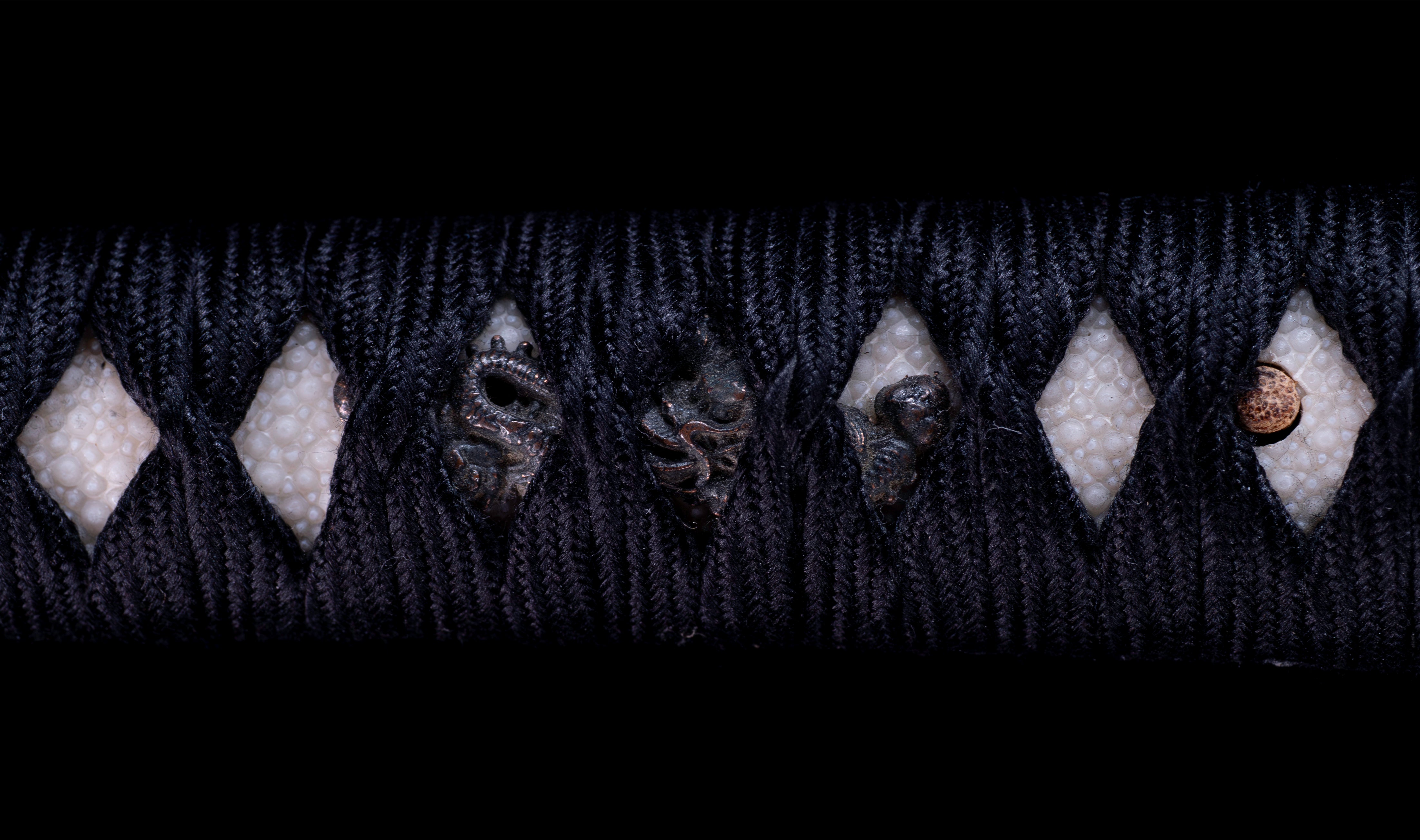
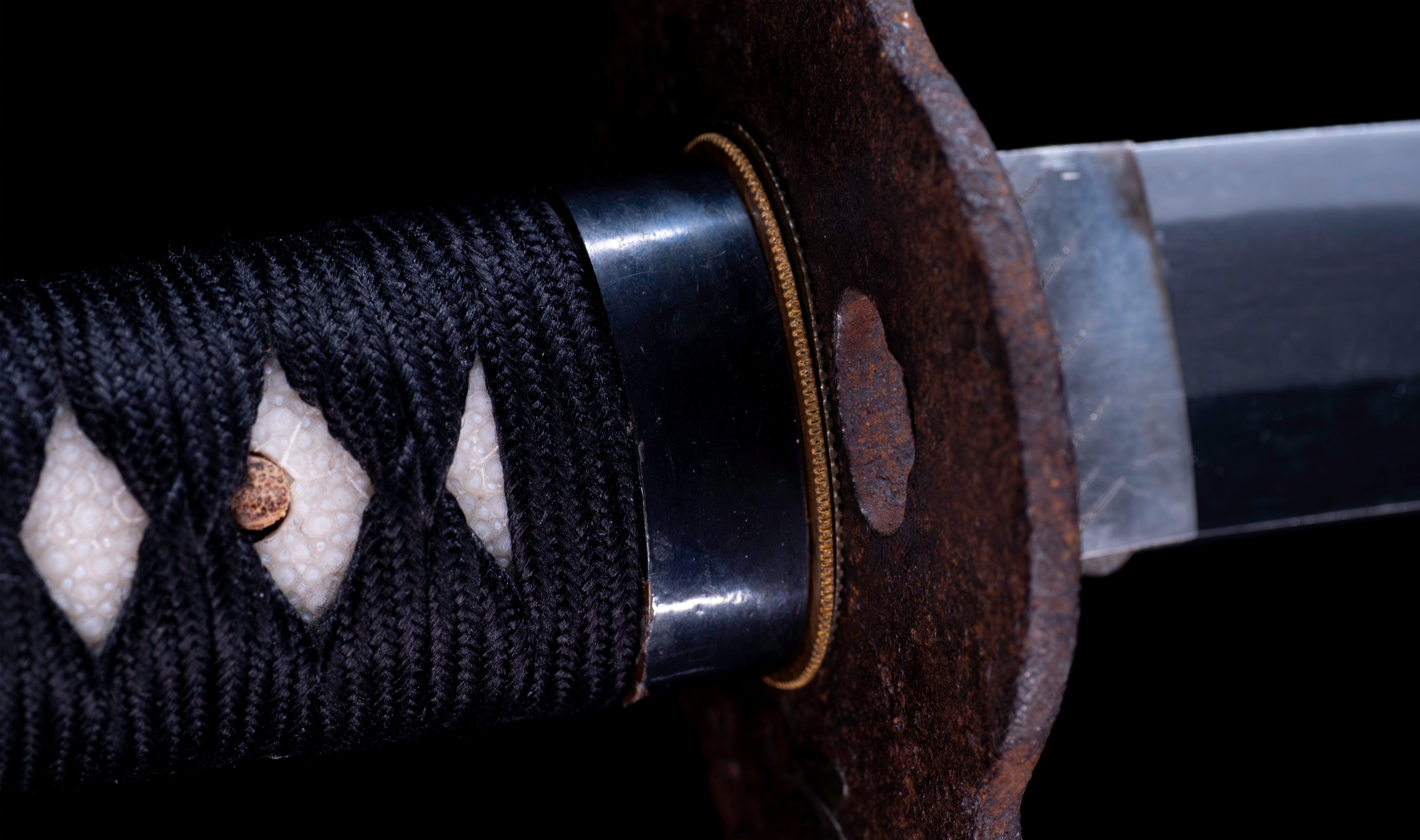
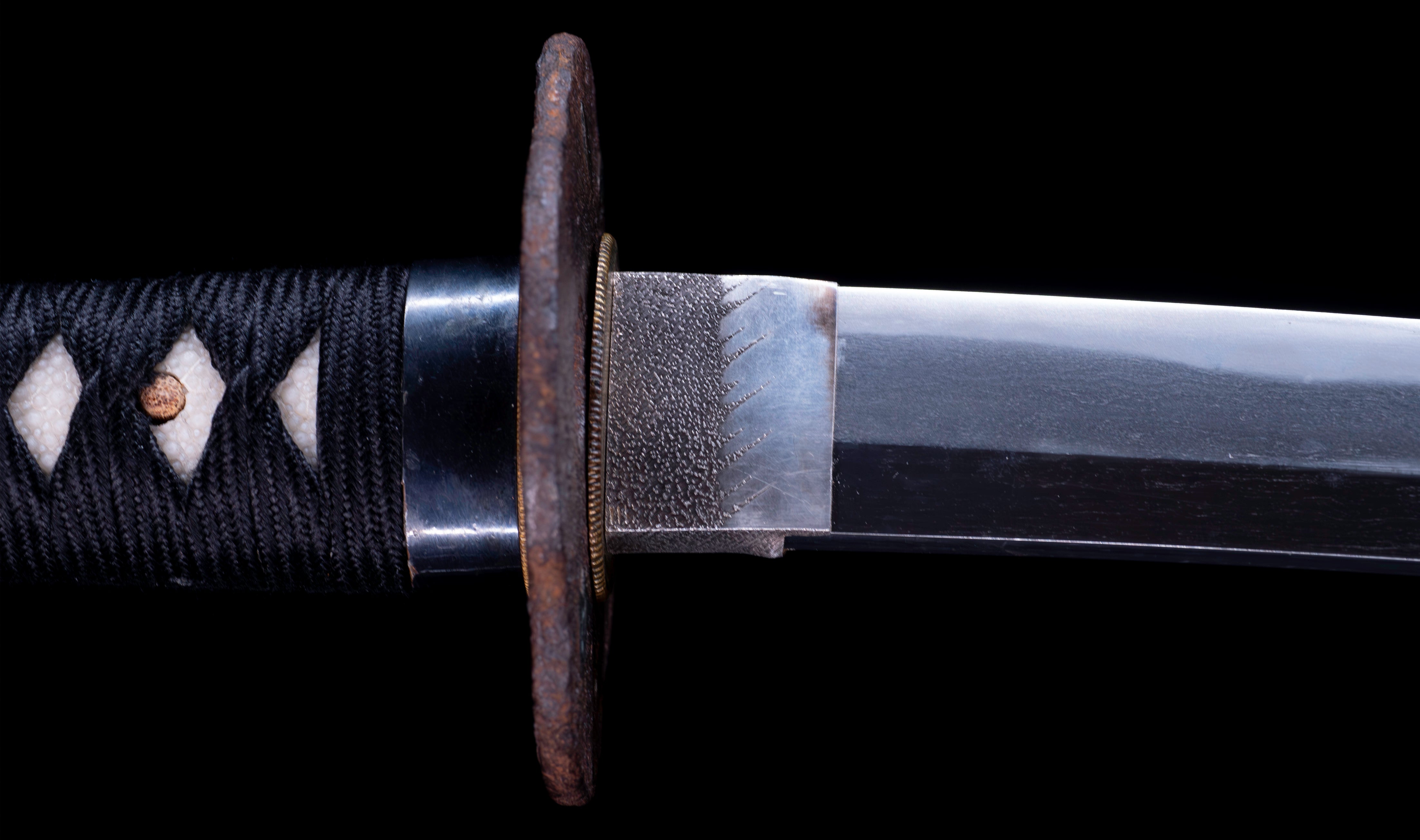
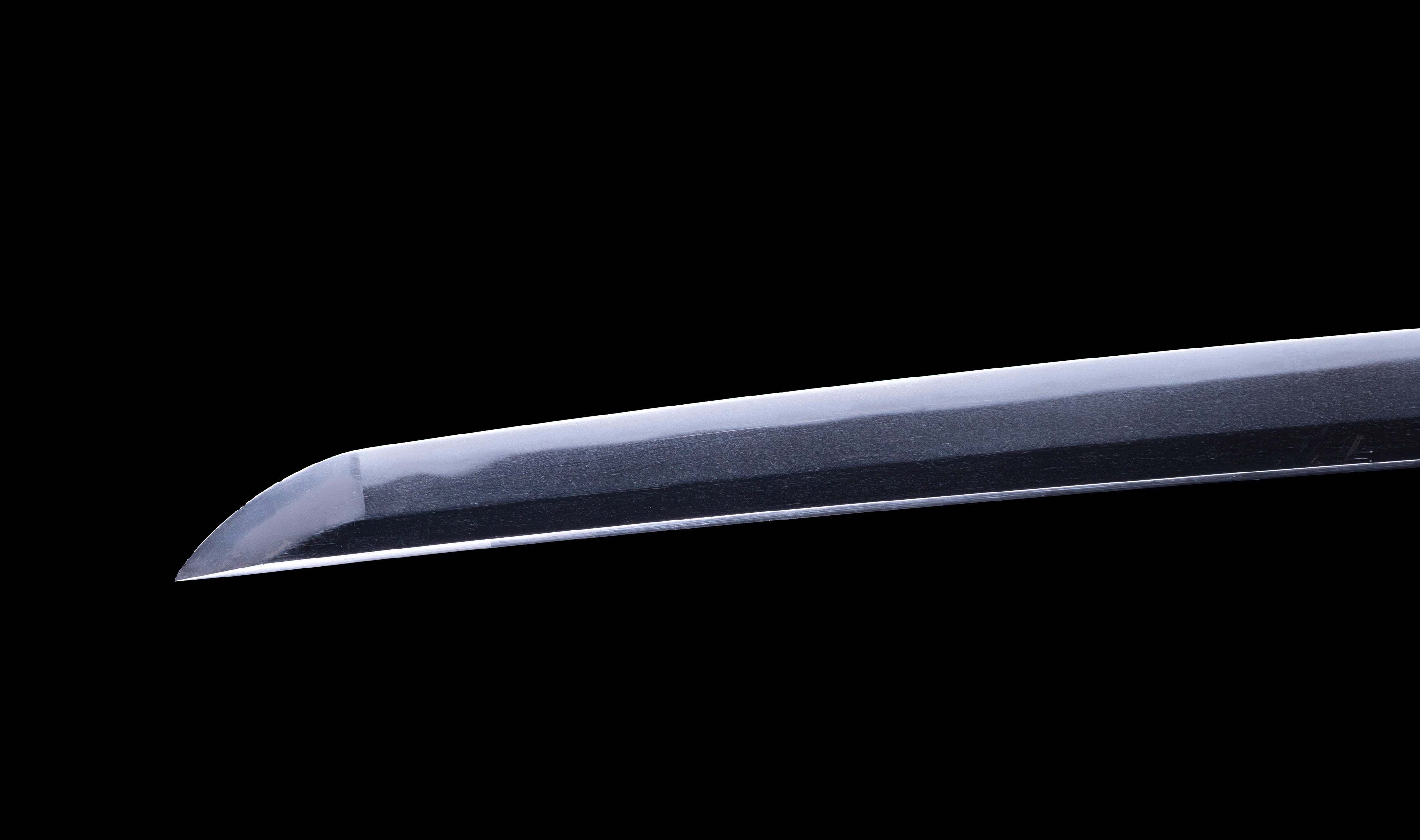
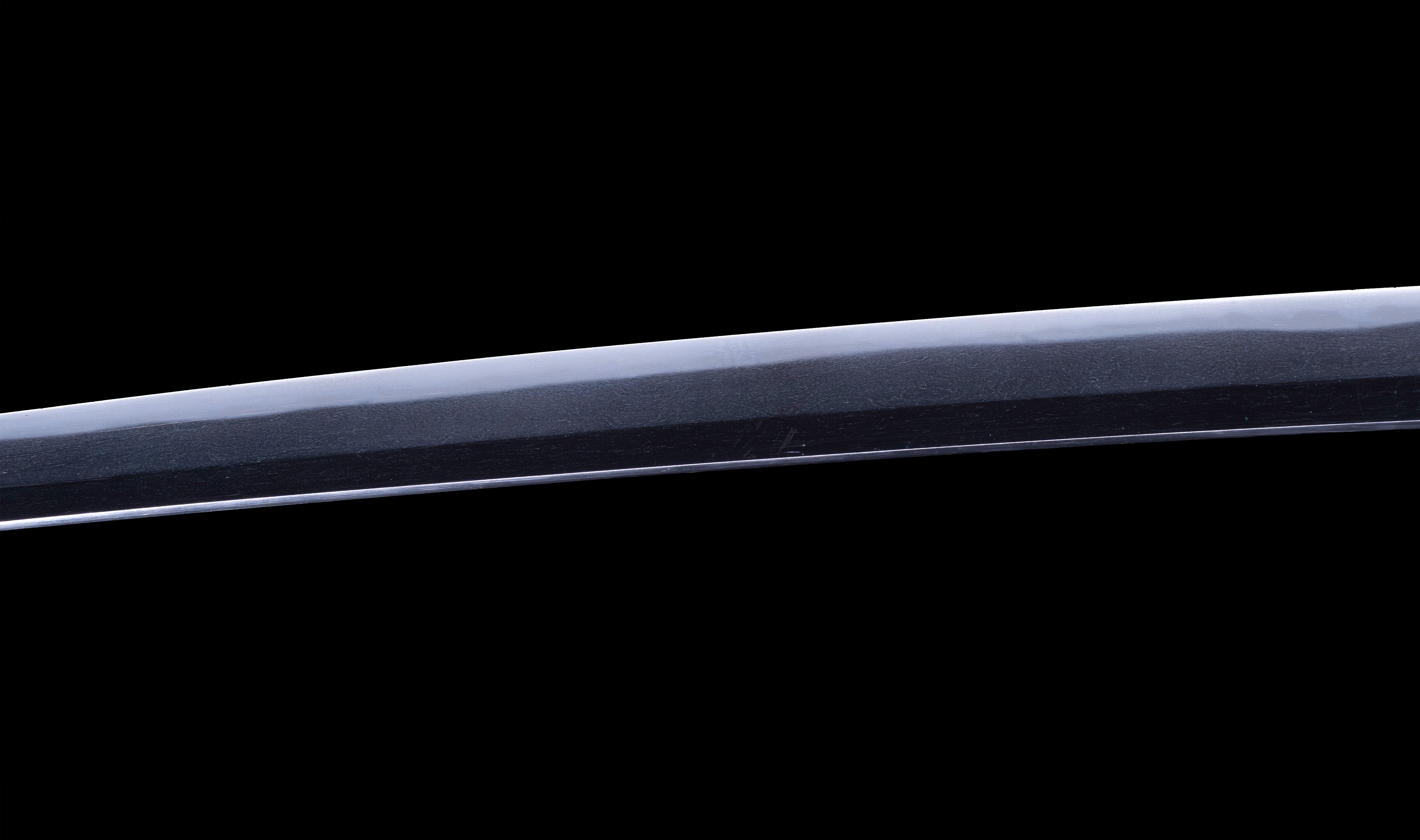
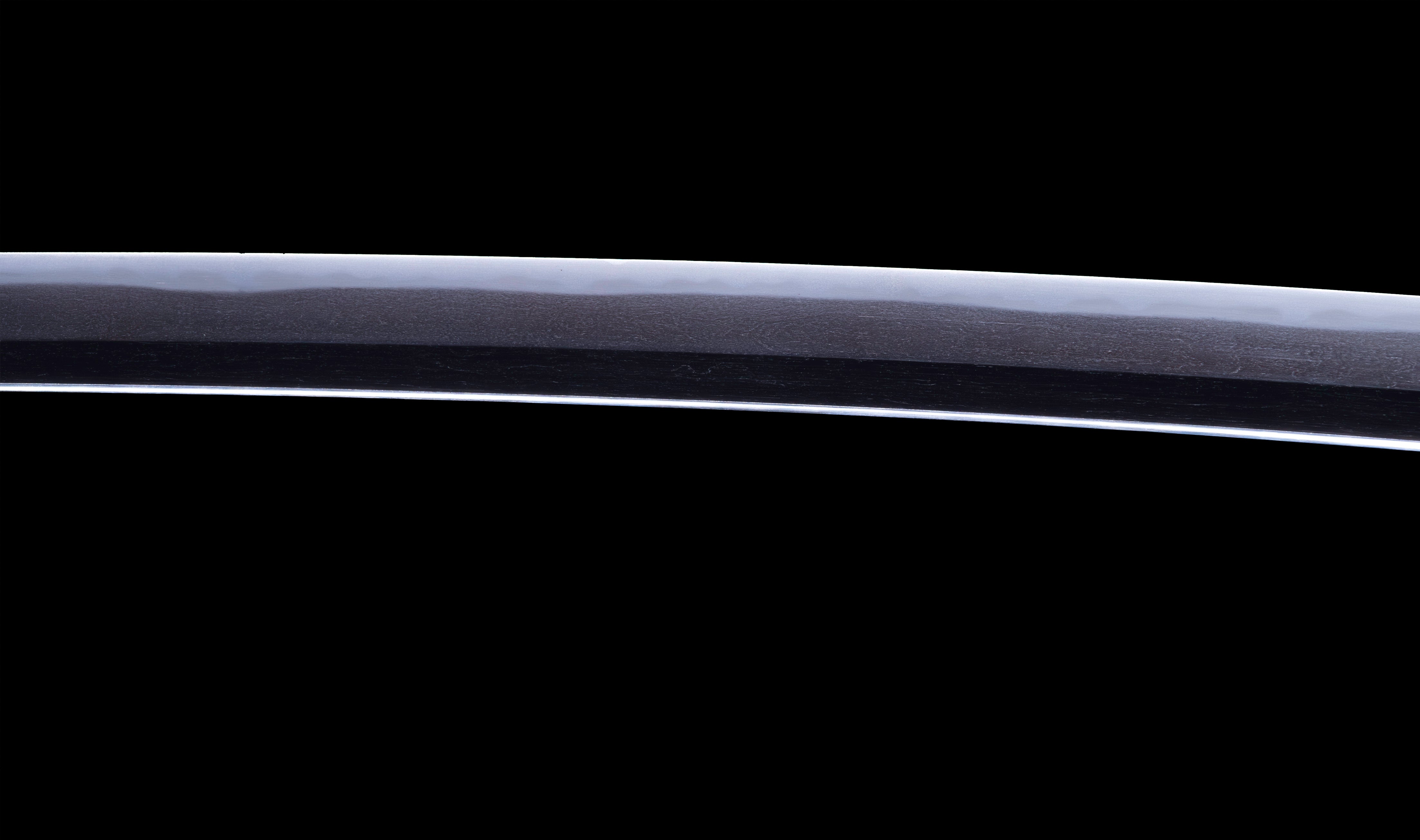
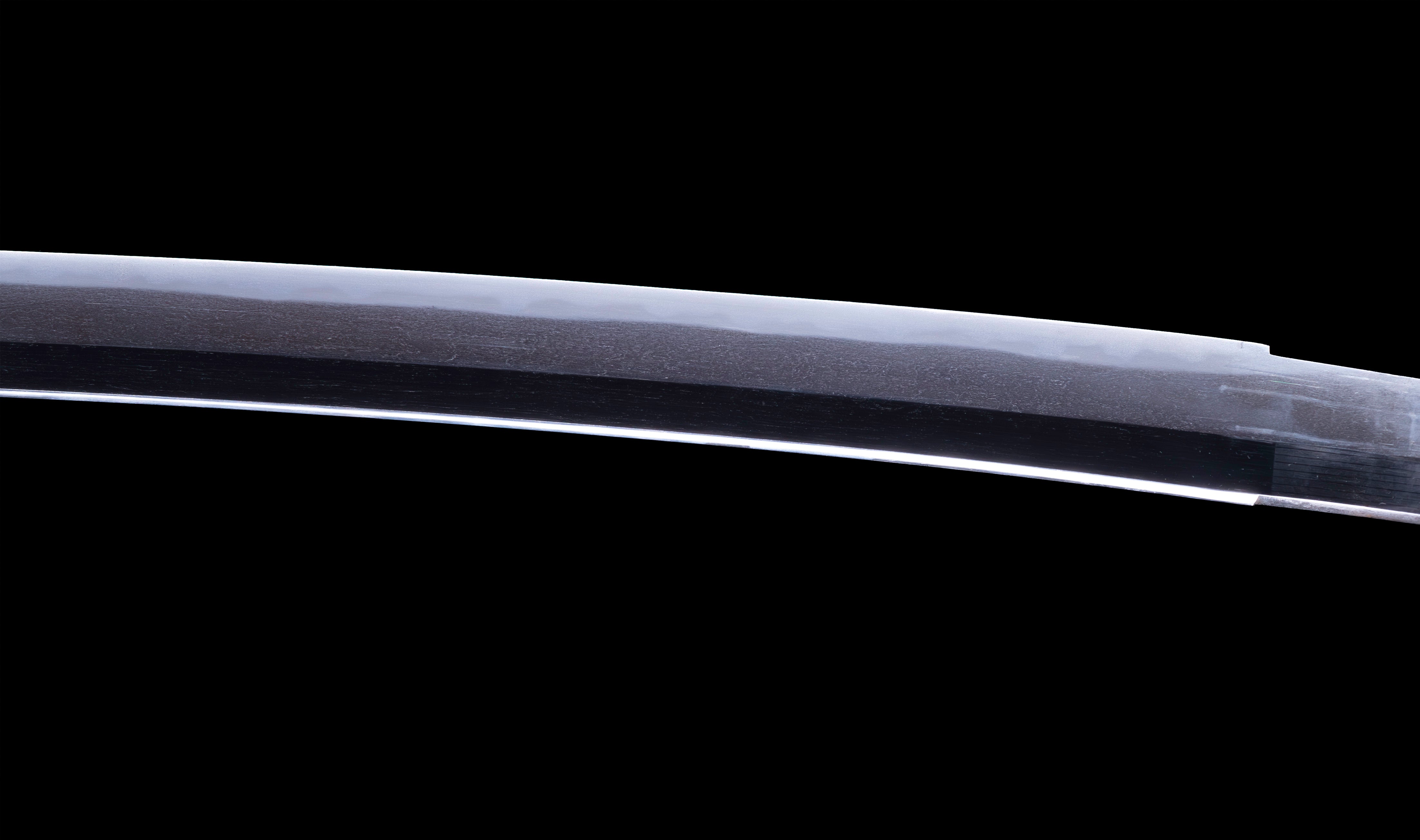
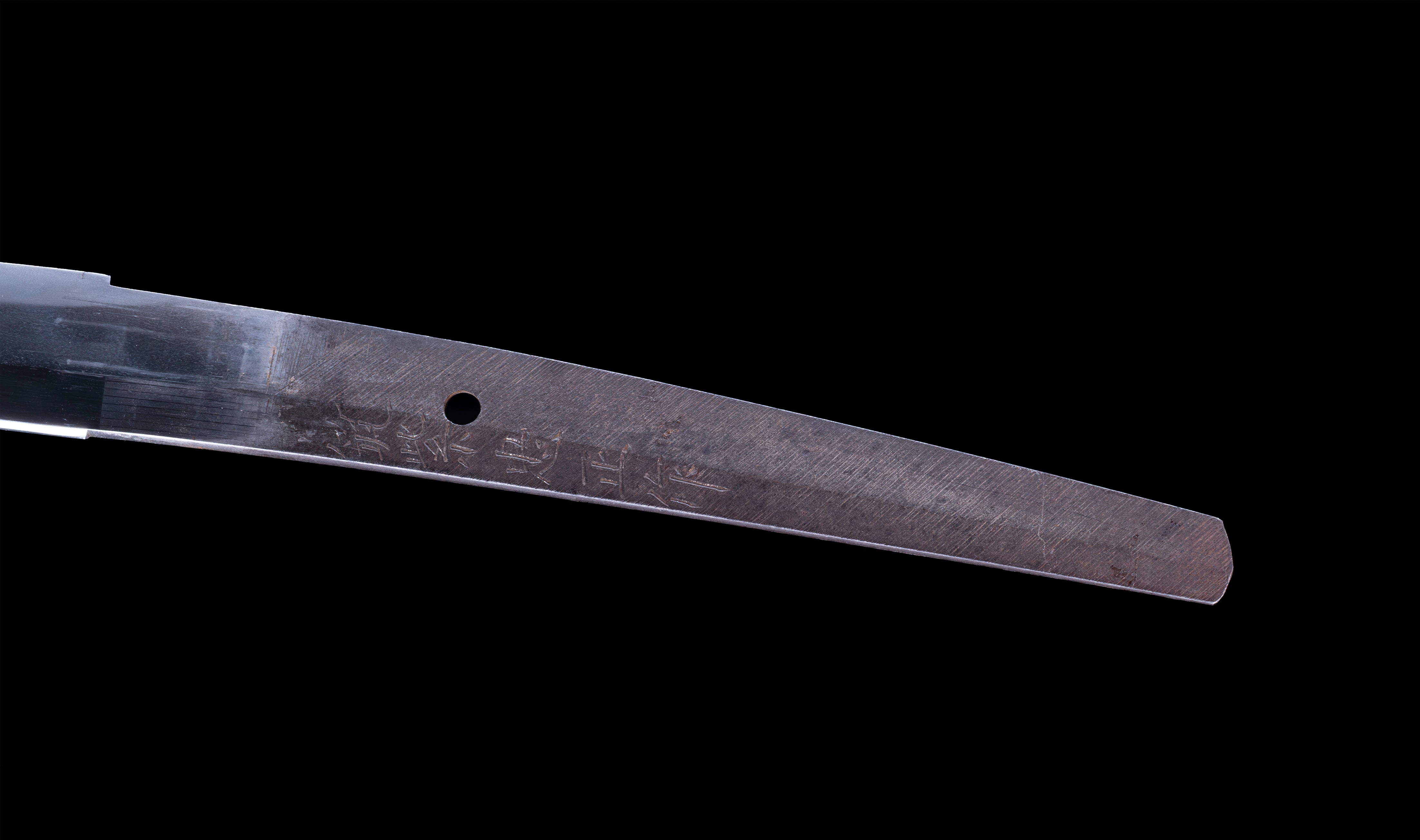
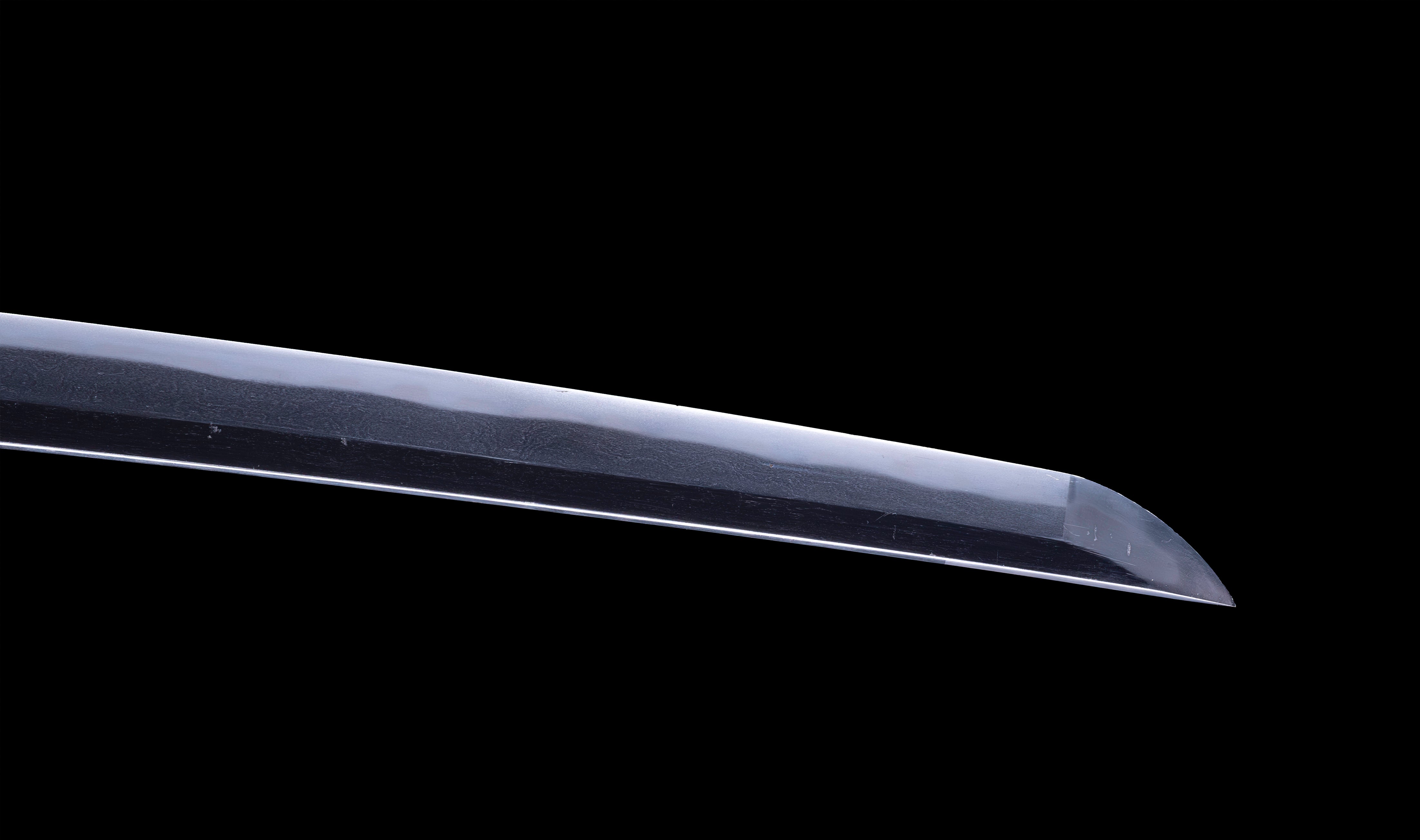
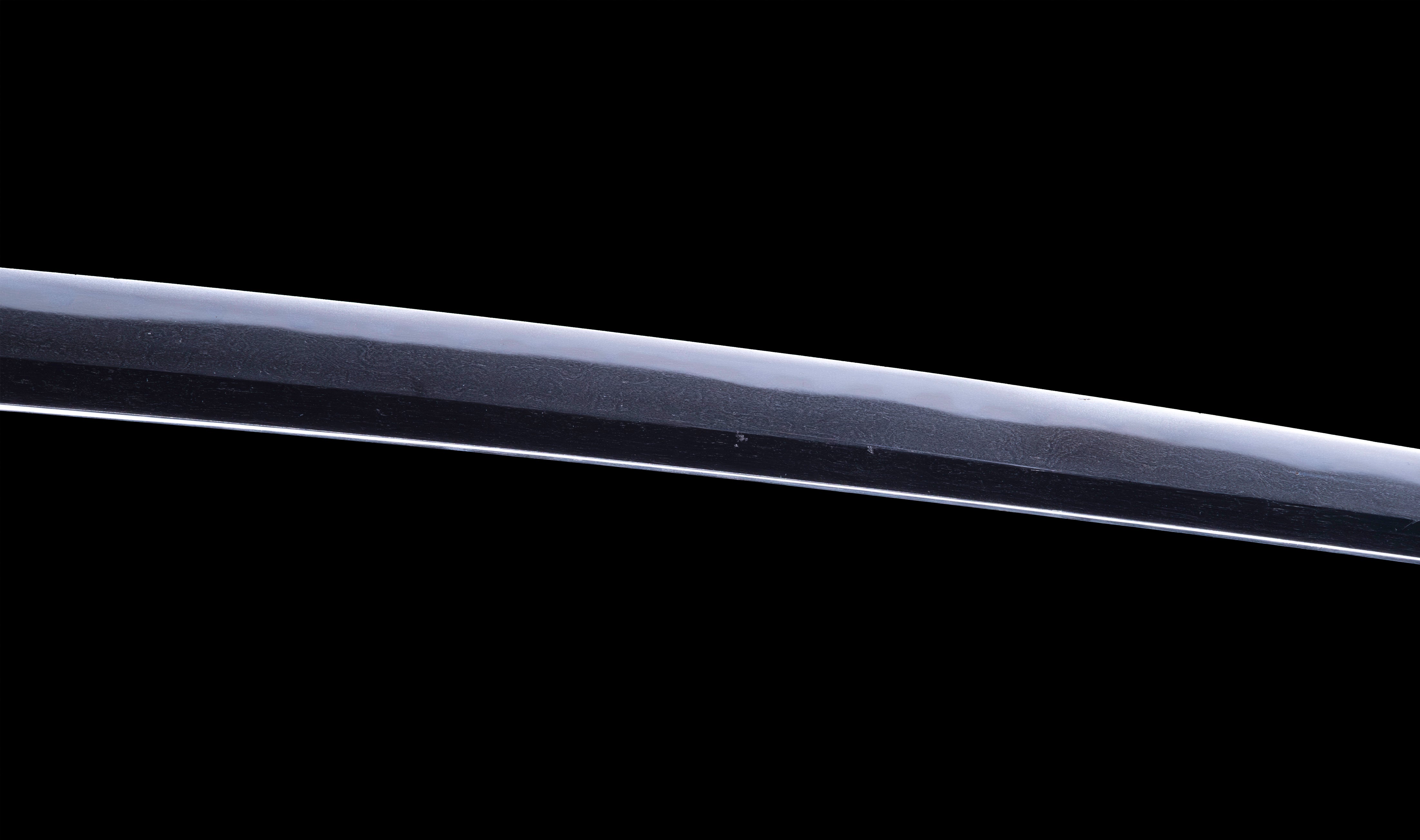
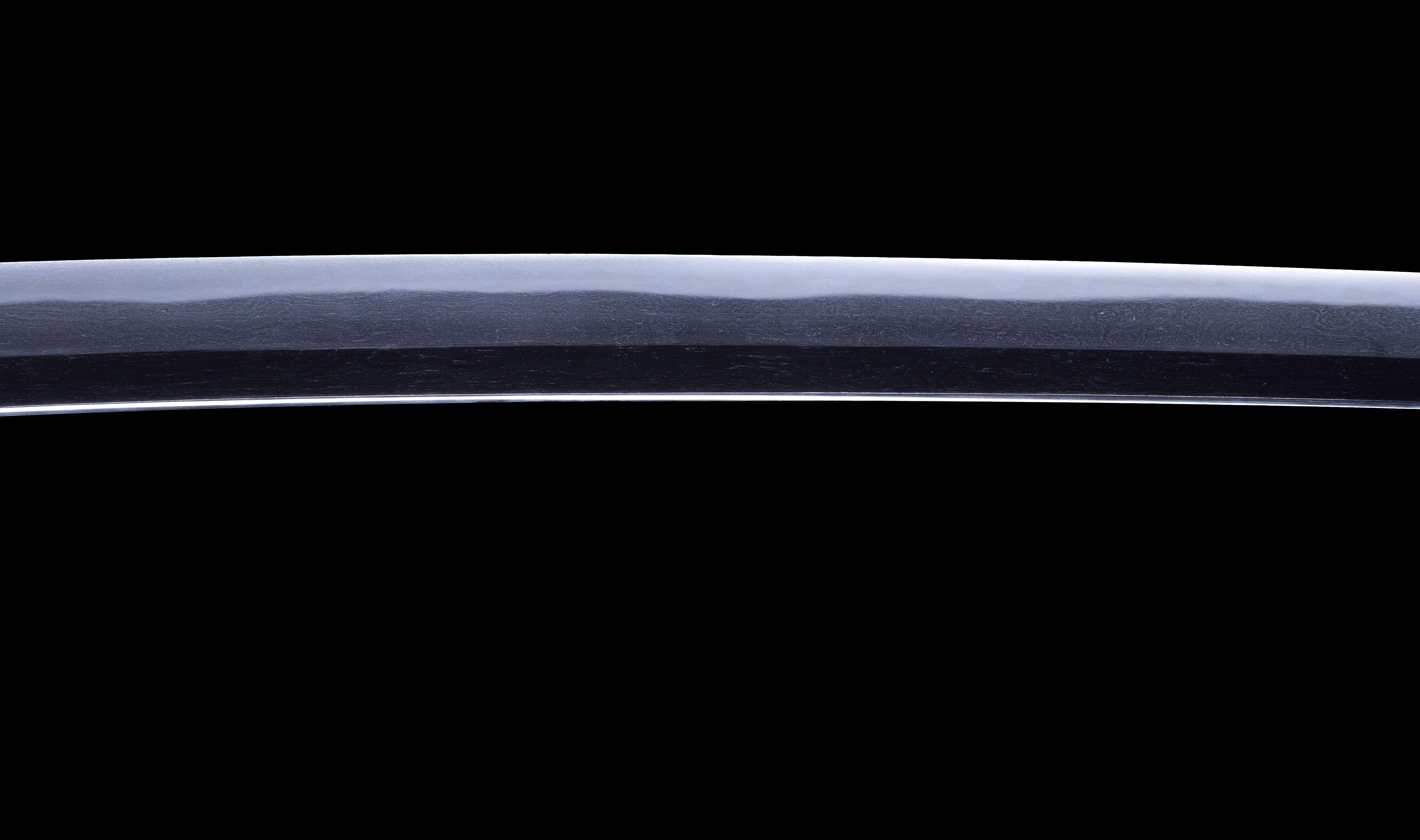
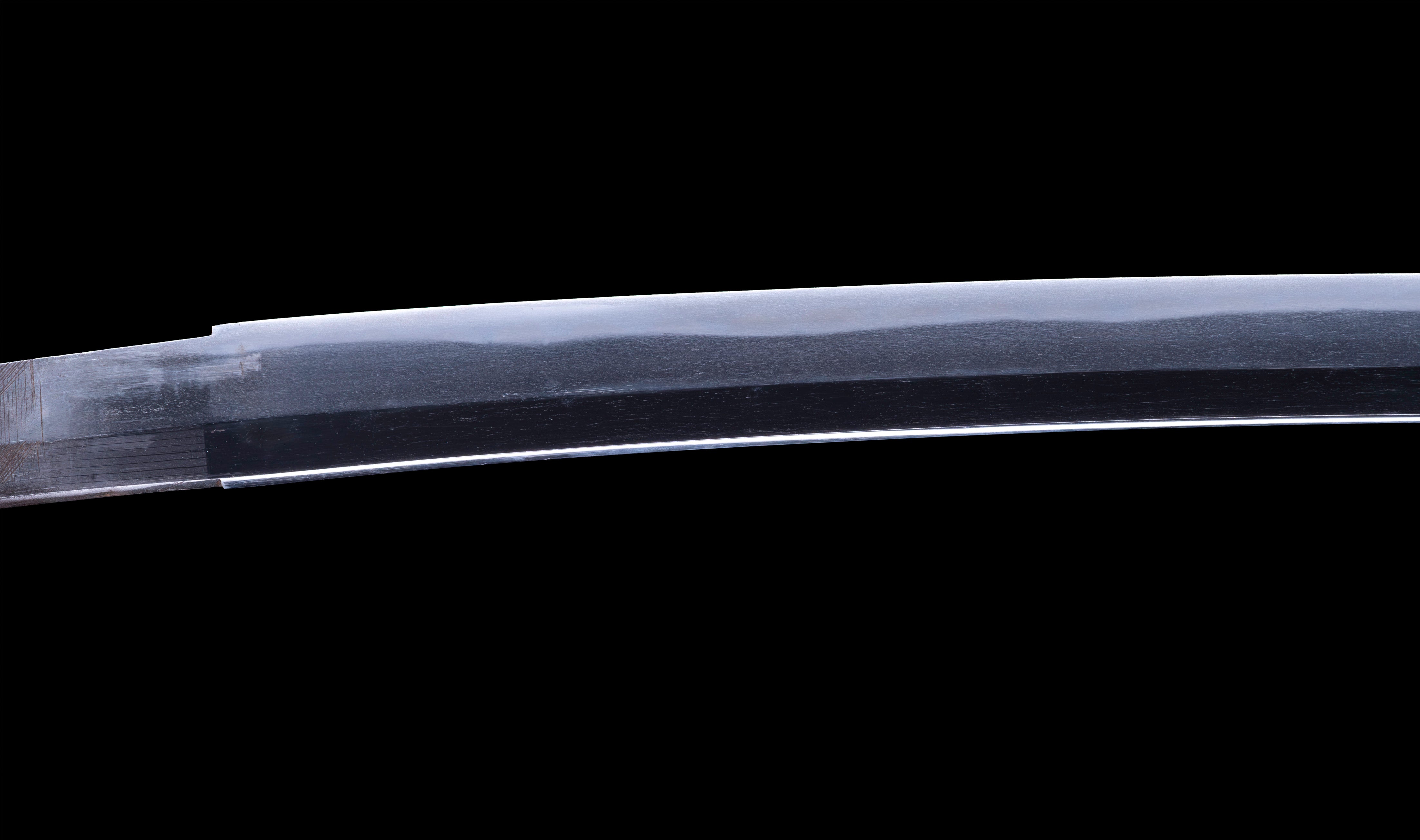
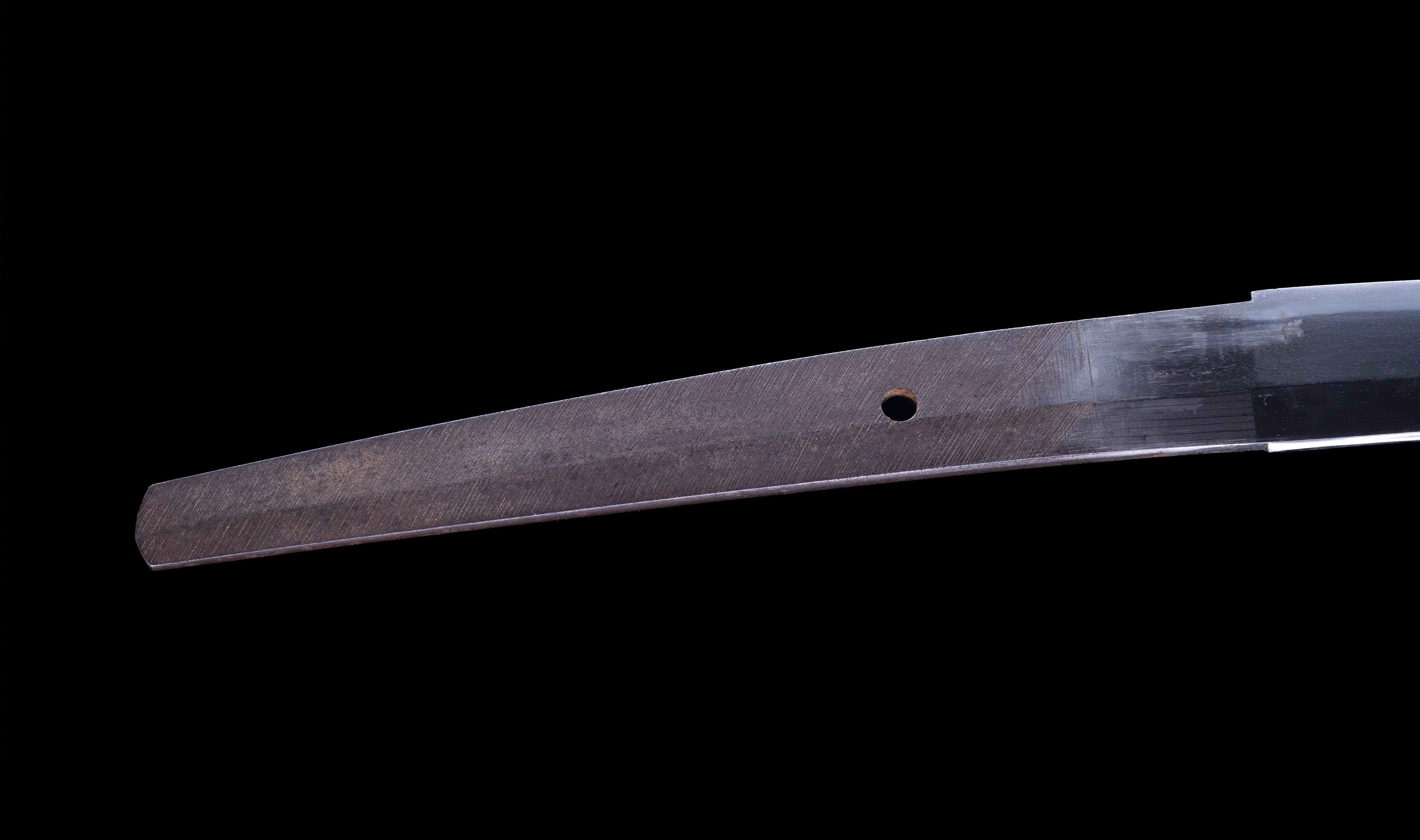
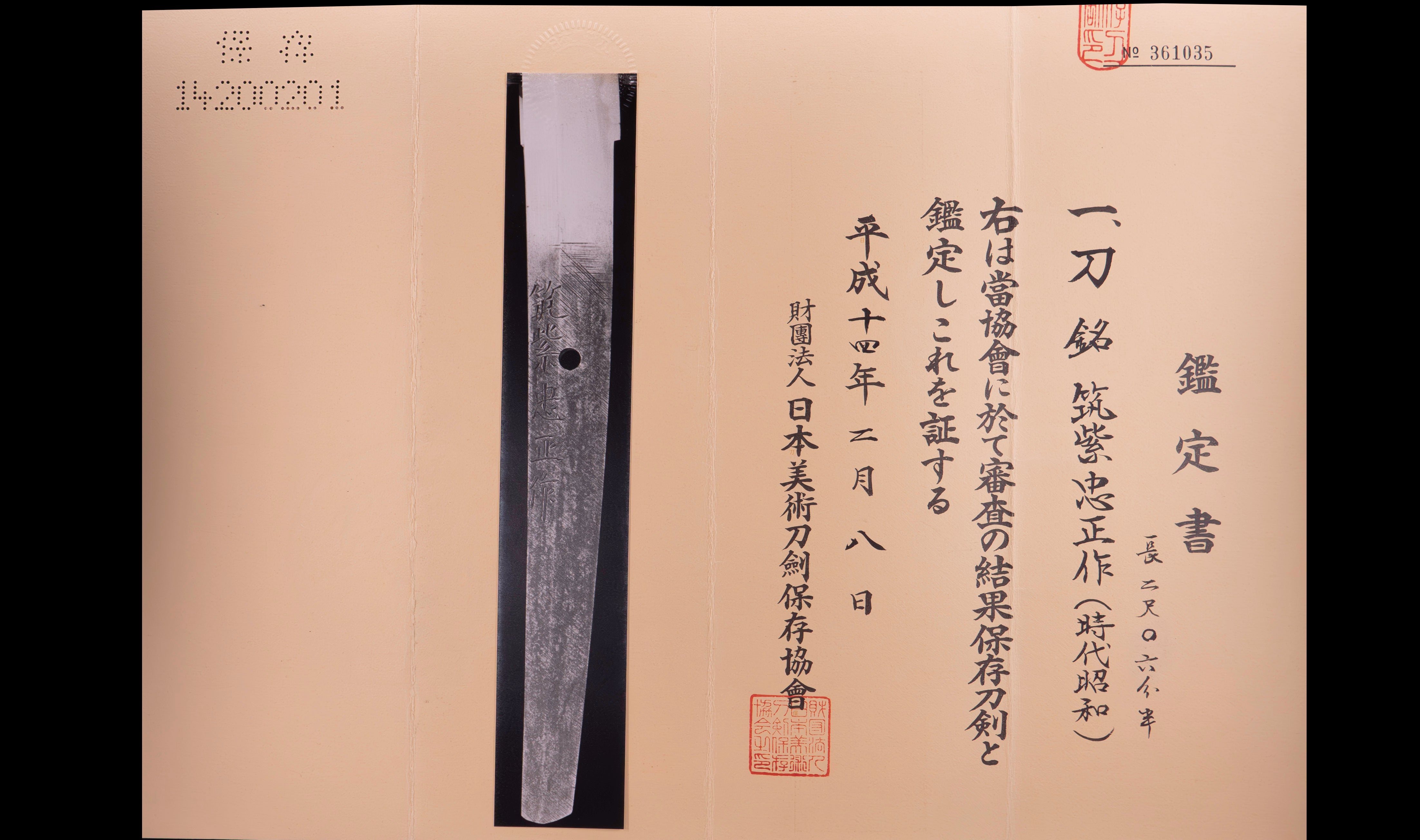
Signature (Mei): 筑紫忠正作 Chikushi Tadamasa saku Swordsmith: Chikushi Tadamasa Classification: Gendaitō (現代刀) - modern traditionally-made nihonto, Shōwa era Certificate: NBTHK Hozon Tōken (保存刀剣) No. 361035 - issued February 2002 (Heisei 14) Mounting: Full black urushi koshirae with iron feather-motif tsuba Blade Length (Nagasa): 62.7 cm (2 shaku 0 sun 6 bu 5 rin) Curvature (Sori): 1.3 cm - elegant, restrained torii-zori Mekugi-ana: 1 (ubu - original, unaltered nakago) Shape: Shinogi-zukuri with iori-mune and chū-kissaki Jihada: Tight, well-forged ko-itame Hamon: Notare with gunome, bright nioiguchi, ko-nie and prominent ashi This Katana is a signed, NBTHK Hozon -certified gendaitō bearing the mei 筑紫忠正作 (Chikushi Tadamasa saku) and dated by the NBTHK to the Shōwa era . Measuring 62.7 cm with a controlled 1.3 cm sori, it is a fully traditional Japanese sword forged from tamahagane in the classical manner—not a wartime arsenal blade and not a replica. For a 20th-century work to pass NBTHK shinsa and receive Hozon papers, the appraisers must confirm both that the signature is authentic and that the blade was made by genuine traditional methods. That distinction is exactly what separates a real nihonto from the oil-quenched showatō that flood the modern market. The blade is healthy and full-bodied, presented in shinogi-zukuri with iori-mune and a balanced chū-kissaki . The jihada is a dense, tightly forged ko-itame , clean and well-controlled across the ji—the kind of disciplined grain a properly trained Shōwa smith achieved through patient folding. Against this ground, the hamon runs as a flowing notare with gunome undulations, set in a bright nioiguchi with a covering of fine ko-nie . What gives this blade its character under close inspection is the activity inside the hardened edge: pronounced ashi reach down toward the cutting edge in clear diagonal lines, breaking the hamon into lively, rhythmic compartments. This is workmanship meant to be studied in hand and under pr
Certificate reading — 銘 筑紫忠正作
Tadamasa忠正
Offered by Tokyo Nihonto
This piece has sold
Get an email when a new Tadamasa piece hits the market.


Mino · around 1926-1989
1 piece on the market now
Shōwa to the present: destruction and revival
The twentieth century nearly killed the craft twice: wartime distortion, then the occupation ban. The NBTHK’s founding in 1948 and licensed forging from 1953 rebuilt the sword as an art, crowned by Living National Treasures and the mukansa rank.
Certifies a genuine blade worth preserving: a signature confirmed correct, or, if unsigned, an era, province, and school that the NBTHK can reliably identify.
The NBTHK (Nihon Bijutsu Tōken Hozon Kyōkai, the Society for the Preservation of Japanese Art Swords) is a public-interest incorporated foundation founded in 1948 and supervised by Japan’s Agency for Cultural Affairs (Bunkachō); it is based at the Japanese Sword Museum in Tokyo. Its expert panels physically examine each submitted work (shinsa) and issue a certificate (kanteishō) ranking it by artistic and historical merit. NBTHK papers are the most widely recognized standard of authentication for Japanese swords and fittings.
NBTHK official siteReturns/exchanges only for manufactured defects or incorrect products; notify within 72 hours of delivery. Cancellation only within 2 hours of placing. Customer pays return shipping. Refund within 3 business days of package arrival.