 NihontoWatchNihontoWatch
Japan · First Half of the 20th Century · Shakudō · Marugata Tsuba · Chrysanthemum Motif · Multi-Metal Iroe · Signed Ōmi Yasumasa Saku · 7.9 × 7.1 cm A refined Japanese shakudō marugata tsuba dating to the first half of the 20th century, decorated with an abundant composition of chrysanthemum blossoms and bearing the signature Ōmi Yasumasa saku. The guard is worked on a deep black shakudō ground whose dark, lustrous surface provides a striking backdrop for the extensive floral decoration. Chrysanthemums cover much of the plate, their petals and centers modeled in relief and enriched with contrasting metal tones. Gold, silver-toned and copper-colored details are combined through multi-metal iroe work, producing a composition with considerable visual depth while preserving the restrained elegance associated with Japanese sword fittings. The piece is accompanied by a Supein Nihonto certificate and a wooden box. A Marugata Tsuba The tsuba has a marugata, or broadly rounded, form. This compact outline creates a balanced framework for the dense floral decoration that covers the plate. Rather than relying on openwork or a large narrative scene, the visual impact comes from the relationship between the dark ground and the numerous flowers distributed across the surface. From a distance the guard reads as a unified floral composition, while closer examination reveals the individual treatment of each blossom and the contrasting metal details used throughout the design. Collectors wishing to explore further examples can browse our collection of Japanese tsuba. Shakudō – A Deep Black Ground for the Decoration The principal material is shakudō, the traditional Japanese copper-gold alloy valued for the dark surface produced through controlled patination. Here, that dark ground is particularly important to the composition. Its black to black-violet appearance allows the warmer gold and copper tones, together with the lighter silver-toned details, to stand out clearly against the plate. The contrast is not simply decorative. It structures the entire design, separating individual flowers and petals while giving the surface a layered appearance. The result is a tsuba whose character changes with viewing distance: initially dominated by its dark ground and overall floral pattern, then increasingly detailed as the individual metalwork becomes visible. Chrysanthemums Across the Plate The defining motif is the chrysanthemum, or kiku, one of the recurring floral subjects found throughout Japanese decorative arts and sword fittings. Rather than presenting a single isolated flower, the artist has created an abundant arrangement in which numerous blossoms occupy almost the entire visible surface. Some flowers are presented more fully, while others overlap or emerge between neighboring blossoms, preventing the composition from becoming rigid or repetitive. The layered petals are particularly suited to relief metalwork, allowing each flower to develop volume against the comparatively flat dark ground. High-Relief Floral Work The chrysanthemums are rendered in high relief, giving the decoration a strong sculptural quality. Individual petals rise above the shakudō plate rather than appearing merely engraved into its surface. This creates pronounced differences between light and shadow and emphasizes the overlapping structure of the flowers. The relief also allows the various metal tones to occupy different visual levels, increasing the sense of depth across a relatively compact object. Despite the density of the decoration, the individual blossoms remain clearly defined within the overall composition. Multi-Metal Iroe Decoration A major feature of the tsuba is its use of multi-metal iroe decoration. The floral elements alternate between gold, silver-toned and copper-colored finishes, creating a rich contrast with the dark shakudō ground. The metals are not distributed as a single uniform pattern. Instead, different blossoms and details receive different tonal treatments, encouraging the eye to move continuously across the plate. This controlled variation prevents the densely decorated surface from appearing visually flat and gives individual flowers their own presence within the larger arrangement. The Chrysanthemum as a Decorative Motif Chrysanthemums have a long presence in Japanese art and can be found across painting, textiles, lacquer, ceramics and metalwork, including Japanese sword fittings. For a metalworker, the flower offers considerable decorative possibilities. Its densely arranged petals can be represented through engraving, carving, relief and contrasting metals, allowing considerable variation even within a repeated floral composition. On this tsuba, the repeated chrysanthemum motif becomes the central visual language of the object rather than a secondary ornament. The flowers cover the dark plate almost like a small garden worked in metal, giving the guard a distinctly decorative character while retaining the compact proportions of a Japanese sword fitting. Kinko Metalwork Tradition The piece is catalogued as being executed within the classical kinko metalworking tradition, using decorative techniques and contrasting non-ferrous metals associated with Japanese sword fittings. Although the tsuba dates to the first half of the 20th century, its materials, floral vocabulary and multi-metal treatment consciously continue techniques and aesthetics established in earlier Japanese sword furniture. The combination of a shakudō ground with contrasting metal decoration allows the artist to create color through metal itself rather than through painted surface treatment. This relationship between material, patination, relief and color is central to the visual character of the piece. Nakago-Ana and Gilt Seppa-Dai At the center of the guard is the nakago-ana, the opening through which the sword tang passes when the tsuba is mounted. The central area is framed by a carefully finished gilt seppa-dai, providing another warm metallic contrast against the surrounding shakudō. Its comparatively restrained surface creates a visual pause between the dense chrysanthemums surrounding it and the central opening of the guard. This area also carries the signature associated with the piece. Signed Ōmi Yasumasa Saku The tsuba bears the signature Ōmi Yasumasa saku. The inscription is positioned on the central area associated with the seppa-dai, integrating the signature into the construction of the guard rather than placing it among the floral decoration. The catalogue records the signature as supplied with the piece. The wording should therefore be understood as identifying the signature borne by the tsuba rather than making an additional attribution beyond the available documentation. First Half of the 20th Century The tsuba is dated to the first half of the 20th century. The piece demonstrates the continuation of established Japanese metalworking traditions into the modern period, with craftsmen continuing to employ materials and decorative techniques closely associated with historical sword furniture. Its interest therefore lies not only in the floral composition itself but also in the continuation of the technical vocabulary of shakudō and multi-metal iroe work. Understanding the Tsuba A tsuba forms part of the mounting of a Japanese sword and occupies the position between the blade and the hilt. Beyond its practical role within the sword mounting, the tsuba became an important field for Japanese metalworking, allowing craftsmen to explore subjects ranging from plants and animals to mythology, landscapes and scenes from everyday life. For a broader introduction to their construction, purpose and development, see our guide What Is a Tsuba?. Dimensions Certificate and Wooden Box The tsuba is accompanied by a Supein Nihonto certificate. A wooden storage box is also included, allowing the piece to be kept and presented separately from a sword mounting. Collector’s Interest This tsuba brings together several elements of particular interest within Japanese decorative metalwork: a deep shakudō ground, an extensive chrysanthemum composition, relief carving and contrasting multi-metal decoration. Its unusually dense arrangement of blossoms rewards close examination, with individual flowers differentiated through relief, color and metallic finish while remaining part of a coherent overall composition. The gilt central area provides a strong visual counterpoint to the dark shakudō, while the signature Ōmi Yasumasa saku adds an important documentary element to the piece. Together with its Supein Nihonto certificate and wooden box, it forms a refined example of Japanese sword furniture from the first half of the 20th century, consciously continuing the decorative language of traditional kinko metalwork. A refined shakudō marugata tsuba with chrysanthemums, dating to the first half of the 20th century and bearing the signature Ōmi Yasumasa saku. The dark shakudō plate is densely covered with high-relief flowers enriched with gold, silver-toned and copper-colored iroe details, creating a richly layered composition around the gilt central area. Supplied with a Supein Nihonto certificate and wooden box. Dimensions: 7.9 × 7.1 cm.
Offered by Supein Nihonto

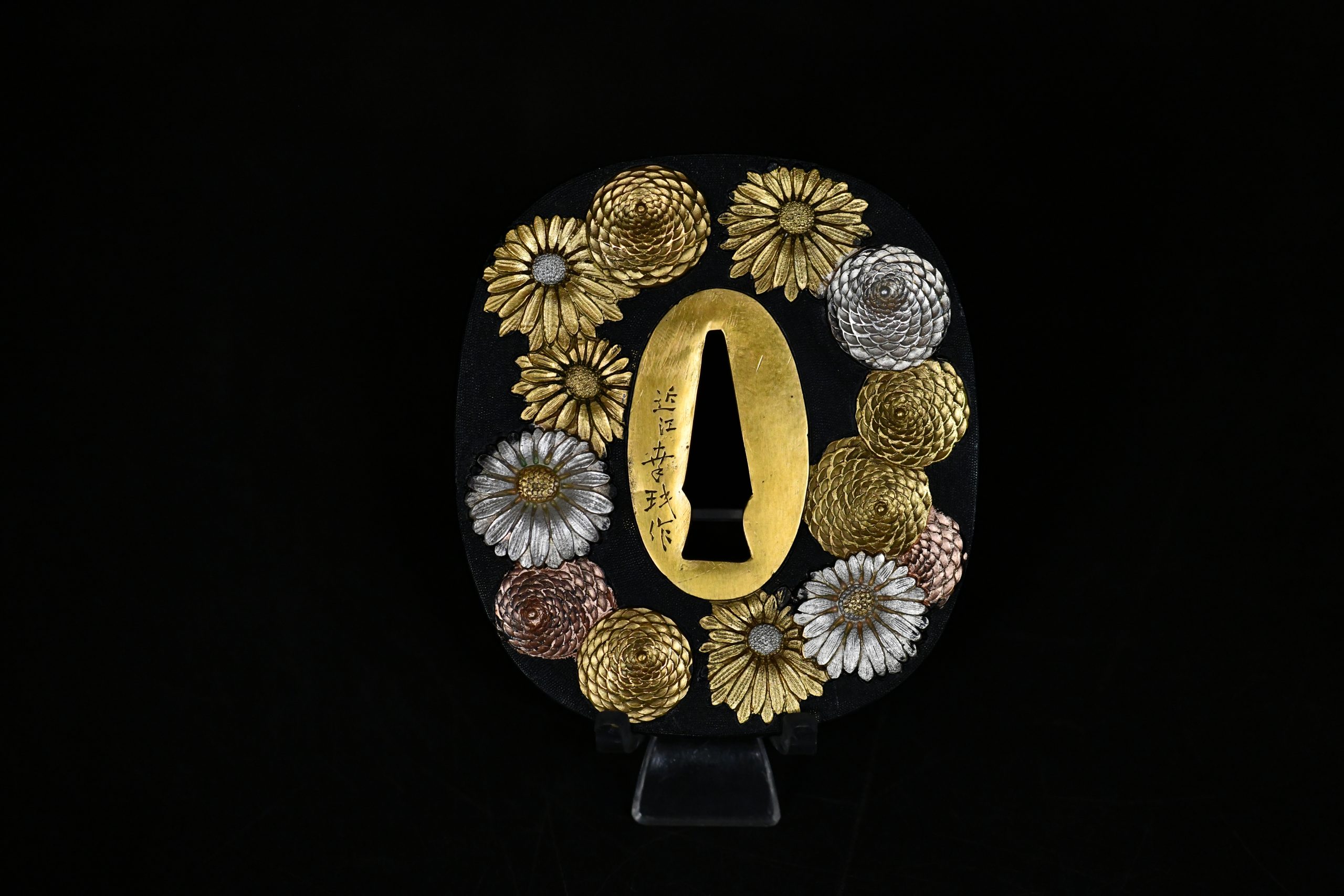
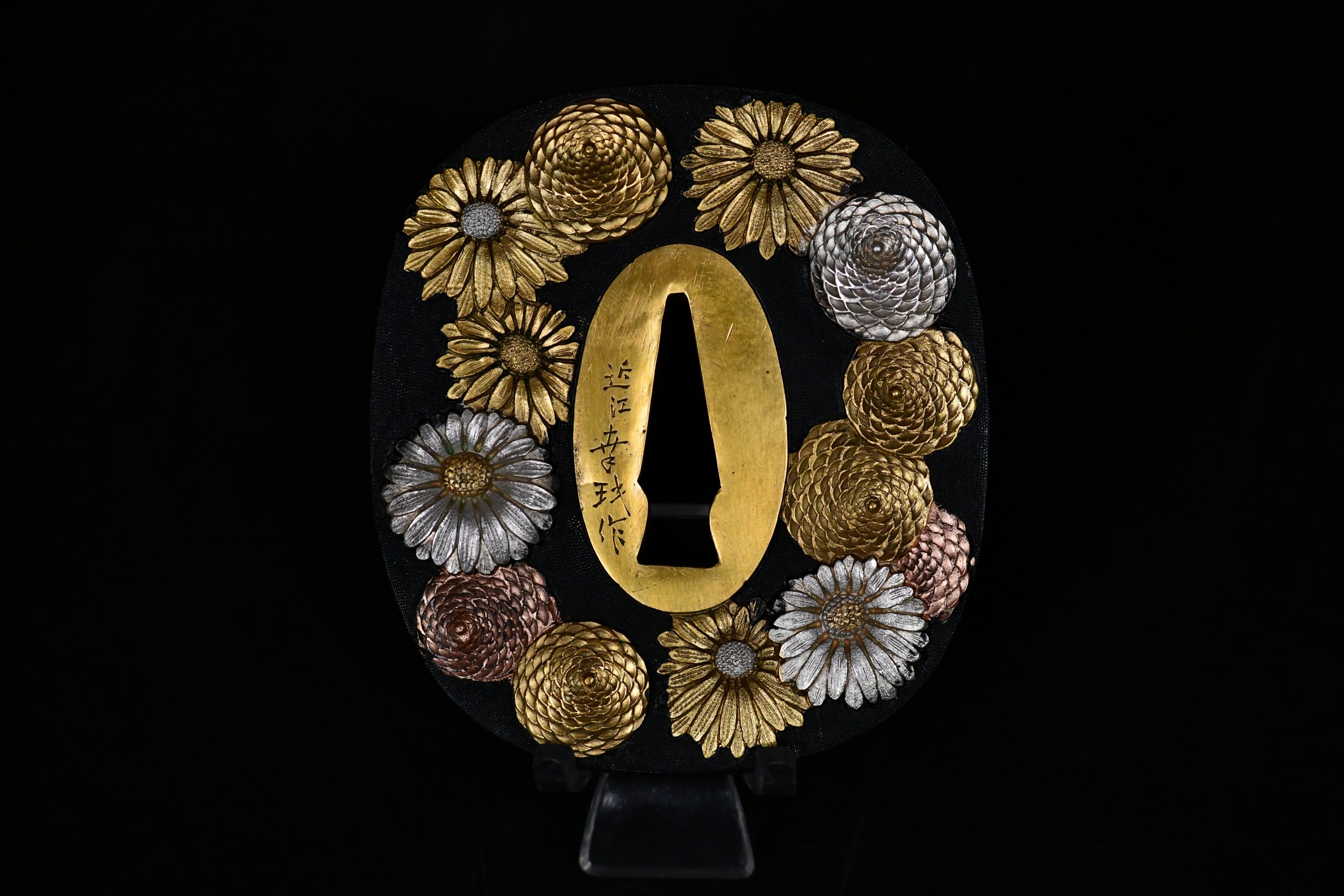
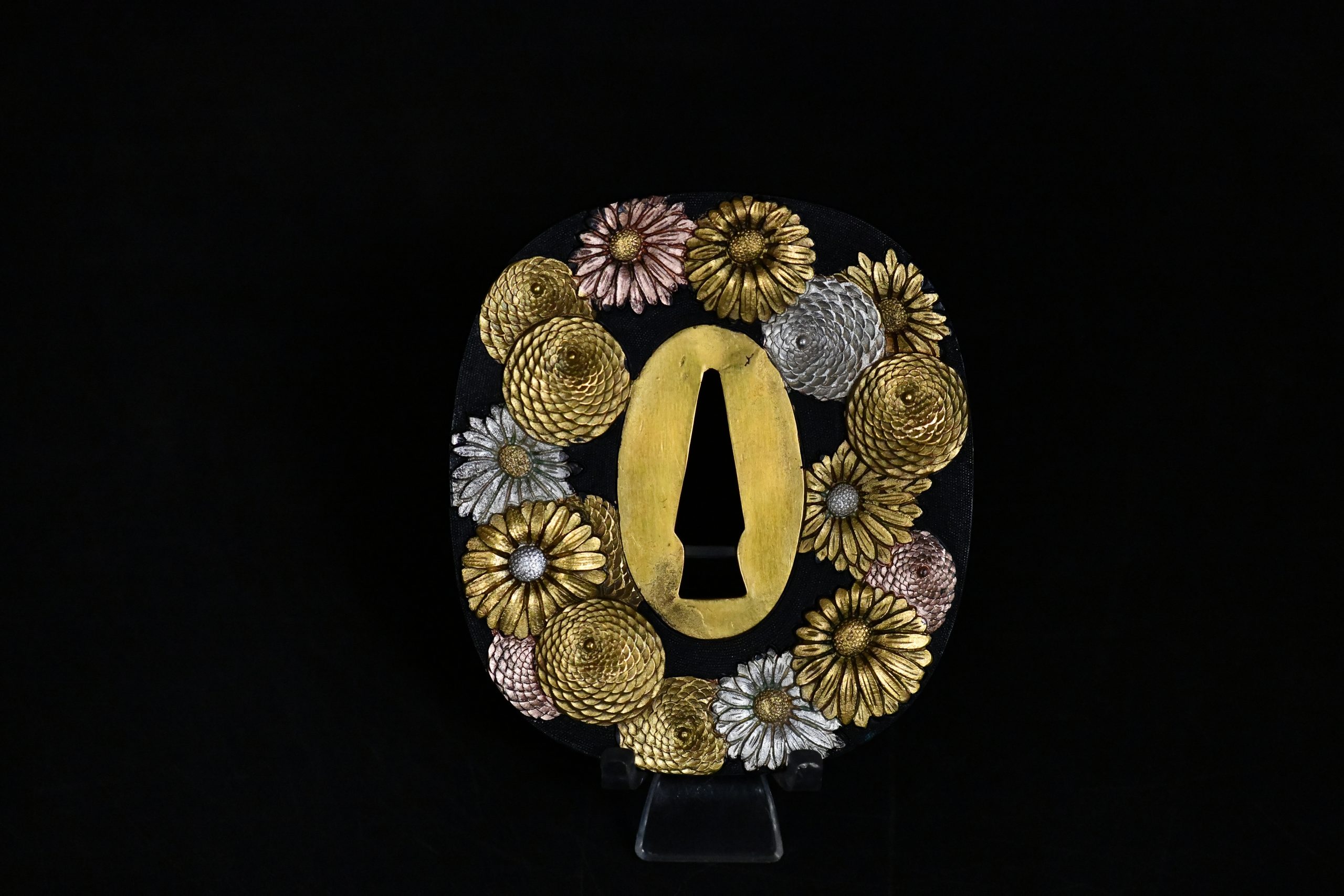
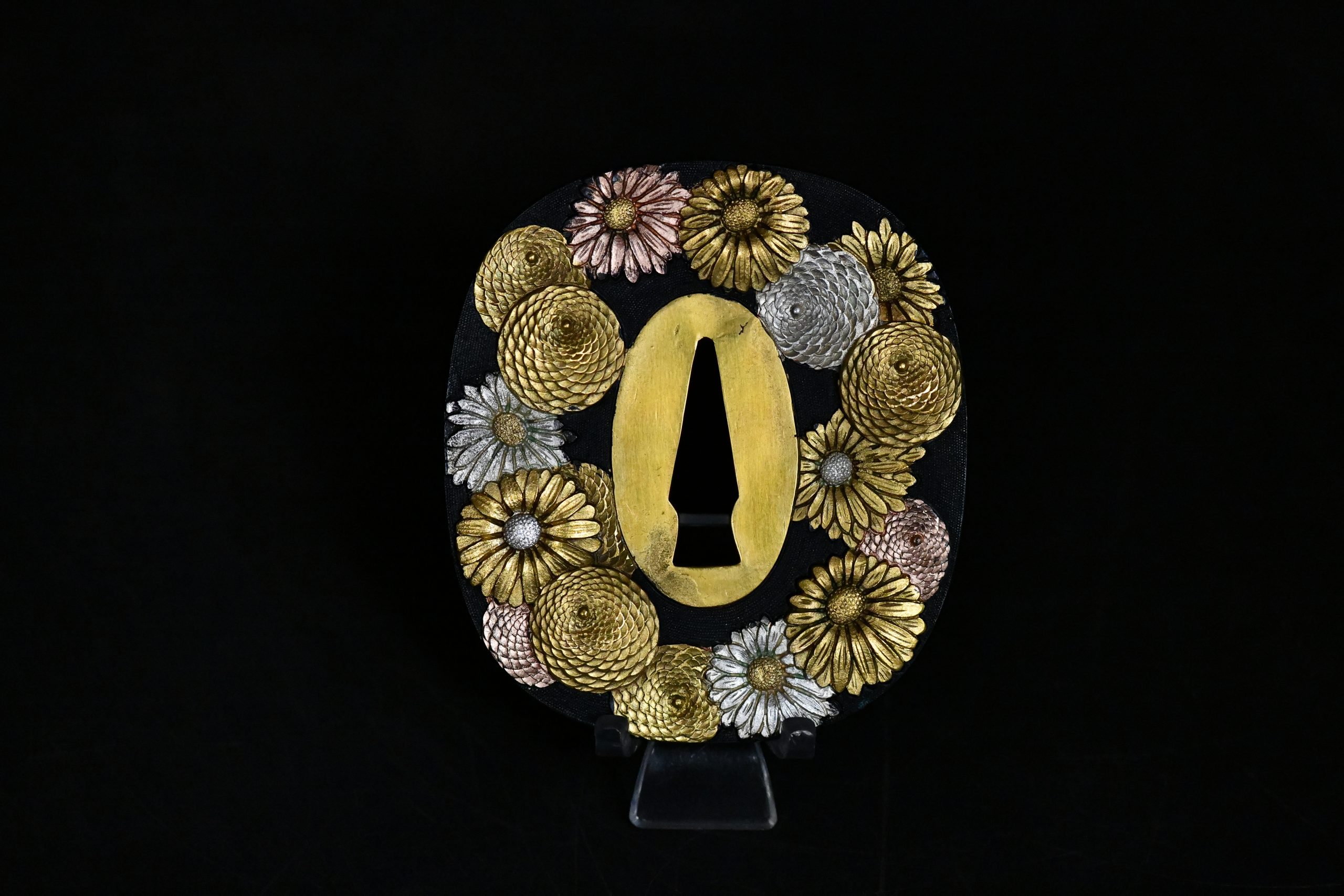
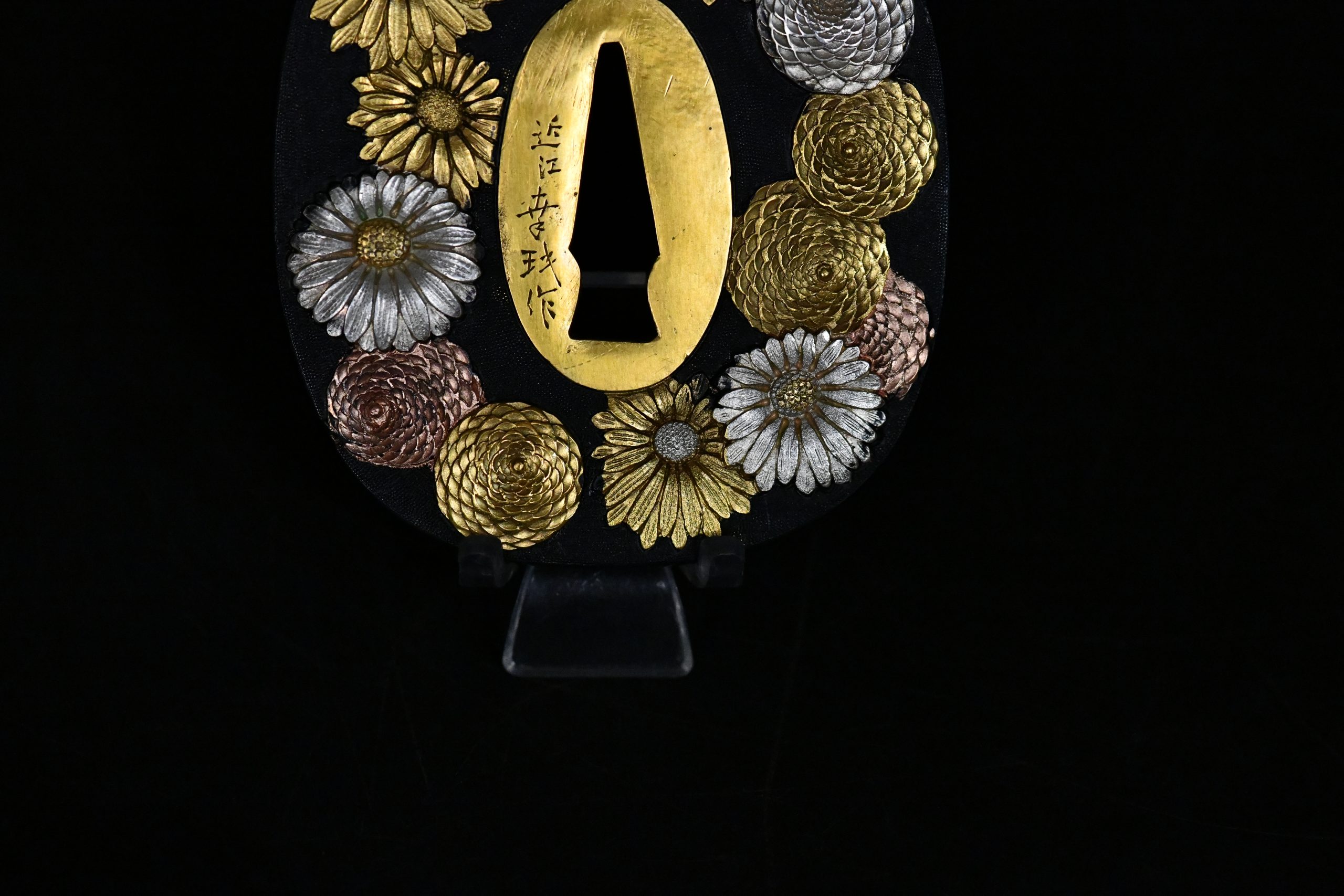
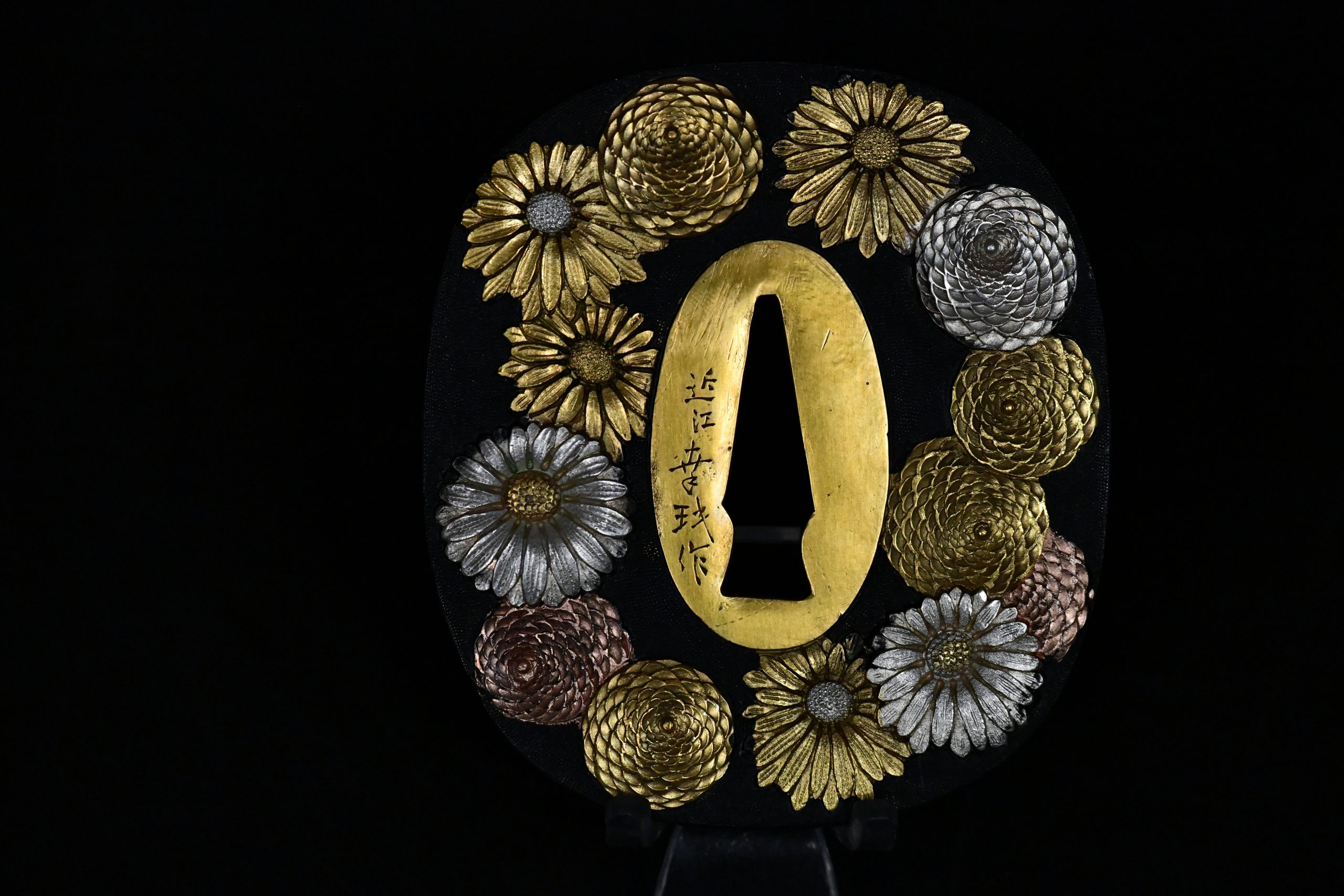
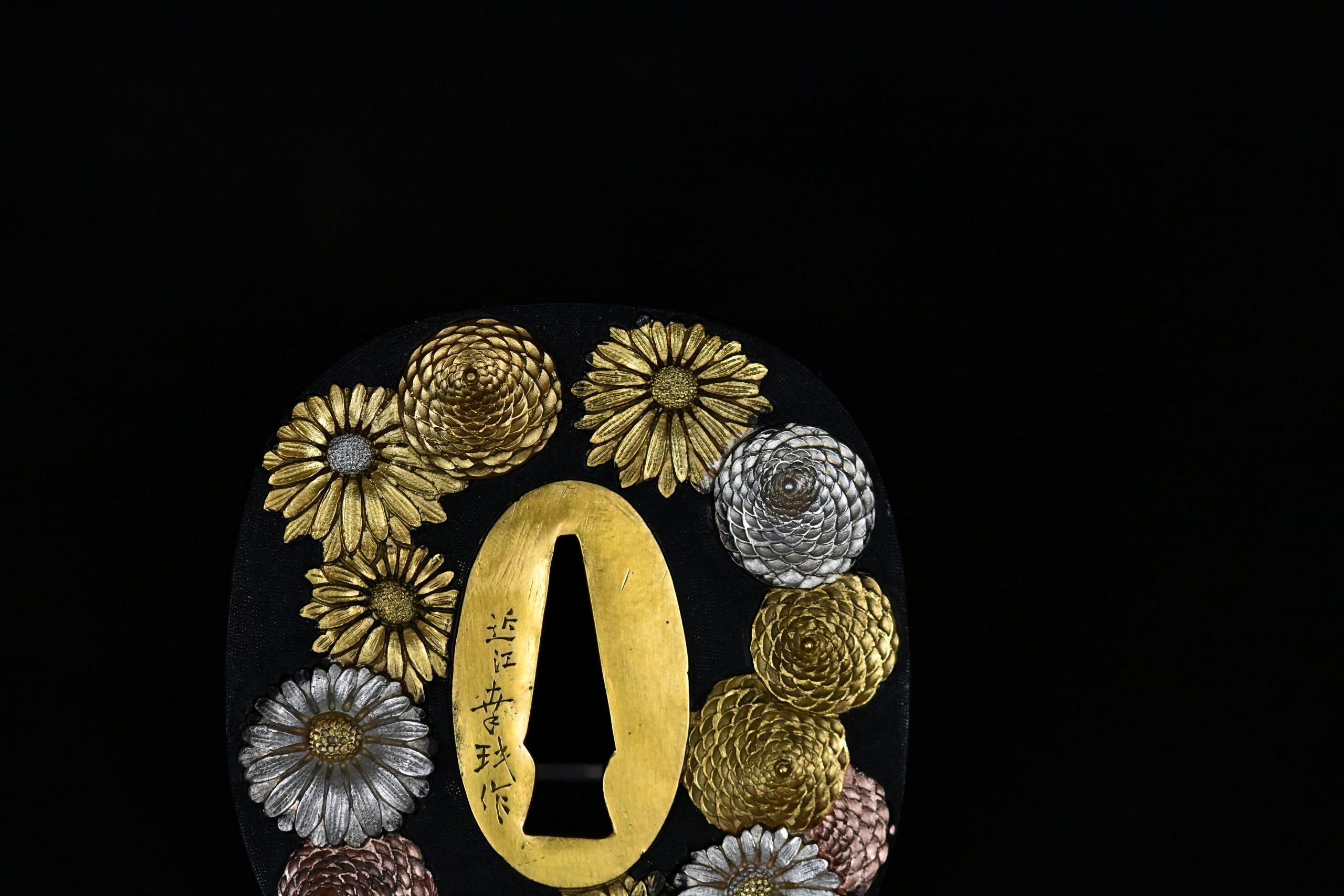
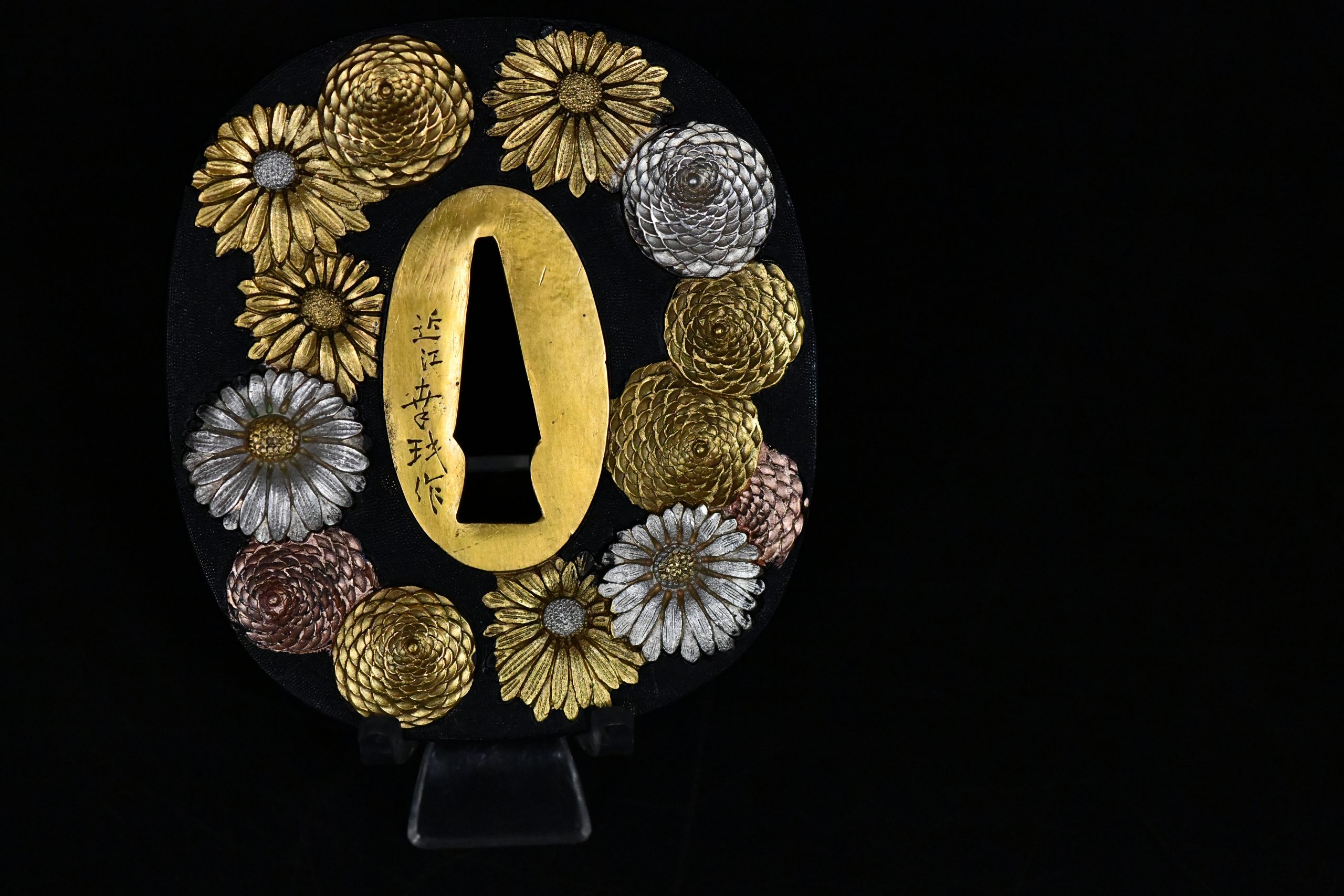
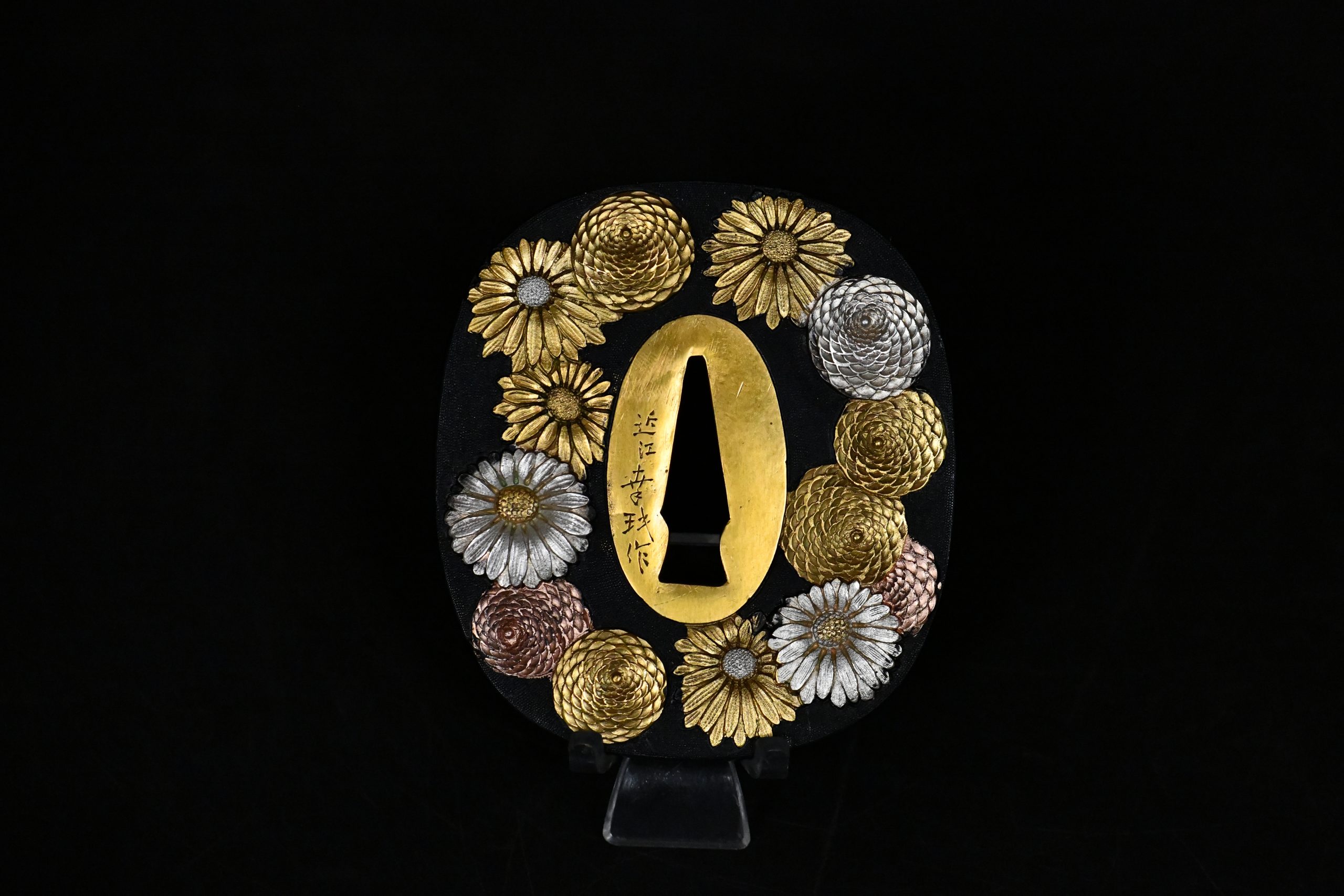
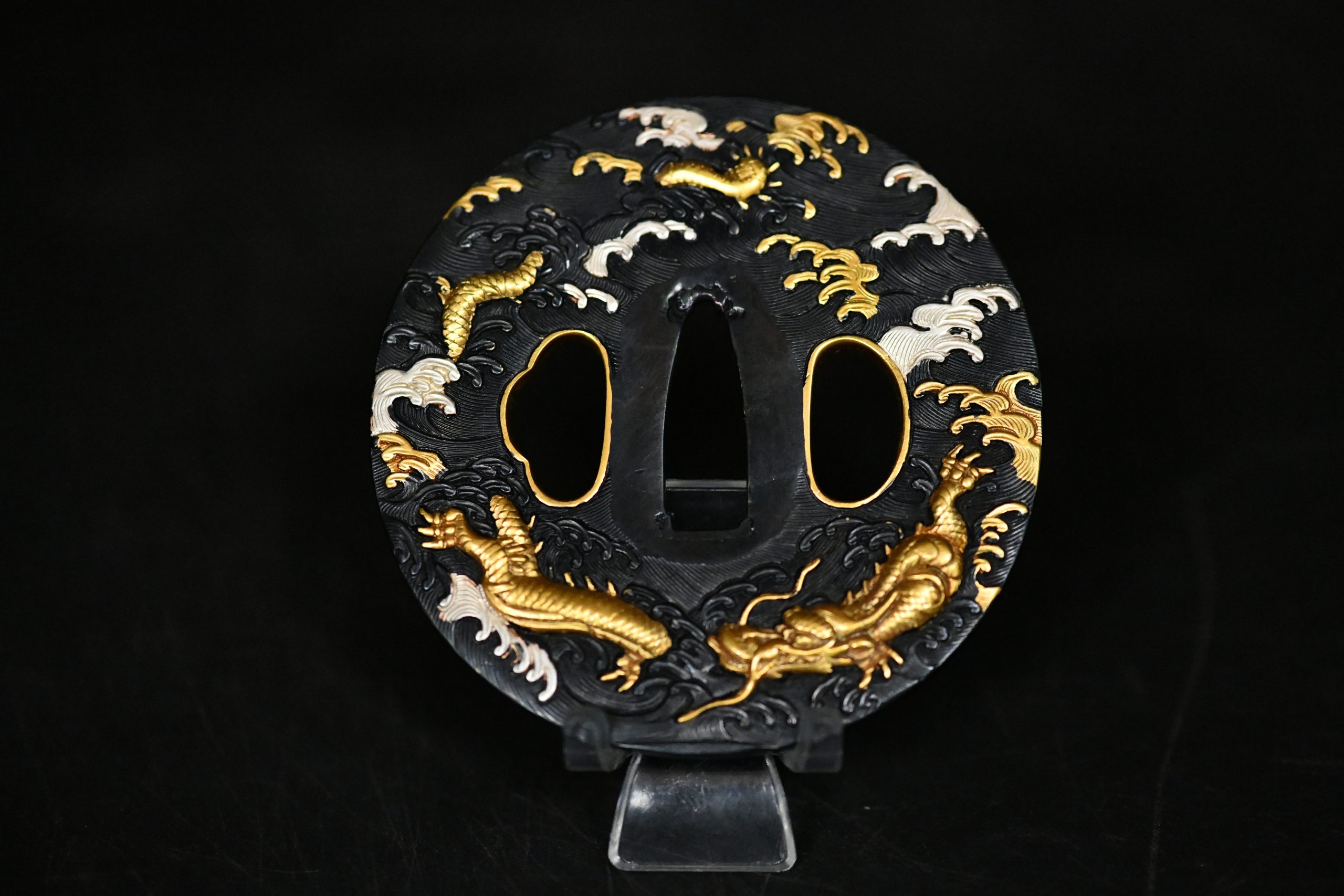
Omi Yasumasa
Shōwa
Signed
Hozon (NBTHK)
Certifies a genuine fitting worth preserving: a correct signature, or, if unsigned, an identifiable era and school, with recognized artistic and craft value.
The NBTHK (Nihon Bijutsu Tōken Hozon Kyōkai, the Society for the Preservation of Japanese Art Swords) is a public-interest incorporated foundation founded in 1948 and supervised by Japan’s Agency for Cultural Affairs (Bunkachō); it is based at the Japanese Sword Museum in Tokyo. Its expert panels physically examine each submitted work (shinsa) and issue a certificate (kanteishō) ranking it by artistic and historical merit. NBTHK papers are the most widely recognized standard of authentication for Japanese swords and fittings.
NBTHK official site14-day return if items arrive damaged or in unexpected condition; customer bears return shipping + insurance; items returned in original condition with all accessories; antique armour non-returnable; only regular priced items refundable; shipping costs non-refundable.
€1,400