 NihontoWatchNihontoWatch
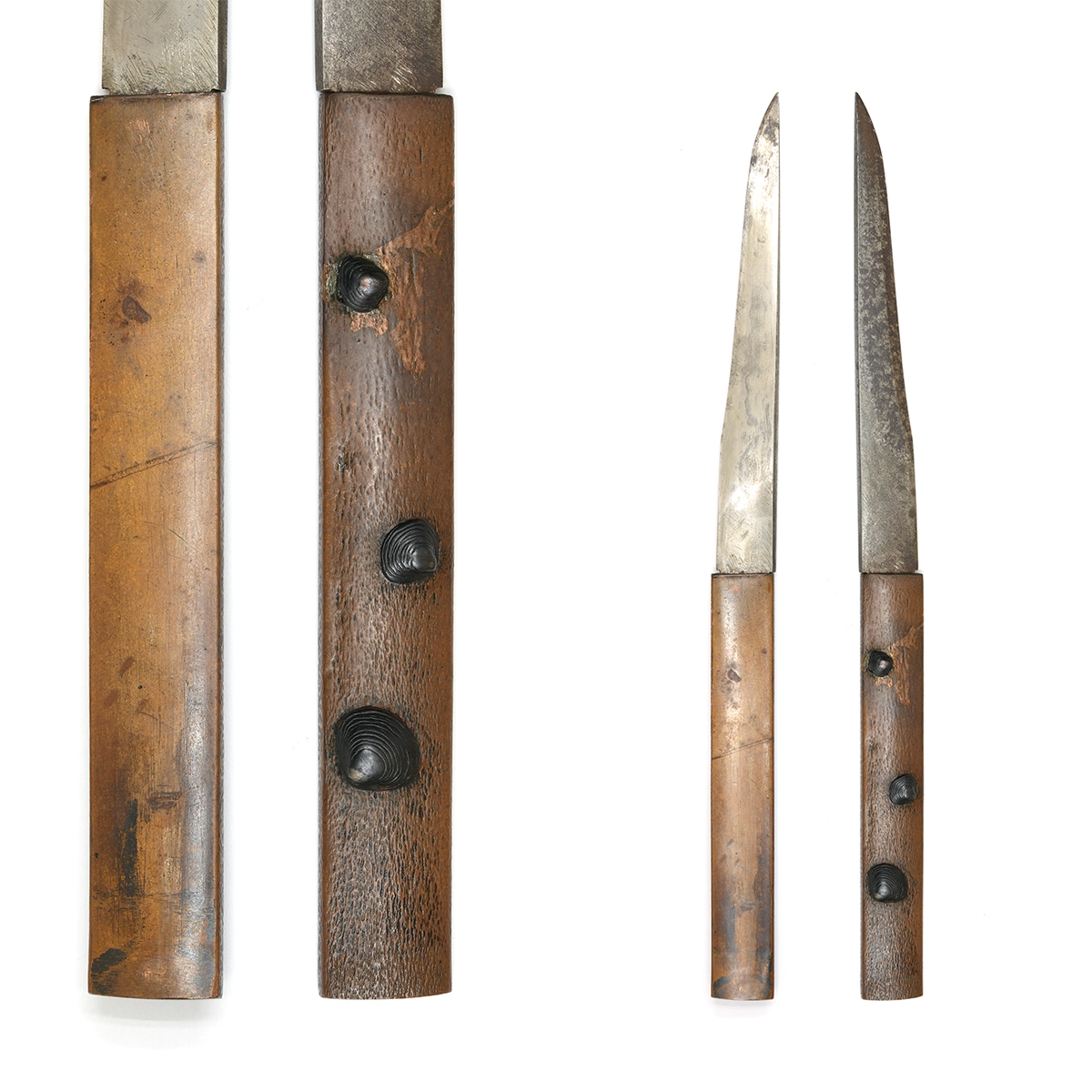
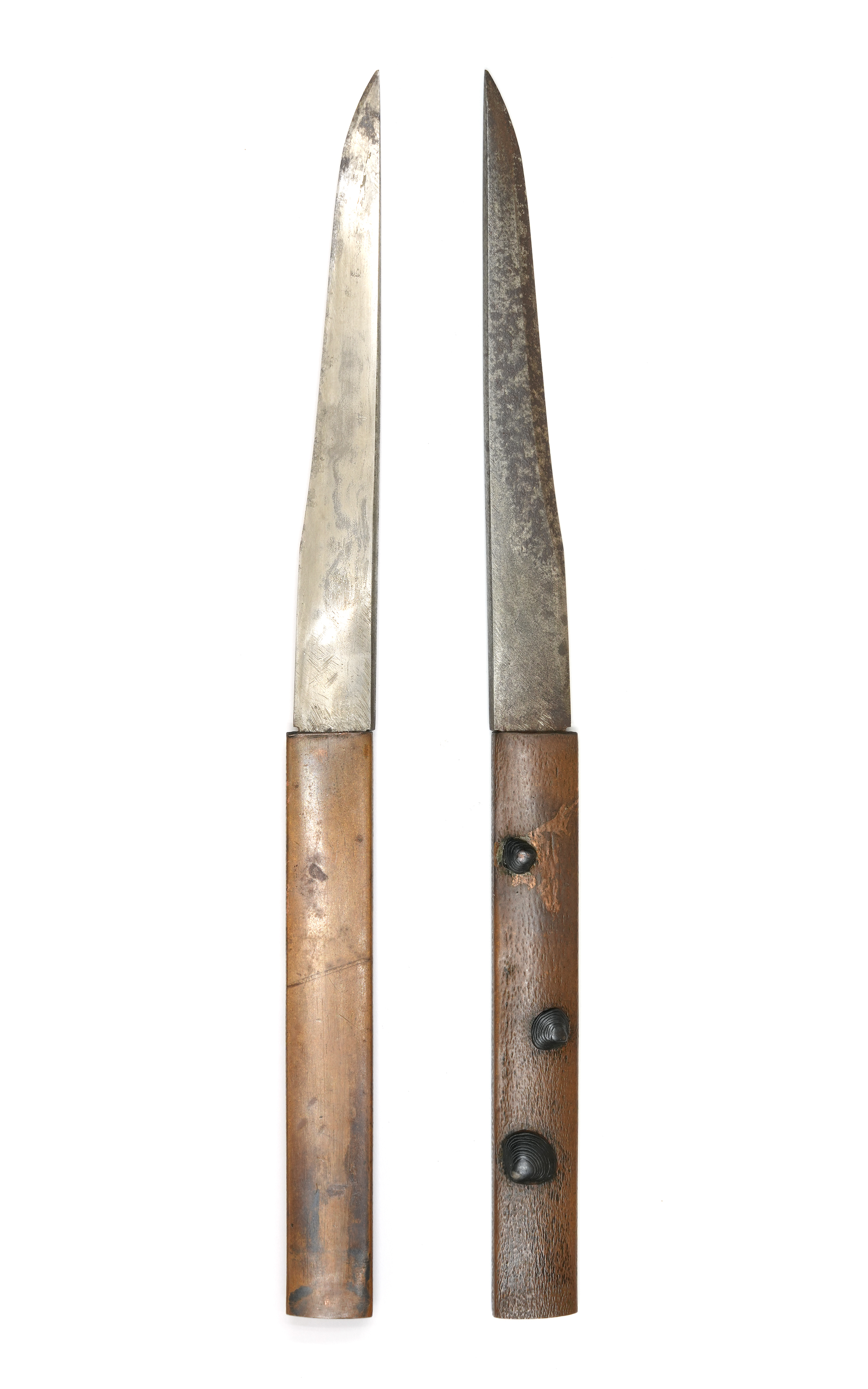
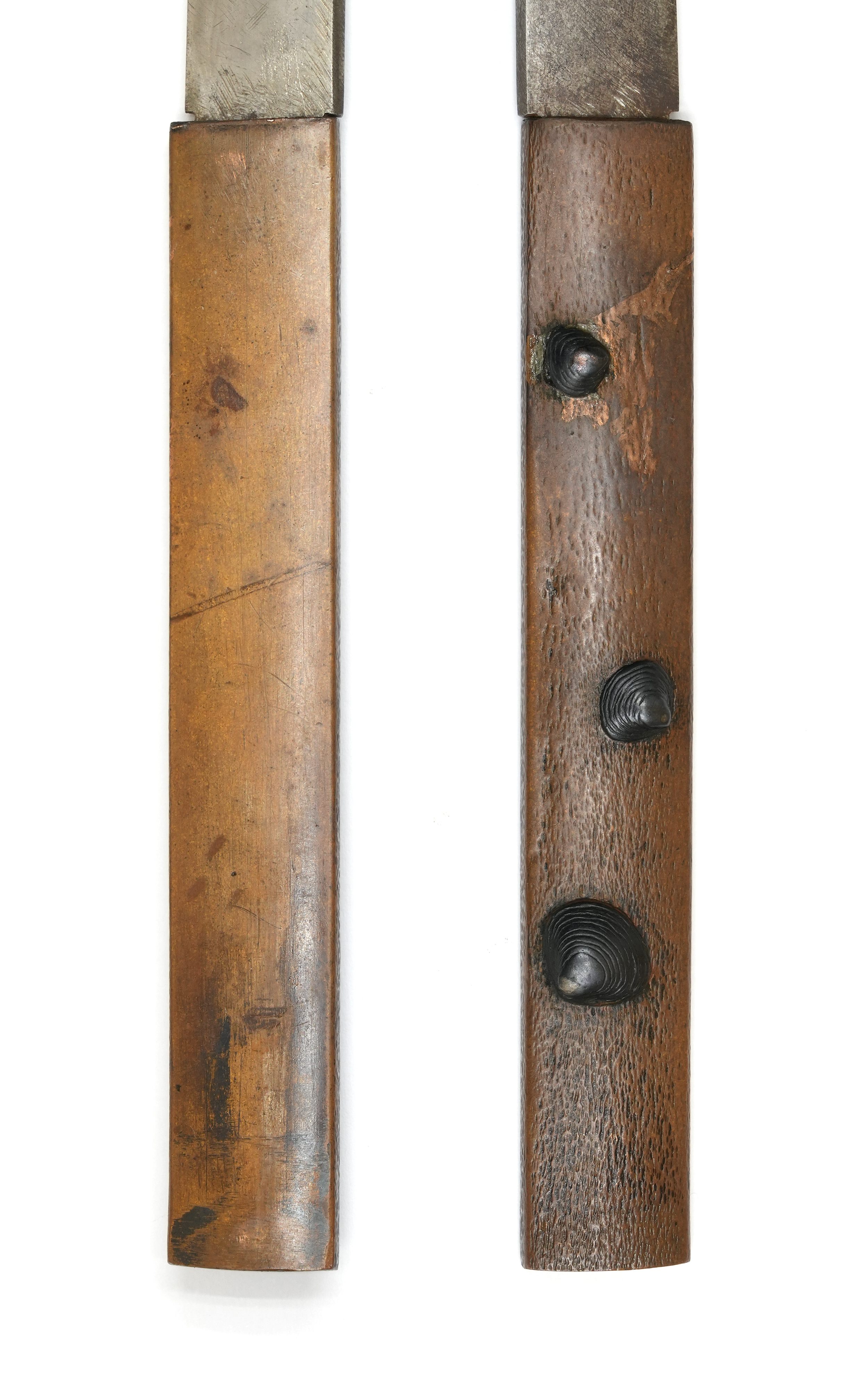
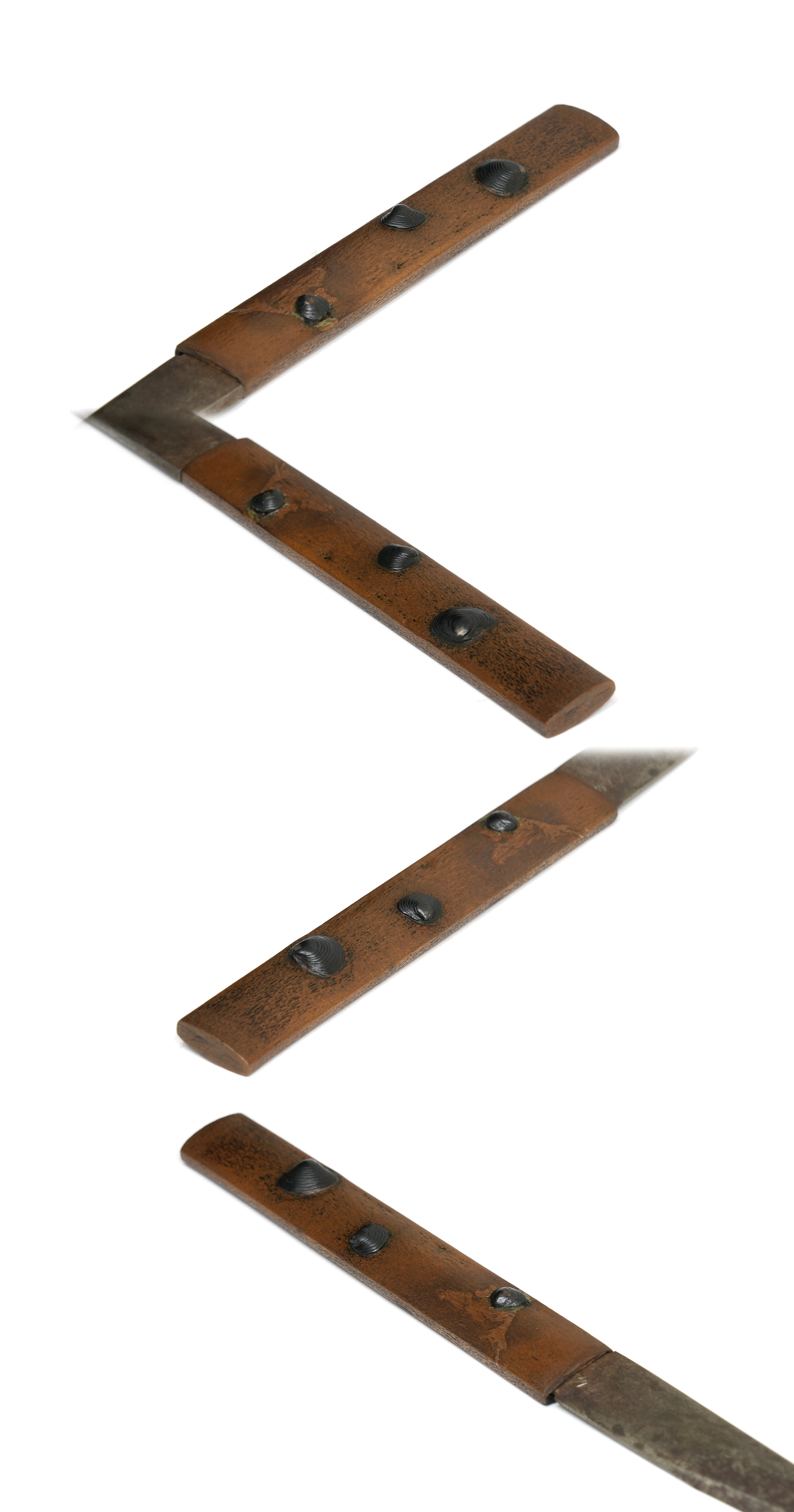
Shijimi (freshwater clams) inhabit the shallows of clear rivers and lakes, and are familiar shellfish that have been deeply connected to people's lives and food culture since ancient times. The unconventional elegance of this motif lies in finding beauty not in flamboyant historical tales or heroes, but in the small life breathing at the water's edge at one's feet; it possesses a refined taste characteristic of Edo kinkou, evoking the quiet flow, clear water, and even the shellfish appearing among the gravel. This piece features a warm reddish-brown jinita upon which countless fine tagane marks are layered to represent the riverbed gravel washed by the current, and three shijimi of different sizes are set in high relief using black irogane. Rather than arranging the ground pattern uniformly, subtle changes in the density and direction of the tagane skillfully express the scenery of the shallows where sand has gathered and fine depressions or streaks have formed due to the flow of water, a design that transforms the surface of the slender kozuka itself into a quiet riverbed. The three shijimi vary slightly in orientation and size, carved with rich height differences to show the swelling of the shells, while multiple growth lines are carefully engraved on the surfaces, capturing their appearance naturally scattered on the riverbed with great realism. The contrast between the deep, sunken black of the shellfish and the reddish-brown jinita tinged with soft antique color is sober and refined; each time the angle is changed, light runs along the ridges of the shells, and the volume of each of the three pieces emerges vividly. In this work, which establishes the depth of the waterside and a sense of life using only the colors of different metals, the undulations of nikubori, and the texture of the riverbed created with tagane without relying on gaudy gold and silver iroe, one can perceive the sure senses of a metalworker who thoroughly understood the inherent qualities of the materials. The ura side is finished simply with a wide migaki-ji, further highlighting the dense riverbed expression and three-dimensional shijimi of the omote. The appearance when housing the accompanying kogatana has the fulfillment of a practical tool of the period, and the significant change in atmosphere from the quiet ura to the omote where the riverbed scenery unfolds when drawing it is also a pleasure of appreciation. Viewed from a distance, the neat arrangement formed by the three shijimi stands out, and in the hand, one can thoroughly savor the growth lines of the shells, the countless tagane marks forming the riverbed, and the luster of the metal nurtured over many years; it is a highly attractive hitotsu that has sublimated everyday nature into dignified tosogu beauty.
Offered by Toushin
Edo
Unsigned
As written by the shop
Machine translation from the shop's Japanese · may contain errors ·
We could not find an authenticity certificate on the seller’s listing. Japanese swords and fittings are normally papered by the NBTHK (or the NTHK). Without one, the attribution is the seller’s own assessment and has not been independently verified — treat it with caution and ask the dealer about certification before buying.
As a rule we do not accept returns, except when we have sent a different item from the one ordered or when there is a significant discrepancy between the description and the item. If you wish to return an item, please contact us within 3 days of its arrival and then send it back.
¥88,000