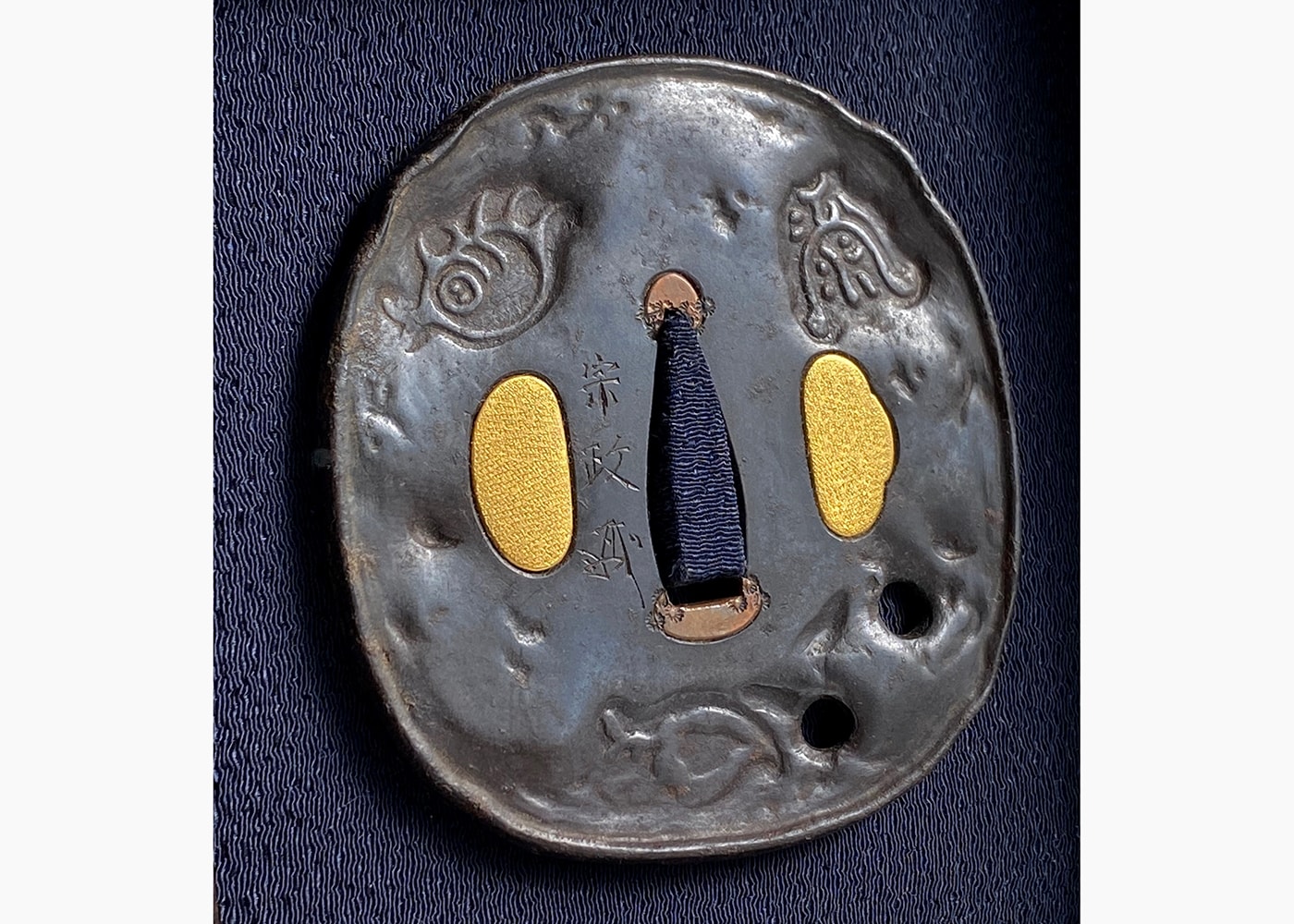
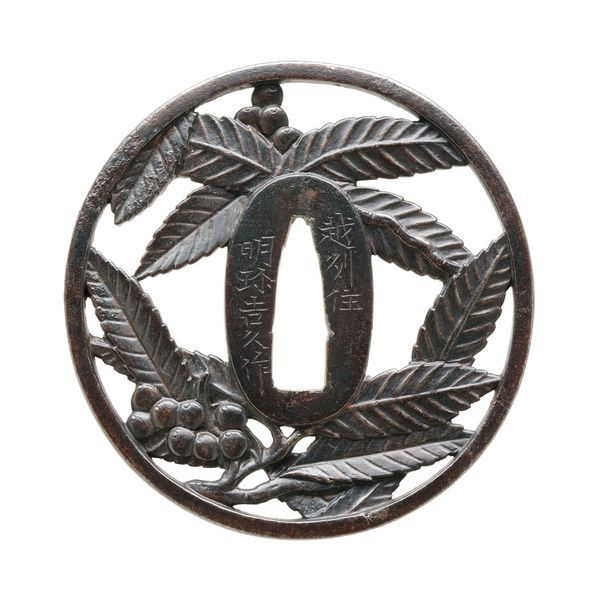
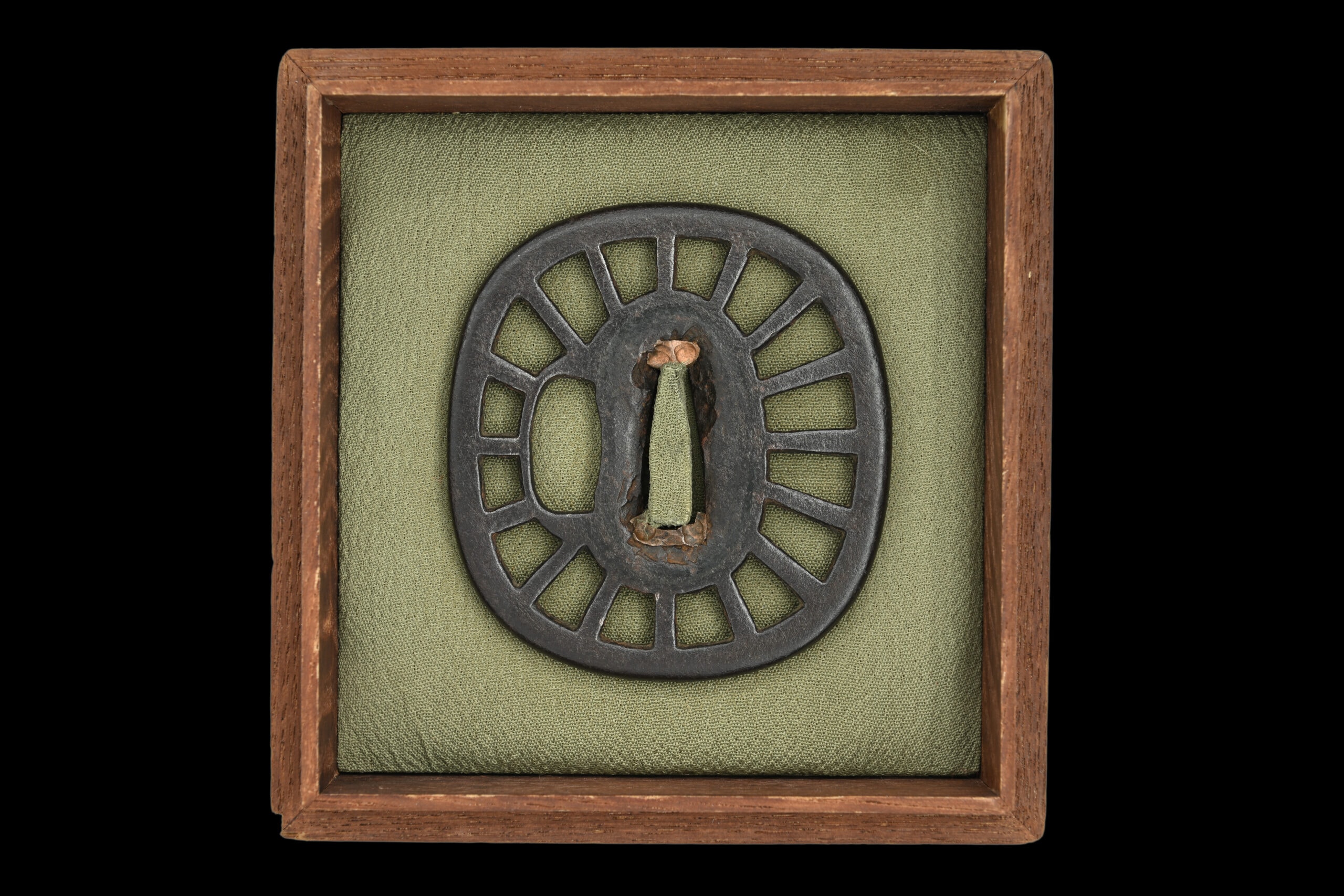
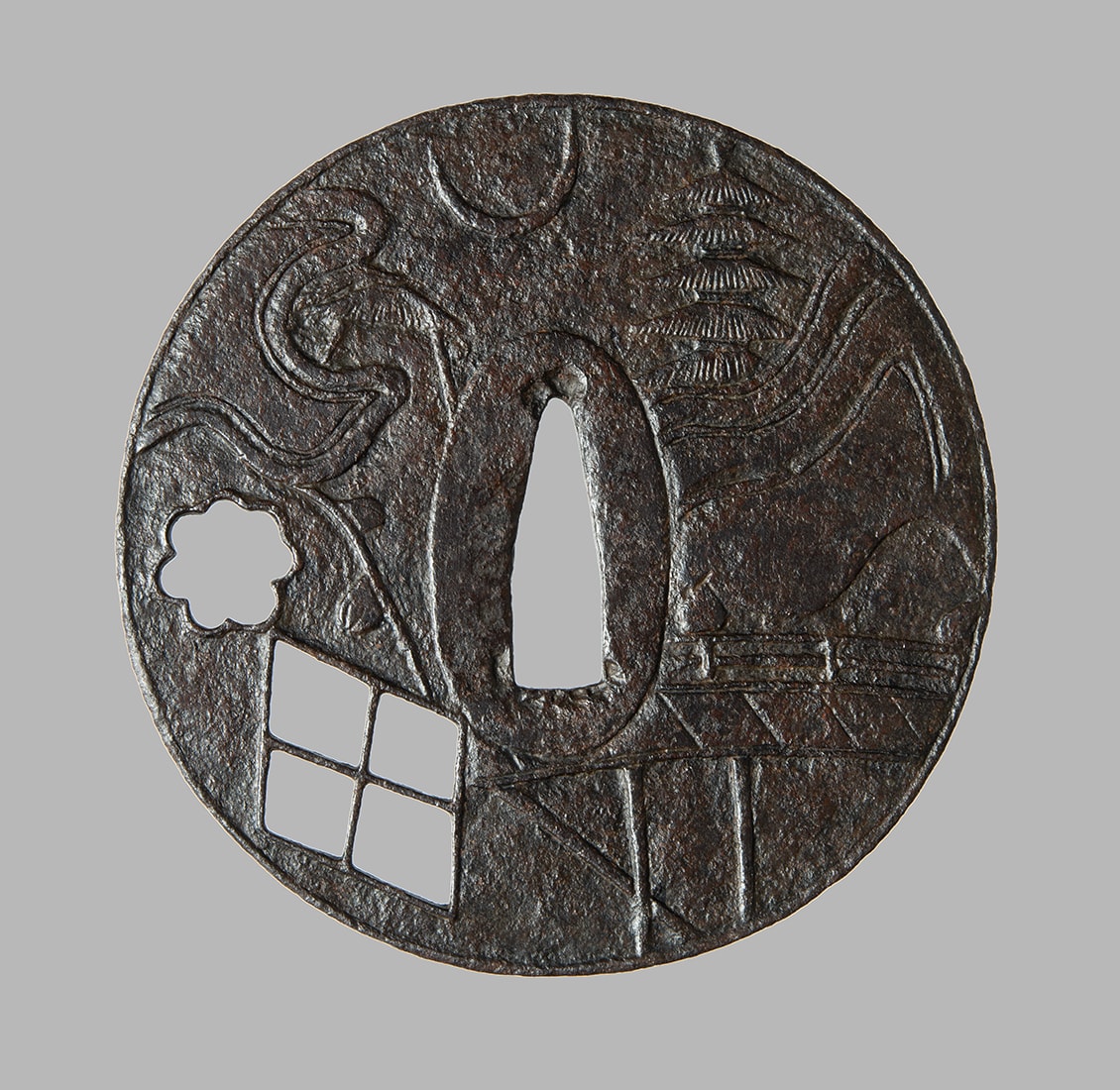
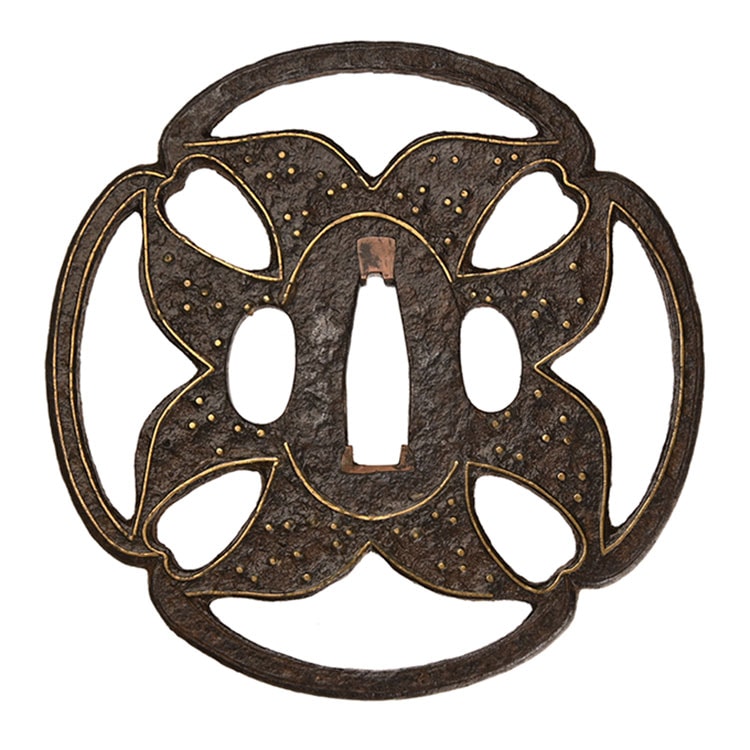
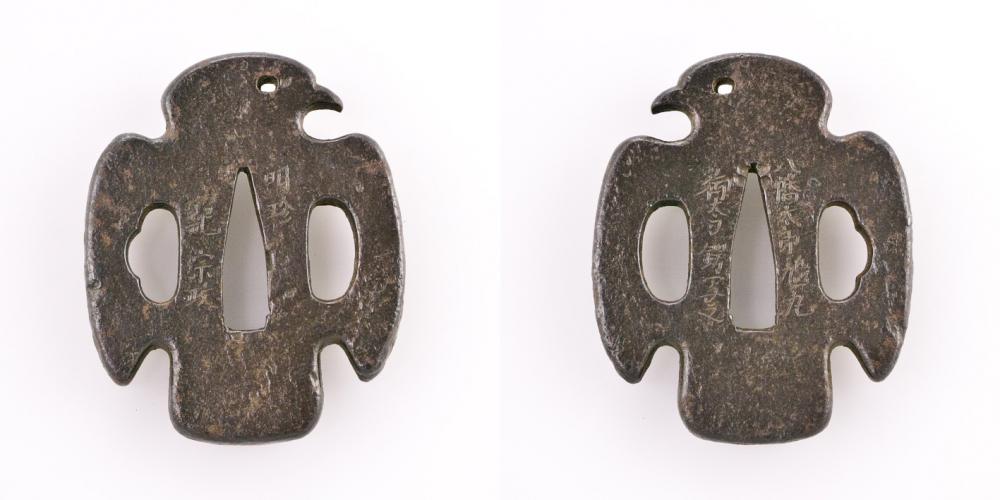
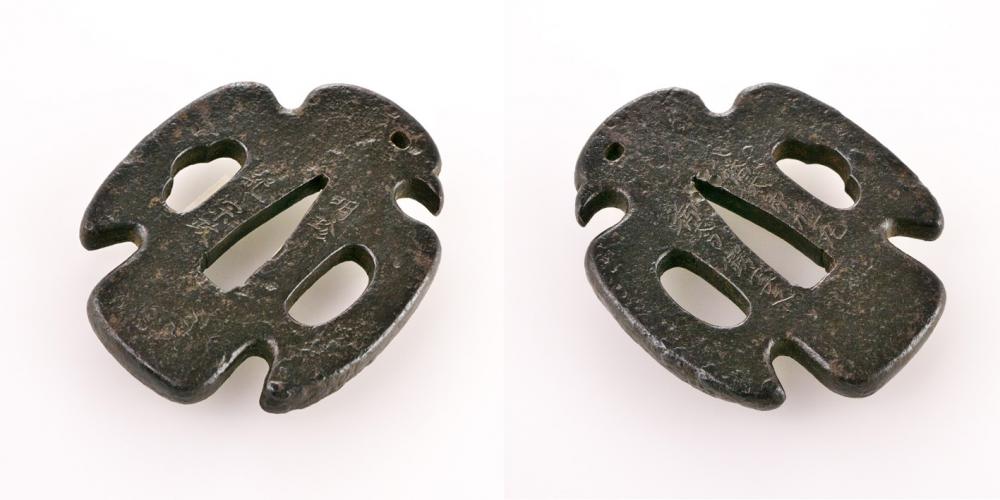
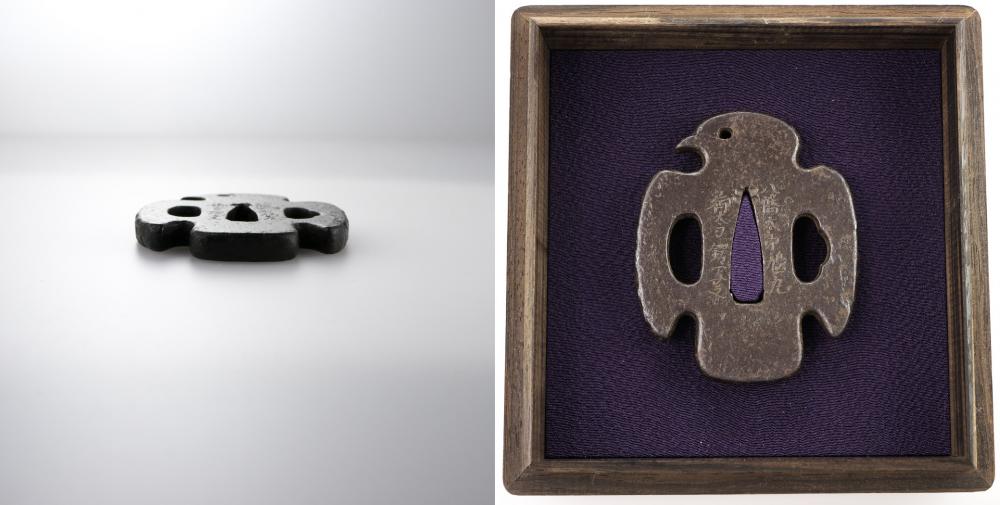
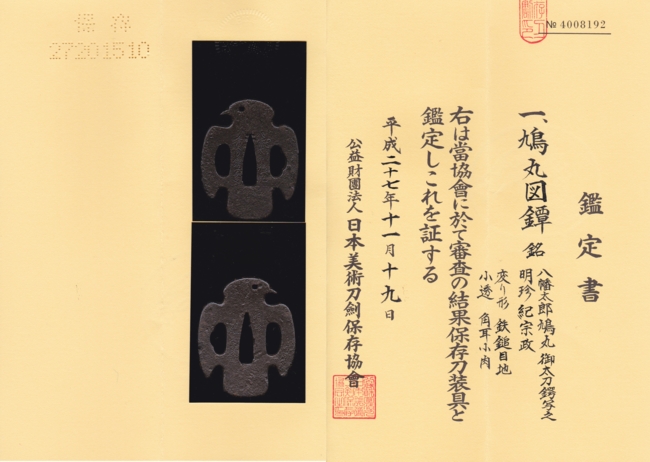
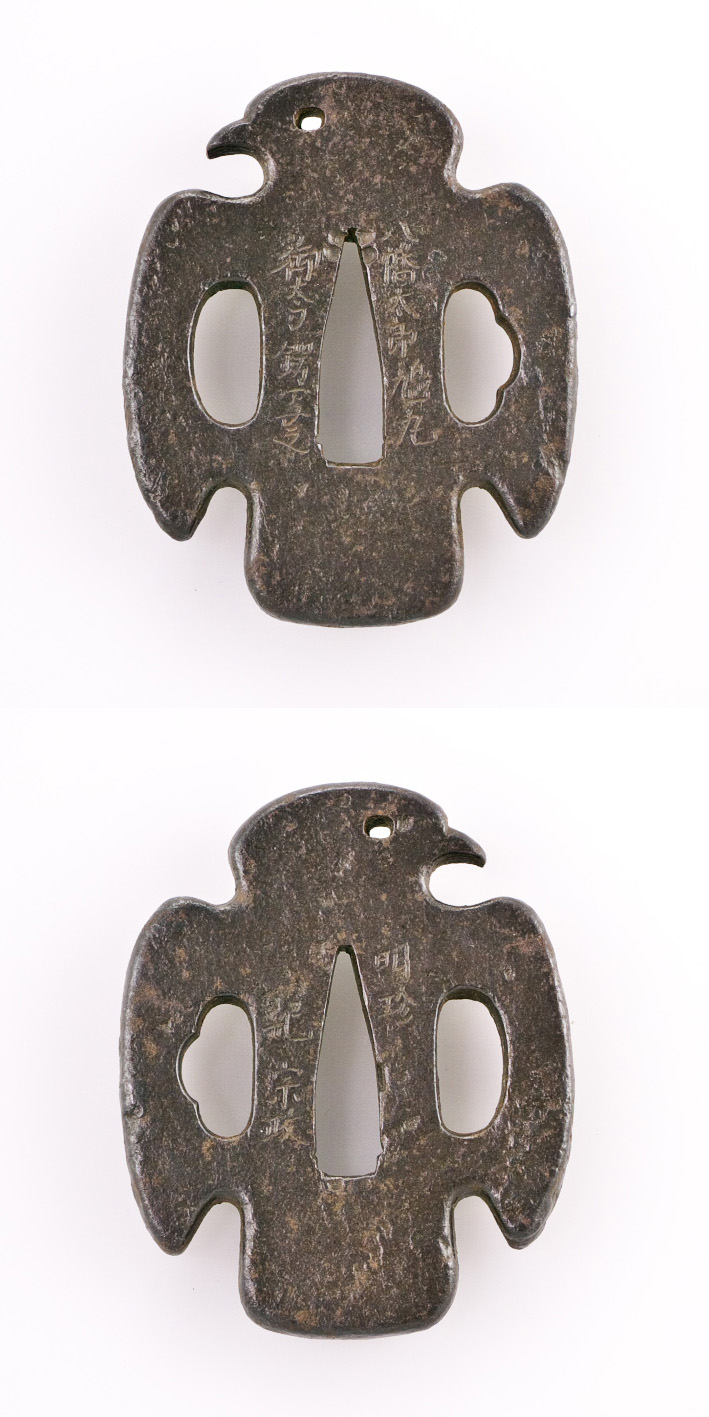
This tsuba is made by Myochin Ki Munemasa, a metalworker who lived in Edo during the late Edo period. He was known for his iron tsuba with forged surfaces and those in the shape of a pigeon, like this one. The inscription suggests it is a reproduction of a tsuba from Hachiman Taro Yoshiie's sword, whose family crest was the 'facing pigeons'.
 NihontoWatch
mei · Myochin · Edo
Tosho-Katchushi · Musashi
1 piece on the market now
Tosho-Katchushi · Kyoto
20 pieces on the market now
| Smith | Era | Designated |
|---|---|---|
| Munemasa宗政 | — | 0 |
| Yasutsugu保次 | — | 0 |
| Munesada宗定 | — | 0 |
| Munetsugu宗次 | — | 0 |
| Yoshitada義忠 | — | 0 |
Certifies a genuine fitting worth preserving: a correct signature, or, if unsigned, an identifiable era and school, with recognized artistic and craft value.
The NBTHK (Nihon Bijutsu Tōken Hozon Kyōkai, the Society for the Preservation of Japanese Art Swords) is a public-interest incorporated foundation founded in 1948 and supervised by Japan’s Agency for Cultural Affairs (Bunkachō); it is based at the Japanese Sword Museum in Tokyo. Its expert panels physically examine each submitted work (shinsa) and issue a certificate (kanteishō) ranking it by artistic and historical merit. NBTHK papers are the most widely recognized standard of authentication for Japanese swords and fittings.
NBTHK official sitePlease contact us by phone within 3 days of the item's arrival and ship it back the next day. The postage and security service fees are the customer's responsibility.
This tsuba is made by Myochin Ki Munemasa, a metalworker who lived in Edo during the late Edo period. He was known for his iron tsuba with forged surfaces and those in the shape of a pigeon, like this one. The inscription suggests it is a reproduction of a tsuba from Hachiman Taro Yoshiie's sword, whose family crest was the 'facing pigeons'.
NihontoWatchmei · Myochin · Edo
Tosho-Katchushi · Musashi
1 piece on the market now
Tosho-Katchushi · Kyoto
20 pieces on the market now
| Smith | Era | Designated |
|---|---|---|
| Munemasa宗政 | — | 0 |
| Yasutsugu保次 | — | 0 |
| Munesada宗定 | — | 0 |
| Munetsugu宗次 | — | 0 |
| Yoshitada義忠 | — | 0 |
Certifies a genuine fitting worth preserving: a correct signature, or, if unsigned, an identifiable era and school, with recognized artistic and craft value.
The NBTHK (Nihon Bijutsu Tōken Hozon Kyōkai, the Society for the Preservation of Japanese Art Swords) is a public-interest incorporated foundation founded in 1948 and supervised by Japan’s Agency for Cultural Affairs (Bunkachō); it is based at the Japanese Sword Museum in Tokyo. Its expert panels physically examine each submitted work (shinsa) and issue a certificate (kanteishō) ranking it by artistic and historical merit. NBTHK papers are the most widely recognized standard of authentication for Japanese swords and fittings.
NBTHK official sitePlease contact us by phone within 3 days of the item's arrival and ship it back the next day. The postage and security service fees are the customer's responsibility.