After the Ōnin War broke the Ashikaga order, a century of Sengoku warfare armed nearly every province in Japan. The era rewards a discriminating eye: routine work exists in quantity, and beside it stand custom blades of the first rank.
 NihontoWatchNihontoWatch
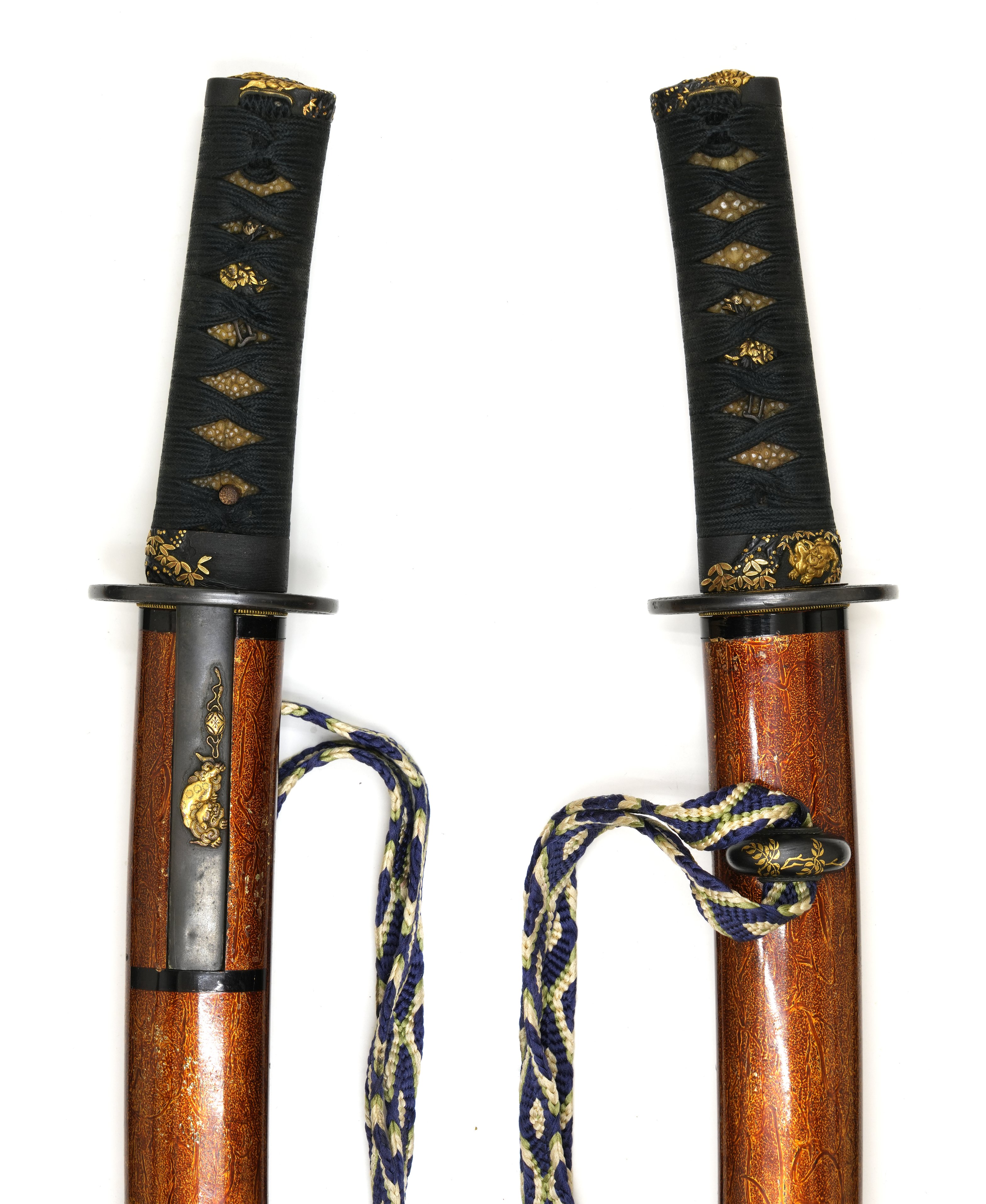
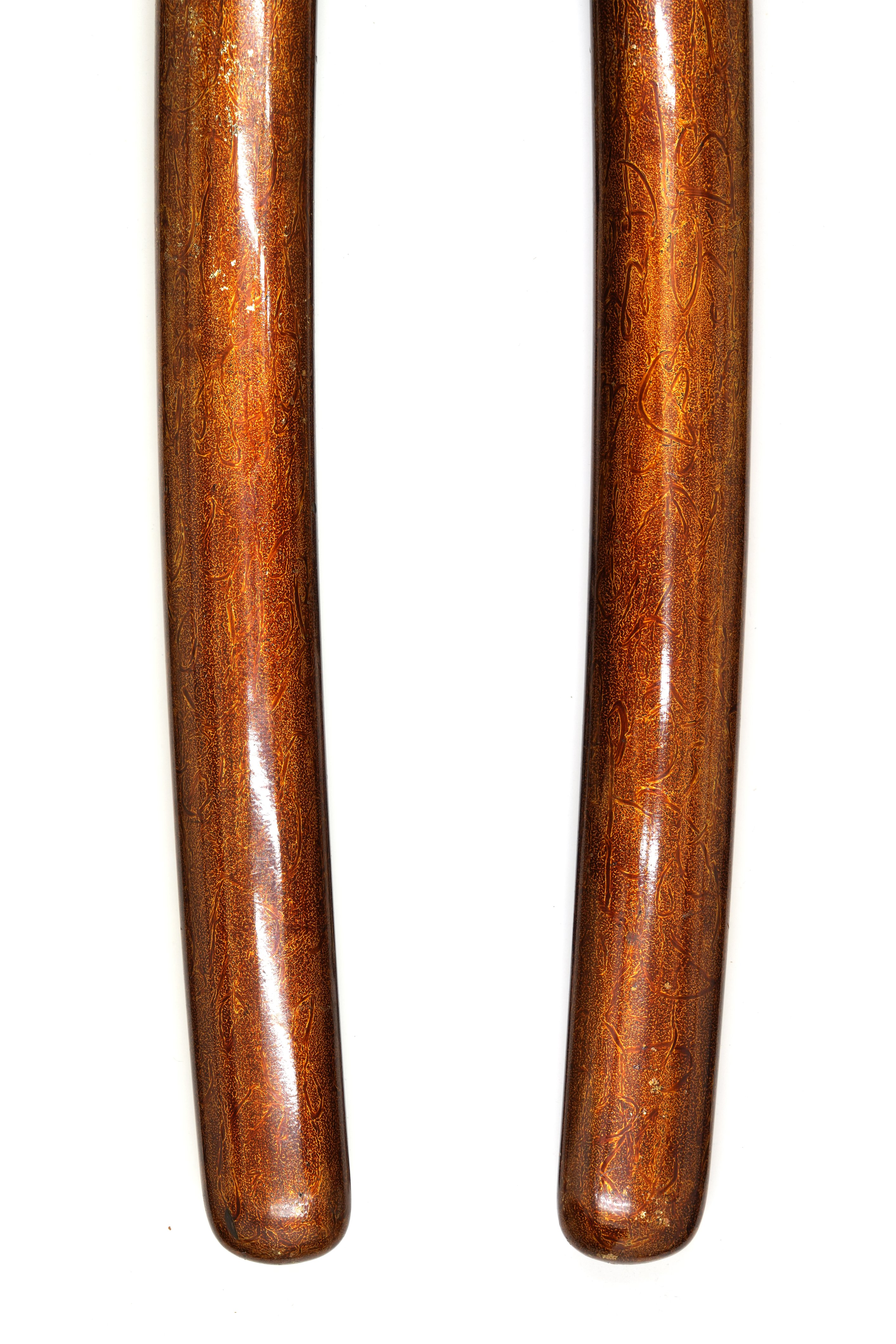
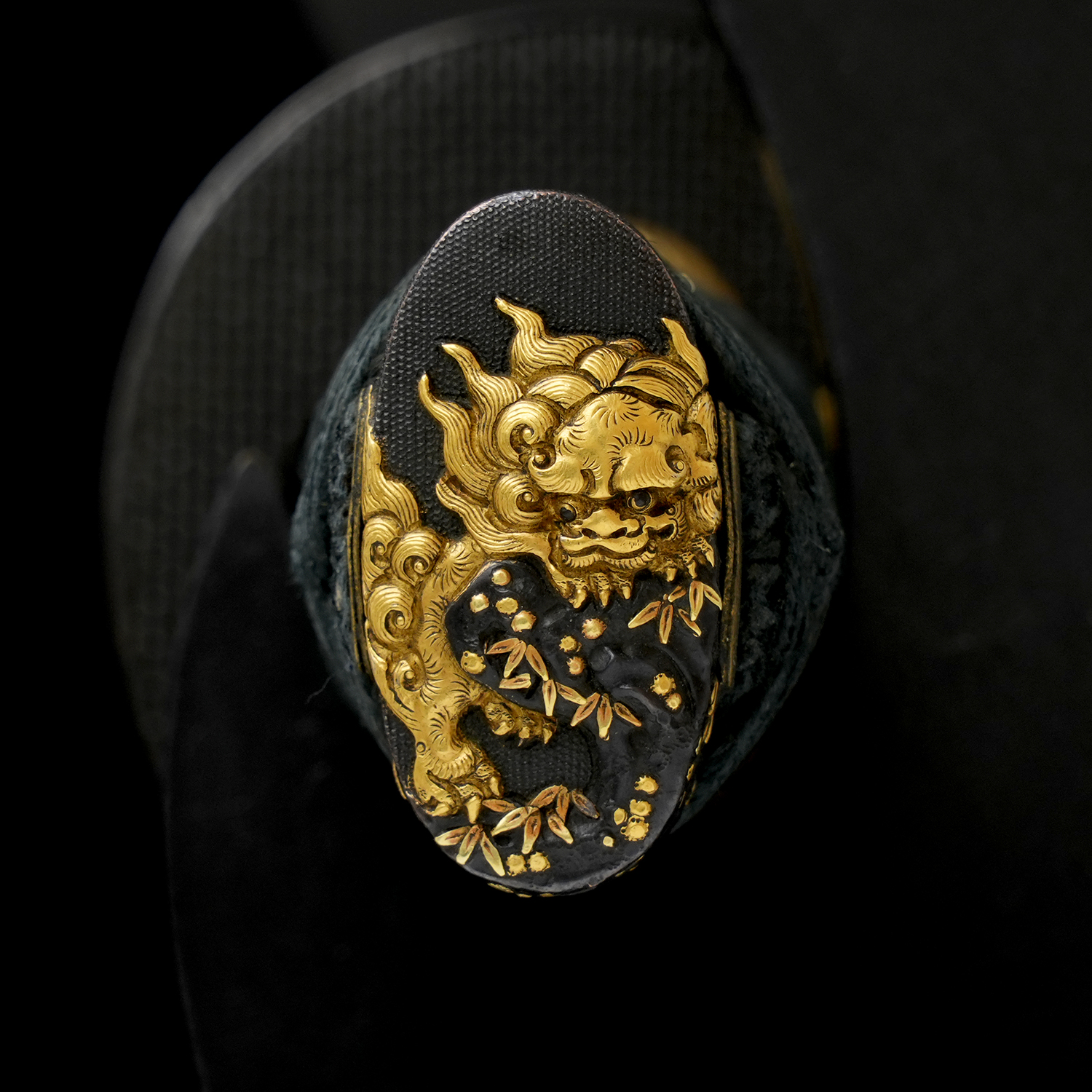
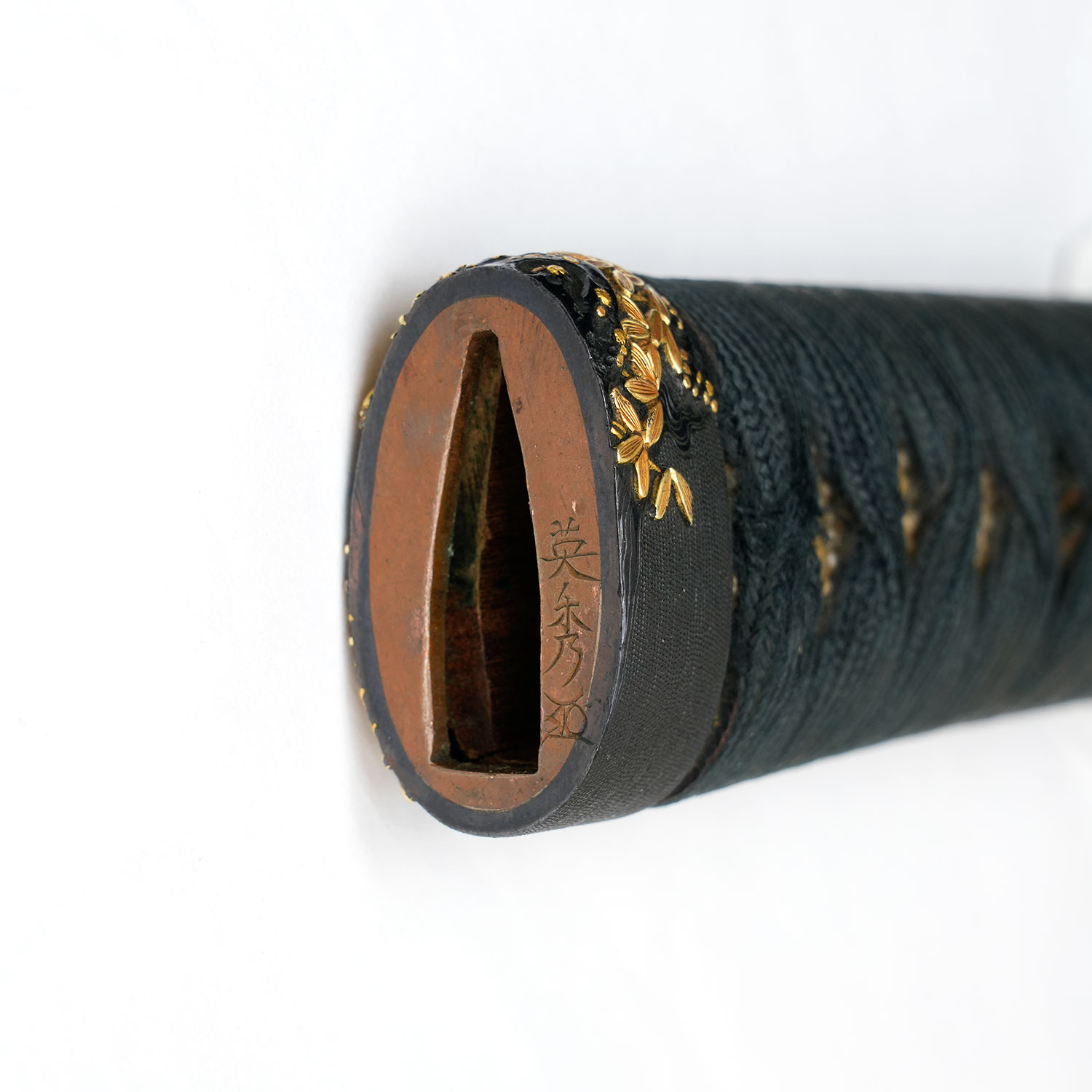
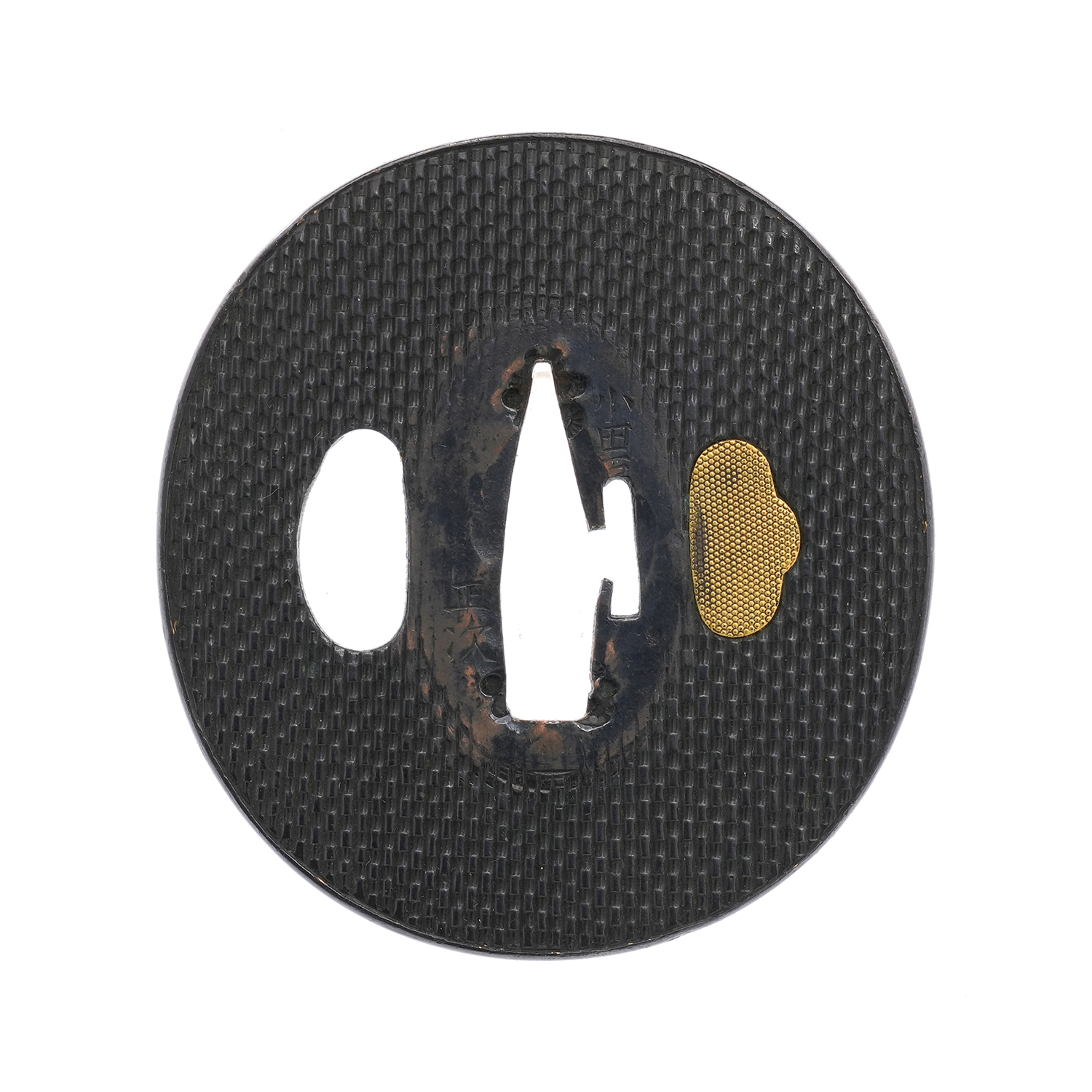
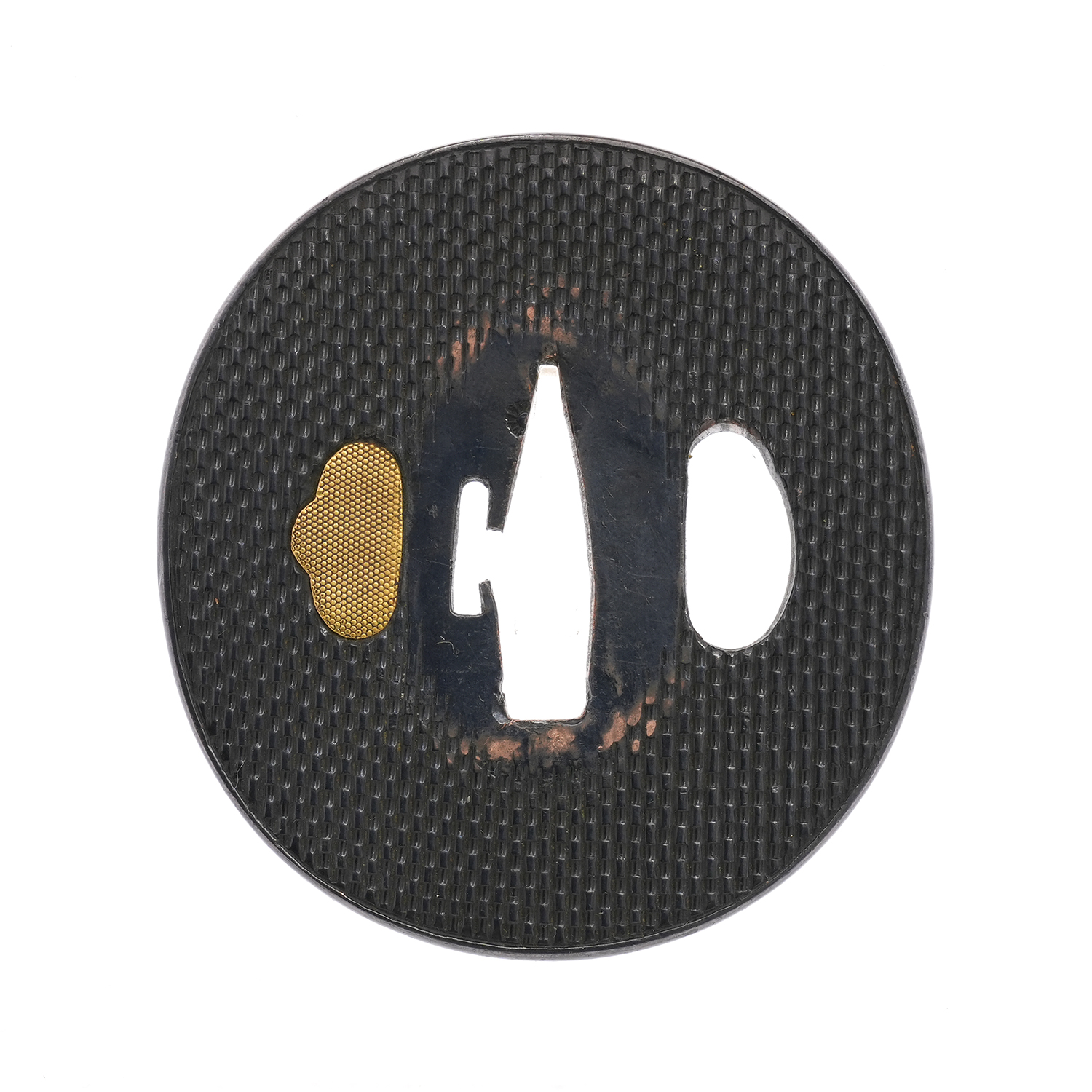
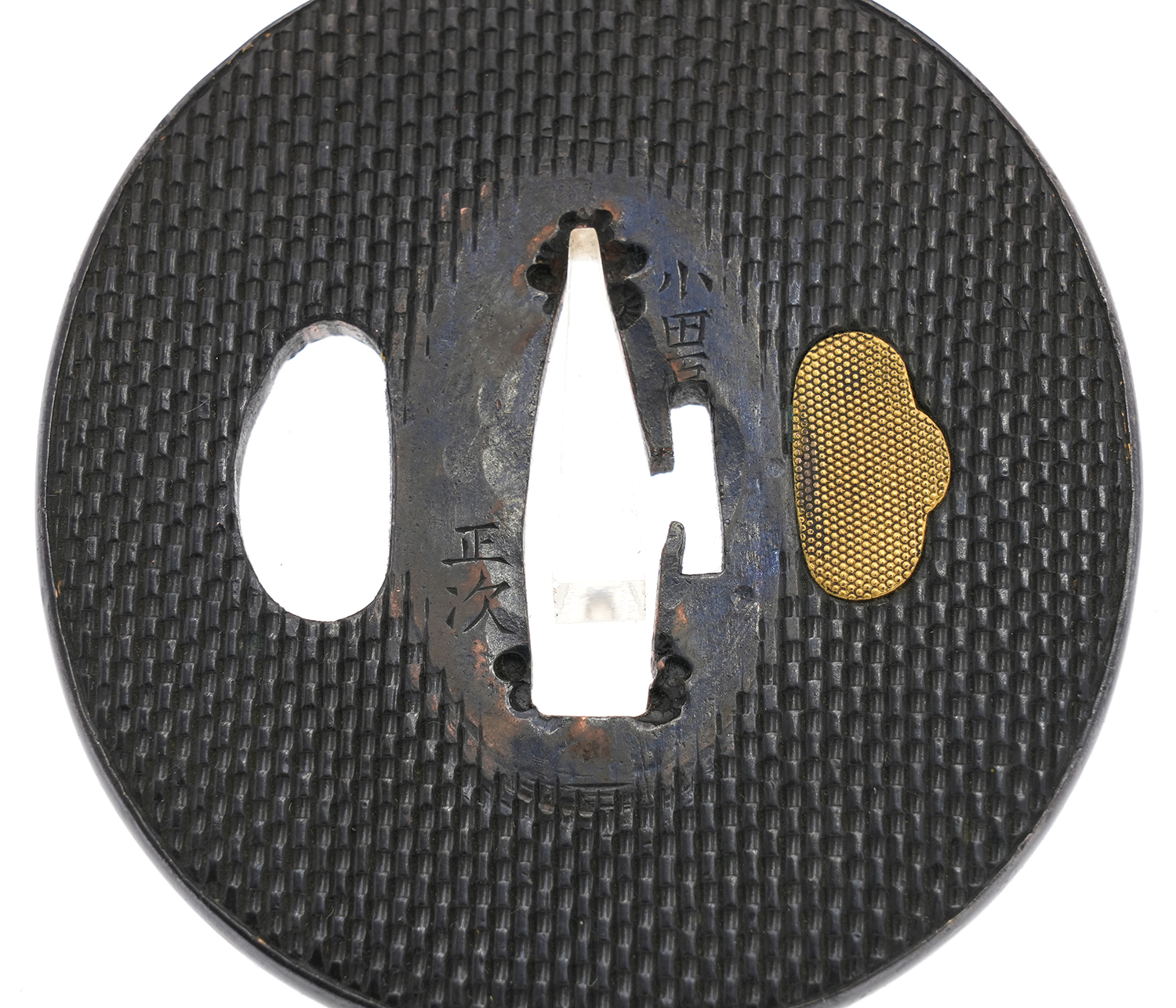
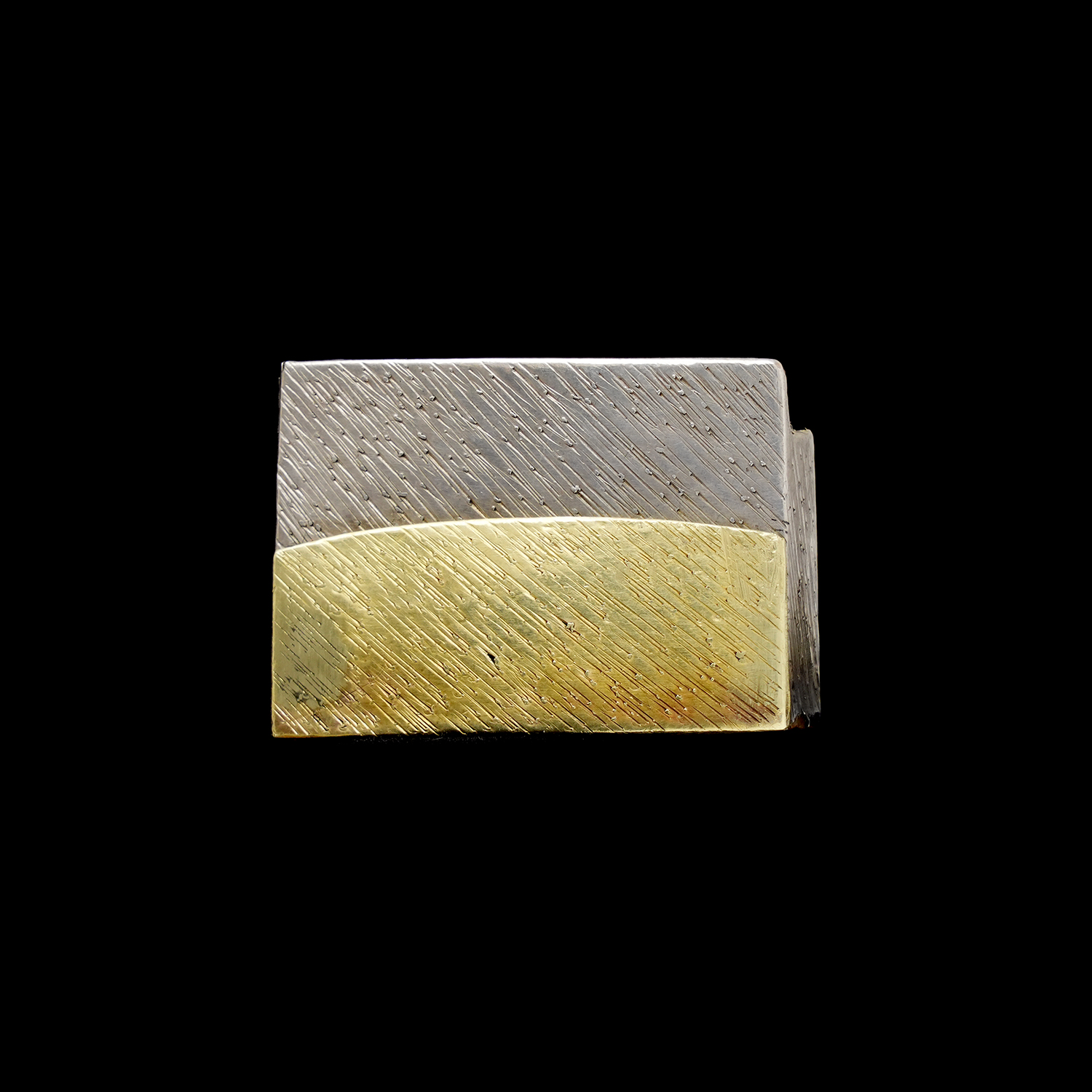
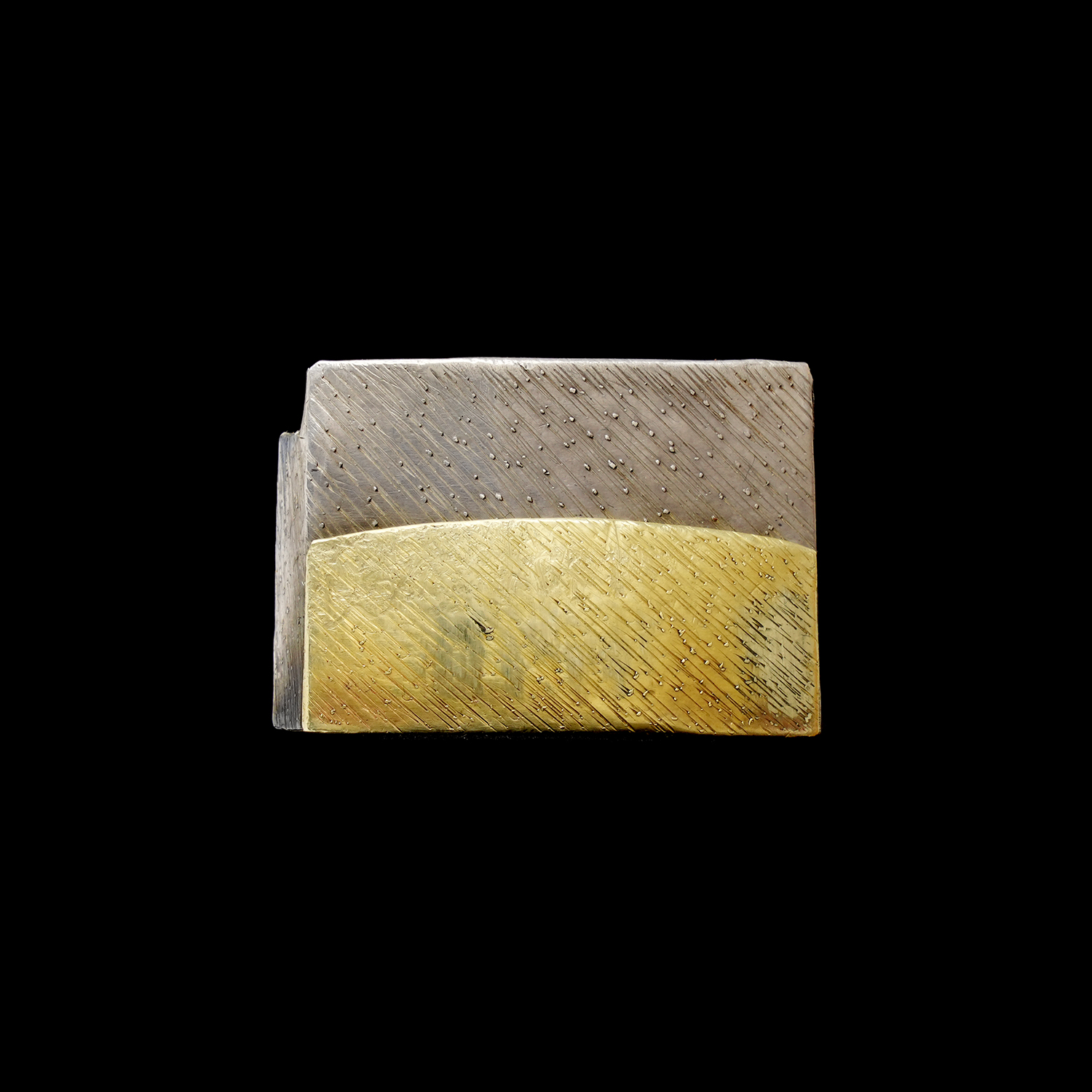
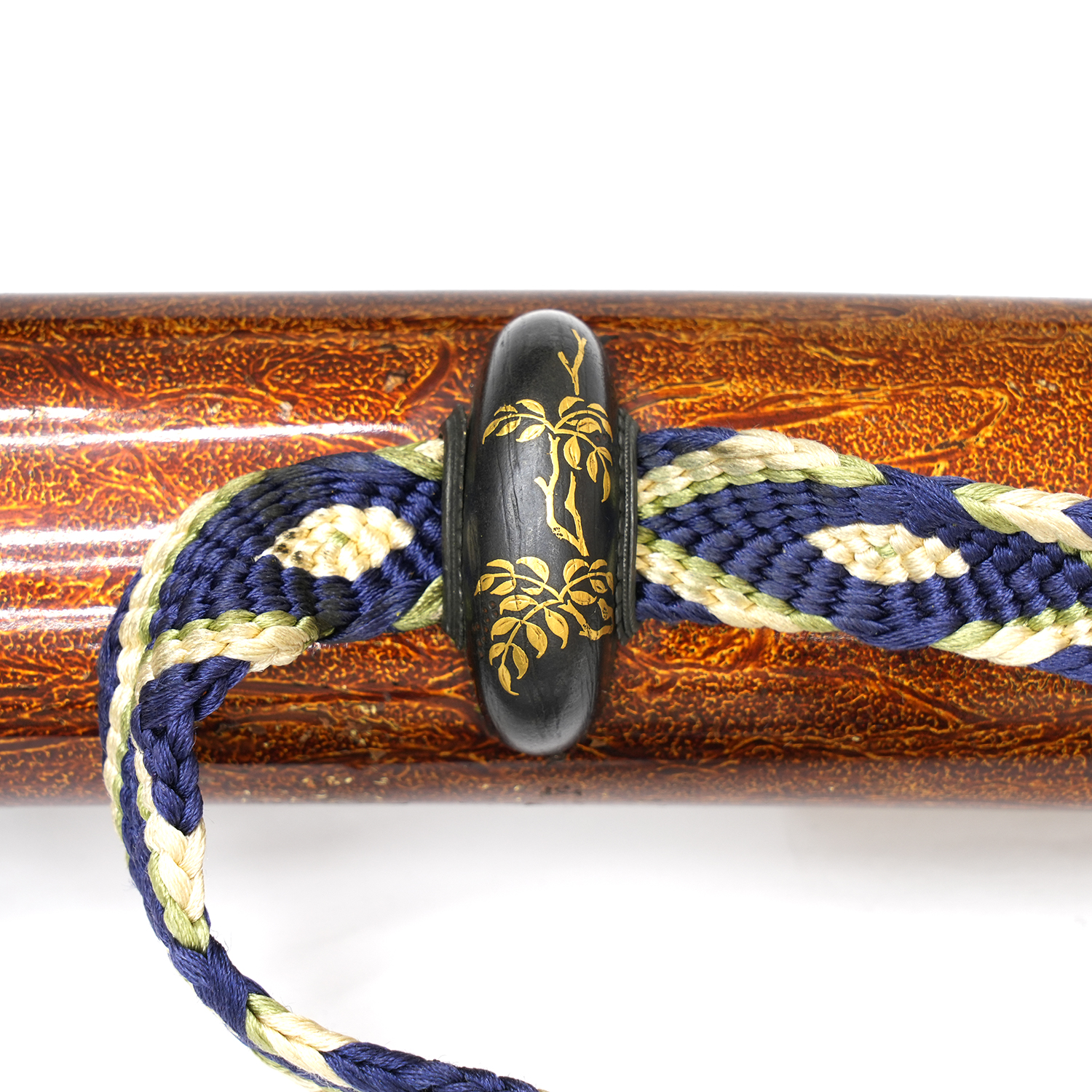
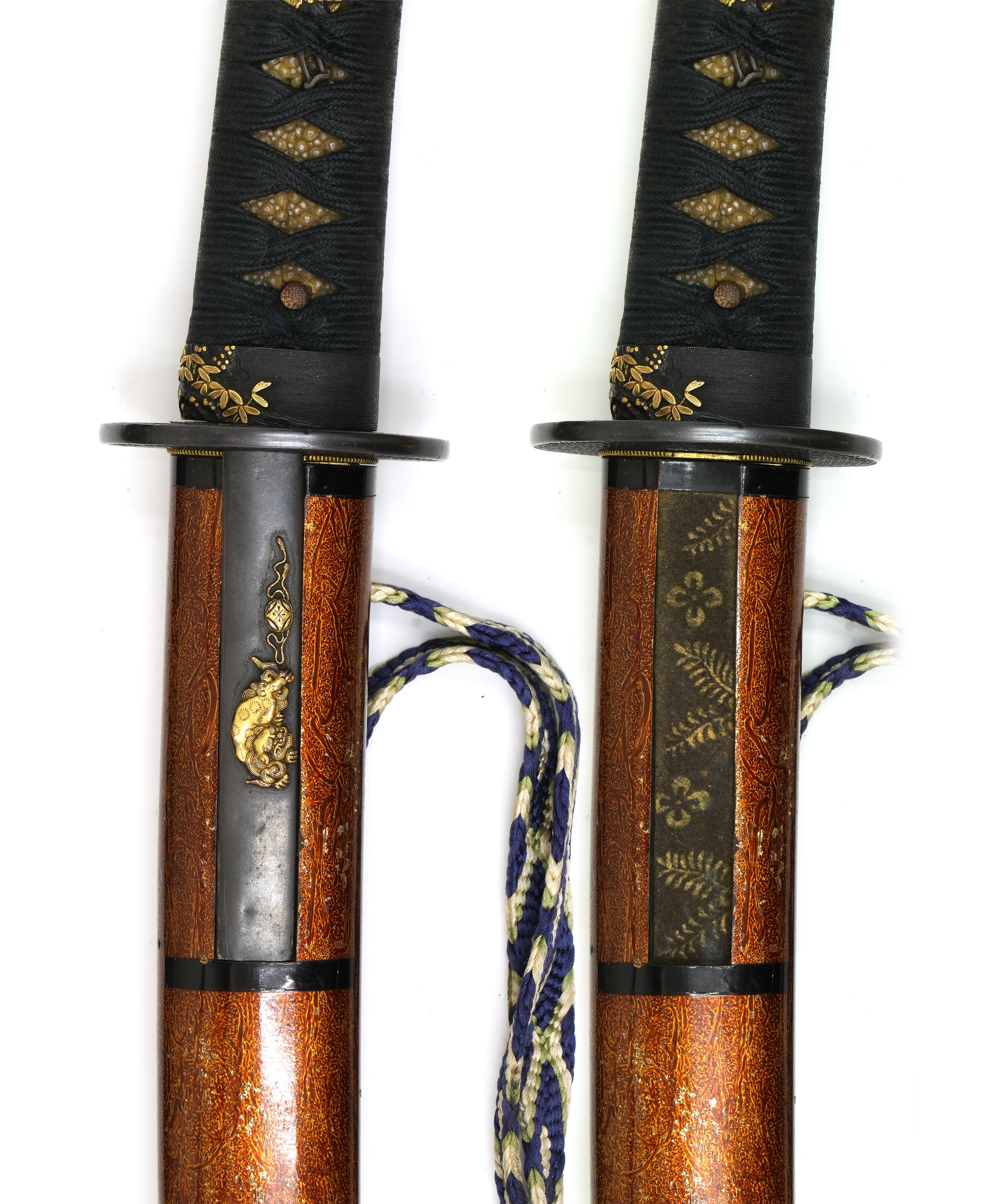
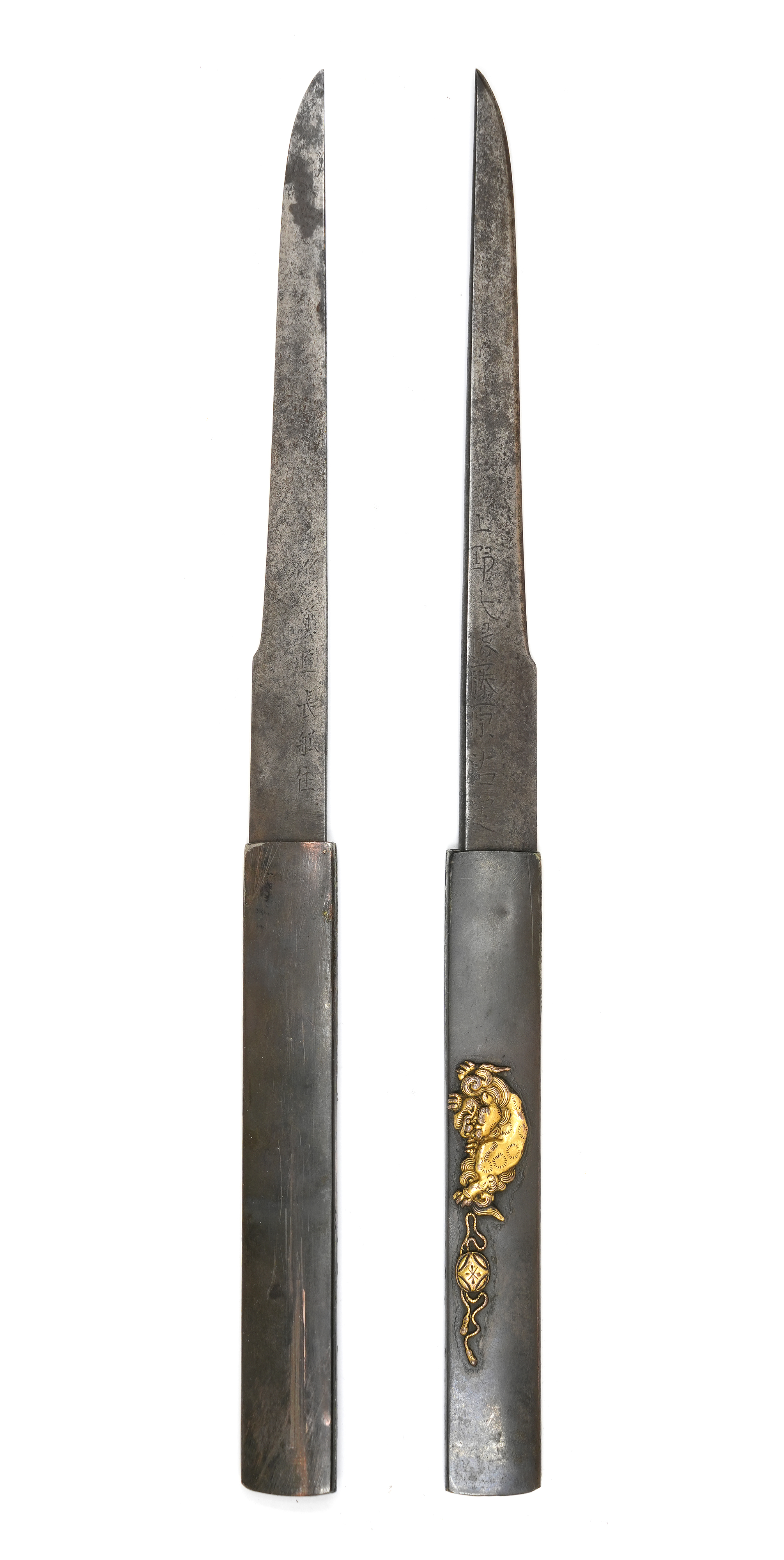
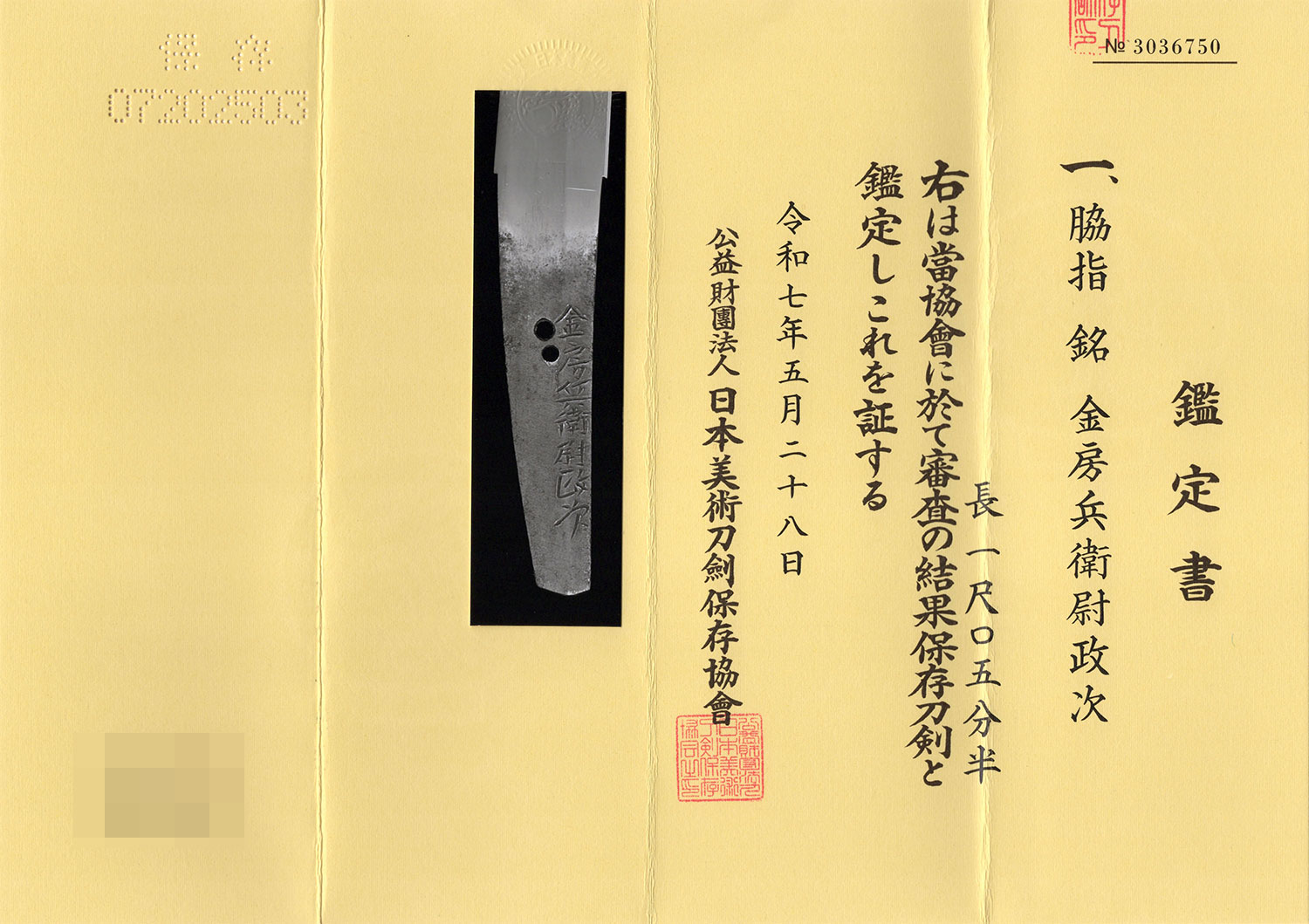
Nagasa 32.1 cm Sori 6.5 cm Motohaba 30.1 mm Motokasane 6.0 mm Monouchi-haba 25.8 mm Monouchi-kasane 4.8 mm Yokote-position width 25.0 mm Matsubasaki-kasane 4.3 mm 104 Mekugi-ana 2 Bare blade weight 288 grams Weight in koshirae excluding saya 423 grams Muromachi Chuki ~ Koki The middle ~ latter period of Muromachi era Showa 61 June 24 Gifu Prefecture Registration Included: Hozon Token Kanteisho, Suaka-ji shitagai gin-gise uegai kin-gise niju habaki, Kawari-nuri saya wakizashi koshirae The Kanabo school was a group of swordsmiths of the Tegai lineage that flourished in Yamato Province, forging numerous swords for the monk-soldiers of the Nanto Hozoin, with Hyoe-no-jo Masatsugu and Hayato-no-jo Masazane being famous. The spears of Kakuzenbo Inei, the founder of the Hozoin-ryu sojutsu famous for the jumonji-yari, were also forged by the hands of Kanabo school swordsmiths. There were first and second generations of Masatsugu, and existing works consist mostly of katana, yari, and naginata, with few examples of tanto or ko-wakizashi; as for the workmanship, many have a robust tsukurikomi with little difference between the motohaba and sakihaba, and as they were also excellent as sharp blades, they seem to have received strong support from military commanders. With a nagasa of 1 shaku 5 bu, this is a single blade that could also be called a sunnobi tanto. The difference between the motohaba and sakihaba does not open excessively, yet the greatly extended kissaki stands out, providing the sugata with a grand and imposing strength. Bonji is carved on the omote and gomahashi on the ura, the jigane is a well-packed ko-itame with jinie, and the hamon has a bright nioiguchi, mixing choji with gunome, with the overall midare having a hakozunda feeling, sunagashira appearing with many ashi, and mixing in kinsuji. The boshi is midare-komi and hakikake, with the kaeri being midare and burning down long to near the munemachi, showing rich hataraki and being worth seeing. The included koshirae is a luxurious kawari-nuri, and the fittings are unified with high-quality items of polite workmanship. It is equipped with a kozuka without omission, and perhaps in connection to Masatsugu, the fact that a tsuba with the mei of Odawara Masatsugu is attached is also deeply tasteful. The state of preservation is generally good, and it is suitable as a high-toned blade with harmony between the sugata, horimono, jiba, and accessories. Although tsuba-nari is seen and there is a little rattling in the tsuka, the state of preservation is generally good, and it is suitable as a high-toned blade with harmony between the sugata, horimono, jiba, and the accompanying koshirae. As it is a work of good quality both inside and out, those who have the means should by all means apply a high-grade polish and submit it for Tokubetsu Hozon Token Kantei. Furthermore, it is a masterpiece that I would like you to have the koshirae also undergo shinsa and pass it down to future generations.
NihontoWatchOffered by Toushin
This piece has sold
9 on the market
Get an email when new Kanabo School work hits the market.

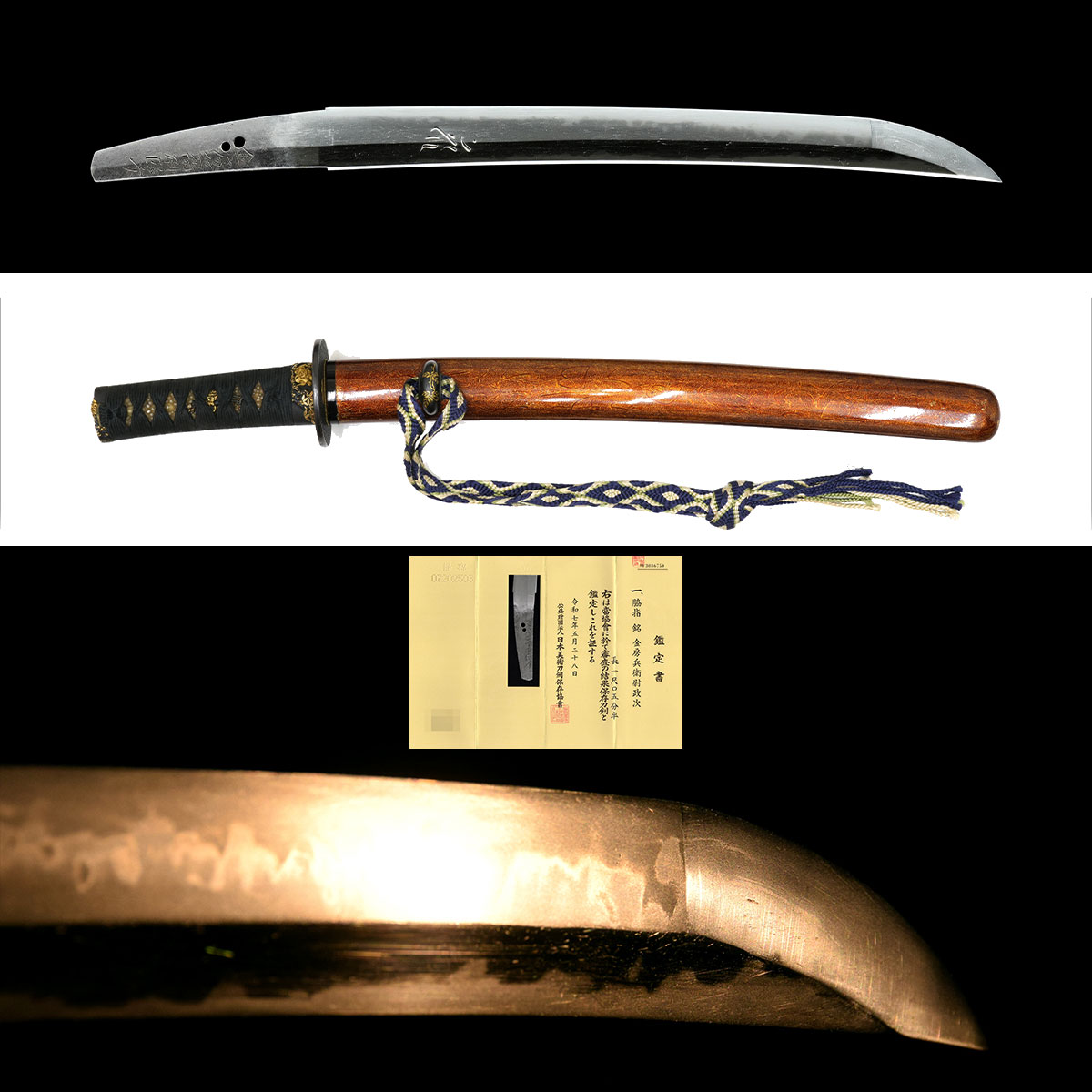
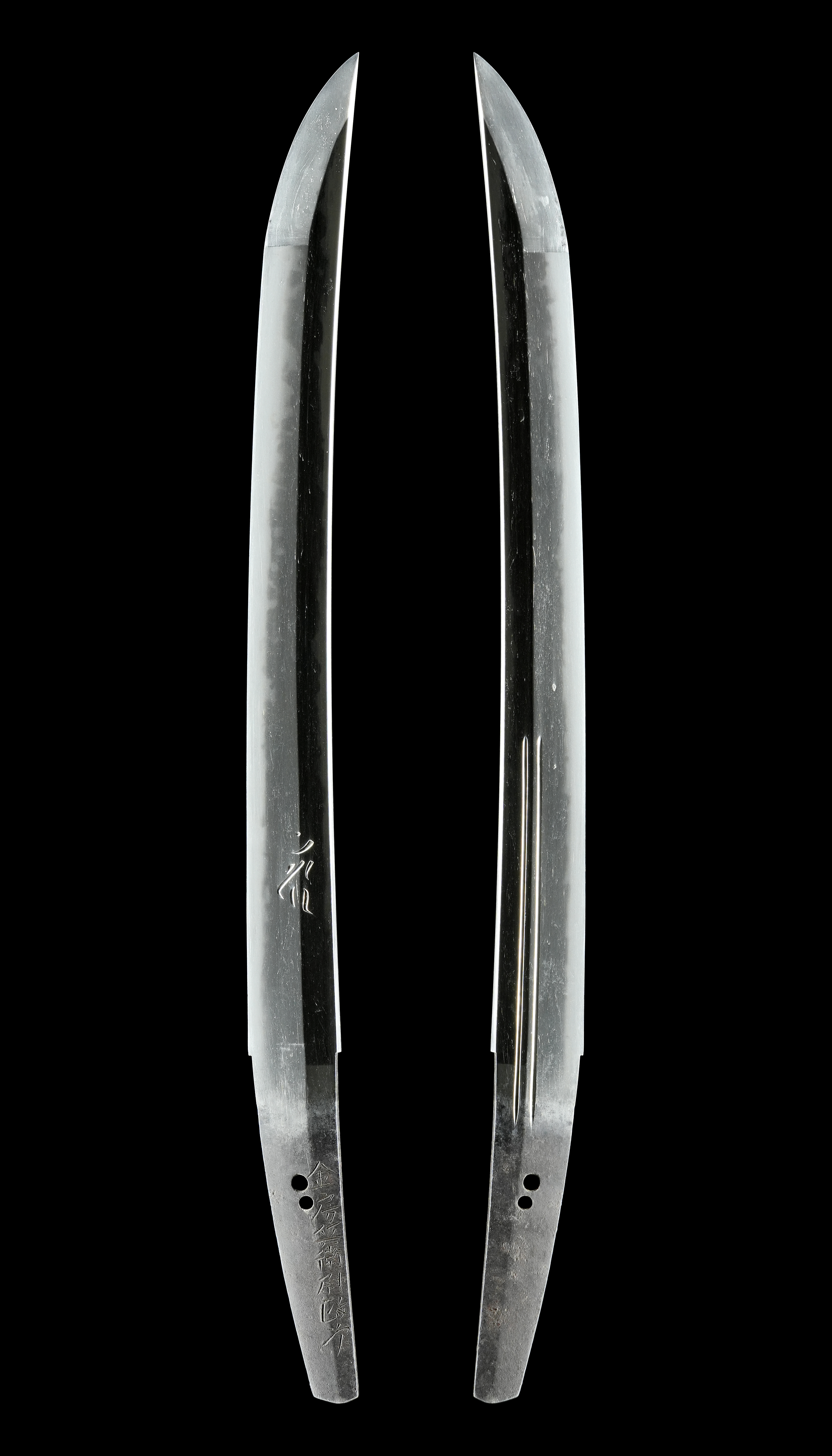
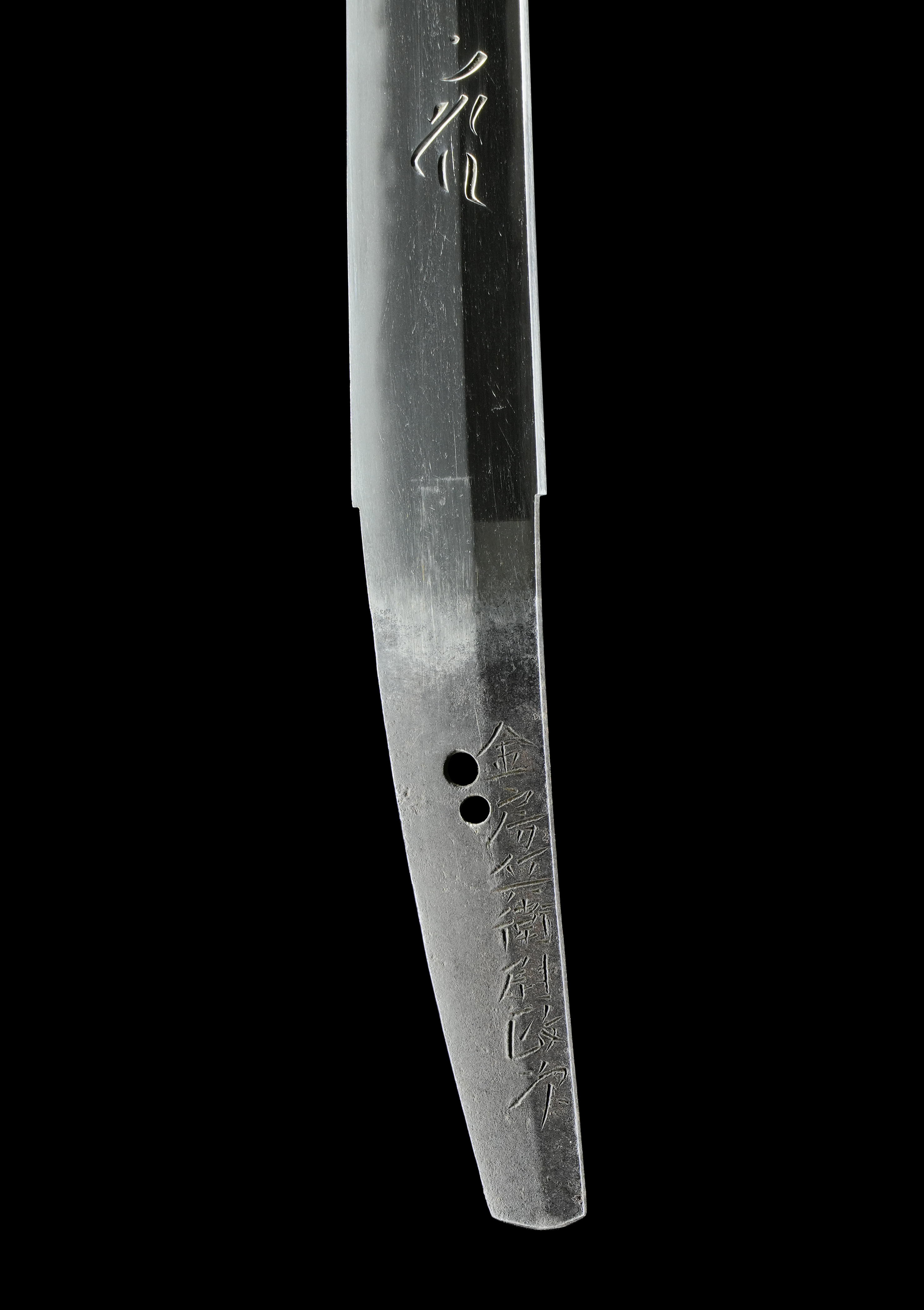
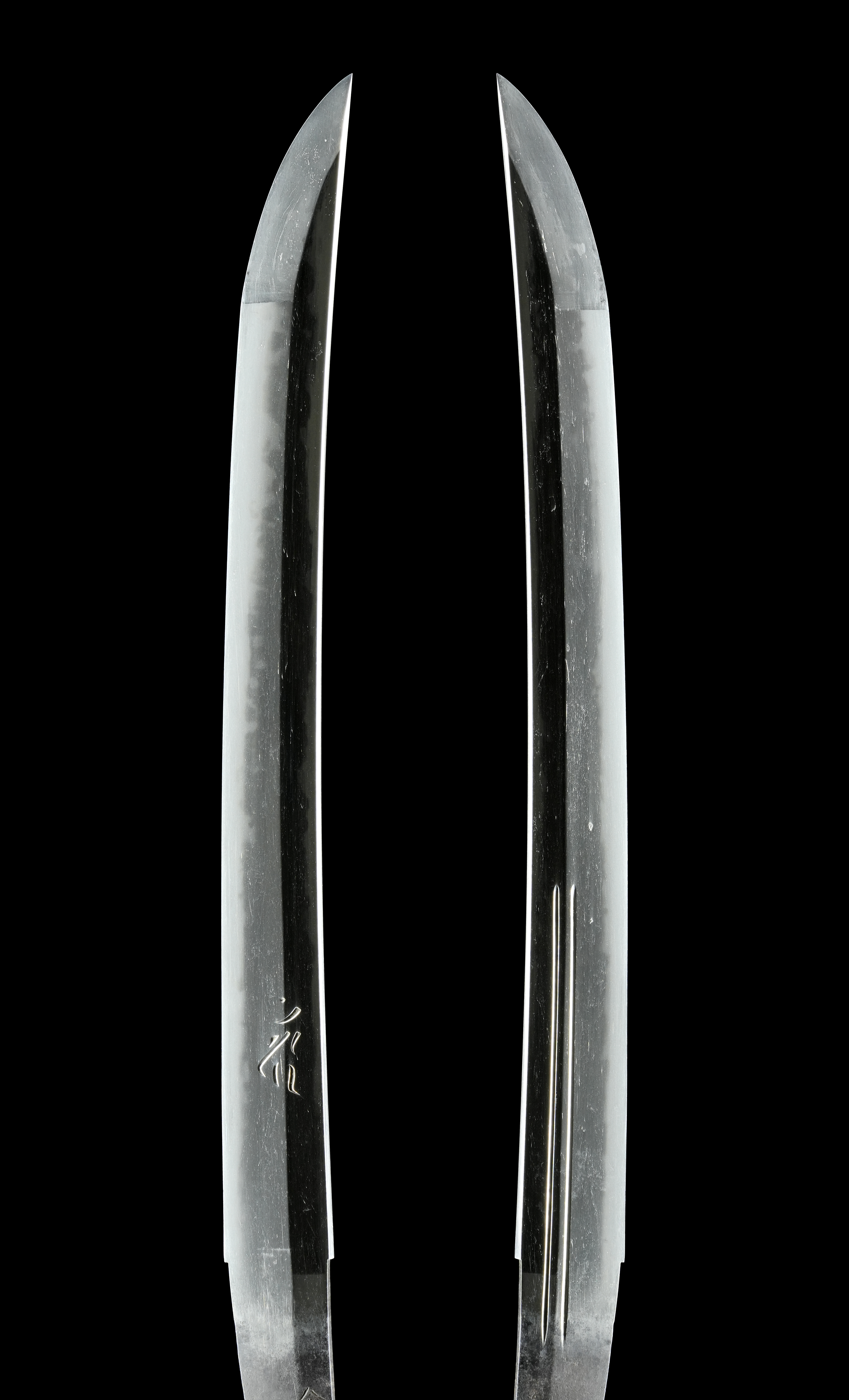
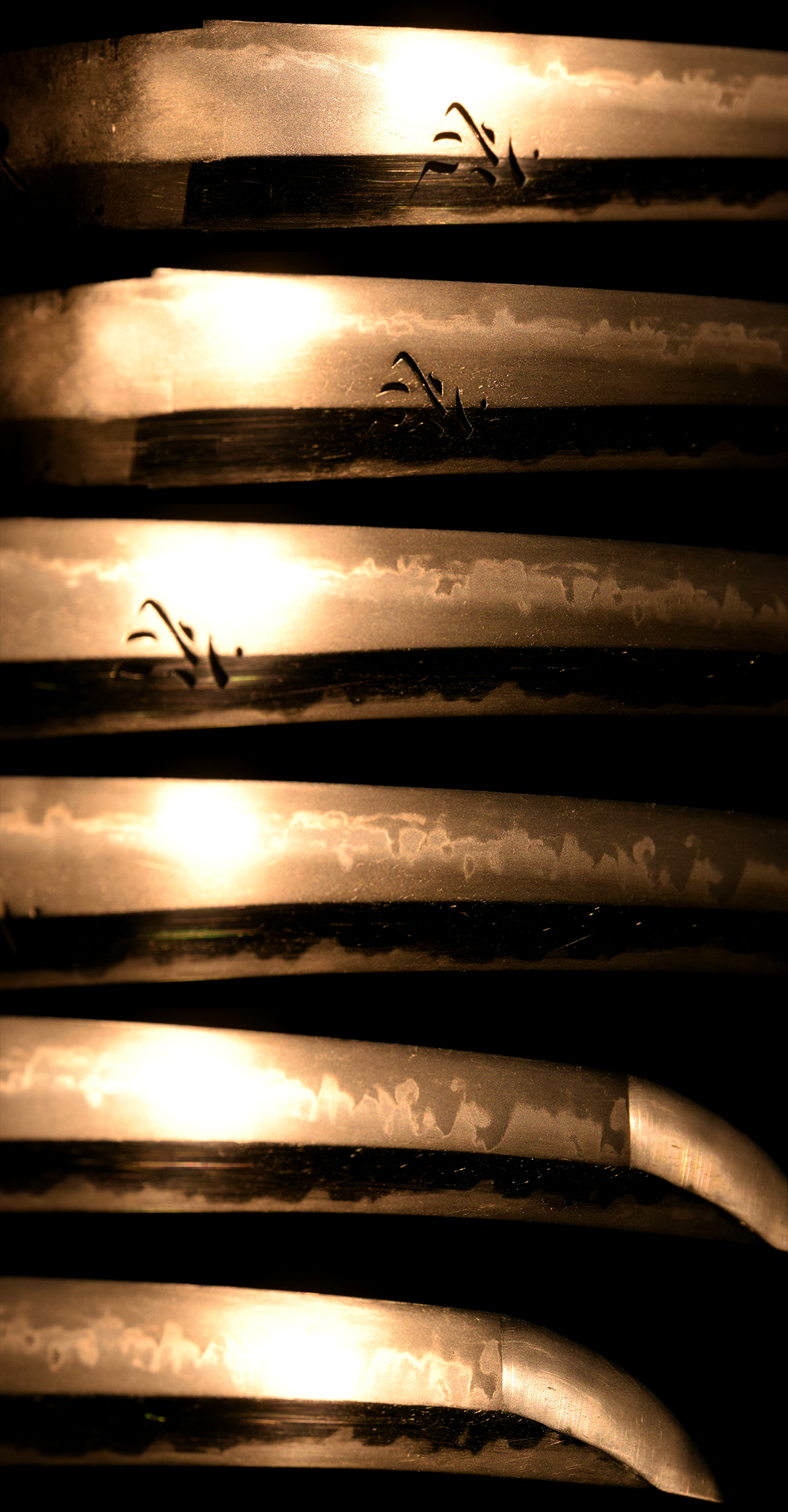
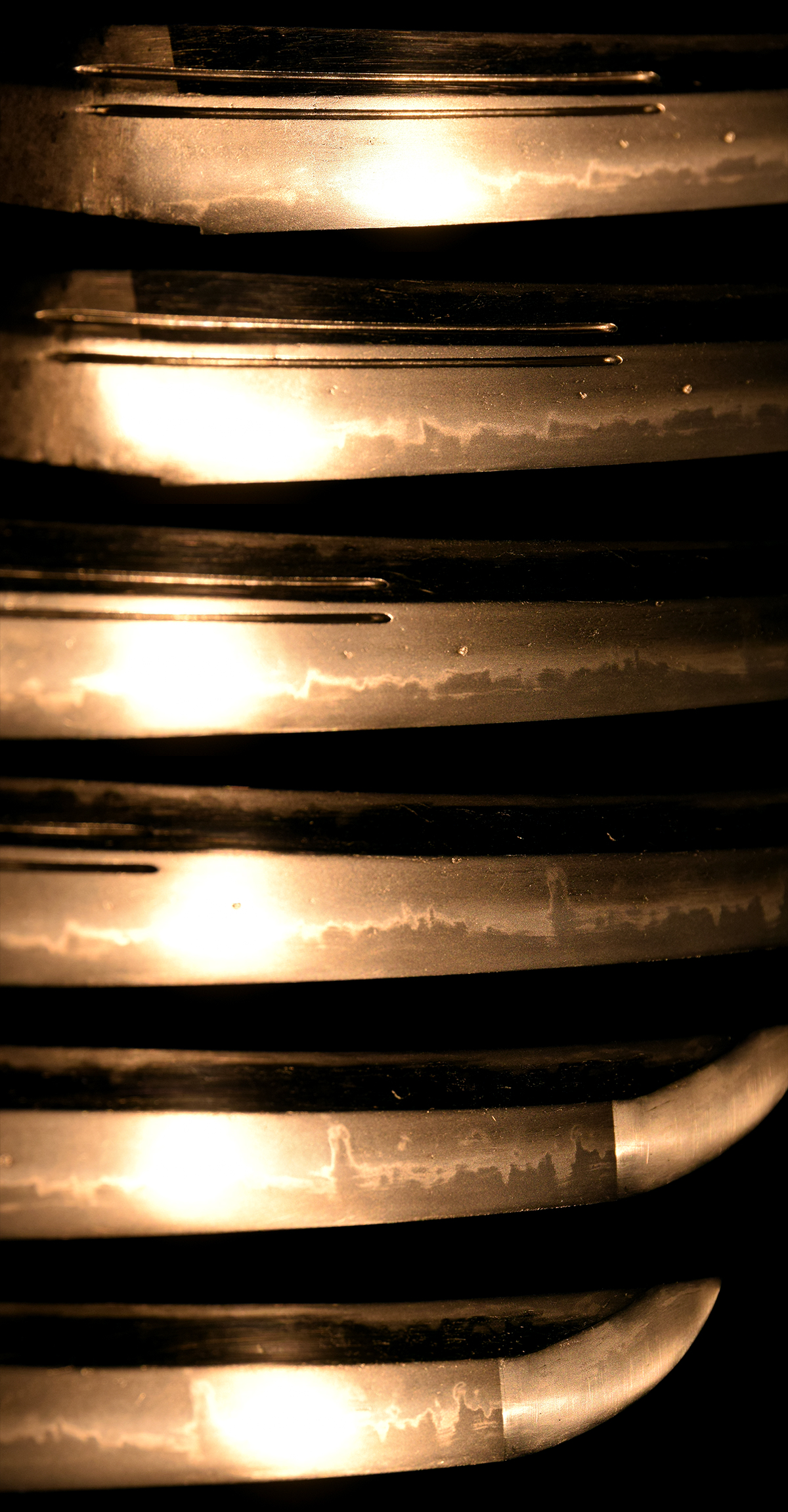
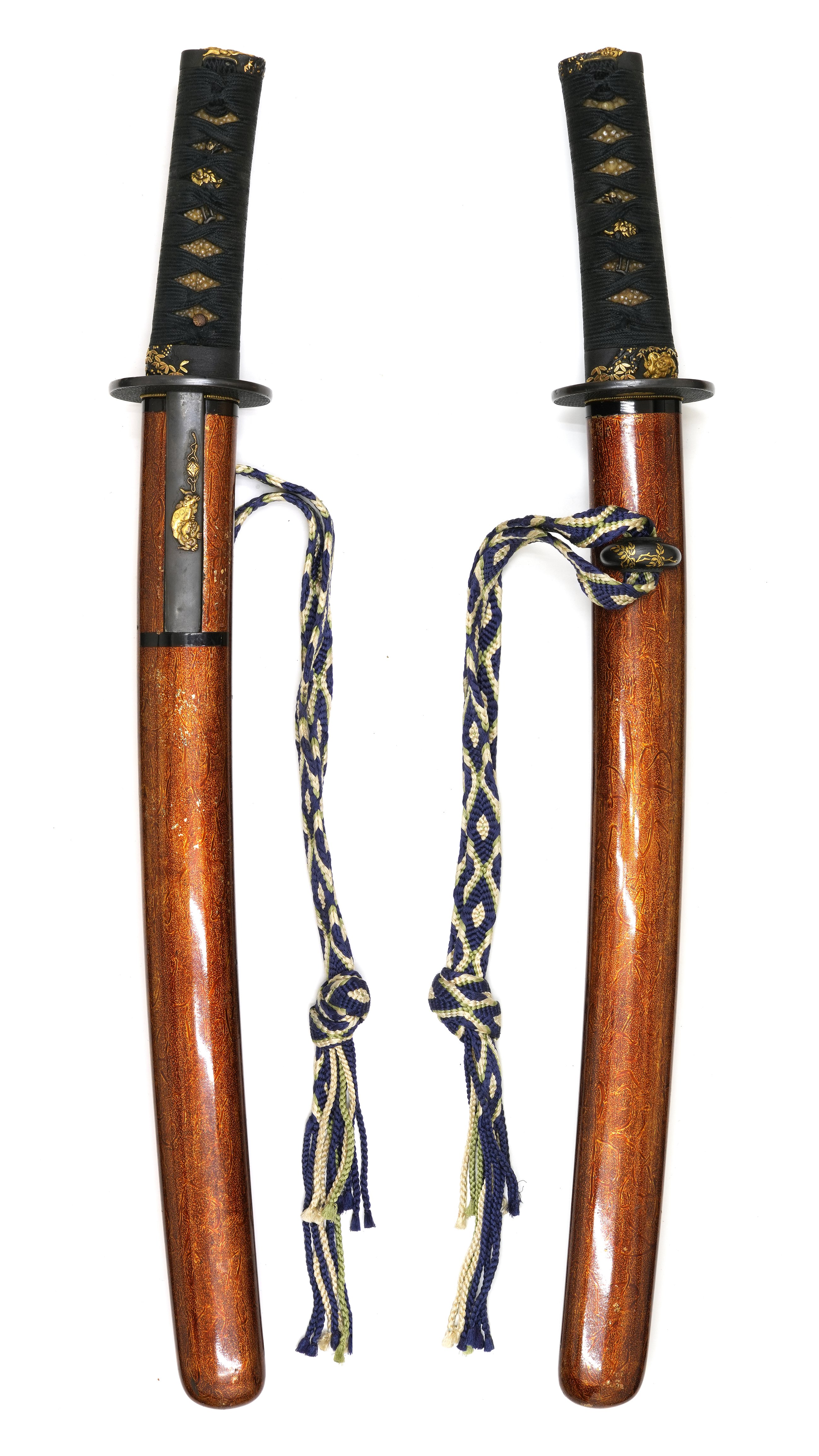
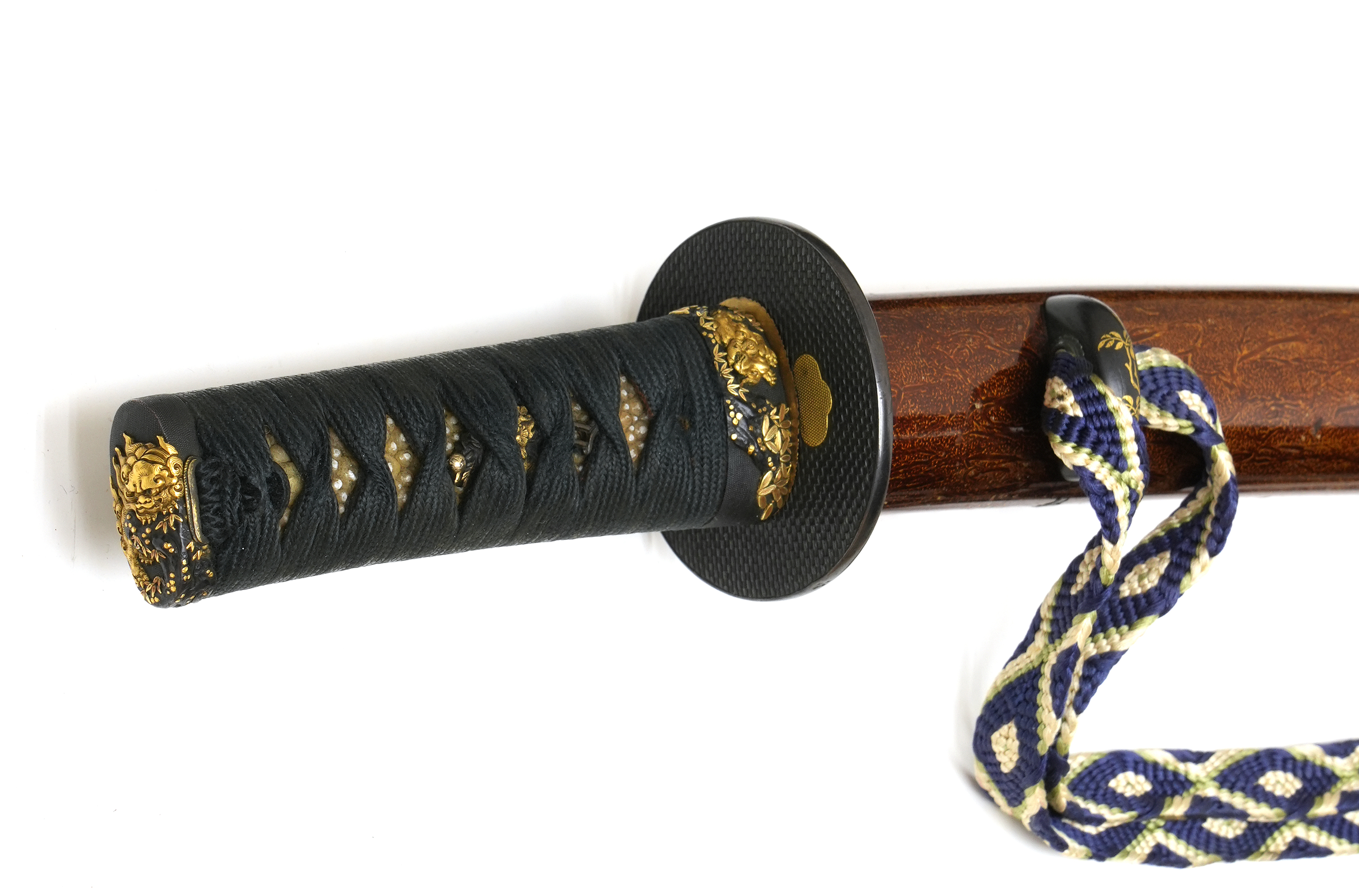
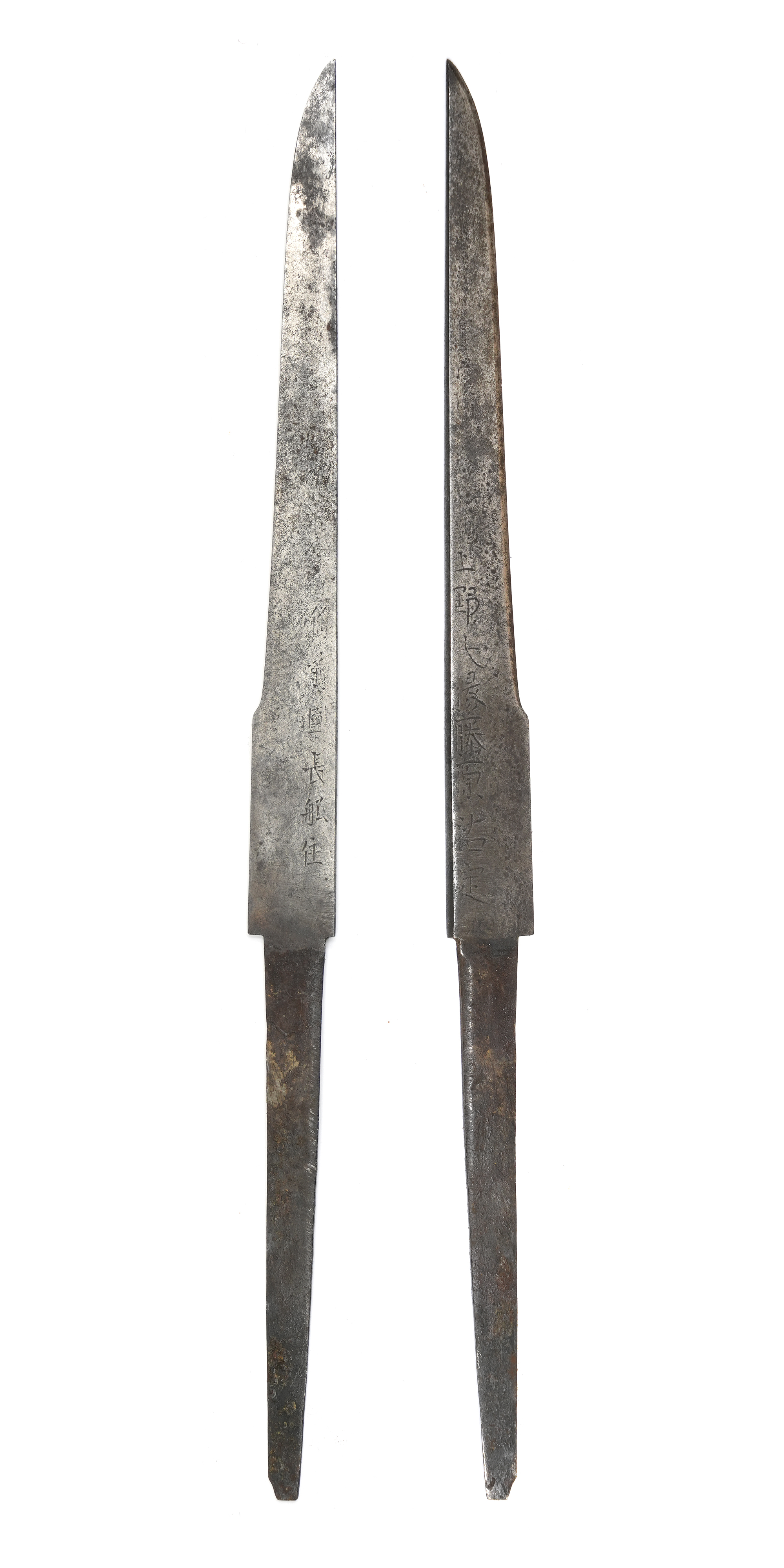
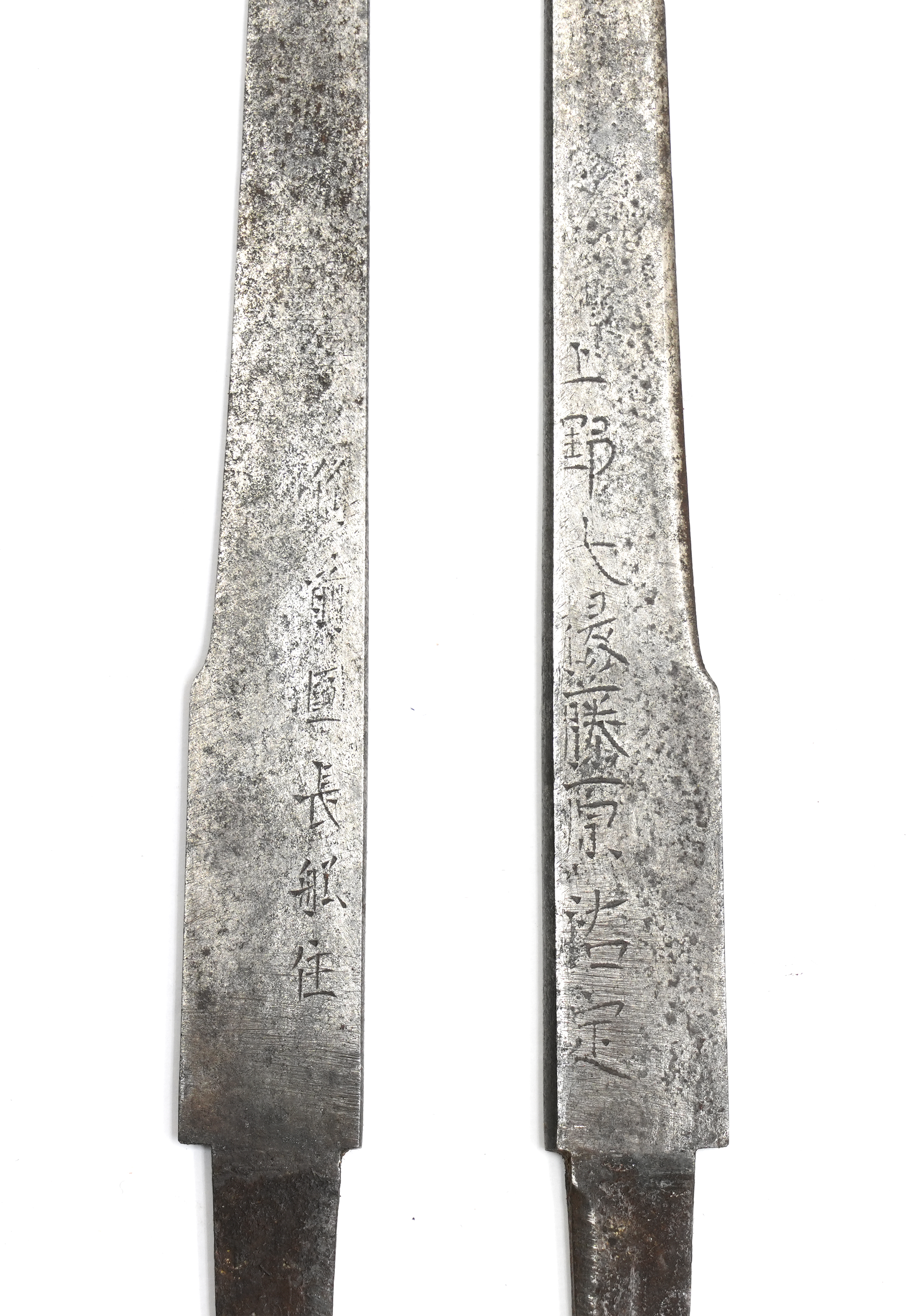
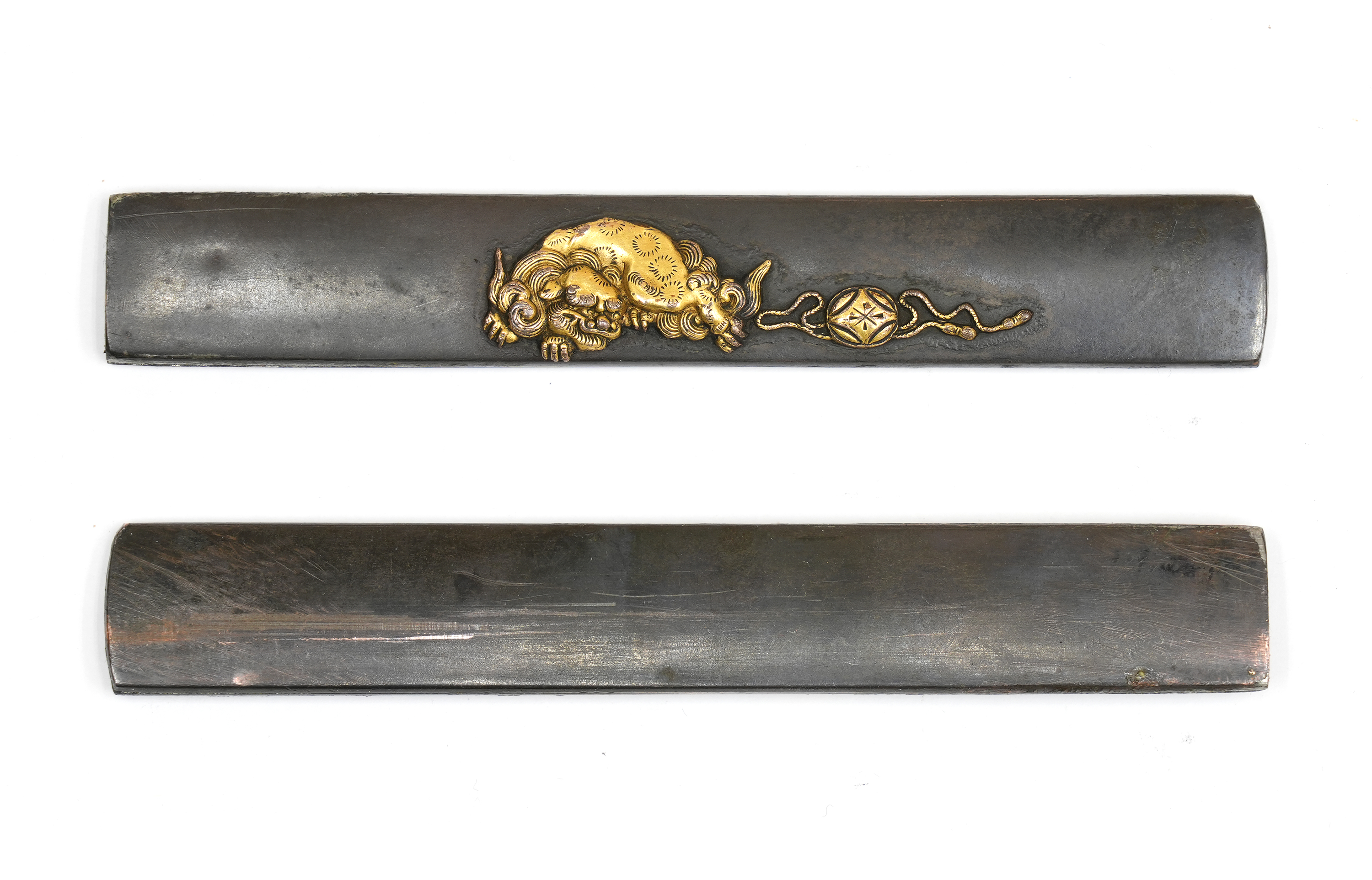
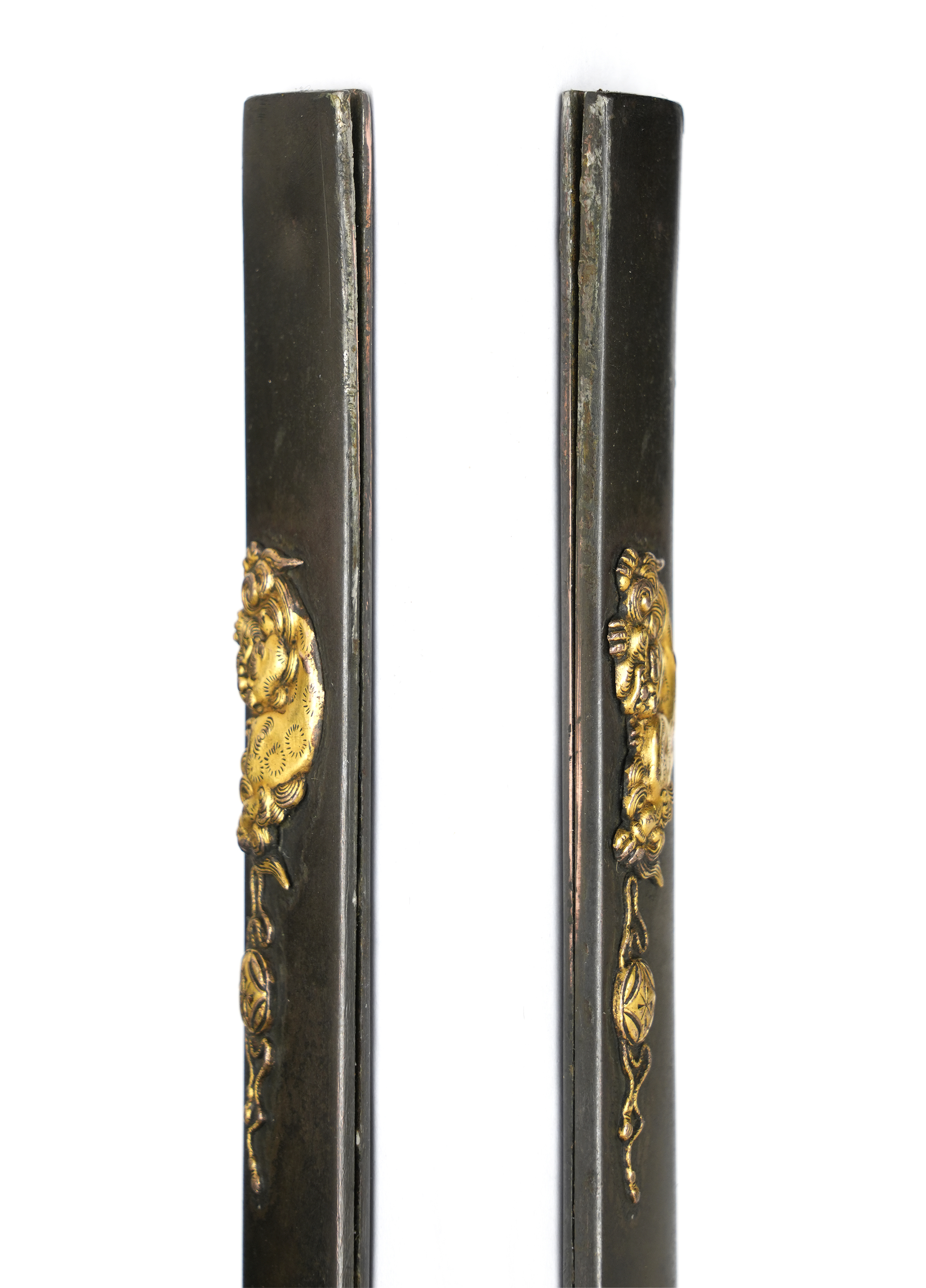
Machine translation from the shop's Japanese · may contain errors ·
Wakimono · Yamato
9 pieces on the market now
The Kanabō (金房) smiths worked in Nanto, the old name for Nara in Yamato province, from the end of the Muromachi period into the early Shintō era. Their relationship to any of the five established Yamato schools is not clearly fixed in the record, and the NBTHK setsumei treat the group as one that rose and flourished in Nara during the late Muromachi decades, with dated examples encountered from the Eishō era onward. The blades here name several hands. Masatsugu (政次), who signed as Kanabō Hyōe no Jō Masatsugu and as Kanefusa Hyōe no Jō Masatsugu, is described as the representative and best-known smith of the line. Masasada (政定), signing Kanefusa Saemon-no-jō Masasada, left an uchigatana dated Eiroku 2 (1559). " Rather than the classical Yamato-den manner of the earlier five schools, the Kanabō hand reads as a Muromachi uchigatana idiom that shares points with the Sue-Bizen and Sue-Seki spheres. The kitae is itame that flows into nagare and tends toward masame, with the grain often standing and growing large, and a whitish utsuri appearing in places. The hamon divides between two registers the setsumei repeatedly cite: a large gunome-based midare, the "hips" of the gunome opening out and mixed at times with togari-ba, chōji, or ko-notare; and a suguha carried on a tight nioiguchi.
Across both, ashi and yō enter well and stand out, ko-nie and ji-nie adhere, and sunagashi with kinsuji run through; the nioiguchi frequently takes a shizumi, subdued cast. The bōshi runs midare-komi, often with hakikake and a pointed or ko-maru return. The build tends to broad mihaba with sakizori on the swords, while naginata are conspicuously common, a production read as answering the demands of the warrior monks (sōhei) of Kōfukuji and the great Nanto temples. For kantei, the line is held by the flowing masame-tending itame, the broad gunome-midare with prominent ashi and yō over a tight or subdued nioiguchi, and the marked presence of naginata and long polearm blades among extant work. The setsumei single out Masatsugu's polearms as typical of his hand, several preserved with their vermilion-lacquer nagamaki mounts (shunuri nagamaki koshirae) and one black-lacquer naginata mounting, the fittings inferred to have been made together with the blade. The records grant that true masterworks within the group are rare, yet they describe individual blades by Masatsugu and Masasada with fine jigane, skillfully cut horimono, and workmanship judged excellent and dignified. Within the wider Yamato sphere the Kanabō stand as a late, utilitarian offshoot whose polearms and serviceable swords carry the group's name into the NBTHK register. Learn more →
| Smith | Era | Designated |
|---|---|---|
| Masatsugu政次 | 1492-1570 | 4 |
| Masazane正眞 | 1532-1555 | 0 |
| Masasada政定 | 1521-1559 | 1 |
The Muromachi period (1392 to 1573)
After the Ōnin War broke the Ashikaga order, a century of Sengoku warfare armed nearly every province in Japan. The era rewards a discriminating eye: routine work exists in quantity, and beside it stand custom blades of the first rank.
Certifies a genuine blade worth preserving: a signature confirmed correct, or, if unsigned, an era, province, and school that the NBTHK can reliably identify.
The NBTHK (Nihon Bijutsu Tōken Hozon Kyōkai, the Society for the Preservation of Japanese Art Swords) is a public-interest incorporated foundation founded in 1948 and supervised by Japan’s Agency for Cultural Affairs (Bunkachō); it is based at the Japanese Sword Museum in Tokyo. Its expert panels physically examine each submitted work (shinsa) and issue a certificate (kanteishō) ranking it by artistic and historical merit. NBTHK papers are the most widely recognized standard of authentication for Japanese swords and fittings.
NBTHK official siteAs a rule we do not accept returns, except when we have sent a different item from the one ordered or when there is a significant discrepancy between the description and the item. If you wish to return an item, please contact us within 3 days of its arrival and then send it back.