Sengoku Seki was an industry: smiths organized under their tutelary Kasuga shrine, arming the war bands of central Japan. Magoroku Kanemoto’s sanbonsugi and the finest Kanesada work prove quality survived inside mass production.
 NihontoWatchNihontoWatch
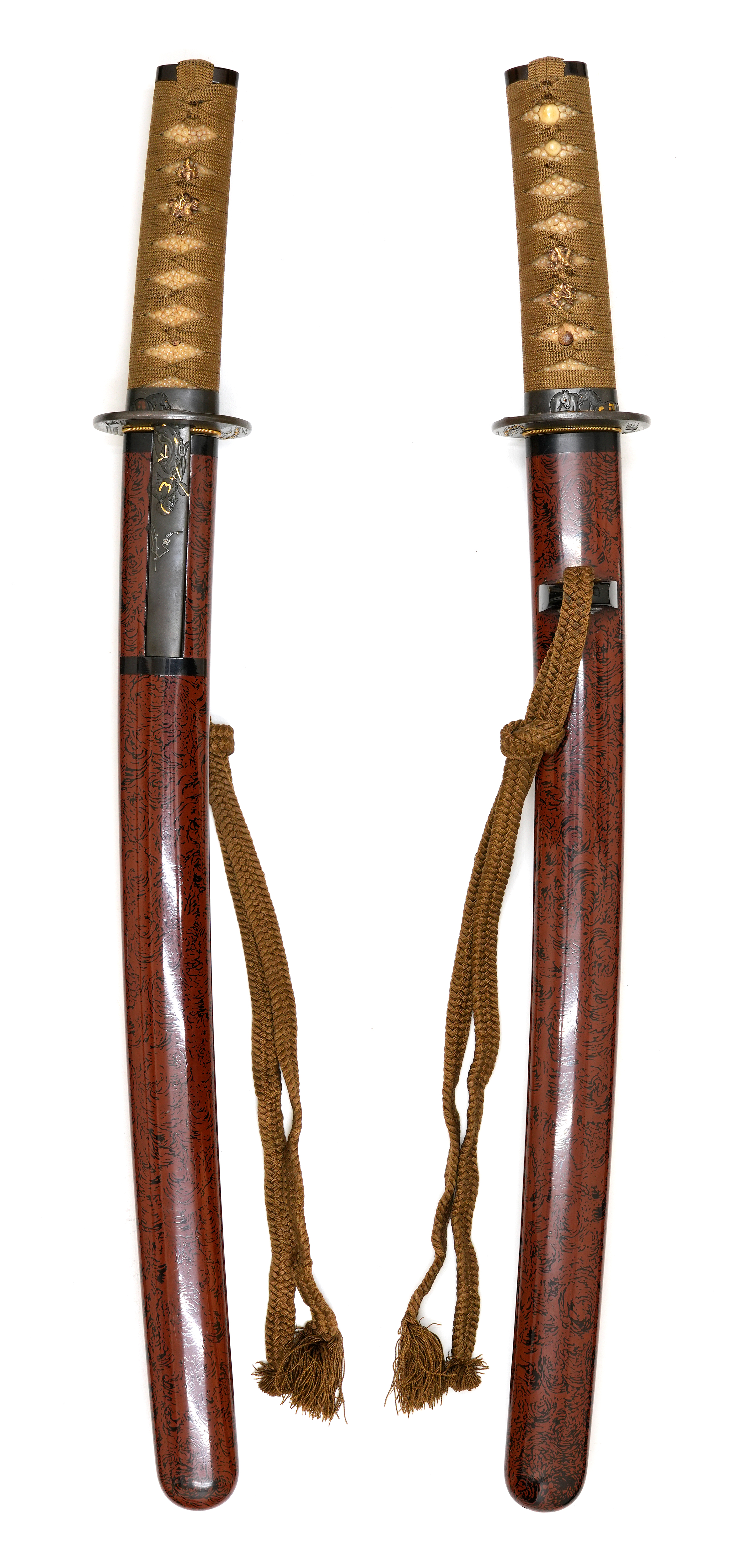
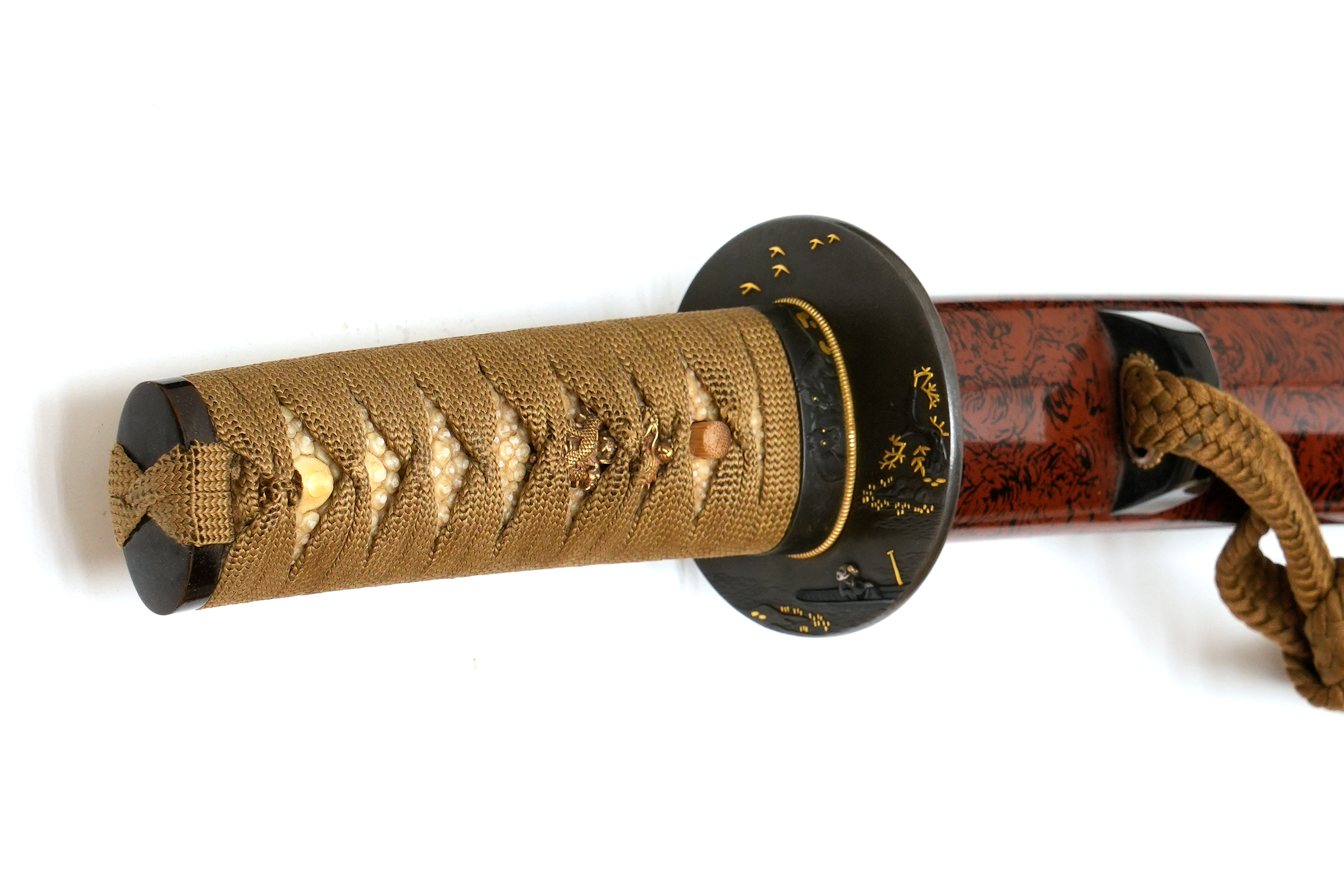
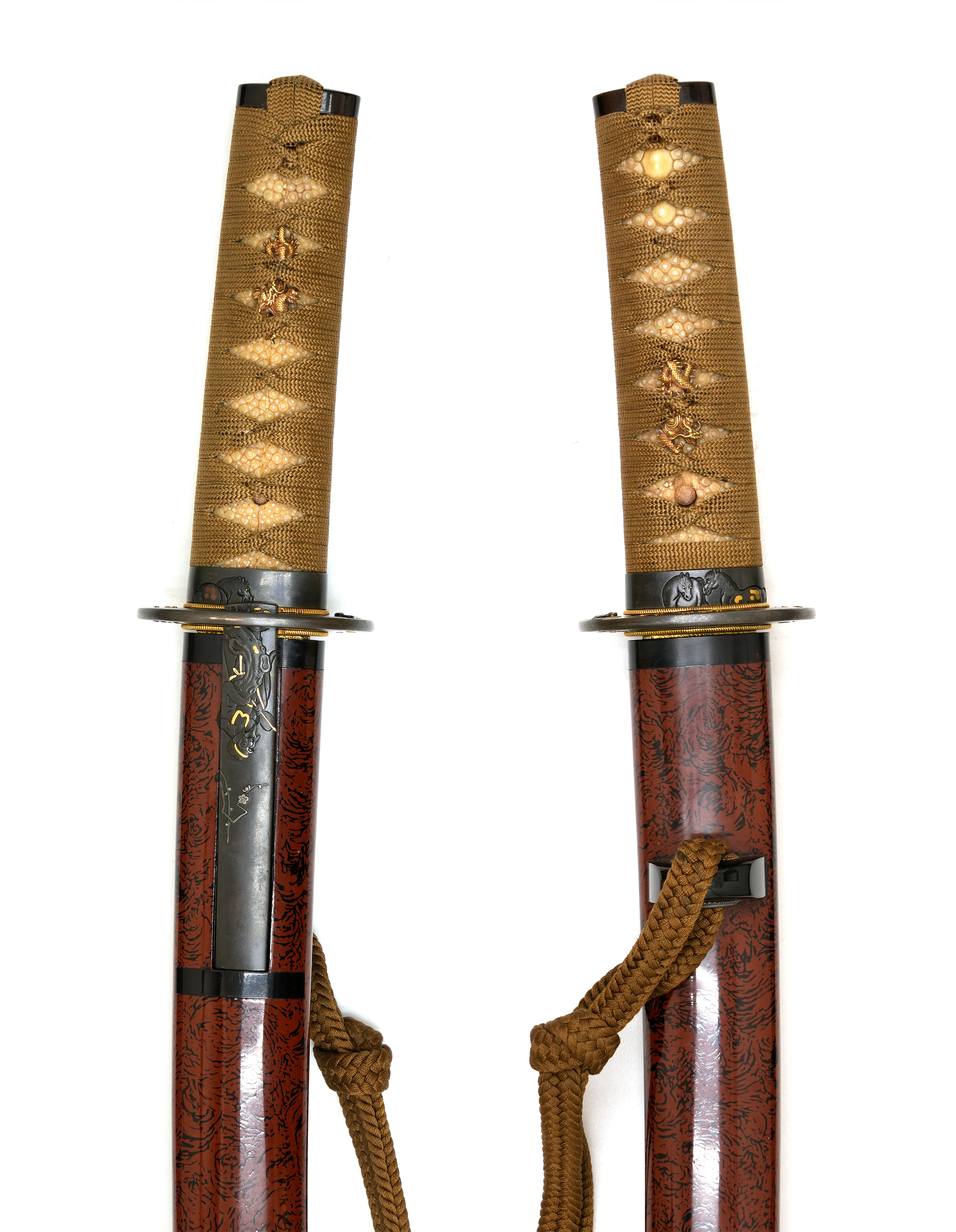
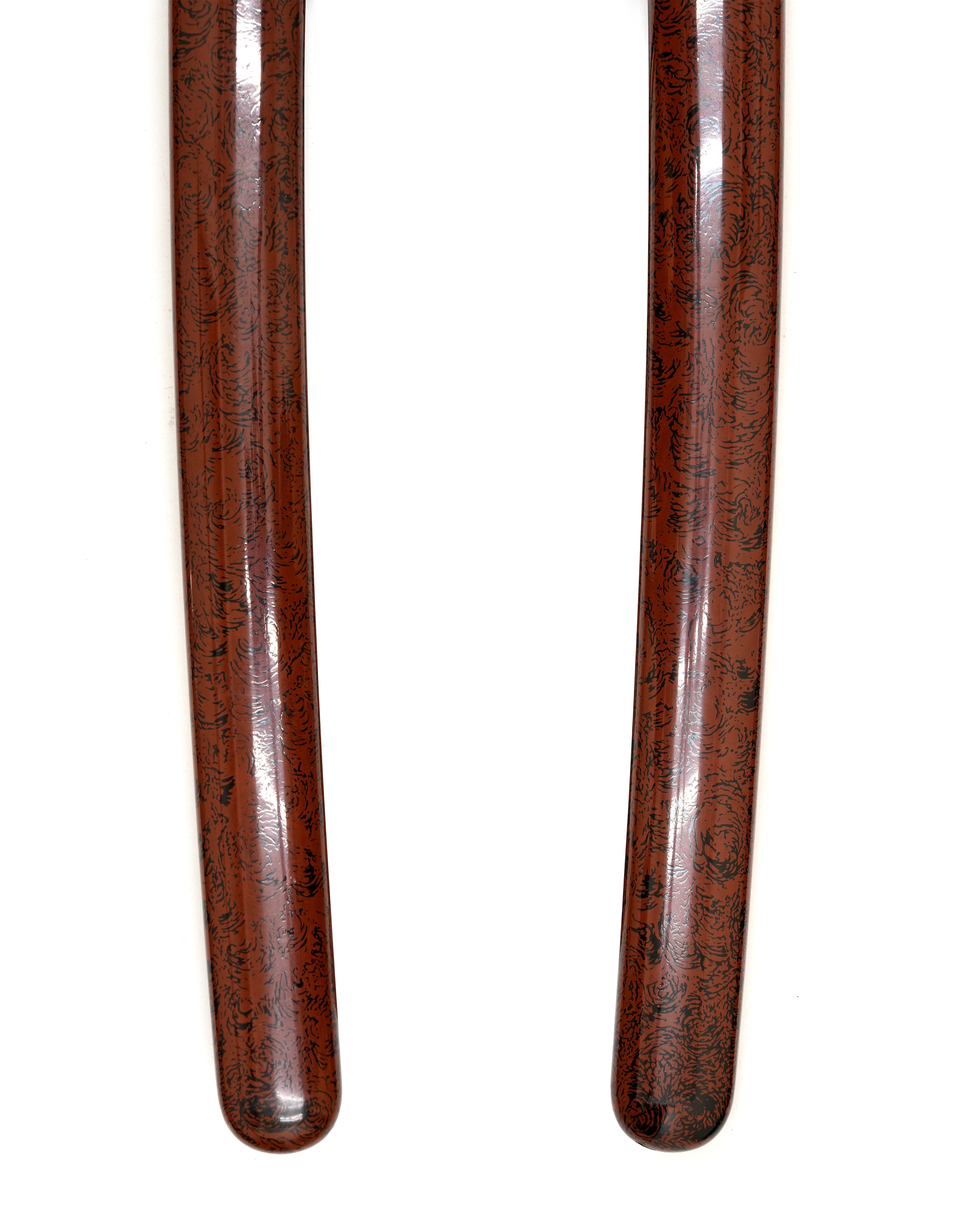
、白鞘 / 継木 、赤茶牡丹塗鞘脇指拵 大久保家は駿河国庵原郡・益津郡の中で5000石を知行した上級旗本(大身旗本)の一族。布衣の着用や守名乗り(官途名乗り)を許され、代々玄蕃の官位を取得することが多かった。特に玄蕃頭は従五位下の格式があり、官位が従五位下の大名も多く、旗本として最上位クラスの家格といえる。江戸時代における旗本は、家の石高や格式によって就ける役がおおよそ限定されていた。 この脇指は大磨上ながらも姿好く、切先はやや延びた典型系な室町後期の体配で、地鉄は杢目がよく練れて詰み、地沸付いて地景入り、刃文は匂口明るく冴えた三本杉。刃縁に細かな砂流が盛んにかかり、金筋入り、足頻りに入り、鋩子は横手で互ノ目を焼き込み、直ぐに先丸く返る。 附属の拵は、鞘尻先に極小の剥離が在るも、他には特筆すべき傷みは見られず、保存状態良好。切羽一枚迄完全なオリジナルであり、大変貴重な存在です。 保存刀剣鑑定書に記載されている「(と金象嵌銘がある)」との表記は、磨上祖父兼元と言う意味がよく解らないためとの回答を日本美術刀剣保存協会から頂戴しています。作風としては高名な孫六兼元とは別の室町期の兼元(代下がり等)に相違は無いとのことですのでご安心下さい。
Certificate reading — 銘 磨上祖父兼元 大久保玄番頭所持
NihontoWatchOffered by Toushin
22 on the market

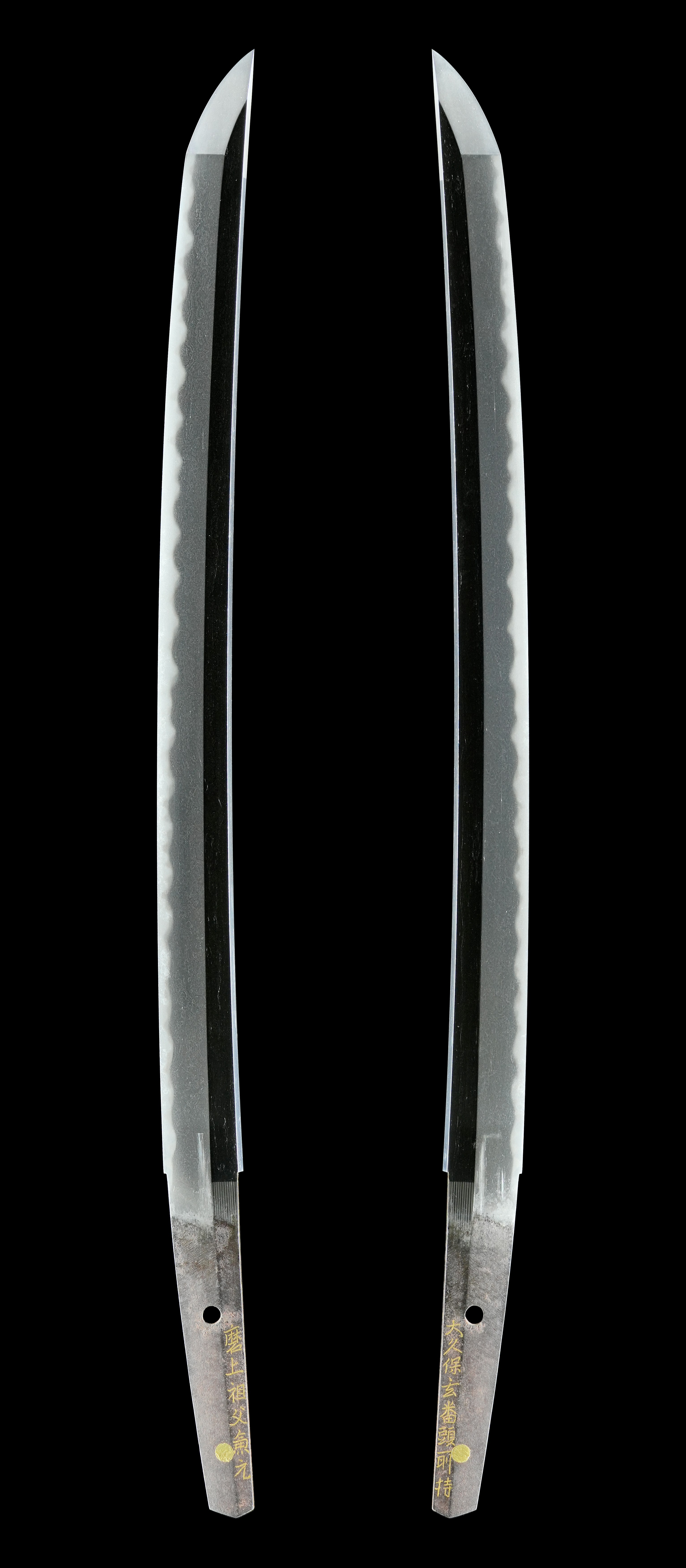
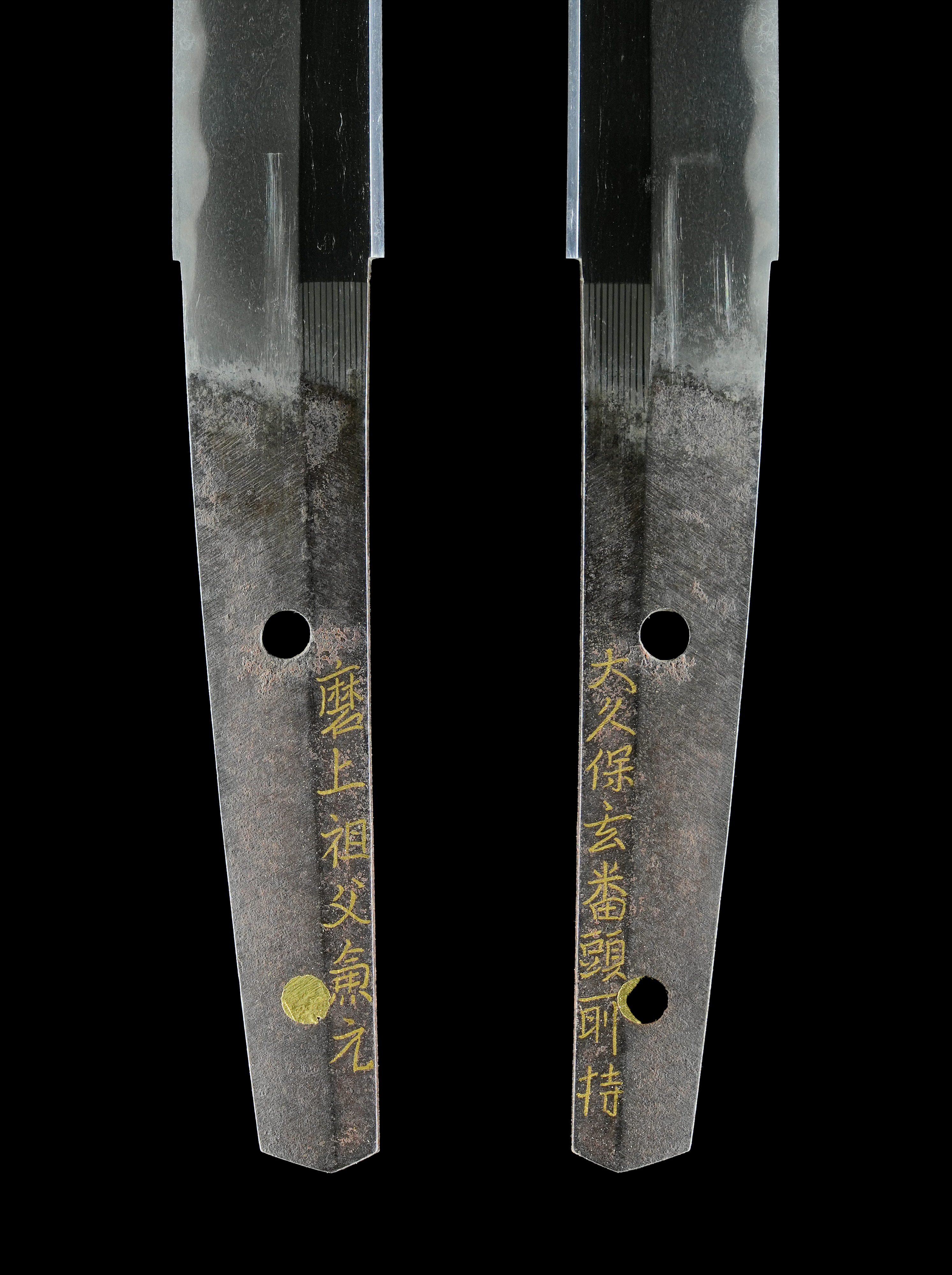
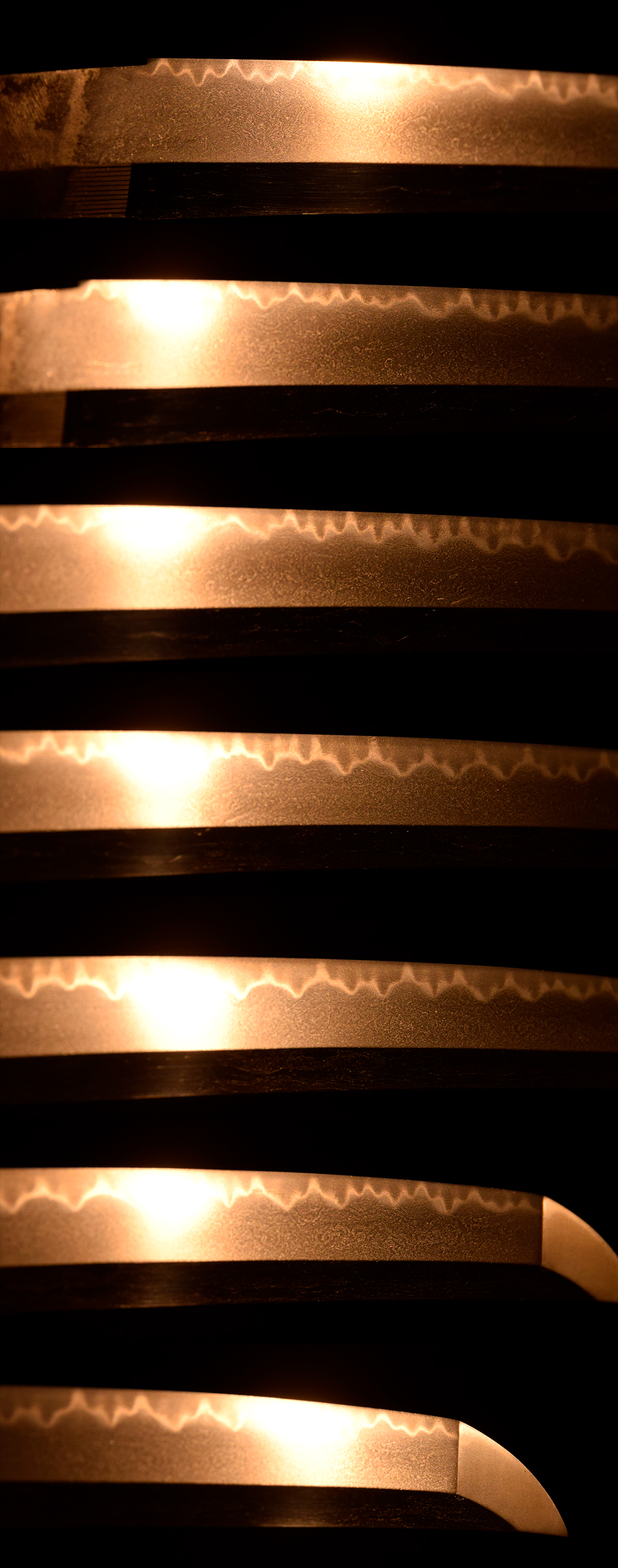
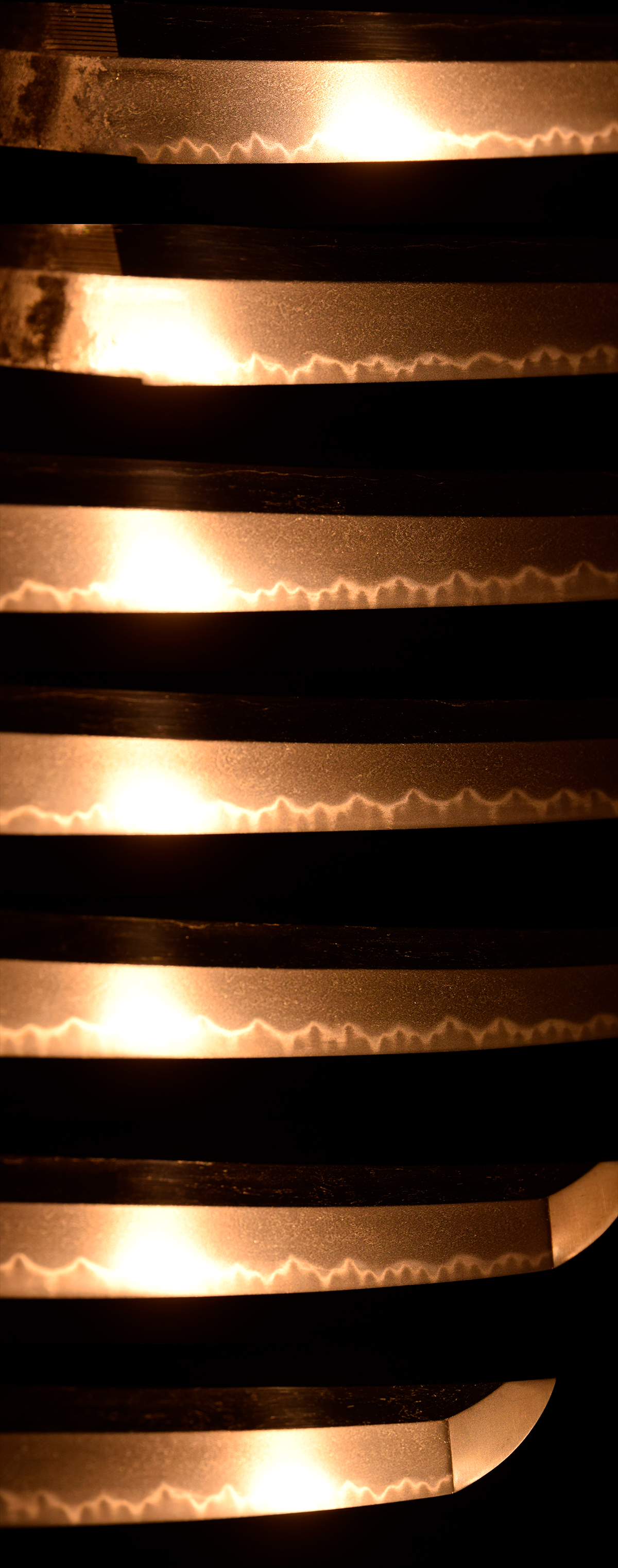
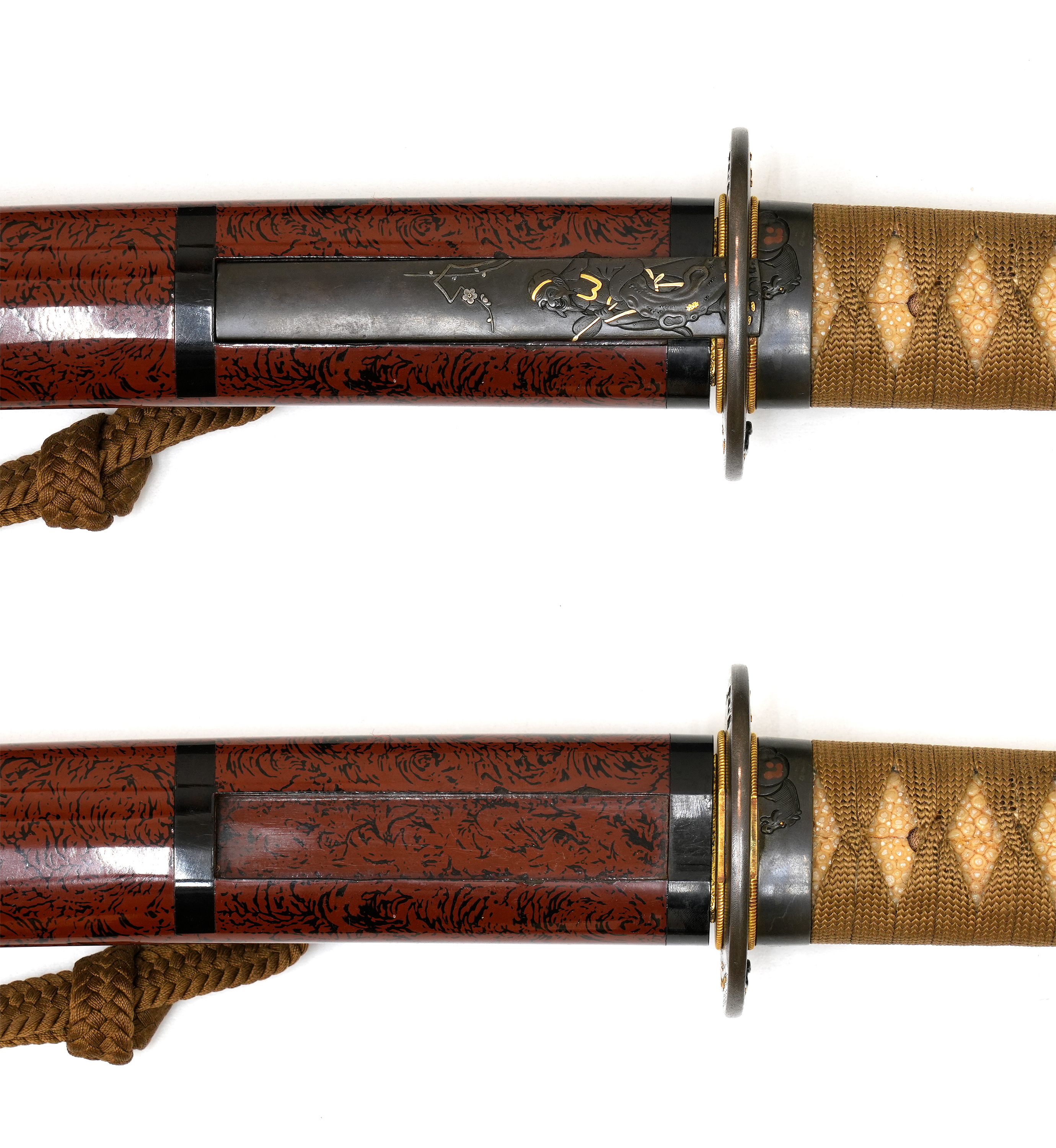
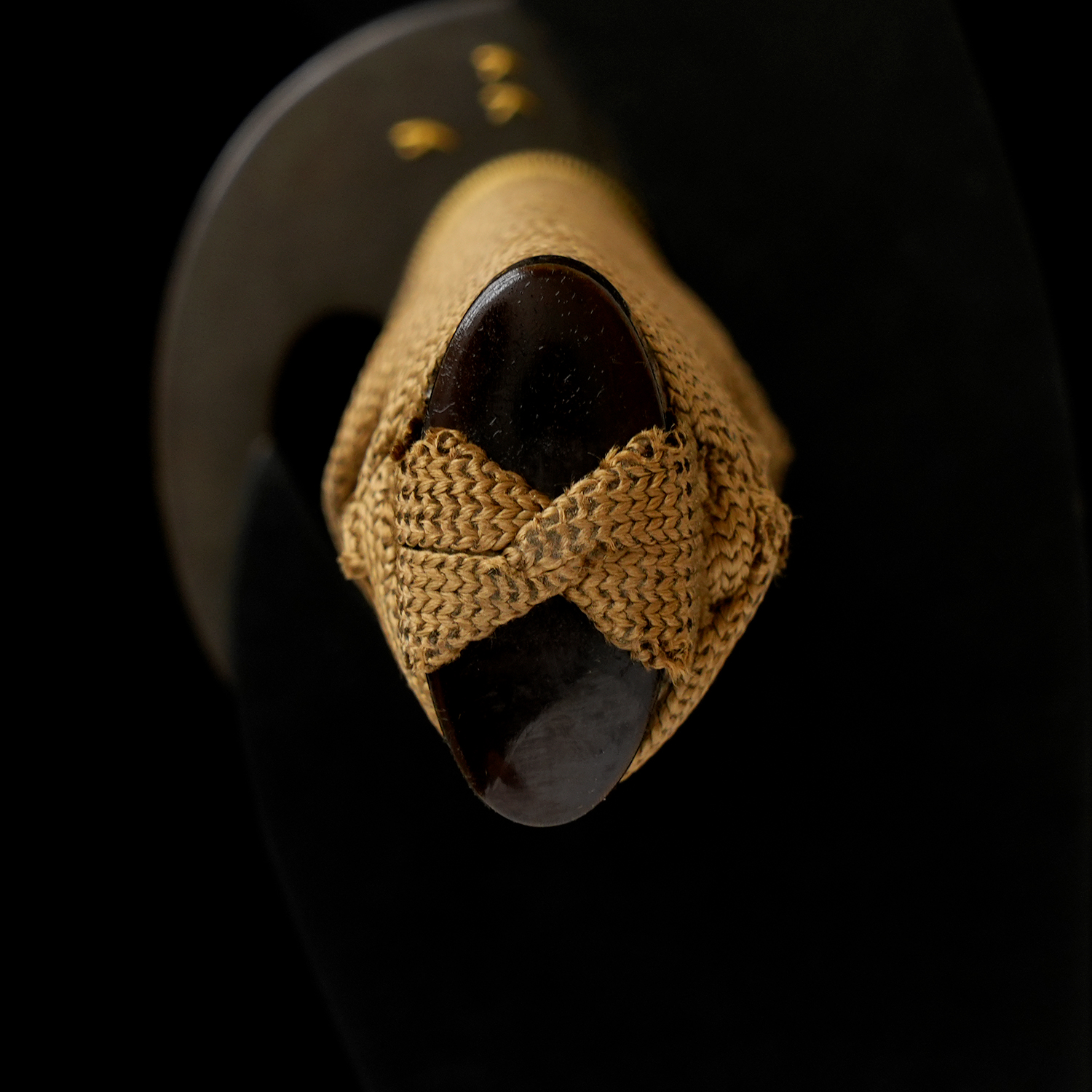
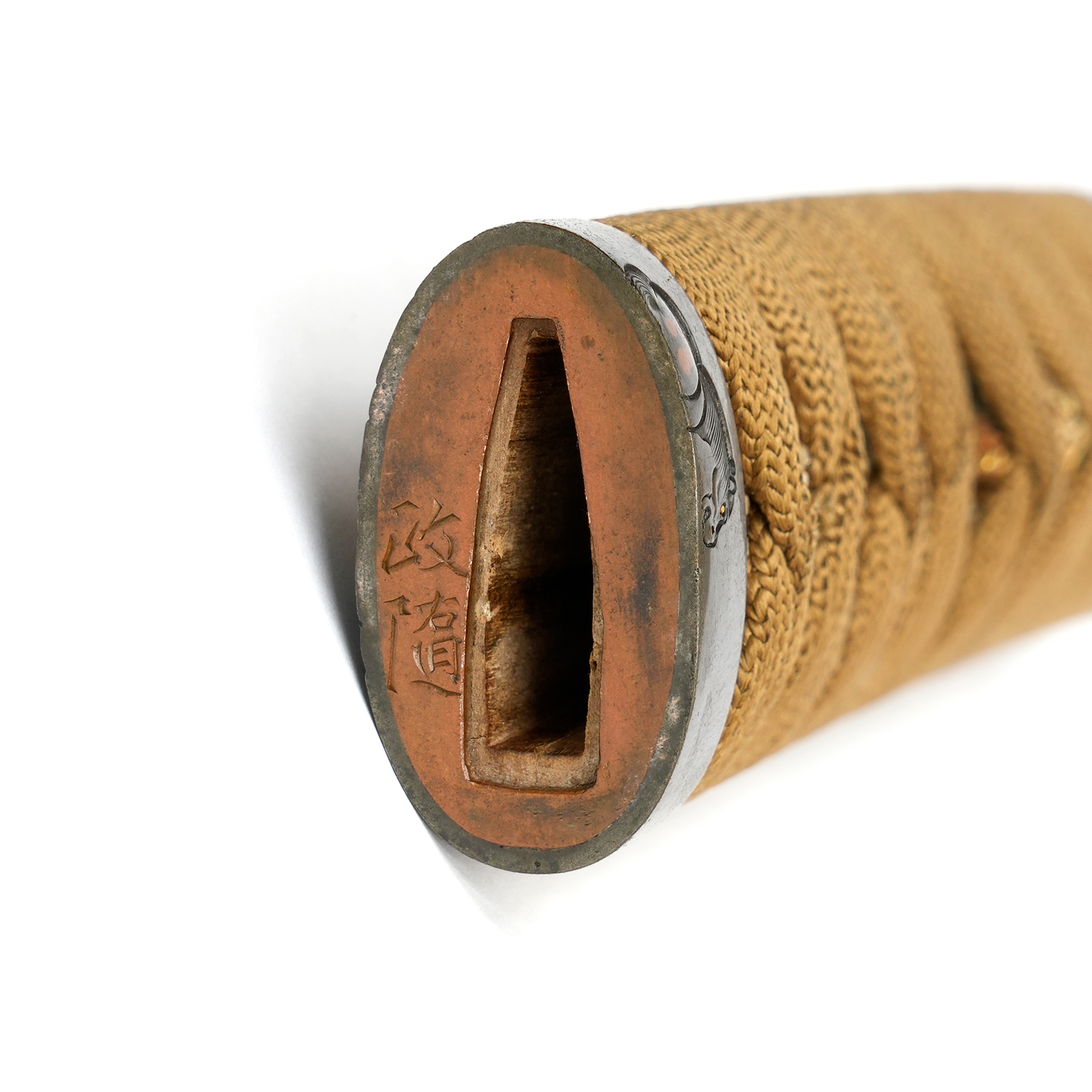
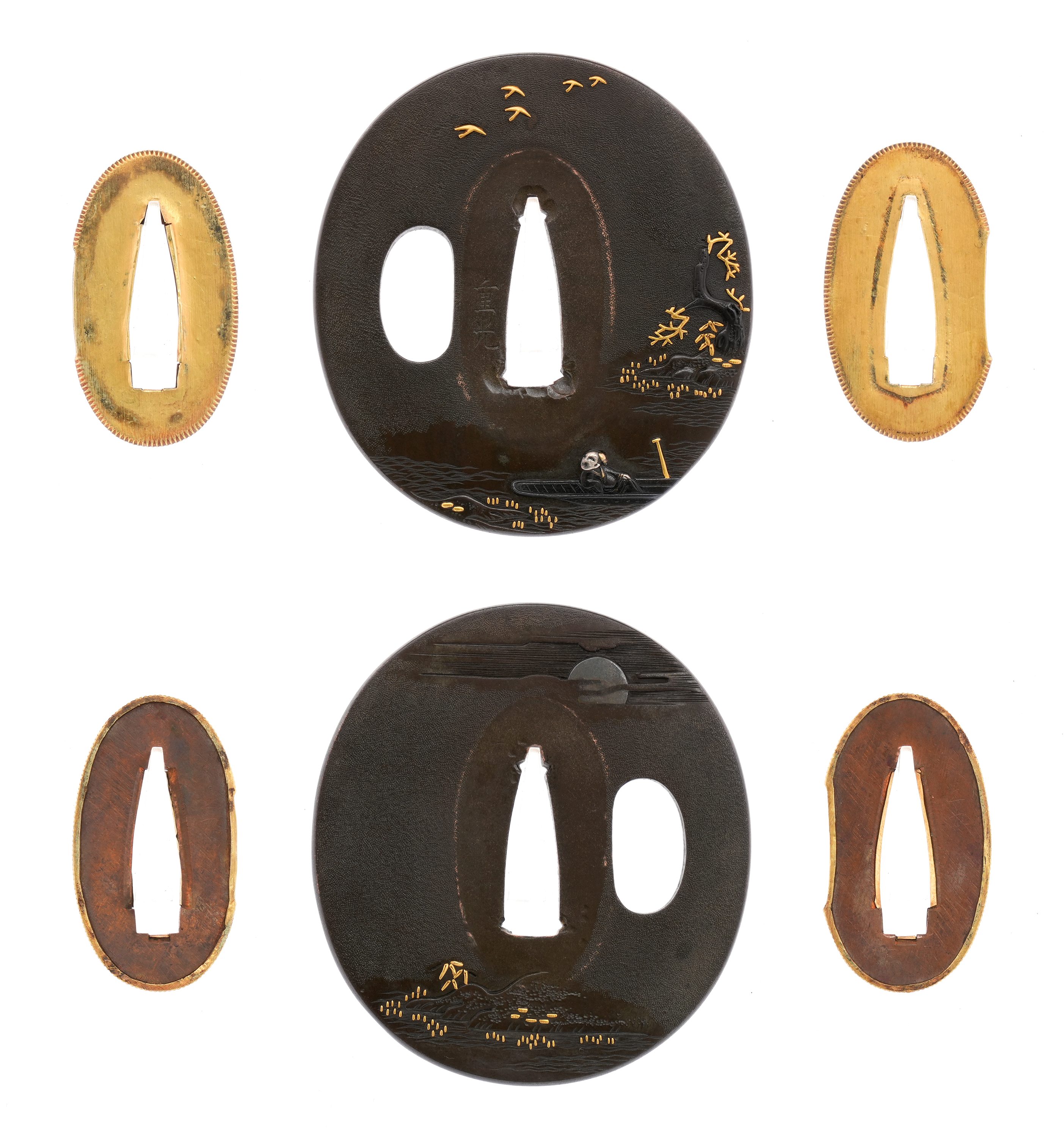
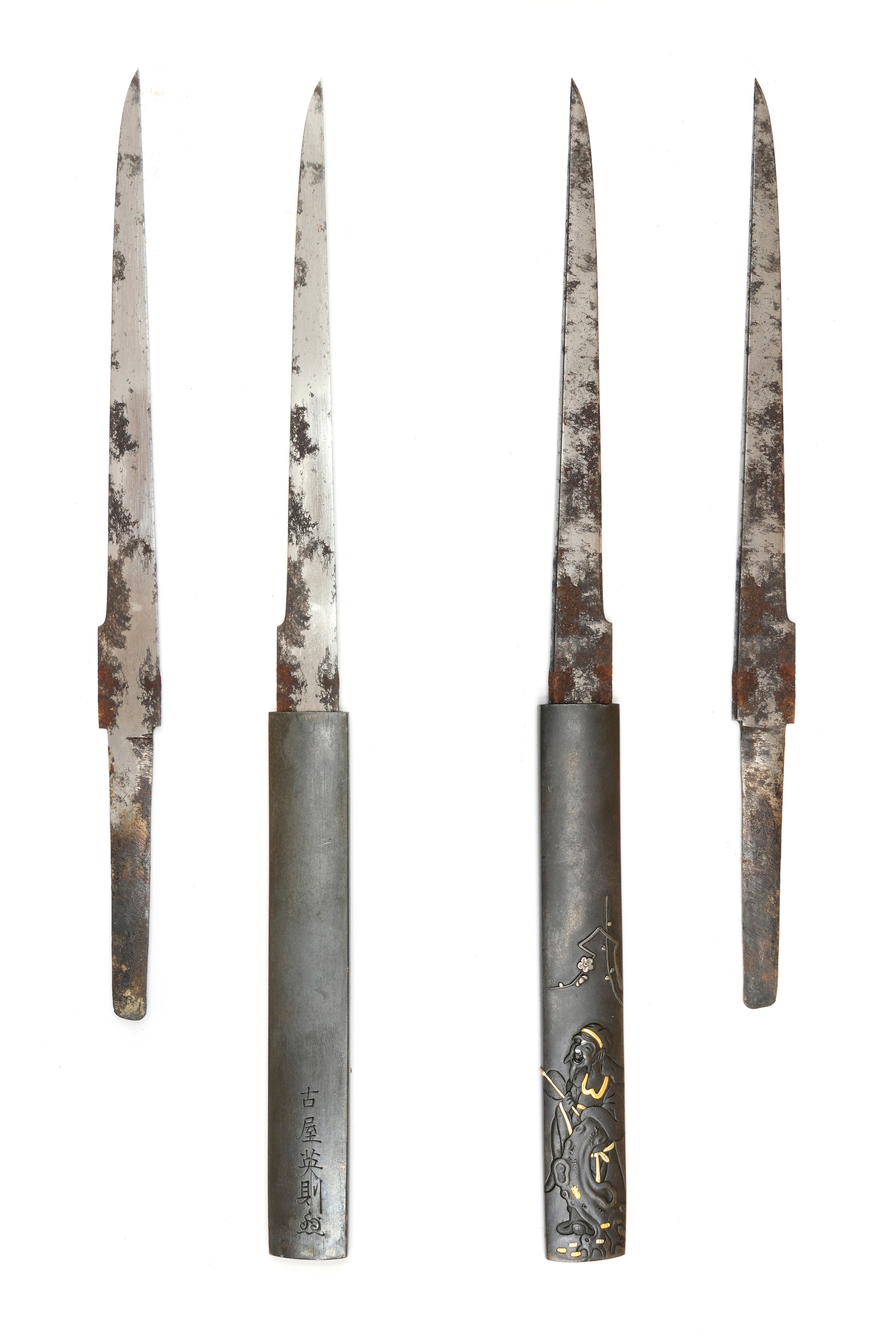
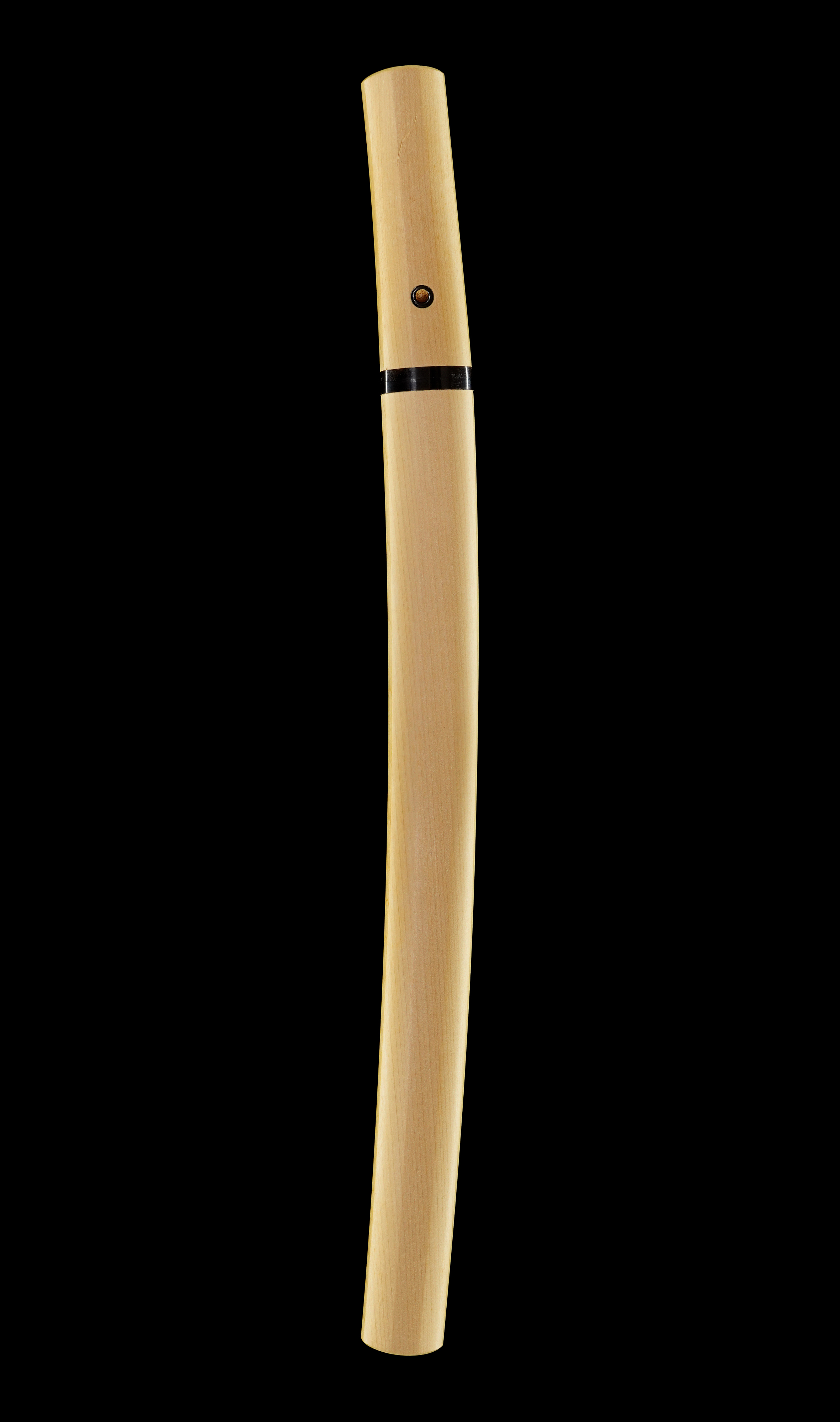
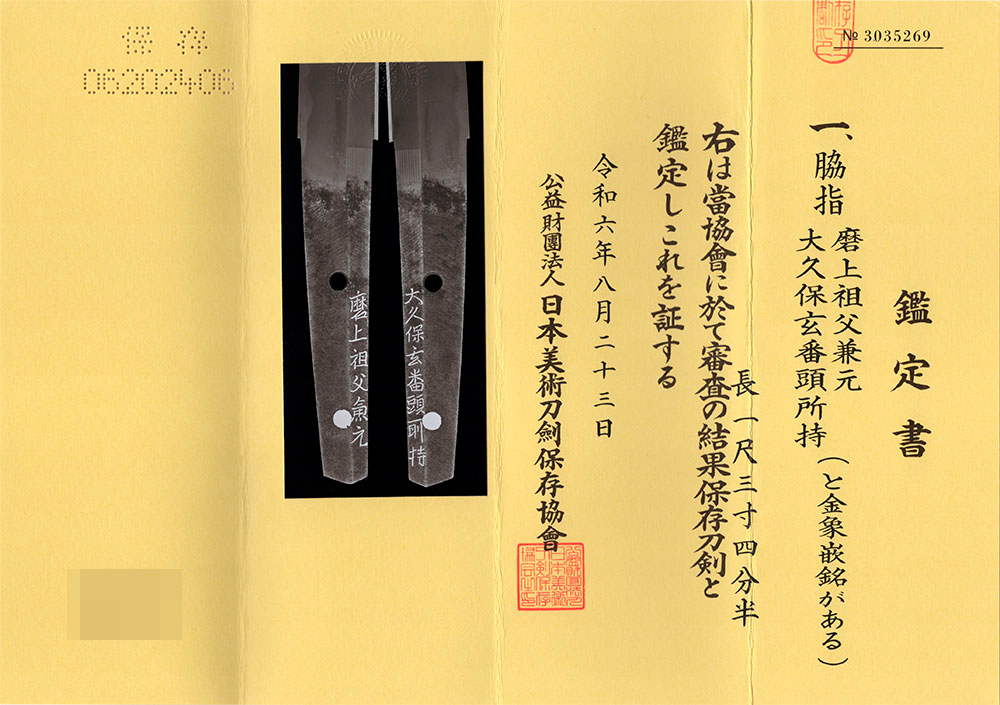
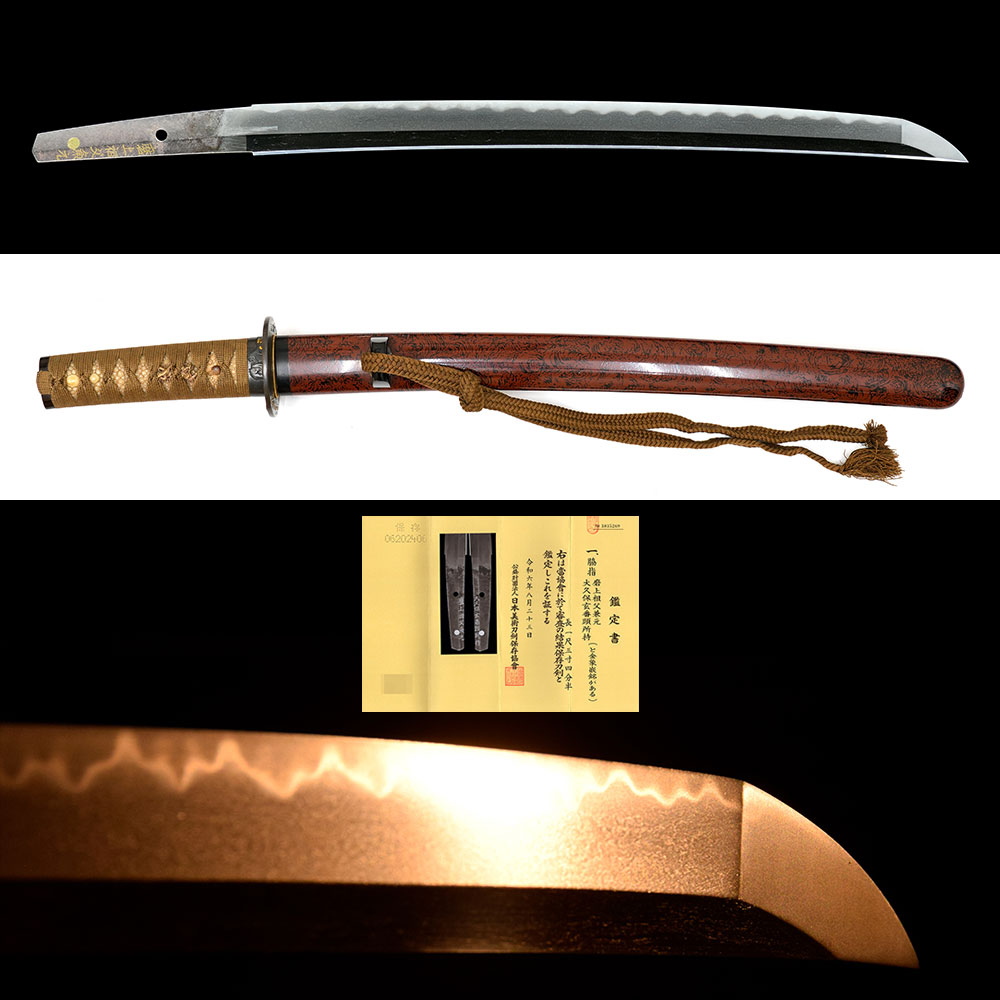
As written by the shop
(Translation unavailable)
Mino-den · Mino
22 pieces on the market now
Kanemoto (兼元) worked at Akasaka in Mino Province, and the line takes its place among the smiths of the late Muromachi period whom the NBTHK registers under the Mino-den tradition centered on Seki. The setsumei place the family within the Sue-Seki (Sue-Mino) milieu, naming Kanemoto alongside Kanesada as the two leading figures of the province in this era; one tantō note instead pairs the name with Kaneshiba, and another with Izumi no Kami Kaneshige, marking the company the line kept. The name passed through successive generations, and the records repeatedly state that distinguishing each generation has not been definitively settled. Dated long signatures reading "Nōshū Akasaka-jū Kanemoto" survive from the Meiō, Bunki, Daiei, Kyōroku, and Eishō eras, while two-character signatures bear no date. The first generation is documented through pieces dated Meiō 6, 8, 9, and 10, all giving the Akasaka residence; the most accomplished hand, and the one the world singles out under the sobriquet "Magoroku Kanemoto," is the second generation. The shared vocabulary of the line is the sanbonsugi (three-cedar) gunome, a sequence of linked pointed crests that rise and fall in groups. The ground is Mino-den through and through: itame-hada mixed with mokume and flowing masame, tending toward standing grain (hada-dachi), with fine ji-nie, chikei, and a whitish shirake-utsuri that the setsumei call out again and again. The temper mixes togariba (pointed elements) and gunome, is nioi-dominant with ko-nie, and runs sunagashi, kinsuji, and occasional tobiyaki; the bōshi is typically midare-komi turning in ko-maru, often described as Jizō-like with hakikake or a falling kaeri. The chief means of separating the second generation from the later line is regularity: as the generations descend, the pointed crests grow sharply angular and standardized, whereas Magoroku's sanbonsugi is deliberately uneven, the gunome heads rounded in places, and the pattern shifts freely into nihonsugi, yonsugi, and gosugi groupings of two, four, and five. The records describe this as a gyōsō (cursive, free) manner.
The first generation, by contrast, does not emphasize sanbonsugi at all, favoring gunome mixed with gunome-chōji and at times yubashiri and tobiyaki; both generations also made suguha, and one tantō is an uncommon Rai-utsushi in elegant straight temper that evokes Kaneyuki. For kantei, the line is read through the standing Mino grain, the shirake-utsuri, and above all the irregular sanbonsugi, with the leaning bōshi a noted point: the records observe that the honka model and these blades share a bōshi that falls over. Named and documented works recur across the register. A naginata dated Kyōroku 1 (1528) carries the full Akasaka signature and is valued as documentary source material, dated two-character pieces being scarce. A katana bearing a kinzōgan inscription on the reverse is known as "Sasatsuyu Kanemoto" and is recorded in the hands of Makishima Kenmotsu Akishige, of the same clan as Furuta Kosukezaemon. The "Aoki Kanemoto," a second-generation work, is said to be the sword with which Aoki Ichishige, a retainer of Tokugawa Ieyasu, killed Magara Masataka of the Asakura side at the Battle of Anegawa in Genki 1 (1570). A further katana carries a Genna 1 (1615) kinzōgan cutting-test inscription by Nakagawa Saheita reading "two bodies," and one suguha katana descended in the Echizen Matsudaira family. Two katana signed Kanemoto are recorded in Honma's inventory of the Imperial collection. Across these works the line is registered as the cutting-edged representative of Sue-Seki, its hand recognized wherever the three-cedar temper runs uneven over standing Mino steel. Learn more →
| Smith | Era | Designated |
|---|---|---|
| Kanemoto兼元 | 1521-1528 | 30 |
| Kanemoto兼元 | 1532-1555 | 0 |
| Kanemoto兼元 | 1573-1592 | 0 |
| Kanemoto兼元 | 1592-1596 | 0 |
| Kanemoto兼元 | 1818-1830 | 0 |
Mino in the Muromachi period
Sengoku Seki was an industry: smiths organized under their tutelary Kasuga shrine, arming the war bands of central Japan. Magoroku Kanemoto’s sanbonsugi and the finest Kanesada work prove quality survived inside mass production.
Certifies a genuine blade worth preserving: a signature confirmed correct, or, if unsigned, an era, province, and school that the NBTHK can reliably identify.
The NBTHK (Nihon Bijutsu Tōken Hozon Kyōkai, the Society for the Preservation of Japanese Art Swords) is a public-interest incorporated foundation founded in 1948 and supervised by Japan’s Agency for Cultural Affairs (Bunkachō); it is based at the Japanese Sword Museum in Tokyo. Its expert panels physically examine each submitted work (shinsa) and issue a certificate (kanteishō) ranking it by artistic and historical merit. NBTHK papers are the most widely recognized standard of authentication for Japanese swords and fittings.
NBTHK official siteAs a rule we do not accept returns, except when we have sent a different item from the one ordered or when there is a significant discrepancy between the description and the item. If you wish to return an item, please contact us within 3 days of its arrival and then send it back.
¥1,650,000