After the Ōnin War broke the Ashikaga order, a century of Sengoku warfare armed nearly every province in Japan. The era rewards a discriminating eye: routine work exists in quantity, and beside it stand custom blades of the first rank.
 NihontoWatchNihontoWatch
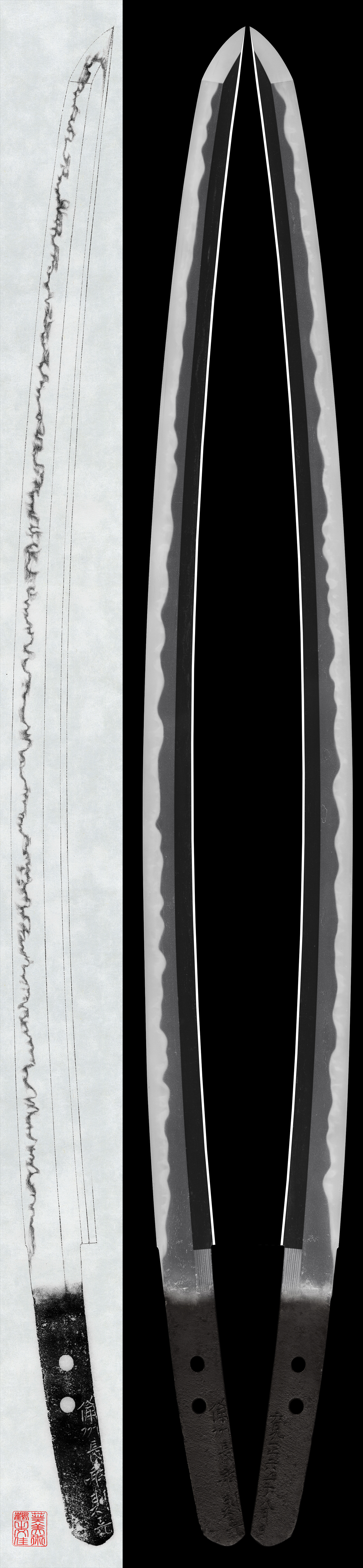
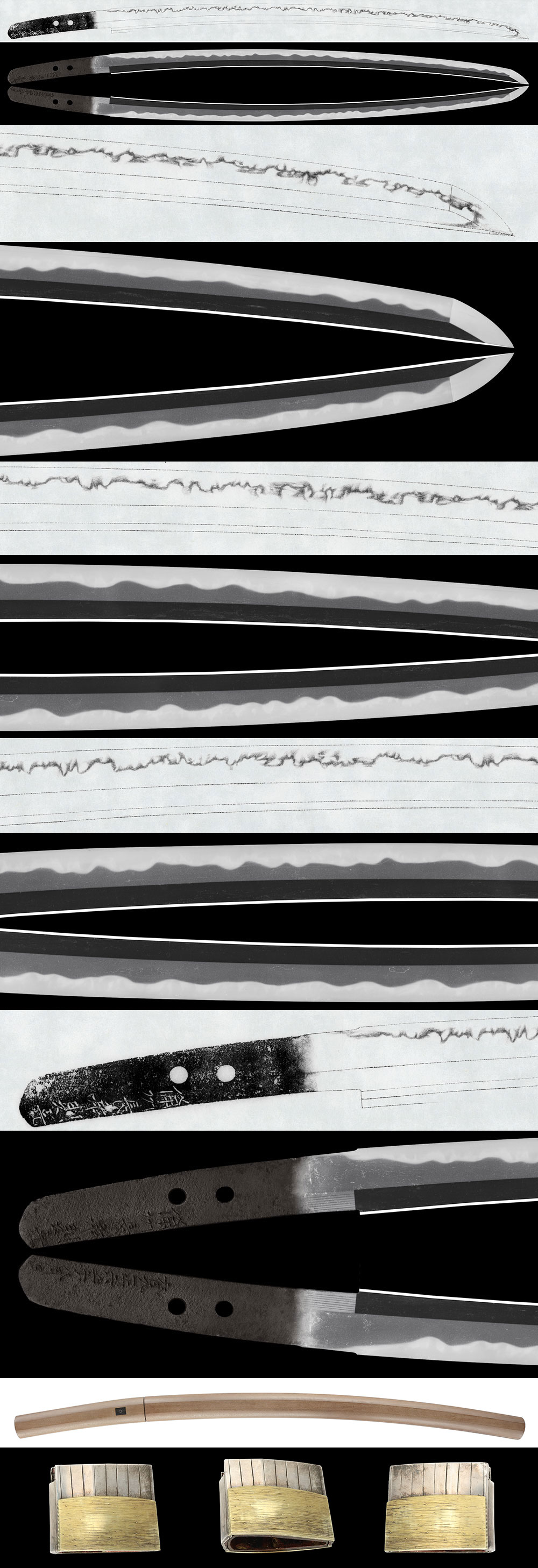
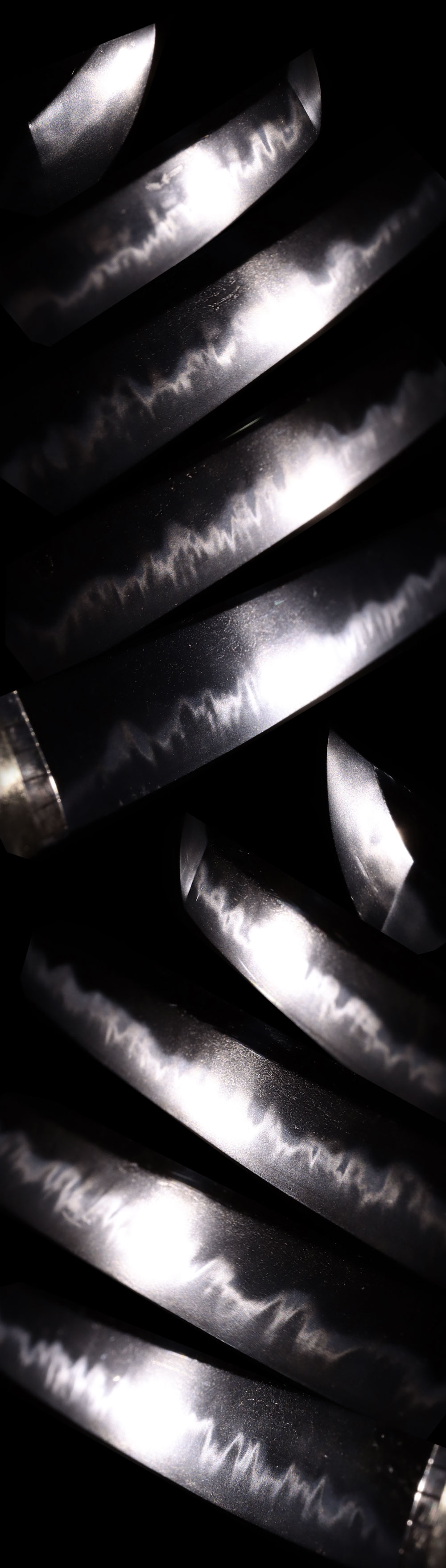
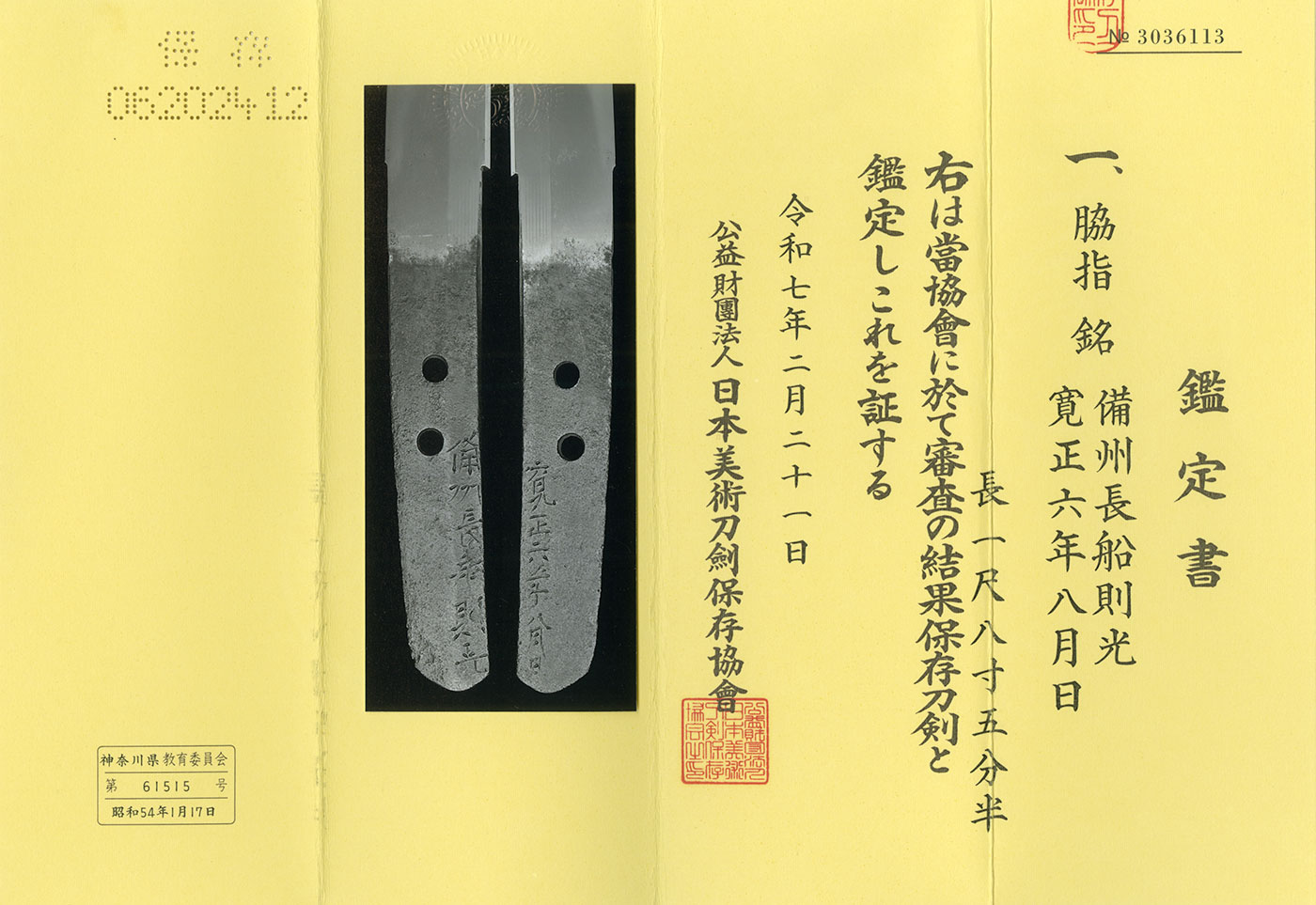
Wakizashi in Shirasaya, with Tachi Koshirae (NBTHK Hozon Token) We classify swords into "Saijyo Saku," "Jyojyo Saku," "Jyo Saku," and "Regular Saku" based on the swordsmith's skill. This work is ranked as Jyo Saku. Shape: A well-balanced and excellent piece with a moderate blade width, deep curvature, and a fine kissaki, presenting a well-proportioned form overall. Jigane: The utsuri appears clearly, and the workmanship of the jigane is excellent. Hamon: A rounded gunome-midare, with the boshi turning into midarekomi. It is a work displaying the characteristics of a single-handed sword (katate-uchi), and belongs to the group of works known as "Kansho Norimitsu." It is old in age and superb in workmanship. Koshirae Aoi Art's Comment The sword comes with a refined and dignified tachi koshirae, featuring six crests arranged on a gold nashiji ground. This is an elegant, antique work by Bishu Osafune Norimitsu dated Kansho 6 (1465), whose highlights are the beautiful jigane with rising utsuri and the rounded gunome-midare hamon. It is in good condition, already polished, and makes a fine piece well suited for appreciation. Aoi Art estimation paper Whole Oshigata NBTHK Hozon Token
NihontoWatchOffered by Aoi Art



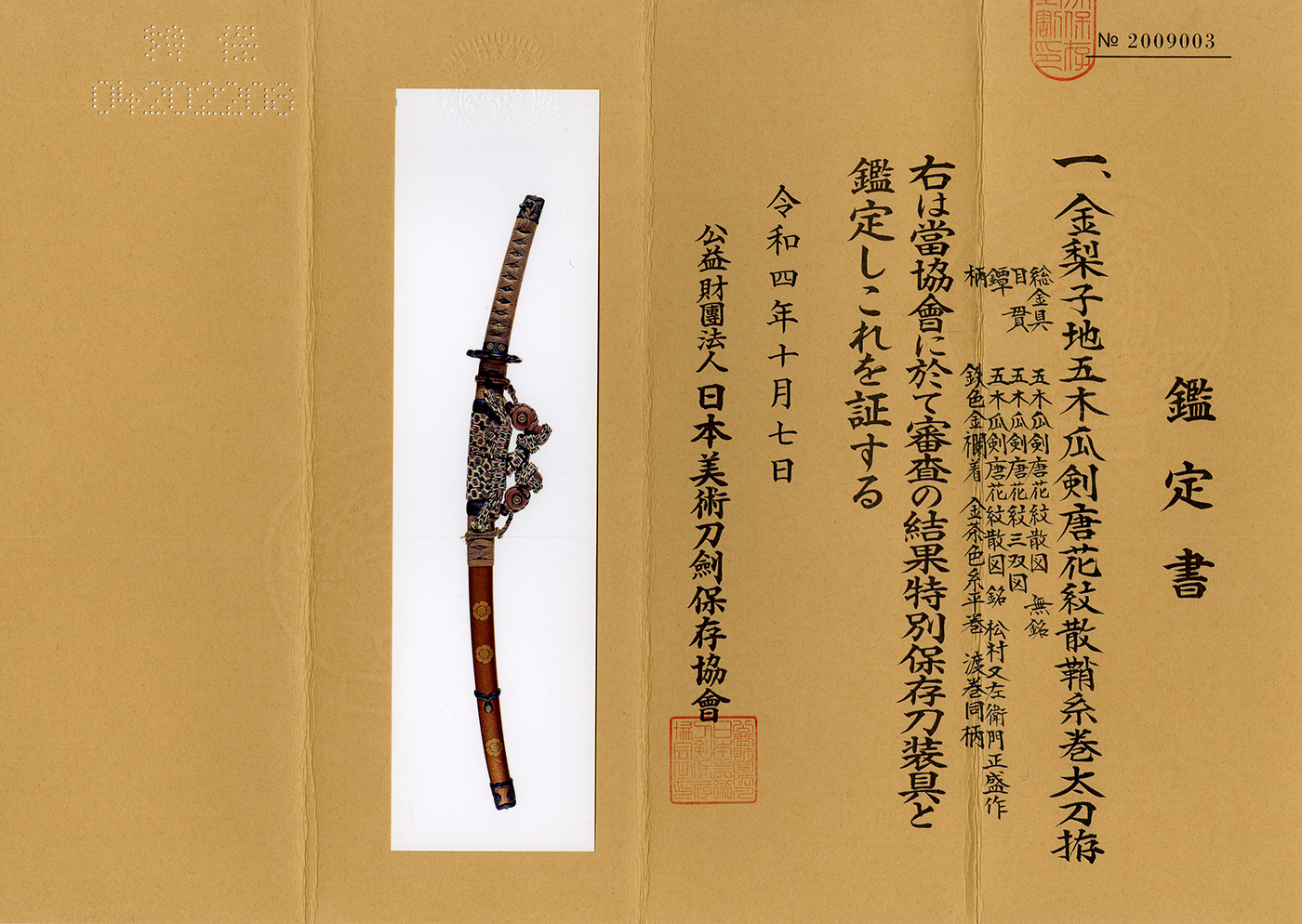
As written by the shop
Bizen · around 1457-1460
1 piece on the market now
The Muromachi period (1392 to 1573)
After the Ōnin War broke the Ashikaga order, a century of Sengoku warfare armed nearly every province in Japan. The era rewards a discriminating eye: routine work exists in quantity, and beside it stand custom blades of the first rank.
Certifies a genuine blade worth preserving: a signature confirmed correct, or, if unsigned, an era, province, and school that the NBTHK can reliably identify.
The NBTHK (Nihon Bijutsu Tōken Hozon Kyōkai, the Society for the Preservation of Japanese Art Swords) is a public-interest incorporated foundation founded in 1948 and supervised by Japan’s Agency for Cultural Affairs (Bunkachō); it is based at the Japanese Sword Museum in Tokyo. Its expert panels physically examine each submitted work (shinsa) and issue a certificate (kanteishō) ranking it by artistic and historical merit. NBTHK papers are the most widely recognized standard of authentication for Japanese swords and fittings.
NBTHK official siteIf you wish to return an item, please notify us within 3 days of receipt. After this period we cannot accept cancellations. Please ship the return to us within 5 business days. Cancellation is conditional on the item being kept in the same condition as at the time of sale, so please handle it with care.
¥2,500,000