After the Ōnin War broke the Ashikaga order, a century of Sengoku warfare armed nearly every province in Japan. The era rewards a discriminating eye: routine work exists in quantity, and beside it stand custom blades of the first rank.
 NihontoWatchNihontoWatch
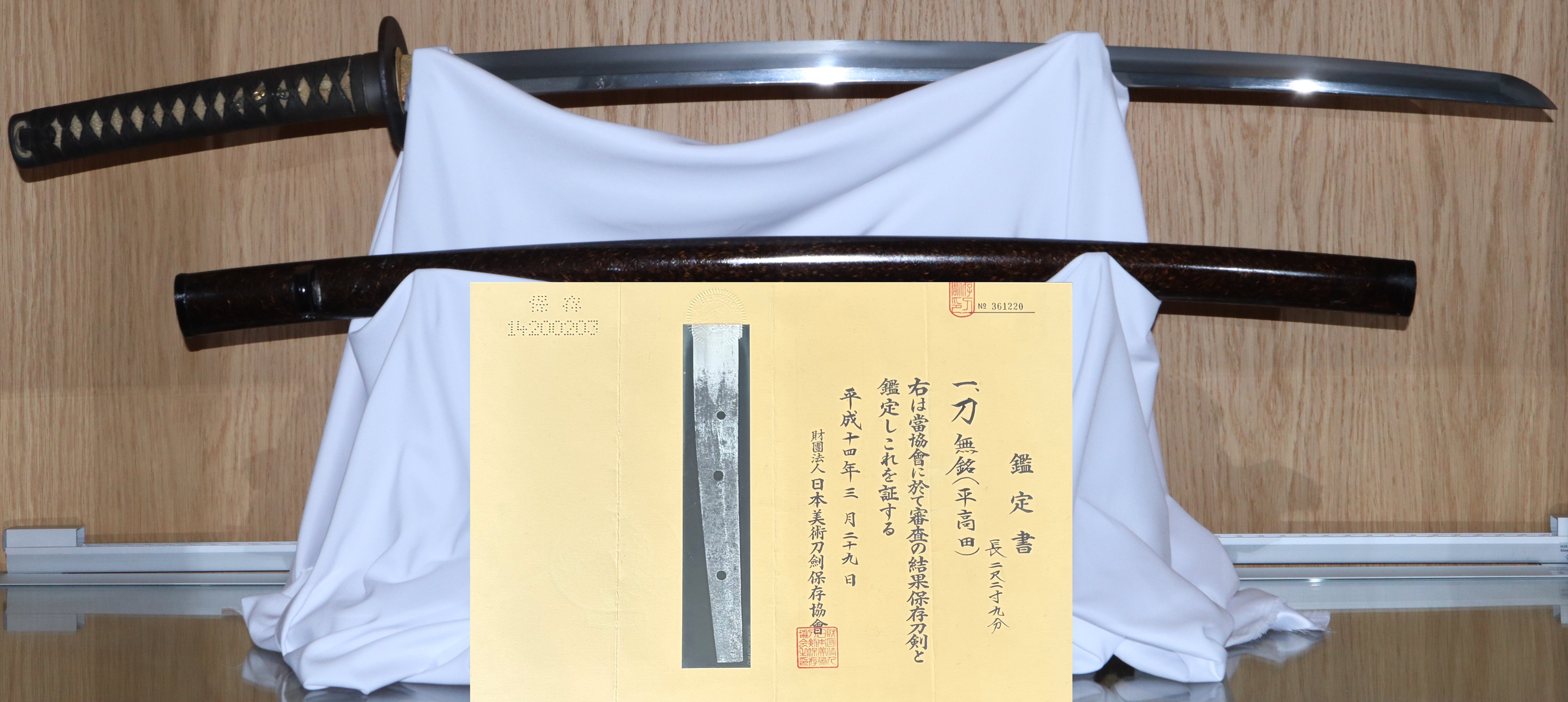
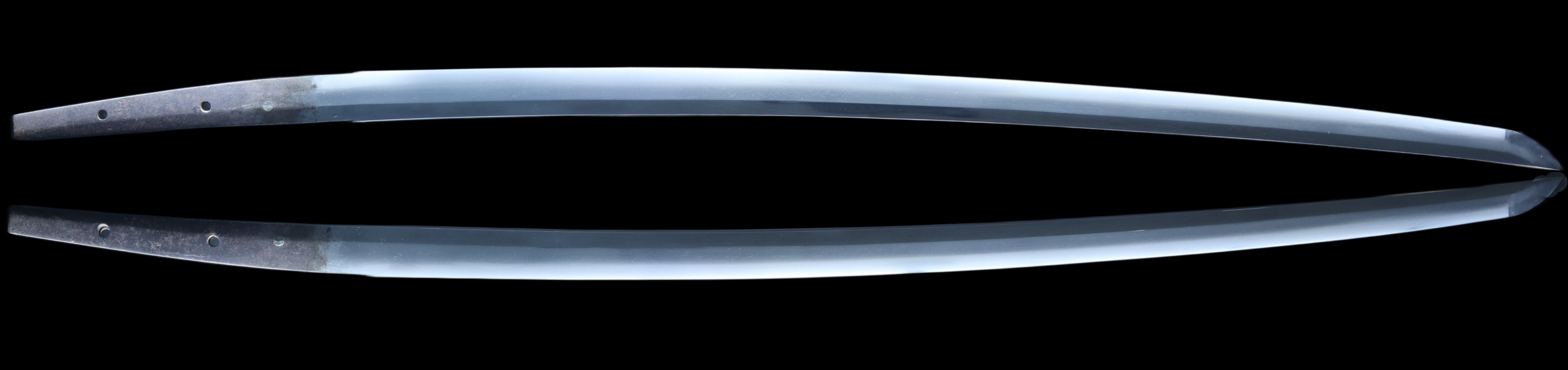
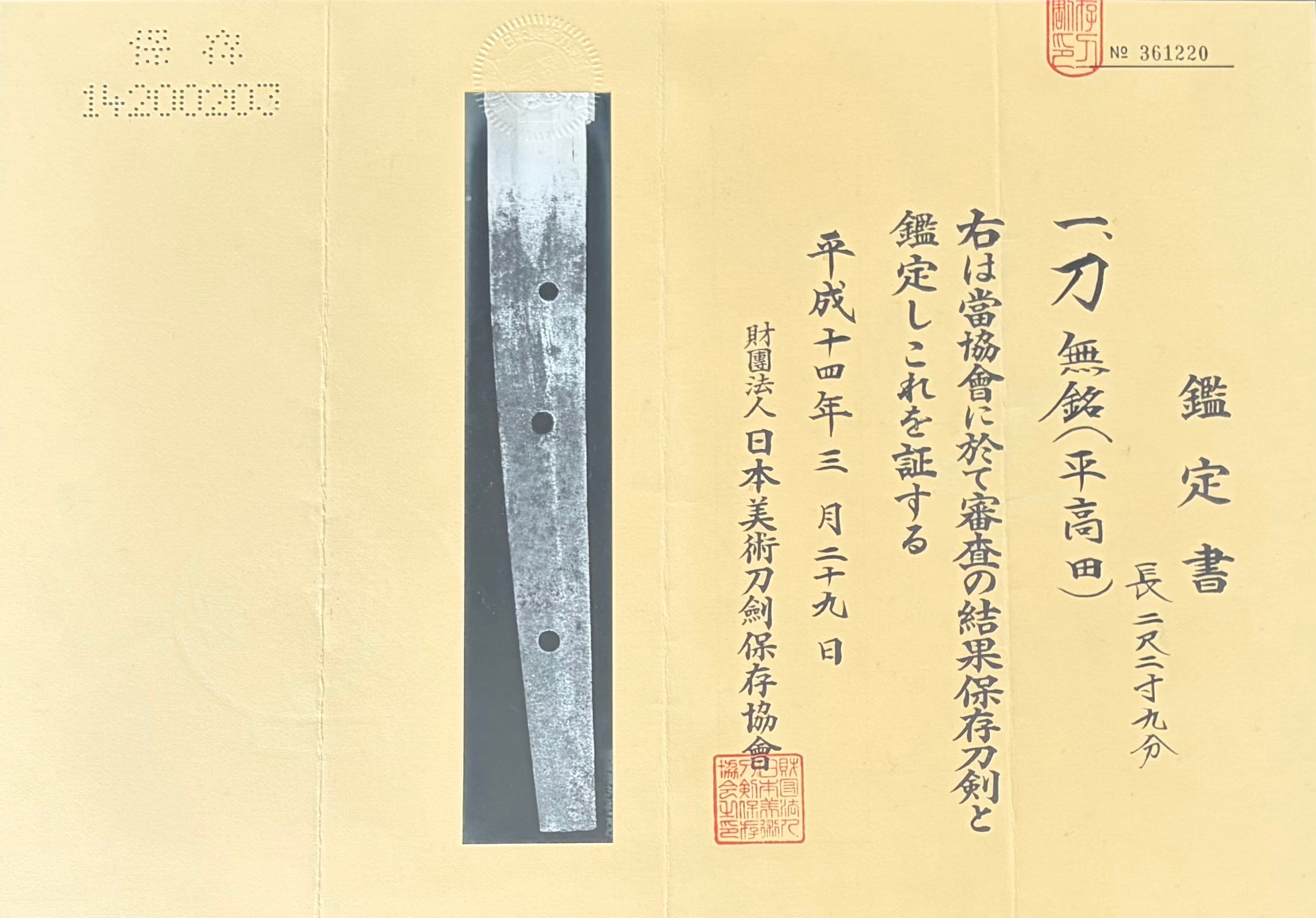
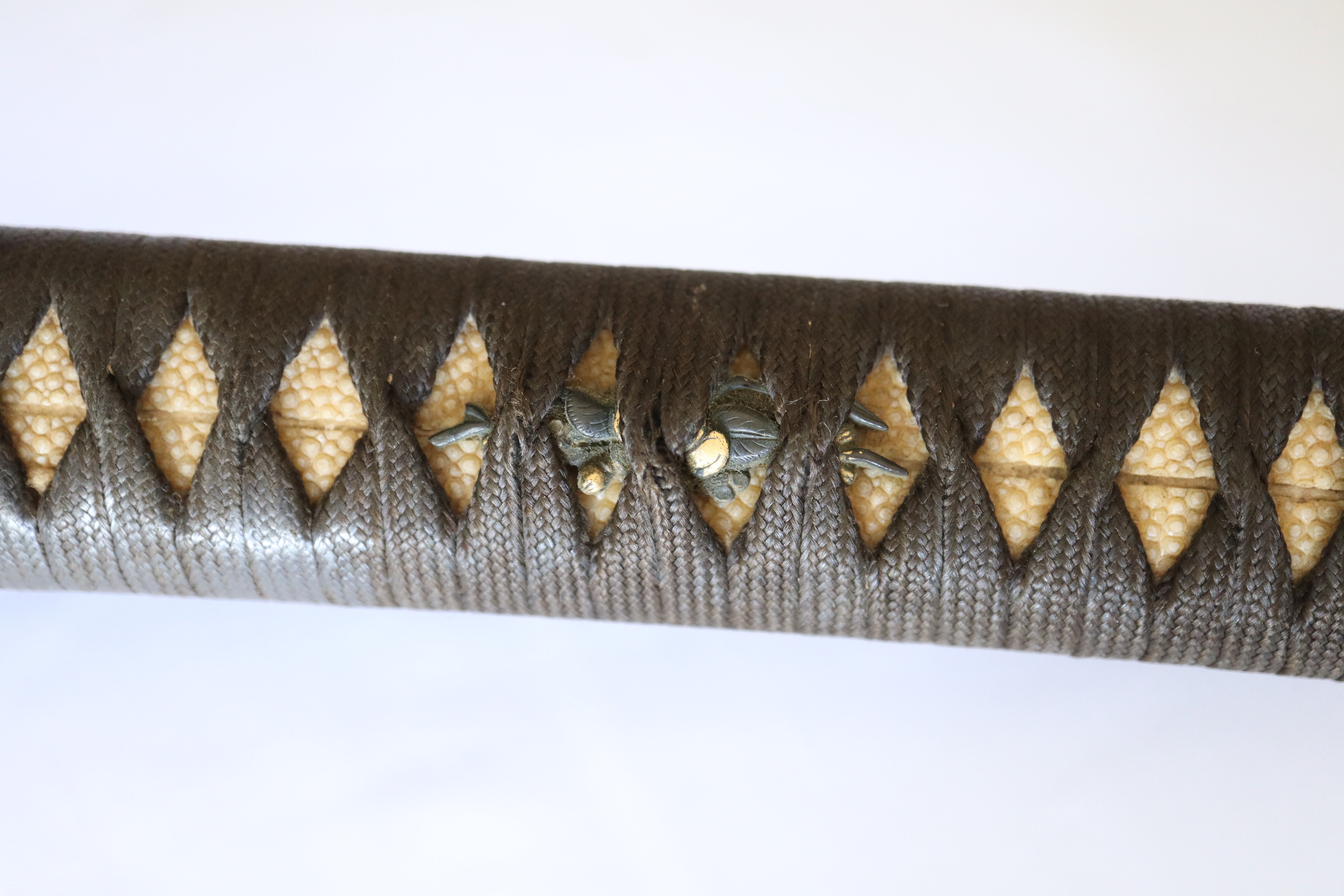
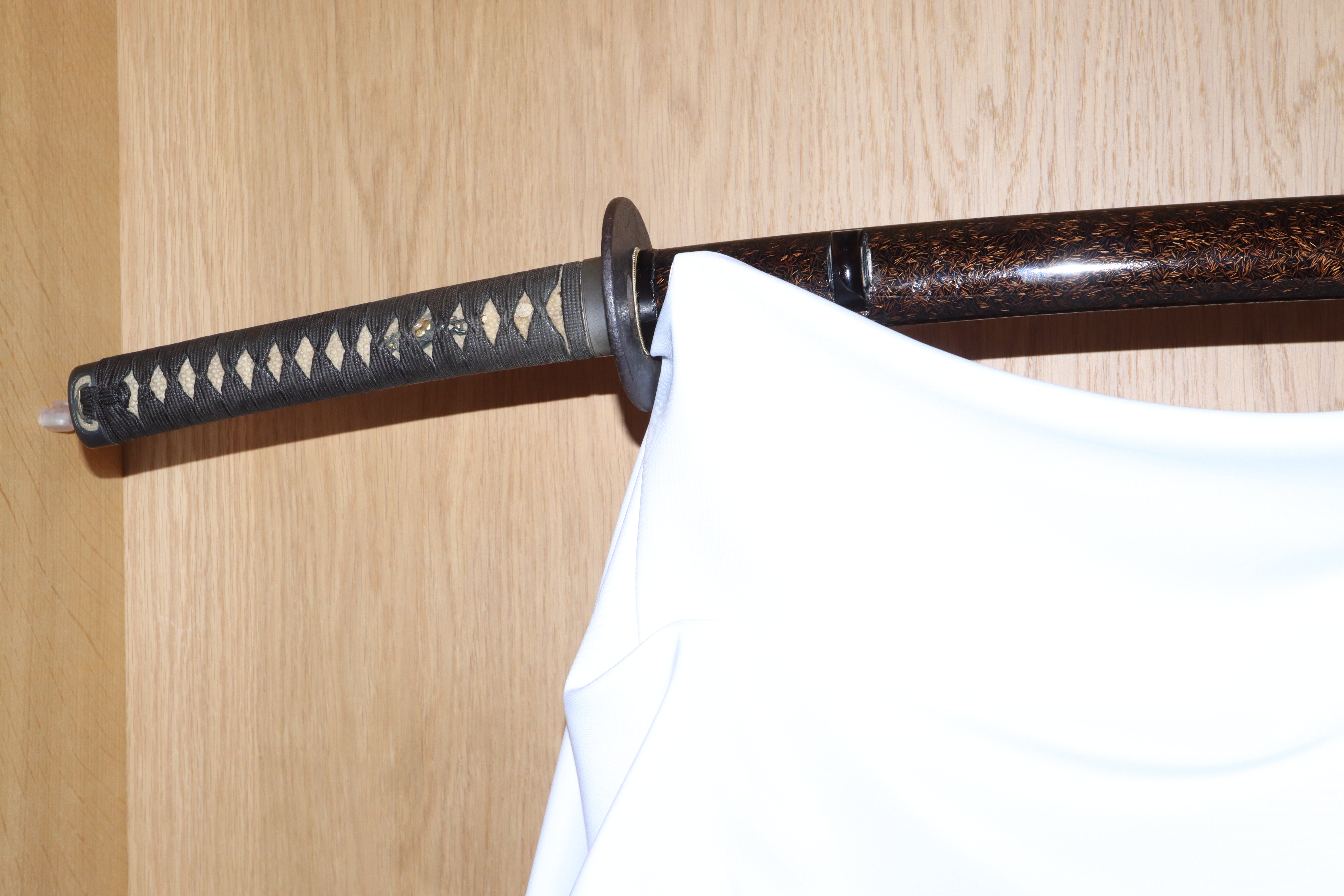
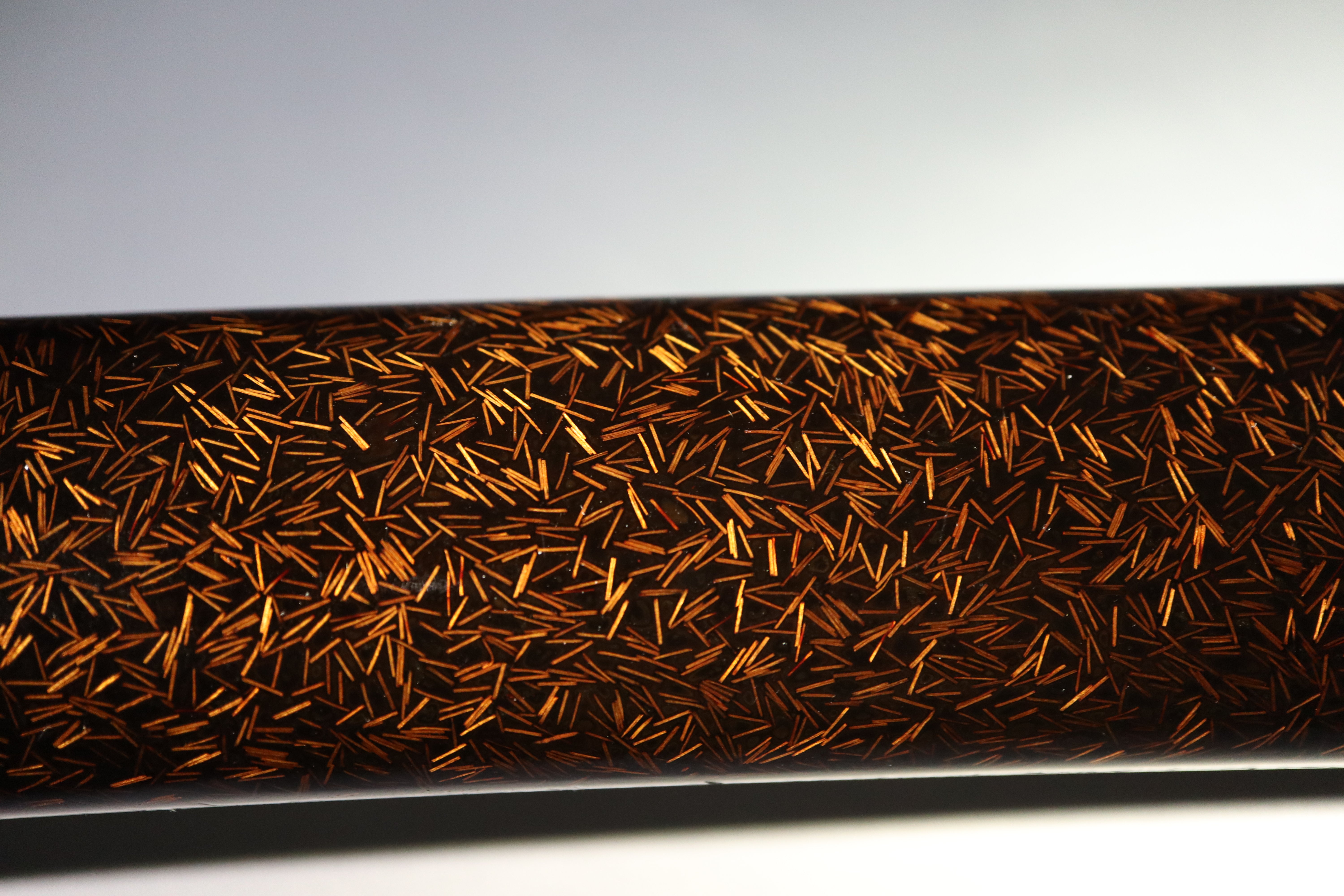
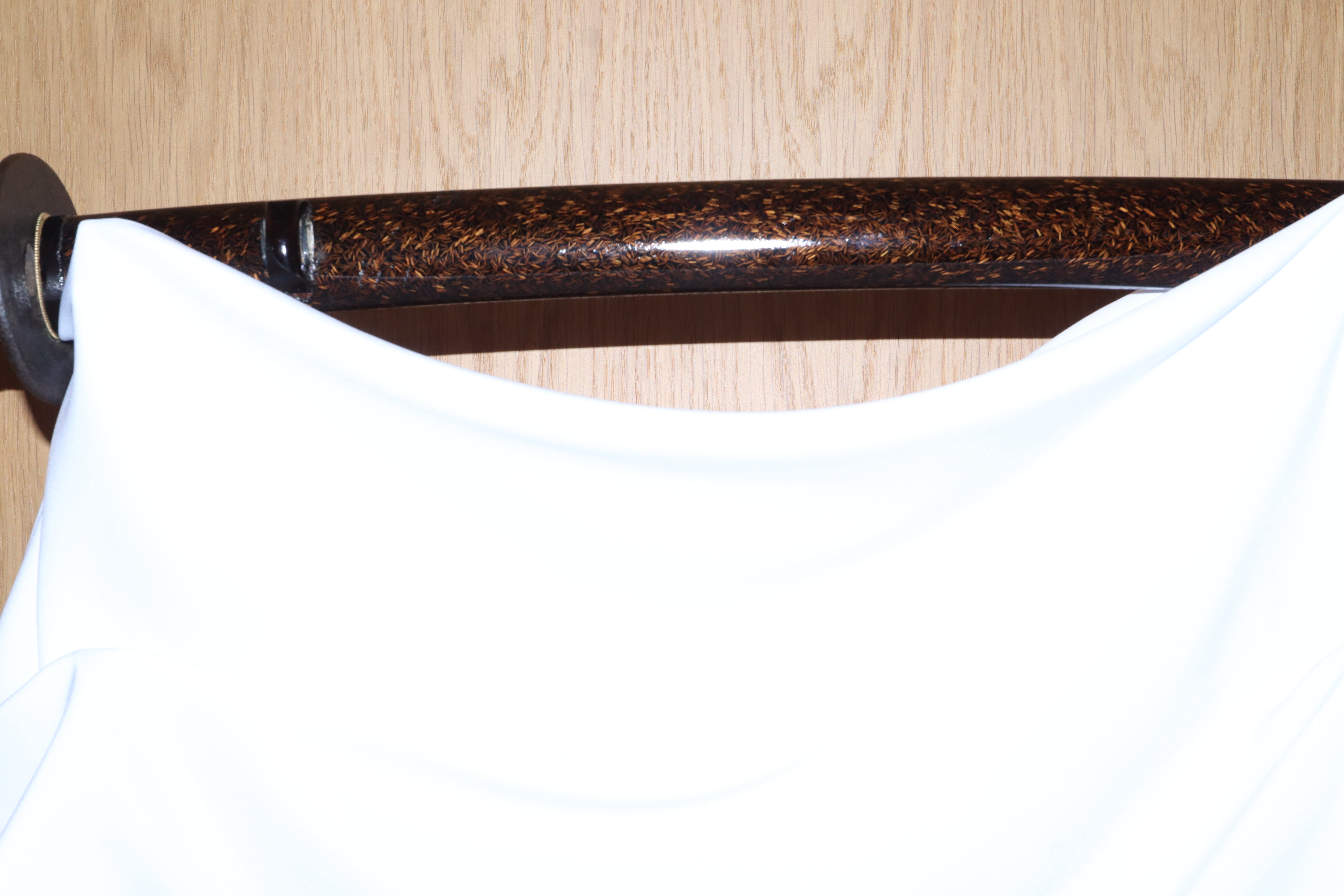
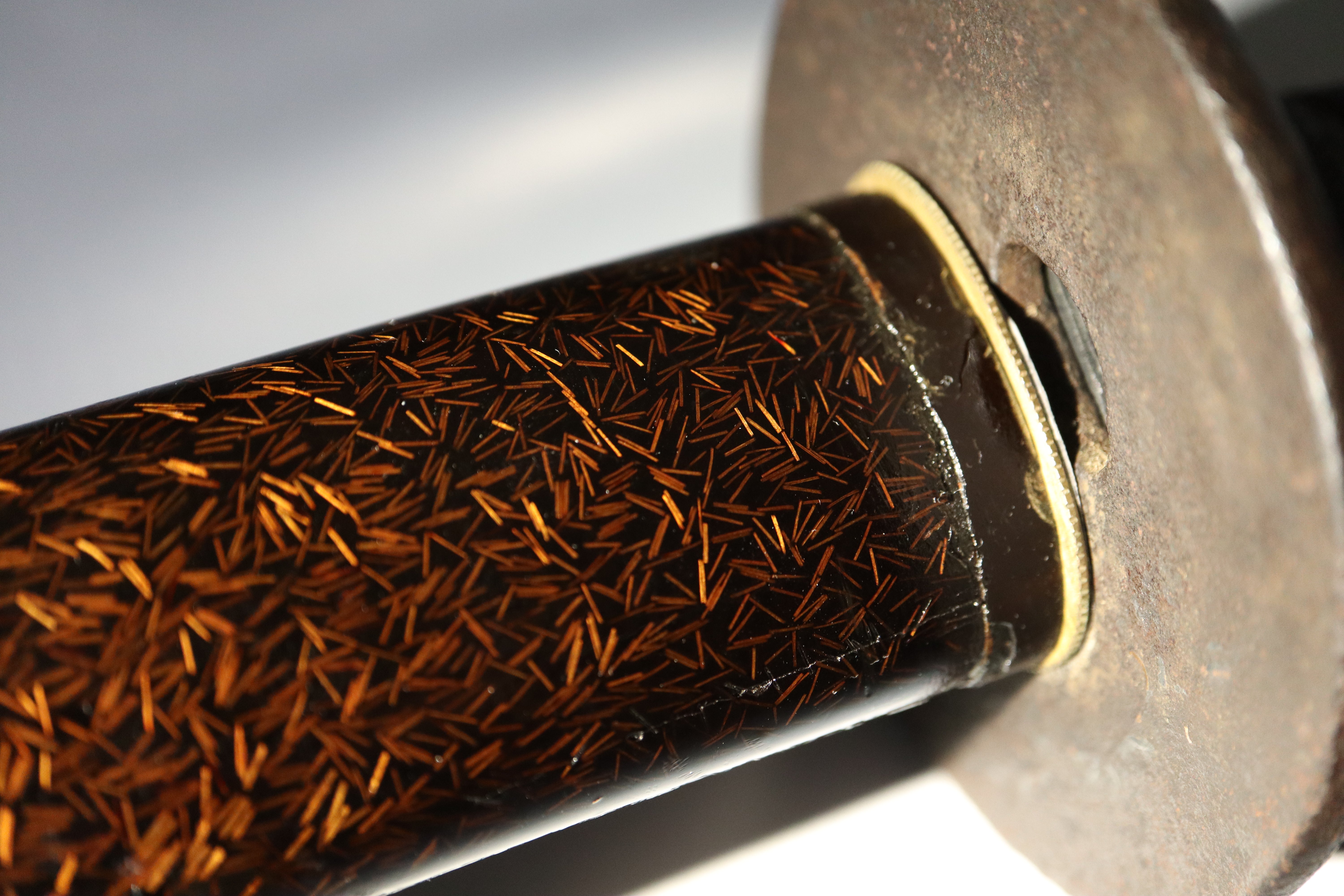
Mumei Taira Takada Katana in Koshirae NBTHK Hozon Late-Muromachi period. Specifications Taira Takada Katana Mumei Type: Katana Nakago: O-suriage Mumei Period: Late Muromachi period (16th century AD) Papers: NBTHK Hozon Habaki: Gold foiled Koshirae: Mounted in a late Edo period koshirae. The saya features a rare shuro-nuri finish, made by mixing fibers from the surface of the windmill palm (shuro) into transparent brown urushi lacquer and polishing it to a smooth finish. There are some previous repairs visible. Specifications: Nagasa (Cutting-edge length): Approx 69.5cm (2 Shaku 3 sun) Sori (Curvature): approx 1.5cm Shinogi-zukuri Description: Attributed to Taira Takada by NBTHK Hozon papers in 2002. Taira Takada is the last stage of the koto Takada school, originally starting in the late Kamakura period. This Katana has a slight notare-hamon. The Jihada Itame hada, which are nicely visible and very enjoyable. This katana has the overall typical late Muromachi sugata. The sword has some light scratches, which are negligible. The sword is in older polish, but still very nice enjoyable condition. The koshirae is a beautiful addition to the sword, especially the saya. (Disclaimer: The overview image has its background removed, which can create some slight artefacting around the cutting edge. There is no damage to the cutting edge or kissaki.)
NihontoWatchOffered by Token Oranda
This piece has sold
Get an email when new Bungo School work hits the market.

Wakimono · Bungo
The blades gathered under the Bungo name reach back to the ko-kaji working on Kyūshū from the close of the Heian period, and the setsumei trace two distinct strands rather than a single continuous house. The earliest hands belong to the classical Kyūshū group (Kyūshū koten-ha): Yukihira (行平) of Bungo, his associate the Mount Hiko monk Sadahide (定秀), and the still older Chōen (長円), whose orikaeshi-mei katana the records identify with the Minamoto treasure tachi Usugoromo and place no later than the time of Yukihira. Yukihira is the center of gravity, dated by an extant Genkyū 2 (1205) tachi to the early Kamakura period and transmitted both as a goban kaji serving the retired Emperor Go-Toba and as either teacher or pupil of Sadahide; the sources leave that relationship unsettled. A signed Kamisoku (神息) tachi enters the group on the strength of workmanship close to Yukihira's, and a Sadahide ko-tachi extends the strand into well-recorded examples. Far removed in time stands the Muromachi material: a Norisada (則貞) katana of Kutsunami-gō in Naoiri District, dated Hōtoku 3 (1451), which the setsumei explicitly tie to the Takada lineage. Between the two strands the records draw a thread through Chikushi Masatsune (筑紫正恒), transmitted in the reference works as Yukihira's grandson. The classical strand shares a tight vocabulary. The sugata is slender with a ko-kissaki, high koshizori, and pronounced funbari, an archaic tachi form that the entries read as not descending beyond the early Kamakura. The jigane is a soft, nettori (viscous) itame with a nagare tendency, often with a whitish cast and a suggestion of utsuri; ji-nie and fine chikei adhere. The hamon is suguha-based, mixed with ko-midare and ko-gunome, carrying ko-ashi and ko-nie, with faint kinsuji and occasional yubashiri; the recurring marks are a nioiguchi tending toward urumi (moist and soft) and a yakiotoshi where the temper drops above the machi.
The setsumei tie these traits to the most archaic manner of the Shōsōin swords and find them echoed in other early Kyūshū work such as Ko-Hōki and Ko-Naminohira. Sadahide's blades are described as built in Yukihira's mold, down to the urumi nioiguchi. The Muromachi Norisada diverges: a longer katana with added sakizori and a chū-kissaki, chū-suguha with small gunome and a faint standing utsuri, its dekiguchi subdued (jimi) rather than archaic. Recognition of the classical hands turns on a cluster of habits the records name as Yukihira's own. He signs the haura, the side worn inward, against the practice of his period, a placement the entries compare to Sanjō Munechika and the Ko-Aoe line. His blades frequently bear relief (ukibori) carvings set in hi at the koshi-moto: kurikara, bonji, Jizō Bosatsu, cherry blossoms, and the "pine-devouring crane" (matsukui-zuru), a carving repertoire the sources say later Bungo work inherited. The early oshigata literature, citing the Kanchi-in Meizukushi, records that forgeries existed from Kamakura and warns that crude mei are the genuine ones. Named pieces carry the standing: the Usugoromo tachi, bestowed by Tokugawa Tsunayoshi on Honjō Suketoshi and carrying Hon'ami Kōchū origami; Yukihira tachi with aoi-crest mountings and Hon'ami Kōon papers; a Sadahide tachi received by the Mōri house from Emperor Go-Mizunoo. The Muromachi entries close the picture by marking the Norisada blade as documentary material for the scarcely studied Kutsunami smiths and their Takada affinity, holding the two Bungo strands apart as the blades themselves do. Learn more →
| Smith | Era | Designated |
|---|---|---|
| Choen長圓 | 987-989 | 1 |
| Kunishige國重 | 1381-1384 | 1 |
| Munechika宗近 | 999-1004 | 1 |
| Yoshihide厳秀 | — | 1 |
| Choen長圓 | 1213-1219 | 2 |
The Muromachi period (1392 to 1573)
After the Ōnin War broke the Ashikaga order, a century of Sengoku warfare armed nearly every province in Japan. The era rewards a discriminating eye: routine work exists in quantity, and beside it stand custom blades of the first rank.
Certifies a genuine blade worth preserving: a signature confirmed correct, or, if unsigned, an era, province, and school that the NBTHK can reliably identify.
The NBTHK (Nihon Bijutsu Tōken Hozon Kyōkai, the Society for the Preservation of Japanese Art Swords) is a public-interest incorporated foundation founded in 1948 and supervised by Japan’s Agency for Cultural Affairs (Bunkachō); it is based at the Japanese Sword Museum in Tokyo. Its expert panels physically examine each submitted work (shinsa) and issue a certificate (kanteishō) ranking it by artistic and historical merit. NBTHK papers are the most widely recognized standard of authentication for Japanese swords and fittings.
NBTHK official site
Returns accepted within 14 days after the package is received. Return shipping paid by the customer if cancellation is preference-based; paid by Token Oranda if there are condition issues on arrival. Full refund once the returned product arrives unused. EU customers have full European rights including a guaranteed 14-day return period.