The Yamato schools grew up in the shadow of Nara’s great monasteries: Tegai took its name from a gate of Tōdaiji. Their austere masame and quiet suguha are a temple aesthetic, prized ever since for exactly that restraint.
 NihontoWatchNihontoWatch
鑑定書内容:財)日本美術刀剣保存協会 特別保存刀剣 [N.B.T.H.K] Tokubetsu Hozon Token 鎌倉時代、大和国手掻派の祖、包永の特別保存刀剣指定作品。大和国手搔派は輾害とも書き、東大寺の西の正面である輾害門の外辺に一派が居住して鍛刀したためにこの名があると いう。手搔派の祖は包永で、銘鑑では鎌倉時代後期の正応頃としているが、包永二代の子或は弟子と伝えている包清に嘉暦四年紀の短刀が遺存していることや、包永の作域及び造込みなどの点からして、さらに時代の遡るものとも云われている。大和物の中でも包永の在銘の太刀は比較的多く現存しており、それらは茎先に二字銘を遺す磨上の状態のものが殆どであるとし、生茎の物は見られない。姿や地刃・帽子などは大和物一般の作風に共通するものであるが、此の工にはつぶらで輝きのある美しい沸が見られ、地刃共によく冴えるのが見どころである。この太刀は、鎬が高く、鎬幅の広い造込みに、鍛えは小板目がよくつみ、地沸が厚くつき、腰元には淡く沸写りがたち、一見山城物の名品を見るが如くである、刃文は明るく輝く小沸出来の直刃調の刃を焼き、小足、小互の目を交えて、帽子は焼き詰め帽子とし、地刃共に明るく冴えるなど包永の典型的作風を示して余すところがない。古来大和物のなかでも当麻物はその美しさに定評があり、「山城物目利き古歌」によると「粟田口、当麻の目利き心得よ、地鉄は余国並ぶ物はまれ」とあり、粟田口物の極上の地鉄に並ぶものとして当麻物を捉えているが、本作はまさのその当麻、包永の格の高さを示した優品であり、一部地に荒れたところもあるものの、十分に地刃健全で、現存稀な包永の在銘作として大変貴重な作品である。
NihontoWatchOffered by Iida Koendo
This piece has sold
Get an email when a new Tegai Kanenaga piece hits the market.

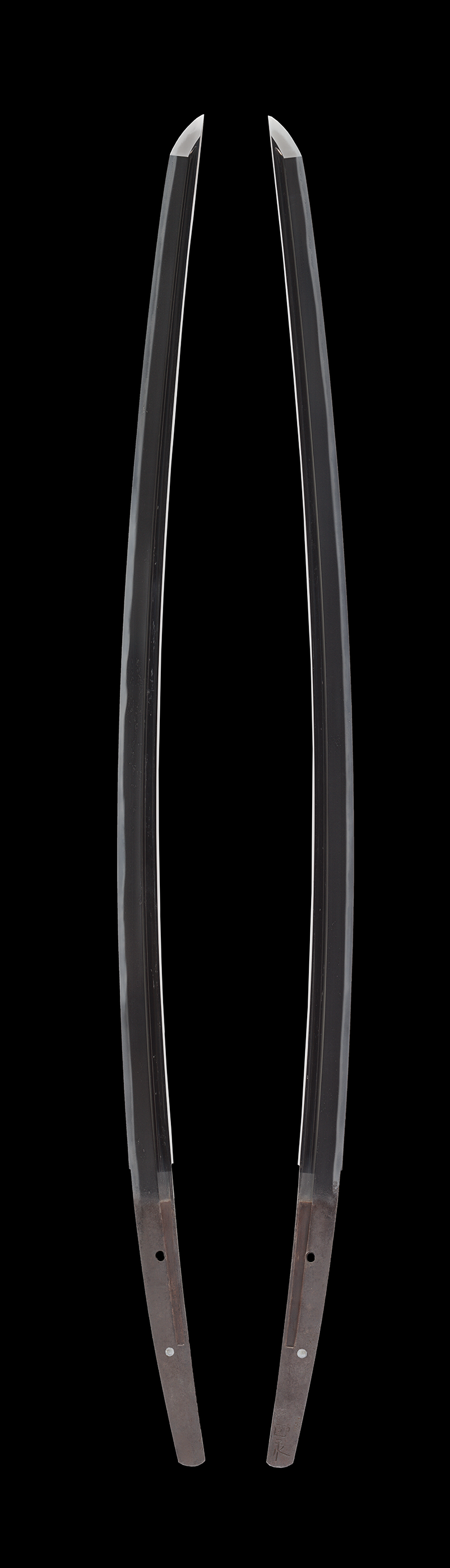

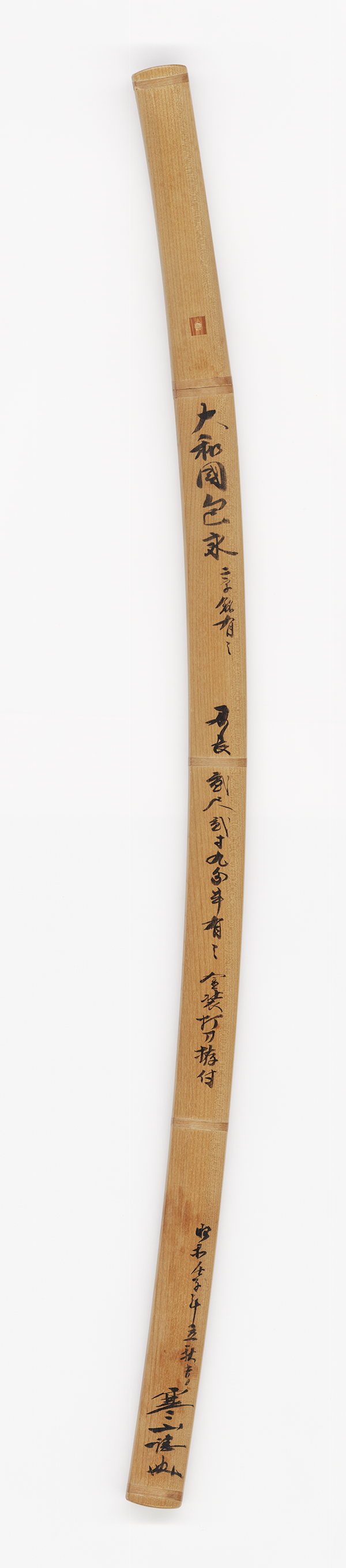
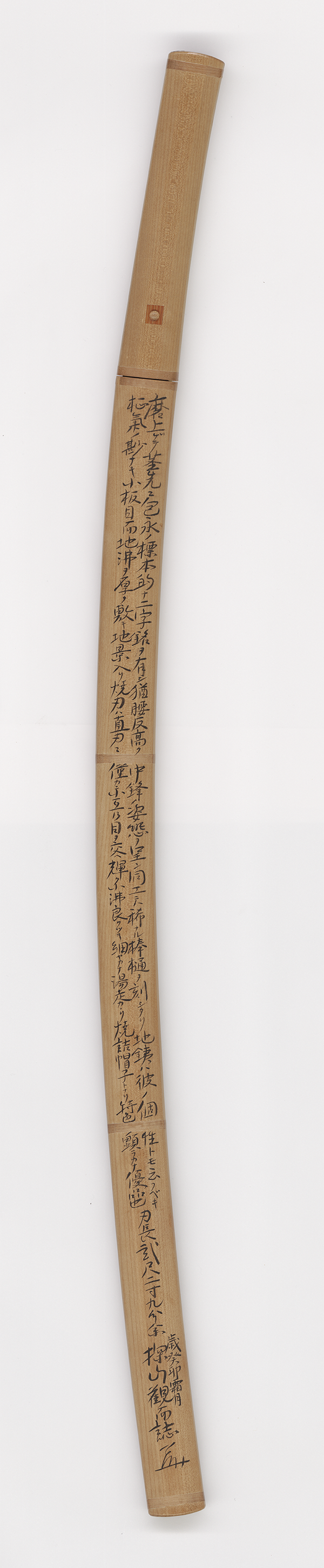
Tegai (Yamato) · Yamato · around 1288-1312
Fujishiro Jo-jo saku · Tōken Taikan top 5%
1 piece on the market now
For Kanenaga (包永) of Yamato the published commentary of the NBTHK returns, blade after blade, to one standing judgment: his manner "is the strongest in nie among Yamato works, the nioiguchi bright, and the jigane notably clear"[[c:1]], and beside the nie, the figure: "many of his blades present a dignified figure of high bearing"[[c:2]]. He is the founder of the Tegai school, one of the five lineages of Yamato, which resided and forged outside the Tegaimon (転害門), the west main gate of Todai-ji, thought to have served the temple. The reference works place him around the Shoo era (1288 to 1293), but the published sources repeatedly argue he goes back further: a tanto dated Karyaku 4 (1329) survives by Kanekiyo of the second generation's circle, and his own workmanship points earlier, so his activity is read from the middle into the late Kamakura period. The name was then carried by successive generations into the Muromachi period.
The construction leads in his work. The shinogi stands high and the shinogi-ji is cut wide, and nearly everything surviving is a suriage tachi of standard width, keeping its koshizori and closing in a chu-kissaki. The hamon is a suguha-cho bent in shallow notare, ko-gunome mixing in, the nioi deep; along the habuchi the edge frays into hotsure, with uchinoke, kuichigai-ba and nijuba, yubashiri drifting into the ji, kinsuji and sunagashi running through the ha. What the sources single out within this activity is the nie itself, especially strong compared with the other schools: "beautiful nie that is rounded and lustrous"[[c:3]]. The boshi continues sugu, strongly swept with hakikake, ending yakizume or turning back small in ko-maru.
The jigane is itame, mixed with mokume in places, flowing along the ha and tending toward masame, with thick ji-nie, chikei entering frequently, and the steel bright and clear. Around the monouchi the yakihaba often widens and the nie abruptly strengthens. Some blades temper the omote and ura differently, the trait typified by the Meibutsu Konotegashiwa Kanenaga[[c:4]]. The record also documents a quieter class, blades in a quiet, low-tempered suguha styling[[c:5]], at times narrowing to hoso-suguha. One such katana, bearing the red-lacquer attribution of Honami Koson and transmitted at Nagono Shrine, is read as "a comparatively calm type among Kanenaga's works"[[c:6]]; even there the thick ji-nie, the chikei and the round, shining nie carry the attribution.
His work survives in two registers. Comparatively many signed tachi remain, the sources note, nearly all suriage with the two-character mei left at the tip of the nakago; the ubu pieces are counted at a mere two. The signature itself is a documented tell: the character Kane compressed vertically, the second vertical stroke of Naga drawn out extremely long. To the doubt sometimes raised over their near-uniform suriage state the NBTHK answers that shortening like tachi yields like nakago: it "does not warrant suspicion"[[c:7]]. The other register is the o-suriage mumei katana attributed to him, where kuichigai-ba appears far more often than on the signed blades and the judgment rides on the quality of the nie: of one such blade the published record writes that on close inspection it surpasses typical Tegai work, the nioi conspicuously deeper and the gleaming ha-nie thick[[c:8]]; of another, that its workmanship connects directly to his signed works. The blades gathered here are the founder's: the second generation, of the Nanbokucho period, is catalogued separately, and the later generations part company readily, their steel turning generally whitish[[c:9]] and the nioiguchi tightening toward ko-nie, against the founder's bright, heavy nie.
Within Yamato the name set beside his is Shikkake Norinaga, and the separation runs along Kanenaga's own line: he holds the suguha-cho through its shallow notare, his ko-gunome never stringing into connected rows, and he lets yubashiri, uchinoke and nijuba play above the habuchi with unusual freedom. The judgments reach beyond the province. Honma observed of the first generation's nie that "at times one sees brilliant, sparkling nie of the kind observed in Awataguchi Hisakuni"[[c:10]], and the eighth Tokubetsu Juyo session writes of one signed tachi that its beautifully shining nie rivals the upper Soshu masters (相州上工). Of a shogunal-gift tachi the record concludes simply that it is "outstanding among his works"[[c:11]].
Kanenaga is rated Jo-jo saku by Fujishiro, and sixty-six designated works stand on record, among them one National Treasure, five Important Cultural Properties, eight Juyo Bijutsuhin, eight Tokubetsu Juyo and forty-one Juyo. These upper tiers are patrimony, held in shrines, museums and long-private collections, never to trade. The National Treasure, a suriage tachi signed in two characters near the tip of the nakago, passed from Akaboshi Tetsuma to the Iwasaki family and the Seikado; its published description calls it an outstanding tachi on which the nie shines with particular strength[[c:12]]. Recorded holders also include the Tokyo National Museum, Himeji Jinja, Shijonawate Jinja, the Sano Art Museum and the Tokugawa Art Museum. The provenance is deep, twenty-four blades carrying a recorded history. One tachi went from the shogun Tokugawa Ieshige to Mizuno Izumi-no-kami Tadayuki and later to Inukai Bokudo; another from Tokugawa Ienari to Sakai Tadanori of Himeji. A signed tachi bears the gold-inlaid possessor mark of Honda Heihachiro Tadatame, that is Tadatoki, husband of Senhime; the folded-back-mei katana of the Ise Ishikawa family is transmitted as Horio Mosuke's; a den katana carries a gold-inlaid cutting test of Tenna 2 (1682), four bodies severed. The rolls extend to the Date and Hachisuka families and the Imperial Family. For a collector the realistic field is the Tokubetsu Juyo and Juyo tiers, forty-nine blades in all. Signed pieces are unusually numerous for so early a smith, twenty-one of those forty-nine carrying his signature, yet a tachi with the two-character mei changes hands rarely; what the market more often shows is the o-suriage den attribution, judged, as the published sources always judge it, on the round and lustrous nie.
Where Kanenaga stands among comparable artisans: across all of nihontō, and within tradition, era, and period. The tiers (Foremost · Leading · Major · Notable) weigh official designations from the NBTHK and Japan's Agency for Cultural Affairs, together with historical honors of lasting repute such as the Sansaku and Meibutsu-chō.
Select a lens to see how it's measured.
Yamato-den · Yamato
Phase: Ko-Tegai古手掻· 1200–1394
23 pieces on the market now
Ko-Tegai (古手掻) is the founding and classical phase of the Tegai school, spanning the late Kamakura period through the Nanbokuchō era. 1288-1293). Kanenaga is reckoned among the foremost Yamato masters: his signed tachi are celebrated for combining the dignity of Kamakura form with the disciplined grain of the Yamato tradition, and several are designated at the highest levels. The mainline continued through a second-generation Kanenaga and the founder's sons and pupils — Kanetsugu (包次), Kanekiyo (包清), and the early Kanezane (包眞) — into the Nanbokuchō period. In workmanship Ko-Tegai is orthodox Yamato-den.
The jigane is itame with conspicuous masame, especially along the shinogi-ji, thick with ji-nie and threaded by chikei. The hamon is built on a narrow, nie-laden suguha, frequently broken by ko-midare and ko-gunome, with nijūba and hotsure along the habuchi and abundant kinsuji and sunagashi; the bōshi runs sugu to a ko-maru or hakikake finish, often continuing into muneyaki. Early works show a slender, deeply koshizori tachi-sugata with a small kissaki, broadening into the more powerful forms of the Nanbokuchō period. The school's masame-rich grain and quiet, nie-active suguha distinguish its blades from the choji-based exuberance of contemporaneous Bizen work and place Tegai squarely within the five Yamato schools. Learn more →
| Smith | Era | Designated |
|---|---|---|
| Kanenaga包永 | 1288-1312 | 66 |
| Kanekiyo包清 | 1362-1370 | 8 |
| Kanetsugu包次 | 1317-1333 | 4 |
| Kanetoshi包俊 | 1381-1384 | 4 |
| Kanekiyo包清 | 1429-1441 | 3 |
Yamato in the Kamakura period
The Yamato schools grew up in the shadow of Nara’s great monasteries: Tegai took its name from a gate of Tōdaiji. Their austere masame and quiet suguha are a temple aesthetic, prized ever since for exactly that restraint.
For returns at the customer's convenience, please notify us within two days of the item's arrival. Items that have been altered cannot be accepted. Return shipping is at the customer's expense. Costs other than the item price (bank transfer fees, cash-on-delivery fees, etc.) cannot be refunded. Items delivered overseas cannot be returned or refunded.